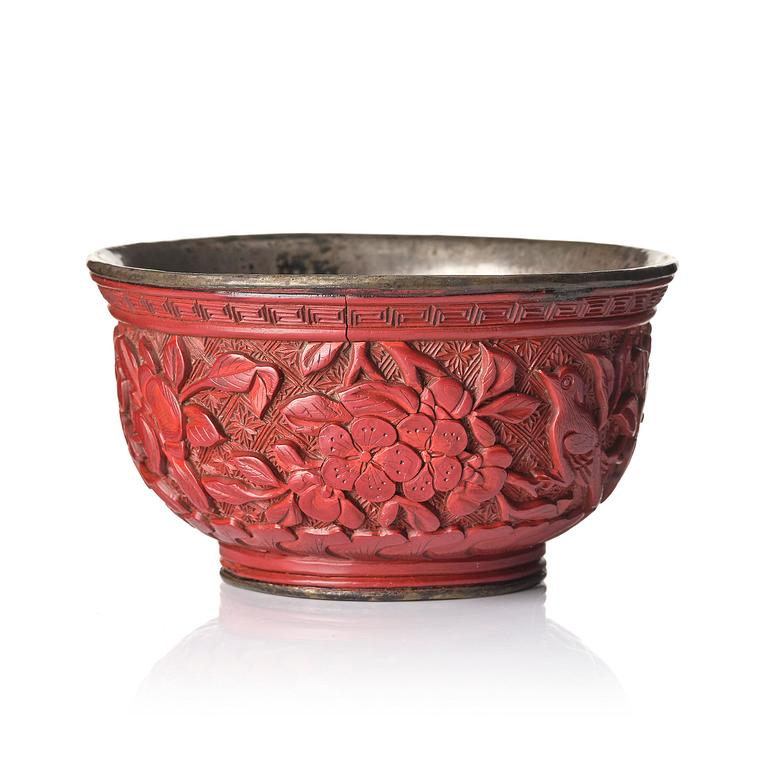
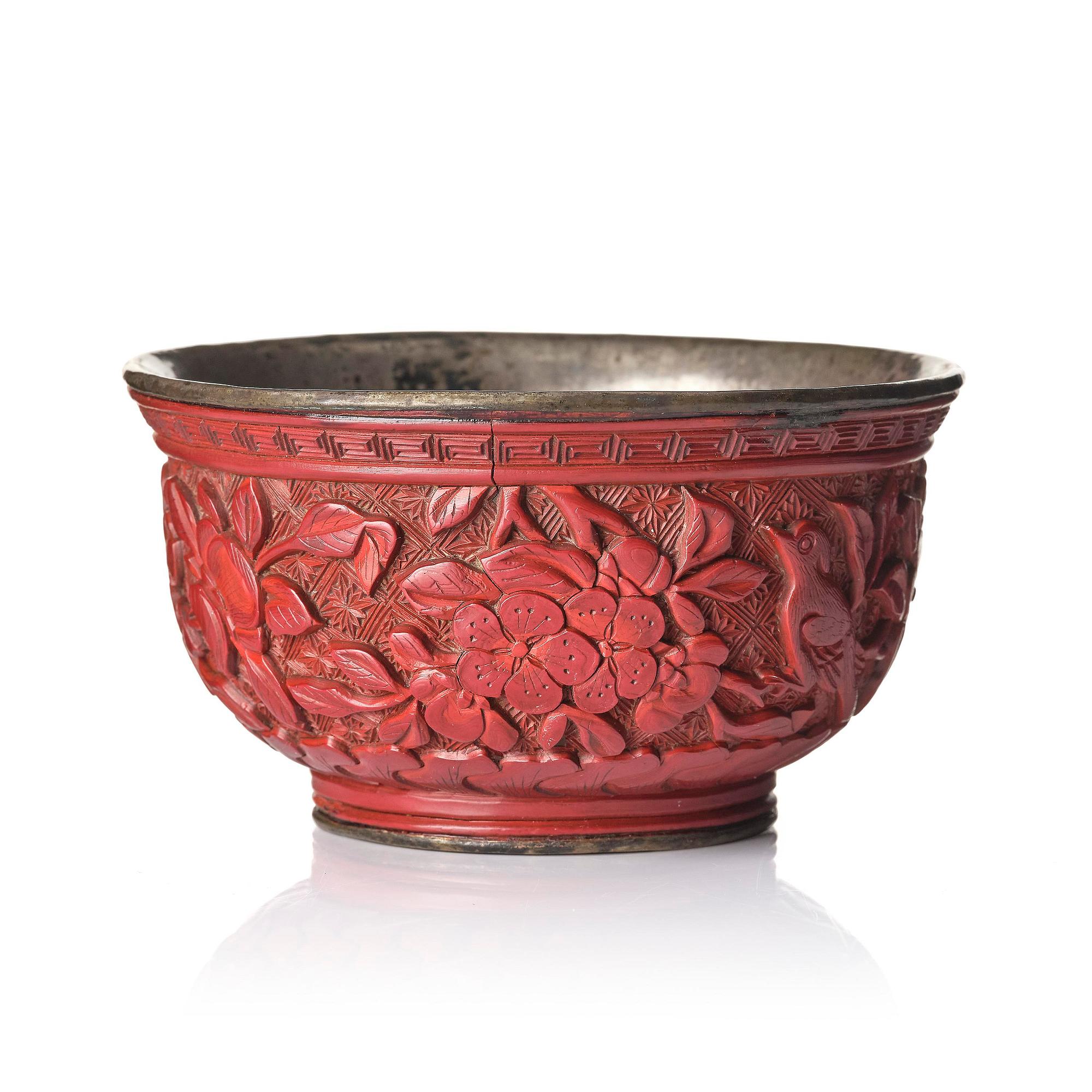
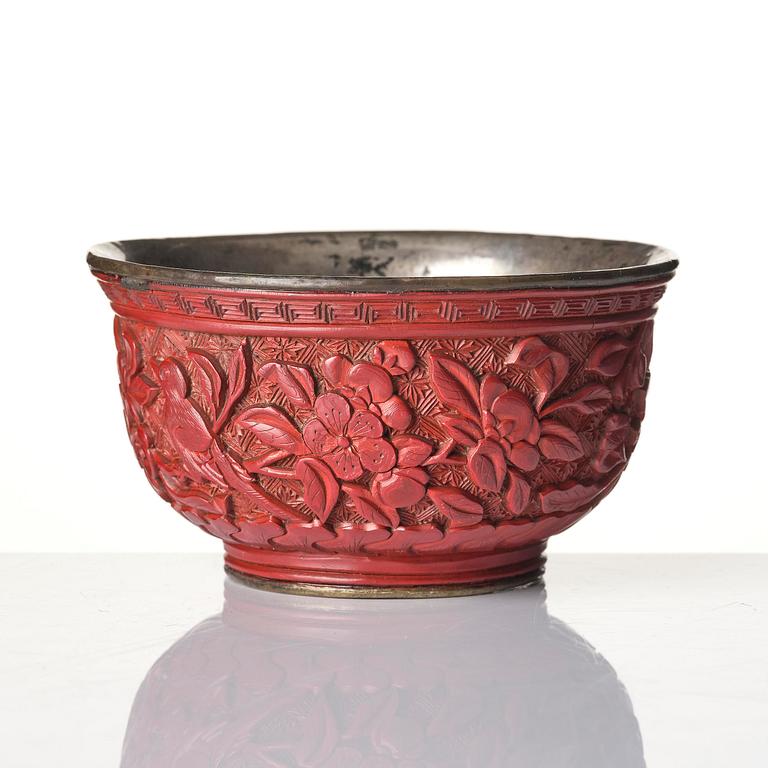
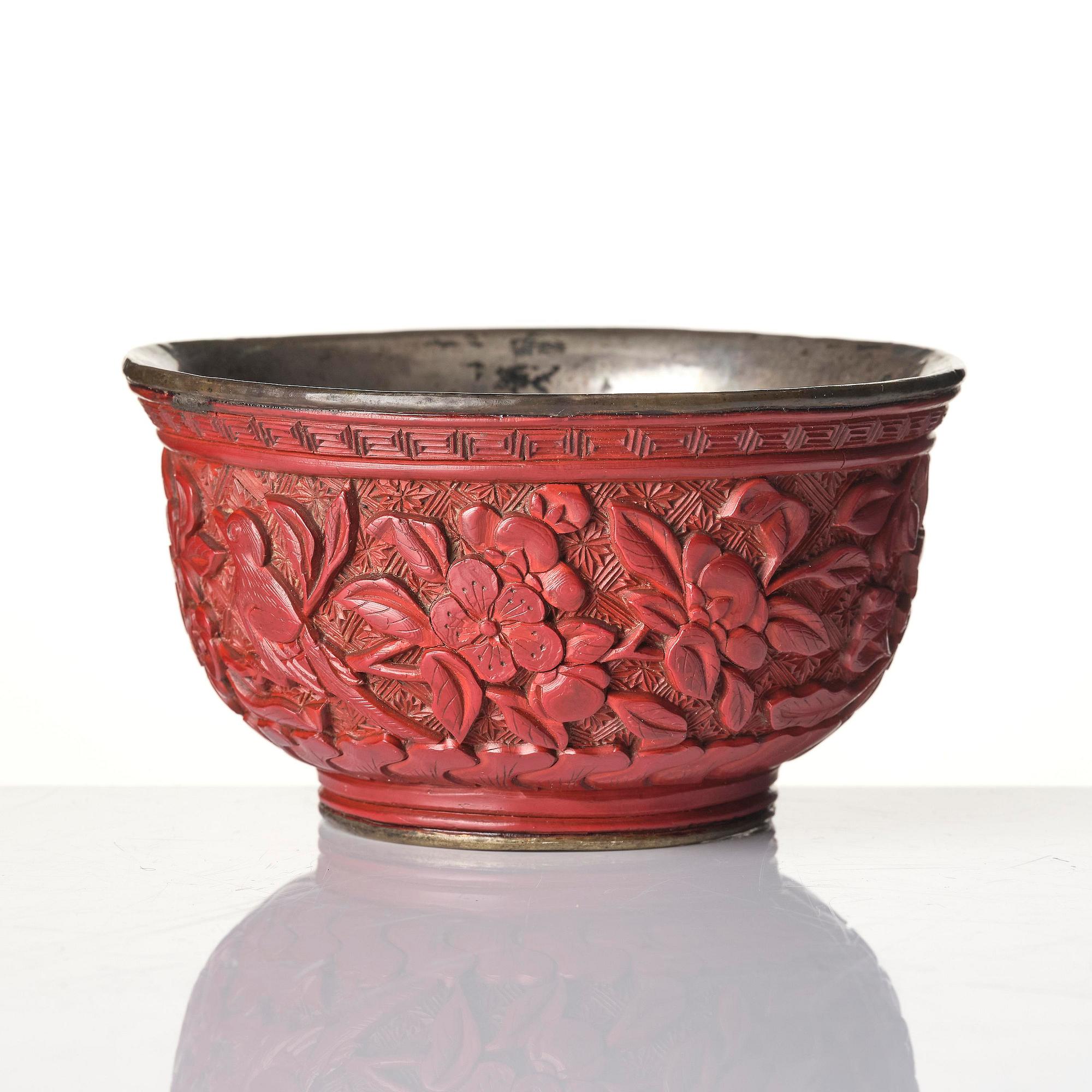
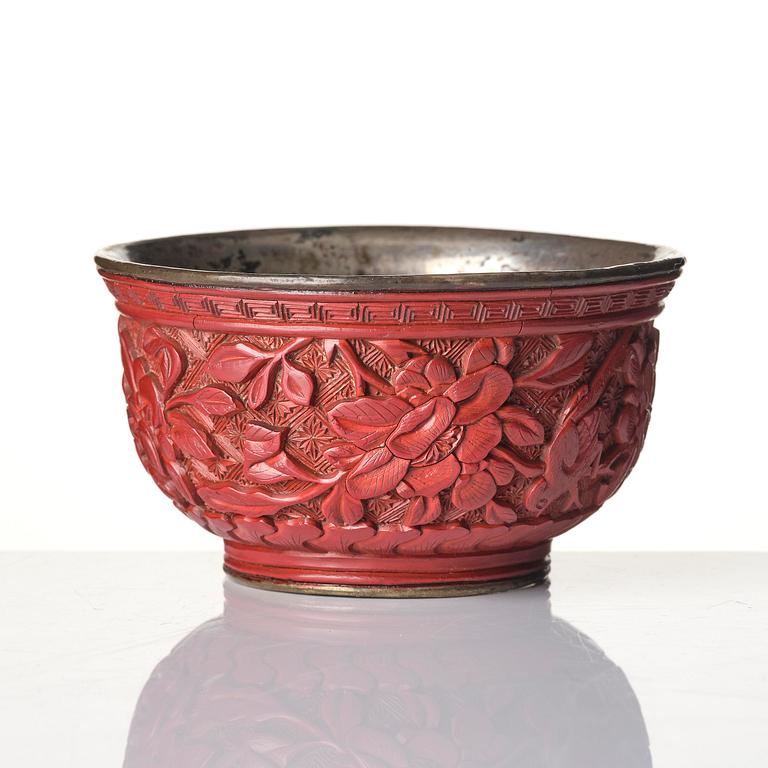
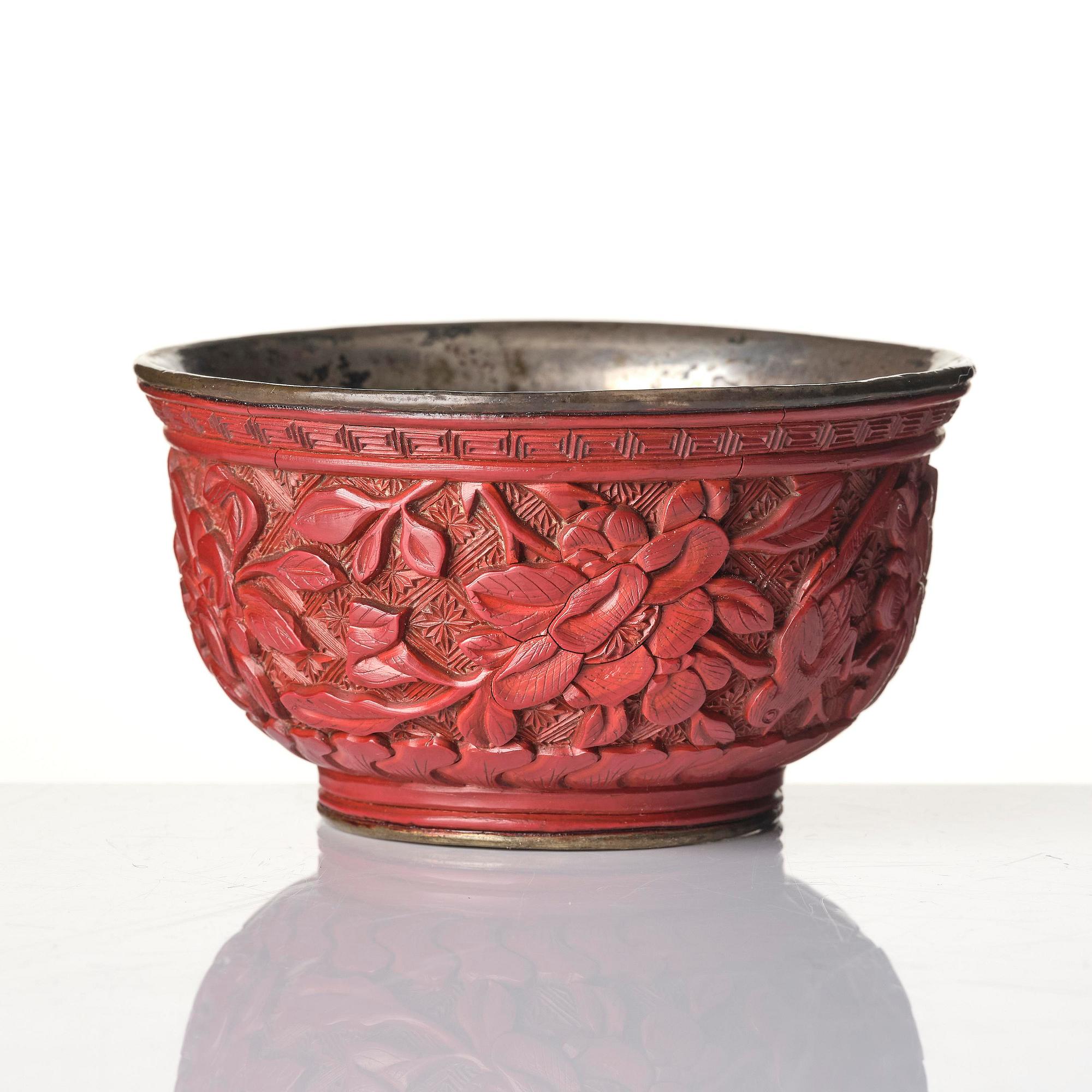
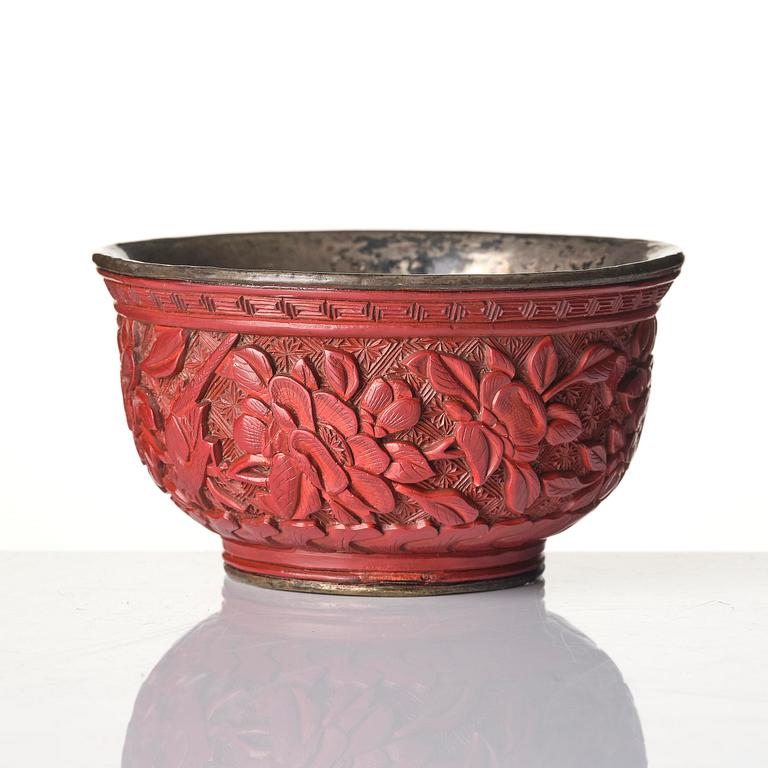
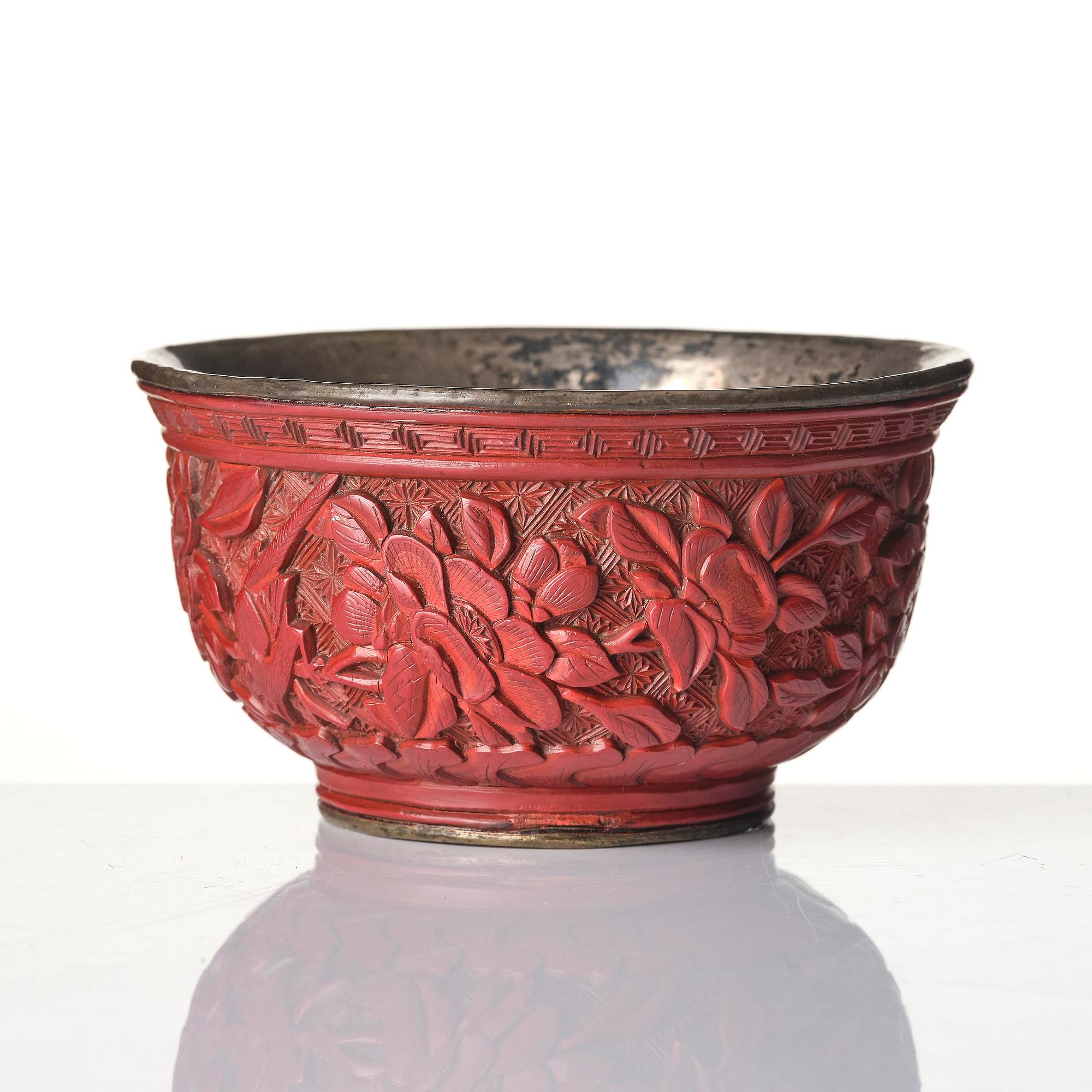
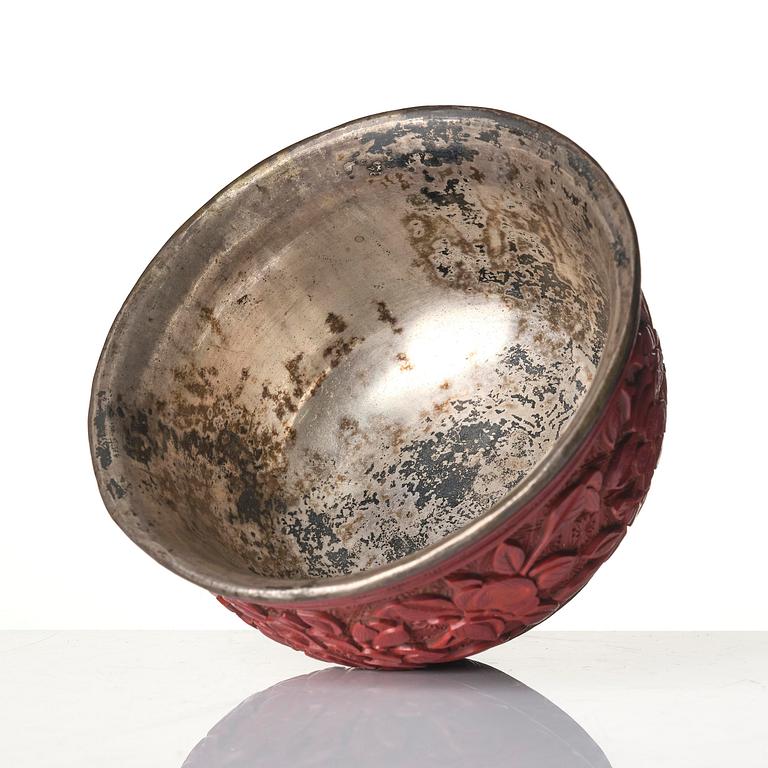
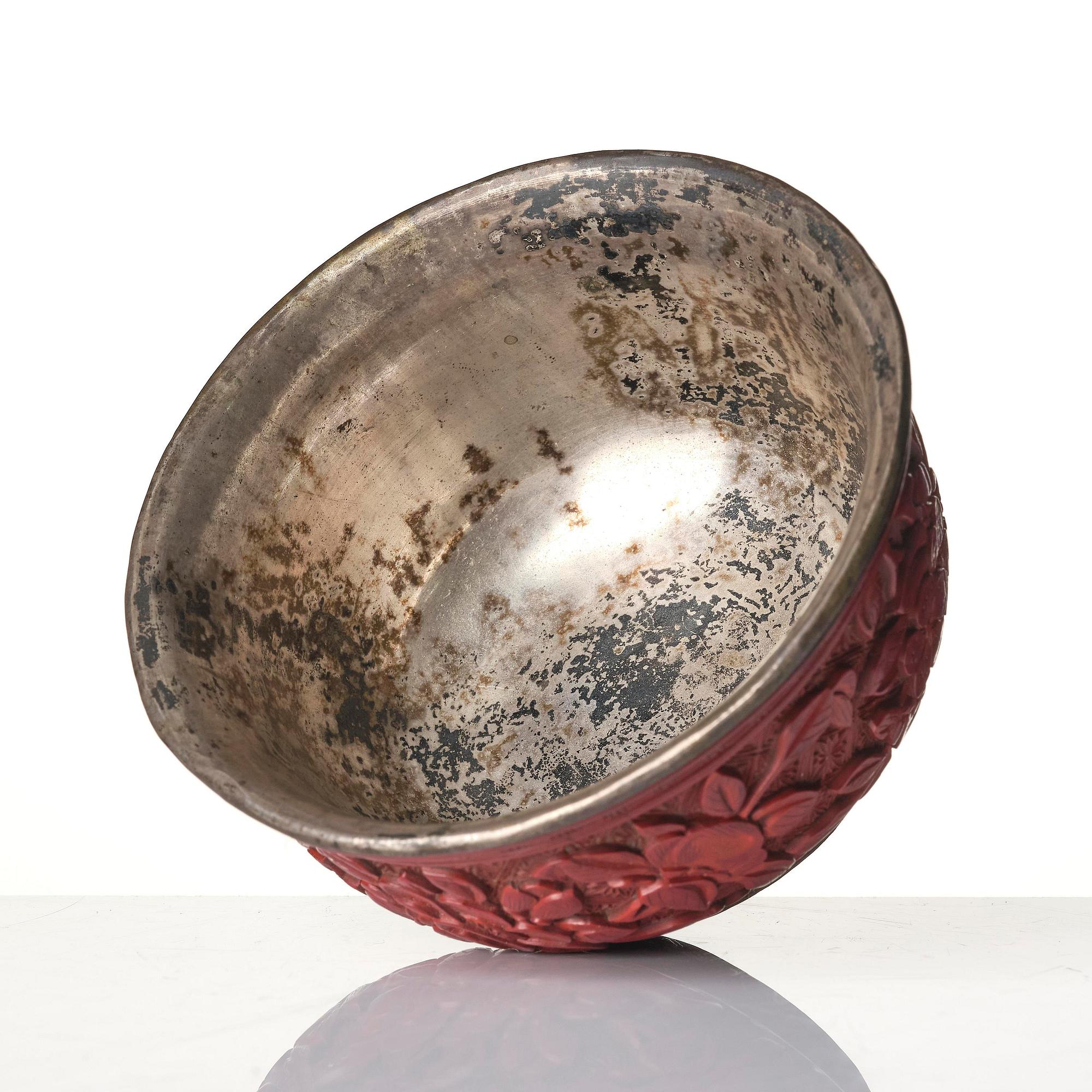
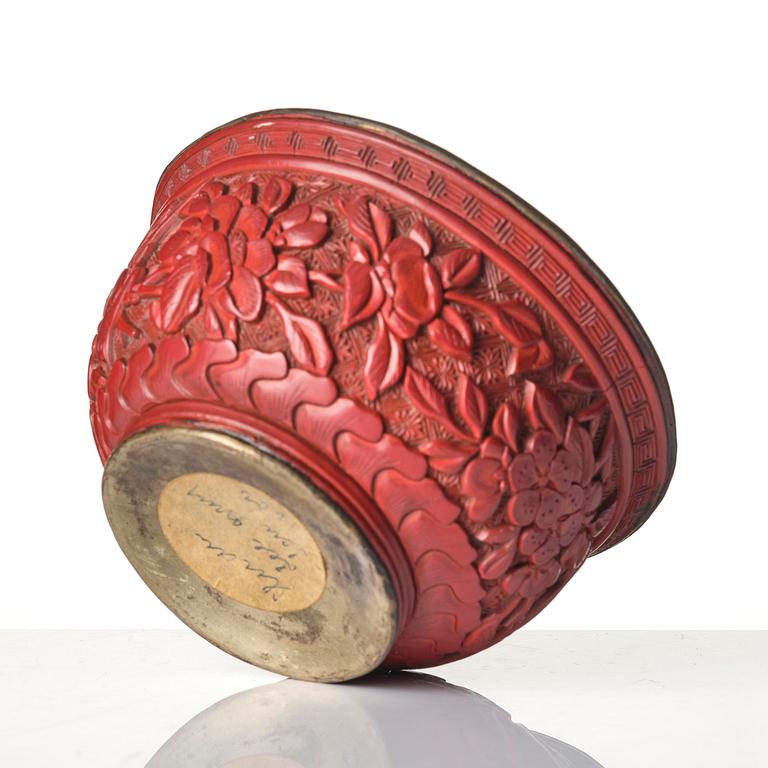
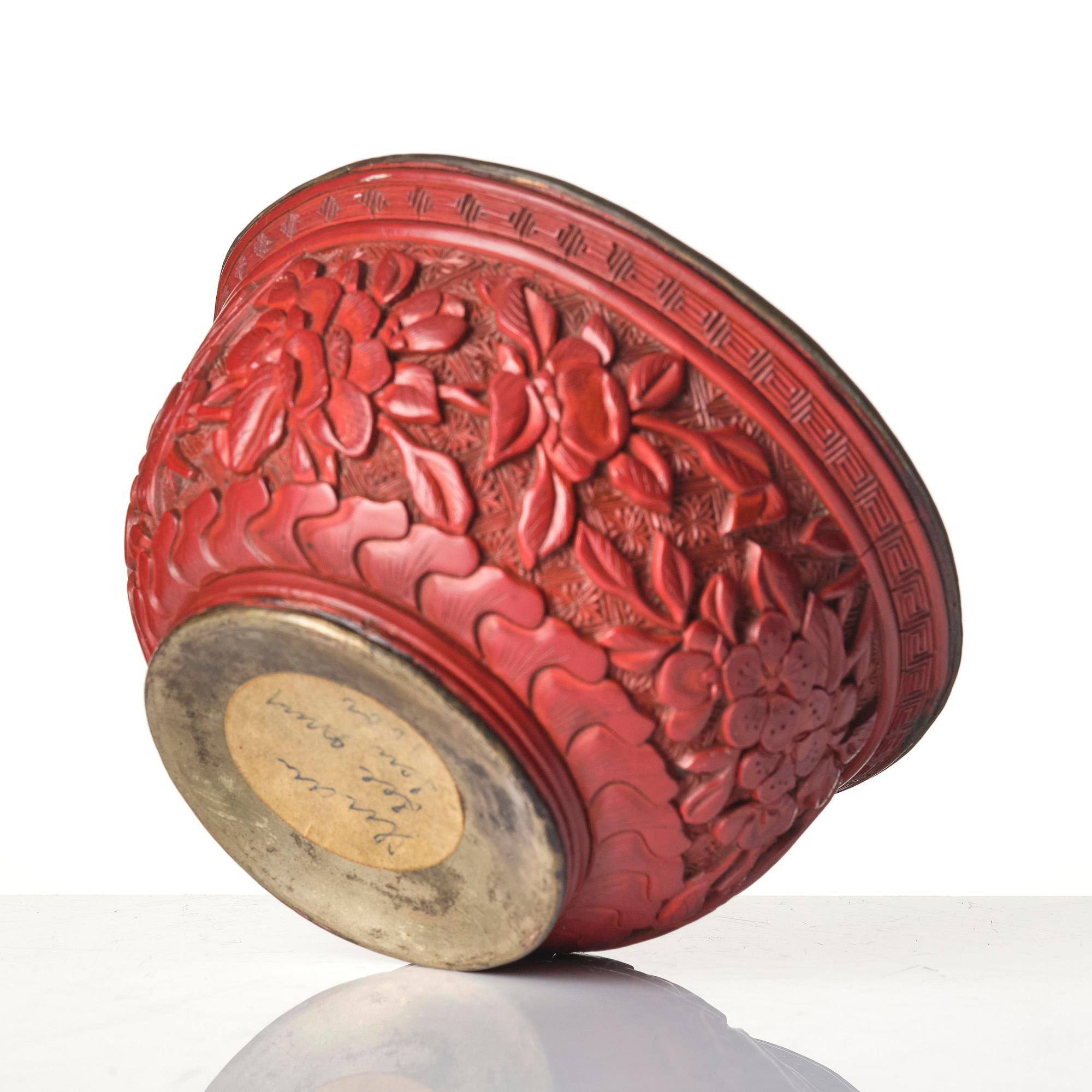
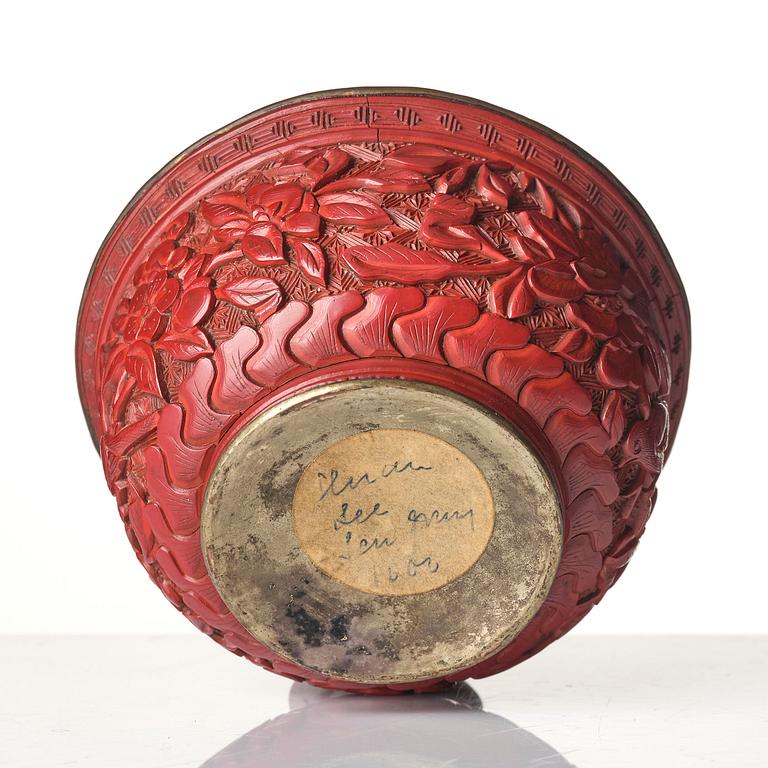
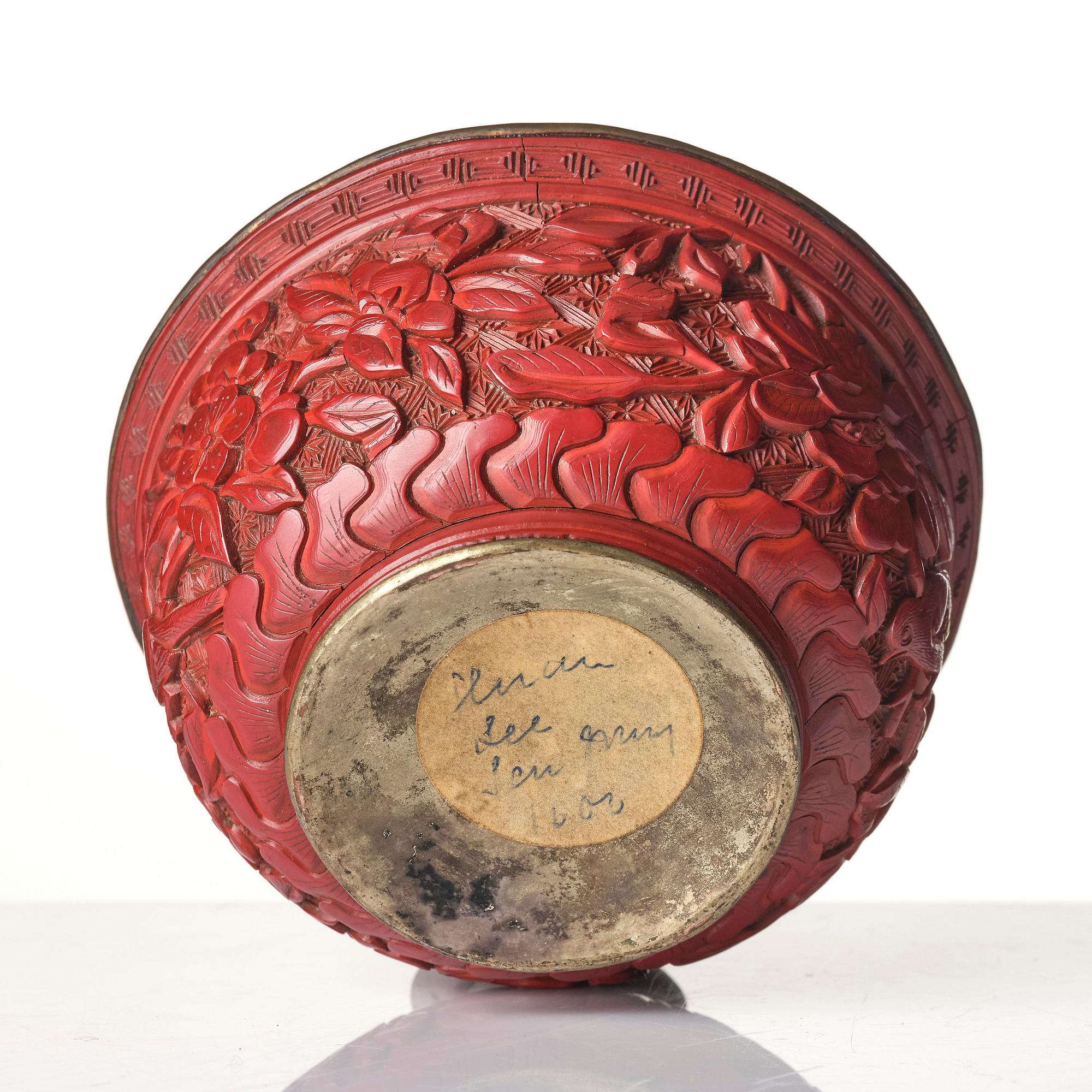
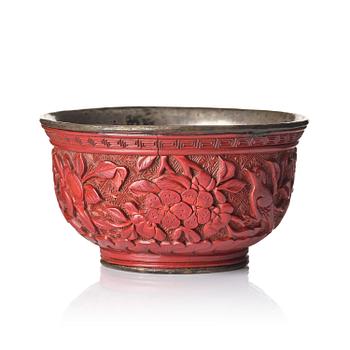
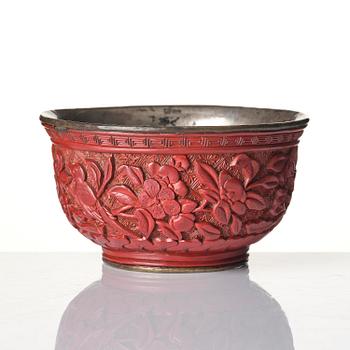
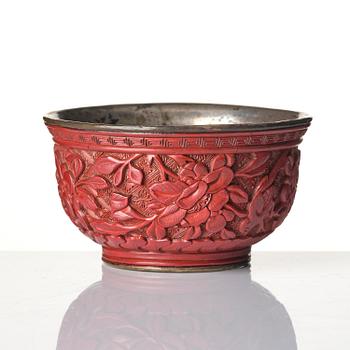
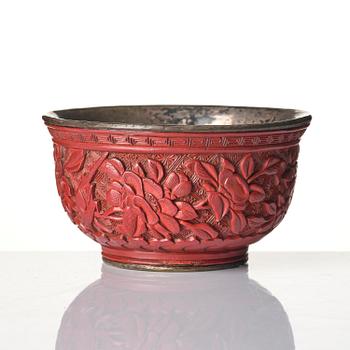
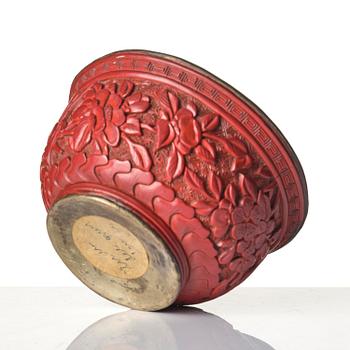
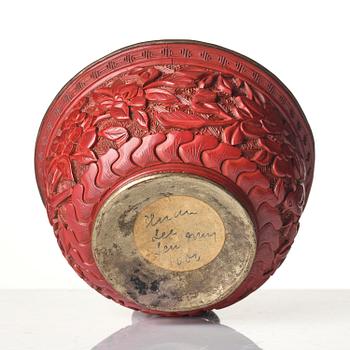
Cut decoration of birds amidst blossoming branches. Diameter 10.2 cm. Height 5.4 cm.
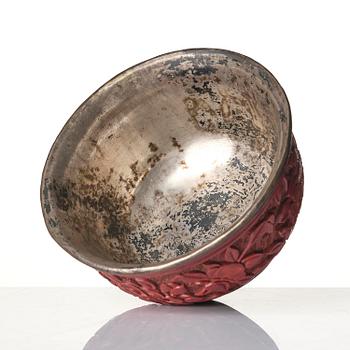
Small damage underneath the rim. Small cracks from dryness of the material. Small dents to silver lining.
Provenance
Gustaf Oscar Wallenberg (1865-1937), Stockholm, and thence by descent within the family.
Gustaf O. Wallenberg was a Swedish businessman, diplomat, and active politician. He was the son of André Oscar Wallenberg, founder of Stockholm Enskilda Bank (today's Skandinaviska Enskilda Banken, known as SEB). After a career in the Swedish Navy, he turned to the business world and was active in improving the transoceanic shipping industry.
Wallenberg was Sweden's Envoy to Tokyo between 1907-1918. In April 1907 he travelled to Beijing to amend the Treaty of Canton (1847) between Sweden-Norway and China and to establish diplomatic relations between Sweden and the Qing Court. As the Swedish Envoy Extraordinary and Minister Plenipotentiary at the Court of Peking, he successfully negotiated and signed with Lien Fang, the Guangxu Emperor's High Commissioner Plenipotentiary and Senior Vice-President of the Wai Wu Pu, the Treaty of Amity, Commerce and Navigation, between Sweden and China, which was signed in Beijing on 2 July 1908, with an additional article signed on 24 May 1909.
The collection was acquired between 1907 and 1918 when Wallenberg was the Swedish Envoy in Tokyo, and possibly during his diplomatic service in China. Documents preserved at the Museum of Far Eastern Antiquities in Stockholm demonstrate the importance of Gustaf Wallenberg and his extensive connections with the Qing government to the Swedish engineers and businessmen who were in China during this period, such as Johan Gunnar Andersson, Osvald Siren, Orvar Karlbeck, Erik Nordstrom and many more.
Gustaf Wallenberg was the grandfather of Raoul Gustaf Wallenberg (1912-1945), an architect, businessman, and diplomat.
Exhibitions
Compare with a bowl of this type sold at Christies Live Auction 1814, Fine Chinese Ceramics & Works of Art, lot 155, 22 March 2007.
Compare with lot 300, Bonhams Live Auction Fine Chinese Art, London New Bond Street, 7 November 2013.
Literature
Compare with a similar carved cinnabar lacquer bowl with pomegranates and bird design illustrated by Simon Kwan, “Chinese Lacquer: The Muwen Tang Collection Series”, Hong Kong, 2010, pp.222-223, pl 69; see also a similar bowl, Wanli mark and period, illustrated by K.J.Brandt, “Chinesische Lackarbeiten”, Linden Museum, Stuttgart, 1988, pl.44; and B.McElney, “Chinese Metalwares and Decorative Arts”, Museum of East Asian Art, Bath, 1993, pl.321.
For condition report contact specialist

Others have also viewed