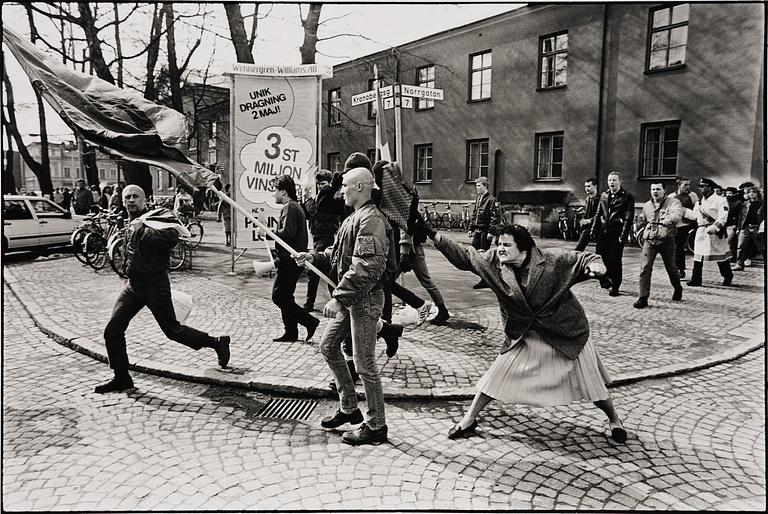
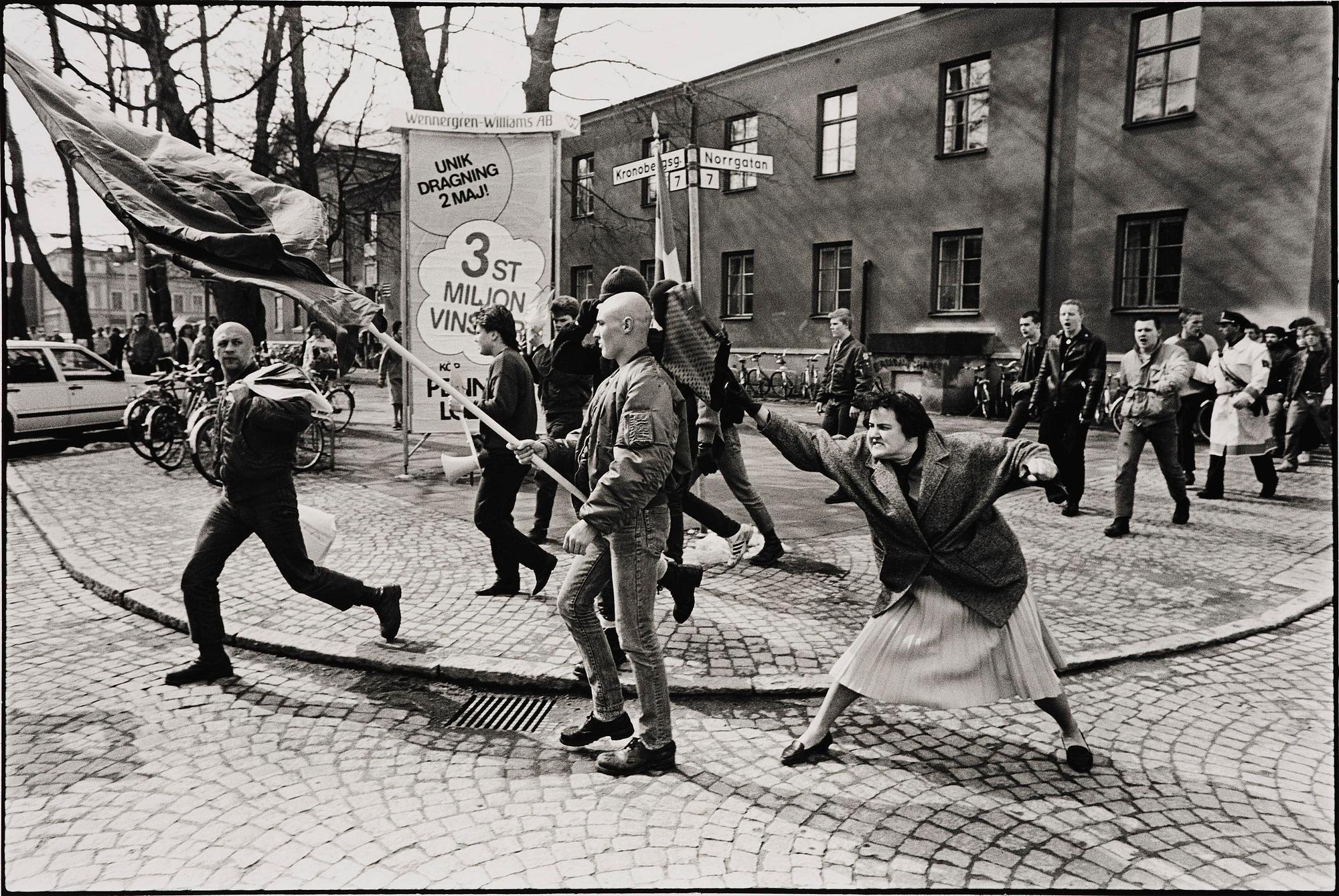
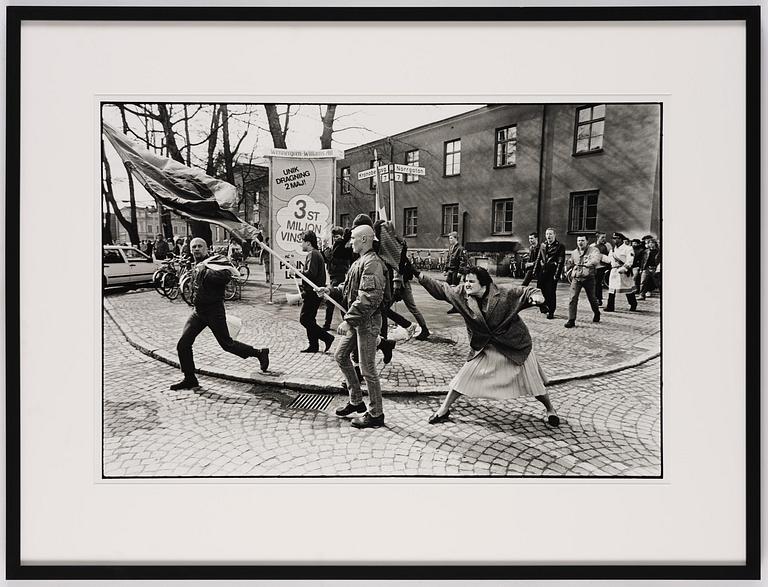
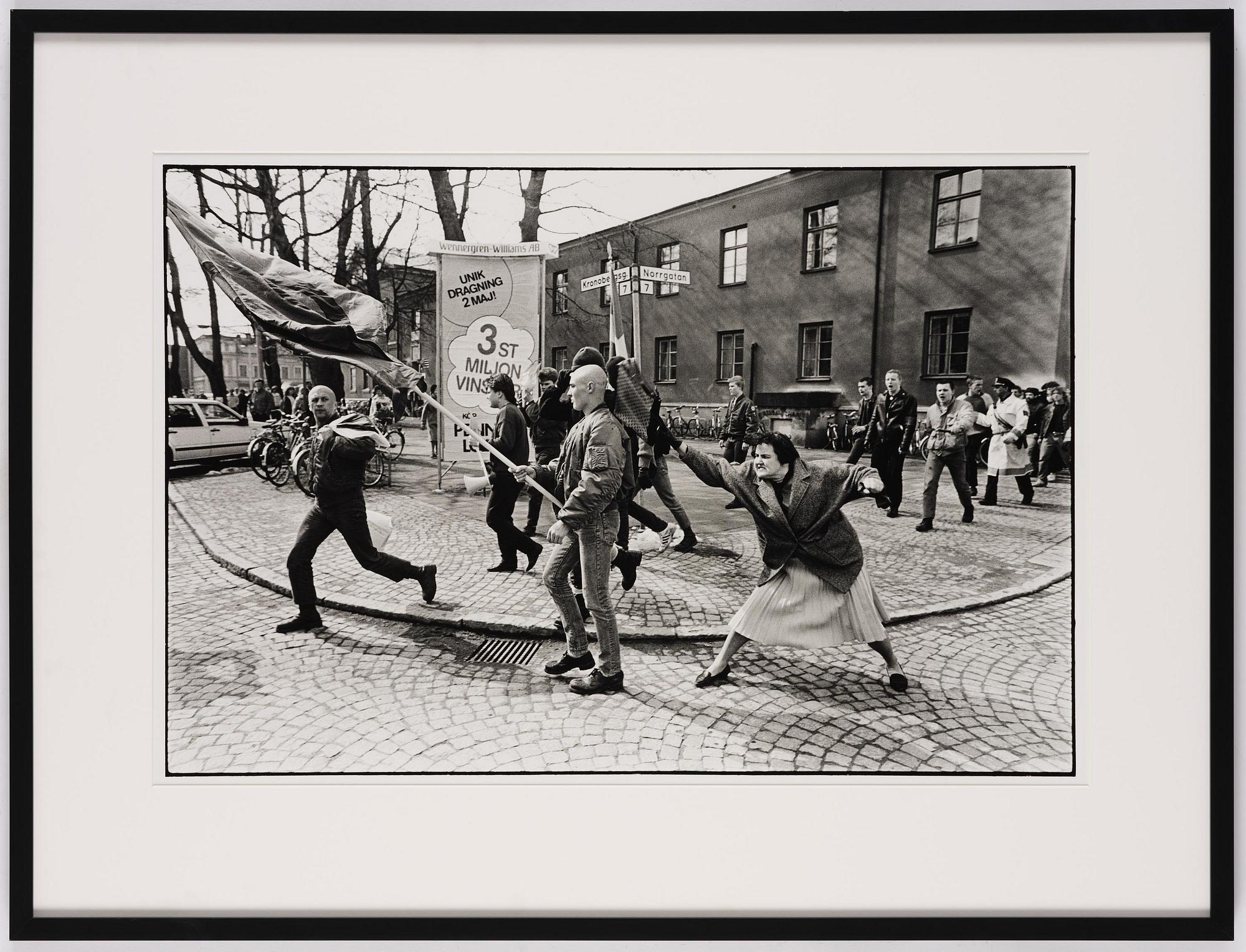
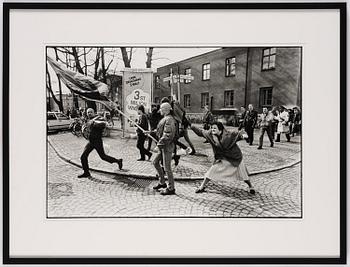
"Kvinnan med handväskan", 1985
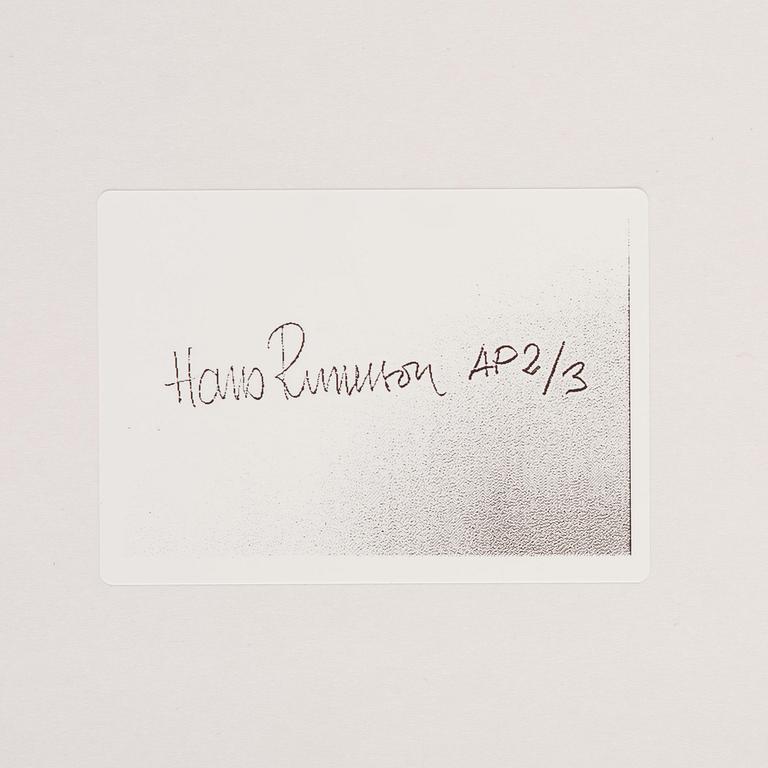
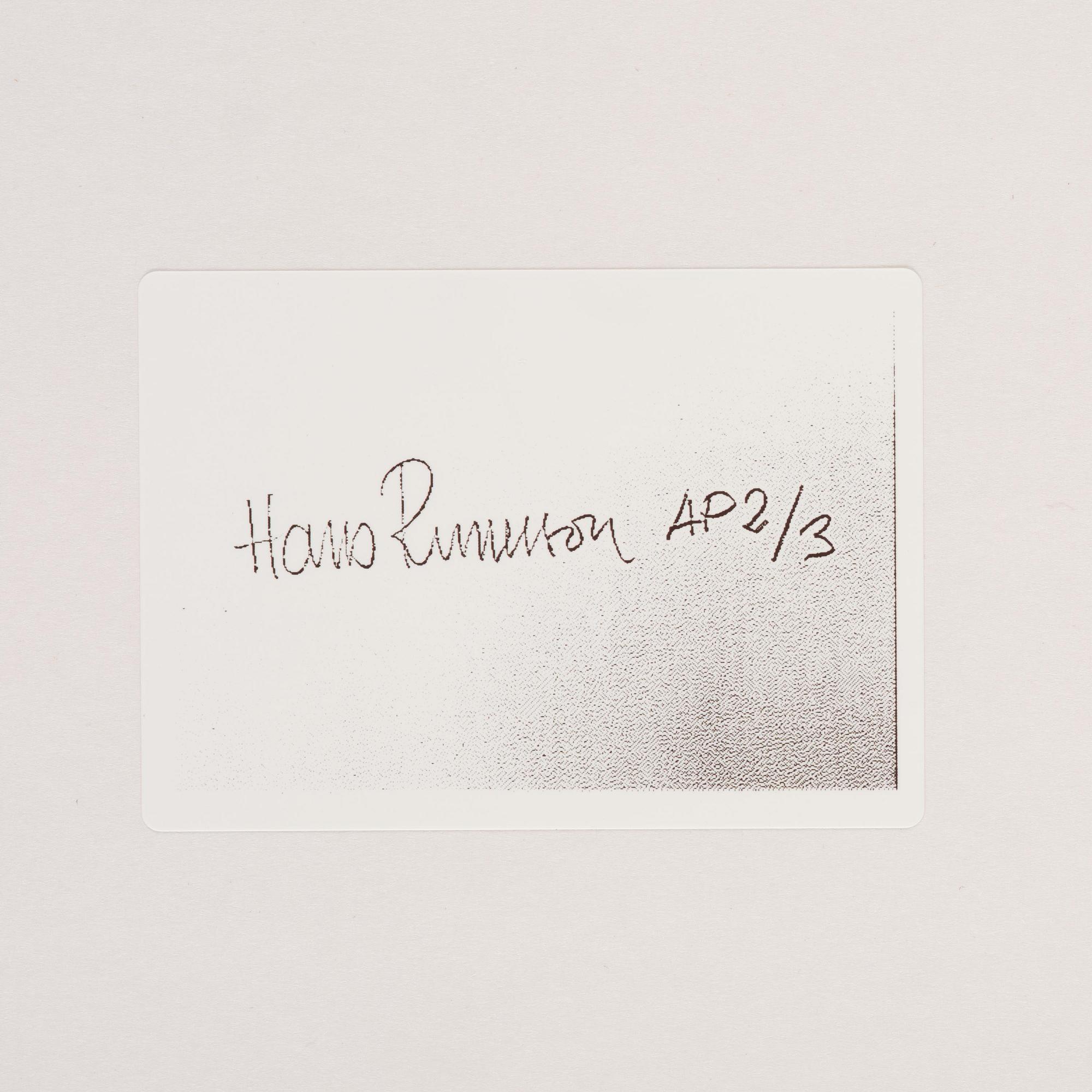
Signed Hans Runesson and numbered AP 2/3 verso. Total edition of 12 + 3 APs. Gelatin silver print, image 53 x 80 cm. Including frame, 83 x 107 cm.
Literature
Dagens Nyheter, 14 April 1985, illustrated.
The Times, 15 April 1985, illustrated.
The Daily Express, 15 April 1985, illustrated.
LIFE Magazine, June 1985, illustrated.
Årets bild, 1985, illustrated.
The Guardian, "48 protest photographs that changed the world", 2022, illustrated.
Magasinet Filter, Simon Appelqvist, "Den bortglömda hjälten, del 1: Växjökravallerna, 1985", #96 29 January 2024, illustrated.
Digital:
BBC Culture, Kelly Grovier, "The image that won’t go away", 9 December 2016, illustrated.
BBC Culture, "Celebrating 100 years of female defiance in photographs", 2018, illustrated.
BBC Culture, Fiona Macdonald, “International Women's Day 2024: 12 iconic images of defiant women”, 8 March 2024, illustrated.
More information
On 13 April 1985, a group of supporters of the Nordic Reich Party (Nordiska rikspartiet, NRP) marched through the streets of Växjö, Sweden. At one point, a woman suddenly emerged from the crowd and struck a neo-Nazi demonstrator on the head with her handbag. The demonstration had been authorised by the authorities and was scheduled to take place shortly after Lars Werner, leader of the Left Party, had delivered a public speech in central Växjö. Clashes between left-wing supporters and neo-Nazis had begun even before the far-right demonstration got underway. Hans Runesson, on assignment for Dagens Nyheter, raised his camera and captured the moment. To this day, his photograph is regarded as an iconic image of protest and popular resistance. The woman, Danuta Danielsson, was hailed as a hero.
Danielsson, who would become known as “the woman with the handbag”, had moved to Sweden a few years earlier to marry a Swedish man. She had grown up in a Polish-Jewish family, and her mother had survived a concentration camp during the Second World War. When Danielsson saw the Nazis in her new homeland, she lost her composure.
The photograph brought her international attention, both from those who celebrated her and from those who vilified her. Three years later, Danielsson died.
Hans Runesson has recounted that the neo-Nazi barely noticed Danielsson and simply continued marching. The impact of the photograph, however, was far more significant. It was named Picture of the Year in 1985 and was later selected as Picture of the Century by the magazine Vi and the Photographic Historical Society (Fotografiska historiska sällskapet).
For condition report contact specialist

What will the transport cost?
Covered by droit de suite
Image rights
The artworks in this database are protected by copyright and may not be reproduced without the permission of the rights holders. The artworks are reproduced in this database with a license from Bildupphovsrätt.


Others have also viewed