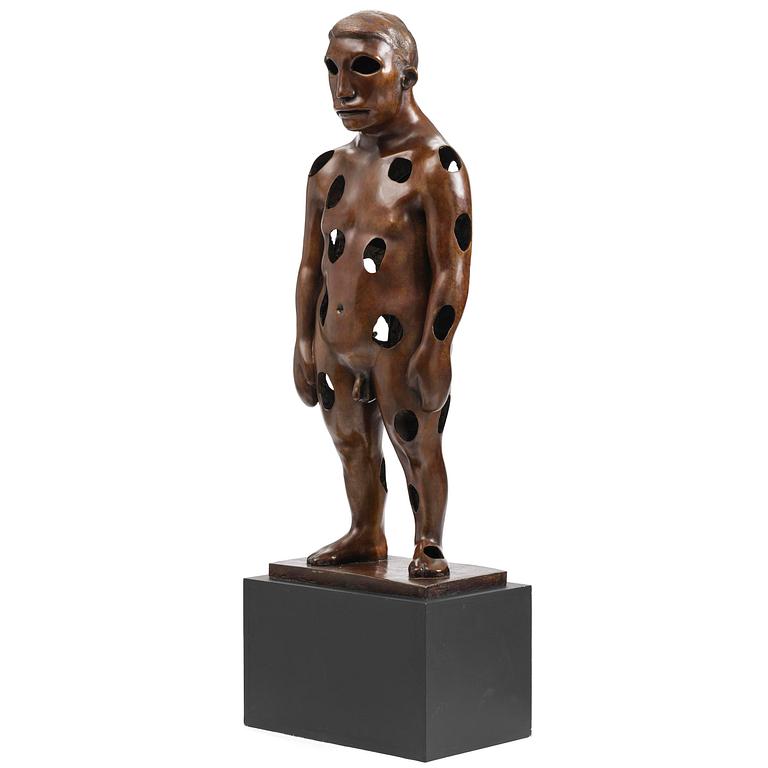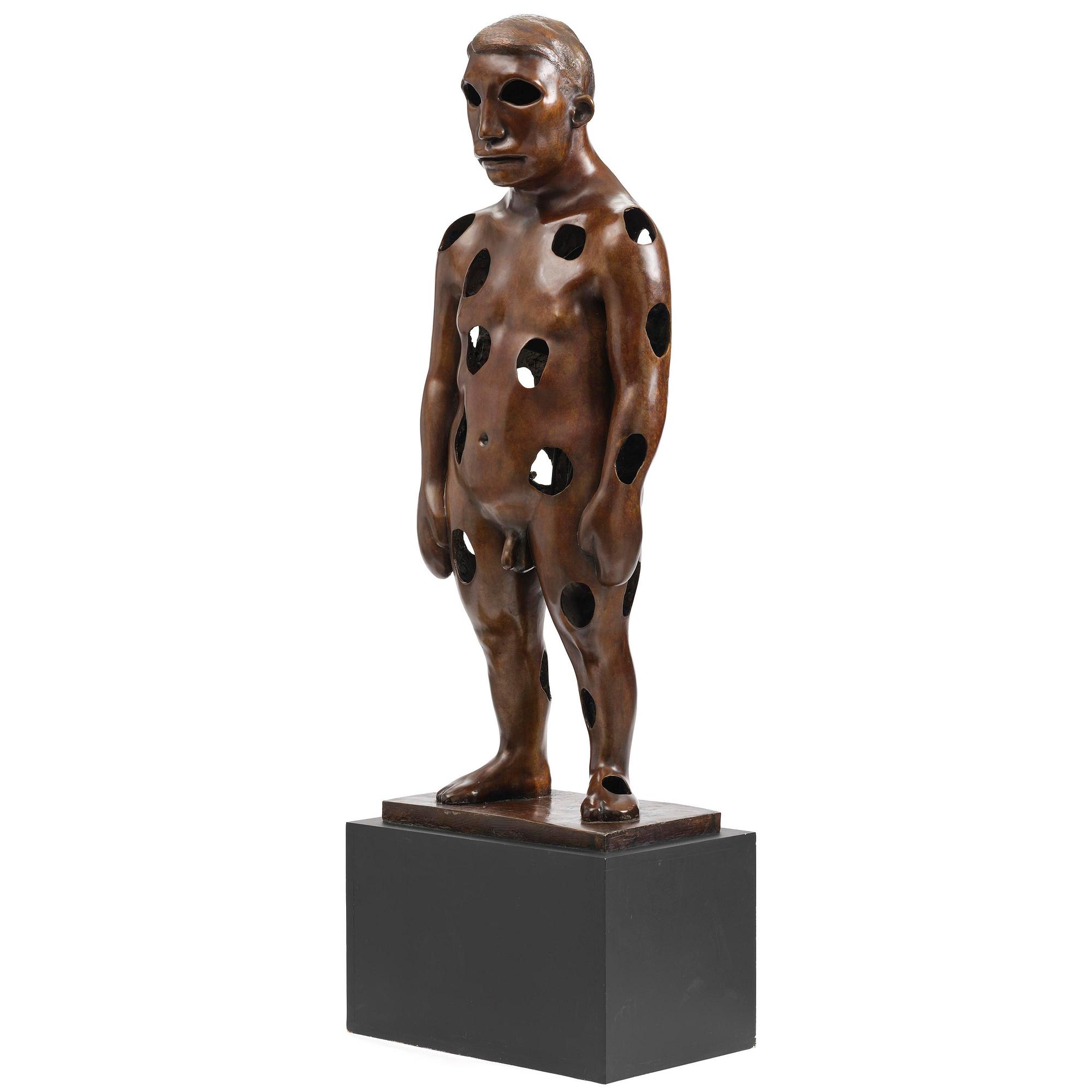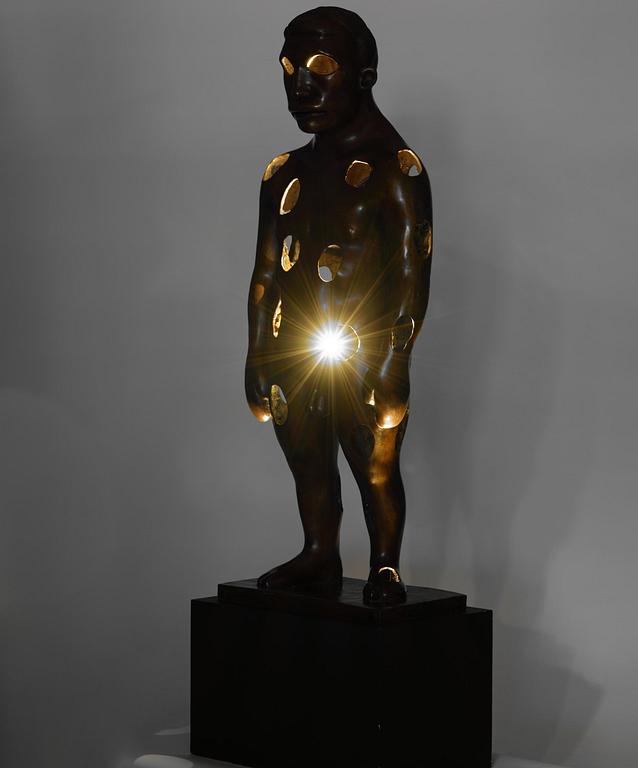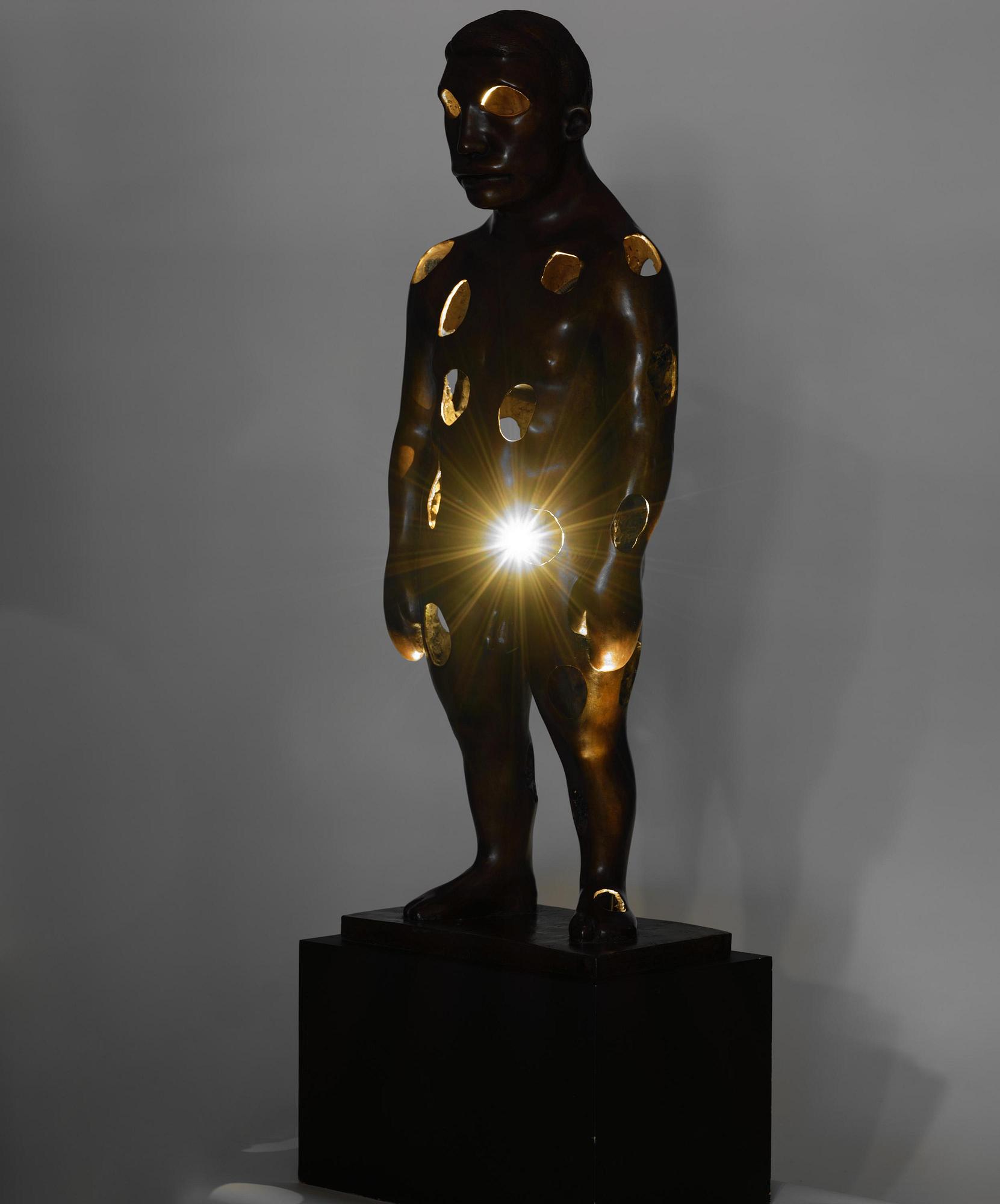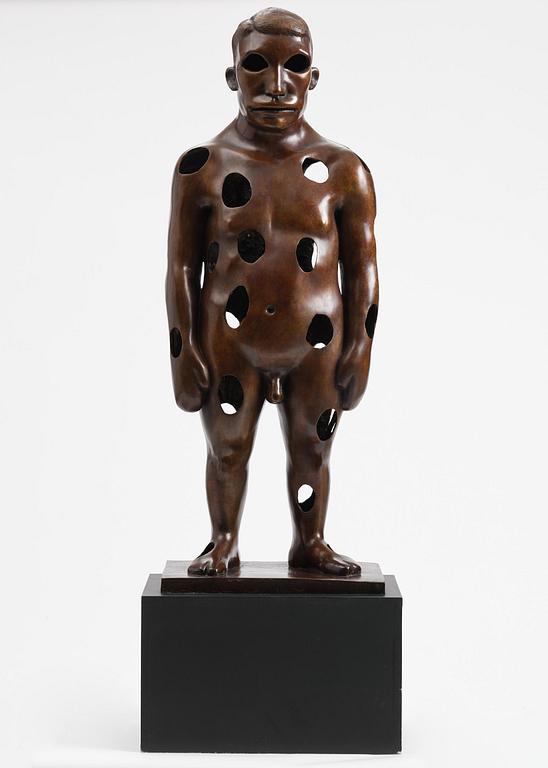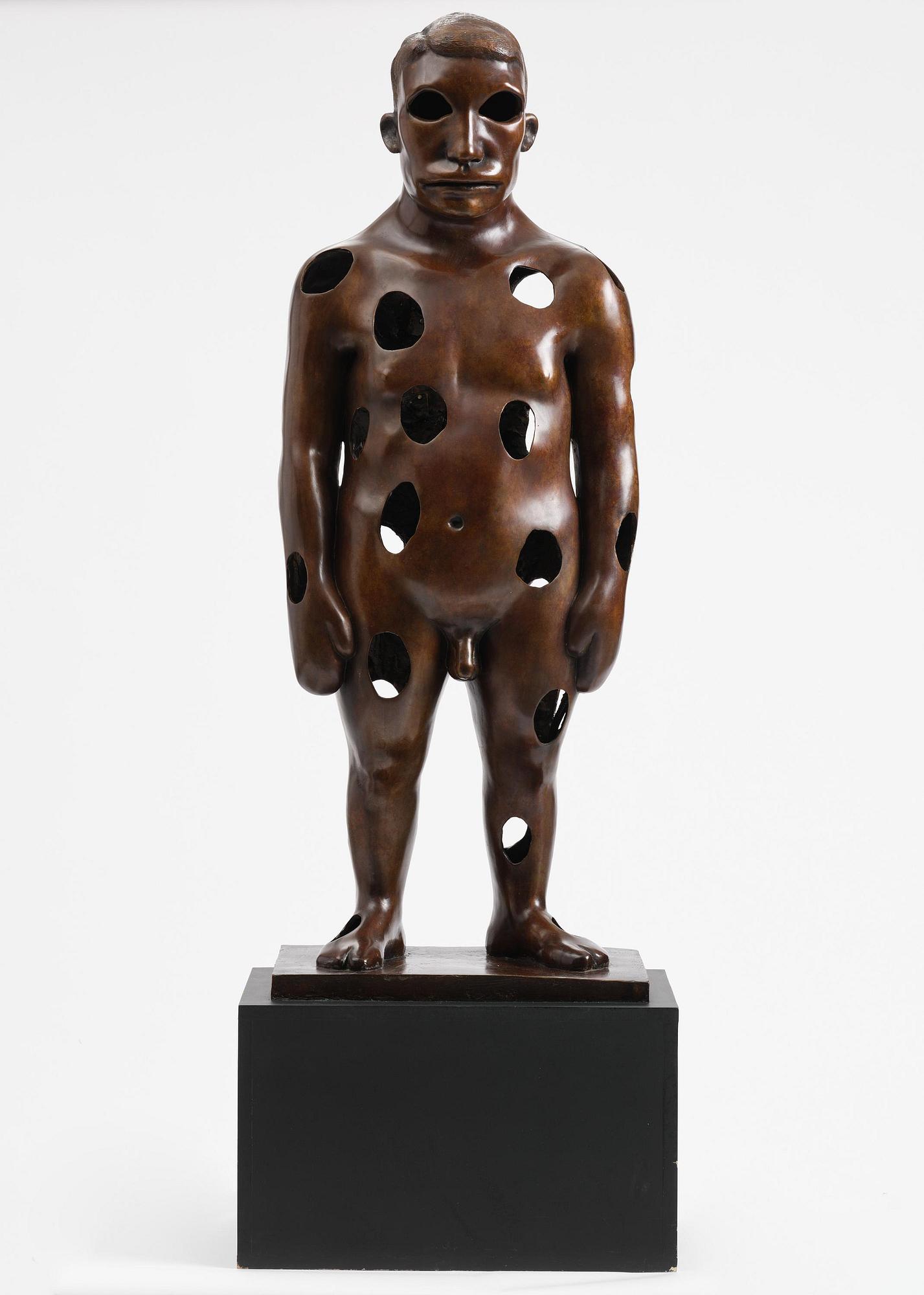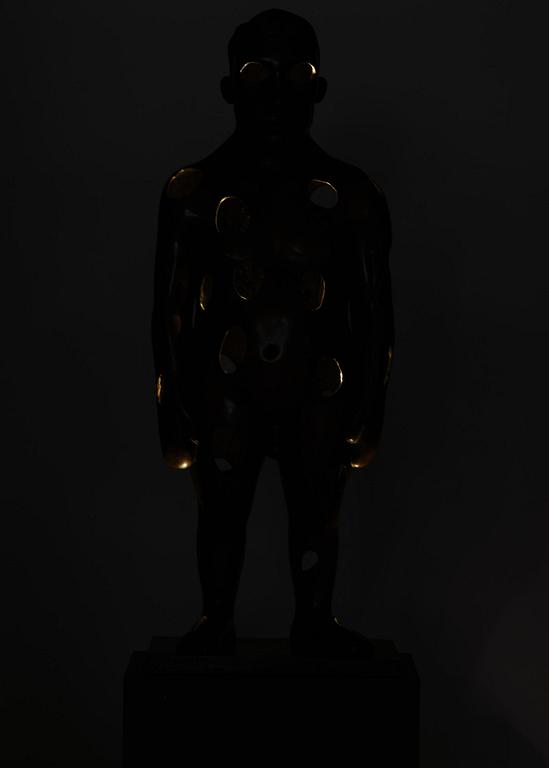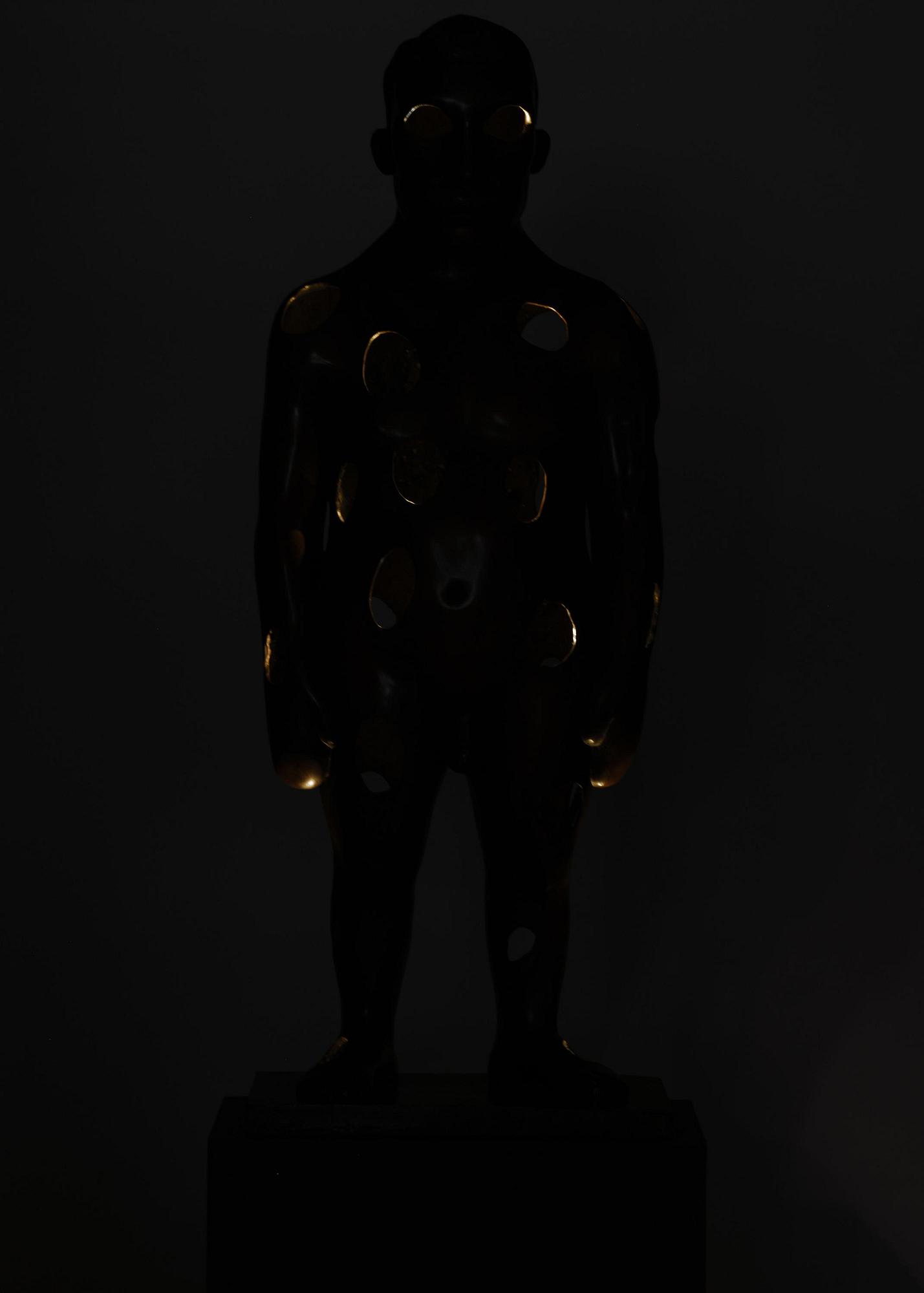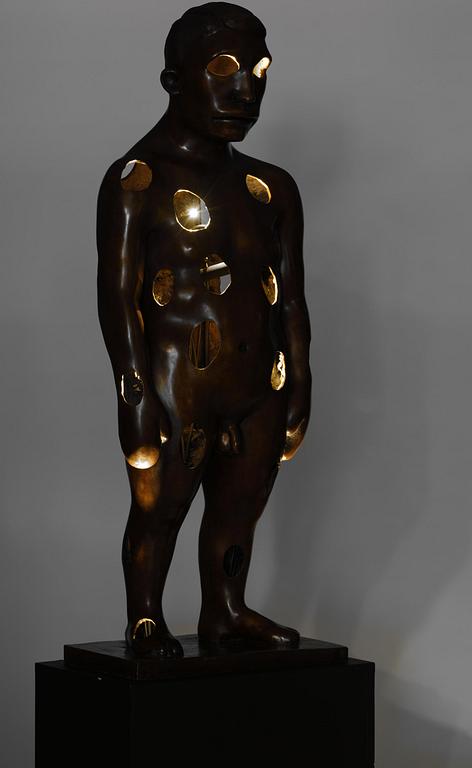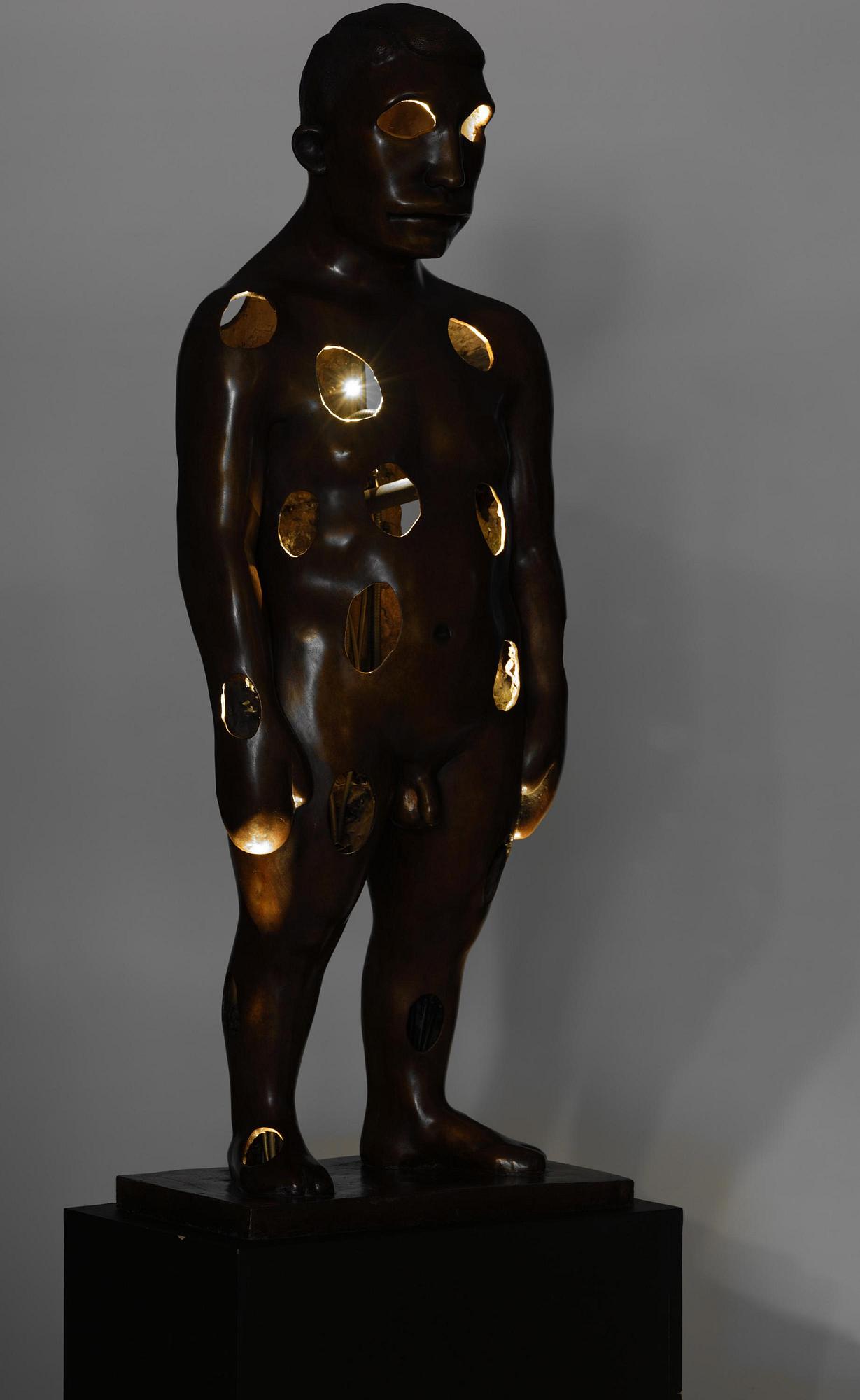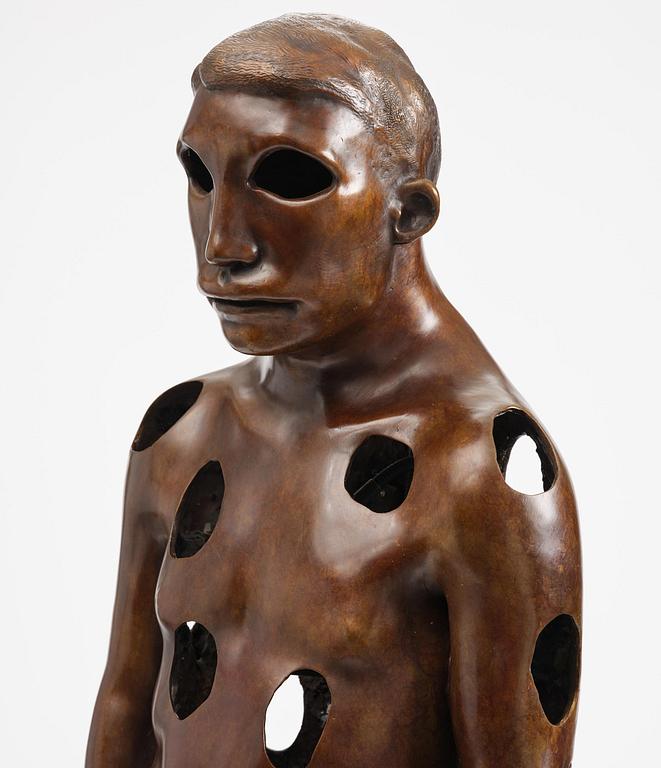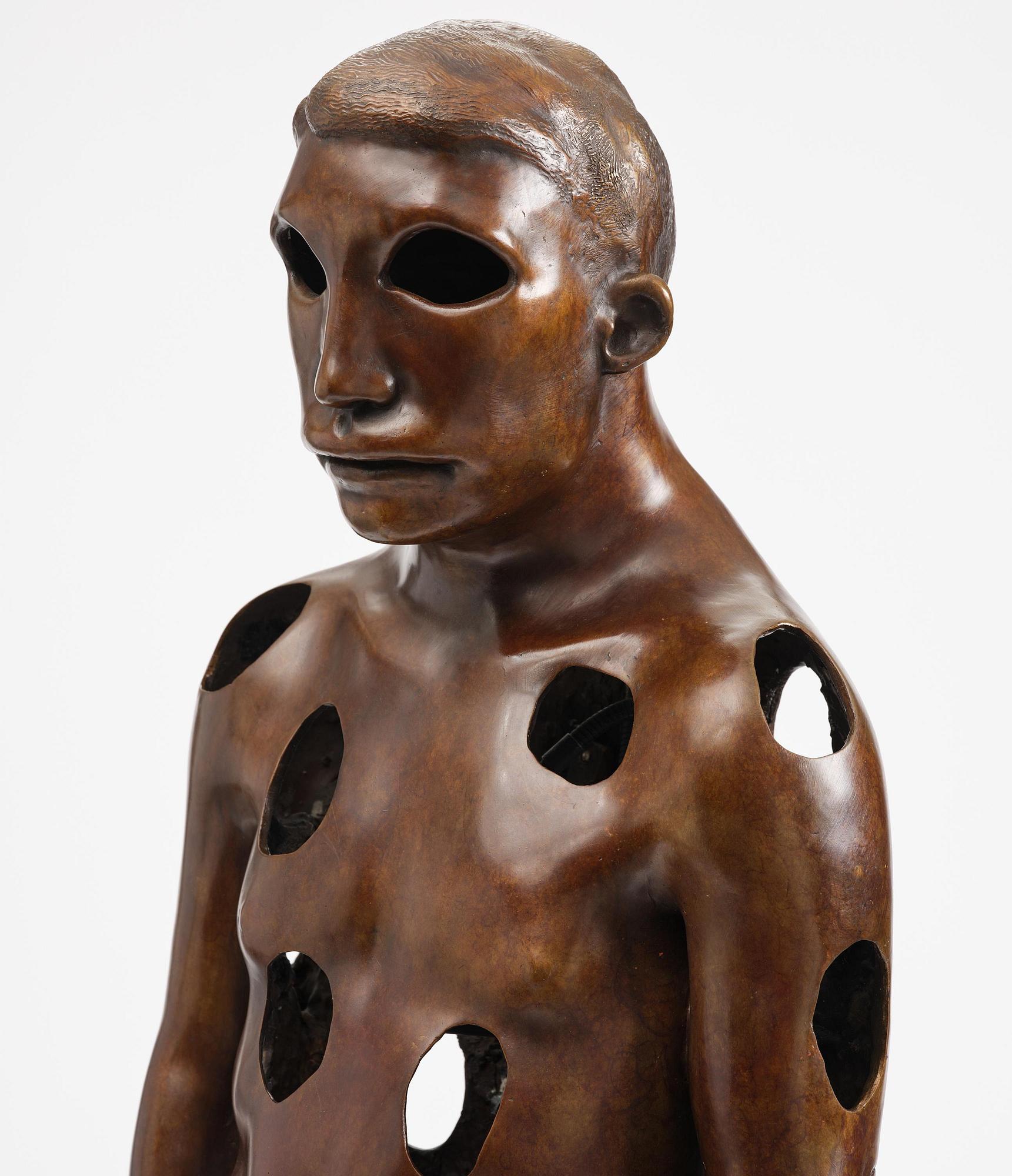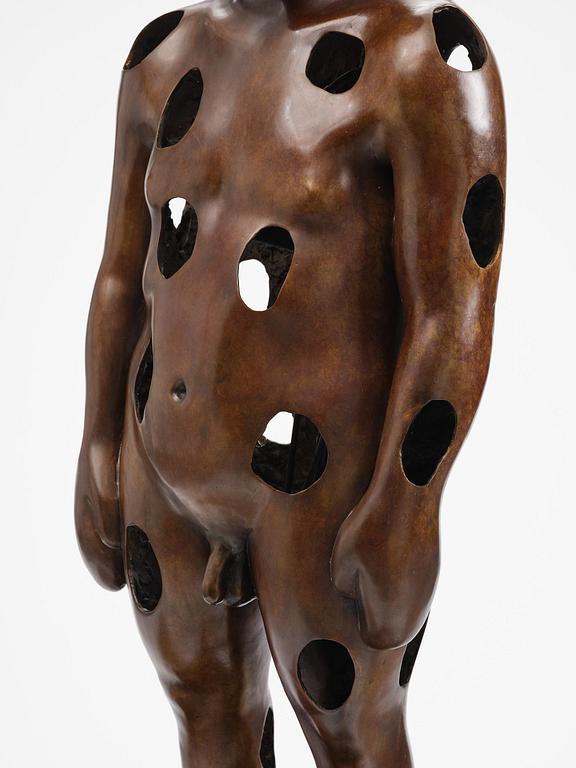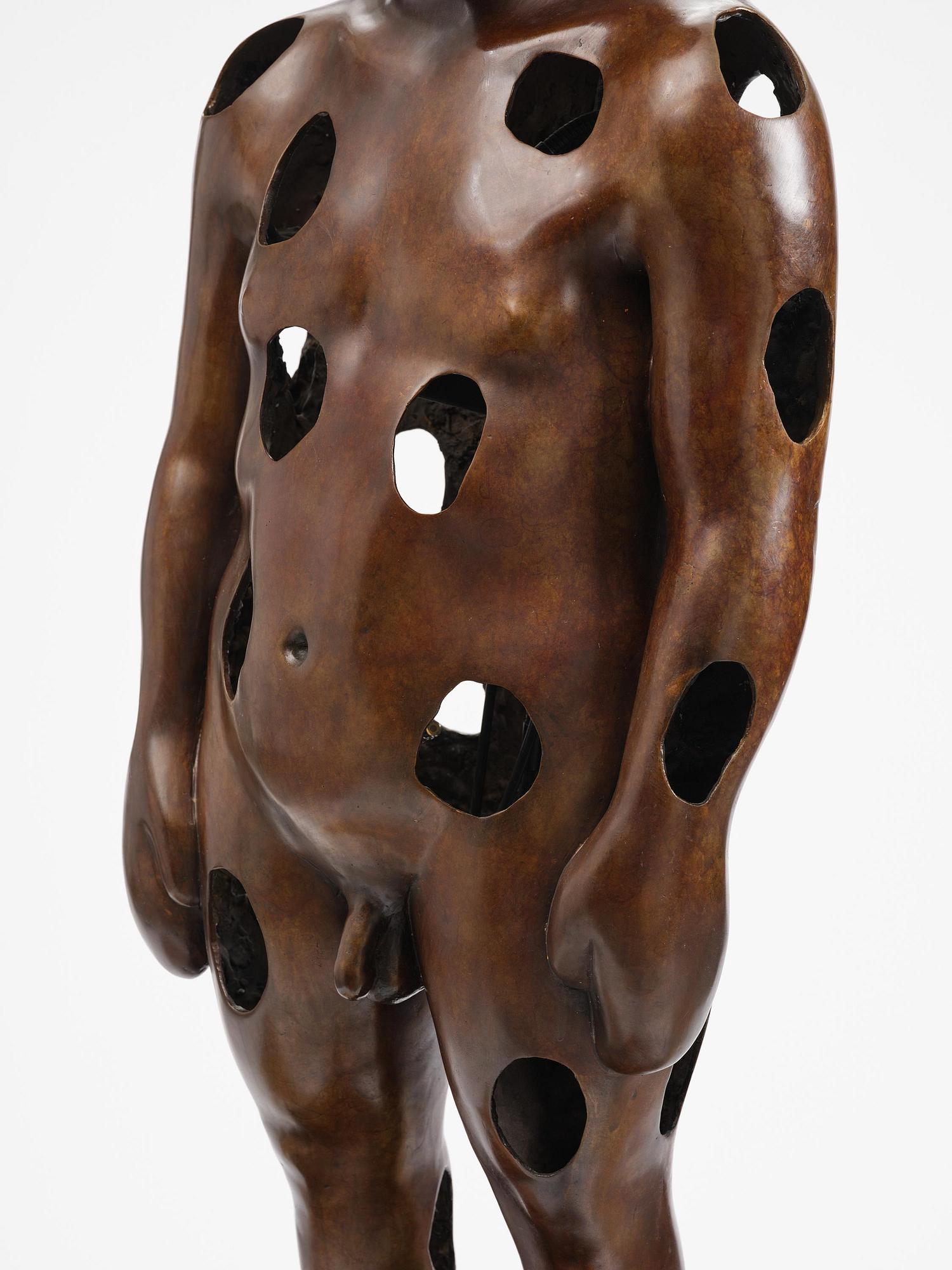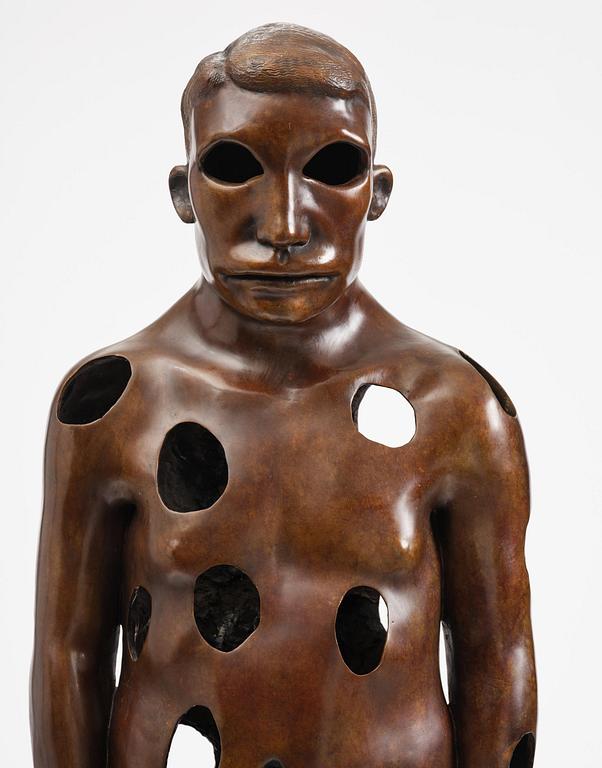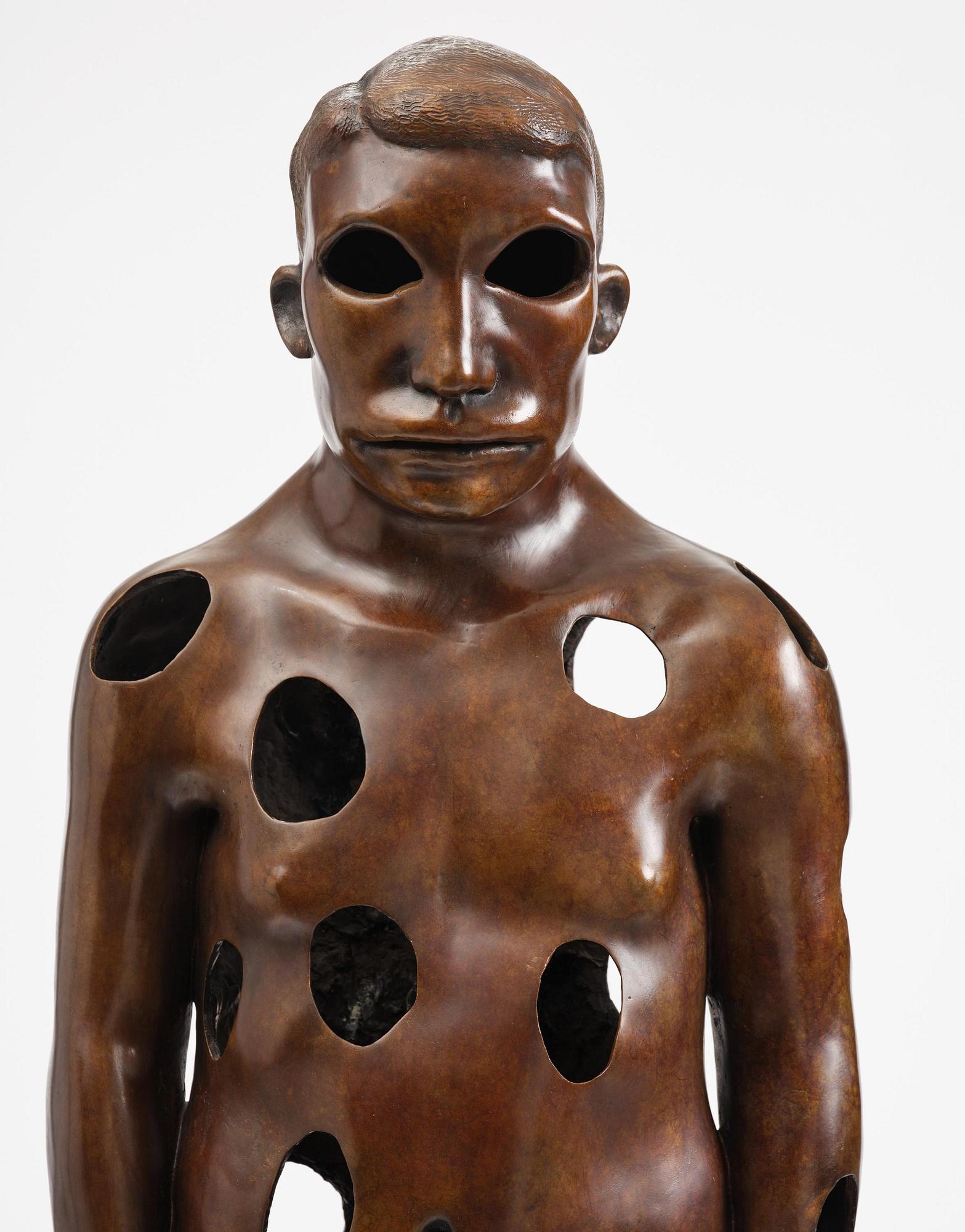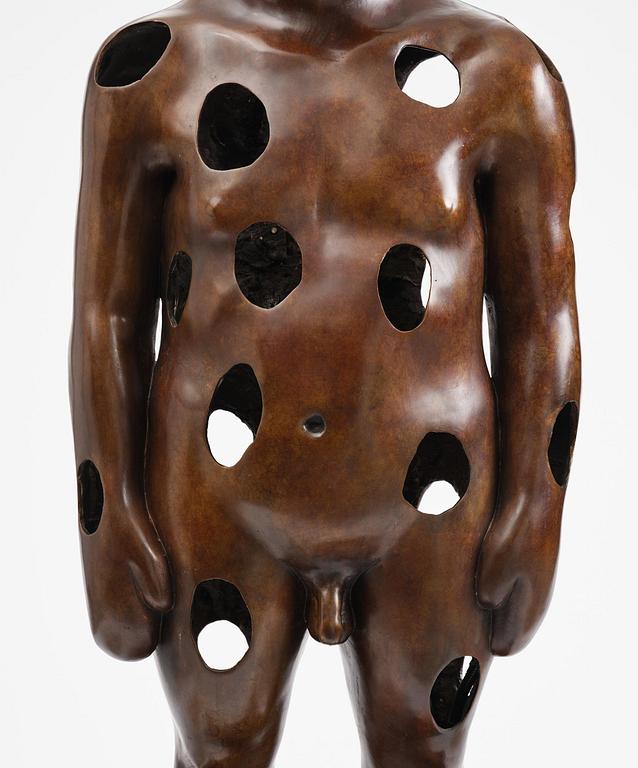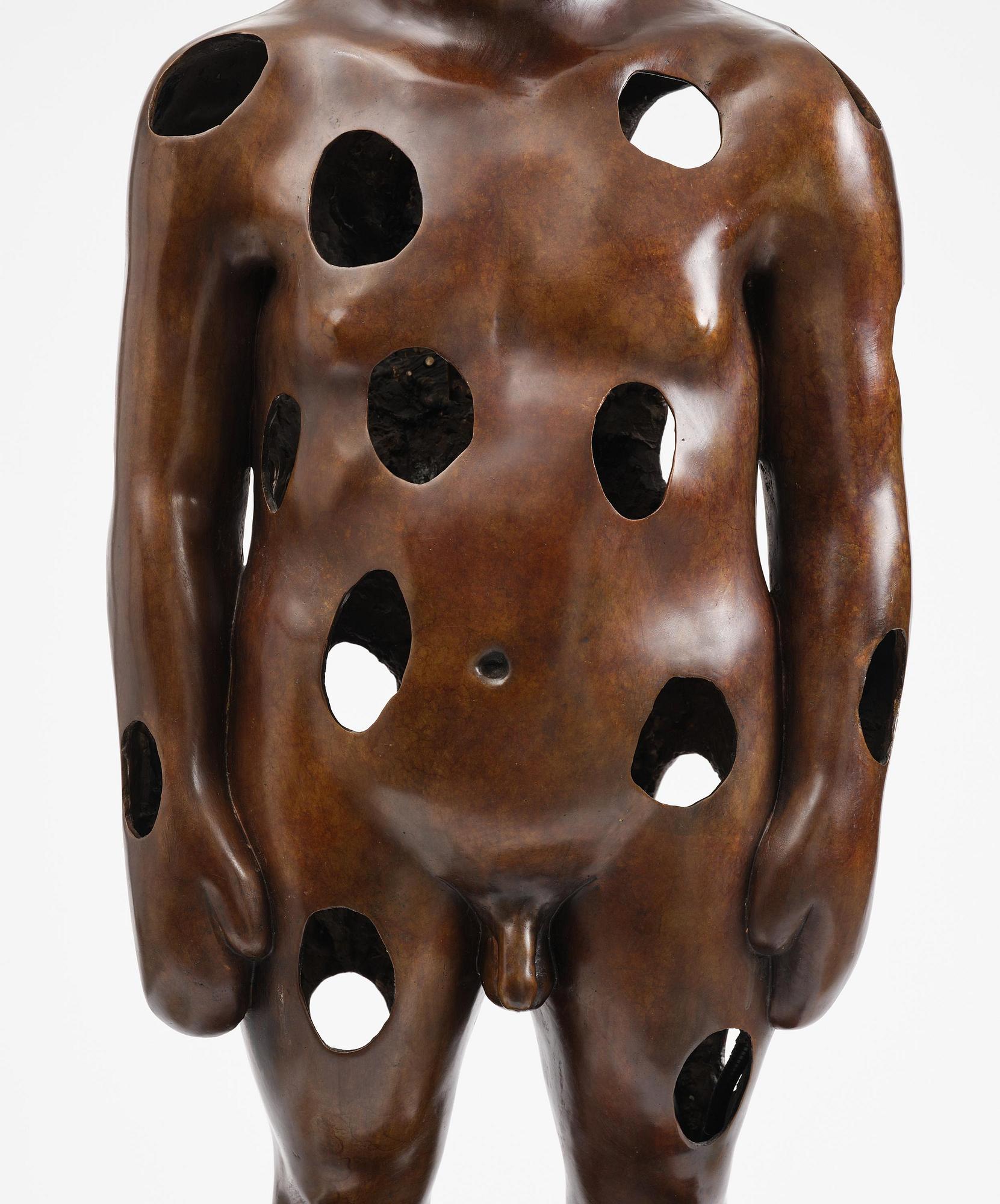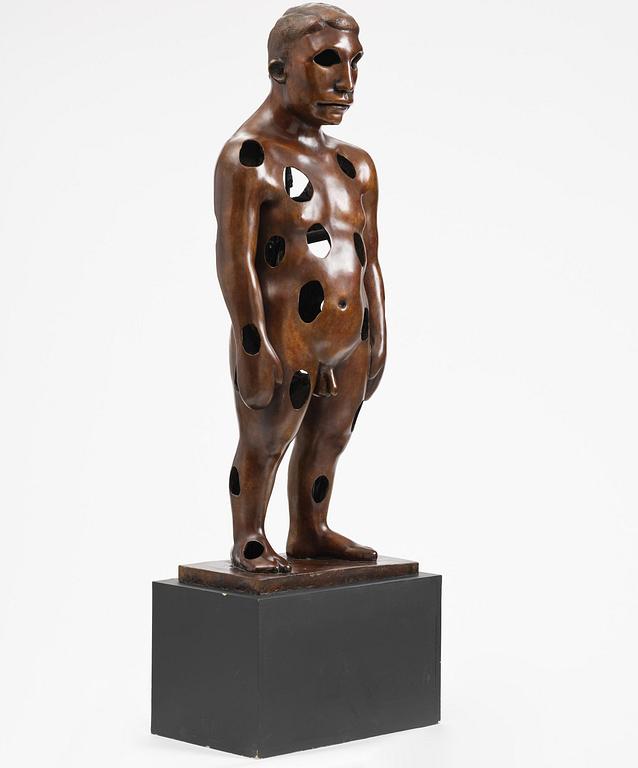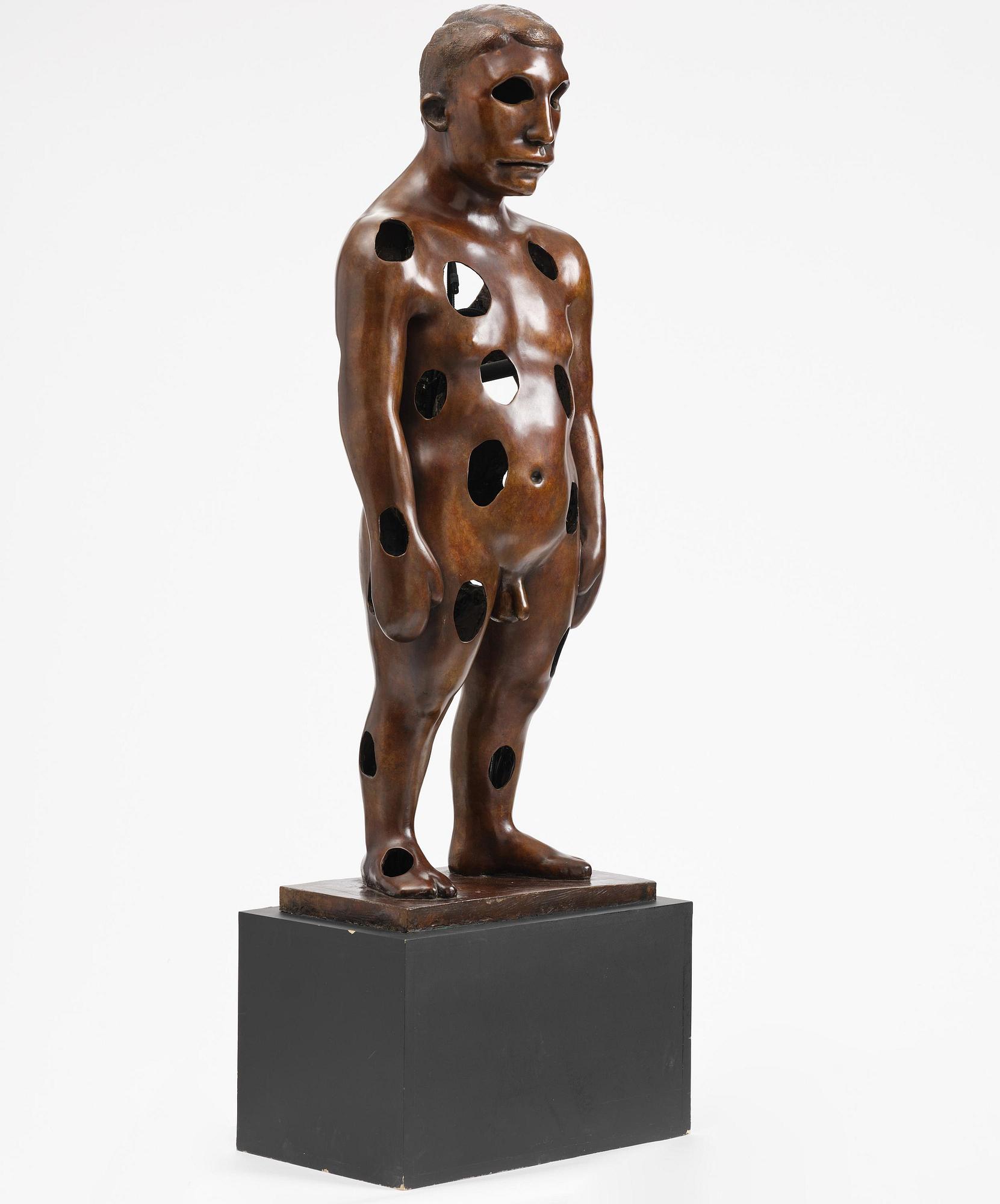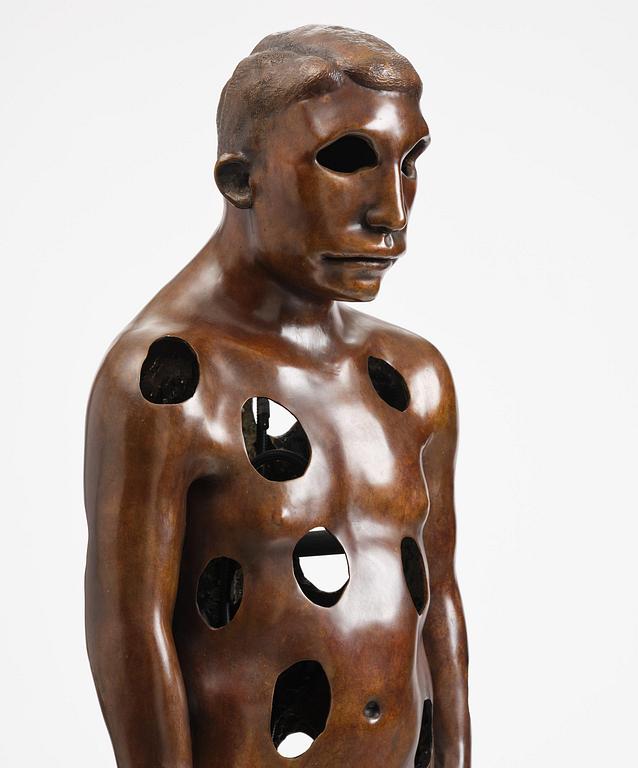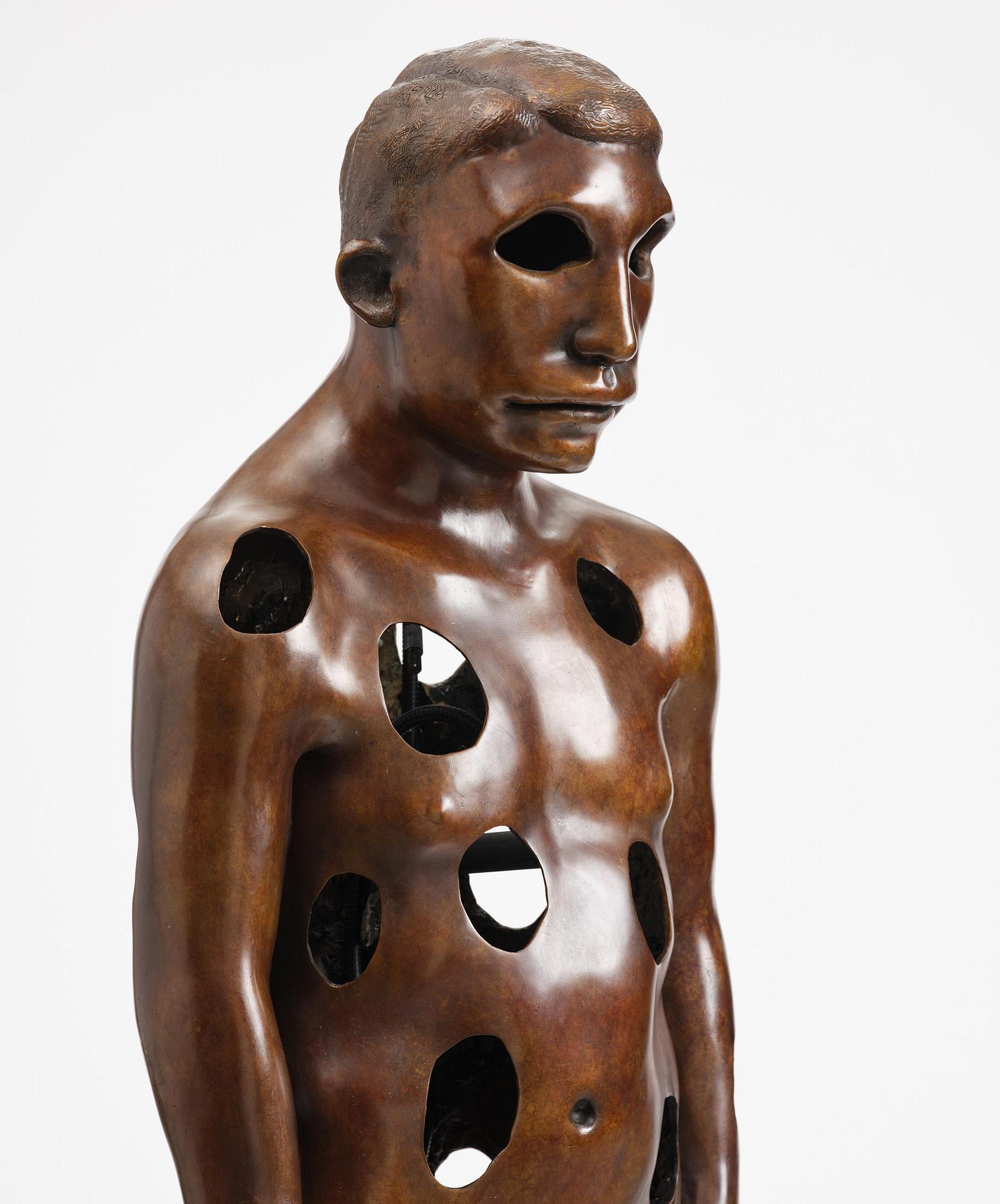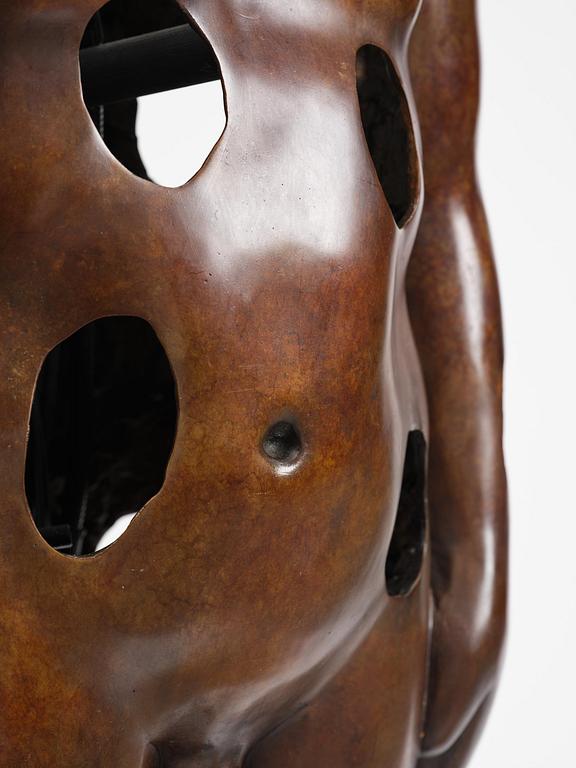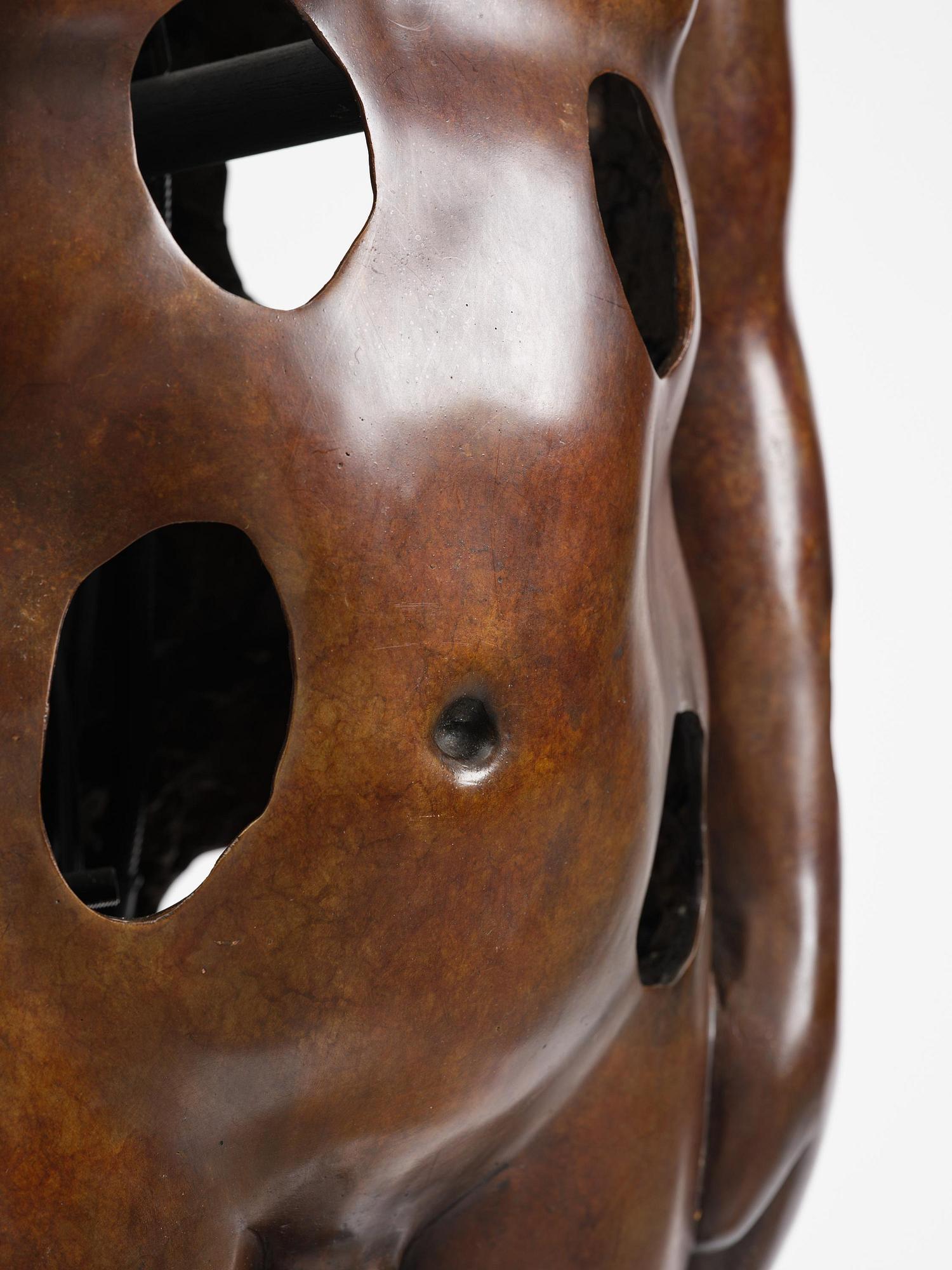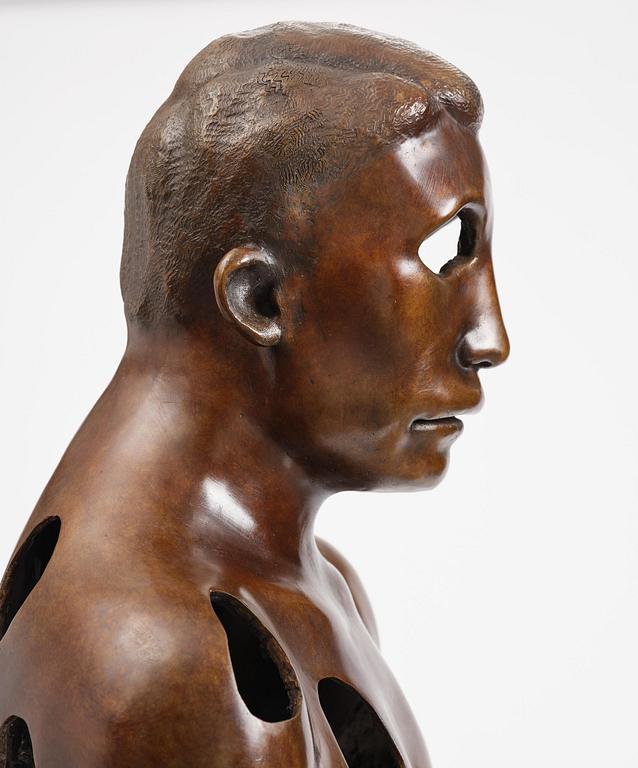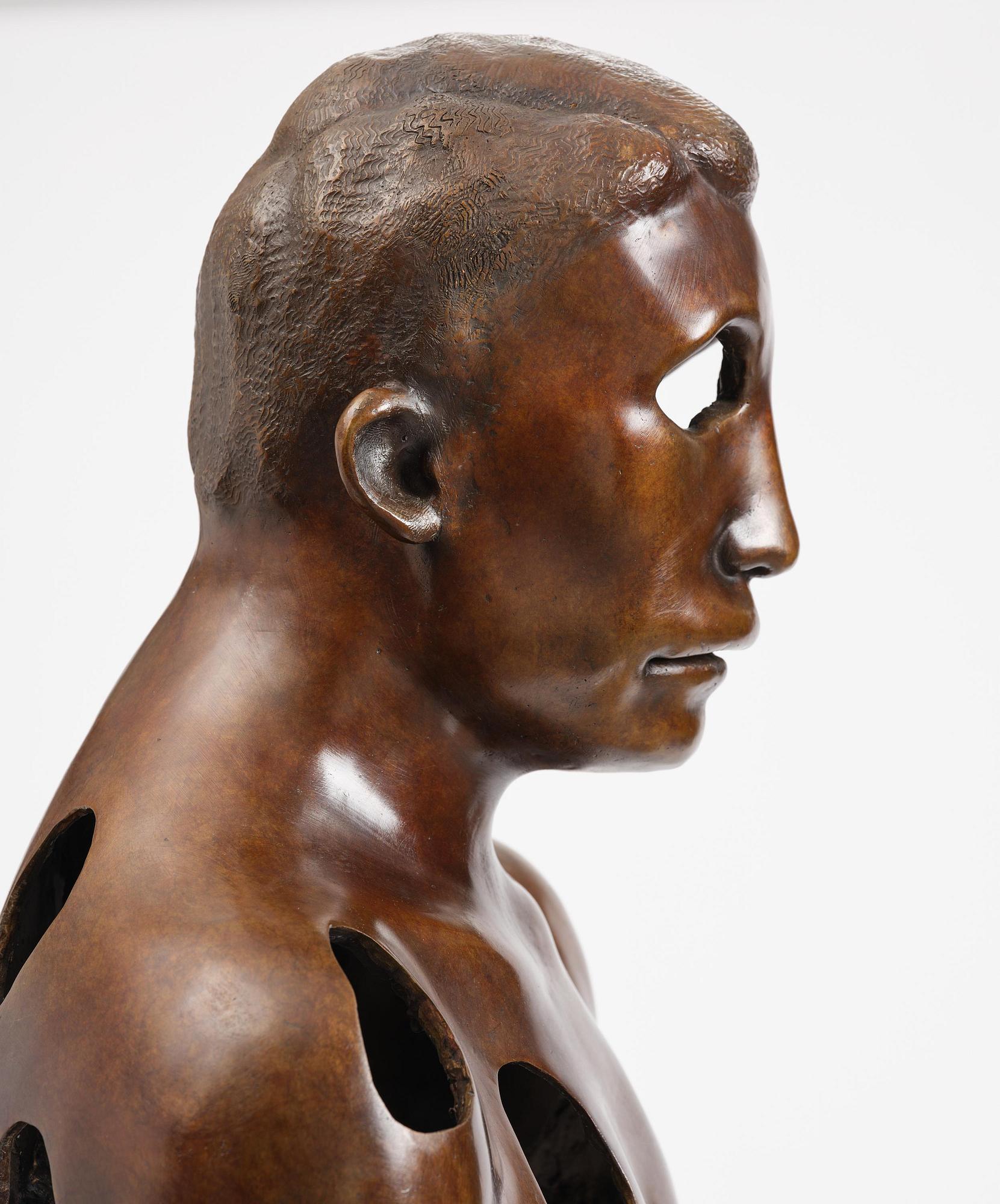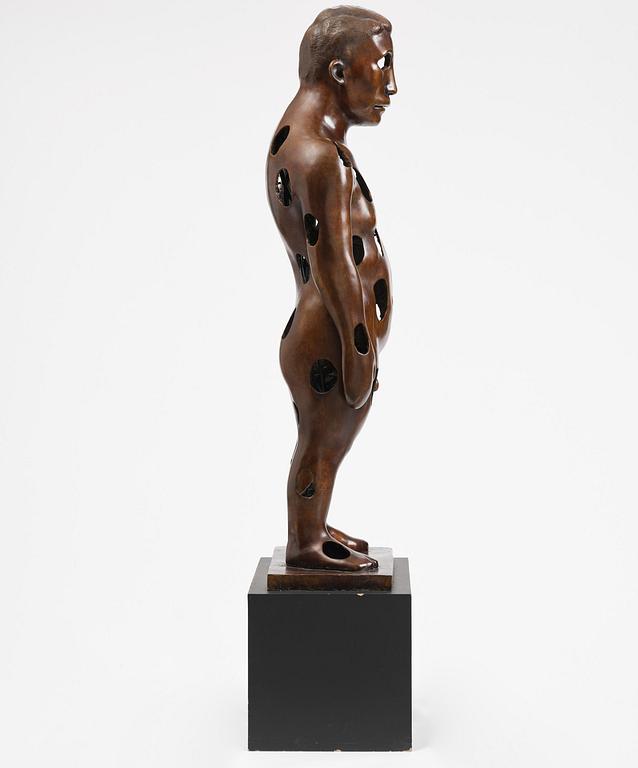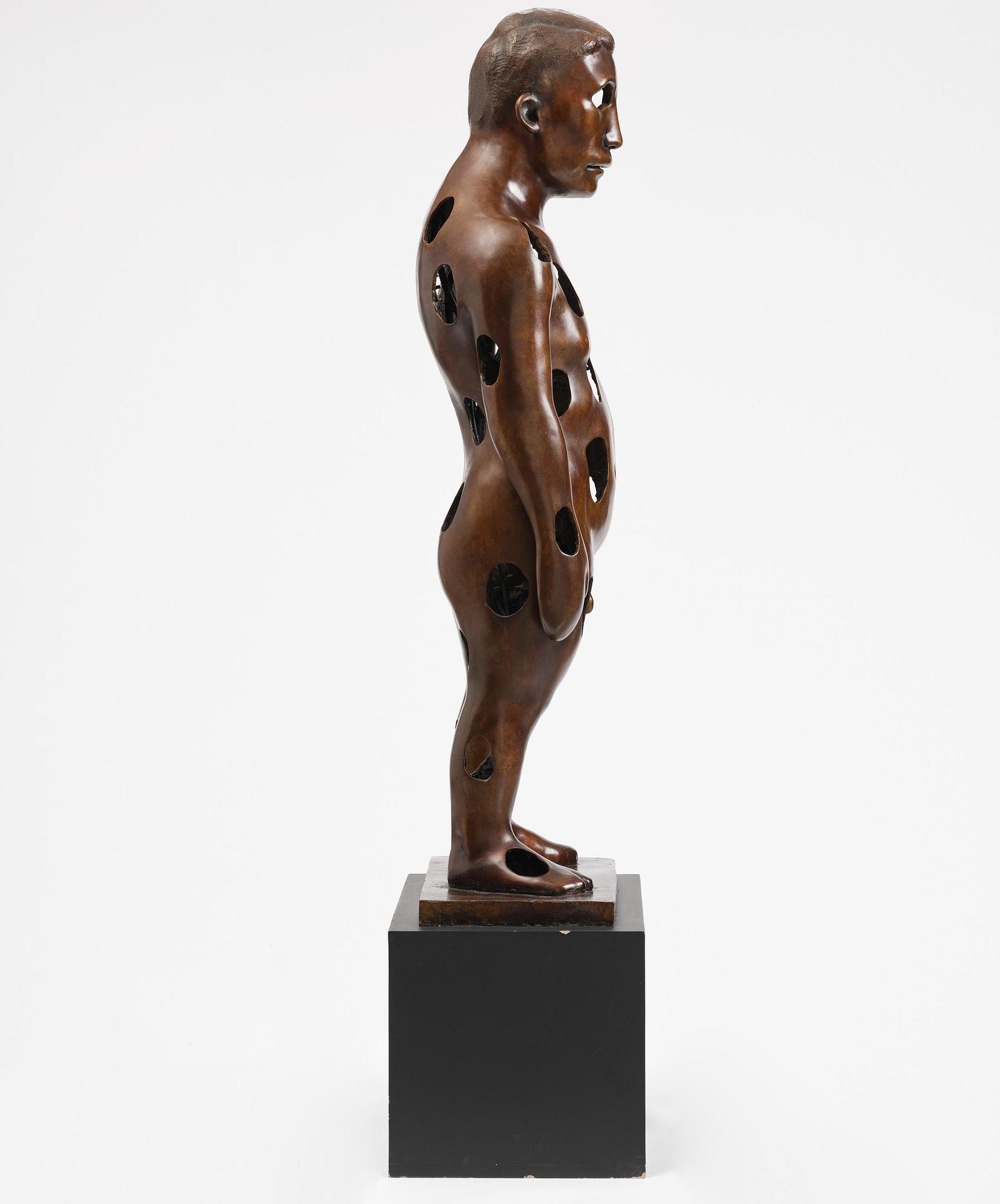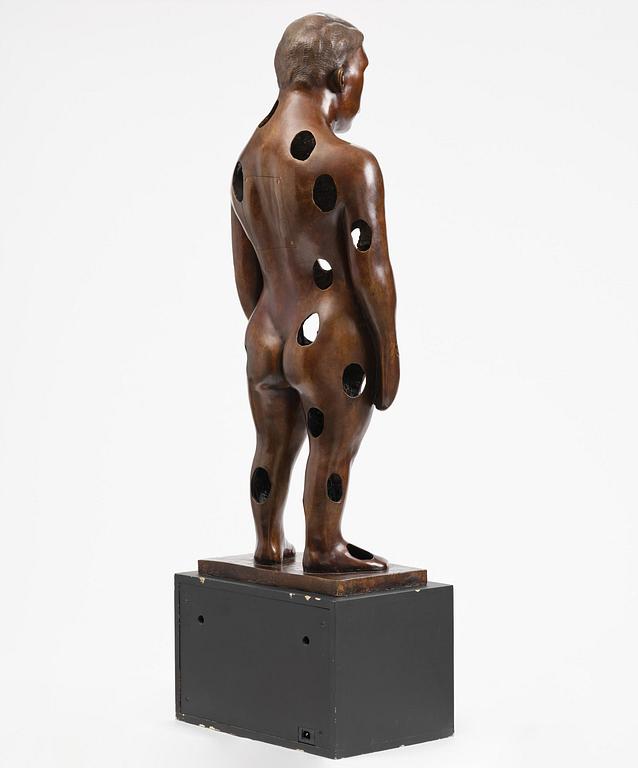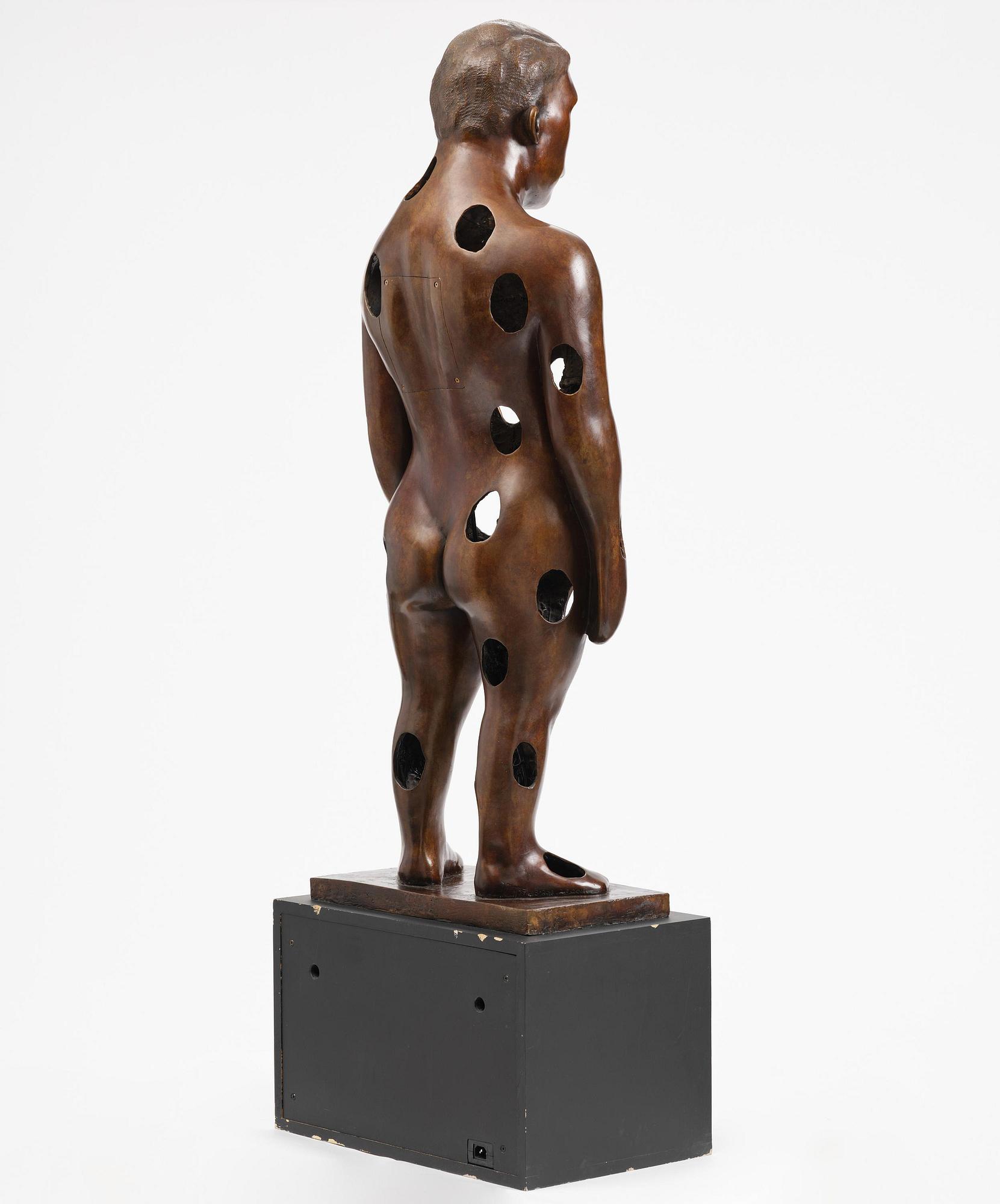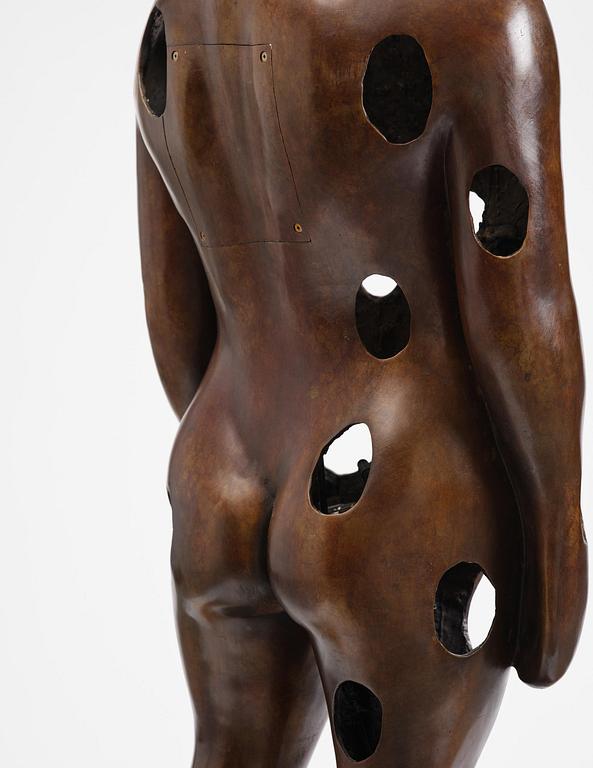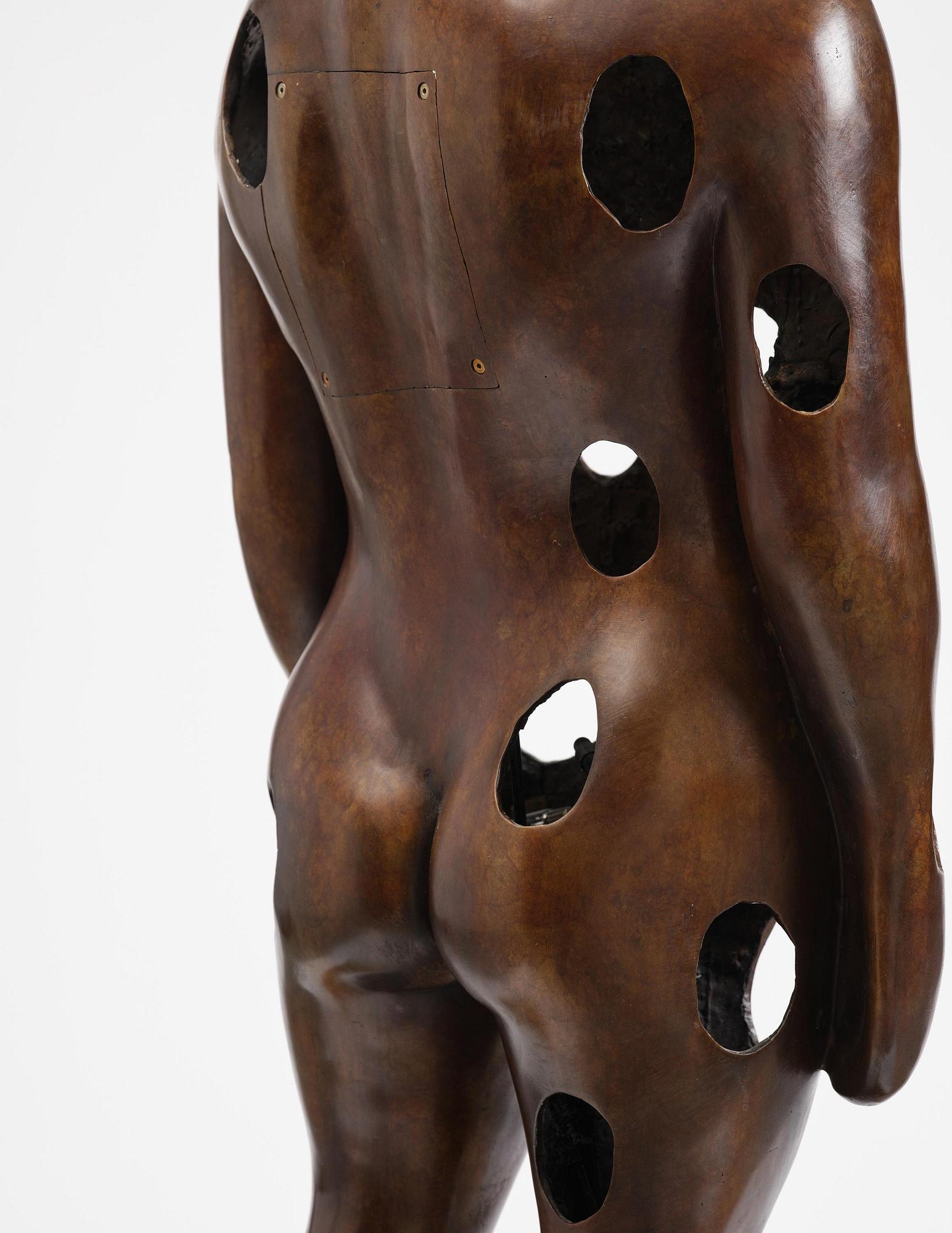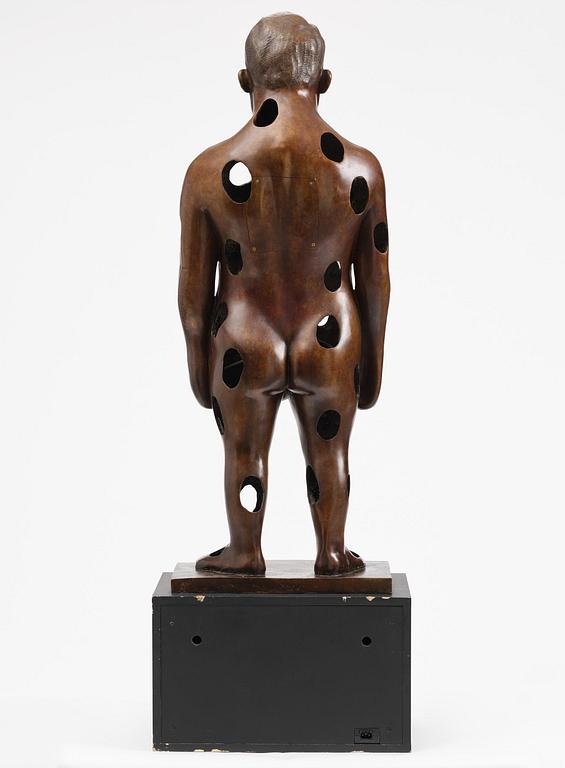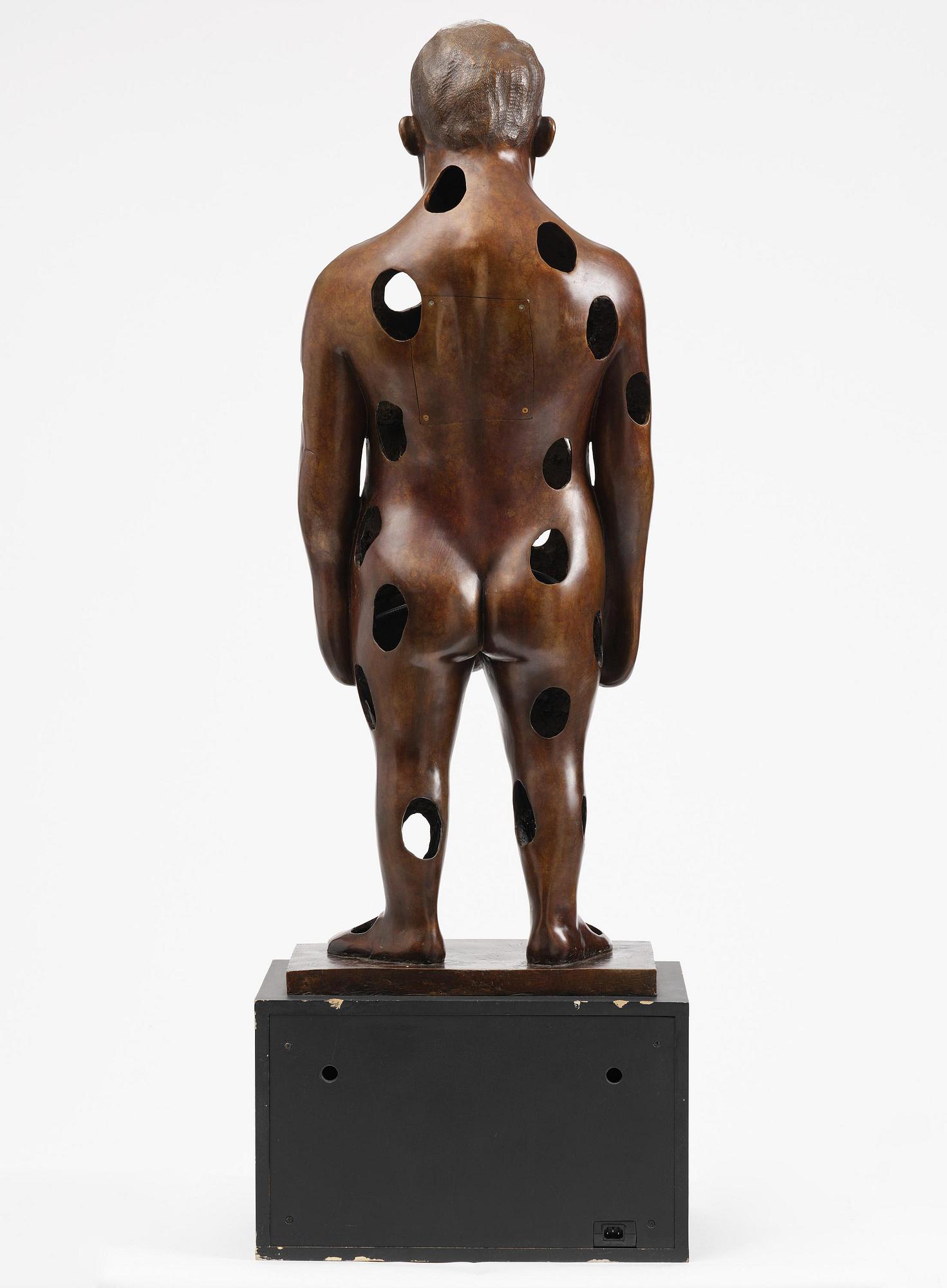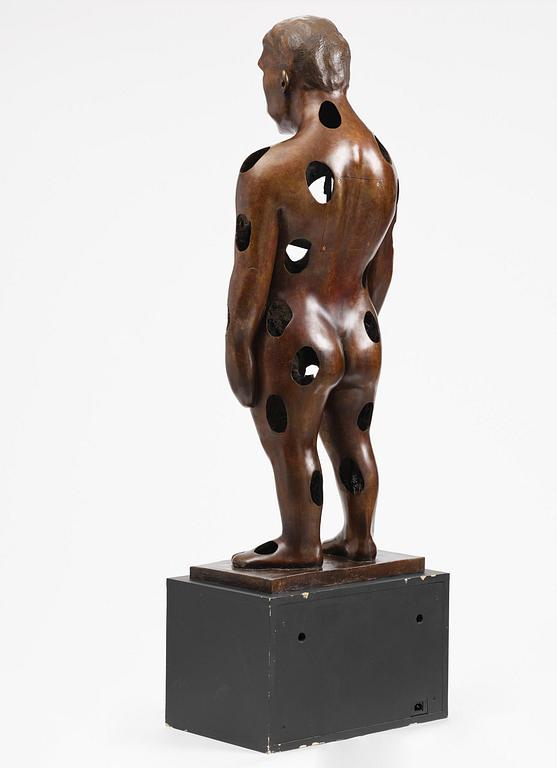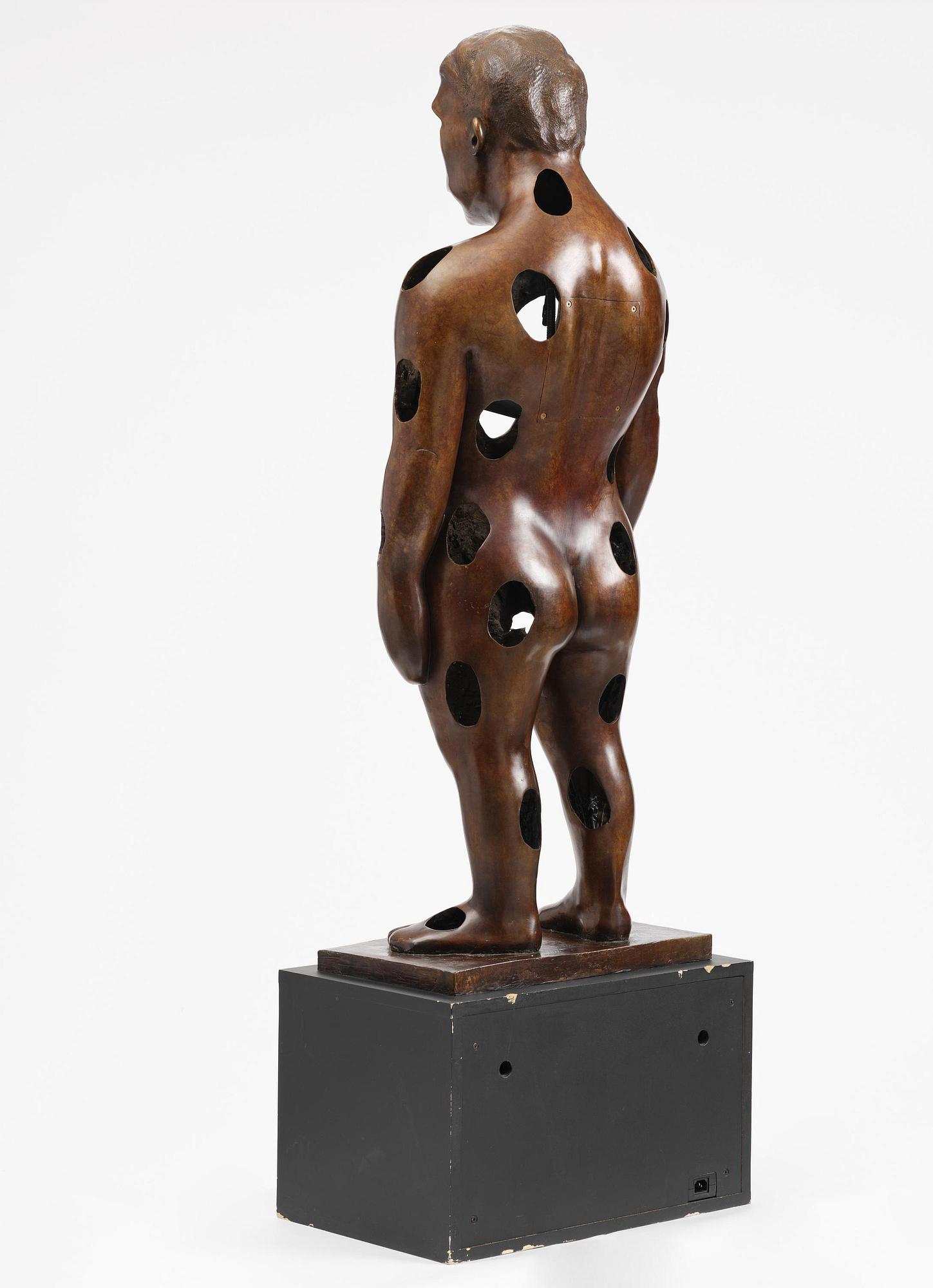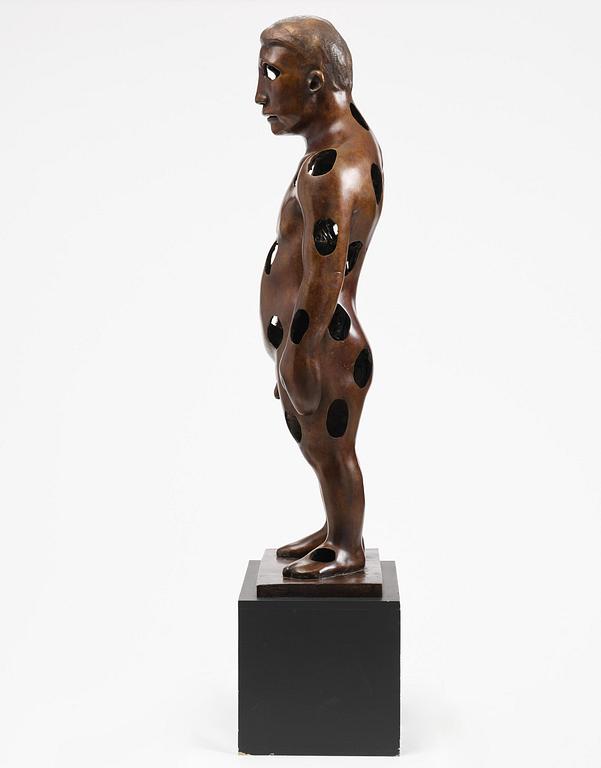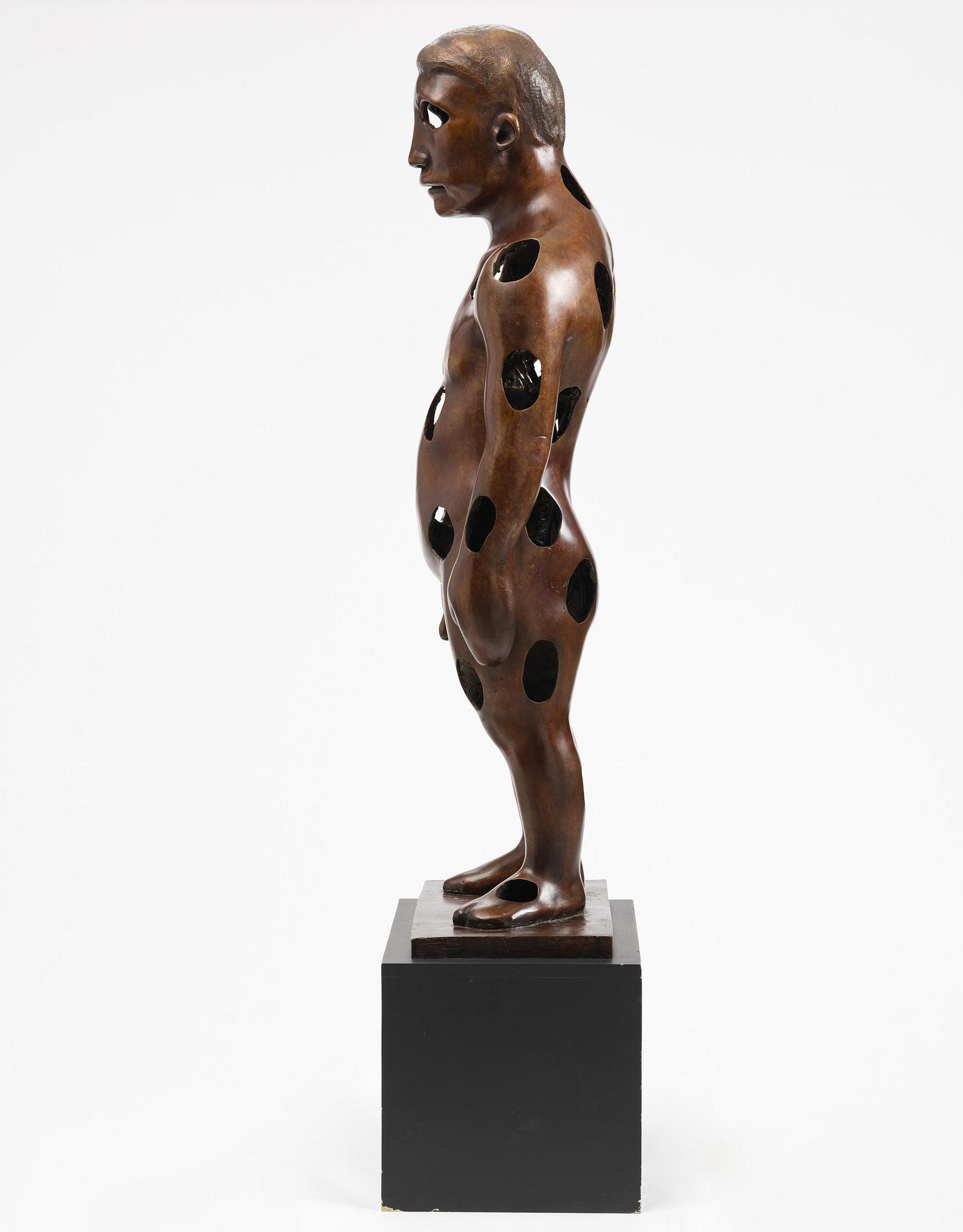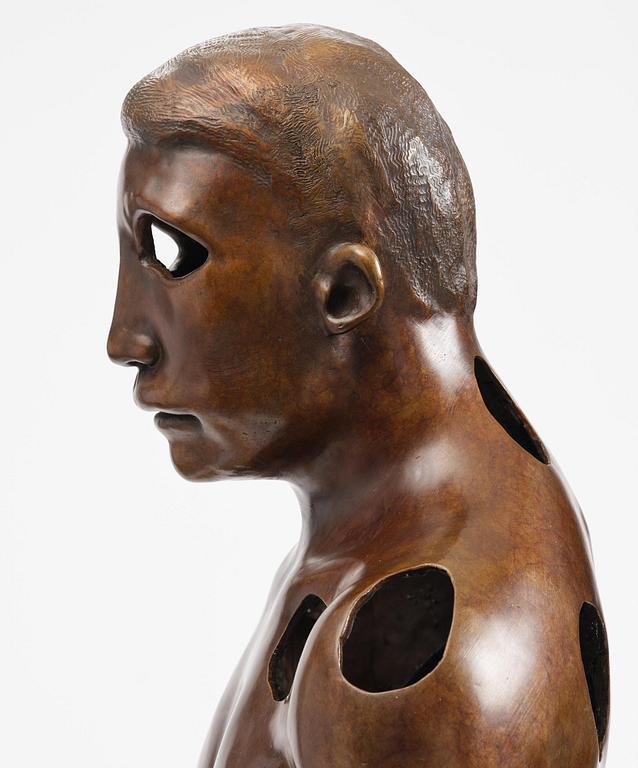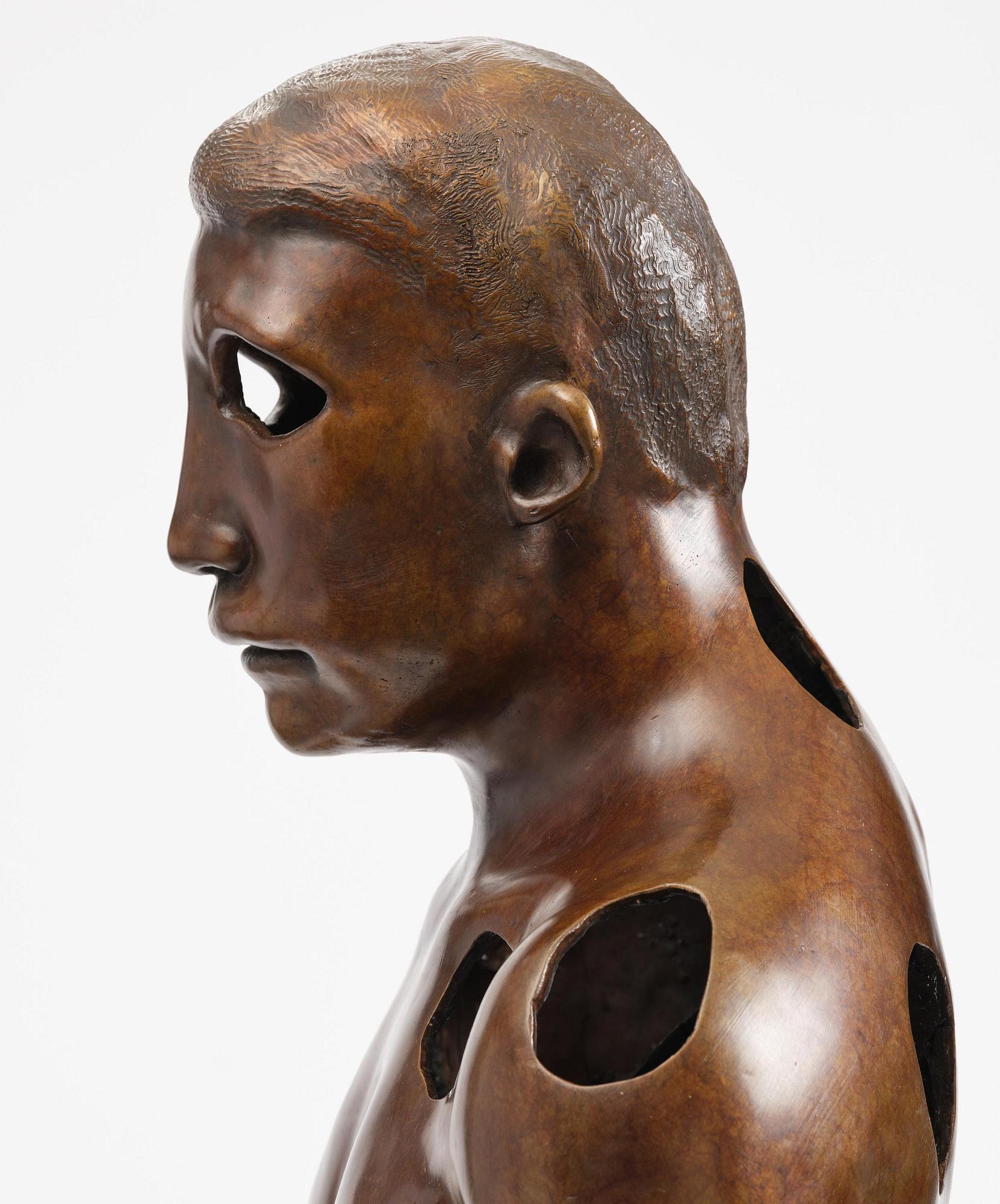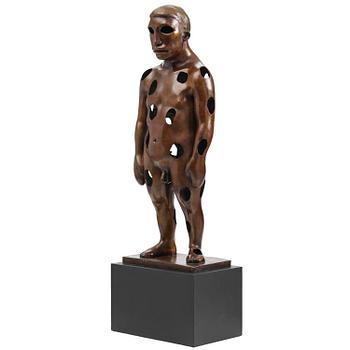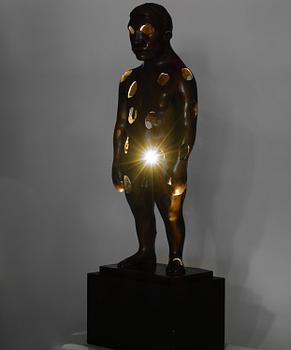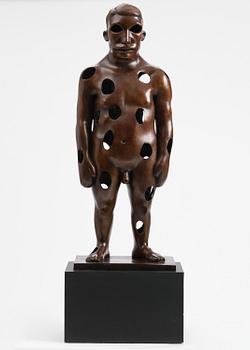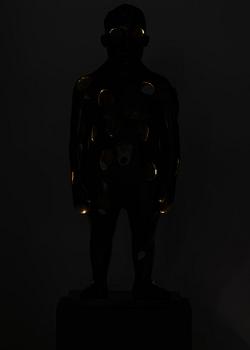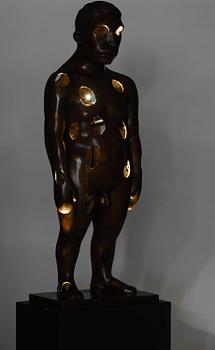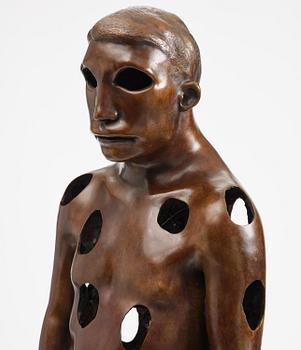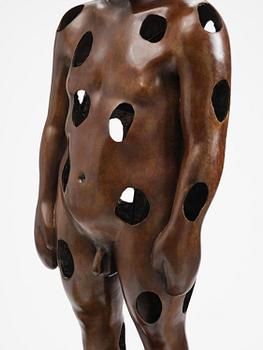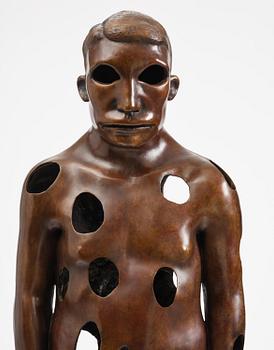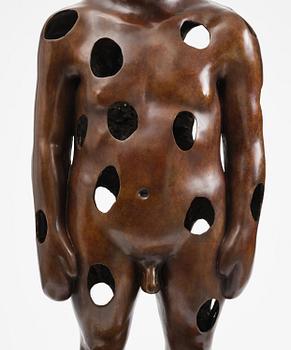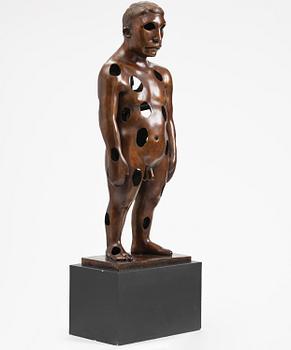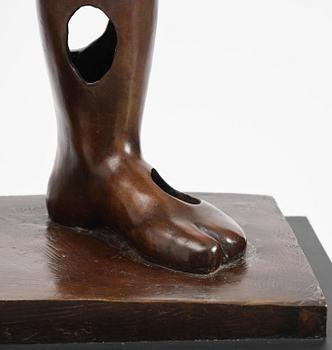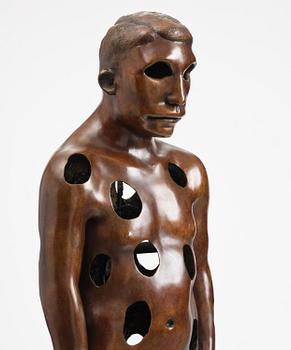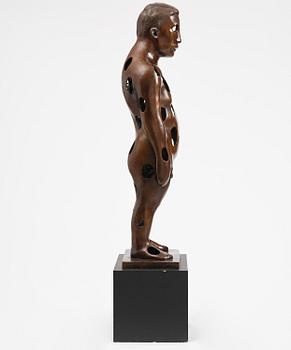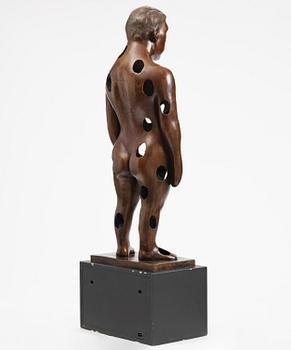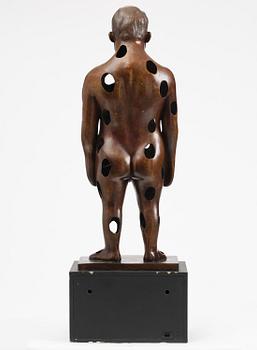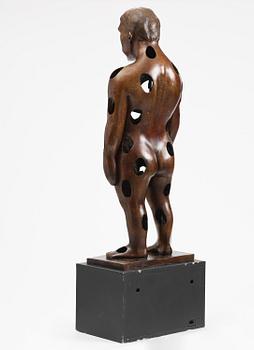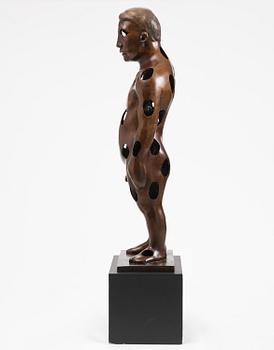
"Light Bulb Man", 1997/2014
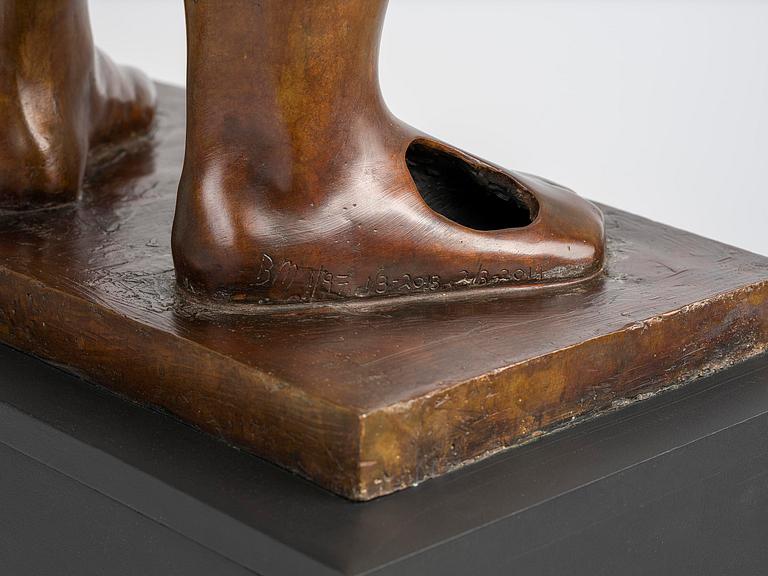
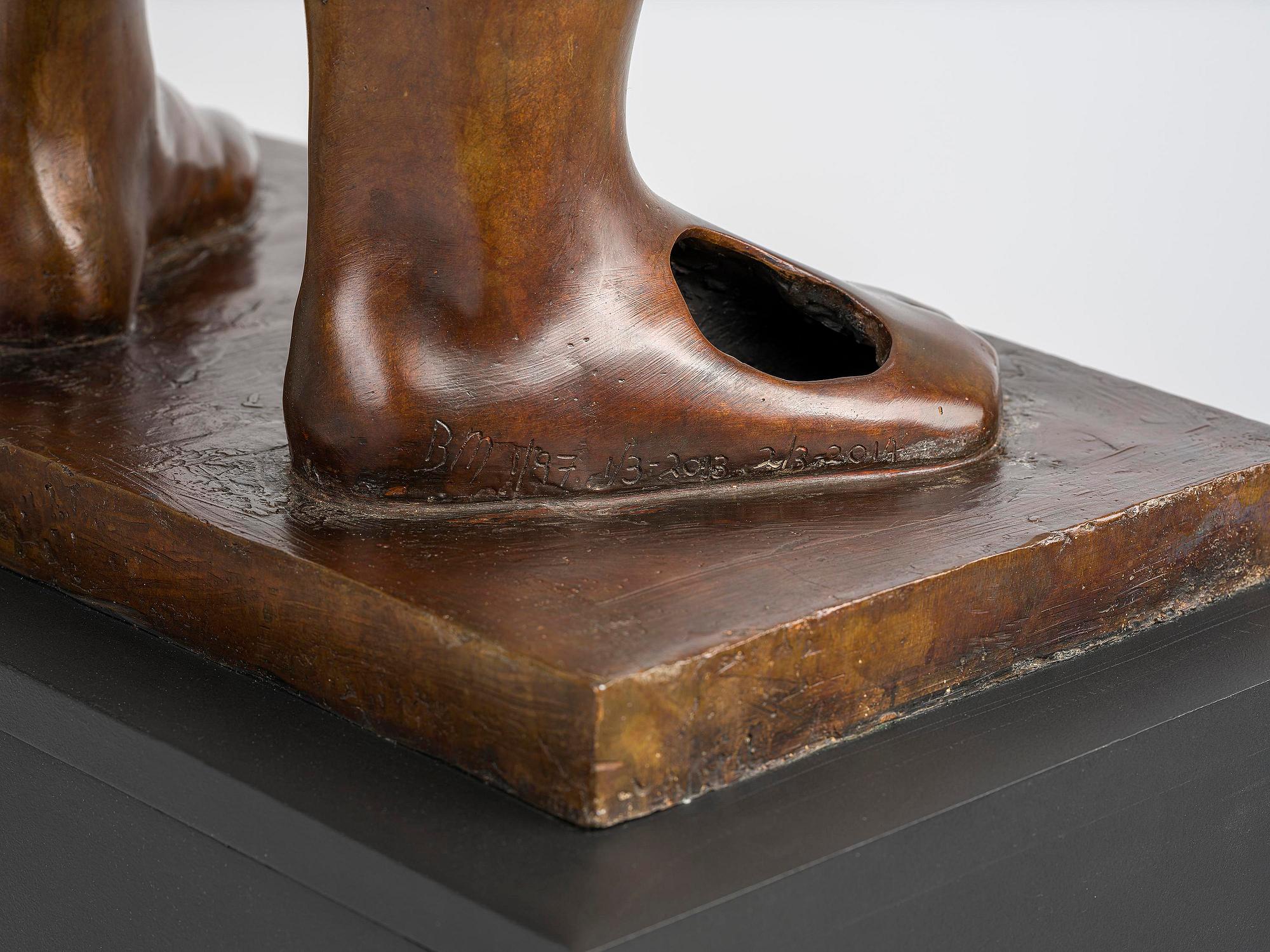
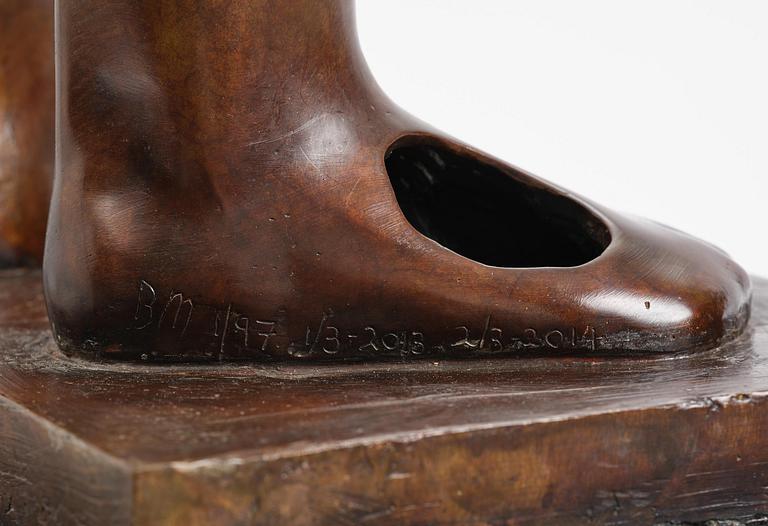
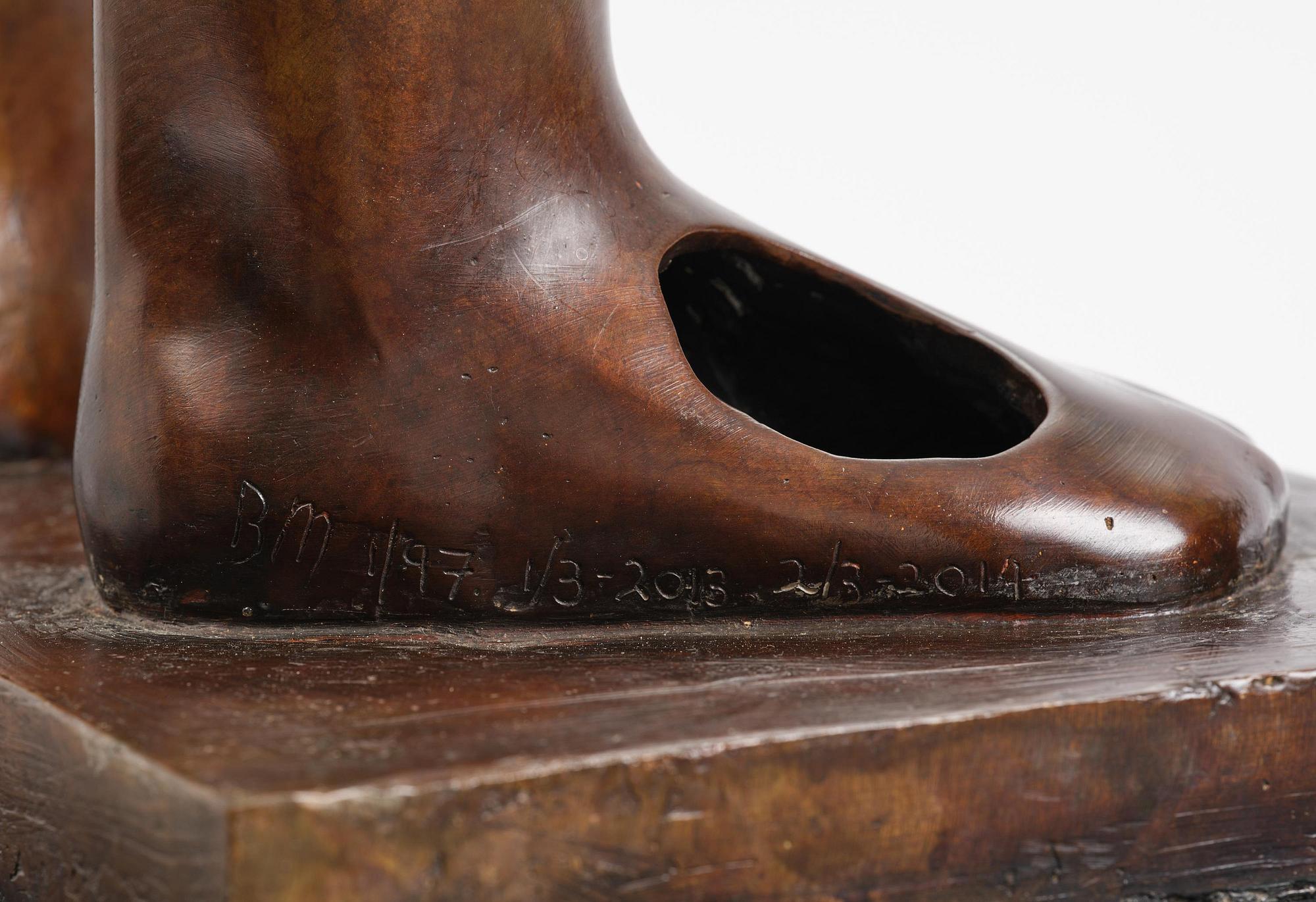
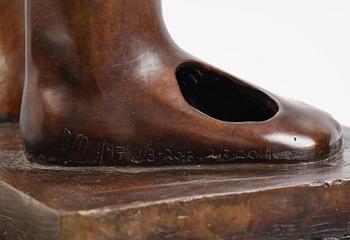
Signed BM and dated 1/97, numbered 2/3. Executed in 2014. Bronze and LED lights, height 126 cm, width 48 cm, depth 27 cm. Including plinth, height 140 cm, width 56 cm, depth 34.5 cm.
Exhibitions
Astrup Fearnley Museet for Modern Art, Oslo, “Bjarne Melgaard’s More Pricks than Kicks”, 27 February–3 May 1998, another example exhibited.
Literature
Astrup Fearnley Museet for Moderne kunst, “Bjarne Melgaard's More Pricks than Kicks”, 1998, another example illustrated cat. no. 22 and cat. no. 30.
Vogelson, Nick (ed.), “Bjarne Melgaard”, 2016, another example illustrated pp. 58–59.
Stokstad, Regine, D2. Dagens Næringsliv, 2022.
More information
Bjarne Melgaard (b. 1967) is one of the most significant Norwegian artists of his generation. Since the 1990s, he has worked across a wide range of media, including painting, sculpture, installation, film, literature and fashion. His art is characterised by a distinctive visual language in which sexuality, desire, identity and alienation intersect with references to art history, popular culture and various subcultural environments.
"Light Bulb Man" is considered one of the most significant and iconic works in Melgaard’s artistic practice and can be interpreted as a self-portrait. "Light Bulb Man" is a recurring figure, first introduced in 1997, when it featured in Melgaard’s breakthrough exhibitions at Galleri Riis in Oslo, the Stedelijk Museum in Amsterdam and the Astrup Fearnley in Oslo in the late 1990s. Melgaard has produced a total of 15 versions of "Light Bulb Man", one in Jesmonite and plaster and 14 in bronze. The example offered at auction is one of three bronze versions incorporating a lighting installation.
An important reference in Melgaard’s artistic practice is Edvard Munch. The two artists share a clear interest in the human body and psyche, as well as in themes such as desire, anxiety, loneliness and vulnerability. While Munch distorts and simplifies the human figure to convey an inner state, Melgaard employs the body in a similar way, but places it within a contemporary world shaped by popular culture and subcultural expressions.
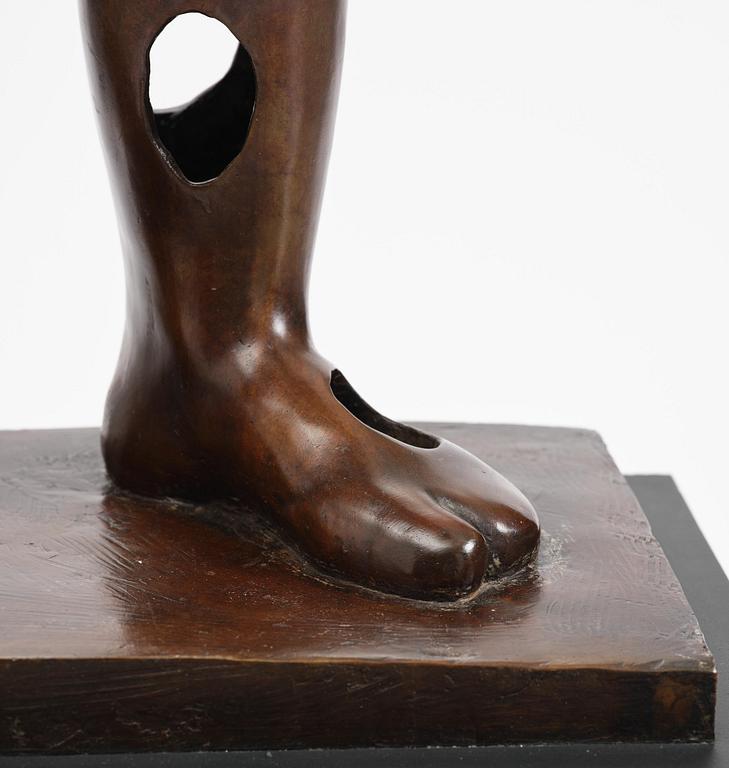
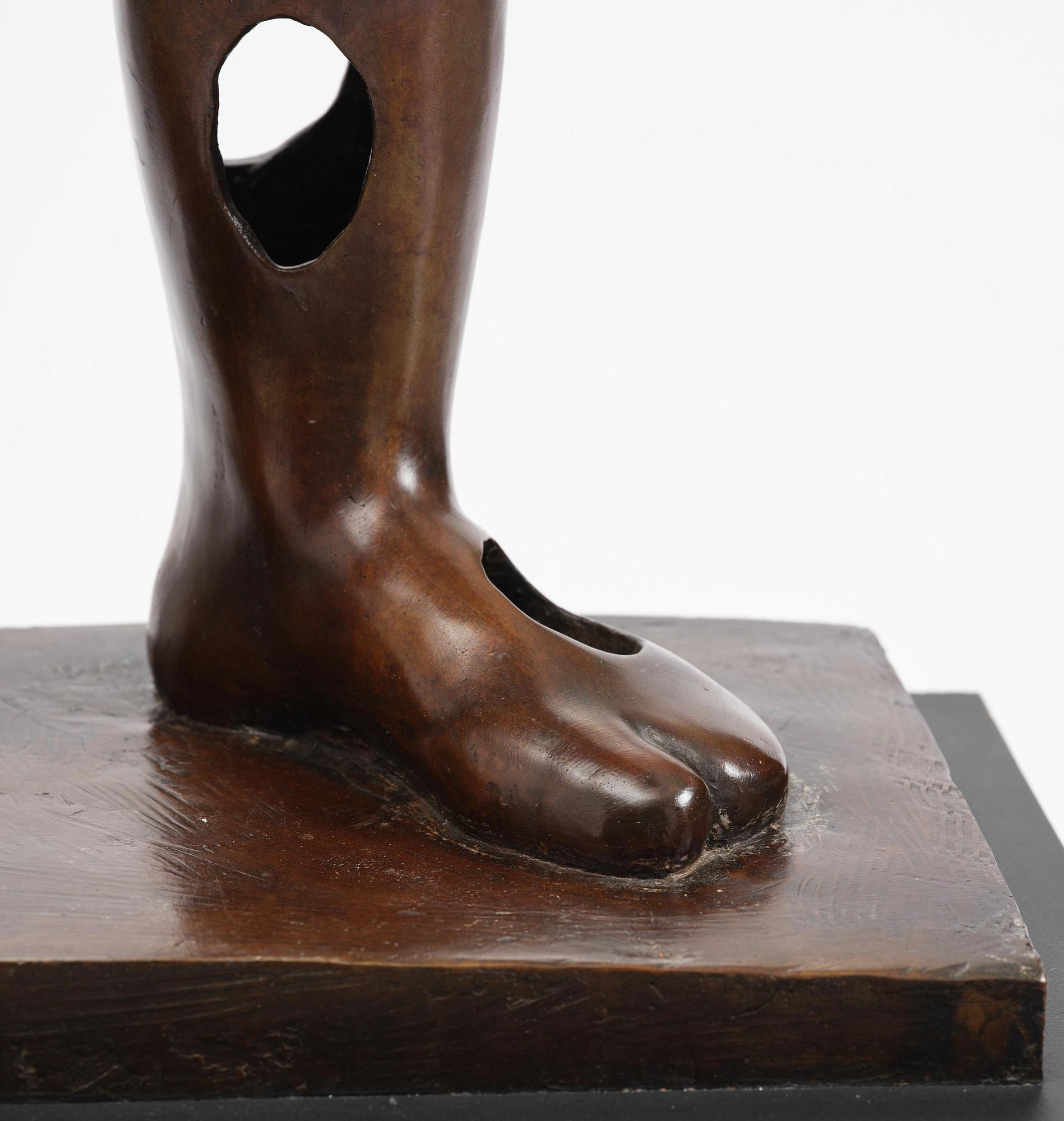
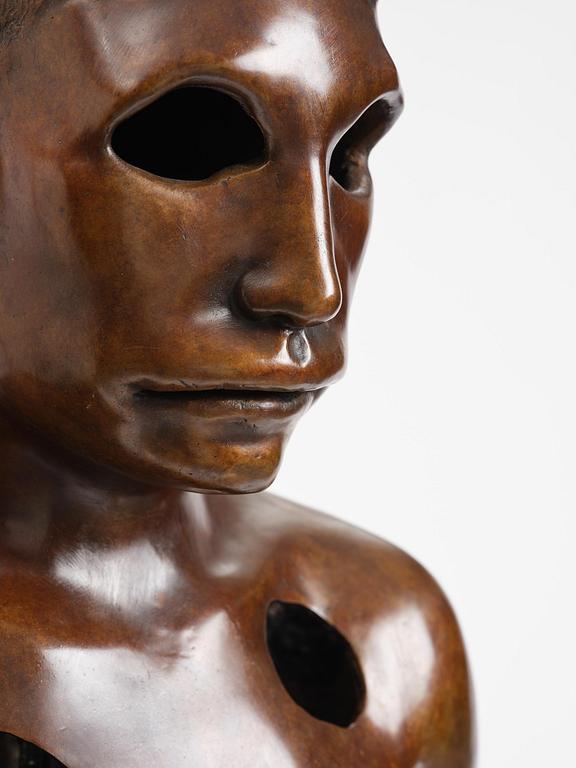
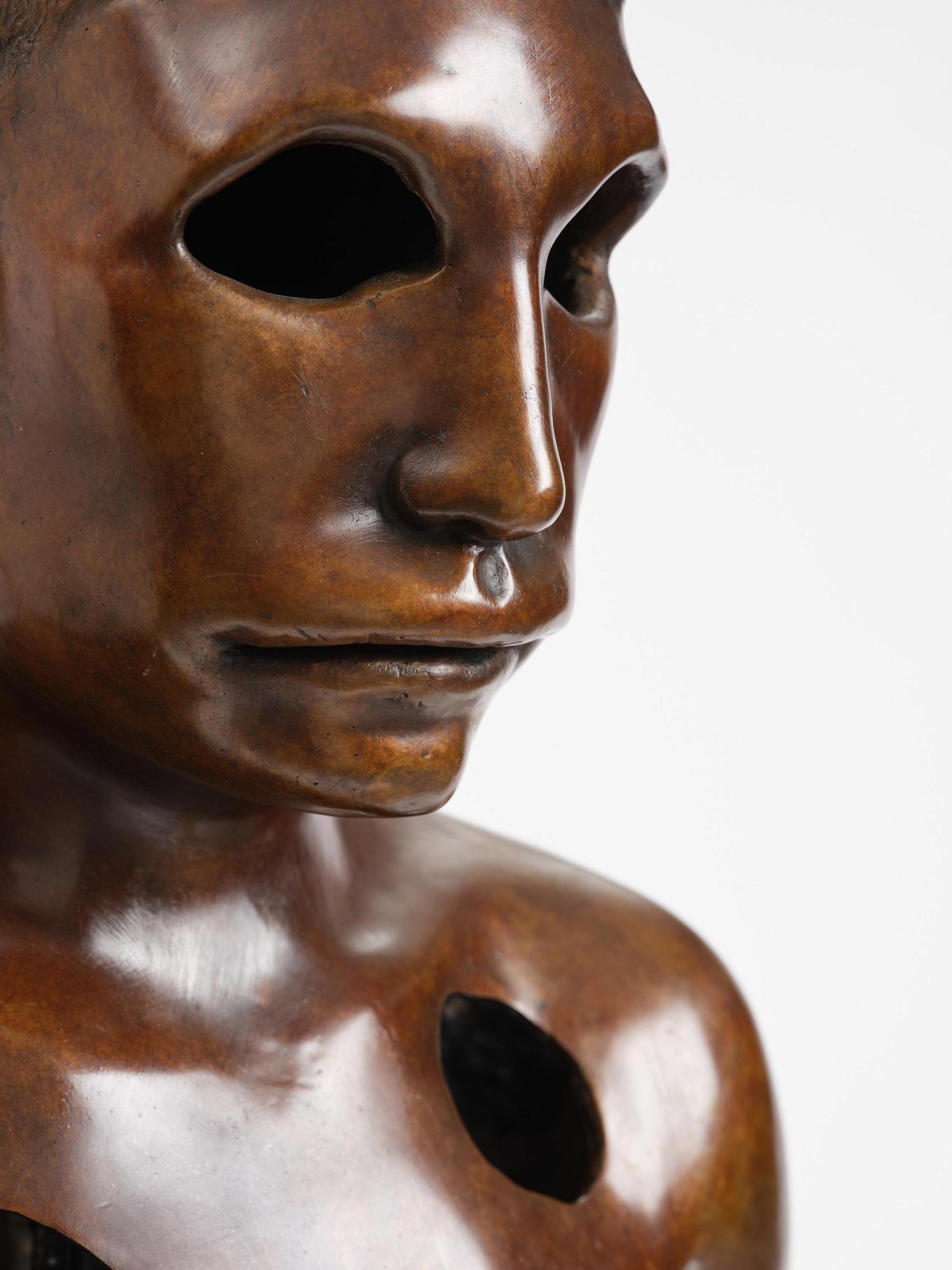
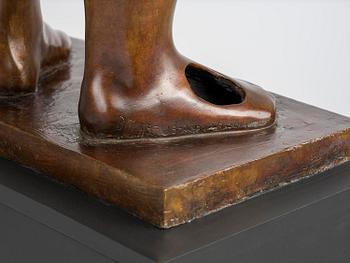
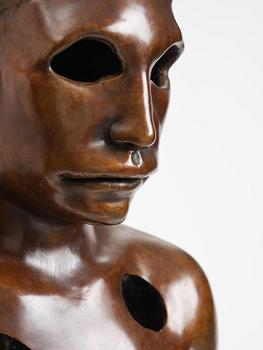
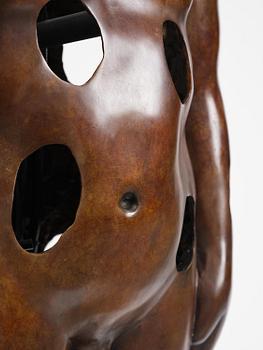
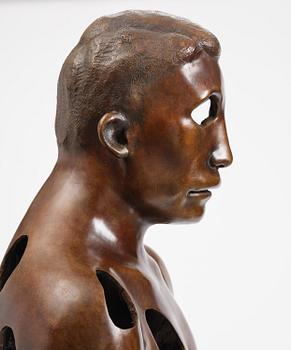
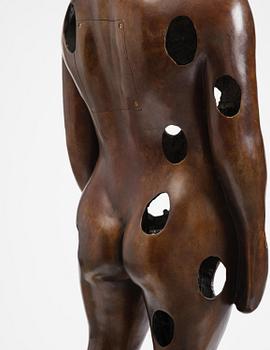
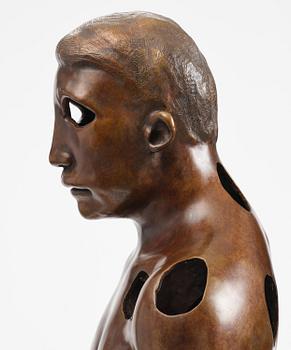
"Light Bulb Man" depicts a solitary, standing male figure with an apparently classically modelled body. It is only upon closer inspection that the perforated nature of the body becomes apparent. The numerous holes disrupt the integrity of the body’s surface, giving the figure an expression of vulnerability and exposure.
The contrast between the calm, almost classical stance and the perforated body is central to the work. The figure does not strike a dramatic pose but stands upright, facing the viewer. This makes the holes all the more striking. The body becomes both physical and symbolic: a body that appears to have been illuminated from within, wounded or opened up.
The original" Light Bulb Man" now in the collection of the National Museum in Oslo, was developed as a larger installation comprising the sculpture alongside 575 objects, including newspaper clippings, drawings, texts, a Gucci garment and knitted gloves. The work has been associated with themes such as confession, addiction, AIDS, subcultures and vulnerability. The sculpture is thus part of a larger work in which personal material, cultural references and the human body converge.
In the bronze sculpture, the figure is distilled to its essential form. Without the surrounding installation, attention is directed towards the body itself and its surface. The traditional weight and permanence of bronze lend the figure a monumental presence, while the numerous openings challenge the classical sculptural ideal of a closed and harmonious body.
This is also where the connection to Munch becomes relevant. In the work of both artists, the body is more than a representation of the human figure; it becomes an expression of a psychological state. Melgaard extends this tradition, placing it within a contemporary context in which the body, identity, sexuality and vulnerability take centre stage.
"Light Bulb Man" has become one of the most recurring figures in Melgaard’s artistic practice and is a concentrated example of the artist’s ability to combine an apparently simple form with more complex questions concerning the body and human identity.
"Light Bulb Man" is represented in several public collections, including the Astrup Fearnley Museum in Oslo, the National Museum in Oslo, the Stedelijk Museum in Amsterdam and Equinor in Oslo.
For condition report contact specialist

What will the transport cost?
Shipping can only be arranged by contacting specialdelivery@bukowskis.com.
Covered by droit de suite
Image rights
The artworks in this database are protected by copyright and may not be reproduced without the permission of the rights holders. The artworks are reproduced in this database with a license from Bildupphovsrätt.