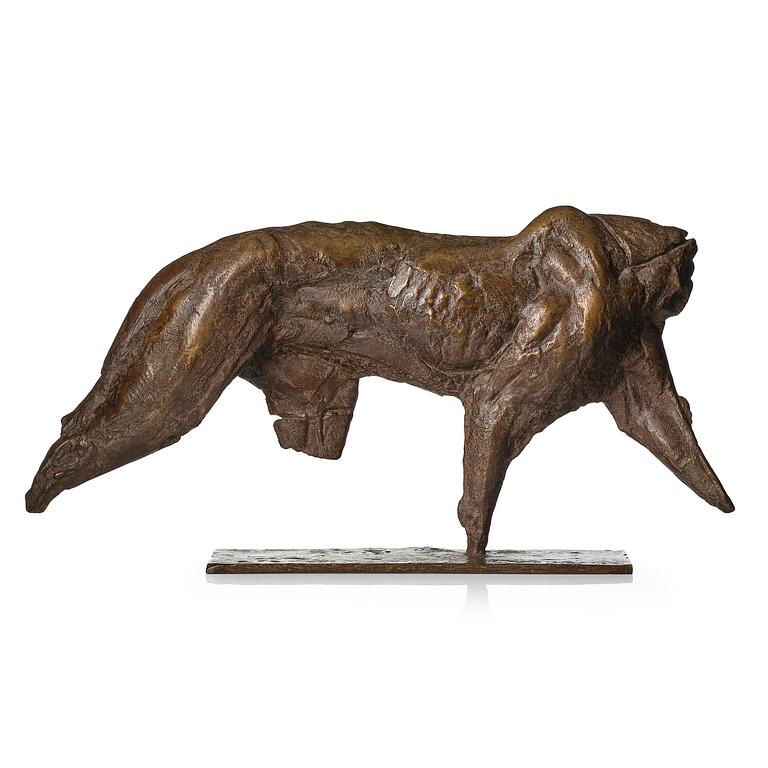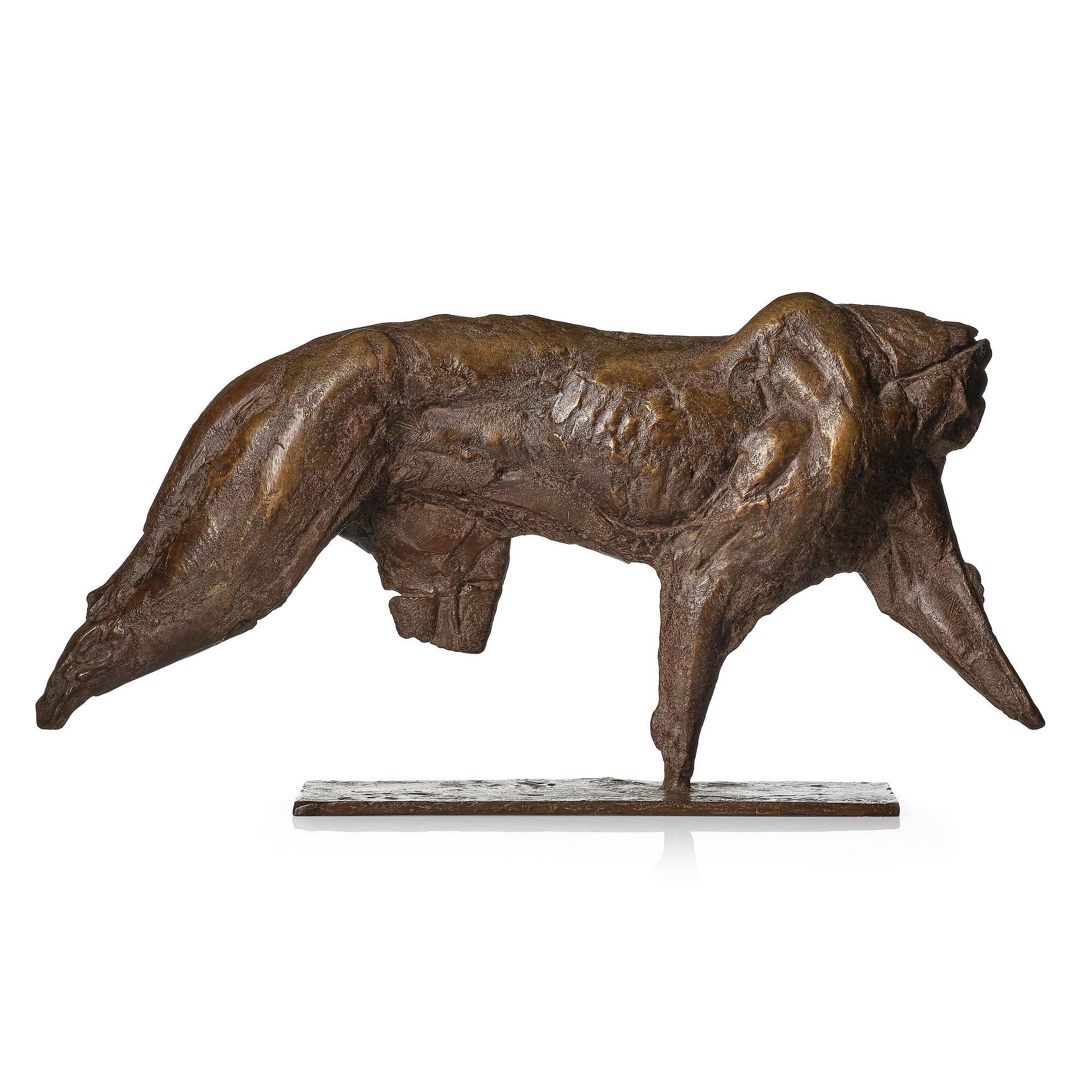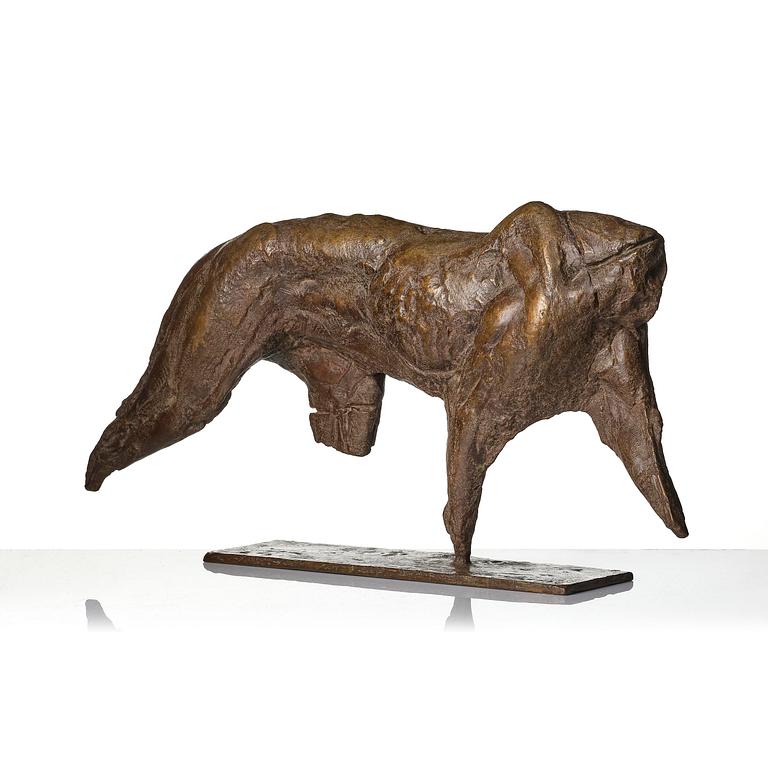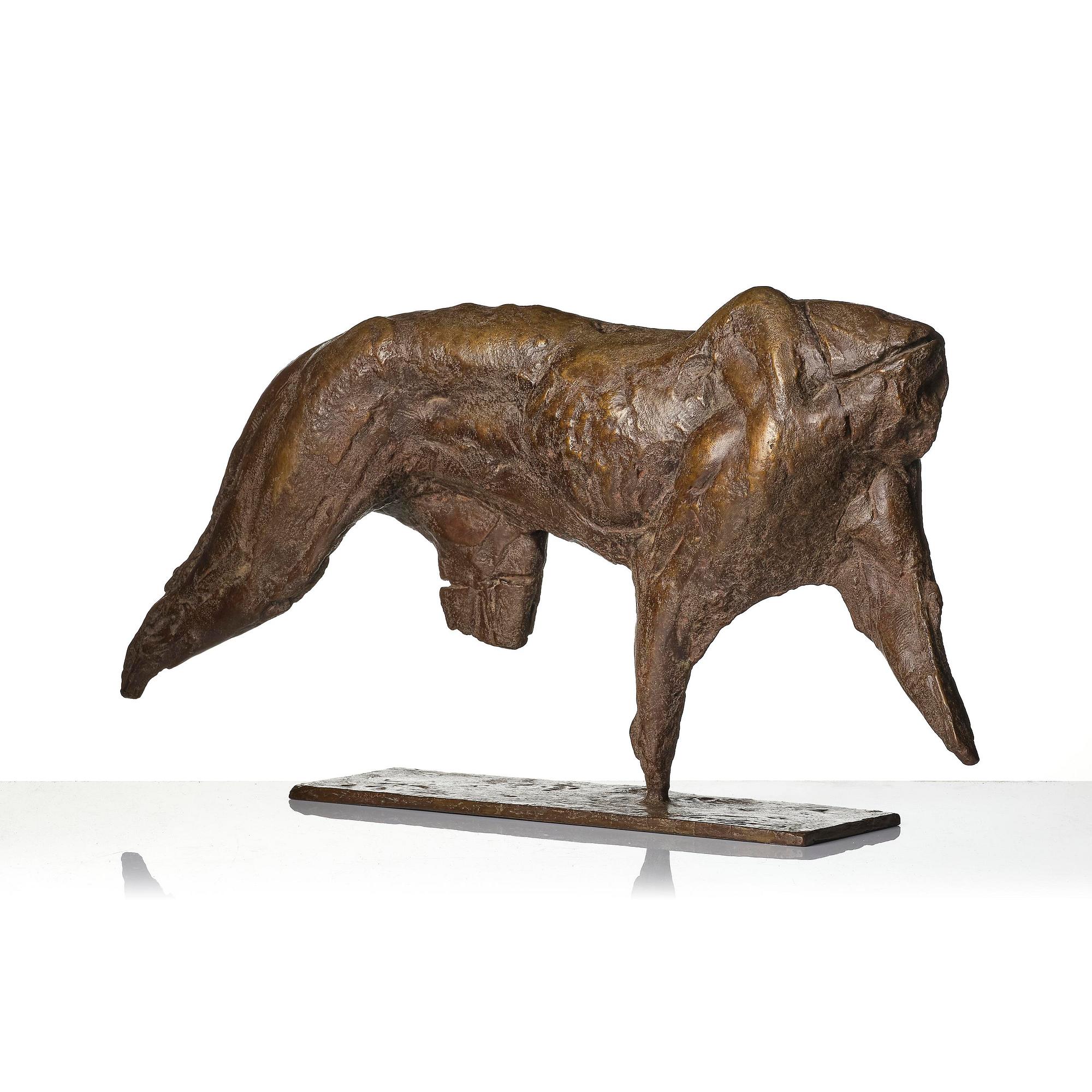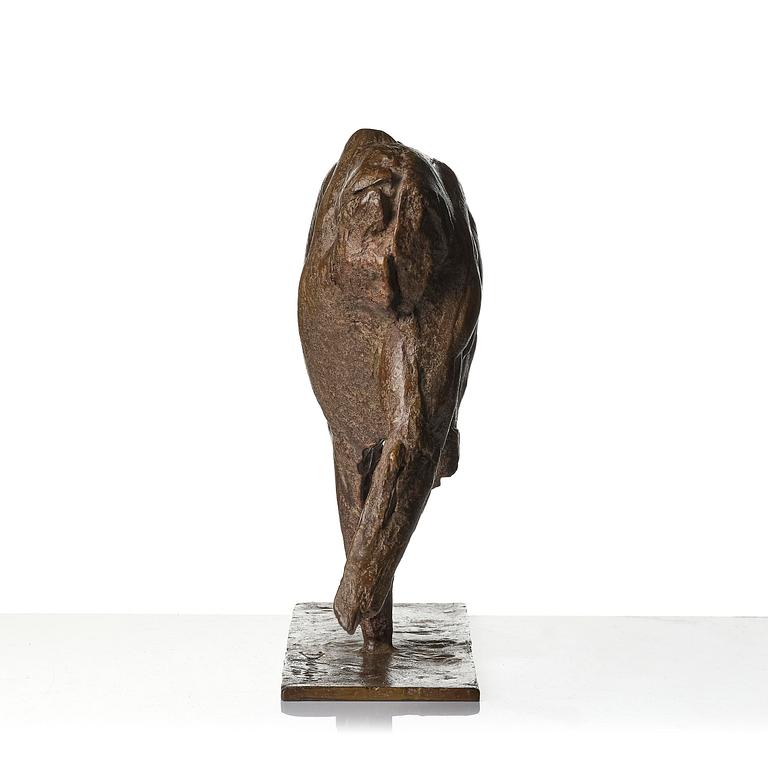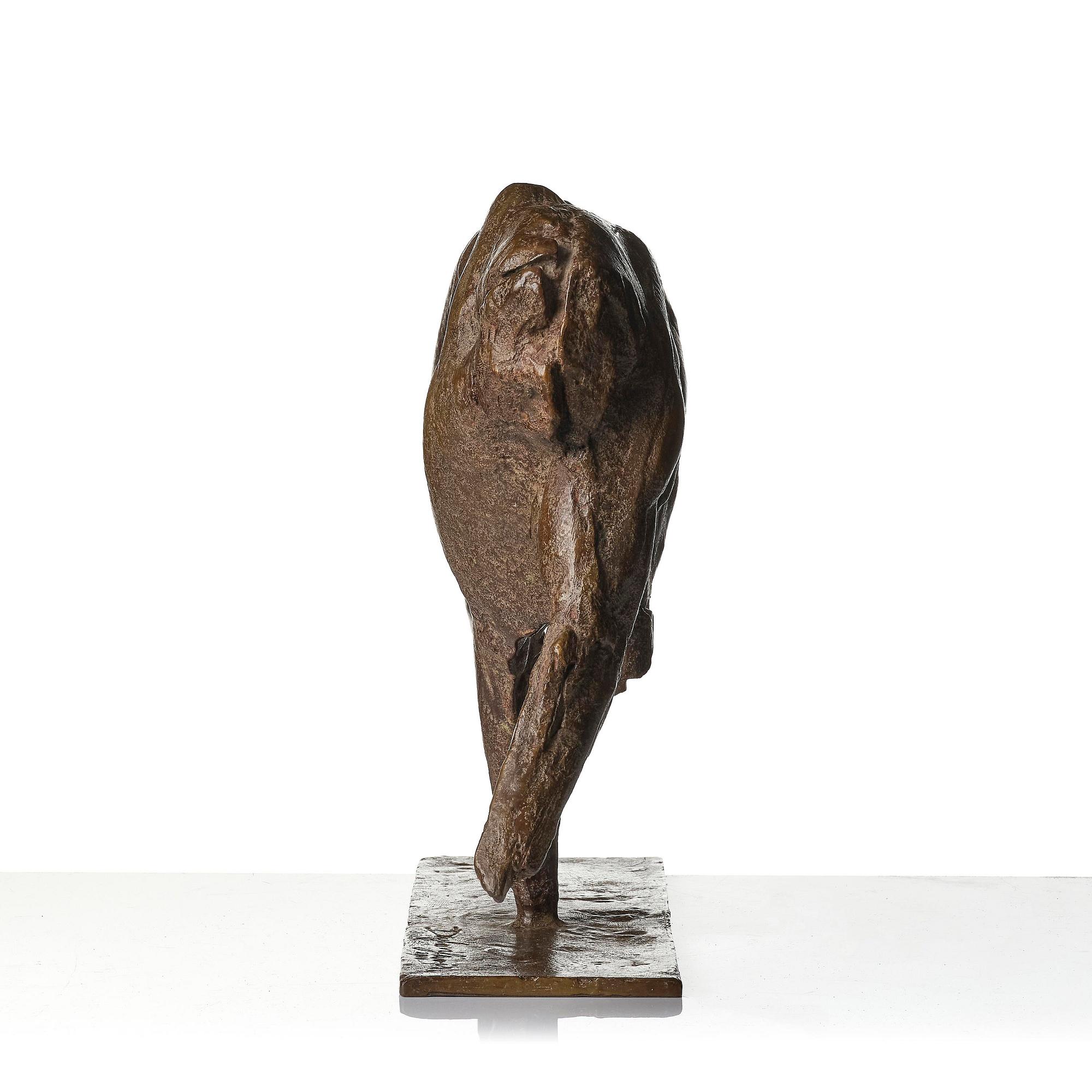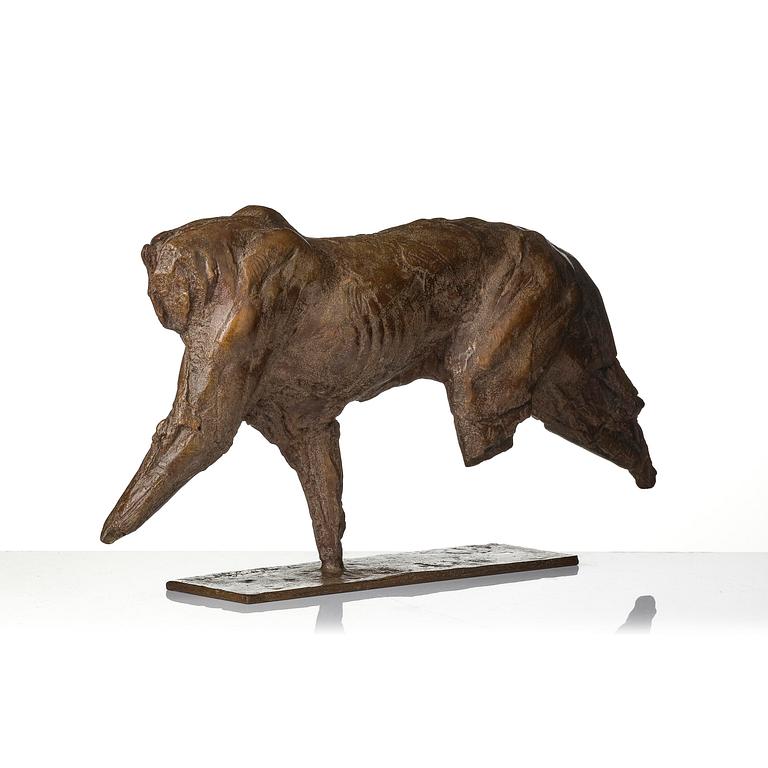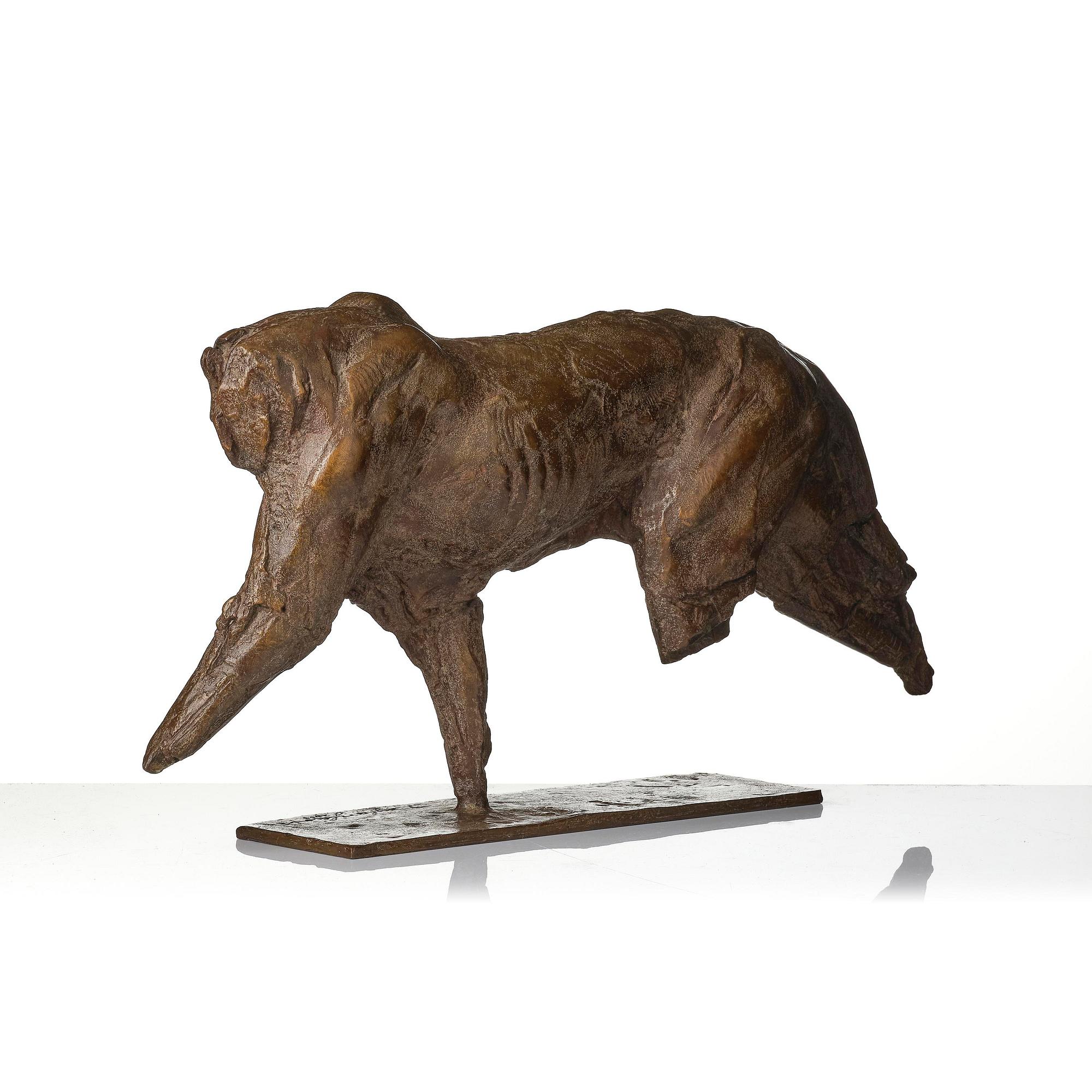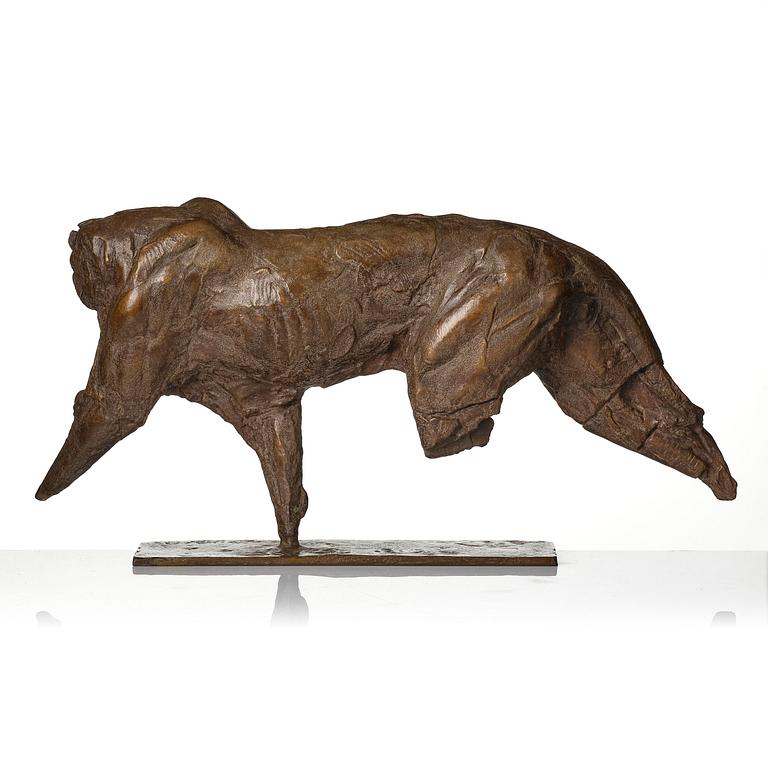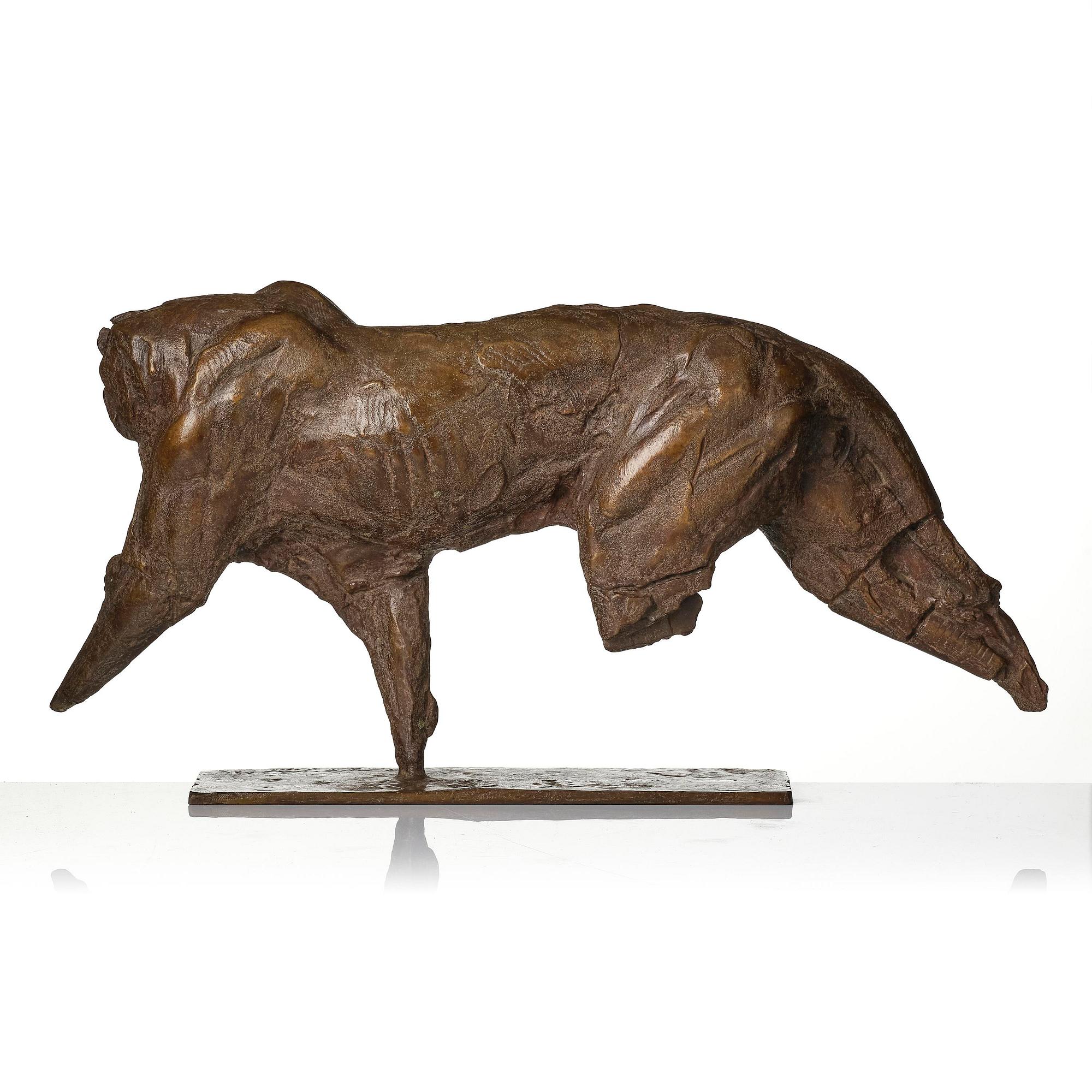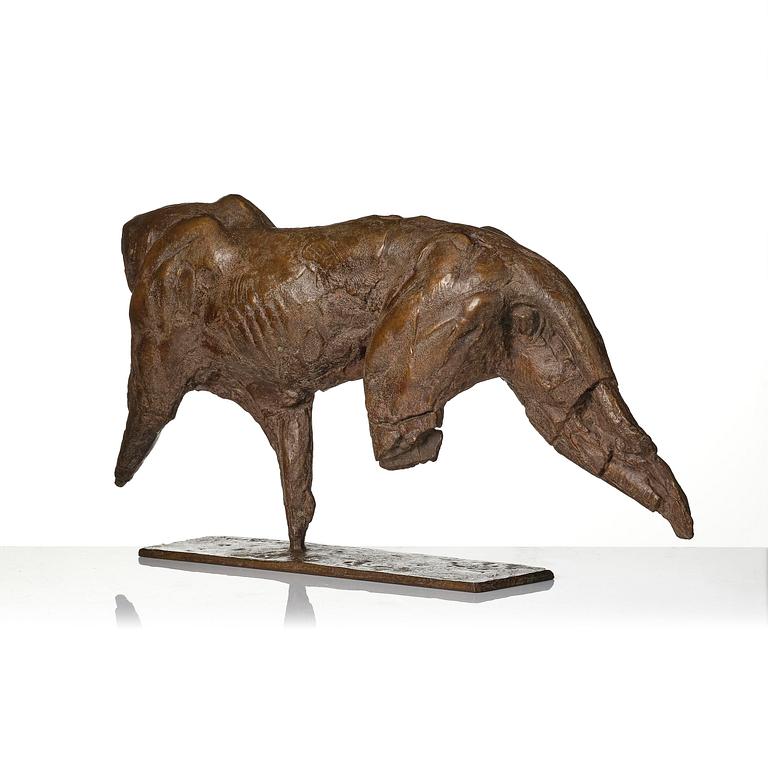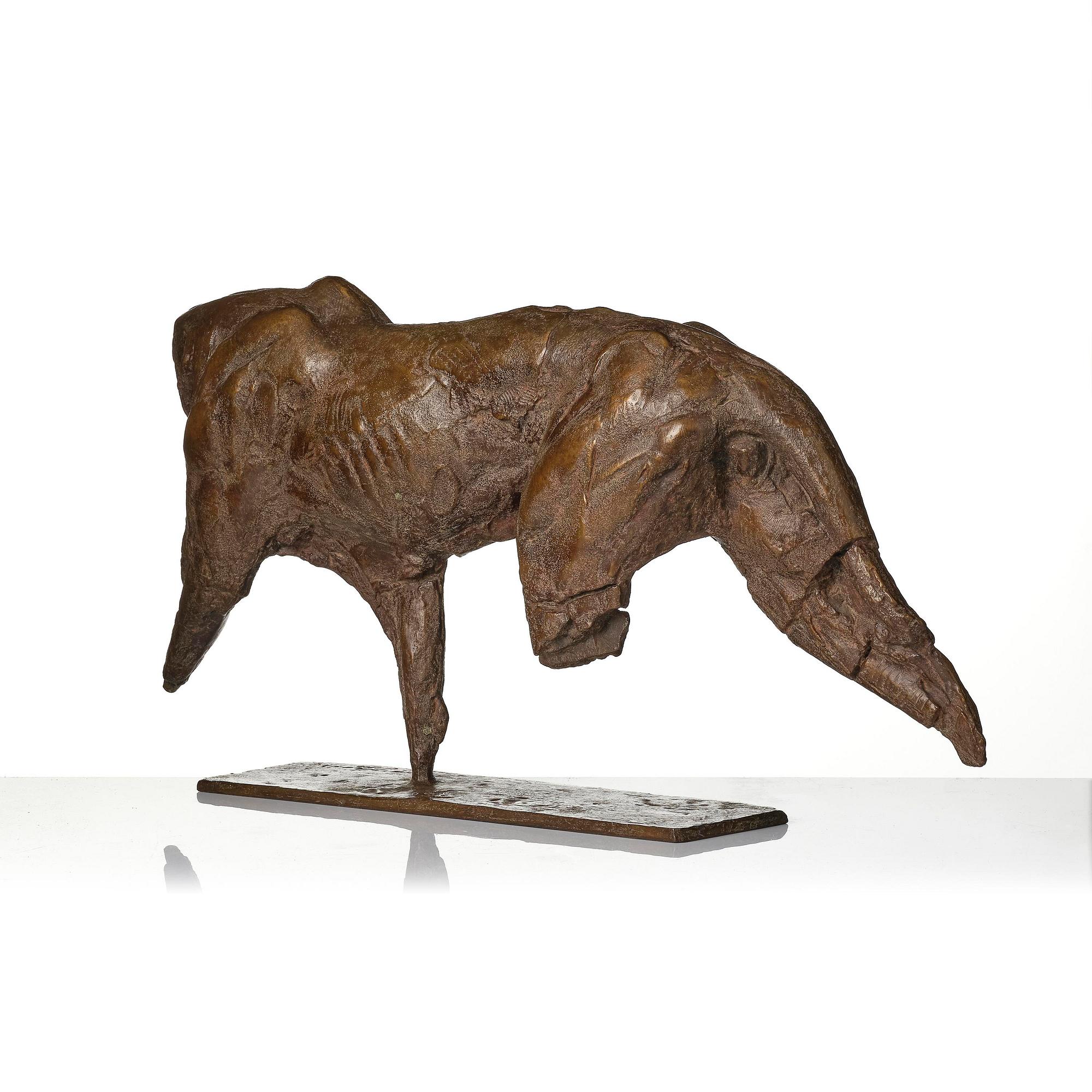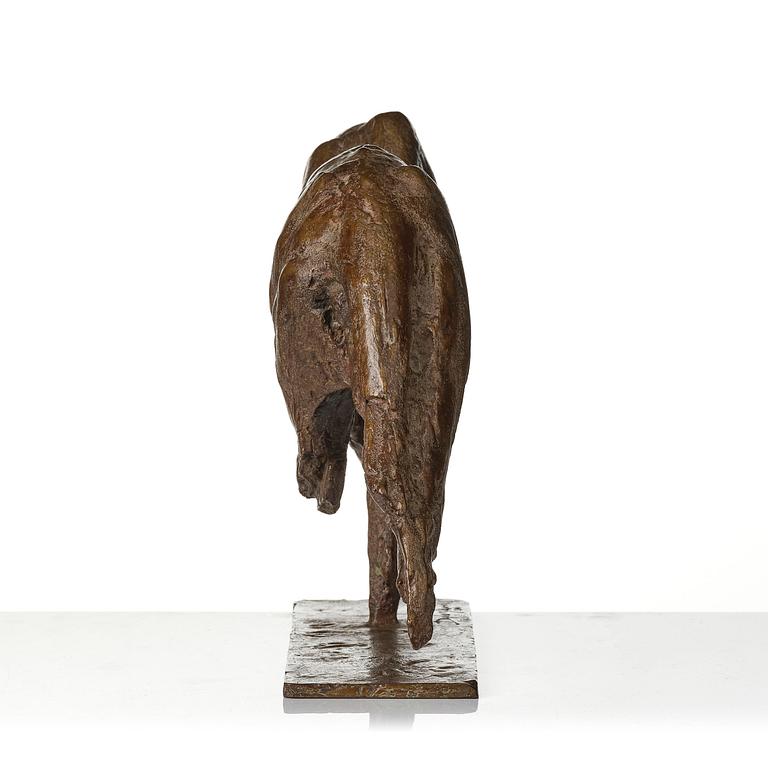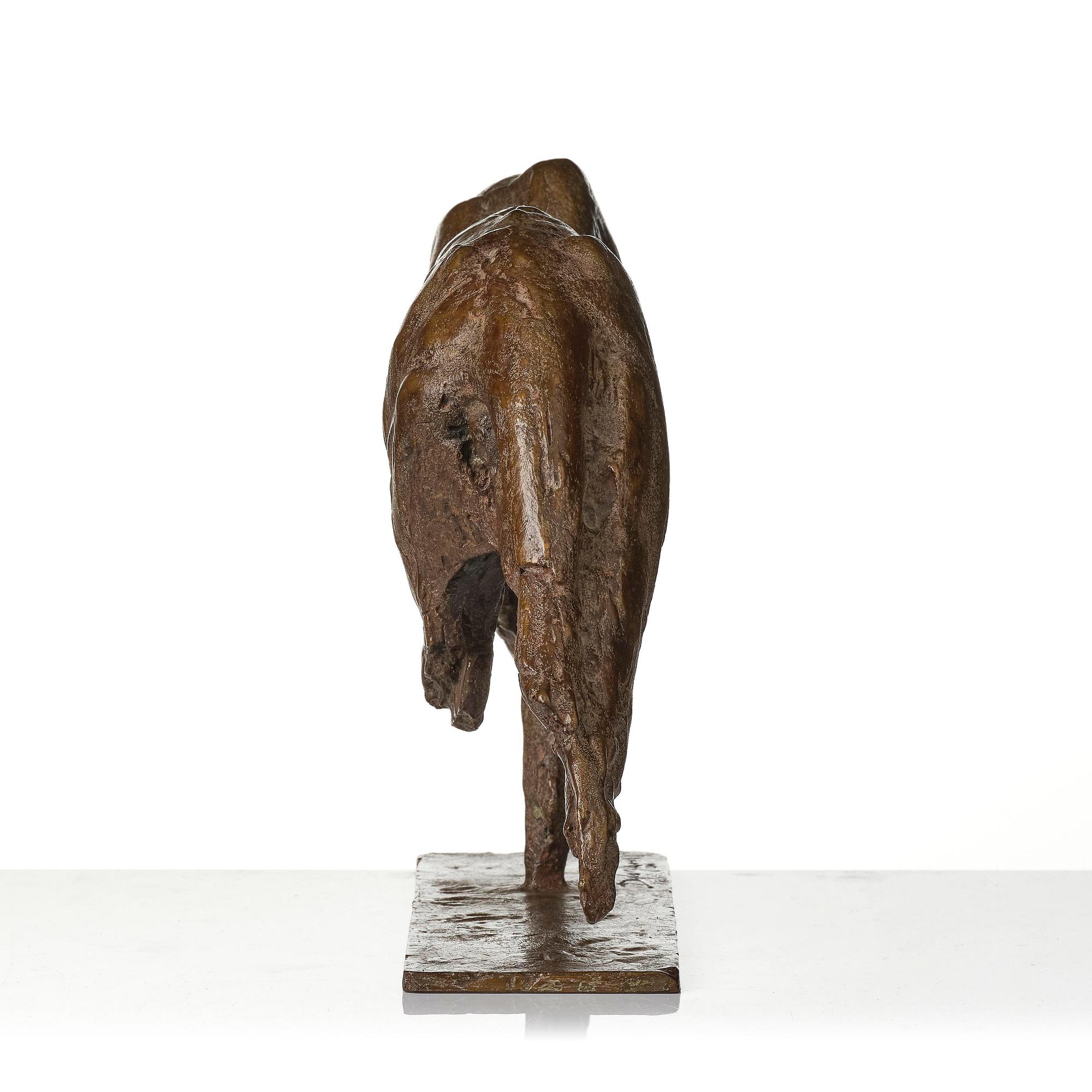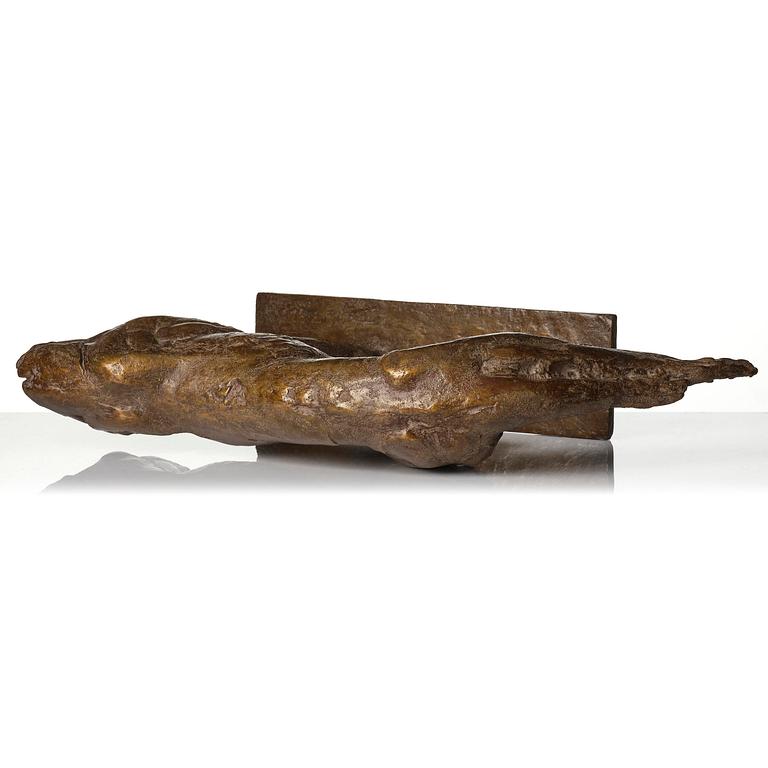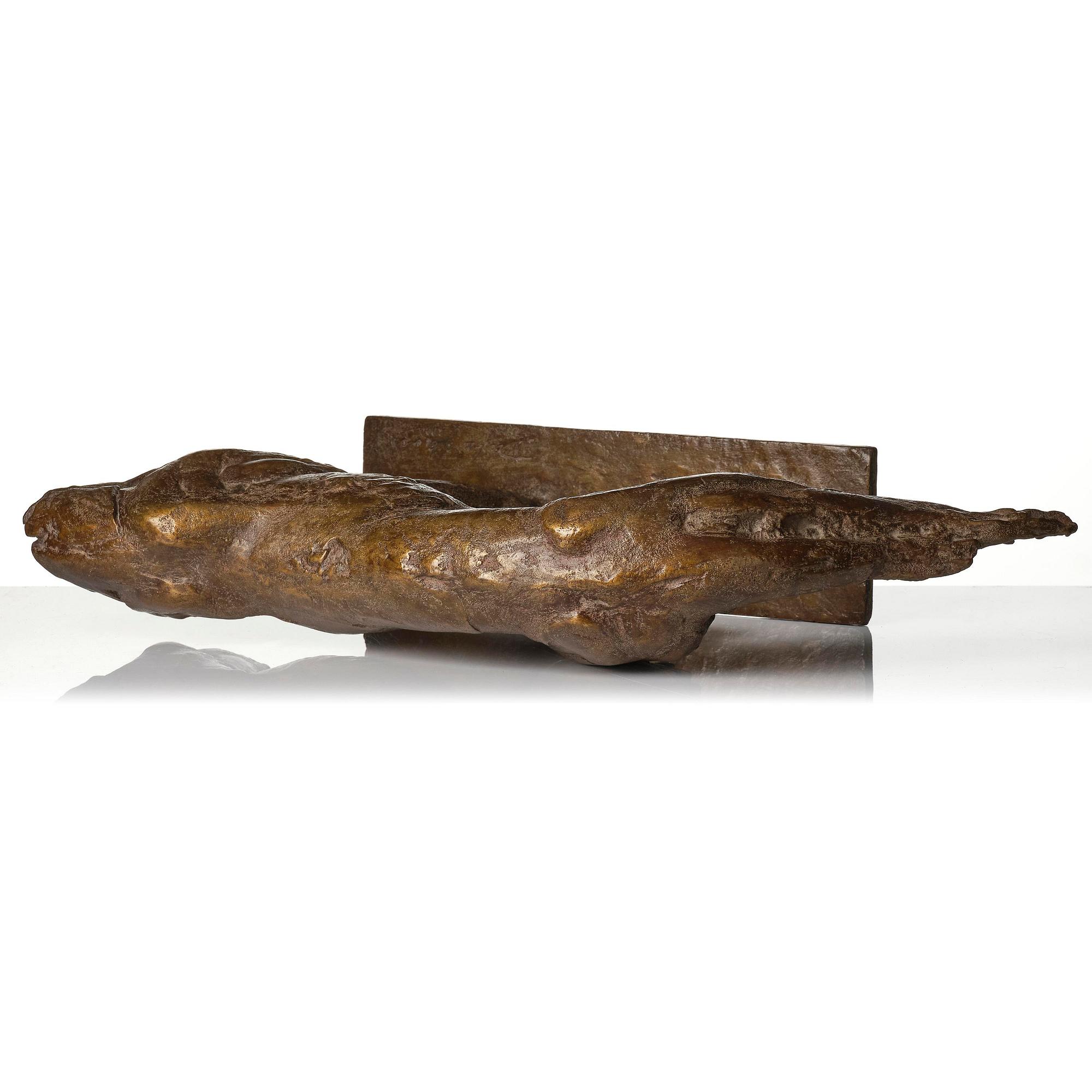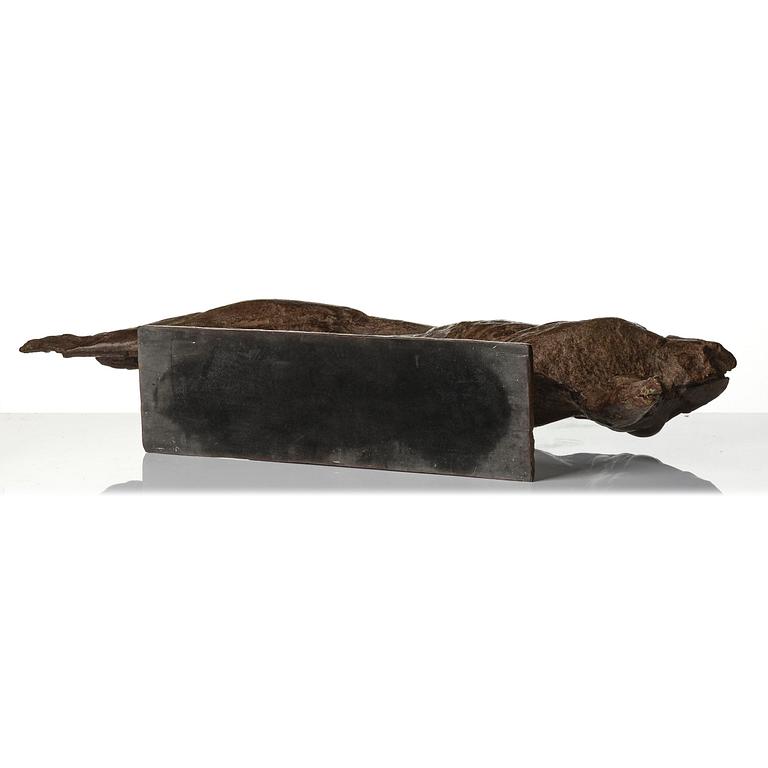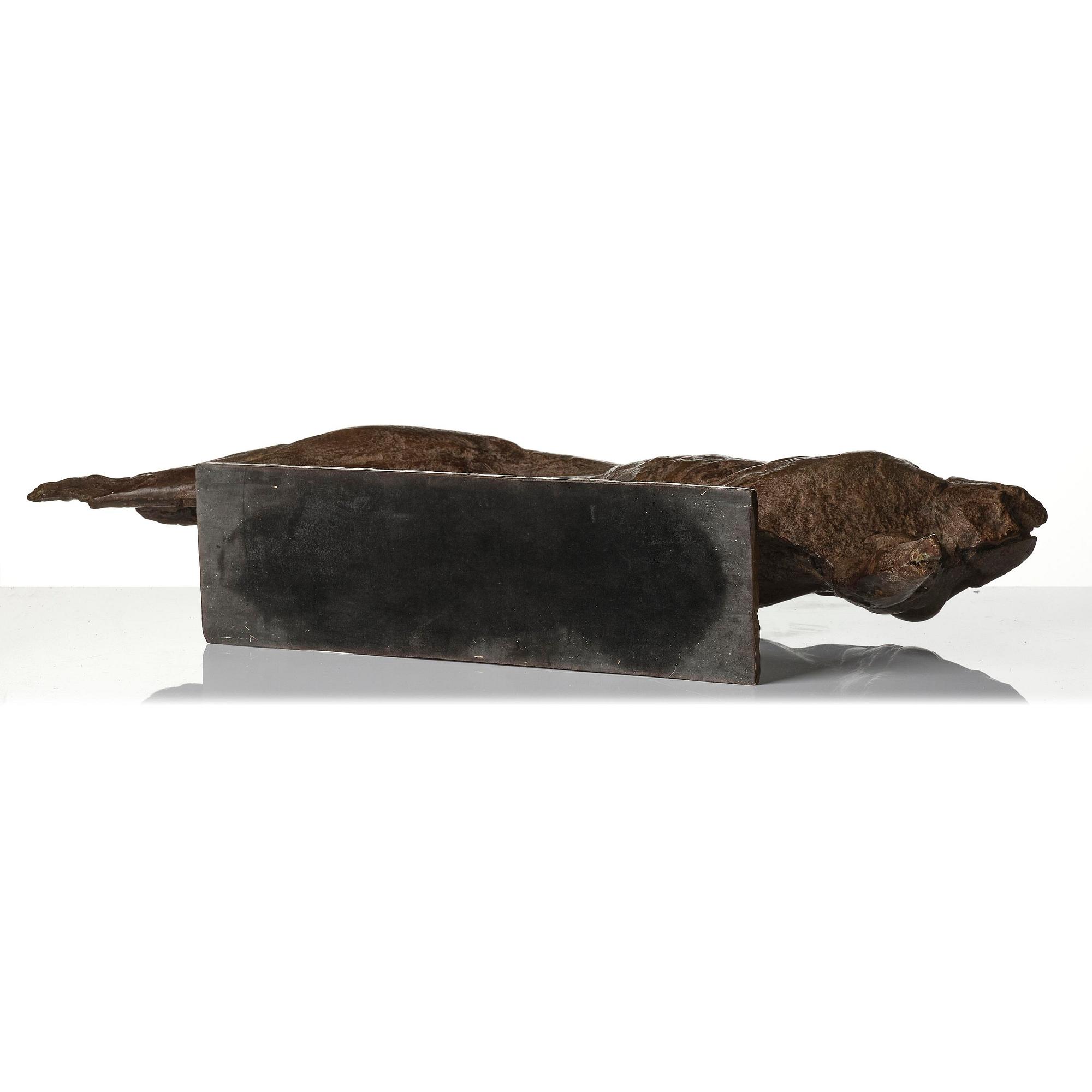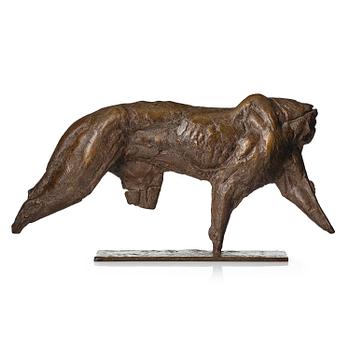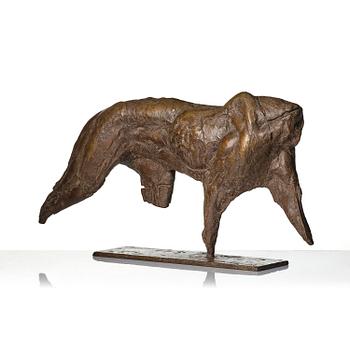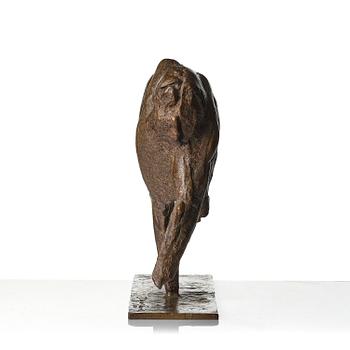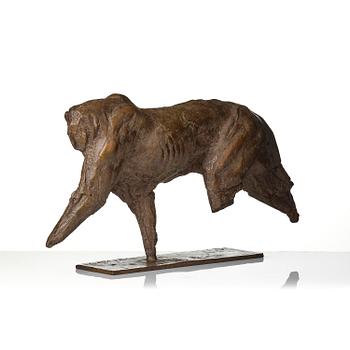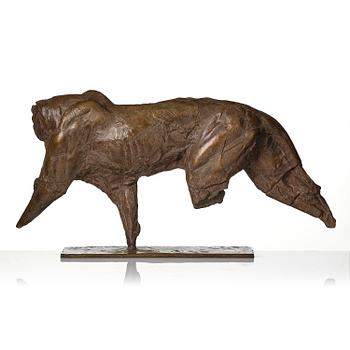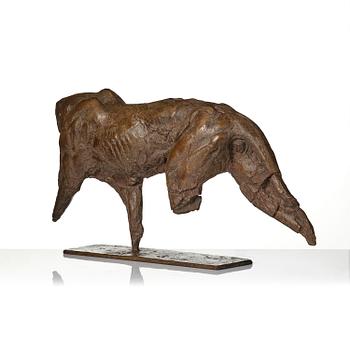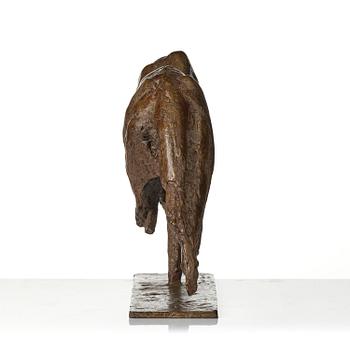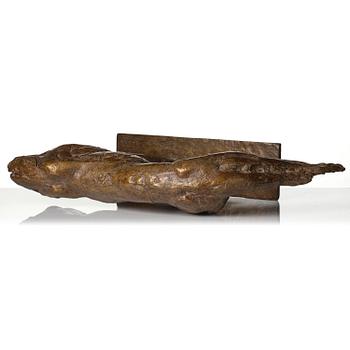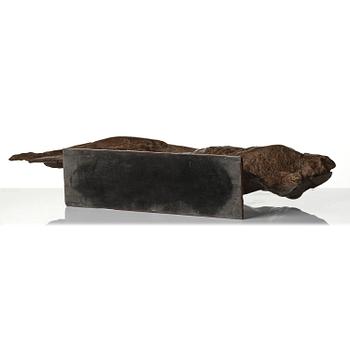
"Leopard Walking (Fragment)"
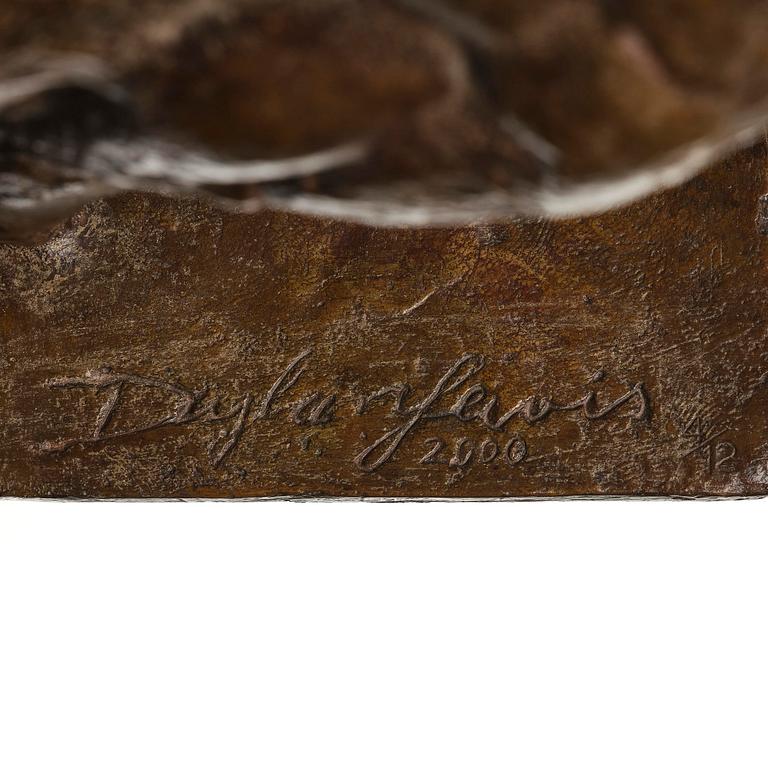
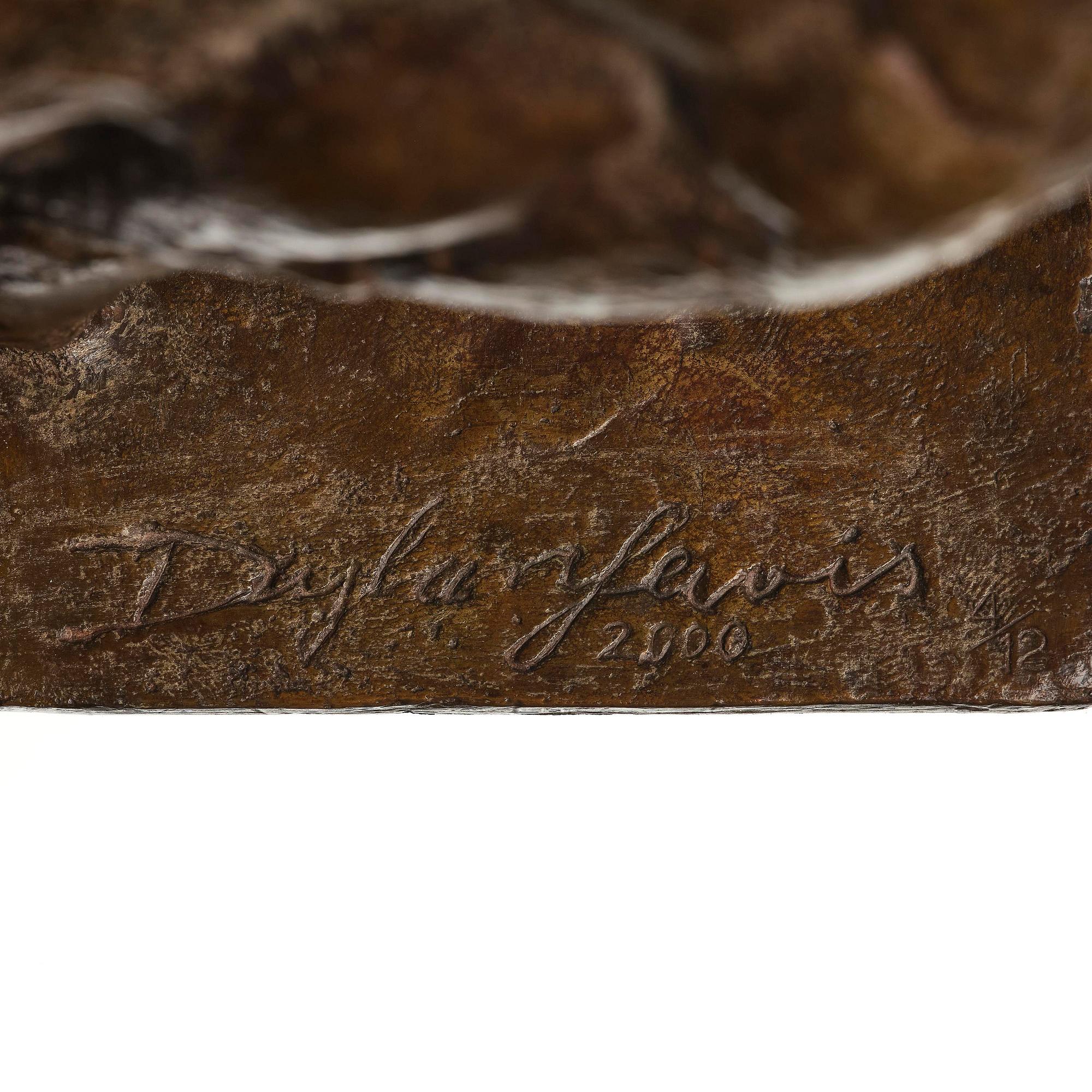
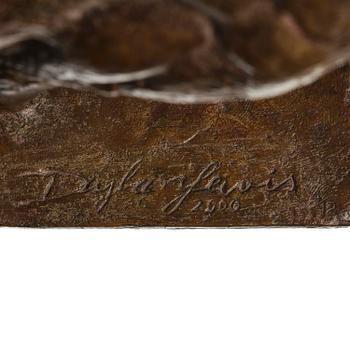
Signed Dylan Lewis and dated 2000. Numbered 4/12. Patinated bronze. Height 36, width 76, depth 13 cm.
Literature
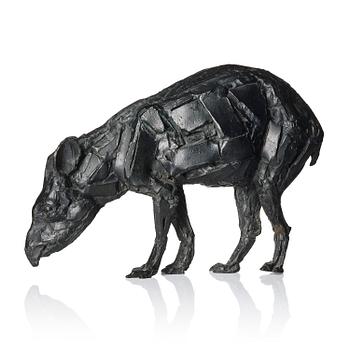
Everard Read Gallery, "Dylan Lewis", 2000, compare to the work illustrated on the cover.
More information
Lewis began his artistic career as a painter, but came early to the conclusion that sculpture offered him better opportunities to express what he wanted to portray. He therefore left painting behind and devoted the rest of his artistic career to sculpture. His depictions of animals in particular have become central to his practice, and he is now regarded as a leading sculptor in this field.
An important starting point for Lewis is his encounter with nature and wild animals in their original environments. His large sculptures of big cats can be understood as the result of close observations of the animals’ behaviour, patterns of movement and body language. The South African landscape plays a significant role in this work. The rugged terrain and rich fauna and flora of the countryside between the Cape Peninsula and the interior have been recurring sources of inspiration.
Among the animals to which Lewis repeatedly returns, the leopard occupies a special position. The animal appears perfectly adapted to its habitat, and its movements are characterised by natural confidence and precision. In his sculptures, Lewis seeks to capture precisely these qualities by depicting leopards in everyday and active situations. They may, for example, be moving towards a destination, stretching their bodies, grooming their coats, searching for prey or simply resting. In this way, the sculptures become not merely static representations of the animal, but also studies of its movement, temperament and relationship with nature.
At the same time, Lewis combines powerful expression with a high degree of anatomical precision. In "Leopard Walking (Fragment)", the animal’s muscles and the structure of its body are rendered with clear accuracy. The leopard’s slender, well-trained physique is emphasised through the form of the sculpture, reinforcing the impression of both agility and physical strength. The work can therefore be seen as a tribute to the leopard’s natural elegance, while also demonstrating Lewis’s ability to unite realistic anatomical detail with a broader interest in the animal’s power and presence.
For condition report contact specialist

What will the transport cost?
Shipping can only be arranged by contacting specialdelivery@bukowskis.com.
Image rights
The artworks in this database are protected by copyright and may not be reproduced without the permission of the rights holders. The artworks are reproduced in this database with a license from Bildupphovsrätt.