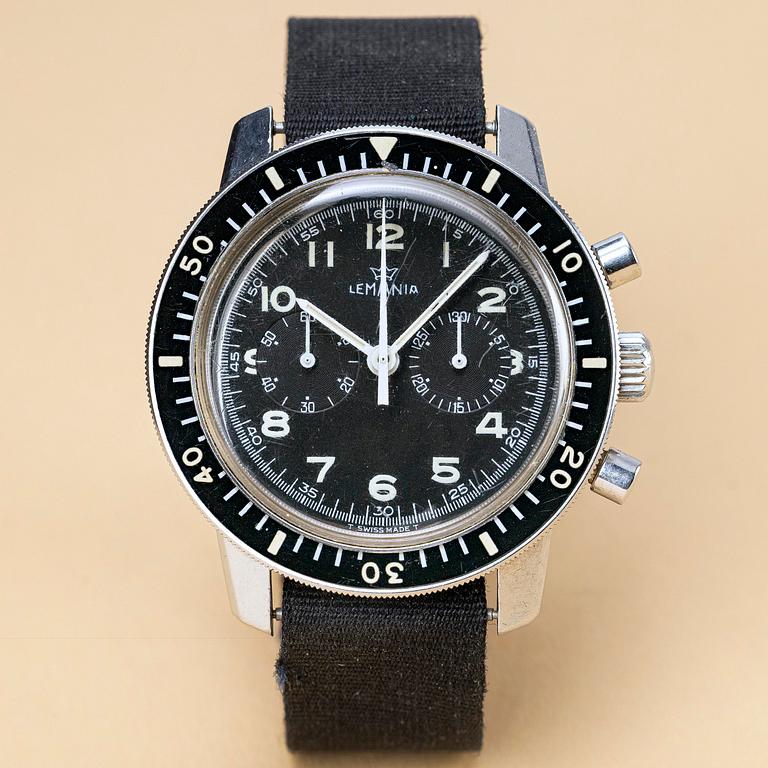
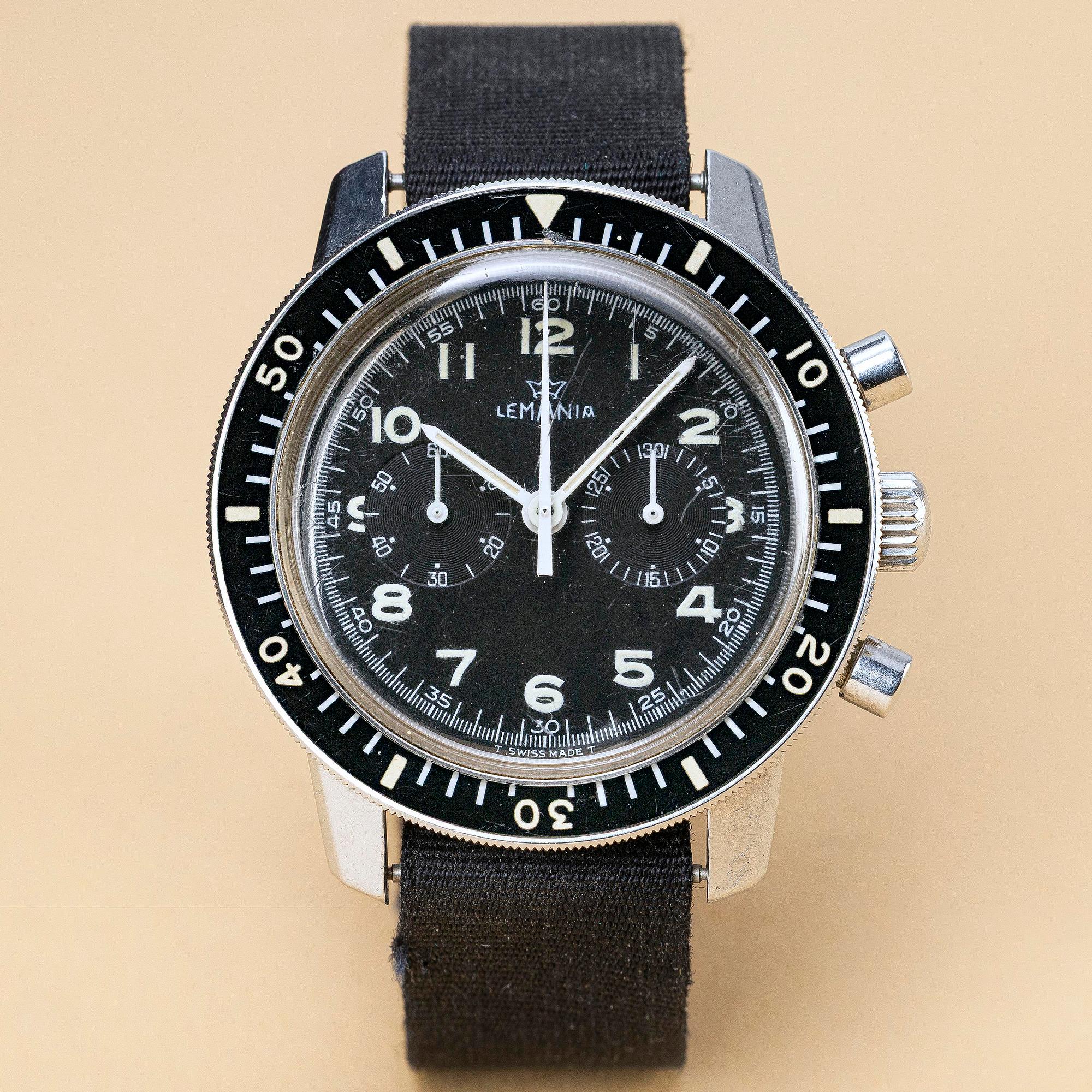
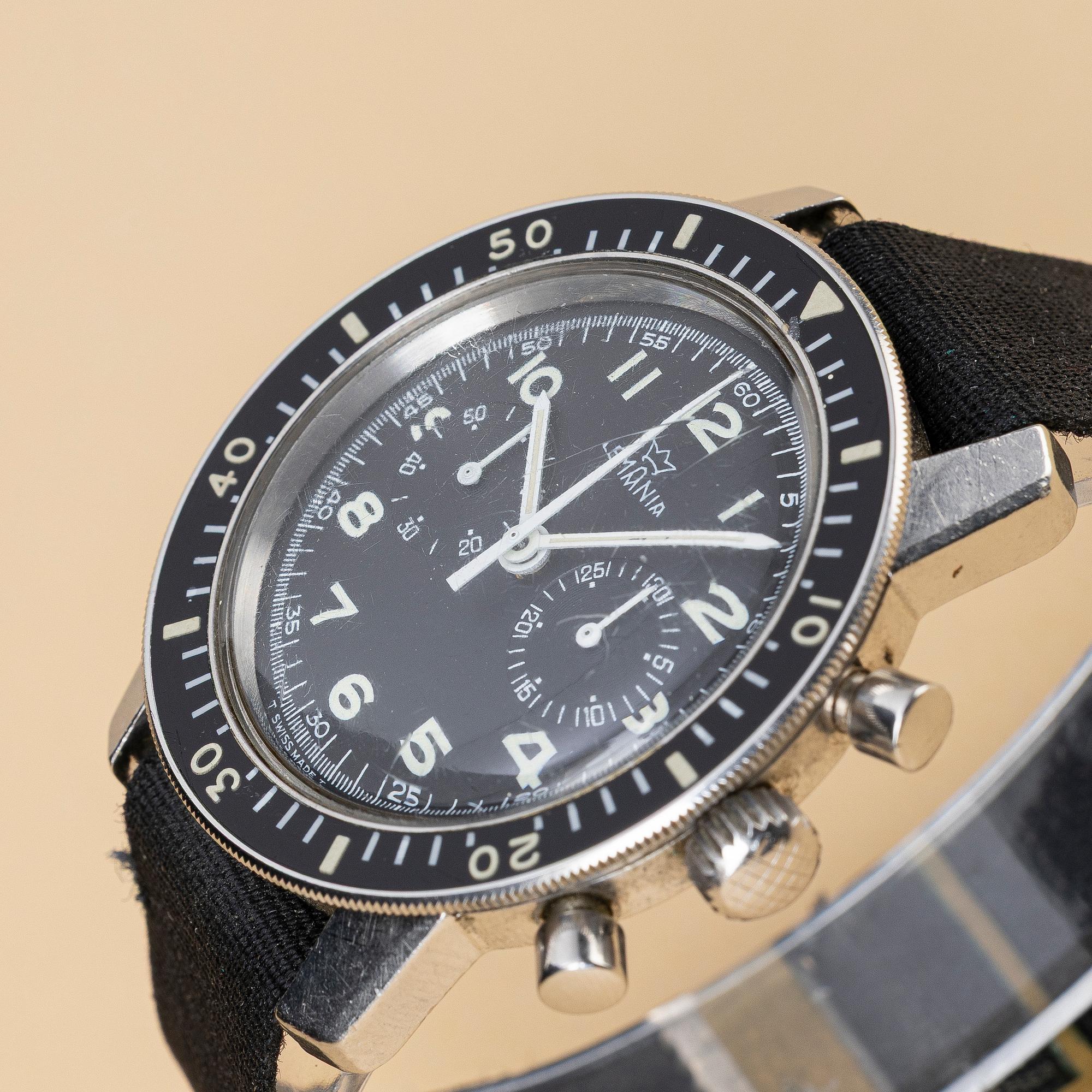
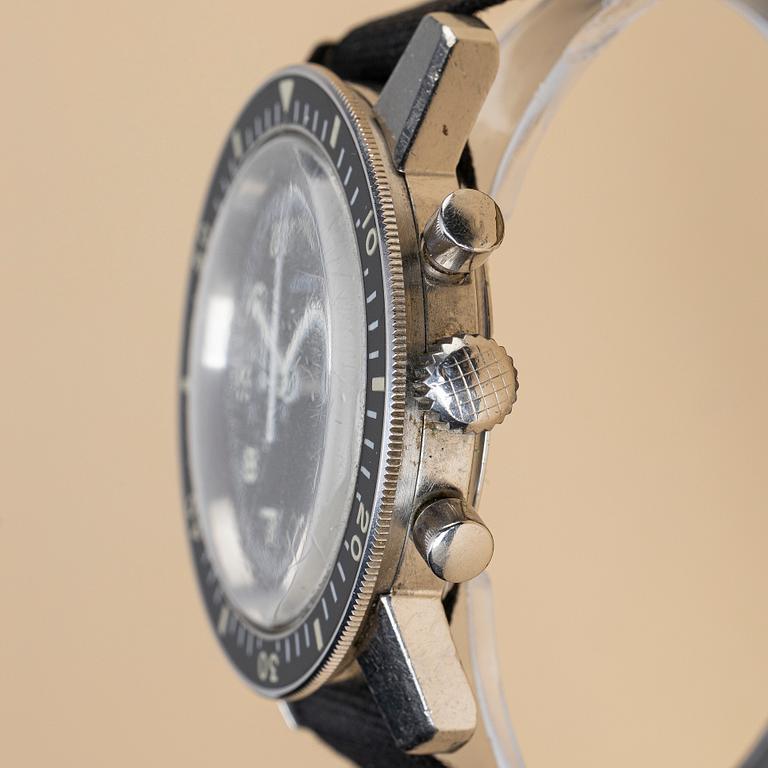
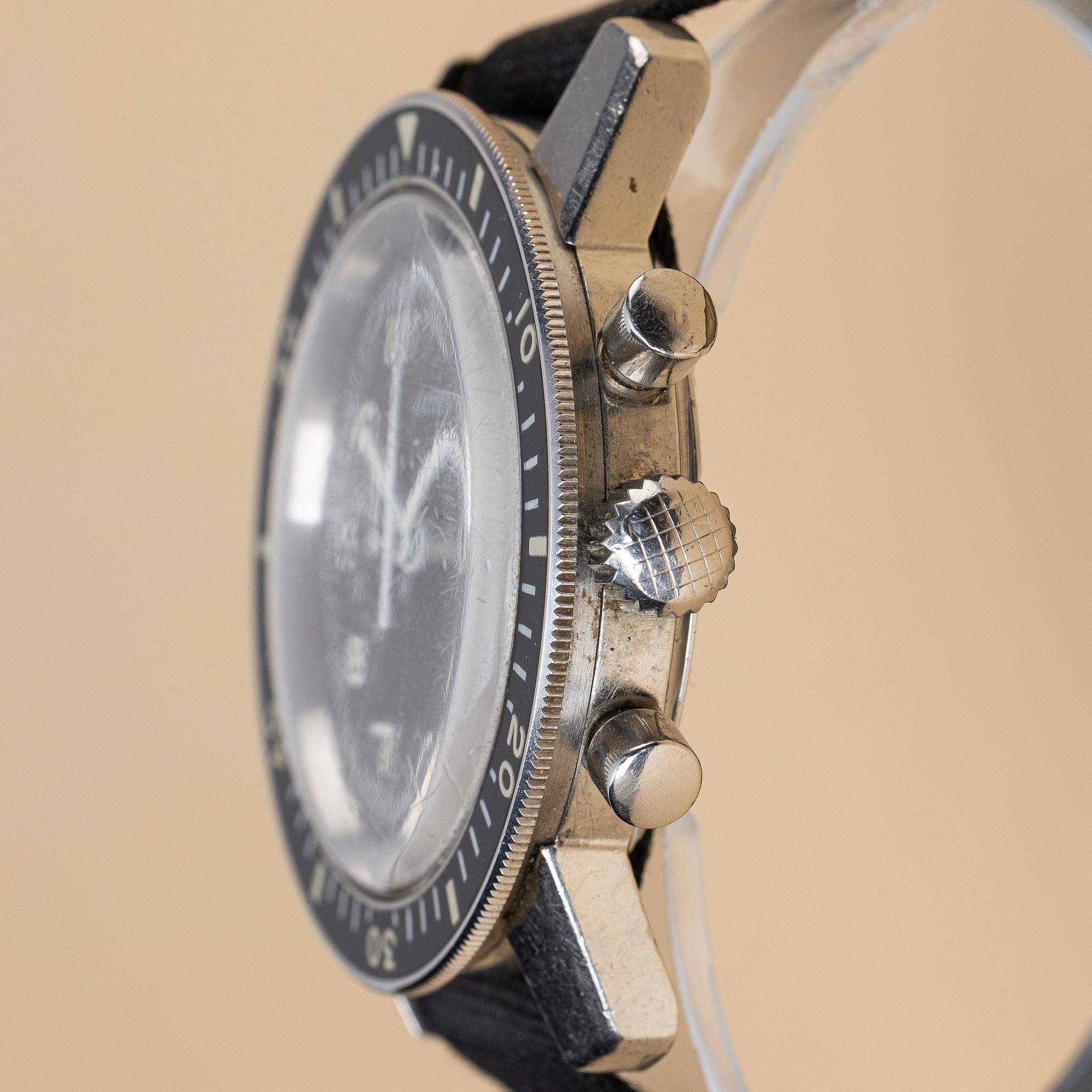
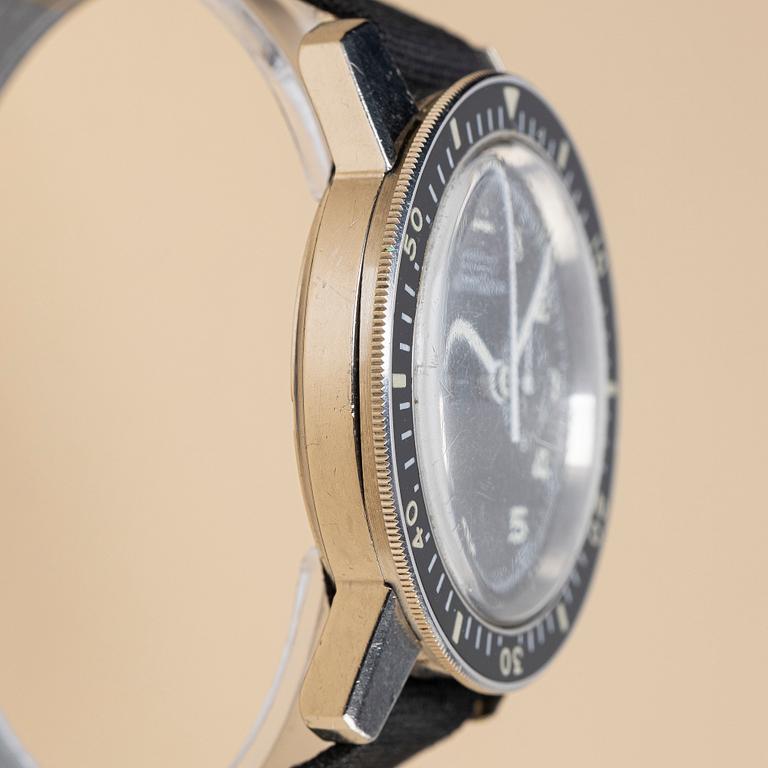
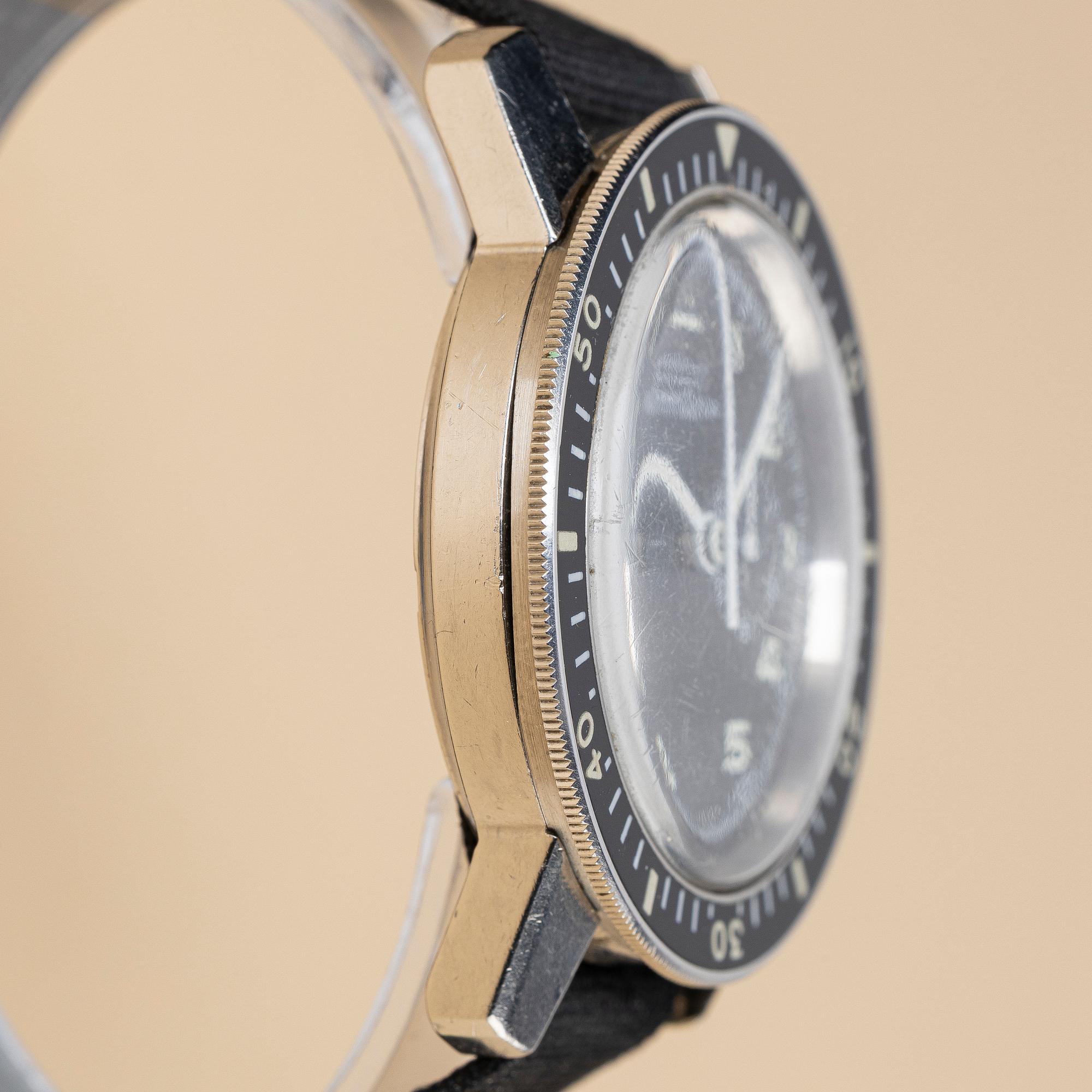
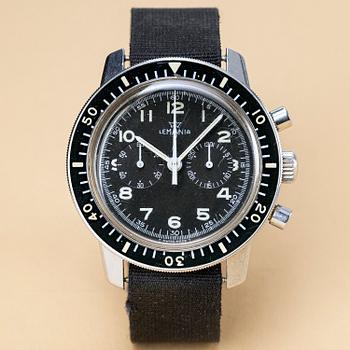
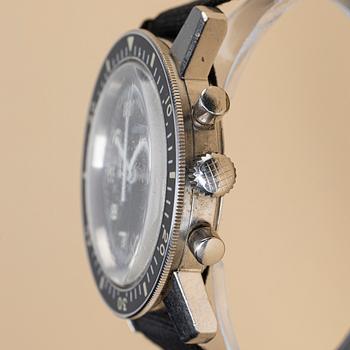
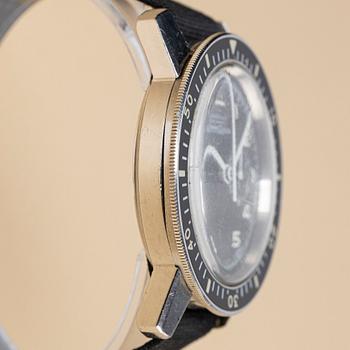
Case size: 42 mm
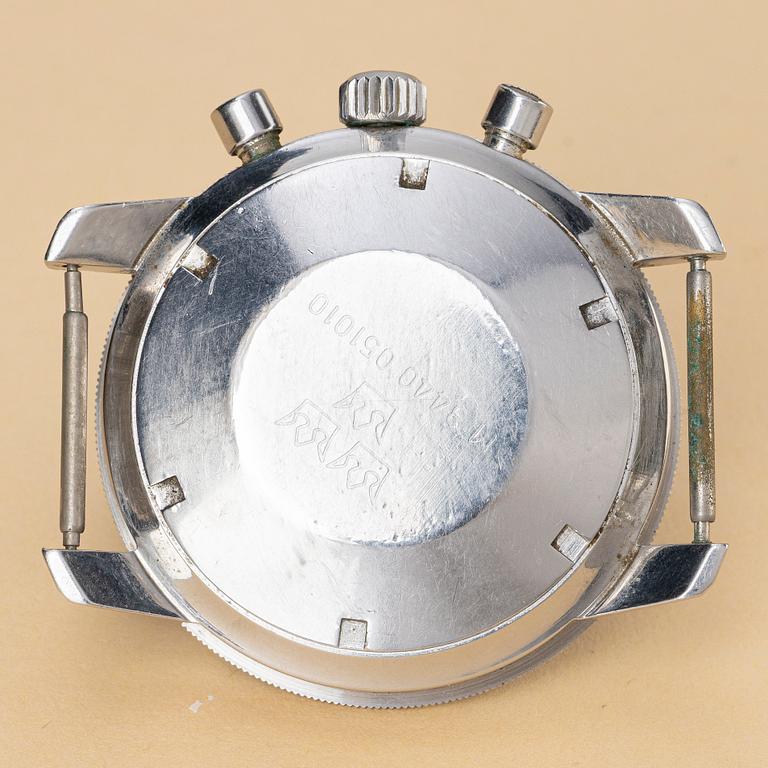
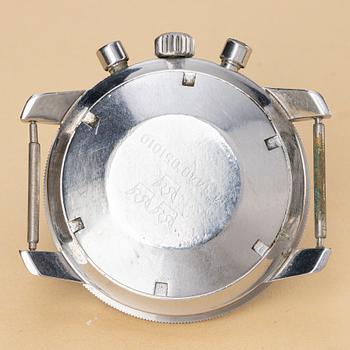
Material: steel
Movement: manual, caliber 1872
Year: circa 1970
Crystal: plastic crystal
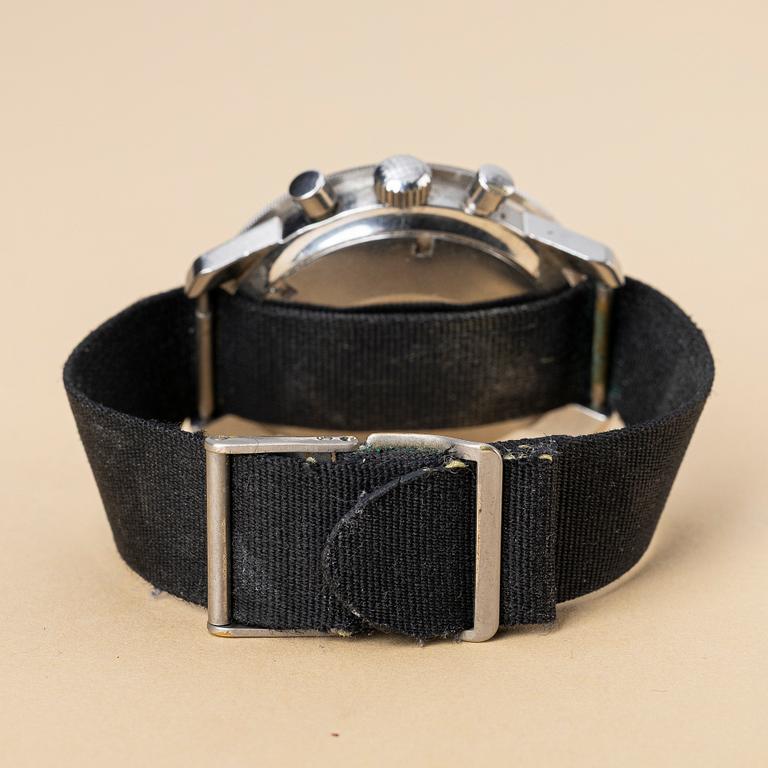
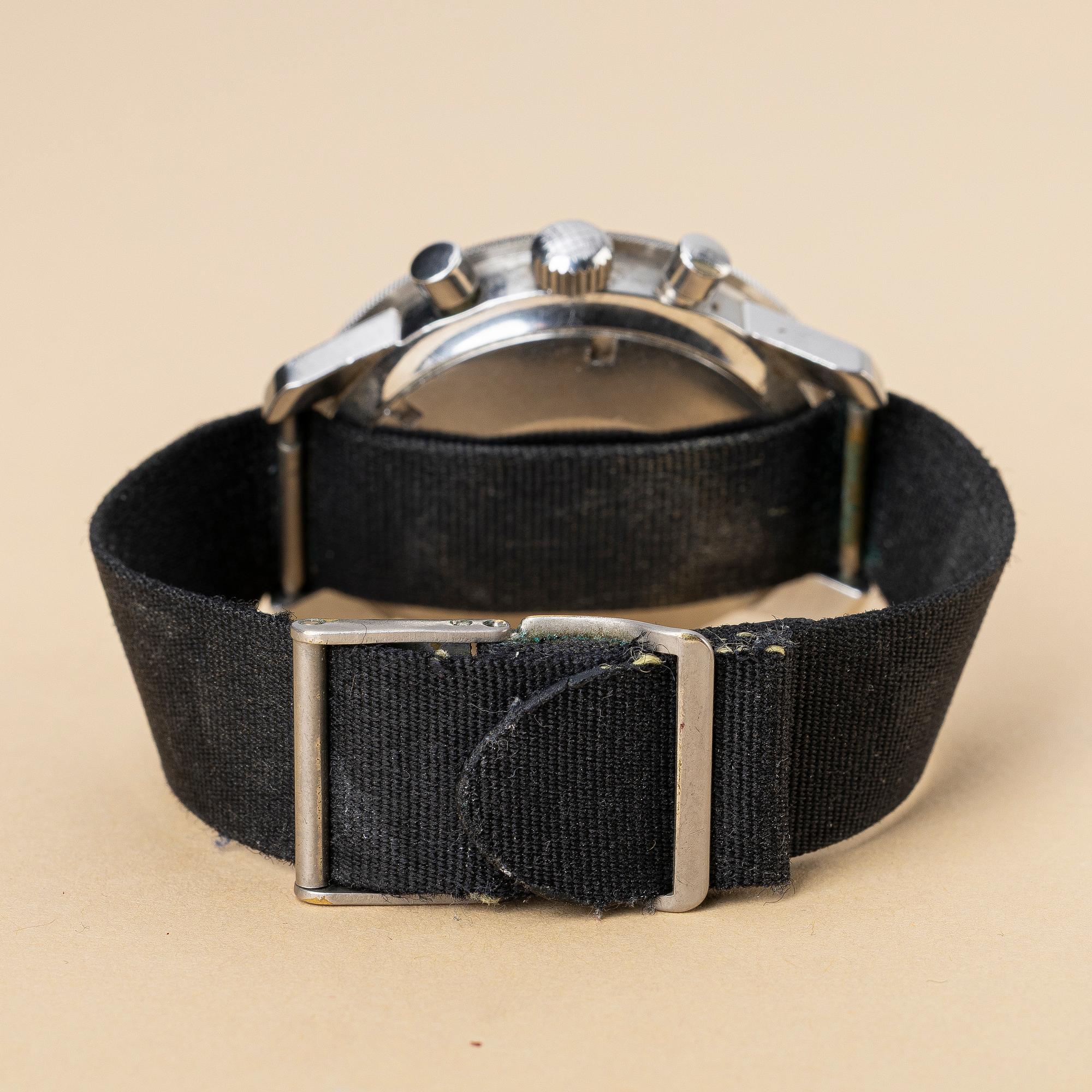
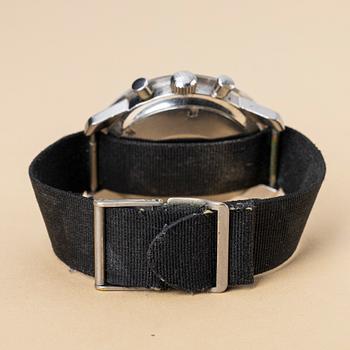
Bracelet: textile strap
Serial number: 2'798'556
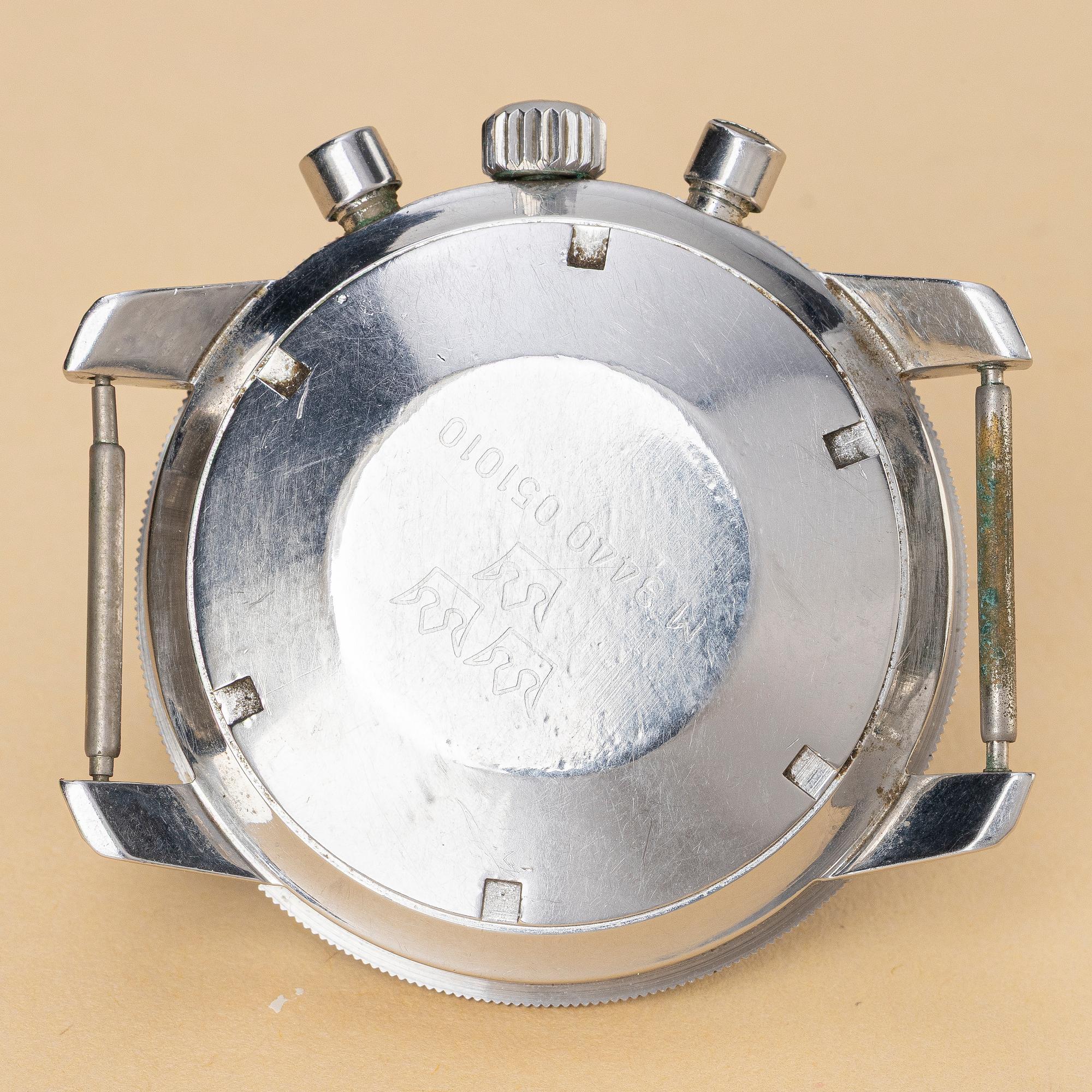
Case number: M 3440 051010 / 817
Pictures of the movement are available upon request. Potential buyers should inspect each watch to satisfy themselves as to condition. For more information, please read our Conditions of Purchase.
Provenance
Consigned by the family of a former civilian employee at Hälsinge Air Force Wing, F 15, in Söderhamn, Sweden, where he received the watch.
More information
During the Cold War, Sweden developed a substantial and technologically advanced air force, with the Saab 37 Viggen becoming a symbol of Swedish aviation engineering and military independence. Behind these sophisticated fighter aircraft stood an extensive organisation of pilots, technicians and mechanics whose work was essential to flight safety and daily operations.
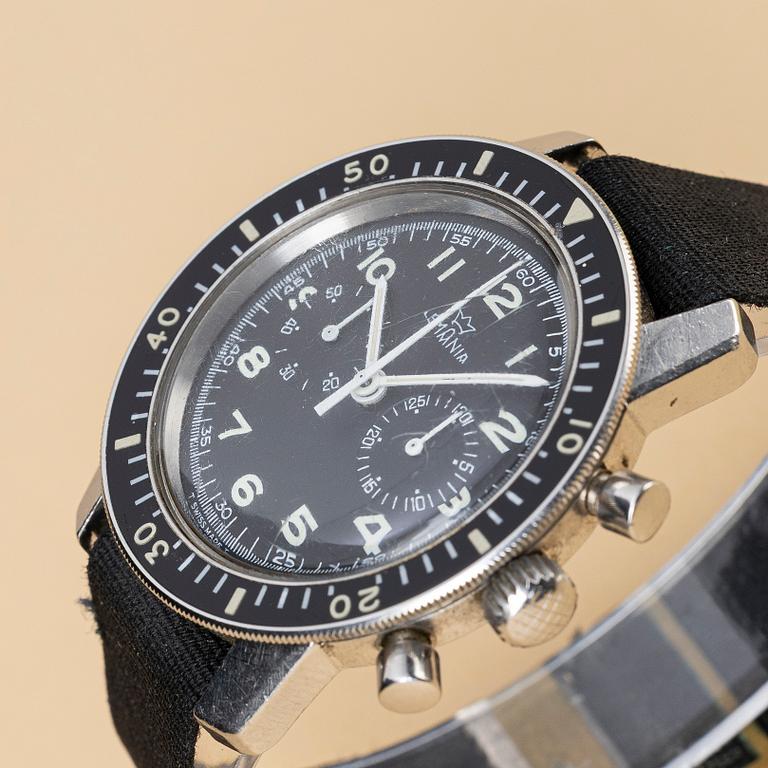
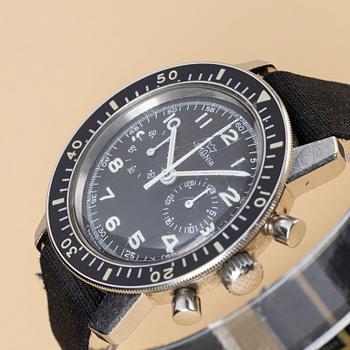
In the early 1970s, the Swedish Air Force was supplied with a military chronograph by the Swiss watchmaker Lemania. The model, reference 817, later became known by the nickname "Viggen" through its association with the pilots who flew the Saab 37. The watch was equipped with the manually wound Lemania calibre 1872 chronograph movement, a highly legible black dial and a robust stainless steel case. With its military heritage, limited production and close connection to Swedish aviation history, the model has become a sought-after collector's piece.
The present example has a personal connection to Hälsinge Air Force Wing, F 15, in Söderhamn, Sweden. Established in 1945, the air wing began its transition to the Saab AJ 37 Viggen in the autumn of 1974. From 1976, F 15 also played a central role in training Viggen pilots from across the Swedish Air Force, using the two-seat SK 37 for conversion training.
The watch has been consigned to Bukowskis by the family of a former civilian employee at the aircraft maintenance workshop at Hälsinge Air Force Wing, F 15, in Söderhamn, Sweden. He received the watch during his employment at the air wing.
His responsibilities included working with the aircraft's ejection seats, one of the most critical safety systems in military aviation. He was also involved in the inspection and testing of aviation fuel, contributing to the operational safety and reliability of the aircraft.
The family also recalls an unusual tradition at the air wing: whenever a pilot was forced to eject from an aircraft, the occasion was marked by serving cake.
For condition report contact specialist

What will the transport cost?
Others have also viewed