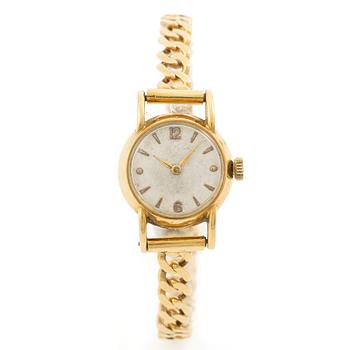
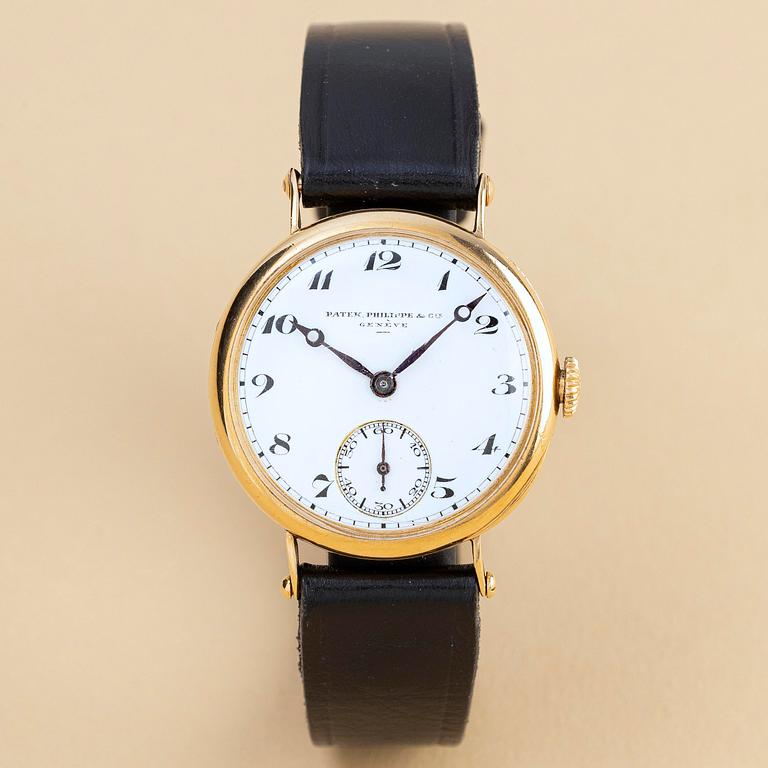
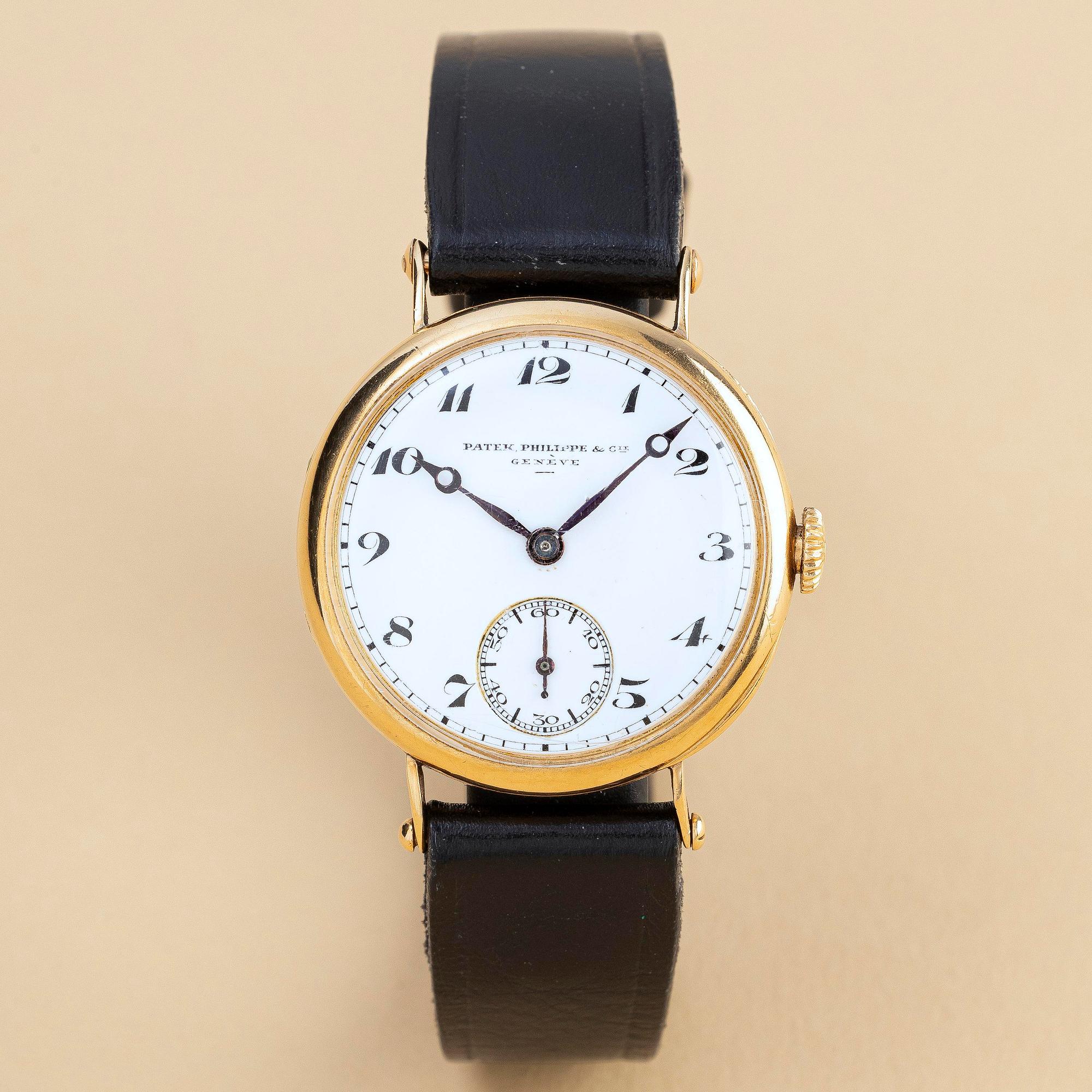
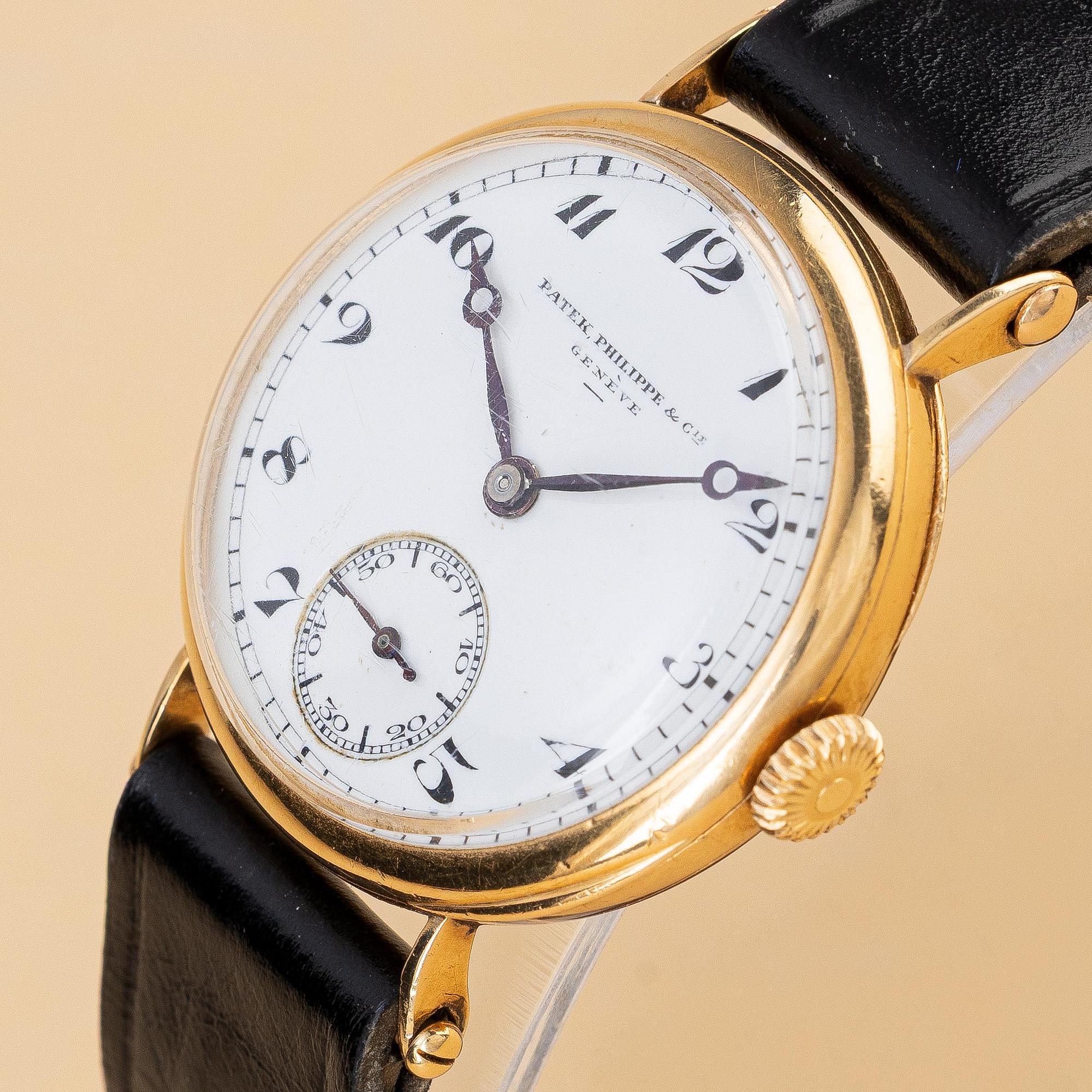
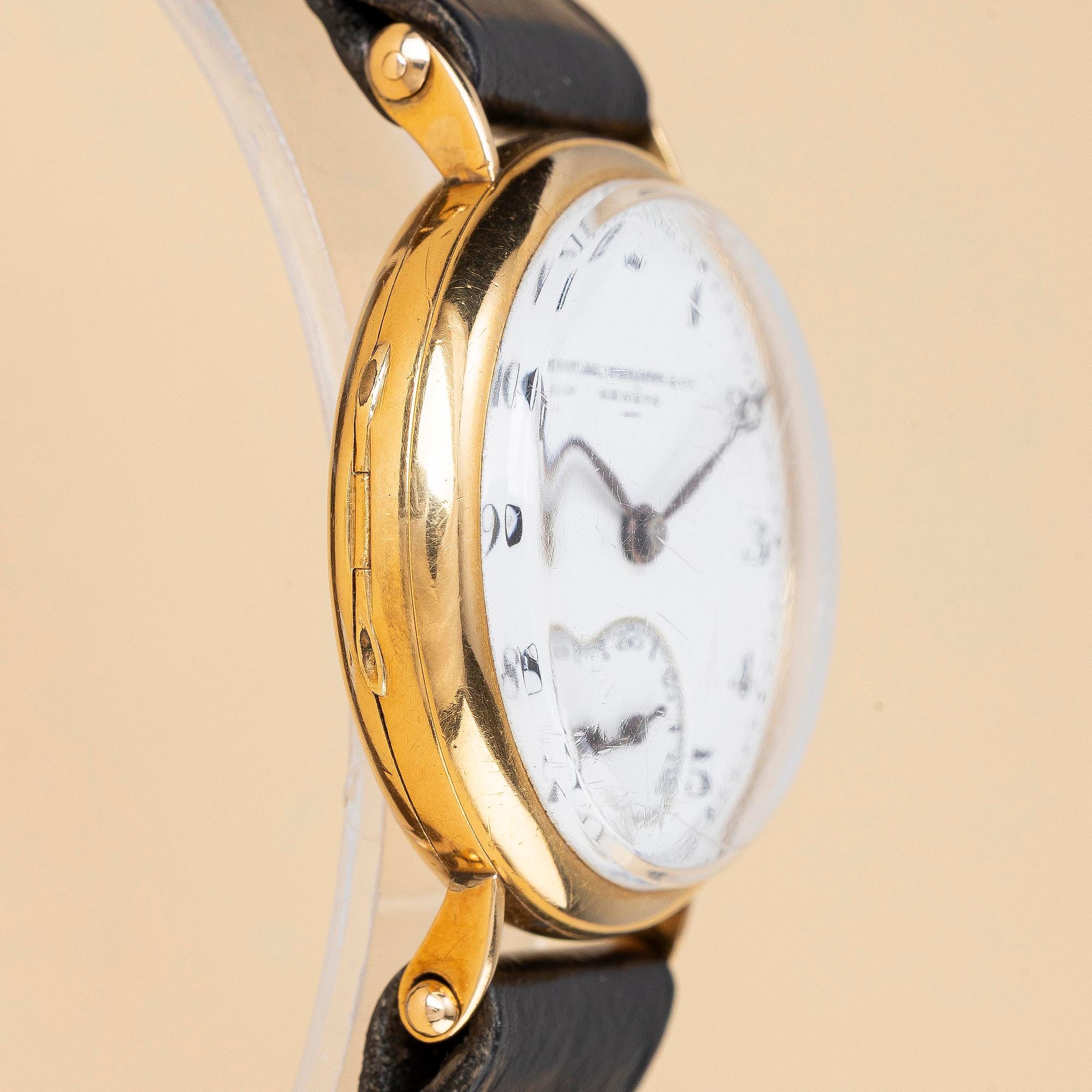
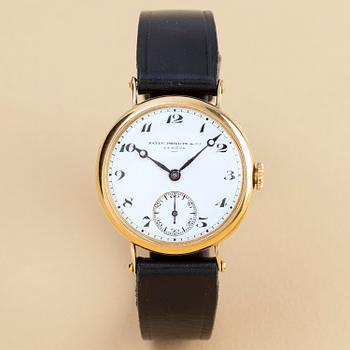
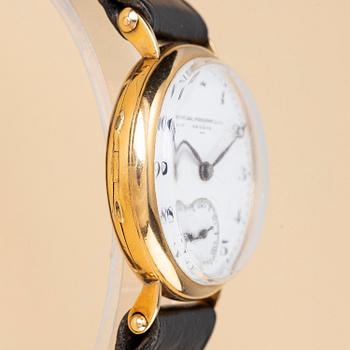
Case size: 31 mm
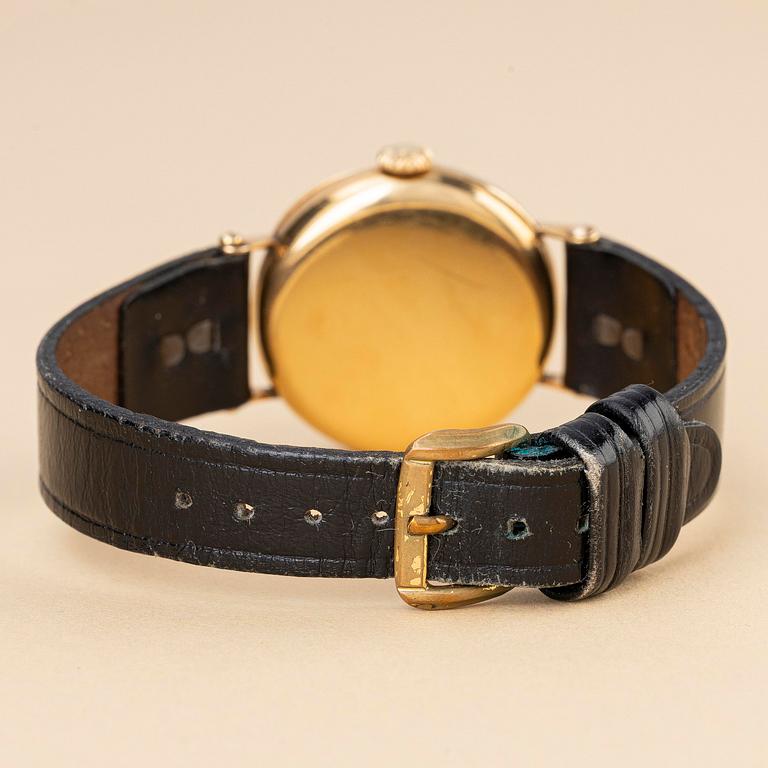
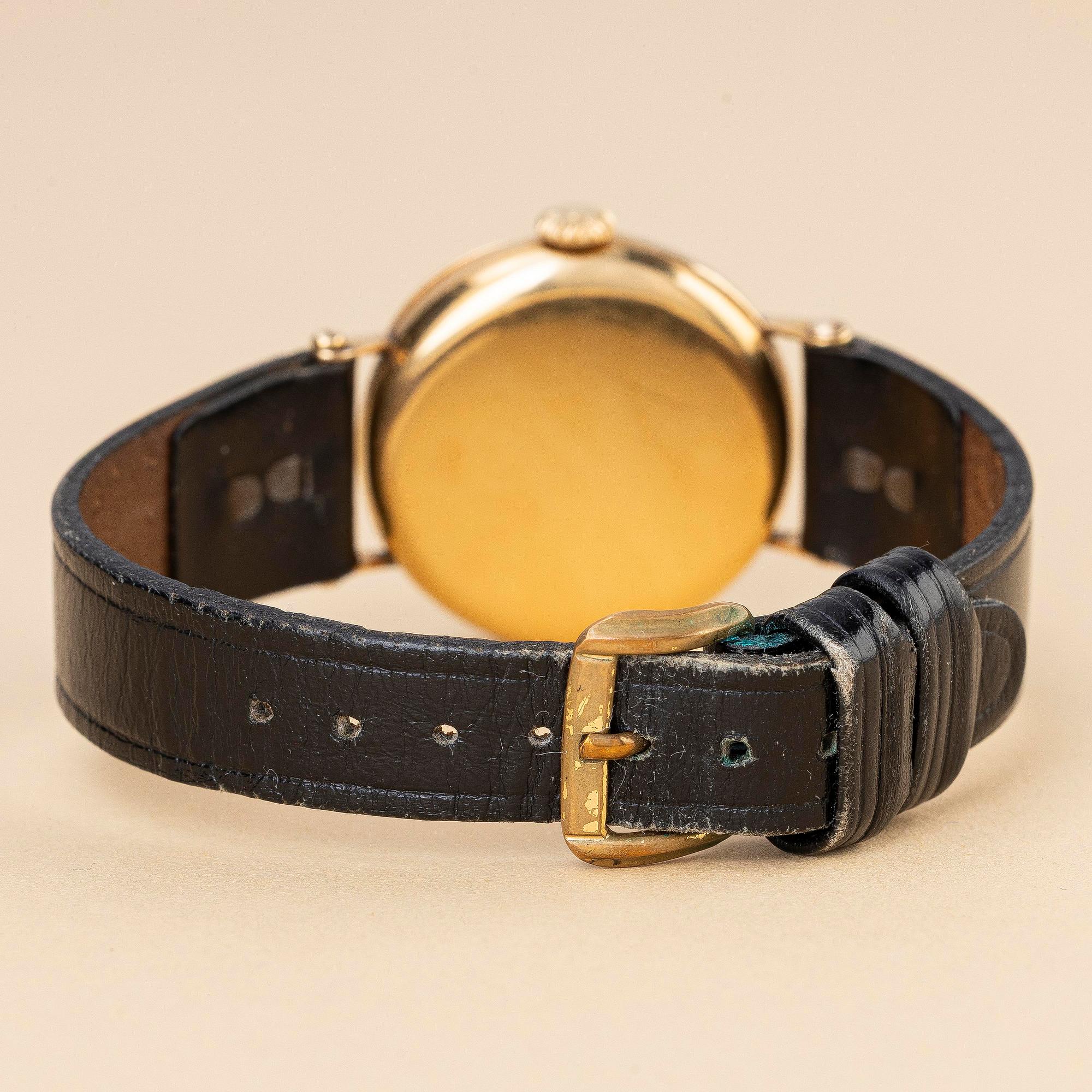
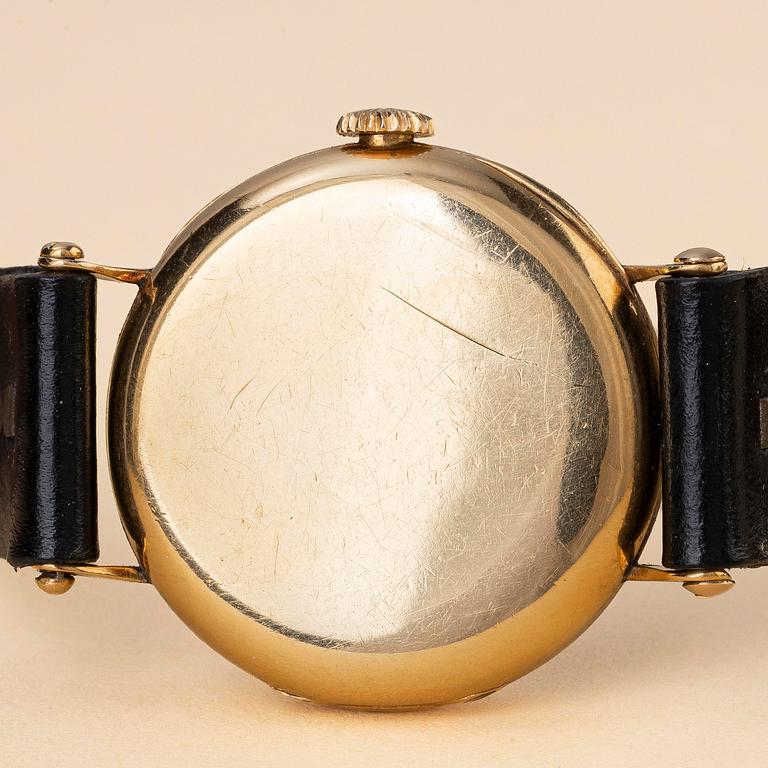
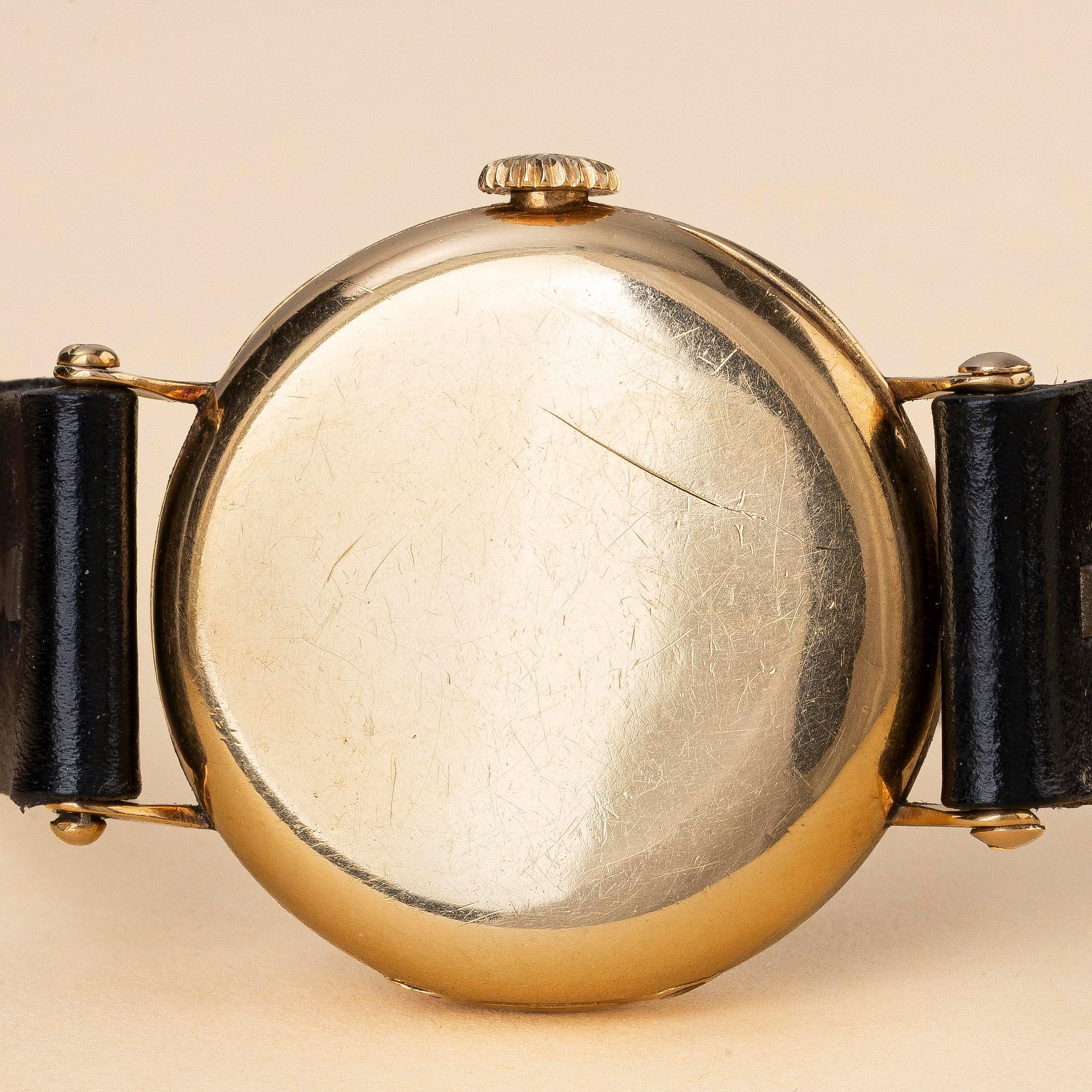
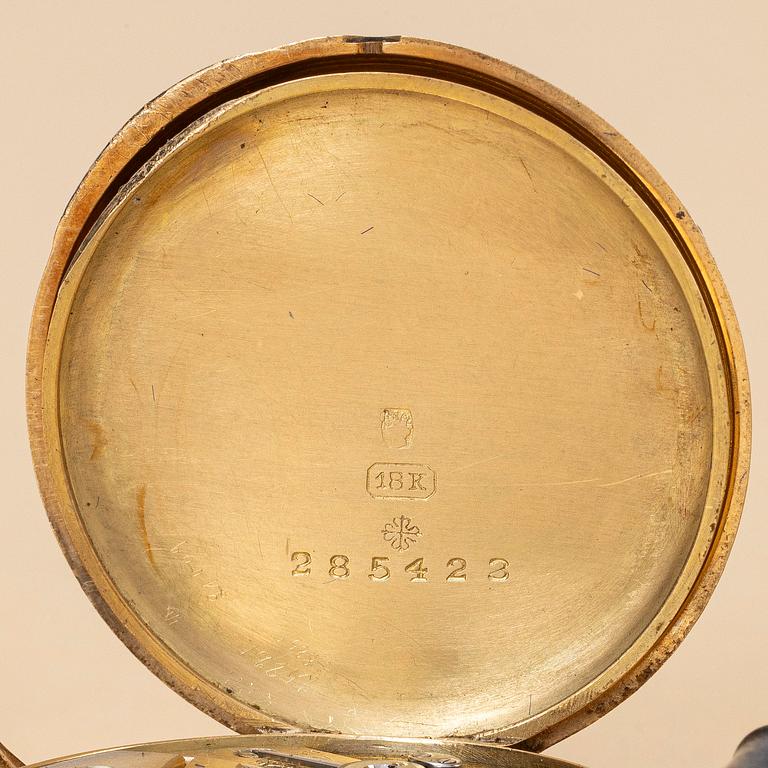
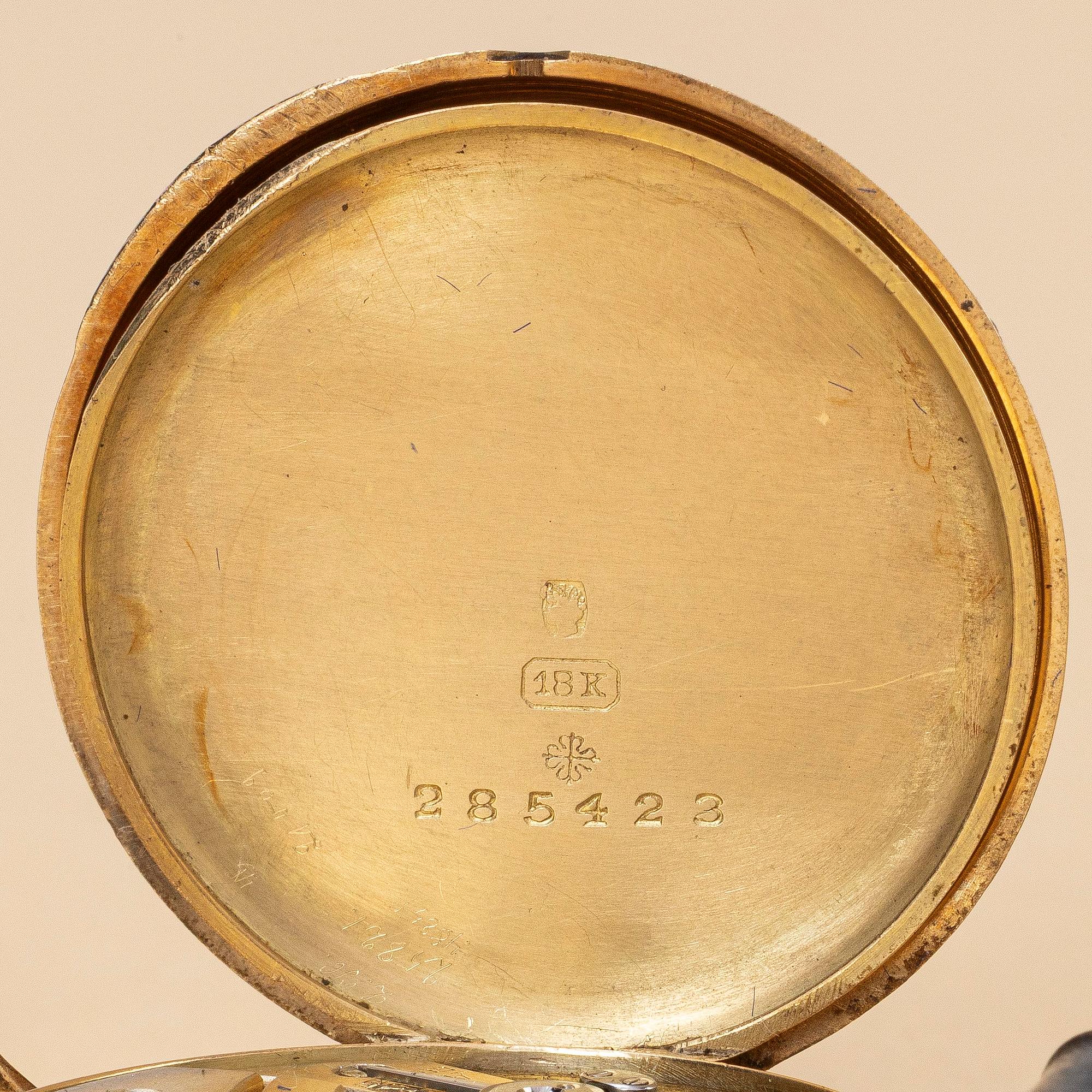
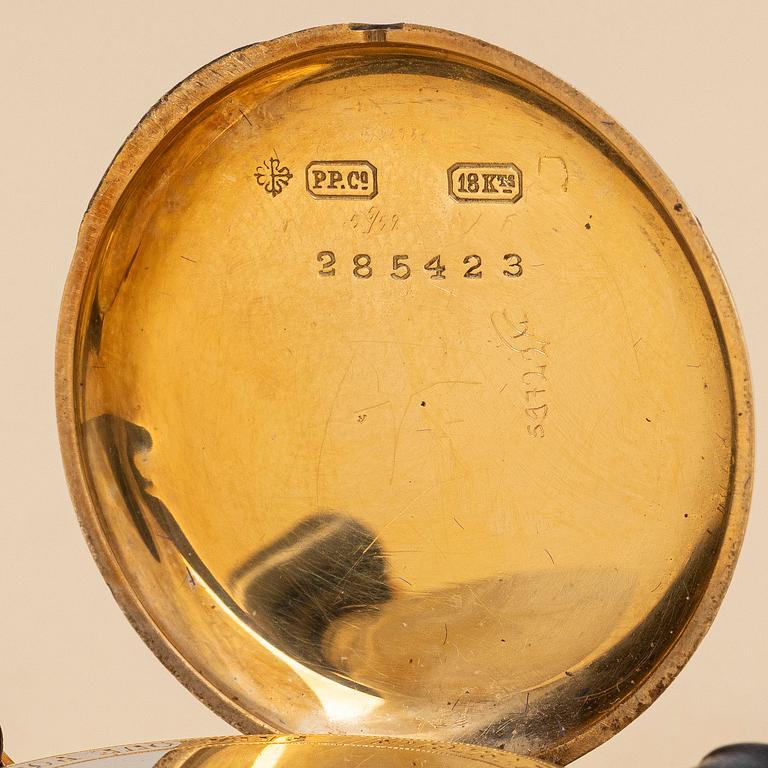
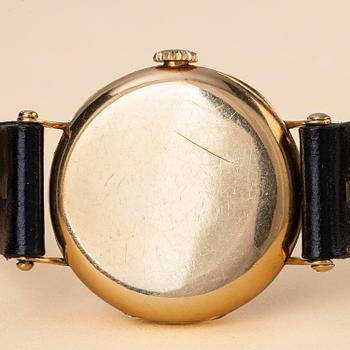
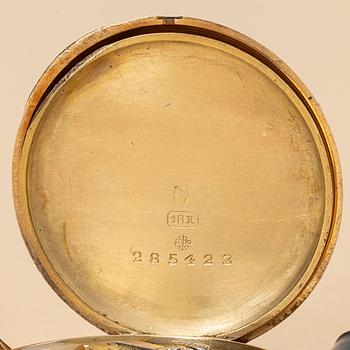
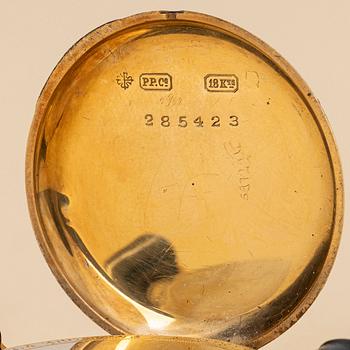
Material: 18K gold
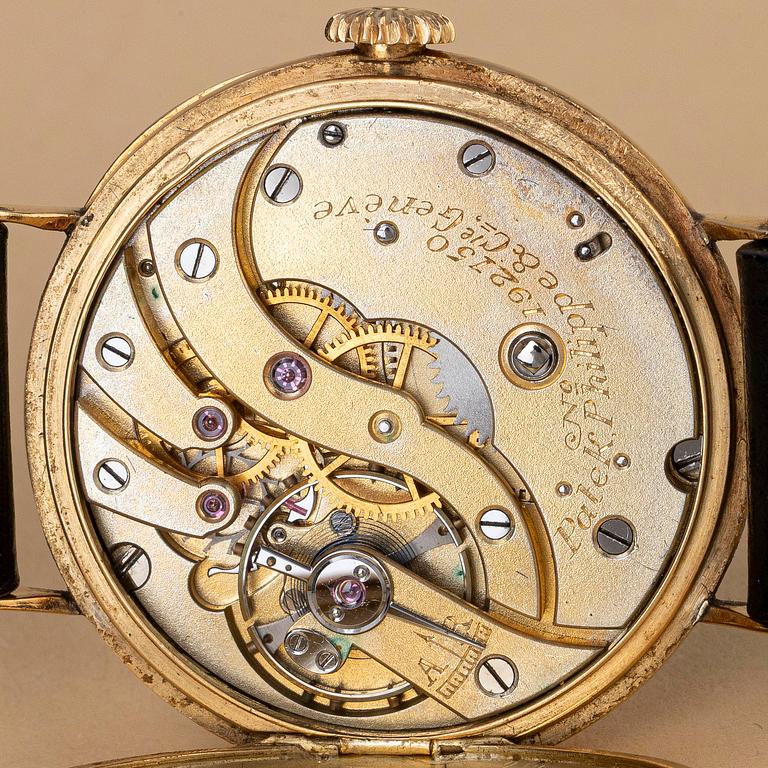
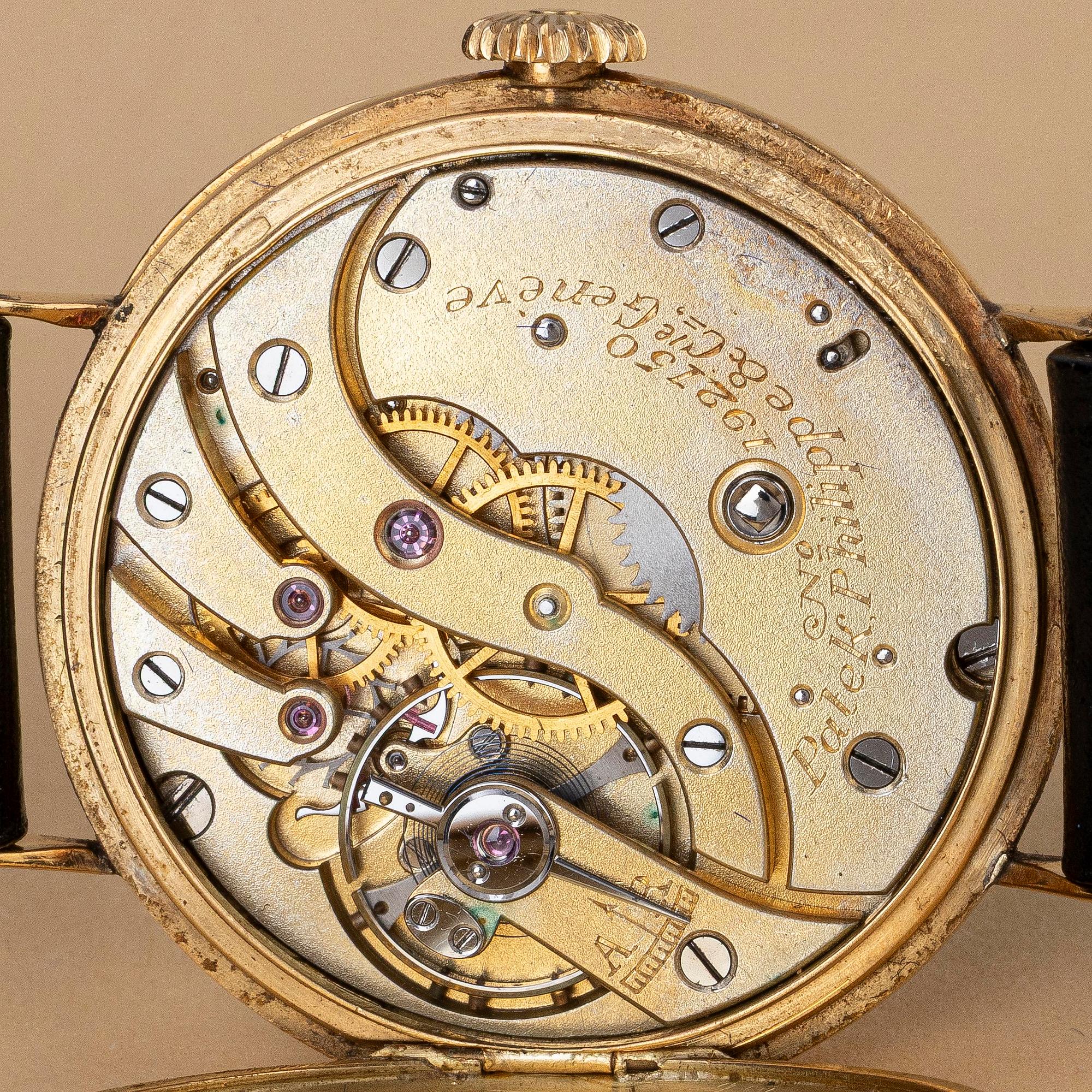
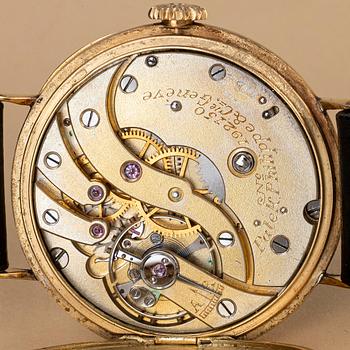
Movement: manual, calibre 12'''
Year: circa 1918
Crystal: plastic crystal
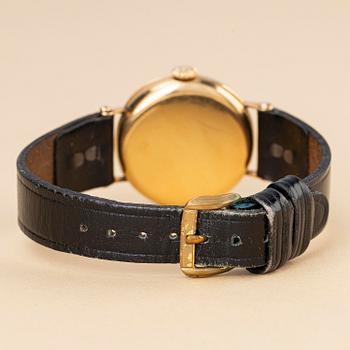
Bracelet: leather strap
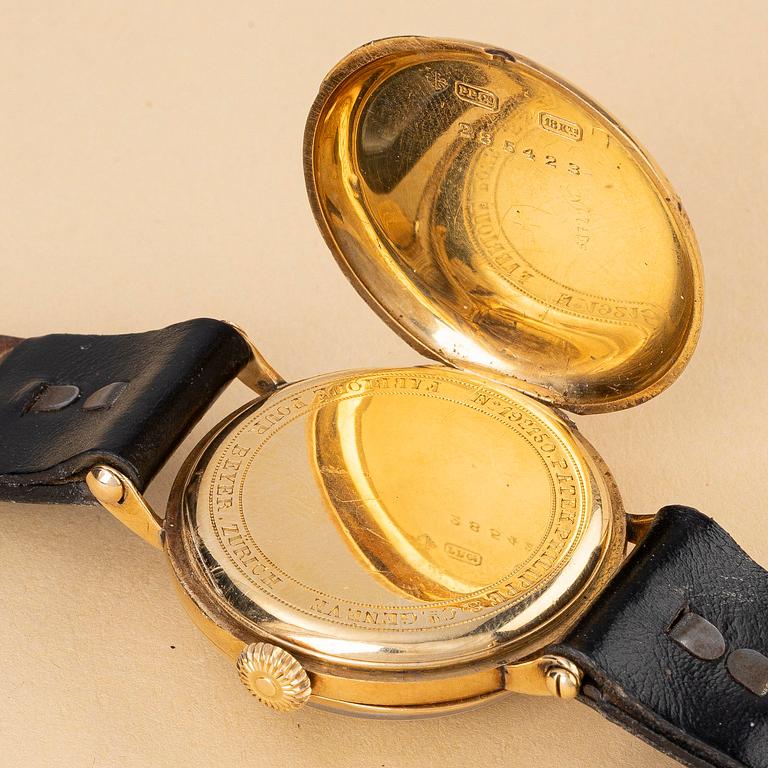
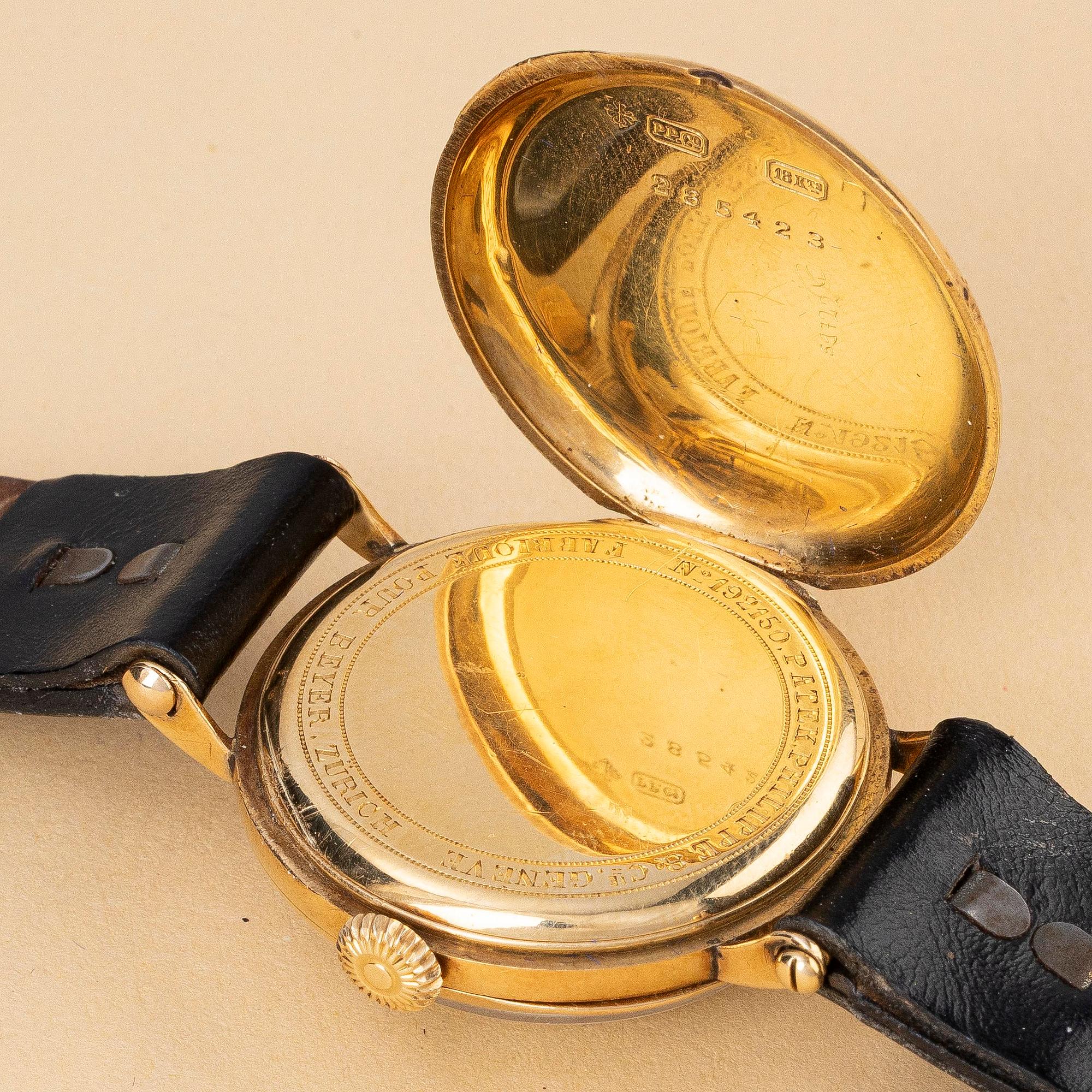
Movement number: 192'150
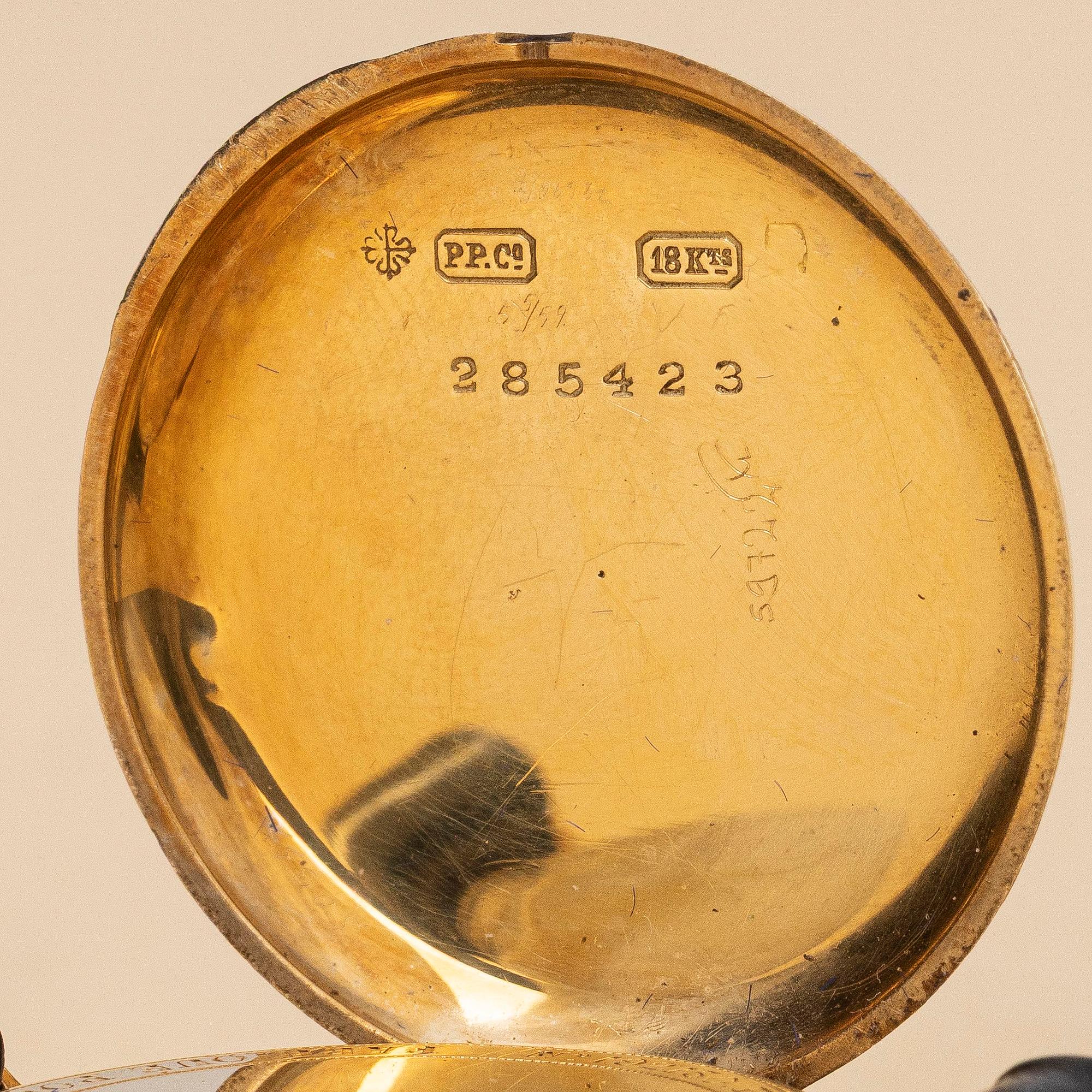
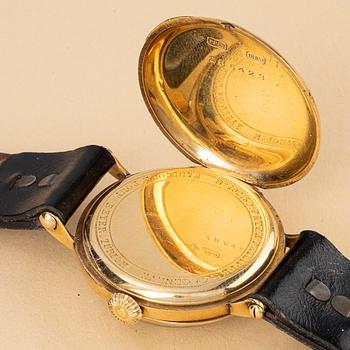
Case number: 285'423
Pictures of the movement are available upon request. Potential buyers should inspect each watch to satisfy themselves as to condition. For more information, please read our Conditions of Purchase.
Closely related examples:
• Movement no. 192'149 / case no. 285'422 – 31 mm – manufactured in 1918, confirmed by Patek Philippe Extract from the Archives.
• Movement no. 192'150 / case no. 285'423 – 31 mm – the present watch.
• Movement no. 192'151 / case no. 285'424 – 31 mm – sold by Christie's.
Provenance
According to the consigning family, the present watch was gifted to them in the early 1960s by the Finnish photographer Alfred Nybom (1879–1963), and has remained in the family's possession ever since.
Born in Helsinki, Nybom was an accomplished photographer and an important figure in early Finnish pictorialist photography. He studied photography in Munich at the beginning of the 20th century and subsequently worked in Berlin and Vienna before returning to Finland in 1908. Particularly recognised for his artistic portrait photography, his works are represented in the collection of the Finnish Museum of Photography and have been featured in exhibitions exploring the early history of photographic art.
More information
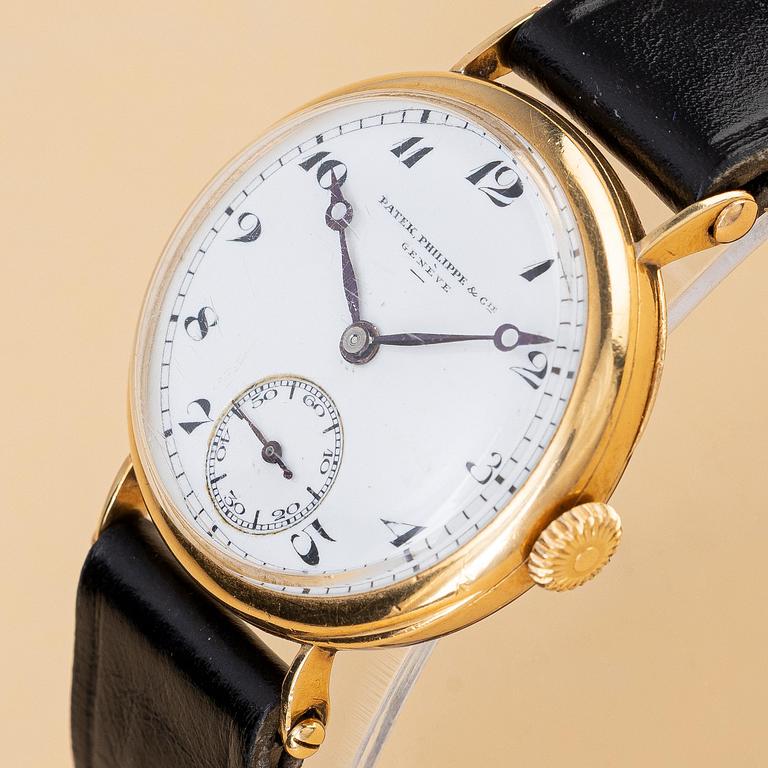
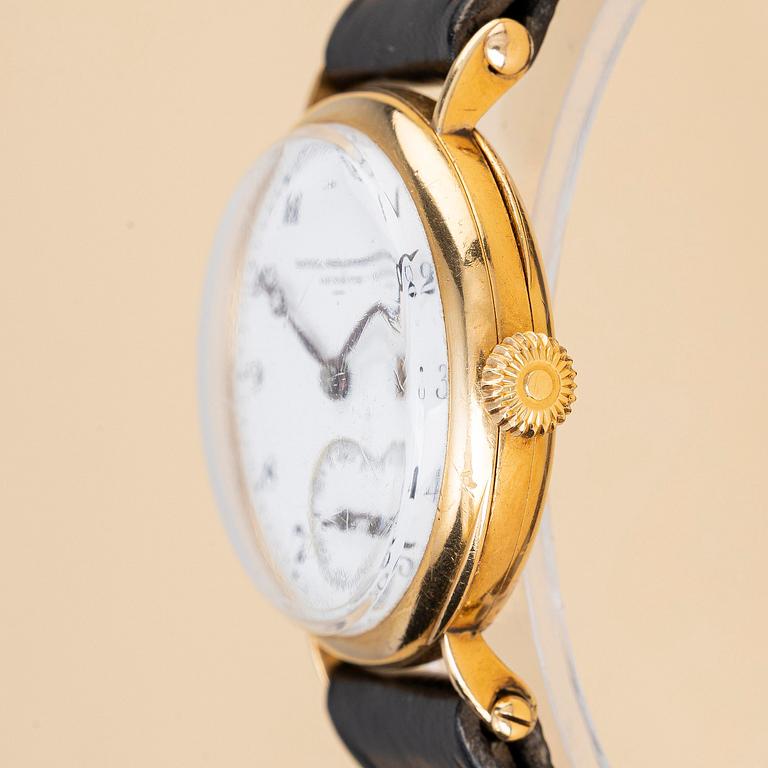
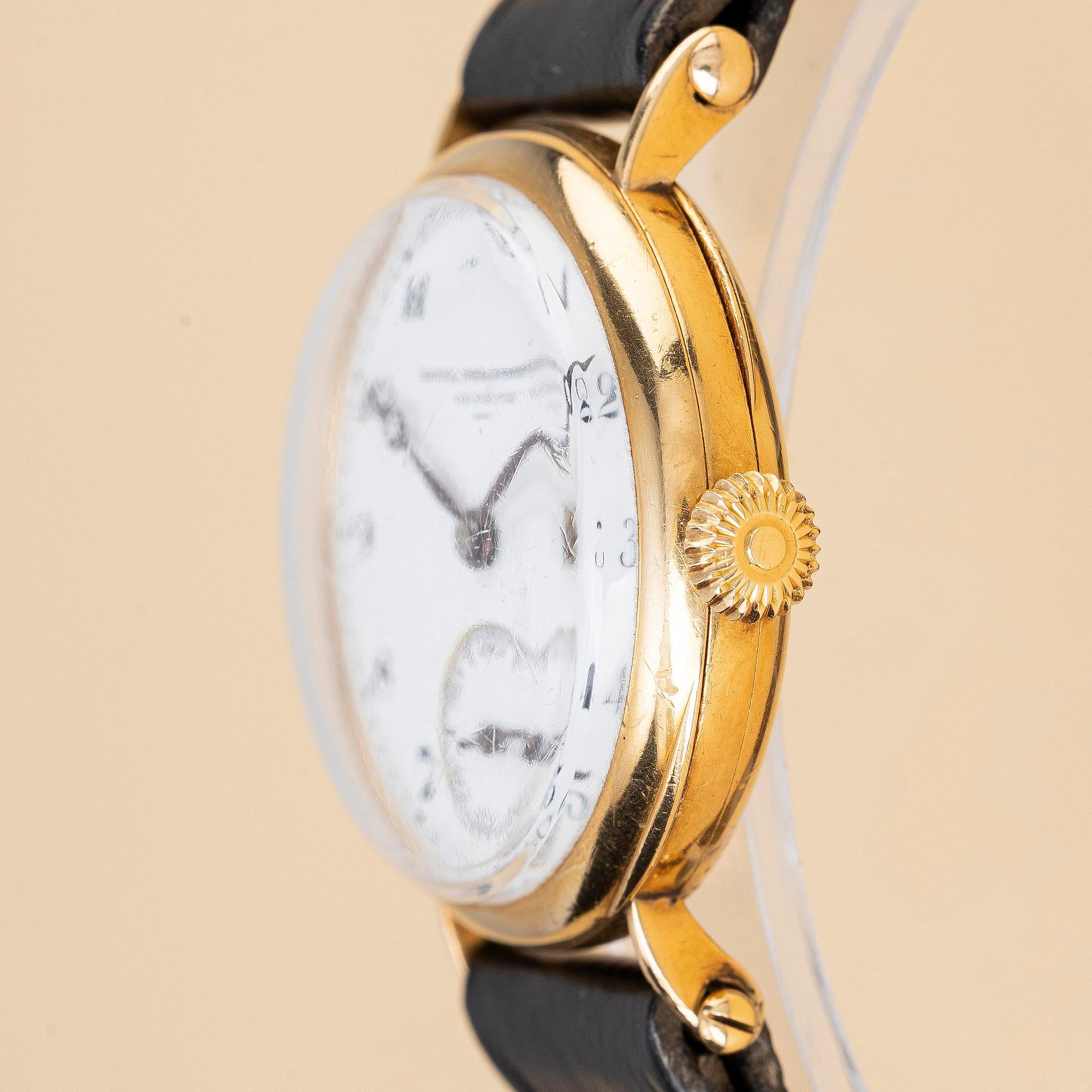
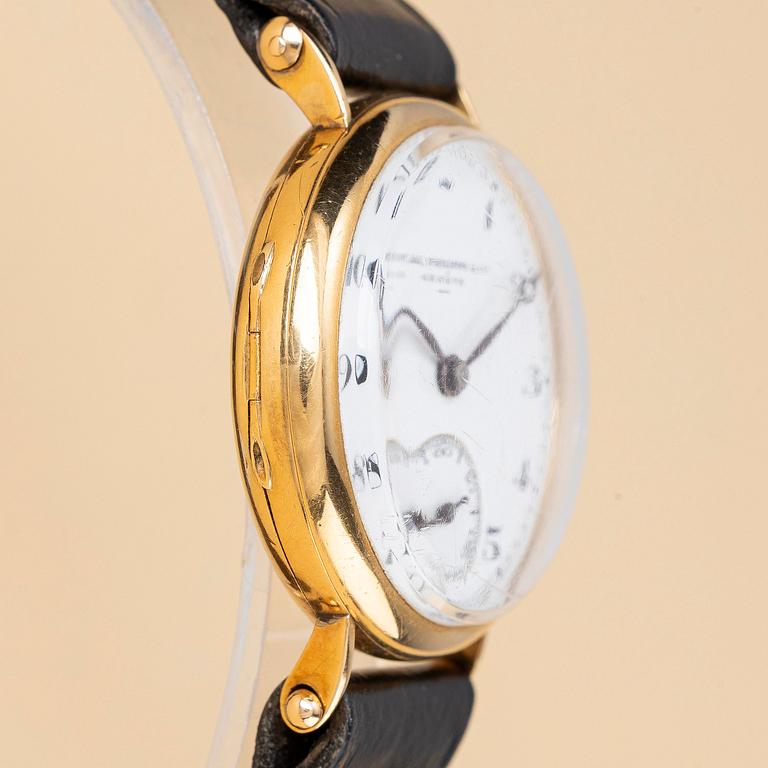
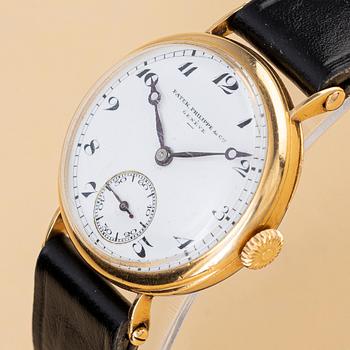
The present watch is a rare and early example of Patek Philippe's so-called “Officier” wristwatches, dating from the formative years of the wristwatch itself. Its compact 31 mm gold case, white enamel dial with stylised Arabic numerals, subsidiary seconds and early “Patek Philippe & Cie Genève” signature are characteristic of Patek Philippe wristwatches produced during the late 1910s.
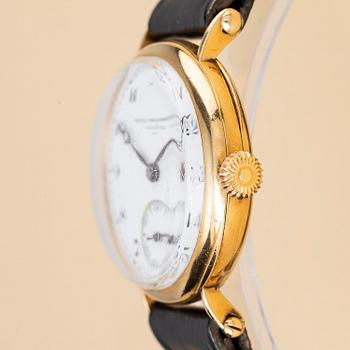
The Officer style has its origins in the earliest years of wrist-worn timekeeping. During the early 20th century, and particularly during the First World War, small pocket watches and pendant watches were increasingly adapted for wear on the wrist, where they offered a practical advantage to military officers who needed to consult the time quickly. The resulting watches retained many characteristics of contemporary hunter-case pocket watches, including straight lugs, screwed strap bars, traditional winding crowns and hinged case construction. The compact proportions of the present watch are also typical of this transitional period, when smaller pendant-watch formats were particularly well suited to wrist wear.
Watches of this type represent an important stage in the evolution from the pocket watch to the purpose-built wristwatch. Patek Philippe has continued to revisit the Officer aesthetic throughout its history, most notably with later references such as the 3960, 5053 and 5153, all consciously recalling these early hunter-derived wristwatches.
The present watch bears movement no. 192'150 and case no. 285'423. A closely related example with movement no. 192'149 and case no. 285'422 is accompanied by a Patek Philippe Extract from the Archives confirming manufacture in 1918.
For condition report contact specialist

What will the transport cost?
Shipping can only be arranged by contacting specialdelivery@bukowskis.com.
Others have also viewed