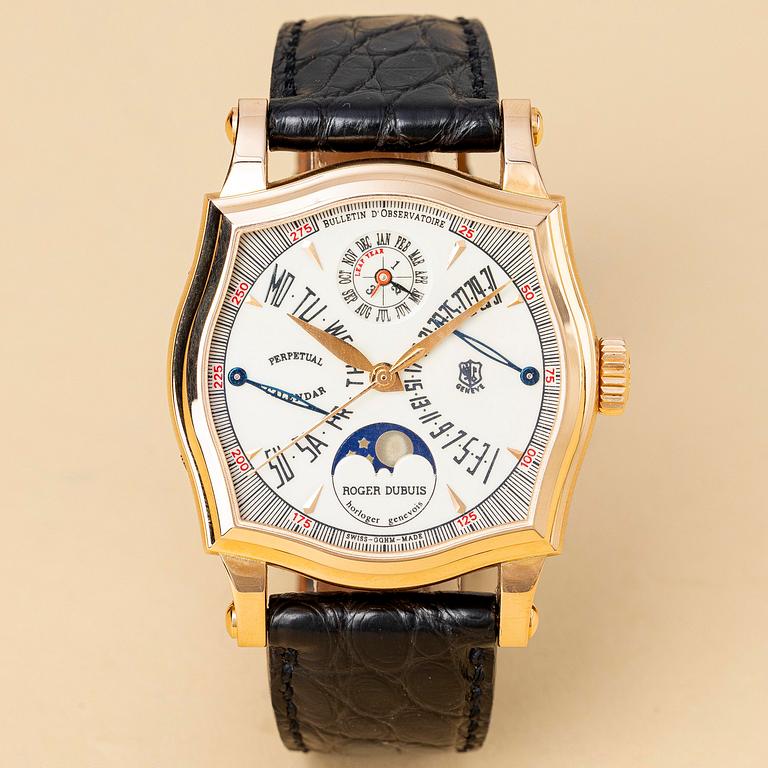
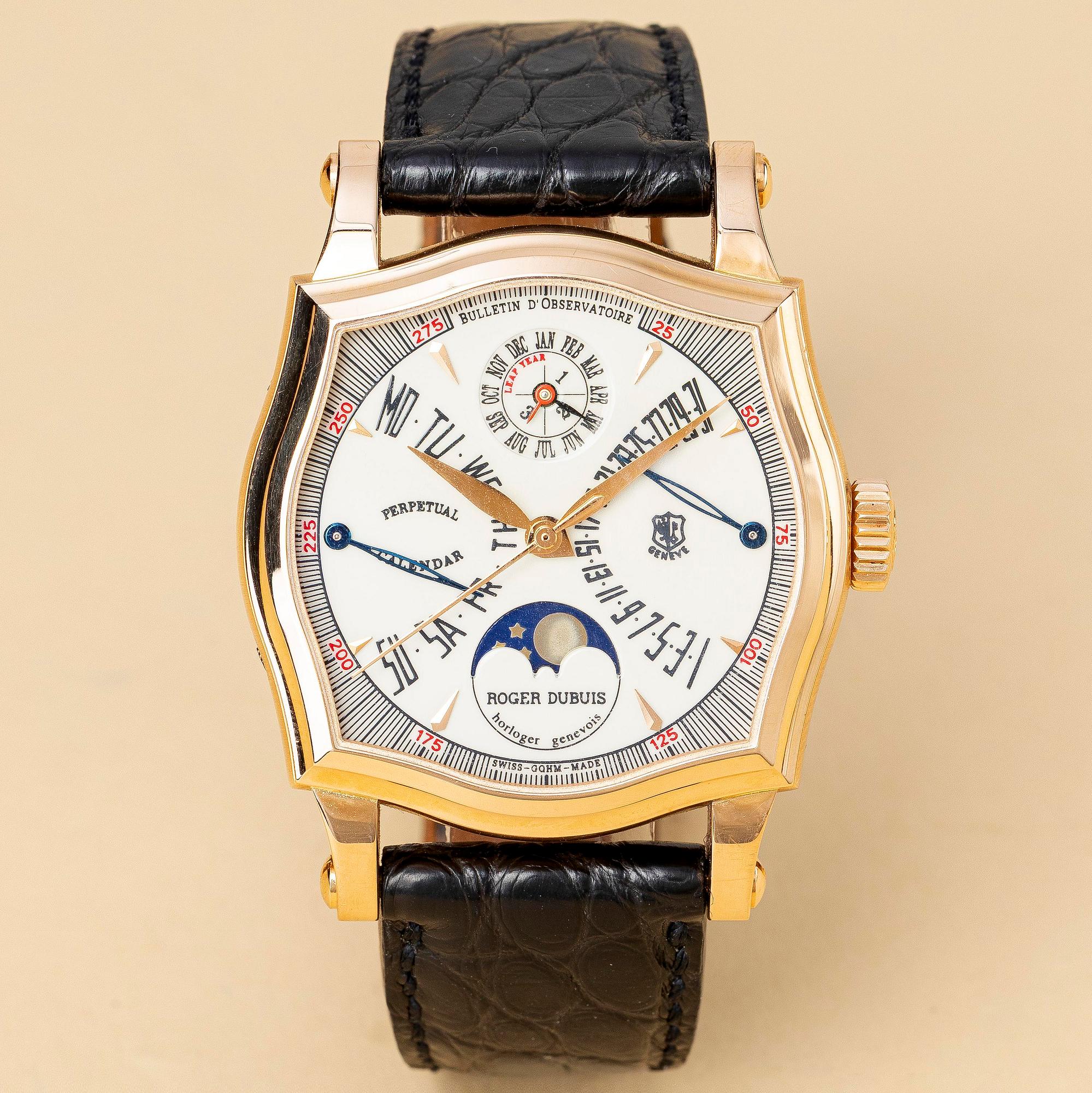
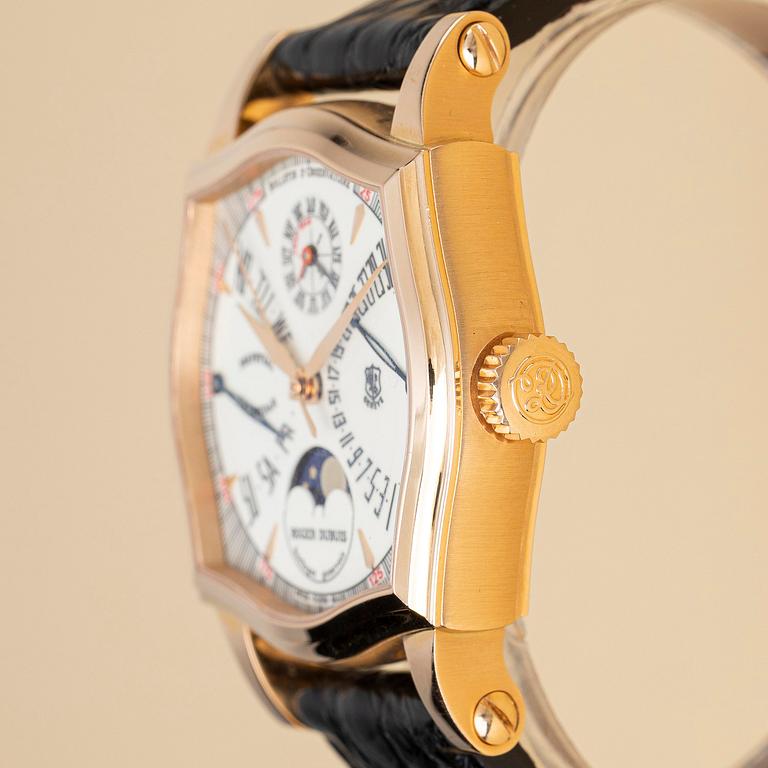
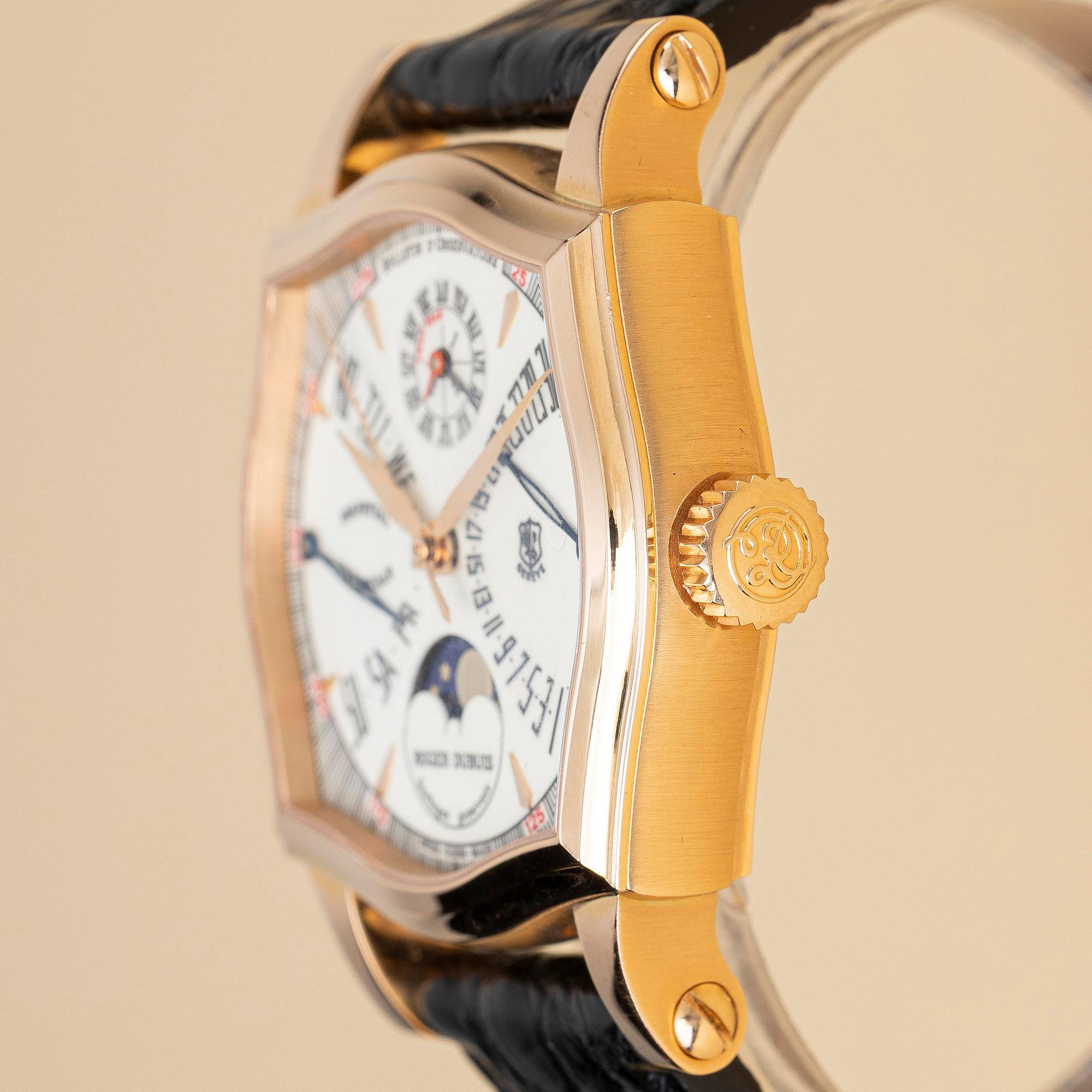
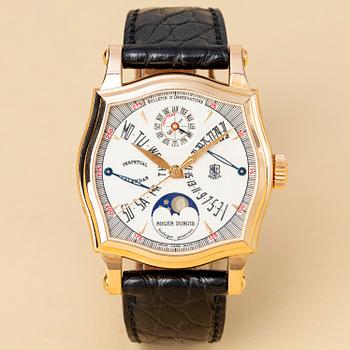
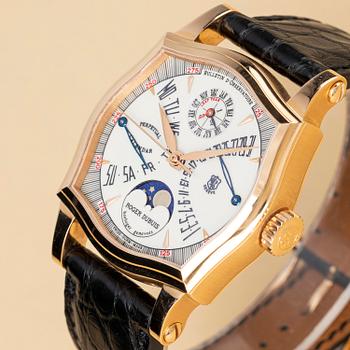
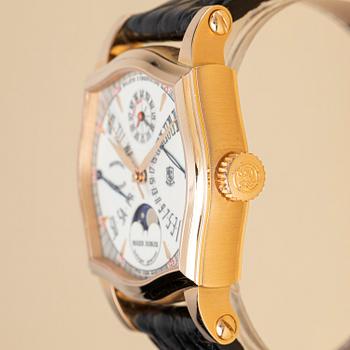
Case size: 37 mm
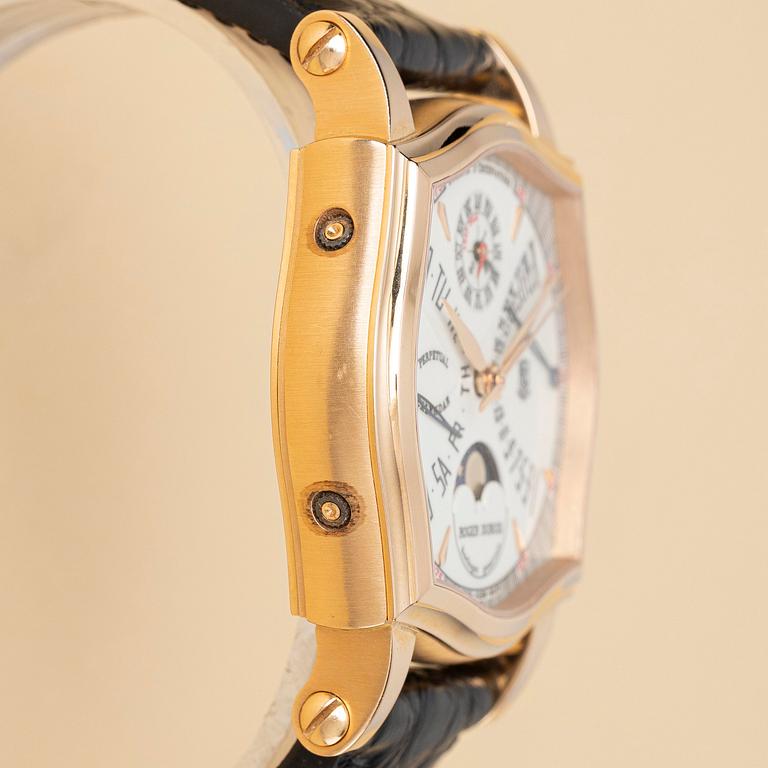
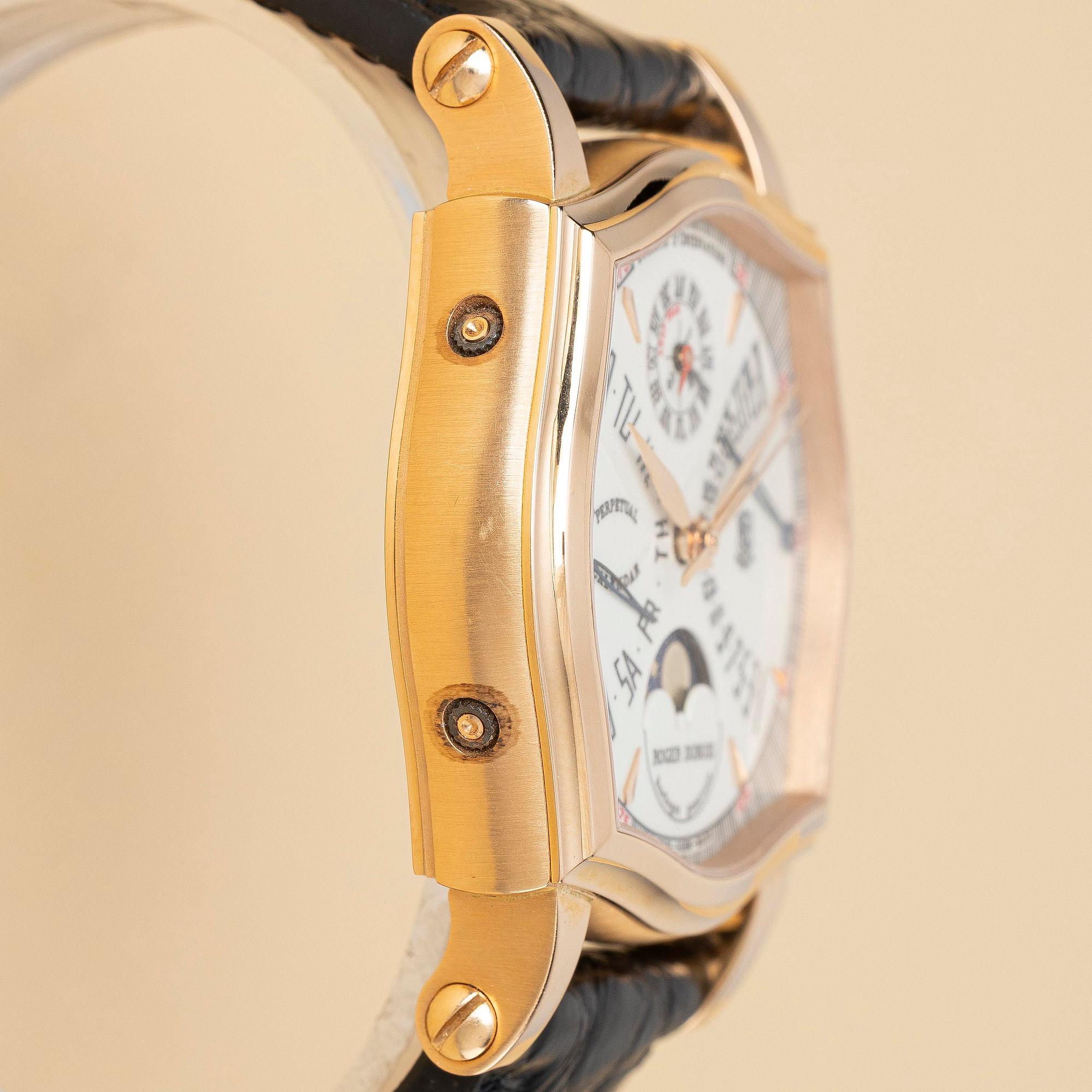
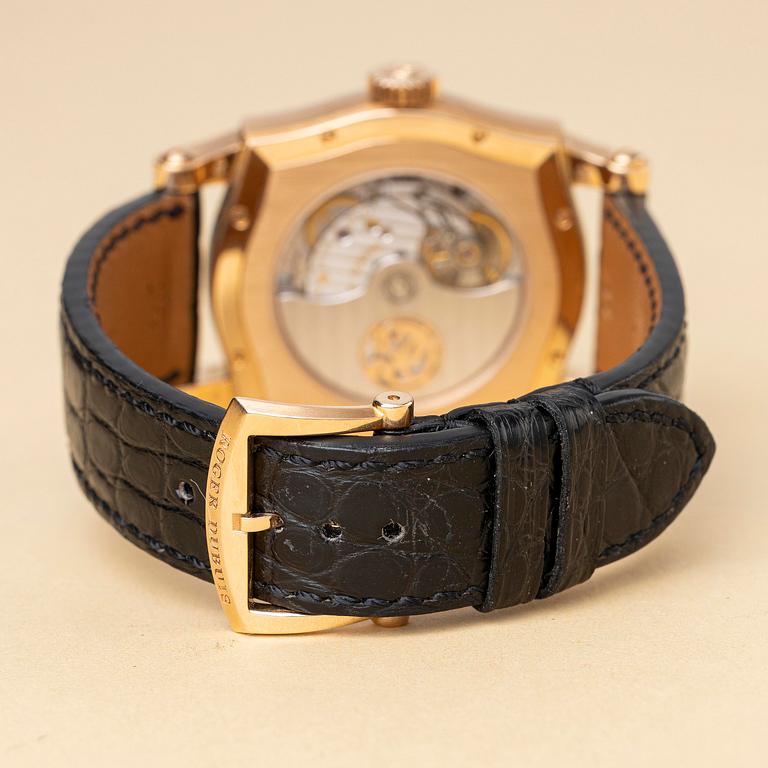
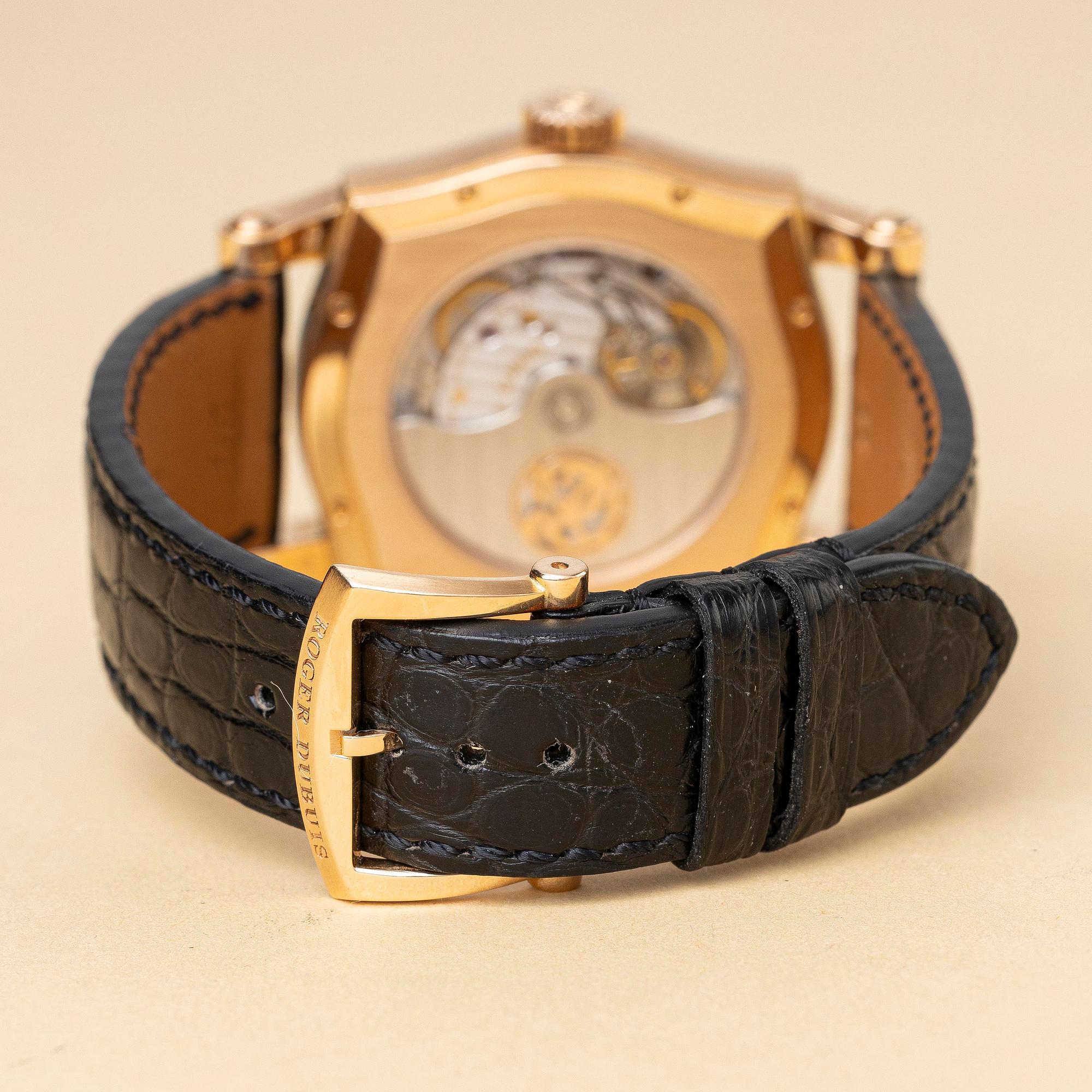
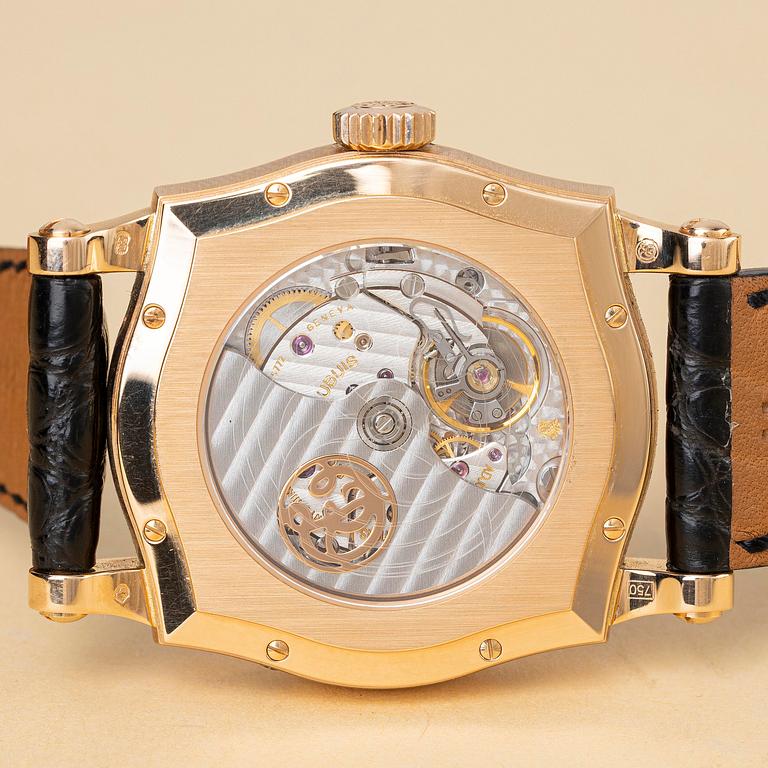
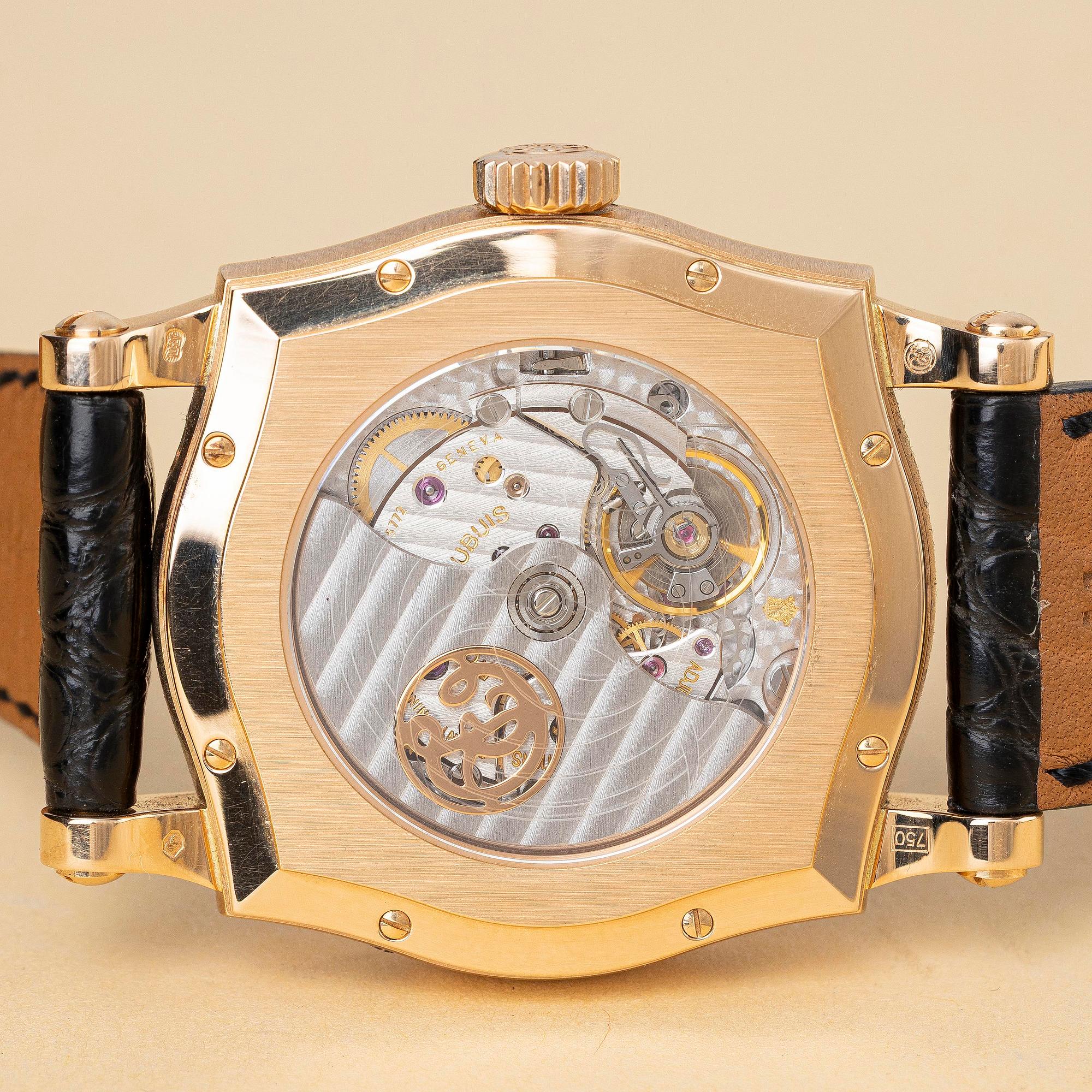
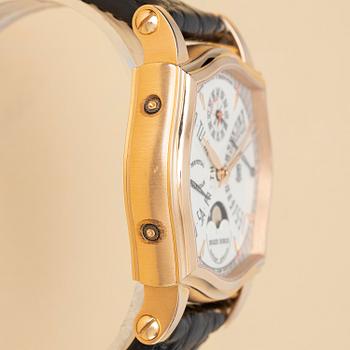
Material: 18K pink gold
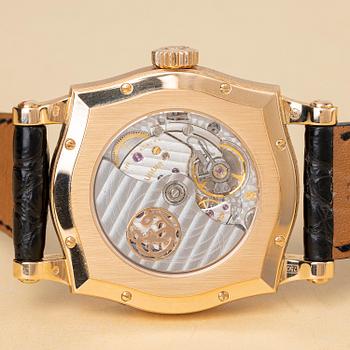
Movement: automatic, caliber RD 5772
Year: circa 2001
Crystal: sapphire crystal
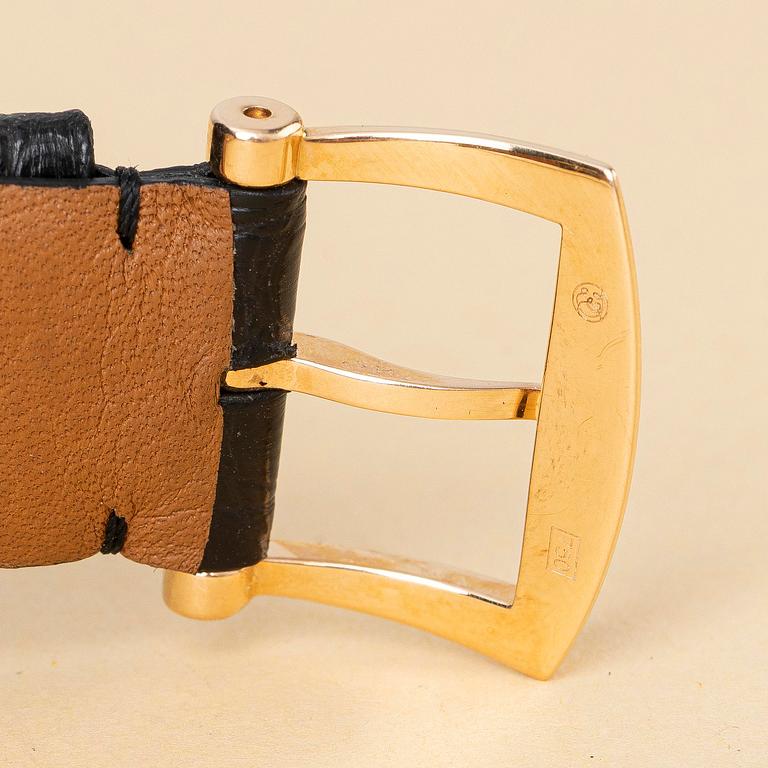
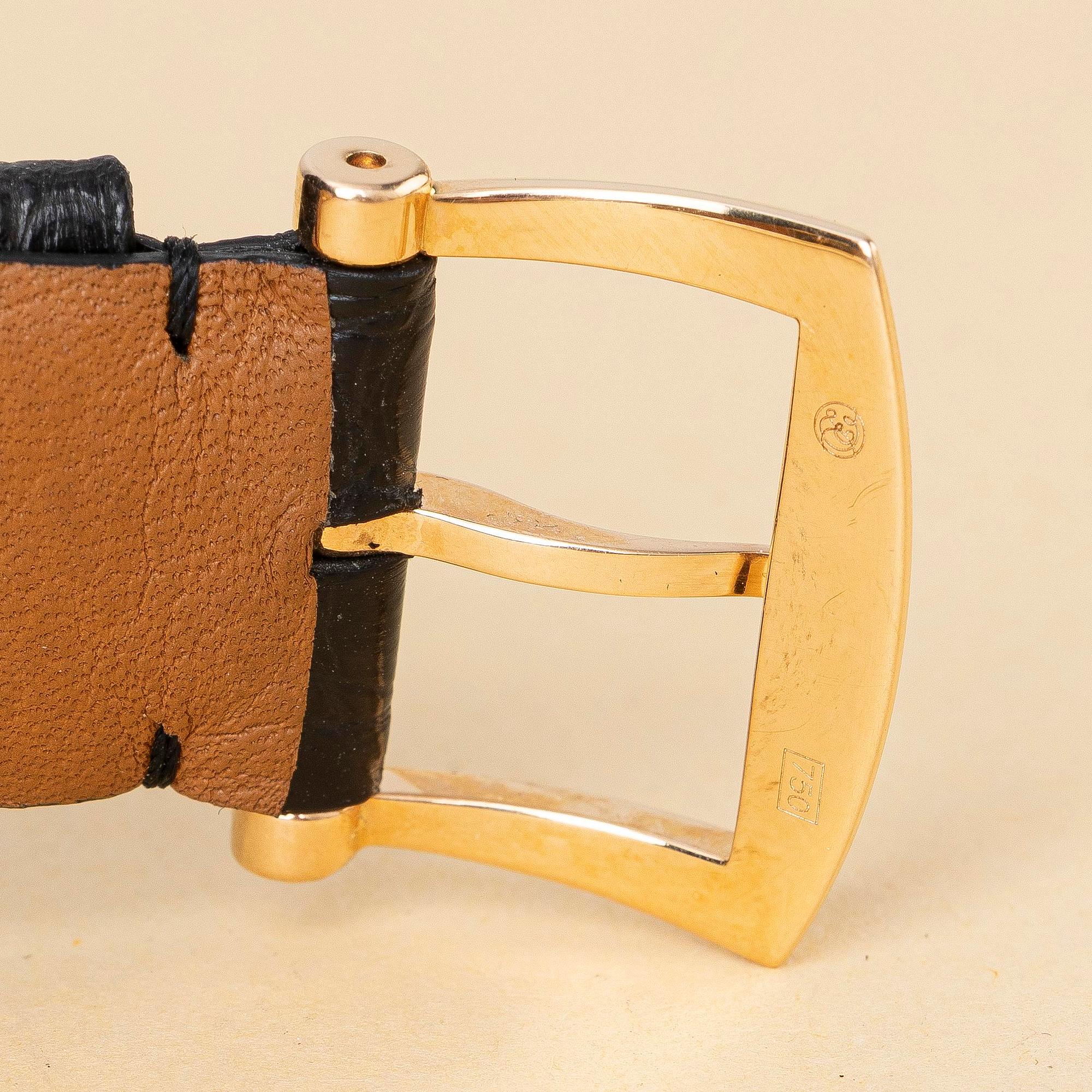
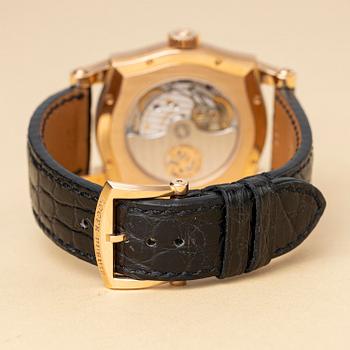
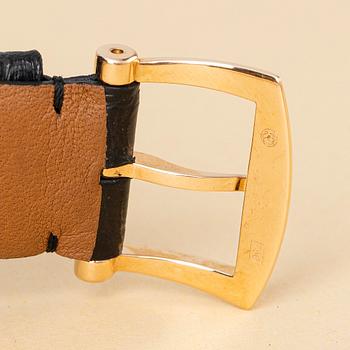
Strap: original leather strap, original buckle in 18K pink gold
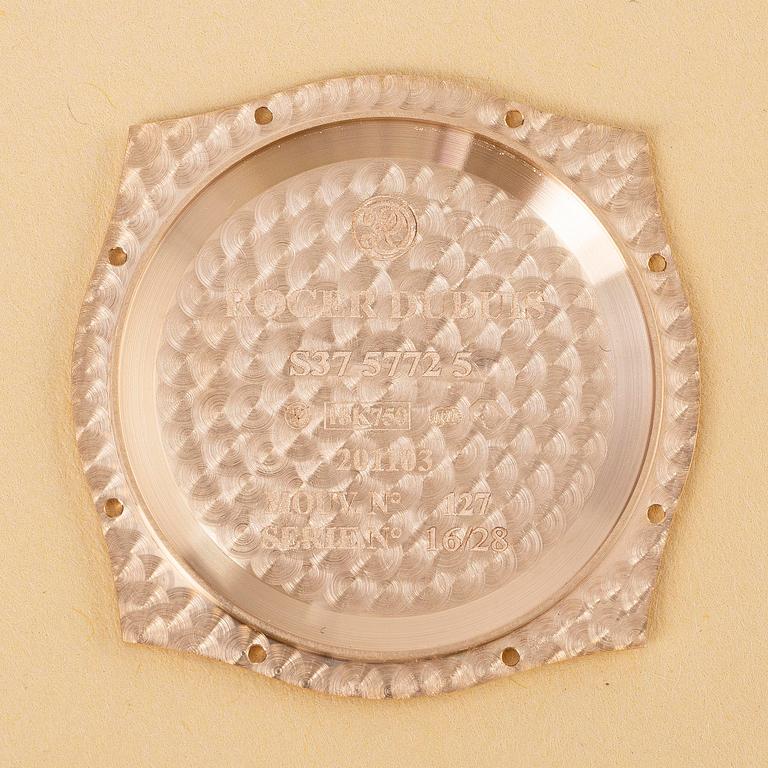
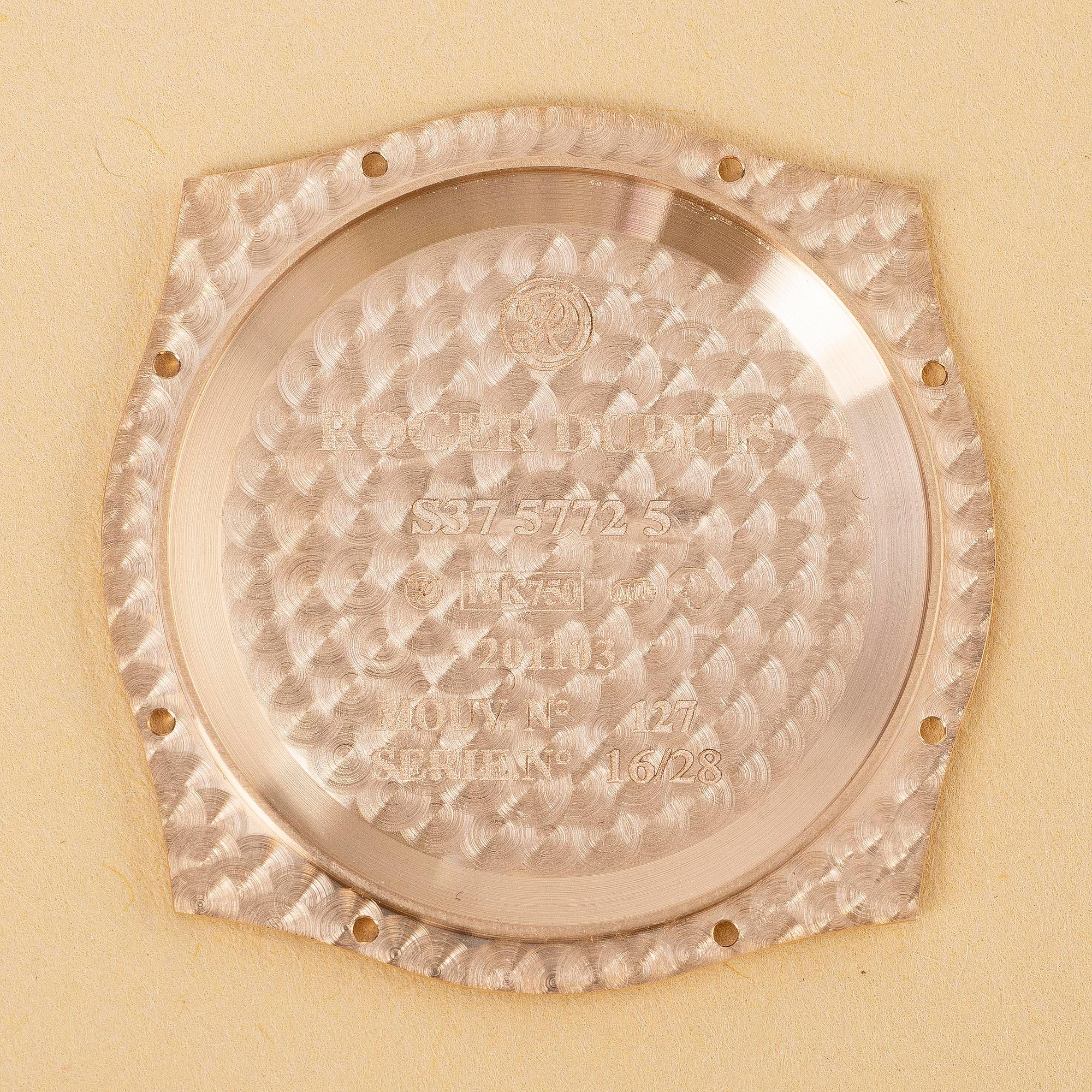
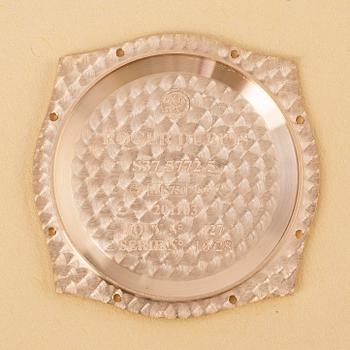
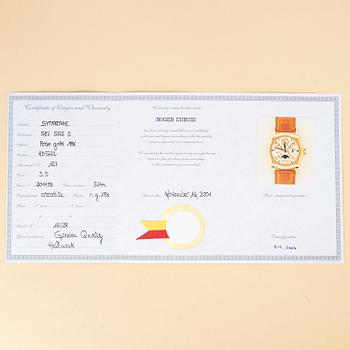
Reference number: S37 5772 5
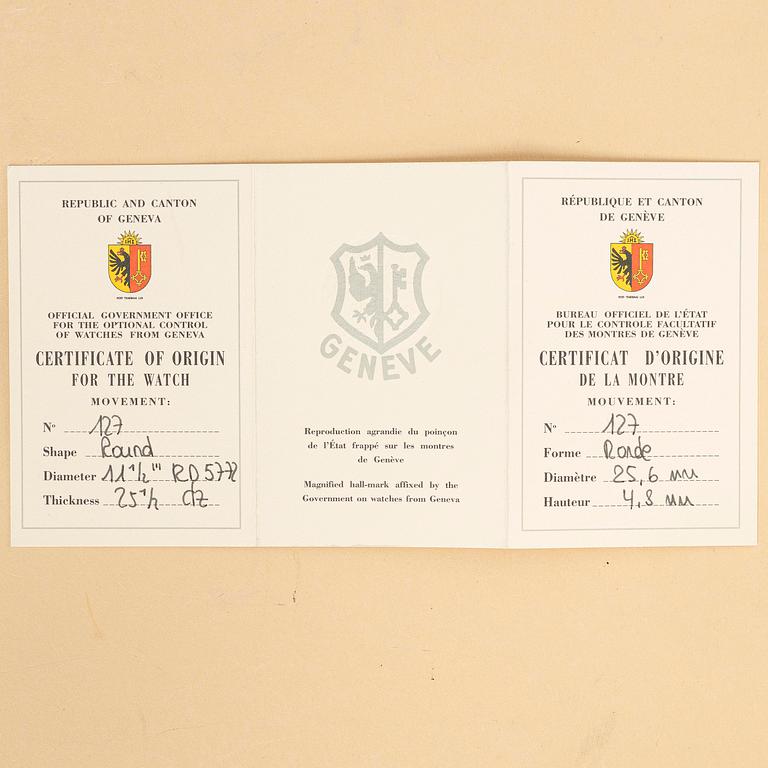
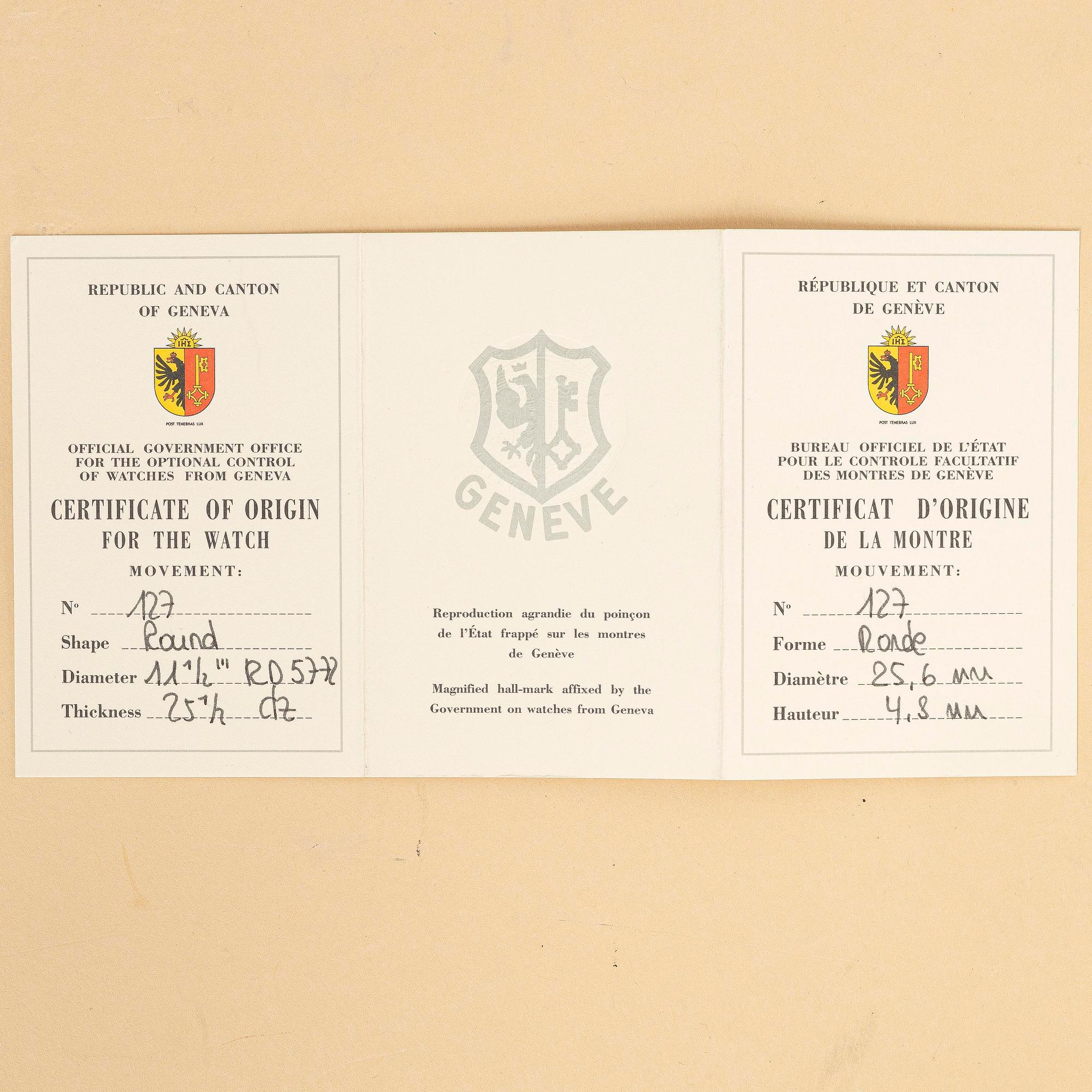
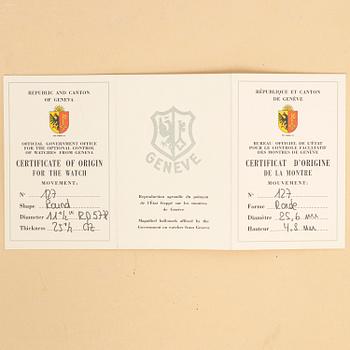
Movement number: 127
Case number: 201'103
Limited edition: numbered 16 of 28
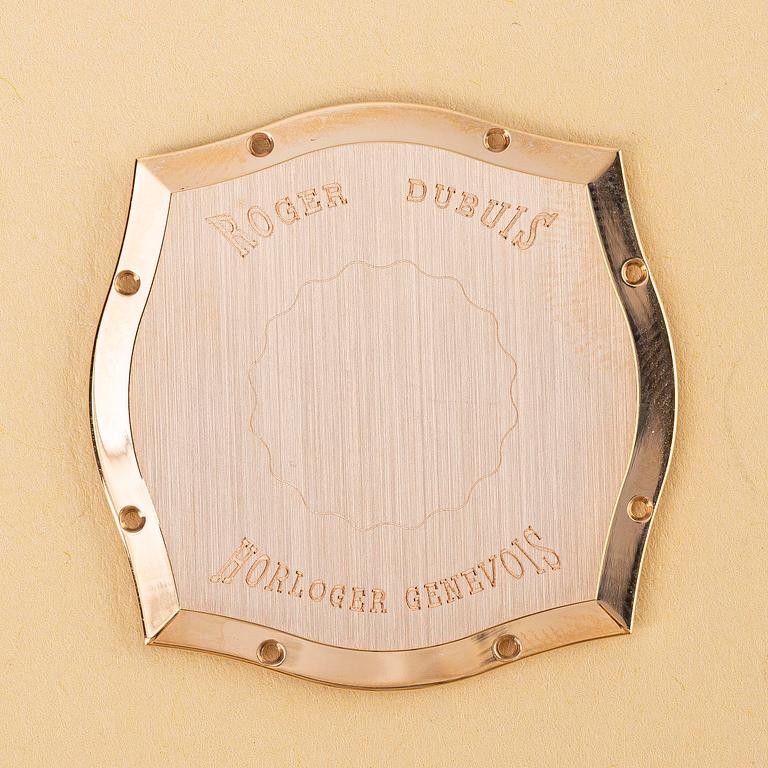
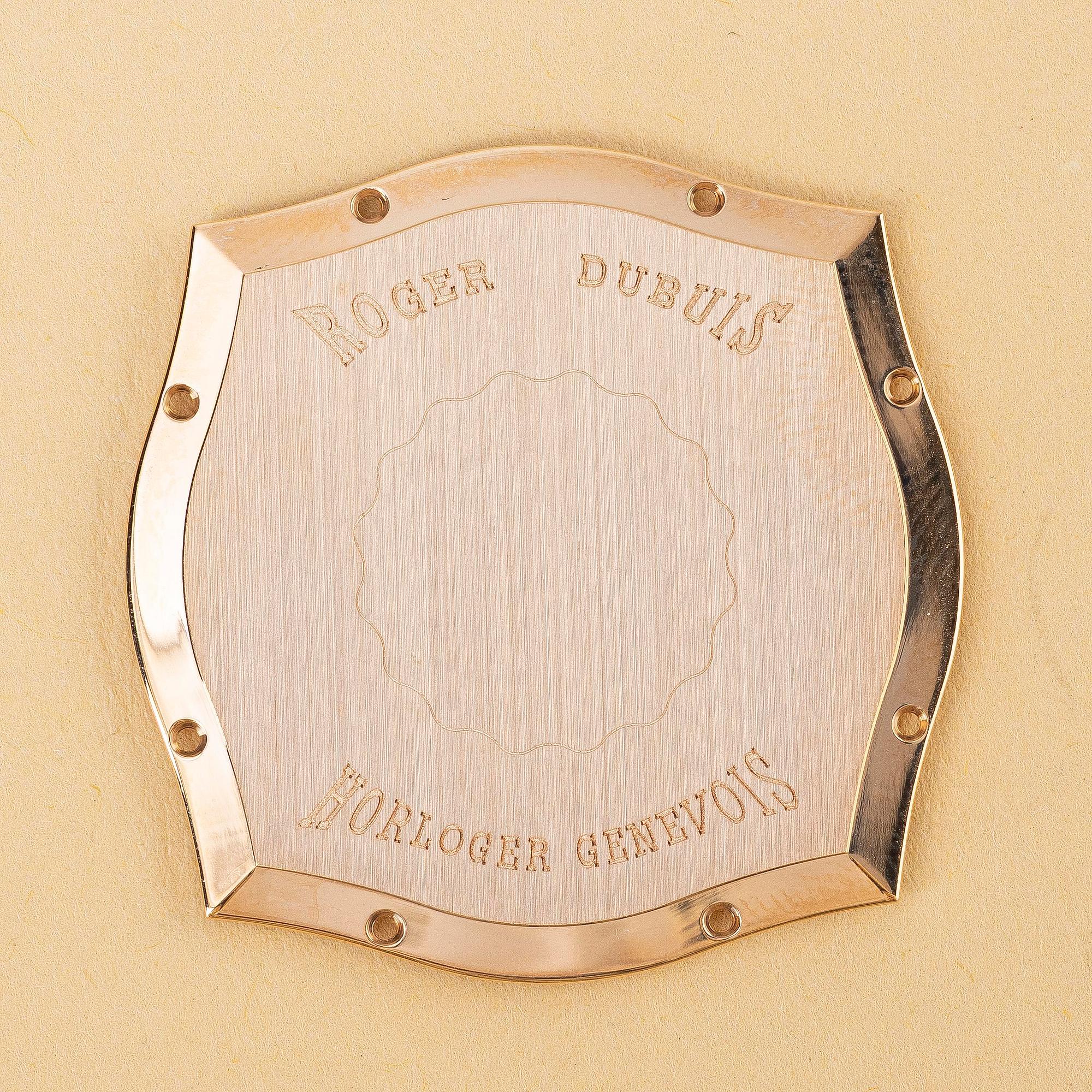
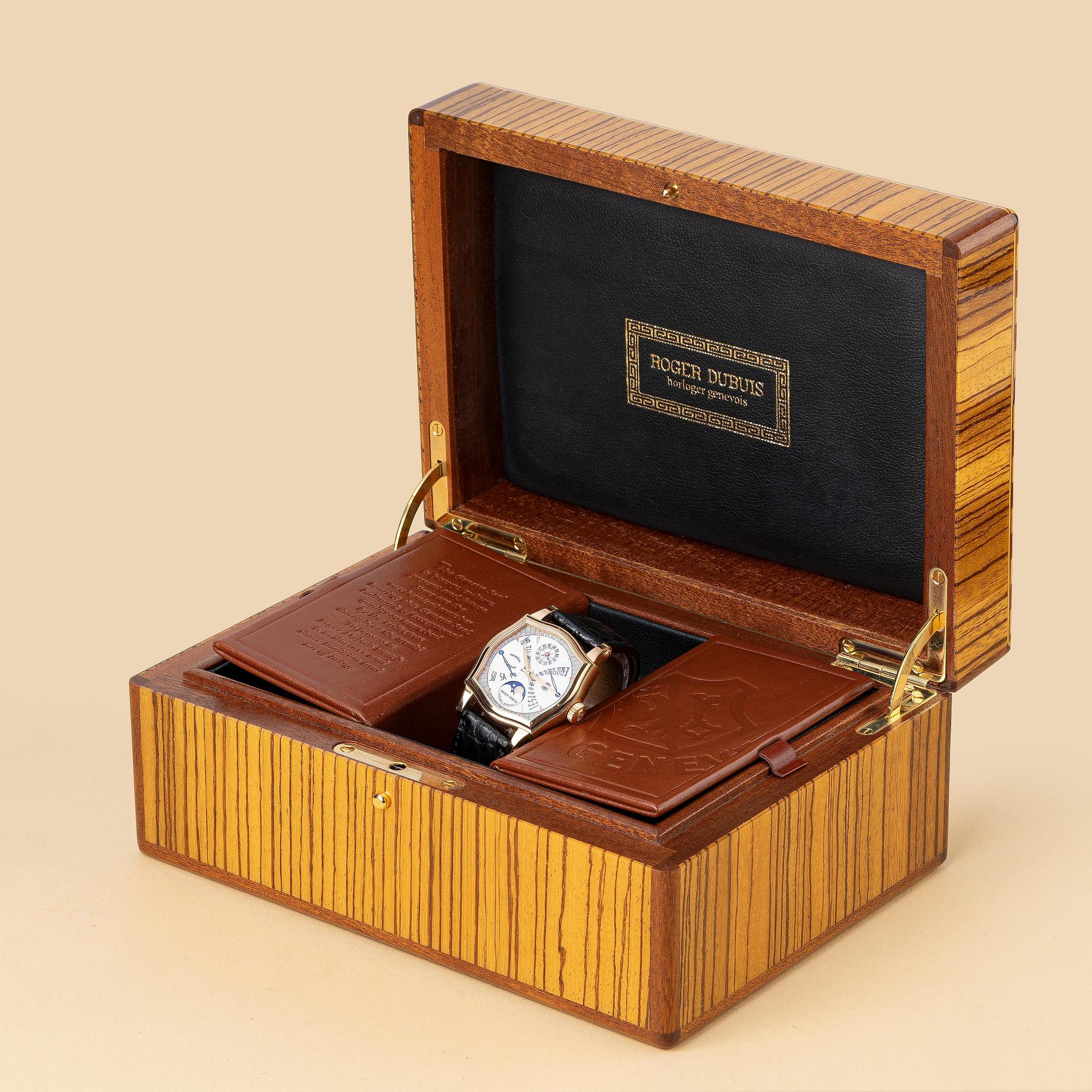
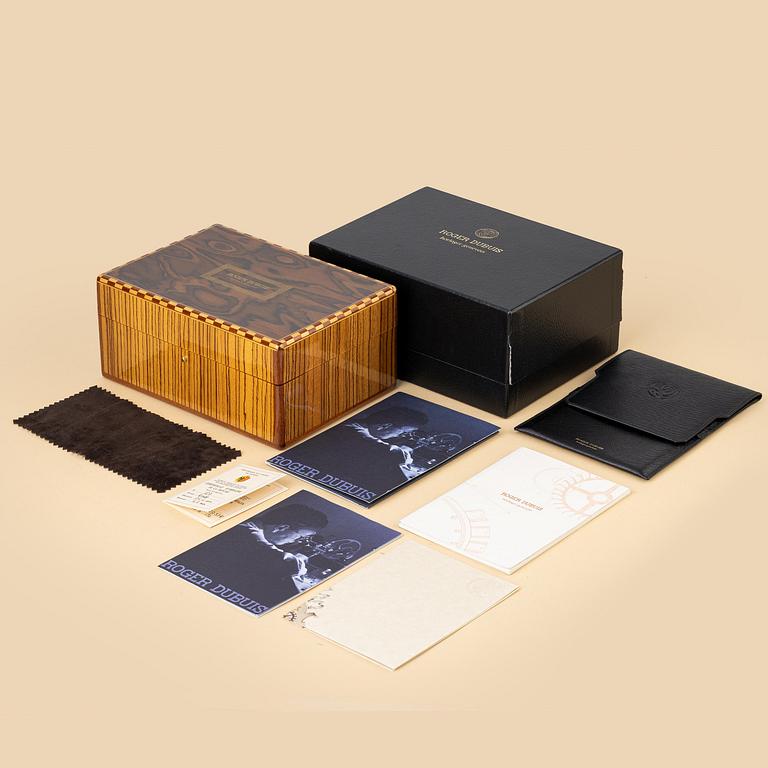
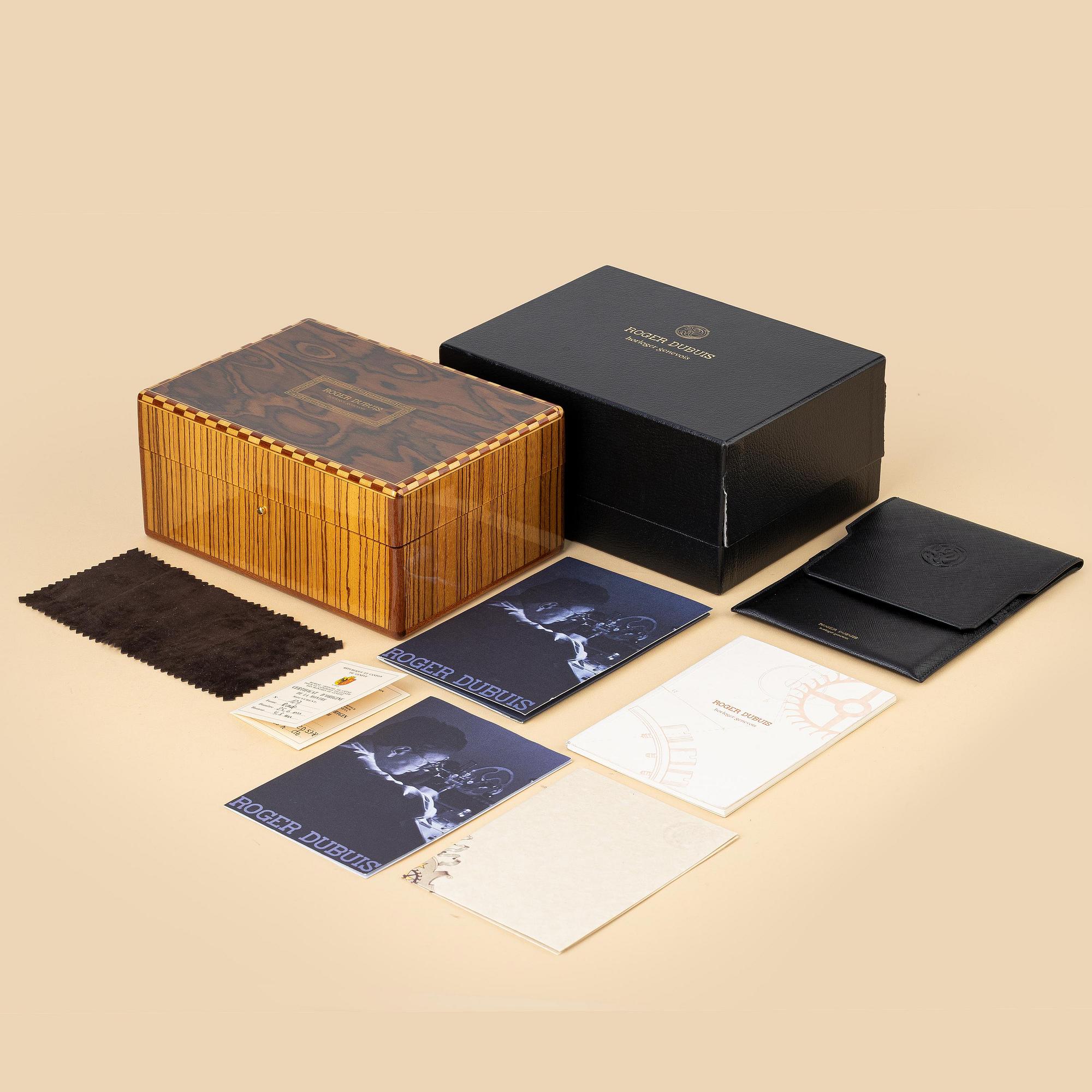
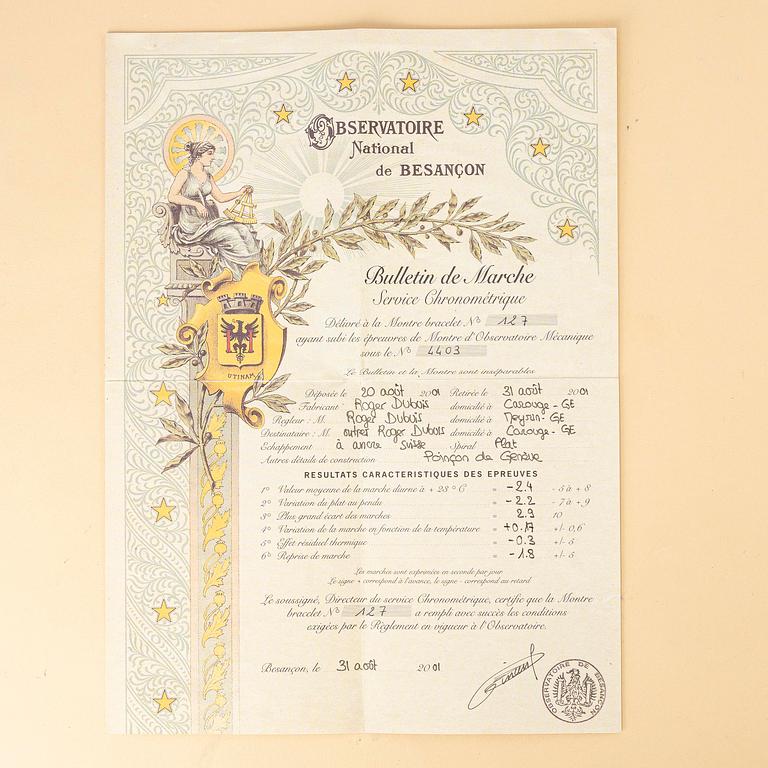
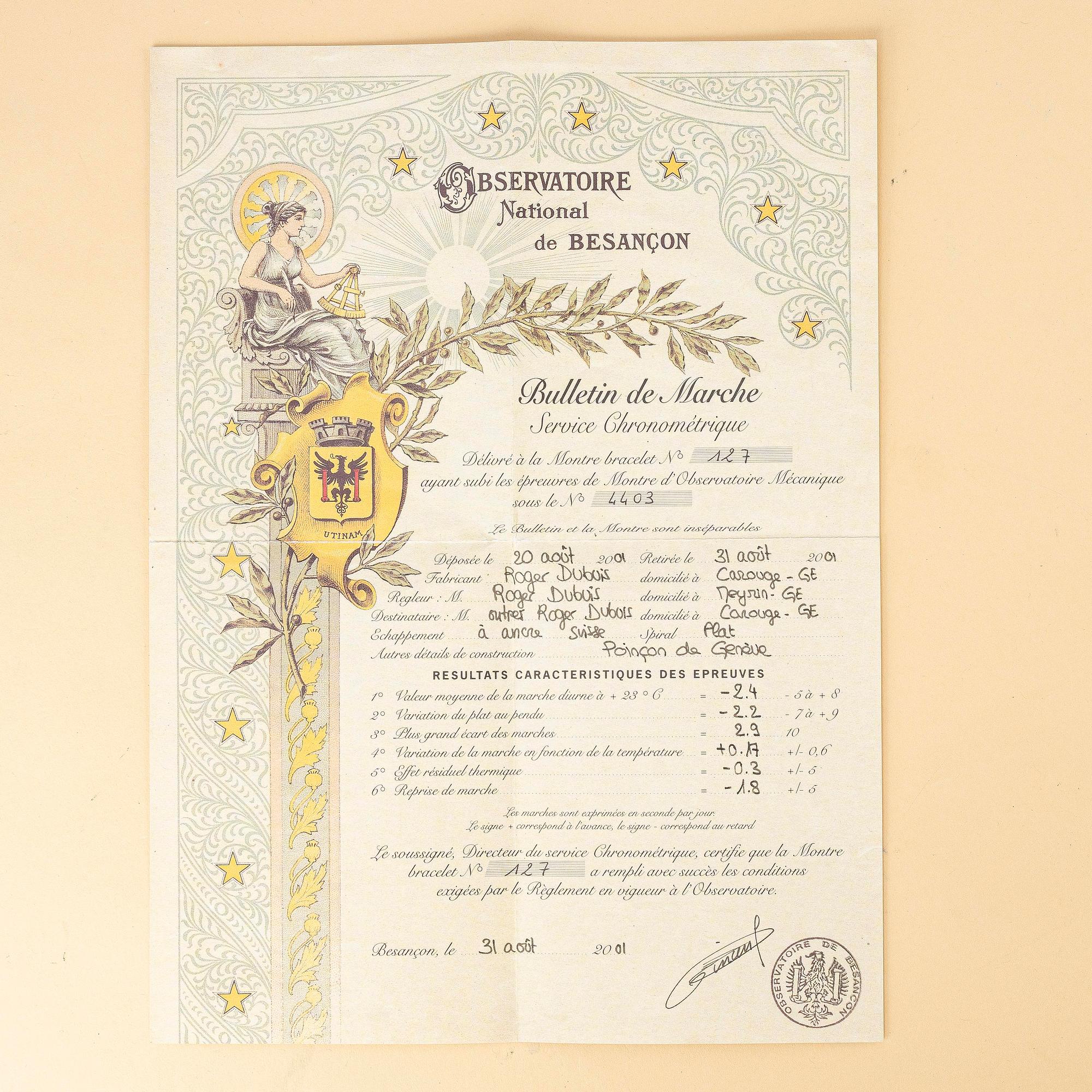
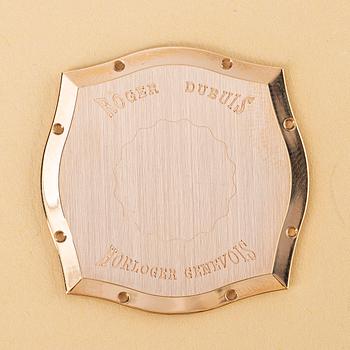
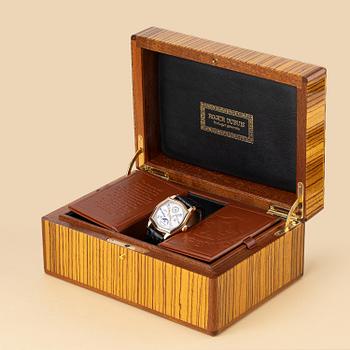
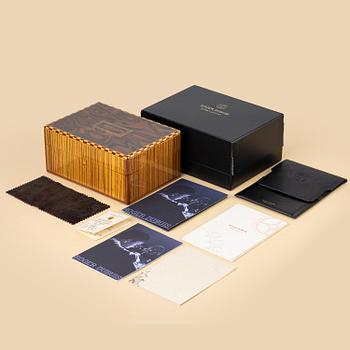
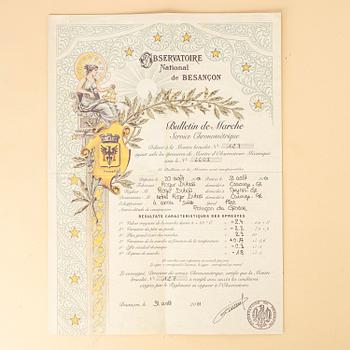
Accompanied by: original certificate, Besançon Observatory chronometer certificate, Geneva Seal certificate, additional caseback in 18K pink gold, instruction booklet, document holder, box, outer box.
The overall impression is very good.
Provenance
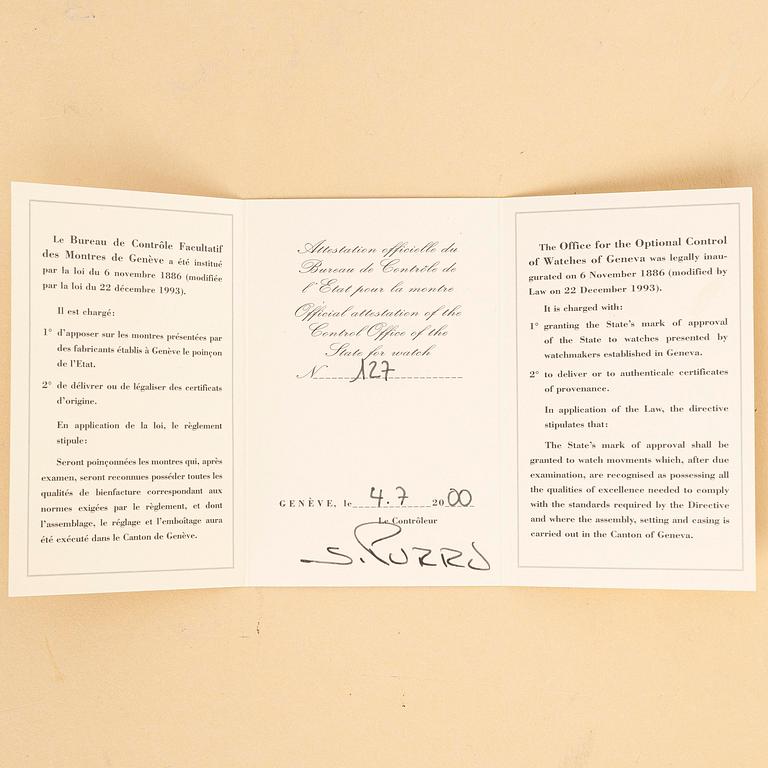
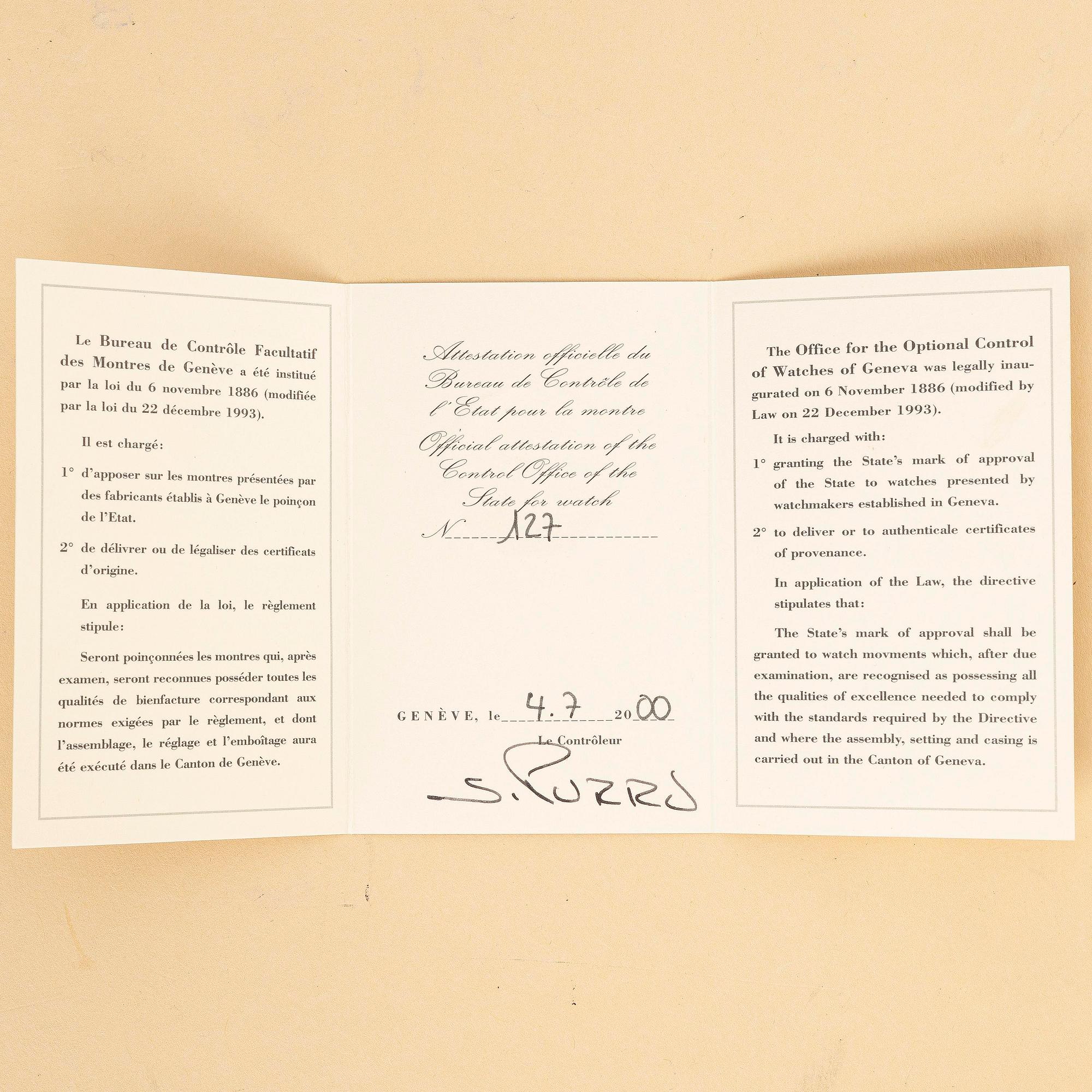
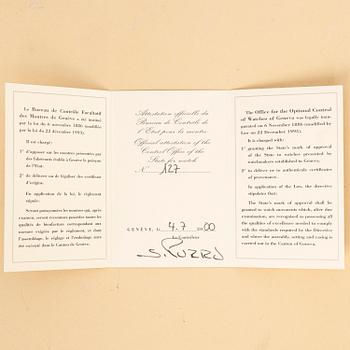
• 4 July 2000: The Geneva Seal (Poinçon de Genève) certificate is issued for movement no. 127.
• 20–31 August 2001: The watch undergoes chronometric testing at the Besançon Observatory in France.
• 31 August 2001: The Besançon Observatory issues its individual chronometer certificate (Bulletin de Marche).
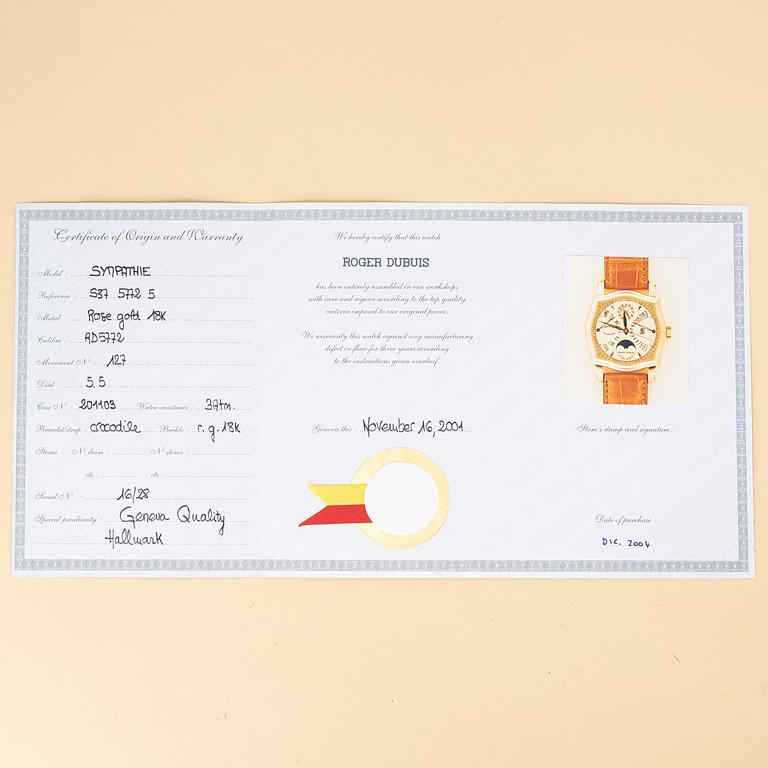
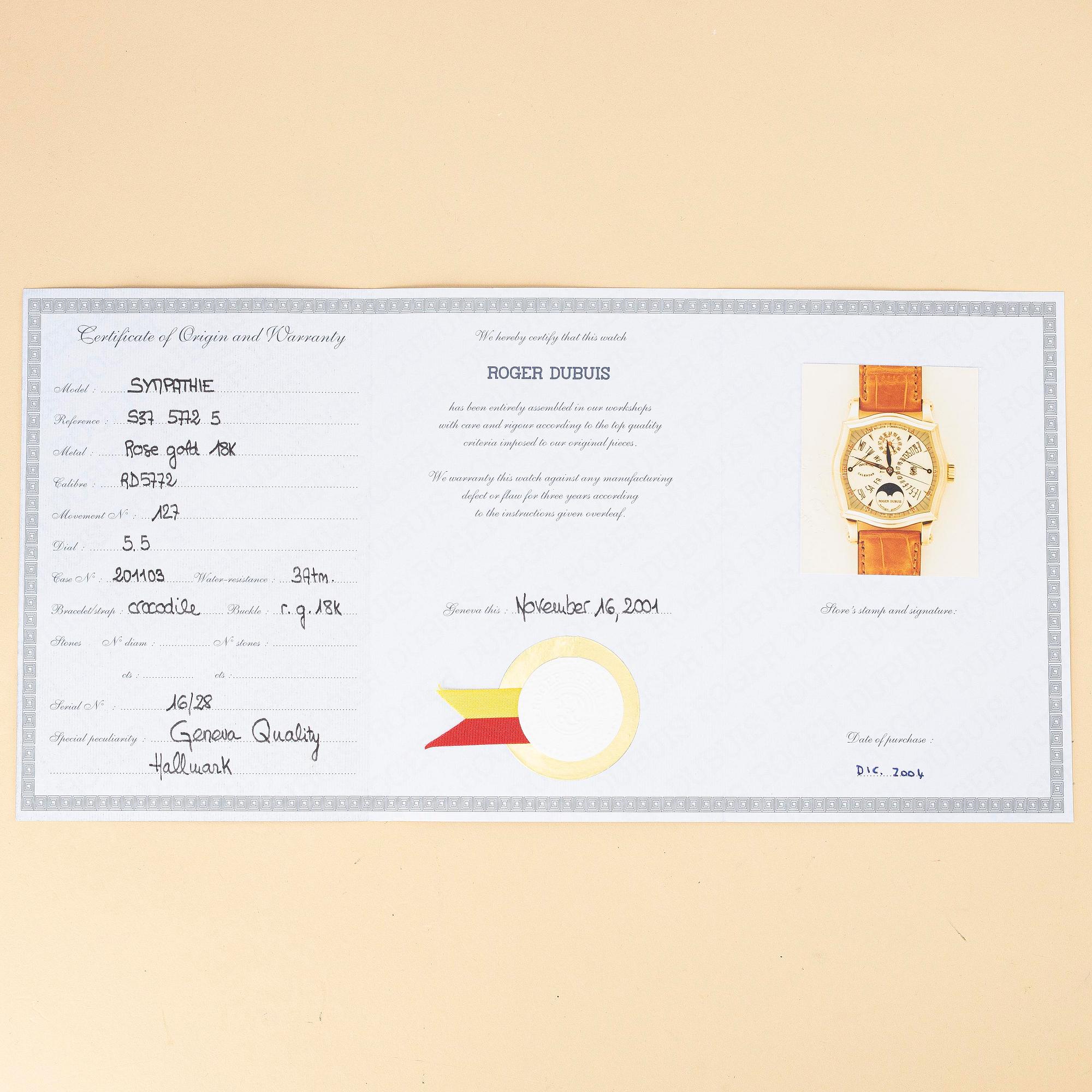
• 16 November 2001: The original Roger Dubuis certificate is dated.
• December 2004: Date of purchase as recorded on the original certificate (marked “DIC. 2004”).
More information
Long before establishing his own watchmaking house, Roger Dubuis (1938–2017) had already earned a reputation as one of Geneva's most accomplished watchmakers. Beginning his career at Longines in the late 1950s, he subsequently spent approximately fourteen years at Patek Philippe, gaining extensive experience in traditional watchmaking and complicated movements. In 1980, he established his own workshop in Geneva, specialising in the restoration of important timepieces and the development of complications for other manufacturers.
During the 1980s, Dubuis collaborated with the talented movement designer Jean-Marc Wiederrecht, who would later establish Agenhor. Together, they developed an innovative bi-retrograde perpetual calendar mechanism, notably featured in a Harry Winston timepiece introduced at Baselworld in 1989. This distinctive complication would eventually become one of the defining features of Roger Dubuis' early creations.
In 1995, at the age of 57, Roger Dubuis joined forces with entrepreneur Carlos Dias to establish his namesake watchmaking company in Geneva. The following year saw the introduction of two collections that would define the brand's early identity: the classically inspired Hommage and the more unconventional Sympathie. Produced in extremely small quantities, often limited to just 28 examples per variation, these early watches combined traditional Geneva watchmaking with a distinctive and highly individual approach to design.
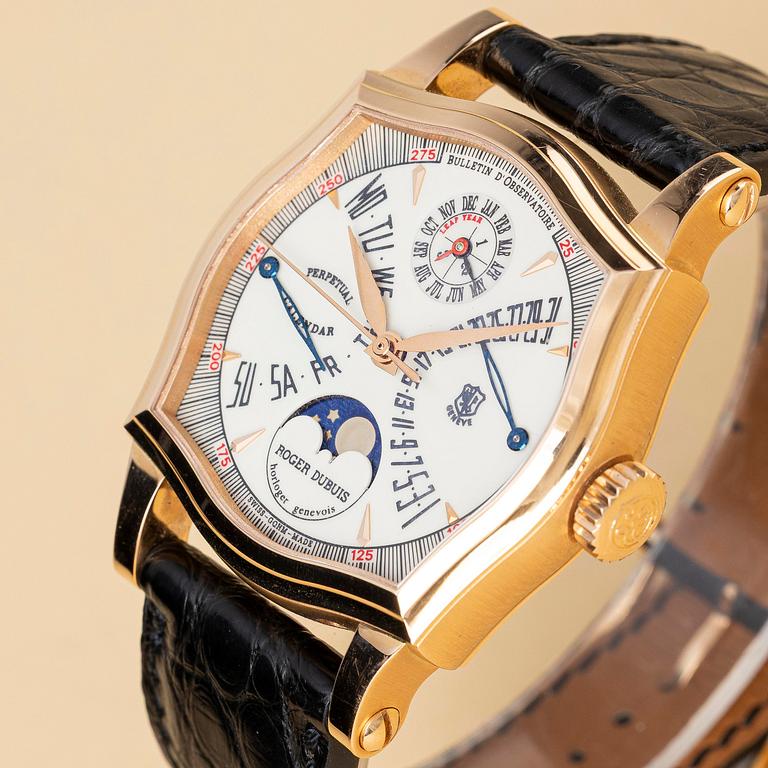
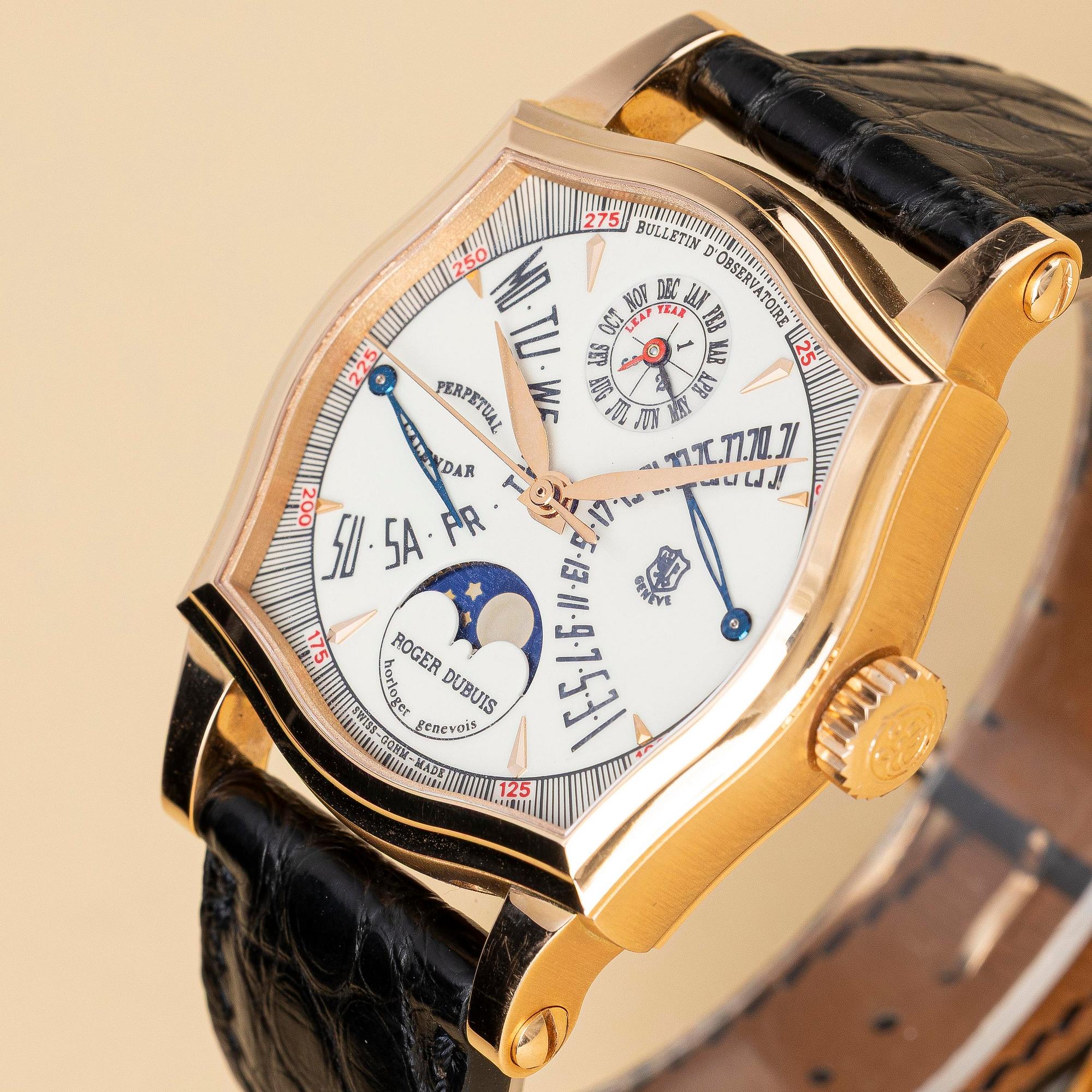
The Sympathie collection is particularly celebrated for its remarkable case architecture. Combining angular lines with sweeping curves, its sculptural design was unlike almost anything else available at the time. Especially noteworthy is the unusually shaped sapphire crystal, manufactured to follow the intricate contours of the case, a technically demanding feature that was later replaced by more conventional crystal designs.
The present Sympathie Bi-Retrograde Perpetual Calendar, reference S37 5772 5, beautifully illustrates this early philosophy. Housed in a 37 mm pink gold case, its distinctive ivory-coloured dial features retrograde indications for the day and date, complemented by displays for the month, leap year and moon phases. The automatic calibre RD 5772 combines sophisticated calendar mechanics with traditional finishing and bears the prestigious Poinçon de Genève, or Geneva Seal.
An important part of Roger Dubuis' early watchmaking philosophy was his commitment to both exceptional finishing and chronometric performance. Alongside the Geneva Seal, selected watches were submitted for independent chronometric testing at the Besançon Observatory in France.
The present example is numbered 16 of a limited edition of only 28 pieces and remains in very good overall condition. Particularly remarkable is its extensive original documentation, providing a detailed record of the watch's early history. The Geneva Seal certificate, dated 4 July 2000, confirms the certification of movement number 127. The accompanying Bulletin de Marche documents the watch's chronometric testing at the Besançon Observatory between 20 and 31 August 2001.
The watch is further accompanied by its original Roger Dubuis certificate dated 16 November 2001, with the date of purchase recorded as December 2004, together with its additional solid pink gold caseback, instruction booklet, document holder, original wooden presentation box and outer packaging.
Combining one of the most distinctive case designs of early independent watchmaking with a sophisticated perpetual calendar, the present Sympathie represents an important expression of Roger Dubuis' original vision. Preserved in such fine condition and accompanied by an unusually comprehensive collection of original documentation and accessories, it offers a compelling opportunity to acquire a rare example from the formative years of one of modern independent watchmaking's most influential names.
For condition report contact specialist

What will the transport cost?
Shipping can only be arranged by contacting specialdelivery@bukowskis.com.
Others have also viewed