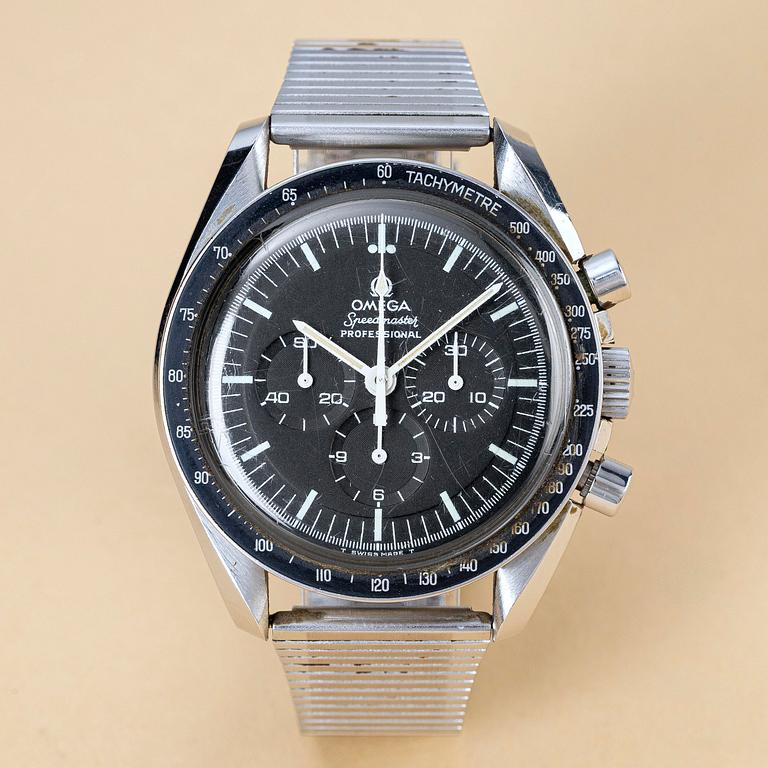
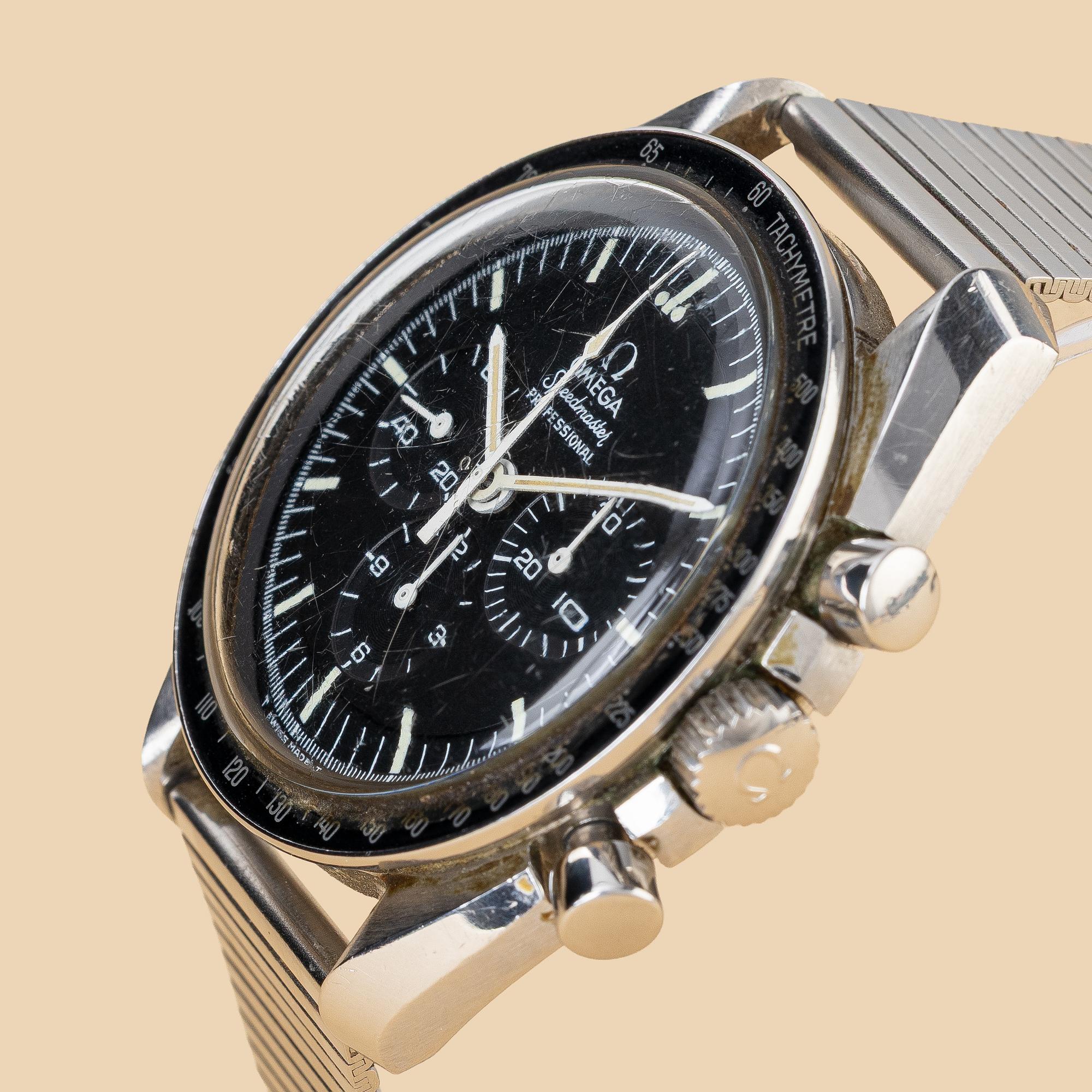
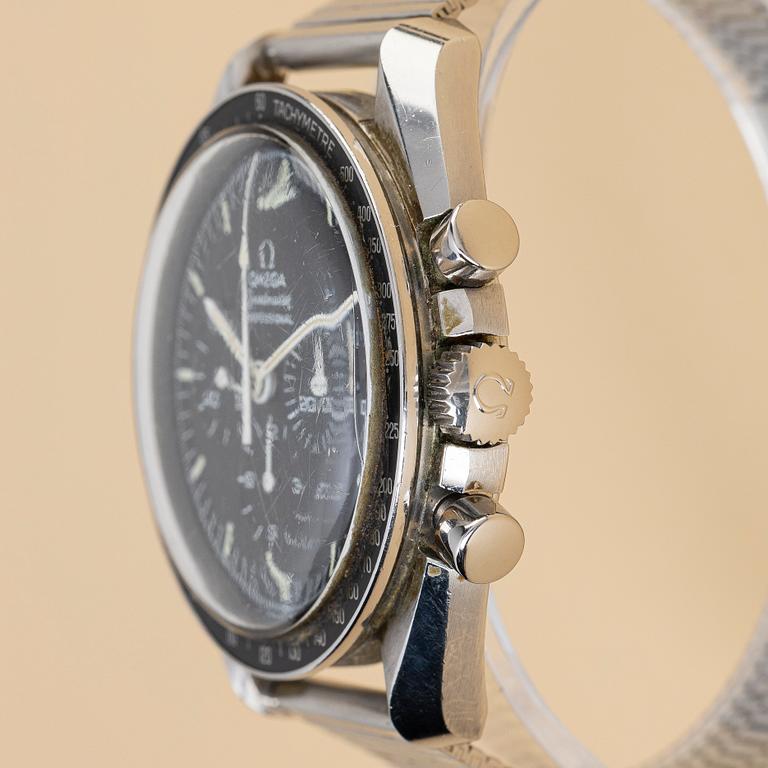
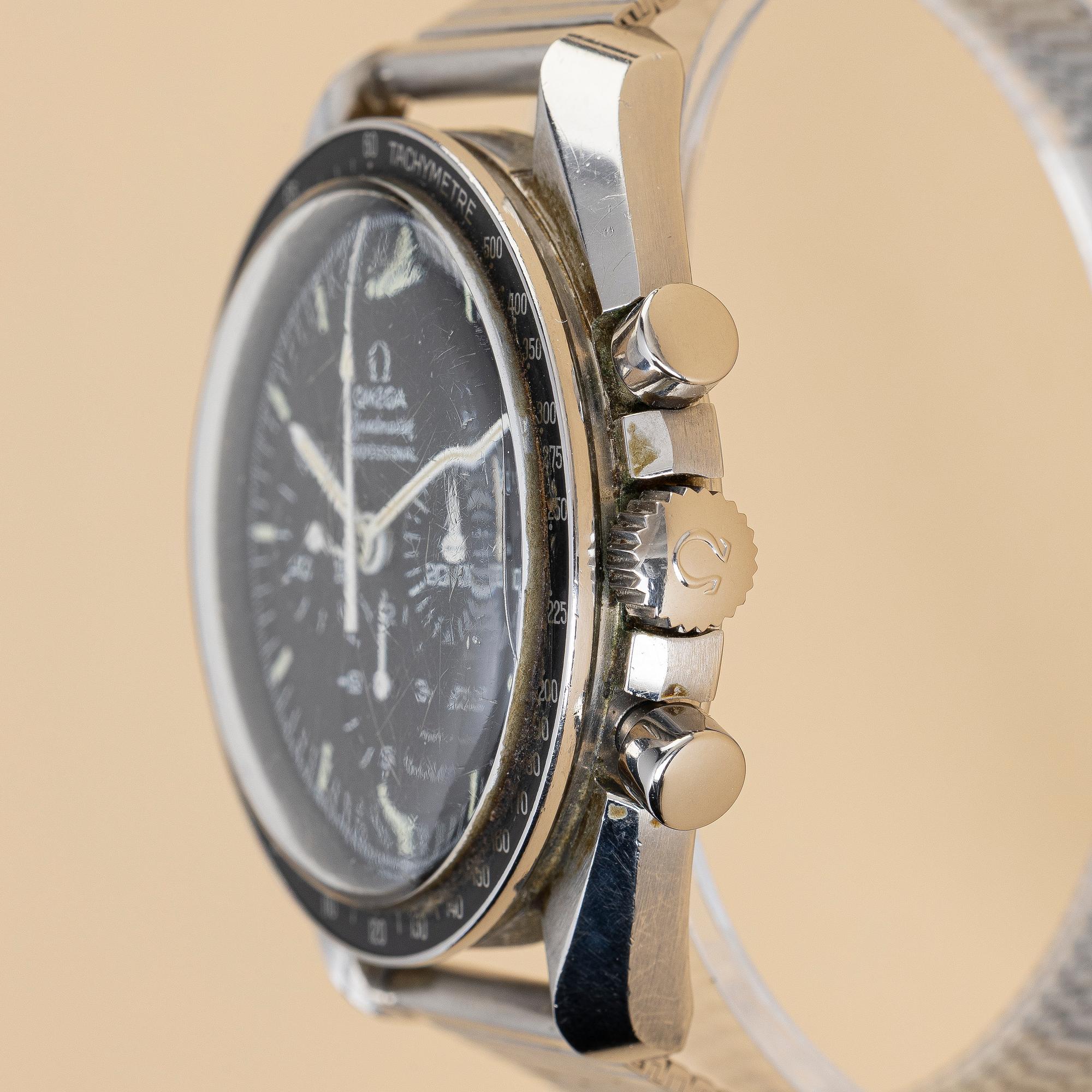
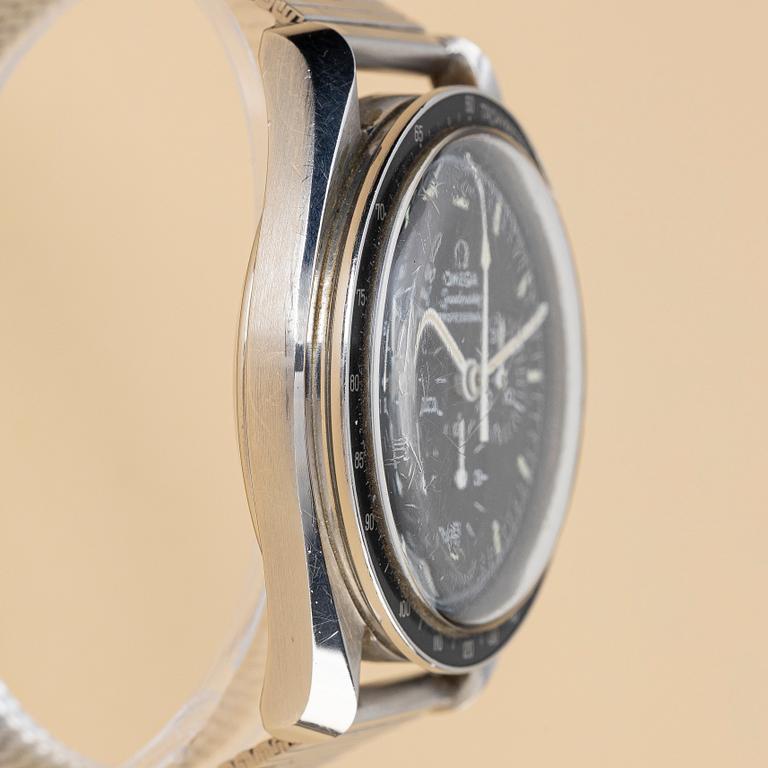
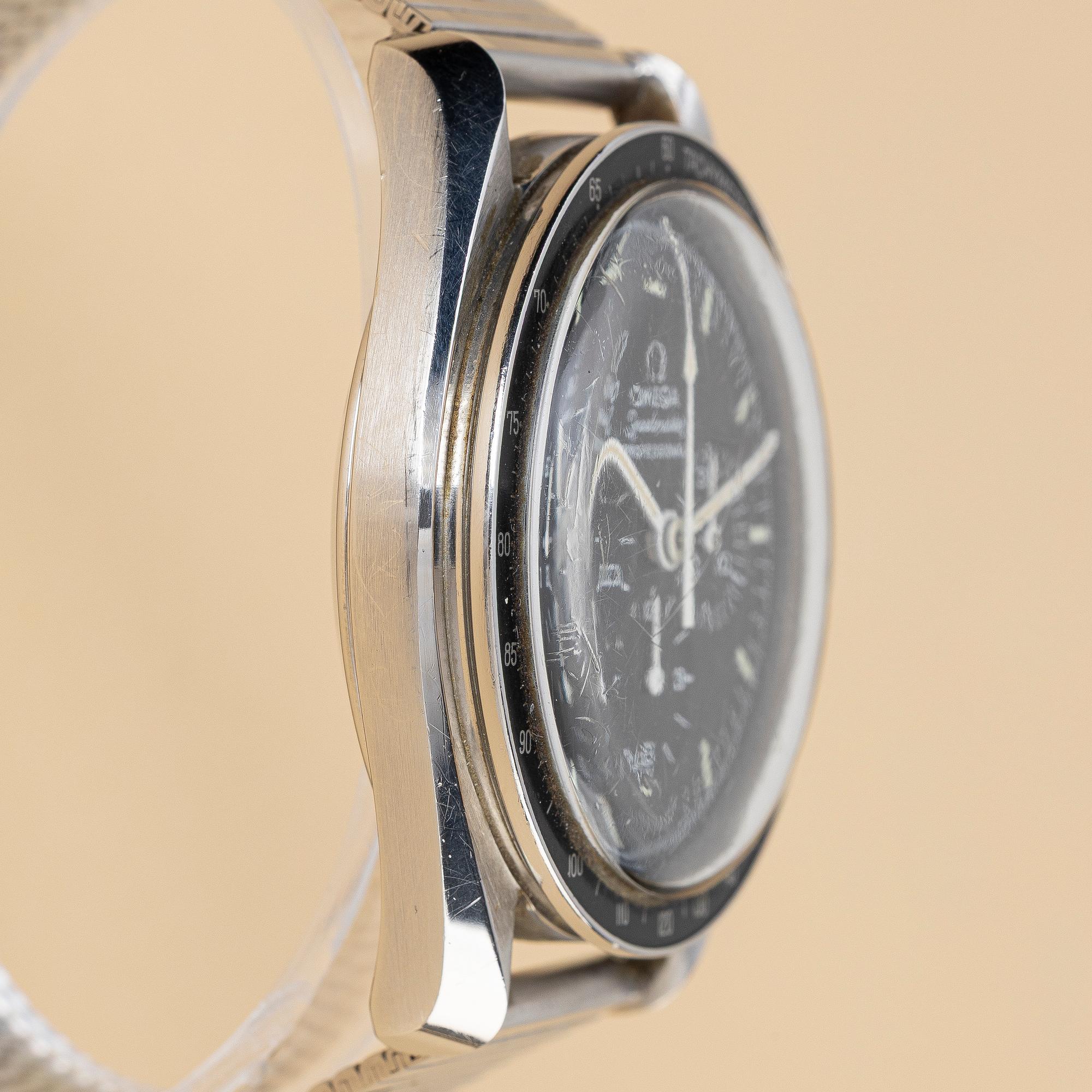
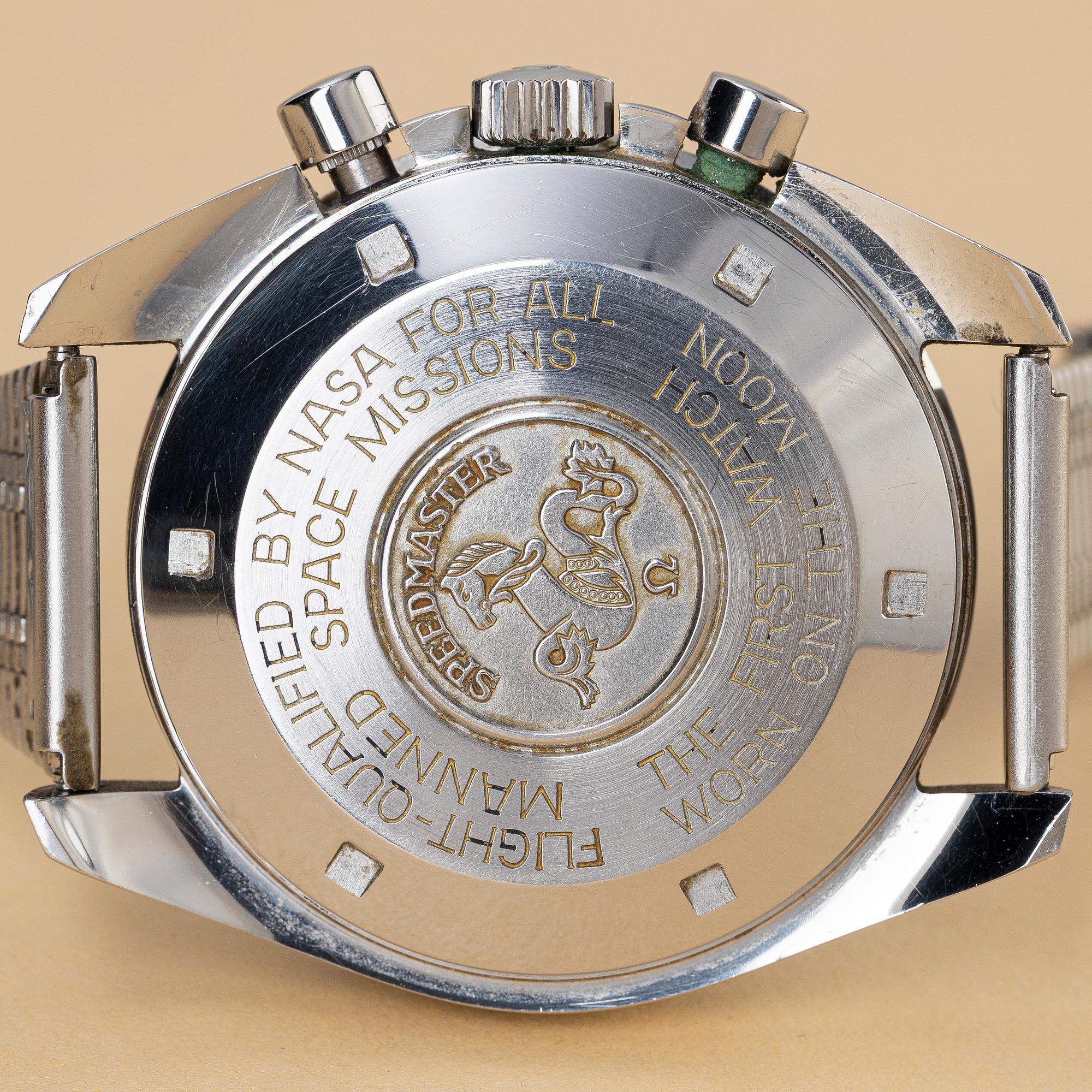
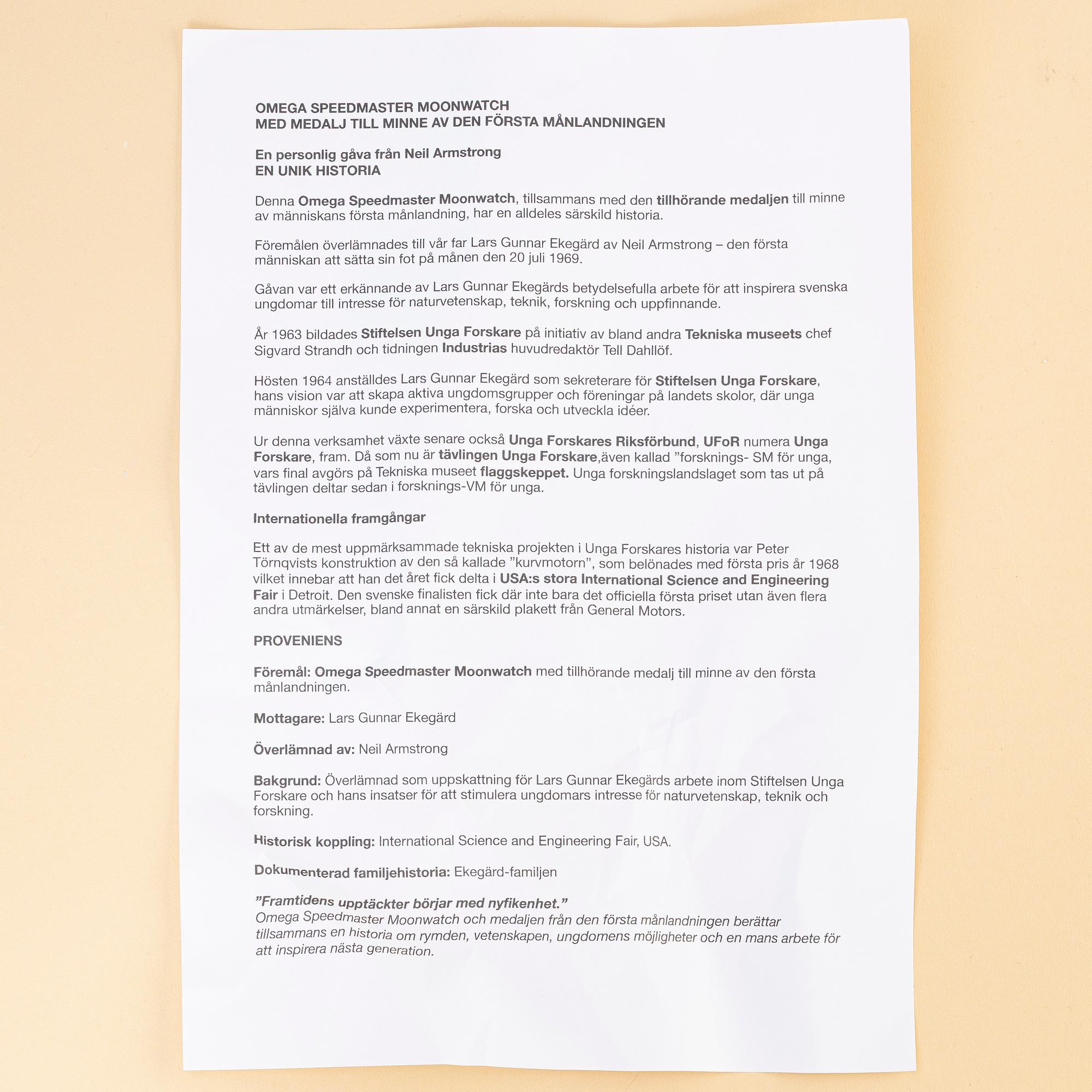
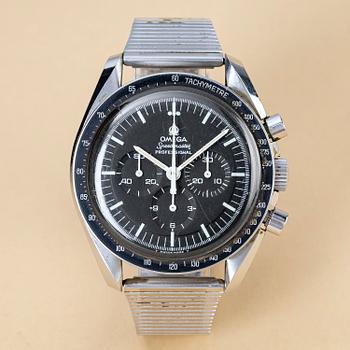
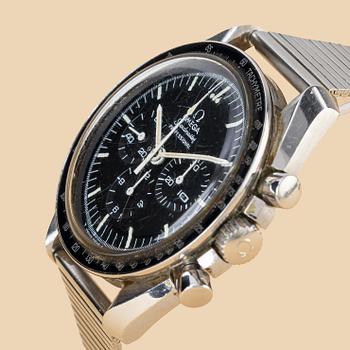
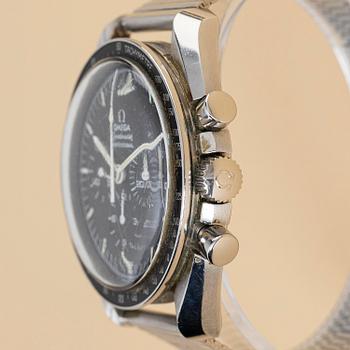
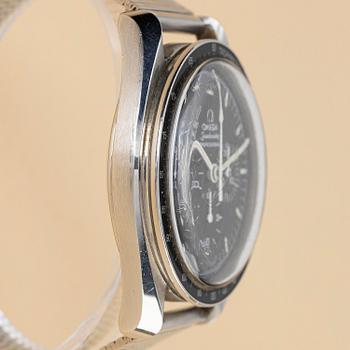
Case size: 42 mm
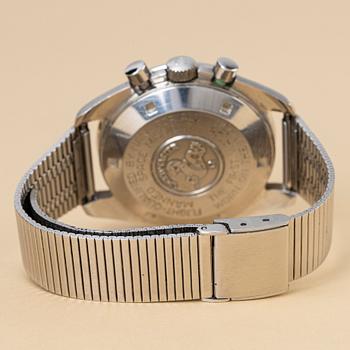
Material: steel
Movement: manual, caliber 861
Year: circa 1973
Crystal: plastic crystal
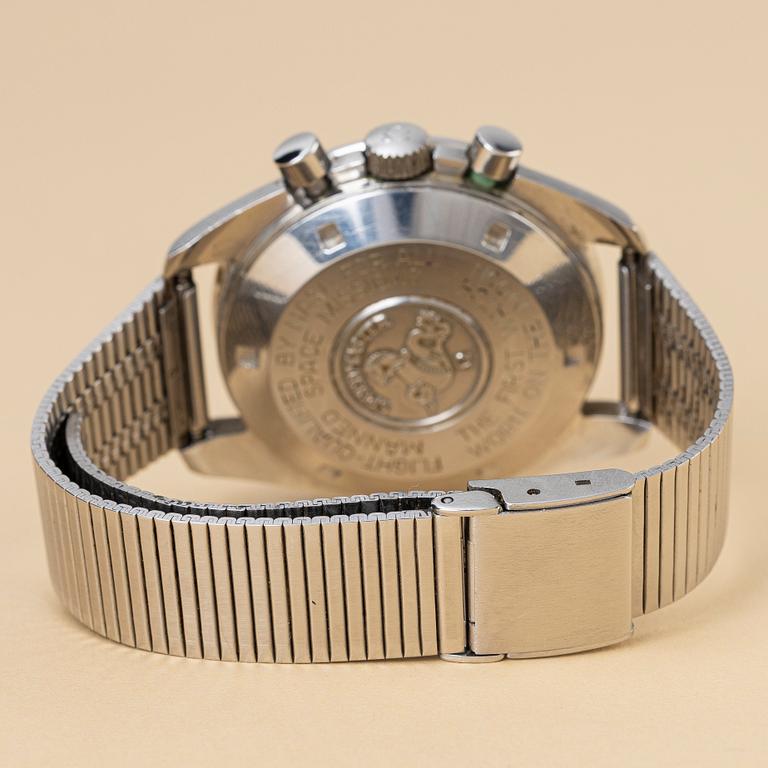
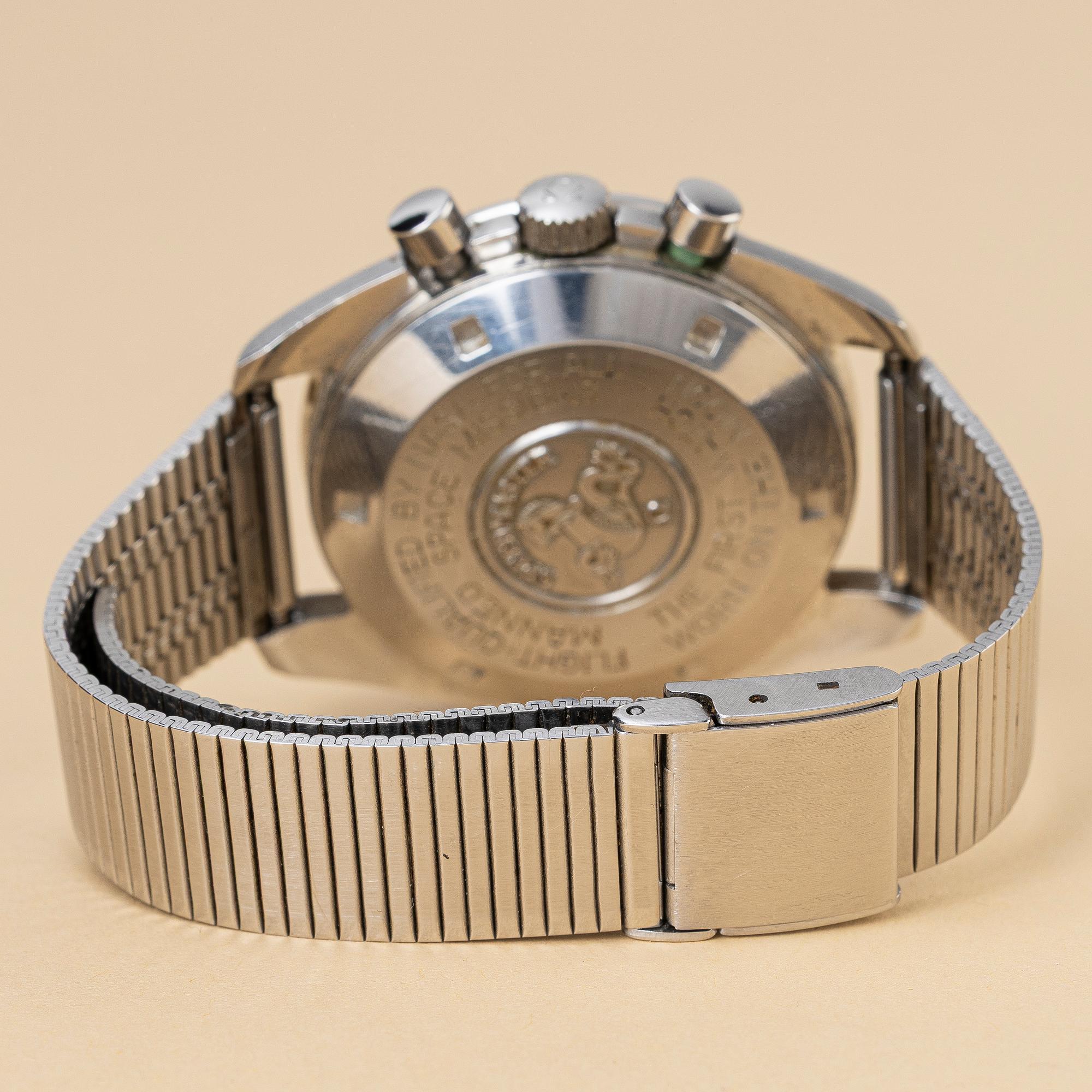
Bracelet: metal bracelet
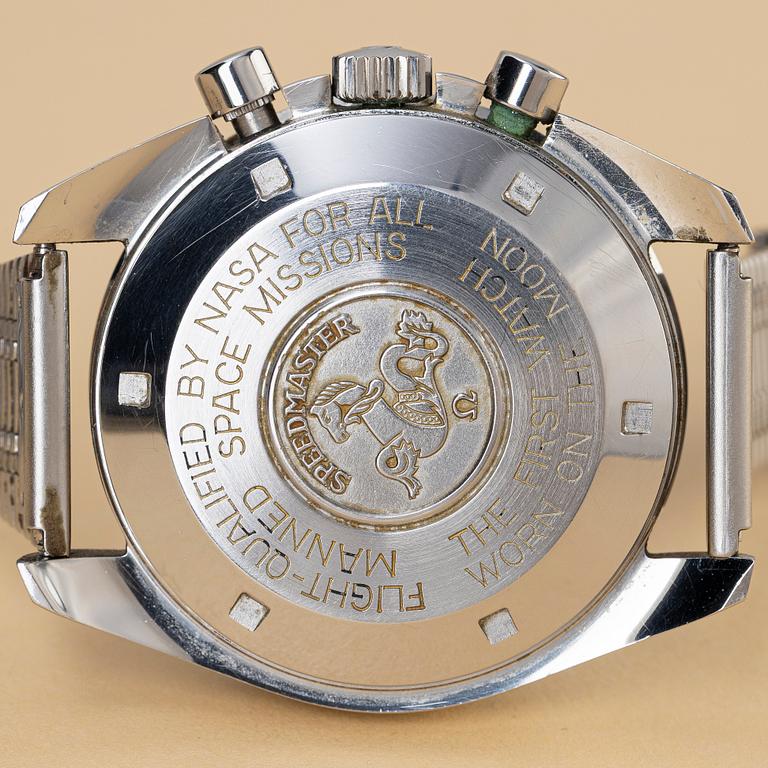
Reference number: ST 145.022
Serial number: 32'820'603
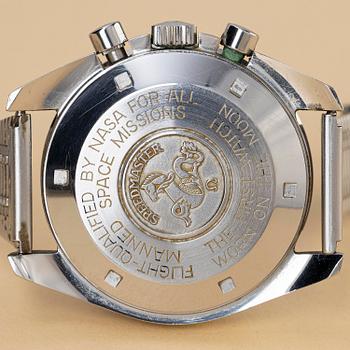
Case number: 145.022 ST 71 (H.F)
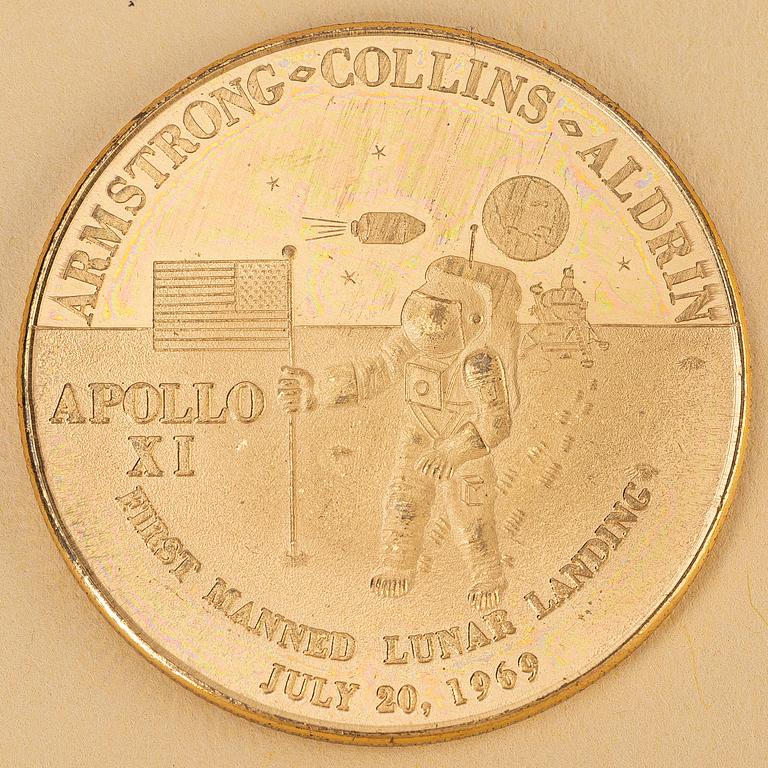
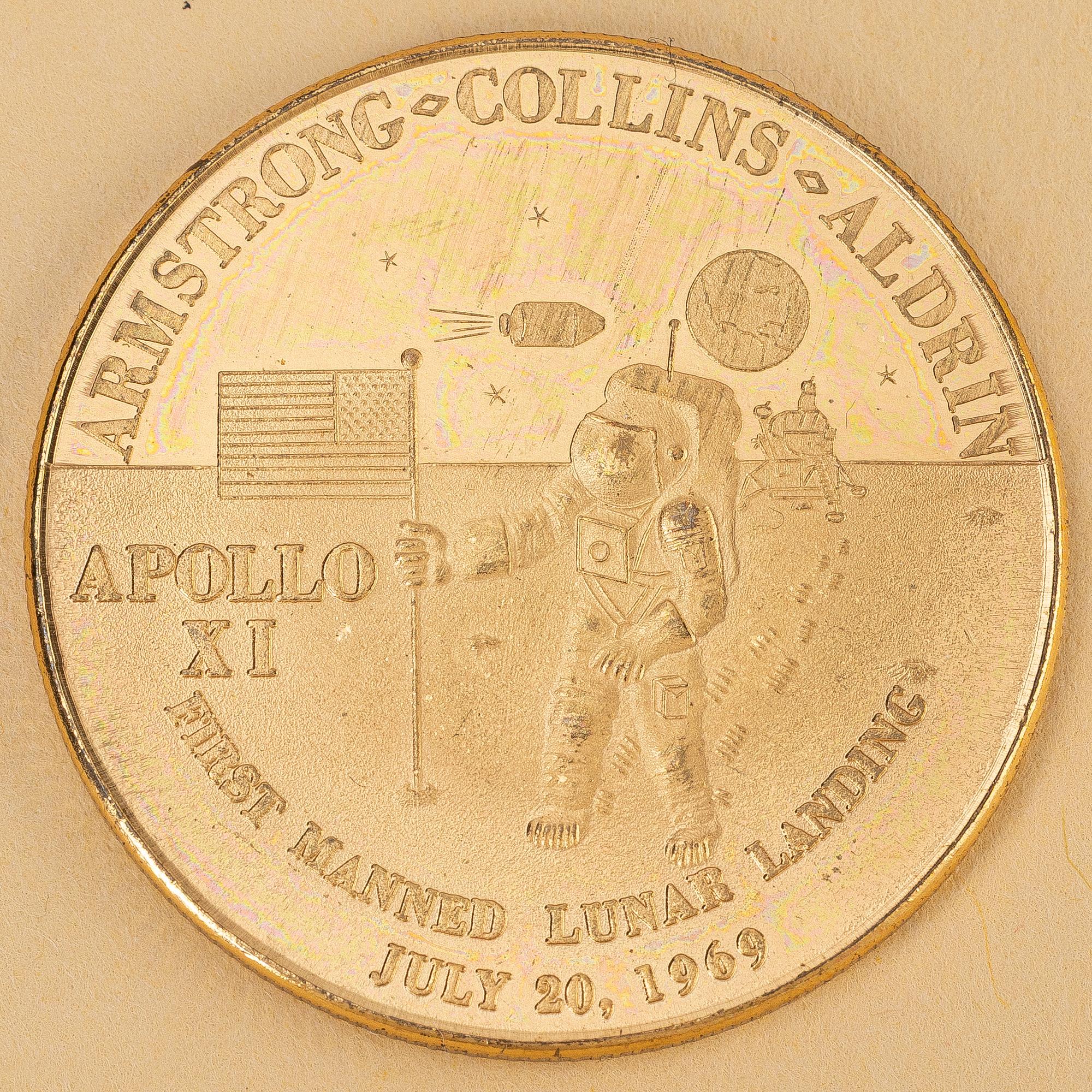
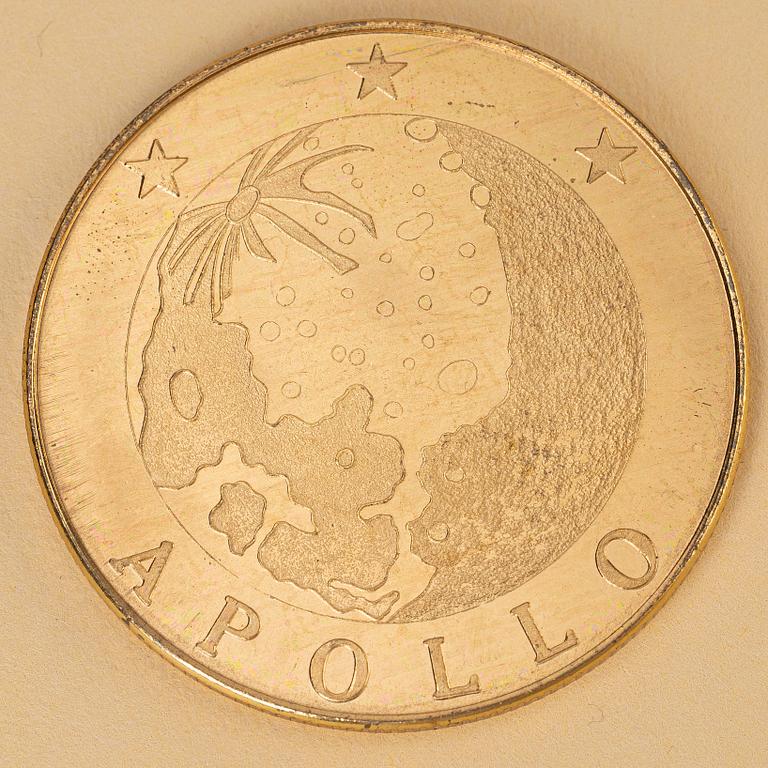
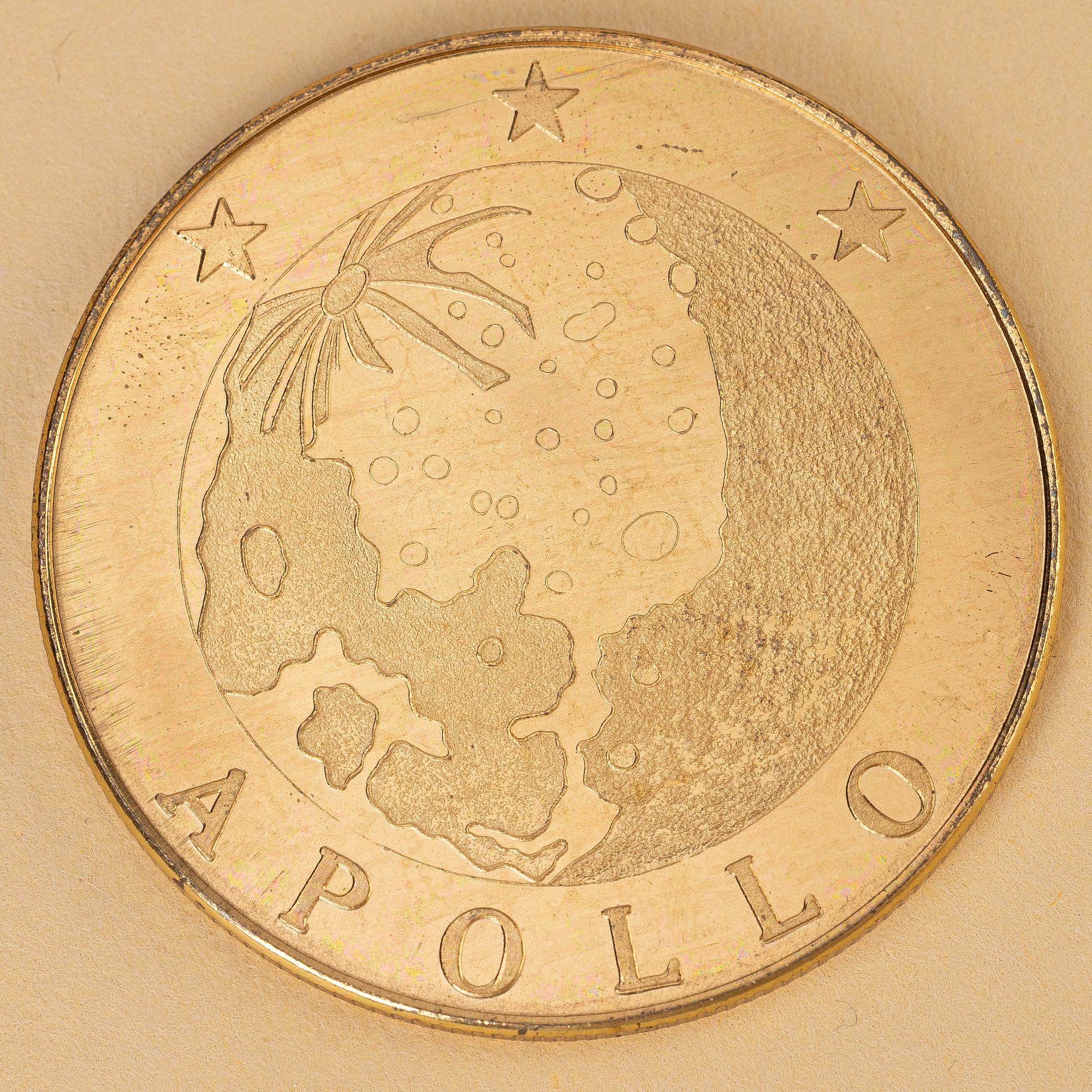
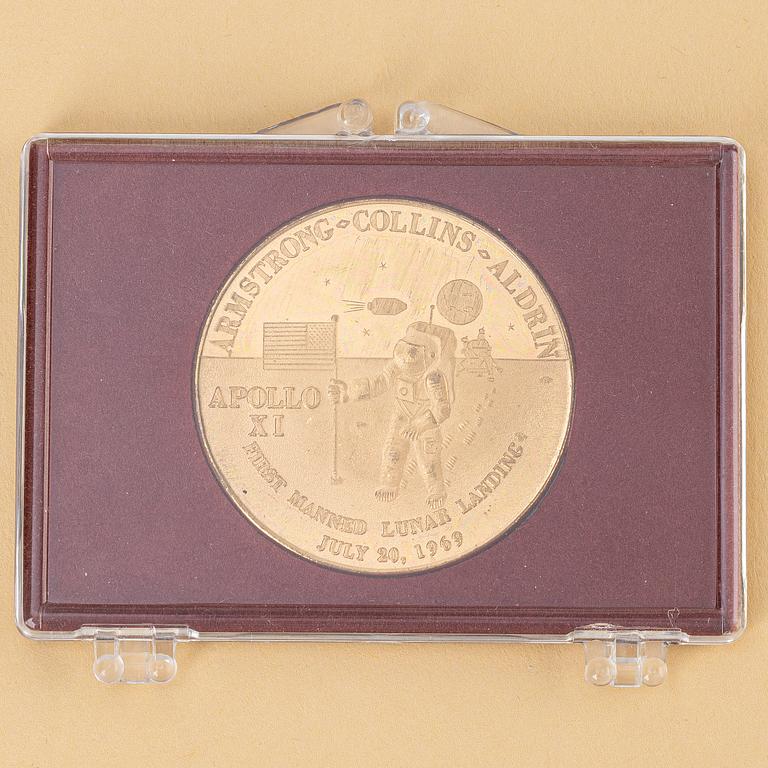
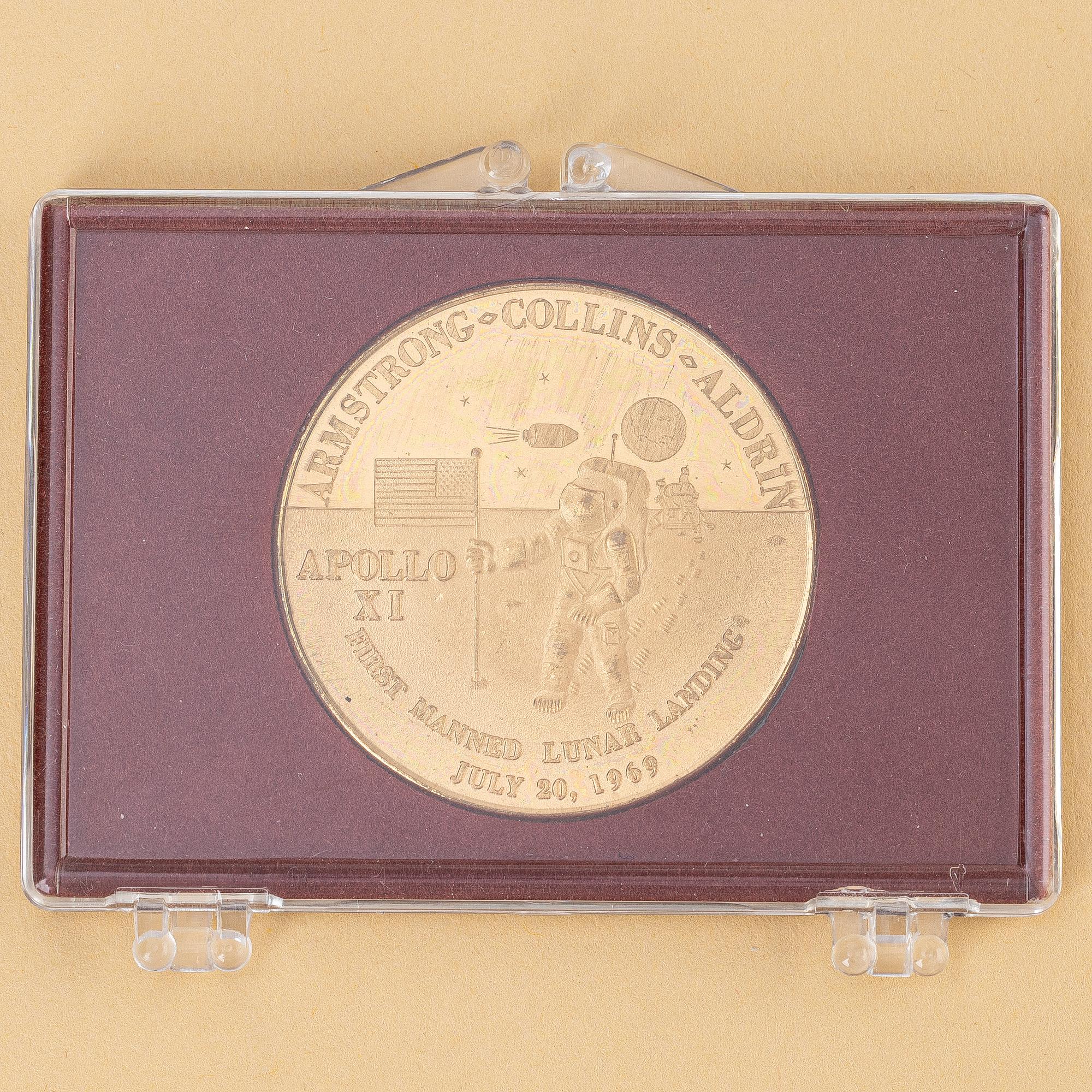
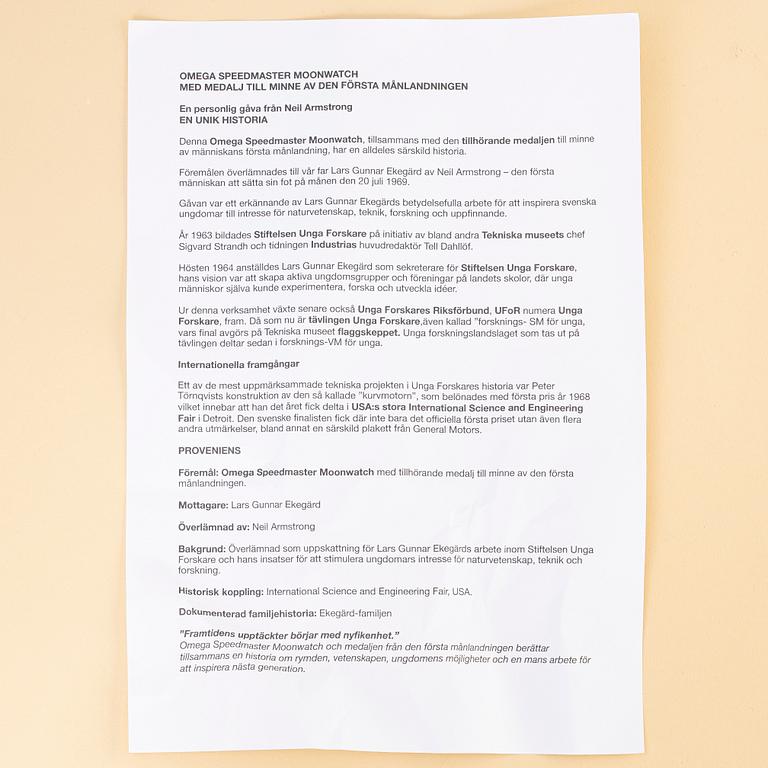
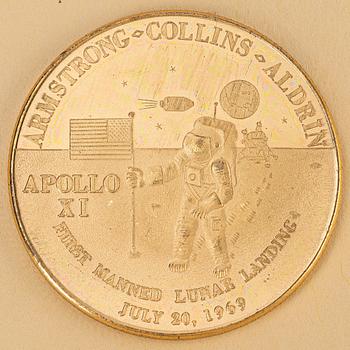
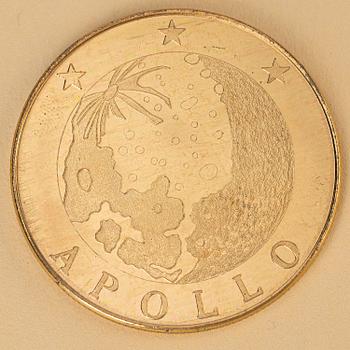
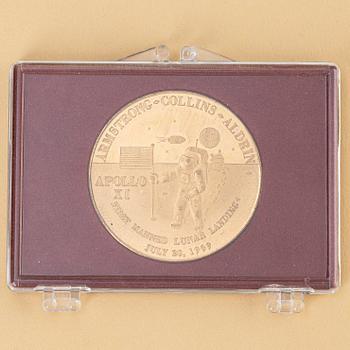
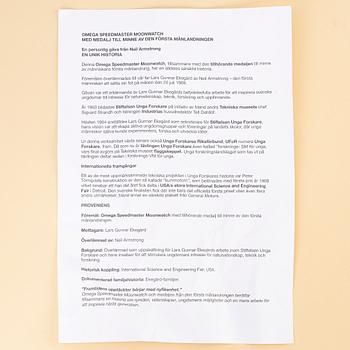
Accompanied by: letter of provenance, Apollo 11 commemorative medal
Pictures of the movement are available upon request. Potential buyers should inspect each watch to satisfy themselves as to condition. For more information, please read our Conditions of Purchase.
Provenance
Omega Speedmaster Professional - Lars-Gunnar Ekegärd (1920–2017)
When Lars-Gunnar Ekegärd passed away in 2017, at the age of 97, his family chose to describe him with a single word in his obituary: “World Citizen”. It was a fitting description of a man who devoted much of his life to education, science, international cooperation and the conviction that knowledge could bring people closer together.
Ekegärd was active in Swedish adult education for many years, including at Folkuniversitetet and as a teacher. In the autumn of 1964, he became secretary of the Young Scientists Foundation (Stiftelsen Unga Forskare), which had been established the previous year on the initiative of, among others, the Swedish National Museum of Science and Technology. The foundation aimed to encourage young people's interest in science and technology through exhibitions, competitions and international exchanges.
In a historical publication by the Swedish National Museum of Science and Technology, Ekegärd himself recounts the organisation's activities and the young talents who were given the opportunity to develop their ideas. Their projects ranged from astronomical observations and meteorology to technical inventions and experiments. For some of these young participants, the experience marked the beginning of a scientific career, while international competitions gave Swedish students the opportunity to test their knowledge against that of young researchers from other countries.
His work brought Ekegärd into an international network of scientists, educators and organisations, with connections extending to the United States. During the 1960s and 1970s, when the space race sparked enormous interest in science and technological progress, these international competitions for young people served as important meeting places for the next generation of scientists.
According to the family's account, Ekegärd attended the International Science and Engineering Fair (ISEF) in San Diego in 1973. The international science fair took place from 6 to 12 May and brought together hundreds of young researchers from around the world. At the time, NASA had recently concluded its crewed lunar missions under the Apollo programme and was preparing for the next major step in American spaceflight.
Just two days after the fair ended, on 14 May 1973, the American space station Skylab was launched from Kennedy Space Center in Florida. The launch was carried out using a Saturn V, the same type of rocket that had carried astronauts to the Moon, and was the last-ever launch of this enormous rocket.
The family has recounted that, at some point during his American engagements, Ekegärd was invited to witness a rocket launch. Whether he witnessed Skylab 1 specifically is not known, but the close timing in relation to the science fair in San Diego makes it a plausible possibility.
It is against the backdrop of these international travels and encounters that the story of the present Omega Speedmaster Professional begins to take shape. The watch, reference ST 145.022-71 from the early 1970s, has remained in the family together with a commemorative medal from Apollo 11, the historic mission that brought the first humans to the lunar surface in 1969.
According to the family's inherited account, Ekegärd received the watch and medal in connection with his international work with young scientists. Neil Armstrong, commander of Apollo 11 and the first man to walk on the Moon, is also mentioned in the account as a possible presenter. Armstrong himself participated in events for young scientists during this period, including a gathering in Mainz in 1972. However, no contemporaneous documentation confirming a personal presentation to Ekegärd has been located, and the precise circumstances remain unknown.
The fact that the watch is an Omega Speedmaster adds a particular dimension to the story. In 1965, the model was qualified by NASA for crewed space missions and became closely associated with the Apollo programme. When Buzz Aldrin stepped onto the lunar surface on 20 July 1969, he was wearing a Speedmaster Professional on his wrist. In the years that followed, the model came to symbolise one of humanity's greatest technological and scientific achievements.
Lars-Gunnar Ekegärd's international engagement continued long after the 1970s. He was active in the peace movement and worked to promote human rights, international law and cooperation across national borders. As late as 2014, at the age of 94, he received an honourable mention in connection with the Uppsala Peace Prize in recognition of his longstanding work for peace, justice and human rights. Even at this advanced age, he continued to volunteer his time to disseminating information on behalf of peace organisations.
The present Speedmaster therefore has a provenance that extends far beyond the history of the watch itself. It belonged to a man whose life was characterised by curiosity, education and international encounters during one of the most transformative periods in the history of science. Together with the accompanying Apollo 11 medal and the family's account, the watch represents a personal memento of an era when space exploration inspired an entire generation of young people to take an interest in science and discovery.
For condition report contact specialist

What will the transport cost?
Others have also viewed