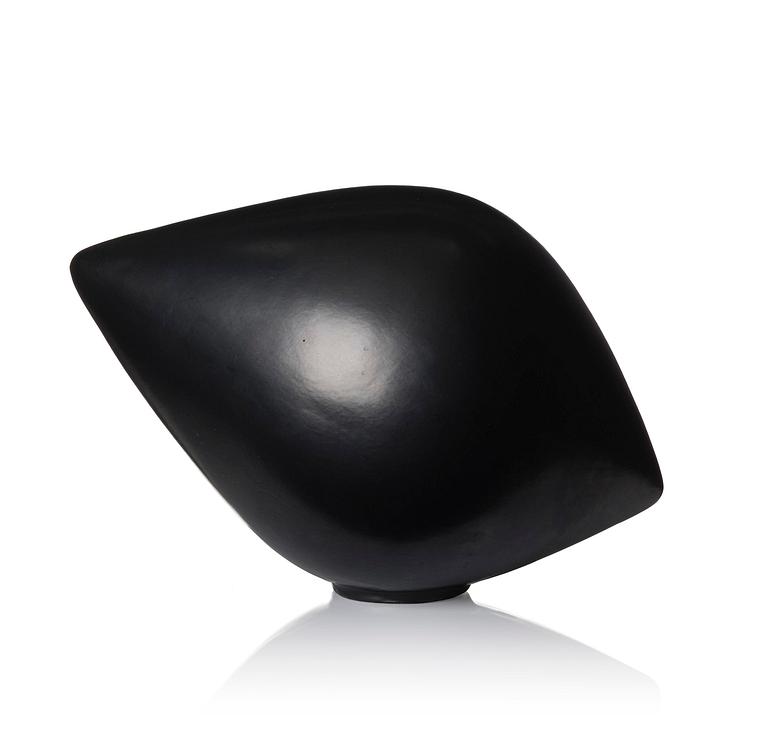
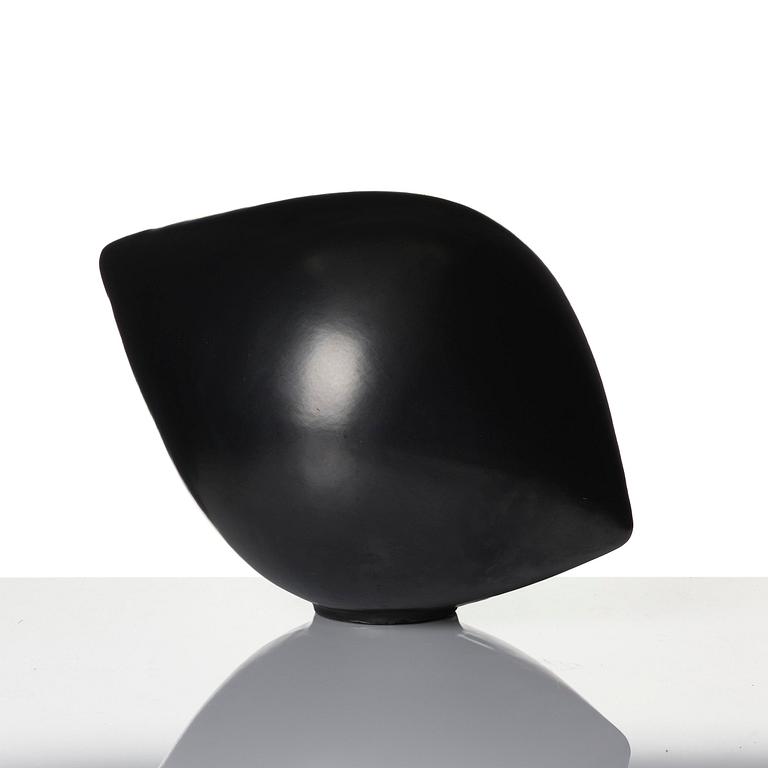
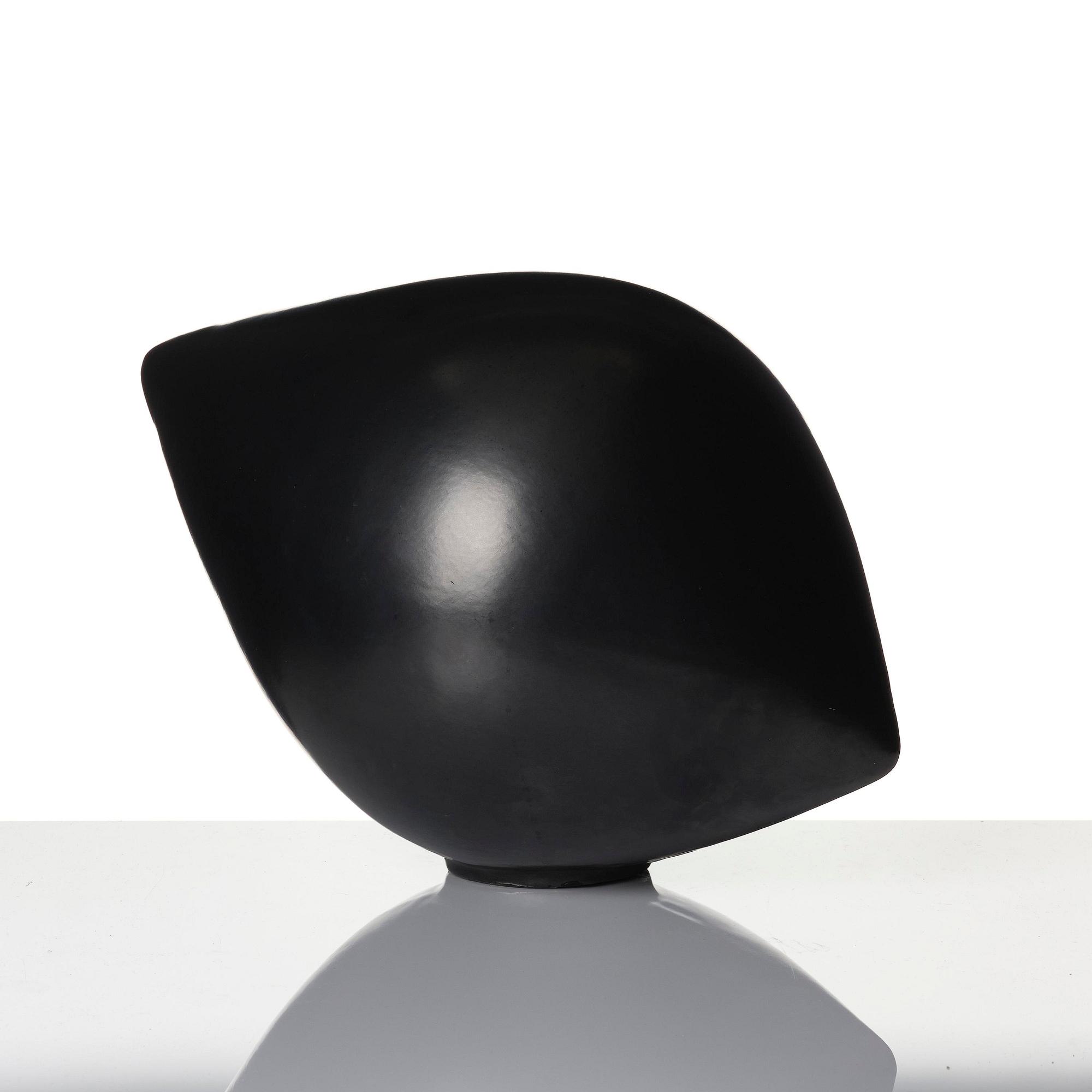
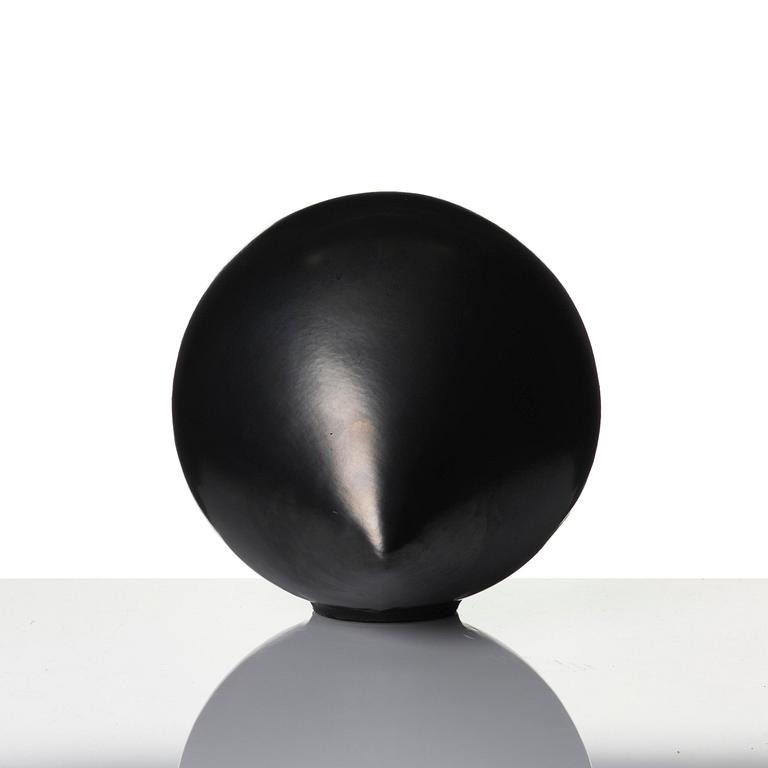
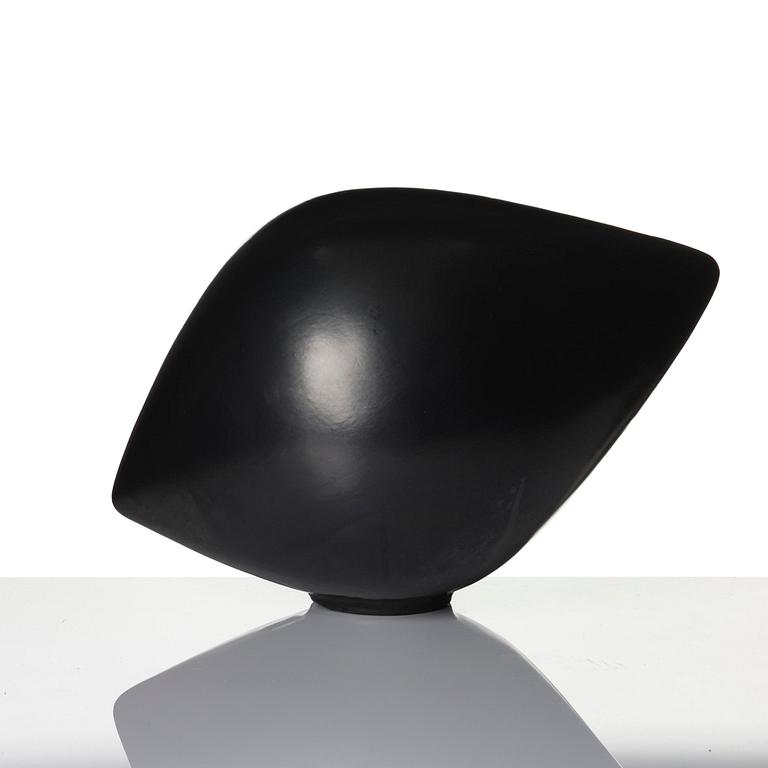
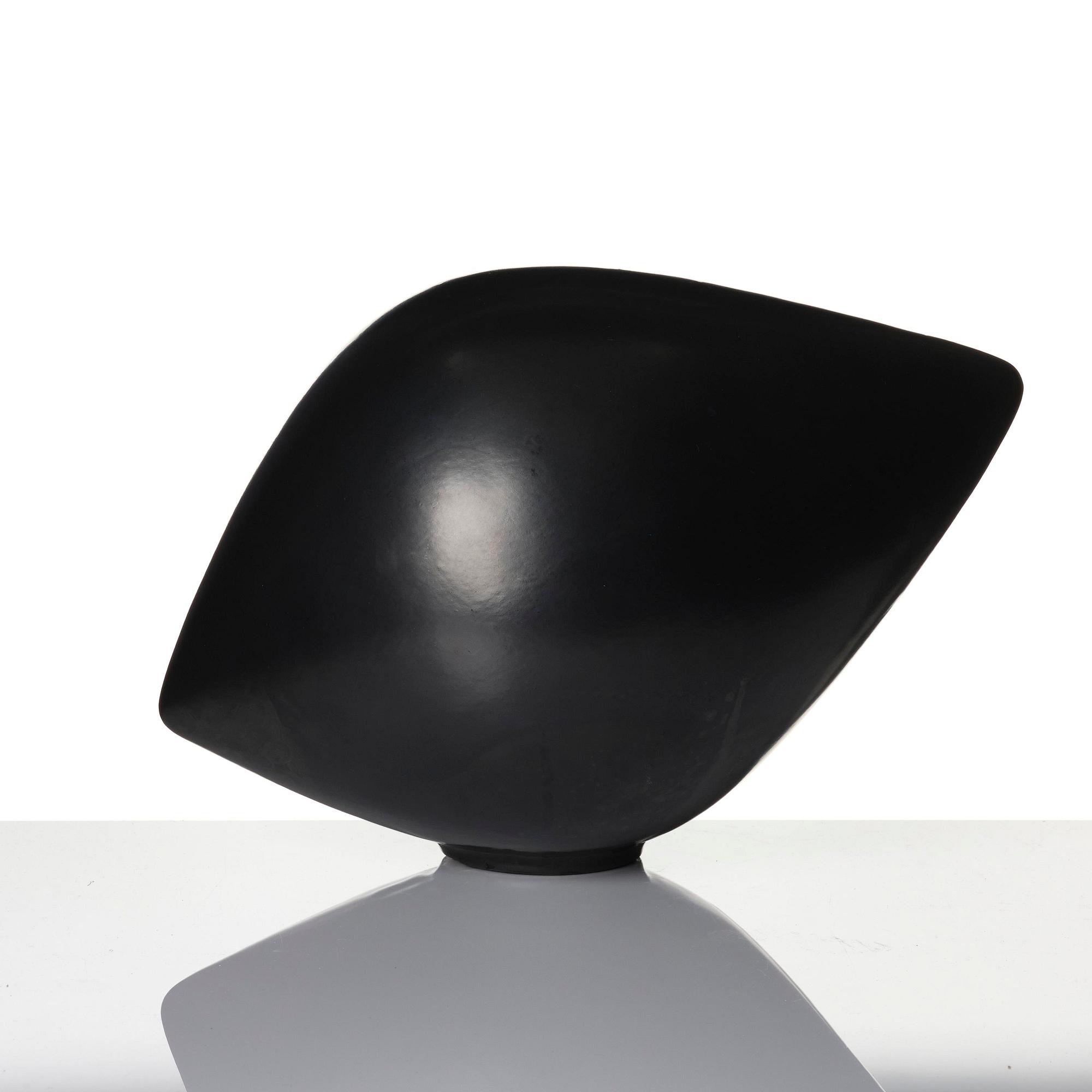
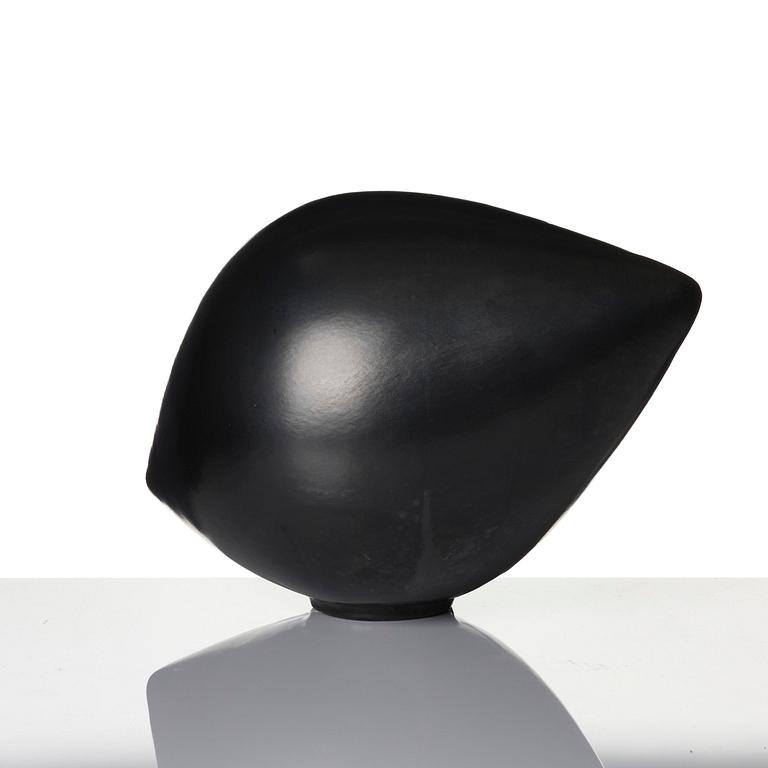
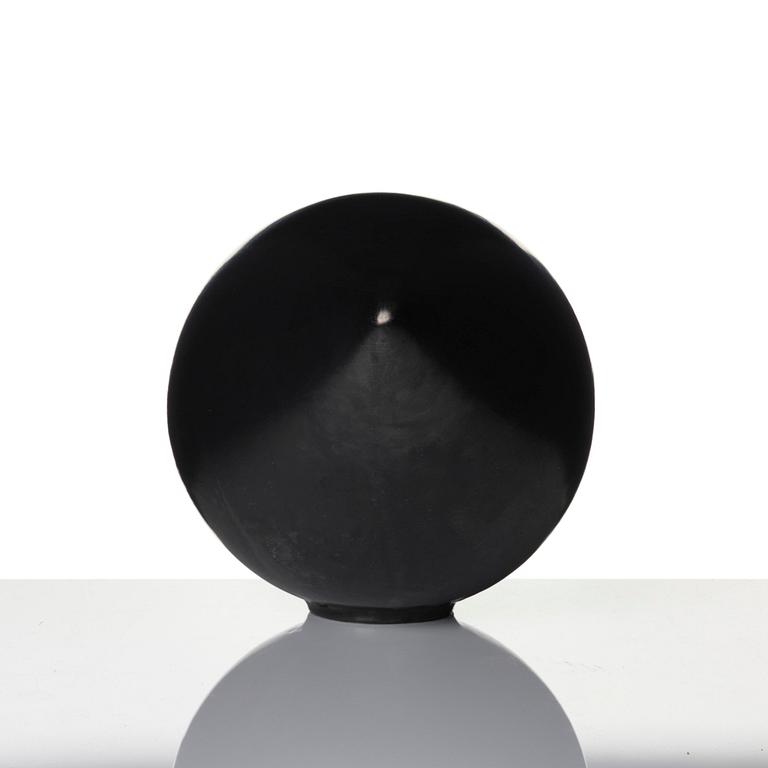
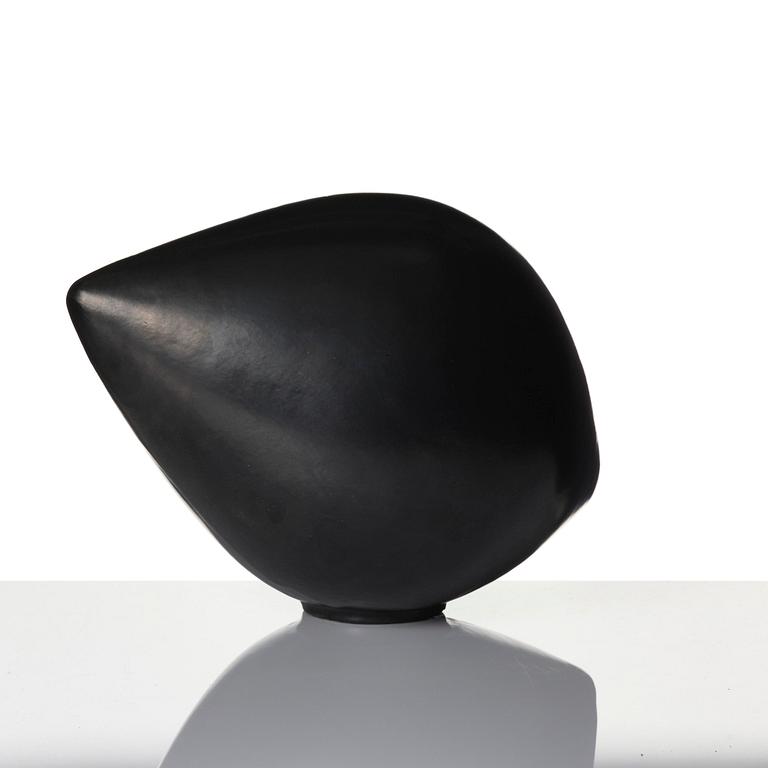
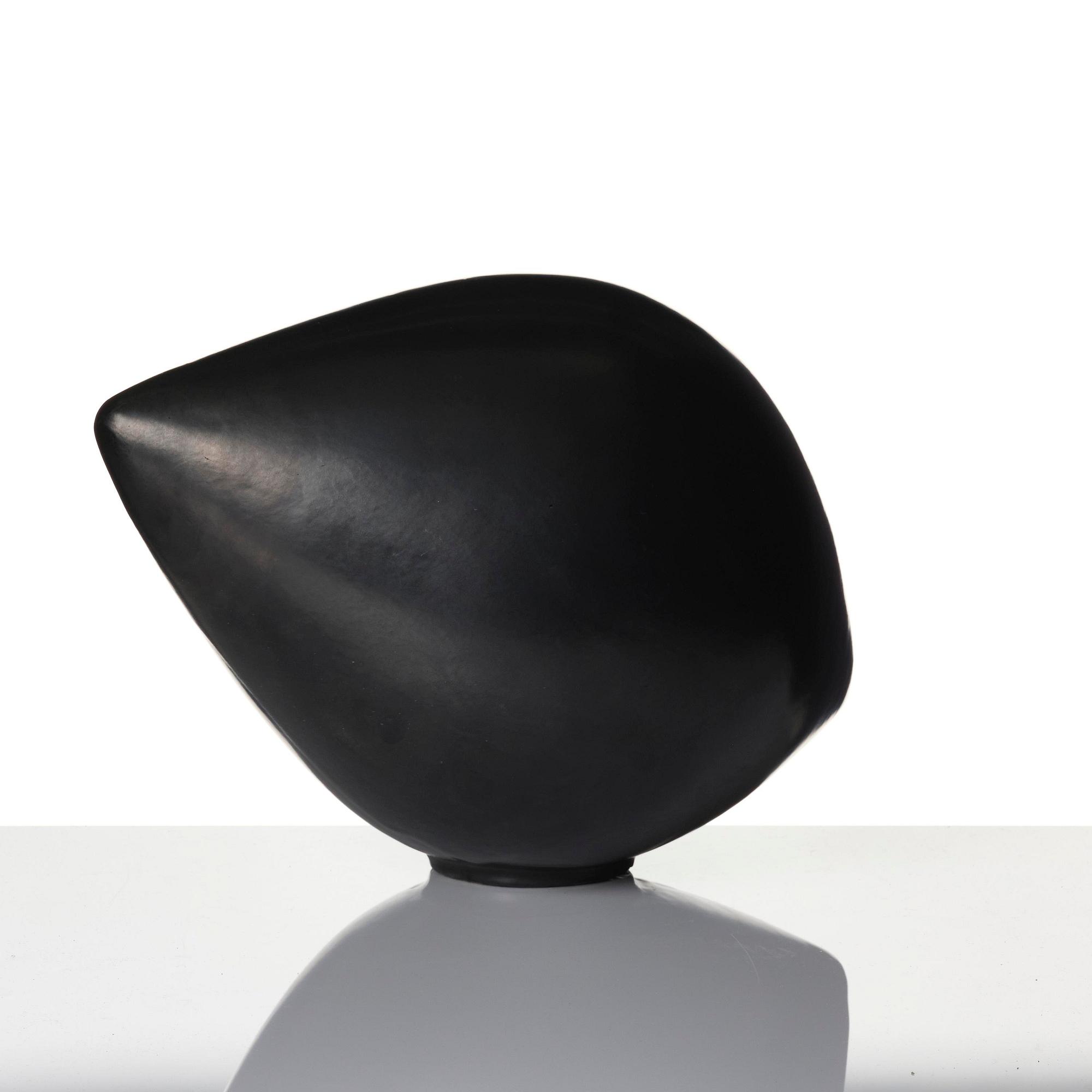
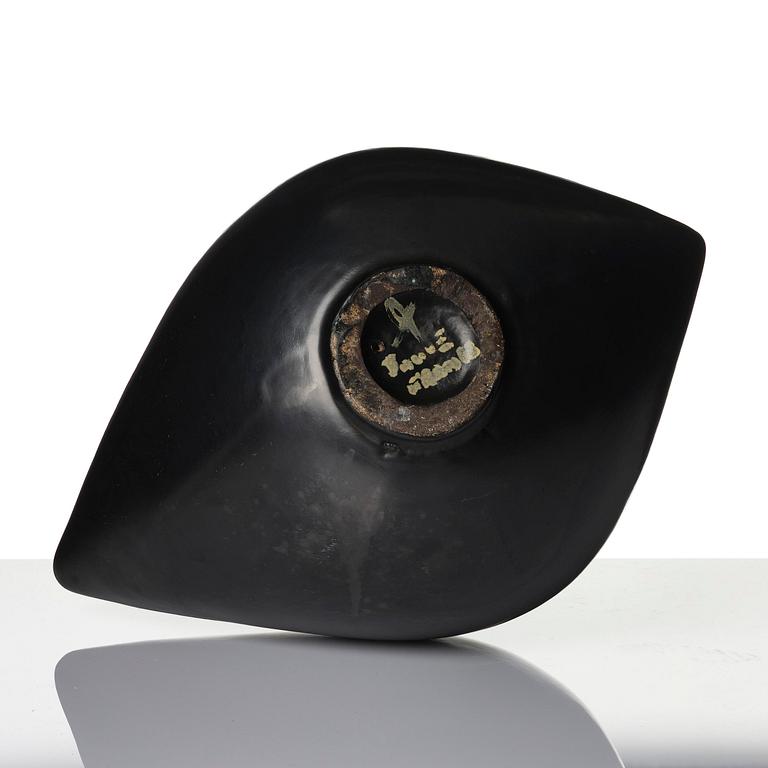
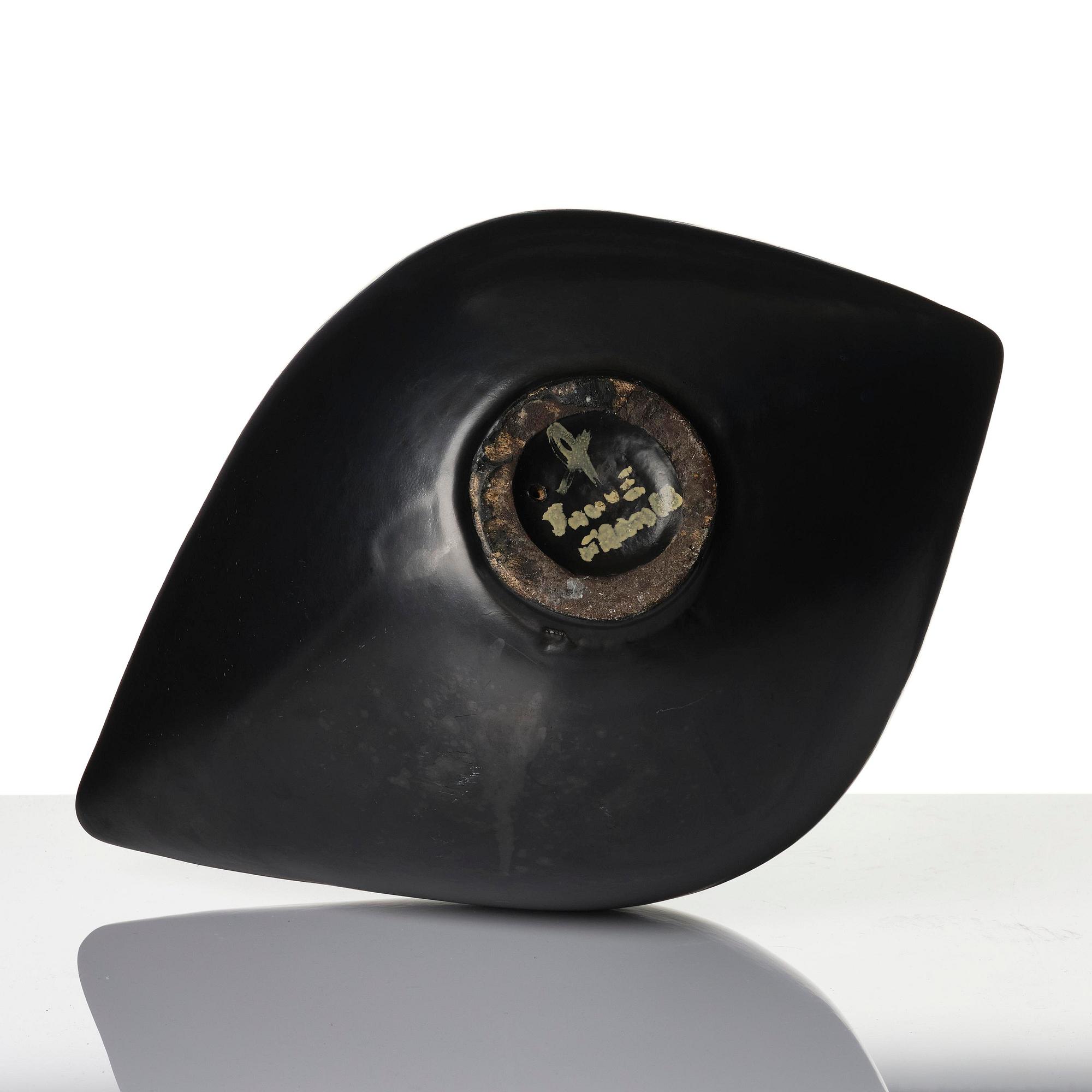
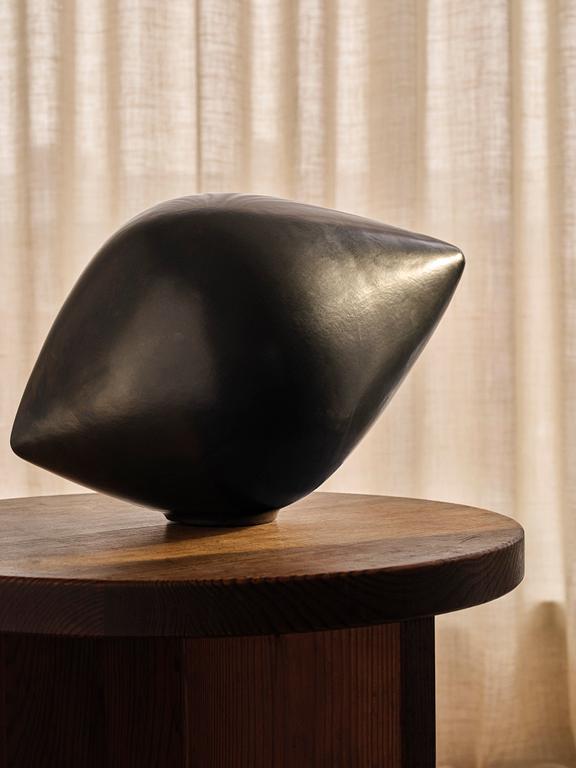
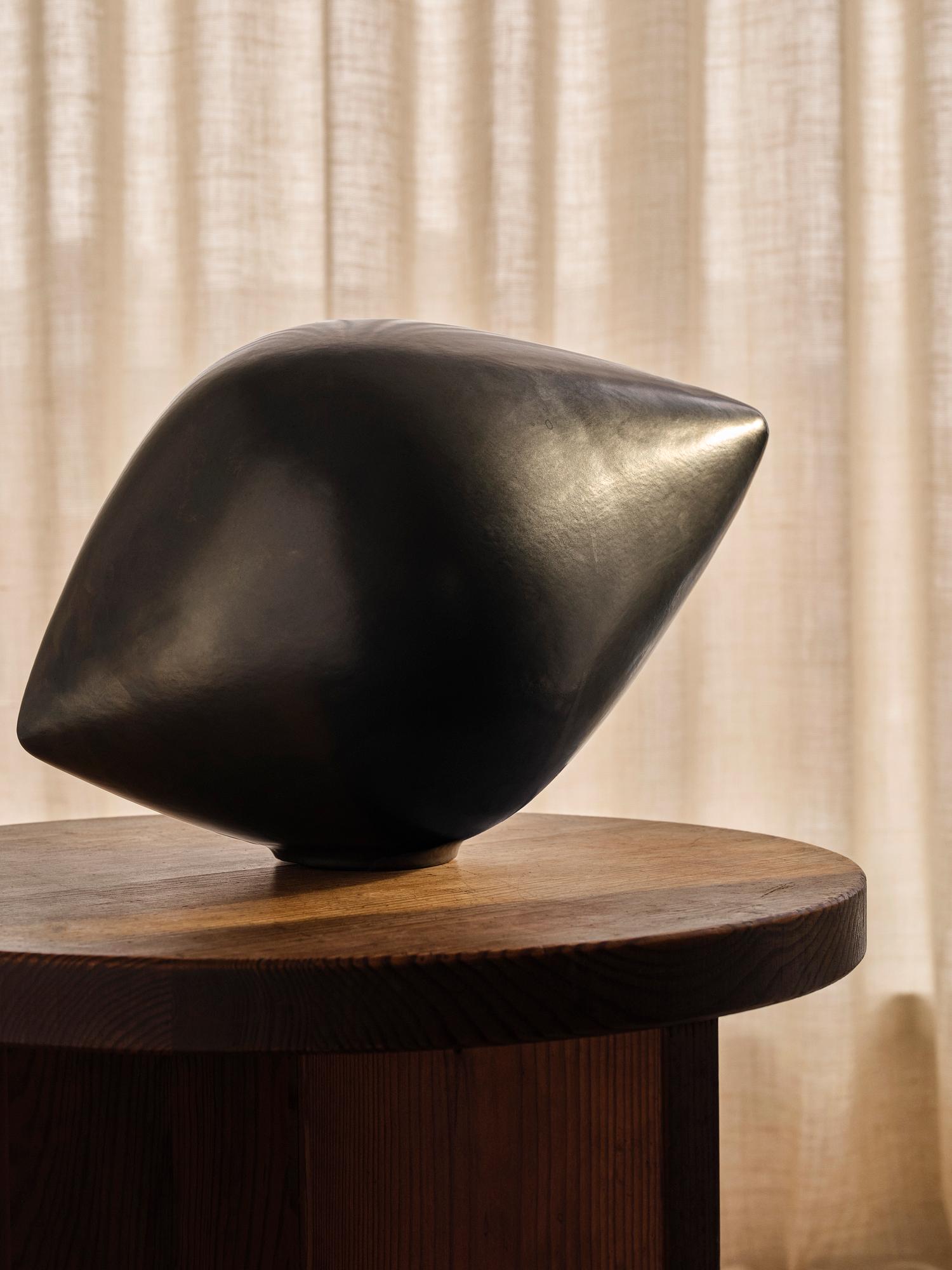
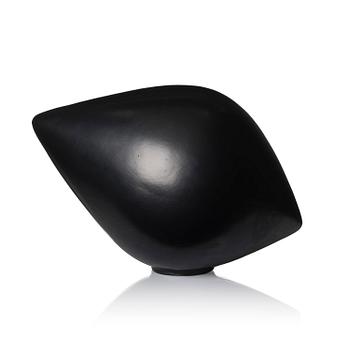
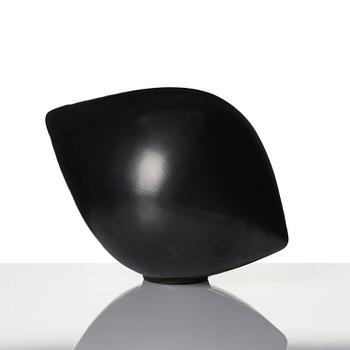
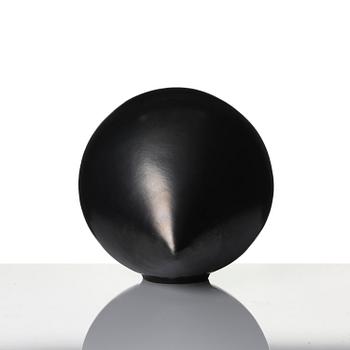
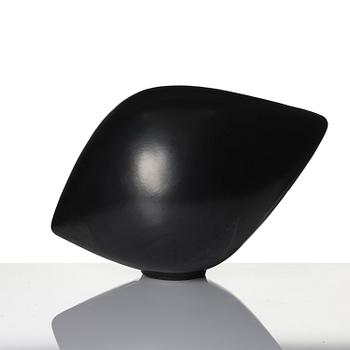
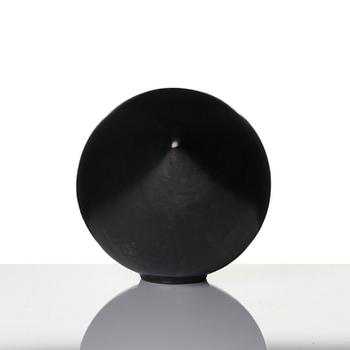
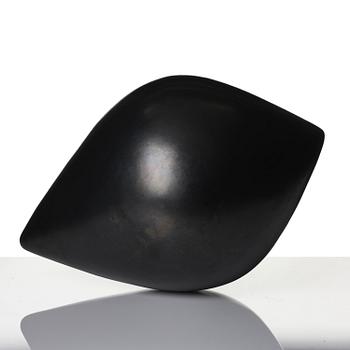
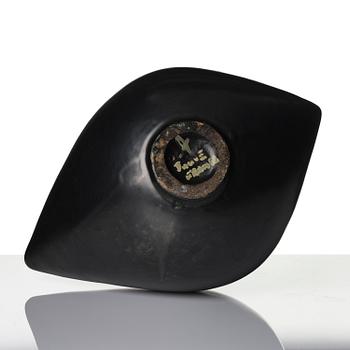
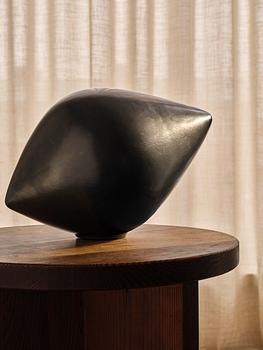
“Toupie”, a large satiny-black enameled faience sculpture, France, ca. 1959.
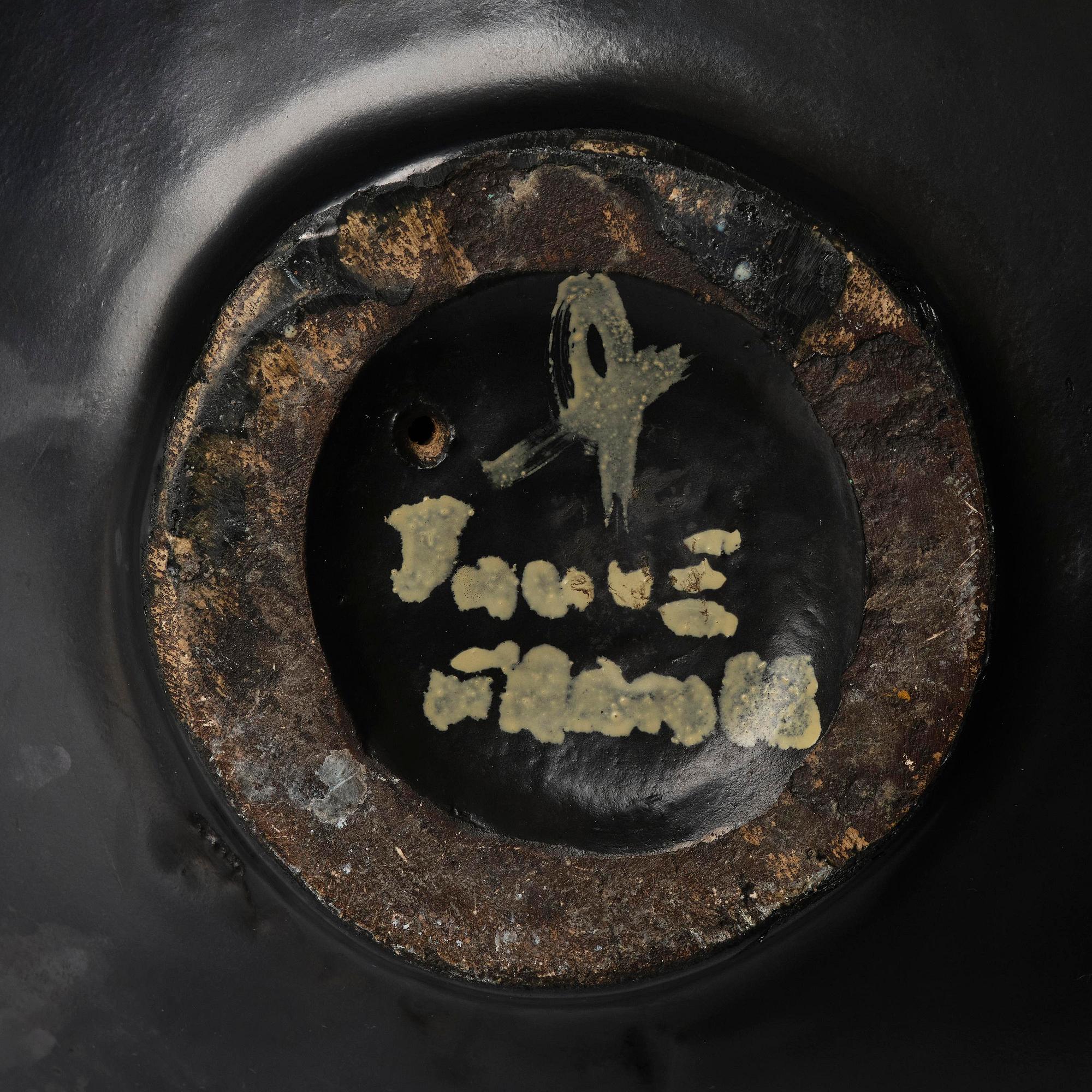
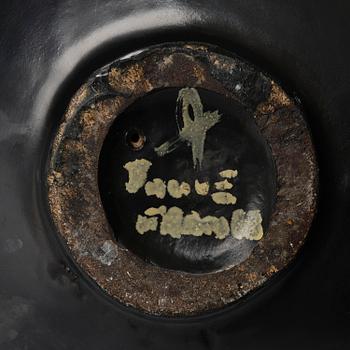
Signed JOUVE FRANCE. Dimensions 42.5 x 30 cm, height 28 cm.
A few minor glaze chips and scratches.
Provenance
Purchased in the 1960s, thence by descent within the family.
Exhibitions
The model was exhibited at Galerie Folklore in Lyon, France in 1960. Georges Jouve displayed ceramics on shelves and tables made of lacquered metal by Jacques Bouget.
Literature
Karine Lacquermant, “Georges Jouve”, Norma Editions, 2025, cf. “Forme Toupies, faïence émaillée”, the model depicted in white, see p. 187. See also the model in black depicted in Galerie Folklore à Lyon 1960, p. 257.
More information
More about Georges Jouve
Georges Jouve is regarded as one of France’s most important ceramicists of the mid-20th century. He studied at the École Boulle in Paris and began his artistic career as a set designer. During the Second World War, Jouve was captured by the Germans and interned in a German camp. After several attempts, he managed to escape and sought refuge with his step-parents in a ceramic village in southern France, Dieulefit, where he began working with clay.
In 1944, Jouve established his first independent studio in Paris. He was soon invited by the architect and designer Jaques Adnet to participate in the exhibition “La Ceramique Contemporaine” organised by Compagnie des Arts Francais, where Jouve exhibited alongside France’s leading designers. The exhibition featured, among other works, sculpture by Alexandre Knoll, ceramics by Jean Besnard and lighting by Serge Mouille. Jouve subsequently took part in numerous recurring exhibitions of contemporary ceramics, both in France and internationally. Jouve died in 1964, aged just 54.
Read moreFor condition report contact specialist

What will the transport cost?
Shipping can only be arranged by contacting specialdelivery@bukowskis.com.
Covered by droit de suite
Image rights
The artworks in this database are protected by copyright and may not be reproduced without the permission of the rights holders. The artworks are reproduced in this database with a license from Bildupphovsrätt.









Others have also viewed