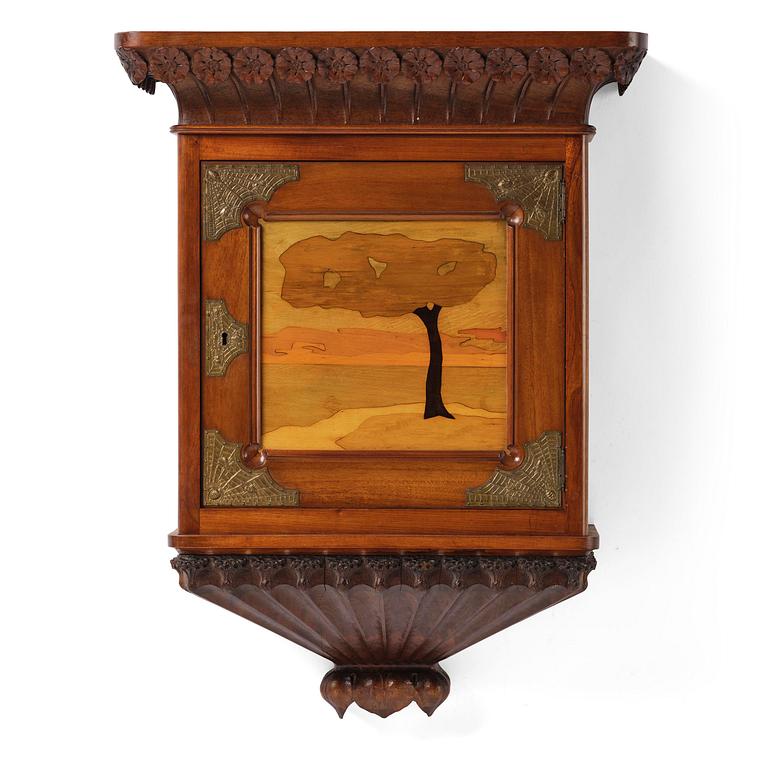
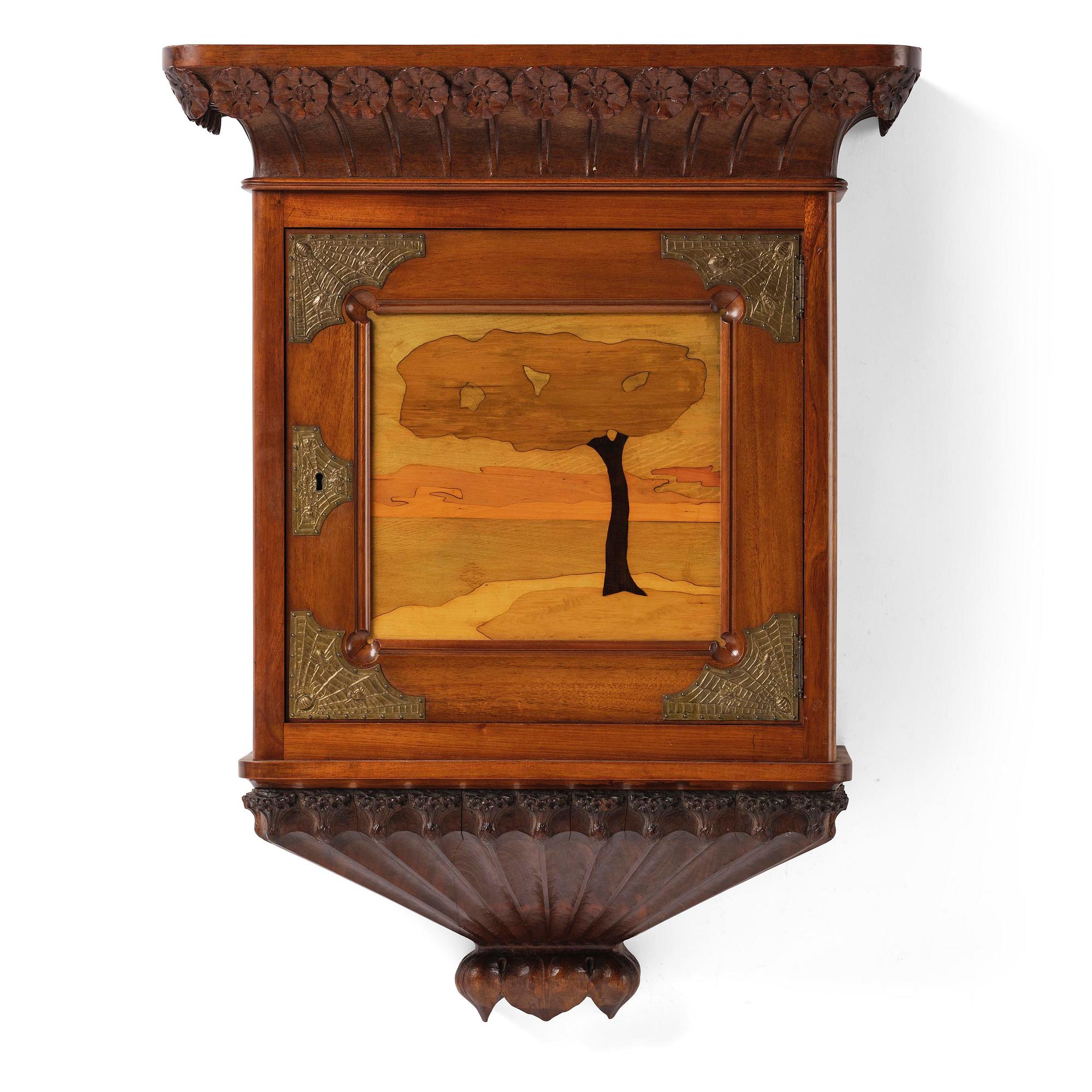
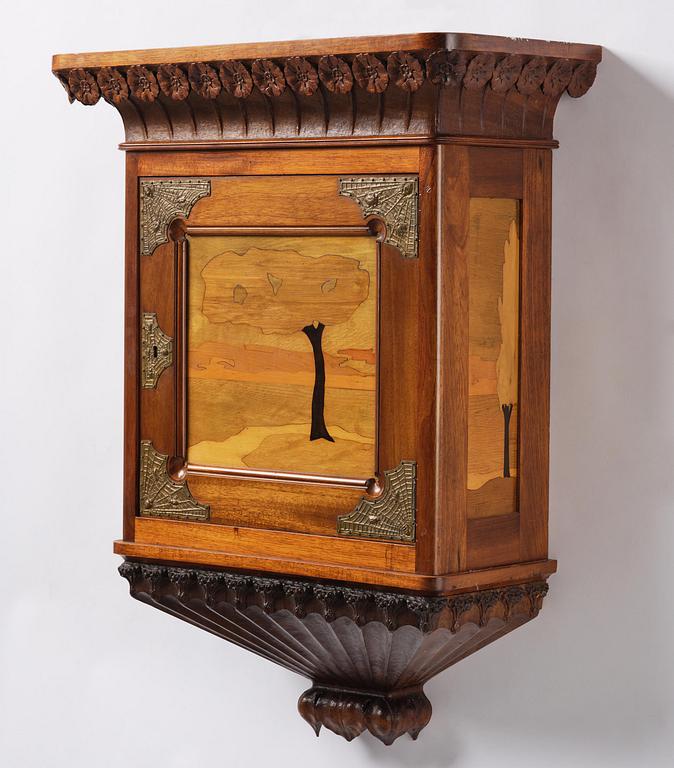
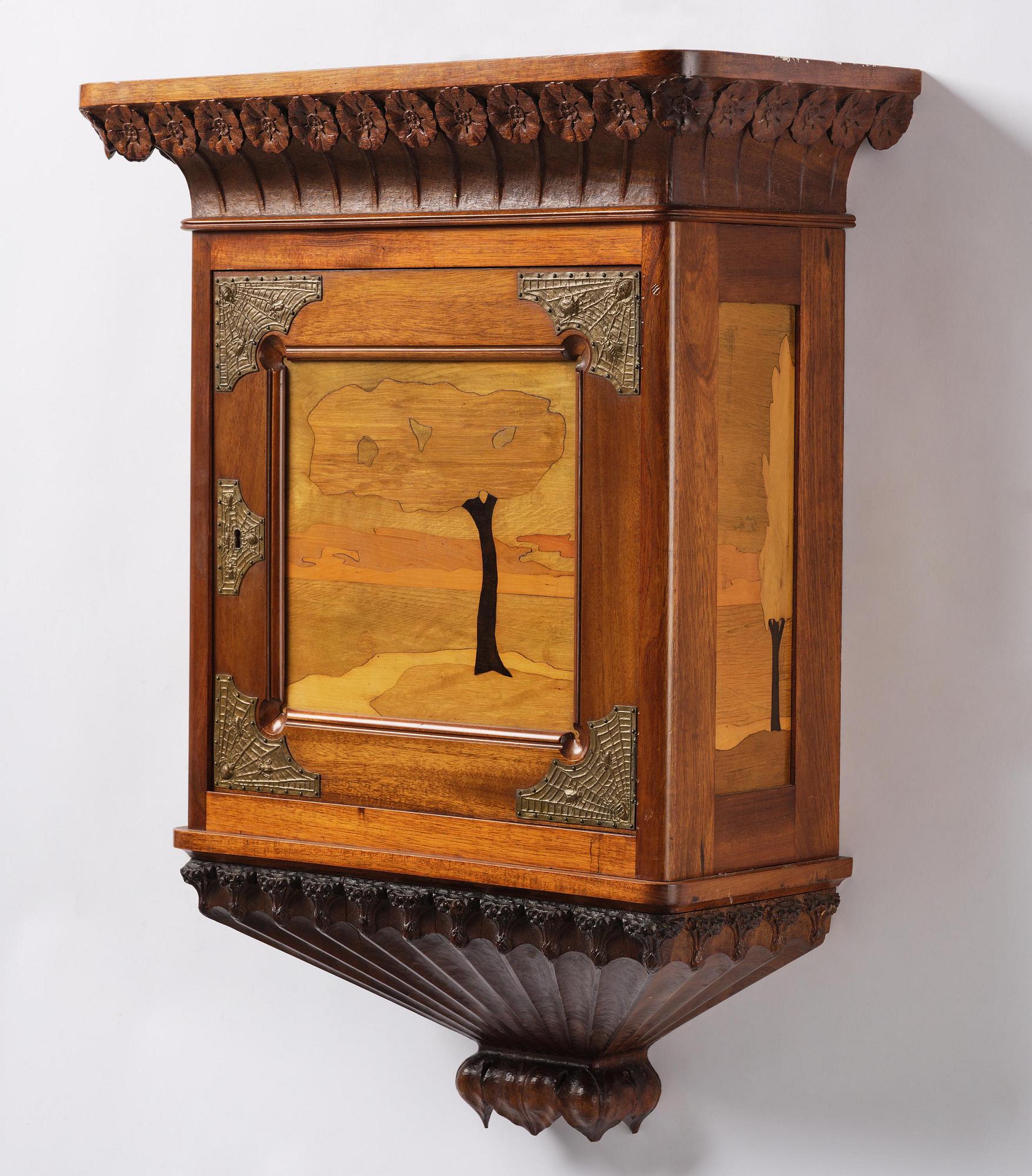
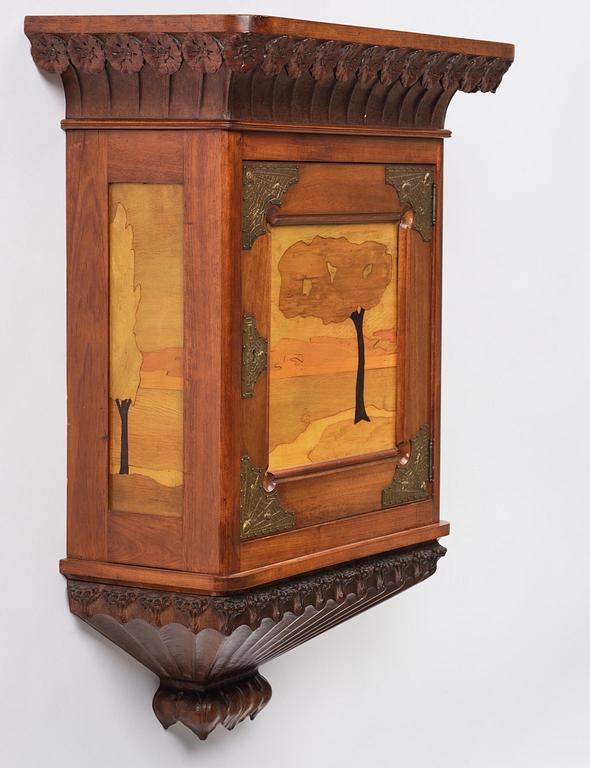
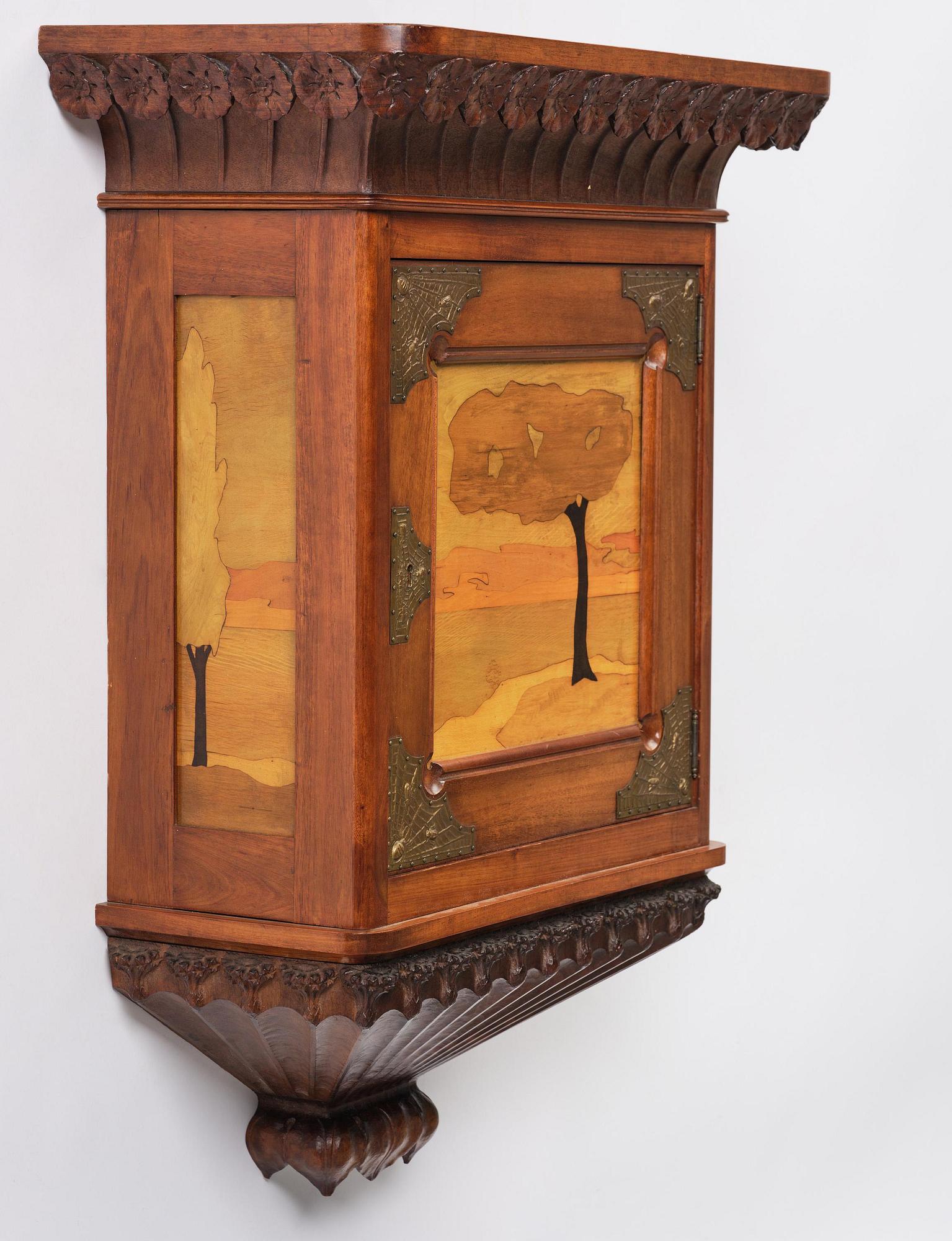
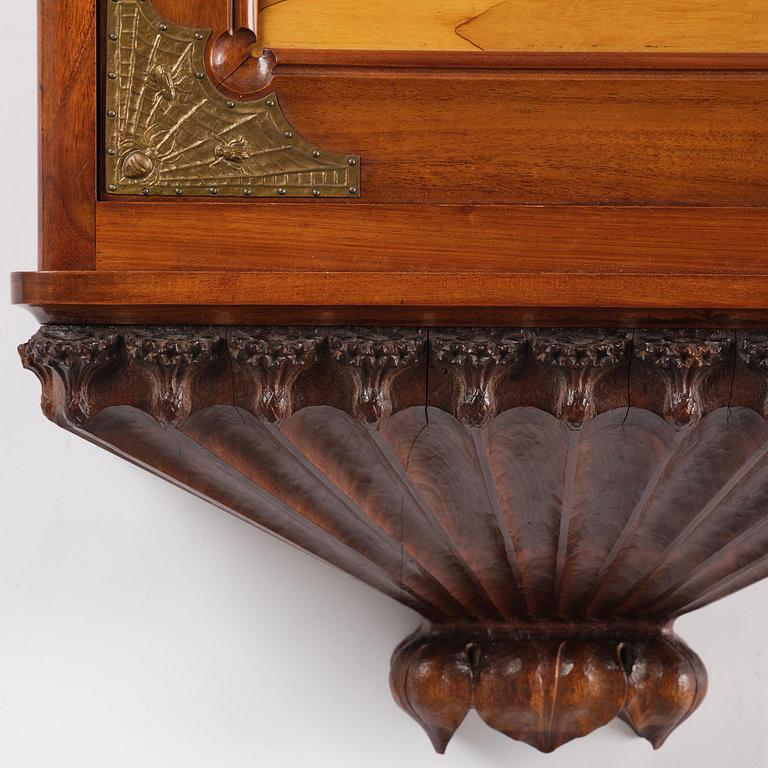
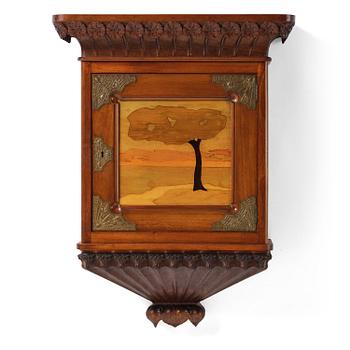
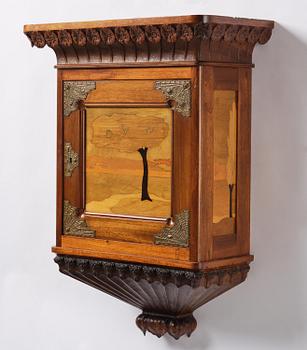
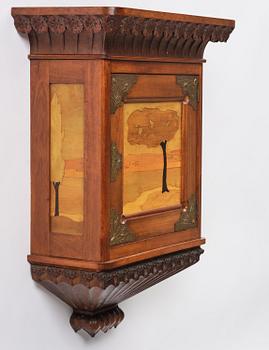
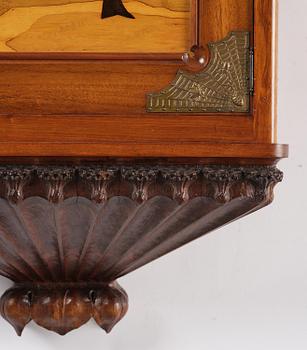
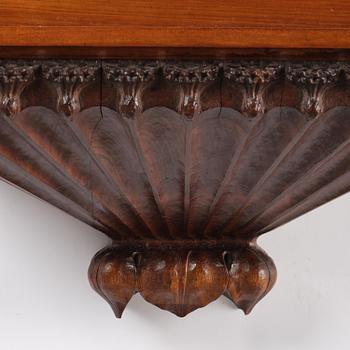
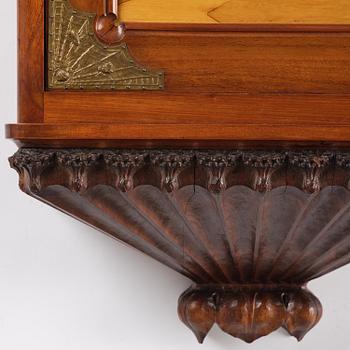
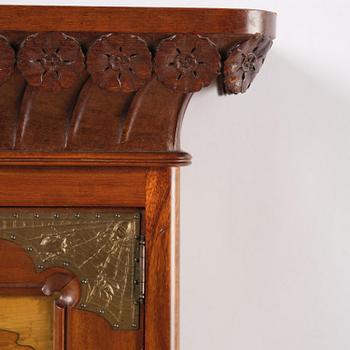
A wall cabinet, ca. 1900.
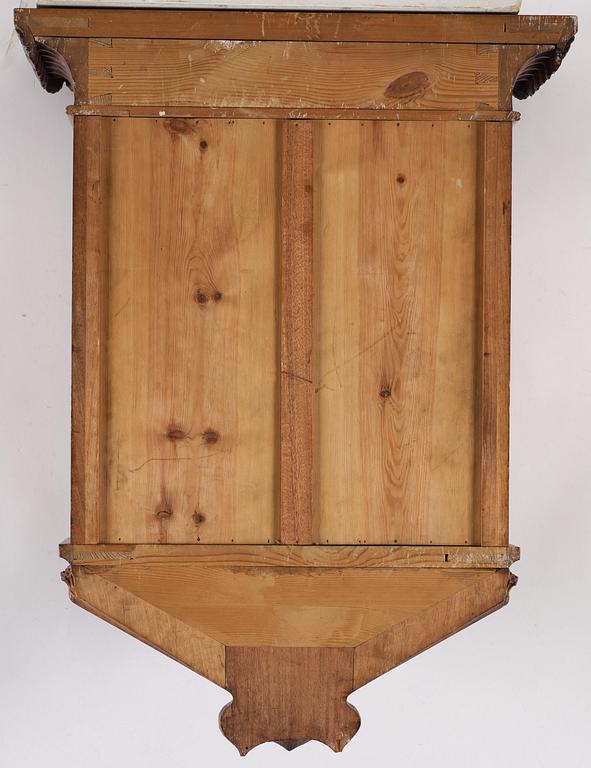
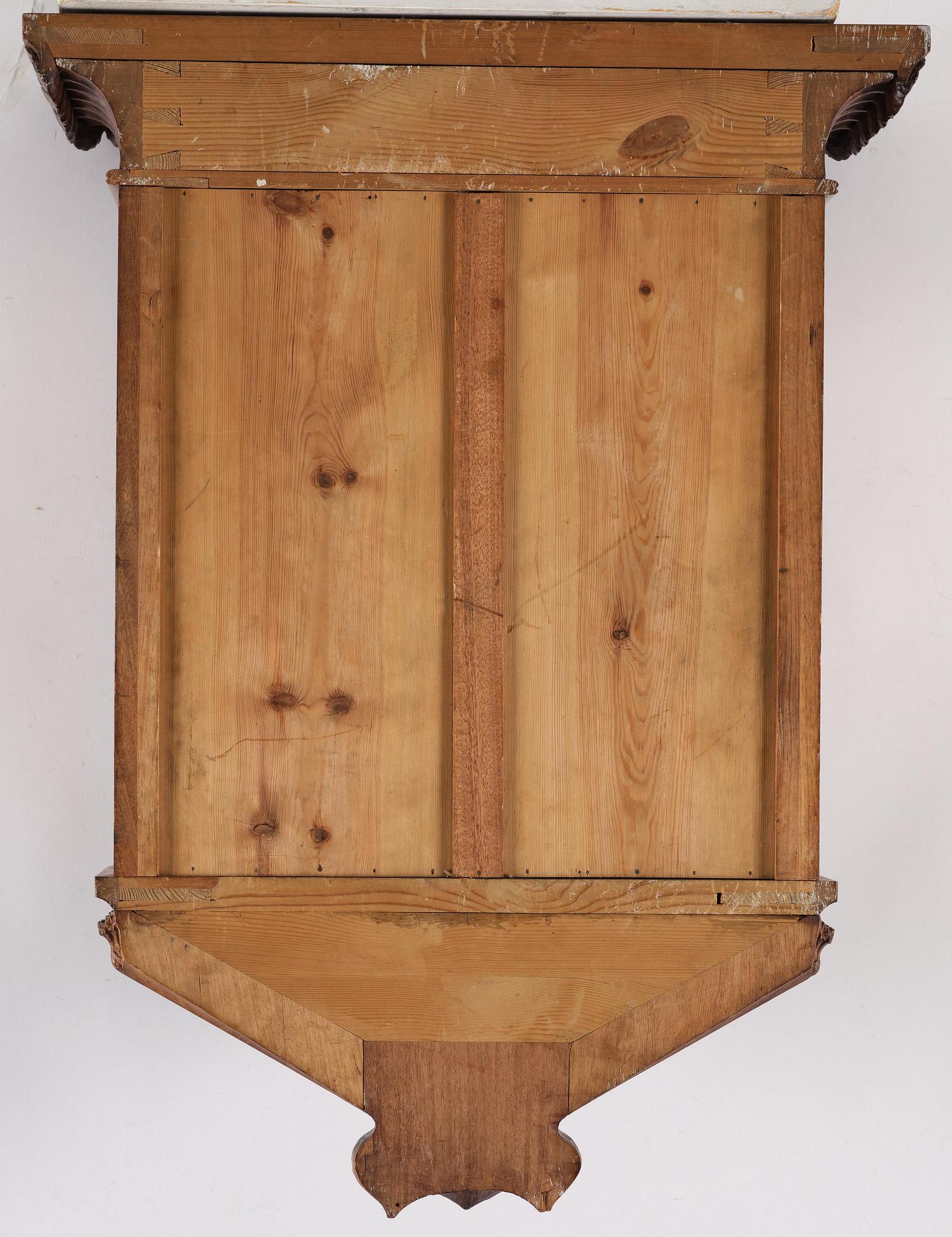
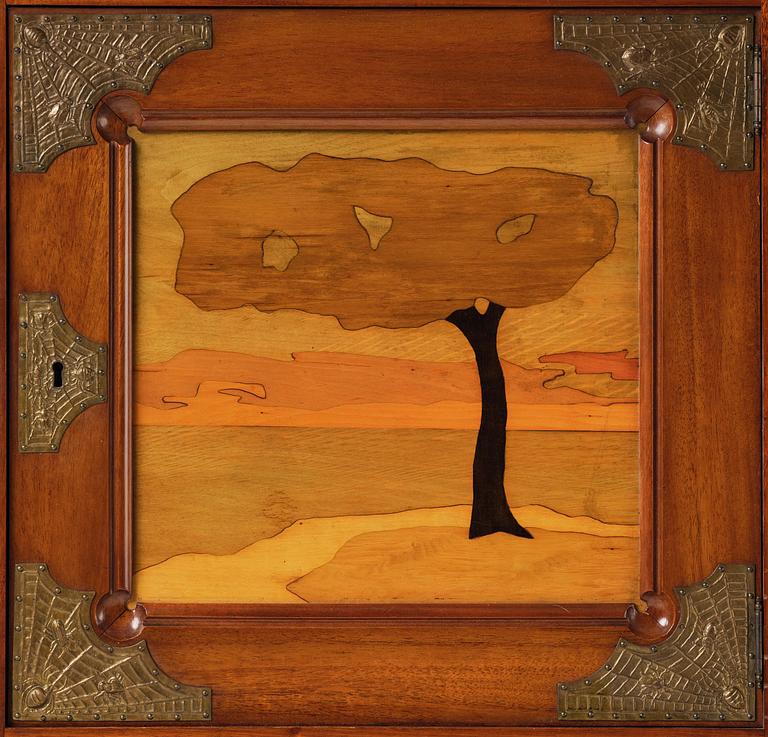
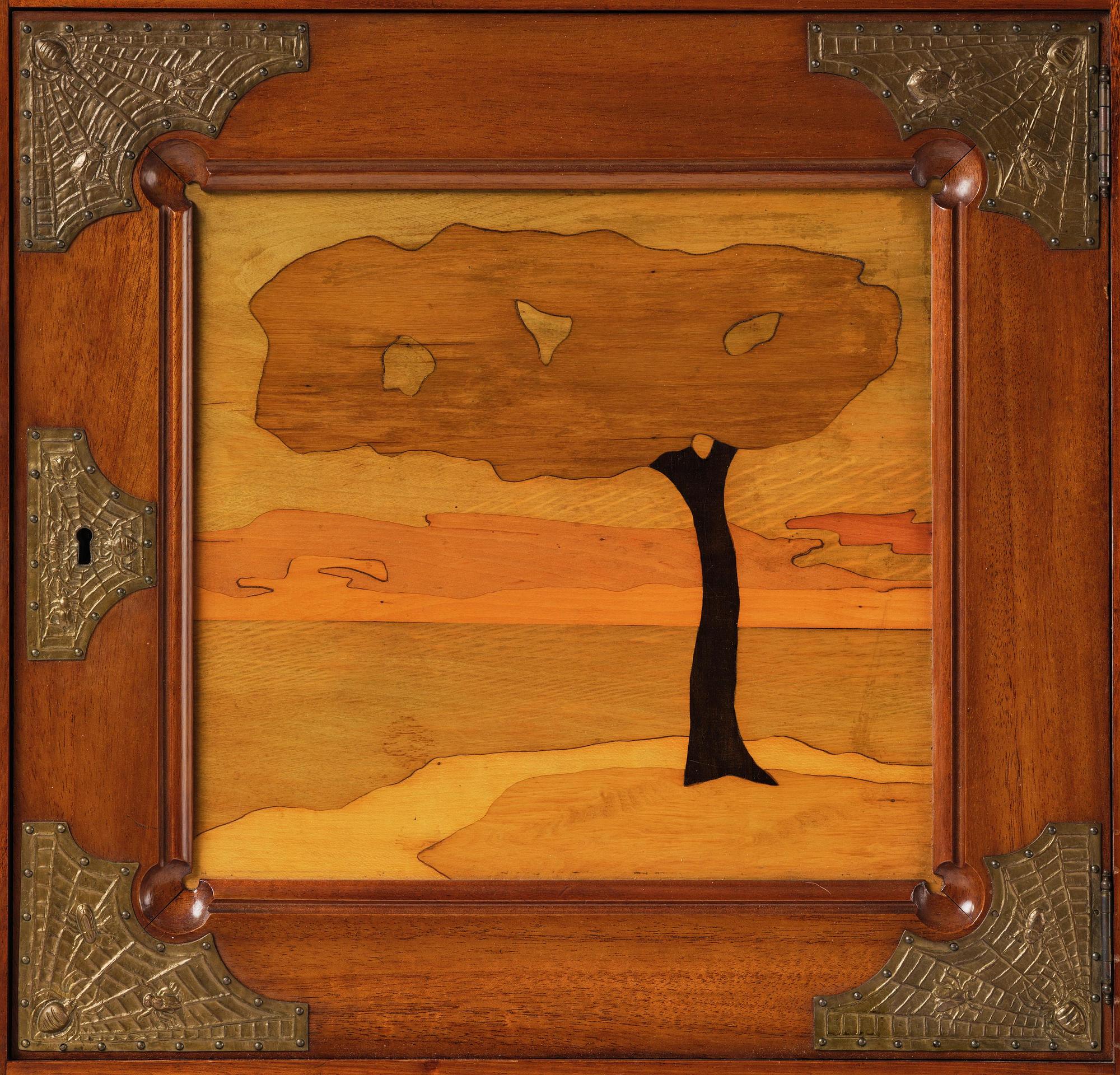
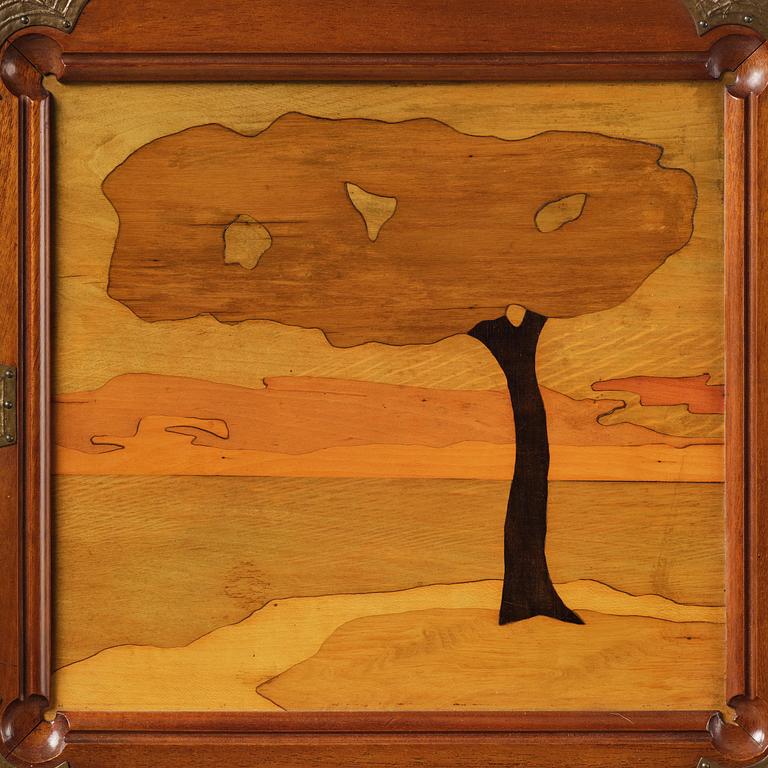
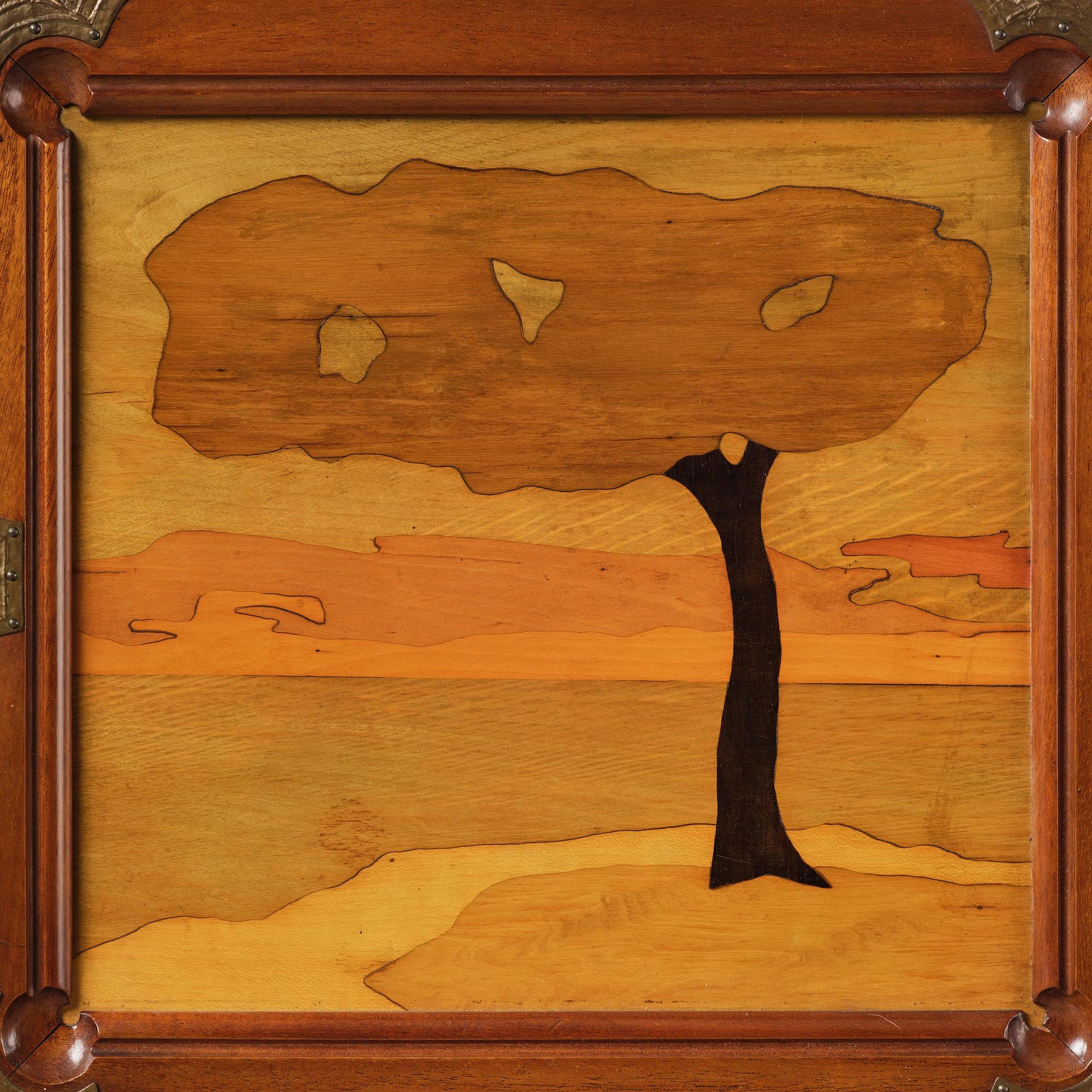
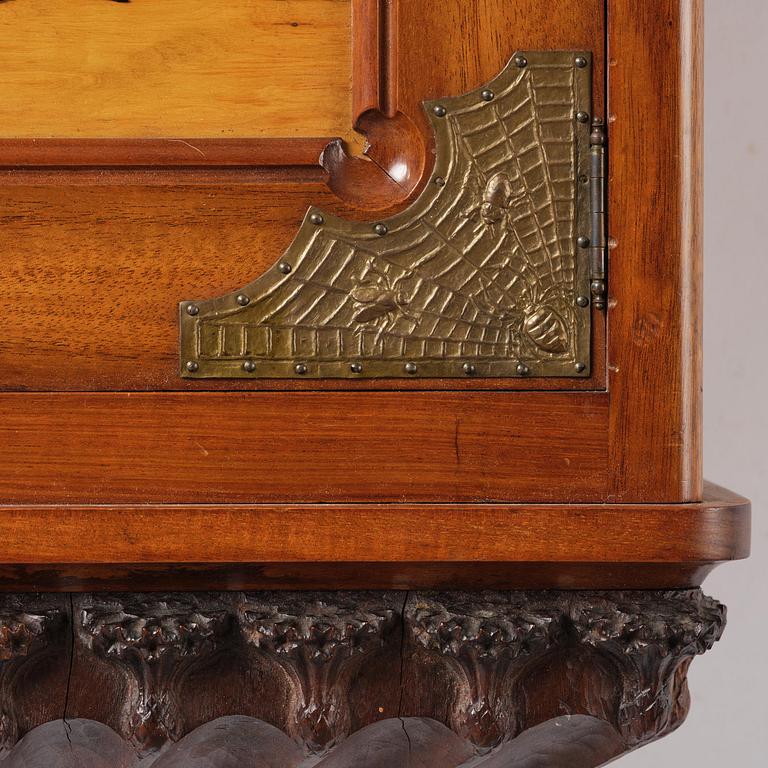
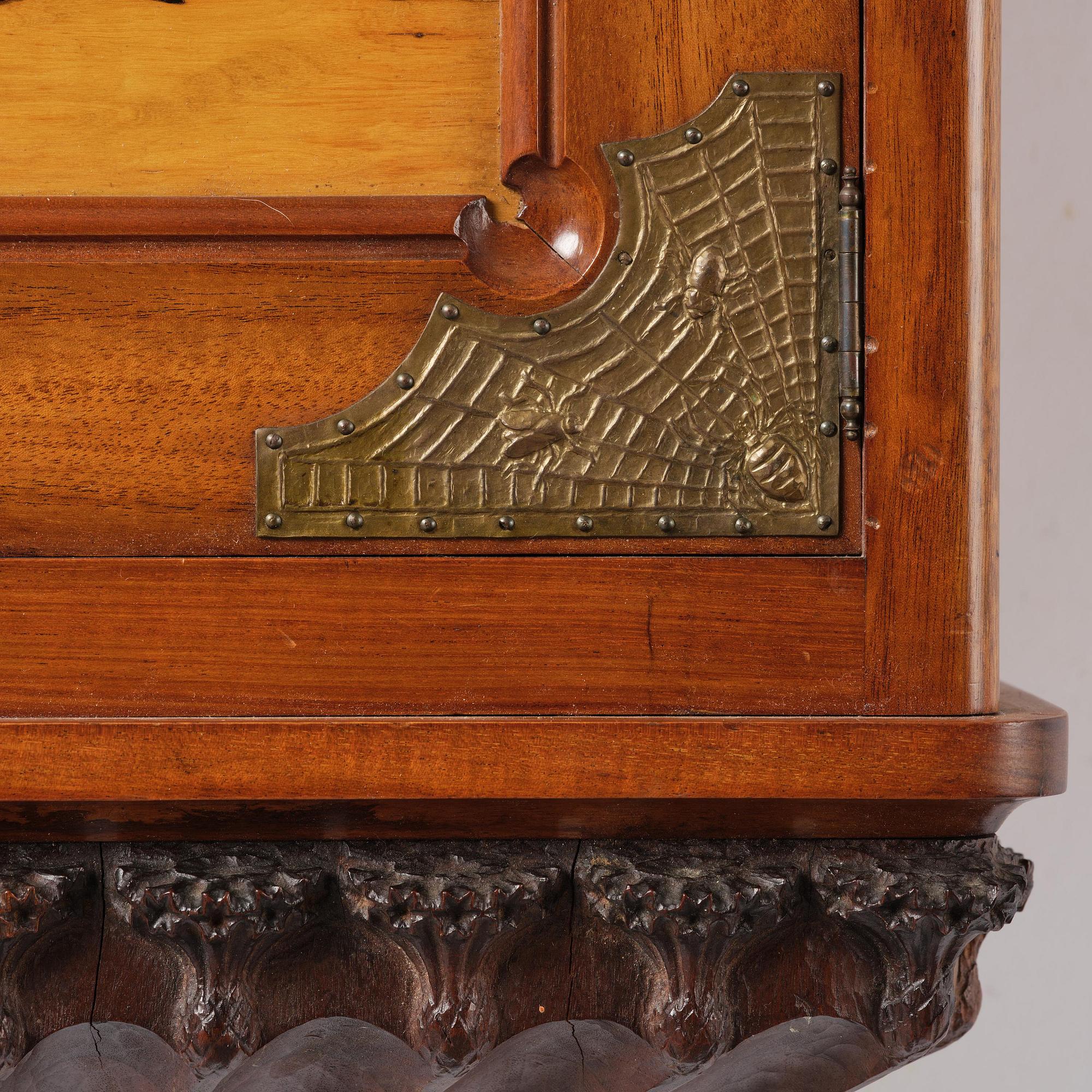
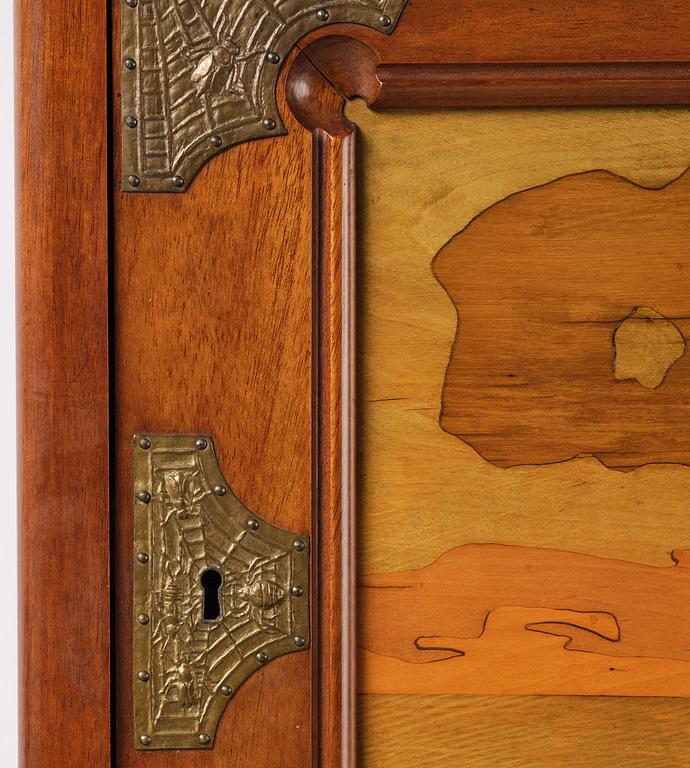
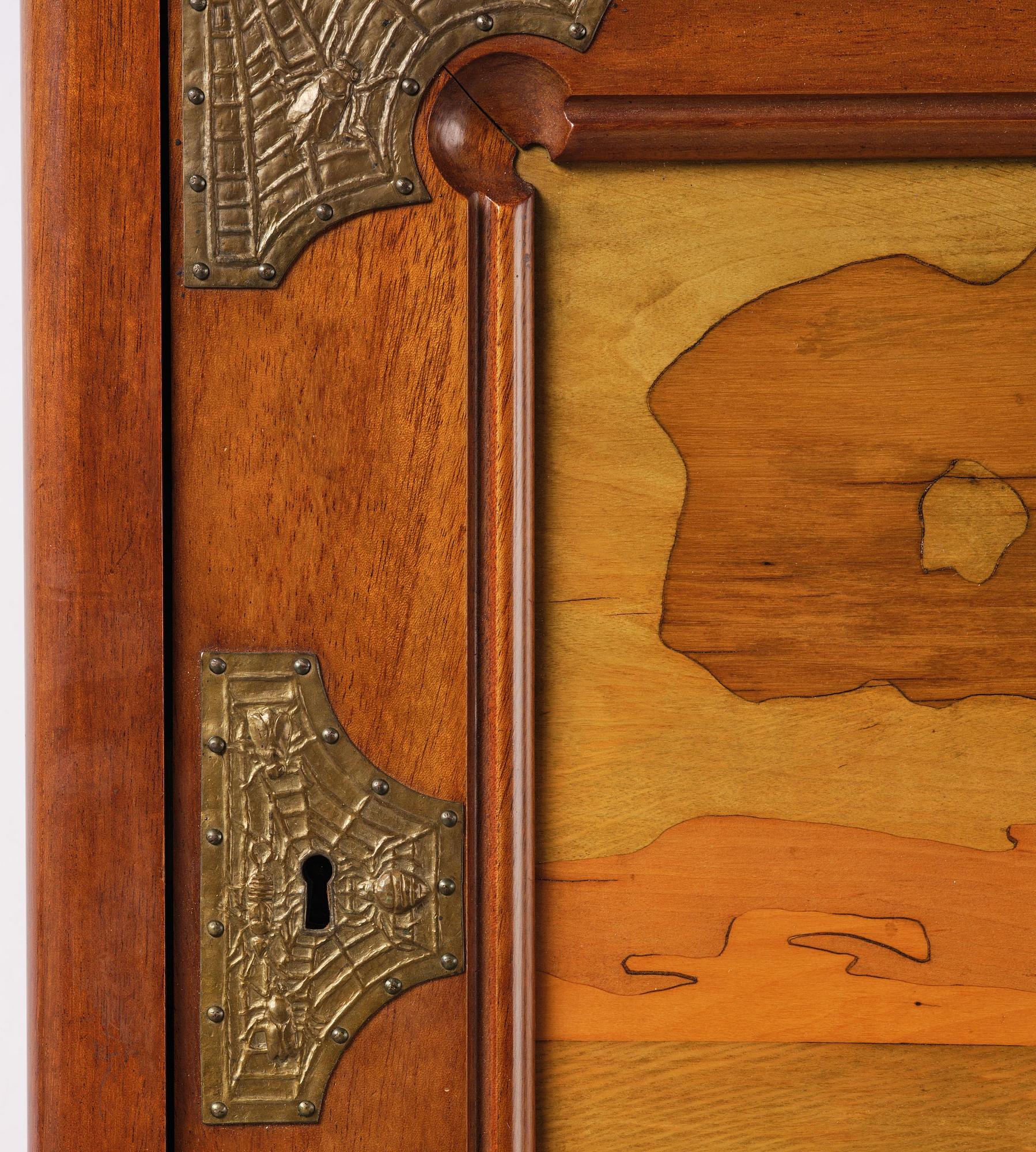
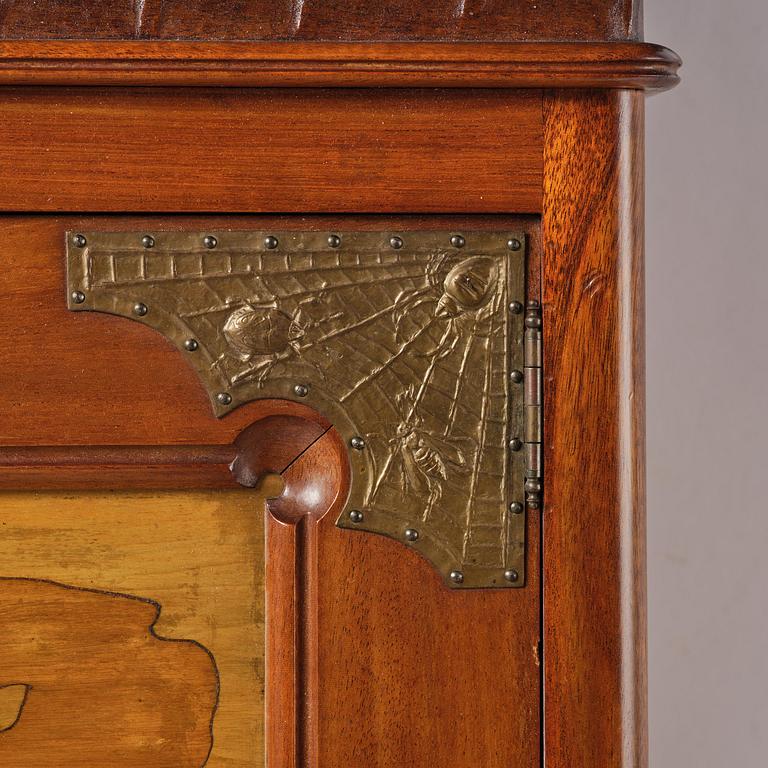
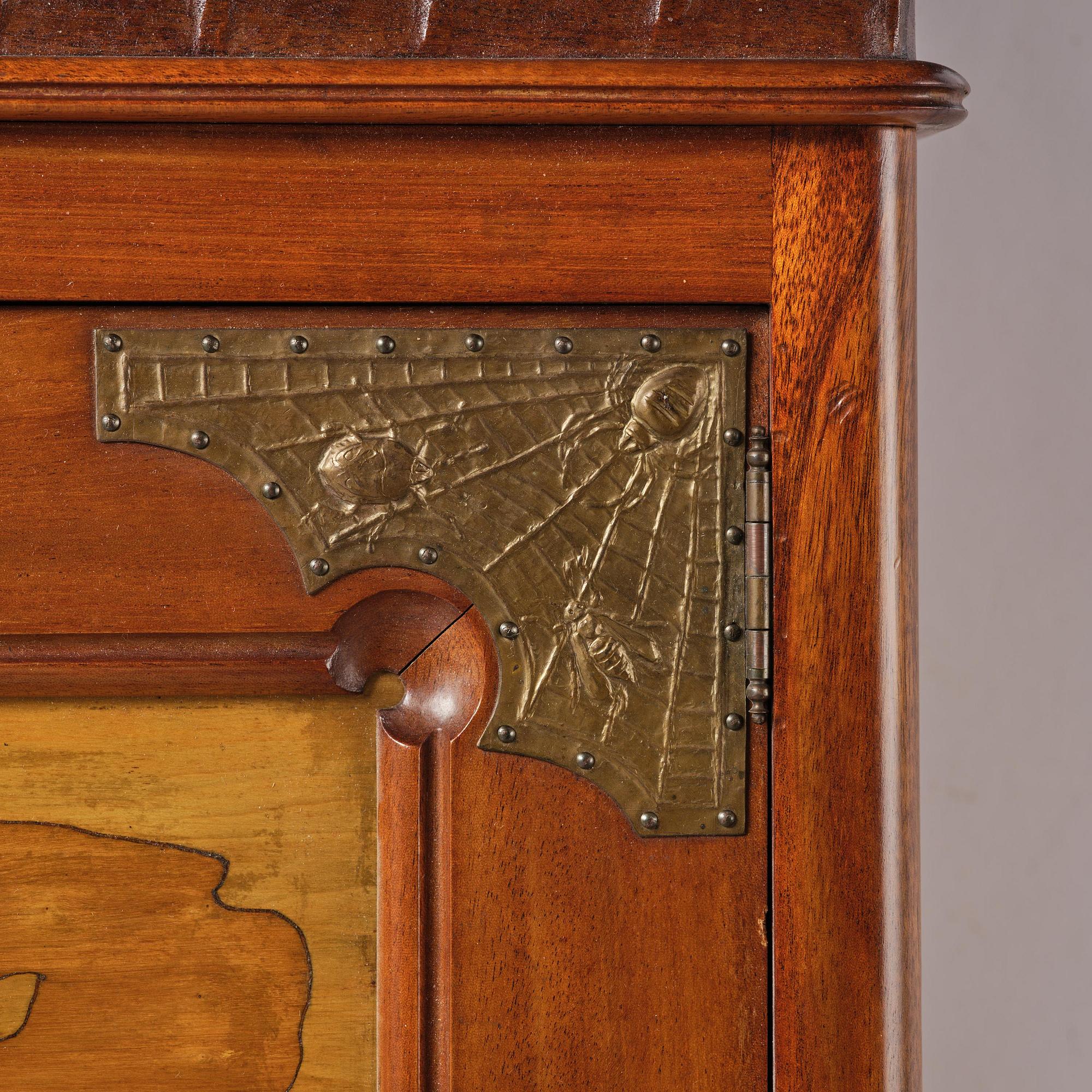
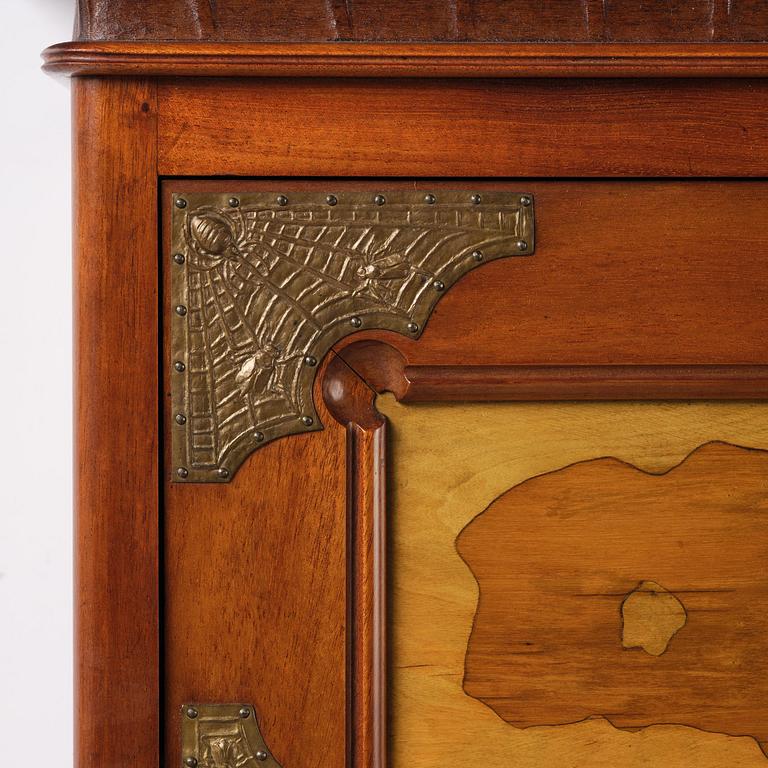
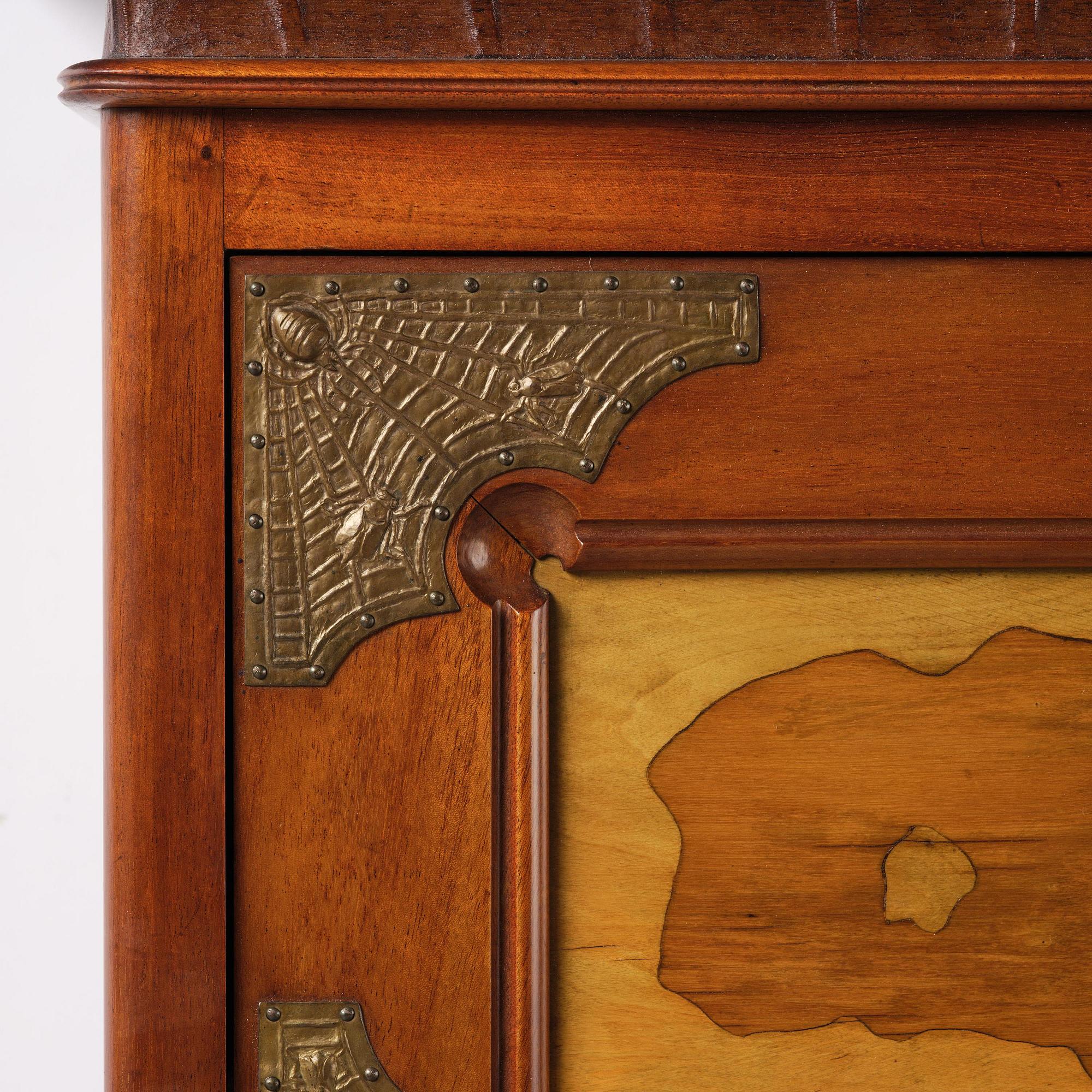
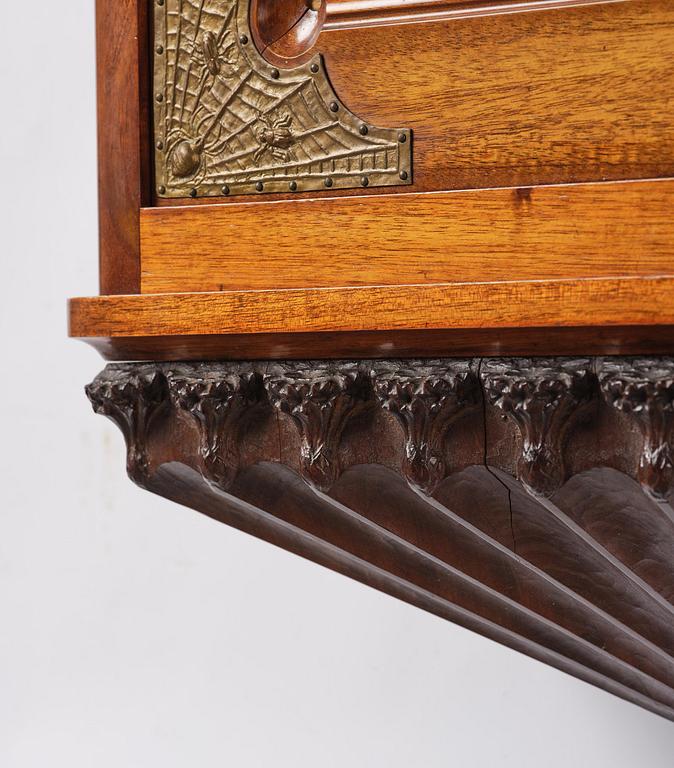
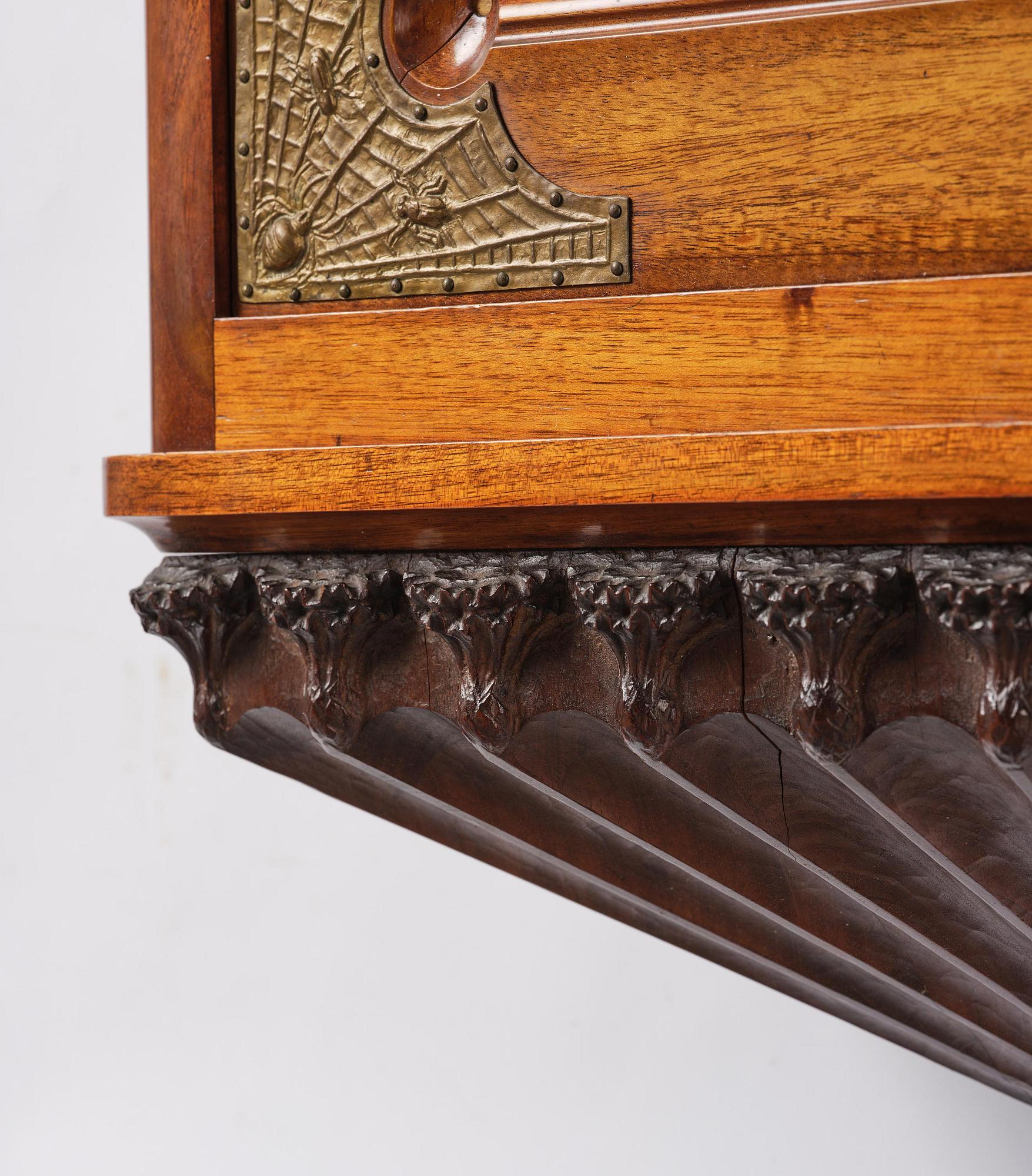
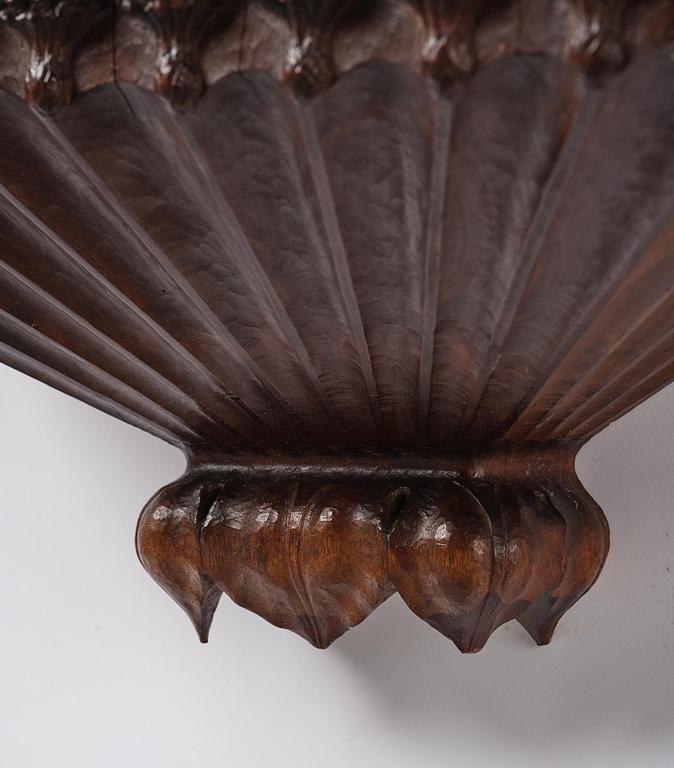
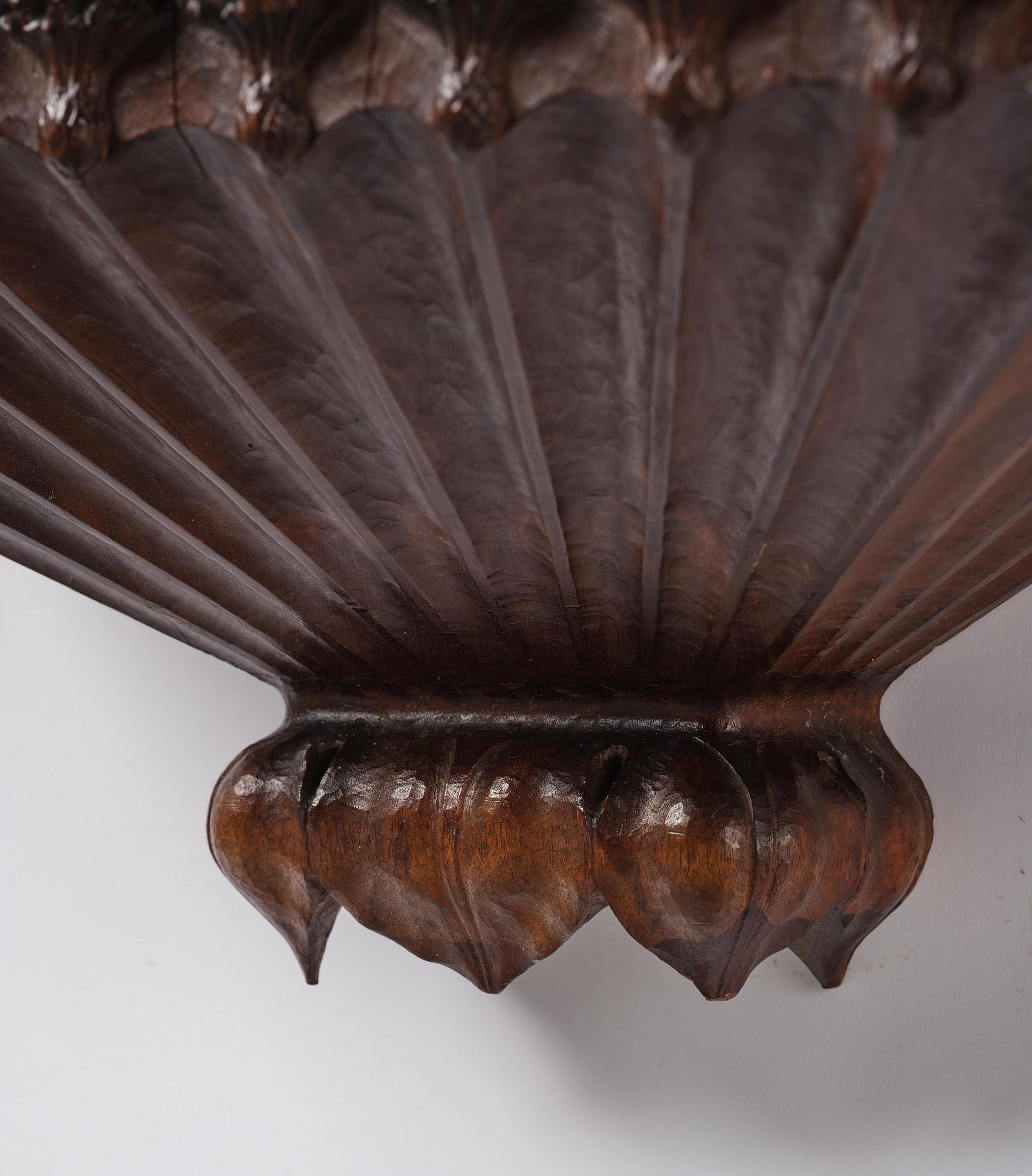
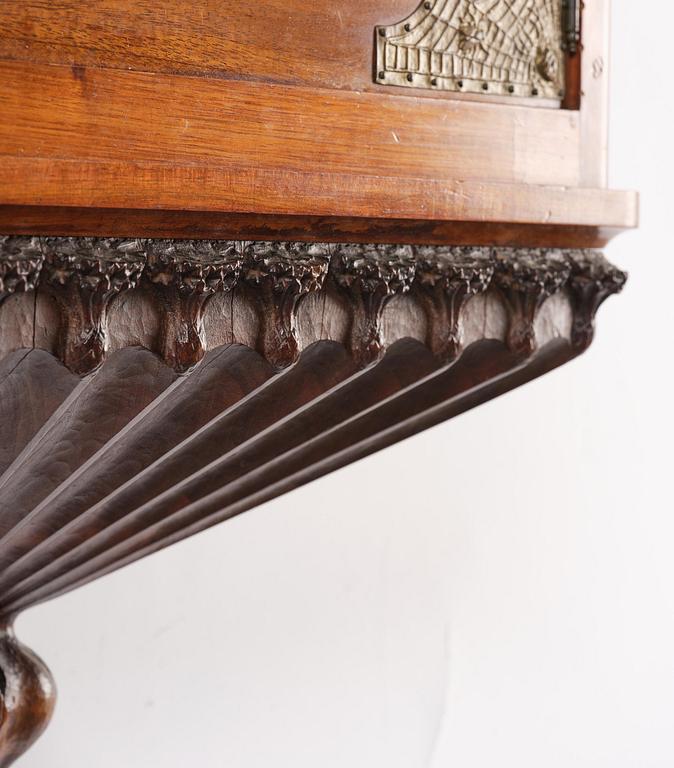
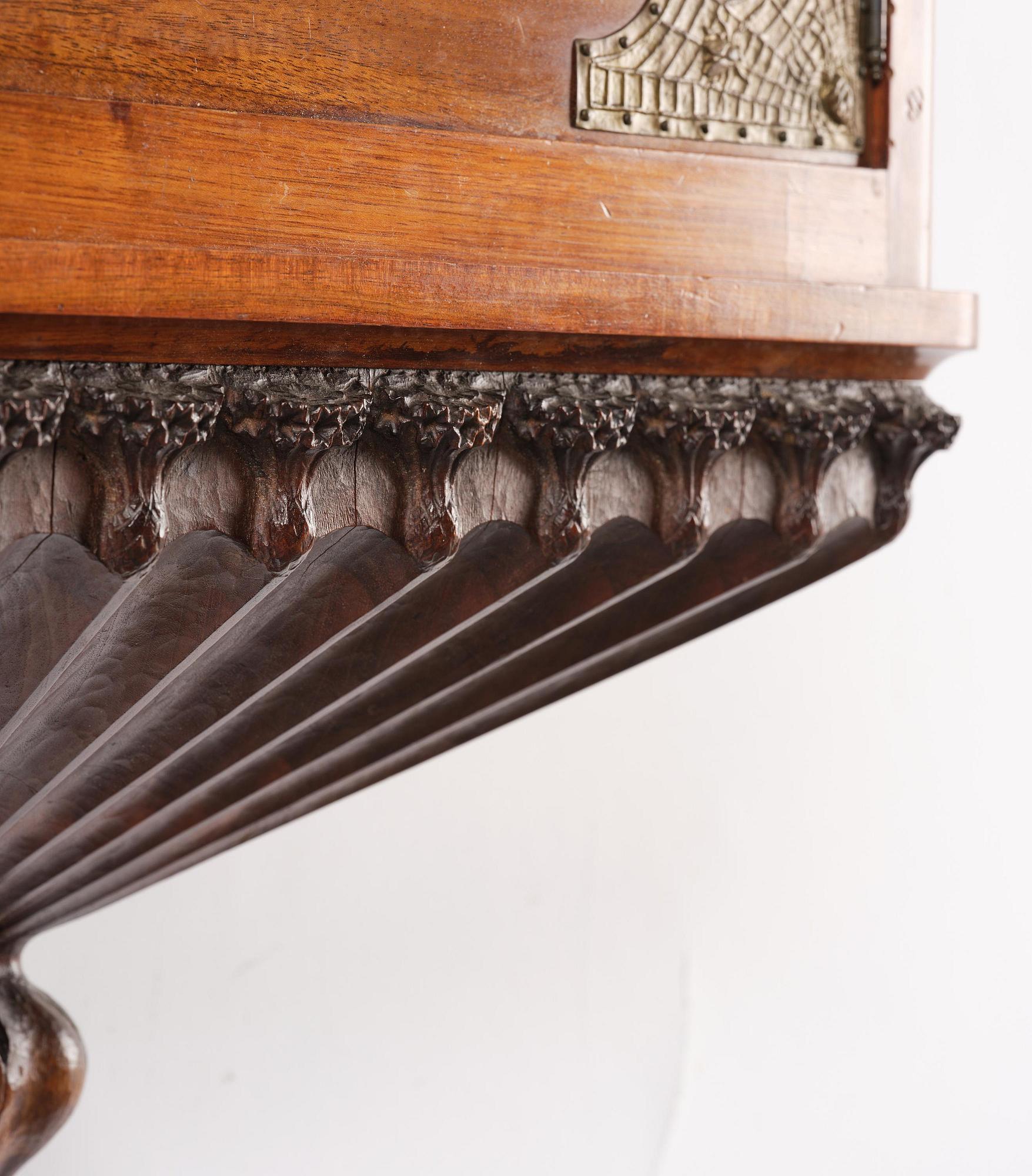
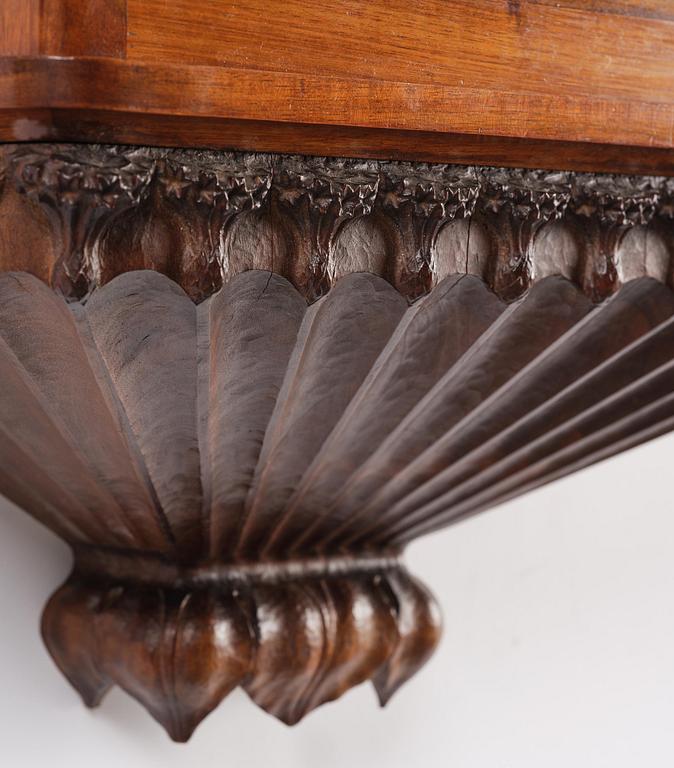
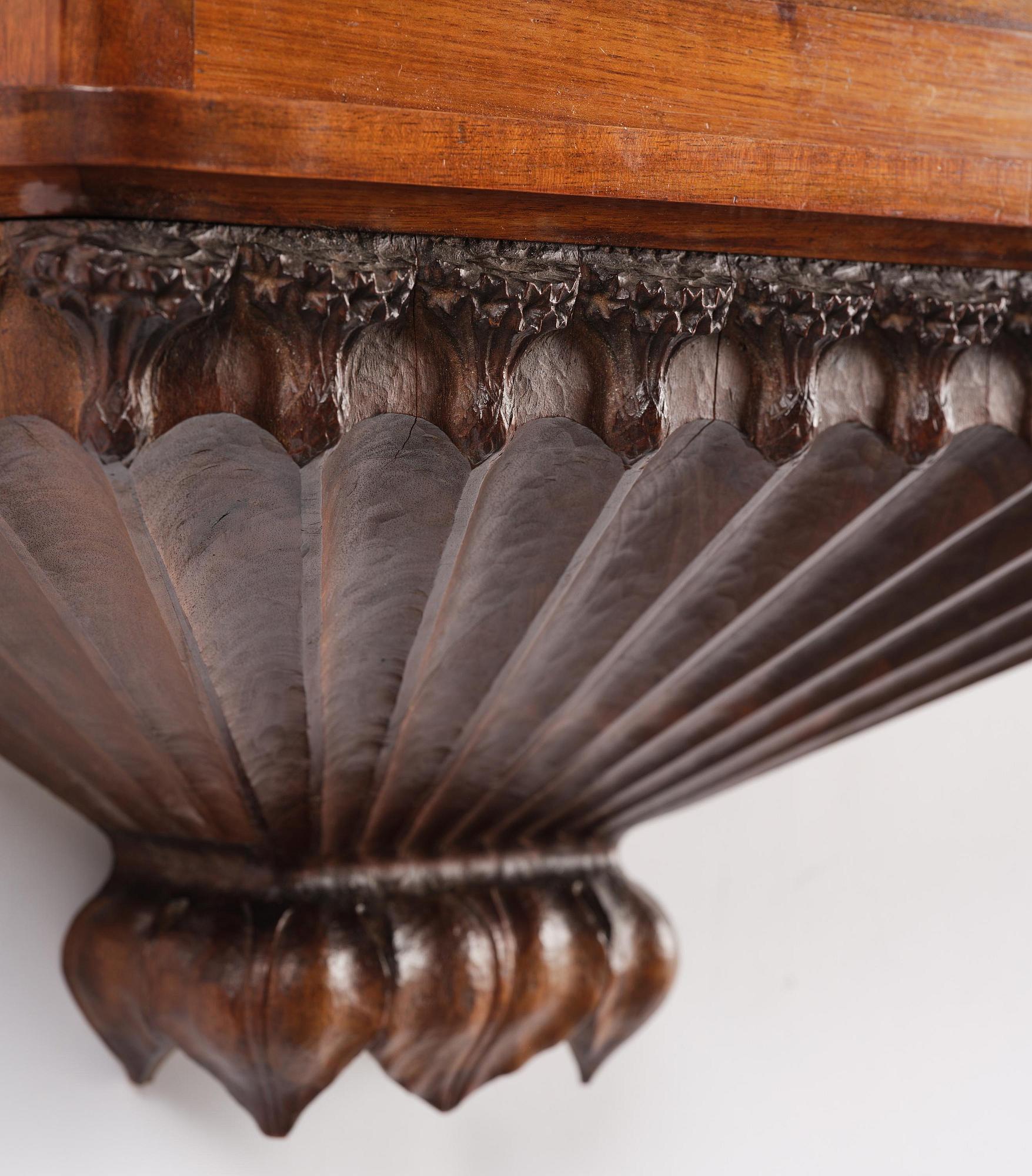
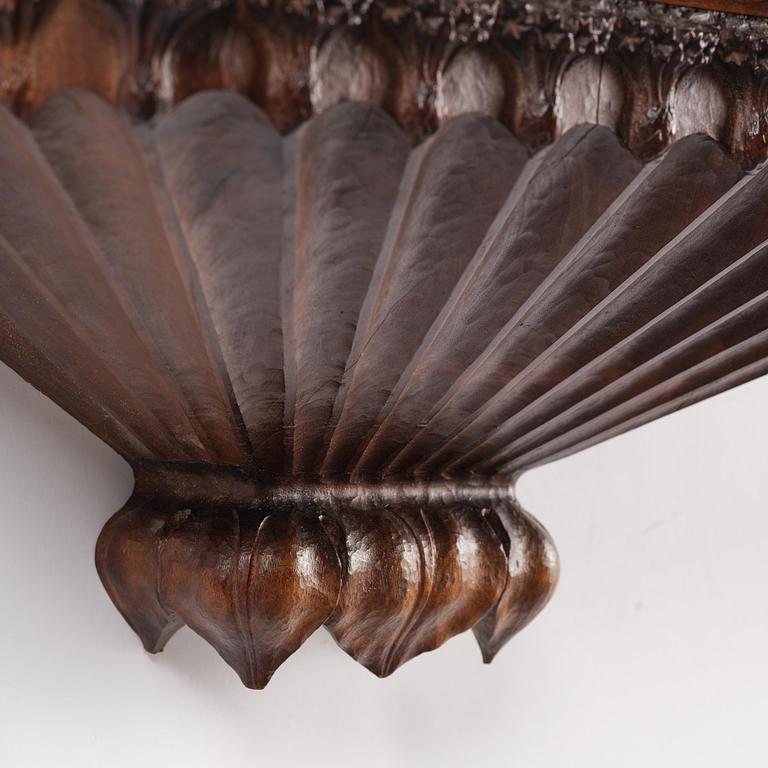
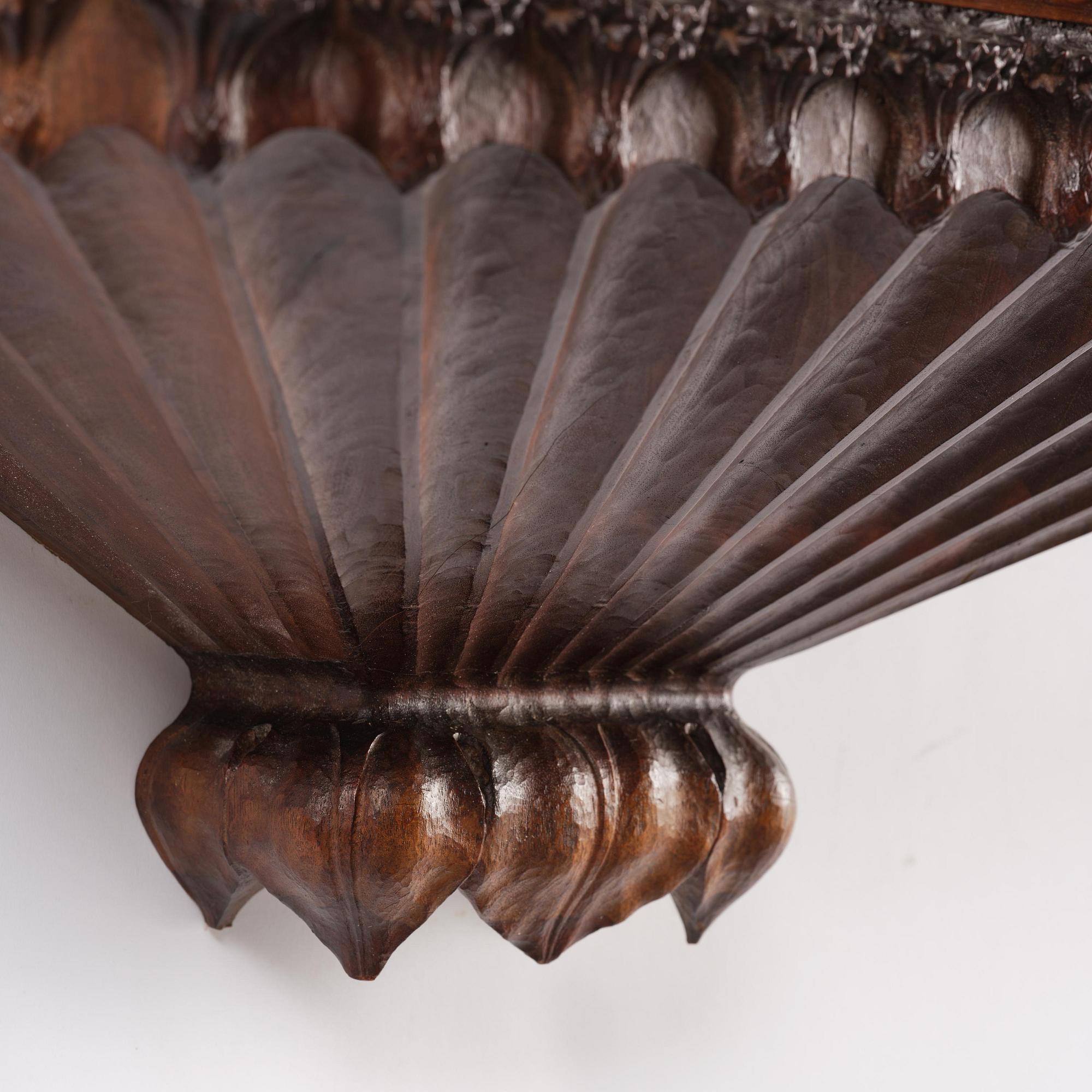
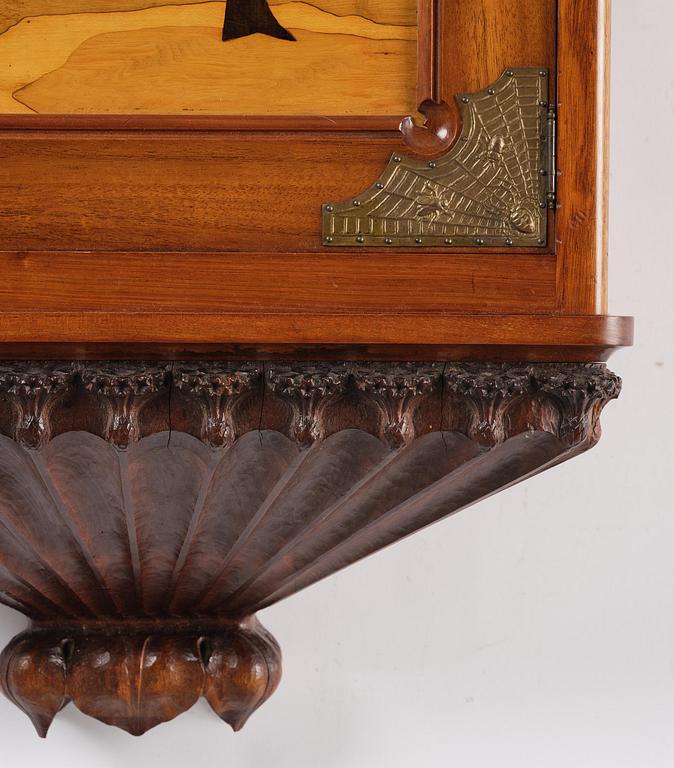
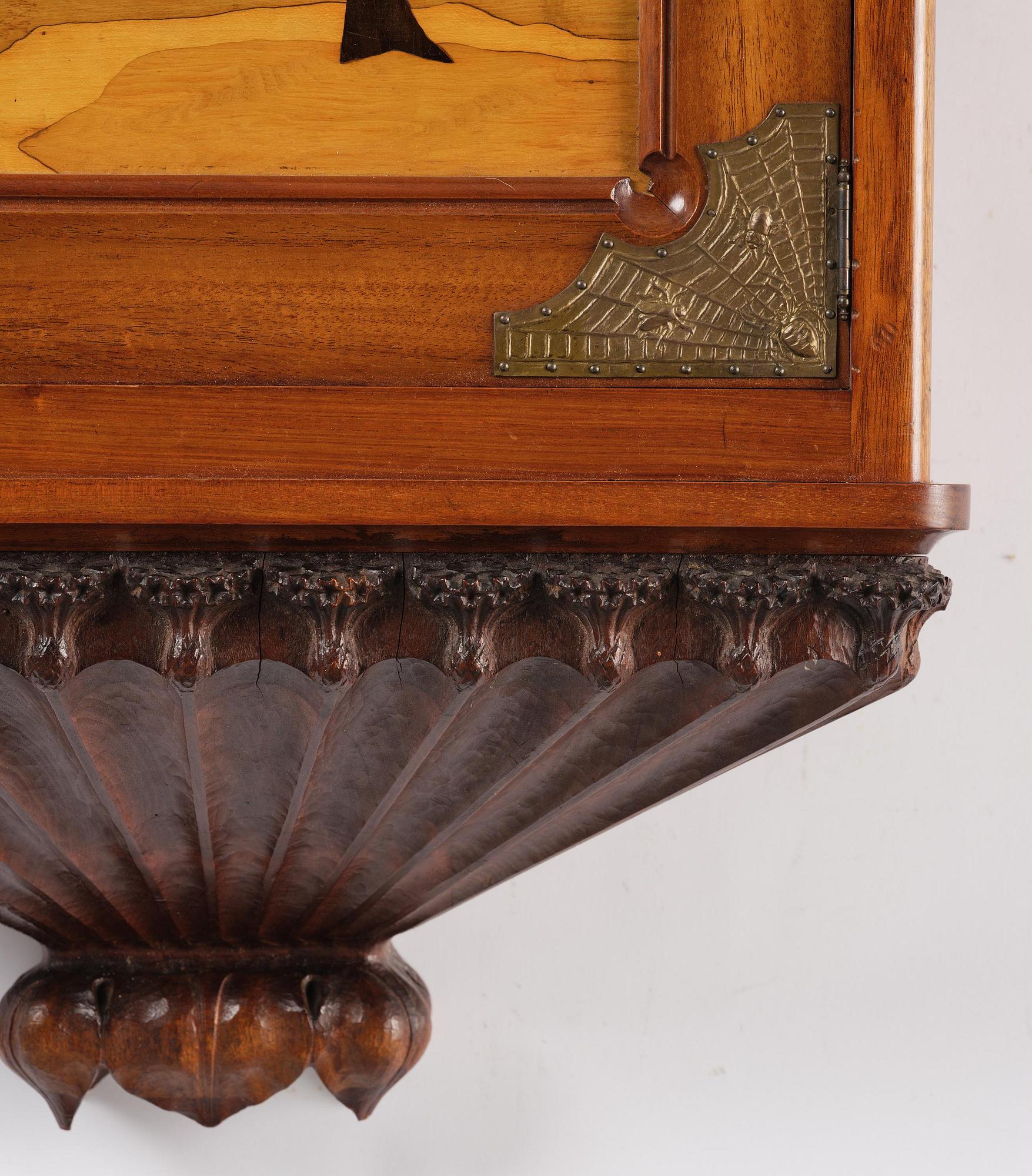
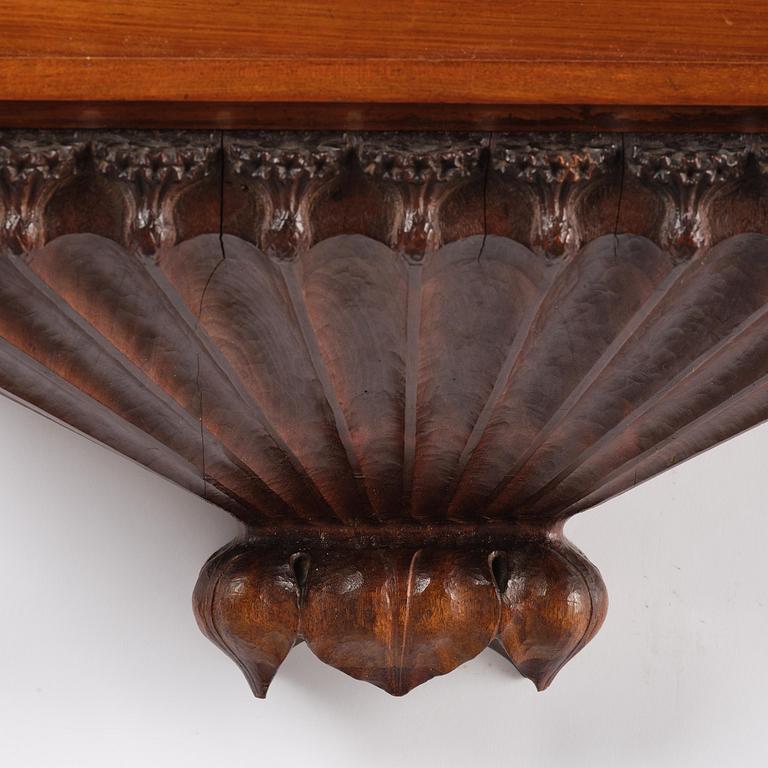
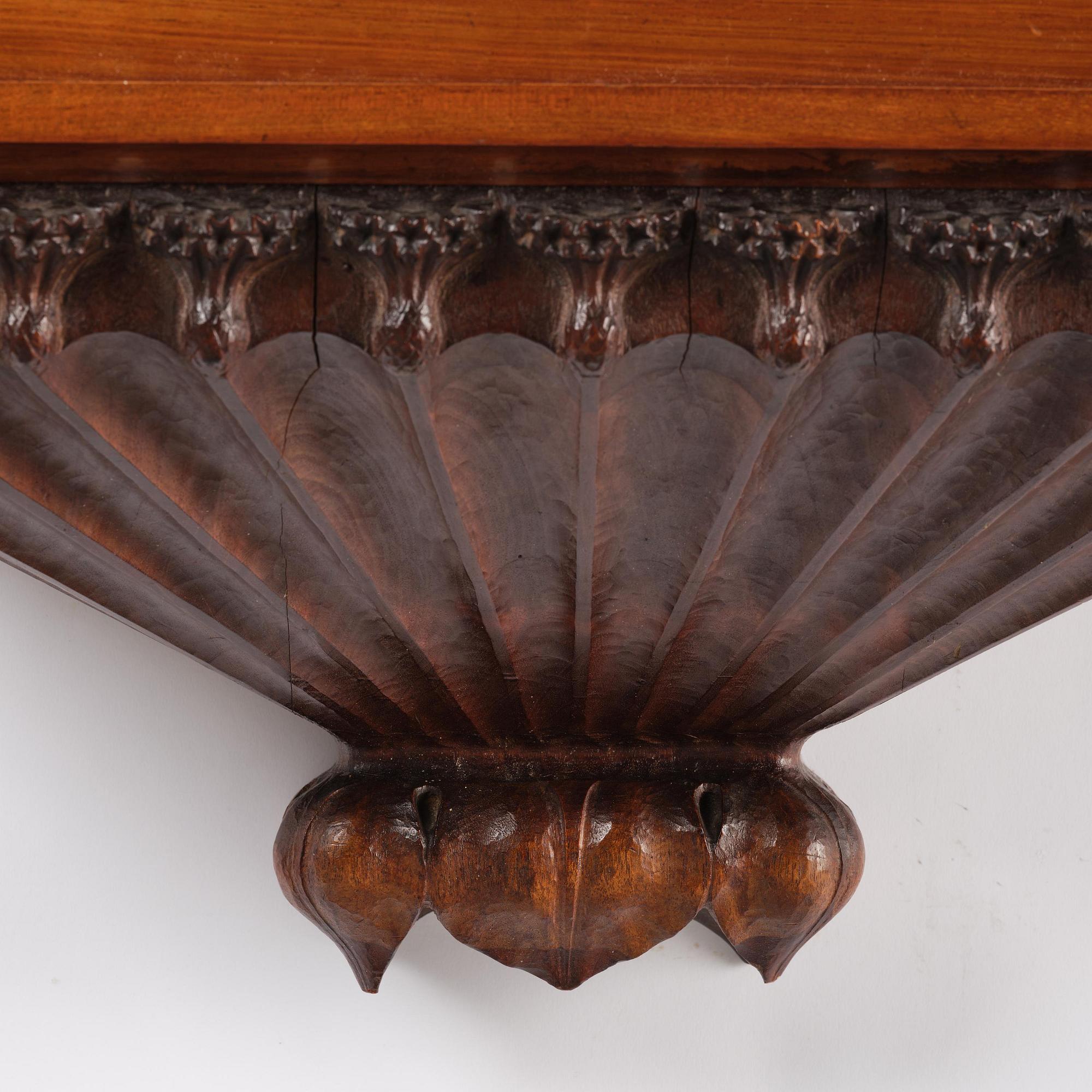
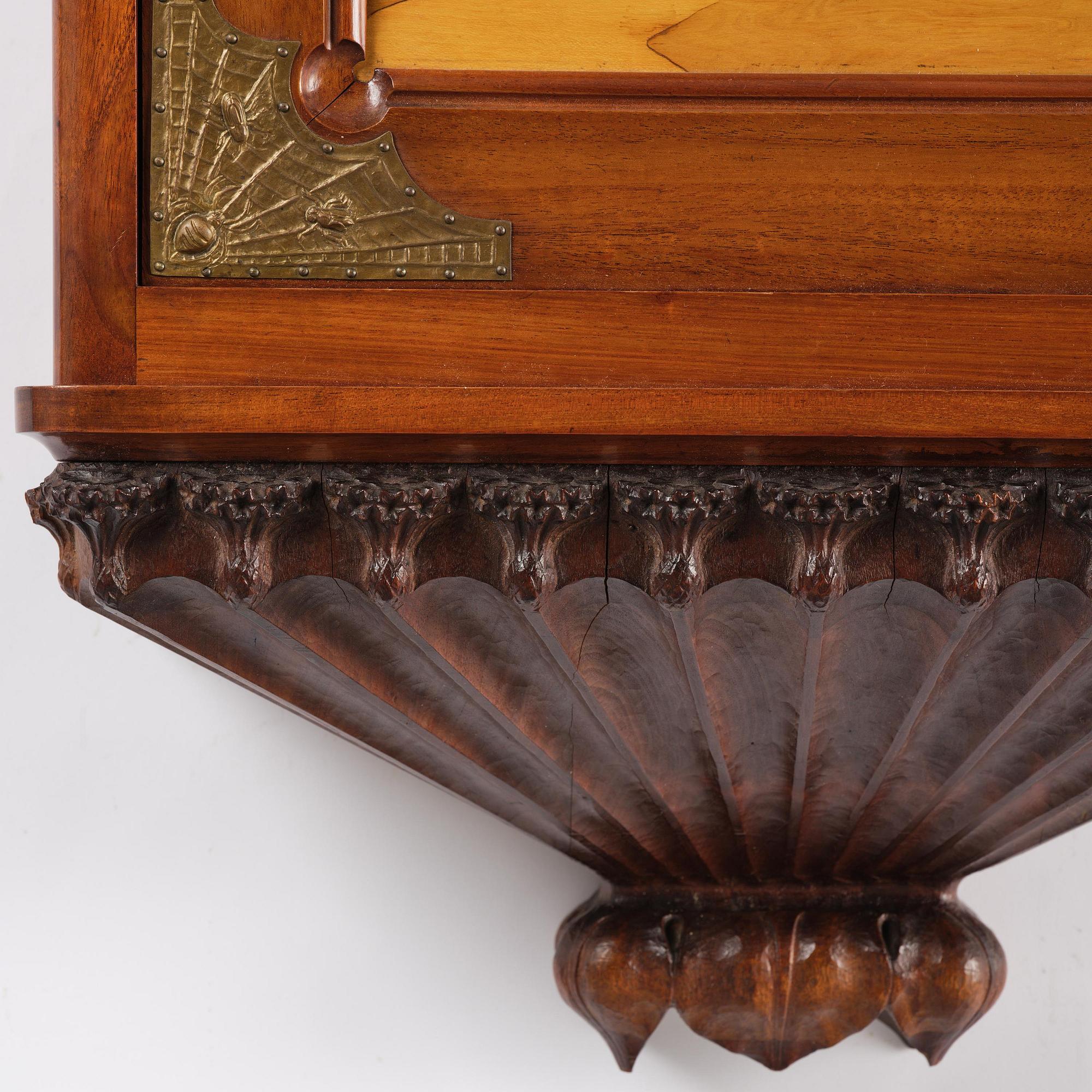
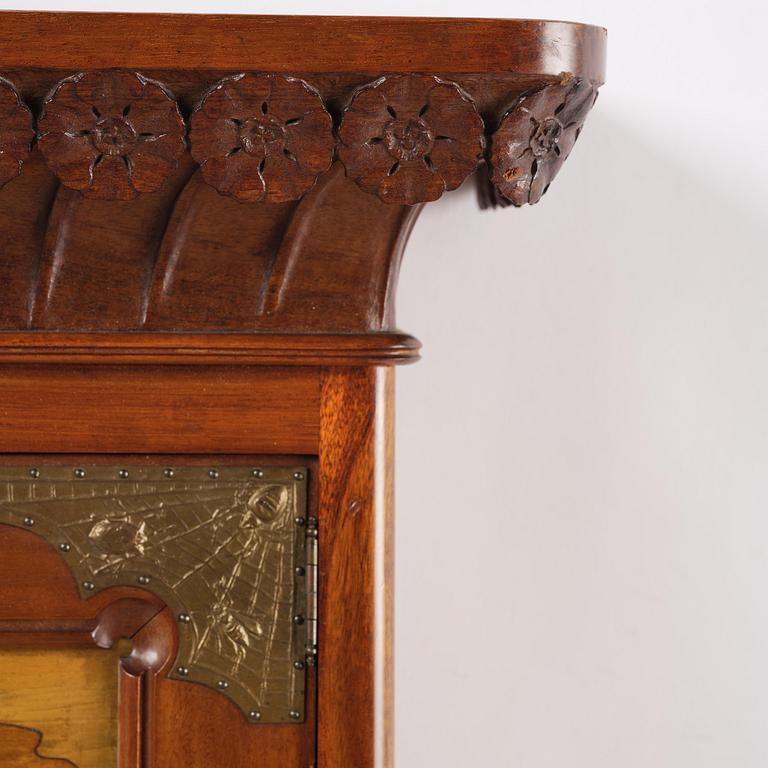
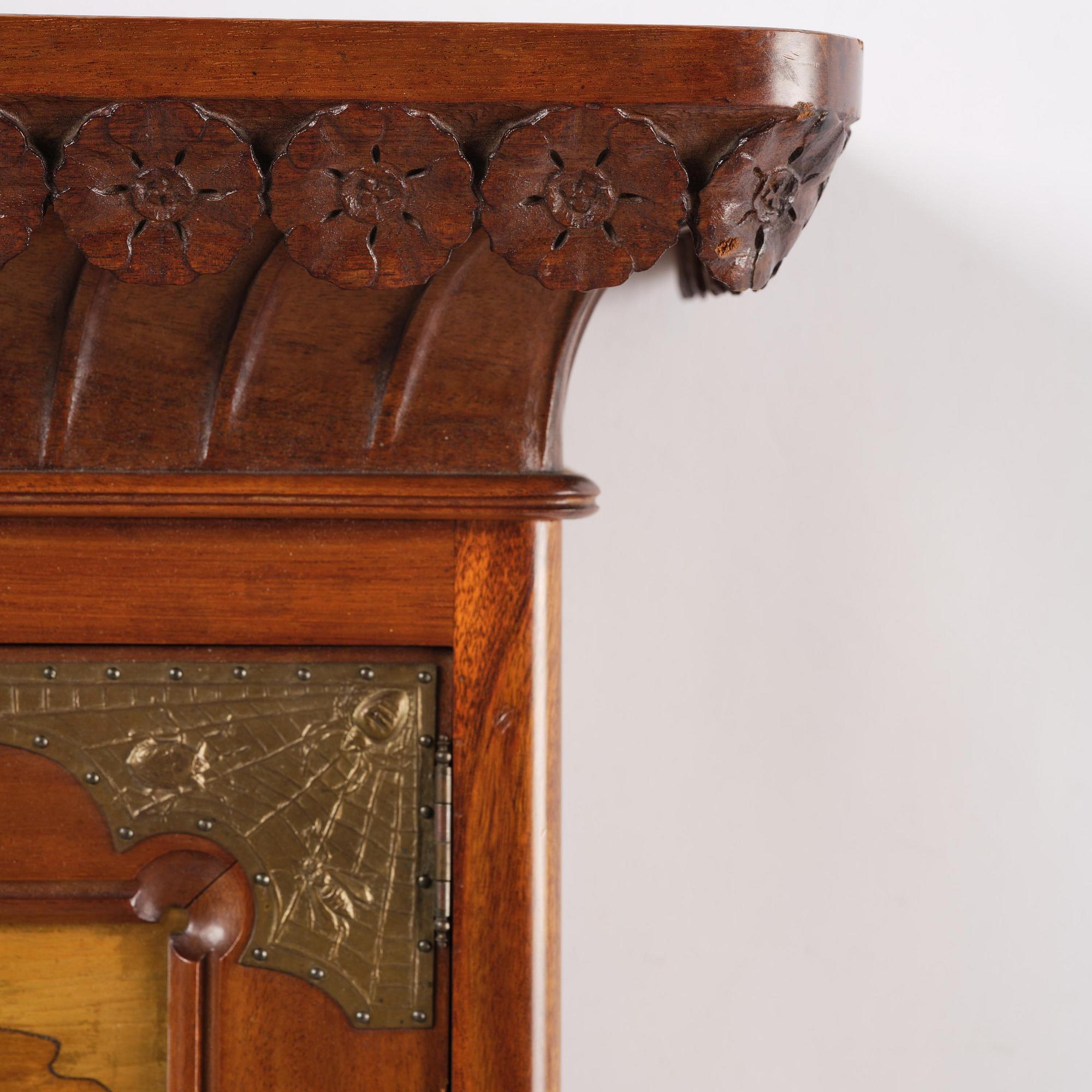
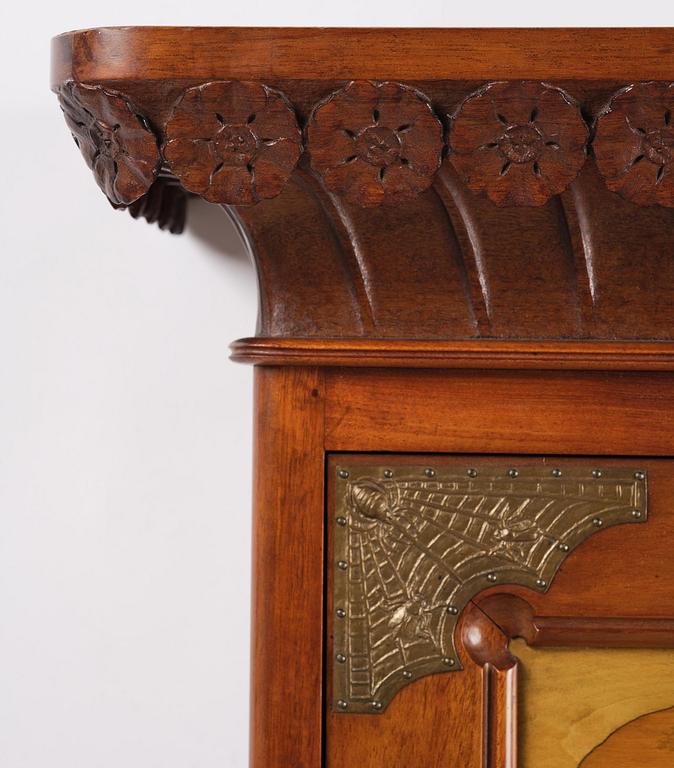
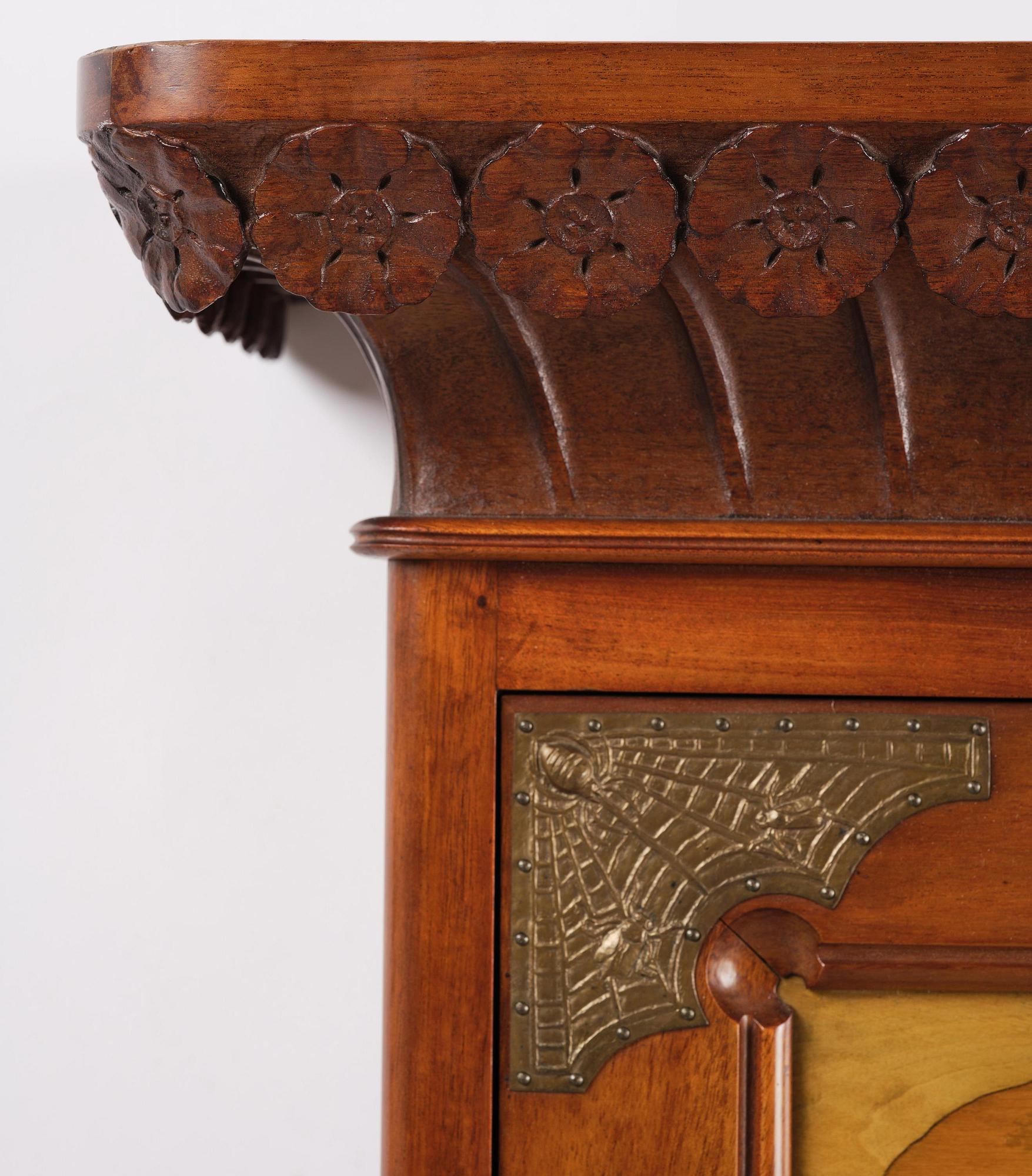
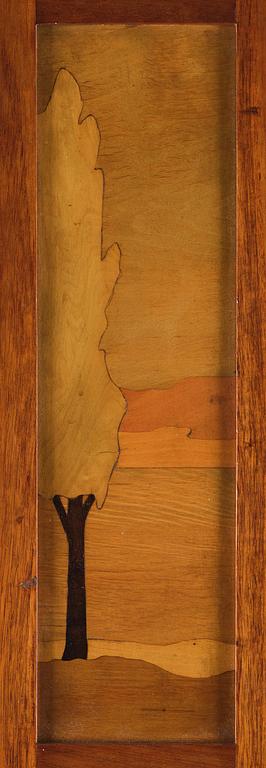
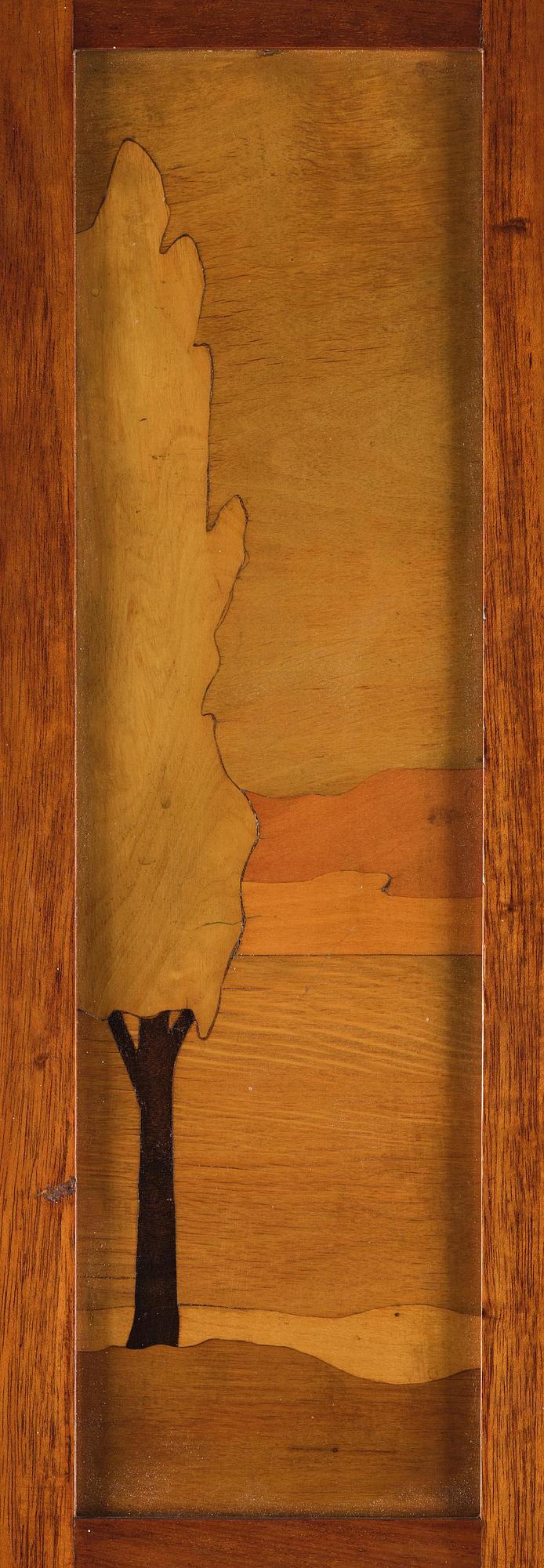
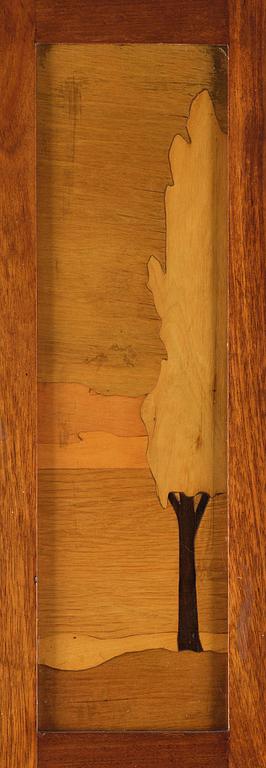
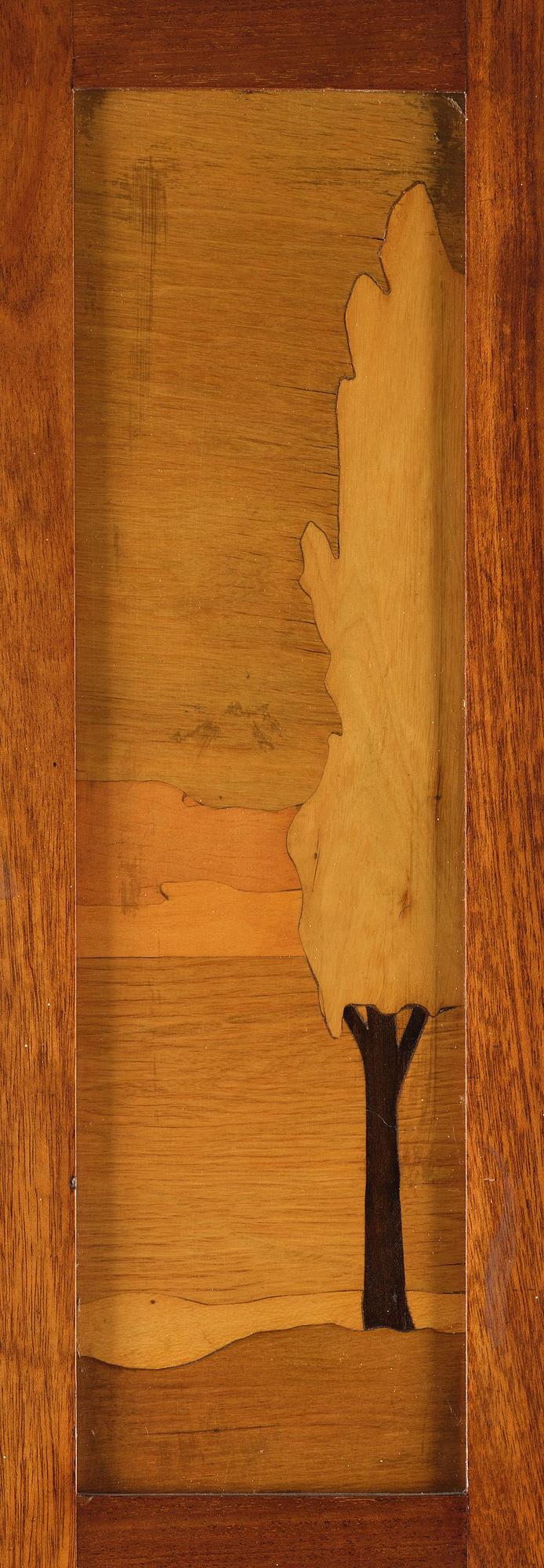
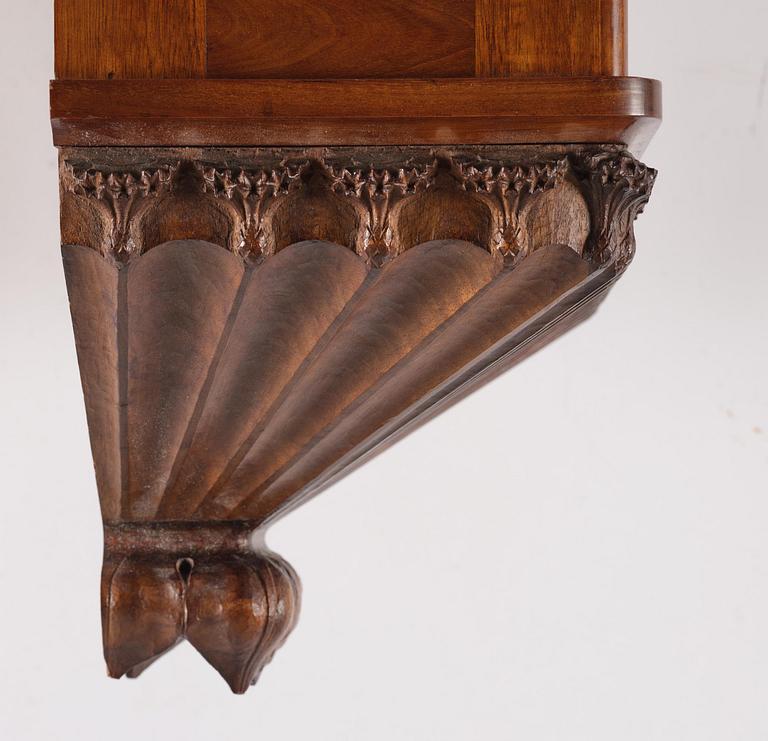
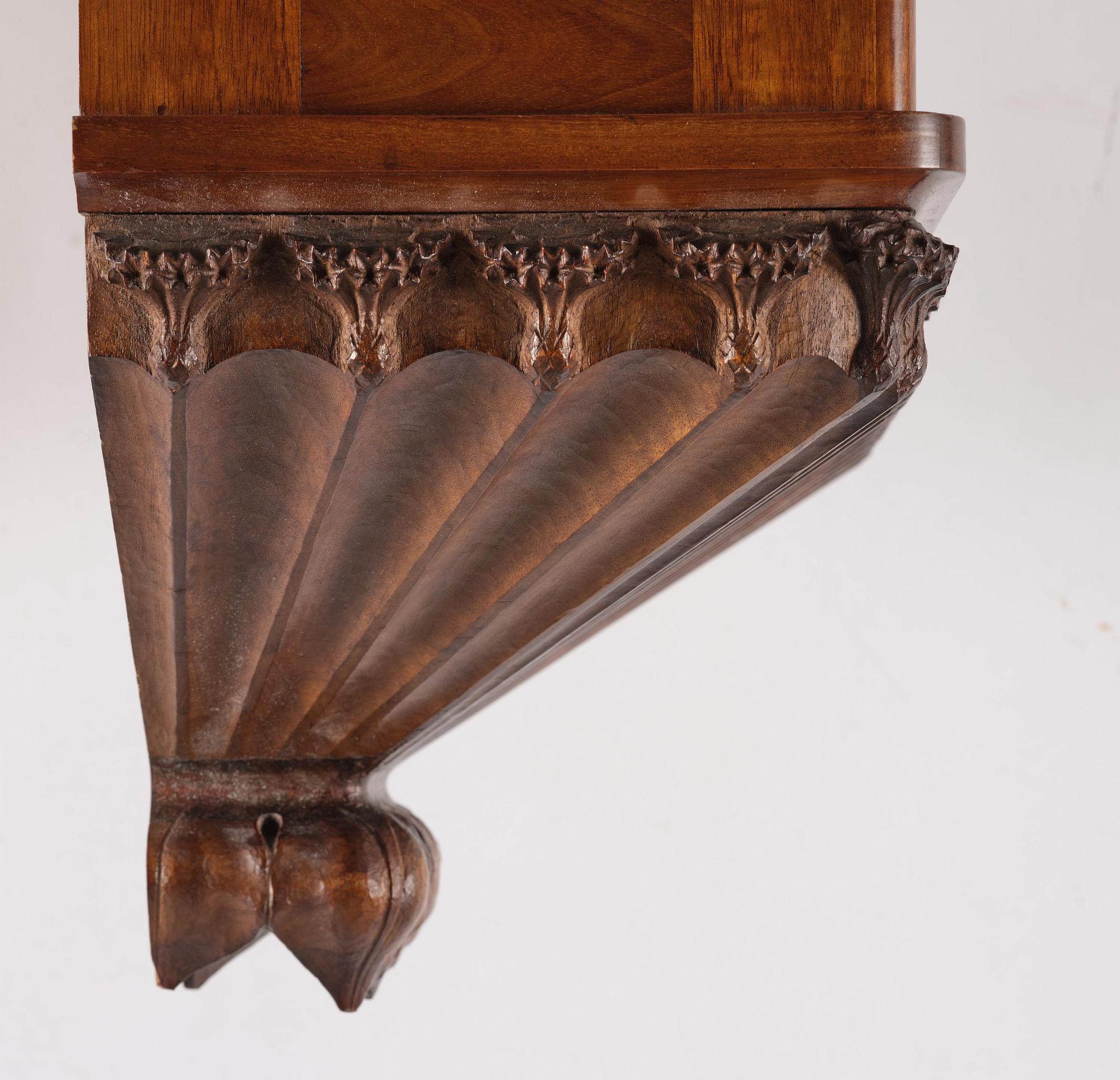
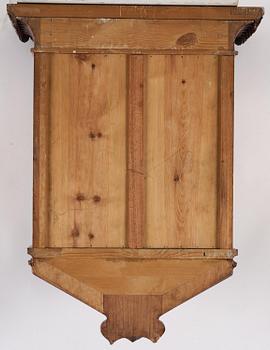
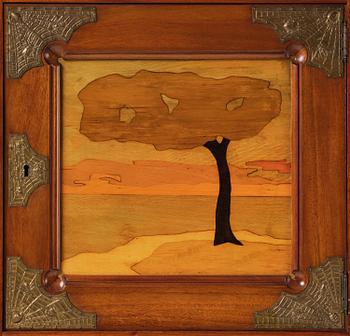
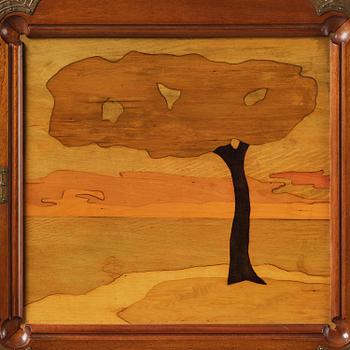
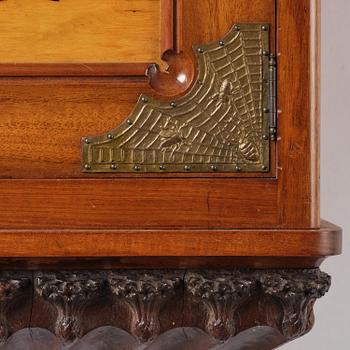
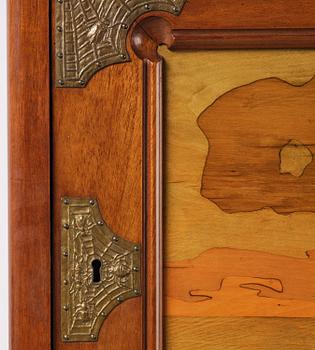
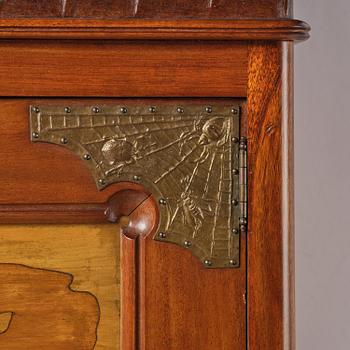
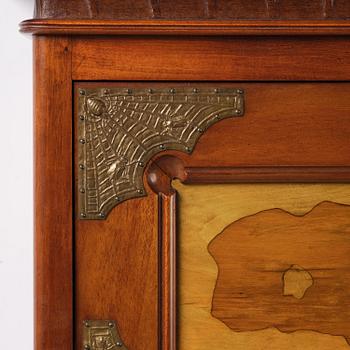
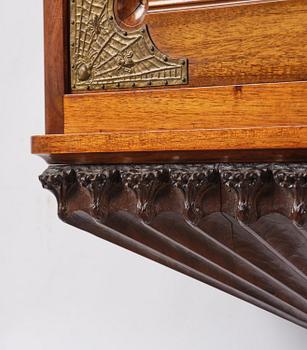
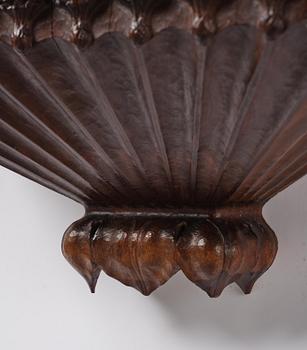
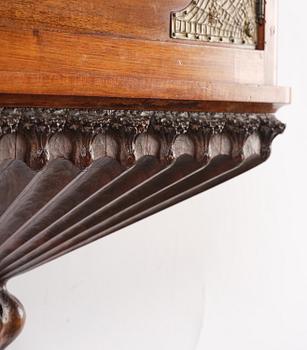
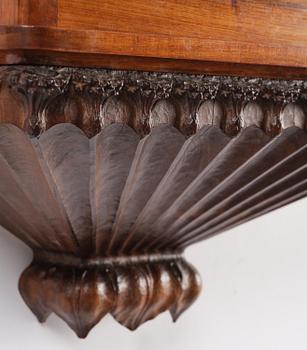
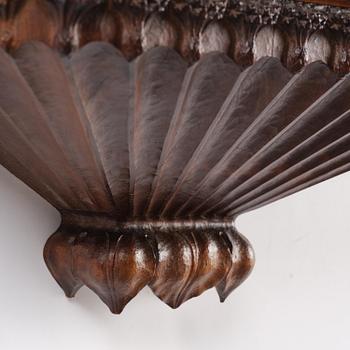
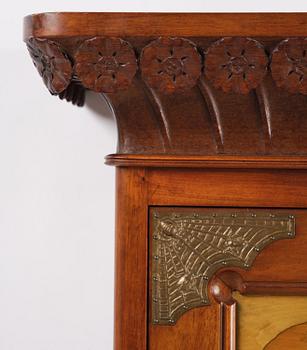
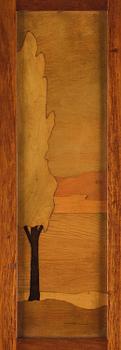
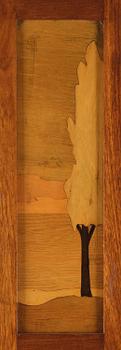
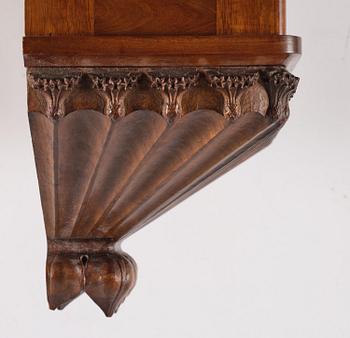
Mahogany and oak with marquetry in various woods, decorative elements of brass. Carved floral decoration to the crest and base, the door panel and sides with inlays in various woods depicting stylised landscapes, brass fittings decorated with cobweb motifs. Height 94 cm, width 70 cm, depth 32 cm.
Keys included.
More about Jugend/Art Nouveau
Jugend/Art Nouveau is a style dating from around the turn of the 20th century, approximately between 1890 and 1920. The movement emerged as a reaction against the prevailing imitations of historical styles, with the ambition of creating a style for a new era. Its starting point was the Arts and Crafts movement’s ideas about an artistically conceived Gesamtkunstwerk. In Austria, the style corresponded to the Sezession, a group of radical artists. There, it was more geometric in expression. In France and England, the style was known as Art Nouveau, meaning “new art”. Jugend is characterised by flowing lines and vegetatively inspired decoration. Organic, winding plant forms and depictions of nature, fruit, slender female figures and asymmetry were common.
Read moreFor condition report contact specialist

What will the transport cost?
Others have also viewed