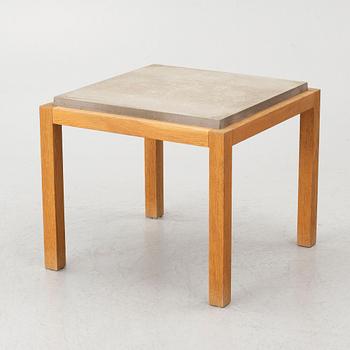
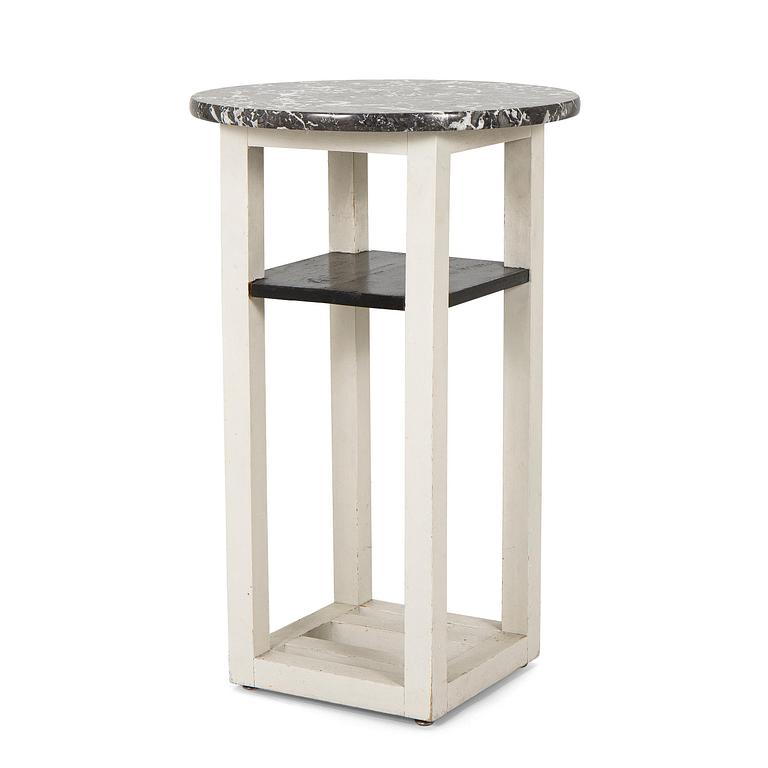
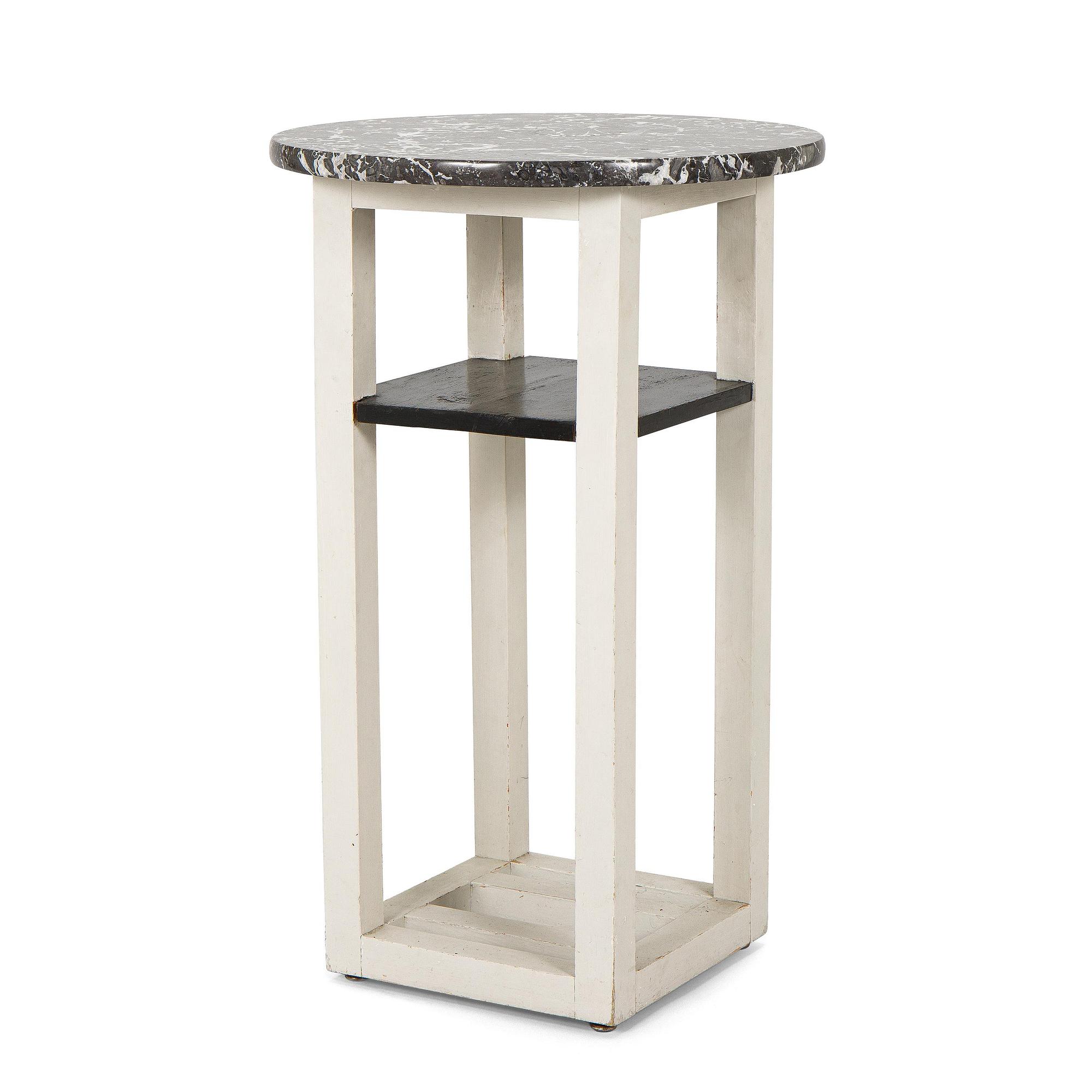
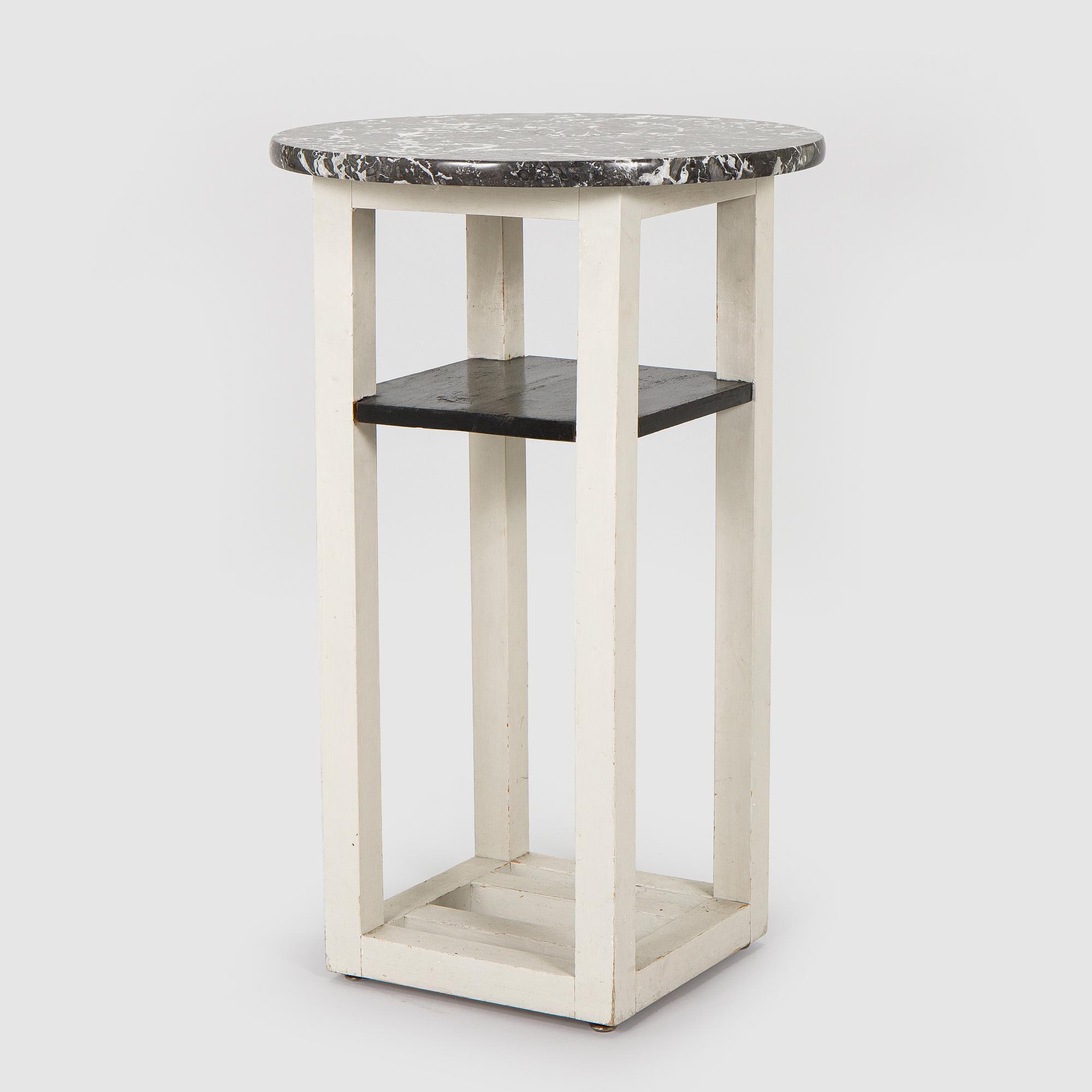
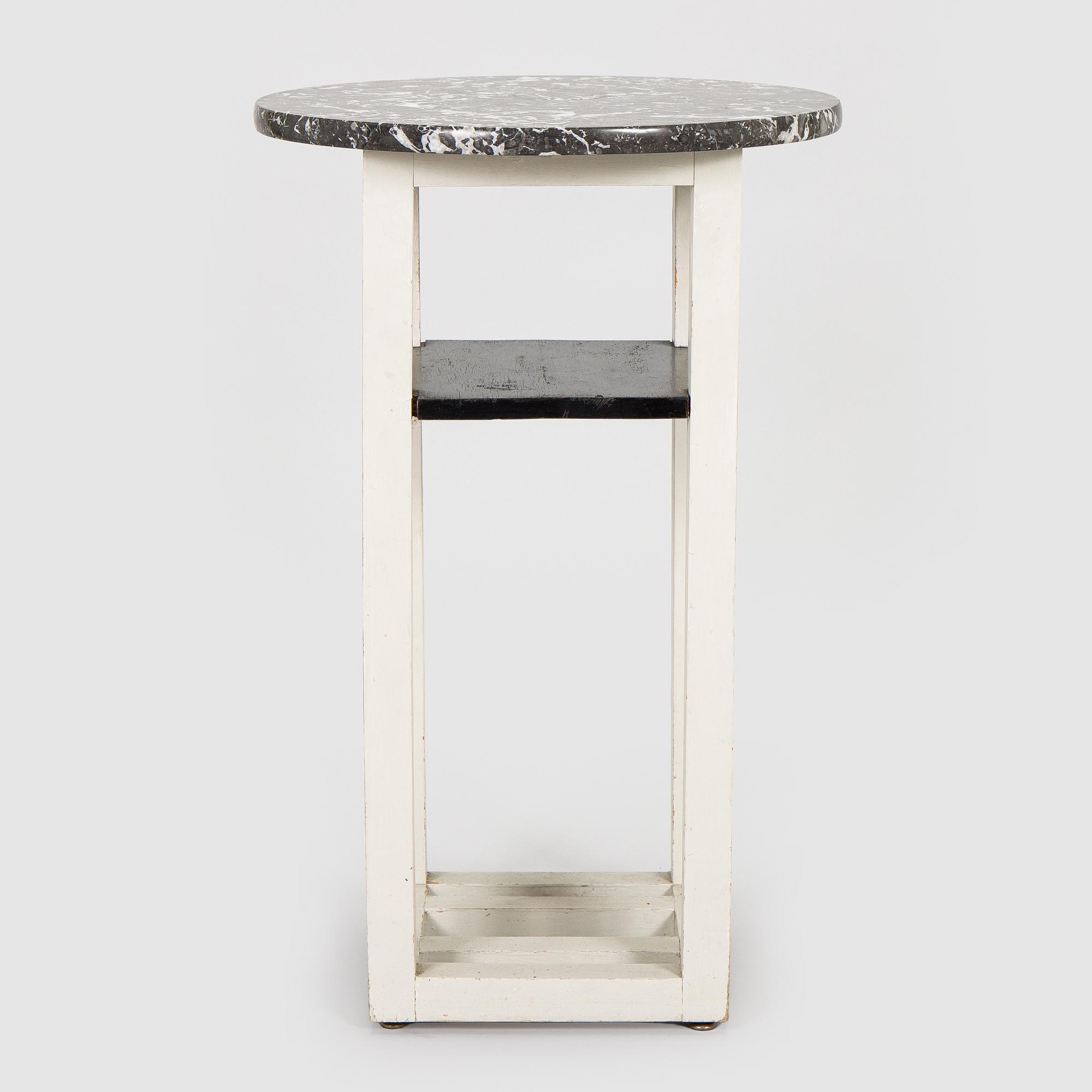
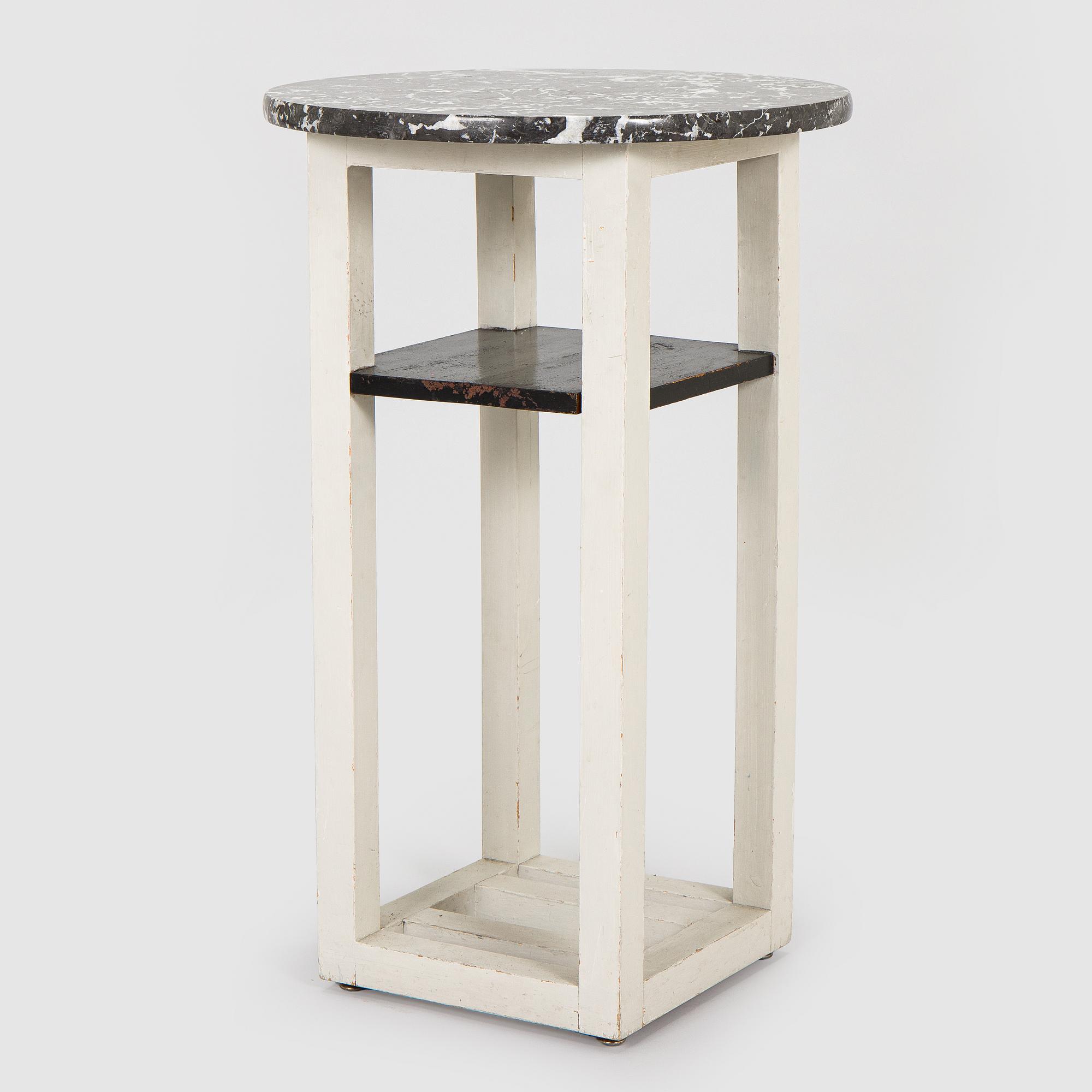
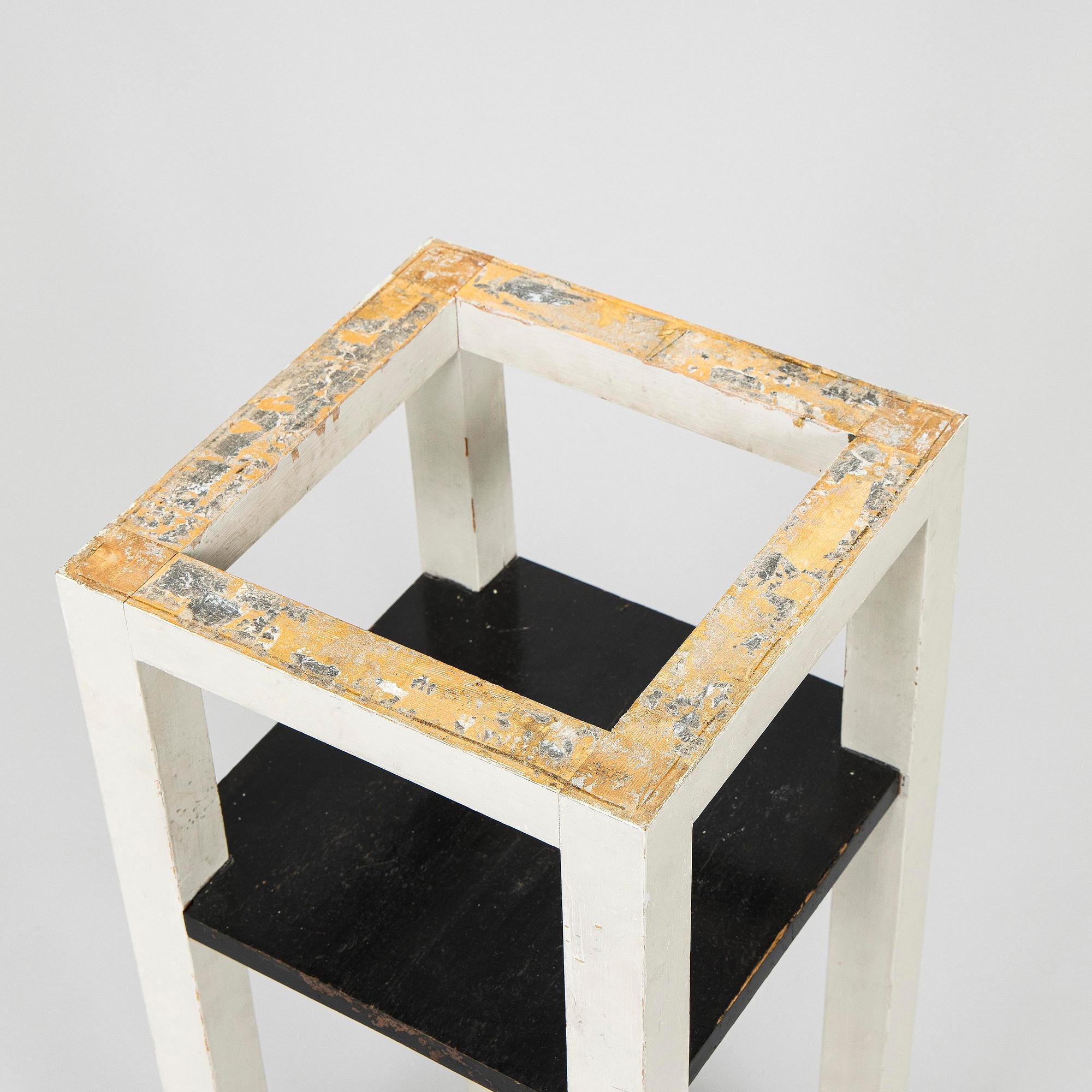
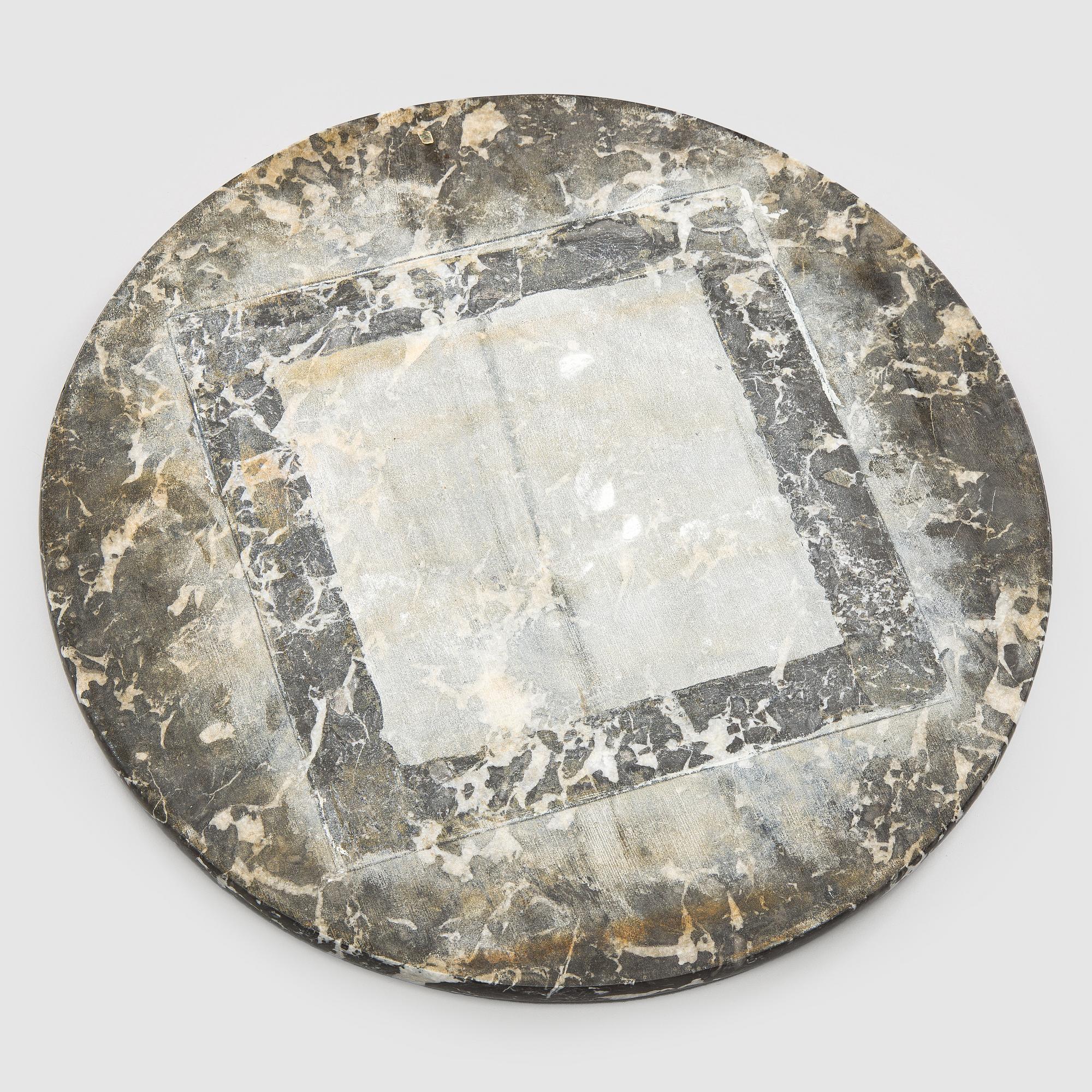
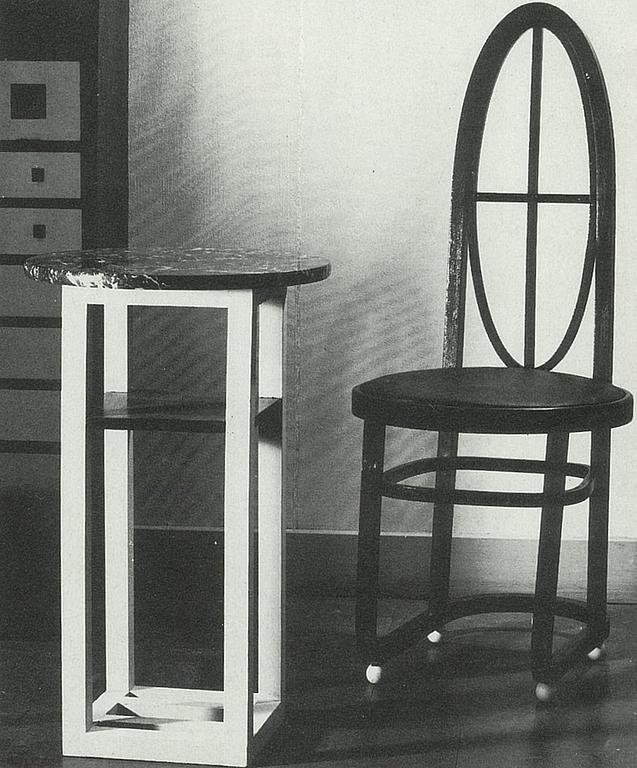
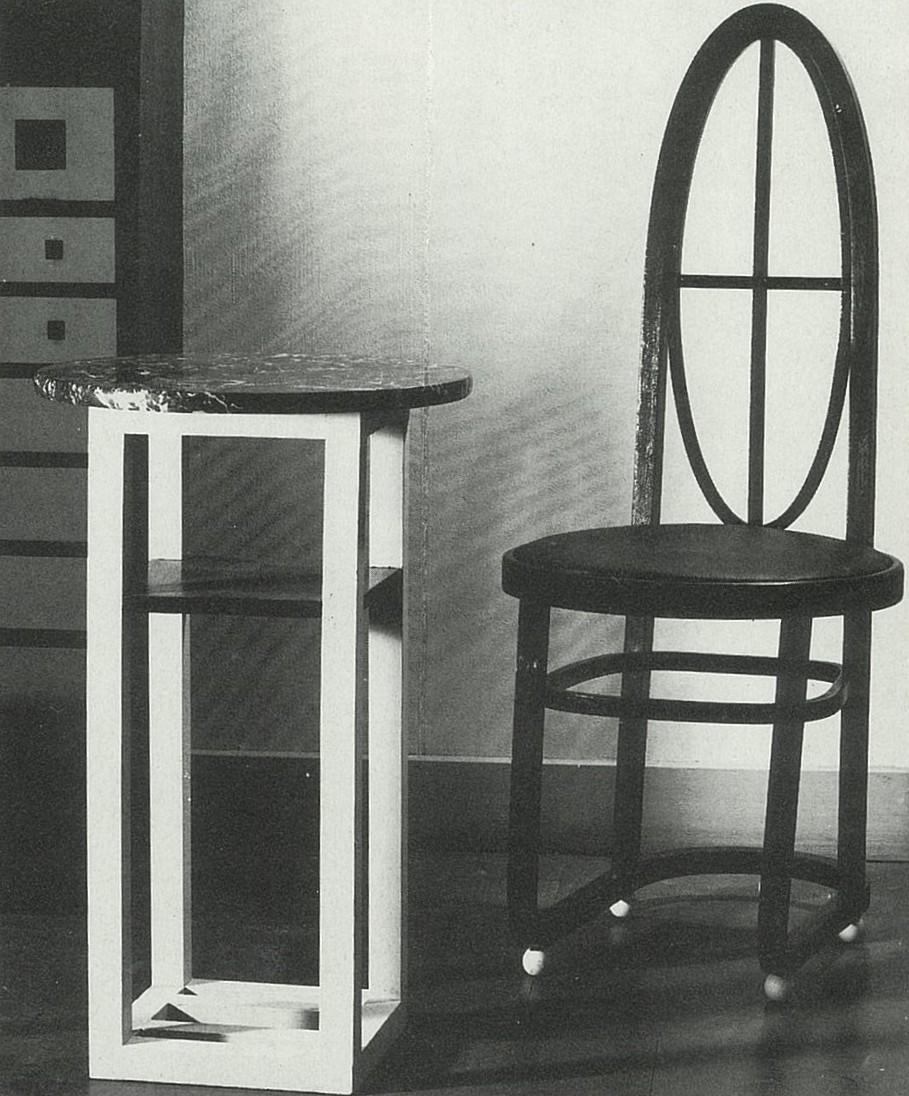
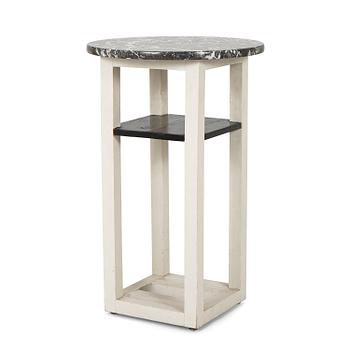
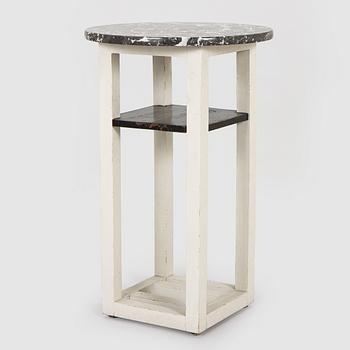
A bedside table, executed by Chamberts Möbelfabrik, Norrköping, 1905, for architect Carl Bergsten’s own residence.
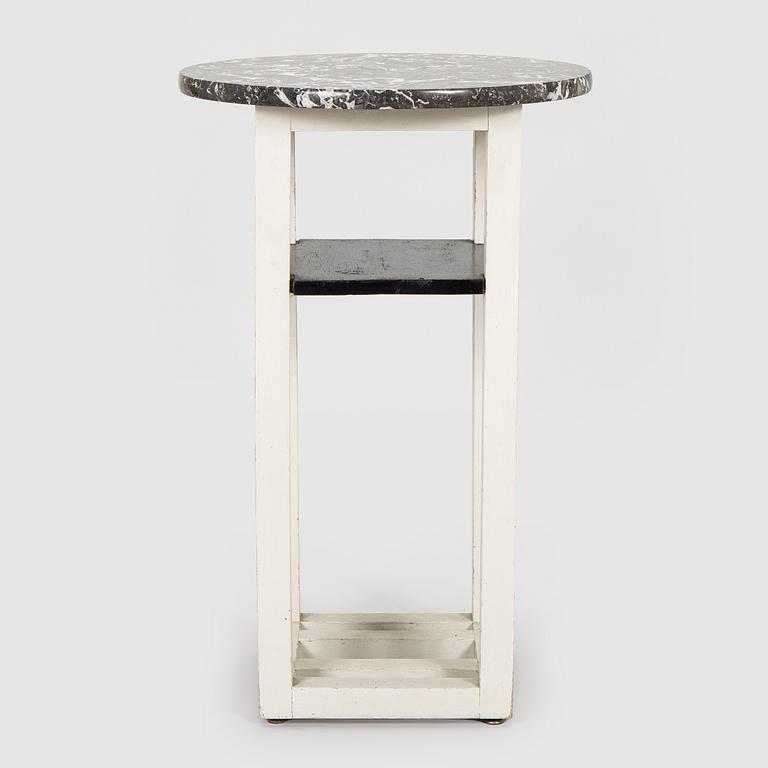
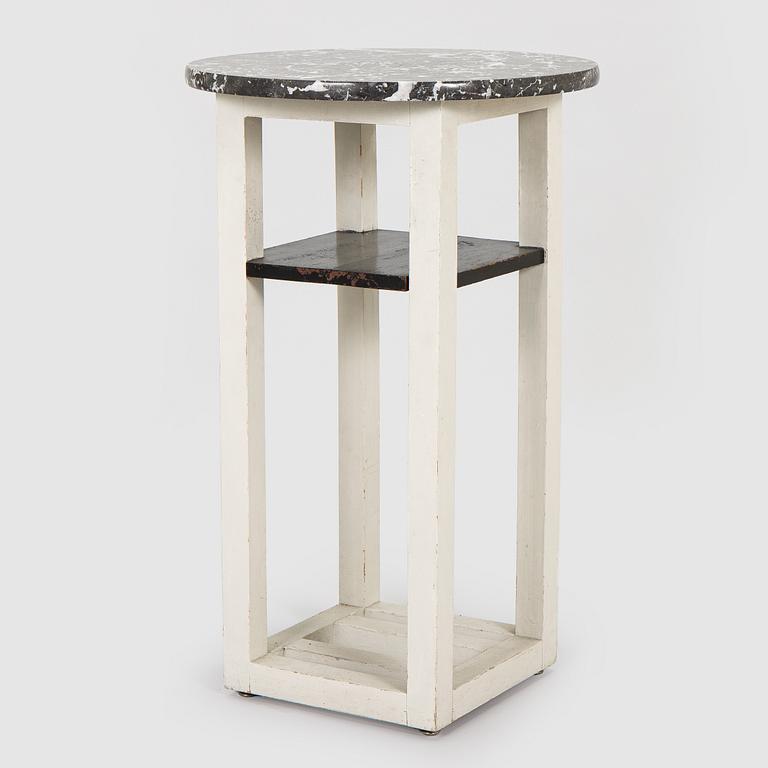
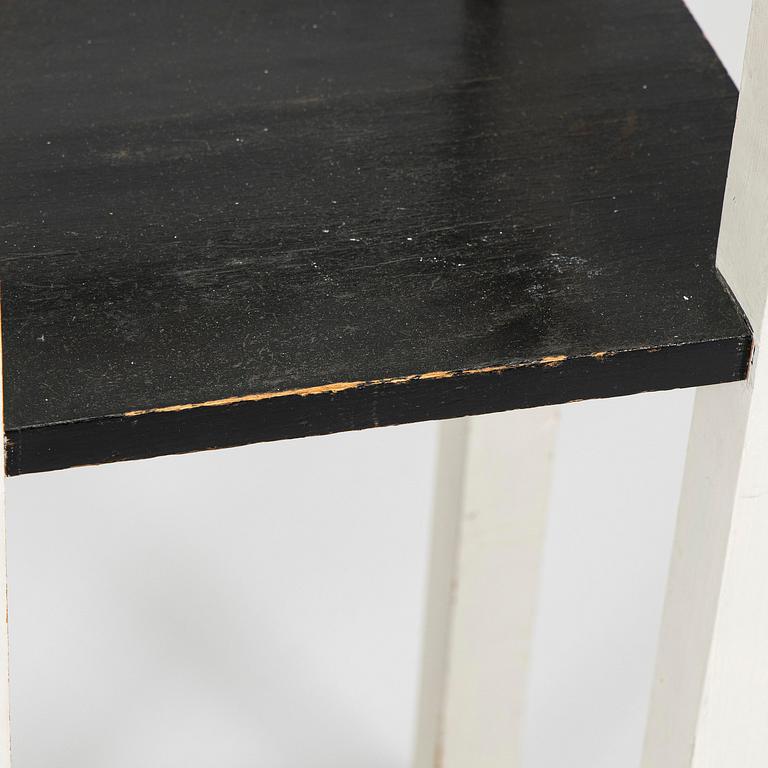
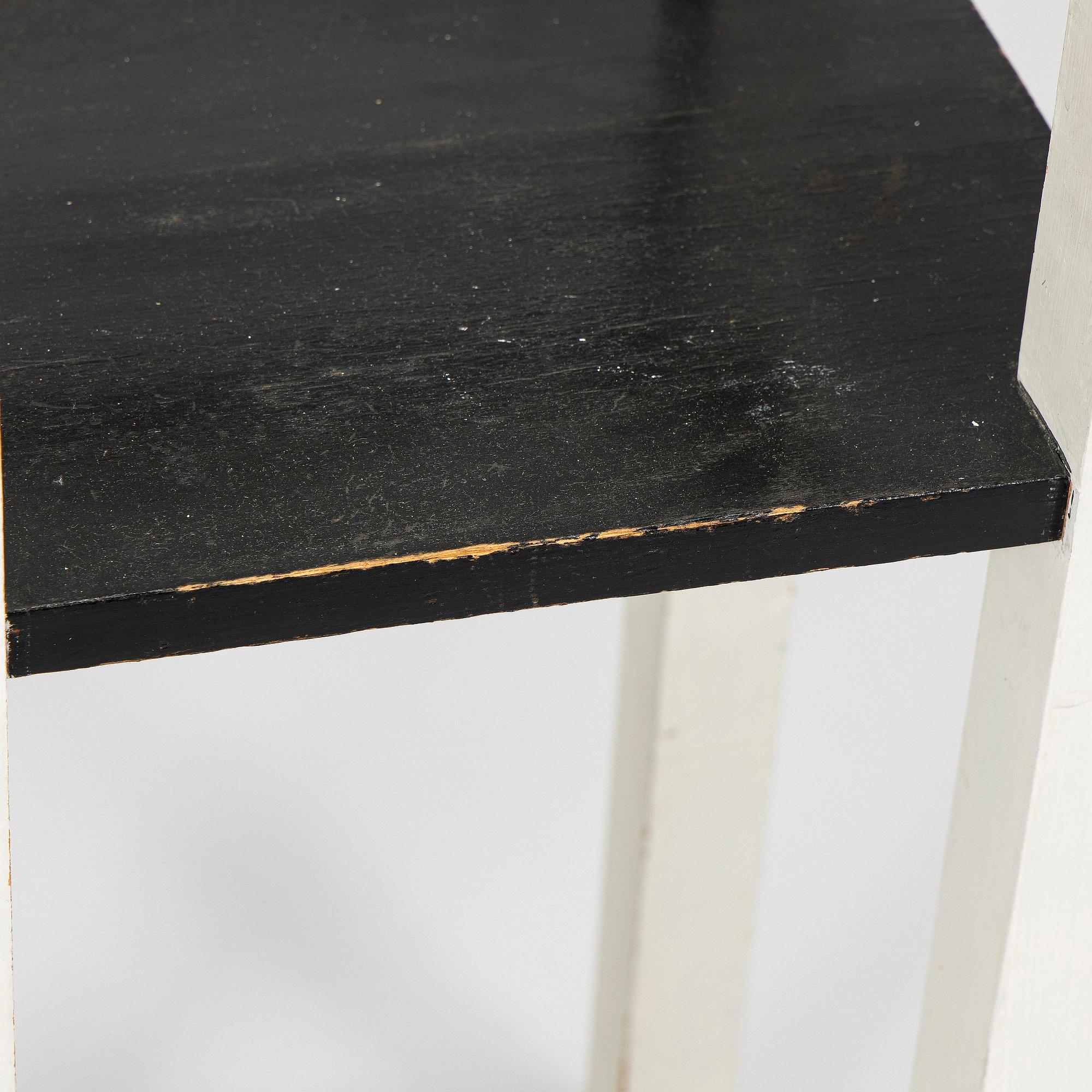
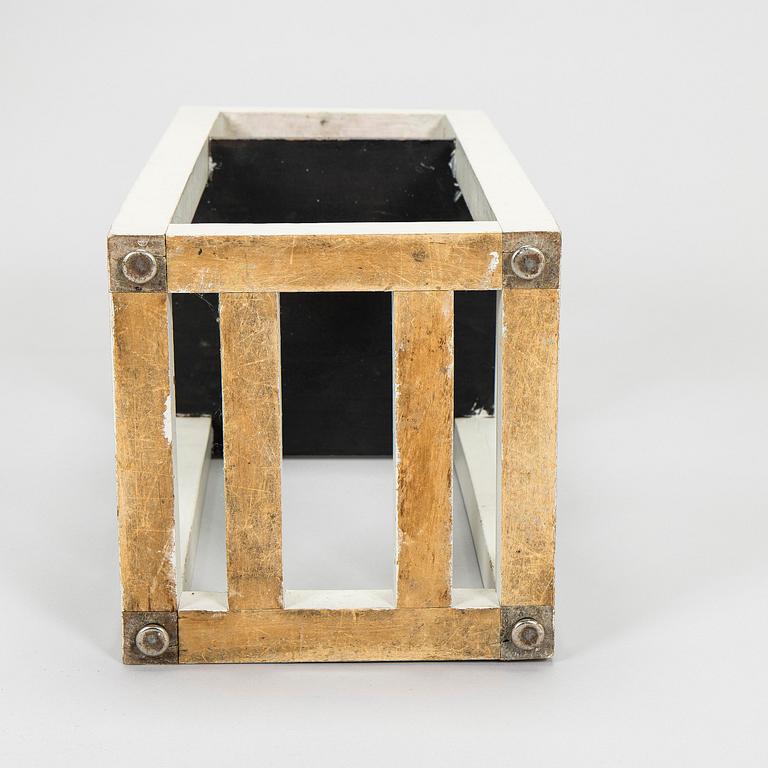
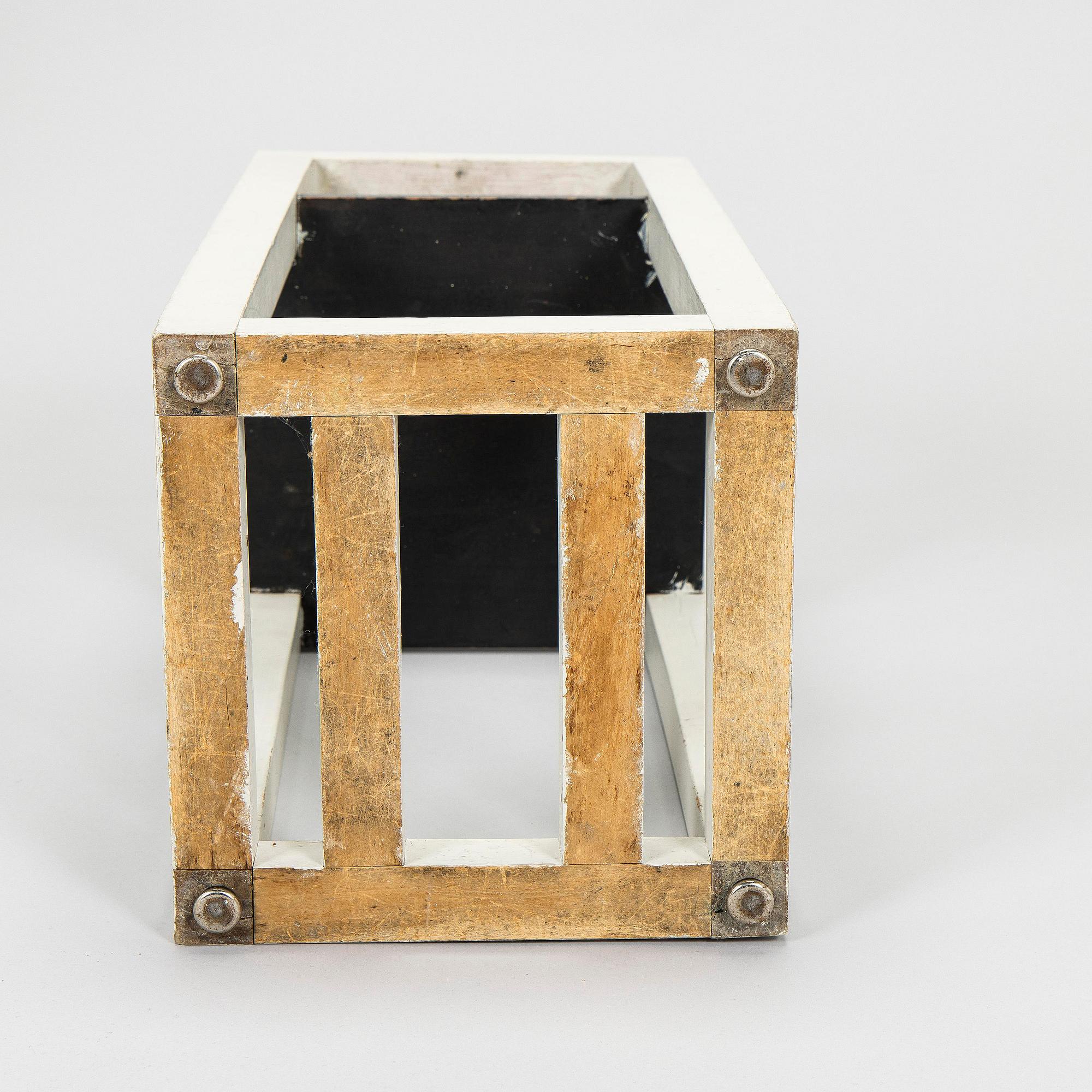
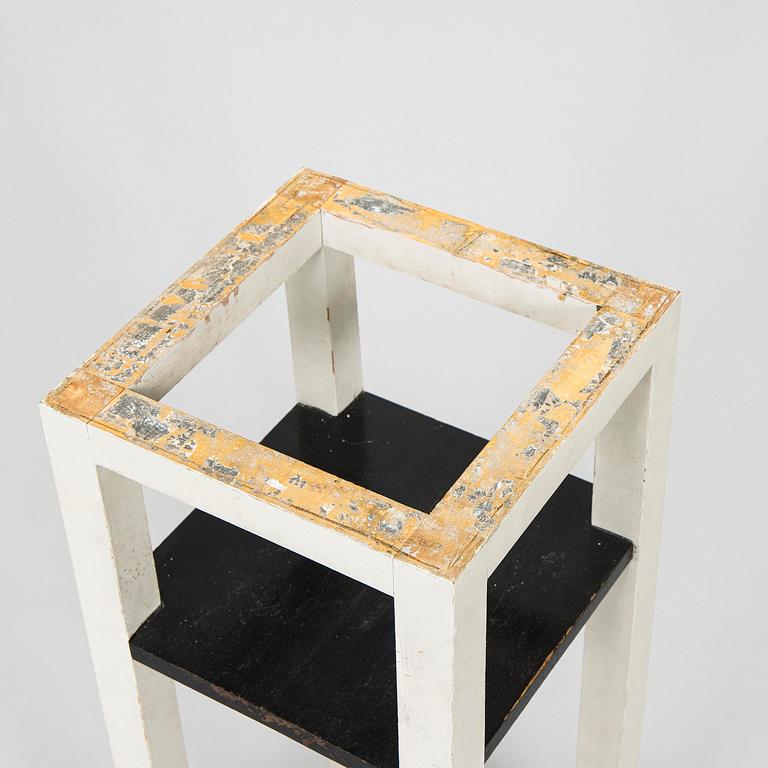
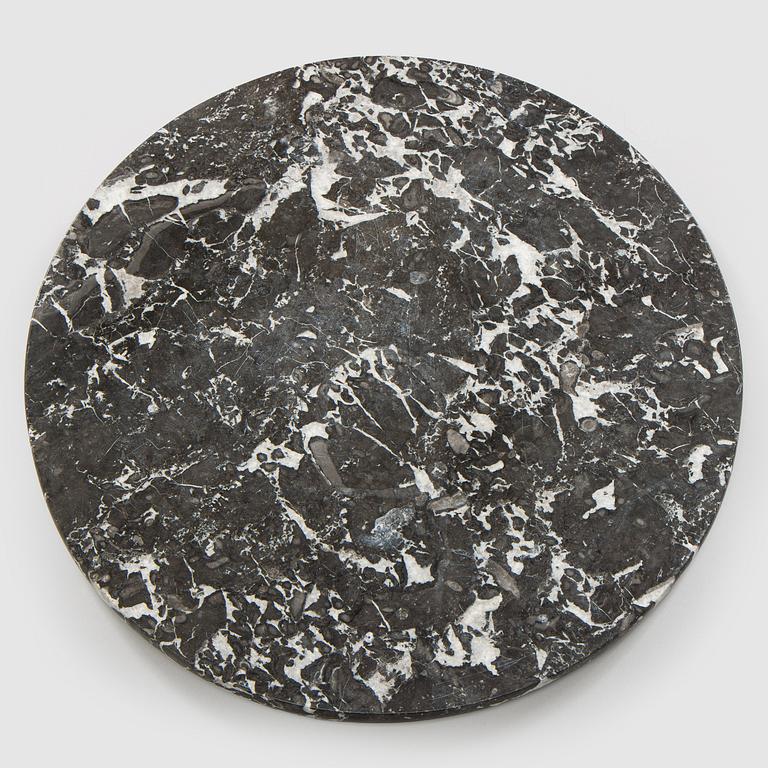
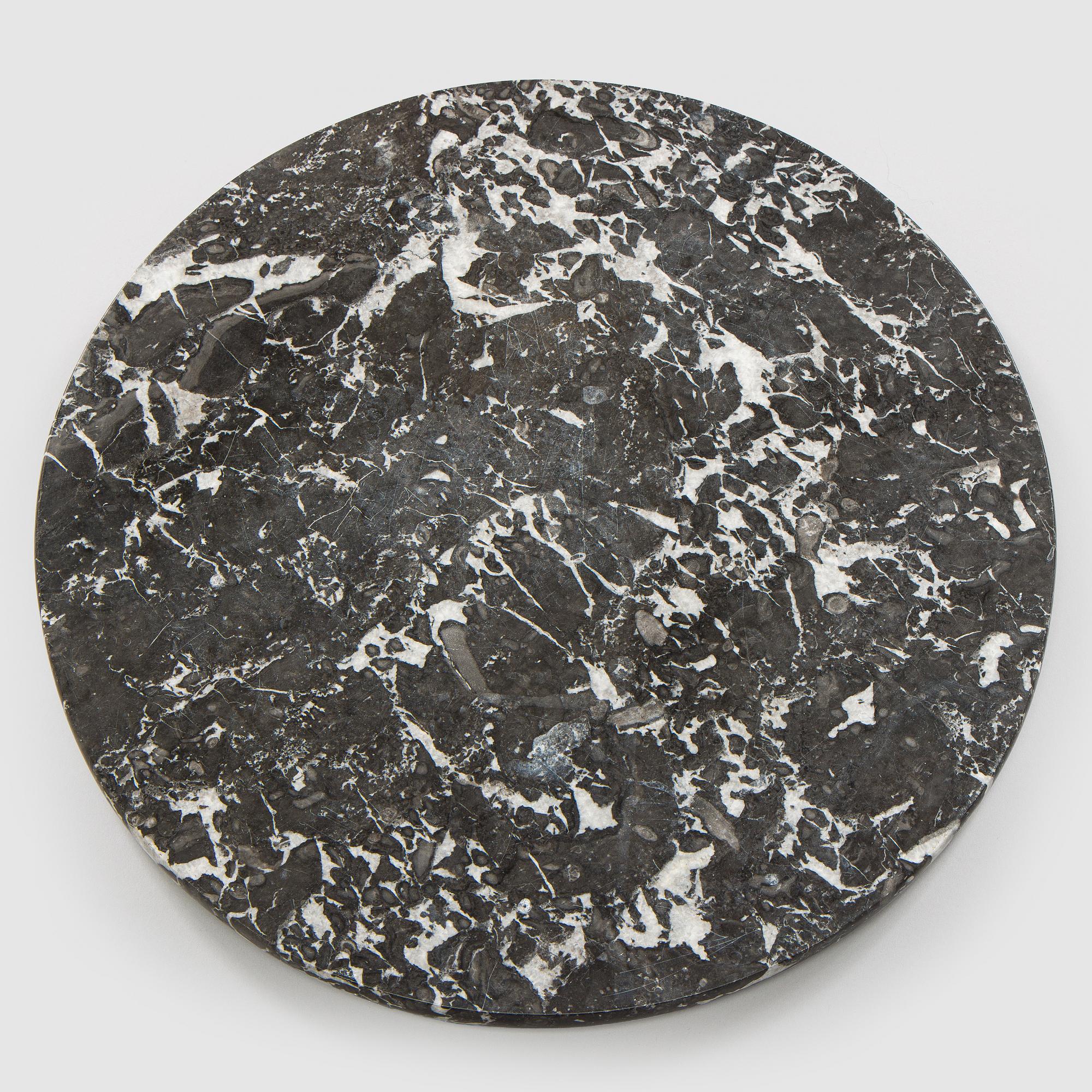
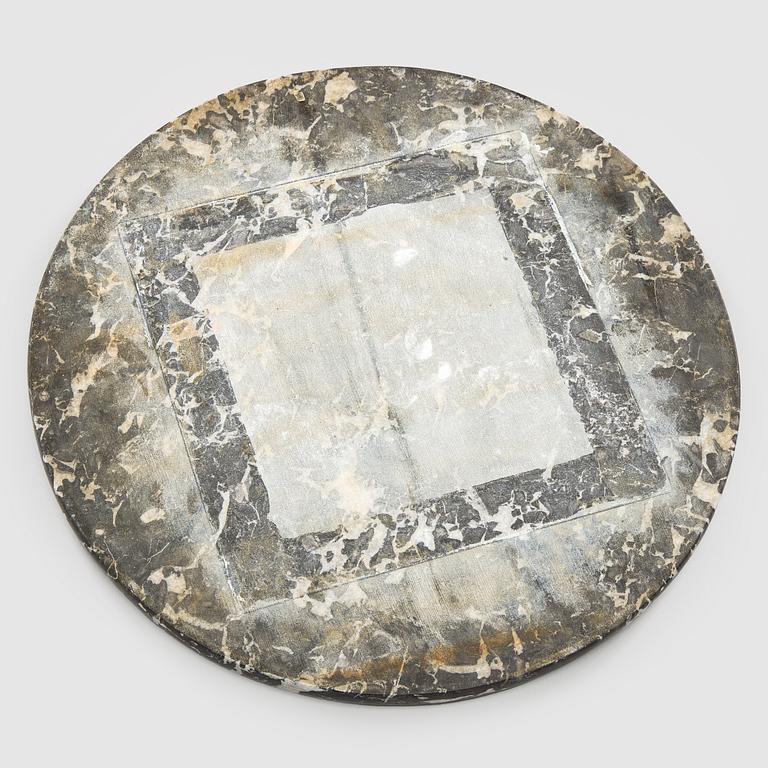
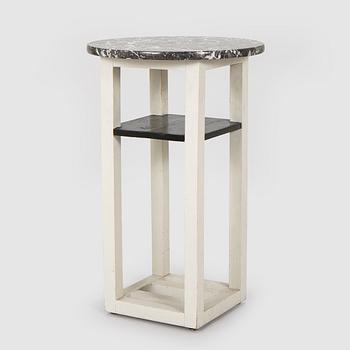
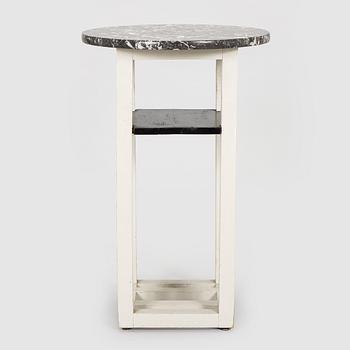
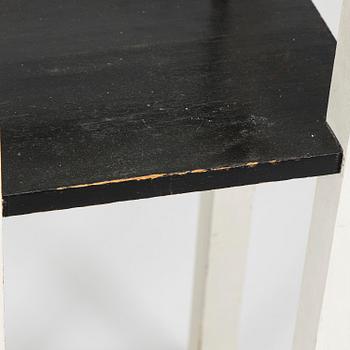
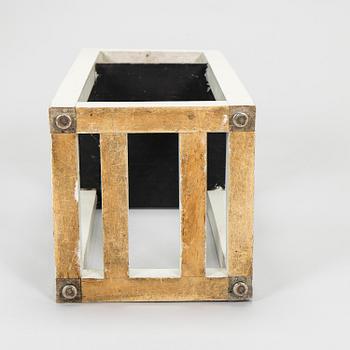
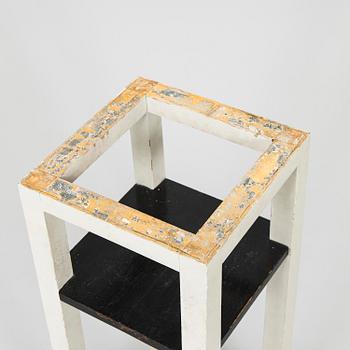
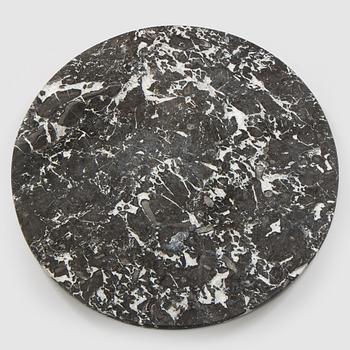
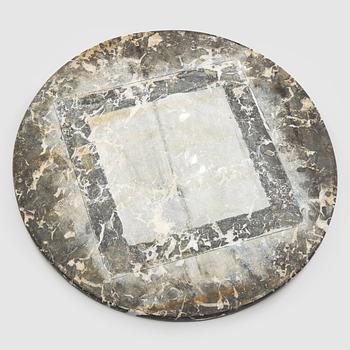
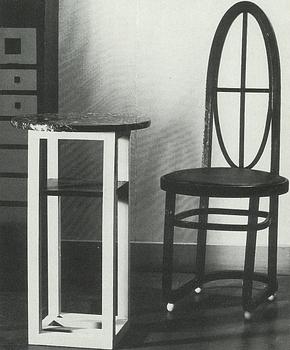
One of only two tables executed. Round marble top, square leg frame with a birch shelf, painted in light grey and black. Height 71 cm, diameter 45 cm.
Wear, later paint, the stone top with minor chips to edges.
Provenance
Architect Carl Bergsten (1879–1935), thence by descent within the family.
Bukowski Auktioner, Moderna Höstauktionen 2005, lot no. 437.
Private collection, Finland.
Exhibitions
Nordiska Museet, Stockholm, “Svensk Jugend”, 22 February–31 August 1964.
Literature
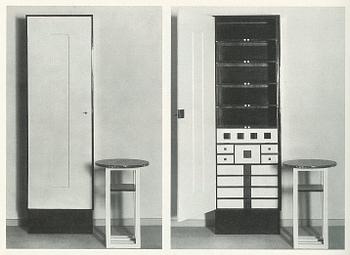
Monica Boman (ed.), “Svenska Möbler 1890-1990”, Signum 1991, the present table illustrated pp. 84 and 99 (incorrect caption).
Lena Wik, “Carl Bergsten och hans möbelformgivning”, 60-page paper, Department of Art History at Stockholm University, spring term 1993, illustrated p. 10.
Bengt OH Johansson, “Med egna vågor om Carl Bergsten arkitekt 1879-1935”, Arkitektur Förlag 2019, illustrated p. 184.
More information
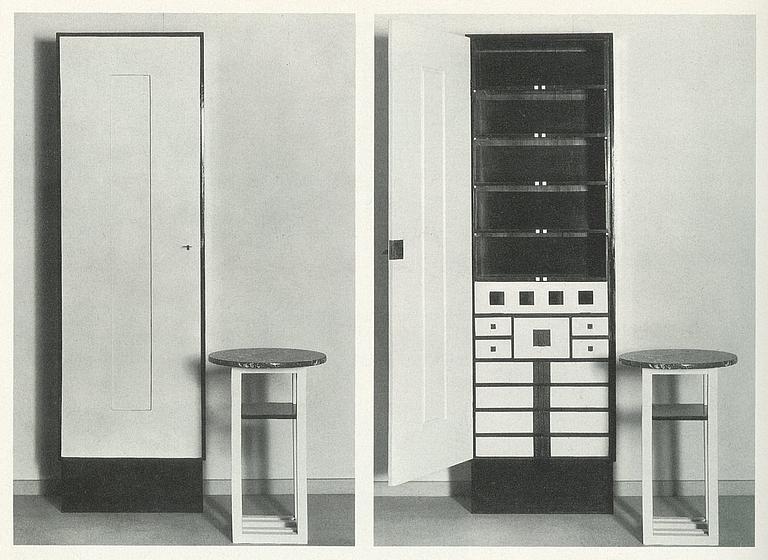
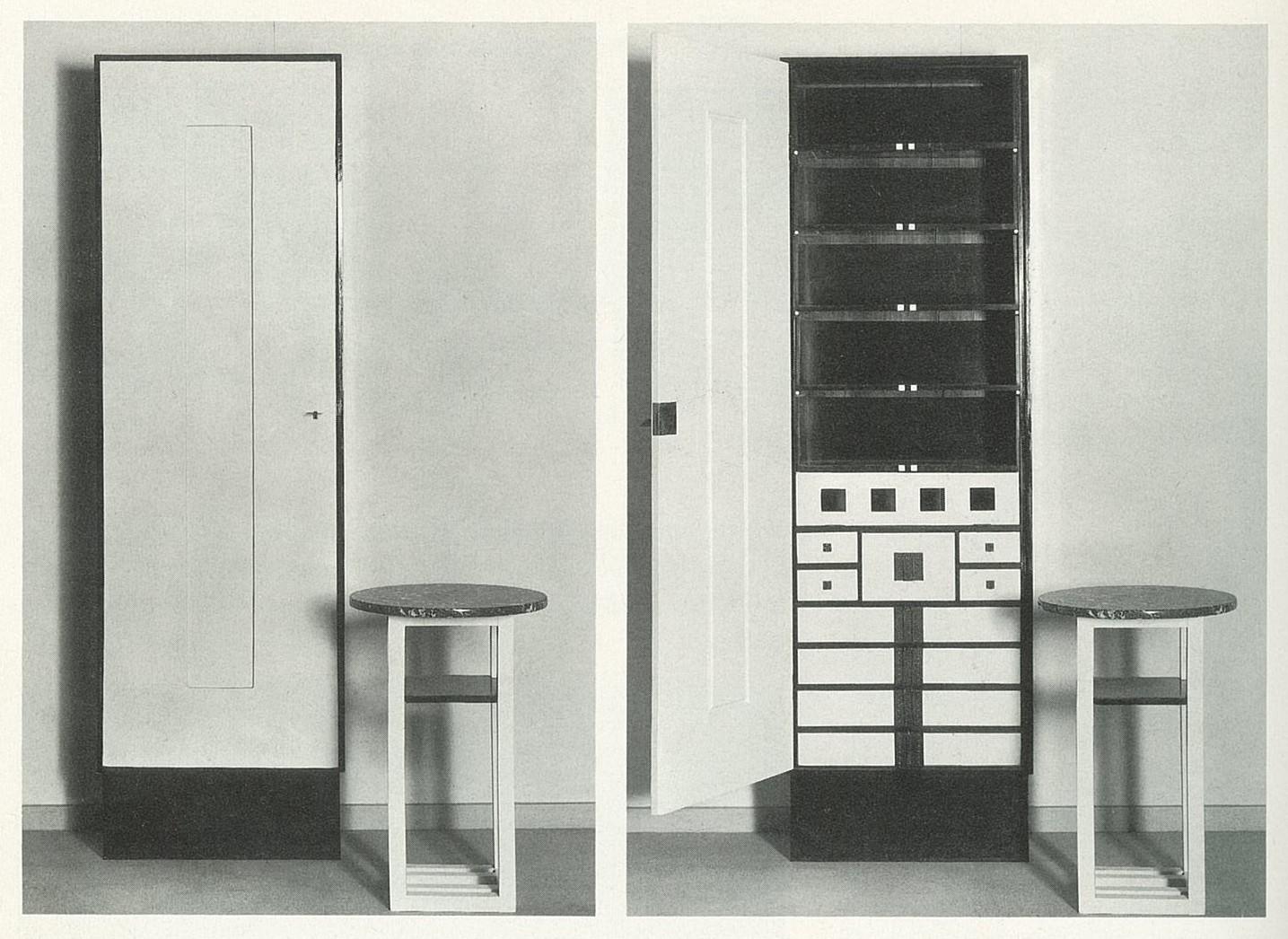
Architect Carl Bergsten designed his first pieces of furniture in 1905 for his own home, including this bedside table, which was made in only two examples. The other table is on loan to Norrköping City Museum, where it is displayed in the museum’s permanent exhibition on the architect Carl Bergsten. At the same time, Bergsten designed a pair of wardrobes. Today, one of the wardrobes is part of the collections of the Nordic Museum in Stockholm, while the other, sold at Bukowskis’ Modern auction in 1997 (lot no. 503, catalogue no. 724), is held by the Röhsska Museum in Gothenburg. The pieces were manufactured by Chamberts Möbelfabrik in Norrköping.
More about Carl Bergsten
Carl Bergsten was an architect and designer whose significance for the development of modern architecture and furniture design in Sweden during the early 20th century cannot be overstated. Several of his commissions, such as the Industrial Exhibition in Norrköping in 1906 featuring the now iconic Café Chairs, the Swedish pavilion at the 1925 World's Fair in Paris, the interior design for MS Kungsholm in 1928, and contributions to the Stockholm Exhibition in 1930, have been crucial for the evolution of Swedish architecture and design. Bergsten's often luxurious and costly furniture and interiors have become trendsetting and pivotal for establishing the concept of Swedish Grace.
Read moreWhat will the transport cost?
Shipping can only be arranged by contacting specialdelivery@bukowskis.com.
Others have also viewed