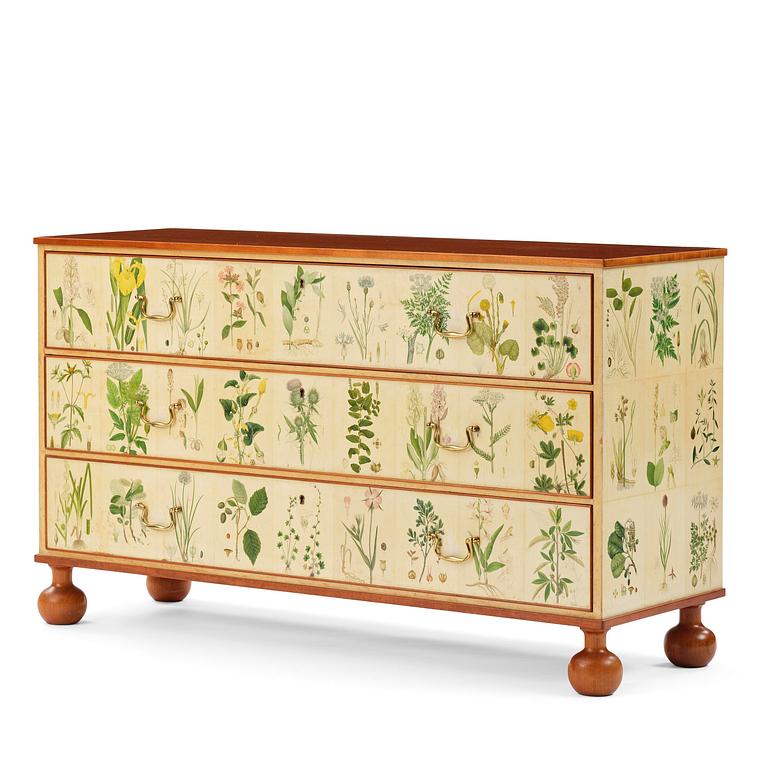
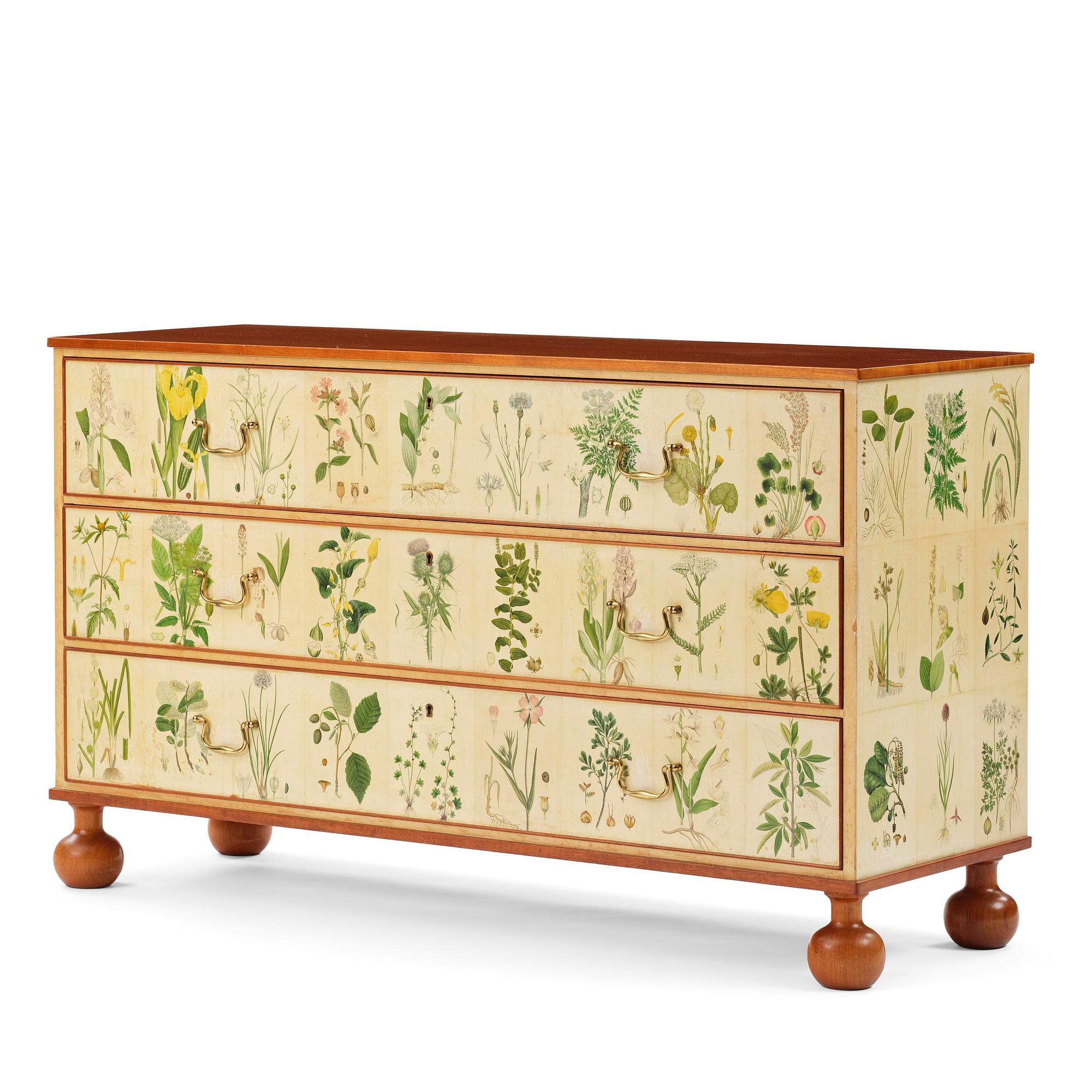
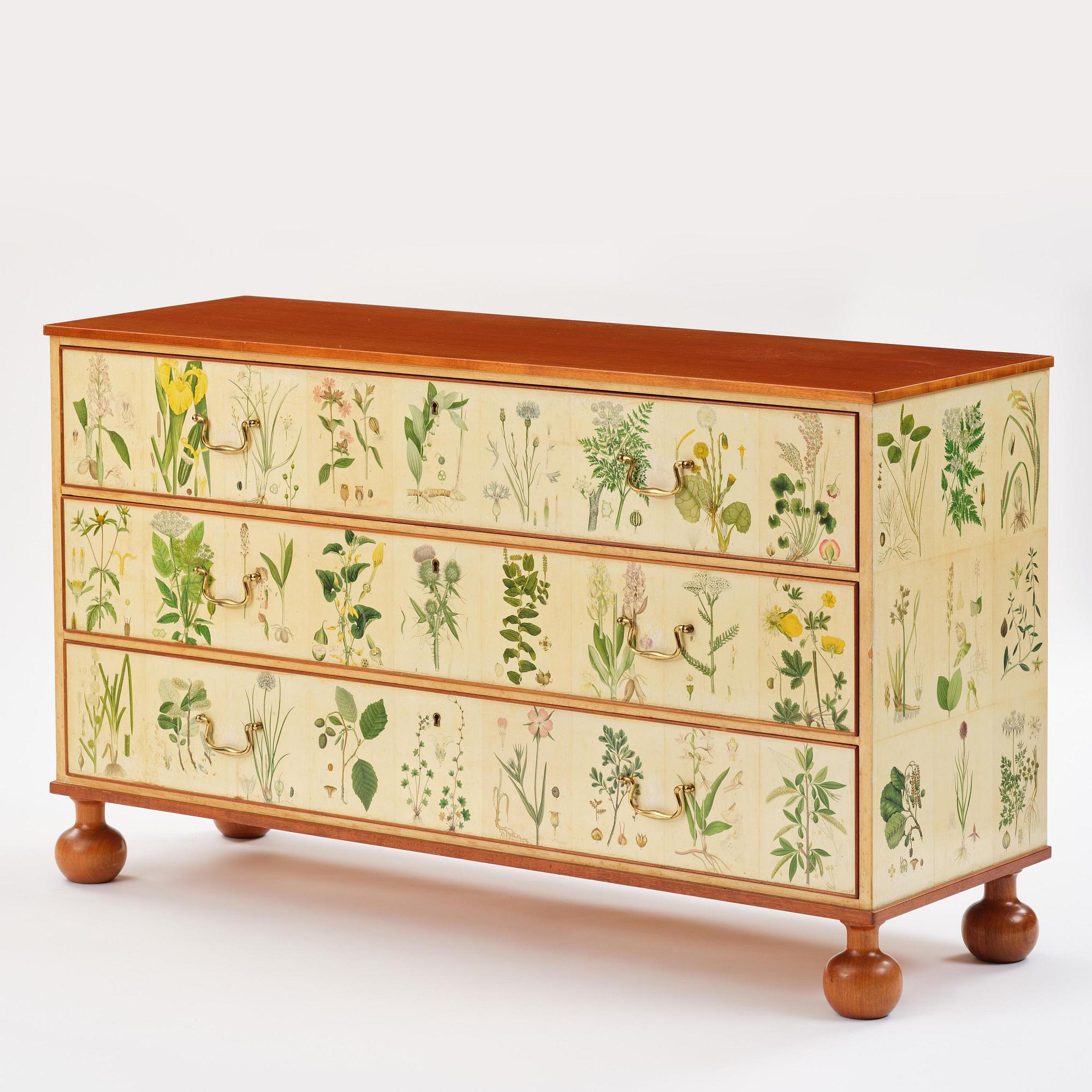
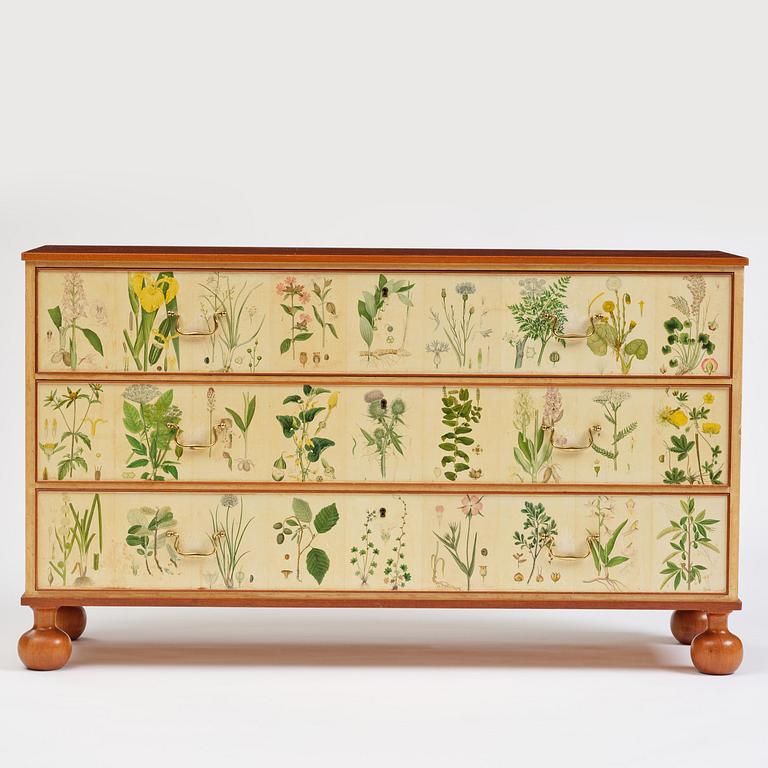
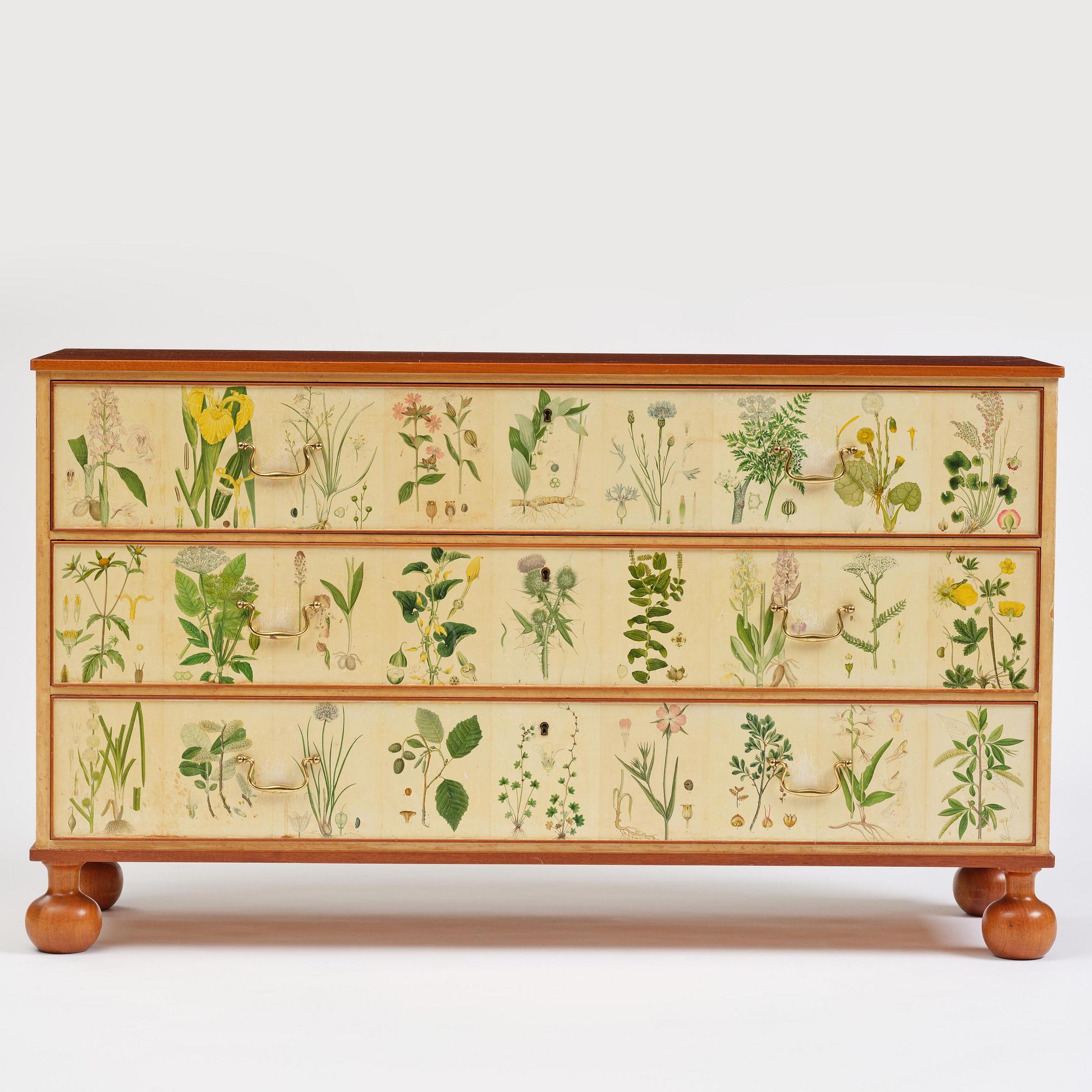
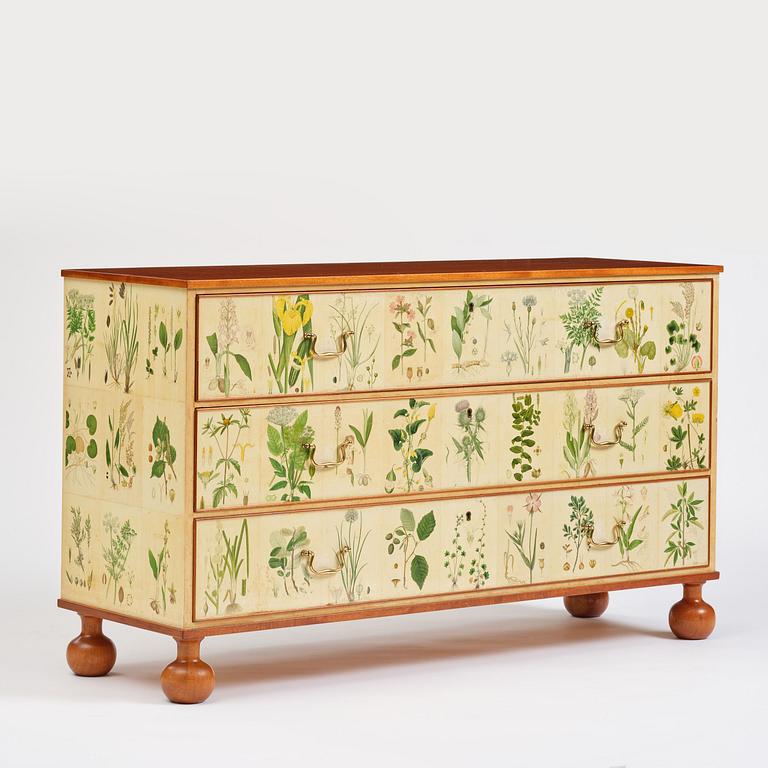
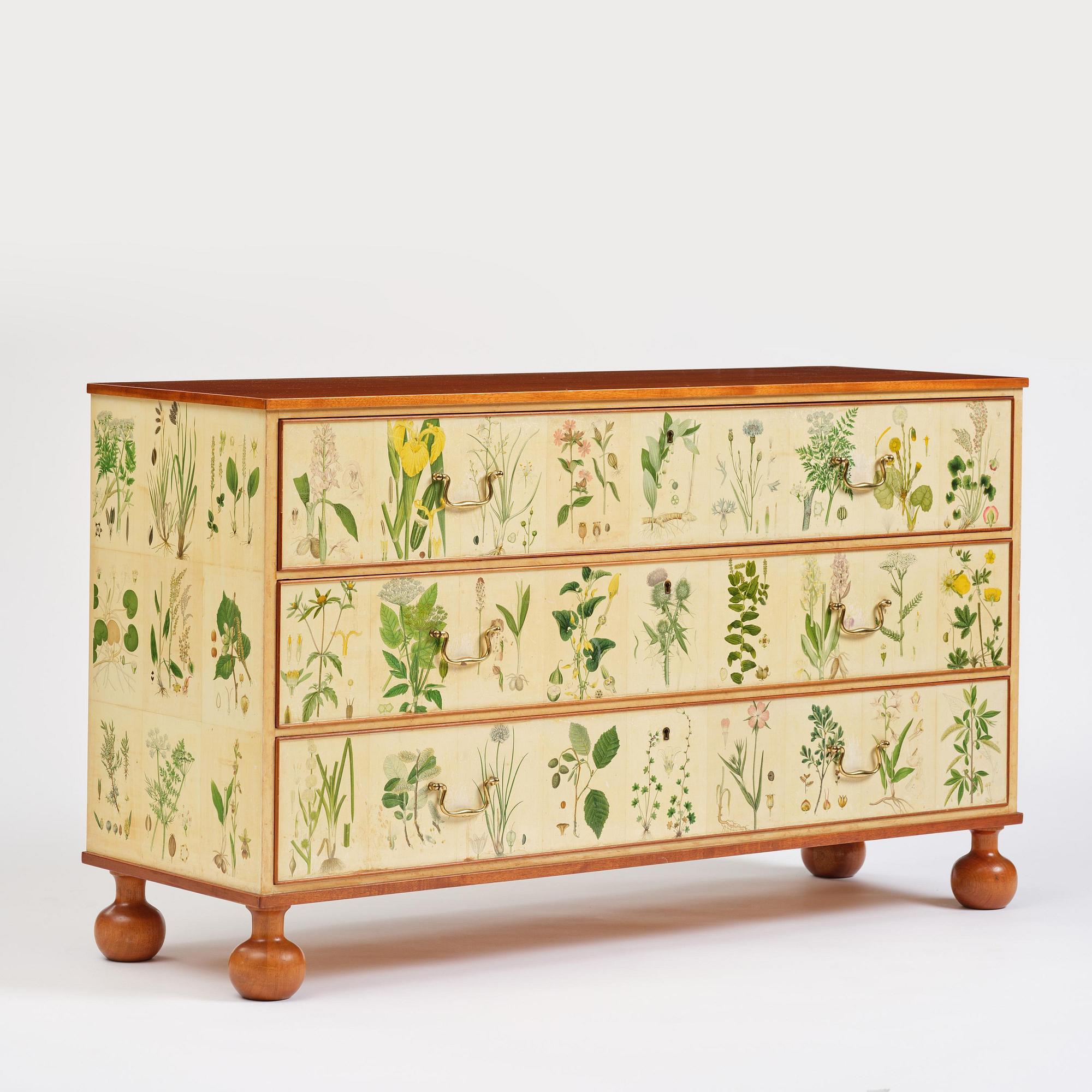
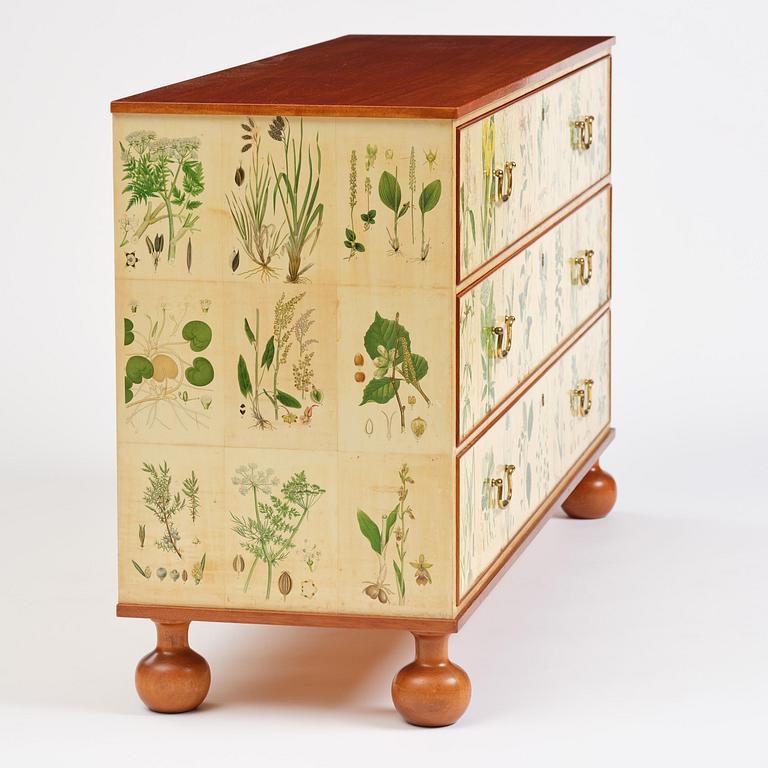
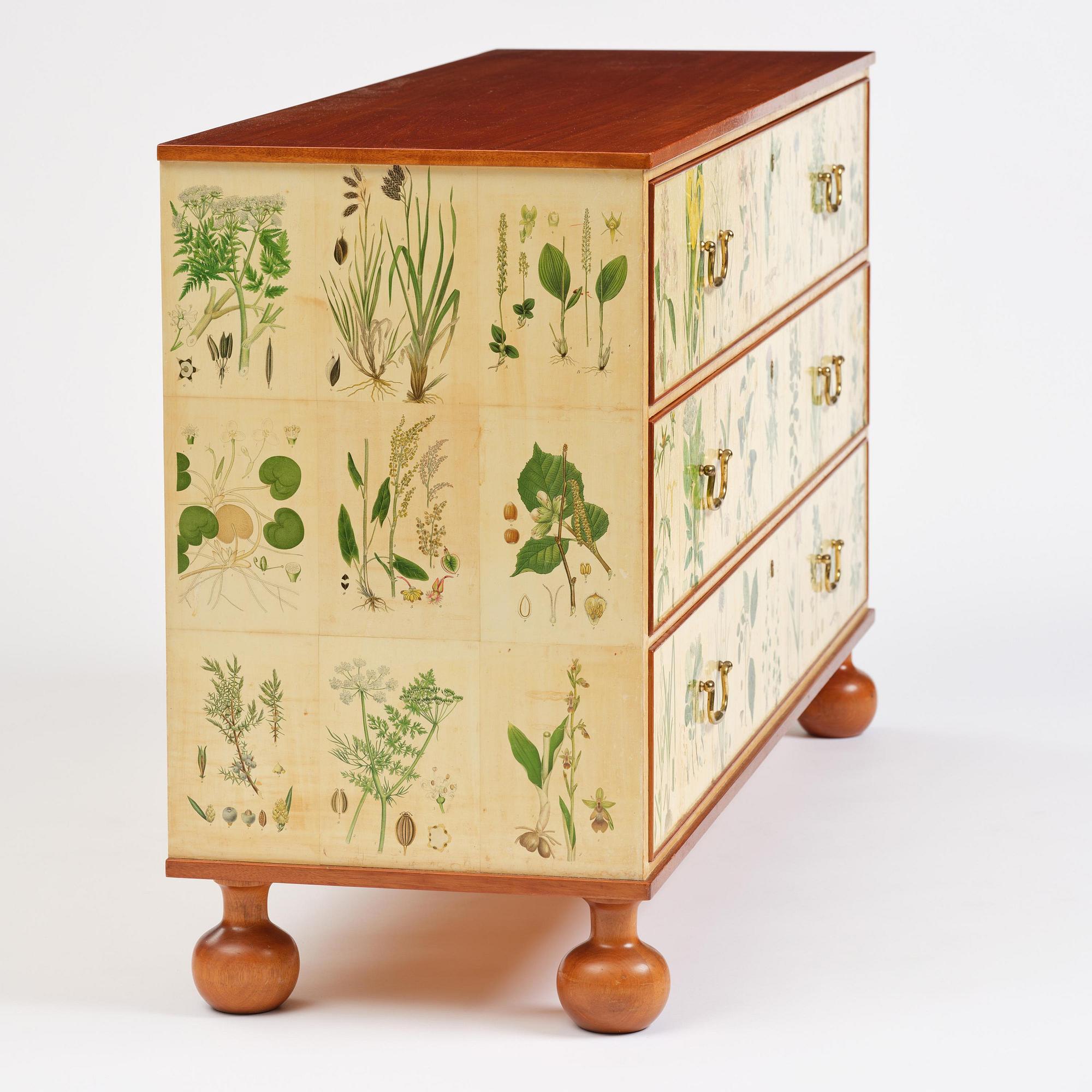
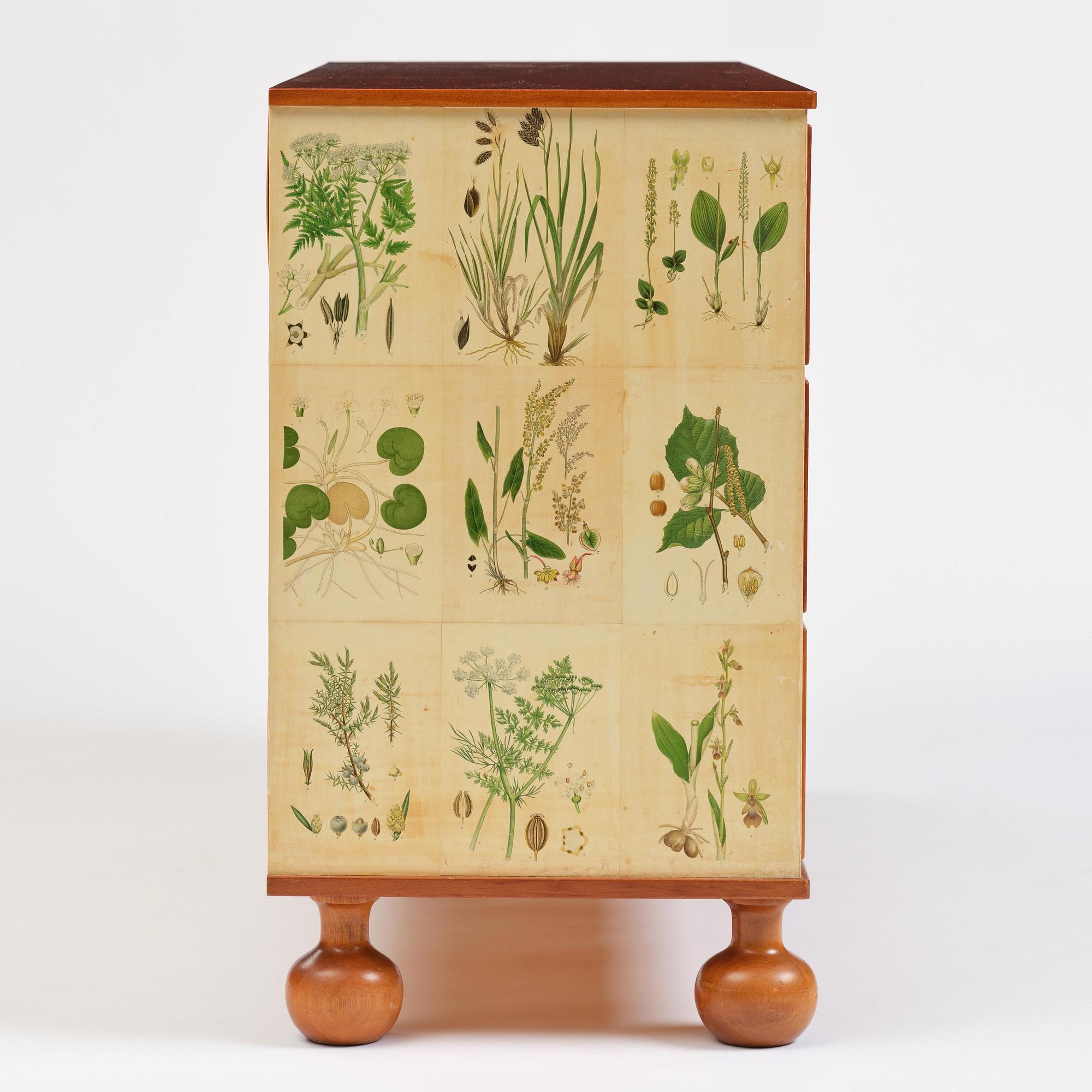
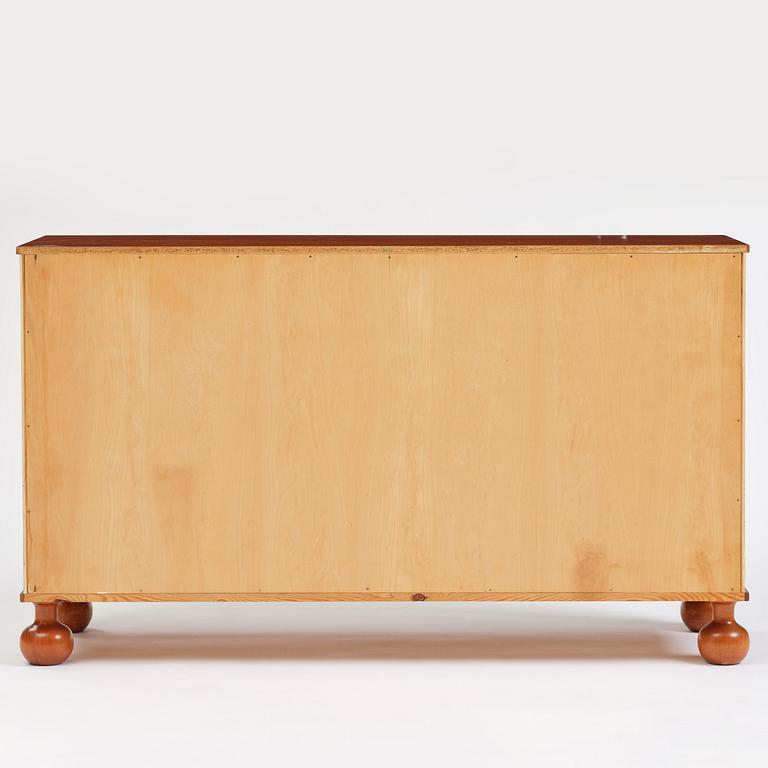
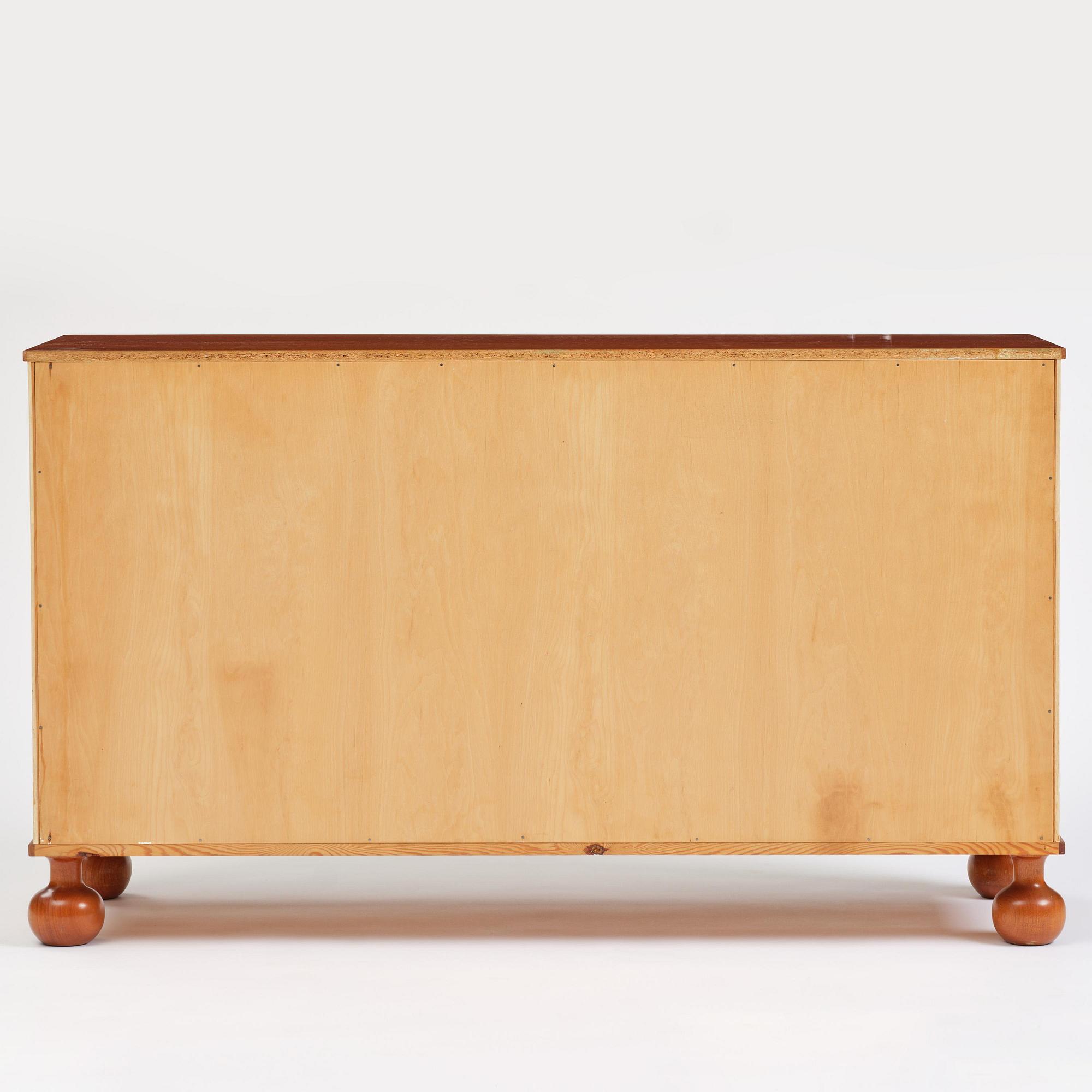
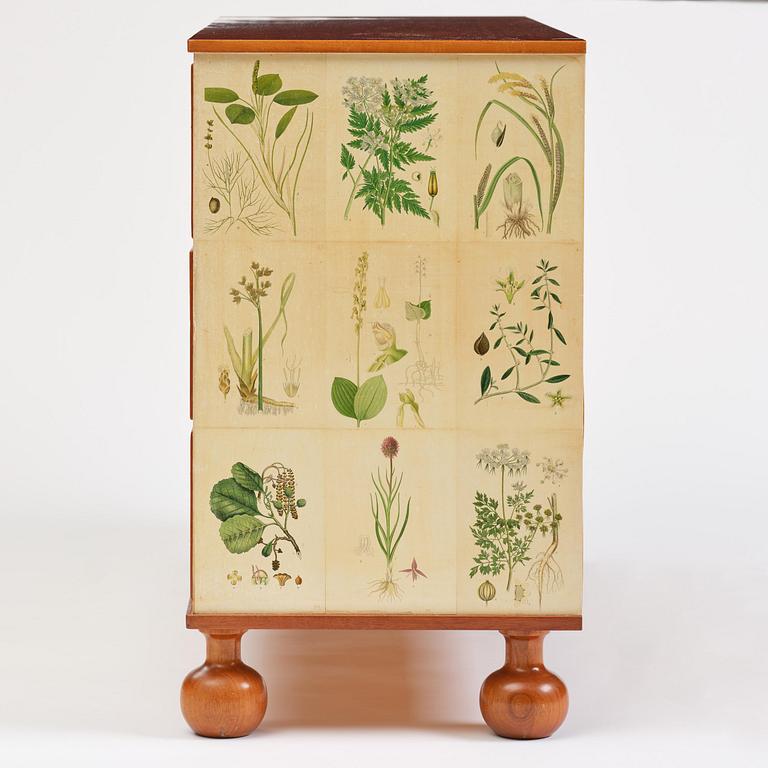
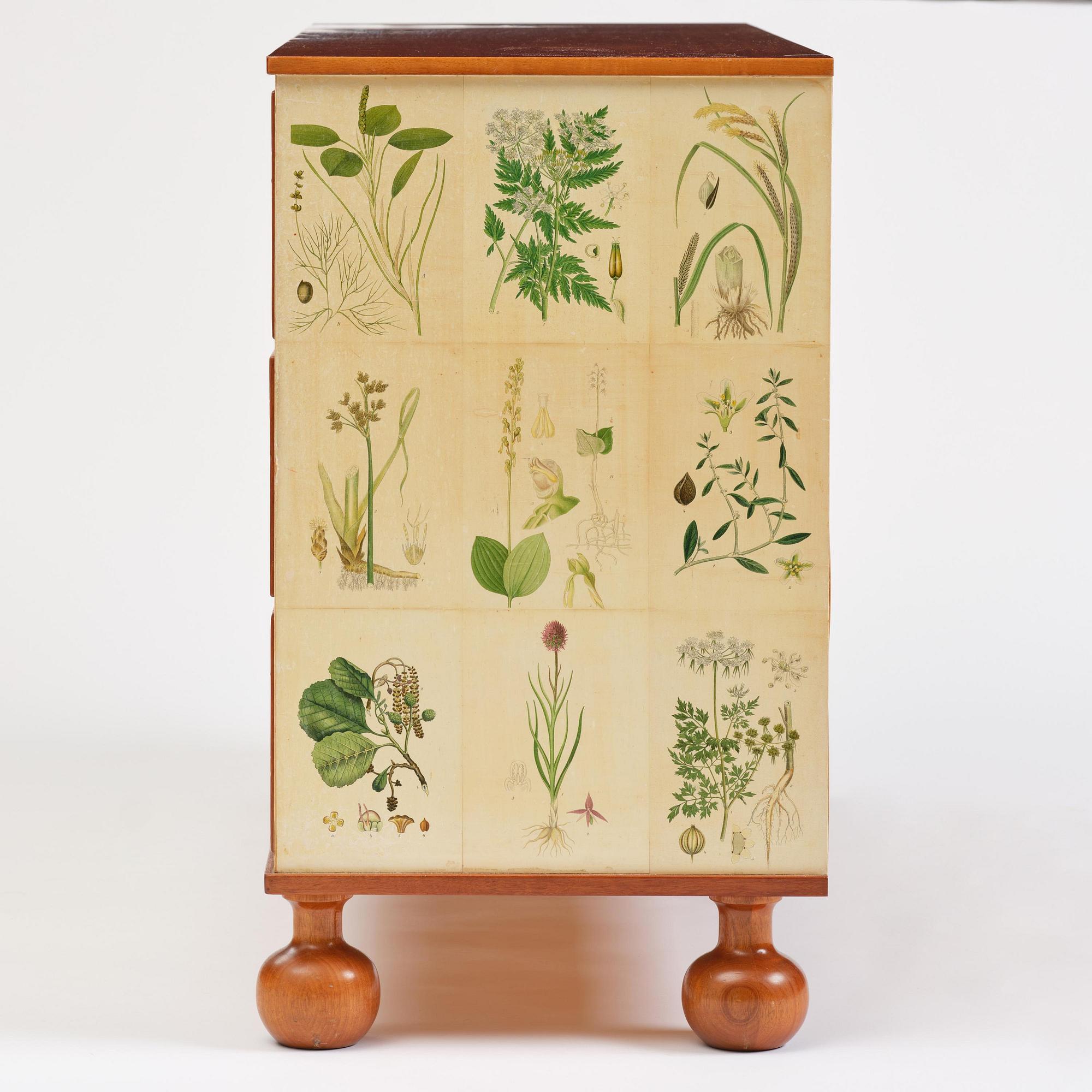
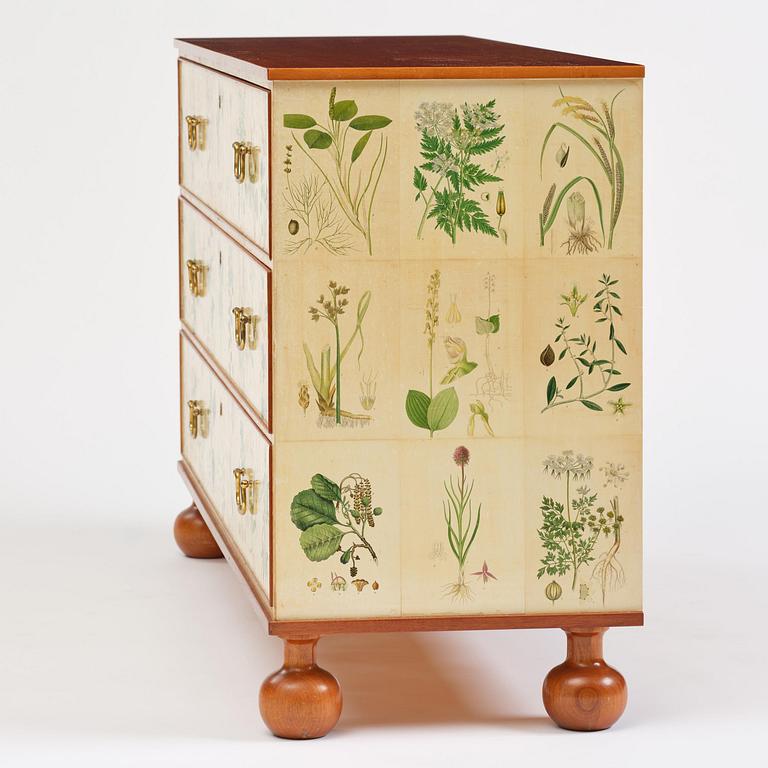
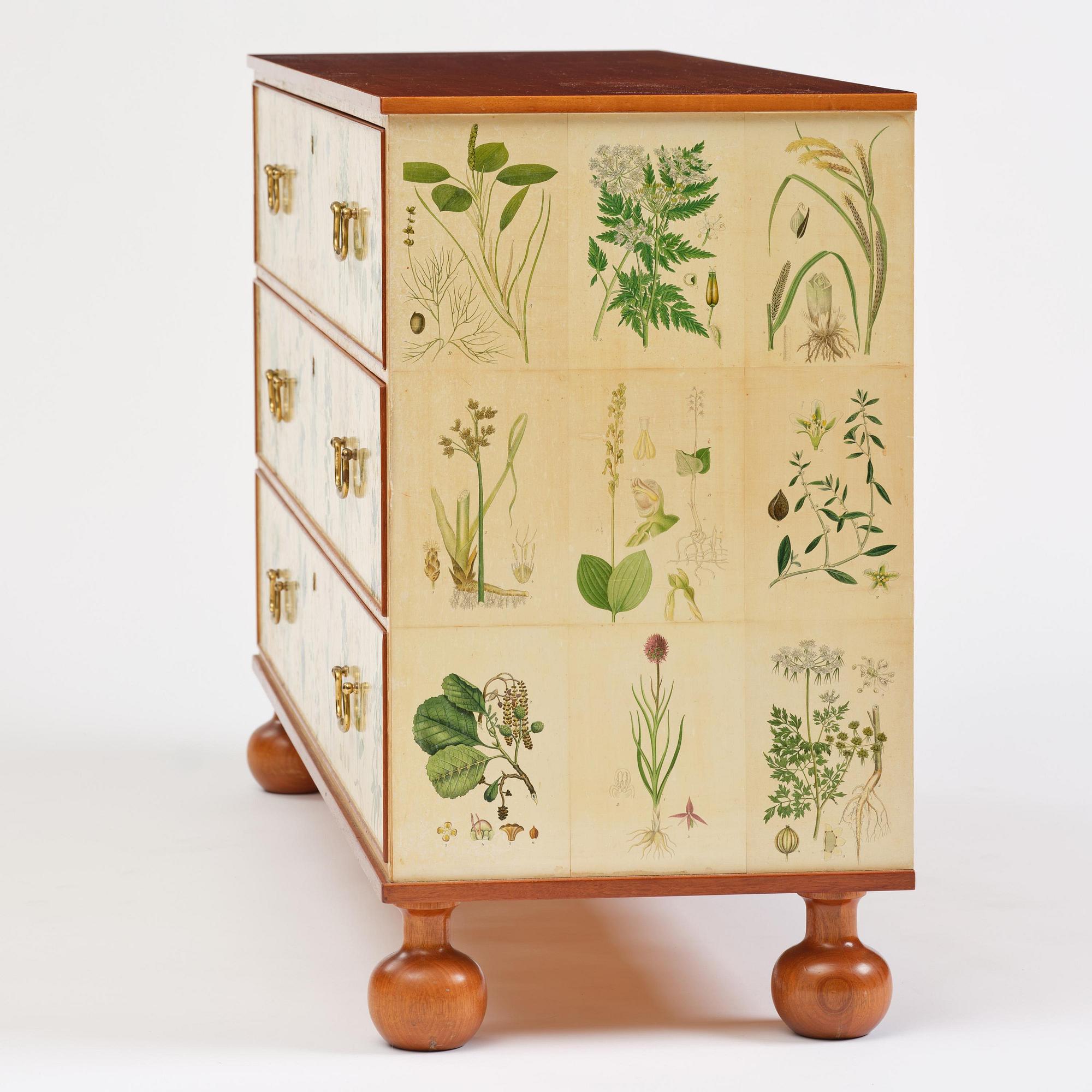
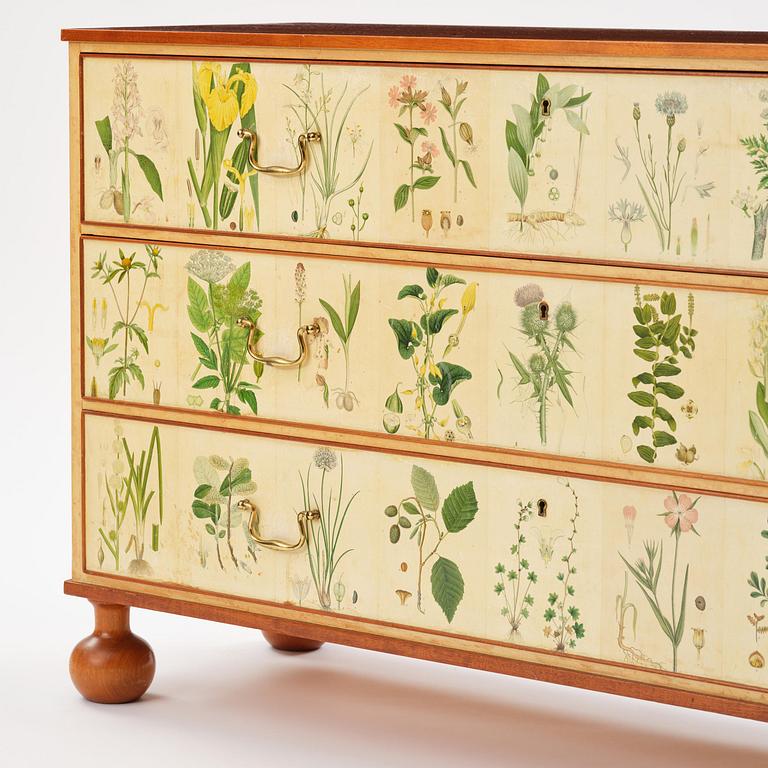
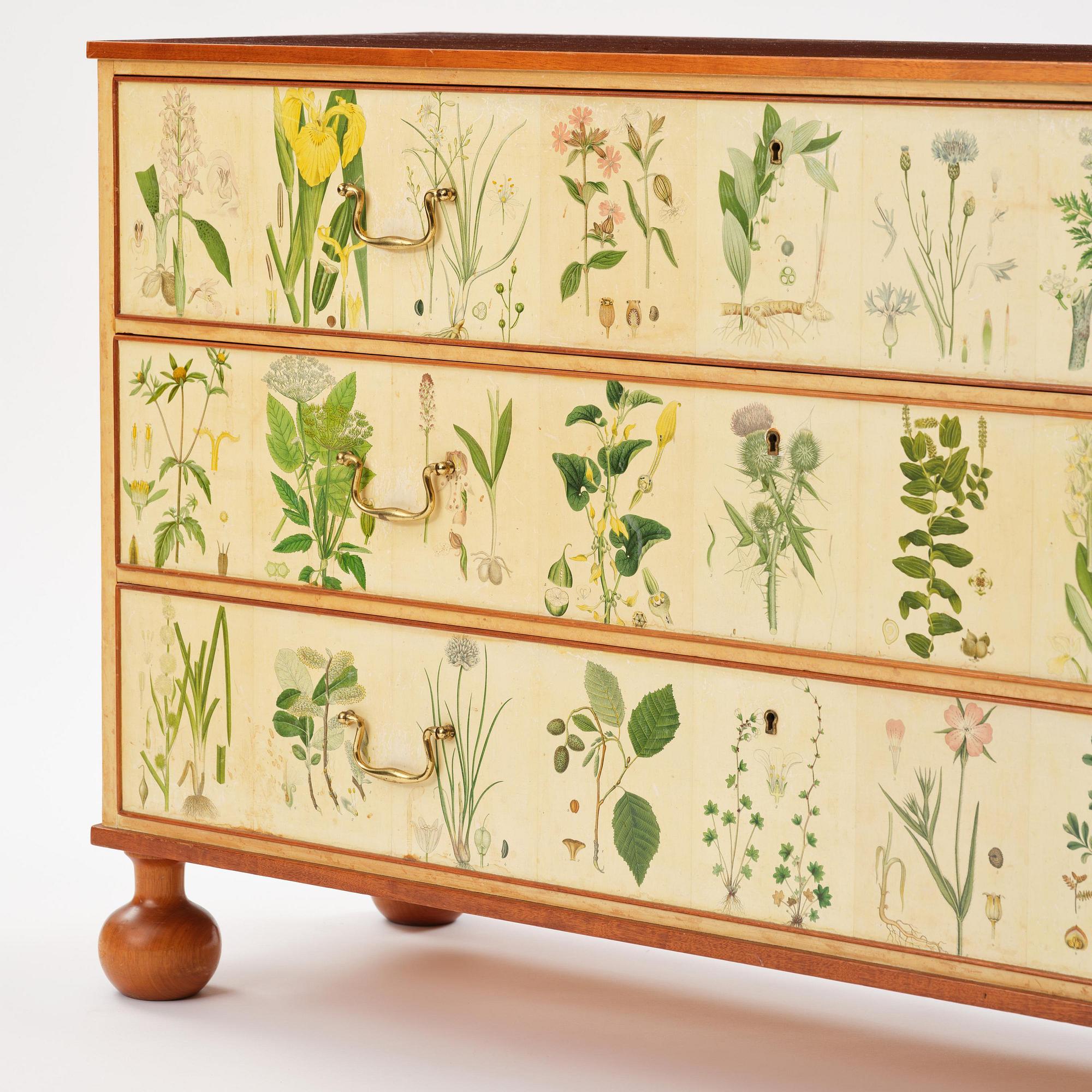
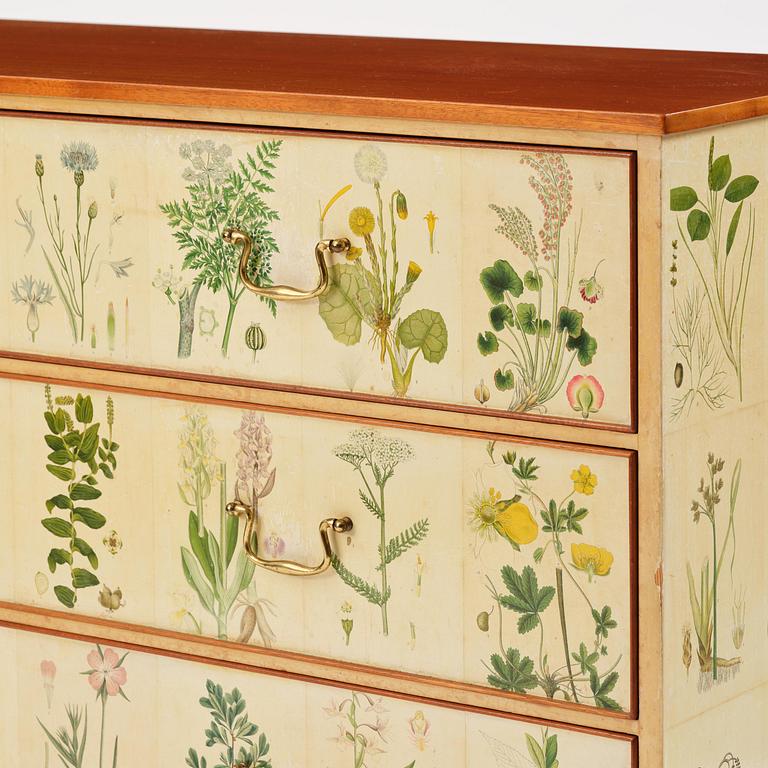
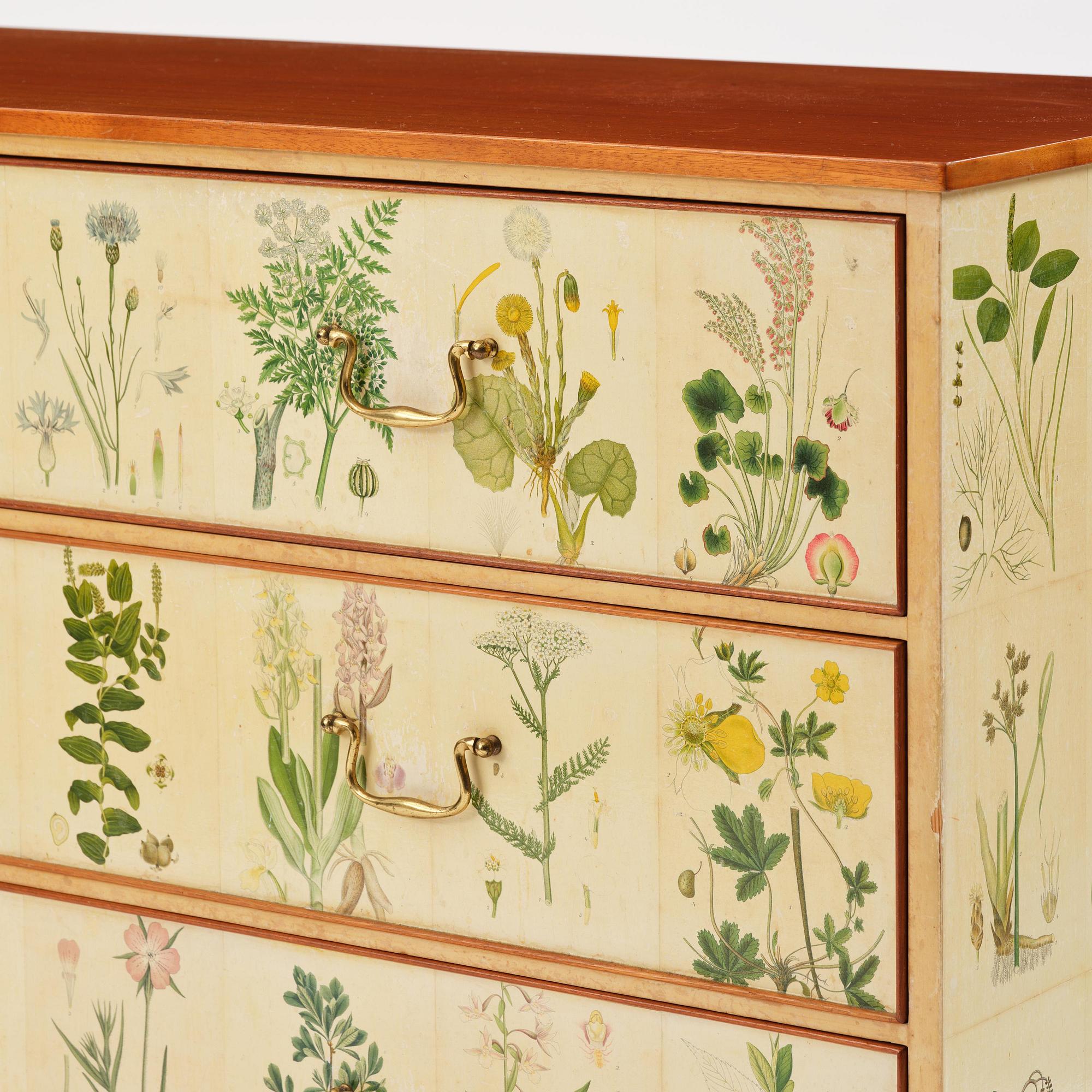
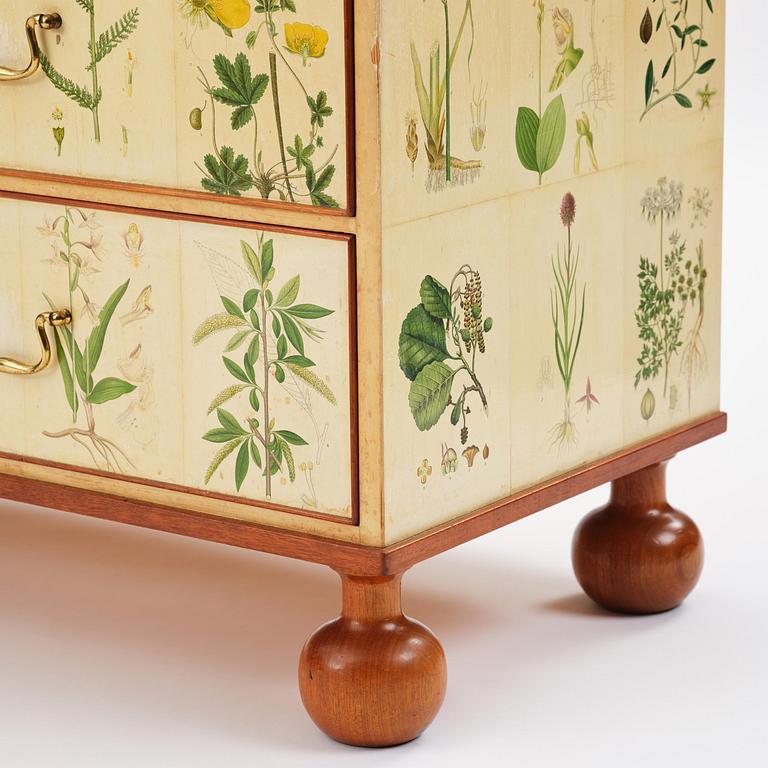
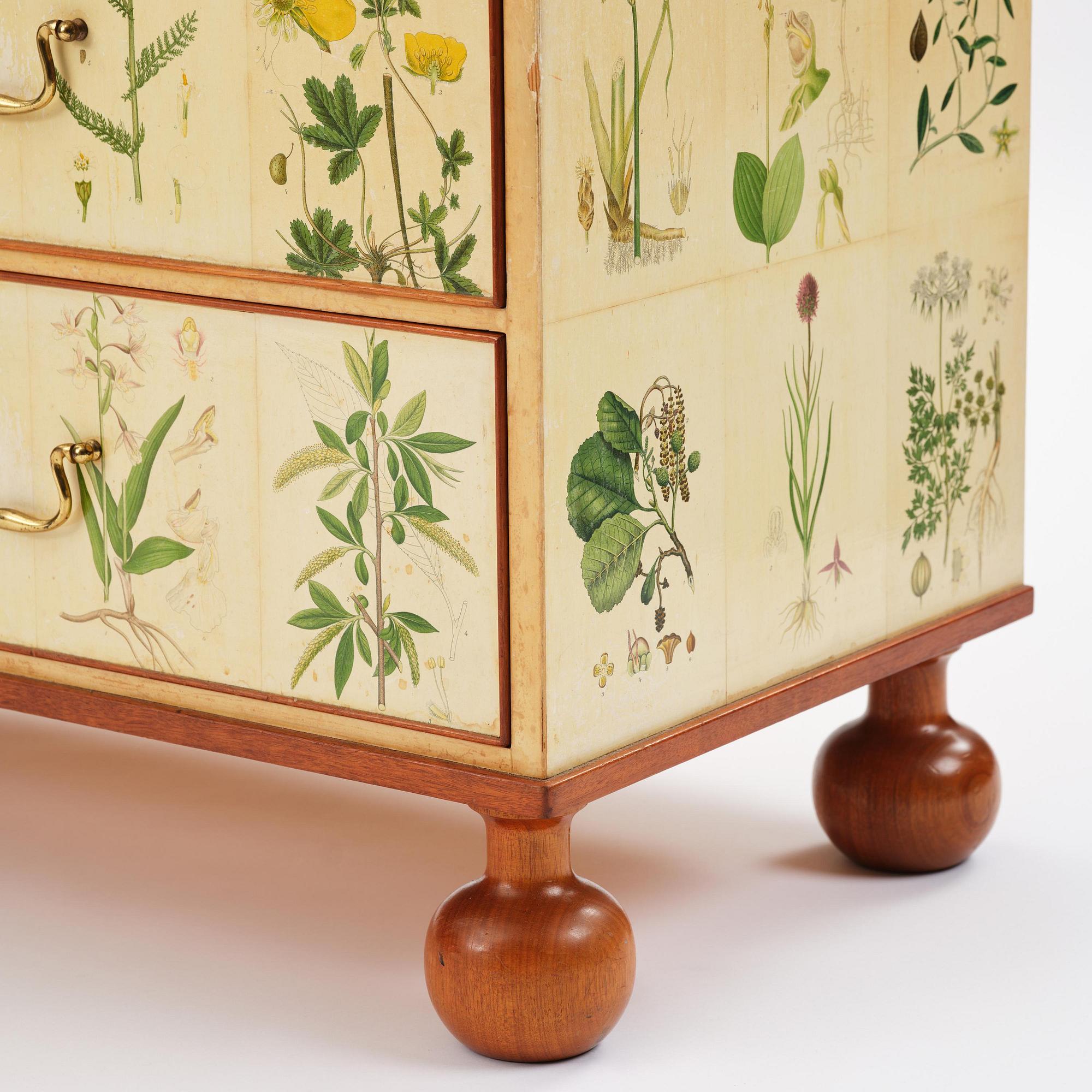
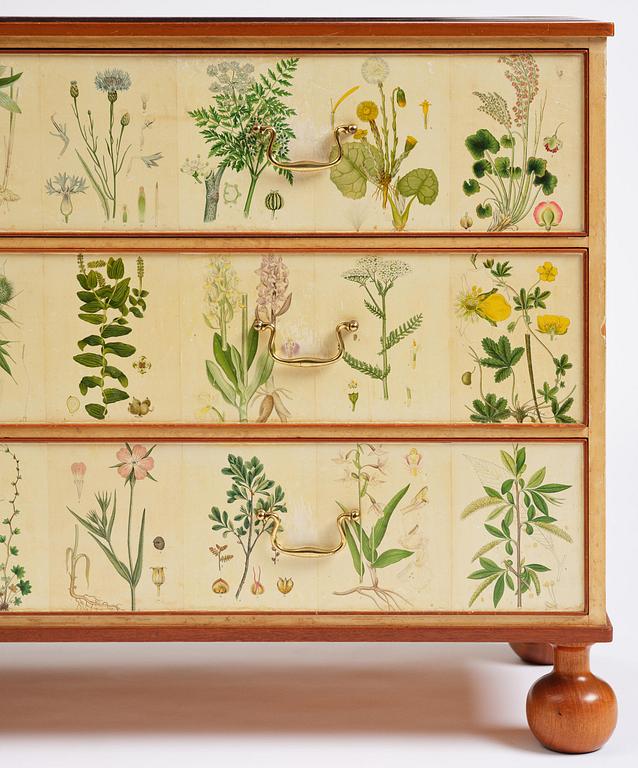
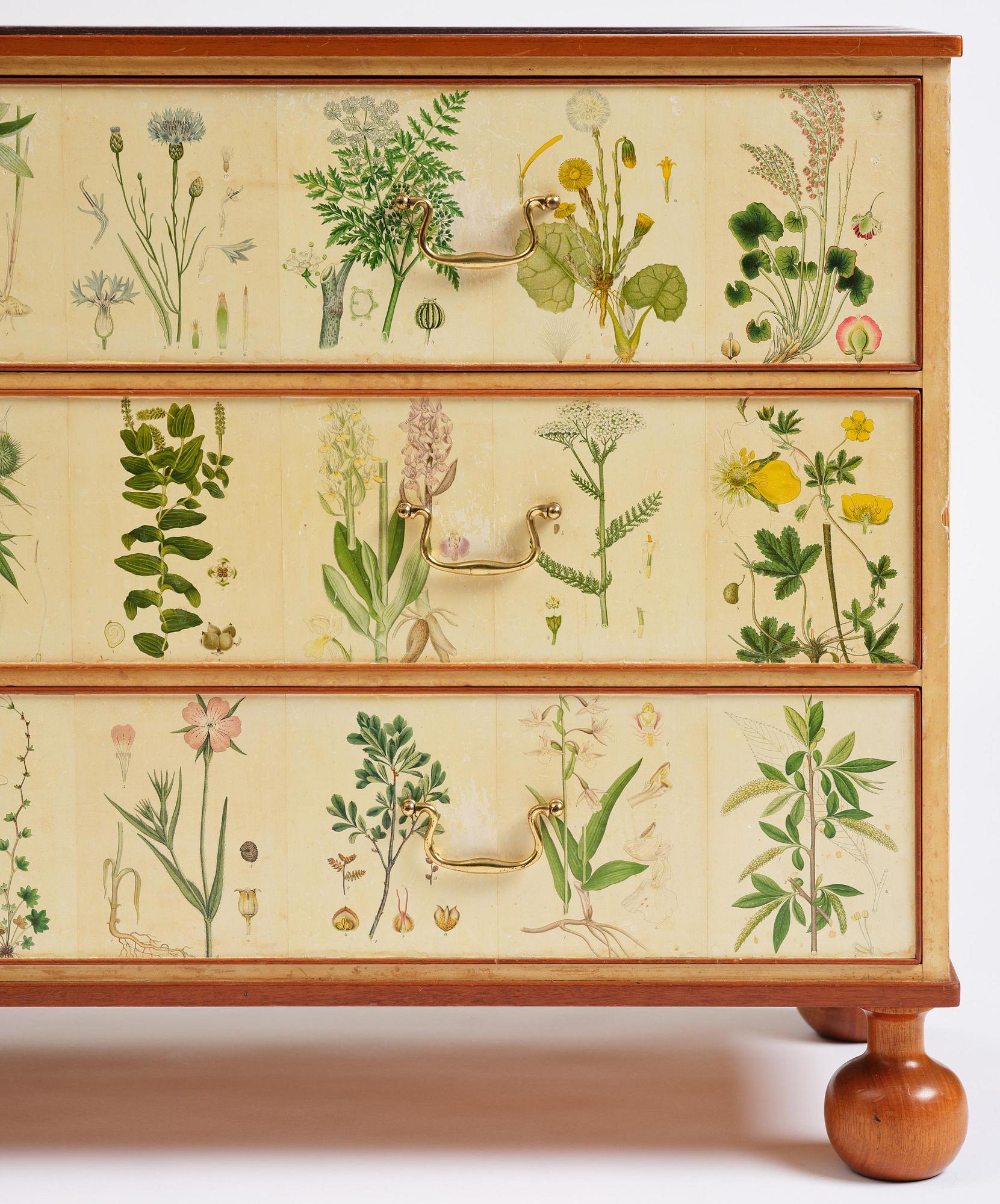
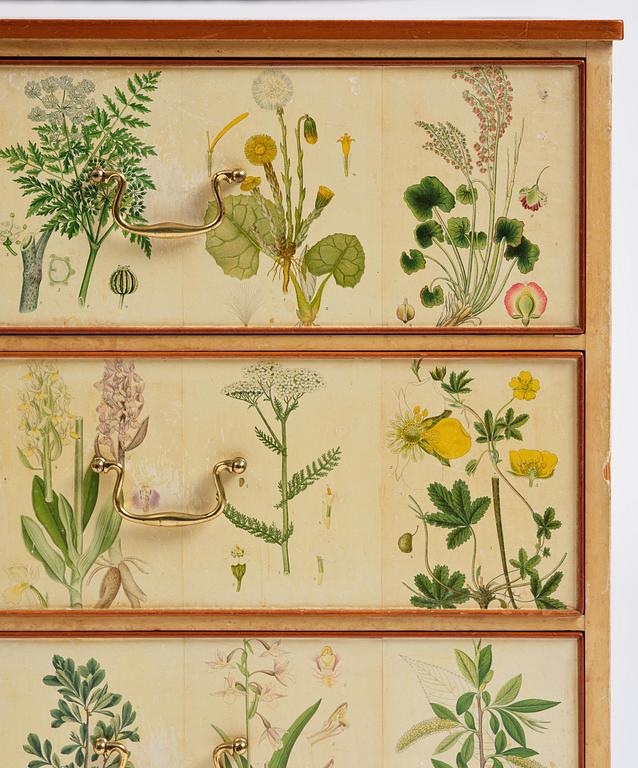
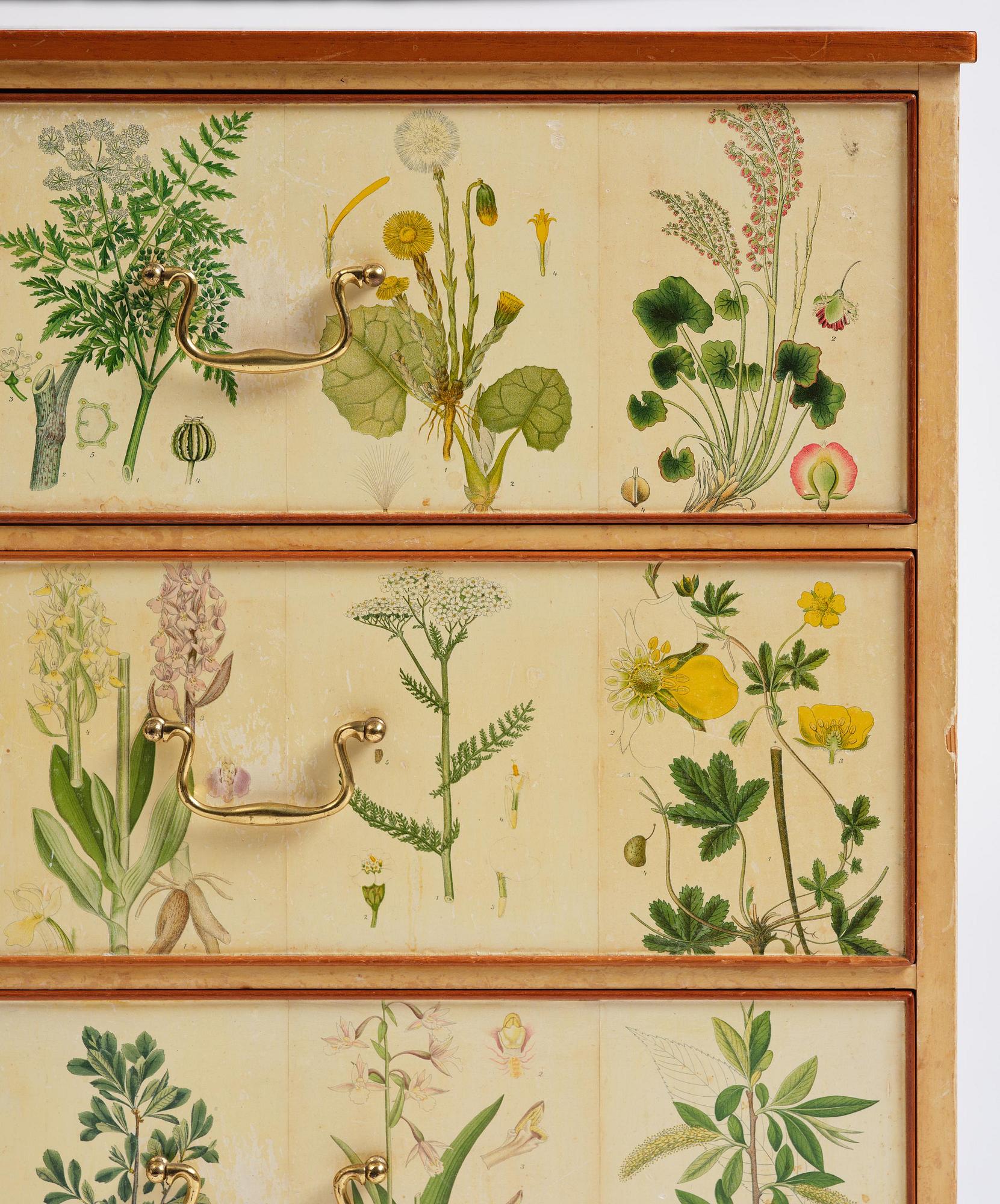
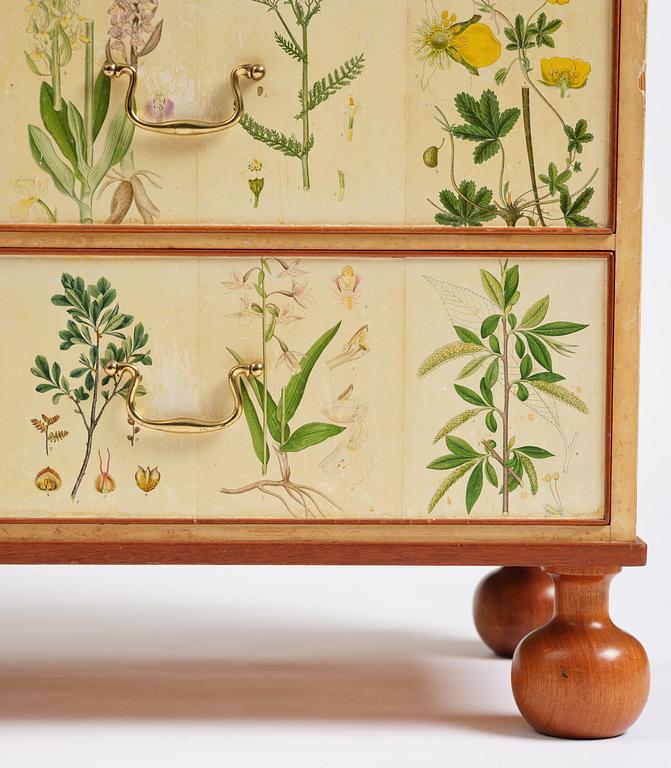
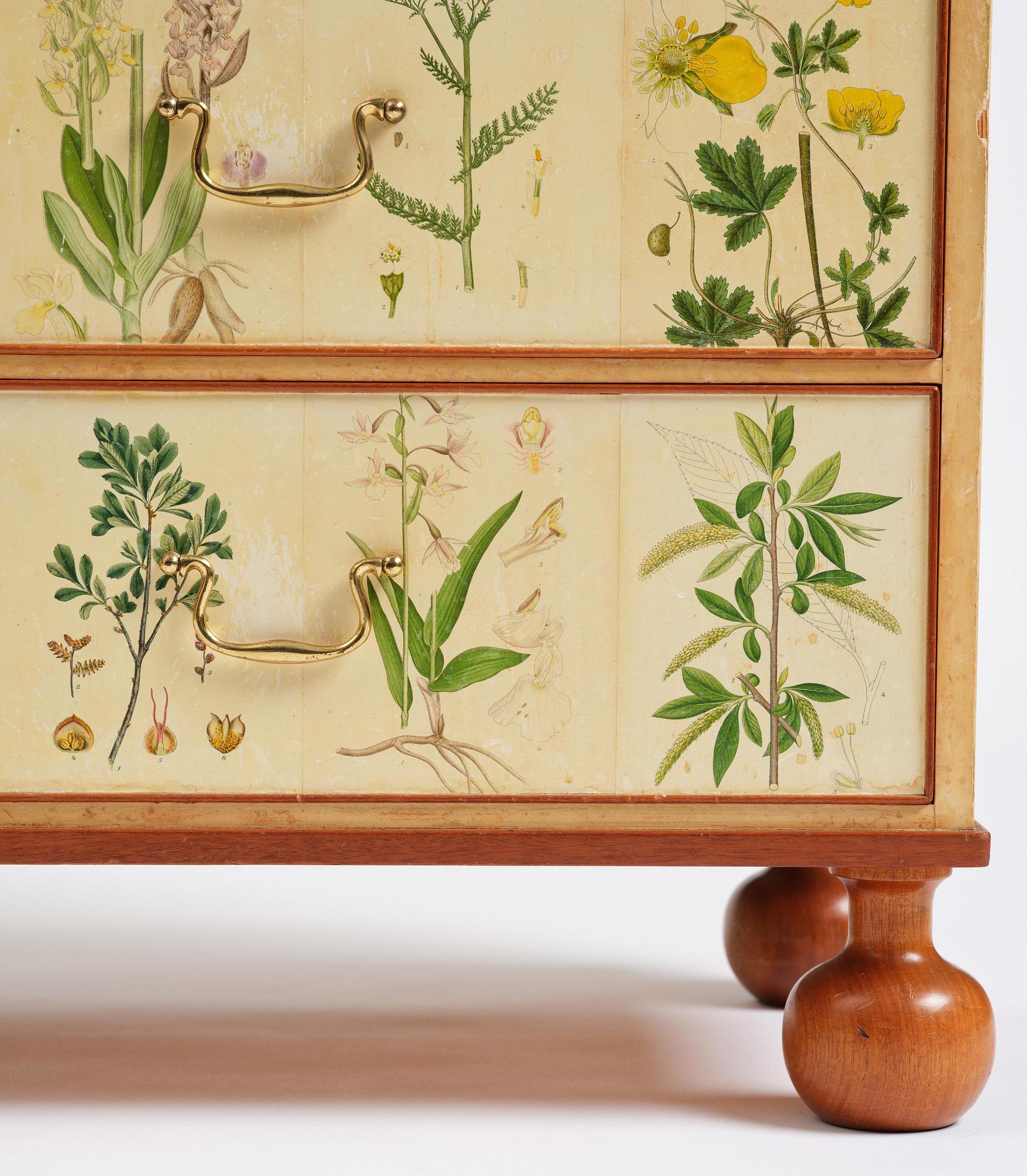
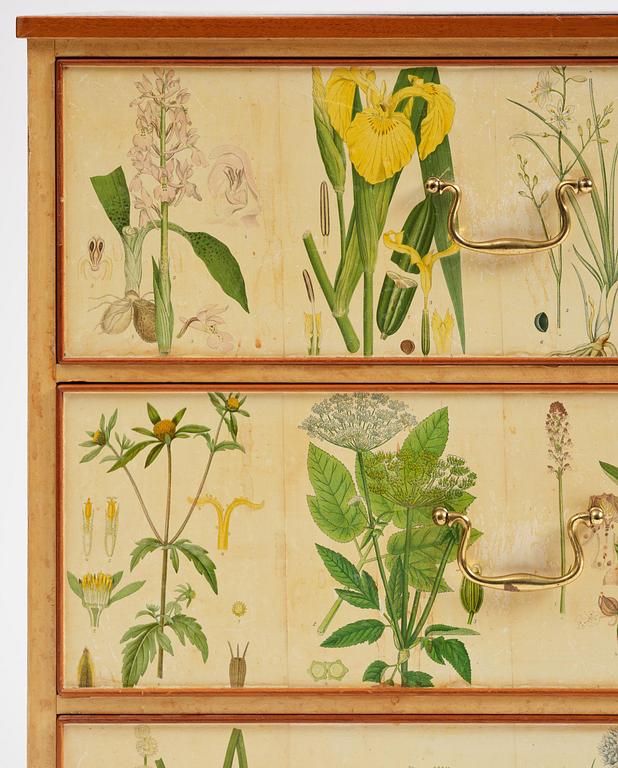
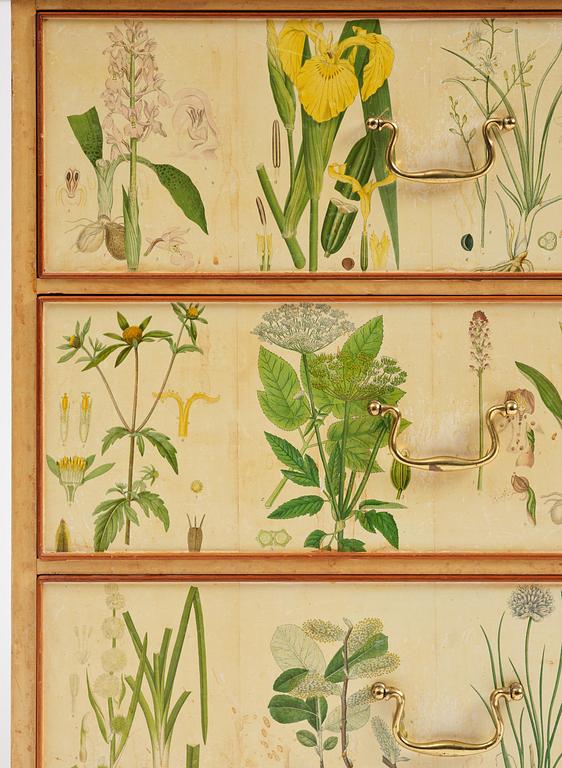
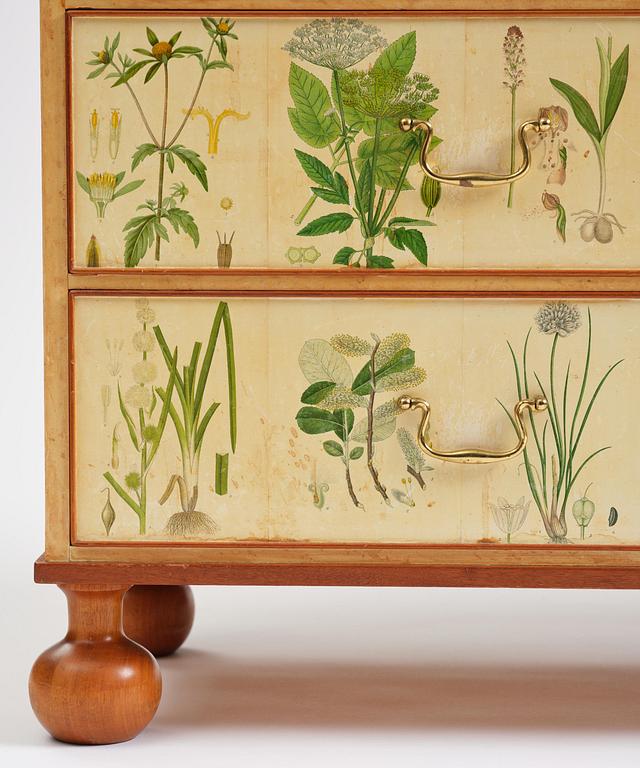
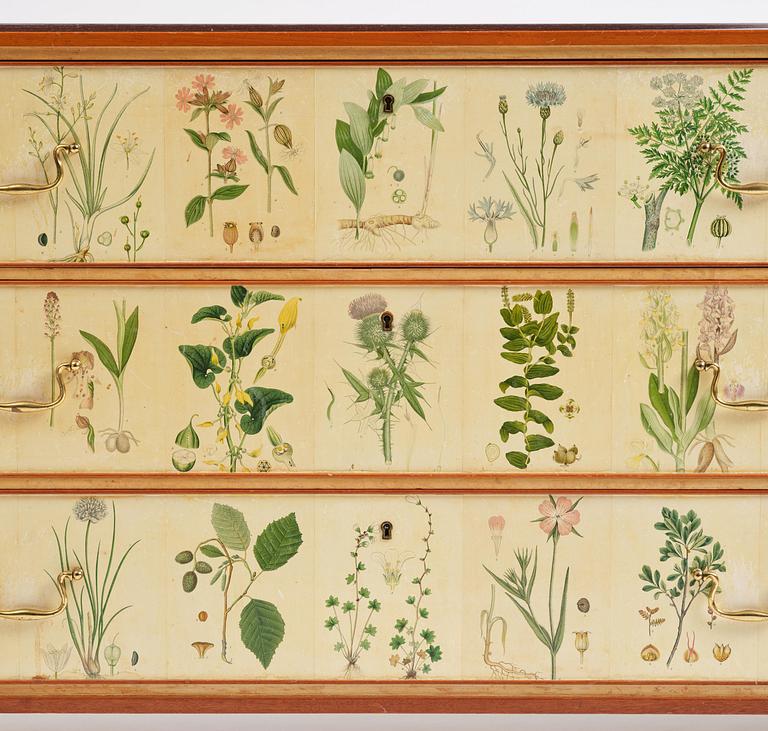
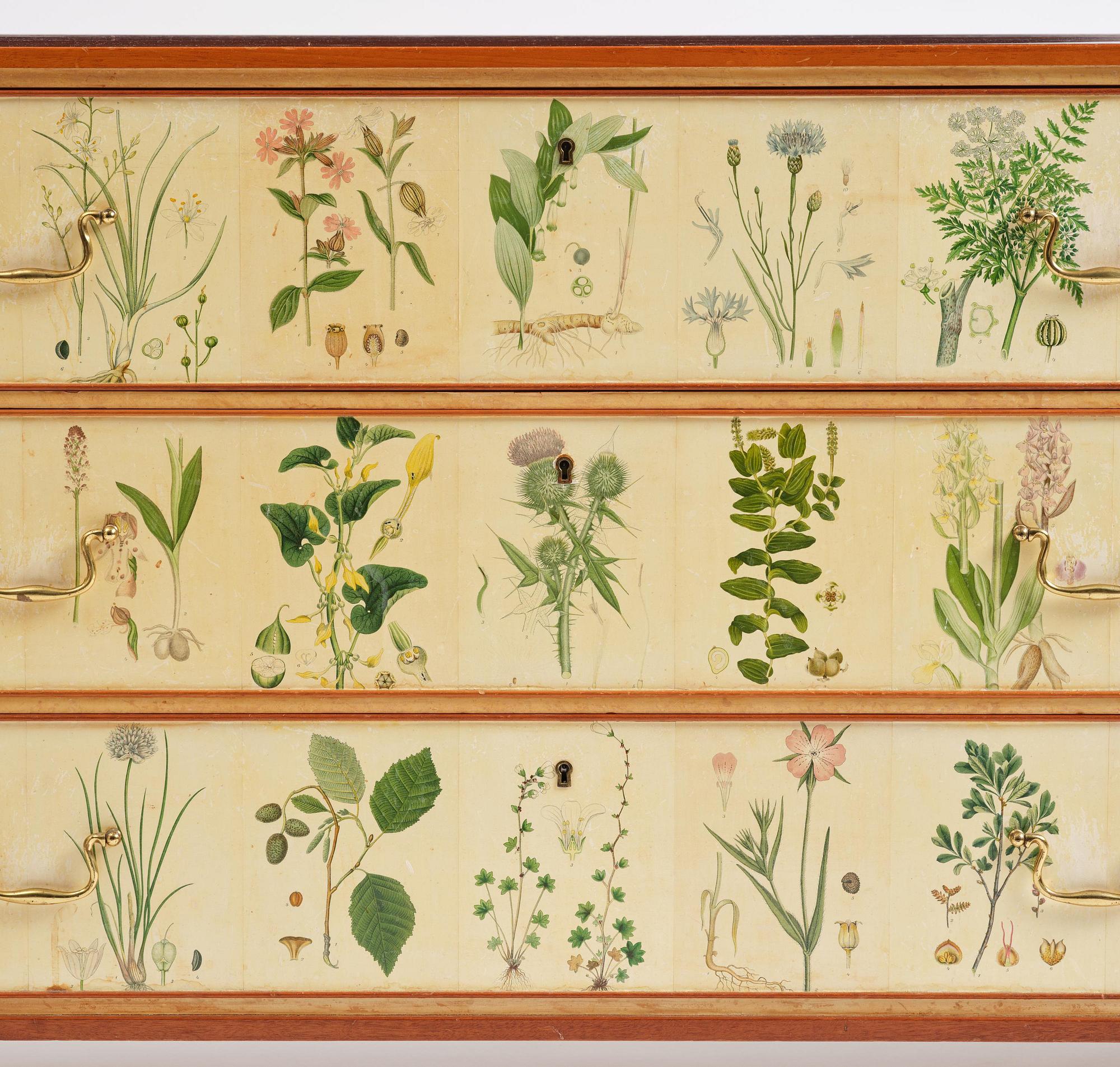
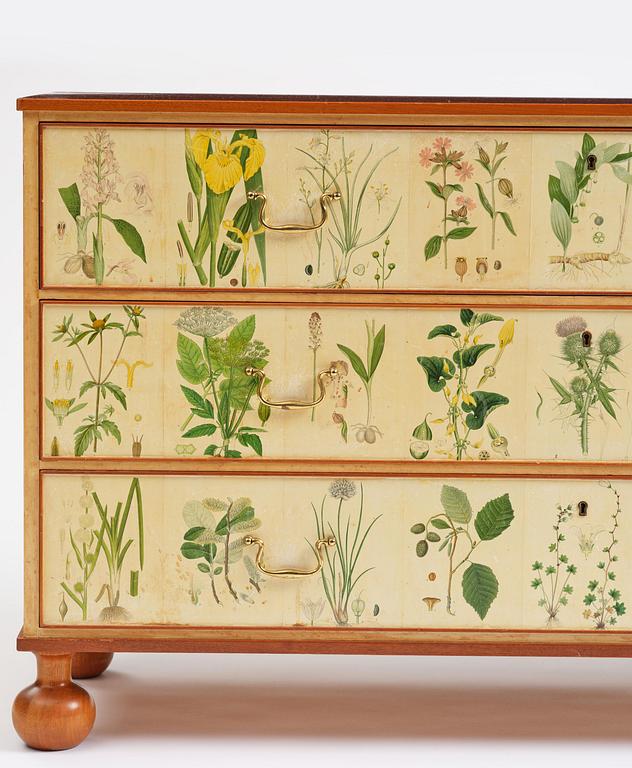
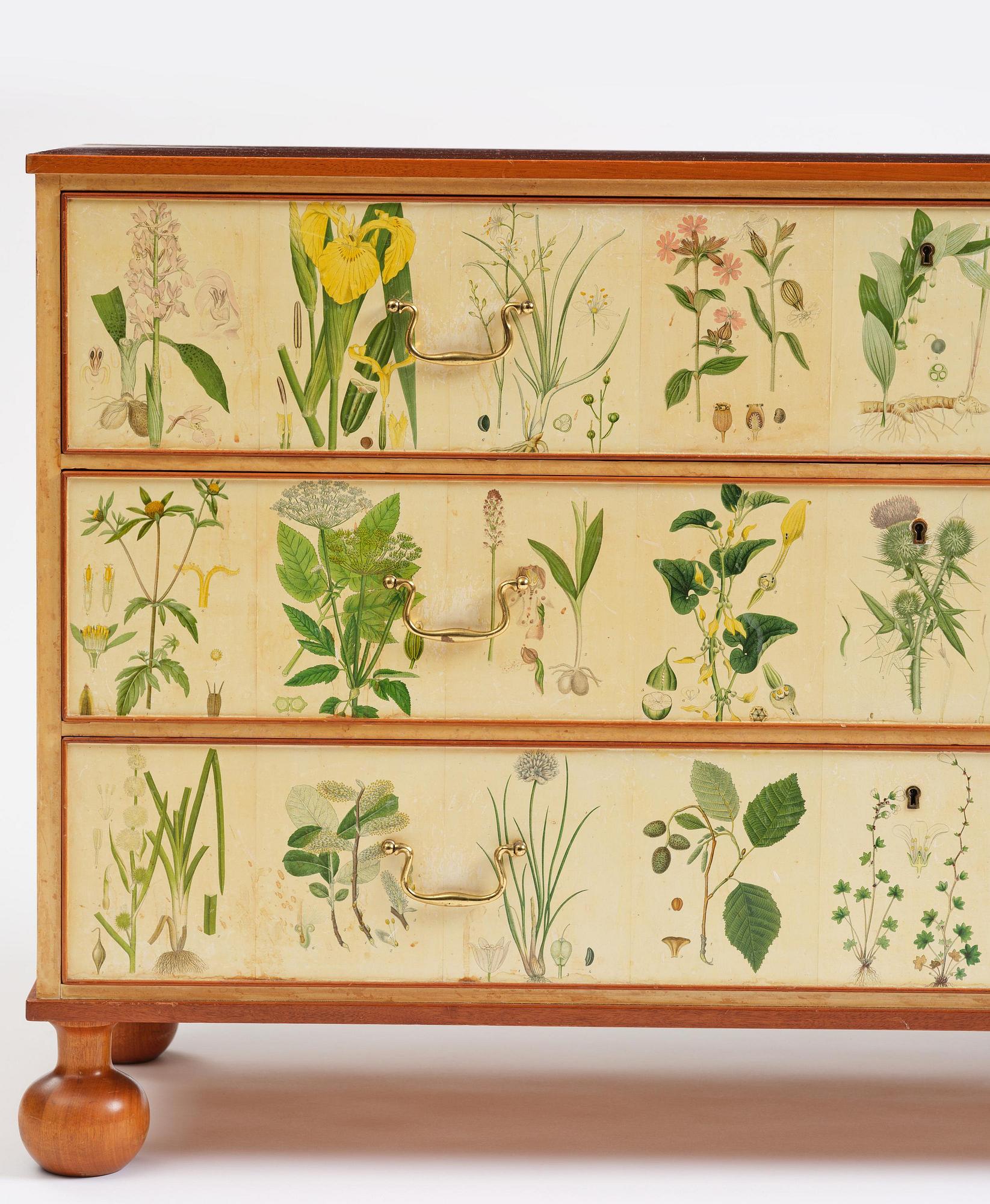
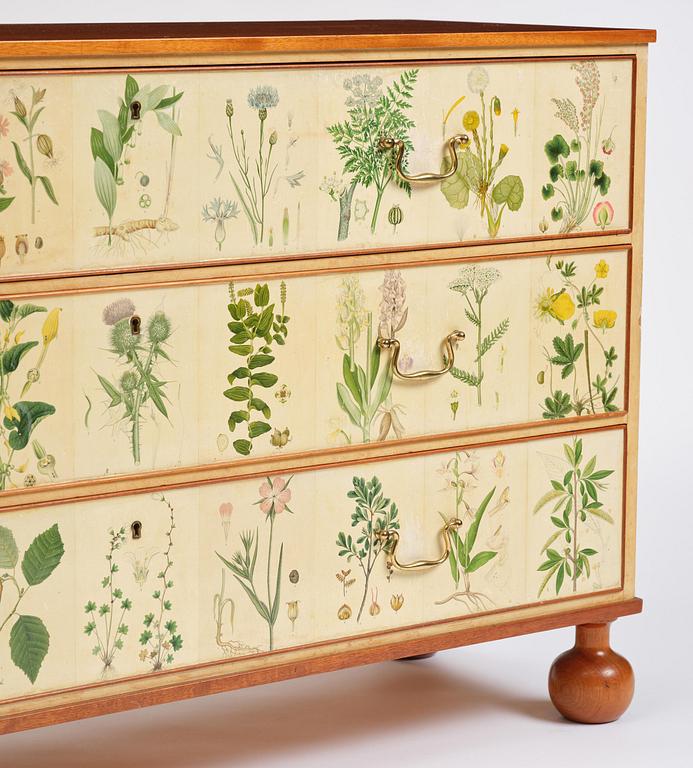
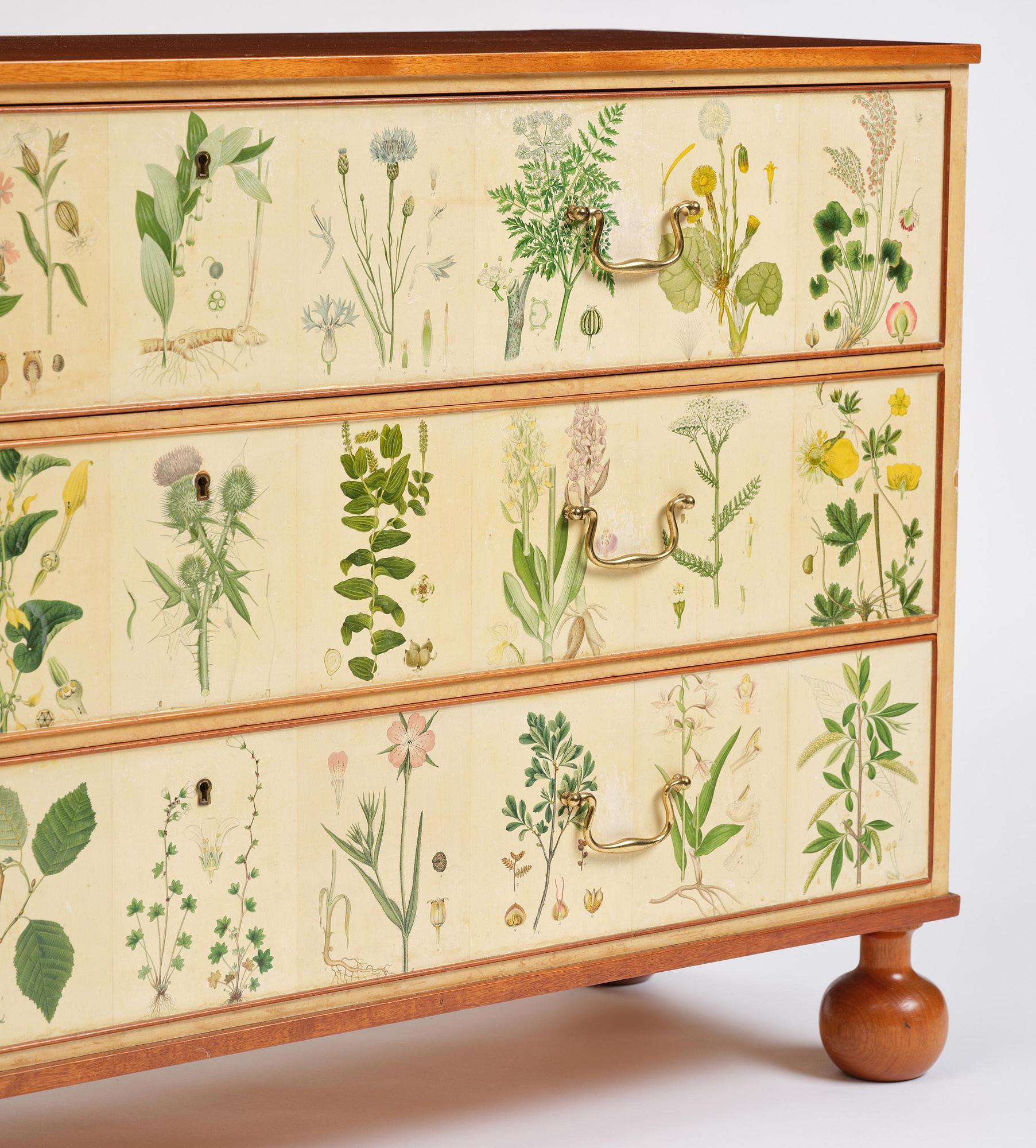
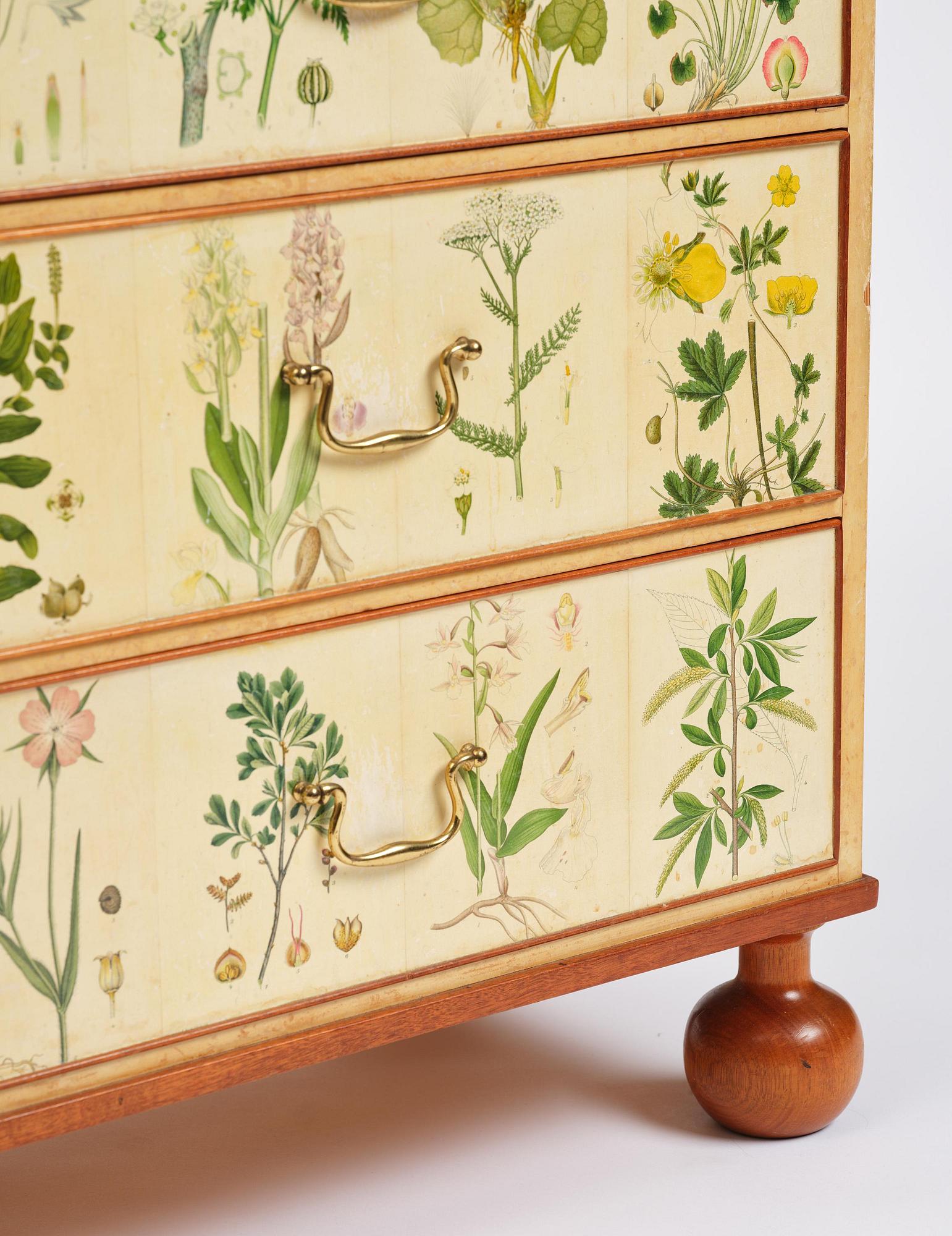
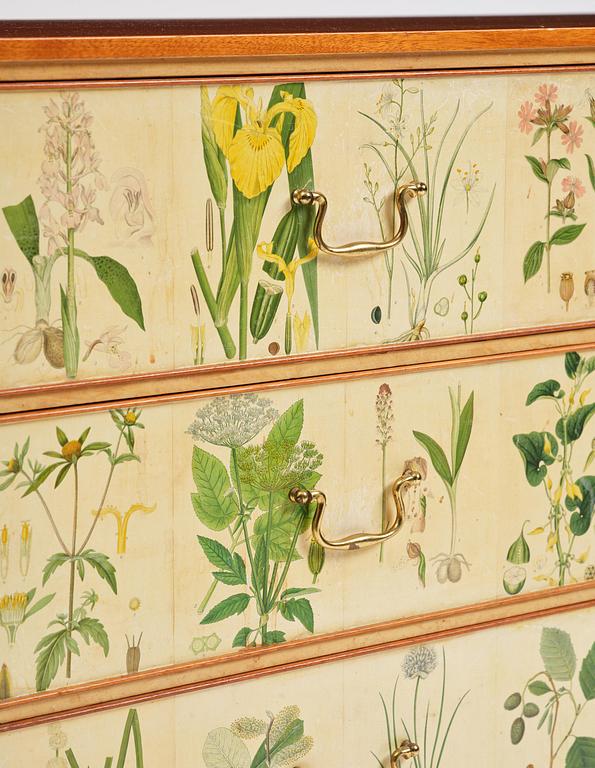
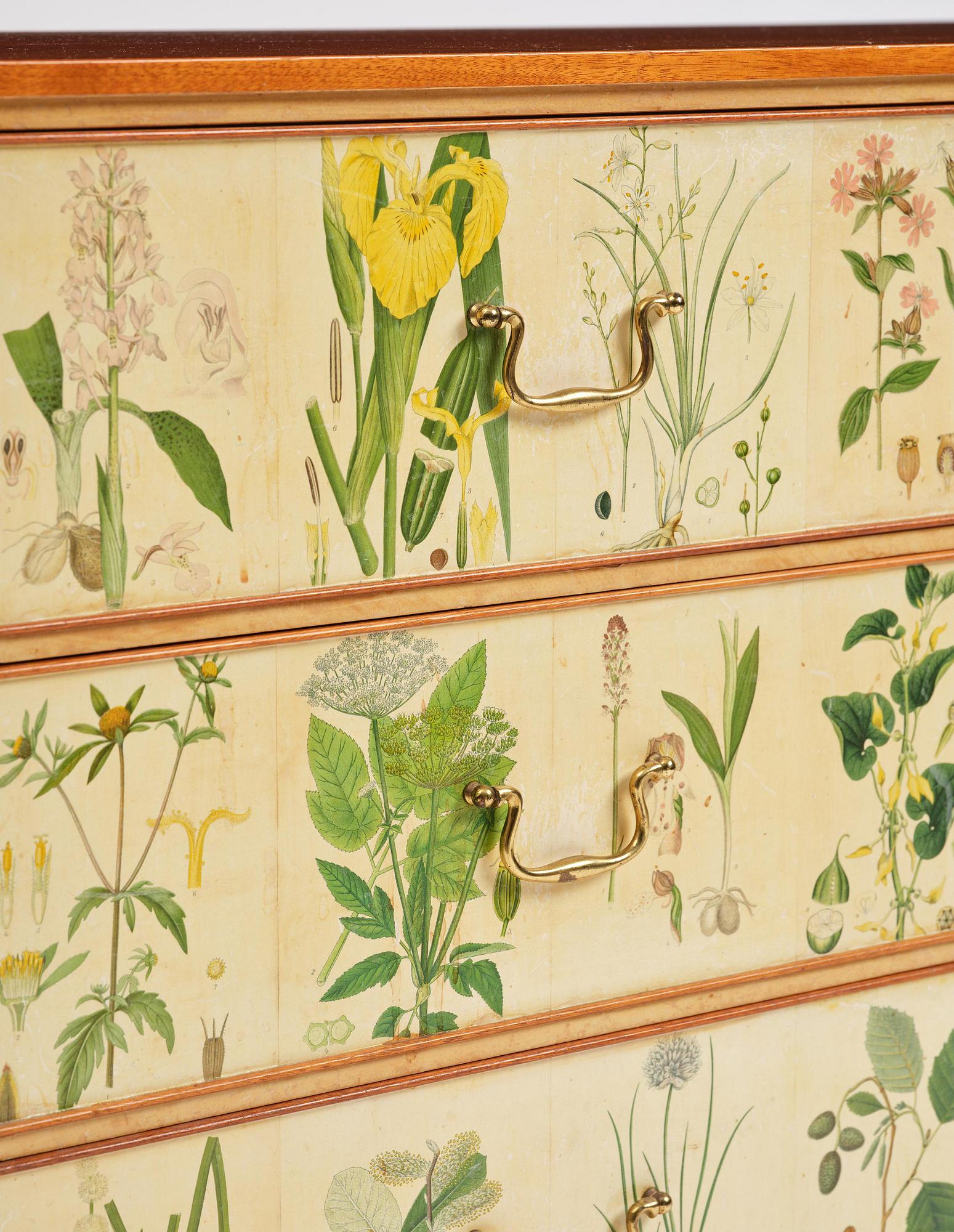
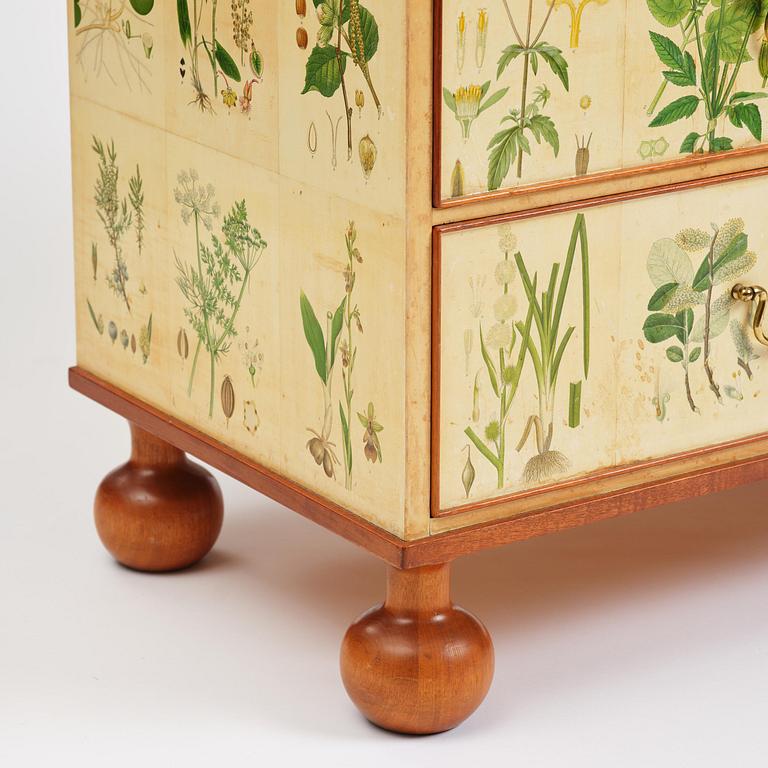
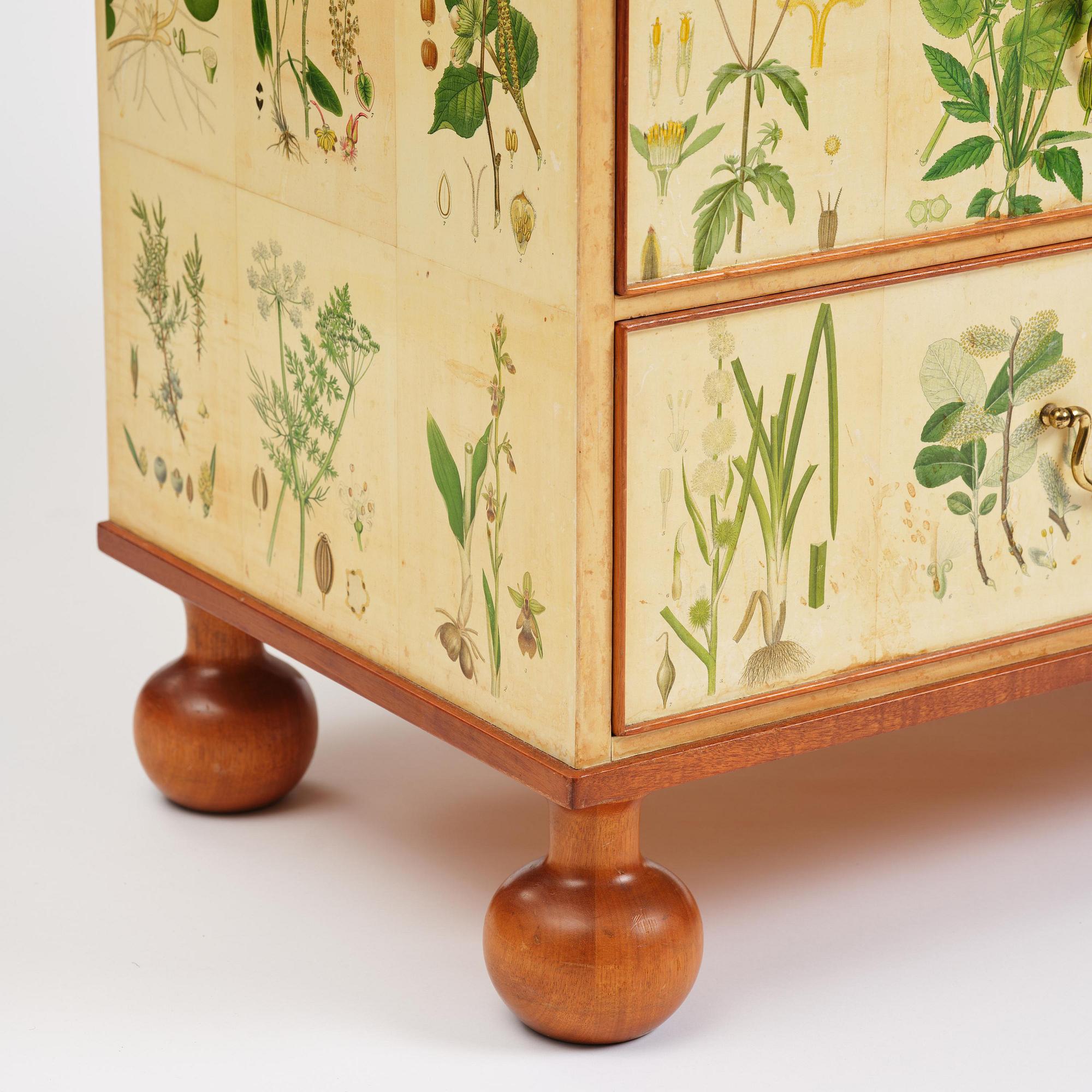
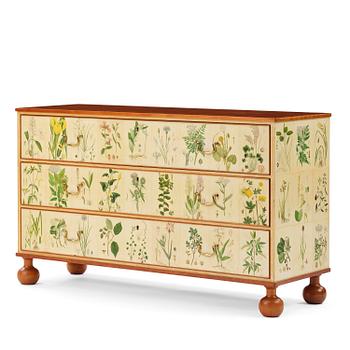
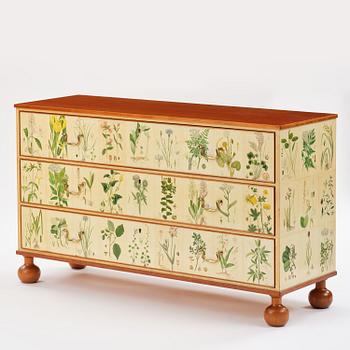
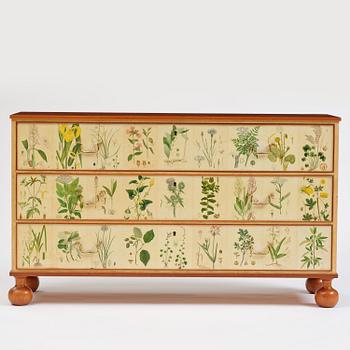
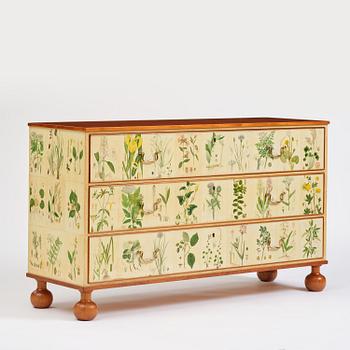
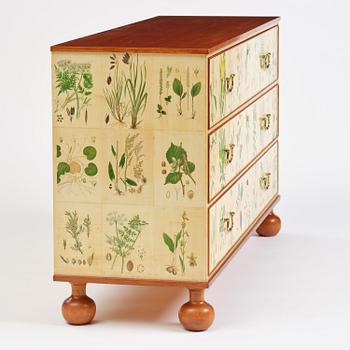
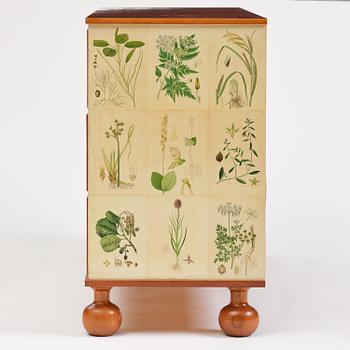
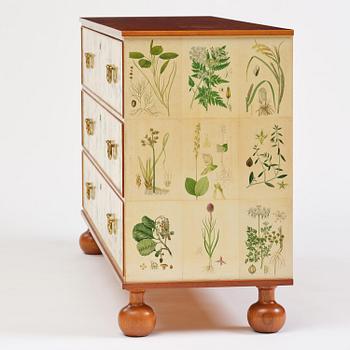
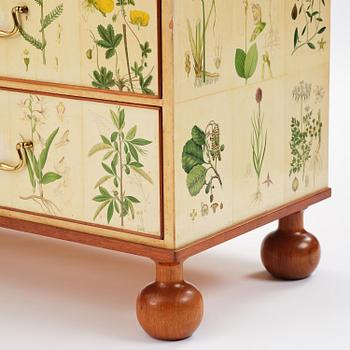
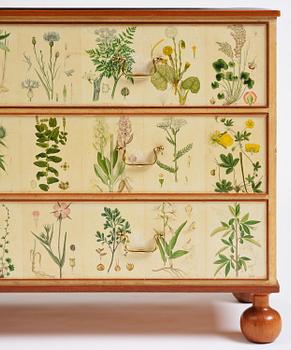
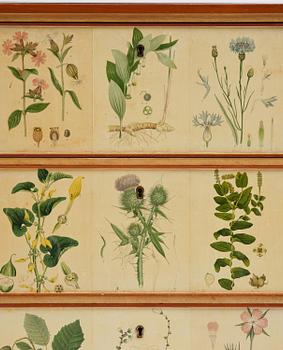
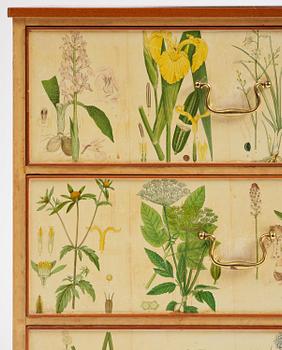
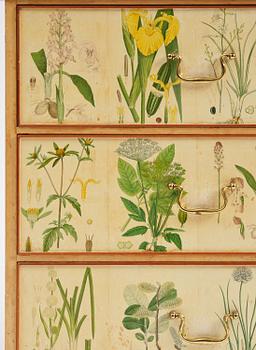
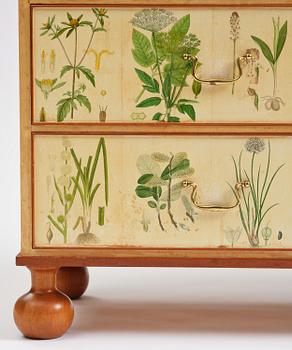
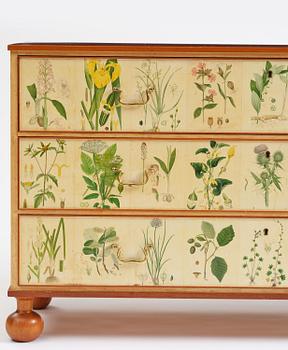
A "Flora" chest of drawers model 1050, Firma Svenskt Tenn, Sweden, ca. 1960s.
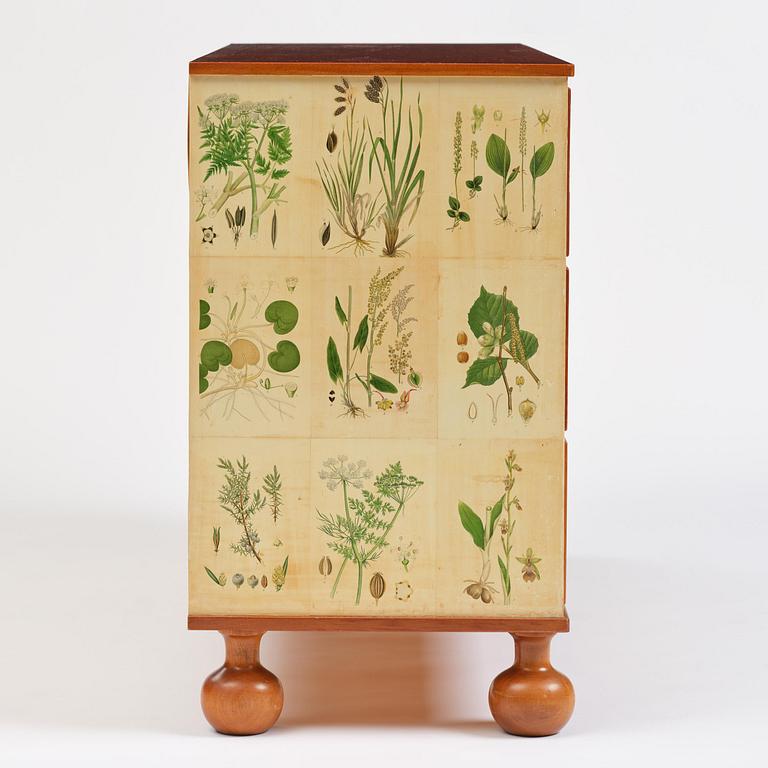
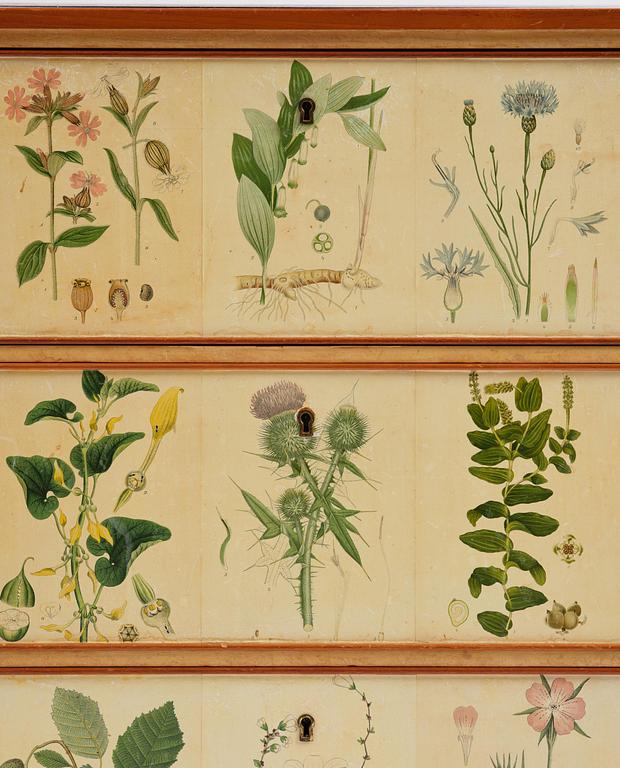
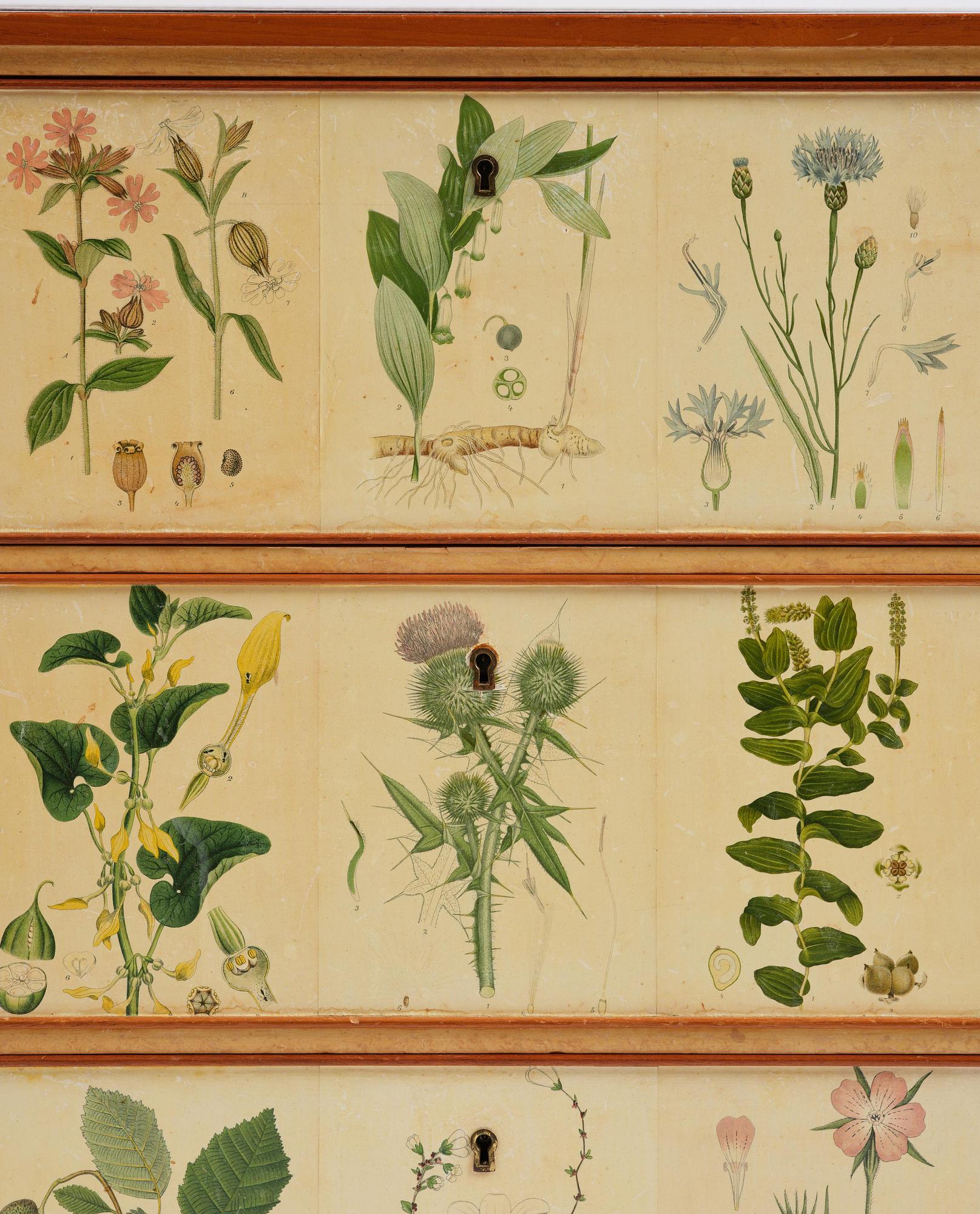
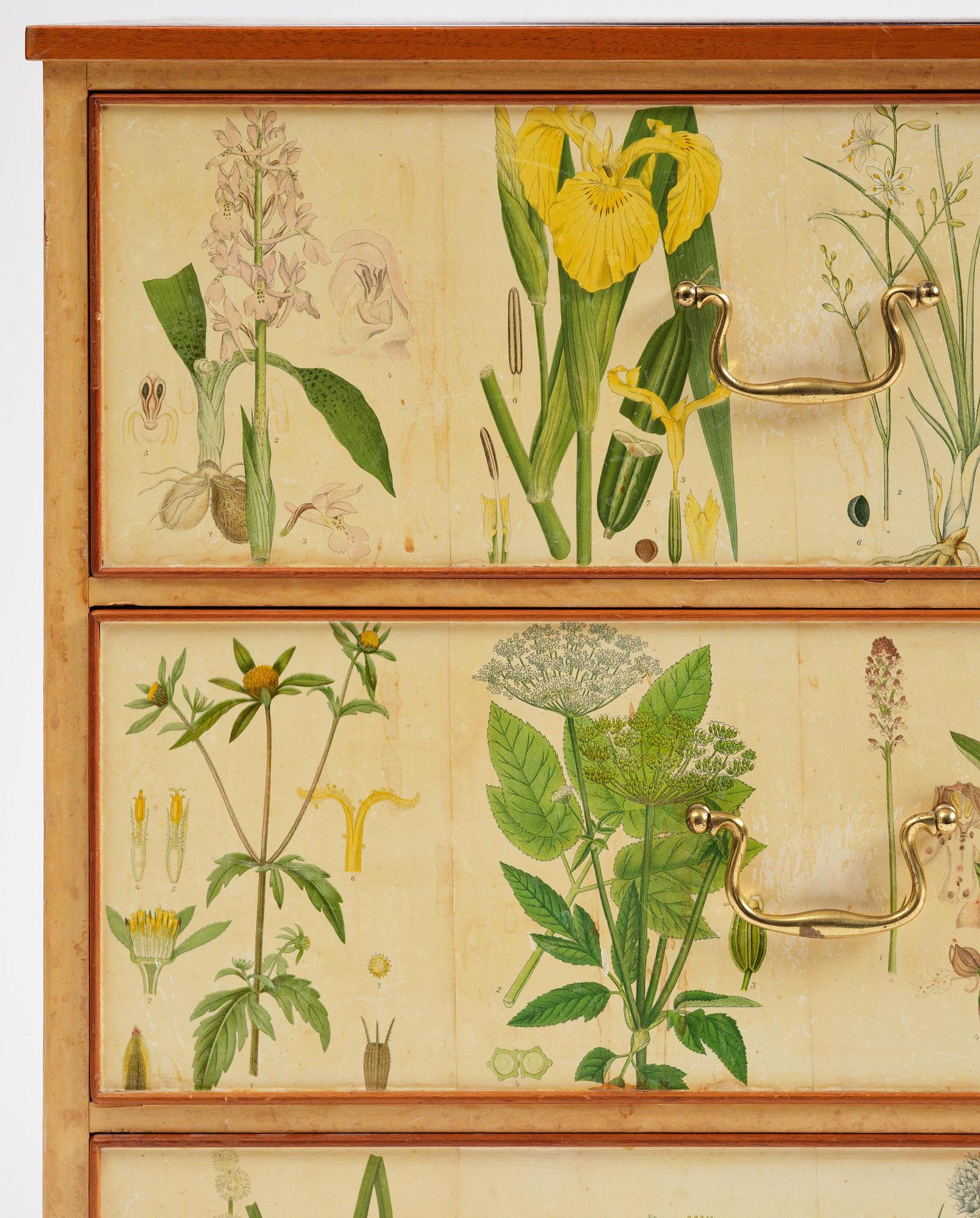
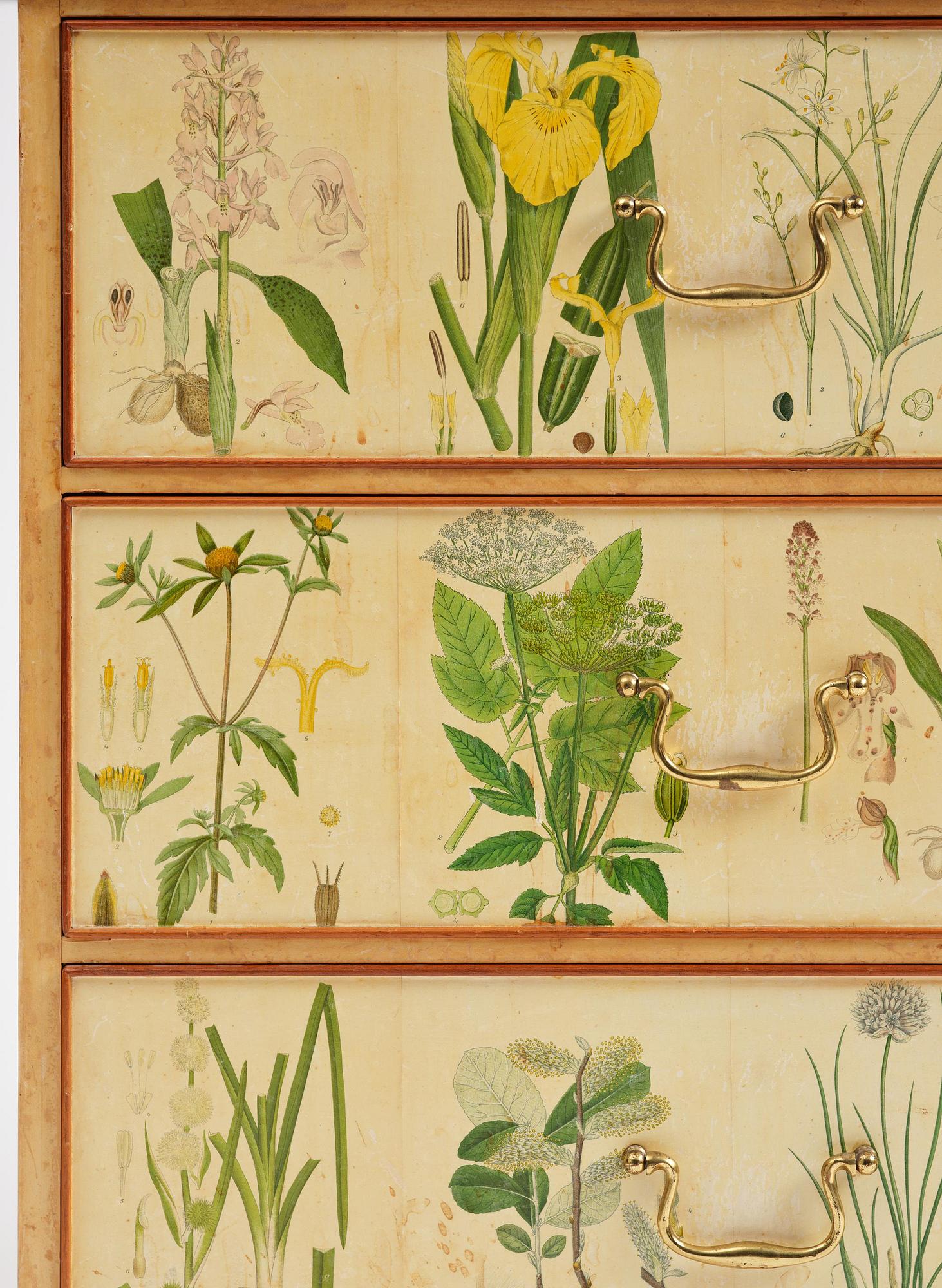
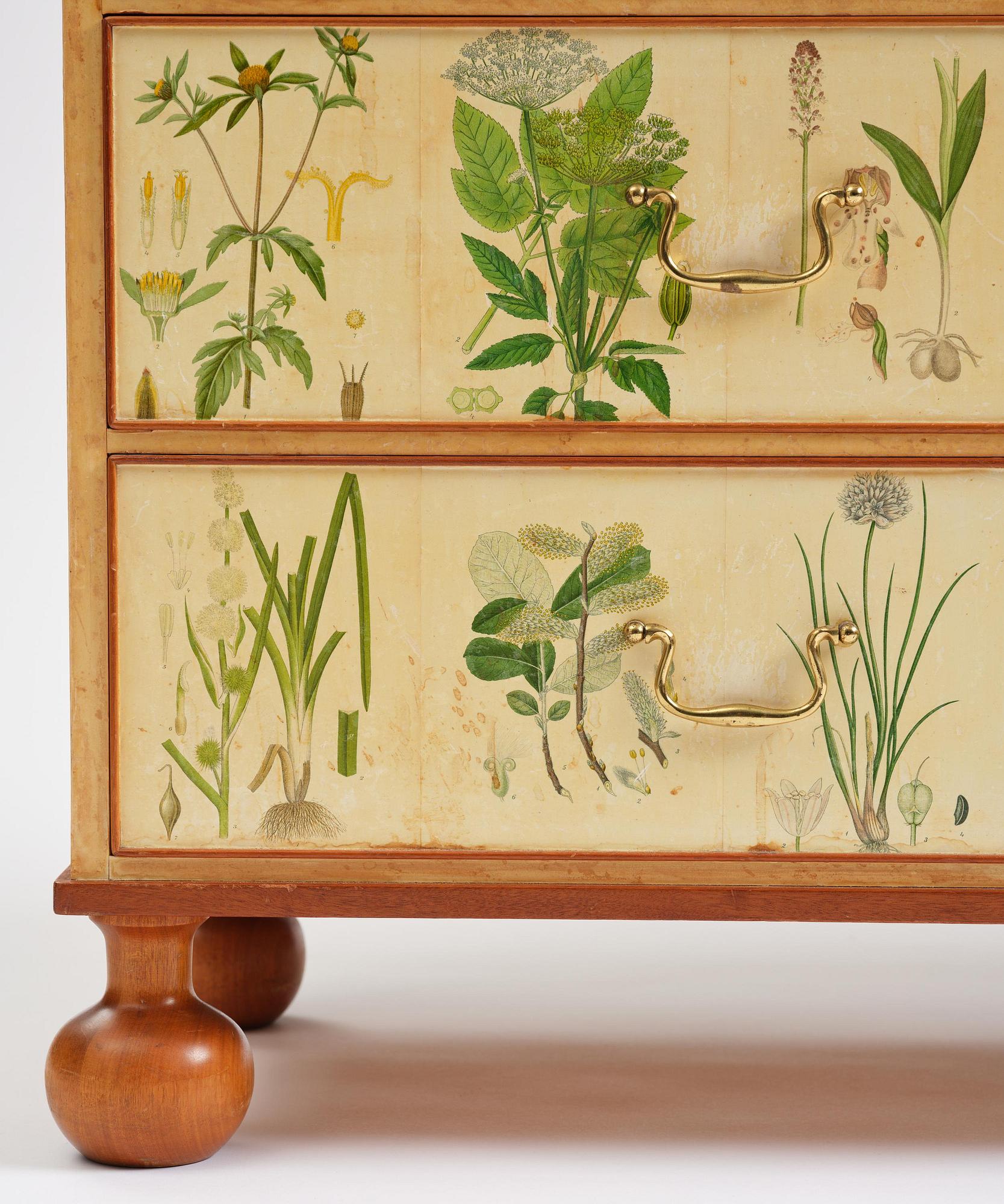
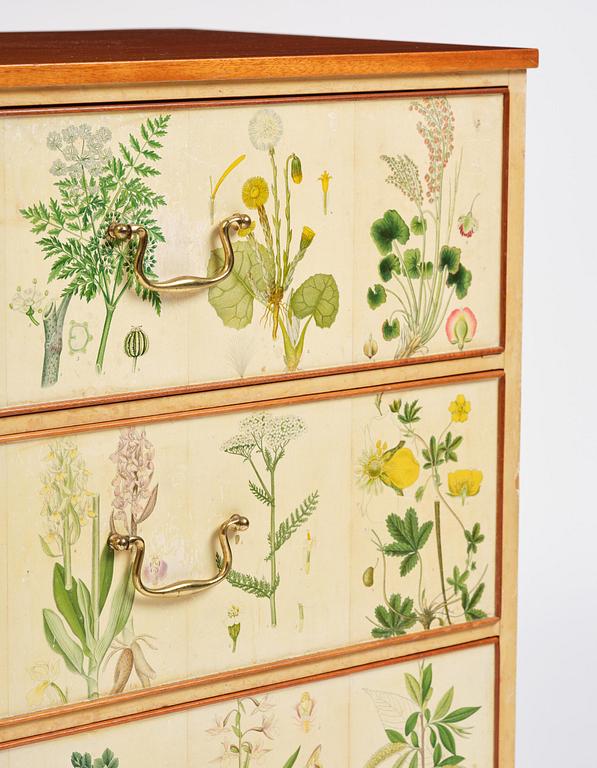
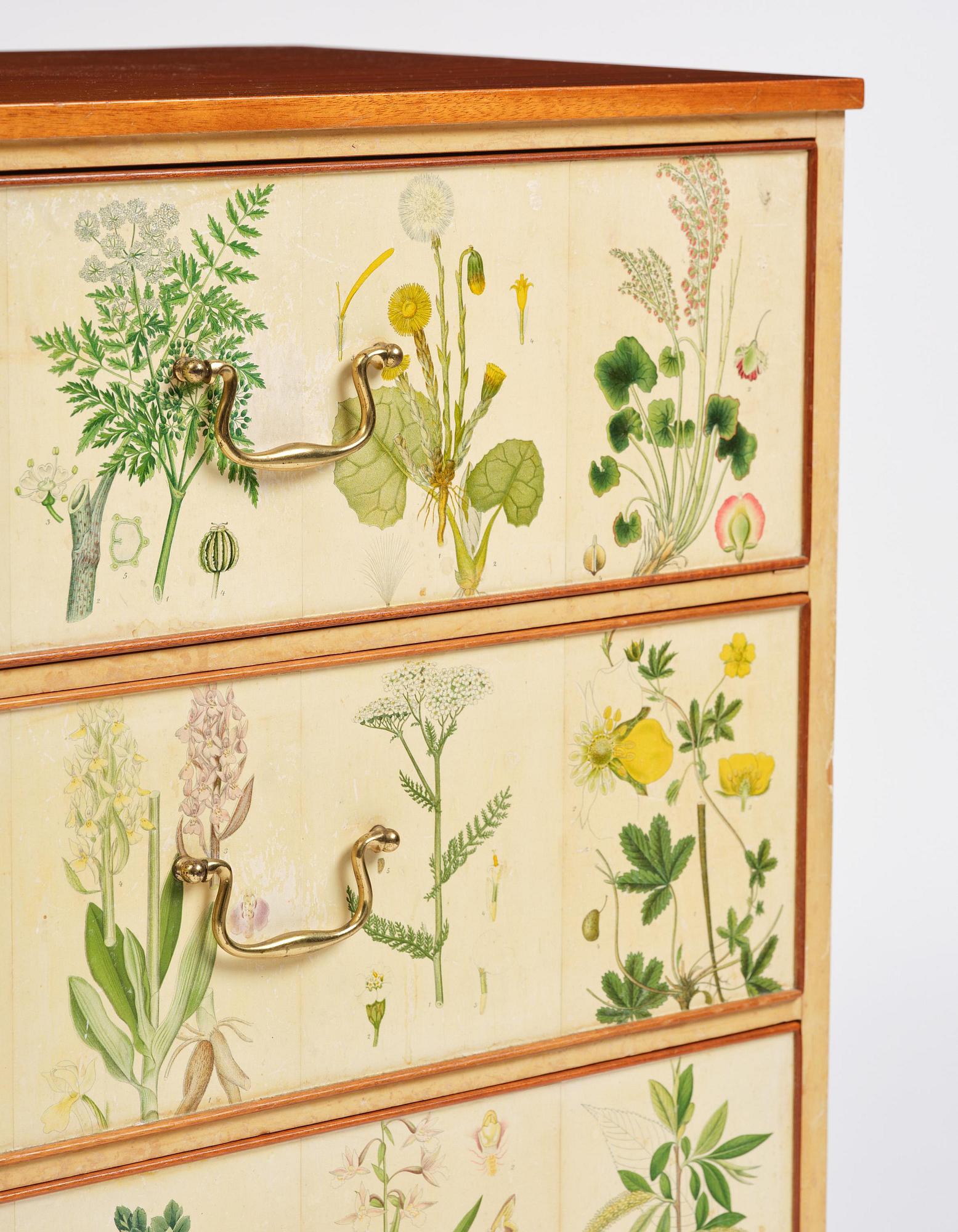
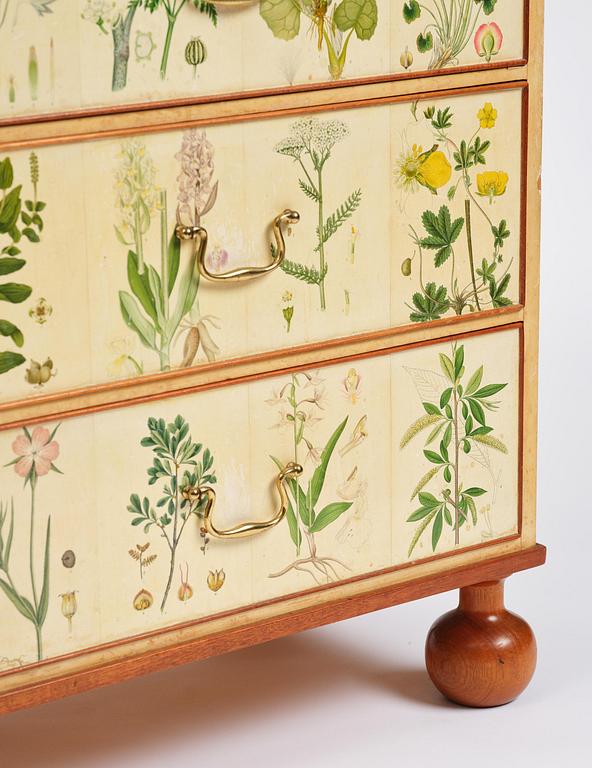
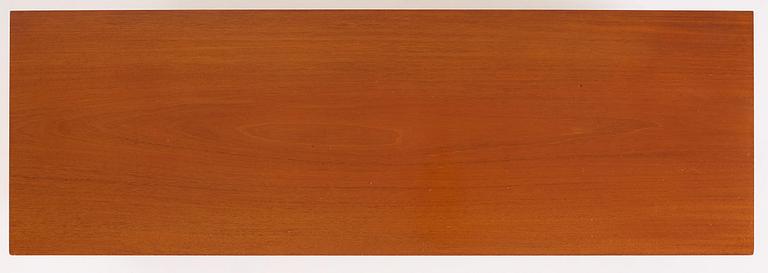
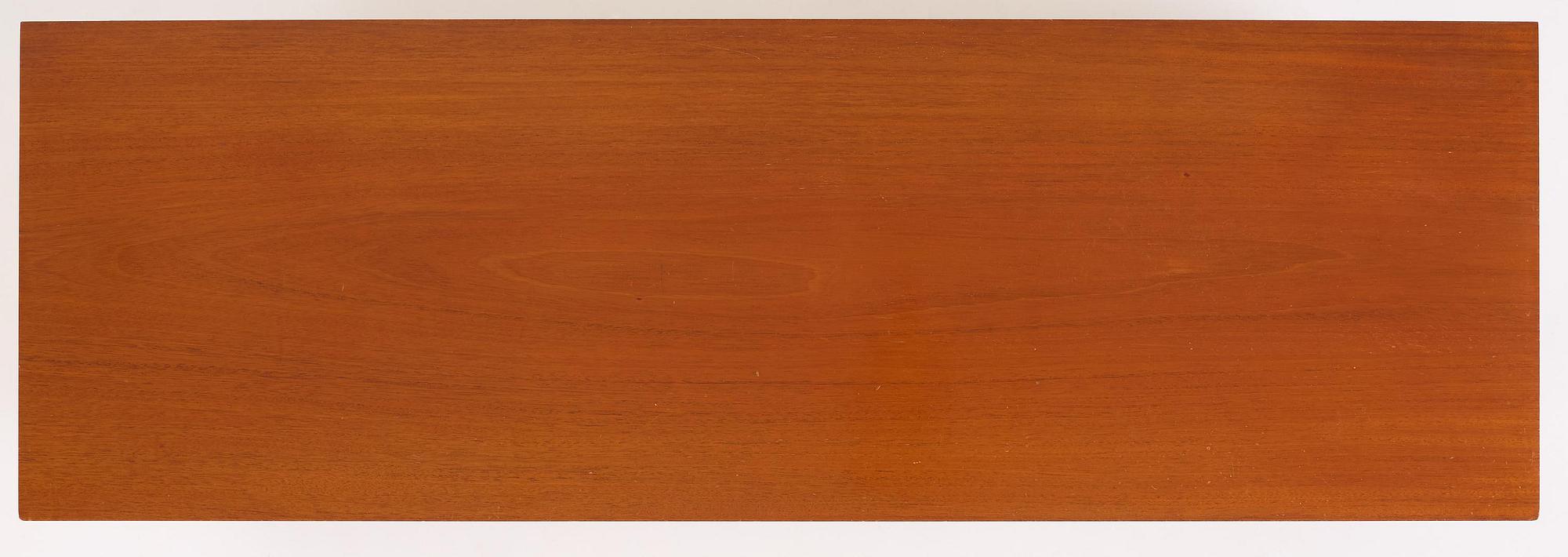
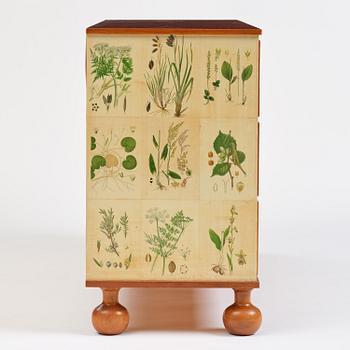
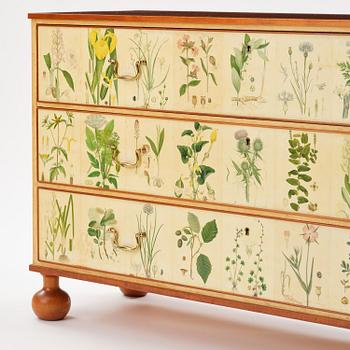
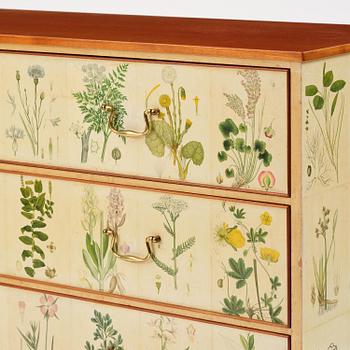
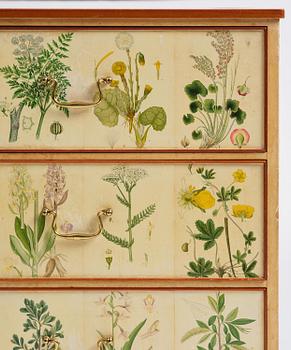
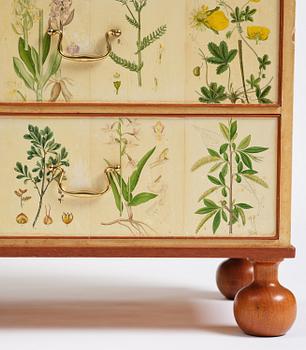
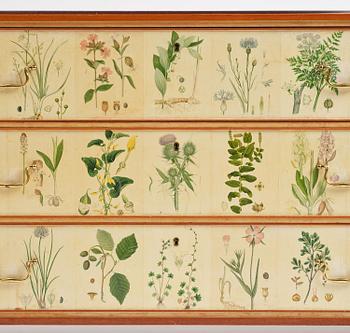
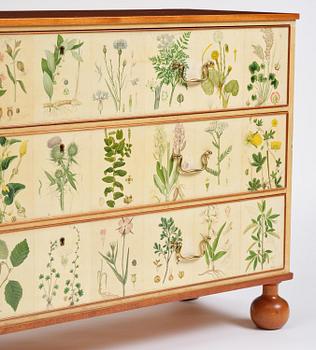
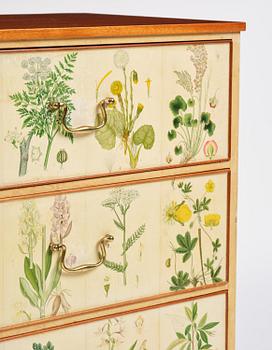
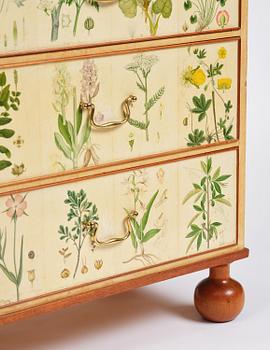
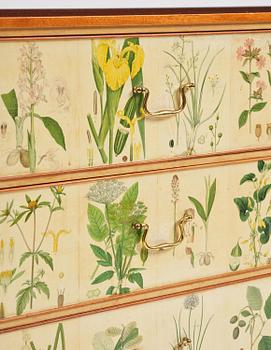
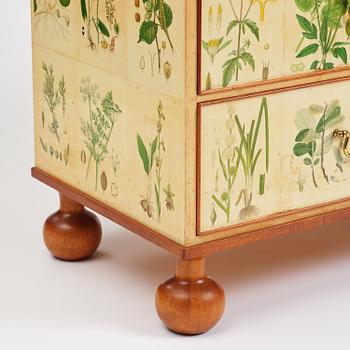
Mahogany, covered with floral prints from "Nordens flora" by C. A. Lindman, three drawers with brass handles, ball feet. Width 131 cm, depth 43 cm, height 76 cm.
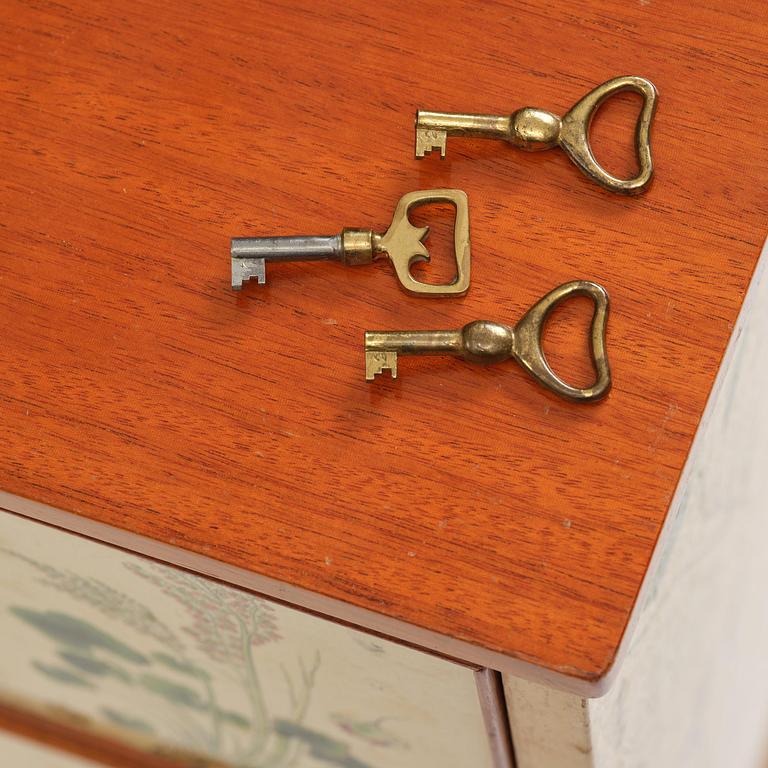
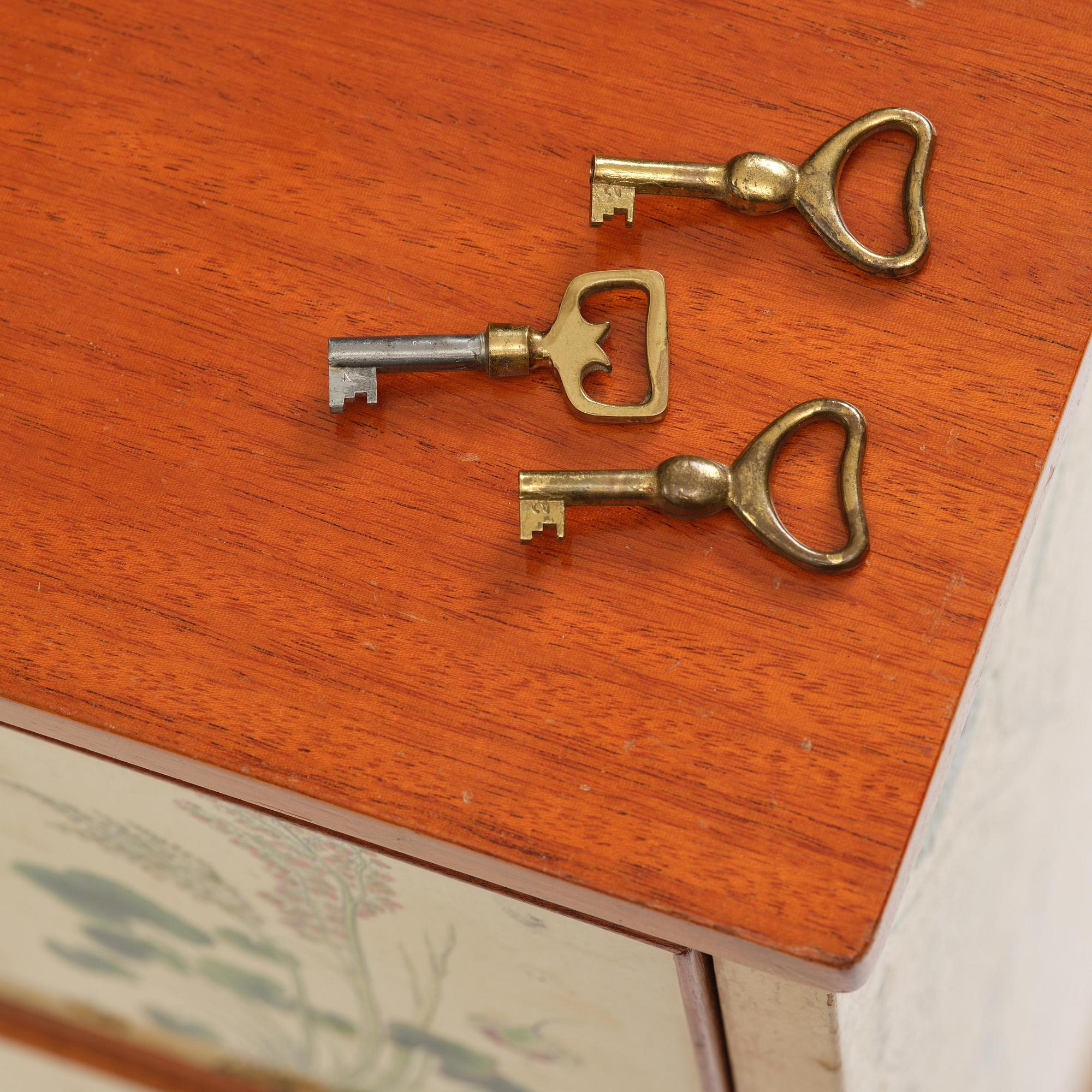
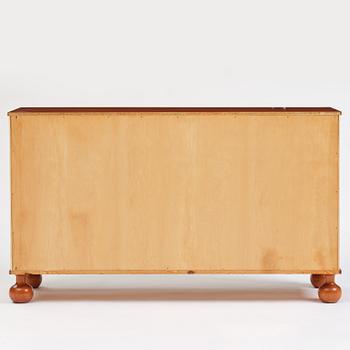
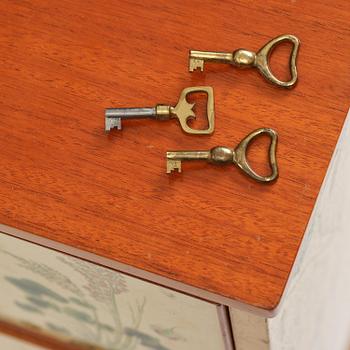
Minor wear, with insignificant stains and slight abrasion. Keys included.
Provenance
Midwife Ulla-Britt Bergström (1924–2020), Stockholm, probably acquired during the 1960s.
Thence by descent to the present owner.
More information
Already during Josef Frank’s years at Haus & Garten in Vienna in the 1930s, he began covering cabinets with various materials, at the time using textiles such as chintz and cretonne. In parallel with Frank’s work in Vienna, Svenskt Tenn founder Estrid Ericson travelled to Uppsala in the summer of 1930, visiting Carl von Linné’s Hammarby together with her friend, the author and poet Bo Bergman. Estrid was captivated by Linné’s idea of covering bedroom walls with botanical prints. She was inspired to do something similar in her own bedroom in her Stockholm flat.
The wallpapered furniture has become something of a signature of Svenskt Tenn’s most exclusive production. From the 1930s onwards, the pieces were varied in different ways, with the choice of covering and furniture model creating different expressions. Various types of illustrated works were used, featuring highly varied motifs and types of graphic prints—sometimes maps, different kinds of fabrics and, occasionally, leather. A few years after Josef Frank and Estrid Ericson began their collaboration in the 1930s, they created a cabinet and a chest of drawers covered with plates from Palmstruch’s flora, and later from Lindman’s flora. The chest of drawers, model no. 1050, was produced from around 1940.
More about Josef Frank
Josef Frank was born in Austria and studied architecture in Vienna. As an architect, he worked with private home areas, villas and apartment buildings. In 1925 he started his own interior design firm Haus und Garten together with two architect colleagues. In connection with the advance of the Nazis, he emigrated to Sweden and was employed in 1934 at Svenskt Tenn. After the outbreak of World War II, Josef Frank, who came from a Jewish family, was forced into exile in New York. At Svenskt Tenn, he made an impact on the product range for four decades; especially when it comes to furniture and fabric prints.
Read moreFor condition report contact specialist

What will the transport cost?
Shipping can only be arranged by contacting specialdelivery@bukowskis.com.
Image rights
The artworks in this database are protected by copyright and may not be reproduced without the permission of the rights holders. The artworks are reproduced in this database with a license from Bildupphovsrätt.
Others have also viewed