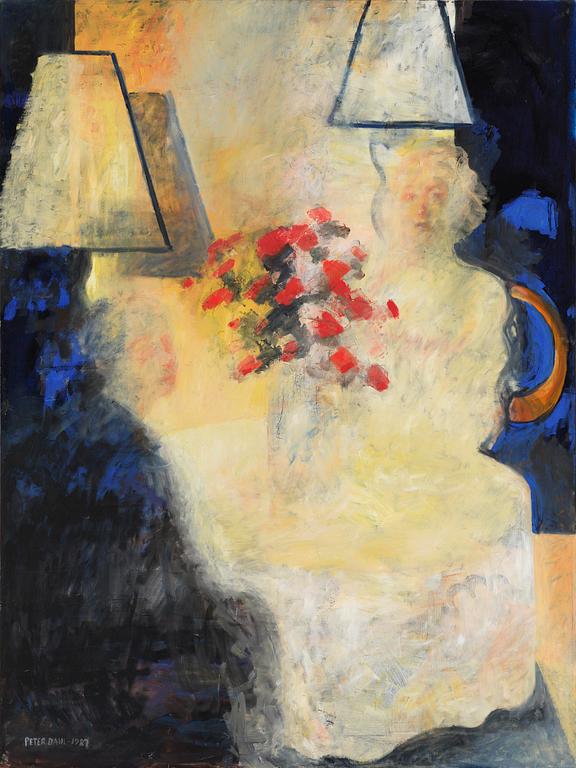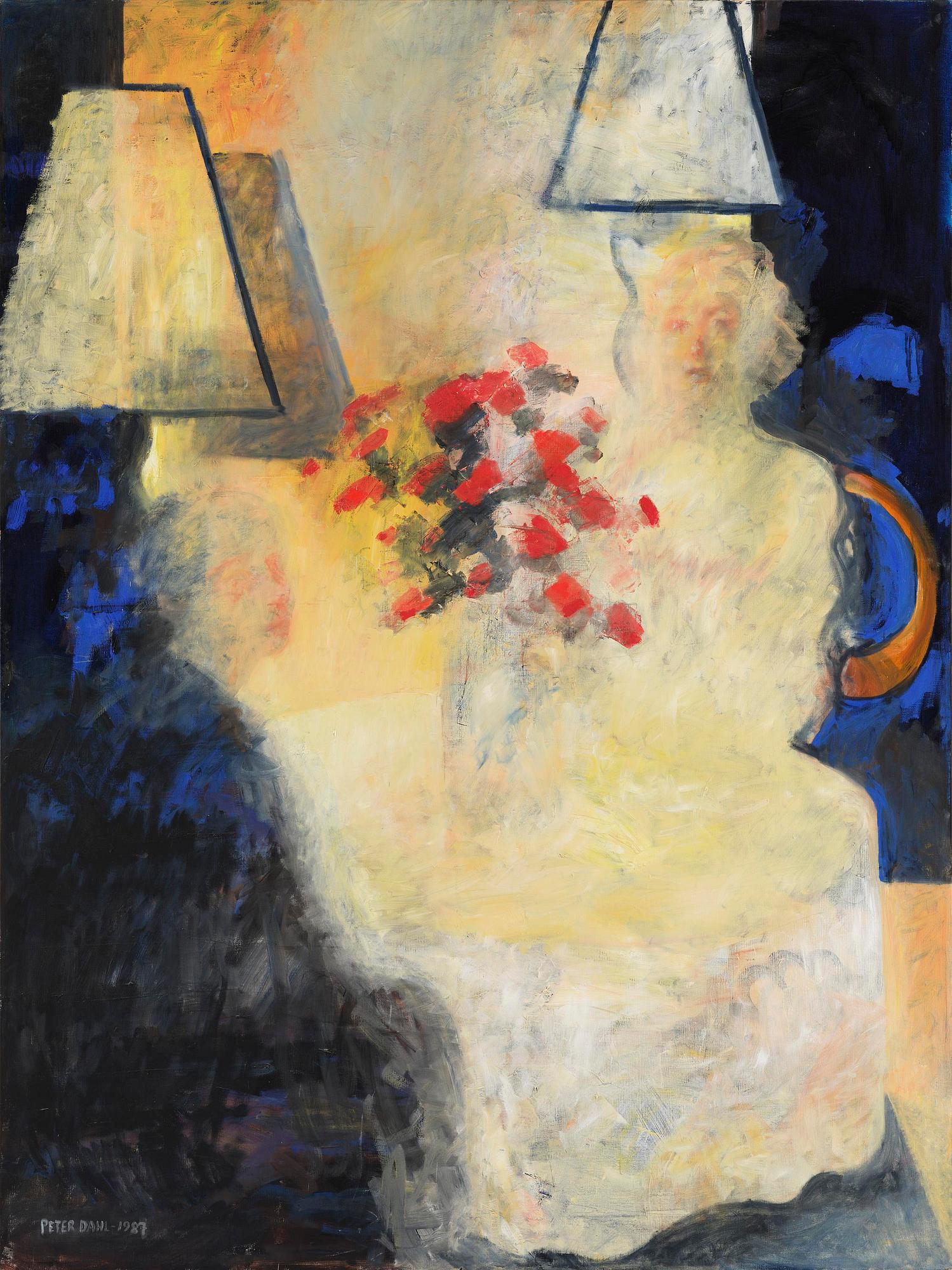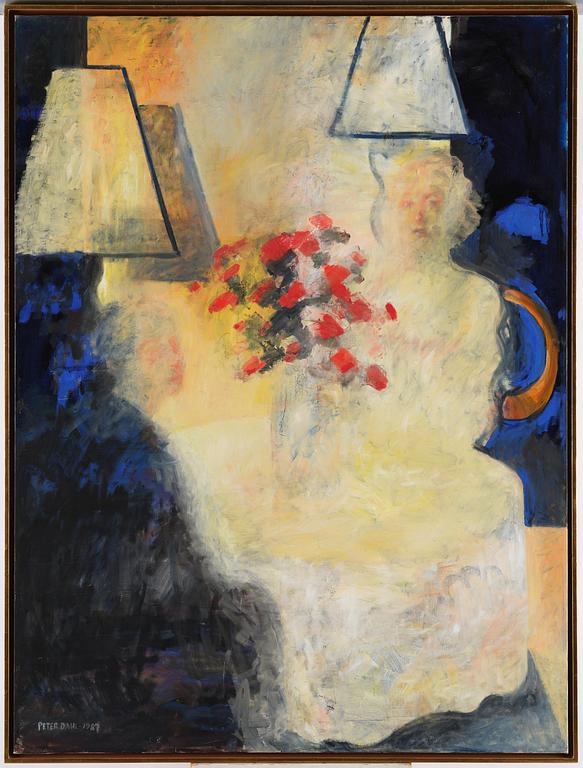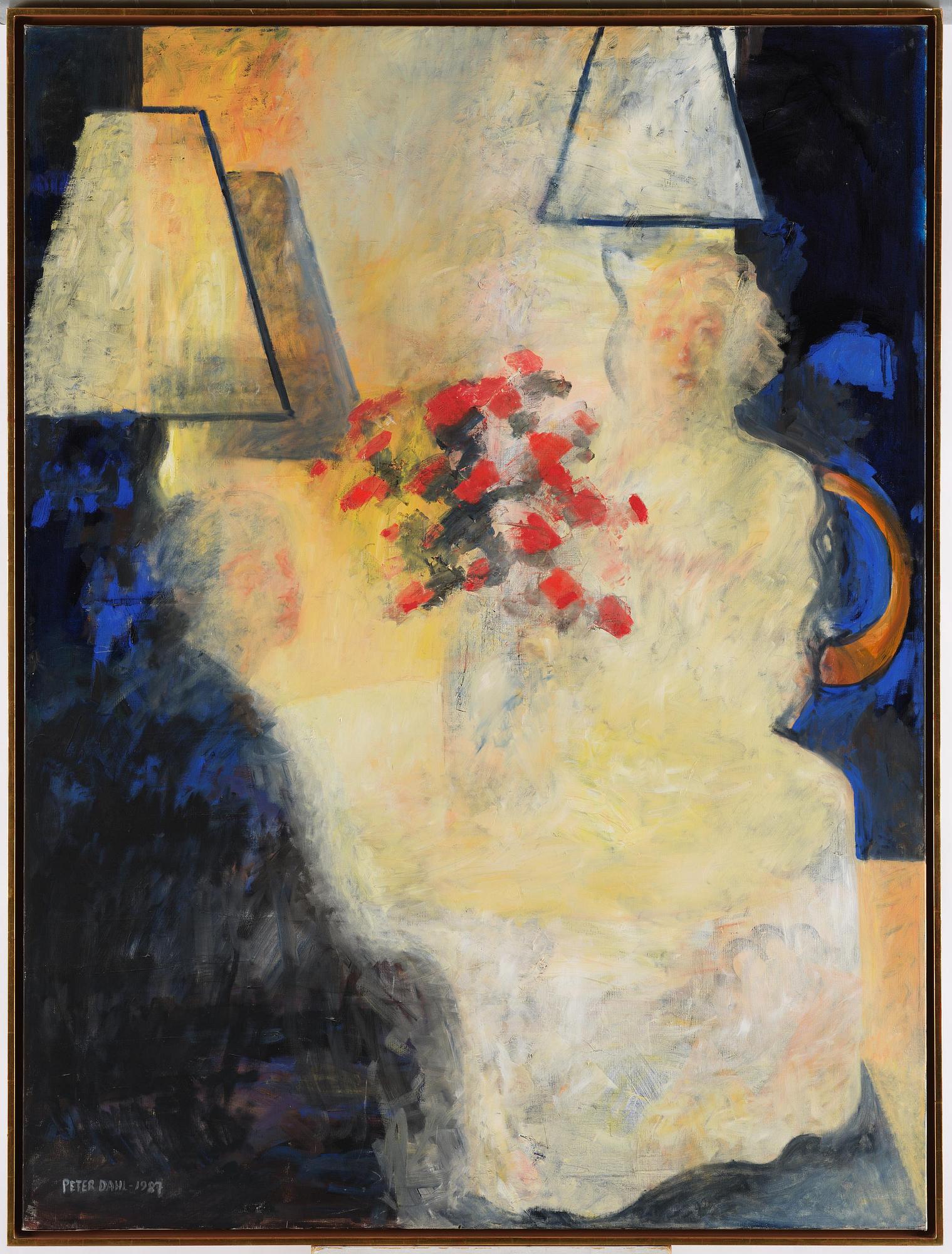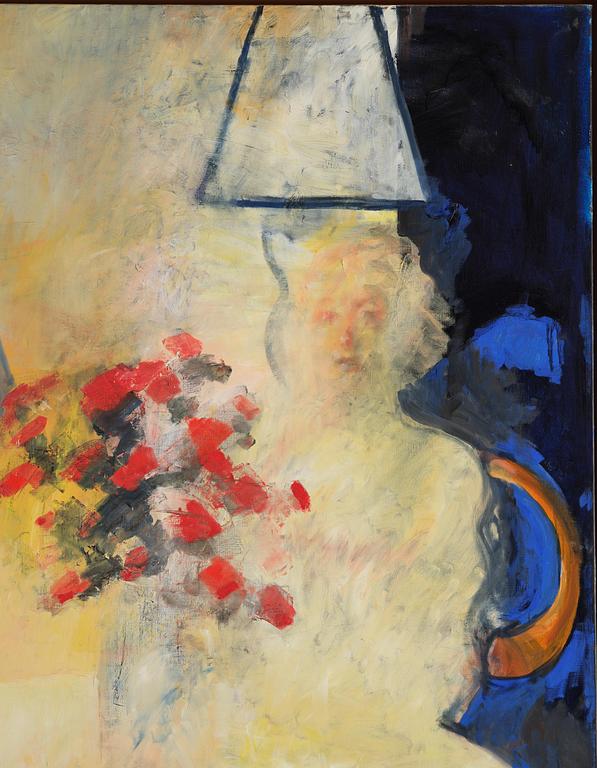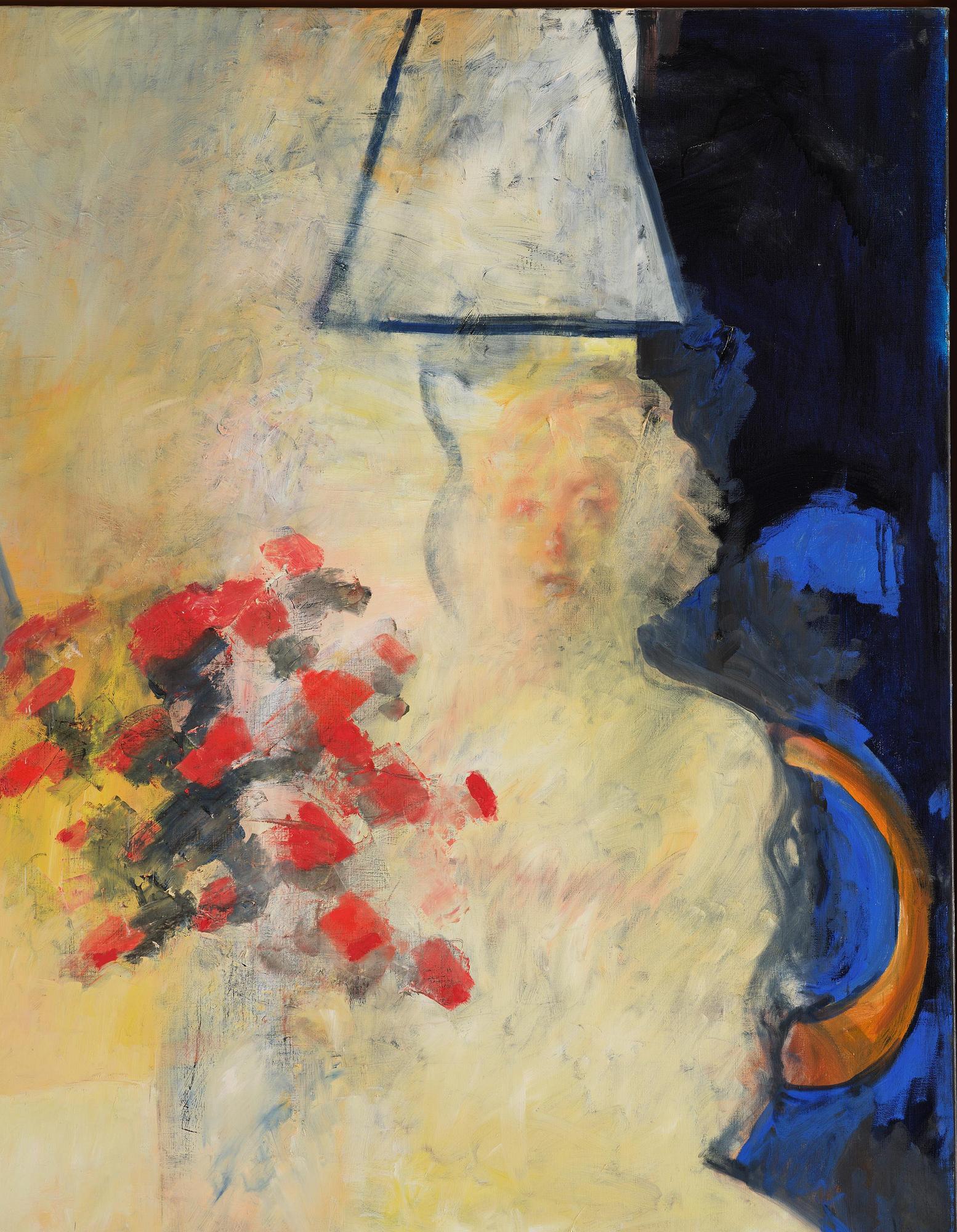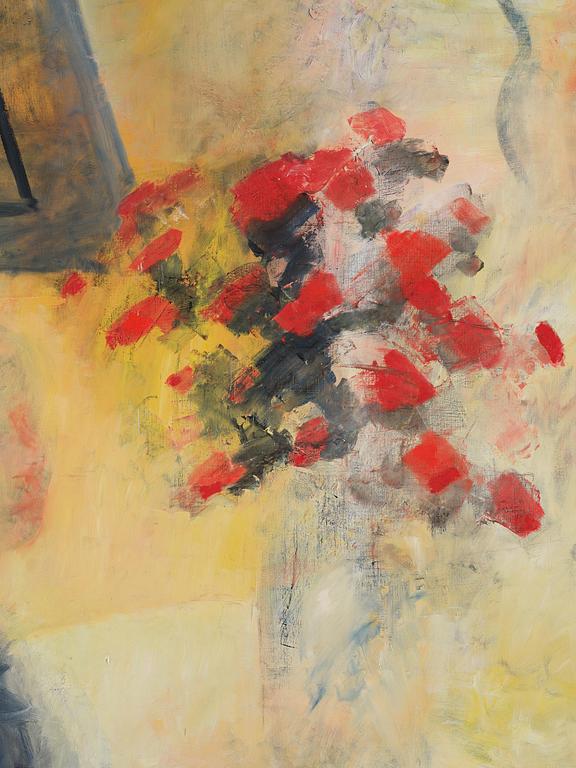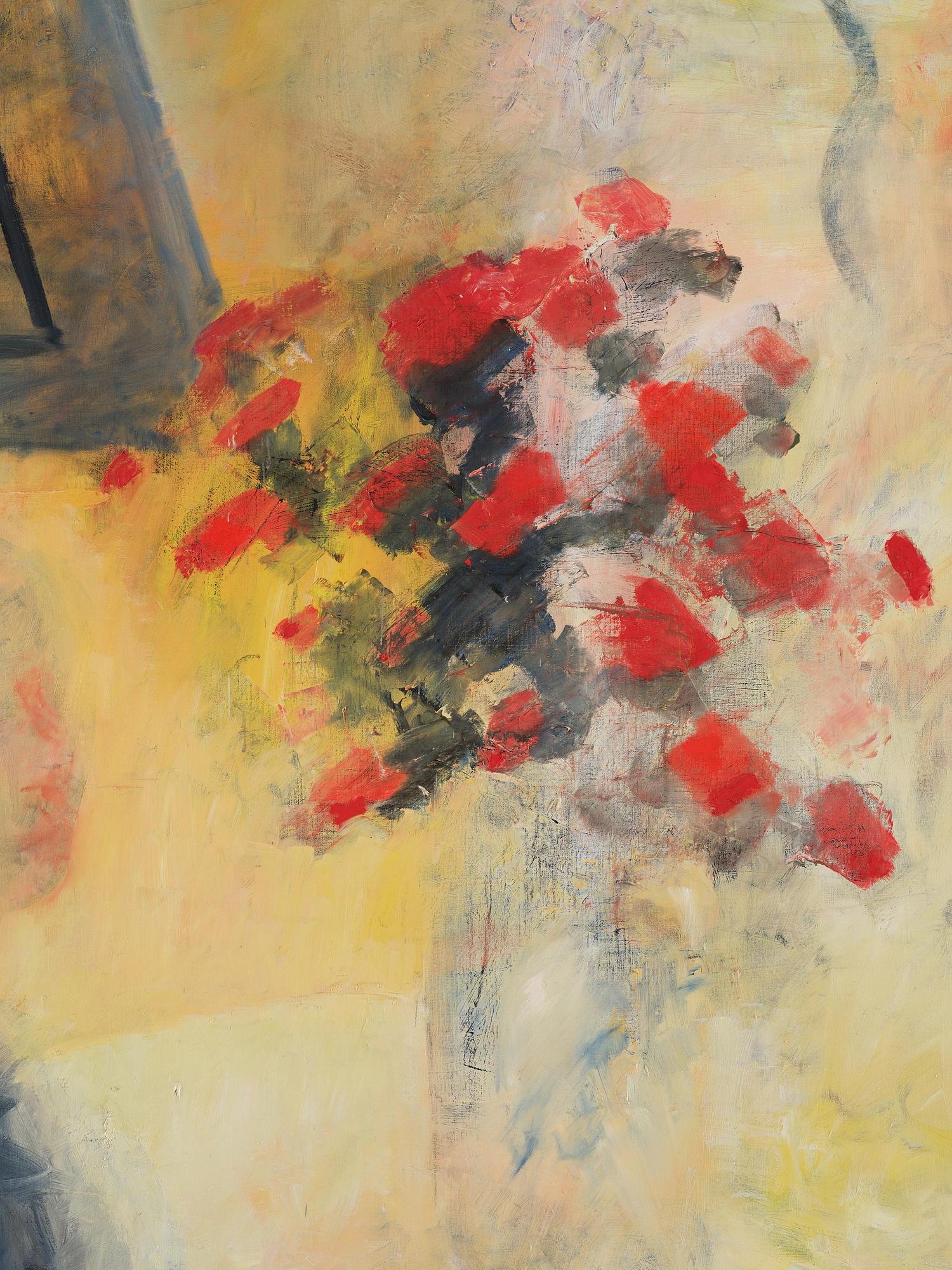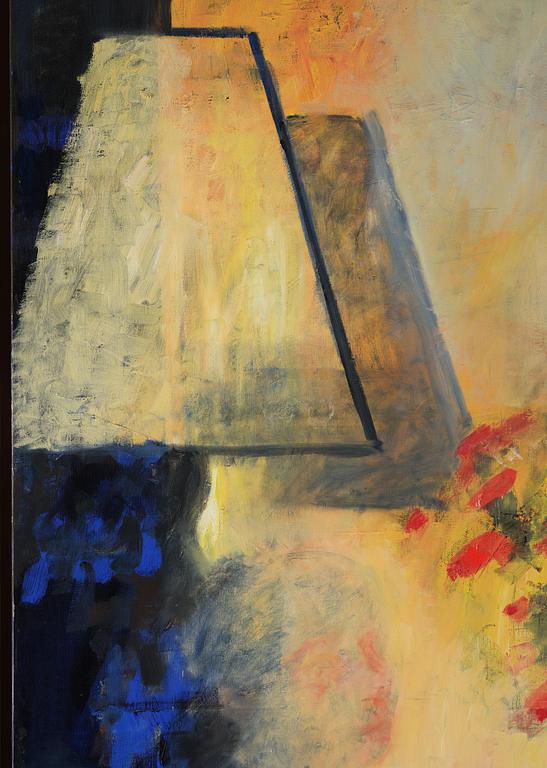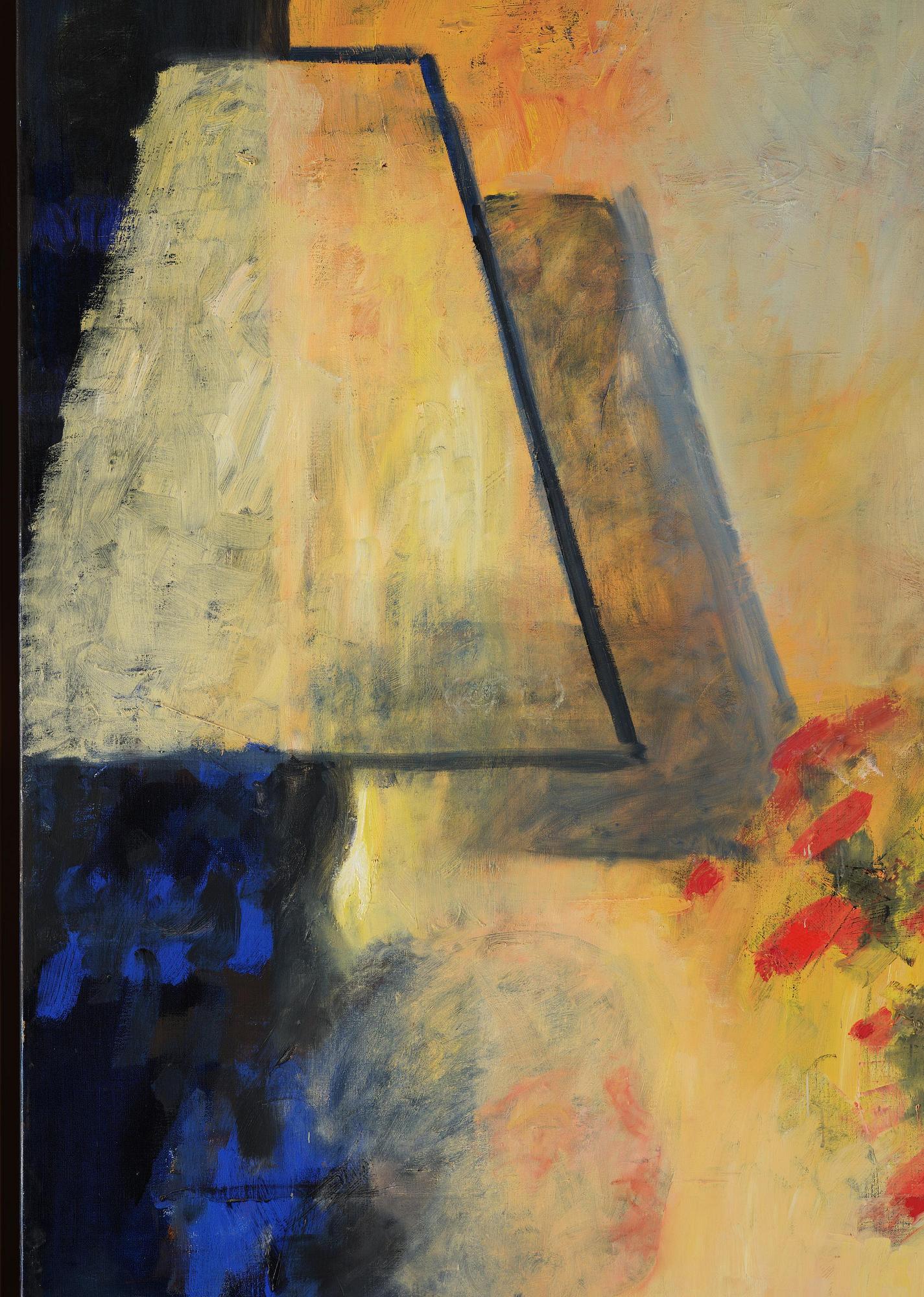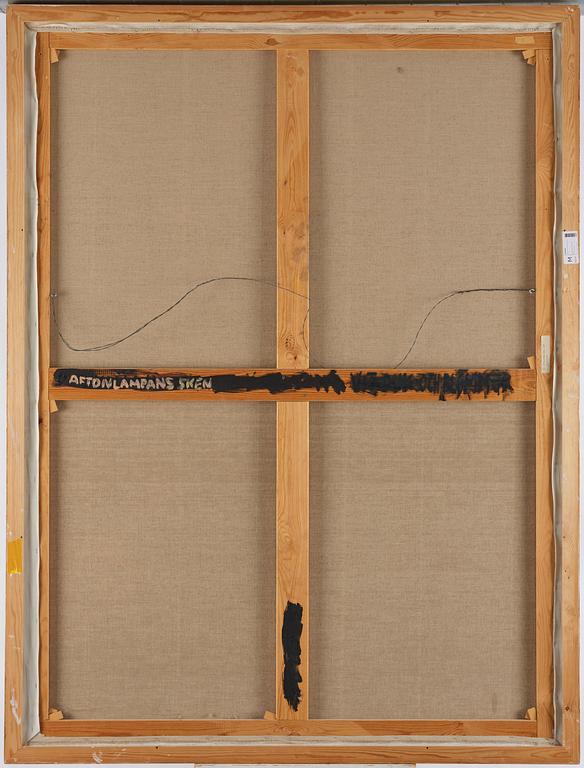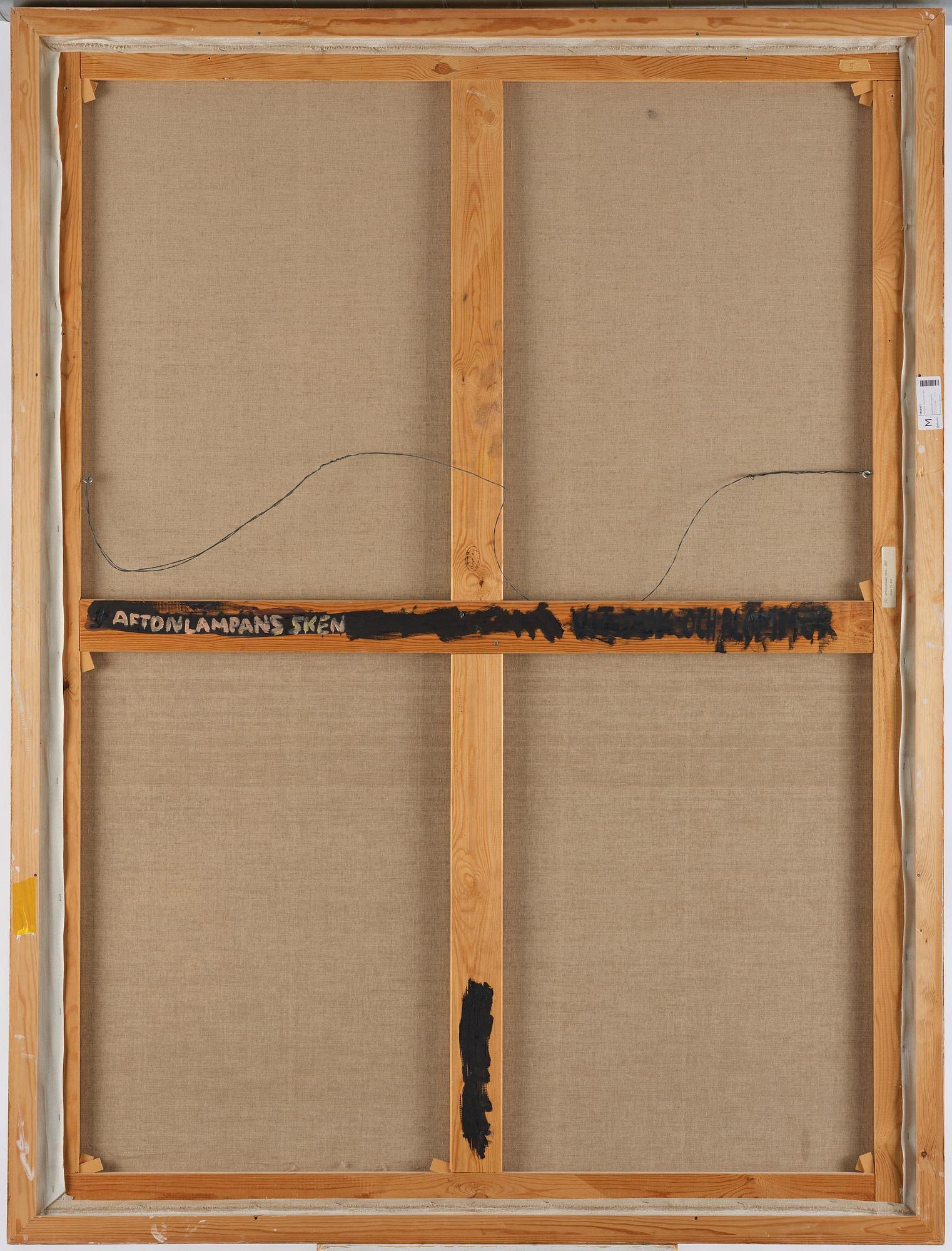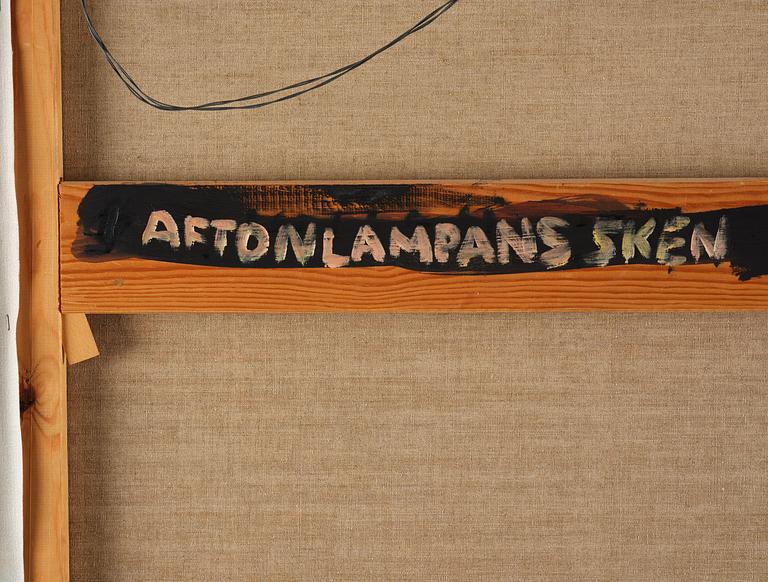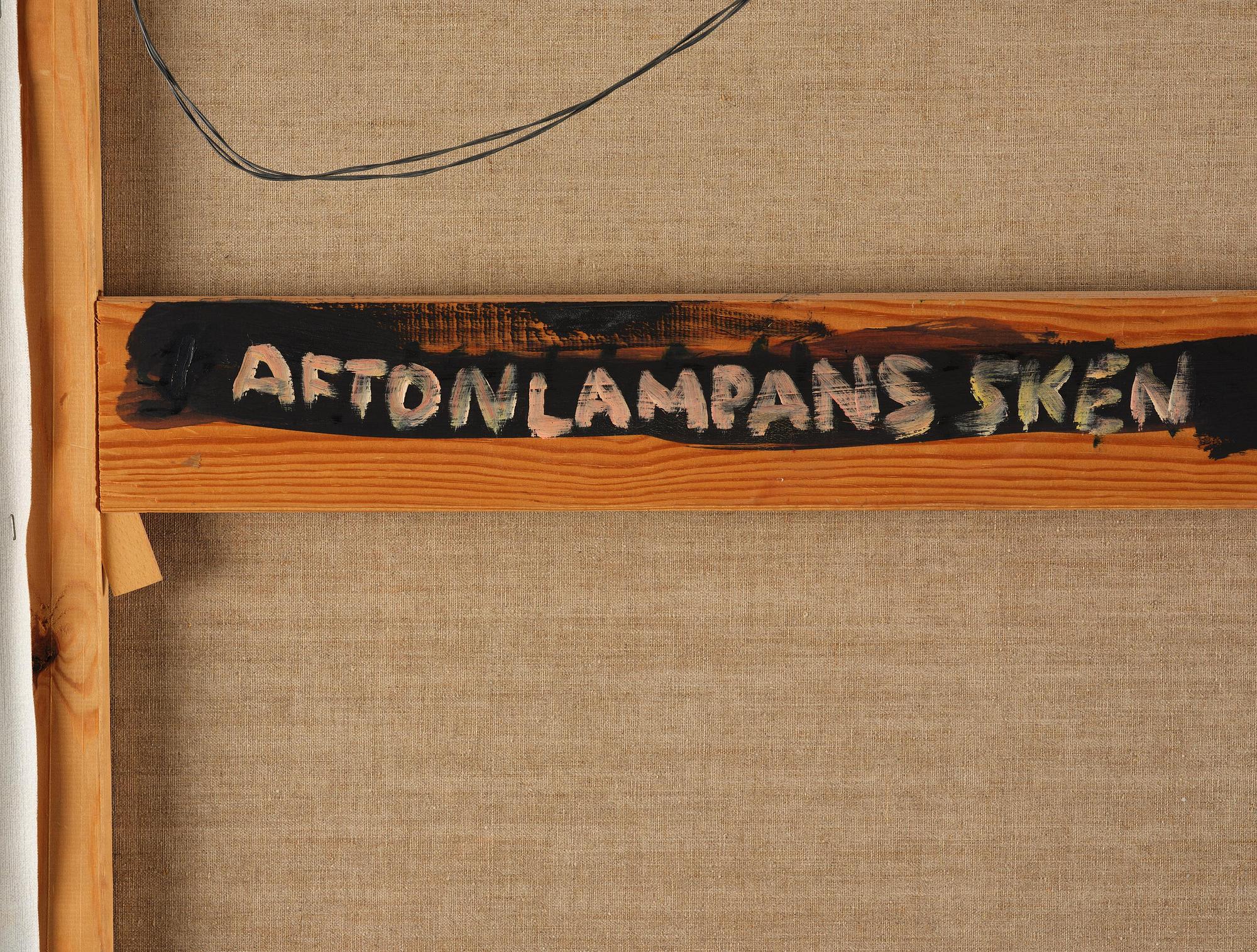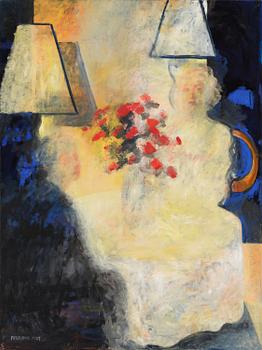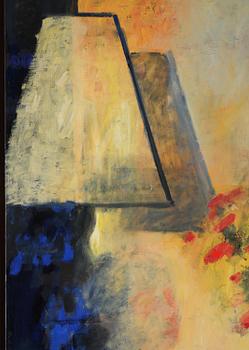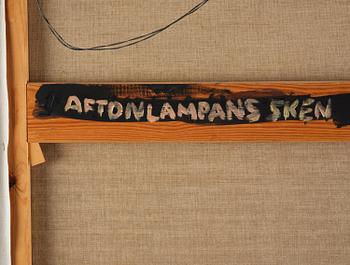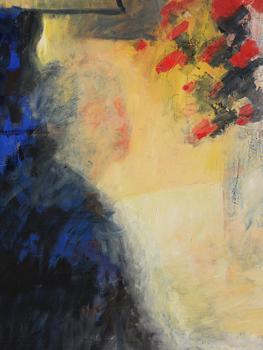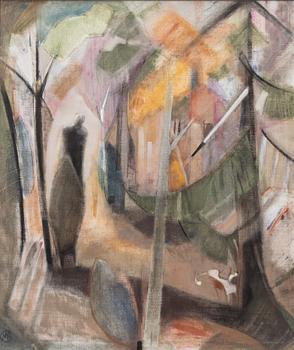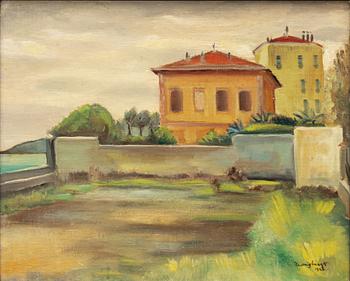
"Aftonlampans sken"
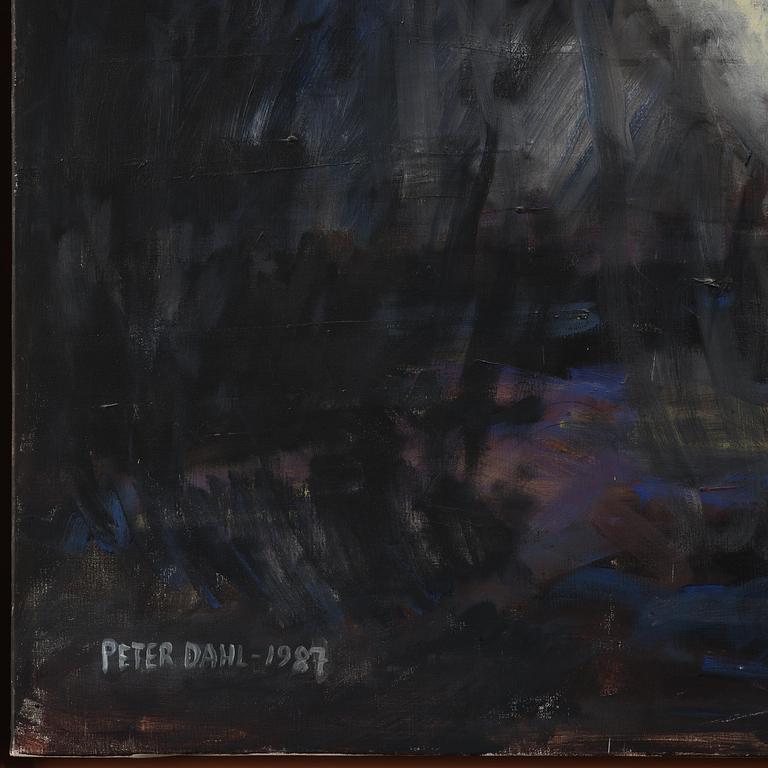
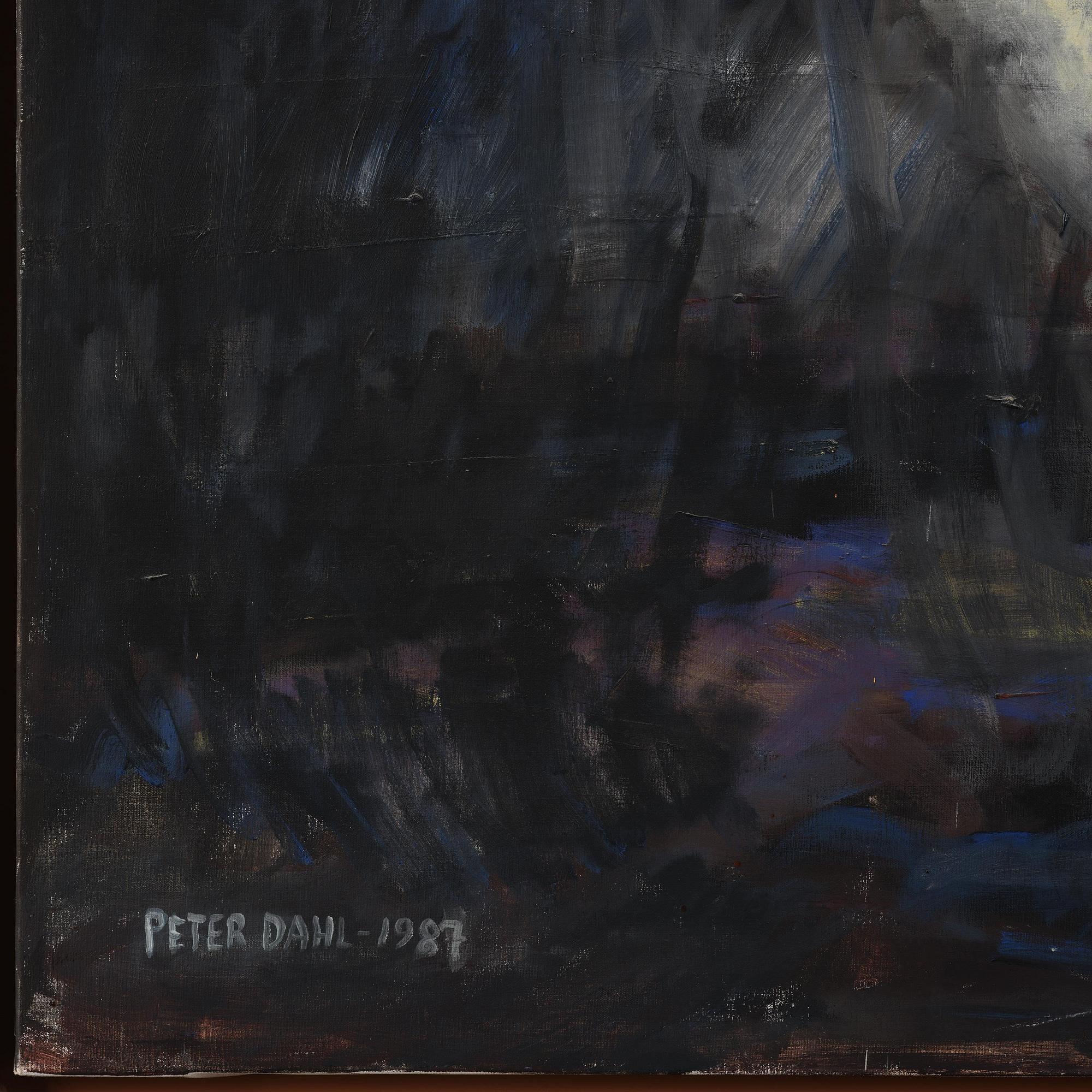
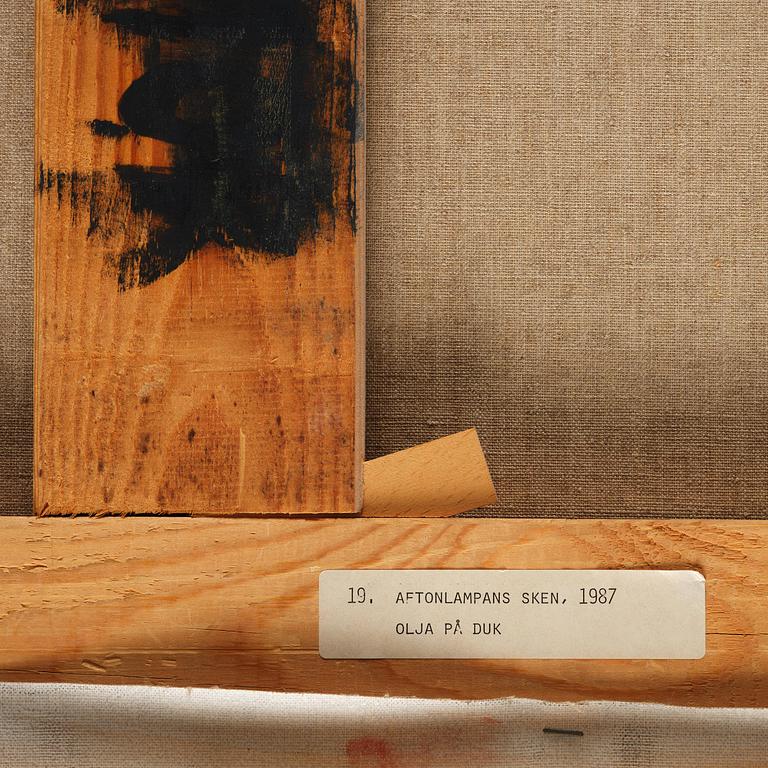
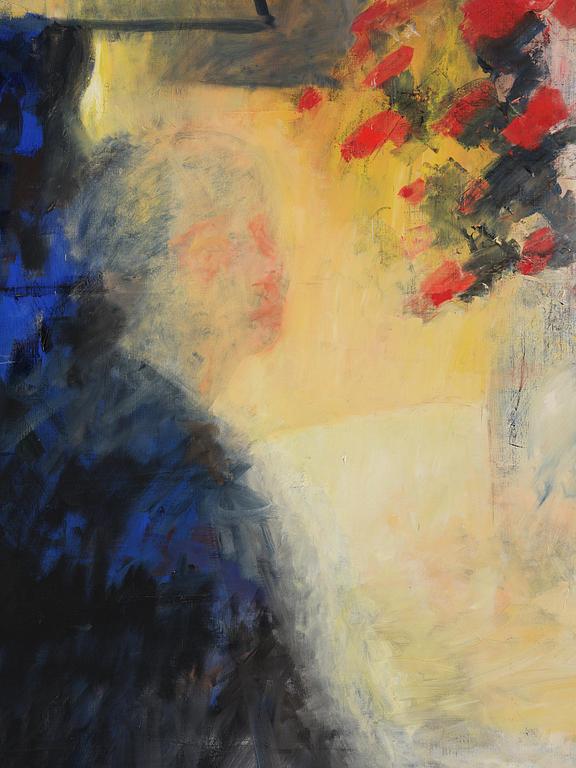
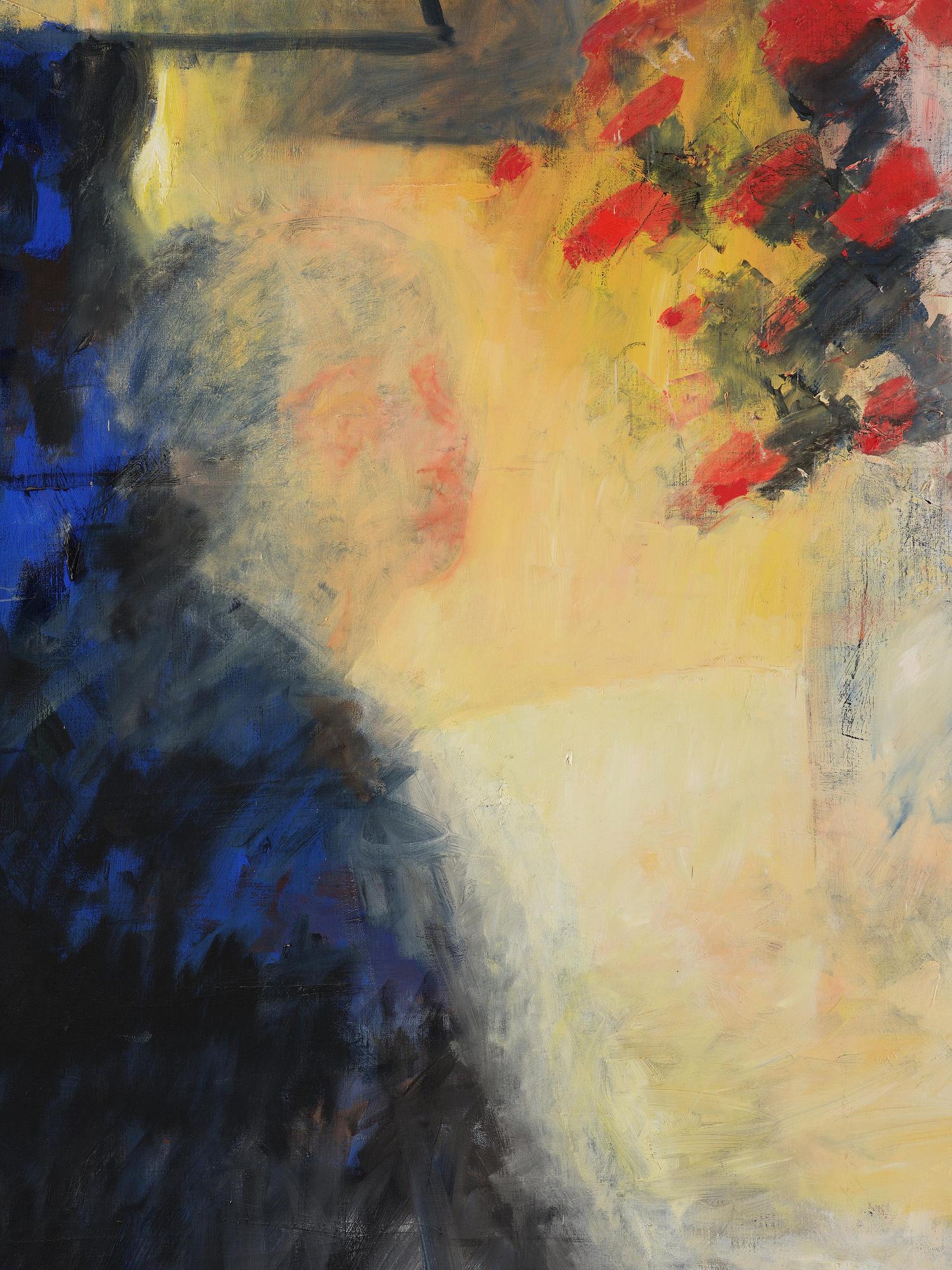
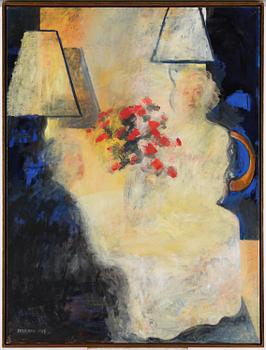
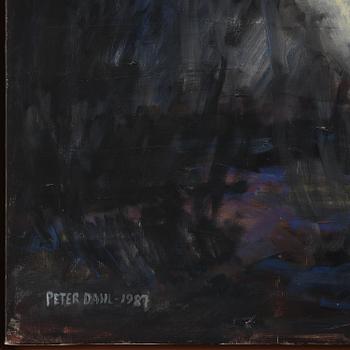
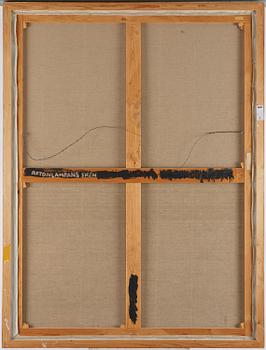
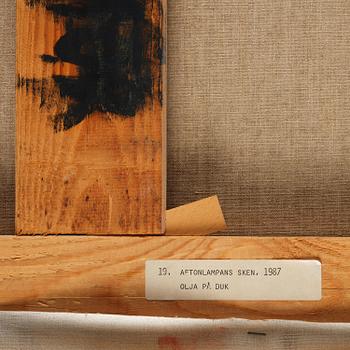
Signed Peter Dahl and dated 1987. Oil on canvas 200 x 150 cm.
Exhibitions
Prins Eugens Waldemarsudde, Stockholm, "Peter Dahl - vandringsutställning", 26 December 1987 - 6 March 1988, illustrated full page p. 43.
Literature
Folke Edwards, "Peter Dahl", Stockholm, 1996, illustrated p. 127.
More information
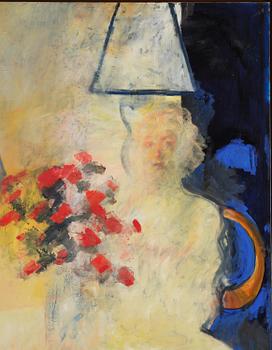
In the mid-1980s, Peter Dahl created a series of paintings depicting bourgeois interiors, including “Aftonlampans sken”, “Galleribesök” and the important monumental painting “Borgerlig bakgrund”. During this period, the figures in the artist’s paintings appear as mirages, liable to dissolve and disappear in the next moment, insubstantial and on the verge of self-erasure. “Everything is at rest, the air is still, time has ceased, and nothing surprising can happen,” writes Folke Edwards.
Peter Dahl (1934–2019) occupies a distinctive position in Swedish art history through his ability to combine a gift for storytelling with a keen observation of the social spaces of his time. Following studies at the Royal Institute of Art in Stockholm and an early breakthrough in the 1960s, he developed a visual language in which literary references, art-historical borrowings and a vivid realism converge in dynamic and often bustling compositions.
With his expressive style and sensual use of colour, Dahl captures bourgeois settings and restaurant scenes with warmth, and precision. In three series of paintings, “Vårat rum”, “Drömmar i soffhörnet” and “Kalles dröm” (1969–71), he took aim at the petit-bourgeois spirit and the luxury of the upper classes. His contradictory interpretations bear traces of both art-historical influences and popular culture, while remaining deeply rooted in a Swedish reality. The result is a body of work that not only documents a particular time and place, but also portrays the human experiences unfolding there—with humour, presence and a subtle sense of the theatrical.
Peter Dahl is represented in the collections of, among others, Nationalmuseum in Stockholm, Malmö konstmuseum, the portrait collection at Gripsholms slott and Göteborgs konstmuseum. Over the years, he held numerous solo exhibitions in Sweden, and his work attracted significant attention at both exhibitions and sales. Today, he is regarded as one of the foremost figures in contemporary Swedish art.
More about Peter Dahl
Peter Dahl is painter, printmaker, sculptor, and author. He was born in Oslo and came to Stockholm during the war years of the 1940s, studying at cadémie Libre in 1957 and then attended the Royal Institute of Art from 1958 to 1963 under the guidance of Lennart Rhode. He worked as a teacher at Gelesborg’s school during the 60s and 70s, and was the head professor of painting at Valand Art Academy in Gothenburg from 1975-79. Dahl paints in an expressive, realistic style with bright colours, sensual figure compositions, his art a vessel for his criticism towards upper class luxury and petty bourgeois environments. Influenced by the expressionism of Francis Bacon, he depicted the sequence of events in Medelsvensson's daydreams about "the sweet life" in the upper social group in a series of images. Over the years, Peter Dahl continued with thematic painting. From 1981 to 1984, he illustrated Fredman's Epistles in 87 pictures.
He is outgoing and often depicts his own life with a touch of self-irony. His work is rooted in Swedish tradition, often revisiting and renewing old themes. In recent years, his style has become softer and more sensual, with his dance and bacchanalian motifs taking on a Rococo-like quality. As a printmaker, Dahl is particularly known for his congenial illustrations of Bellman's "Fredman's Epistles." Peter Dahl is considered one of the great artists of our time, immensely productive and consistently popular.
Read moreFor condition report contact specialist
What will the transport cost?
Shipping can only be arranged by contacting specialdelivery@bukowskis.com.
Covered by droit de suite
Image rights
The artworks in this database are protected by copyright and may not be reproduced without the permission of the rights holders. The artworks are reproduced in this database with a license from Bildupphovsrätt.