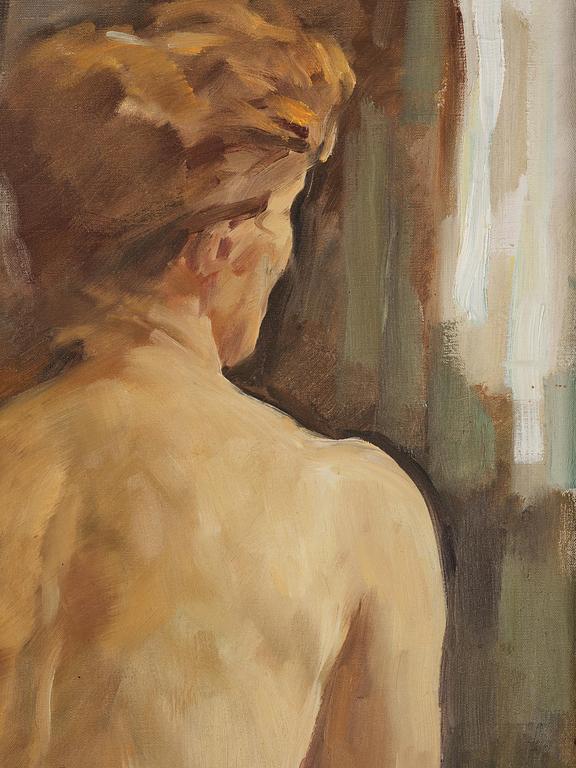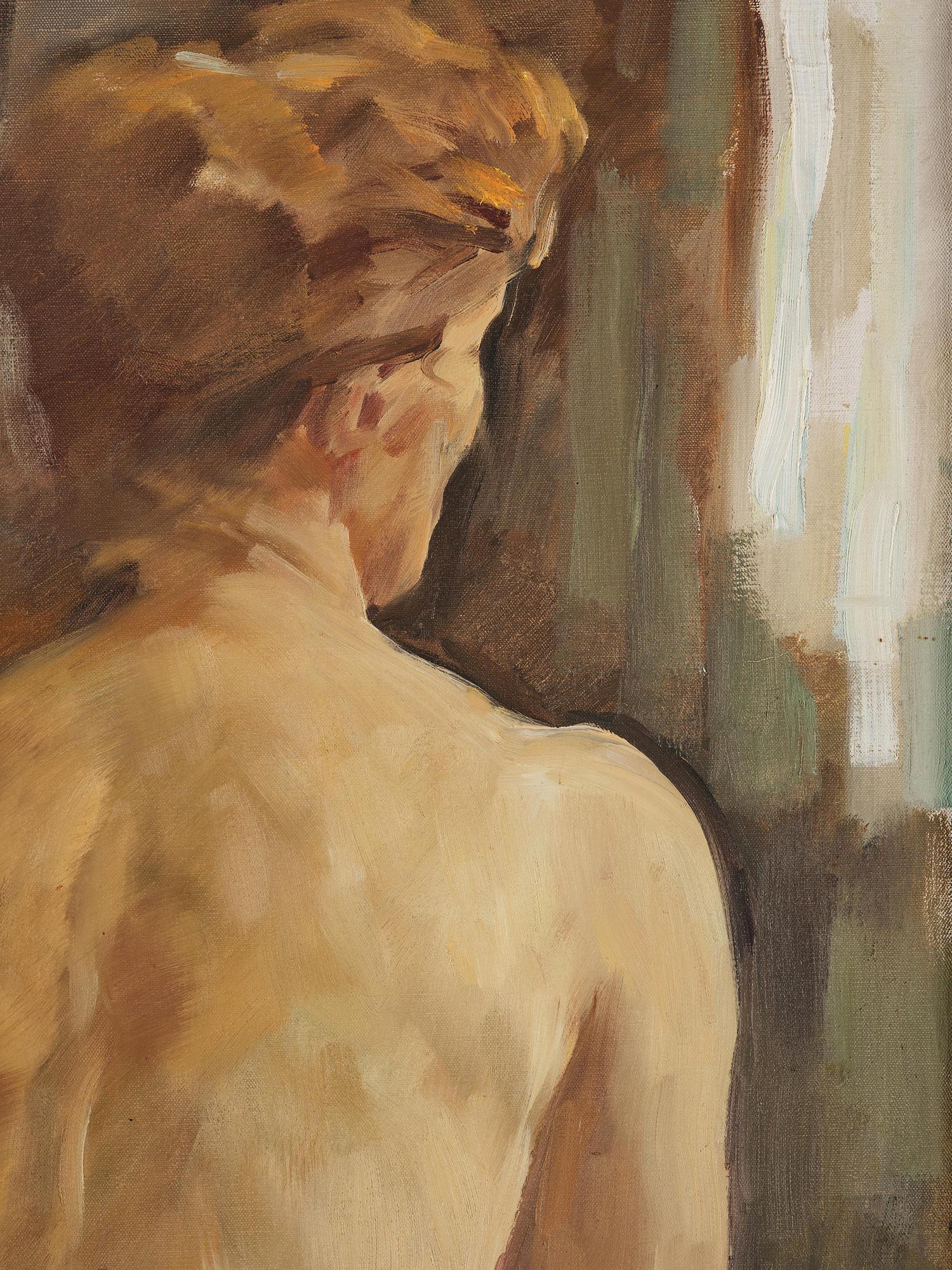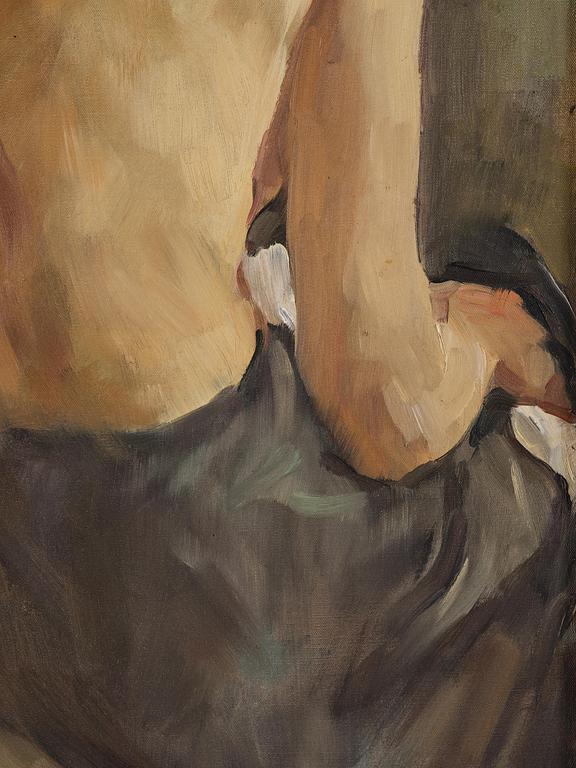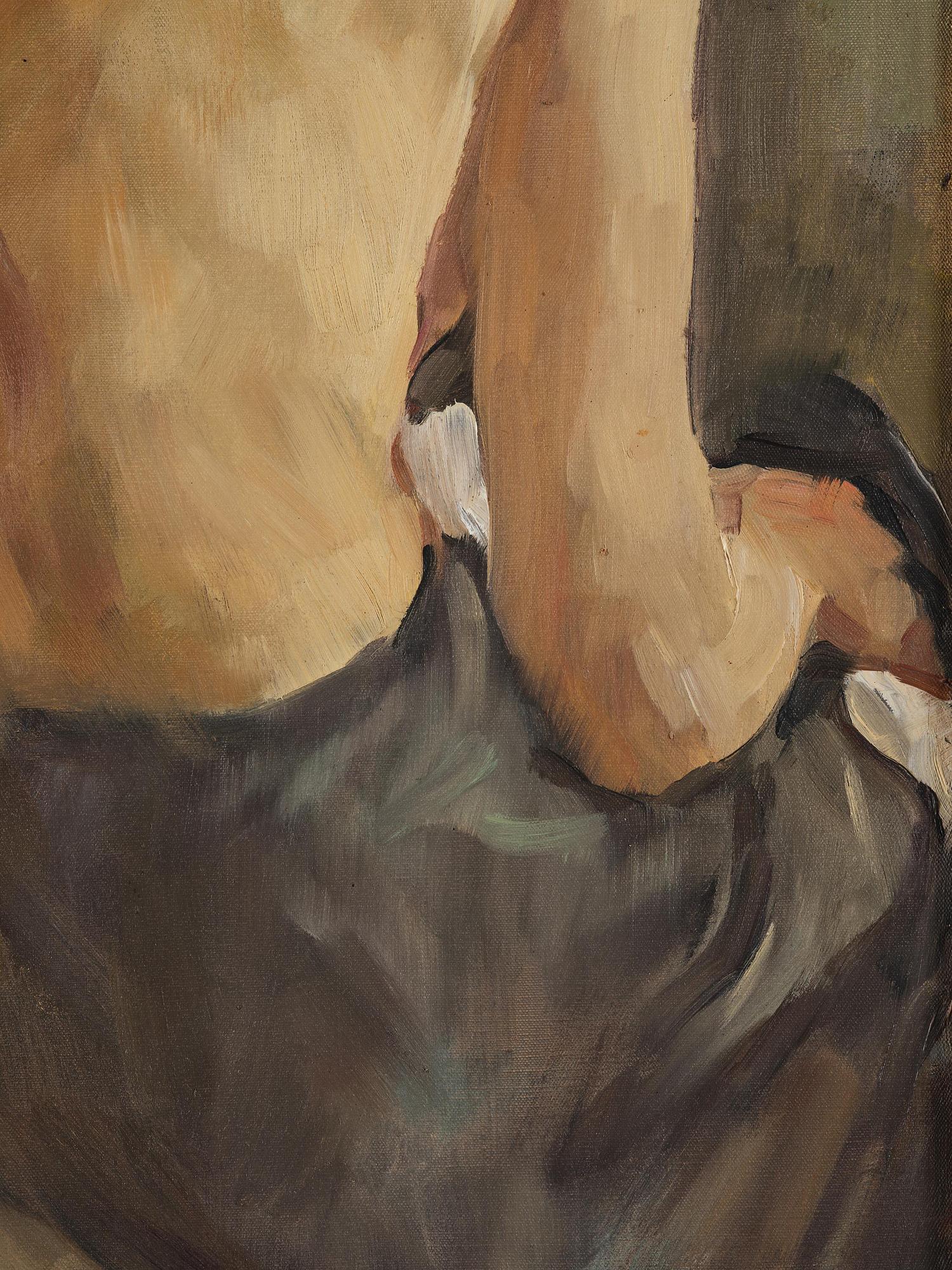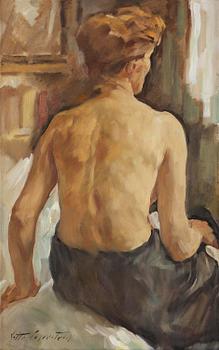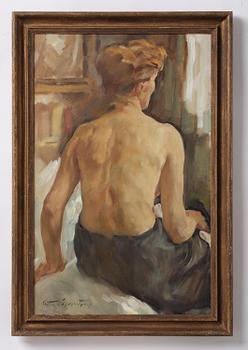
Madeleine
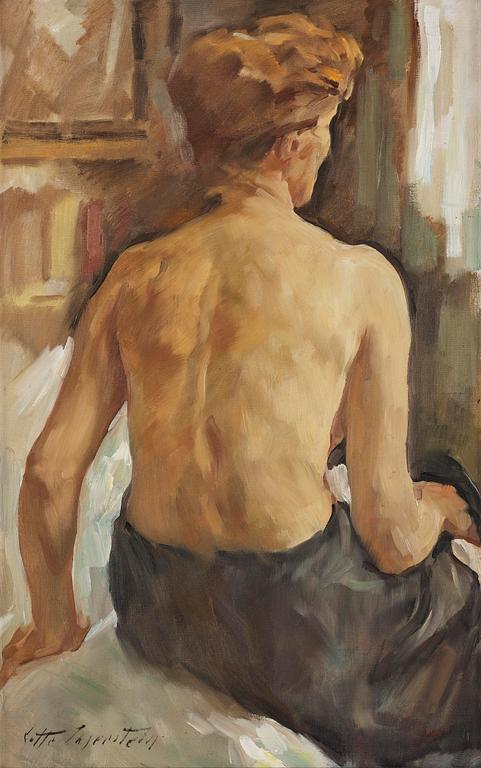
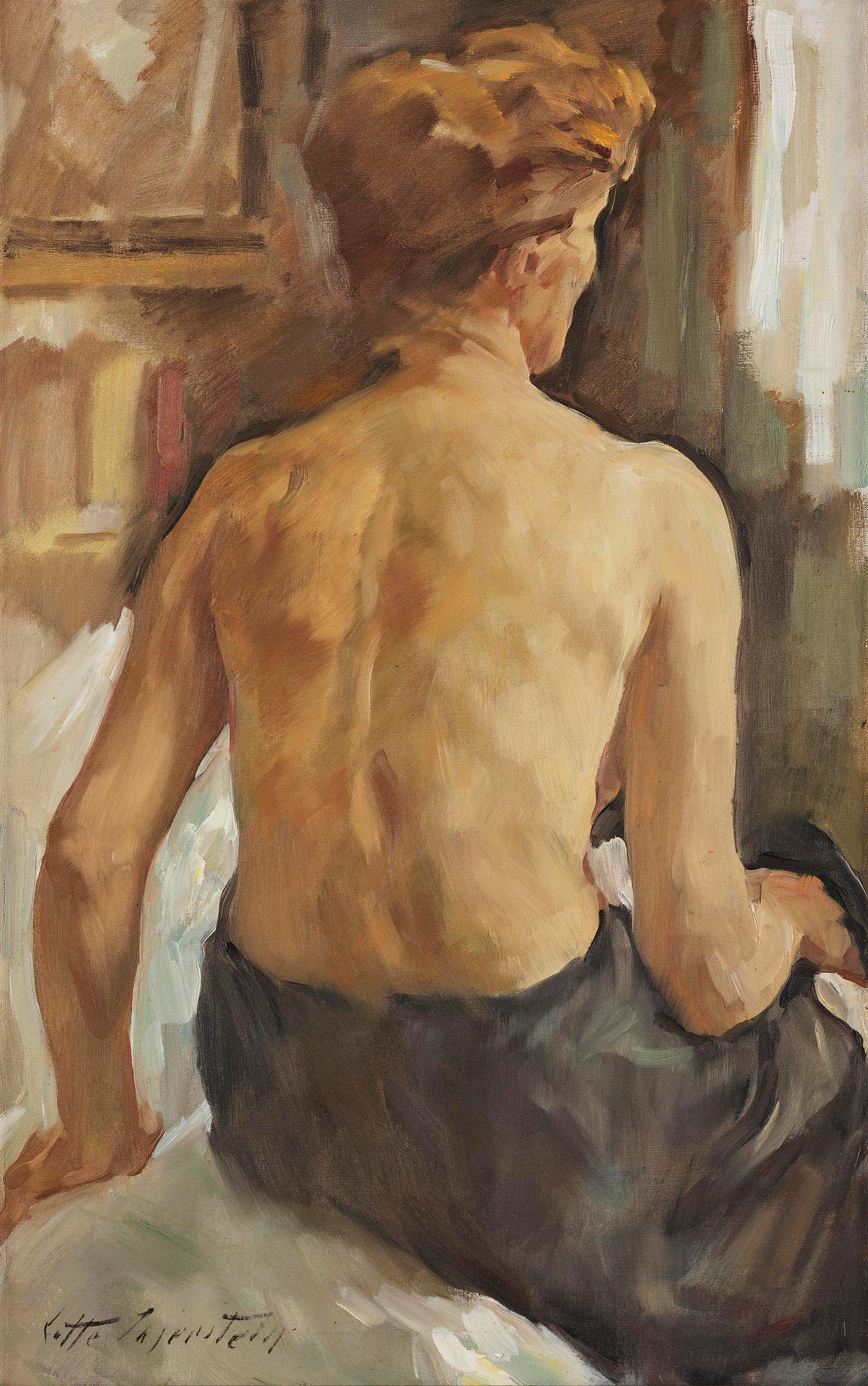
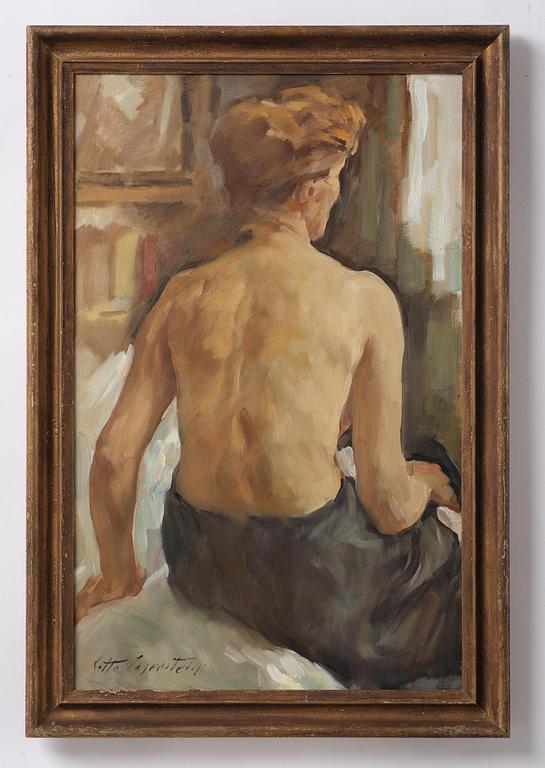
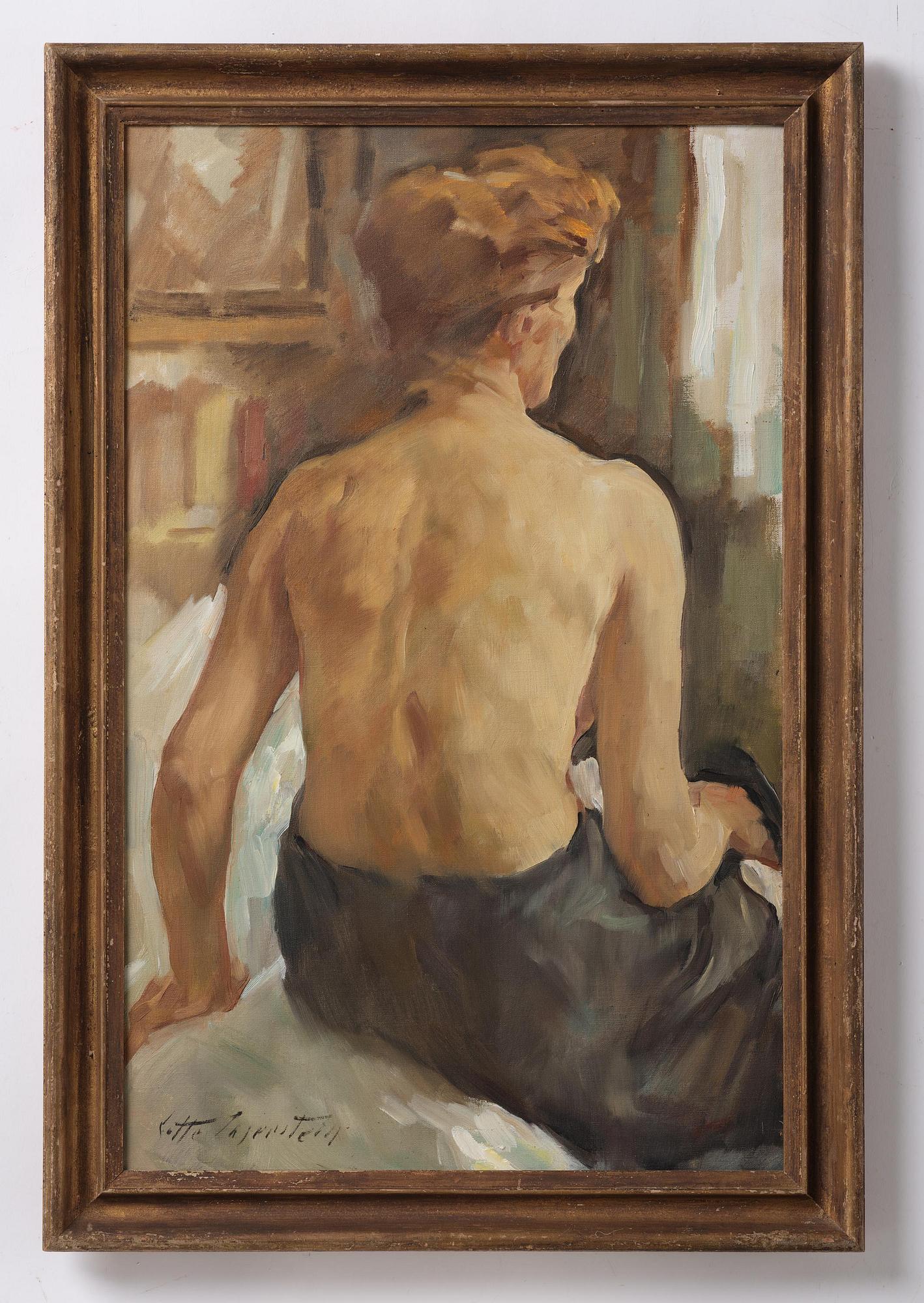
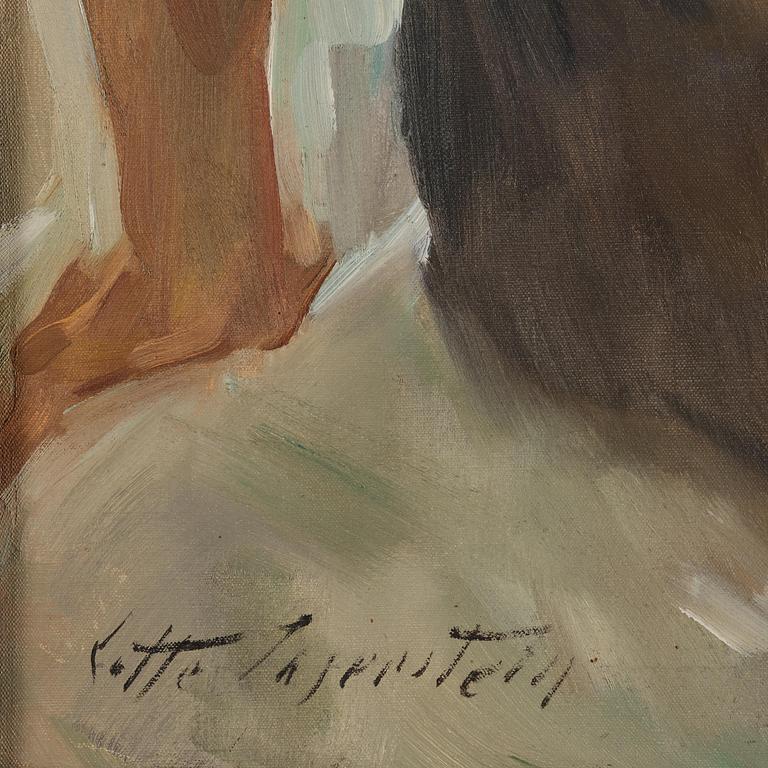
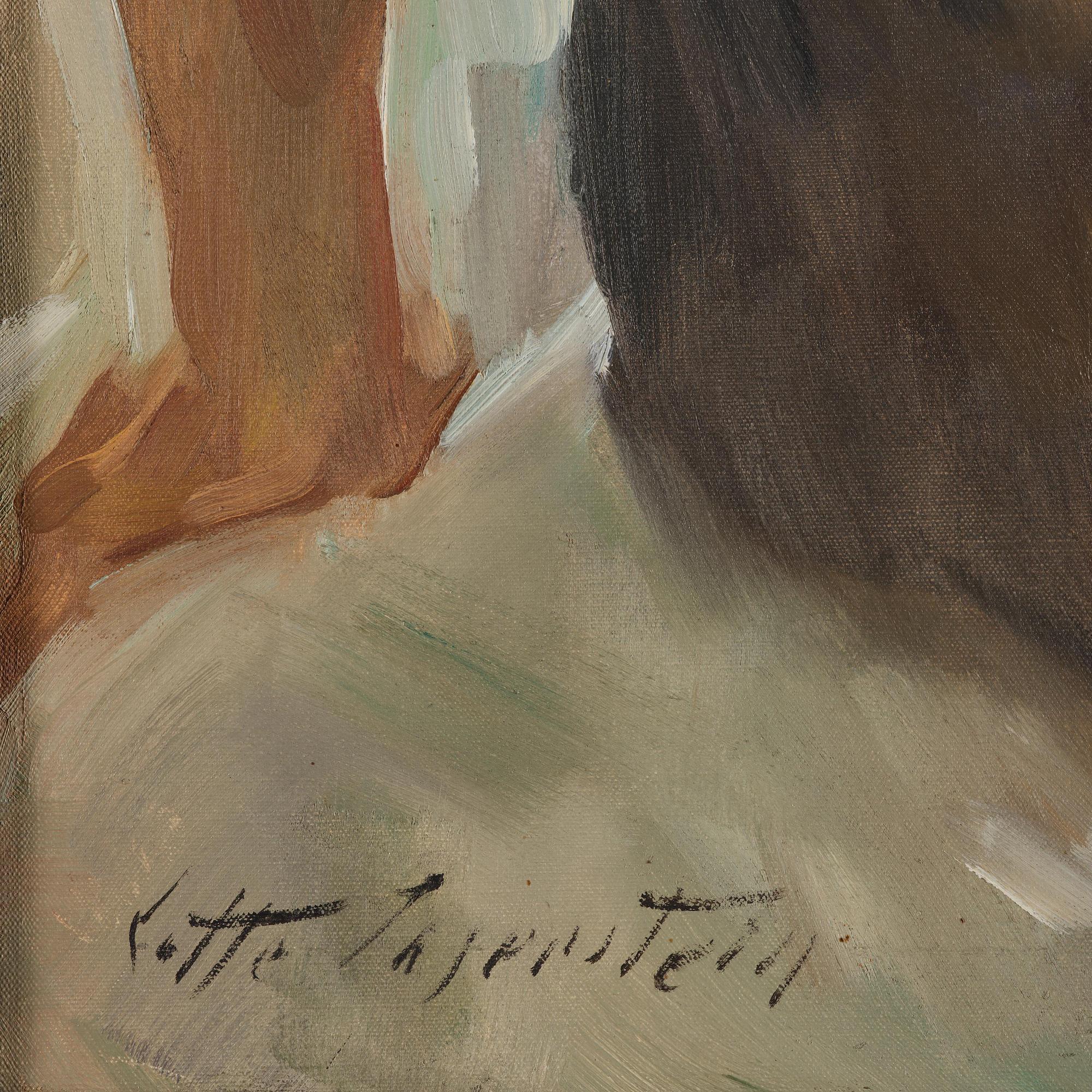
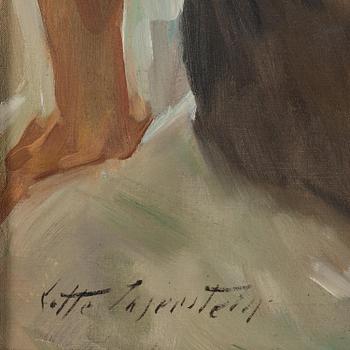
Signed Lotte Laserstein. Oil on canvas 74.5 x 47 cm.
Provenance
Acquired in the 1970s.
Subsequently inherited by the current owner.
Literature
The work is registered in Dr Anna-Carola Krausse’s Lotte-Laserstein archive, Berlin.
More information
Lotte Laserstein (1898–1993) was born in East Prussia. Her father died as early as 1902, and she grew up with her mother and grandmother in what is now Gdańsk and in Berlin. In 1927, she graduated from the Academy of Arts in Berlin, having been one of its first female students, and immediately achieved considerable success. She quickly became a prominent name on the city’s art scene, renowned for her accomplished portraiture, particularly her depictions of young, modern women in the Weimar Republic of the 1920s. When the Nazis came to power in 1933, her promising career was interrupted. Under the racial ideology of the time, she was classified as three-quarters Jewish (her paternal and maternal grandparents were Jewish, but neither of her parents was). As a result, she became increasingly excluded from the art scene.
An invitation to exhibit at Galerie Moderne in Stockholm in 1937, however, opened up an opportunity for her to leave her homeland. She departed Berlin that year and simultaneously managed to ship the majority of her artworks to Stockholm. The exhibition went ahead, and she was able to remain in Sweden on a three-month visa. In Stockholm, she made new friends, some of whom helped her enter into a marriage of convenience, through which she obtained Swedish citizenship.
Laserstein tried to establish a new life in Stockholm, earning her living primarily through portrait commissions. She found it difficult to gain acceptance in new artistic circles, where modernism and abstract painting were receiving the most attention. She applied for membership in the Swedish Artists’ National Organisation (Konstnärernas Riksorganisation, KRO), but was rejected on several occasions, a personal setback. She was considered insufficiently modern. Her steadfast commitment to realism, during the post-war decades when artistic abstraction dominated, probably contributed to her failure to achieve greater recognition in Sweden.
Laserstein received a classical academic education, and references to art history frequently appear in her work. During her artistically expansive period in the 1920s and 1930s, however, she also drew inspiration from contemporary popular culture. She was influenced by the liberating fashions of the time, which encouraged women to wear loose-fitting dresses, cut their hair short, and dress in ways that emphasised androgynous features. Laserstein enjoyed depicting modern, emancipated women playing sports or sitting alone in cafés. Her art is associated with Neue Sachlichkeit (New Objectivity) and is at once traditionally figurative and subtly rebellious. The human figure was Laserstein’s principal subject, and over the course of her life she painted approximately 2,000 portraits. She was able to support herself through her art throughout her life. Her clients included prominent figures from the aristocracy as well as the worlds of politics, business and culture.
In 1952, Lotte Laserstein received a commission to paint portraits of the then County Governor of Kalmar and his wife, Ruben and Helga Wagnsson. This marked the beginning of her regular journeys between Kalmar and Stockholm. She developed a particular fondness for Öland, where she purchased a summer cottage in the early 1950s. In 1959, she settled permanently in Kalmar. Laserstein continued to paint portraits, while also turning her attention to floral still lifes and landscapes. At exhibitions in Kalmar, she showed new oil paintings, drawings, watercolours and pastels. Her studio and home were located on Norra Långgatan in Kalmar, where her major works from her Berlin period hung.
In 1987, Laserstein’s paintings were presented at two prestigious galleries in London, marking the beginning of her international rediscovery. In 2003, she also received renewed recognition in Germany through an exhibition at the Museum Ephraim-Palais in Berlin. The exhibition and its catalogue were overseen by Anna-Carola Krausse, who had written her doctoral dissertation on Lotte Laserstein and also authored a study of her life and work. Meine einzige Wirklichkeit (“My Only Reality”) was the theme of the Berlin exhibition, taking its title from a quotation by Laserstein, who regarded art as the reality in which she lived and for which she lived. In Sweden, her artistic legacy was first brought to renewed attention in a memorial exhibition at Kalmar Museum in 2004, followed by exhibitions at the Jewish Museum and, later, Bror Hjorth’s House in Uppsala.
In 2023–2024, a major touring exhibition entitled "A divided life" was held at Moderna Museet in Malmö and Stockholm. It was the largest exhibition of Laserstein’s art to date in the Nordic countries.
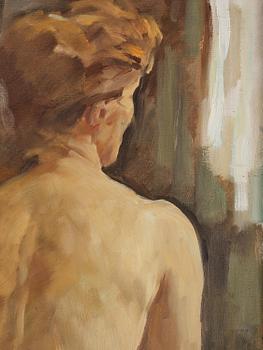
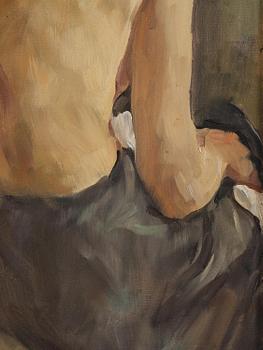
The portrait in this auction depicts one of Laserstein’s recurring models in Sweden, Madeleine. In the late 1930s, Laserstein met Margarete Jaraczewsky, known as Madeleine, who was also a refugee from Germany. This attractive young woman became a close friend of Lotte’s and eventually her favourite Swedish model. Although the friendship between the two women was not as intense as the relationship between Laserstein and her muse Traute Rose in Berlin, it resulted in numerous portraits, refined nude studies and several intensely observed scenes of artist and model. In the composition offered at this auction, we see Madeleine seated elegantly, viewed from behind with her back bare.
For condition report contact specialist
What will the transport cost?
Shipping can only be arranged by contacting specialdelivery@bukowskis.com.
Covered by droit de suite
Image rights
The artworks in this database are protected by copyright and may not be reproduced without the permission of the rights holders. The artworks are reproduced in this database with a license from Bildupphovsrätt.