"Studio"
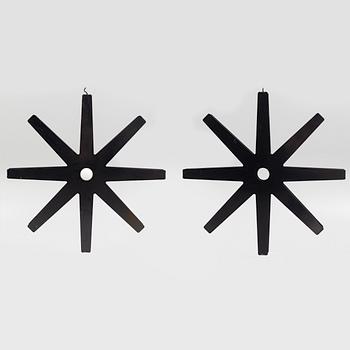
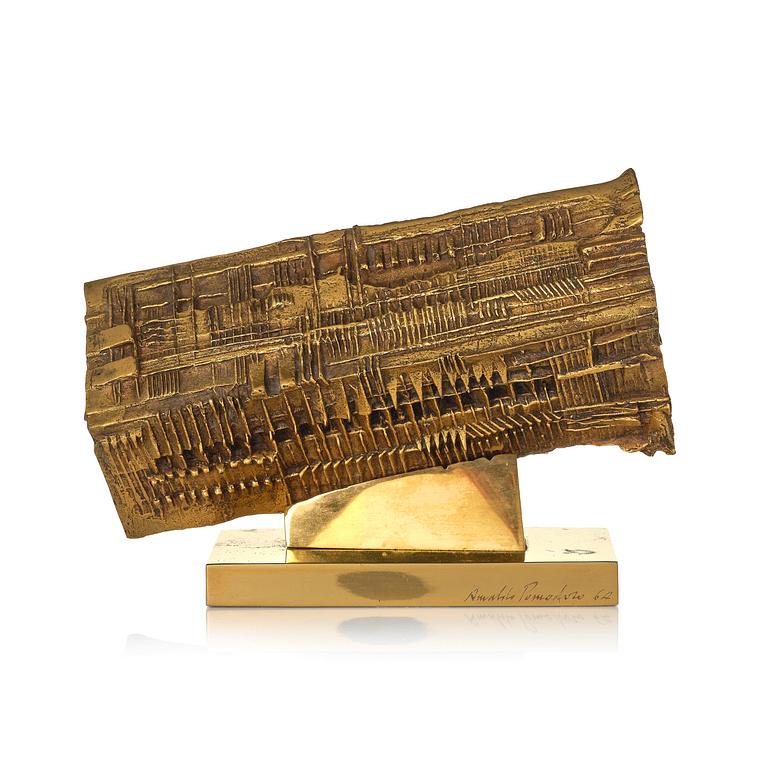
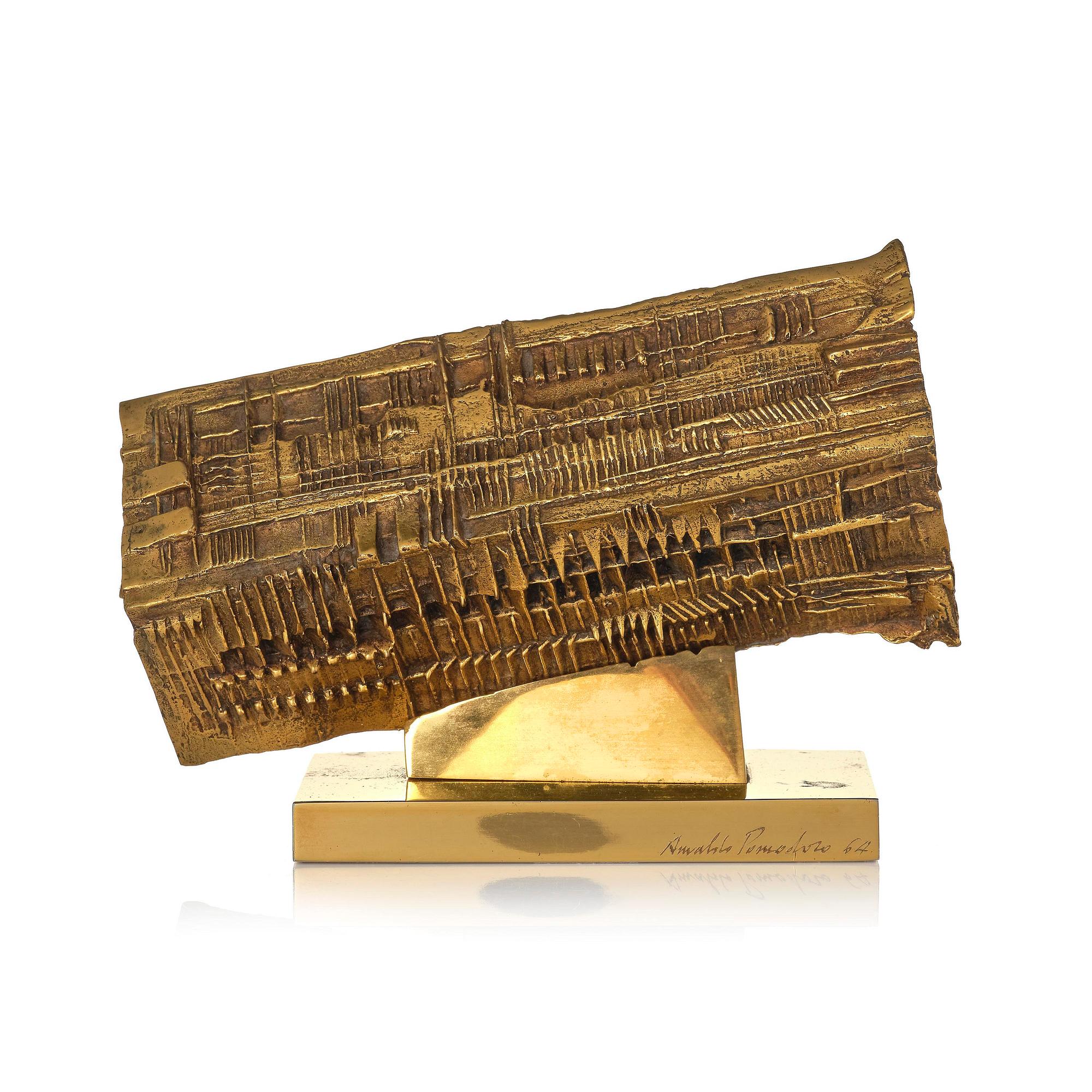
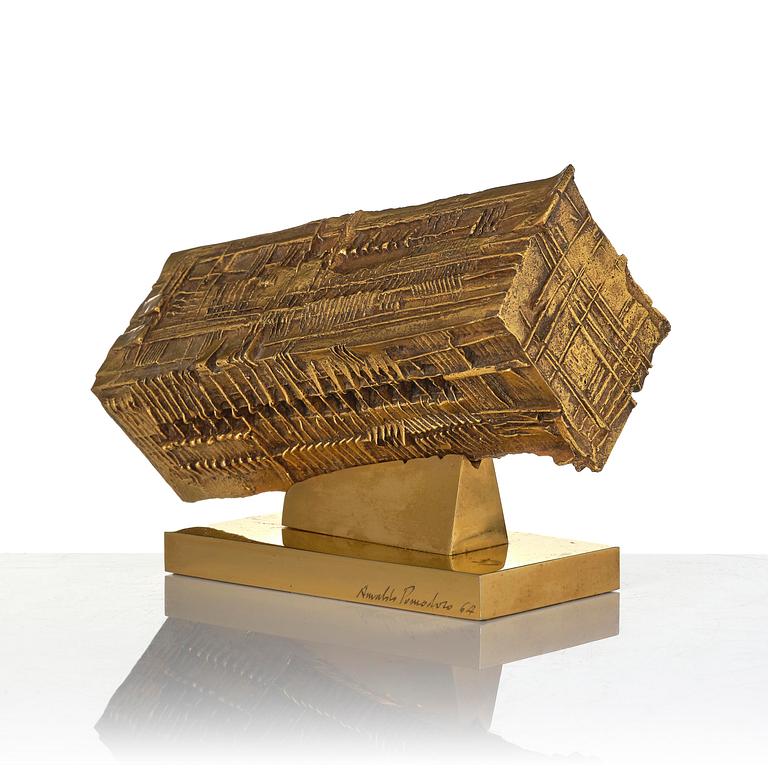
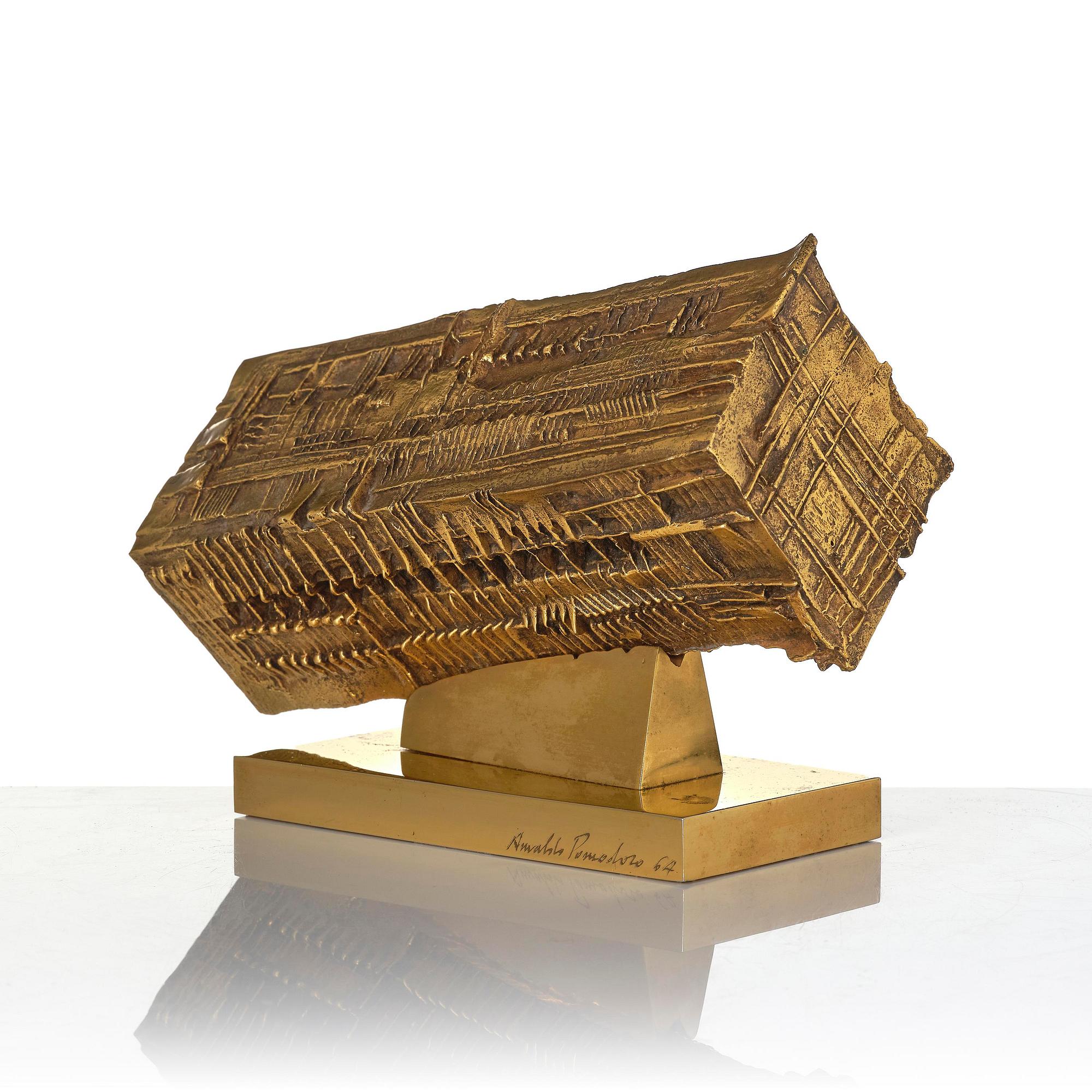
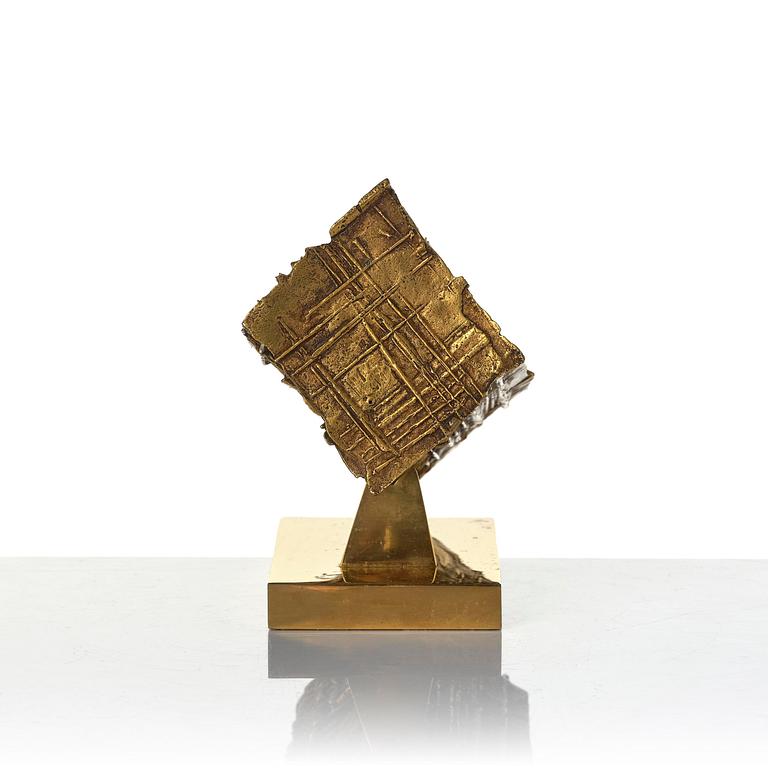
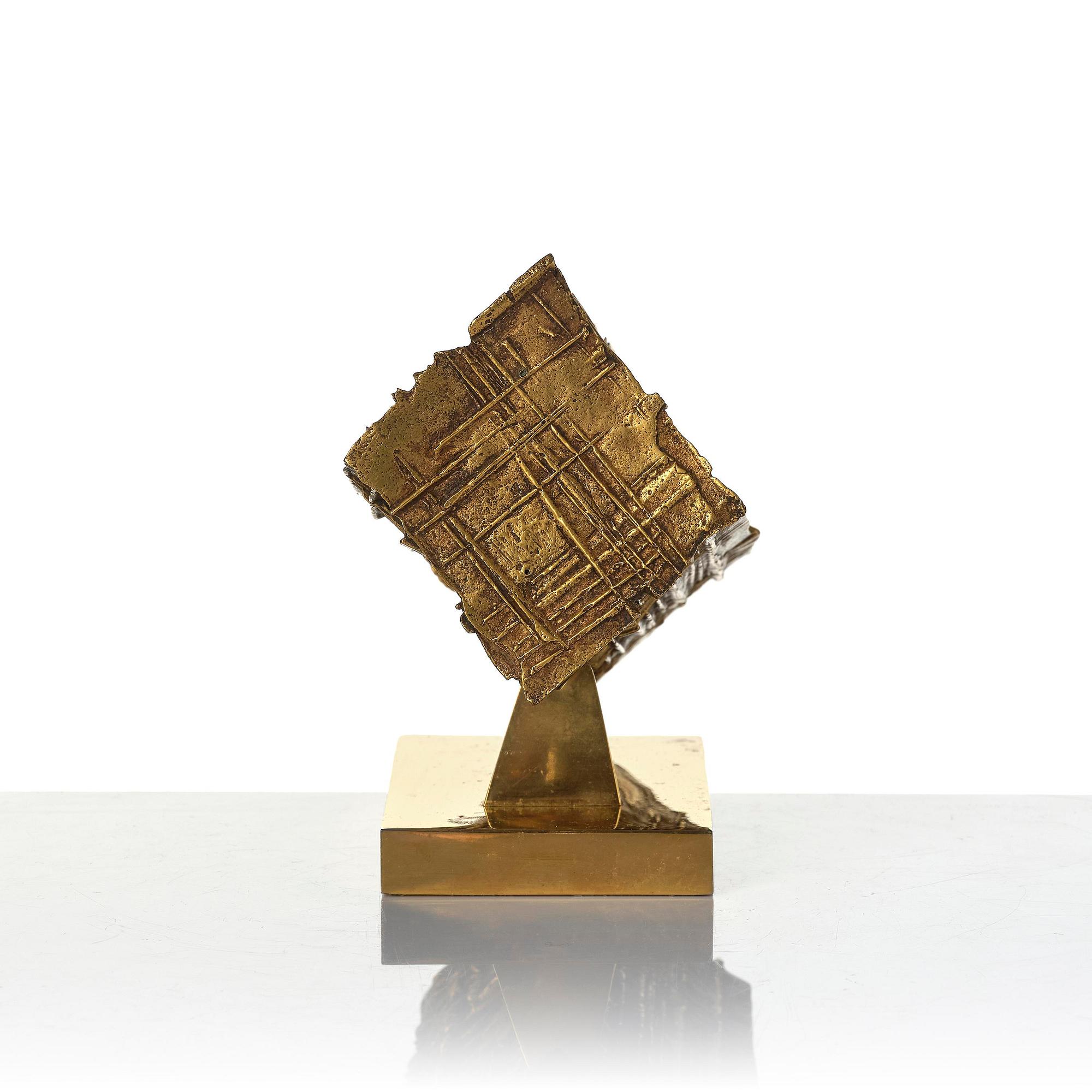
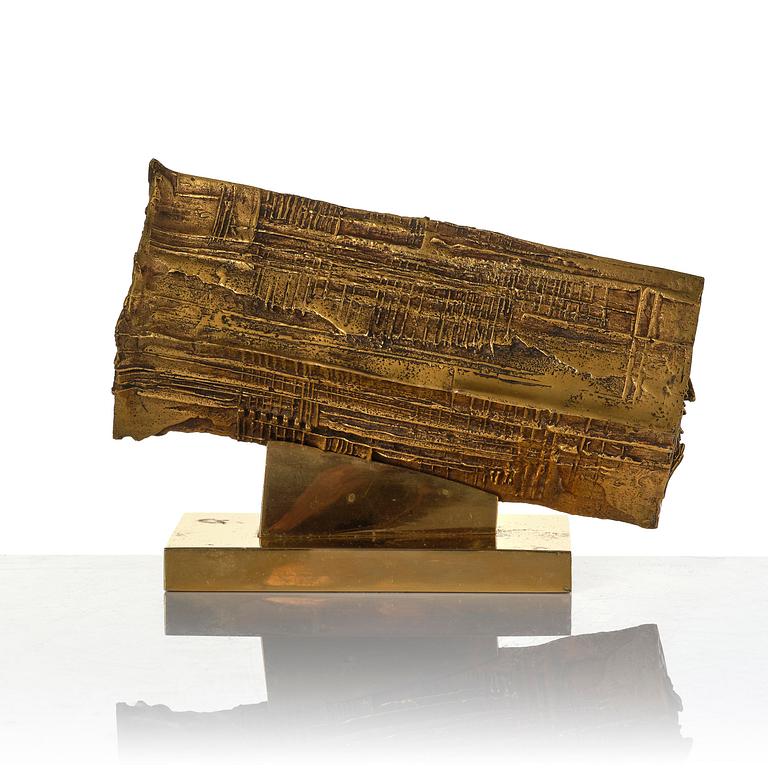
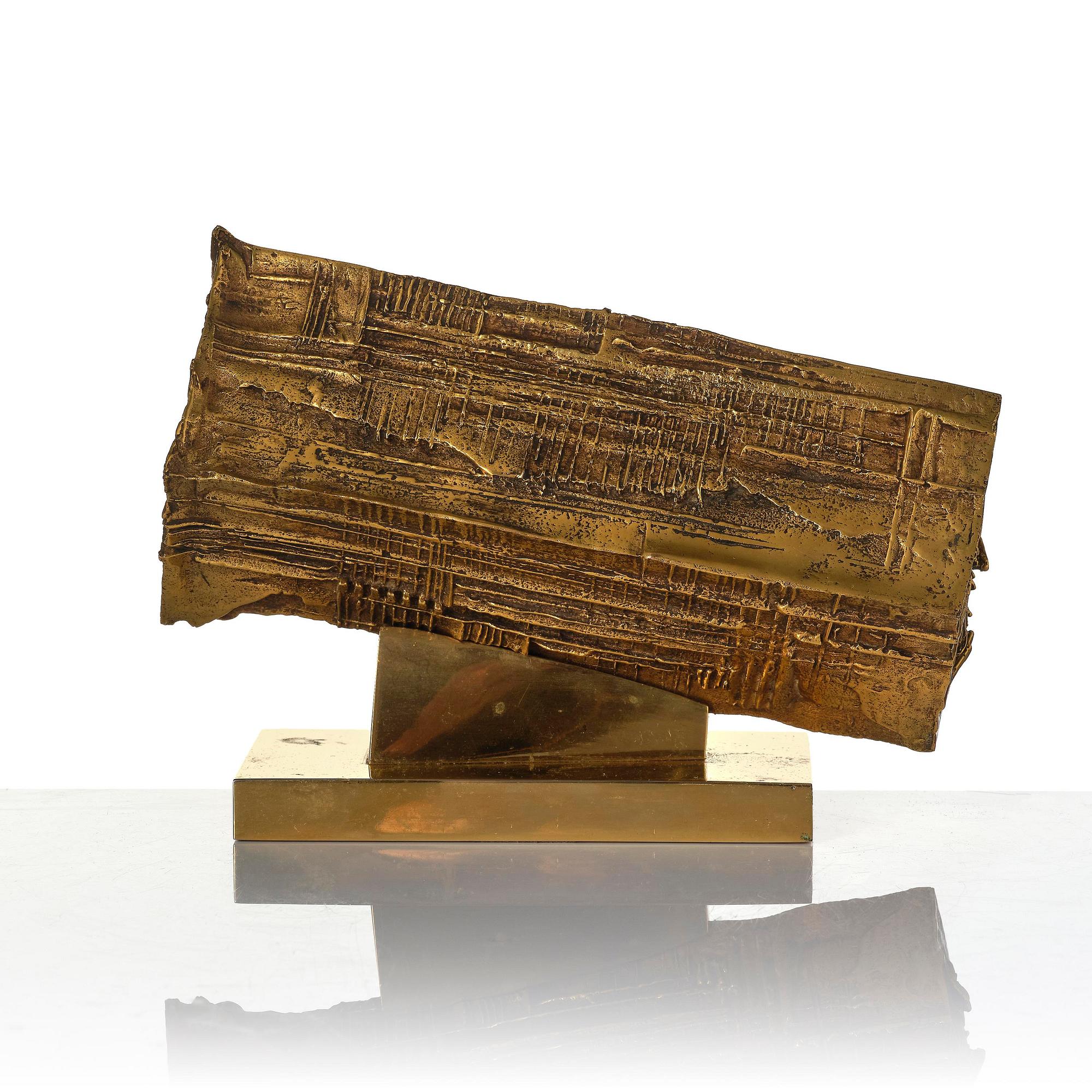
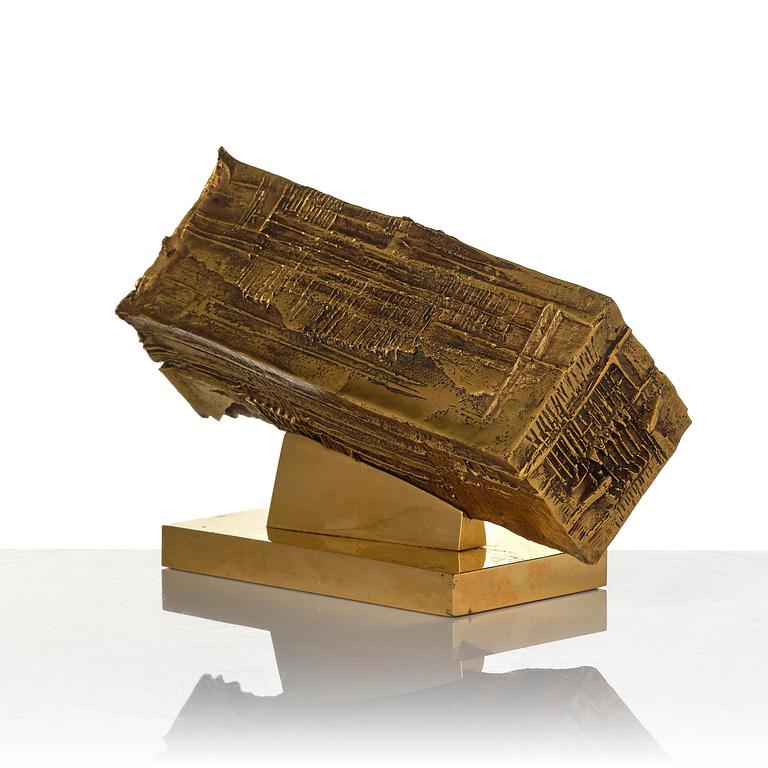
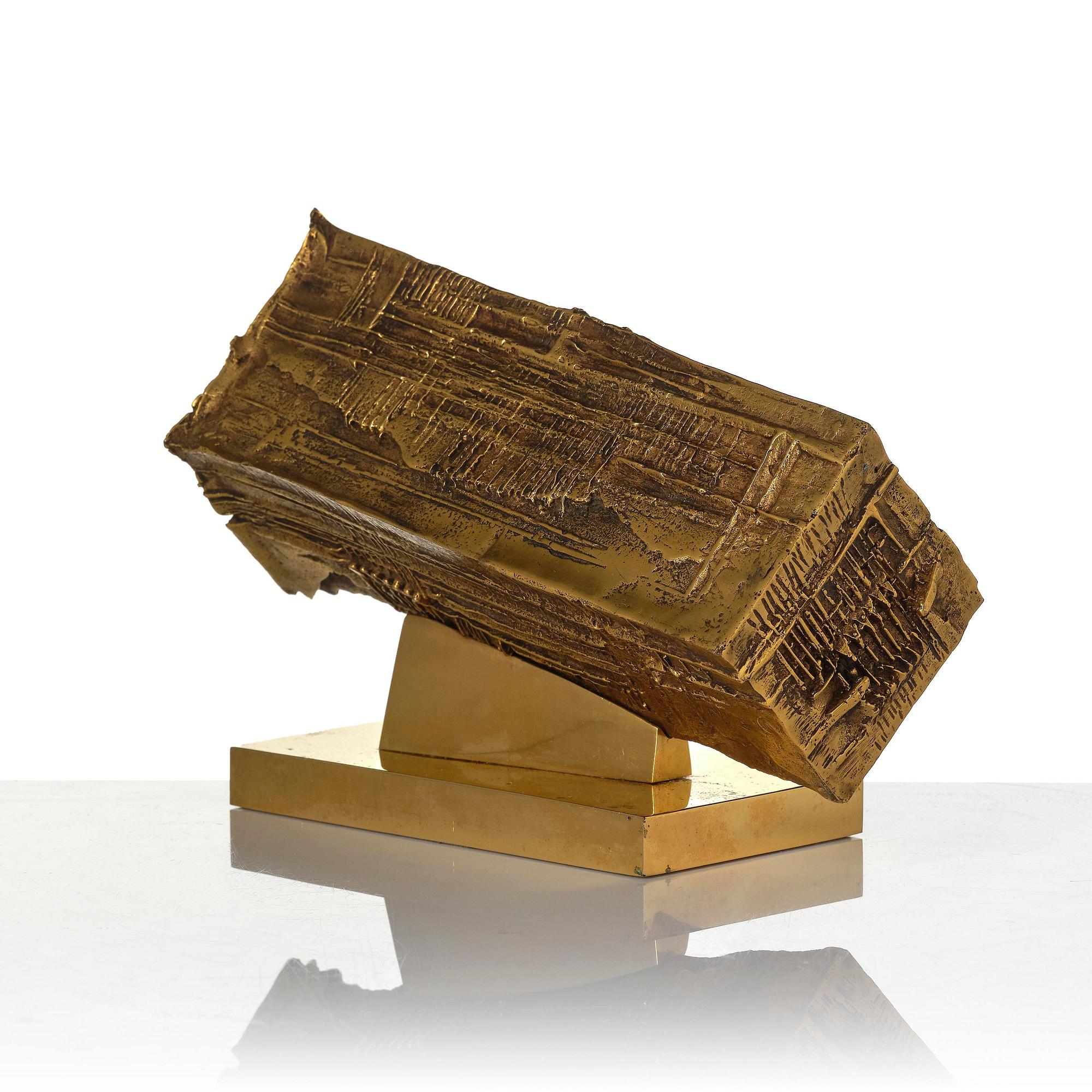
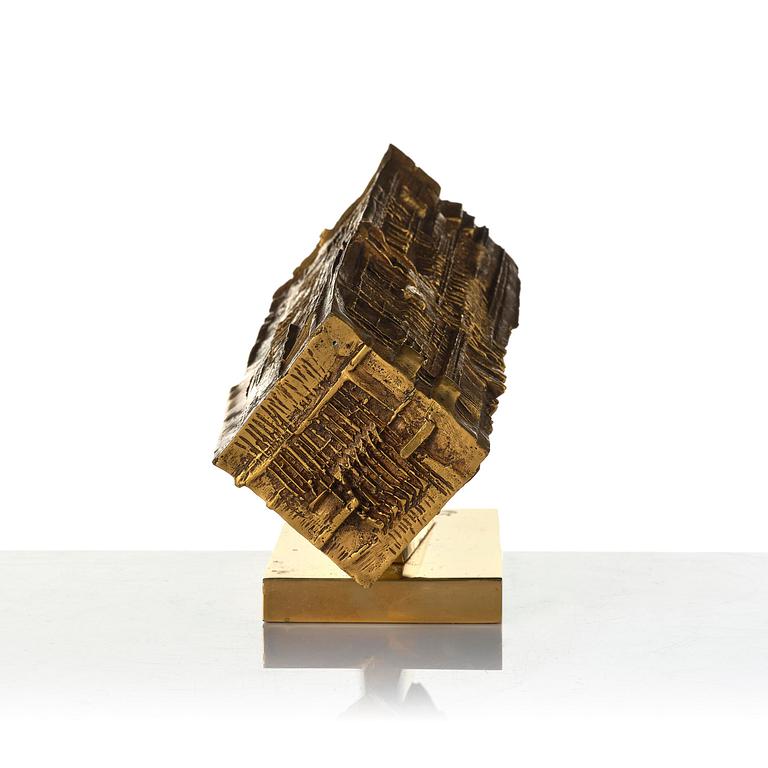
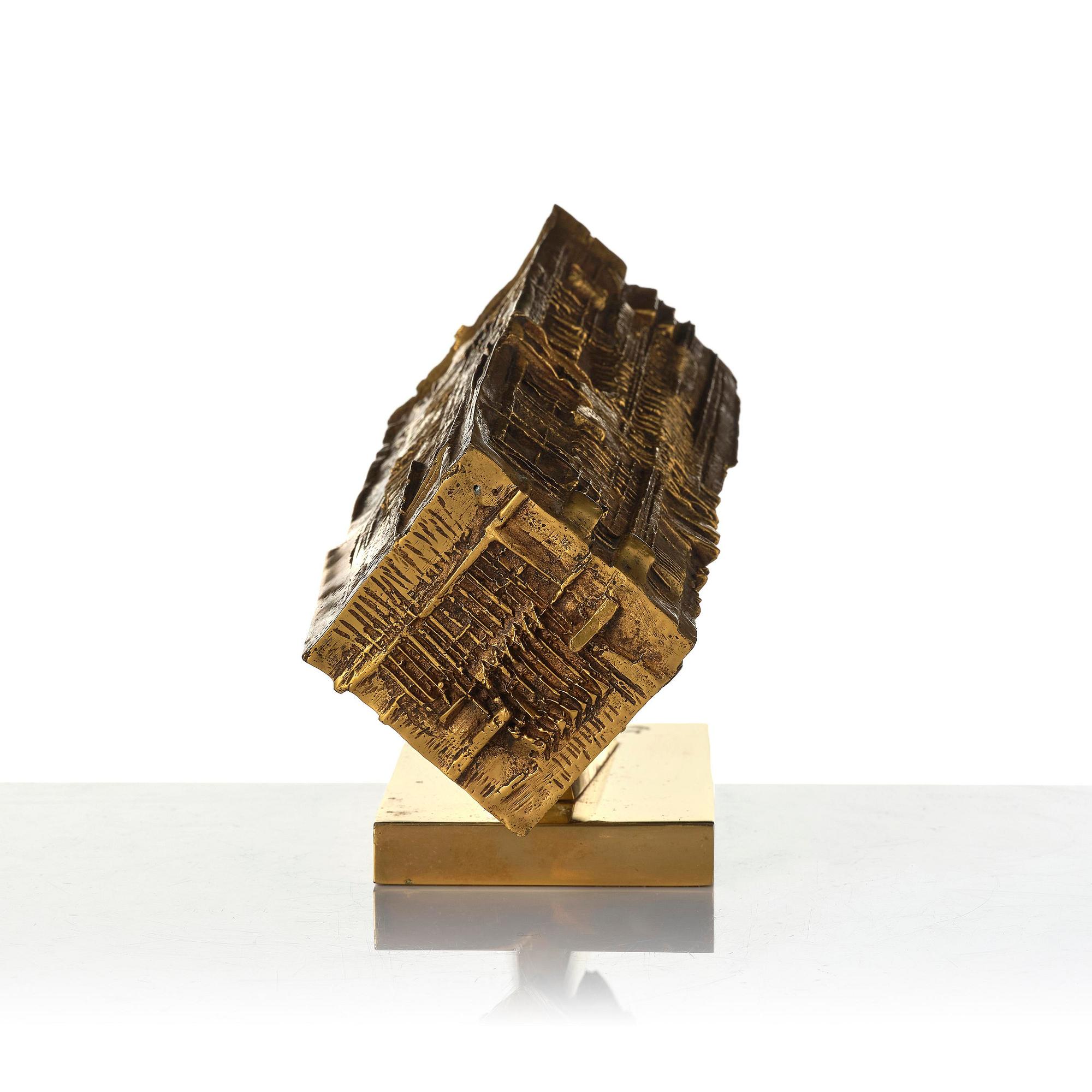
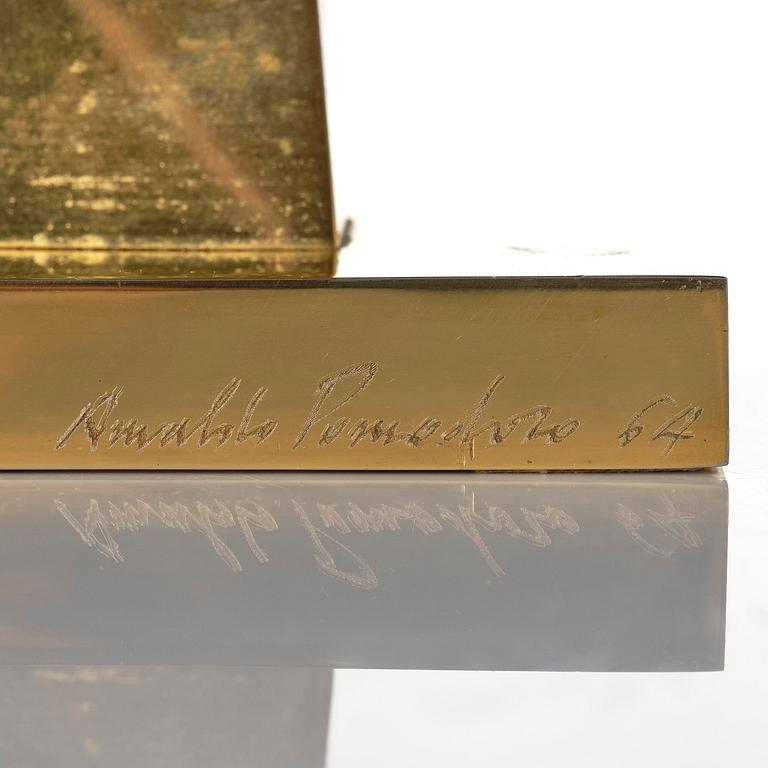
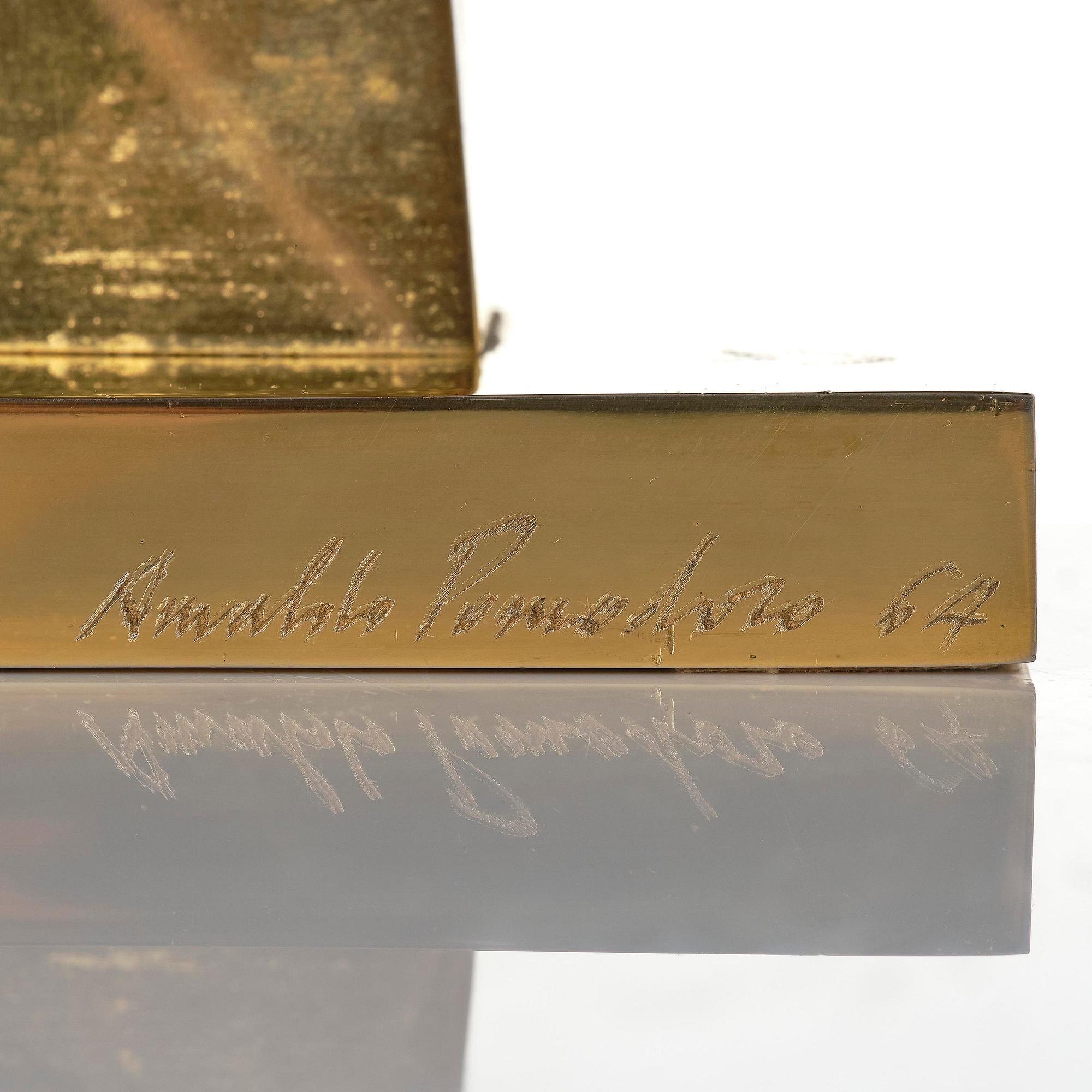
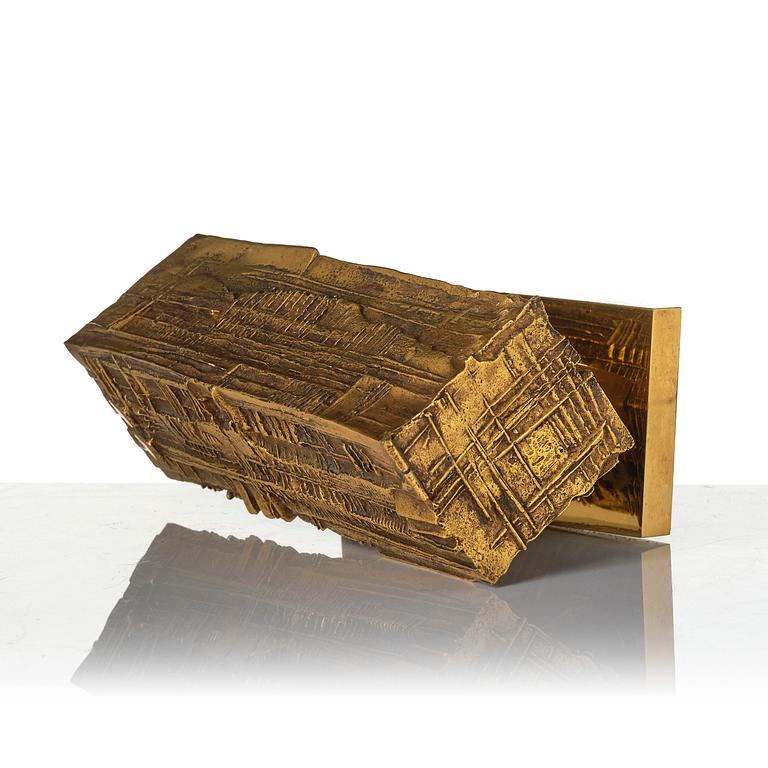
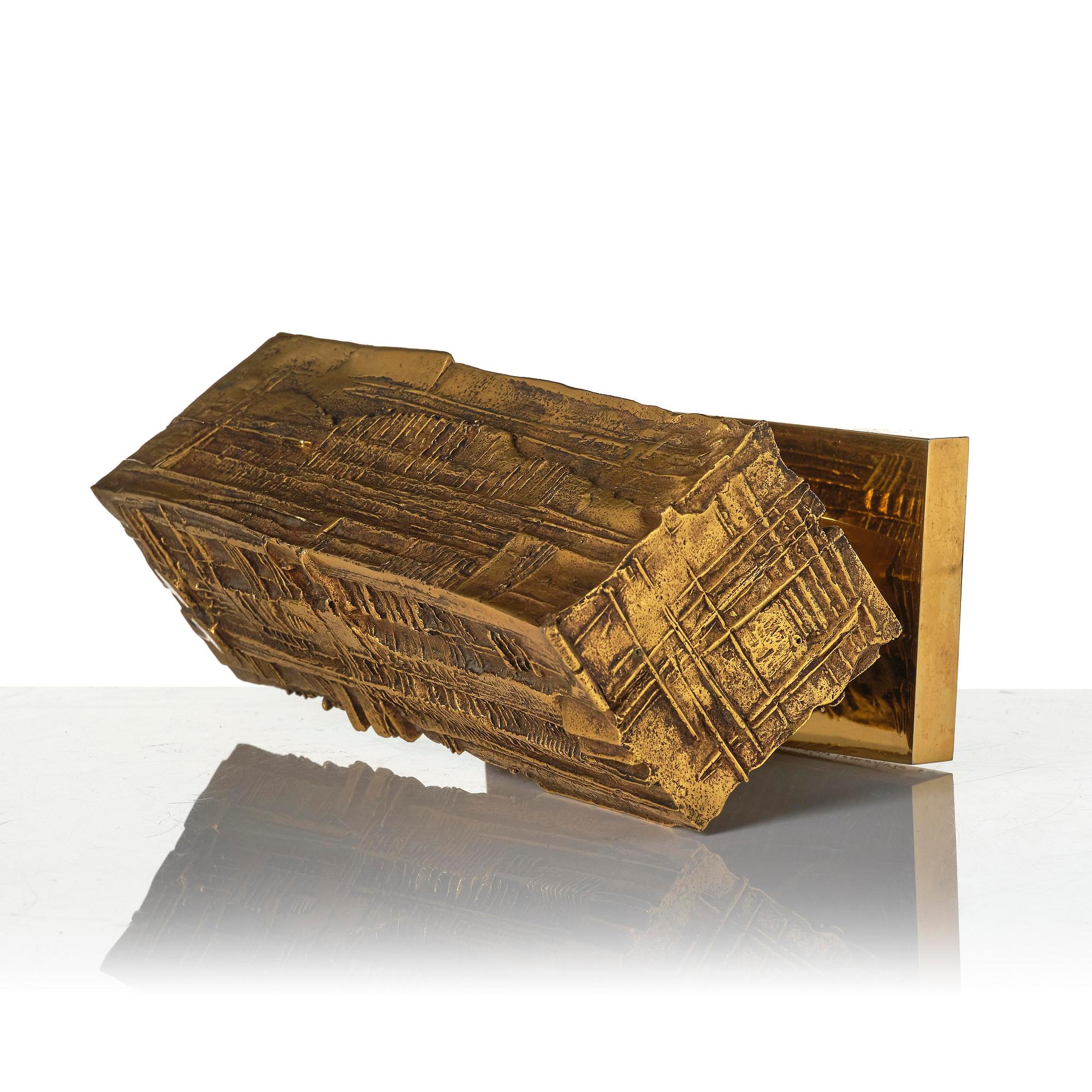
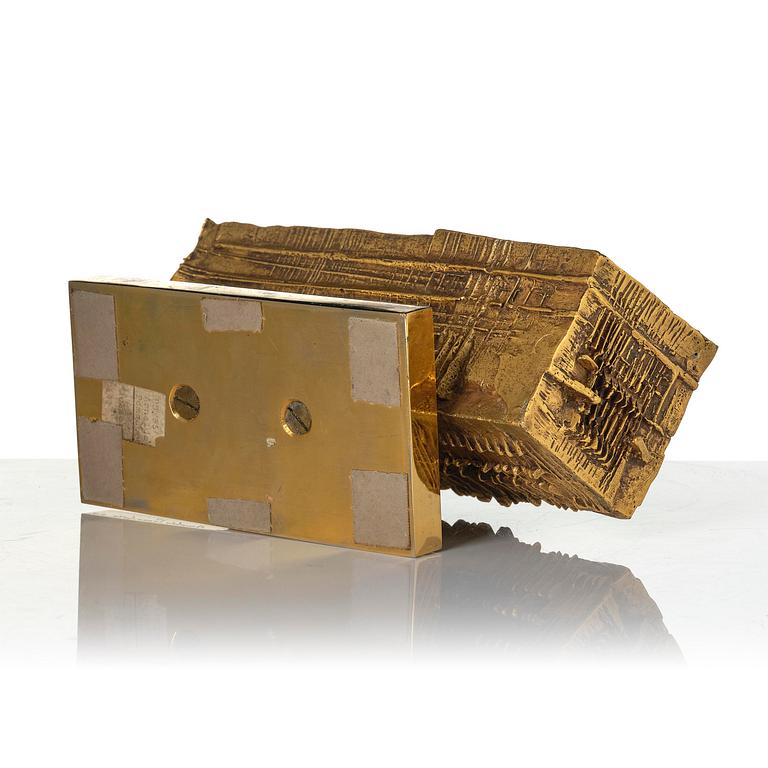
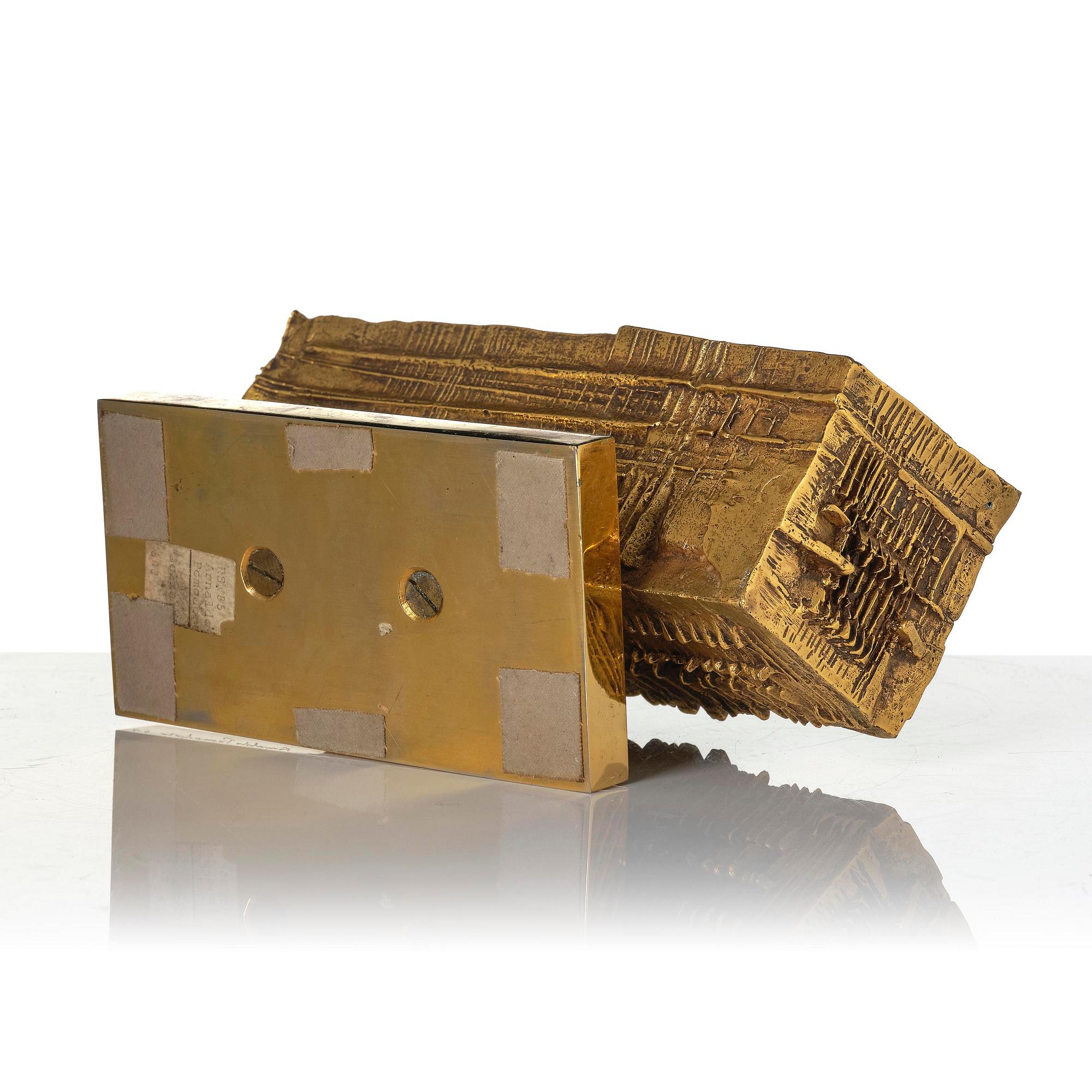
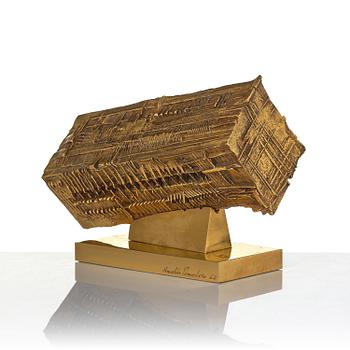
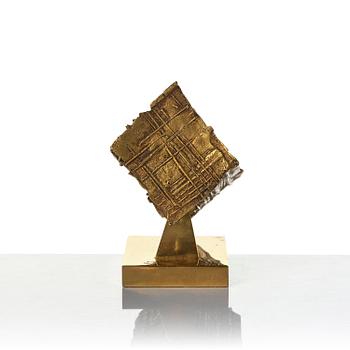
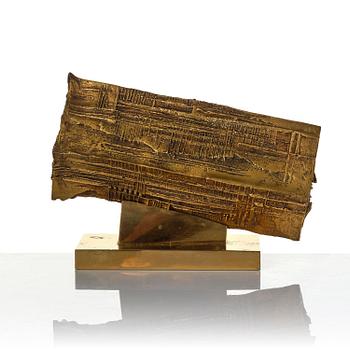
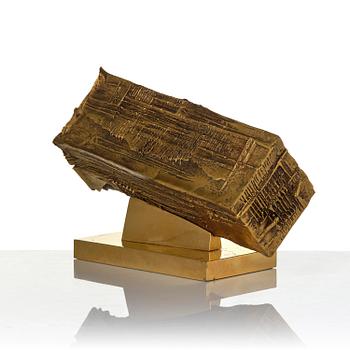
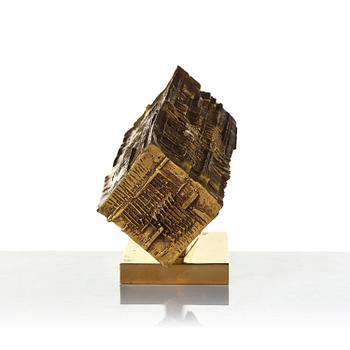
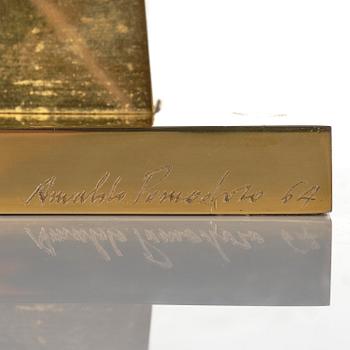
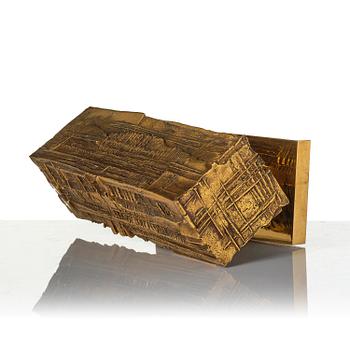
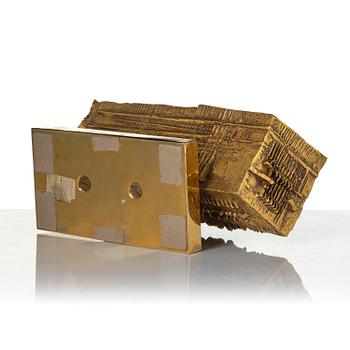
Signed Arnaldo Pomodoro and dated -64. Unique. Gilt bronze, height 17 cm, width 22.5 cm, depth 9 cm.
Provenance
Galerie Pierre, Stockholm.
Stockholms Auktionsverk, 23 October 2013, lot 1356.
Exhibitions
Marlborough Gallery, Rome, "Arnaldo Pomodoro", 1965.
Galerie Pierre, Stockholm, "Arnaldo Pomodoro. I rotanti", 29 March–30 April 1968.
Literature
Marlborough Gallery, Rome, catalogue for the solo exhibition “Arnaldo Pomodoro”, 1965, illustrated on p. 24.
Flaminio Gualdoni, “Arnaldo Pomodoro – Catalogo ragionato della scultura” – volume II, Skira, Milan 2007, listed as cat. no. 353.
More information
It has been said of Arnaldo Pomodoro that he is to sculpture what Fontana was to painting. Both represent something highly innovative within their respective genres: Lucio Fontana treated his paintings as sculptures, while Pomodoro, in turn, treats his sculptures as paintings filled with both memories and visions of the future.
Arnaldo Pomodoro was without doubt Italy’s best-known and most influential 20th-century sculptor. His artistic career began as early as the mid-1940s, when, until 1957, he worked on the restoration of buildings in the Italian city of Pesaro while dreaming of becoming an architect. Instead, he chose to study stage design and also worked as a goldsmith. These professions converge in his work as a sculptor, giving his art a highly personal formal language. His works possess the jeweller’s attention to detail and sensitivity to materials, while their scale and natural relationship with the surrounding space evoke architecture. Pomodoro himself believes that both sculpture and architecture must appeal to the viewer on an aesthetic, spiritual and functional level in order to be meaningful. Alongside his work as a sculptor, Pomodoro also designed sets and costumes for numerous opera productions. His expertise as a stage designer is likewise integrated into his sculptural works, particularly in their placement.
In 1954, Pomodoro moved to Milan. That same year, he exhibited jewellery and metal reliefs for the first time at Galleria Numero in Florence and Galleria Montenapoleone in Milan, together with his brother Giò. His sculptures were first shown in 1955 at Galleria del Naviglio in Milan. During the latter part of the 1950s, Pomodoro travelled throughout Europe and the United States, visiting, among other places, New York and Paris, where he became acquainted with Alberto Giacometti. In the 1960s, Pomodoro’s sculptures grew larger and became freestanding. In 1963, he achieved his breakthrough at the São Paulo Art Biennial in Brazil, where he was awarded The International Sculpture Prize. This was followed by a solo exhibition at the Venice Biennale in 1964, marking the beginning of a long series of exhibitions at art biennials around the world, totalling almost 50. The following year, he held his first solo exhibition at the prestigious Marlborough Gallery in both New York and Rome. During the 1960s, he was also a highly regarded teacher at both Stanford University and the University of California, Berkeley.
At the end of the 1960s, Pomodoro began working on projects for large-scale outdoor sculptures in, among other places, Darmstadt, New York and Milan. These works brought him to the attention of a wider audience. His best-known work is “Sphere within a Sphere”, which has been produced in several different versions and sizes. They are located, among other places, at the Cortile della Pigna in the Vatican and outside the United Nations headquarters in New York. It is a deeply symbolic work consisting of a gigantic globe in polished bronze—a gleaming, golden sphere reminiscent of the Earth. Deep, gaping fissures mark the surface of the globe. On closer inspection, one can see another, smaller sphere emerging from within. Pomodoro himself believes that his works are ideally suited to places where large numbers of people are constantly on the move, and where the sculptures become a natural part of their everyday lives, patterns of movement and thoughts. His sculptures can be found, among other places, in the gardens of Amalienborg in Copenhagen, at the cemetery in Urbino, Italy, at the Belvedere in Florence and at the Palais-Royal in Paris. In Stockholm, his work “Scatola” (installed in 1967) is located at the intersection of Karlavägen and Sturegatan. Pomodoro died in 2025 and is represented in several of the world’s most important collections, including the Solomon R. Guggenheim Museum, New York, the Nelson A. Rockefeller Collection, New York, the Museum of Modern Art, New York, and the Peggy Guggenheim Collection, Venice.
For condition report contact specialist

What will the transport cost?
Shipping can only be arranged by contacting specialdelivery@bukowskis.com.
Covered by droit de suite
Image rights
The artworks in this database are protected by copyright and may not be reproduced without the permission of the rights holders. The artworks are reproduced in this database with a license from Bildupphovsrätt.
Others have also viewed