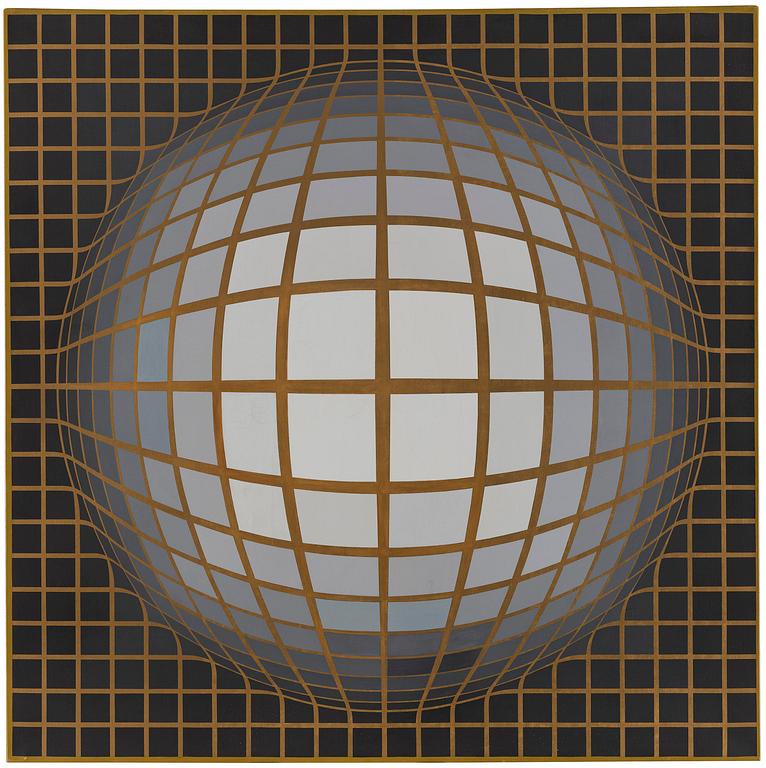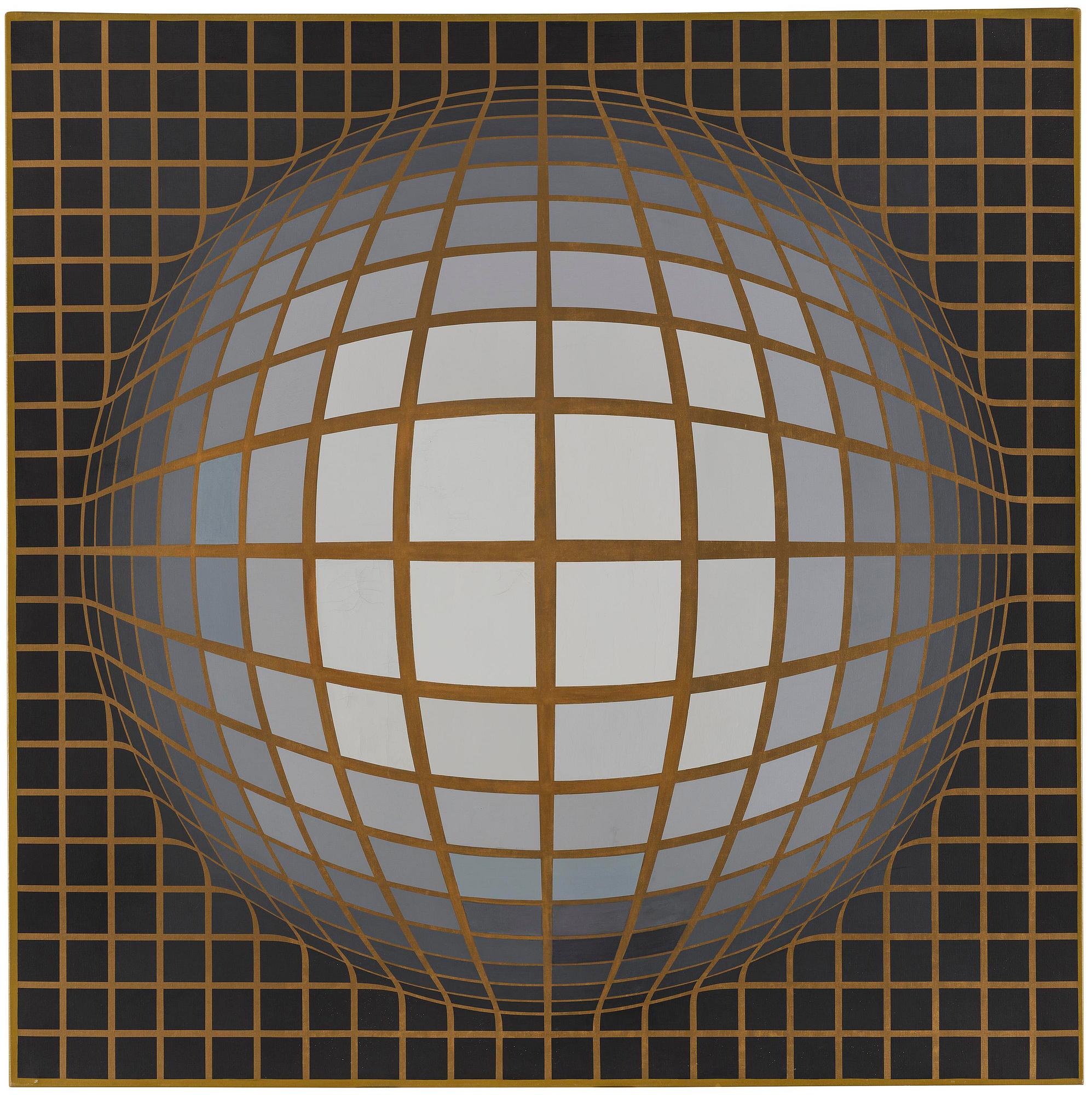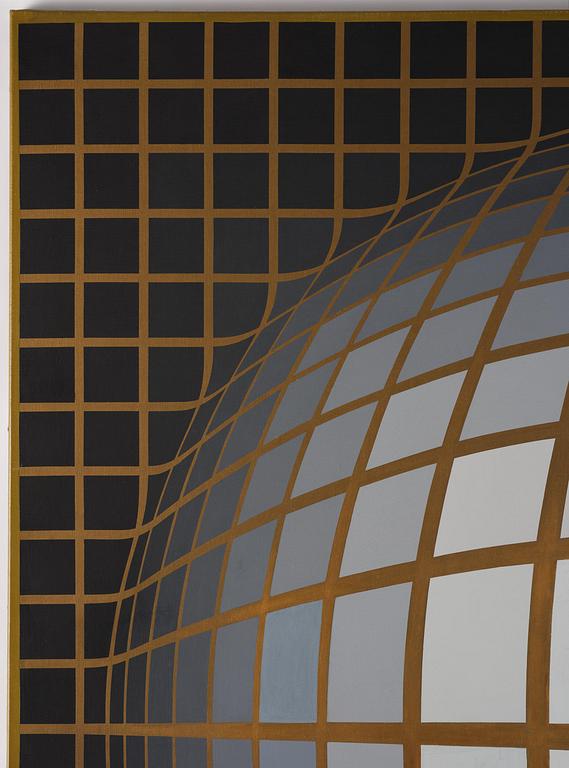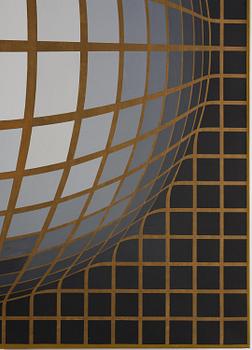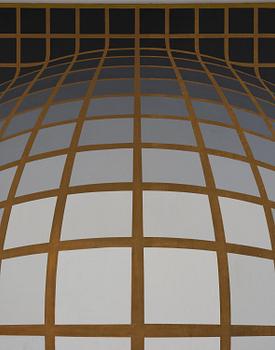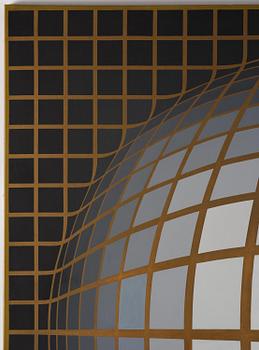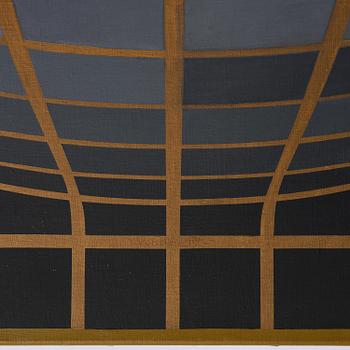
"RE-NAB-II-B"
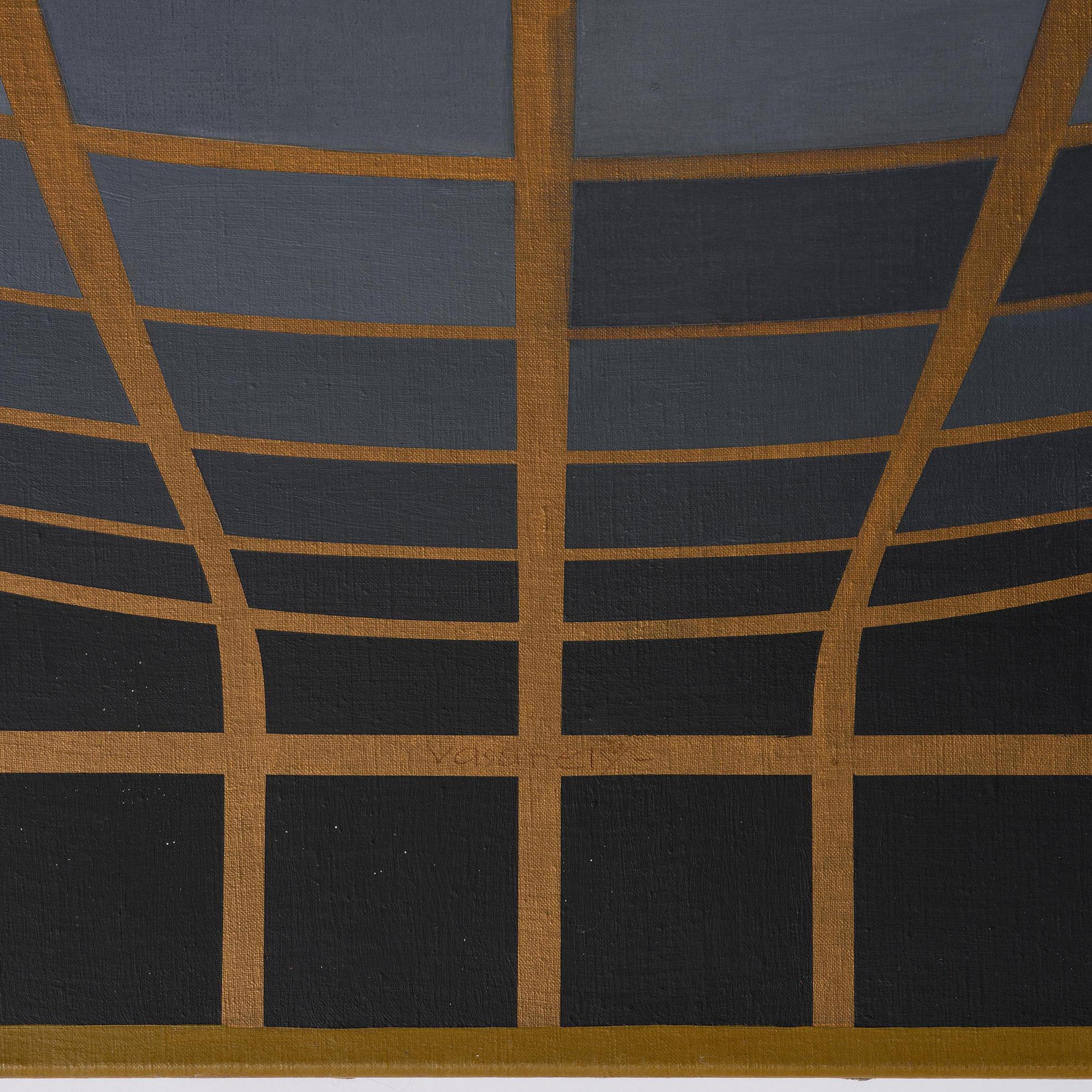
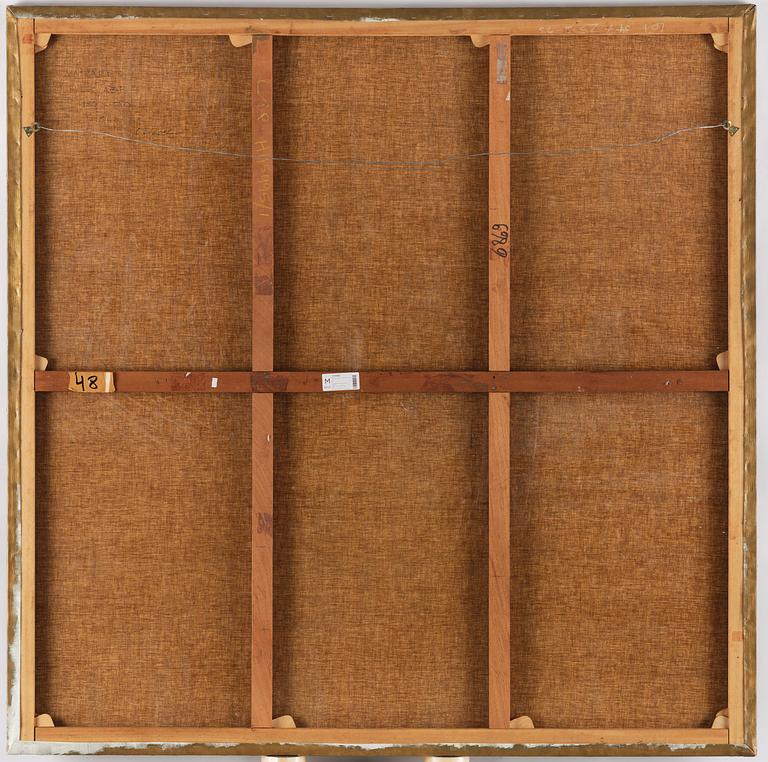
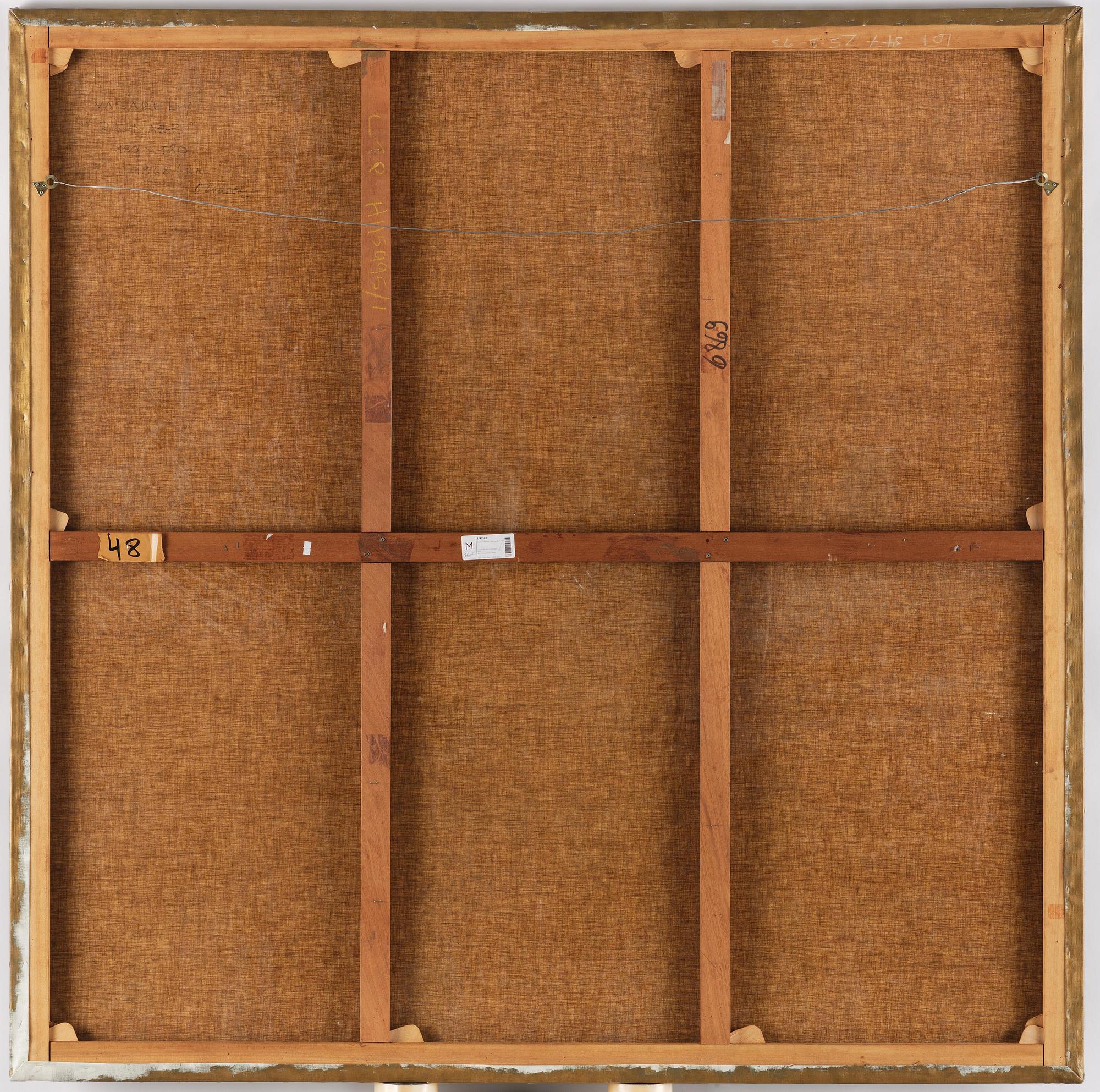
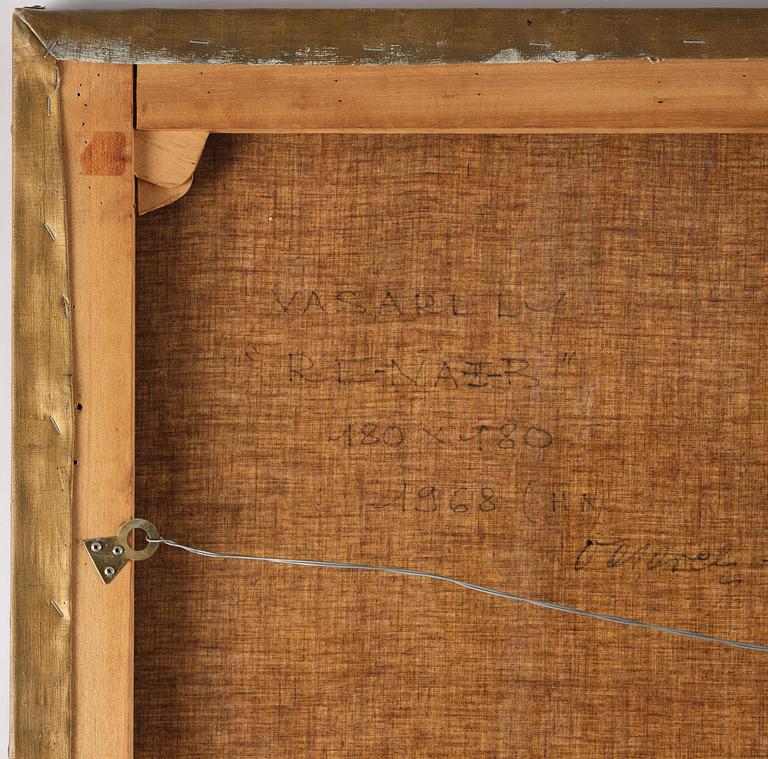
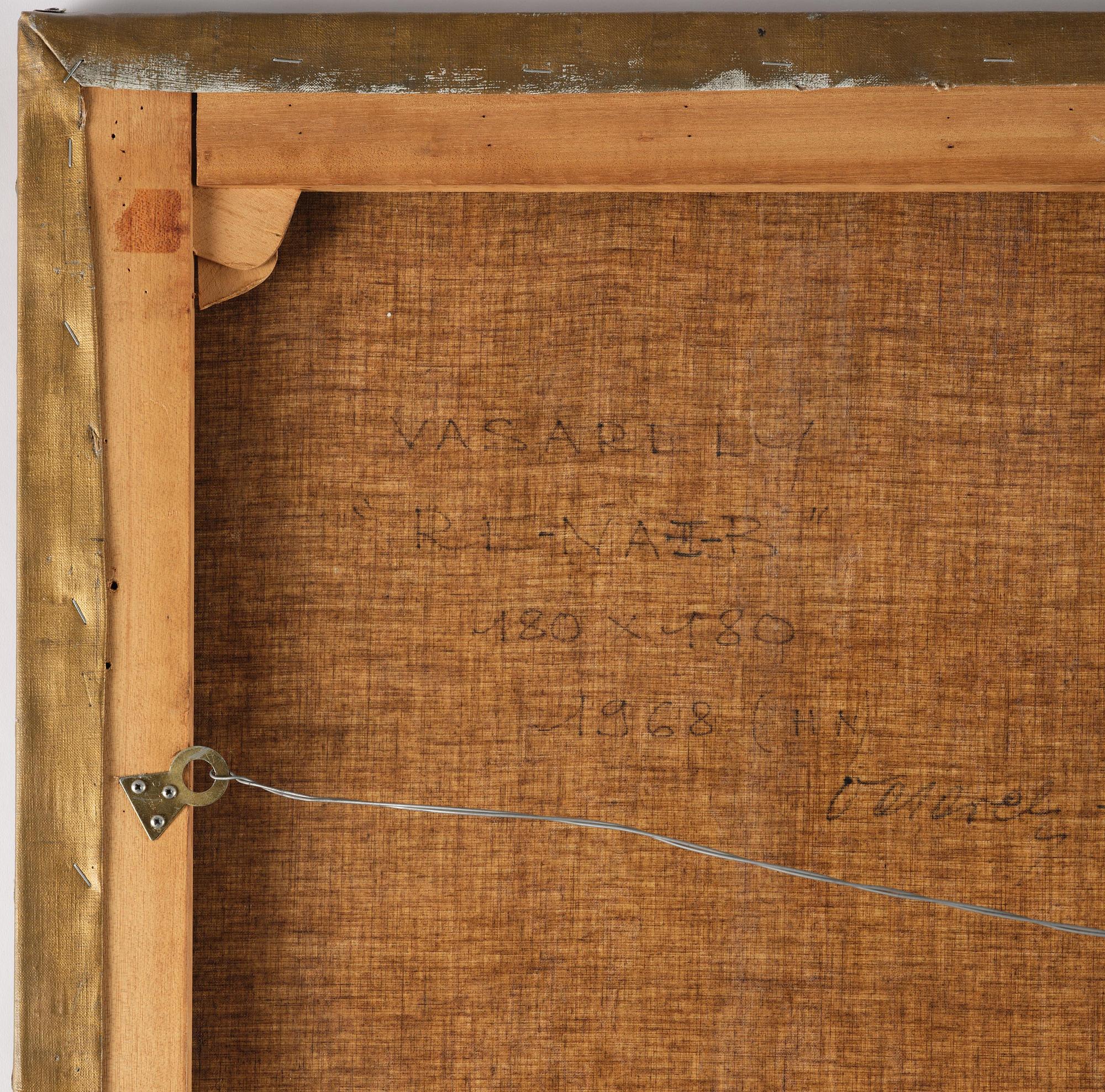
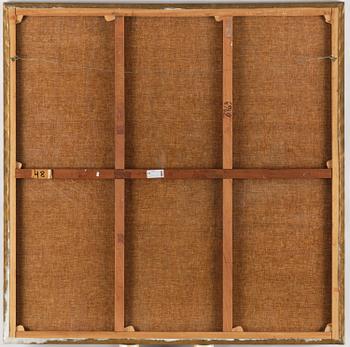
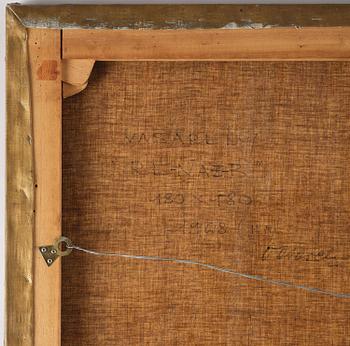
Signed Vasarely. Also signed and dated 1968 verso. Acrylic on canvas, 180 x 180 cm.
Provenance
Private Collection, Sweden.
Sotheby’s, Impressionist, Modern and Contemporary Art and Ceramics, London, 25 March 1993, lot 347.
Private Collection.
Christie’s, Post-War and Contemporary Art, New York, 15 September 2004, lot 47.
Private Collection, USA.
Sotheby’s, Contemporary Art, New York, 18 November 2016, lot 181.
Private Collection, Poland.
DESA Unicum, Warsaw, “Post-War and Contemporary Art”, 11 October 2018, lot 19.
Literature
Victor Vasarely and Marcel Joray, "Vasarely II", Neuchâtel, 1971, illustrated.
More information
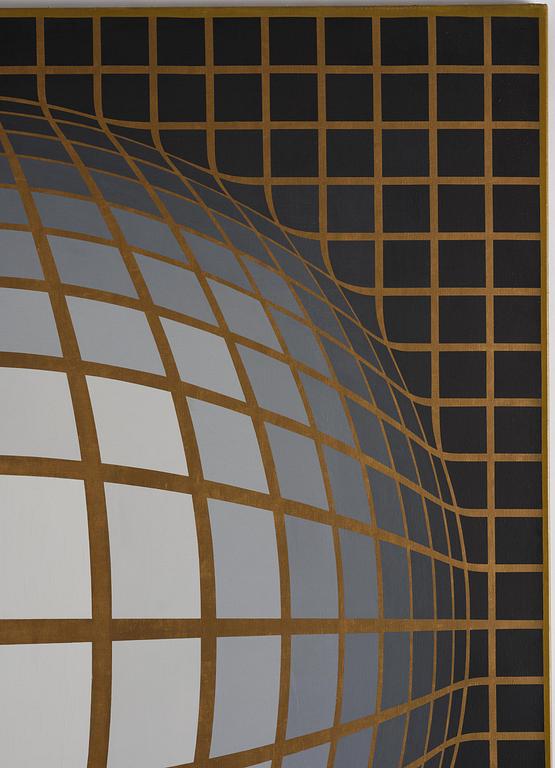
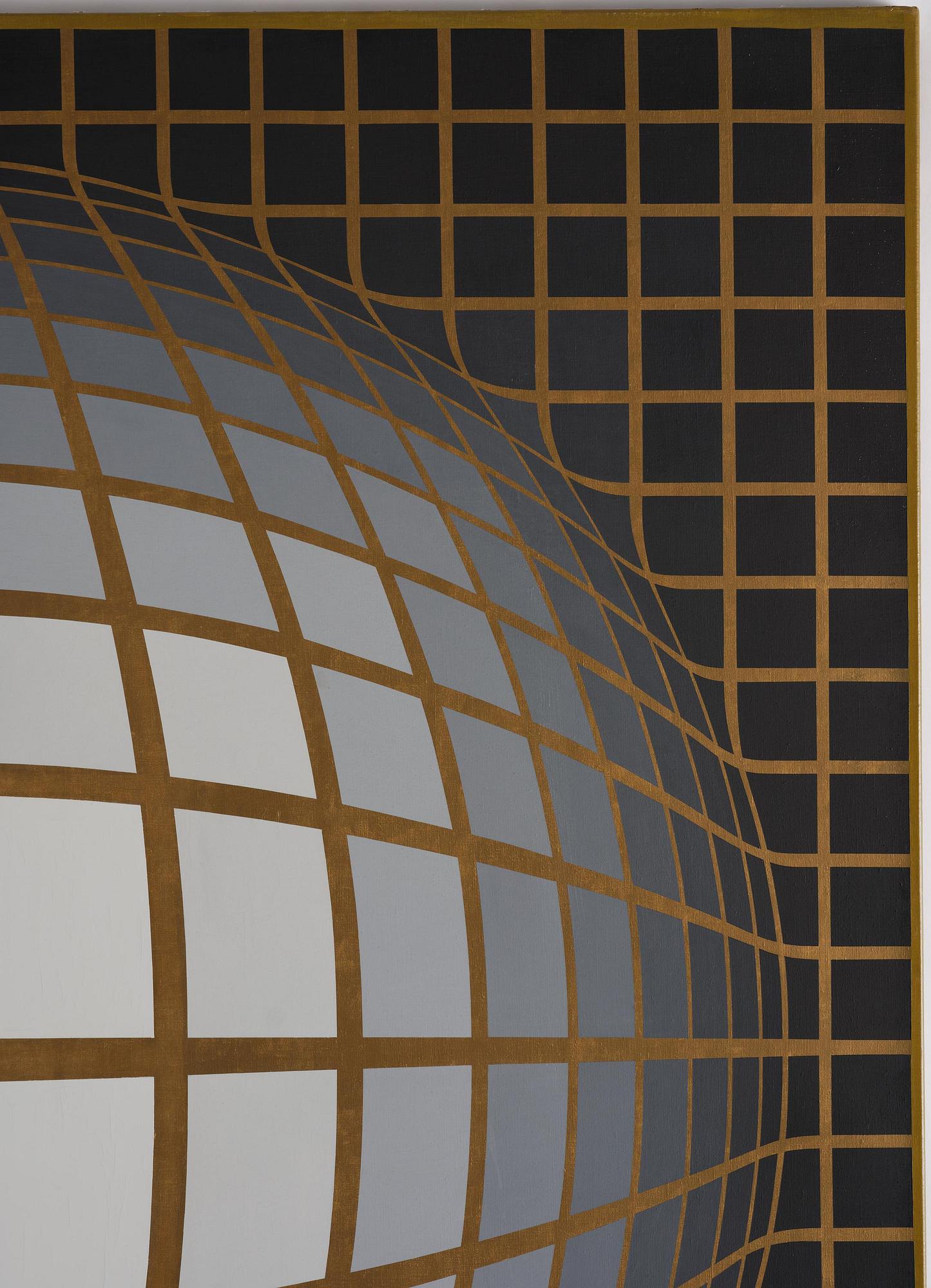
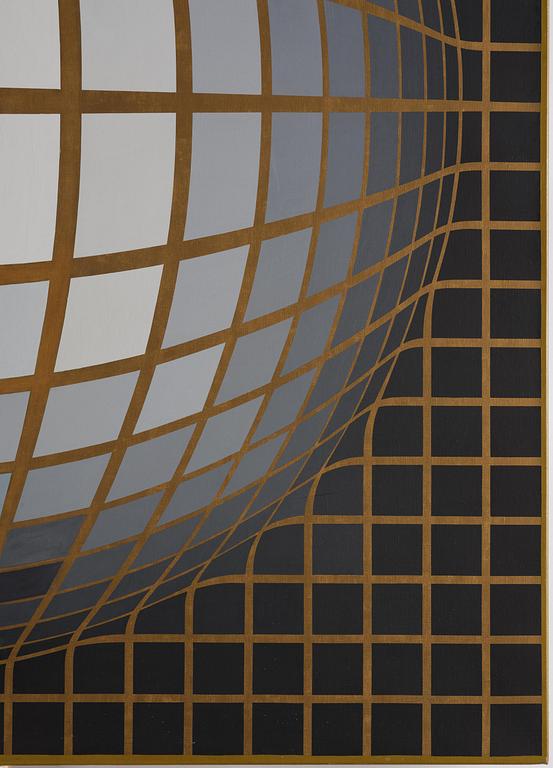
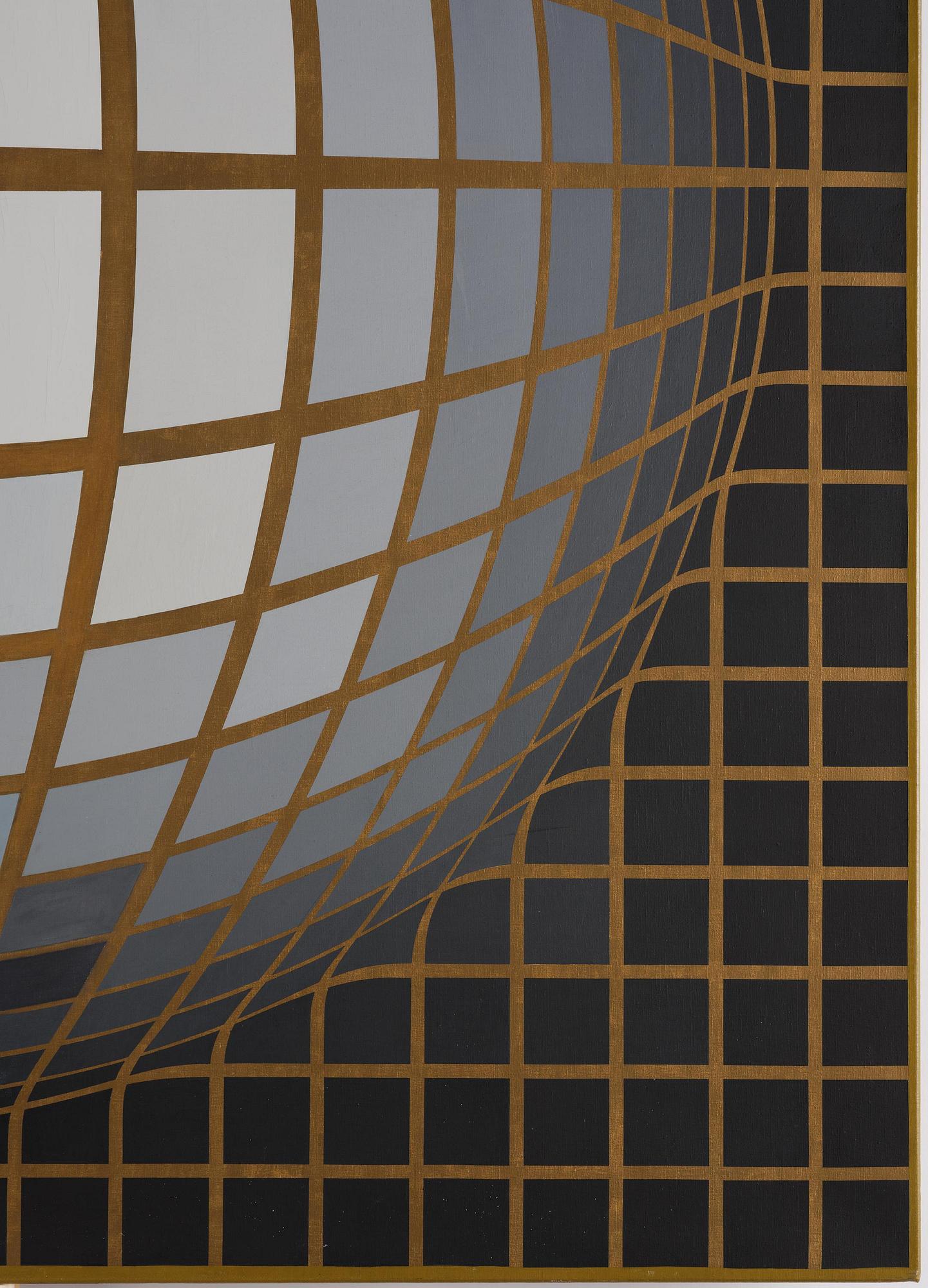
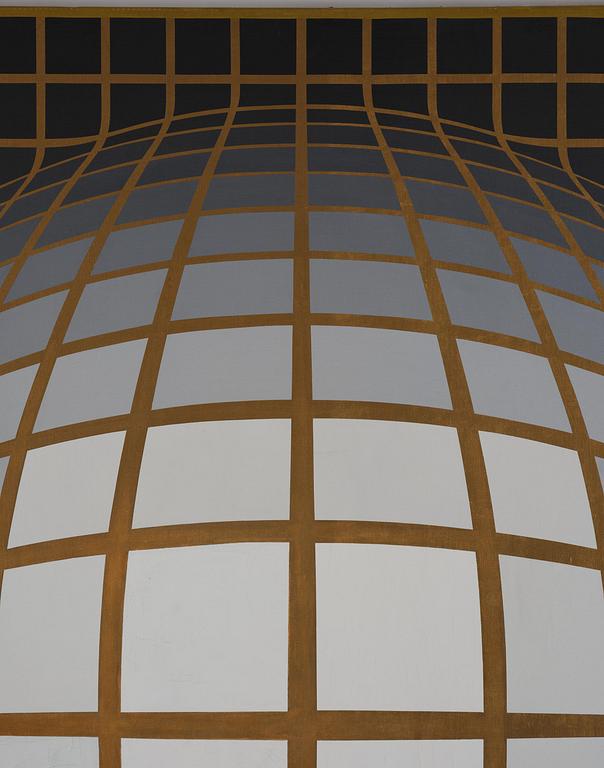
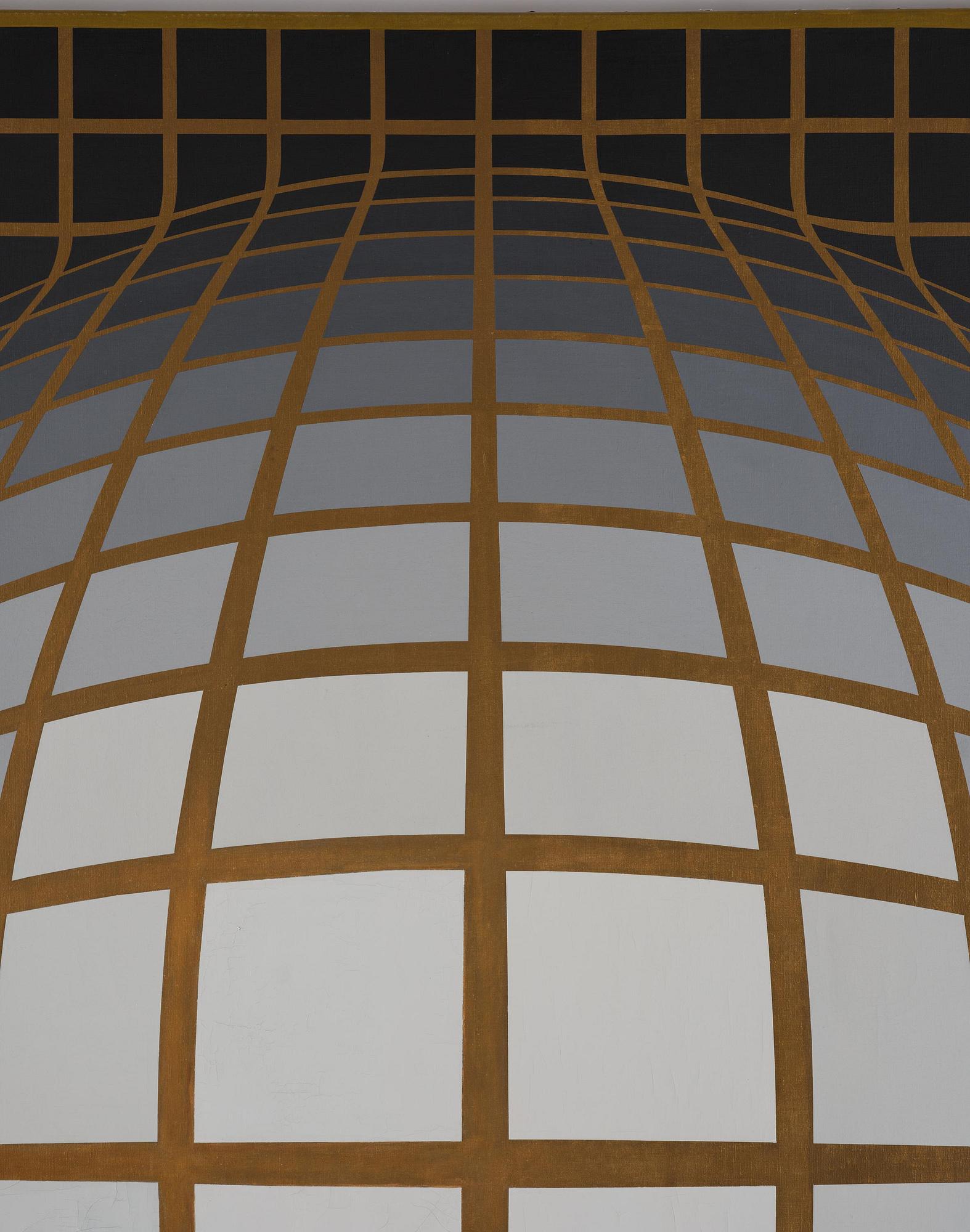
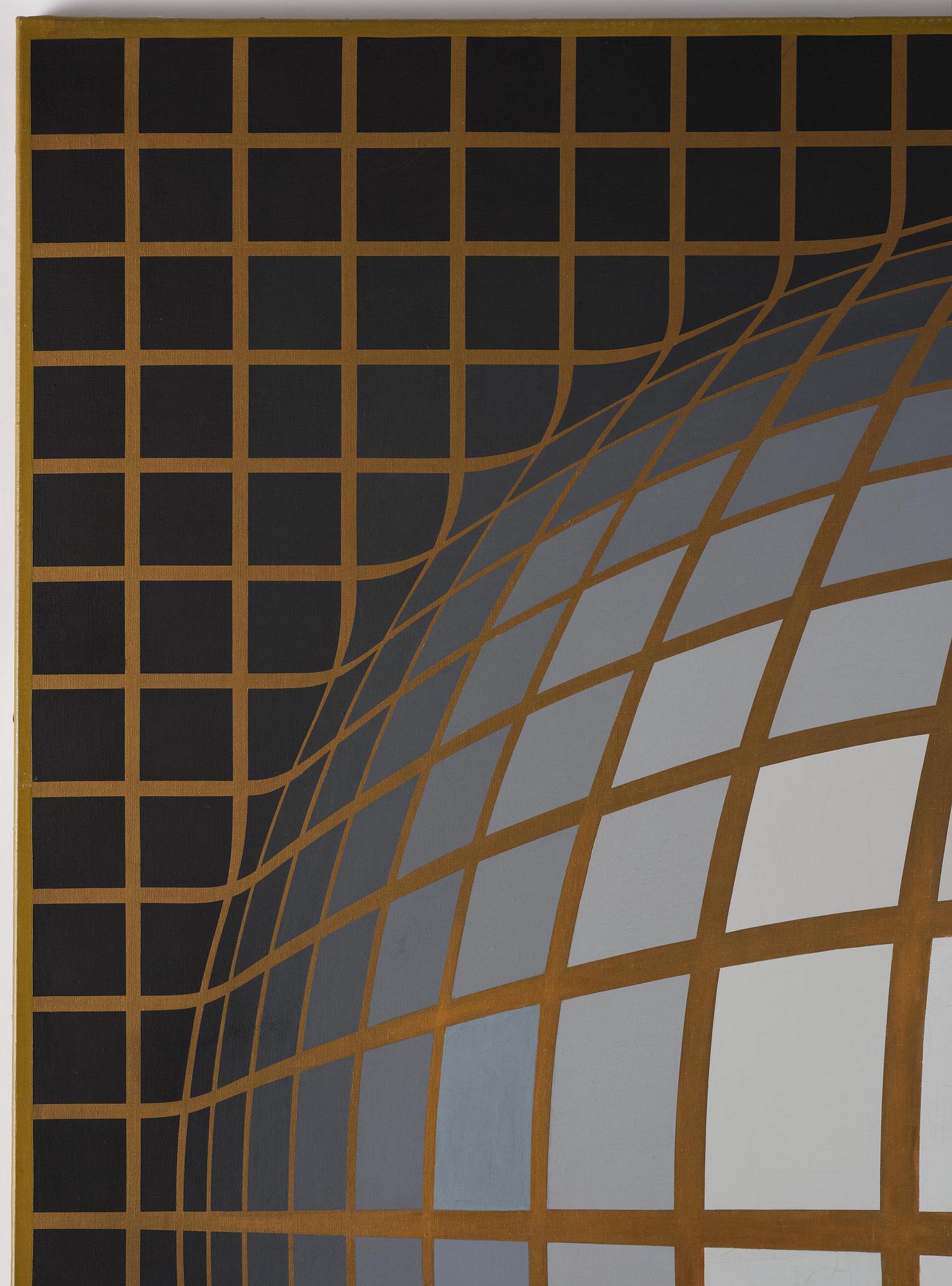
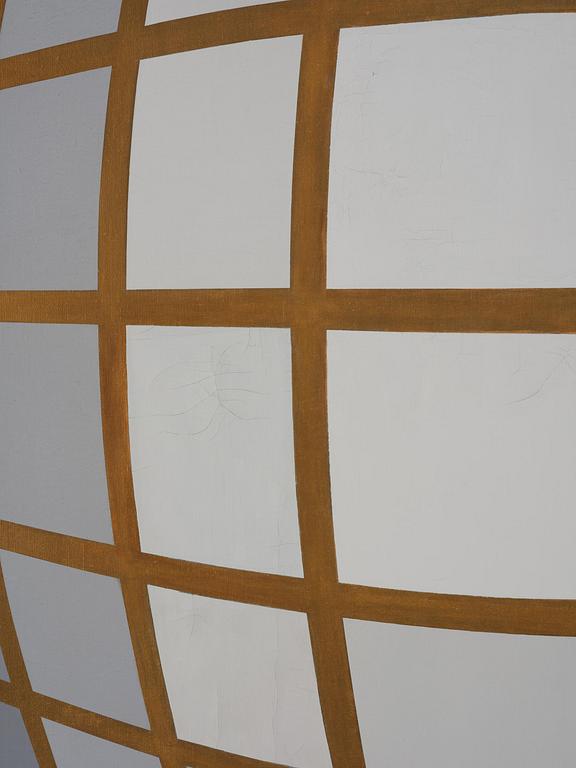
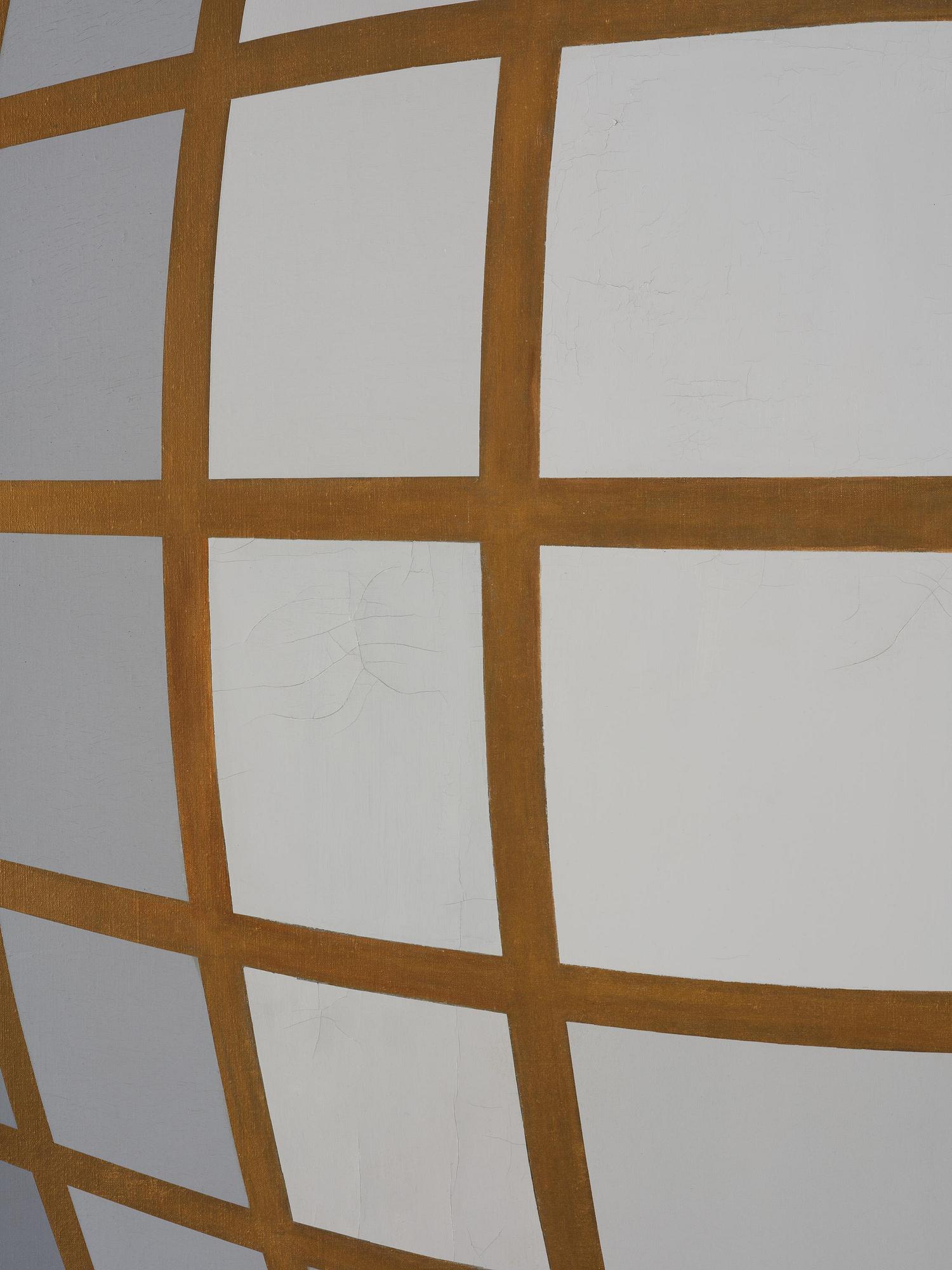
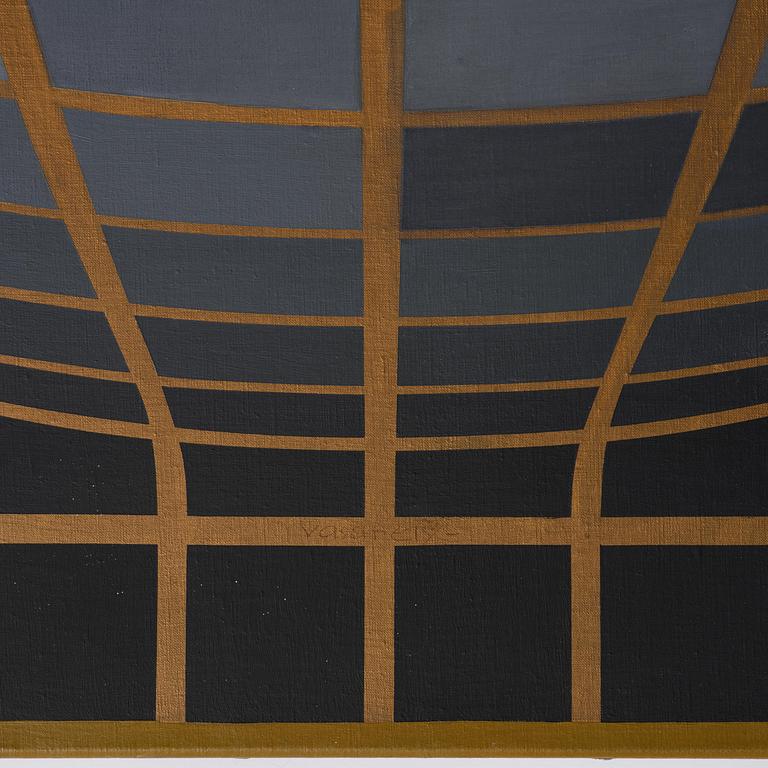
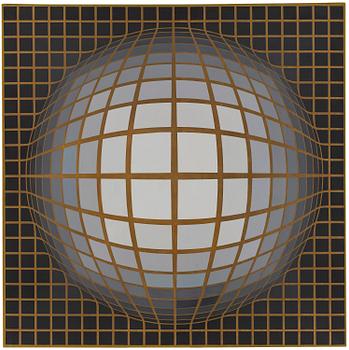
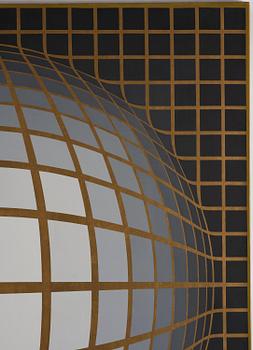
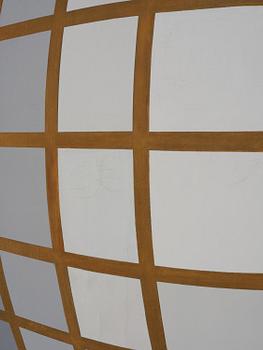
In the composition RE-NAB-II-B, Victor Vasarely creates the illusion of three-dimensional space on a two-dimensional surface. Against a dark background, a golden grid curves around a large, pale blue-grey circular form at the centre. The geometric lines create the illusion of a rounded volume either projecting out from or receding into the surrounding space.
The illusion is heightened by the contrast between the regular structure of the grid and its apparent deformation. At first, the grid appears ordered and symmetrical, but as the lines curve around the central form, the structure becomes visually unstable. The viewer may perceive the form as a sphere, a bulge or an opening into another space. This ambiguity causes the eye to alternate between perceiving the image as a flat pattern of lines and as a three-dimensional object.
These visual effects reflect the broader development of Op art during the 1960s. The movement explored the relationship between visual perception, geometric forms and optical illusions, thereby challenging traditional notions of painting as a static art form. One of its most influential proponents was Vasarely, whose meticulously constructed compositions, with their contrasting colours and geometric structures, appeared to move, vibrate or change shape.
Vasarely’s growing influence became evident in 1965, when he took part in the exhibition The Responsive Eye at the Museum of Modern Art in New York. The exhibition was devoted to optical and perceptual art and explored how movement could be suggested by creating visual instability. Op art established a new relationship between the artwork and the viewer, whose active interpretation of the visual impression became a central part of the experience.
By the beginning of the 1970s, Victor Vasarely was immensely popular. Today, art historians regard him as the ‘godfather’ of Op art. His groundbreaking geometric patterns and hypnotic optical illusions had become embedded in the consciousness of an entire generation. From paintings, graphic works, interiors and installations to public commissions, Vasarely’s meticulously calibrated creations had become ‘the hottest of hot’.
For condition report contact specialist

What will the transport cost?
Shipping can only be arranged by contacting specialdelivery@bukowskis.com.
Covered by droit de suite
Image rights
The artworks in this database are protected by copyright and may not be reproduced without the permission of the rights holders. The artworks are reproduced in this database with a license from Bildupphovsrätt.