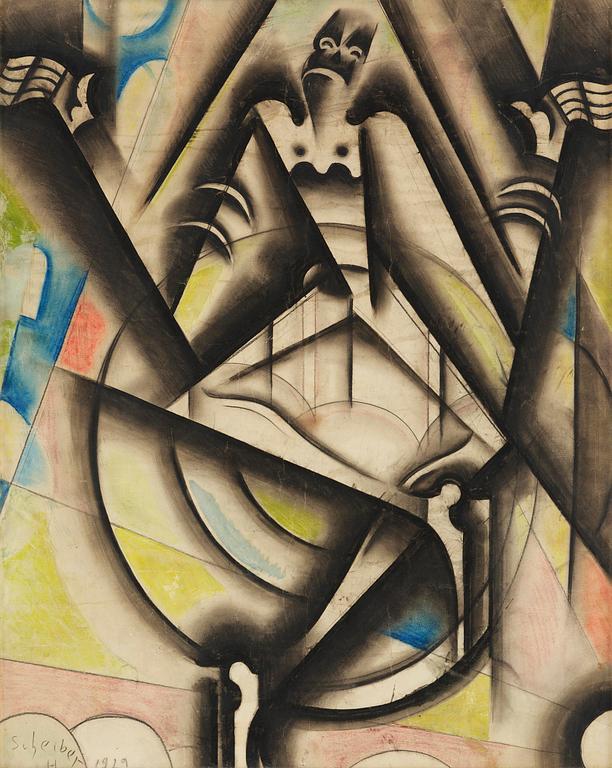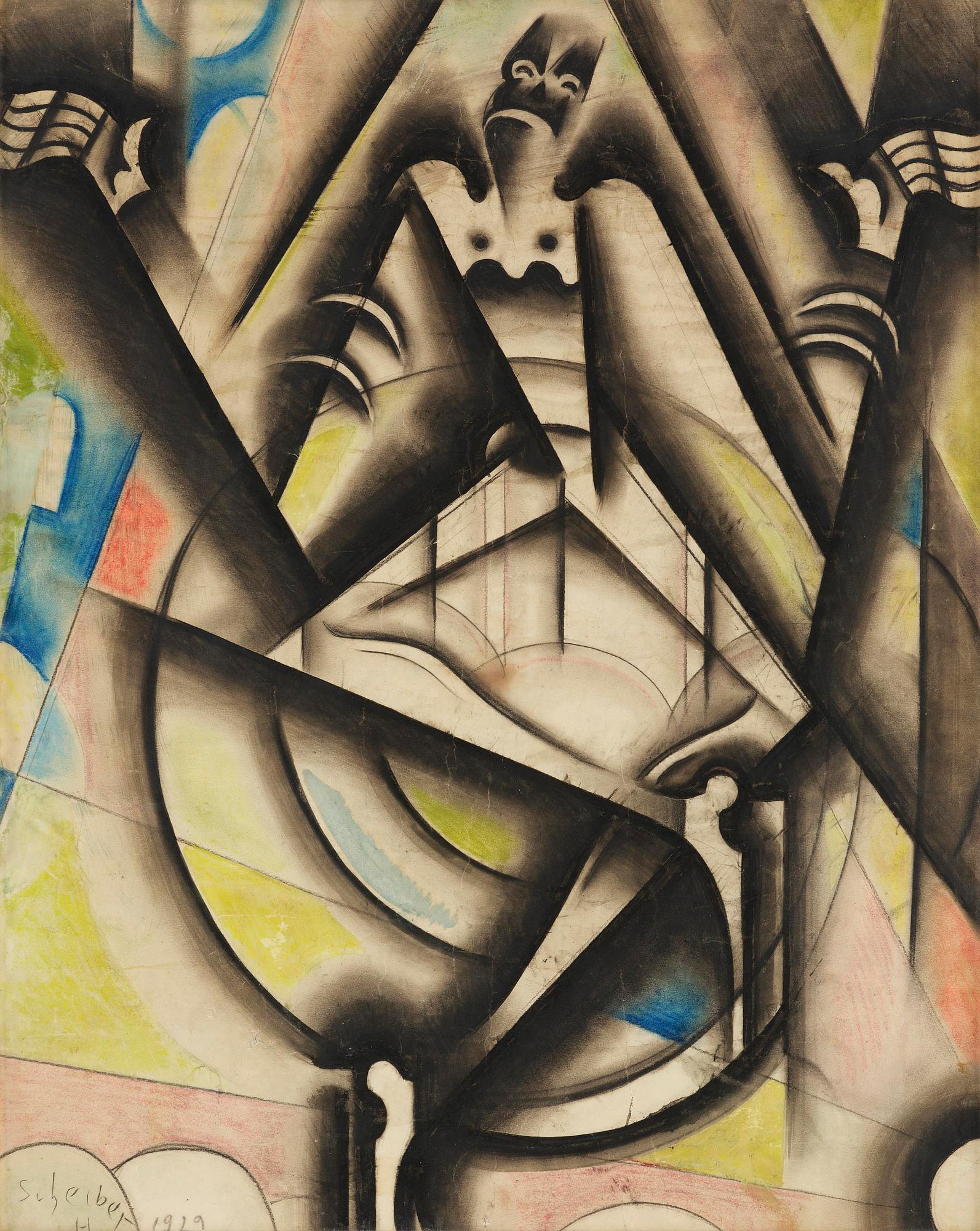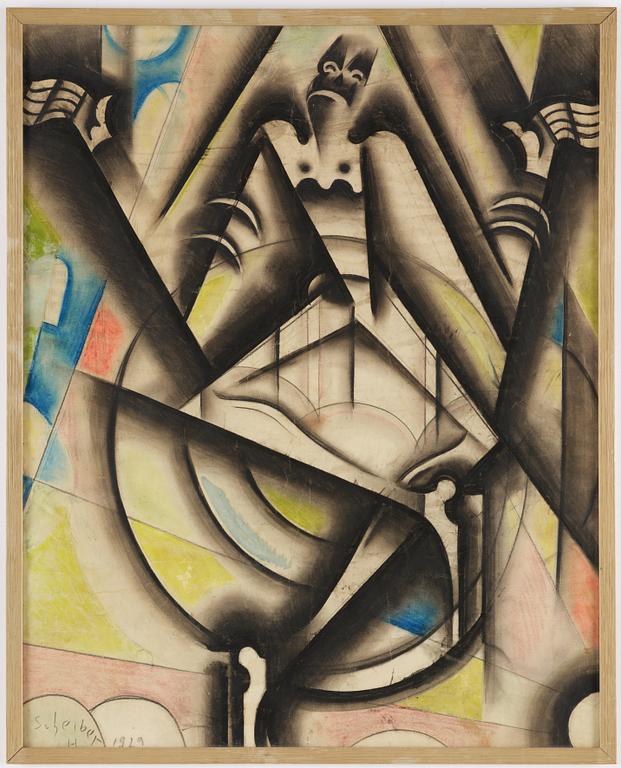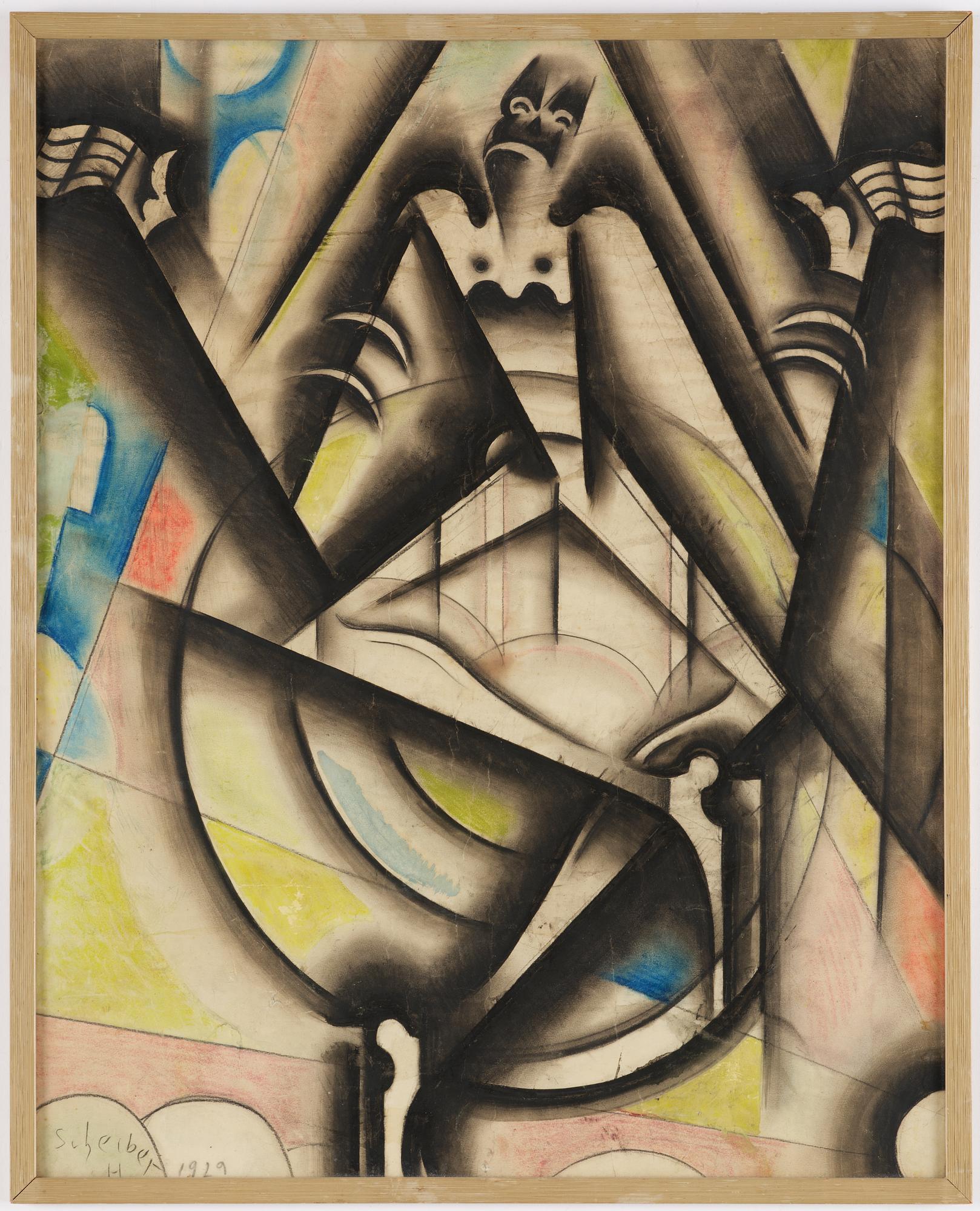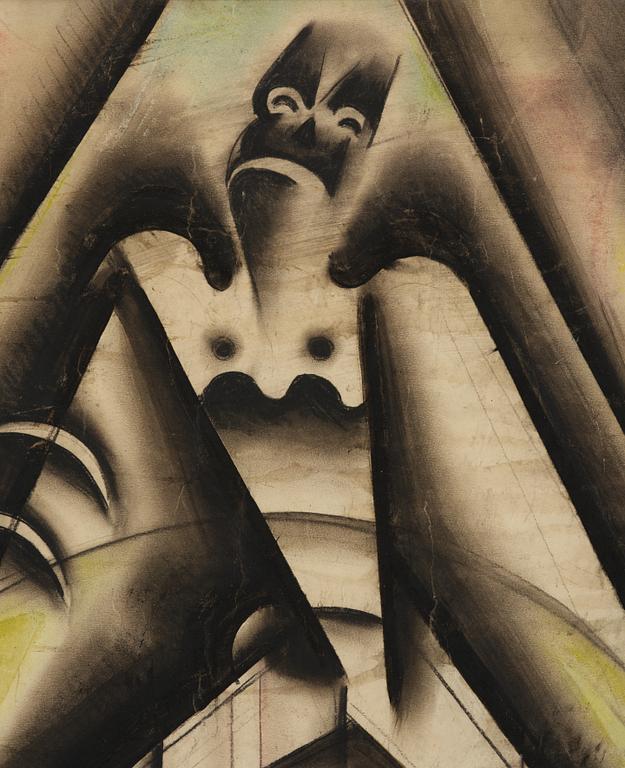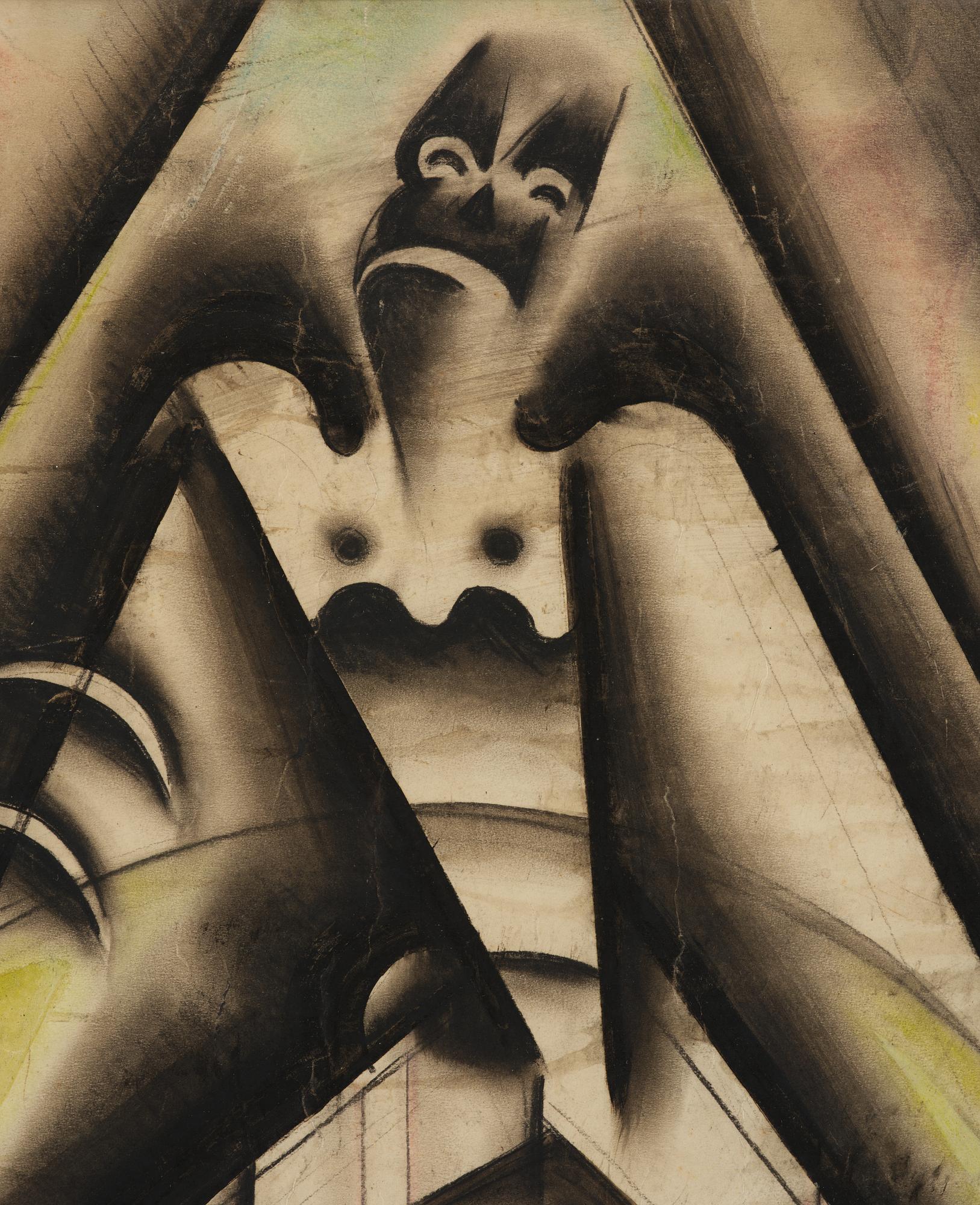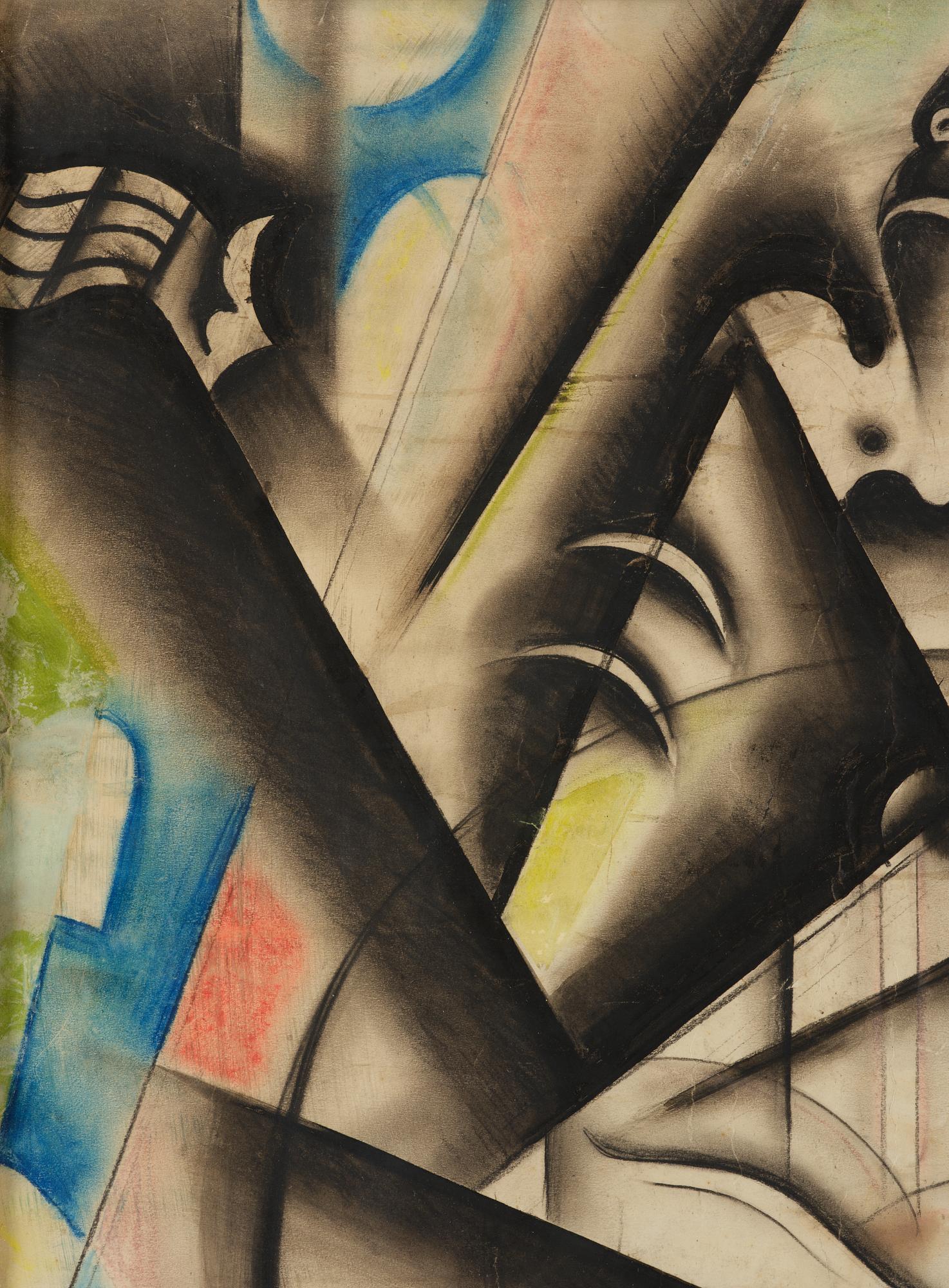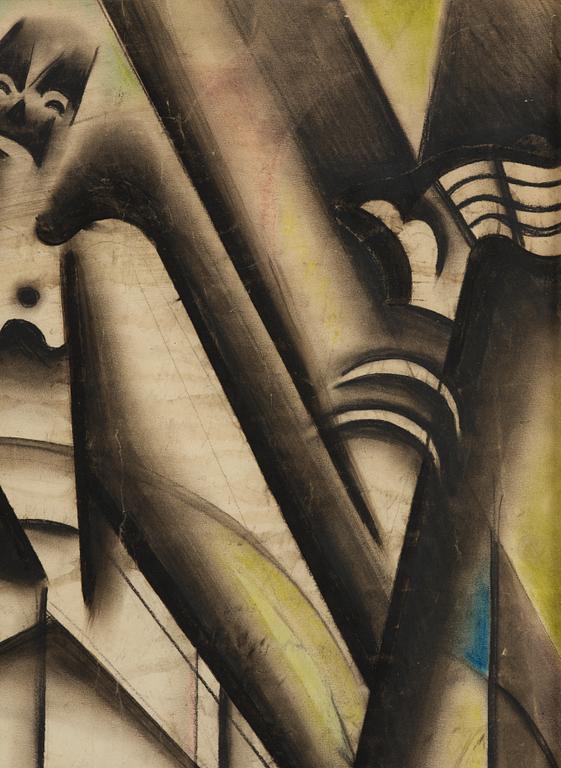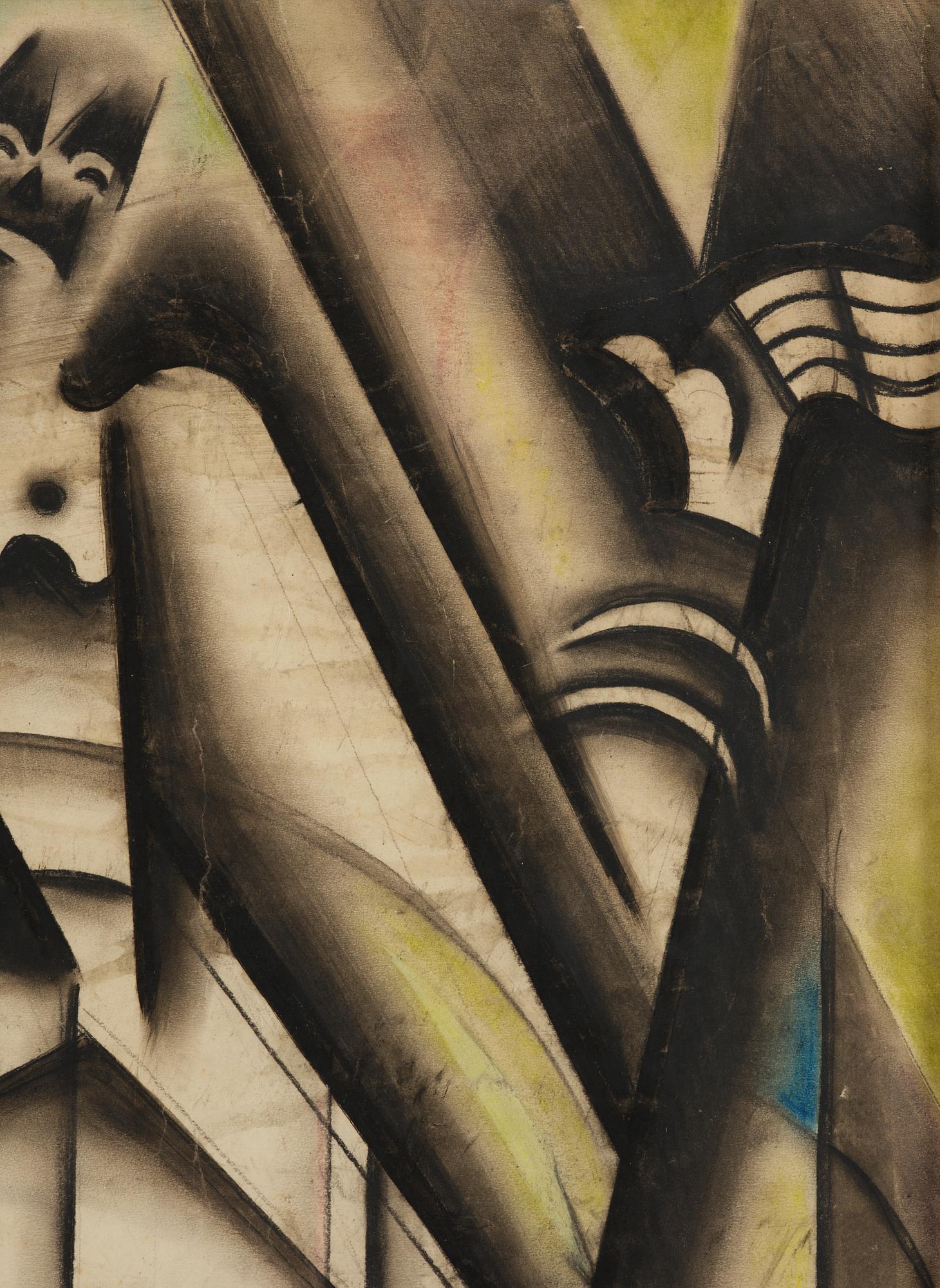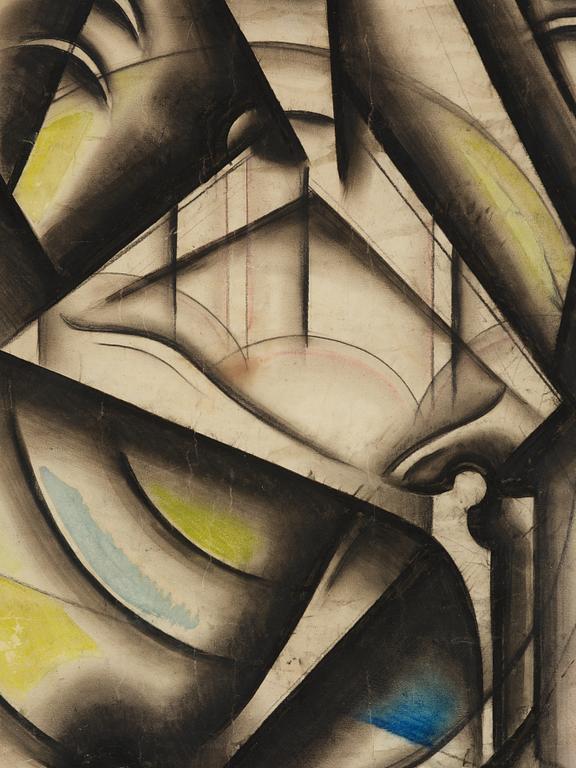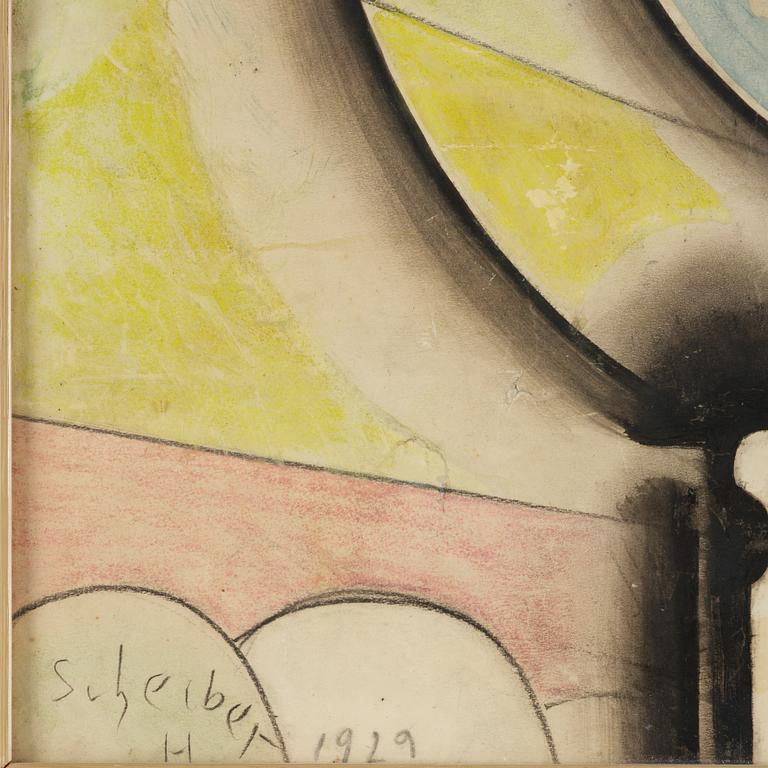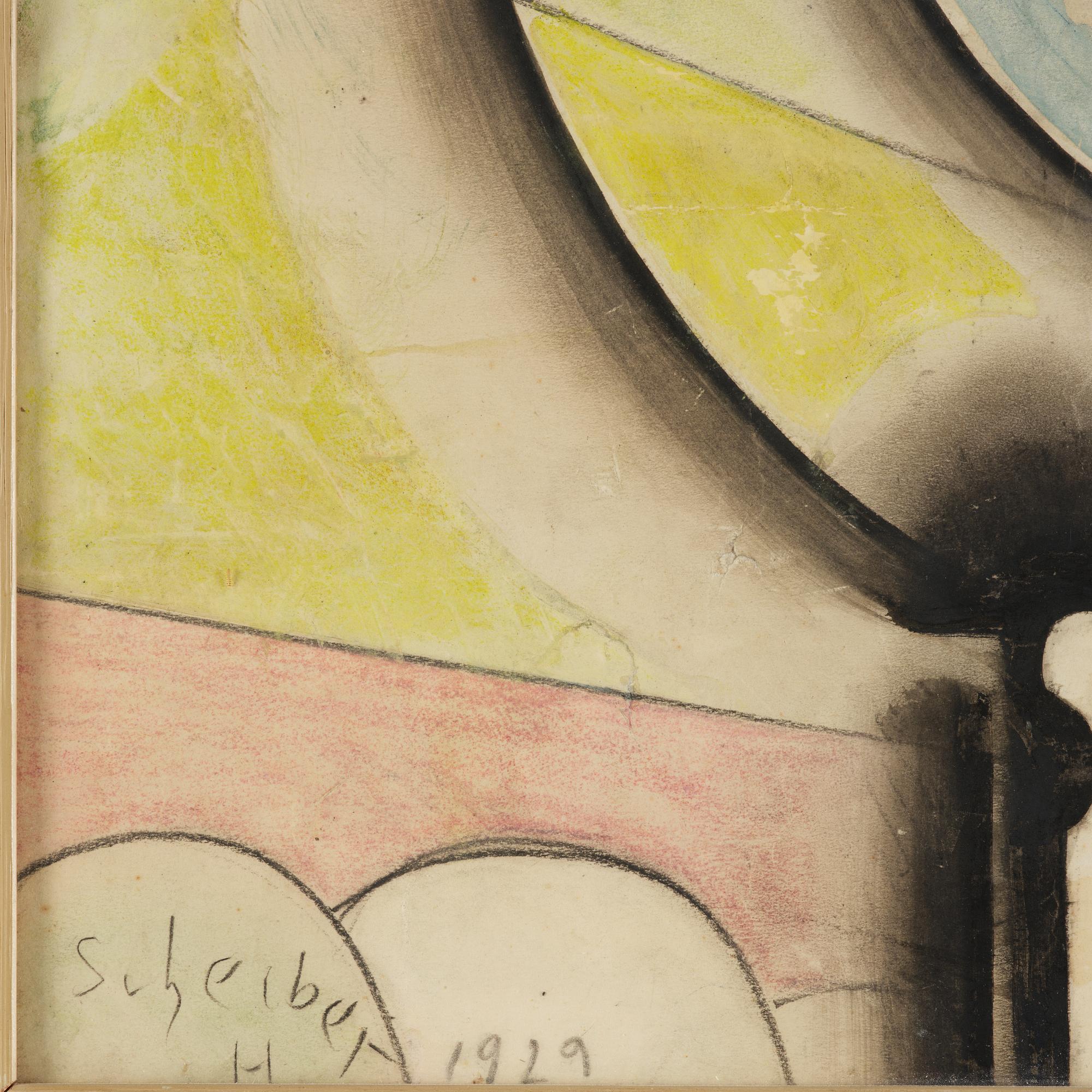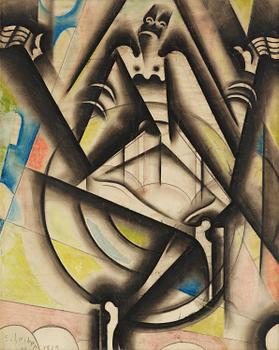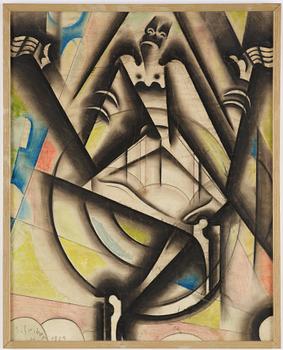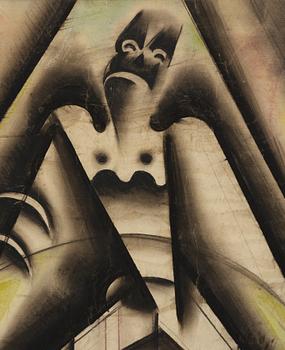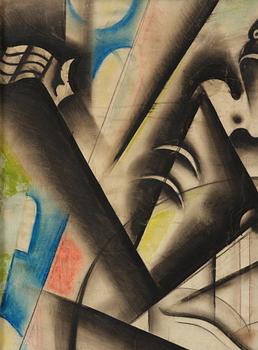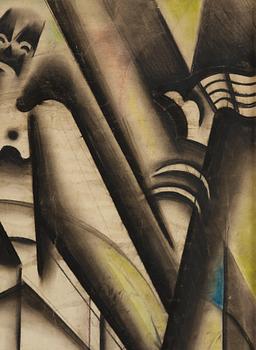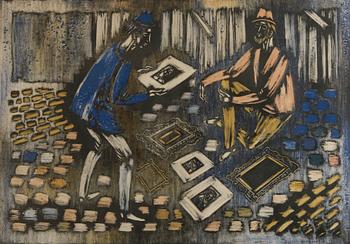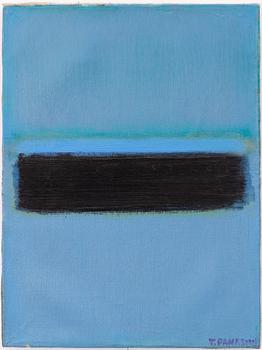
Untitled.
Signed and dated 1929. Mixed media on paper, 72 x 57 cm.
Provenance
Probably purchased in Hungary before 1940, then inherited by the current owner.
Literature
Péter Molnos, "Scheiber – Painting in the Rhythm of Jazz", 2014, compare p. 468.
More information
Hugó Scheiber moved from Budapest to Vienna at the age of eight, where his father worked as a sign painter for the Prater Theatre. At fifteen, he returned to Budapest with his family. There he worked during the day to help support the family and attended painting classes in the evenings at the School of Design, where Henrik Papp was one of his teachers. He completed his studies in 1900. He initially painted in a Post-Impressionist style, but from 1910 onwards his work reveals a growing interest in German Expressionism and Futurism. This made his art of little interest to the conservative Hungarian art establishment.
In 1915, however, he met the great Italian avant-gardist Filippo Tommaso Marinetti, and the two became close friends. Marinetti invited him to join the Futurist movement. The distinctive modernist style that Scheiber developed was nonetheless closer to German Expressionism than to Futurism, and it eventually shifted towards an international Art Deco manner reminiscent of Erté. In 1919, he exhibited together with his friend Béla Kádár at the Hevesy Salon in Vienna. The exhibition was a great success and finally led the Budapest Museum of Fine Arts to acquire some of Scheiber’s drawings. Encouraged by this, Scheiber moved back to Vienna in 1920.
Another turning point in Scheiber’s career came a year later, when Herwarth Walden, founder of Germany’s leading avant-garde periodical Der Sturm and of the Der Sturm gallery in Berlin, took notice of his work. Scheiber moved to Berlin in 1922, and his paintings soon appeared regularly in Walden’s magazine.
For condition report contact specialist
What will the transport cost?