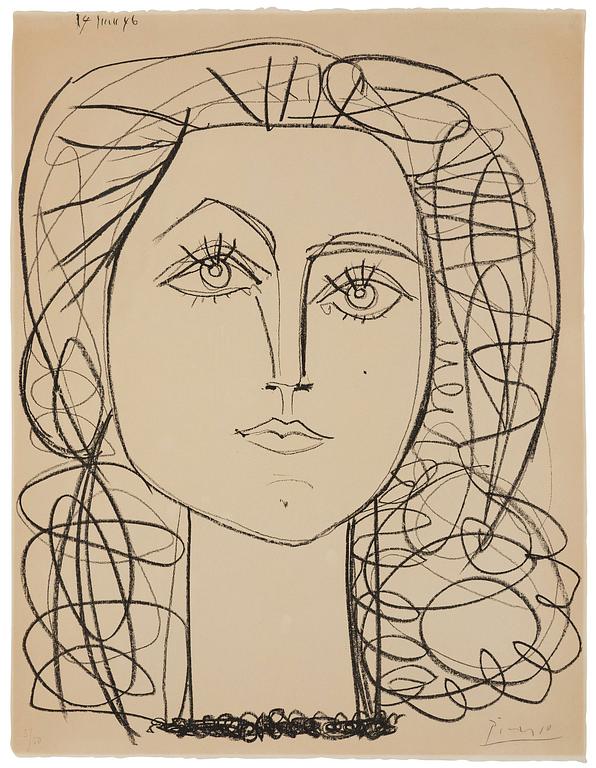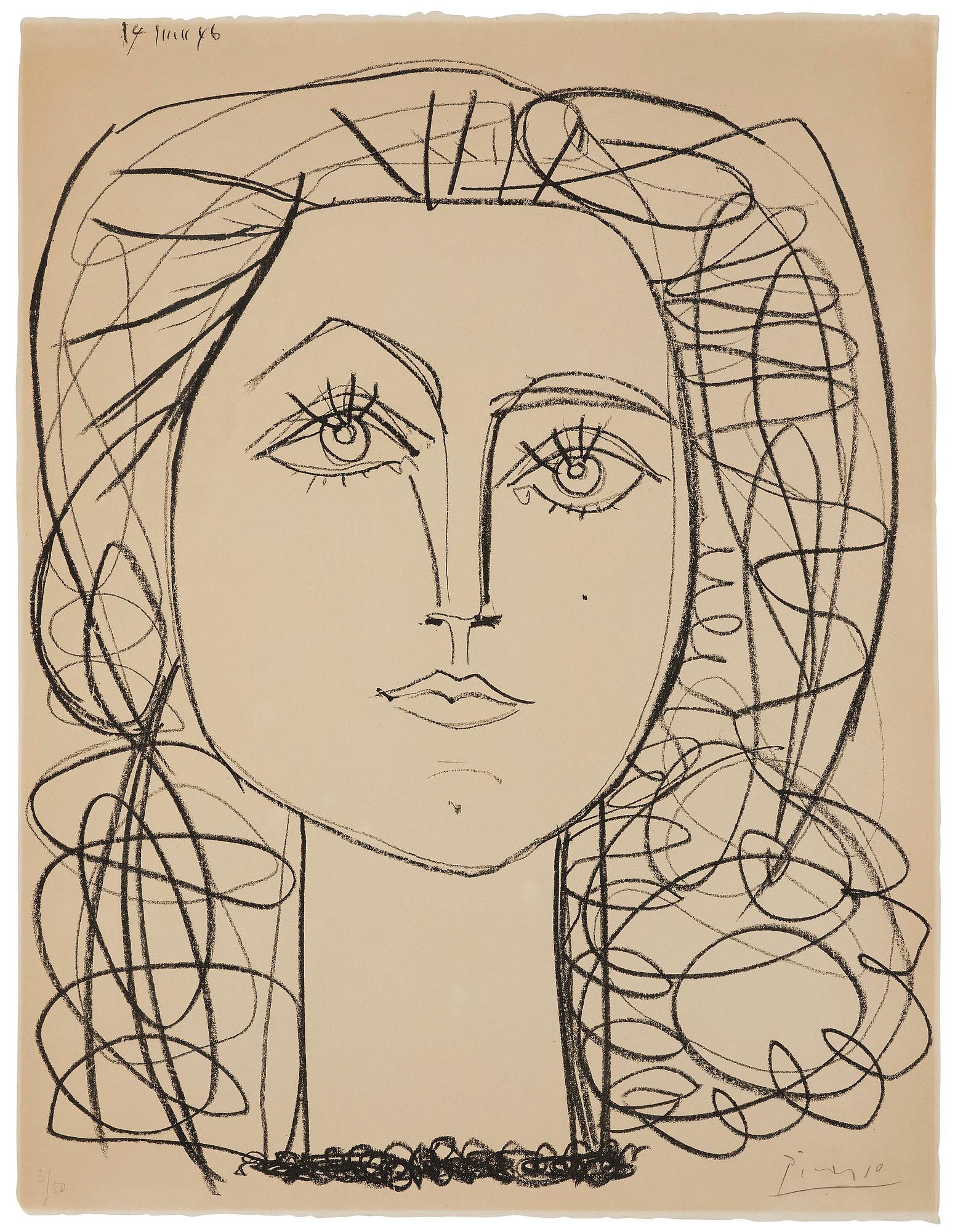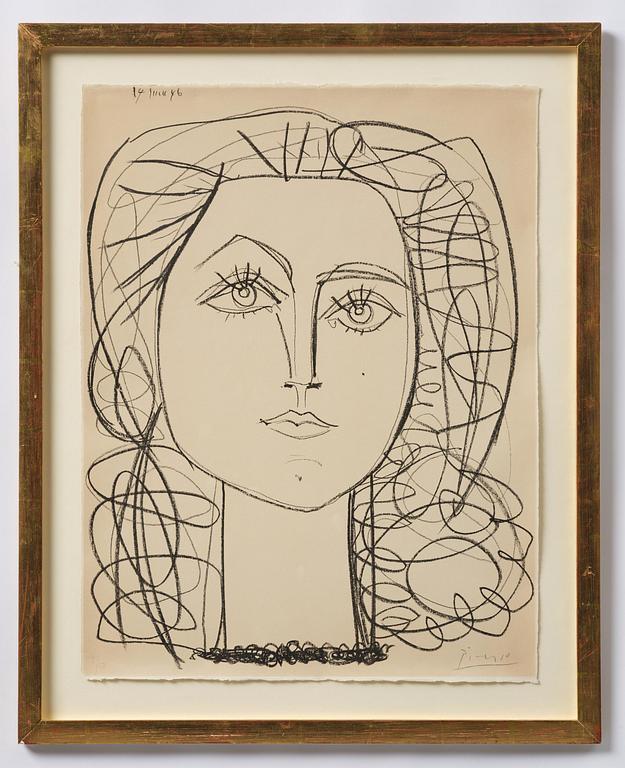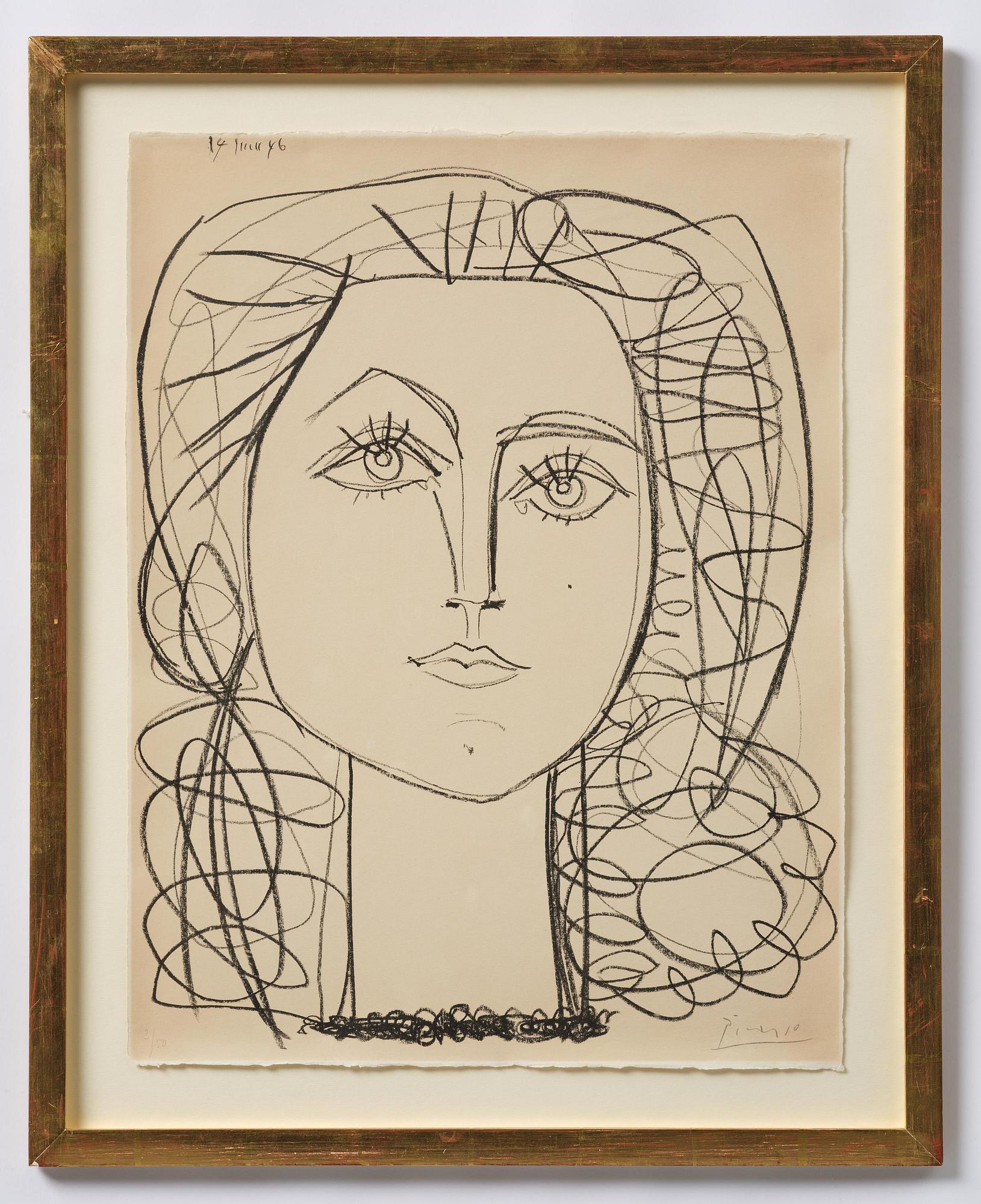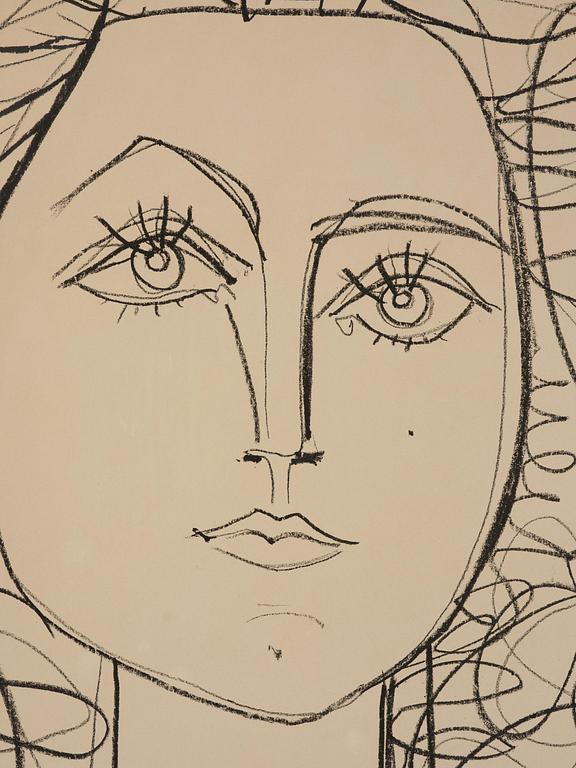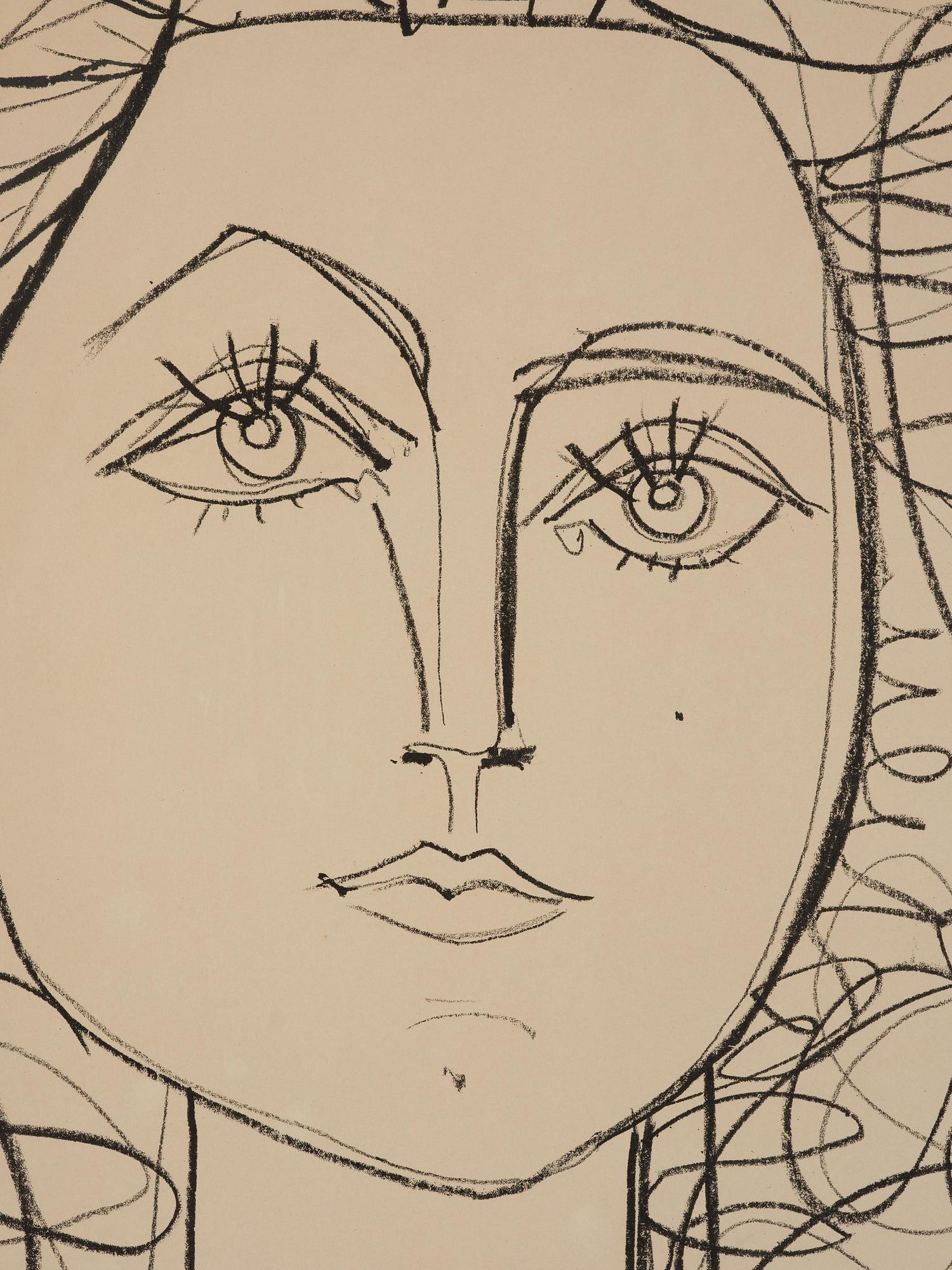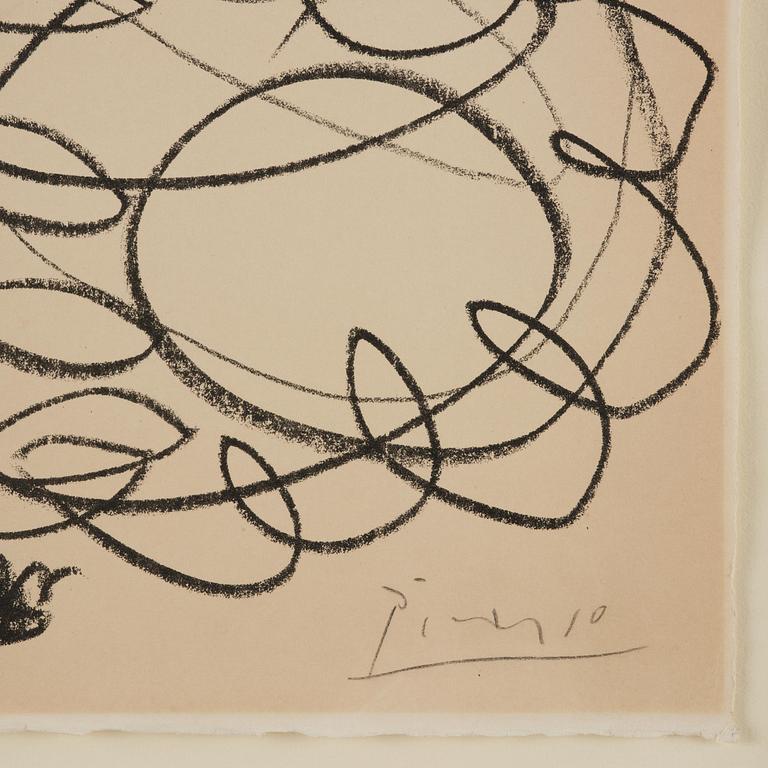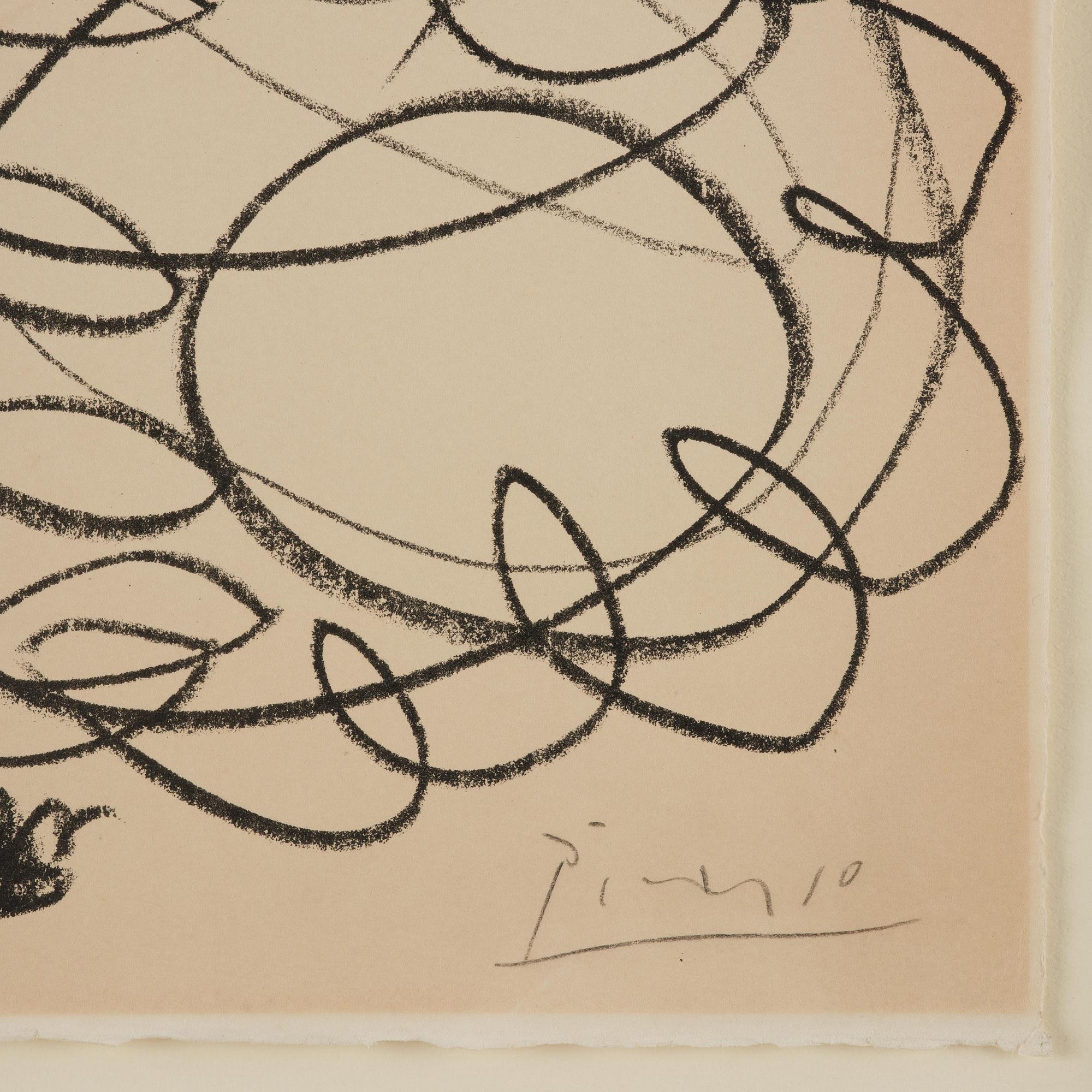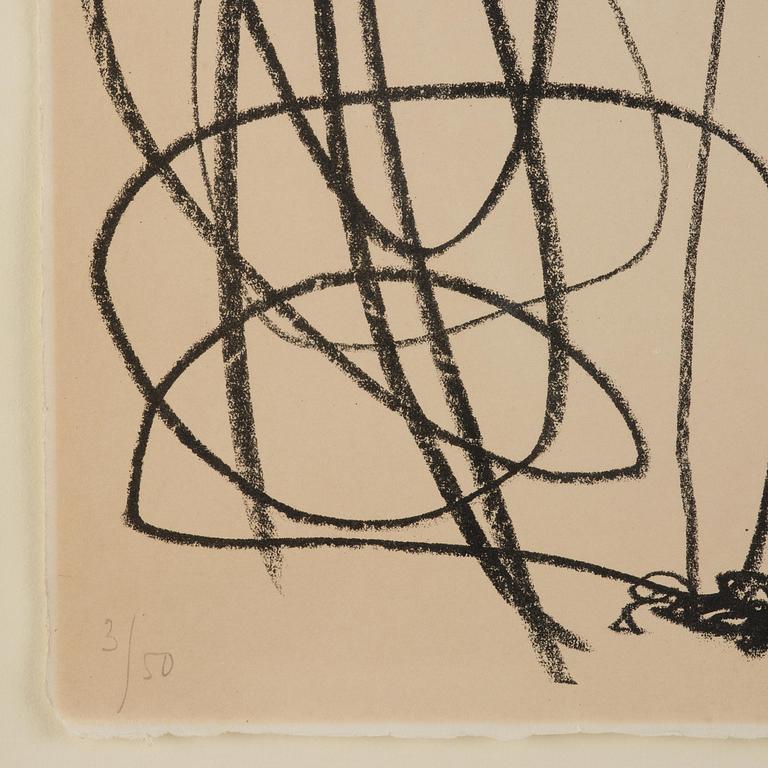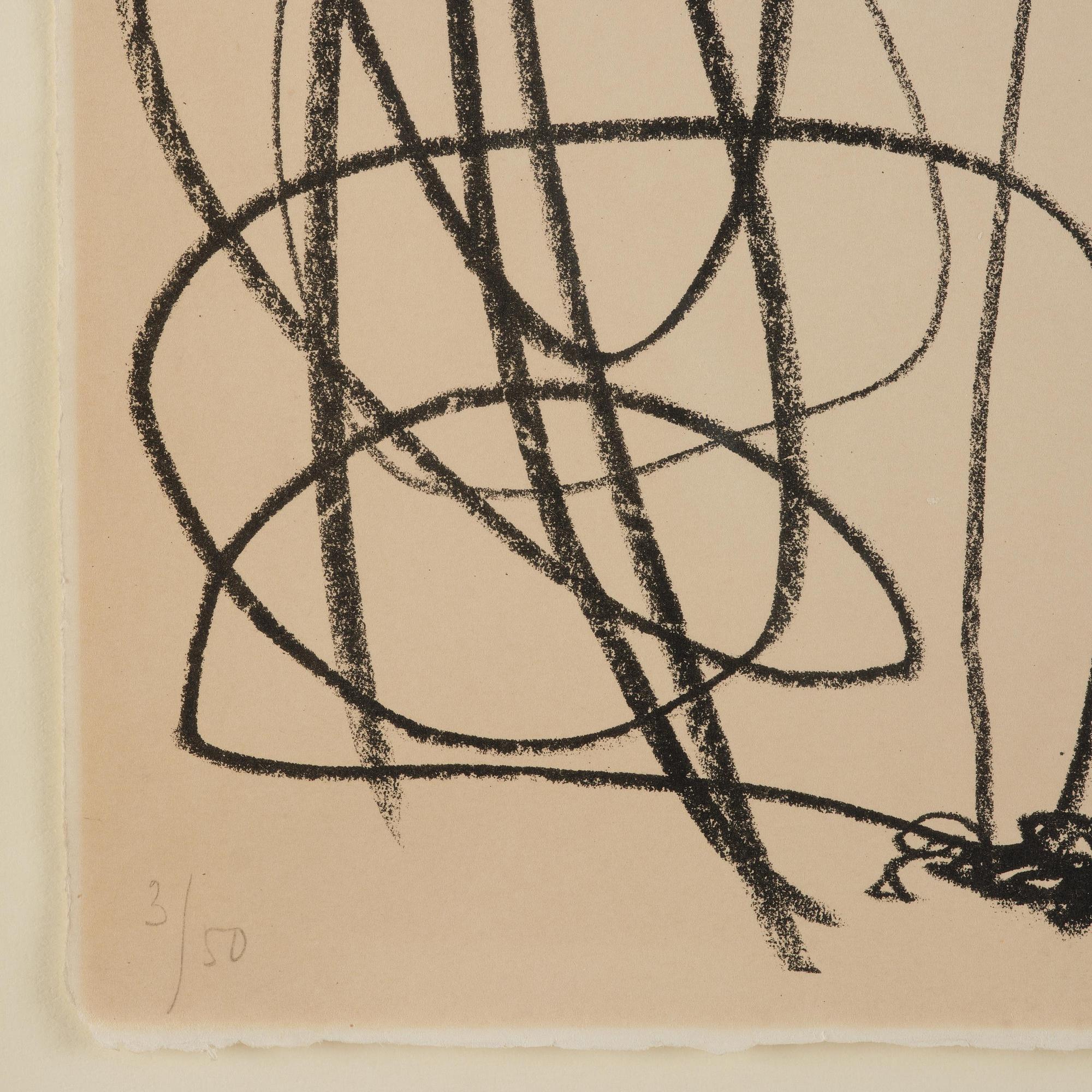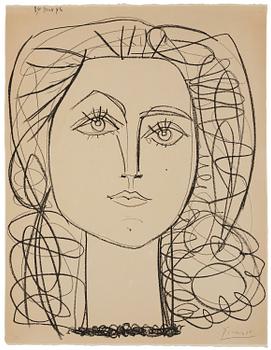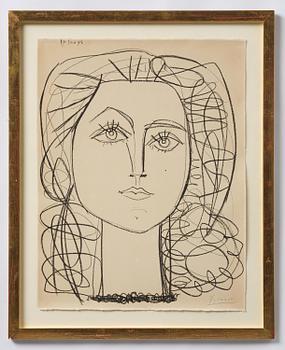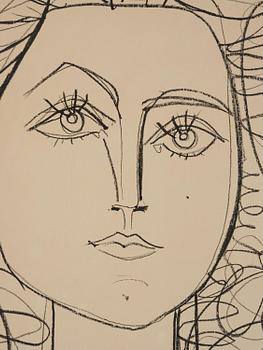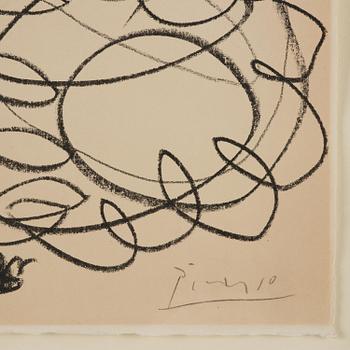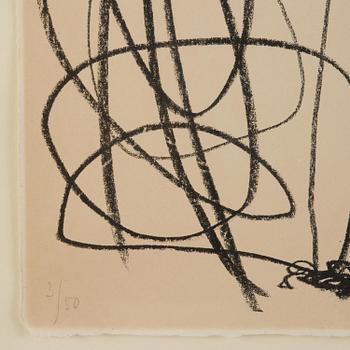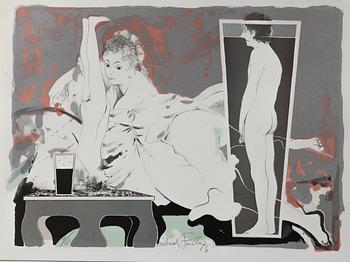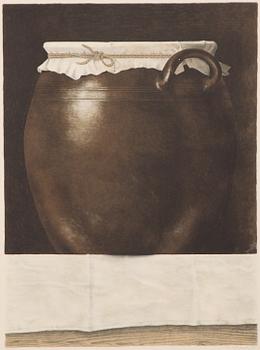
"Françoise"
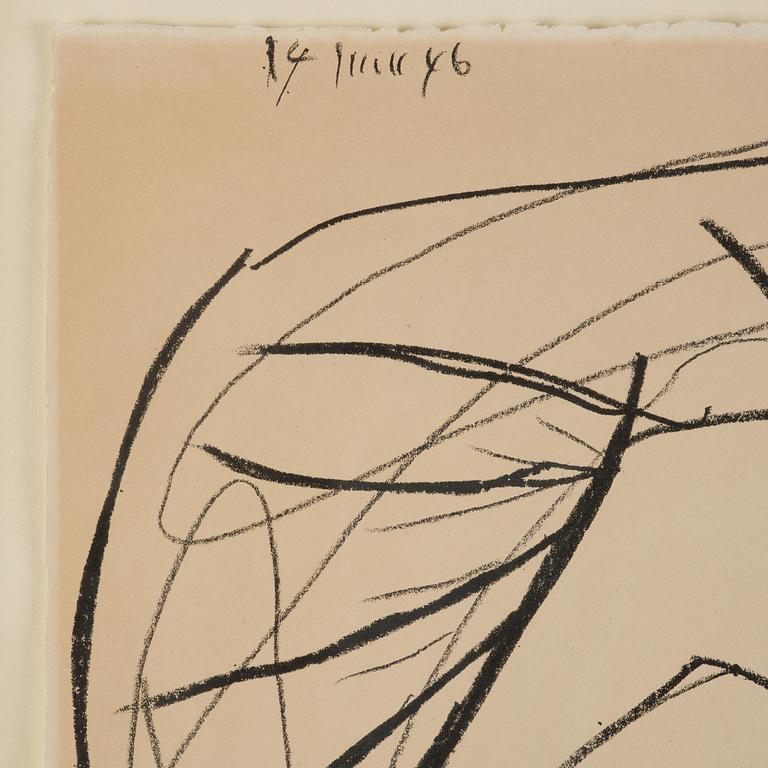
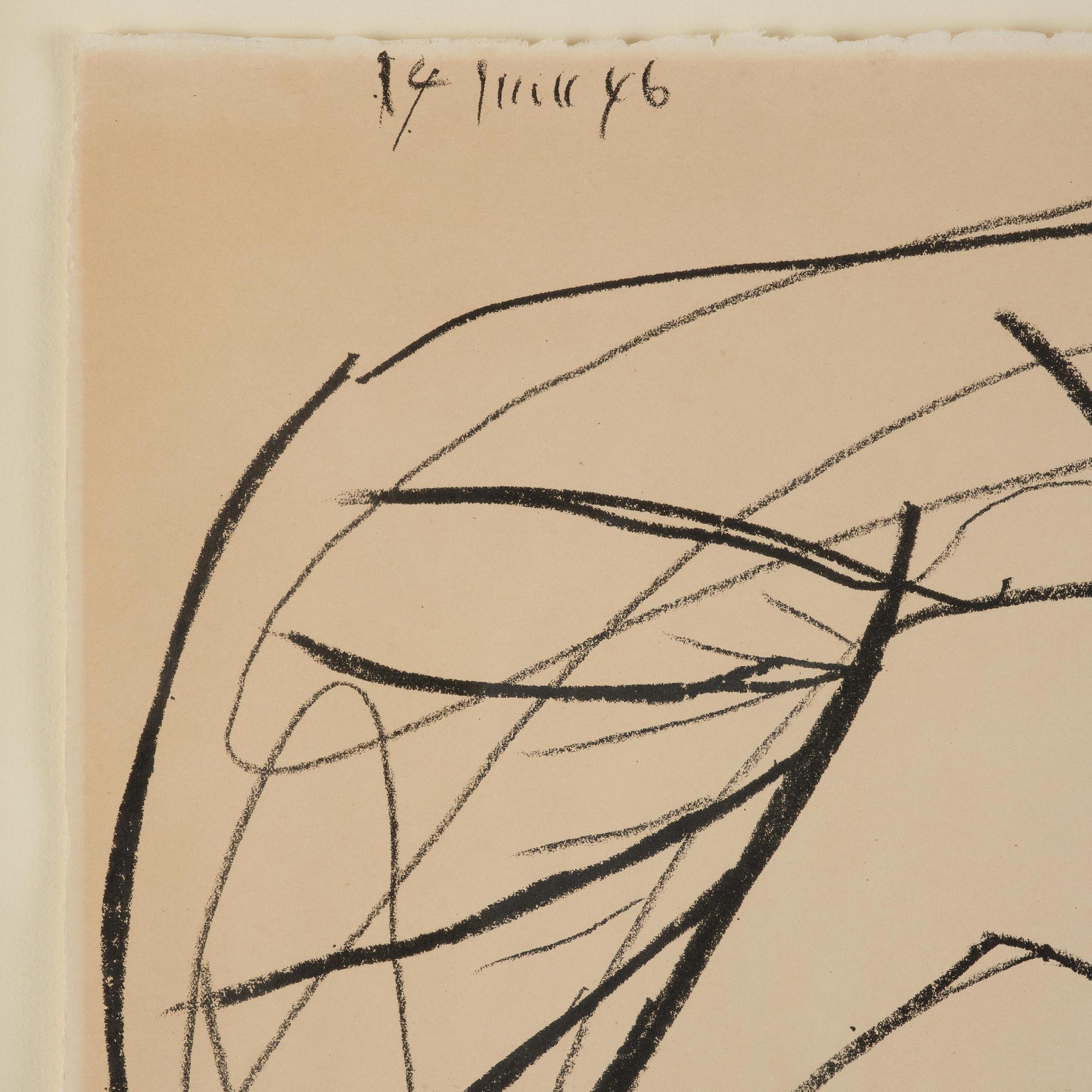
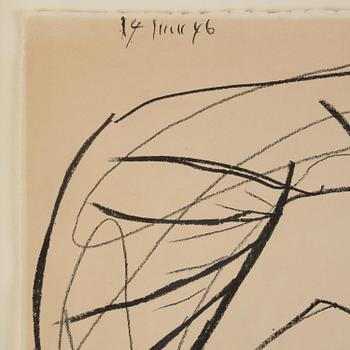
Signed in pencil and numbered 3/50. Lithograph, 1946. S. 65 x 49.5 cm.
Provenance
Galerie Pierre, Stockholm, Pierre Lundholm.
Acquired there by the current owner’s father in the early 1950s.
Therafter inherited within the family by the current owner.
Literature
Mourlot 43. Bloch 399
More information
Picasso first met the then 21-year-old and strikingly beautiful Françoise Gilot in 1943. The two began a flirtation which, after Picasso finally ended his relationship with Dora Maar in 1945, developed into a relationship. In 1946, the year in which the magnificent lithograph (Bloch 401, Mourlot 45) depicting Françoise was created, she moved in with Picasso. The German occupation had ended, and it is possible that Françoise came to embody for Picasso a sense of a new beginning, a feeling that was very much in the air in post-war France.
It was during this period that Picasso became increasingly interested in lithography as a means of artistic expression. From the early 20th century through the 1930s and 1940s, drypoint and etching had dominated his printmaking, with only a small number of lithographs produced during these decades. Many of the artist’s best-known and most important lithographs were created during the second half of the 1940s and throughout the 1950s.
More about Pablo Picasso
Pablo Picasso (1881-1973), Spanish painter, printmaker, sculptor, and ceramist. Active in France since 1900. He is, alongside Matisse, the most dominant artist of the 20th century. After passing through a blue period, a pink period with circus scenes and harlequins, he created his first cubist painting, "Les Demoiselles d'Avignon," in 1907 under the influence of African sculptures. Together with Braque, he further developed cubism by breaking down surfaces, which were then represented in various simultaneous aspects. In 1912, he left nature and recreated a new reality, only to return to acrobats in 1916. During the 1920s, he approached surrealism and worked with whimsical forms while also producing drawings and etchings in line style. During the Spanish Civil War, he was violently stirred, and it is now that his great protest in the painting Guernica comes to fruition. In the late 1940s, he settled by the Mediterranean and produced nymphs, centaurs, and fauns, as well as paraphrases of the works of old masters, and painted powerful terracotta ceramics in Vallauris. His abundant graphic production follows the same development as his painting.
Pablo Picasso was not only an artist but also a skilled ceramist. During his lifetime, he created hundreds of ceramic works, such as jugs, vases, and plates. Picasso's passion for ceramics began when he visited the annual ceramics exhibition in Vallauris in southern France in 1946 and was introduced to the craft by the artist couple Suzanne and Georges Ramié, who owned the Madoura pottery. During the following years which he spent in Vallauris, Picasso met his second wife, Jacqueline Roque, whom he depicted on the ceramic pieces. He also decorated the ceramics with abstract animals and bullfighters in a cubist style.
Read moreFor condition report contact specialist

What will the transport cost?
Shipping can only be arranged by contacting specialdelivery@bukowskis.com.
Covered by droit de suite
Image rights
The artworks in this database are protected by copyright and may not be reproduced without the permission of the rights holders. The artworks are reproduced in this database with a license from Bildupphovsrätt.