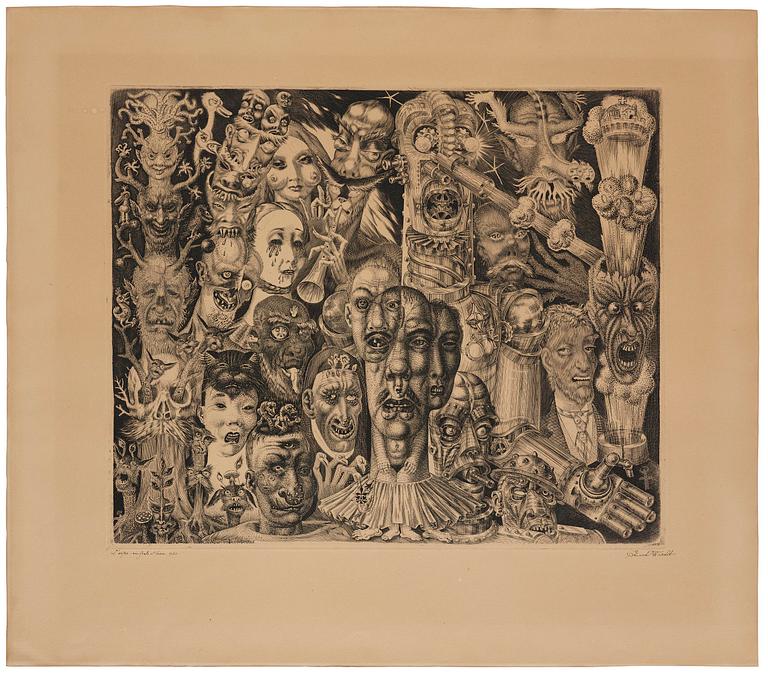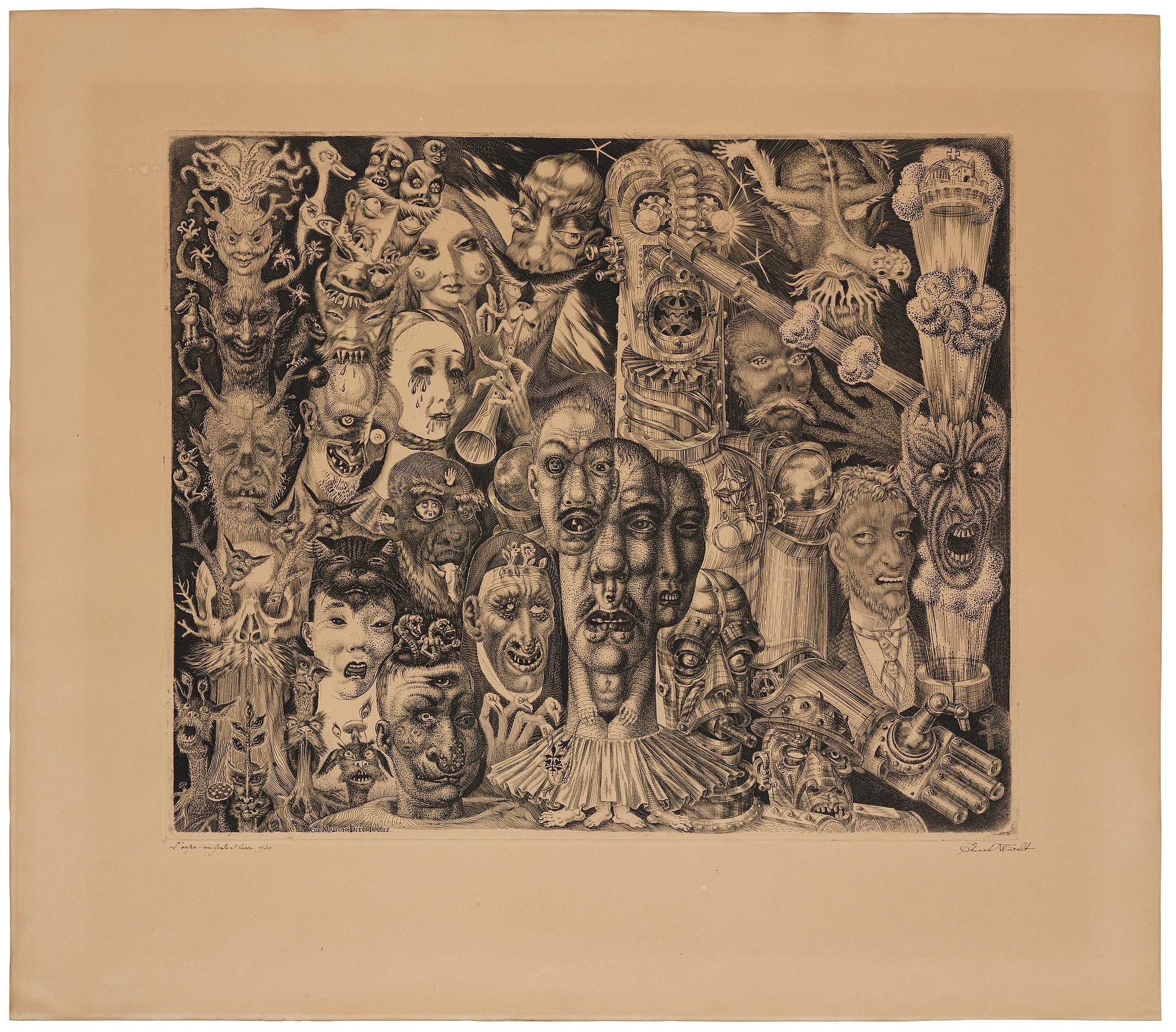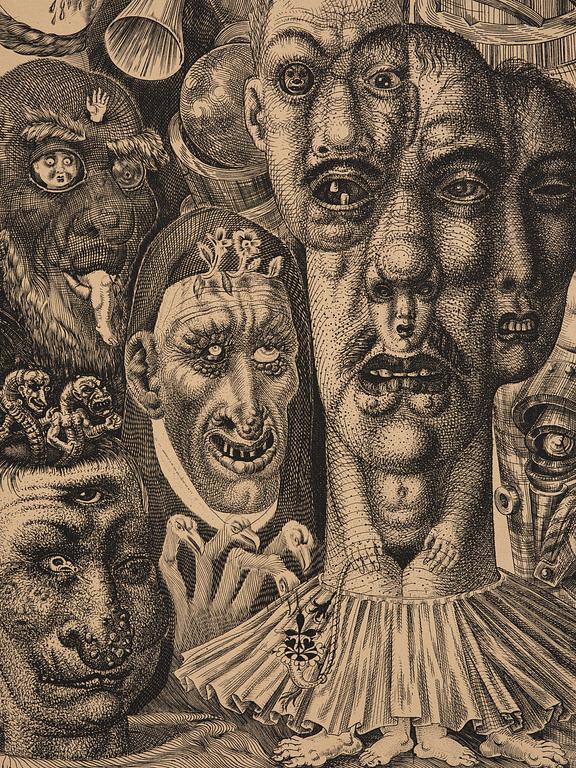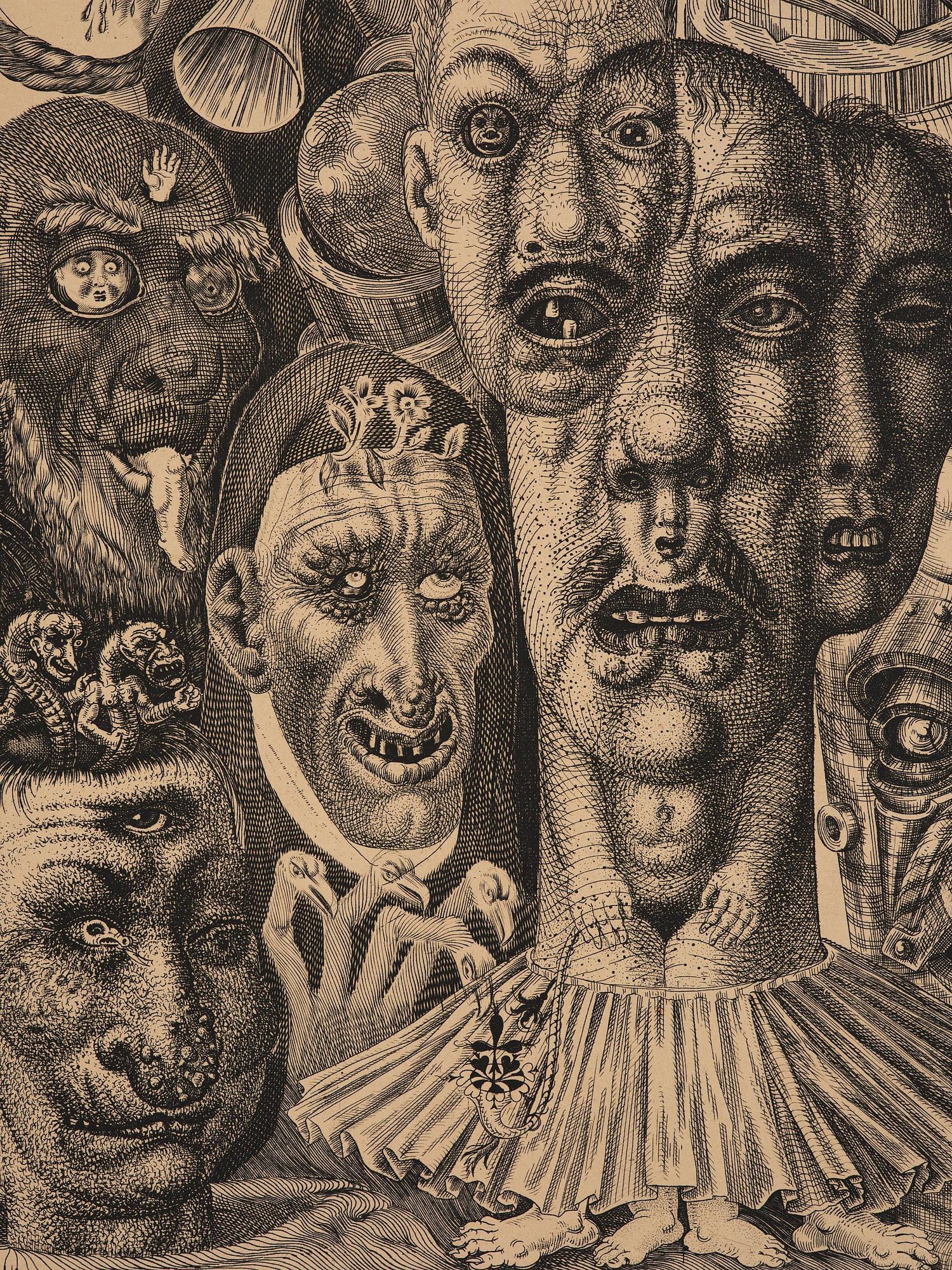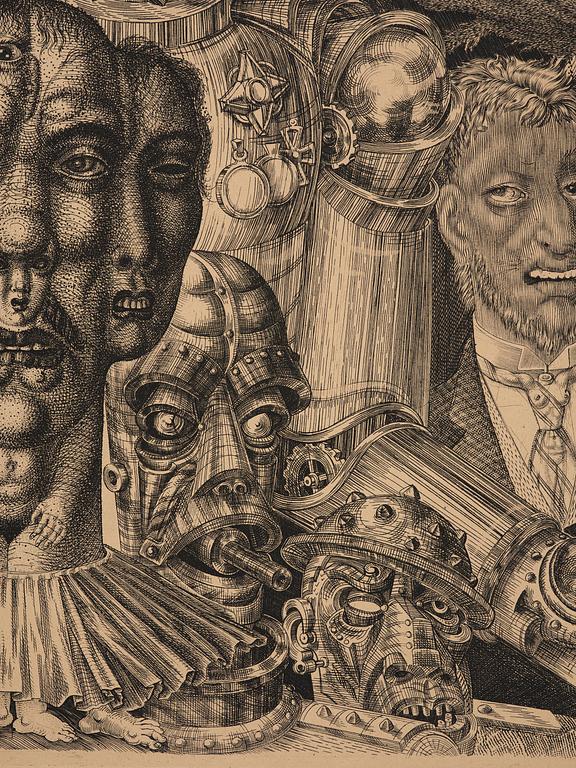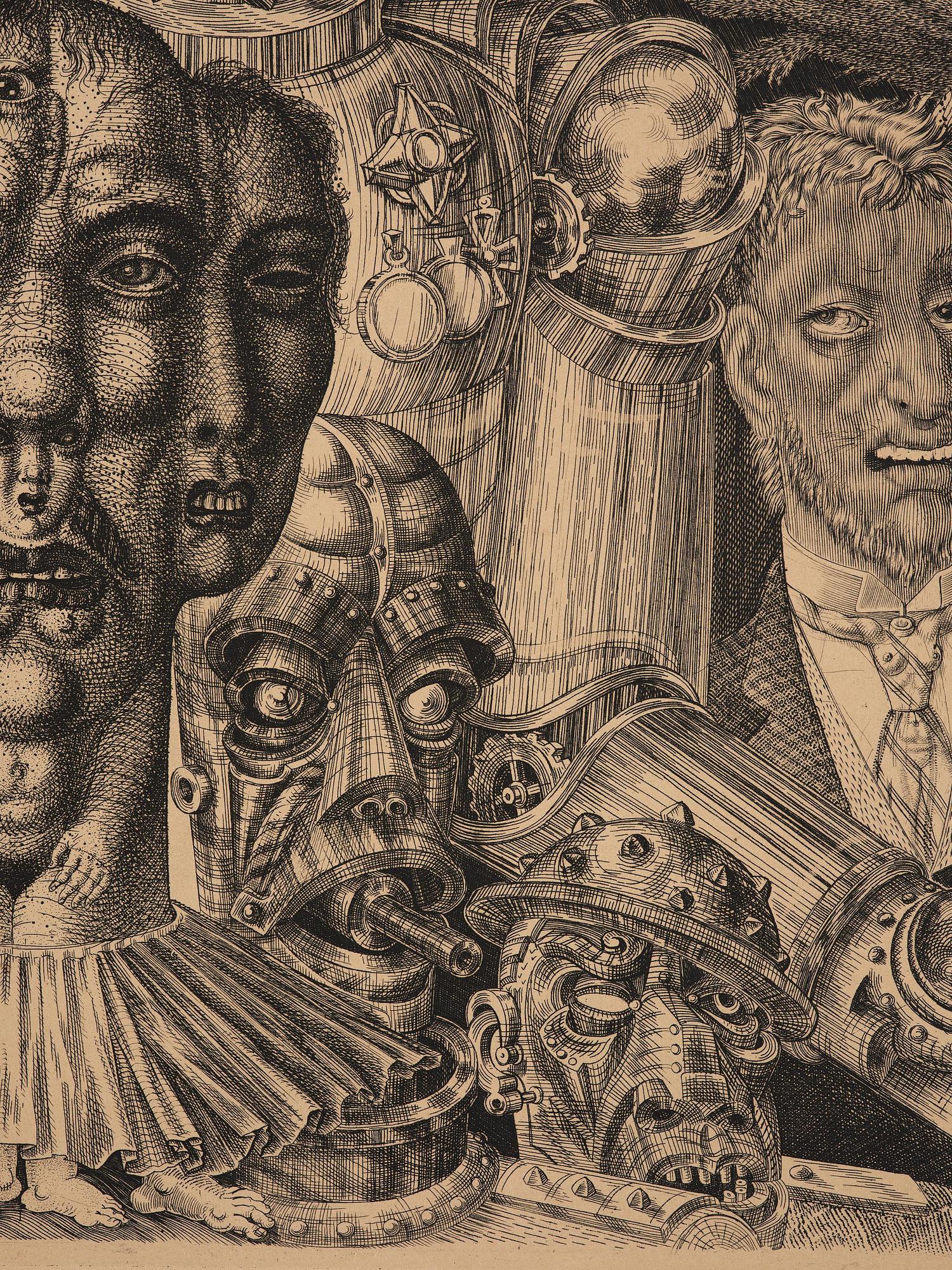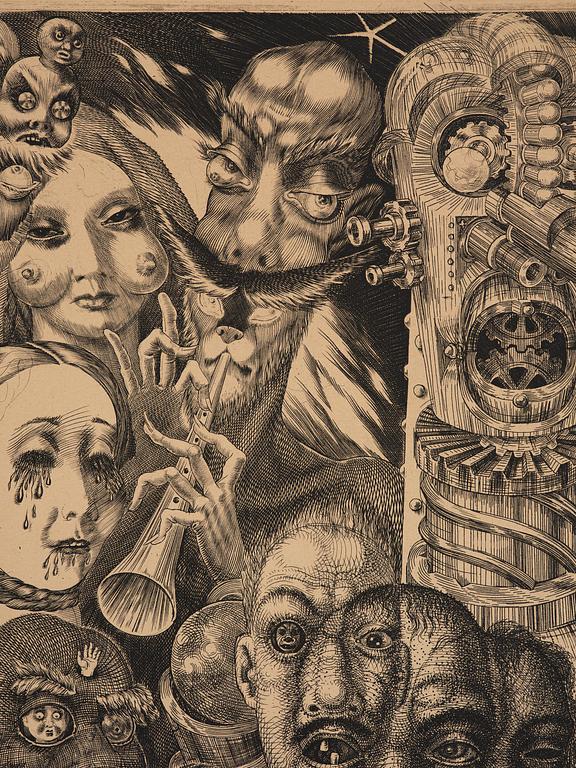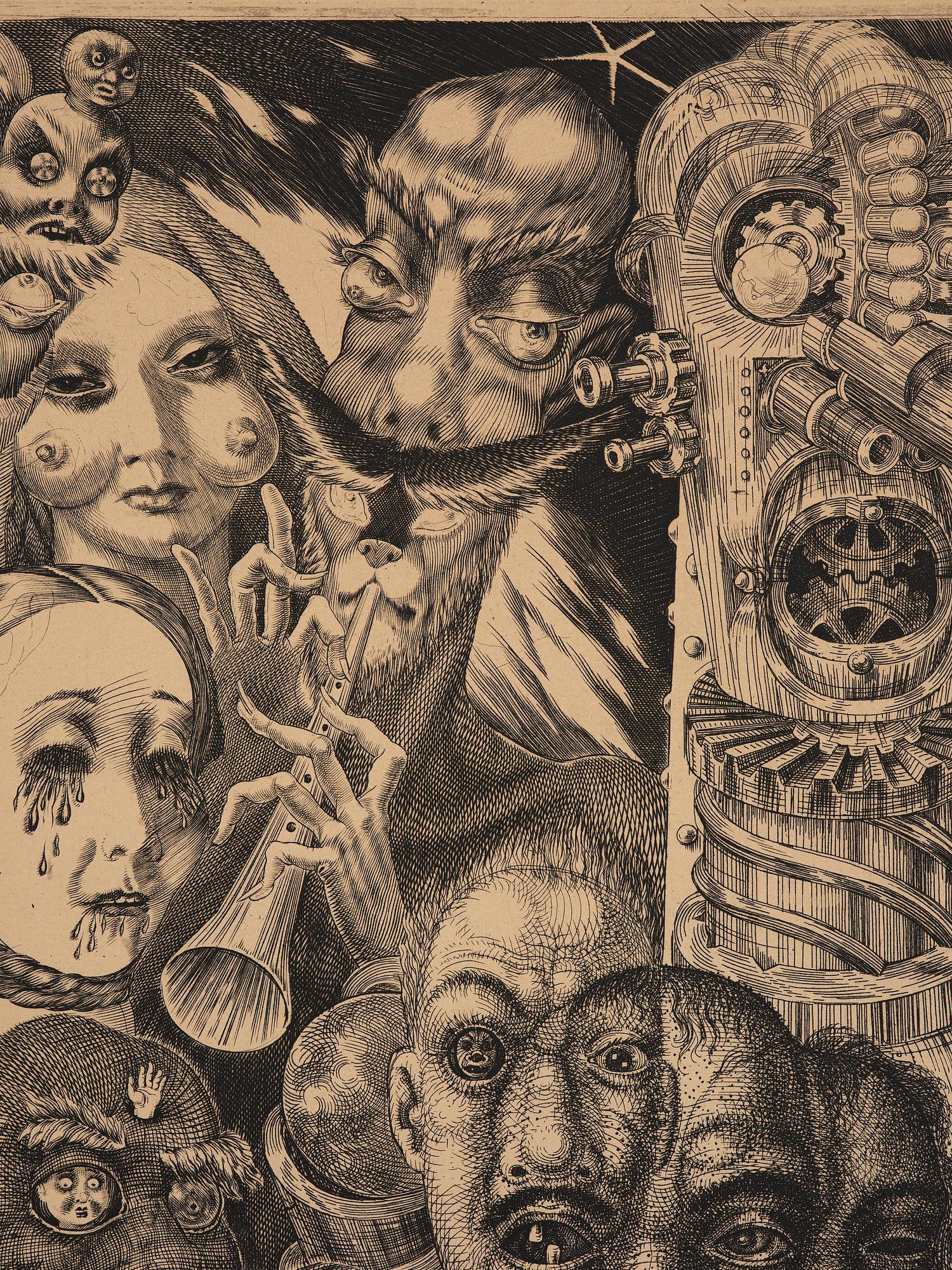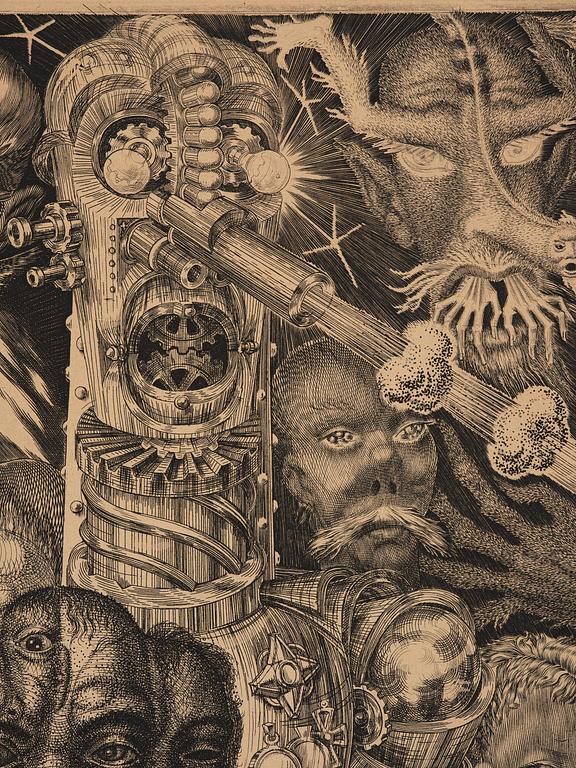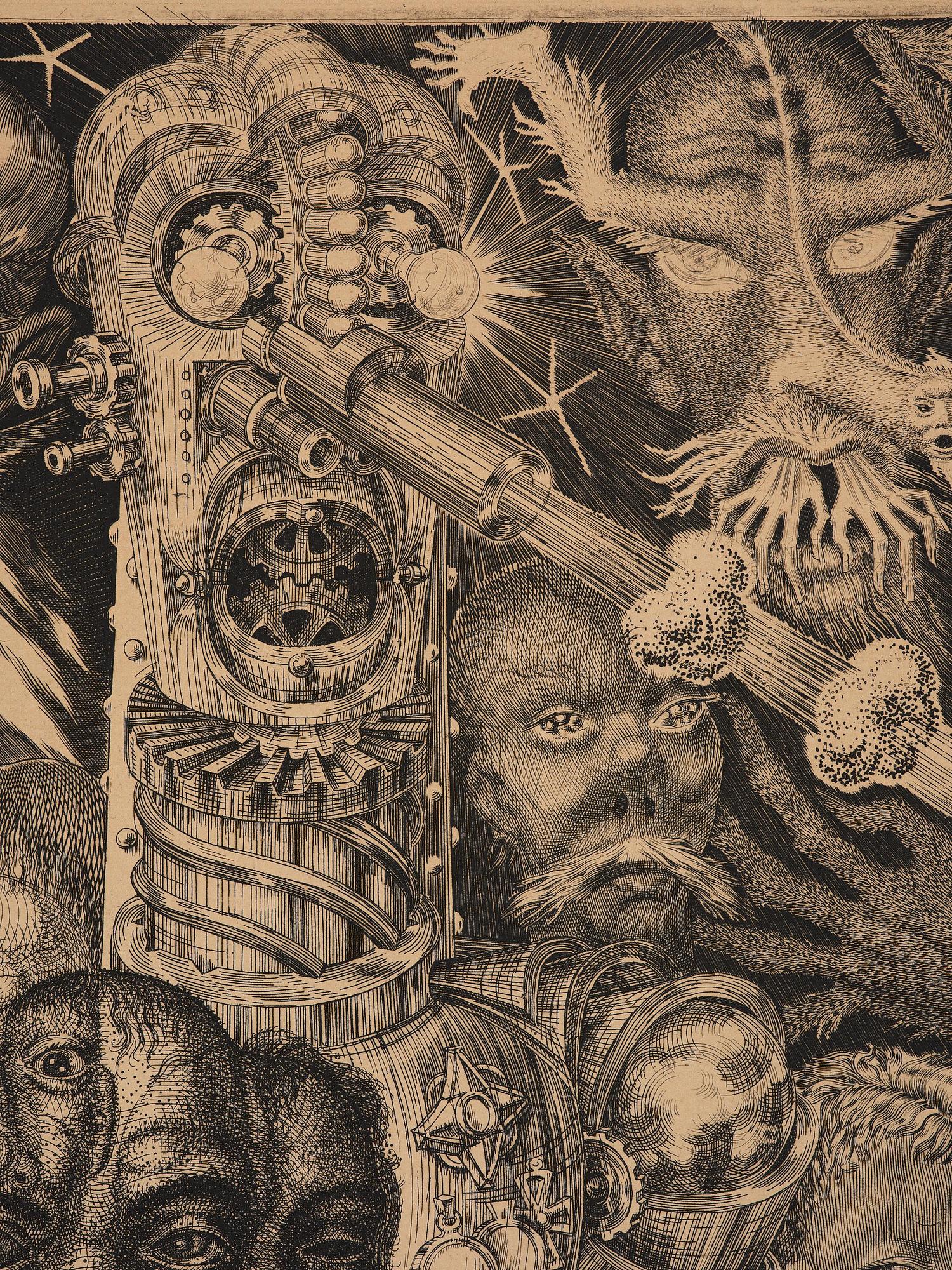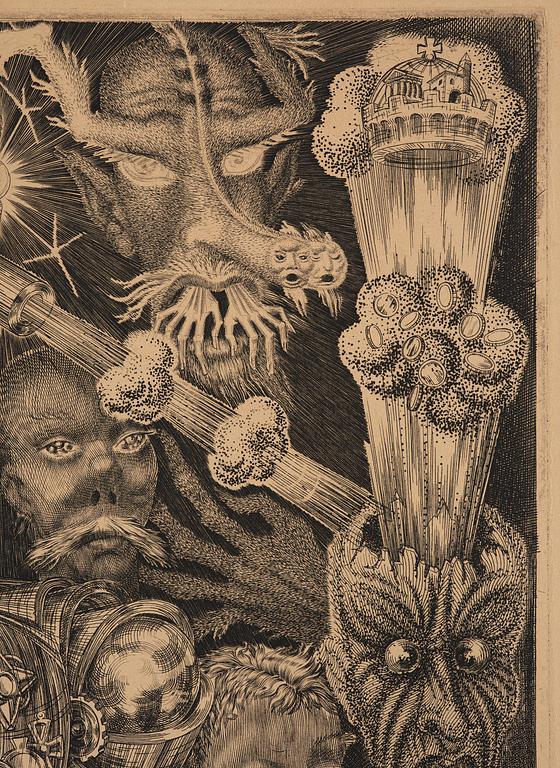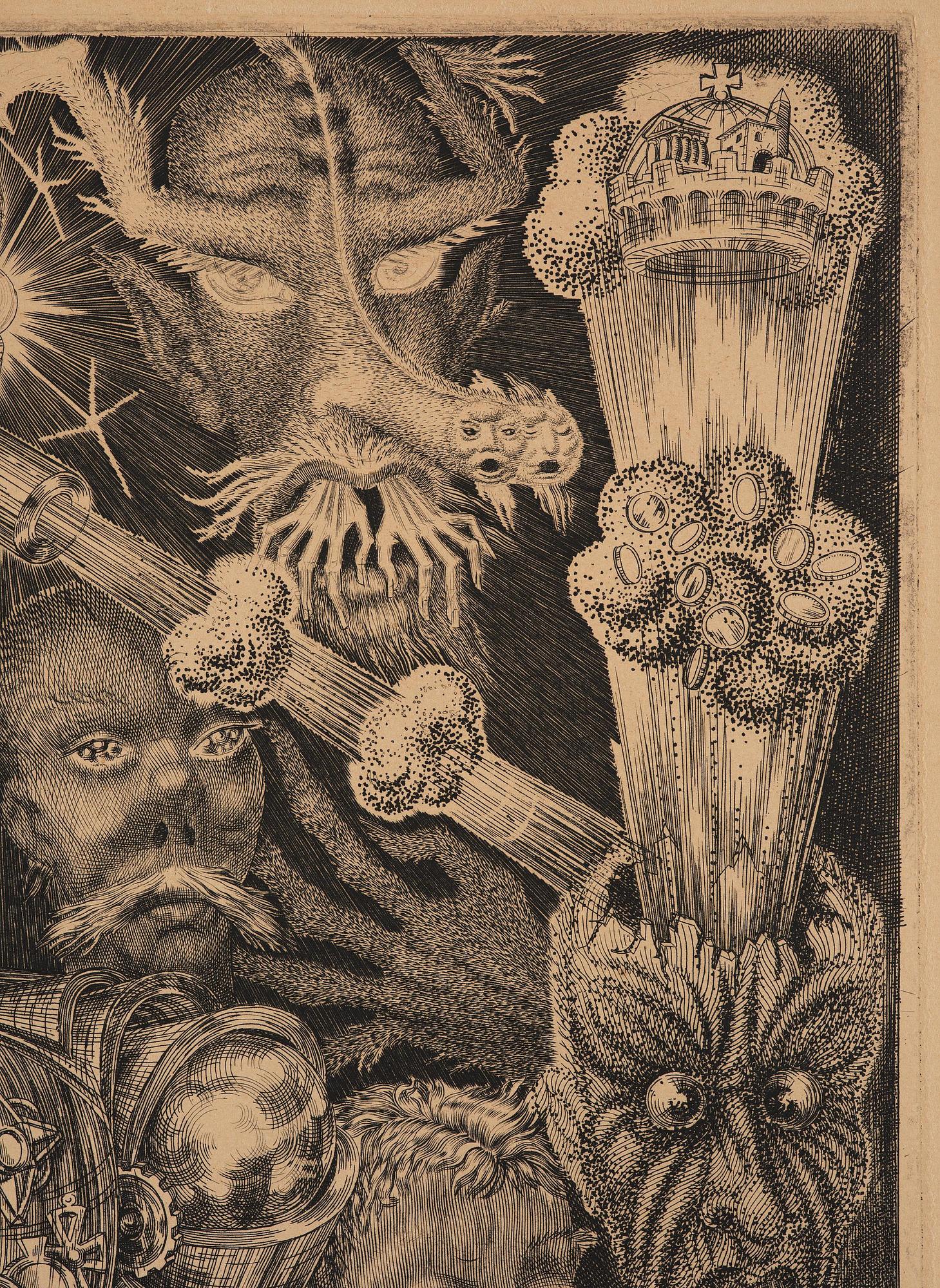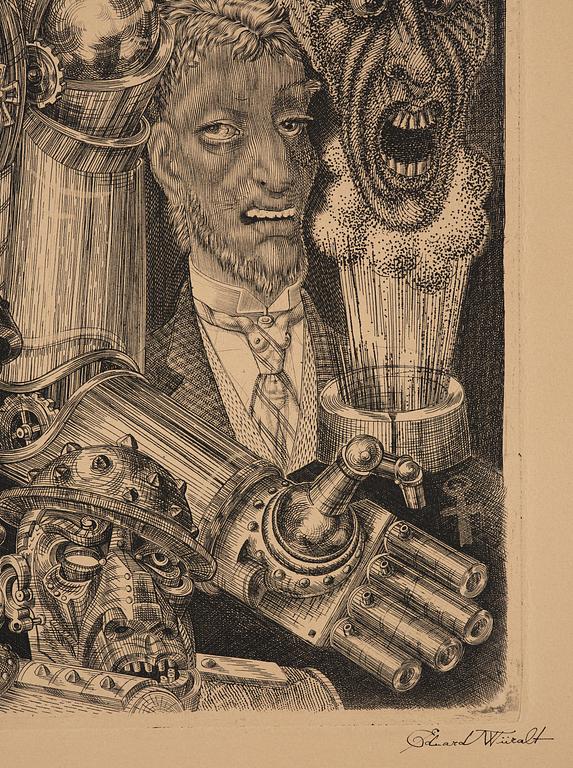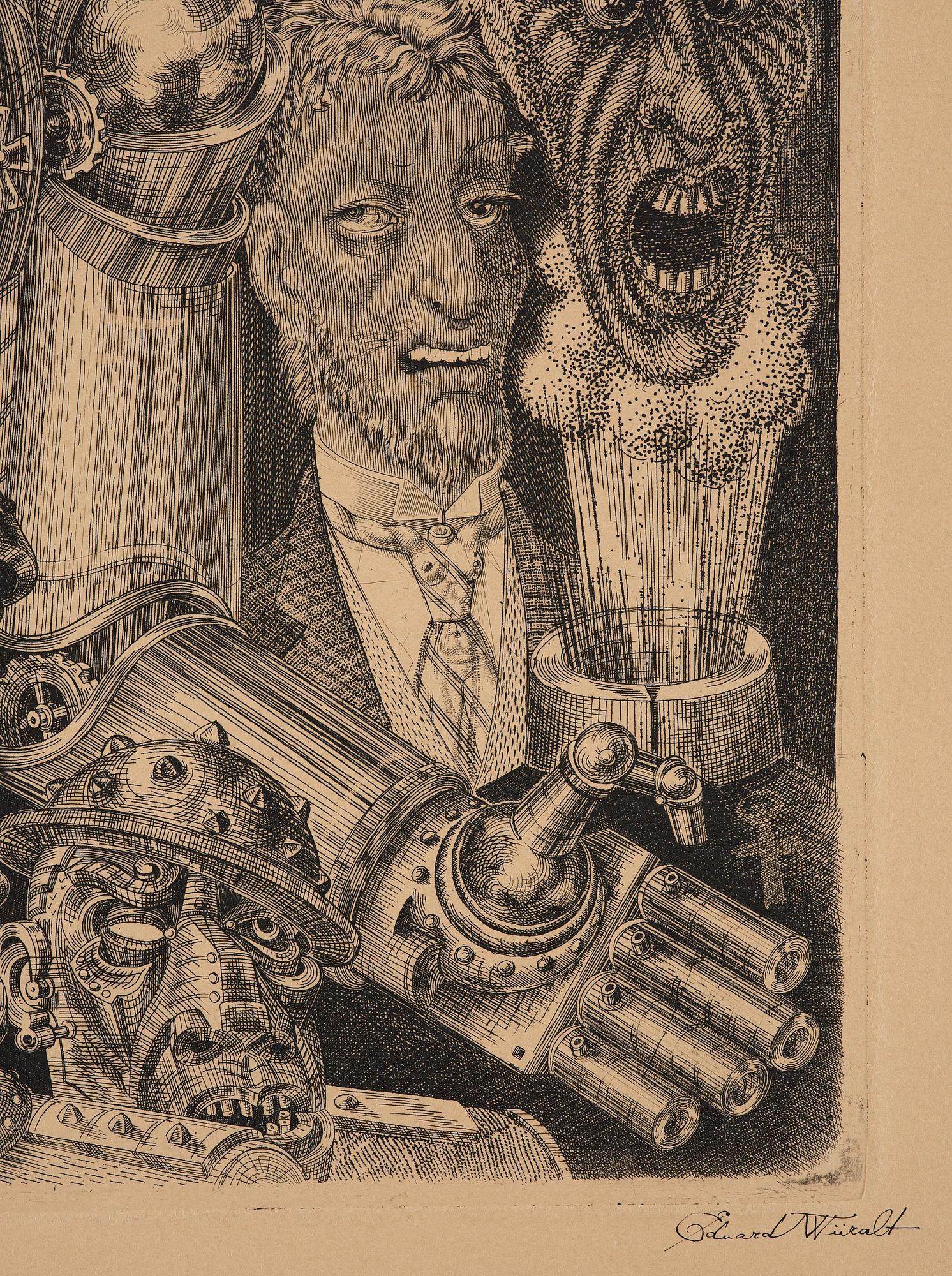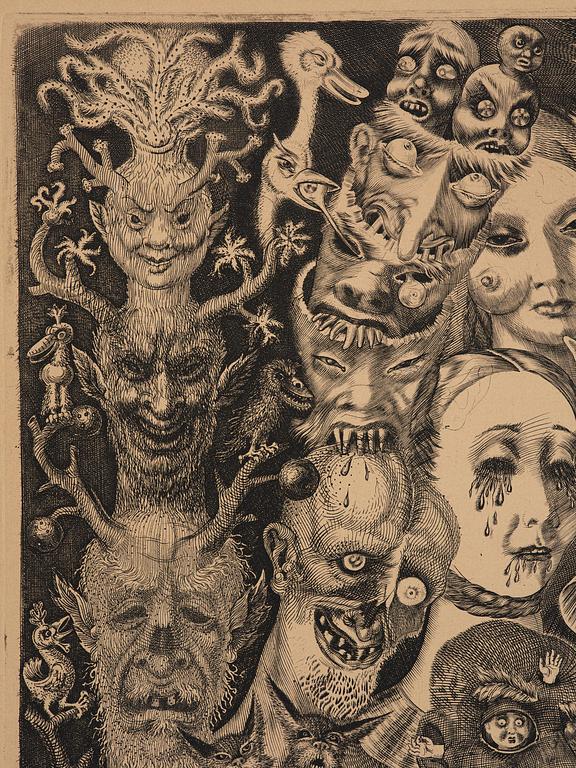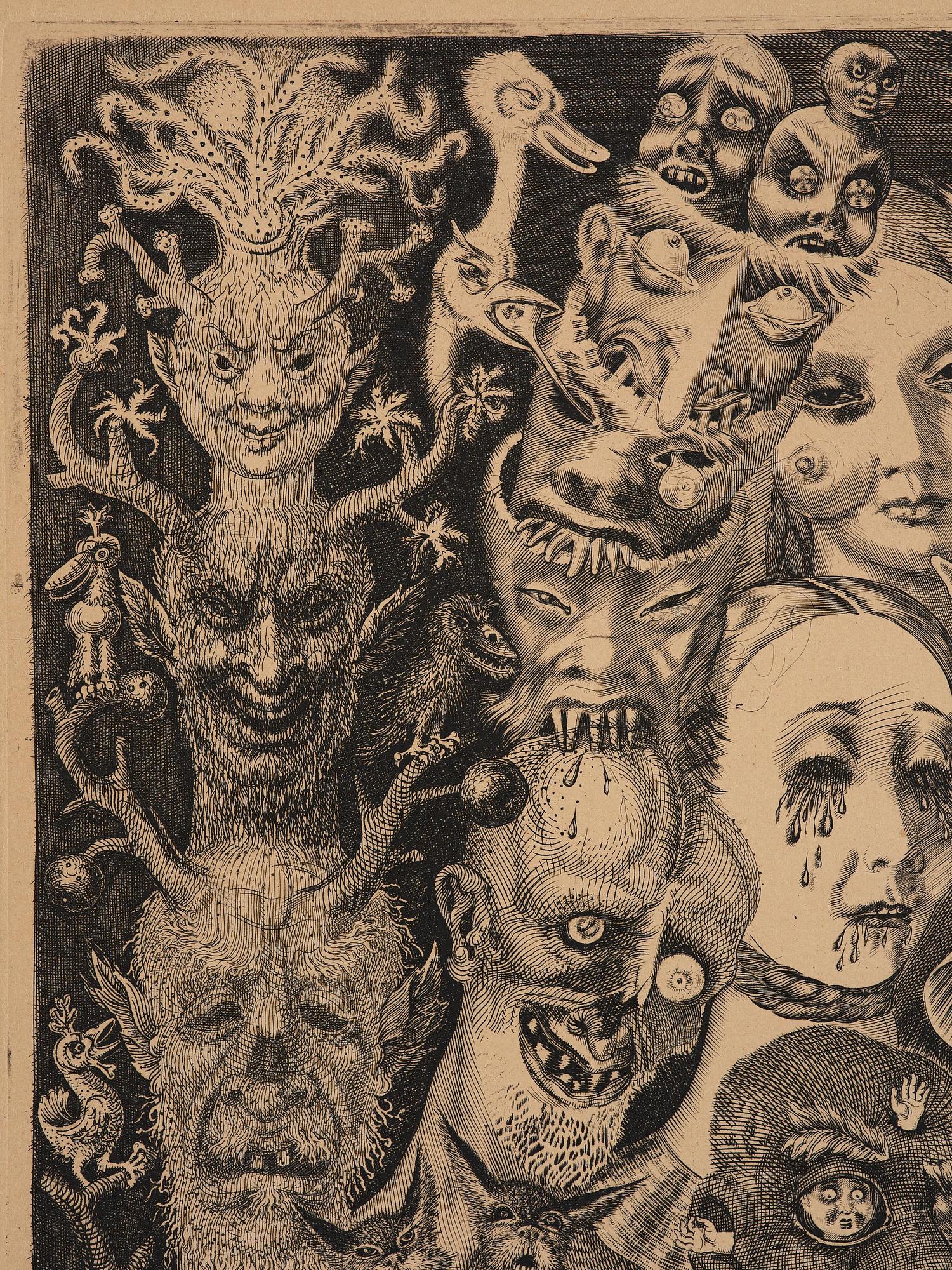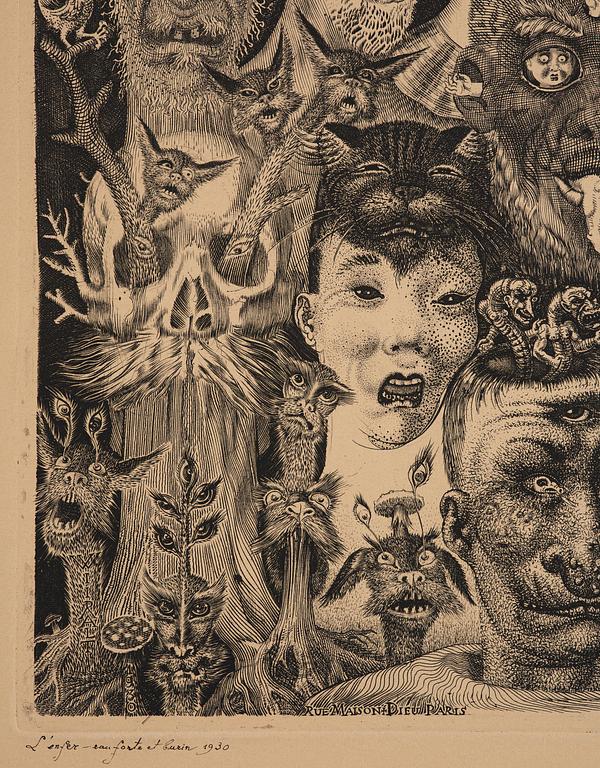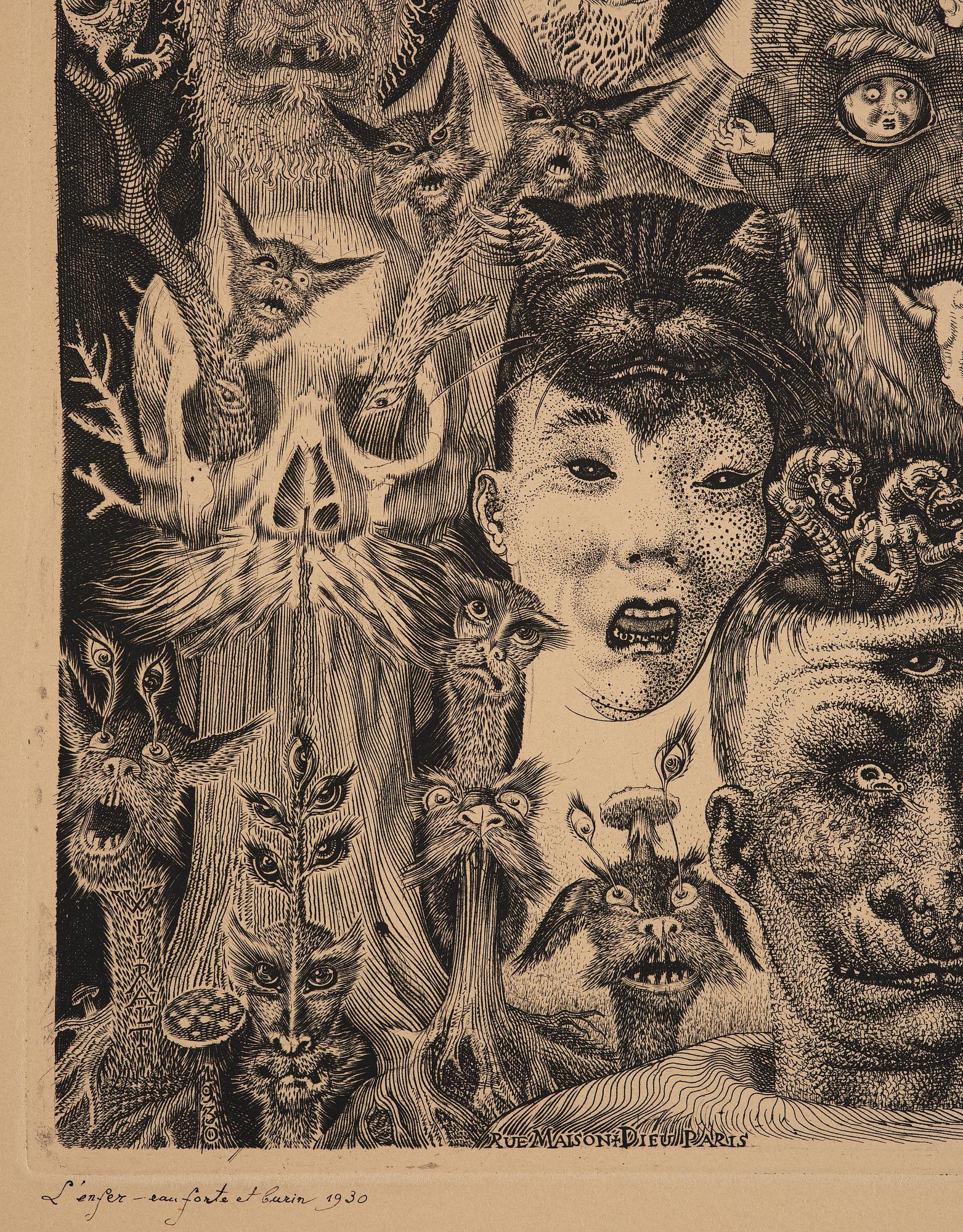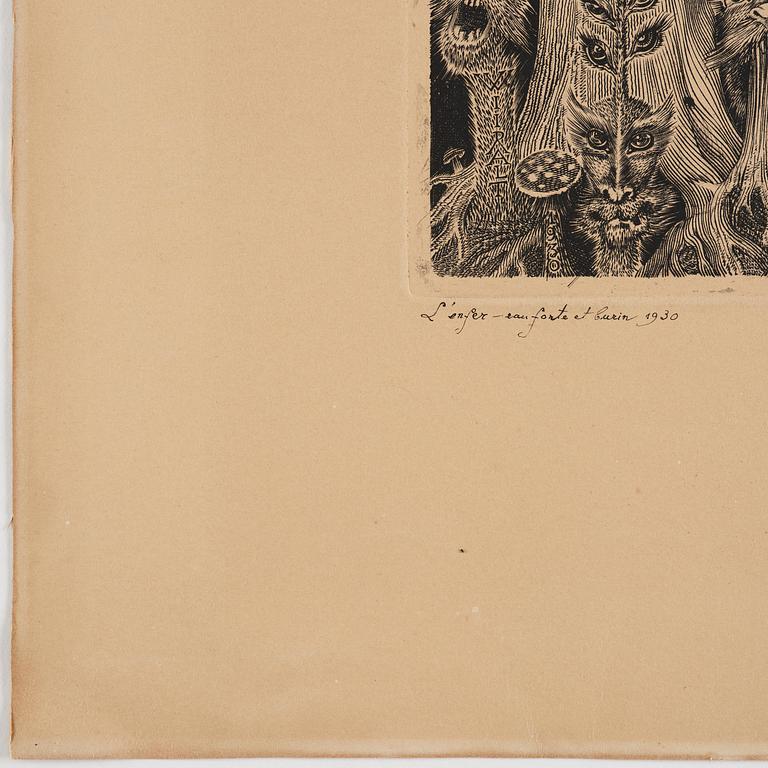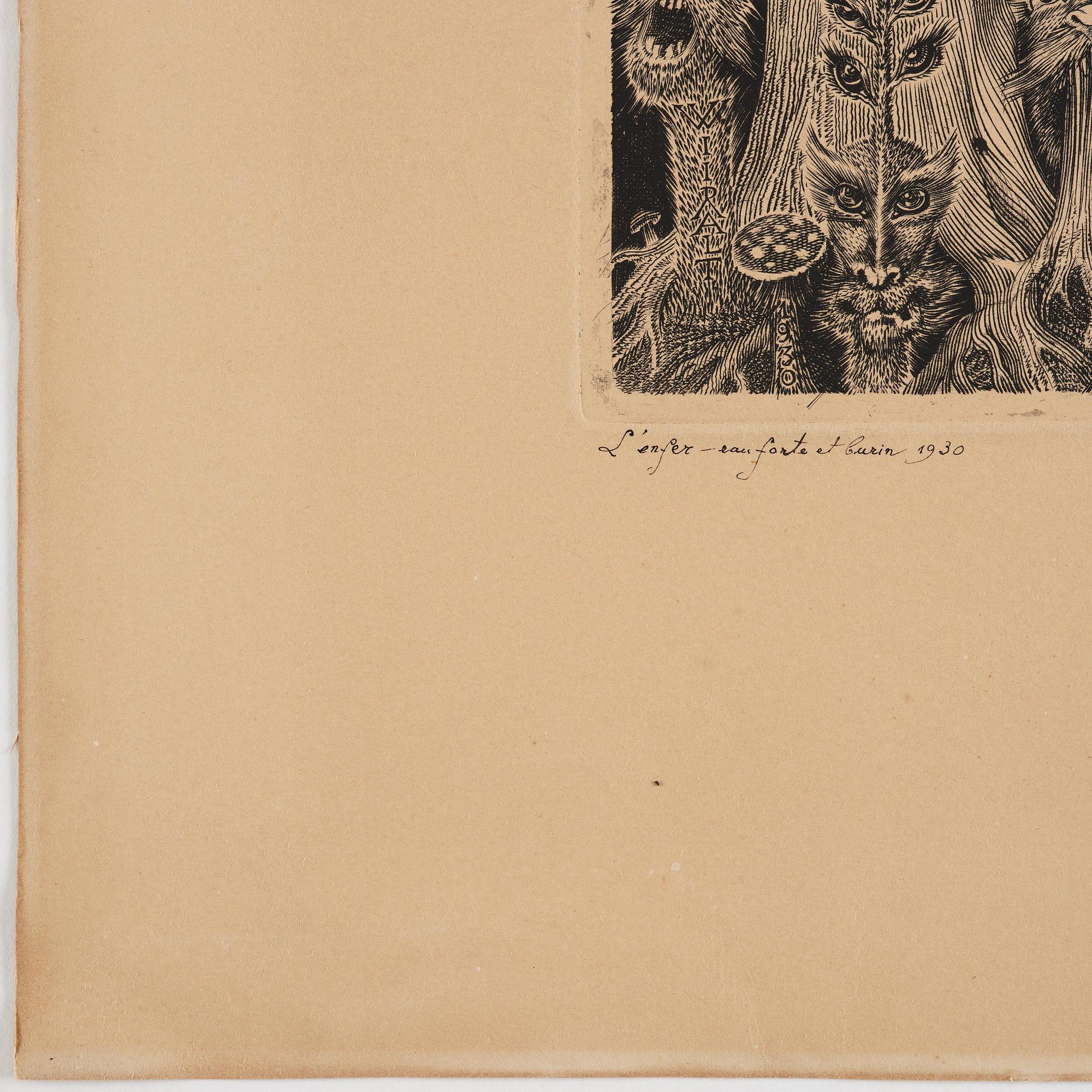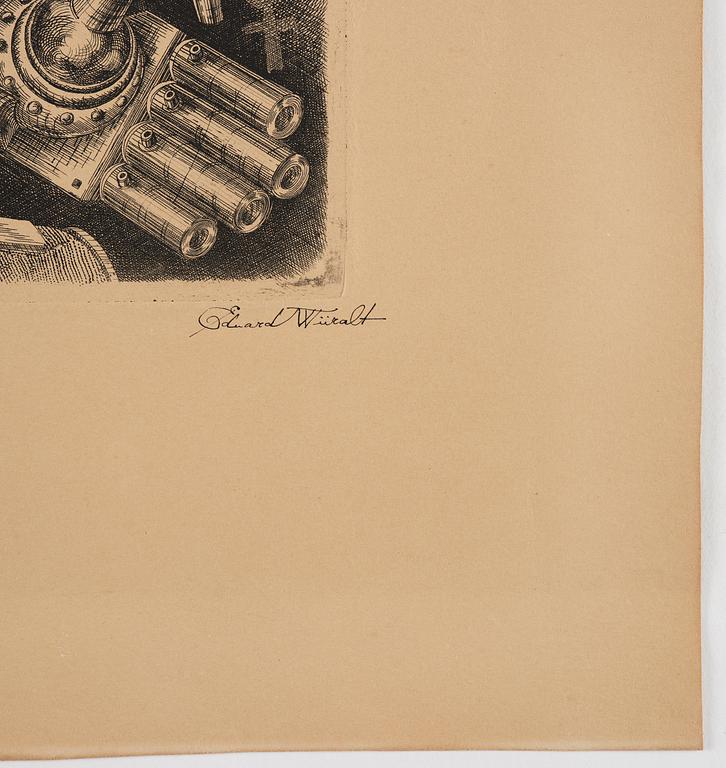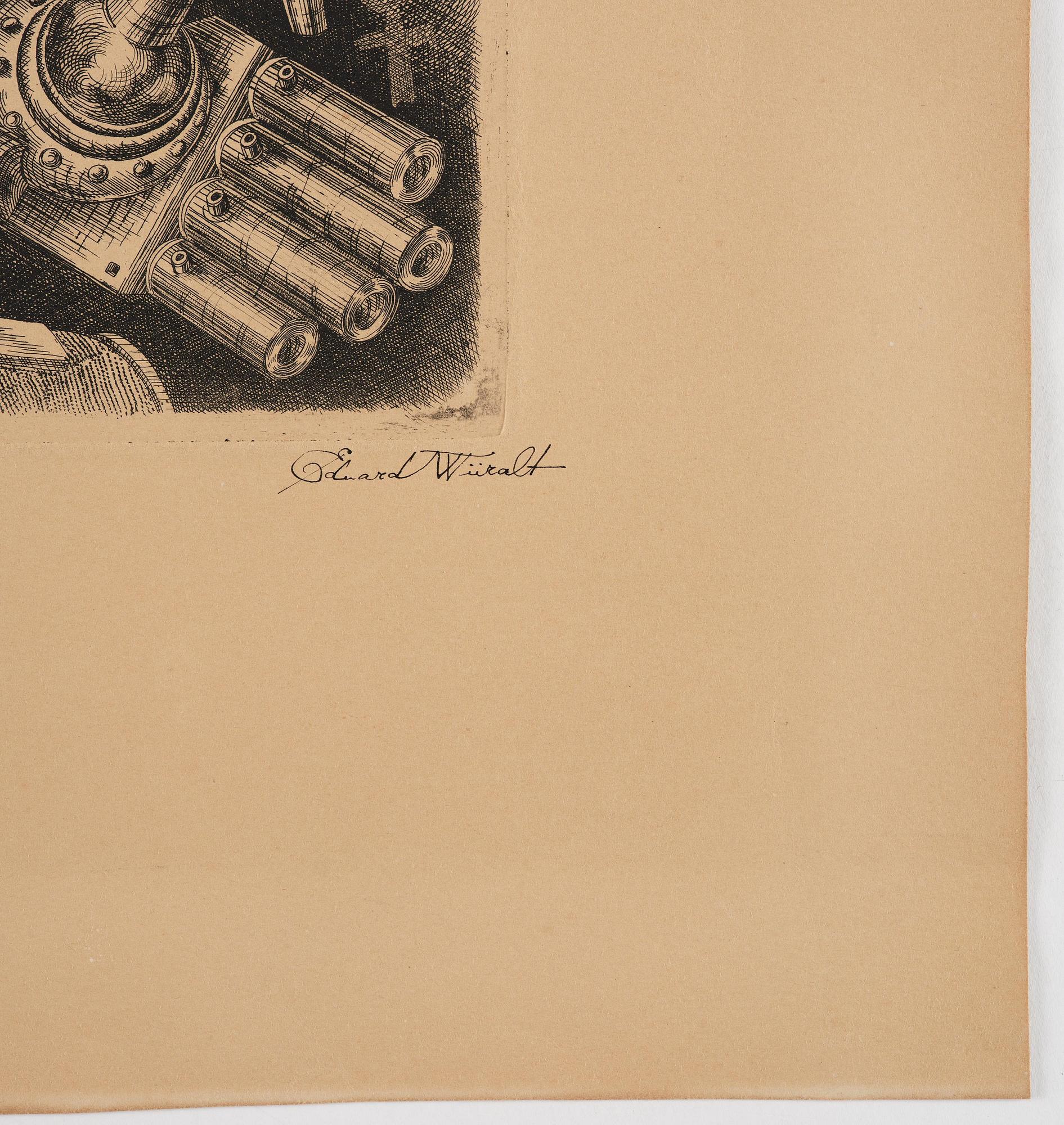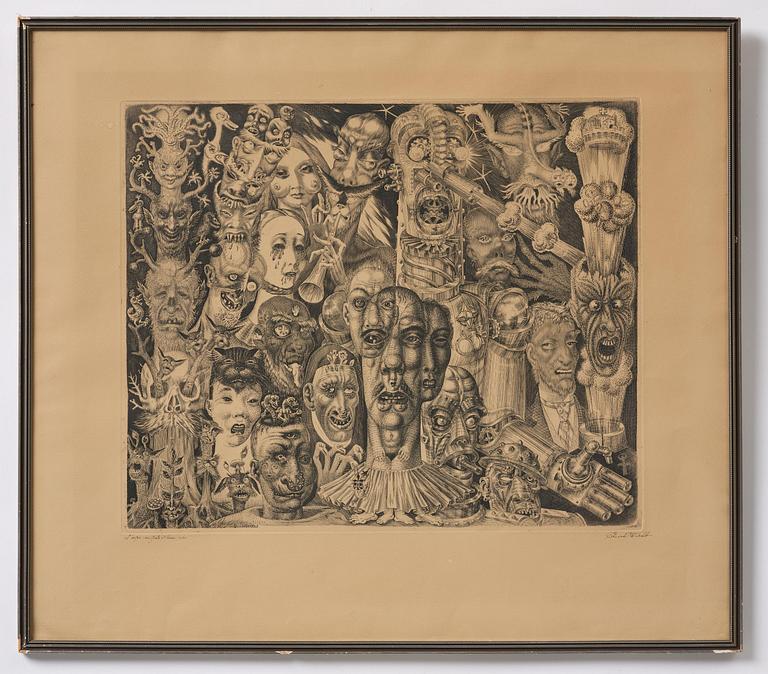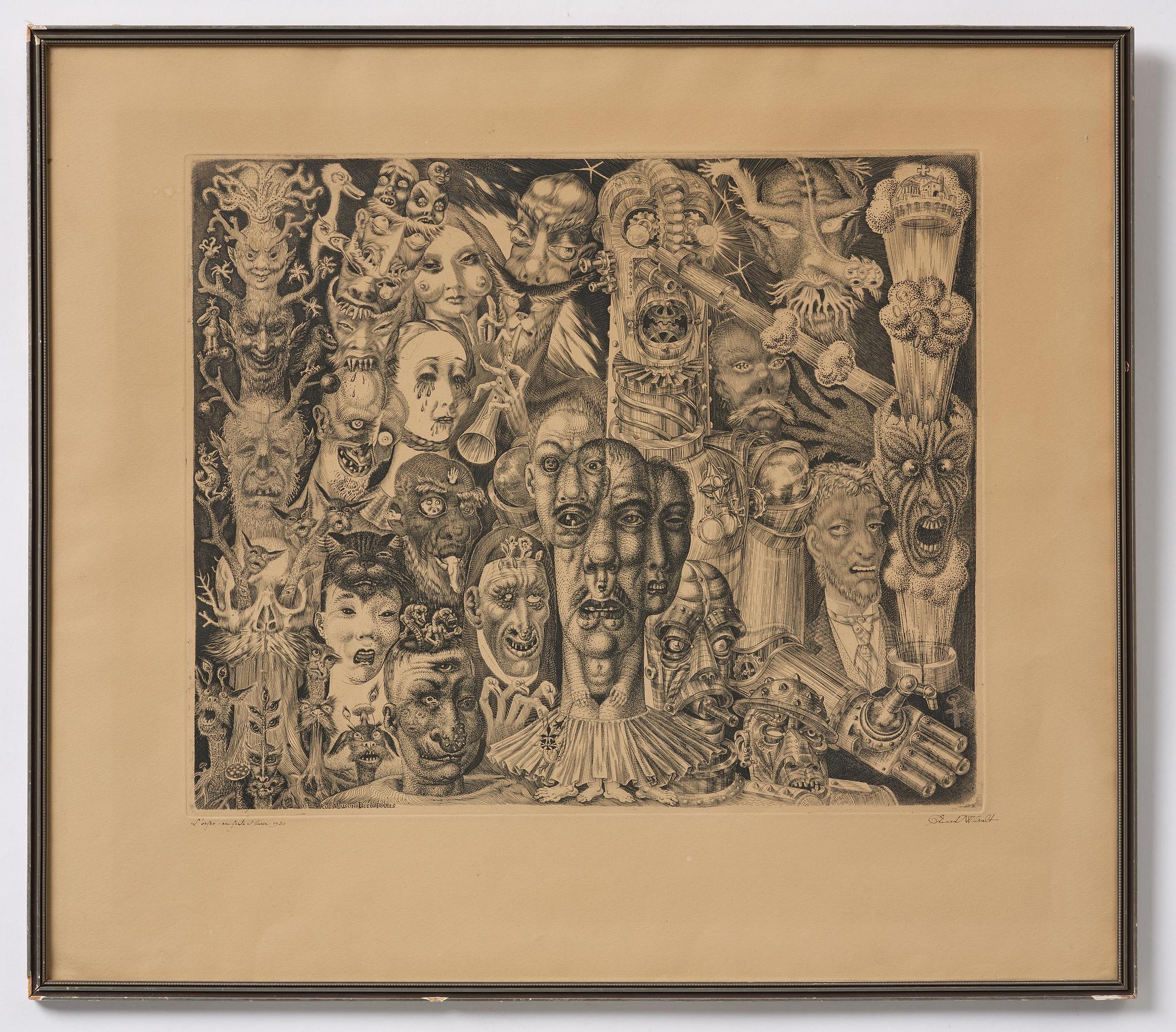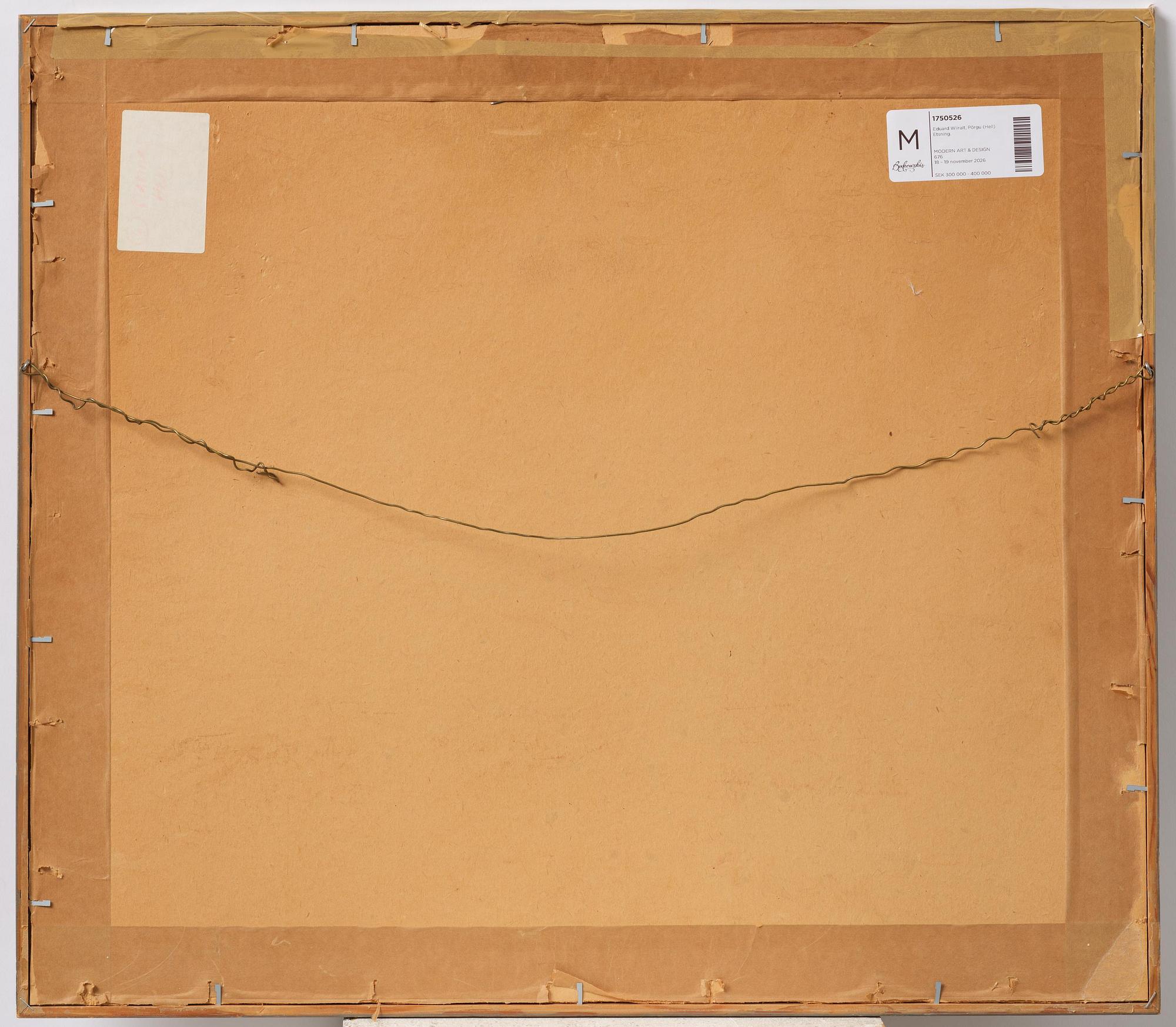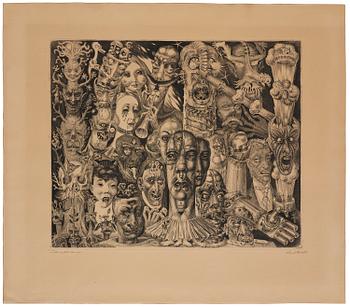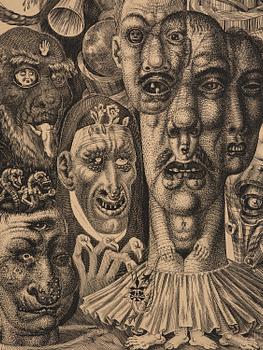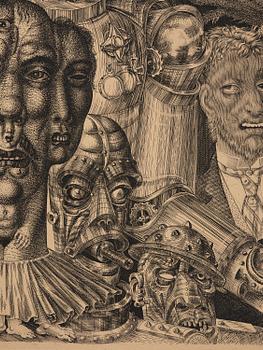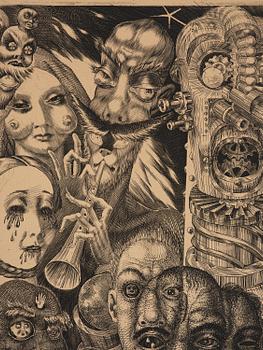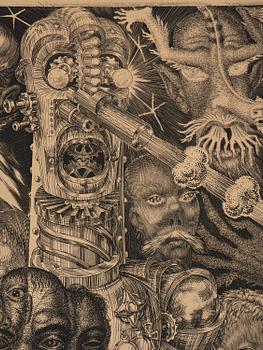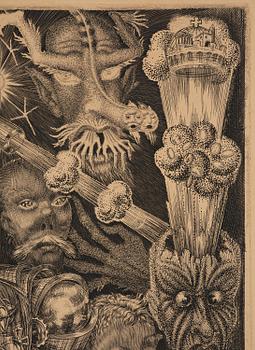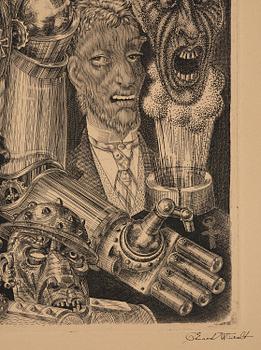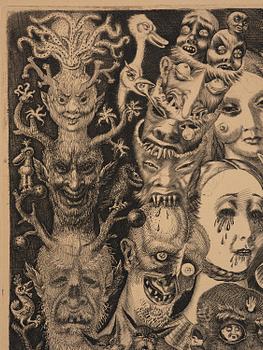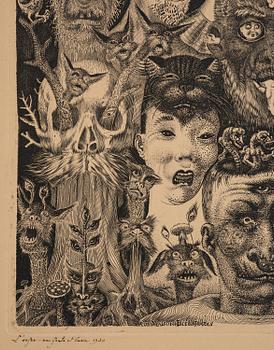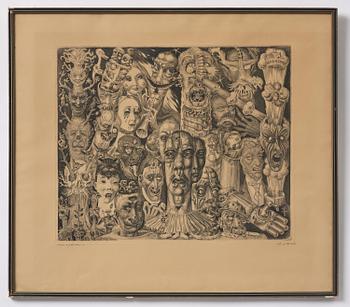
"Põrgu" (Hell).
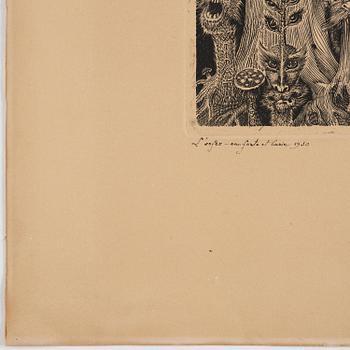
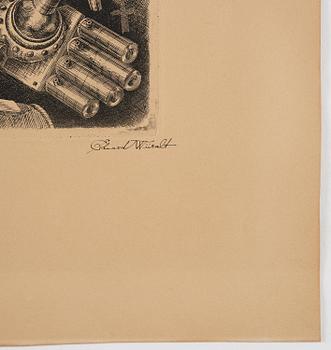
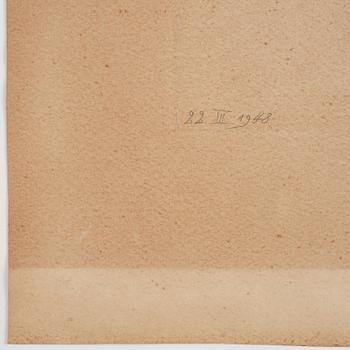
Signed Eduard Wiiralt and dated 1930. Etching and engraving. P. 39 x 47 cm. S. 55.5 x 63.3 cm.
Provenance
Gifted directly by the artist to the artist Stig Alyhr (1919–1995), therafter inherited by the present owner.
Literature
Kangilaski 56.
More information
Eduard Wiiralt is regarded as one of the most prominent printmakers in Estonia during the first half of the 20th century. He was born in Goubanitzy, a locality that at the time belonged to the St Petersburg Governorate. At the age of eleven he moved with his family to Estonia, and at seventeen he began studying under the artist Nikolai Triik at an art school in Tallinn. These studies were, however, interrupted by the German occupation during the First World War and the upheavals that followed in the wake of the Russian Revolution.
From 1925 to 1938 Wiiralt worked in Paris, where he developed his artistic practice and created several of his most significant works, among them the etching Põrgu (Hell), in which his absurd figure compositions and distinctive expressionist style are easily recognisable.
Wiiralt’s international recognition culminated in 1937, when he was awarded a gold medal at the international print exhibition in Vienna and came to be regarded as one of Europe’s leading printmakers. After his years in Paris he spent a period in Marrakech, Morocco, which came to influence his choice of subjects. From this phase of his career we find depictions of camels and of the city’s local inhabitants.
At the outbreak of the Second World War, Wiiralt returned to Estonia. After a failed attempt to return to Paris in 1944, he instead spent time in Germany before moving on to Sweden.
Wiiralt’s art often features people and animals as its subjects, but it also includes landscapes. In 1946 he returned to Paris, where he remained active until his death in 1954.
En liten detalj: verkets estniska titel stavas Põrgu (med õ), inte Pörgu. Jag har rättat det i översättningen, men det kan vara värt att ändra i den svenska texten också.
For condition report contact specialist
What will the transport cost?
Shipping can only be arranged by contacting specialdelivery@bukowskis.com.