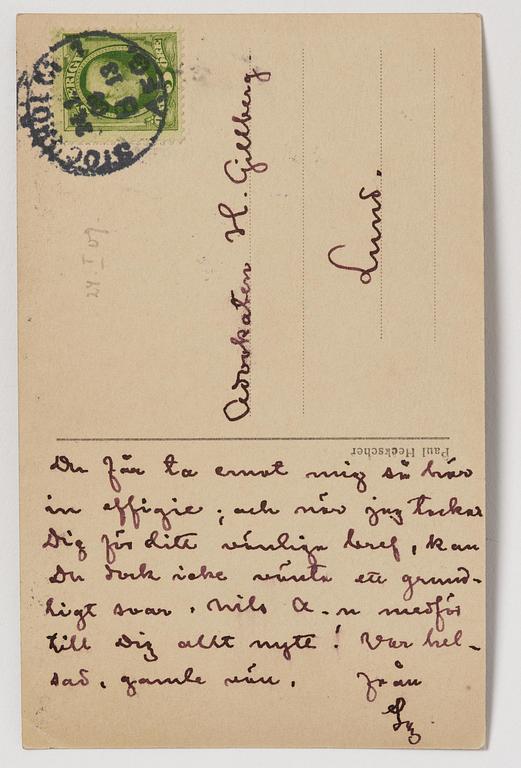
August Strindberg’s letters to his friend Håkan Gillberg in Lund, 1898–1908, together with an interesting drawing.
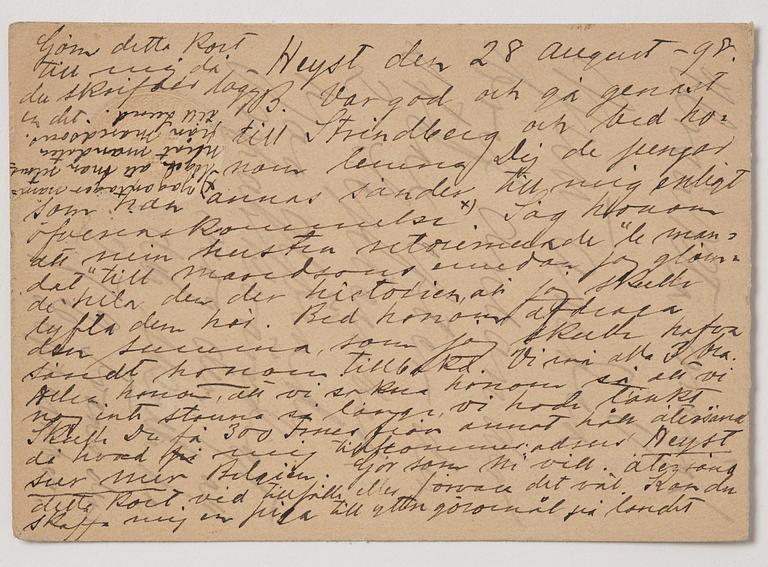
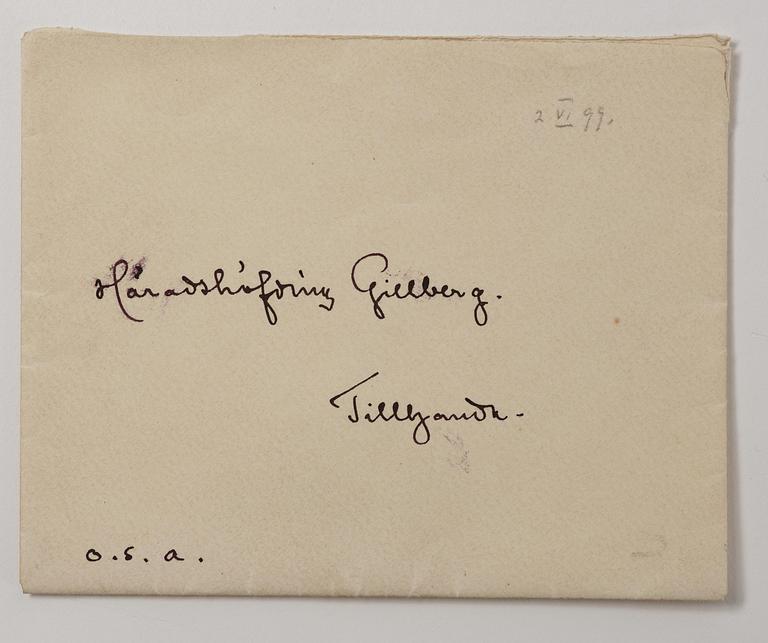
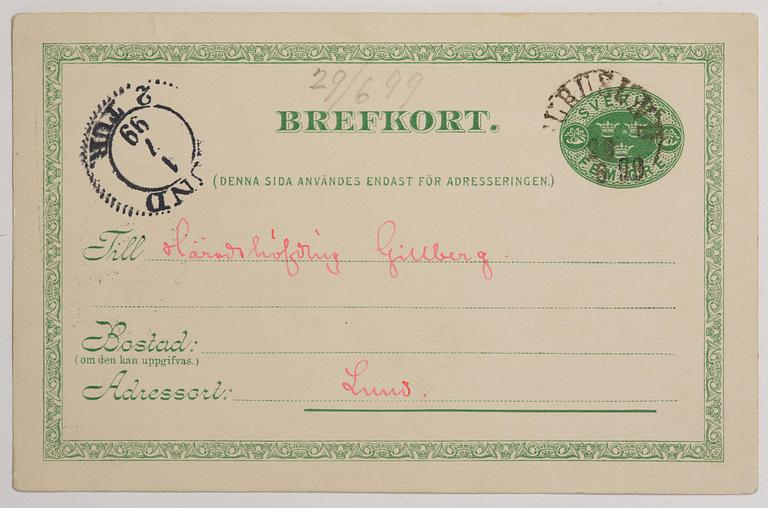
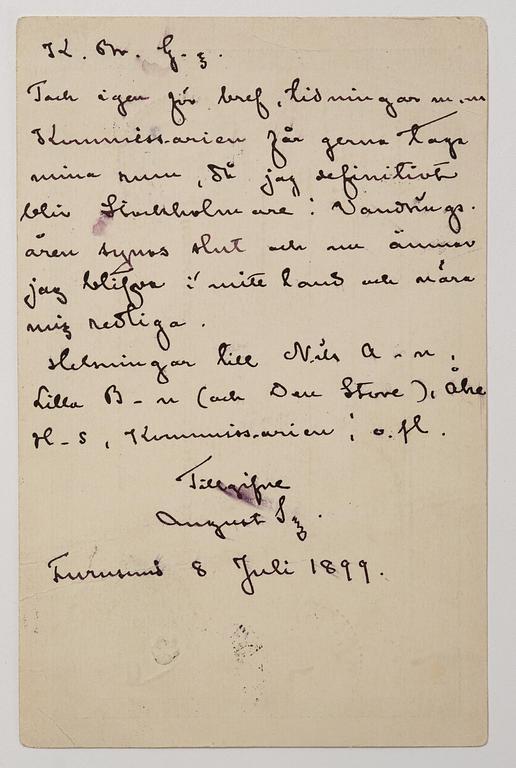
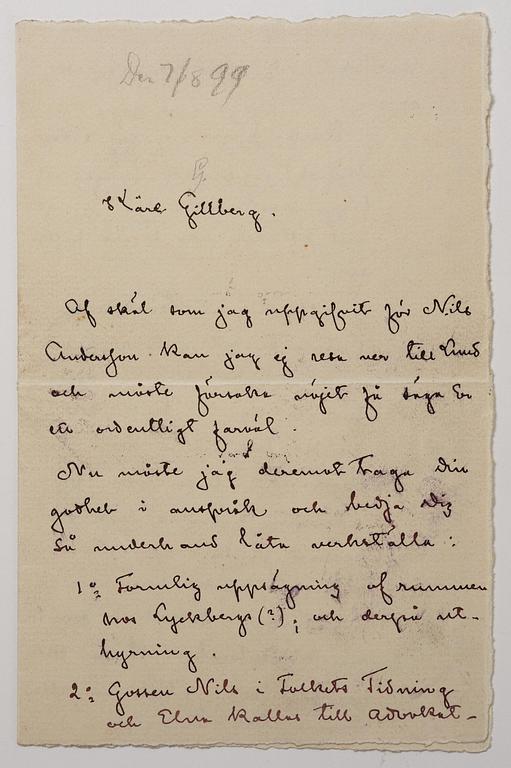
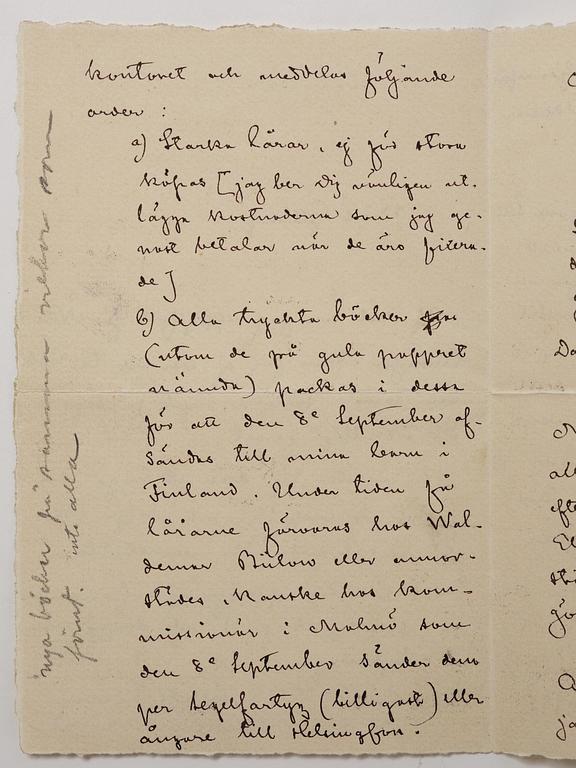
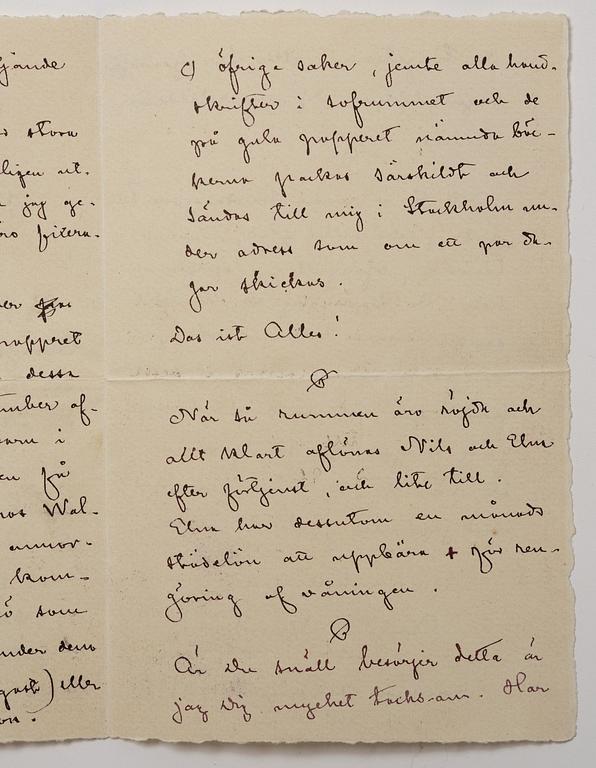
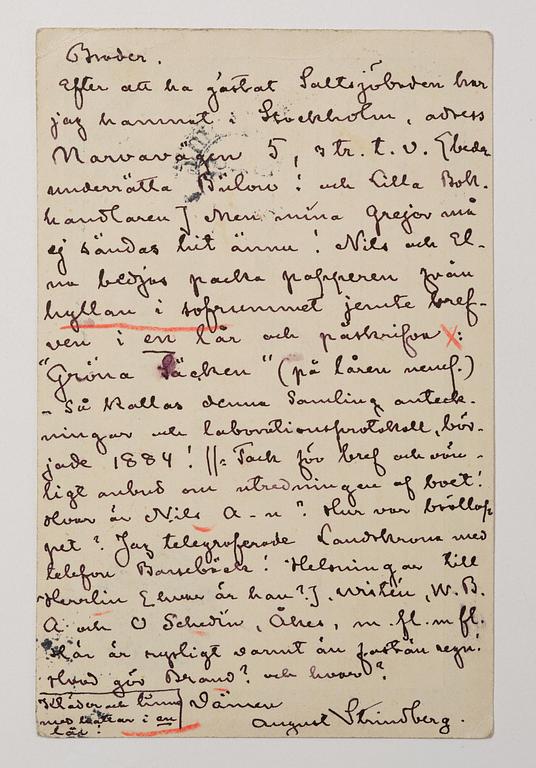
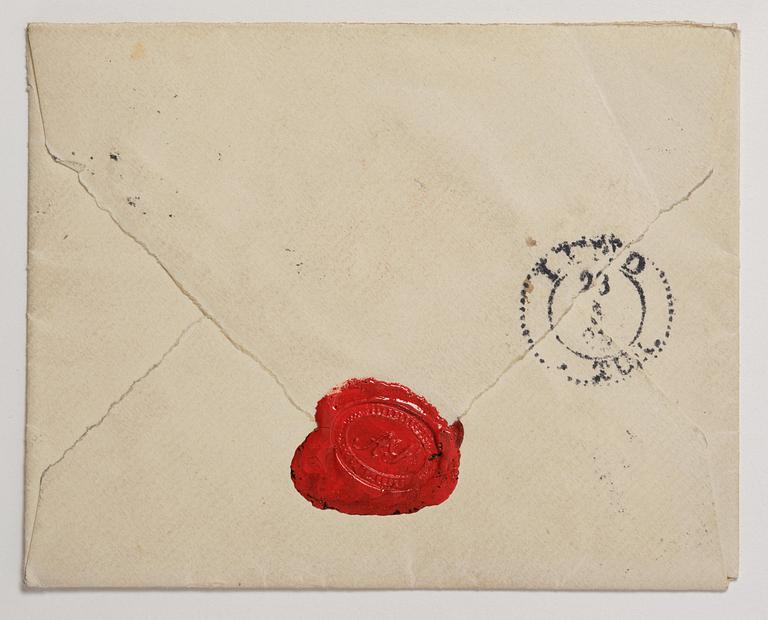
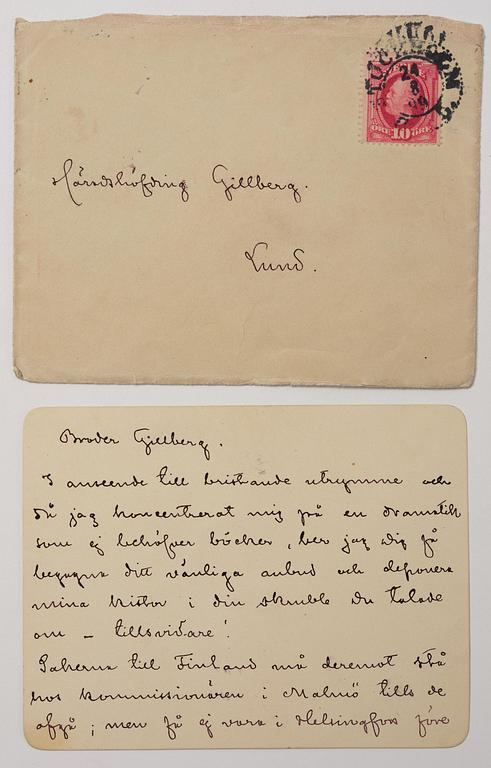
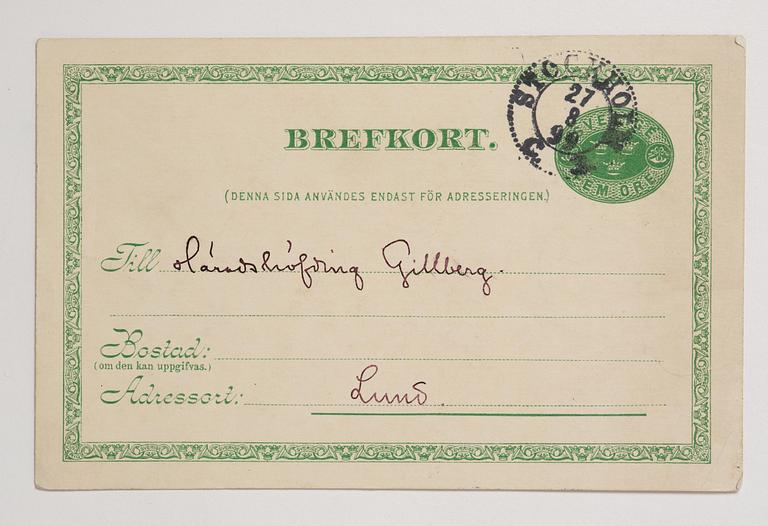
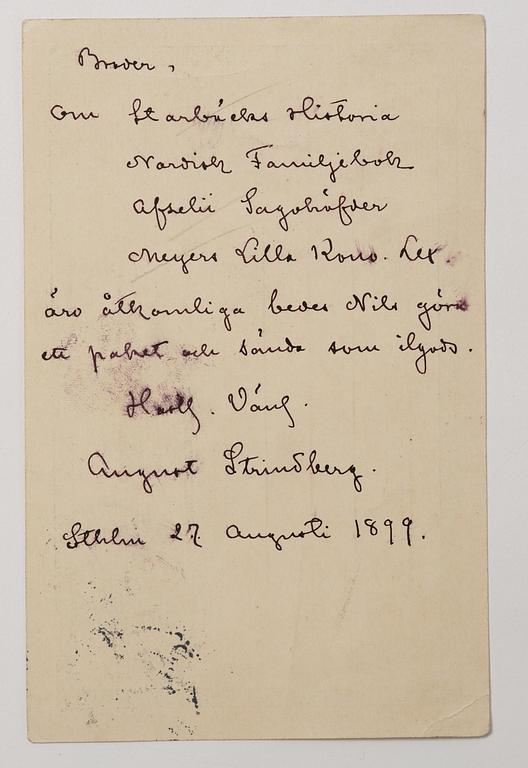
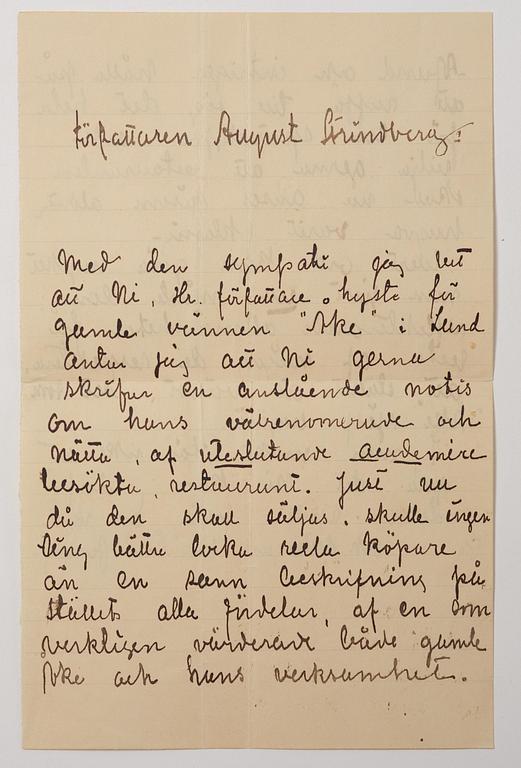
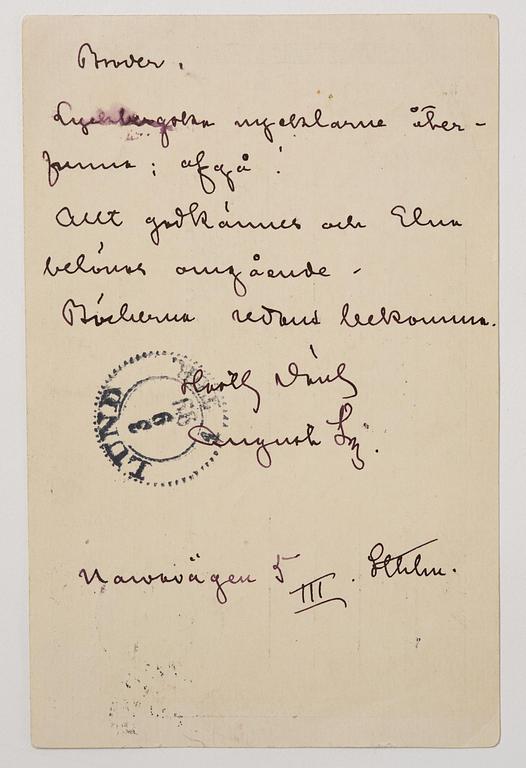
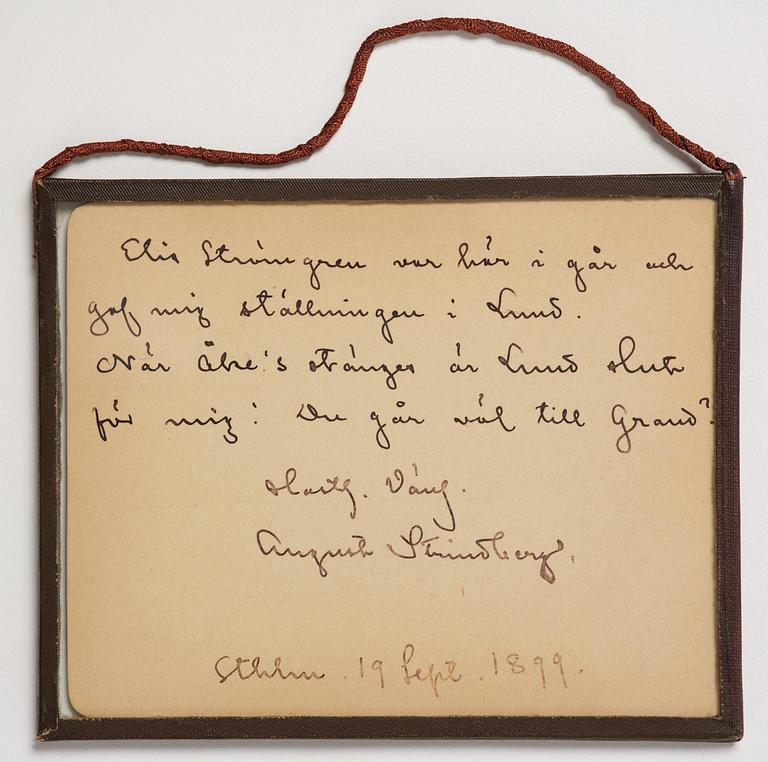
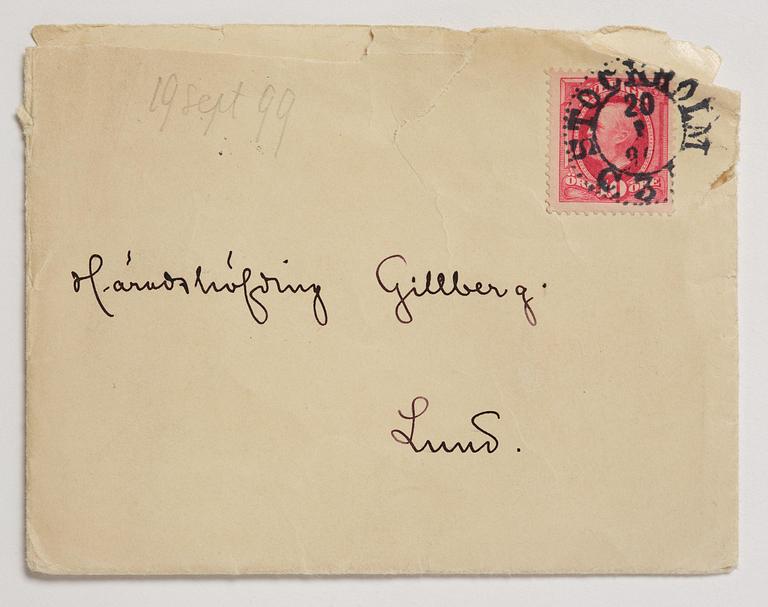
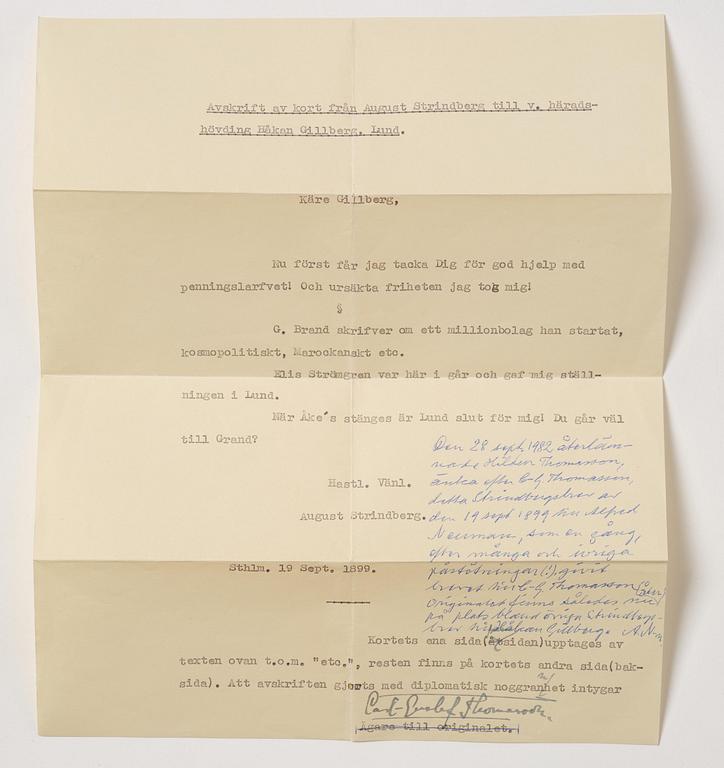
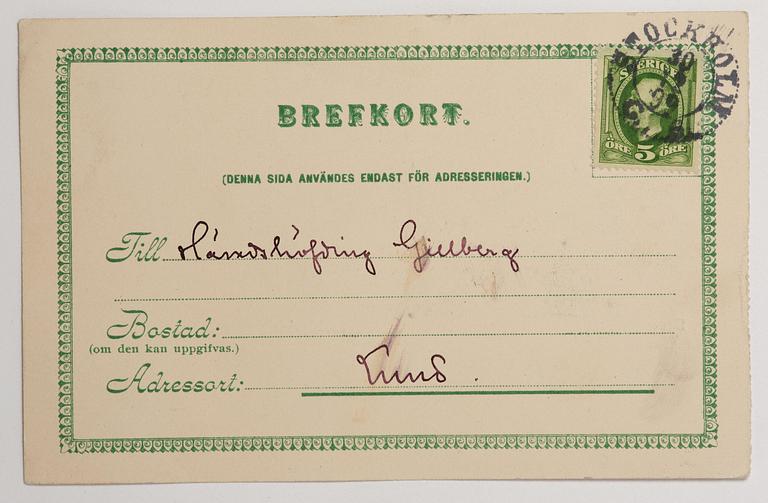
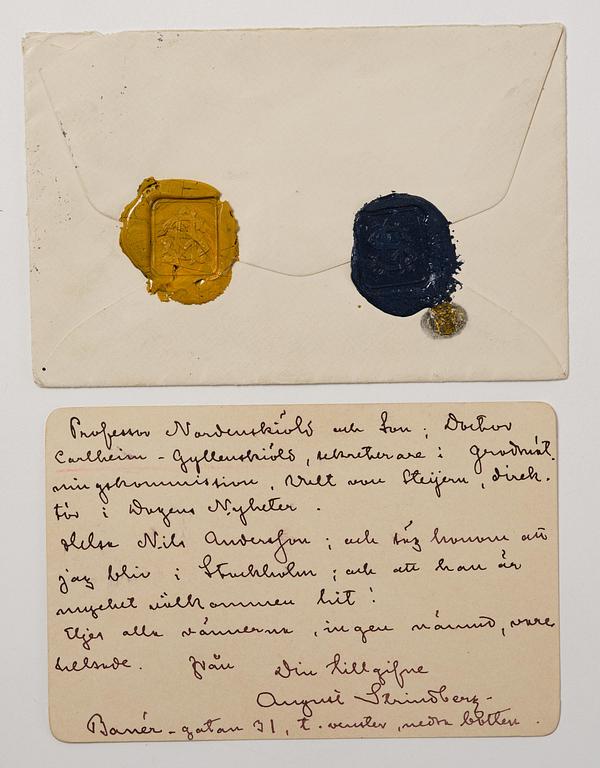
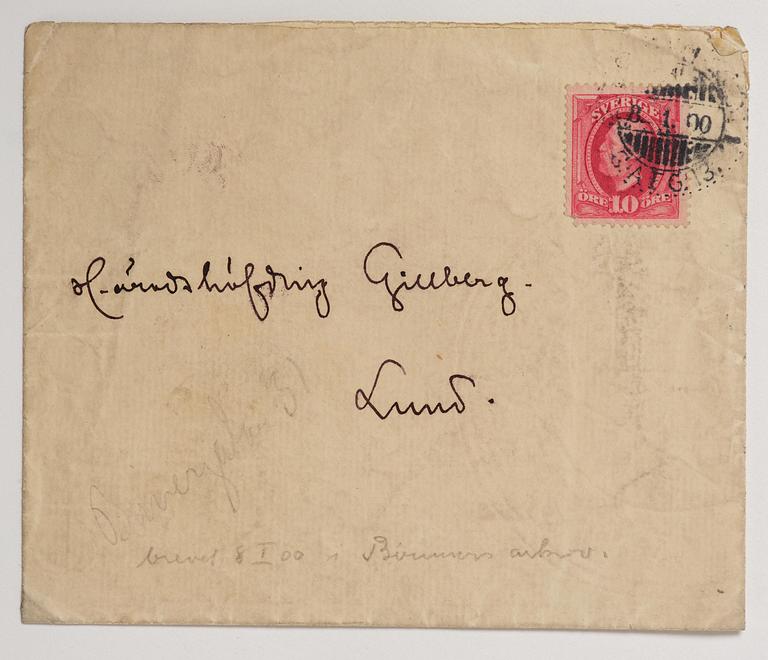
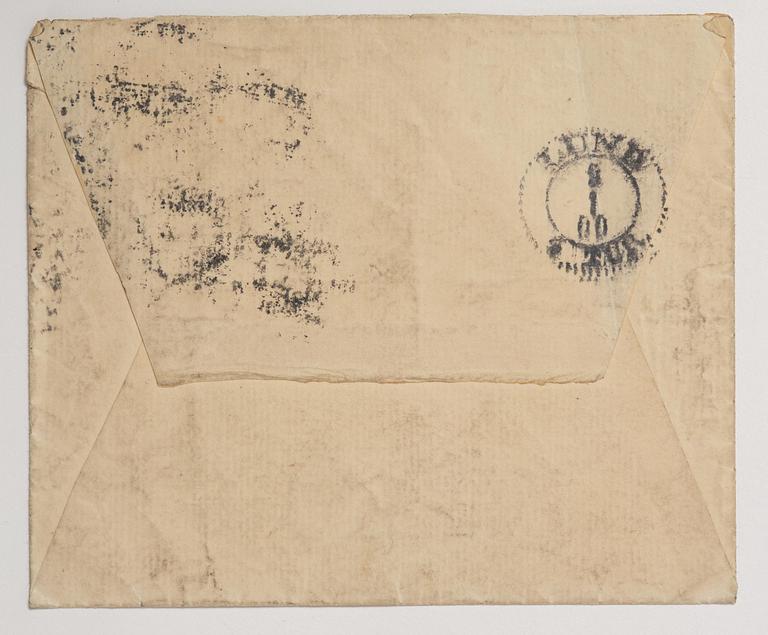
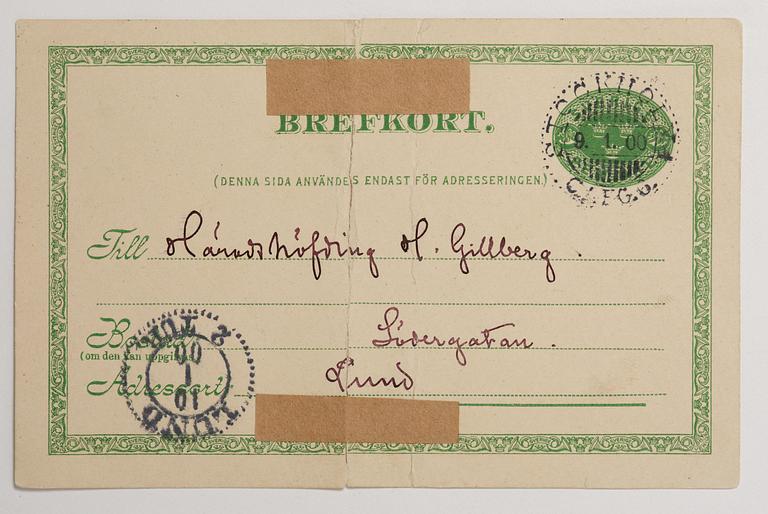
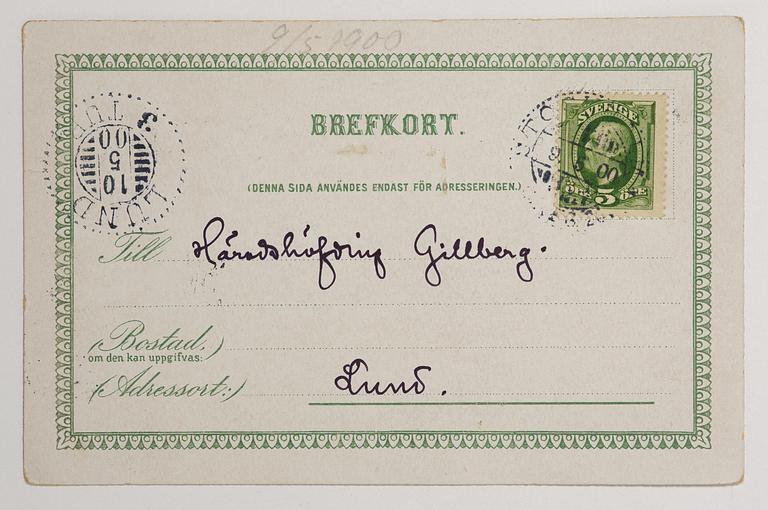
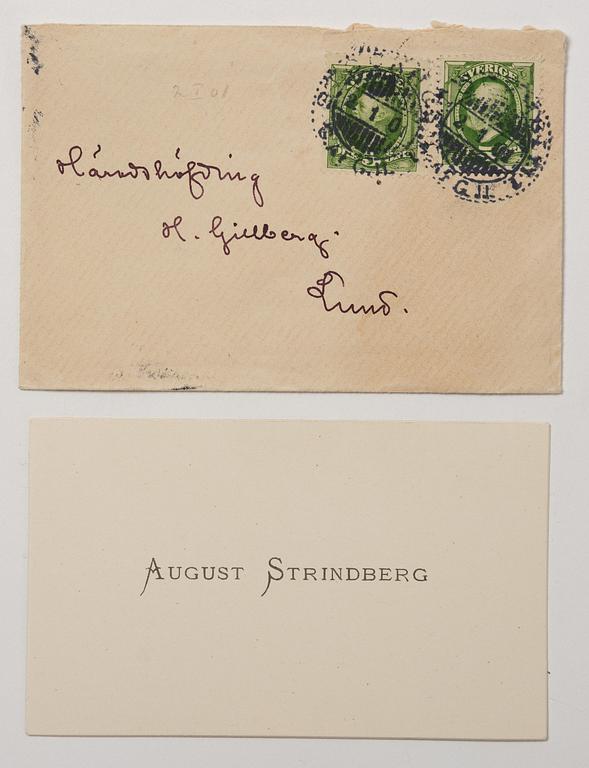
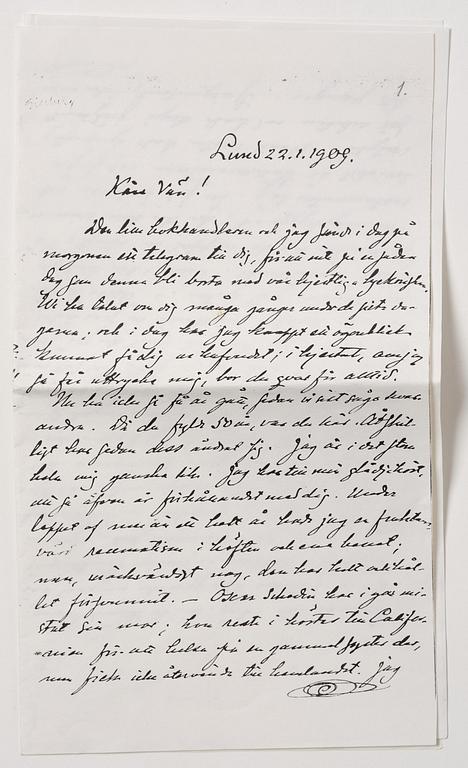
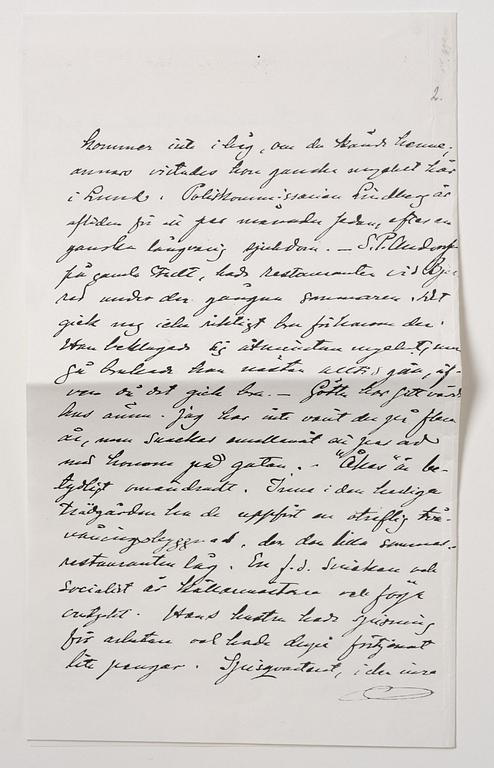
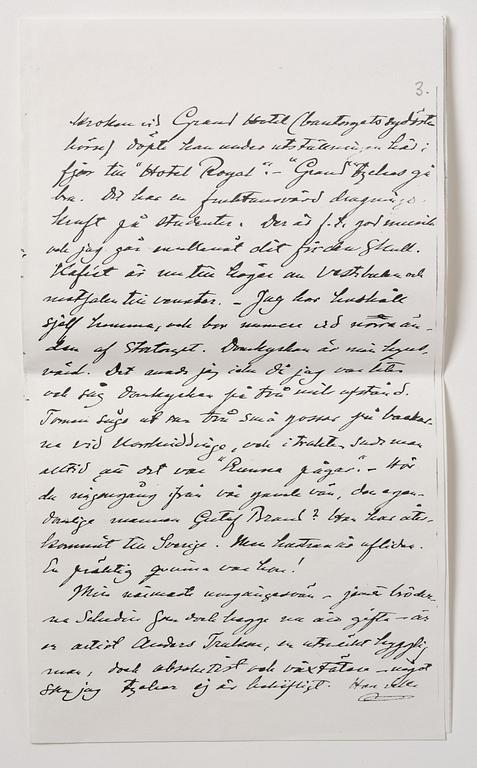
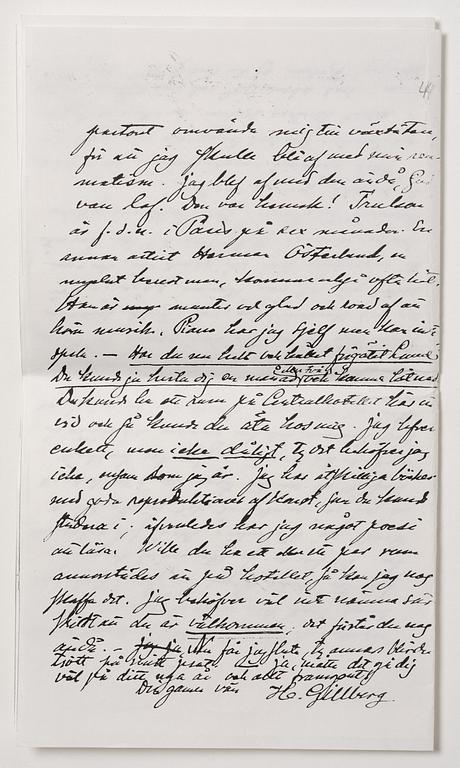
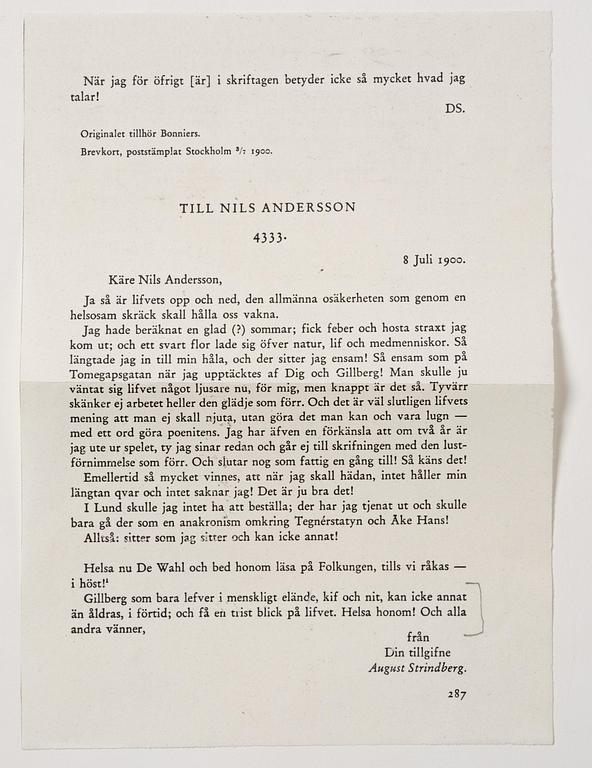
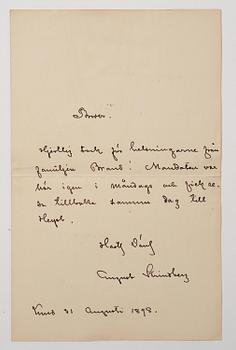
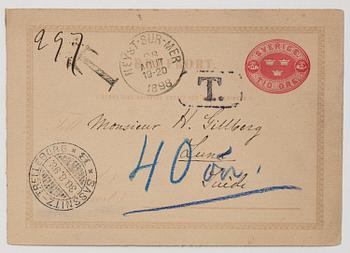
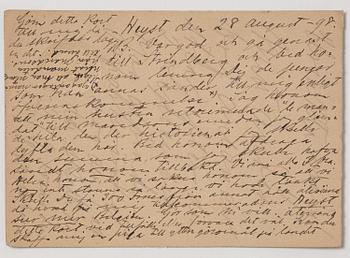
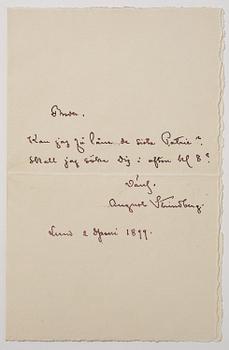
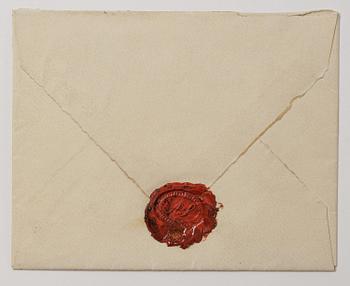
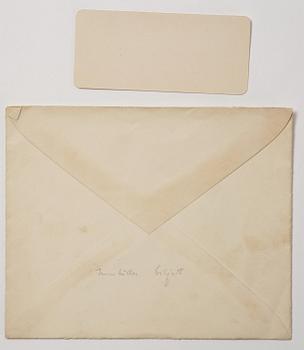
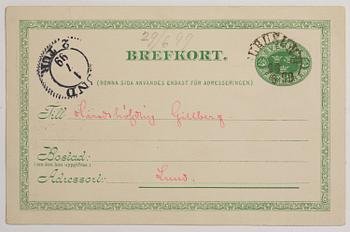
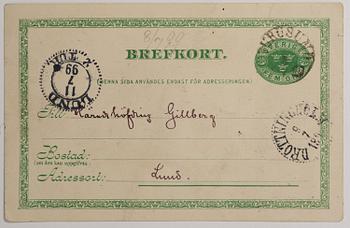
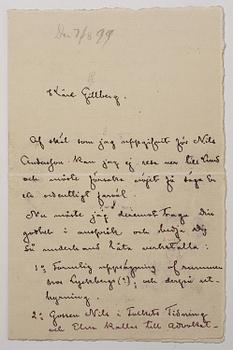
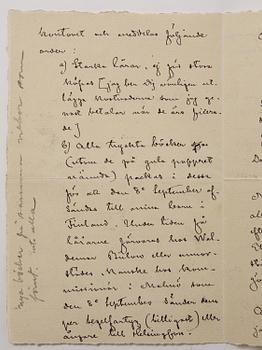
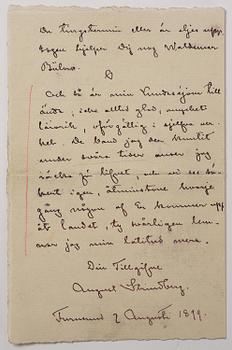
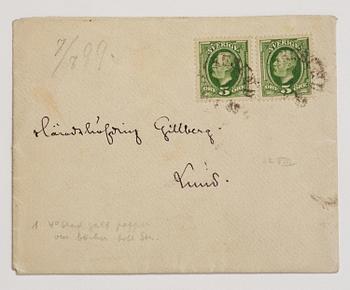
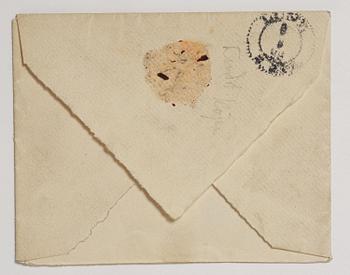
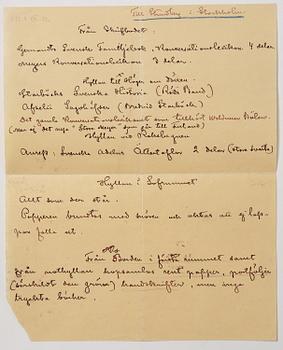
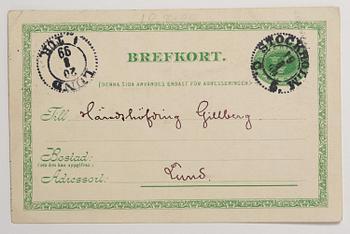
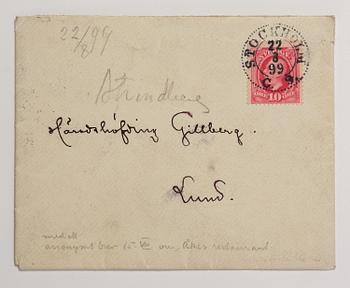
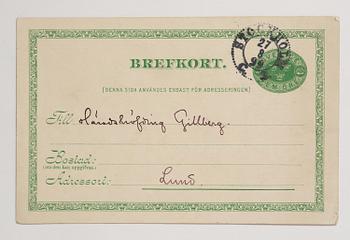
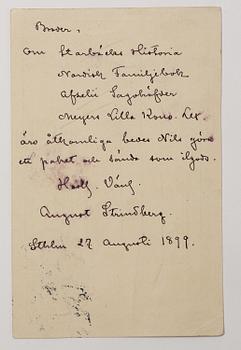
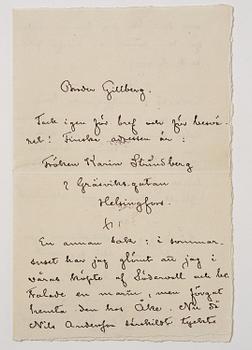
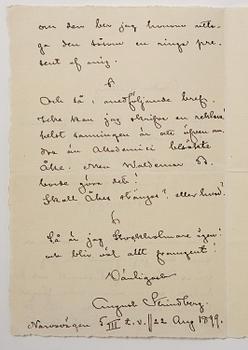
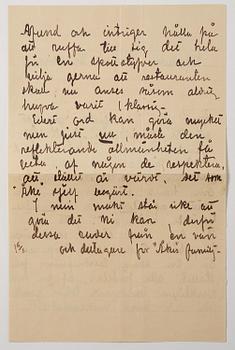
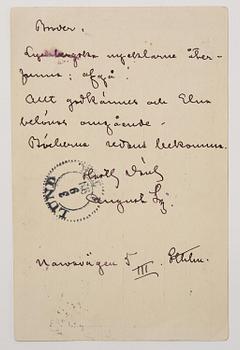
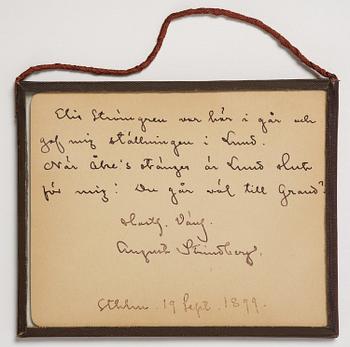
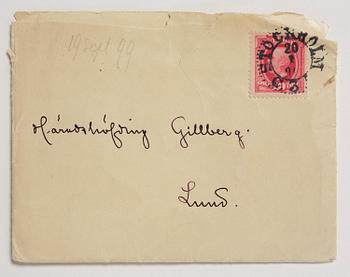
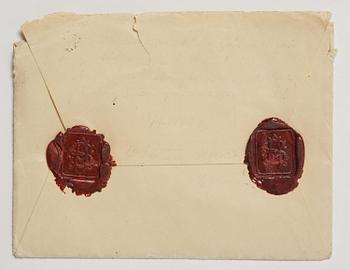
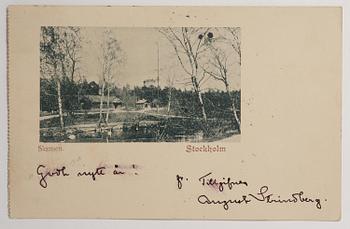
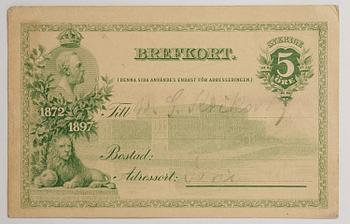
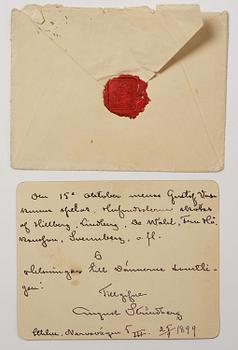
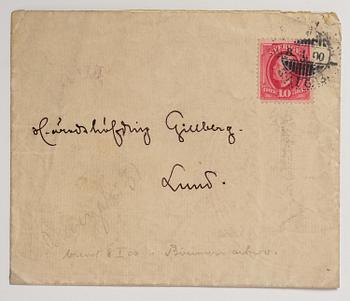
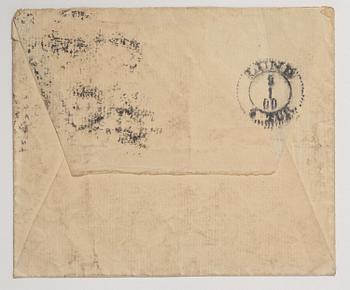
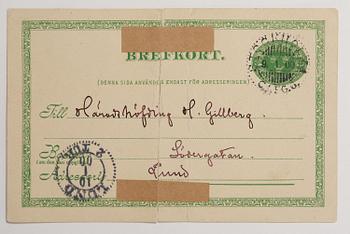
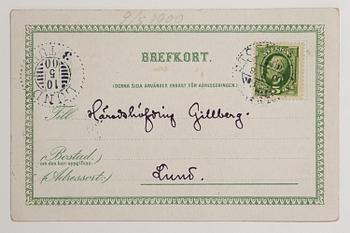
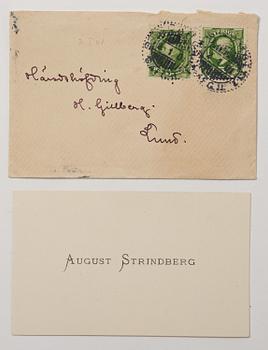
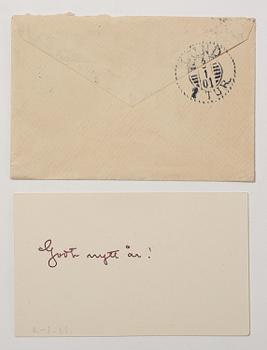
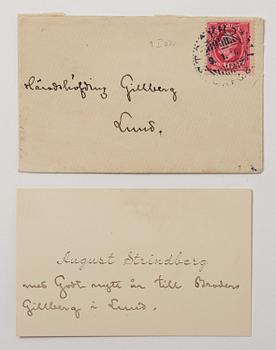
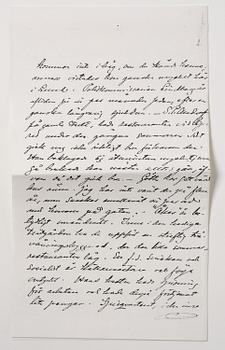
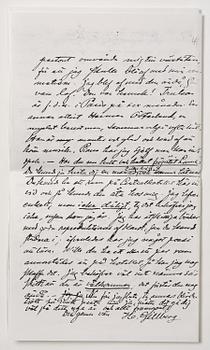
- 22 letters and messages of various kinds from 1898–1908, comprising 5 actual letters, 9 letter cards, 5 other cards and postcards, and 3 written visiting cards. With 12 accompanying envelopes, several bearing Strindberg’s wax seal and one with a two-colour seal. See list below.
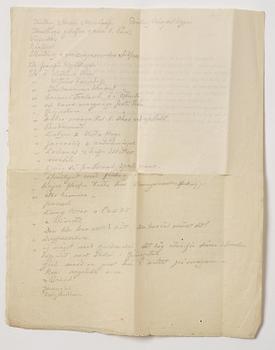
- Two manuscripts relating to Strindberg: firstly, a receipt dated 11 August 1899 for rent “for bed linen, sheets and towels” and “rent for a bookcase” from 15 April to 15 June, with several notes in pencil, probably in Strindberg’s own hand; secondly, a delivery receipt issued to “Author H. Mr Strindberg”, dated 11 September 1899, concerning two loads of book crates to Lindstedts bookshop and six crates to the railway.
Portraits:
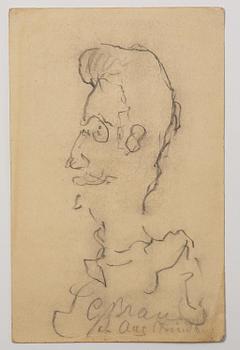
A drawn portrait depicting Gustaf Brand, executed by August Strindberg in pencil on an unposted postcard (14 x 9 cm), with the inscription beneath the image: “G. Brand / af Aug Strindberg”. The physician Gustaf Brand (1857–1953) was one of Strindberg’s close friends and is said to have been the model for Doctor Borg in The Gothic Rooms. In 1892, he purchased around ten of August Strindberg’s paintings from Dalarö and exhibited them in Lund in December of the same year, but is believed never to have paid for them. Brand moved to Belgium when he married a Belgian woman, and Strindberg visited him there for several weeks in 1898.
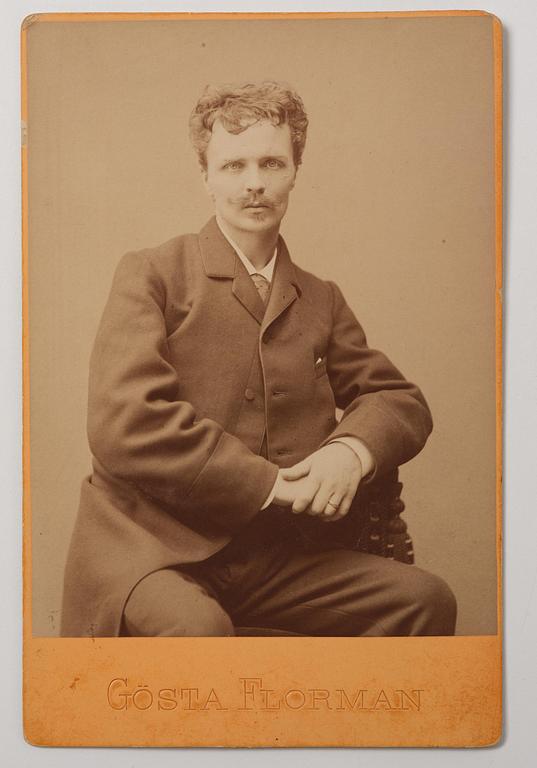
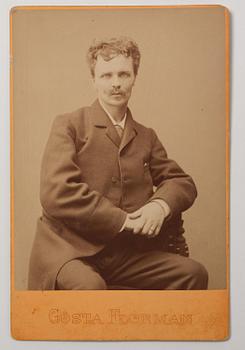
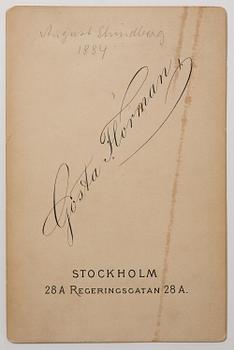
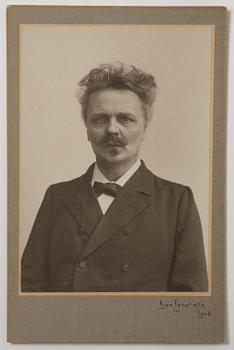
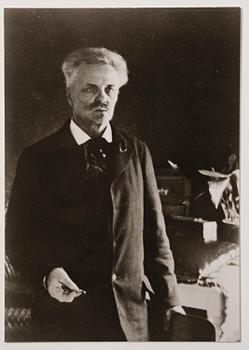
Two cabinet photographs depicting Strindberg, one dated 1884 according to the inscription (16.6 x 10.8 cm, photographer Gösta Florman in Stockholm, who achieved success with a new, elegant photographic style inspired by the sepia-toned photographs of continental Europe), the other by Lina Jonns Eftr., Lund (17 x 11.1 cm).
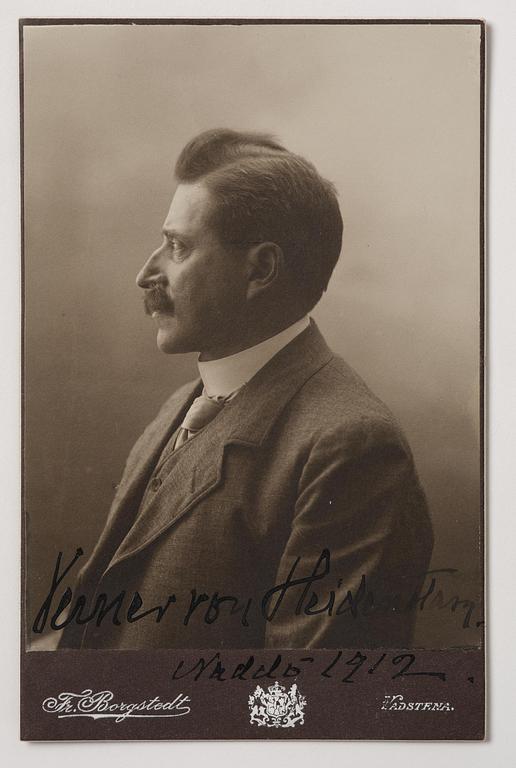
Cabinet photograph of Verner von Heidenstam with autograph: “Verner von Heidenstam. Naddö 1912” (Vadstena, Fr. Borgstedt, 16.7 x 10.8 cm).
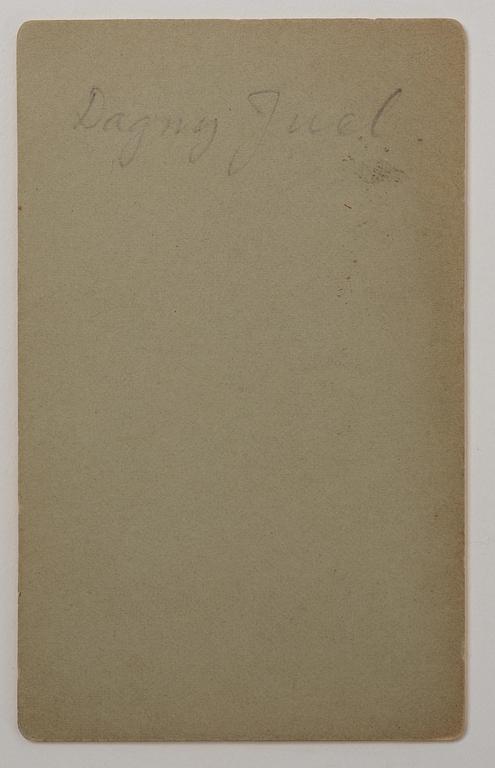
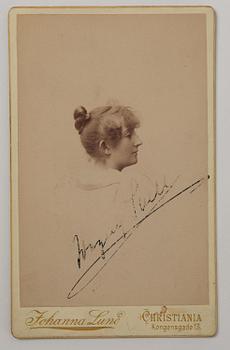
Cabinet photograph of Dagny Juel with autograph (Christiania, Johanna Lund). Strindberg and Dagny Juel (1867–1901) had a brief romance in Berlin in 1893. Strindberg was driven to bitter hatred when Juel ended the relationship after a few weeks.
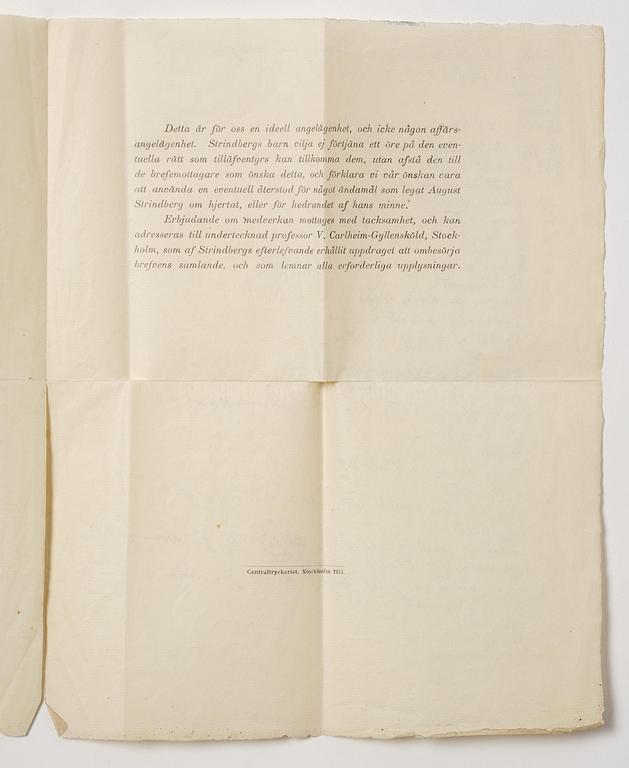
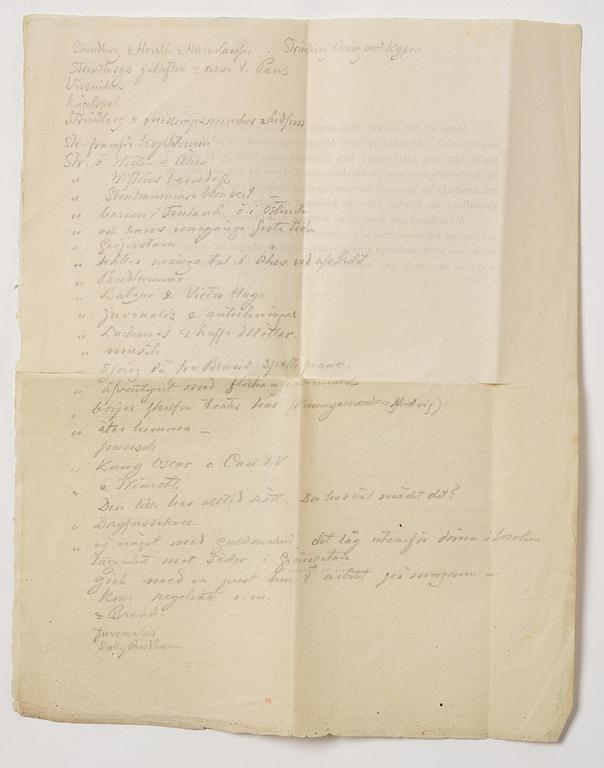
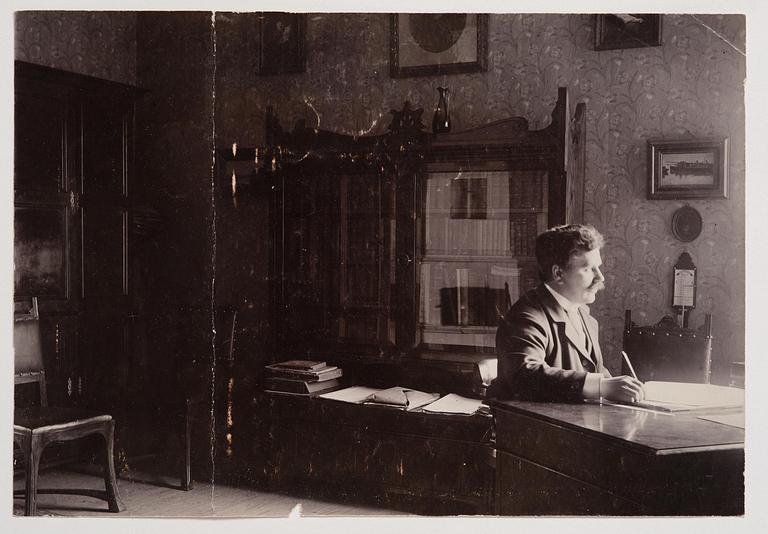
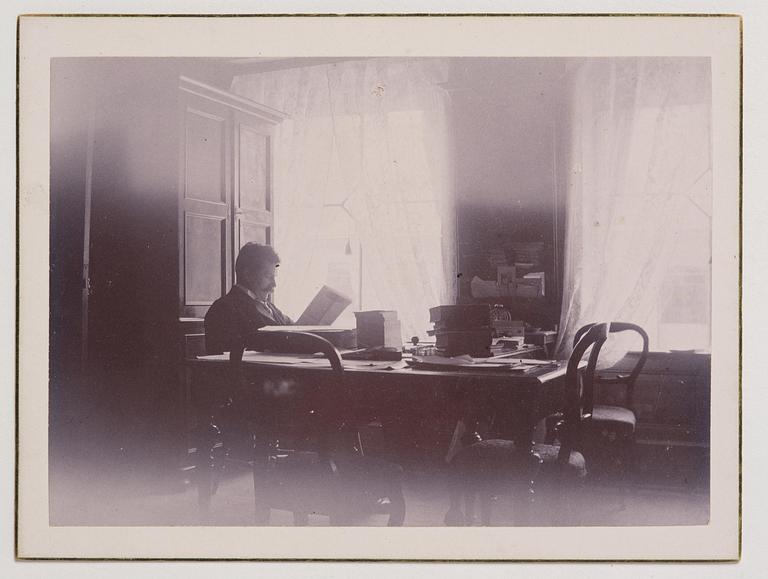
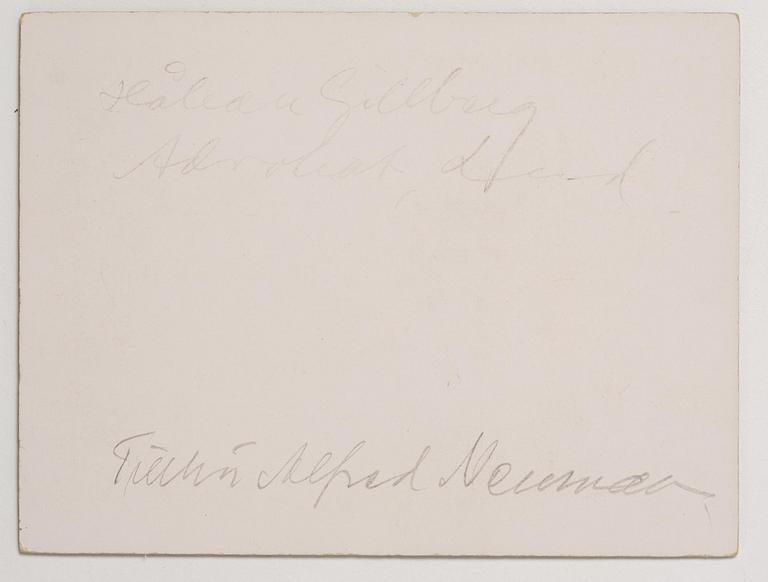
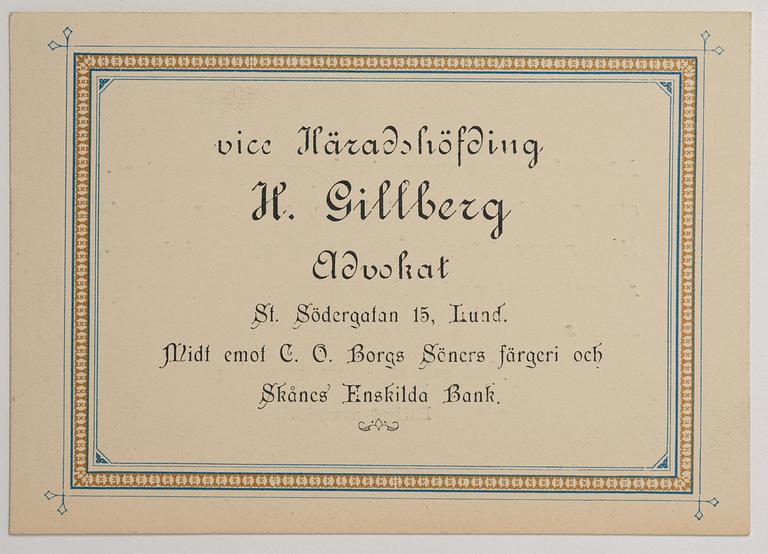
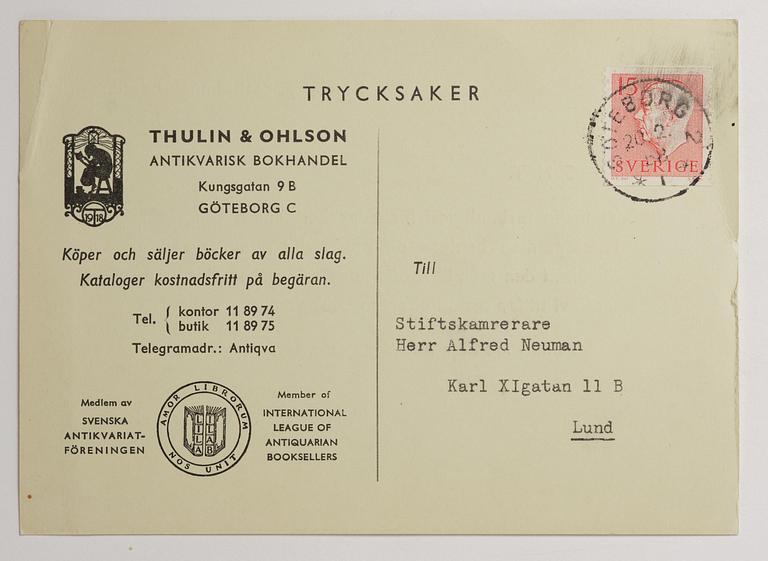
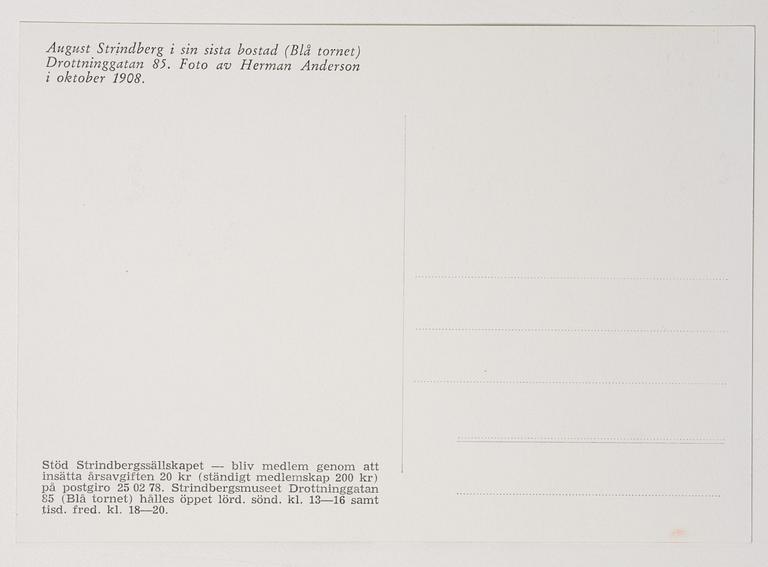
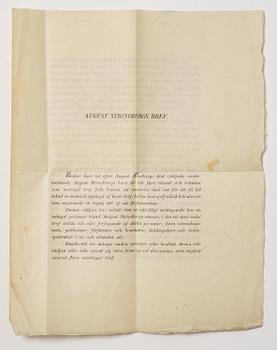
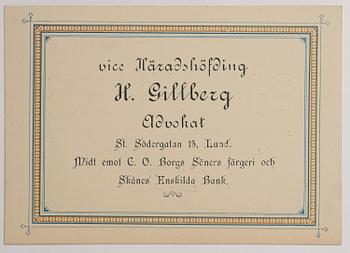
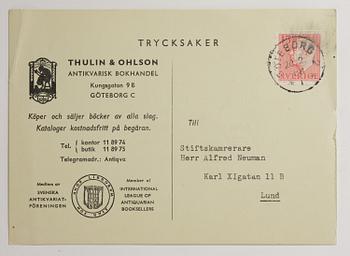
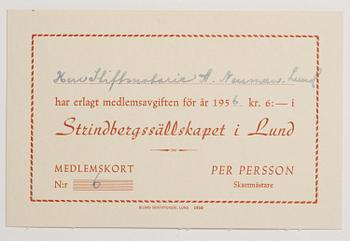
Other related material includes a printed appeal for material for the edition of Strindberg’s letters that began to be planned as early as 1915, as well as several advertising cards and photographs relating to district judge Håkan Gillberg and his activities in Lund, including a photograph of the address of the office at Stora Södergatan.
Provenance
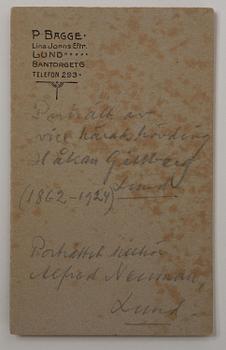
Håkan Gillberg, 1826–1924
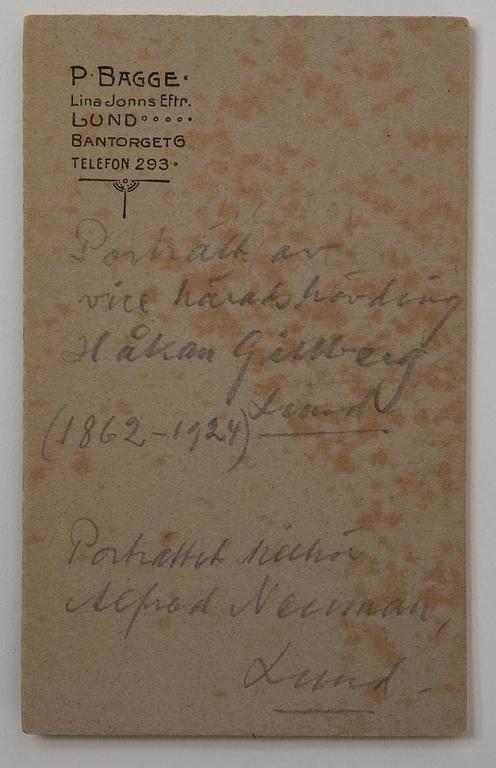
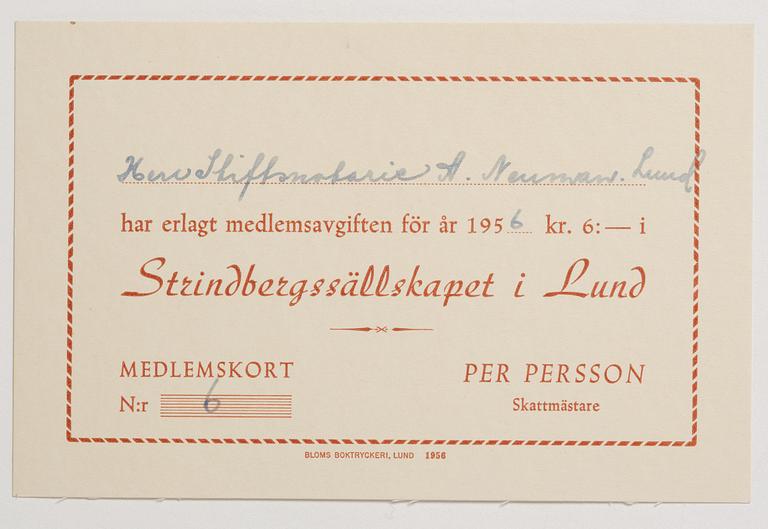
Alfred Neuman, 1899–c. 1989
Thereafter inherited within the family.
Literature
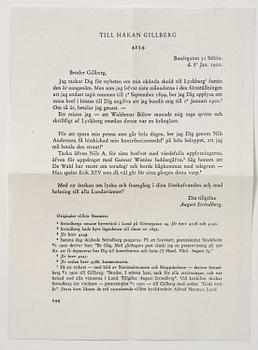
The letters to Håkan Gillberg are published in August Strindberg’s Letters (1948–2001), with the volume number given first here for practical reasons: XII:3836 (and the note), XII:3890, XIII:4087, XIII:4107, XIII:4116, XIII:4128, XIII:4140 (and the note, a handwritten list of books to be sent to Stockholm), XIII:4148, XIII:4149, XIII:4152, XIII:4158, XIII:4167, XIII:4179, XIII:4181, XIII:4204, XXII:S485, XIII:4254 (not the letter itself, which is held in the Bonniers archive, but the envelope for it (!) and the postcard, etc., listed in notes 4 and 7), XIV:4680, XVI:5739.
More information
Strindberg spent just over two years in Lund, from December 1896 to June 1899, apart from a seven-month period in Paris. This was towards the end of the Inferno crisis, and in Lund he felt that he was recovering and enjoyed living there. He devoted himself intensely to attempts to manufacture gold and also began writing again. In Lund, he completed some of his most remarkable and innovative works, including the novel Inferno and the plays To Damascus and Gustav Vasa.
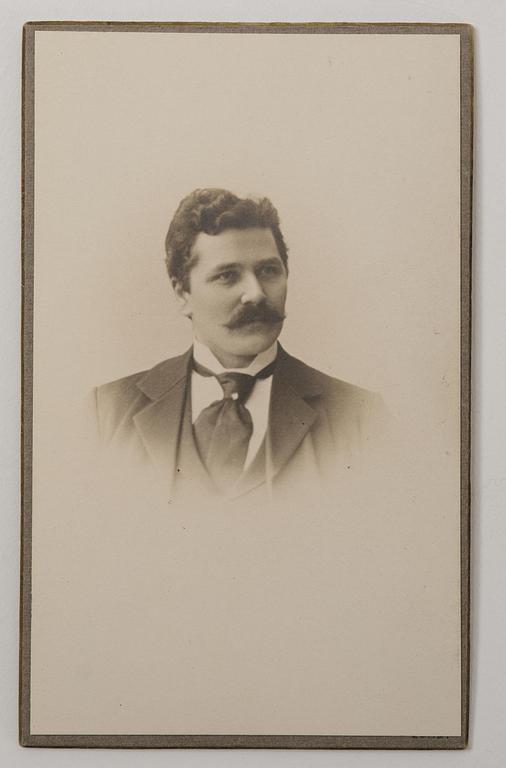
These letters date from the latter part of his time in the city, when, among other things, he had formed a new friendship with the lawyer Håkan Gillberg (1862–1924), who later served as the model for the protagonist Edvard Libotz in the short story The Scapegoat. Strindberg’s letters to Gillberg are mostly brief and often concern practical matters. They were sent first from Lund, and later from Furusund and Stockholm, and relate to arrangements connected with his move in 1899. One letter contains a handwritten enclosure detailing how various books were to be sent or placed in storage; another mentions the so-called “Green Bag” containing his papers. Others concern Åke Hansson’s restaurant, where he spent much of his time in Lund. The final greeting dates from January 1908 and was written on a postcard featuring Herman Hamnqvist’s photograph of Strindberg.
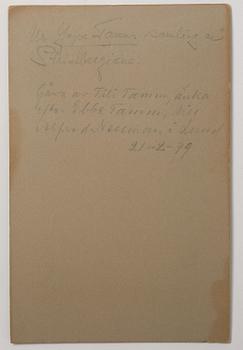
This collection, which has been inherited within the recipient’s family, includes all known letters and messages to Håkan Gillberg except one (22 letters and messages of various kinds, dated 1898–1908), as well as interesting ancillary material, including a pencil portrait drawing of Strindberg depicting Gustaf Brand (the purchaser of several of Strindberg’s paintings from Dalarö) and several cabinet photographs—of Strindberg himself, Dagny Juel and Verner von Heidenstam, the latter two with autograph inscriptions. Provenance: Alfred Neuman, director of a government bureau, Lund.
For condition report contact specialist

What will the transport cost?
Shipping can only be arranged by contacting specialdelivery@bukowskis.com.


















































































































Others have also viewed