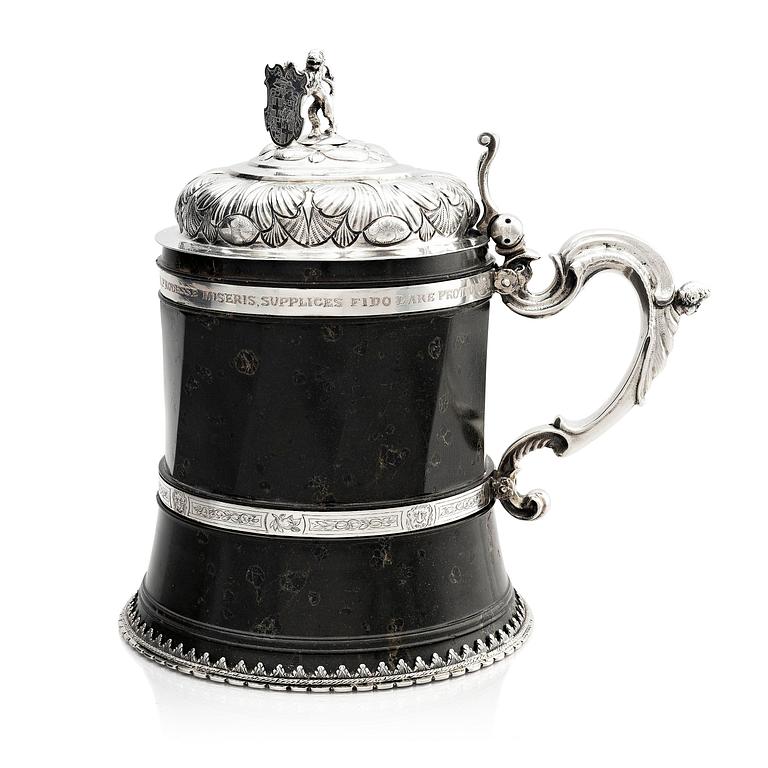
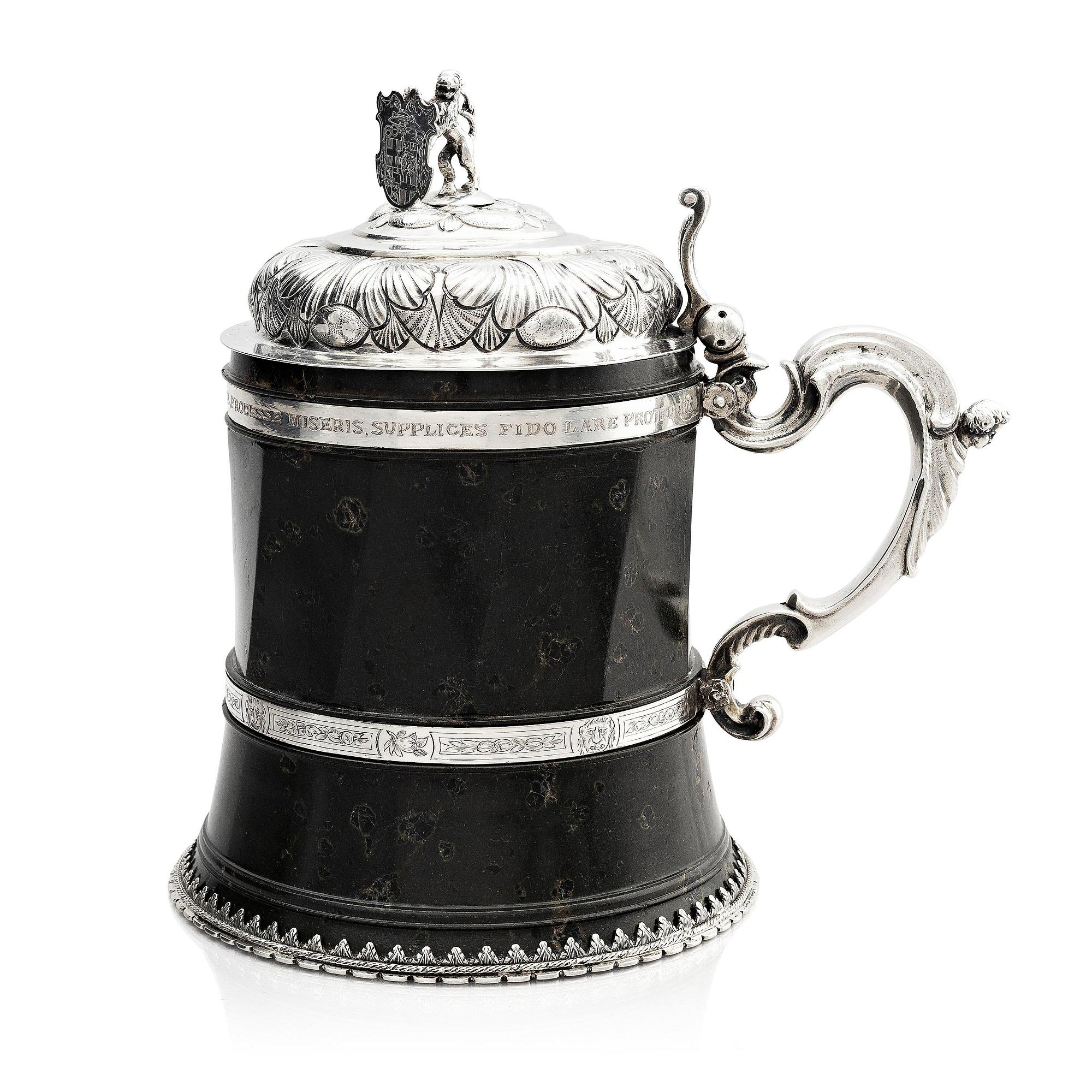
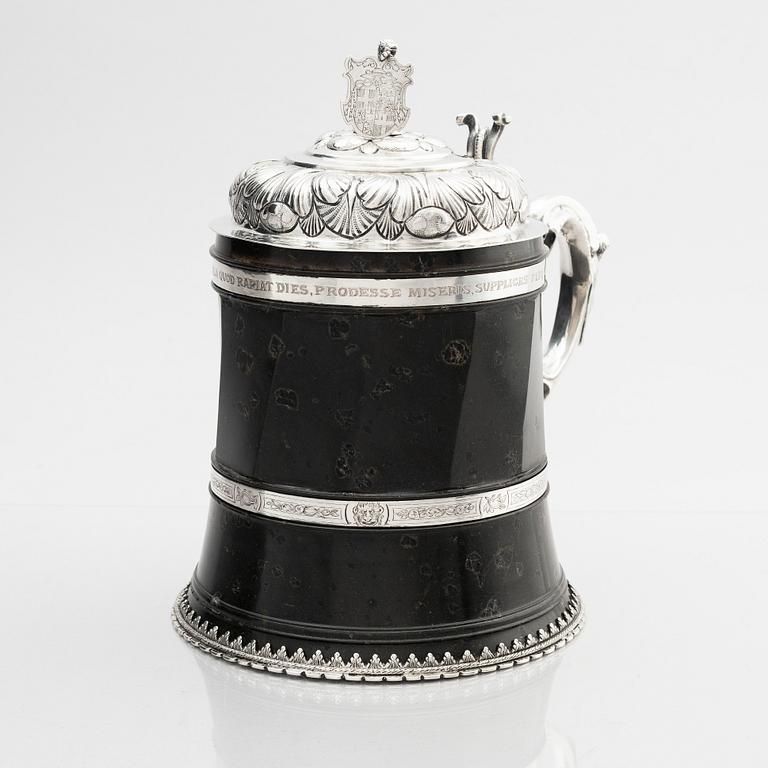
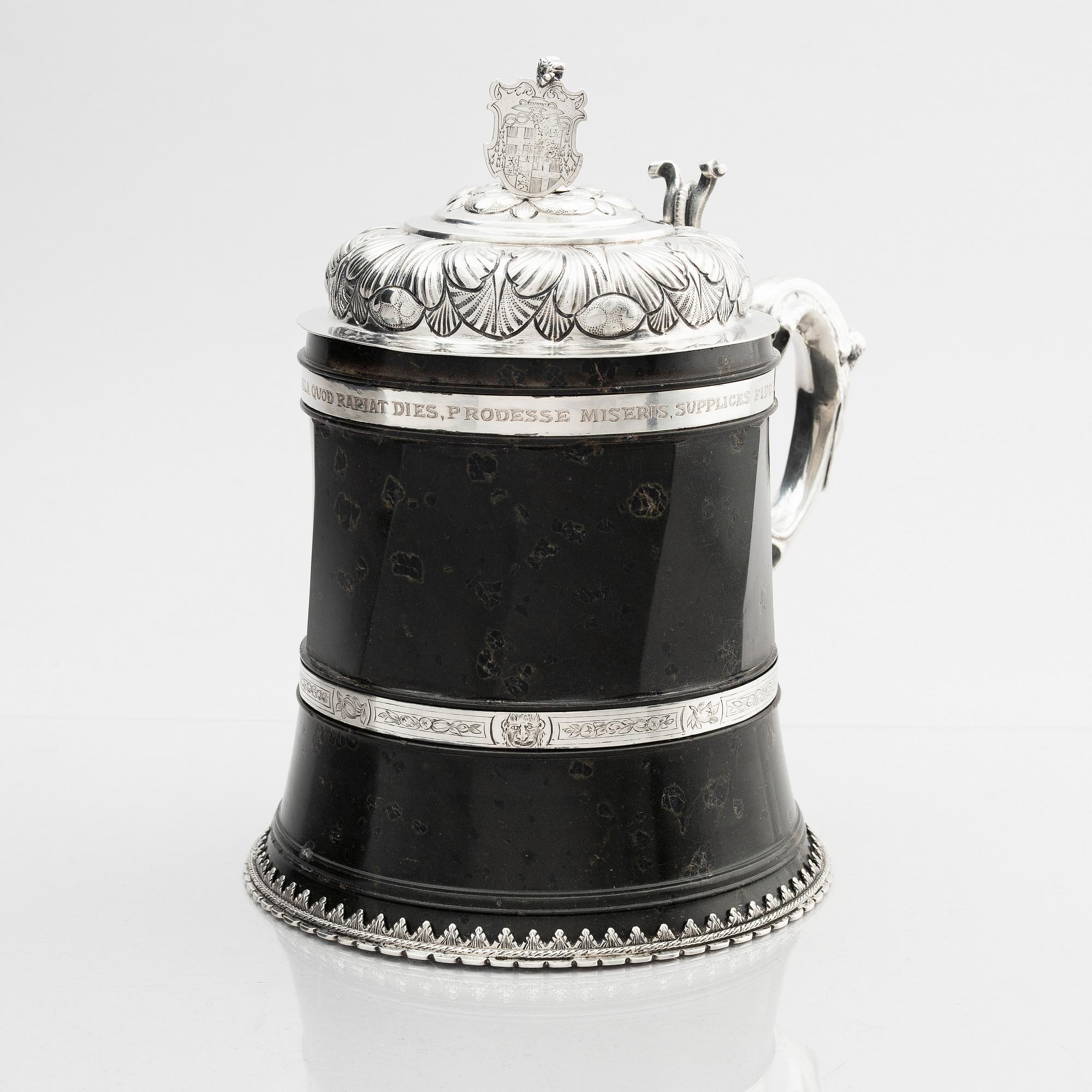
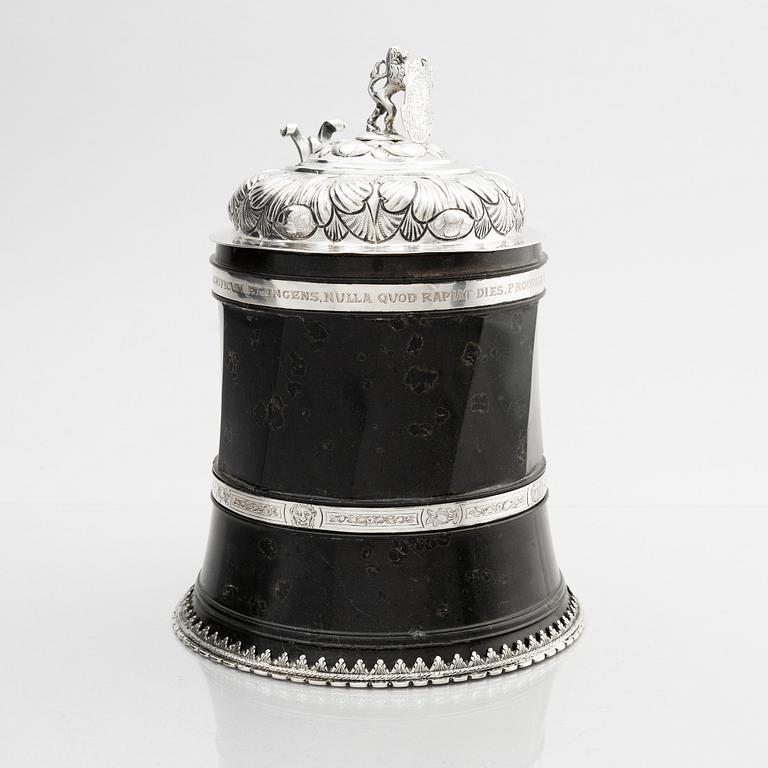
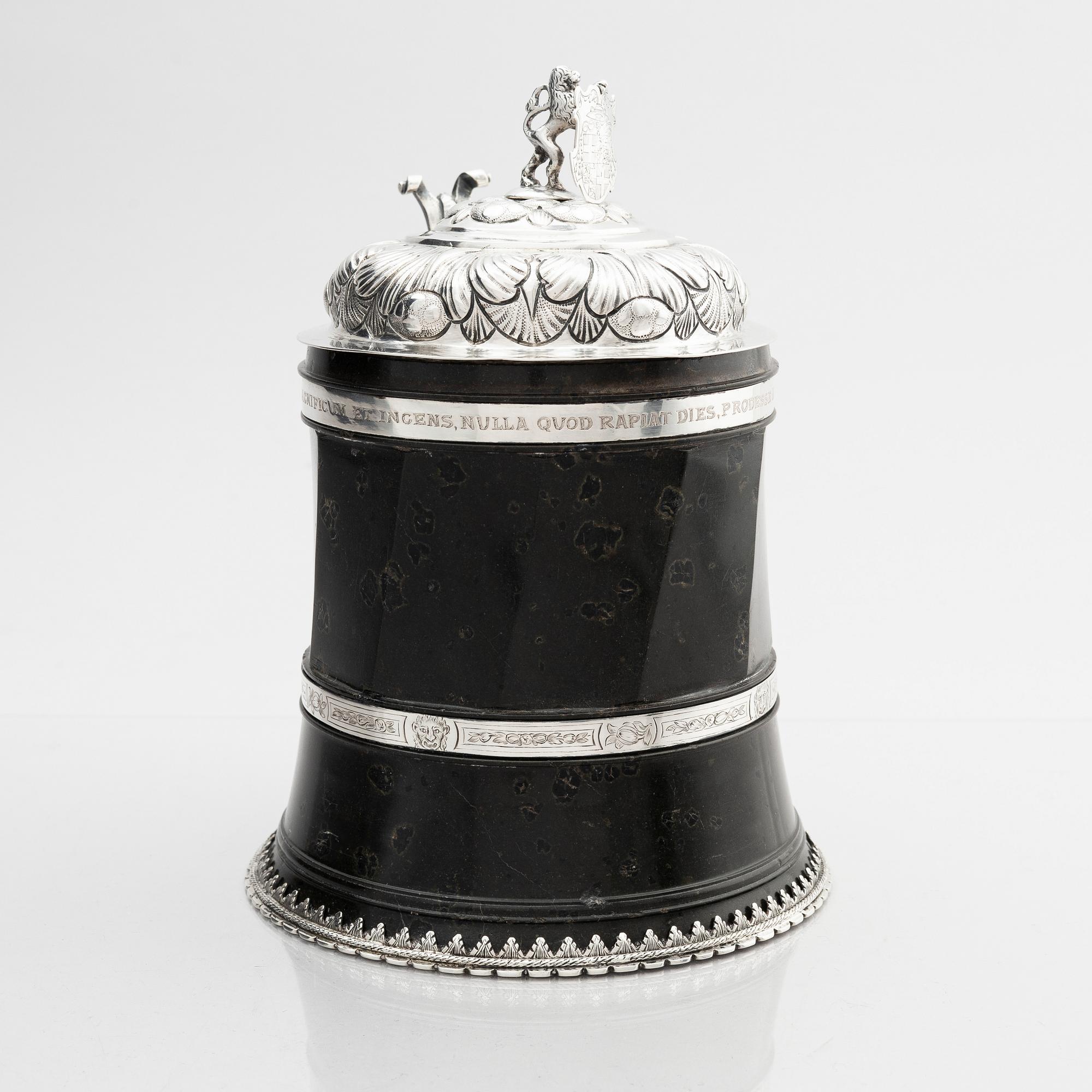
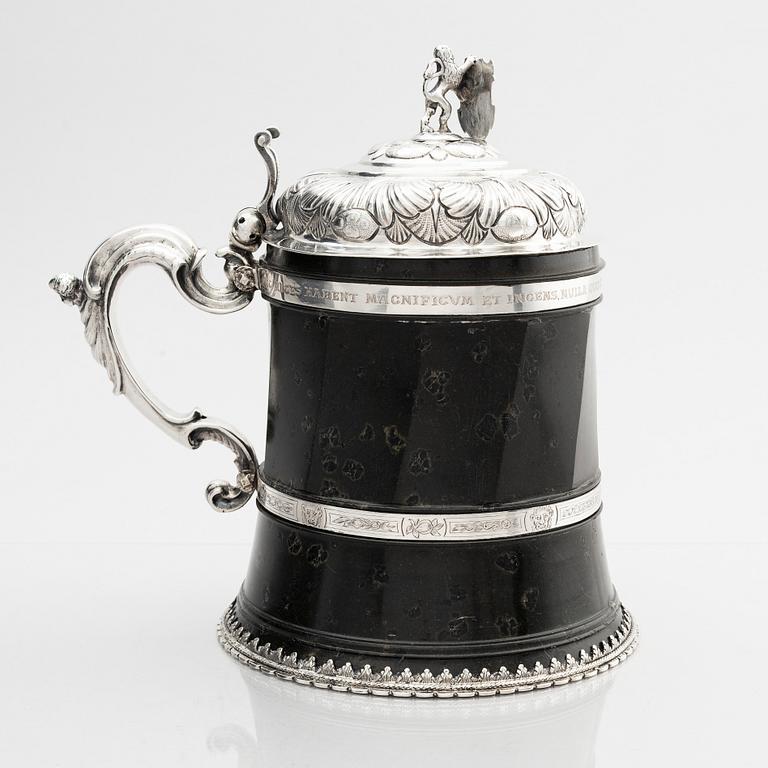
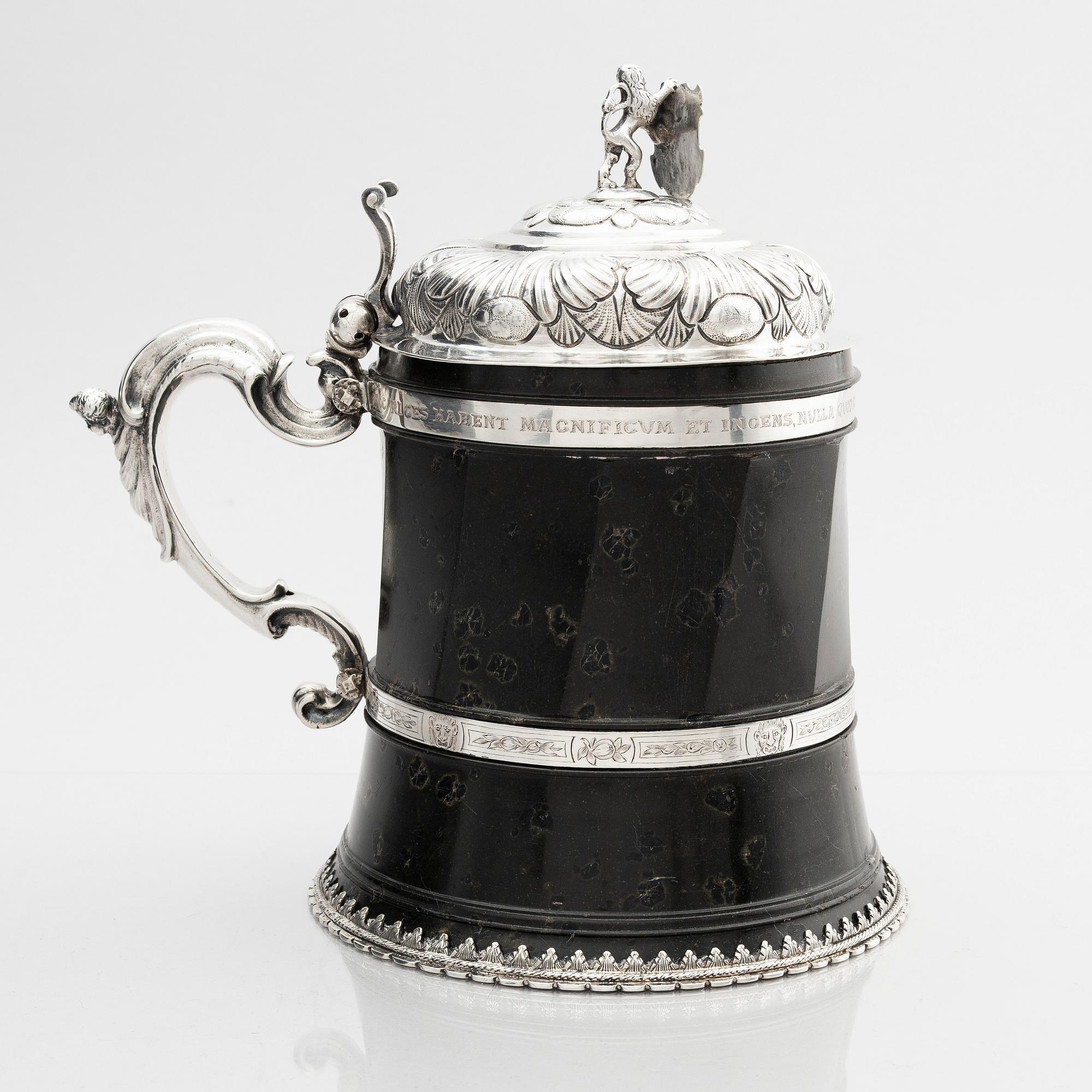
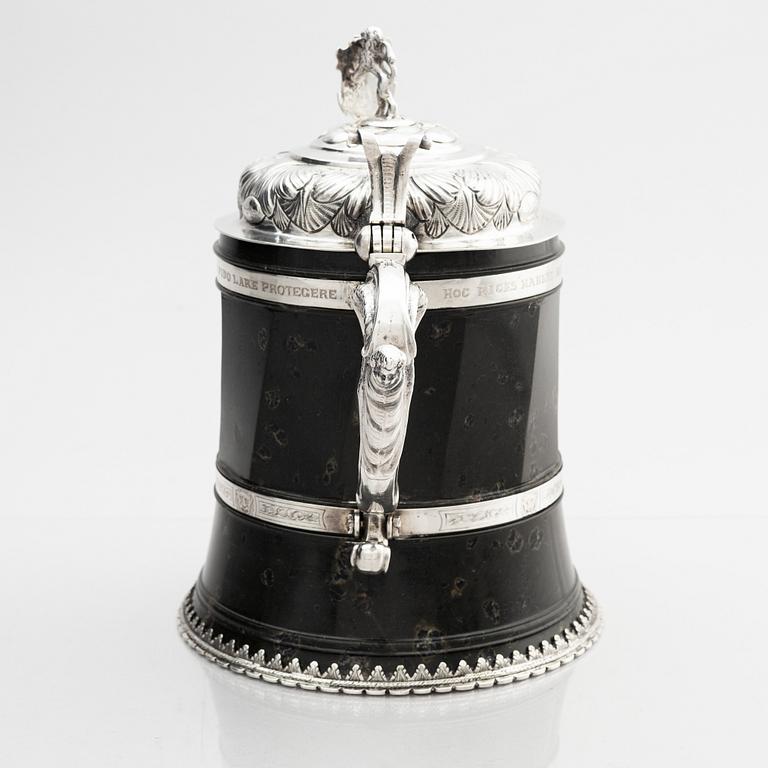
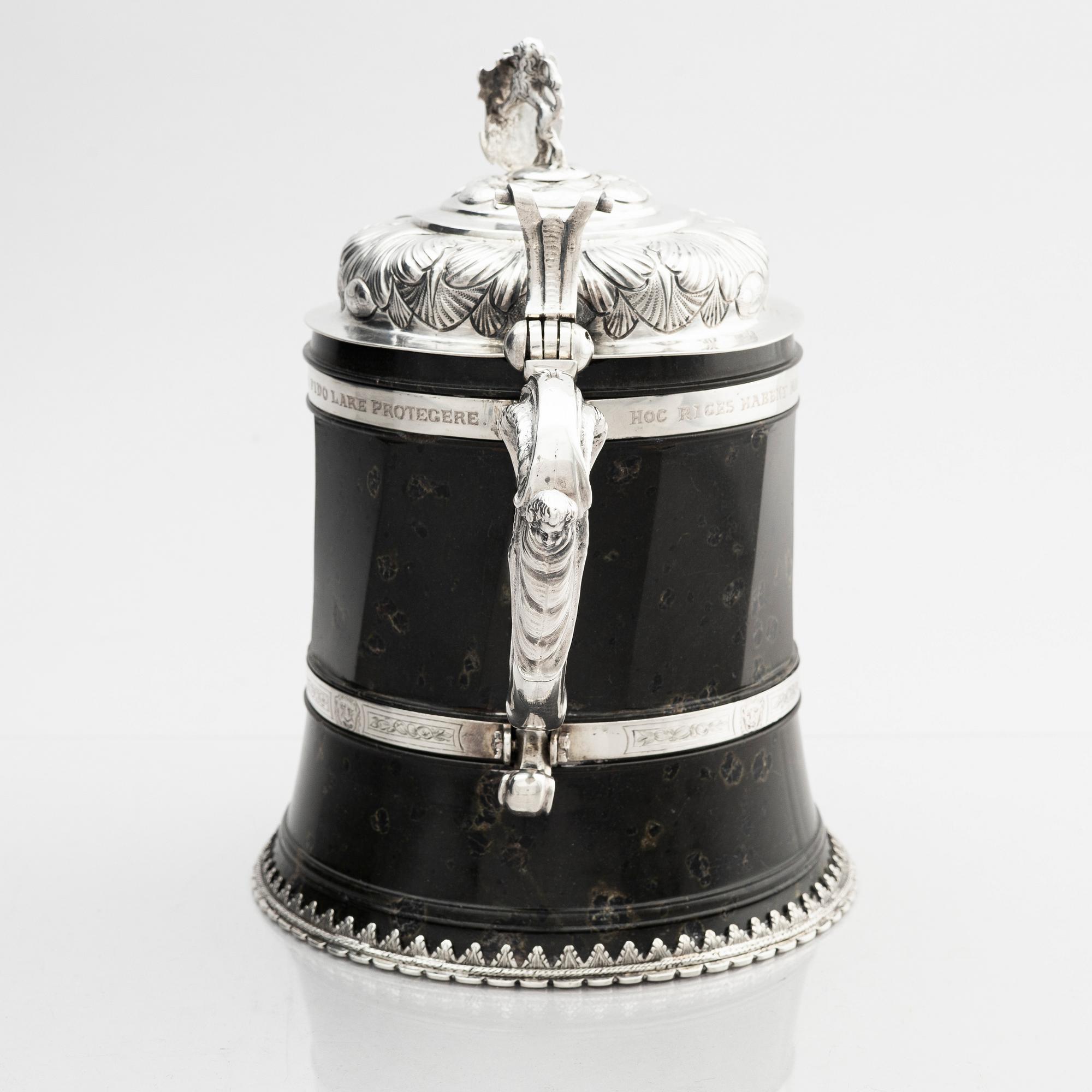
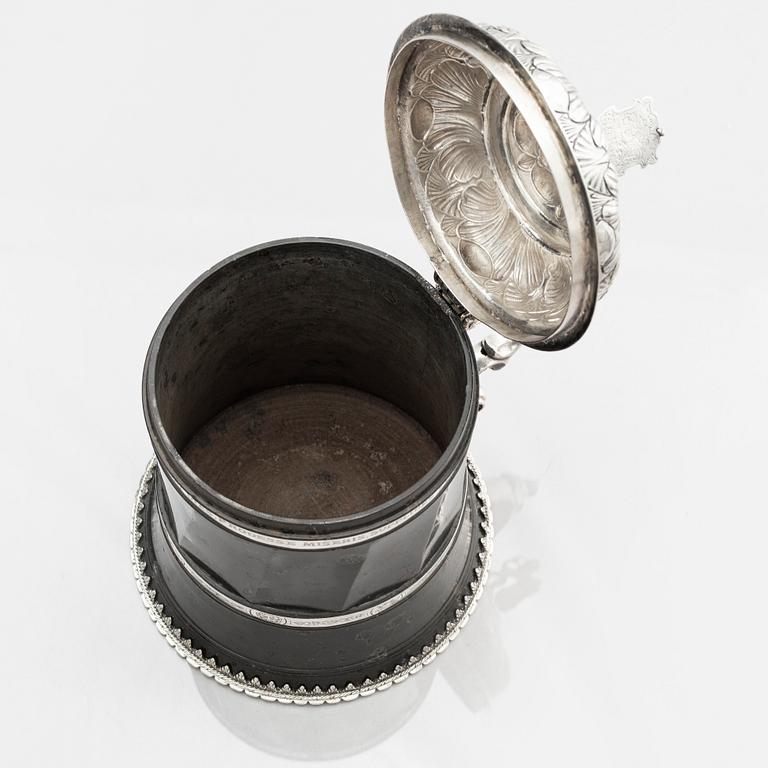
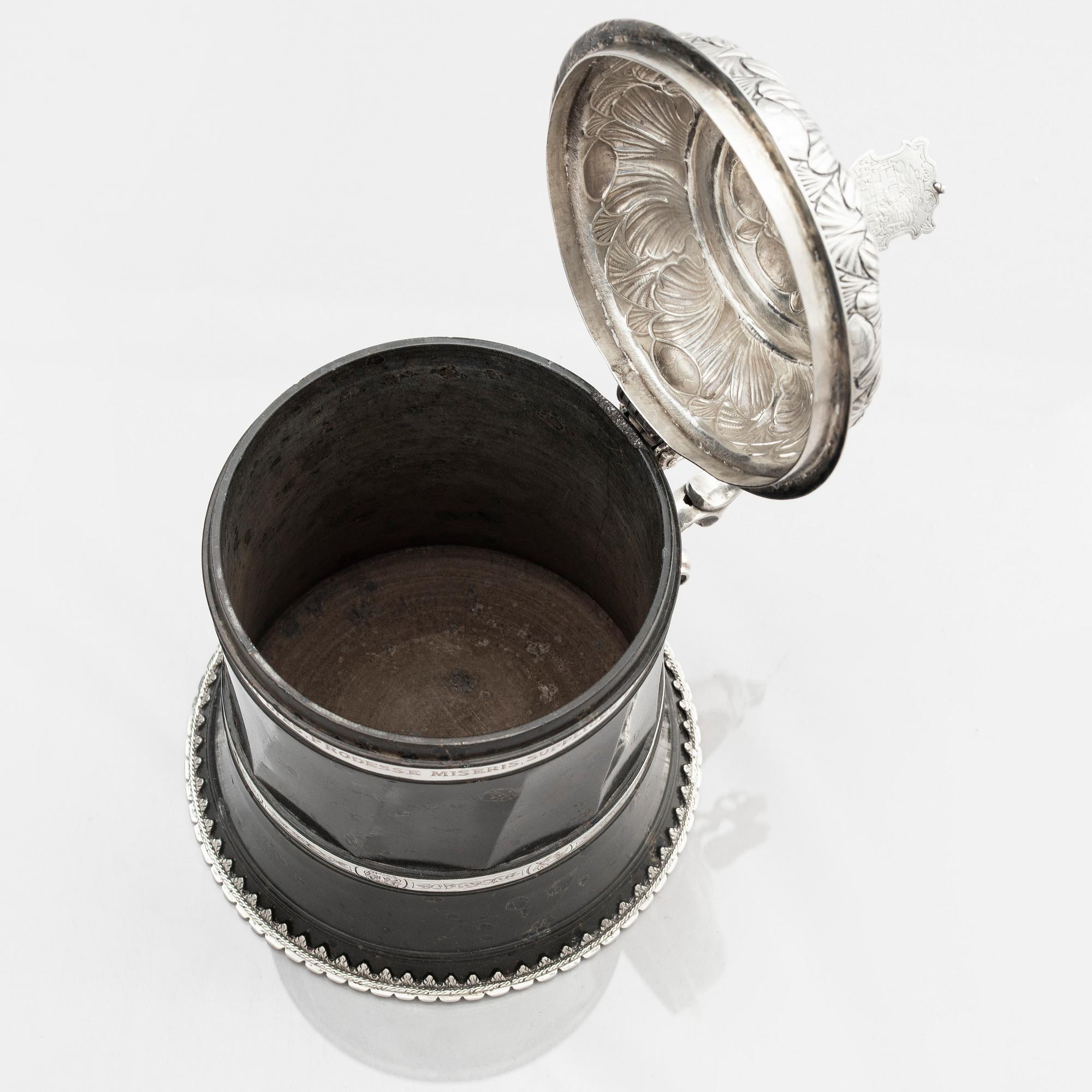
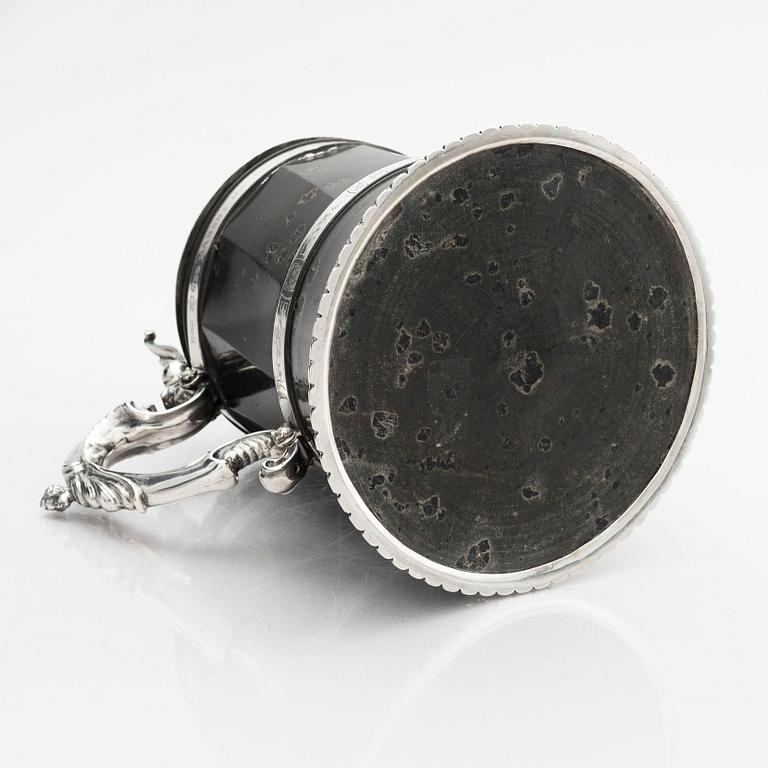
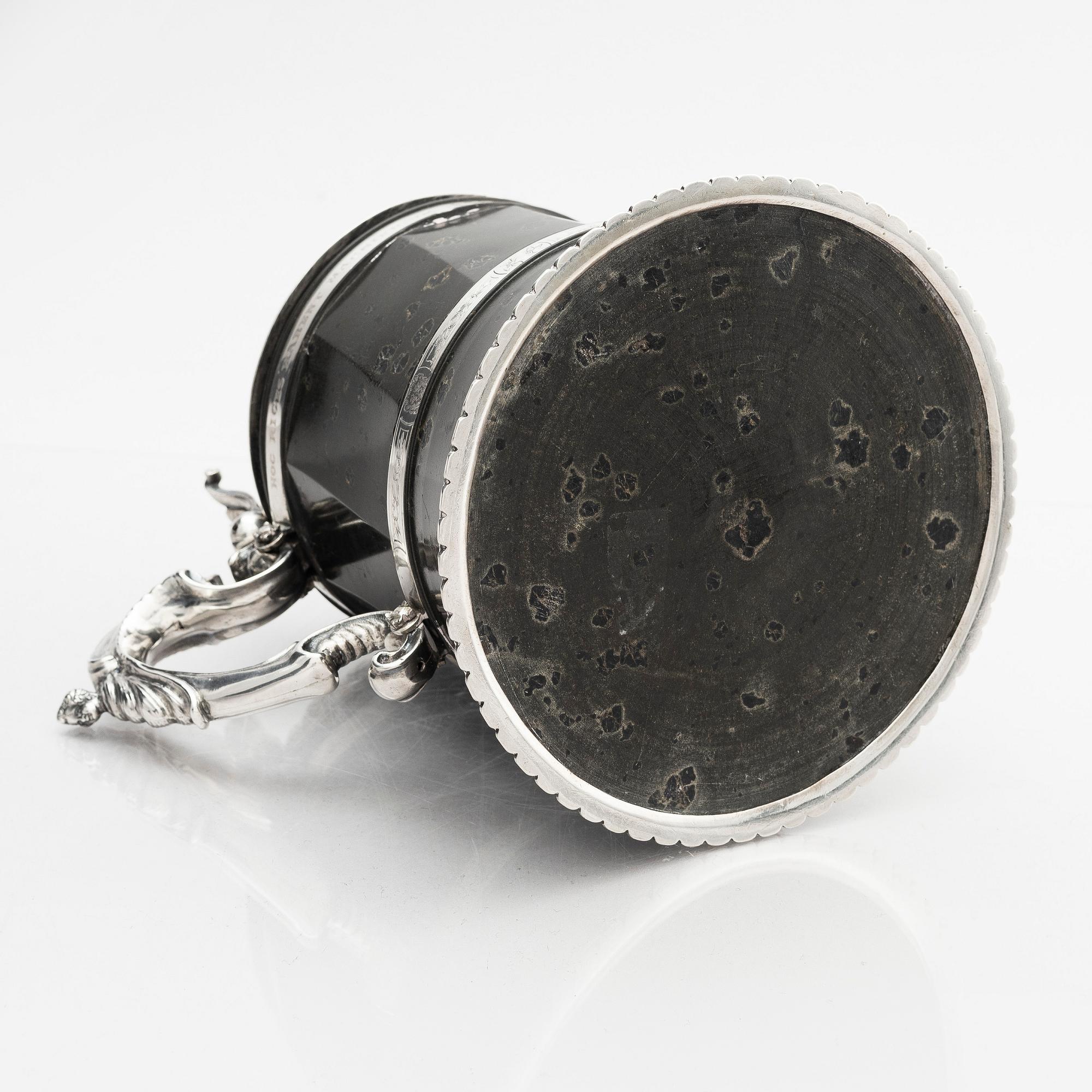
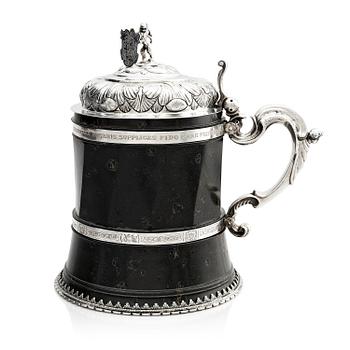
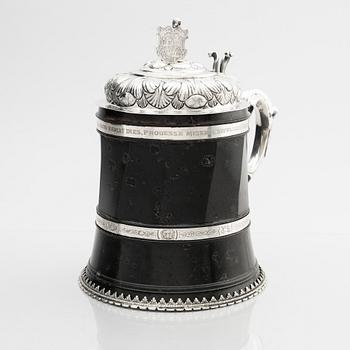
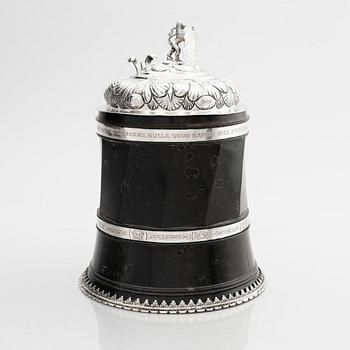
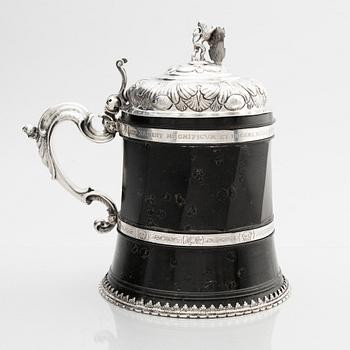
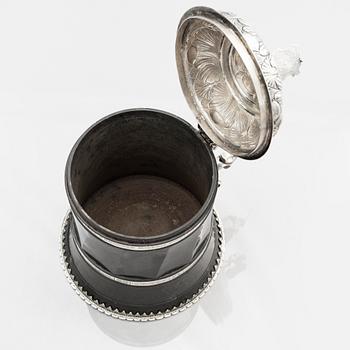
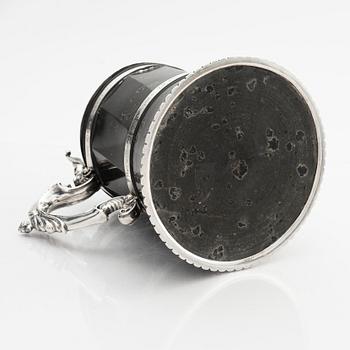
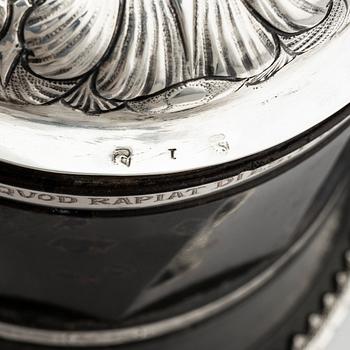
A German 17th century Baroque serpentine mounted in silver tankard, unclear maker's mark.
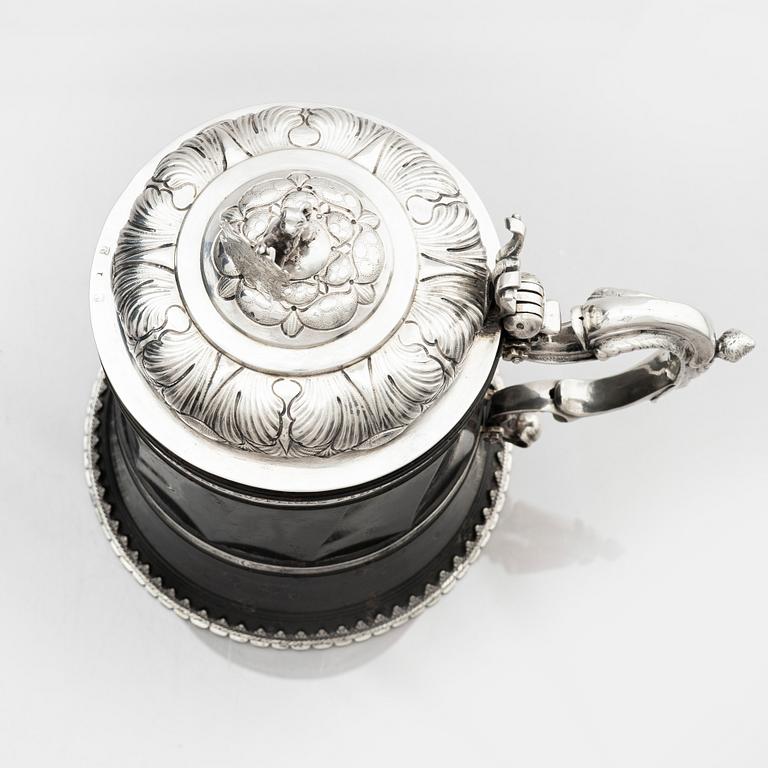
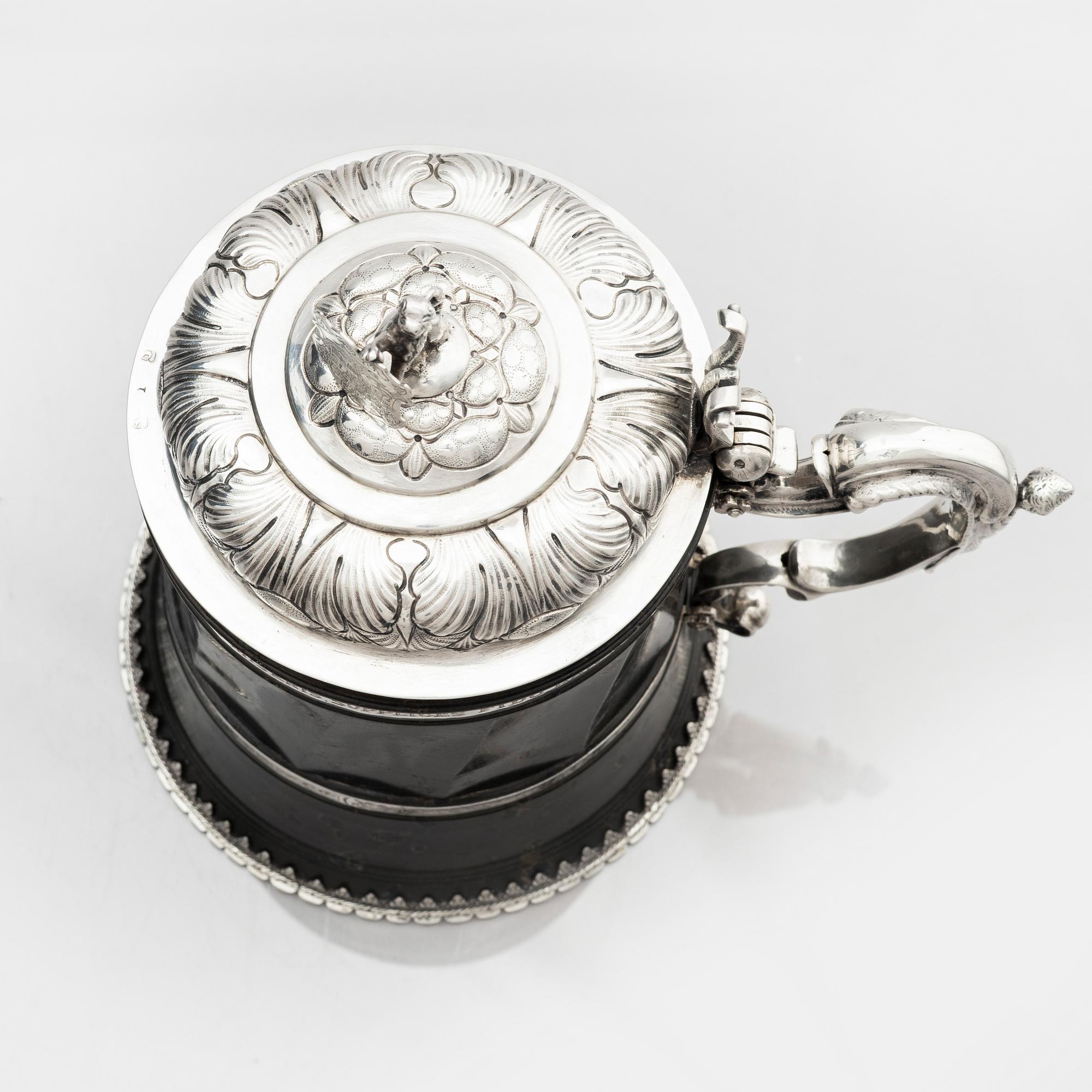
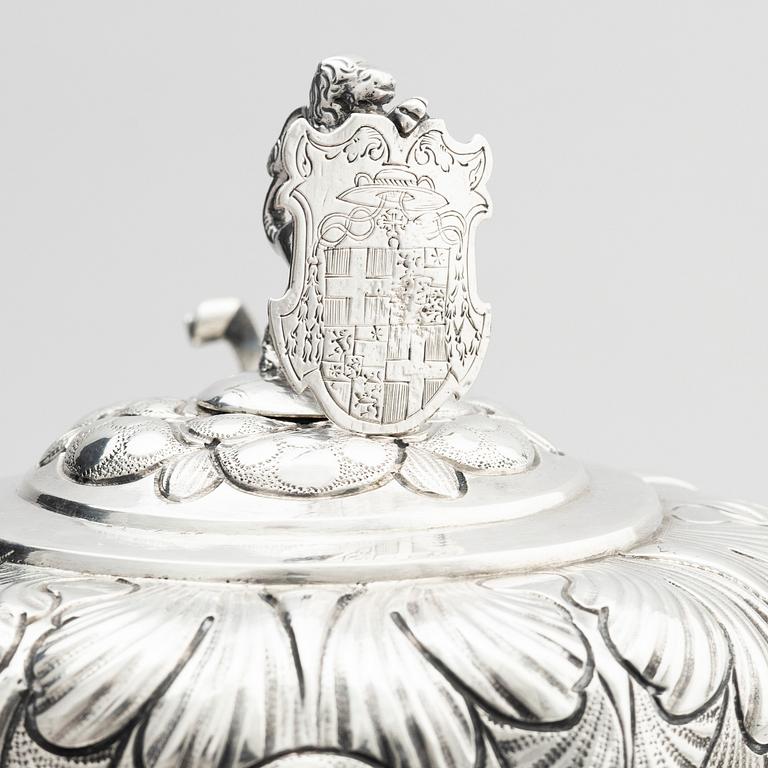
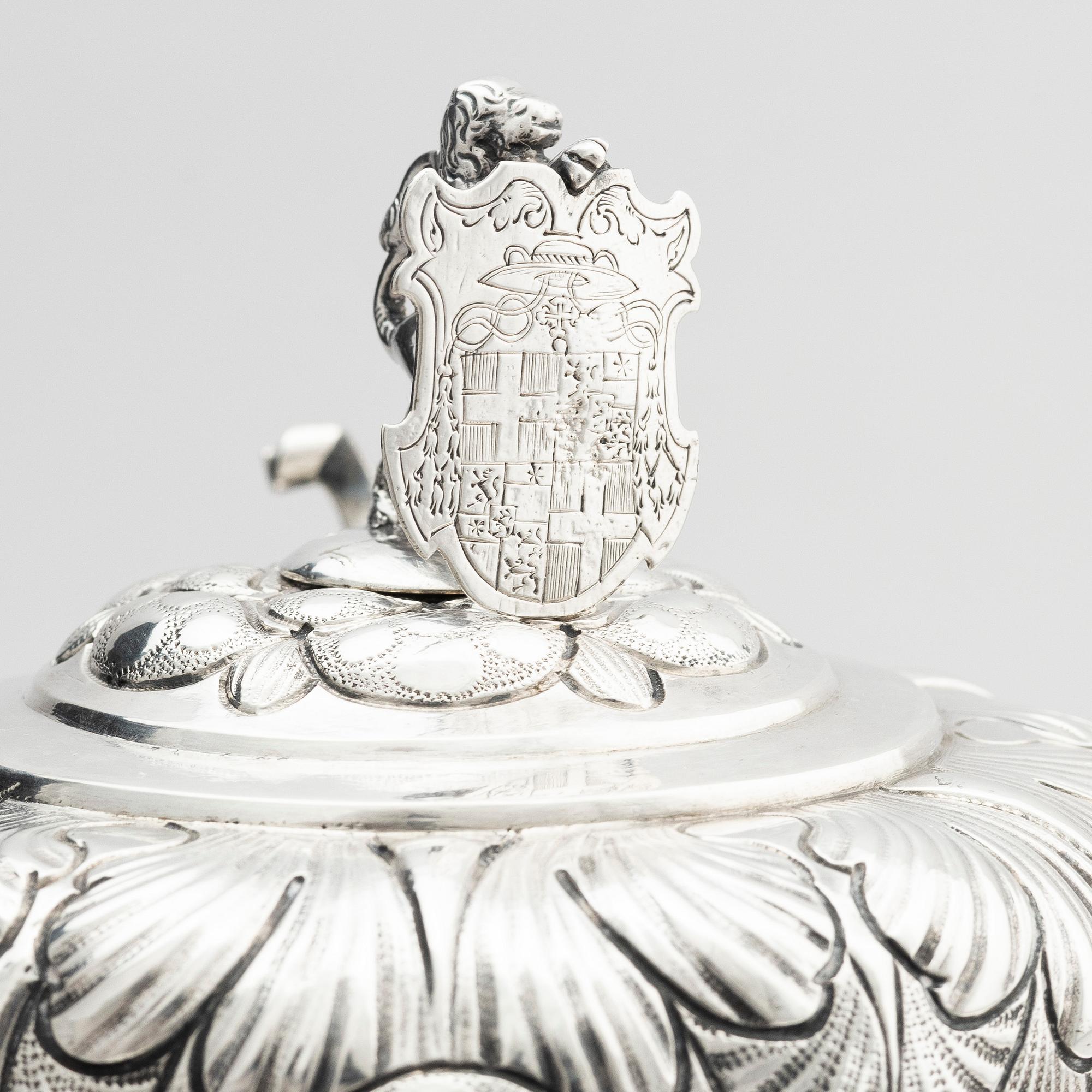
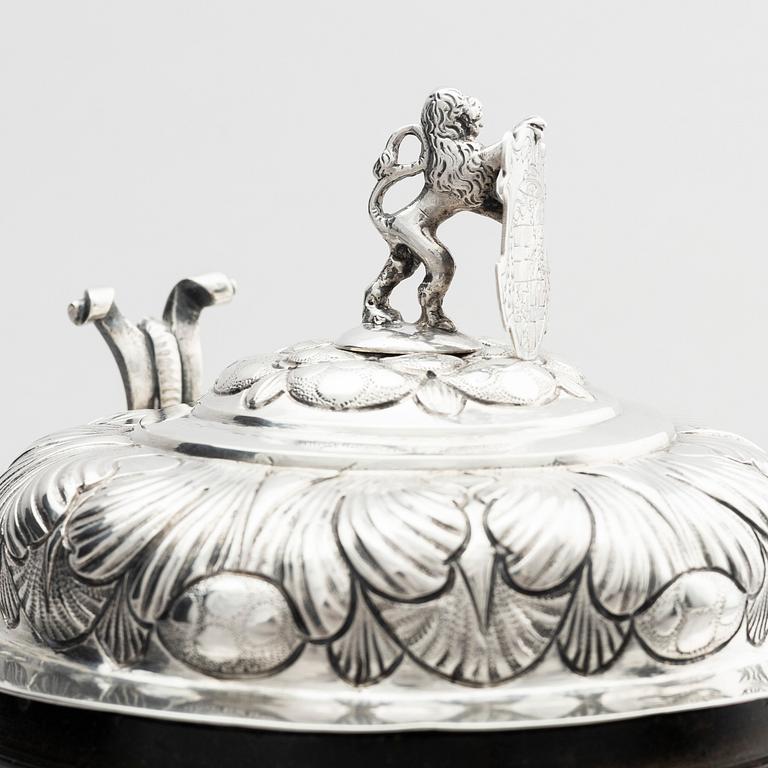
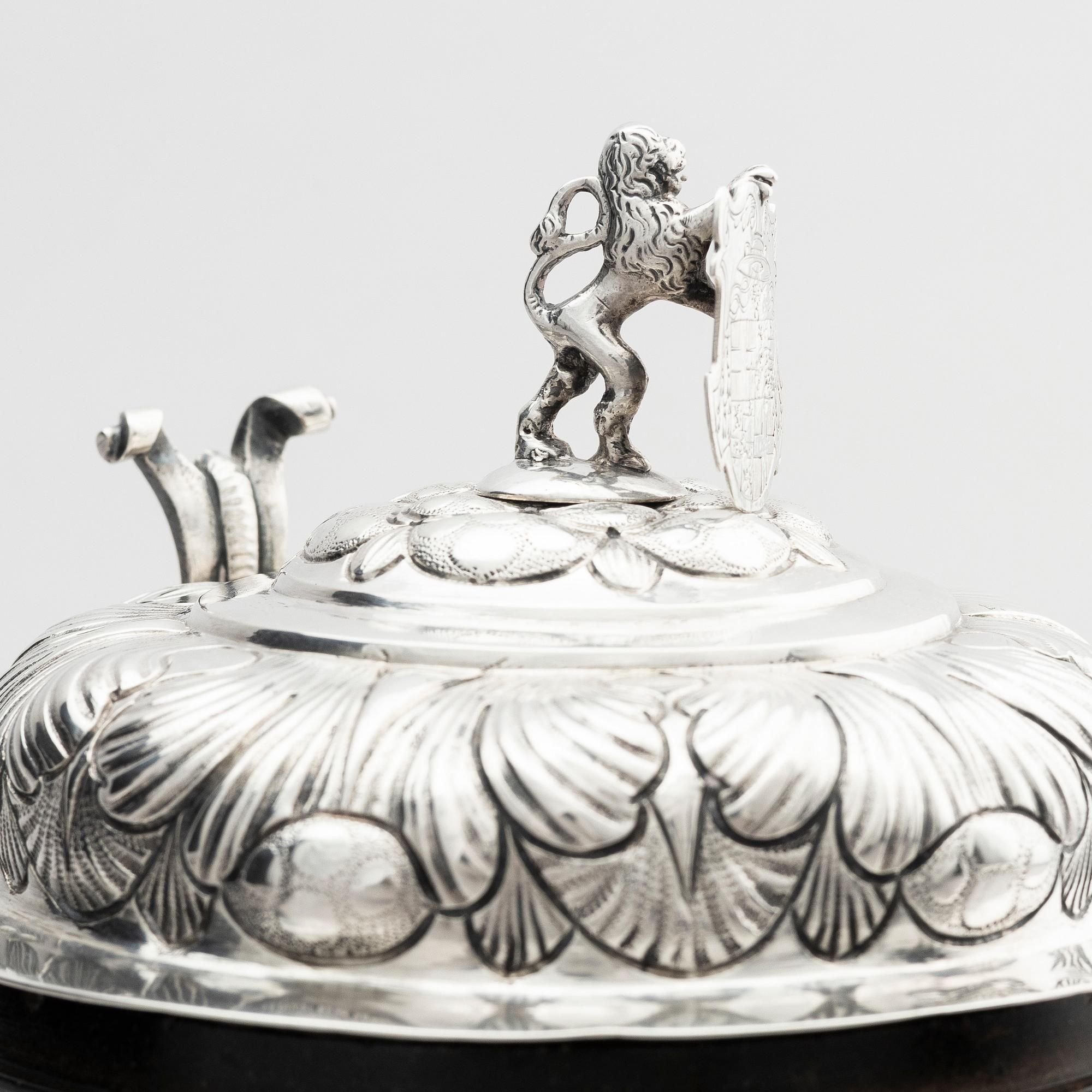
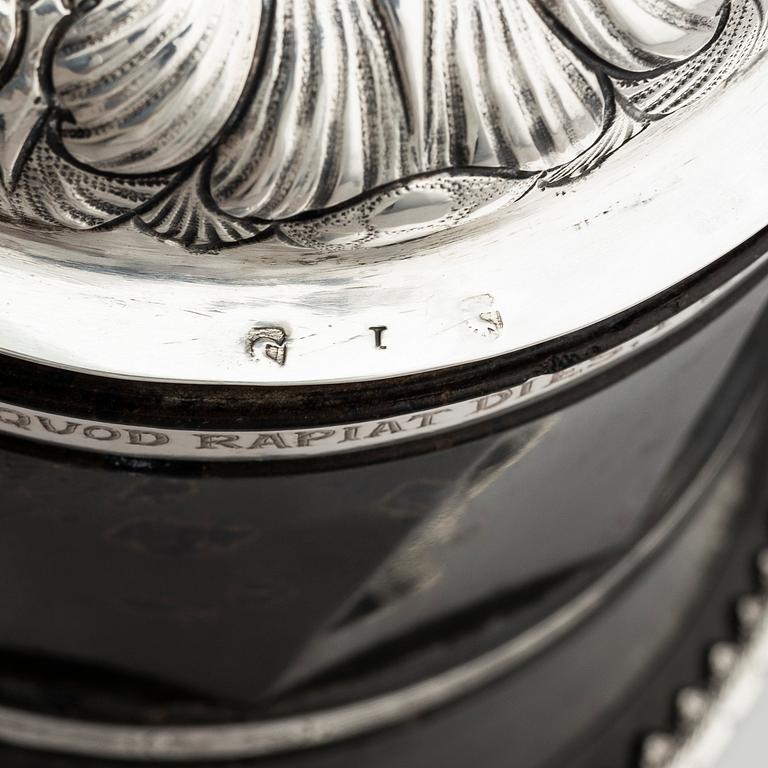
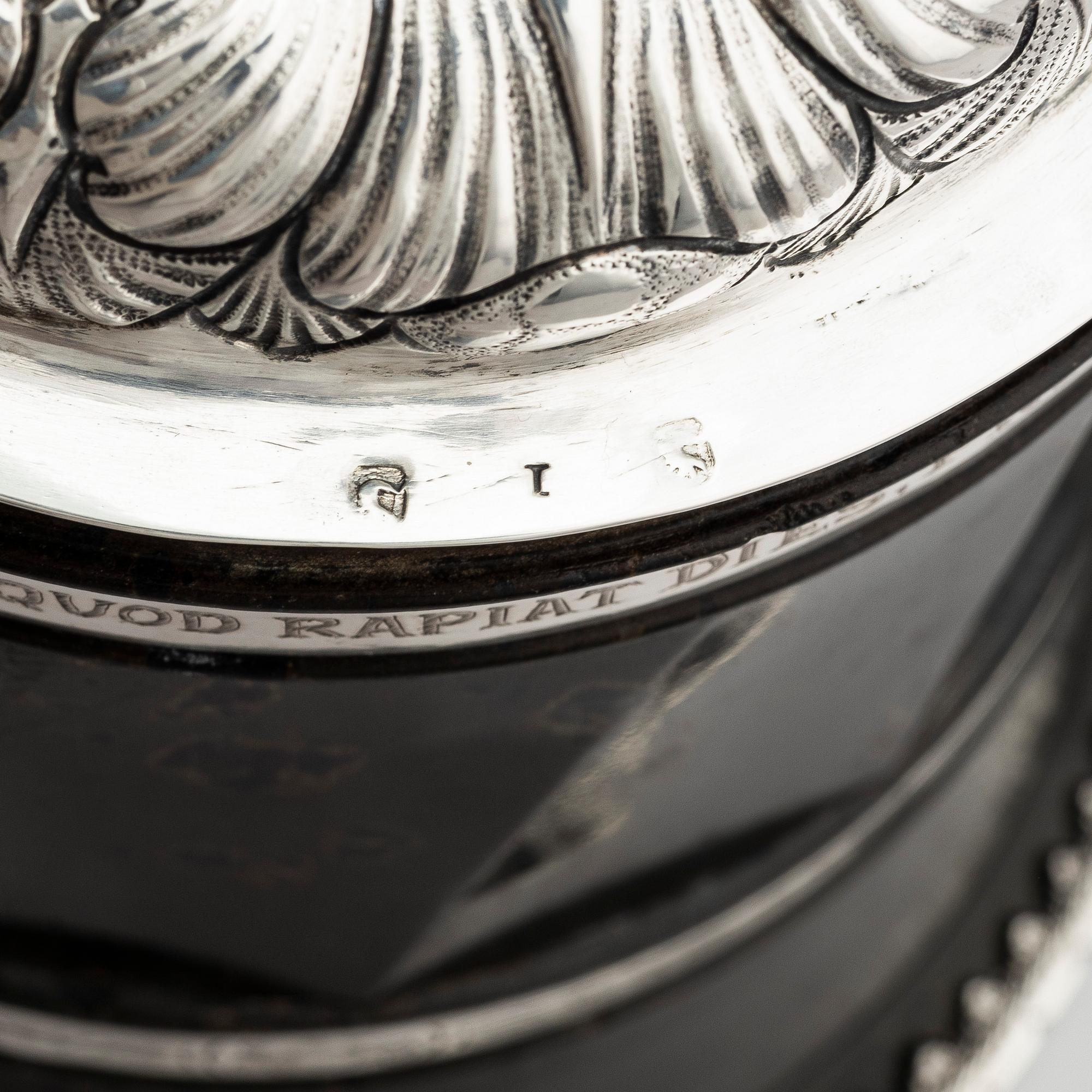
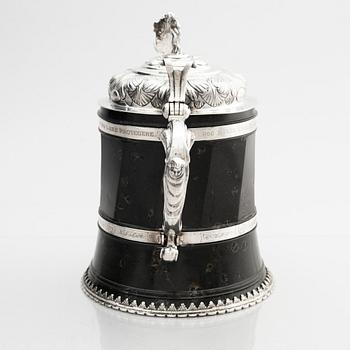
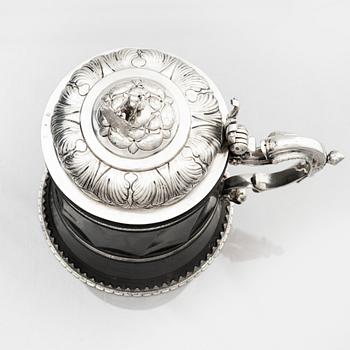
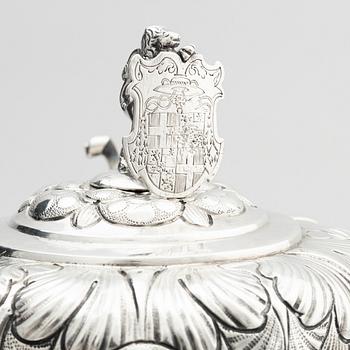
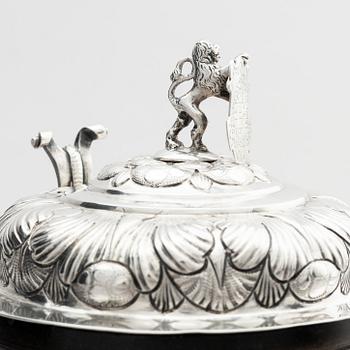
Slightly tapering, the body partly with twisted facets, the foot mounted in silver, and silver bands around the body decorated with flowers and grotesques, as well as engraved with the text: “Hoc Rices Habent Magnificum Et Ingens:Nulla Quod Rapiat Dies, Prodesse Miseris, Supplices Fido Lare Protegere.” Upturned handle with a bifurcated thumbpiece. Domed lid with foliate decor and a finial in the form of a lion holding a coat of arms belonging to Frederick of Hesse-Darmstadt under a cardinal's hat. Height 23.5 cm.
Provenance
Frederick of Hesse-Darmstadt, born in 1616 in Darmstadt and died in 1682 in Breslau.
More information
Frederick of Hesse-Darmstadt (1616 – 1682) was a German Protestant and soldier who converted to Catholicism, became a cardinal and was later appointed Crown-cardinal.
He was the son of Louis V, Landgrave of Hesse-Darmstadt and Magdalene of Brandenburg.
Under the reign of Elector Augustus I of Saxony (1526–1586), the craft of turning serpentine stone experienced a major revival. The resulting objects quickly became sought after at royal courts and in treasuries across Europe. When Augustus I acquired the Lauterstein estate in the Ore Mountains (Erzgebirge) in 1559, he secured a steady supply of this exclusive stone for his own palaces and collections. In the town of Zöblitz – where the relatively soft stone could be turned on a lathe much like wood – Europe’s only guild of serpentine turners was subsequently established.
The earliest and most lavish pieces were frequently mounted in precious silver or silver-gilt, whilst simpler vessels were later fitted with pewter. During the craft's golden age in the 17th century, the finest silver mounts were produced in Saxon cities such as Dresden and Chemnitz. The goldsmith Samuel Weishun (also spelled Weishuhn, active c. 1633–1676) has been suggested as a plausible master behind the silver mounts on the present tankard.
Silver-mounted serpentine tankards of this exceptional quality are exceedingly rare. From its very inception, the piece was undoubtedly intended as a prestigious collector's item – a status further underscored by its distinguished provenance from Frederick of Hesse-Darmstadt.
The Latin quote engraved on the tankard originally comes from the Roman philosopher and playwright Seneca the Younger (from his tragedy Medea, verses 222–224).
The Swedish translation of the quote is roughly:
"This has kings who are grand and powerful: nothing that time can snatch away – to help the unfortunate, to shelter the needy under a faithful roof."
For condition report contact specialist

What will the transport cost?
Others have also viewed