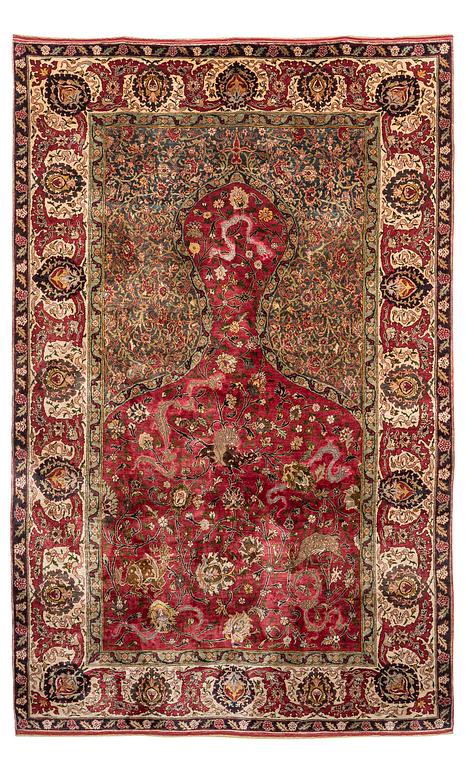
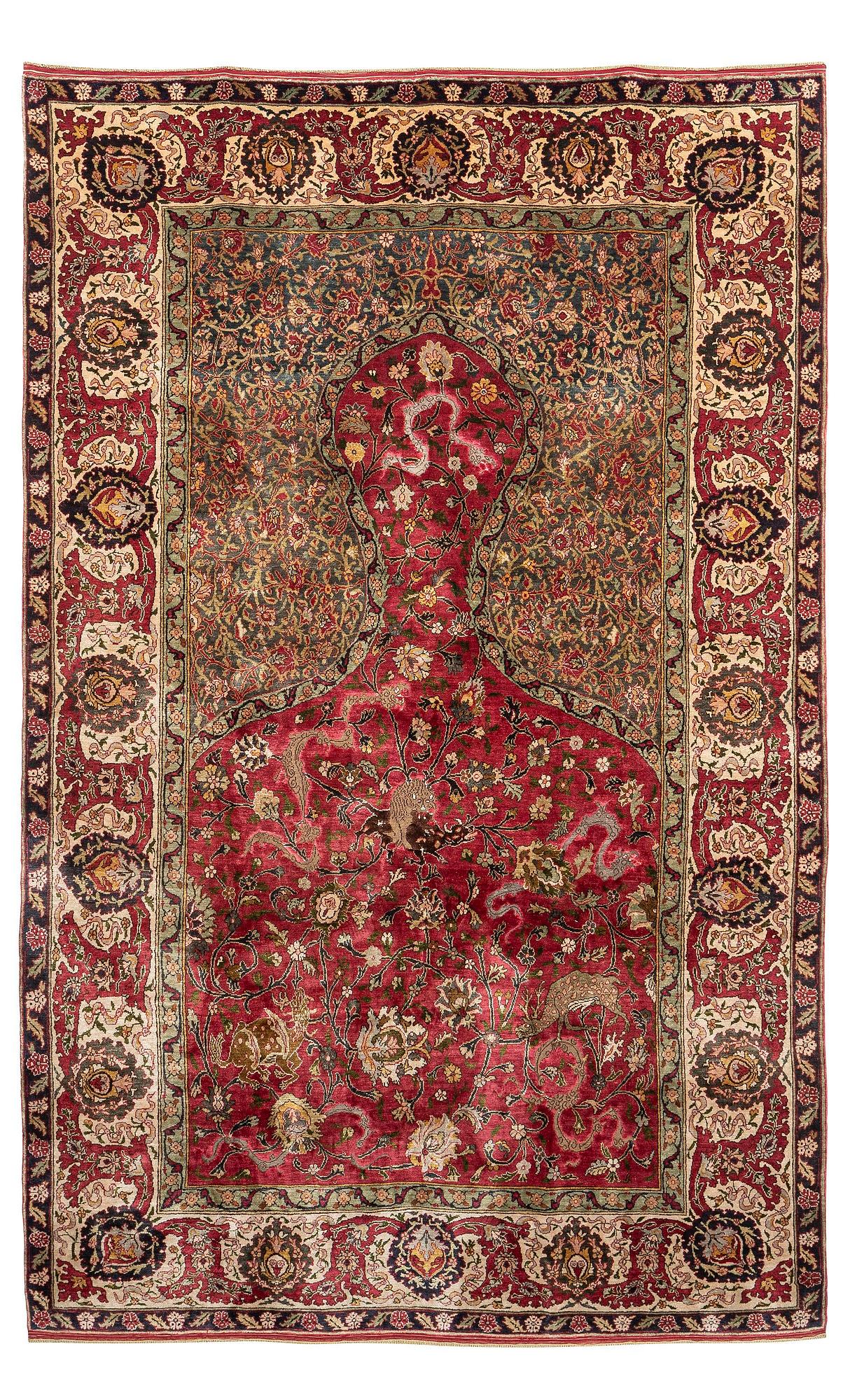
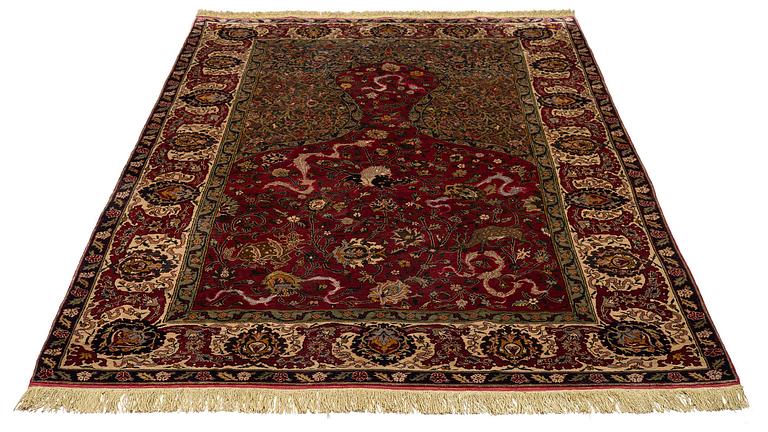
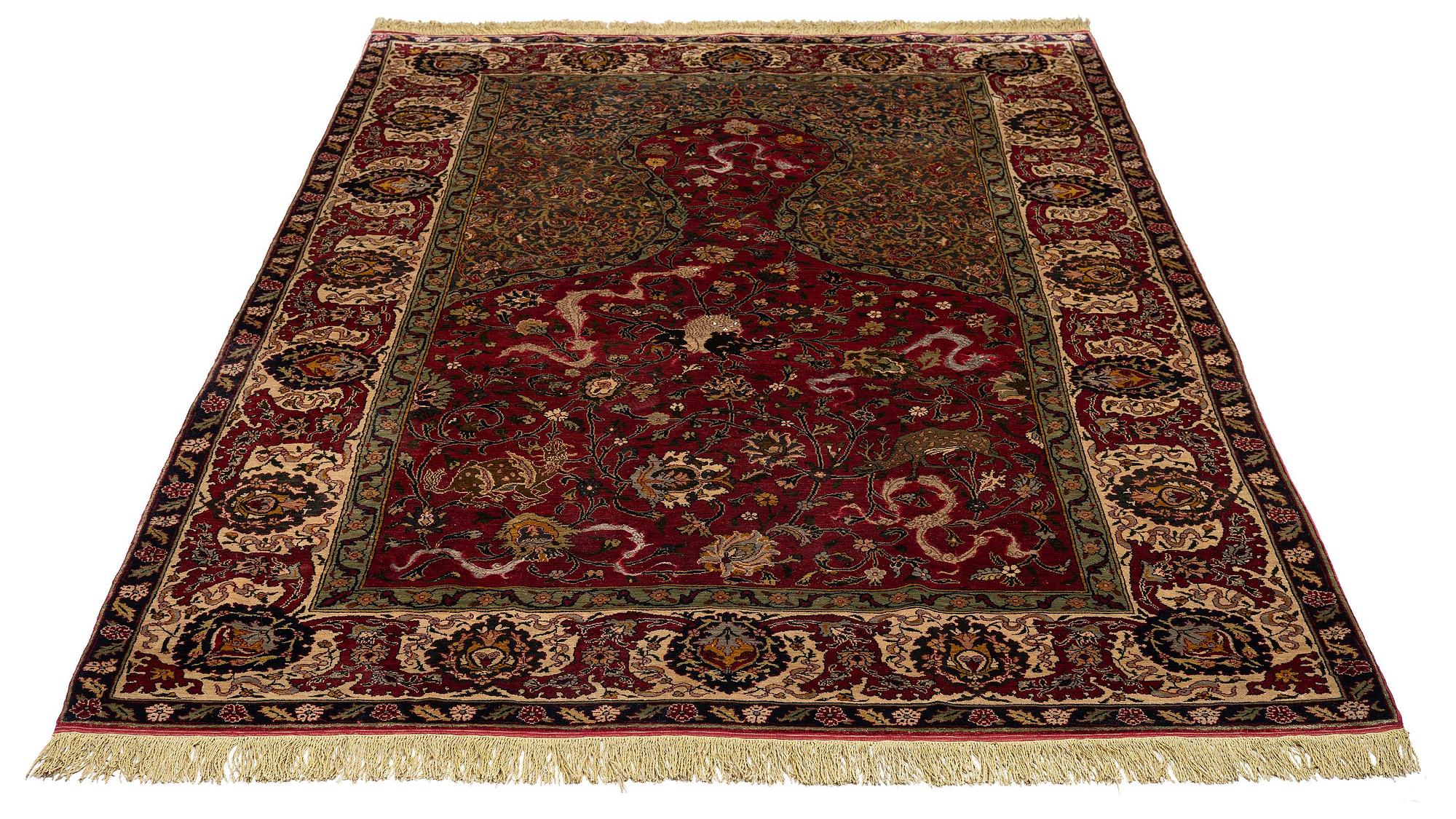
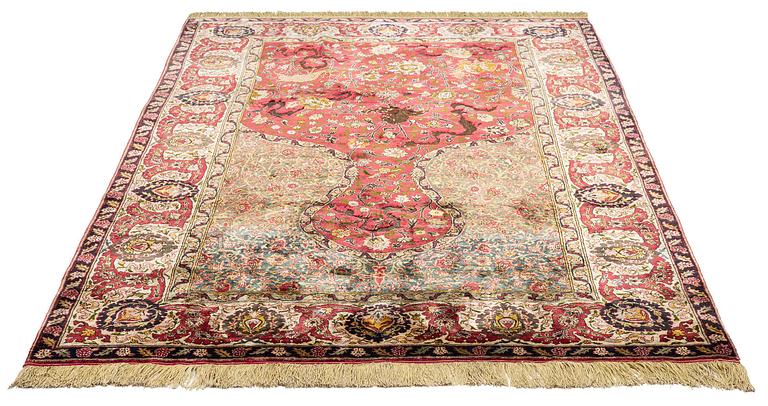
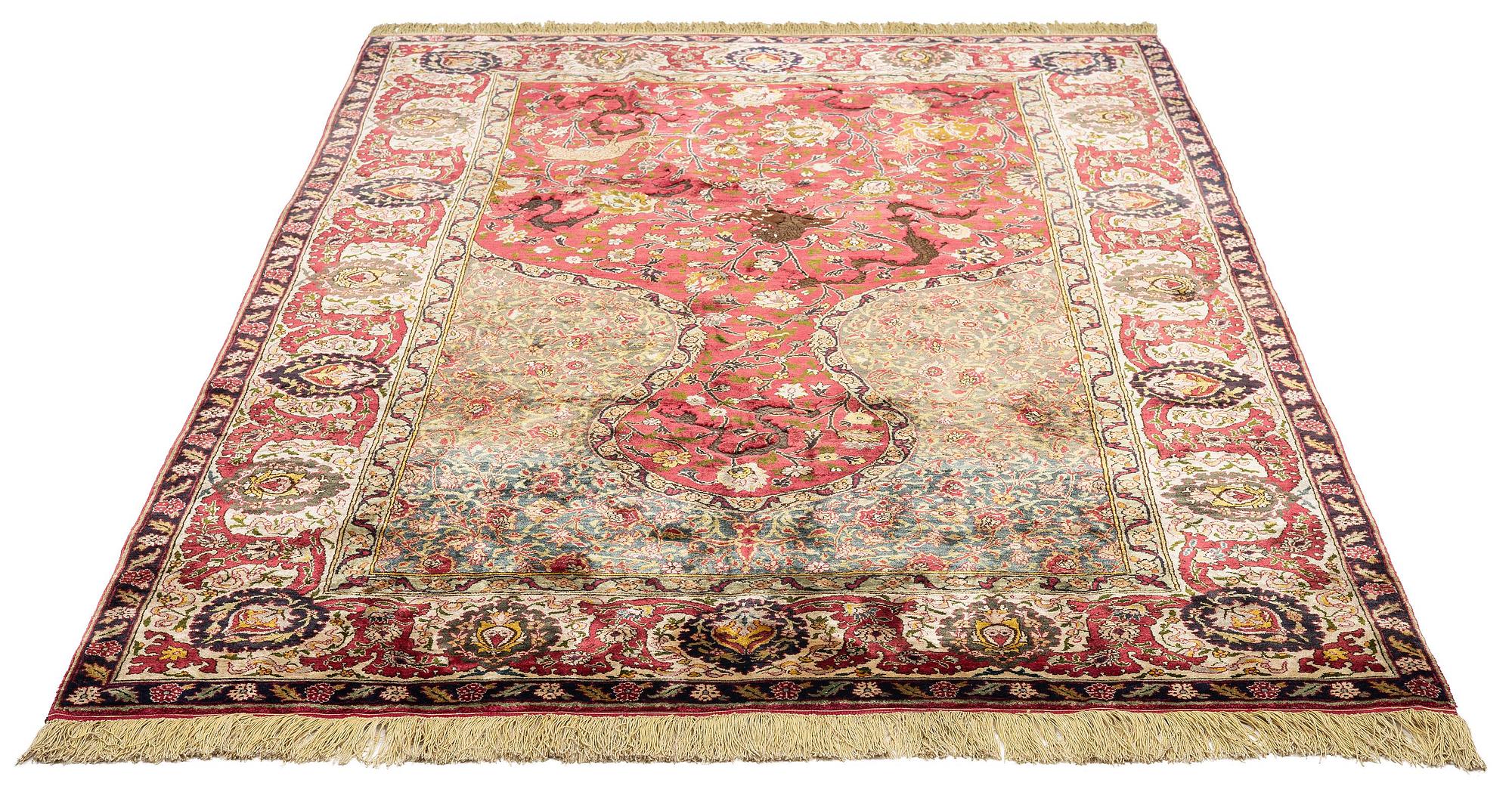
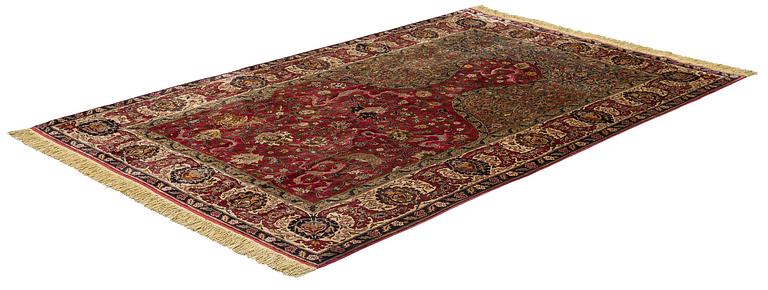
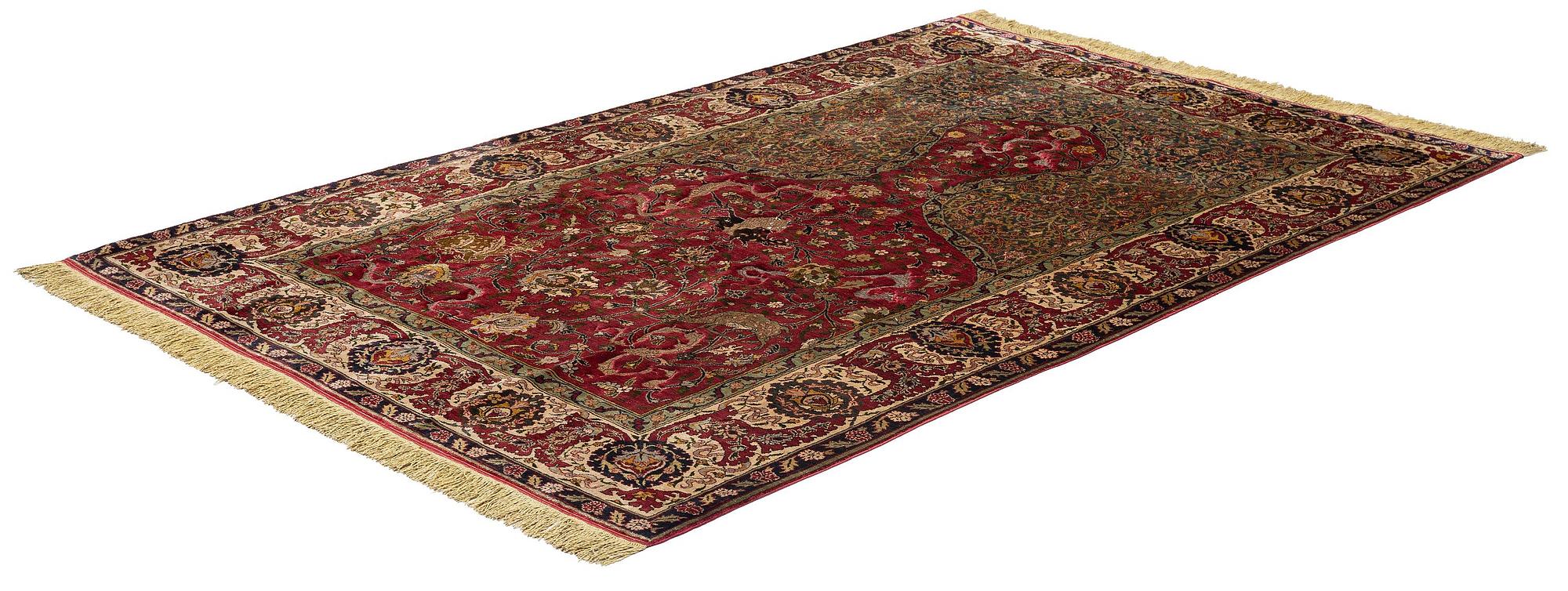
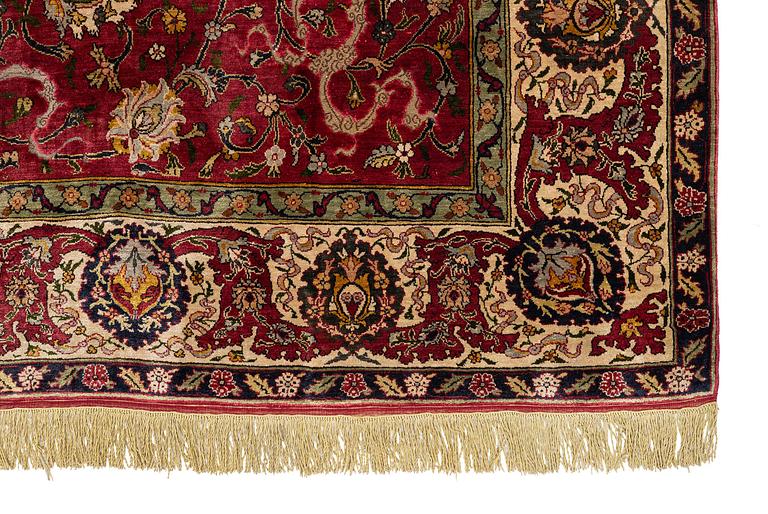
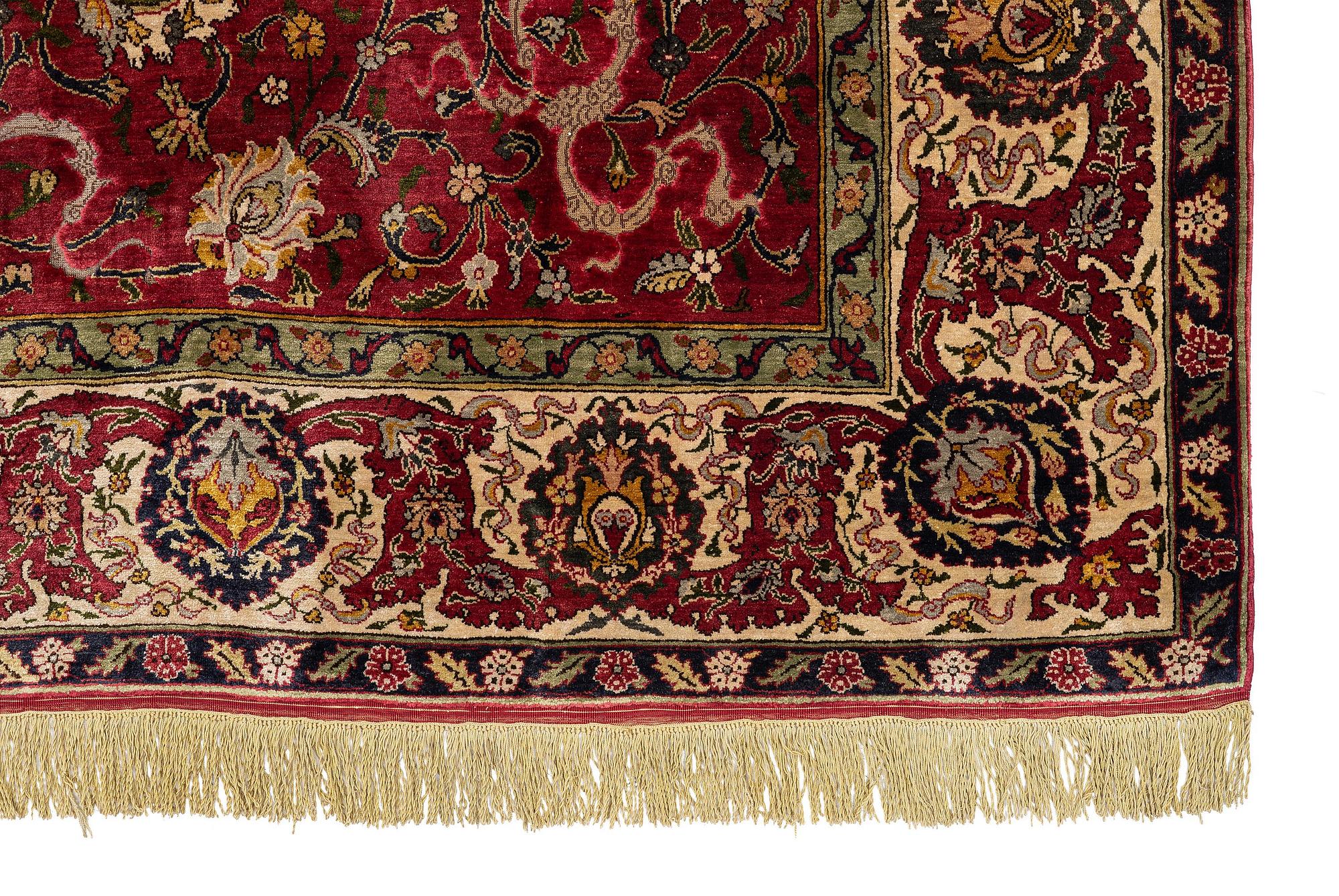
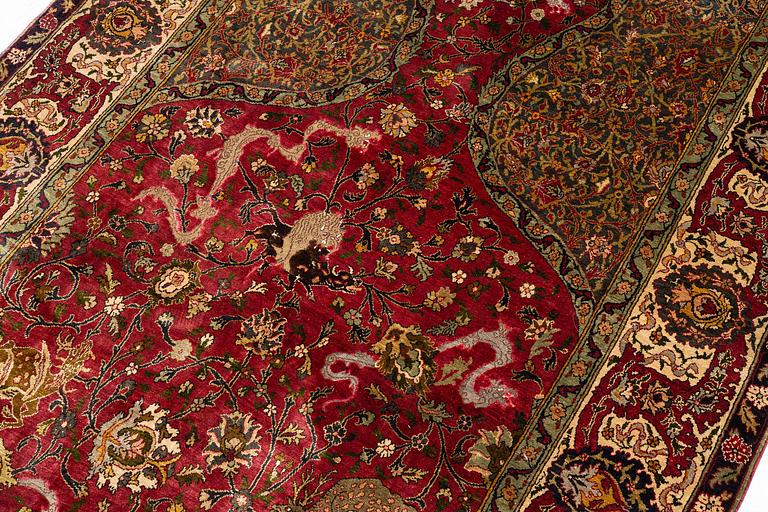
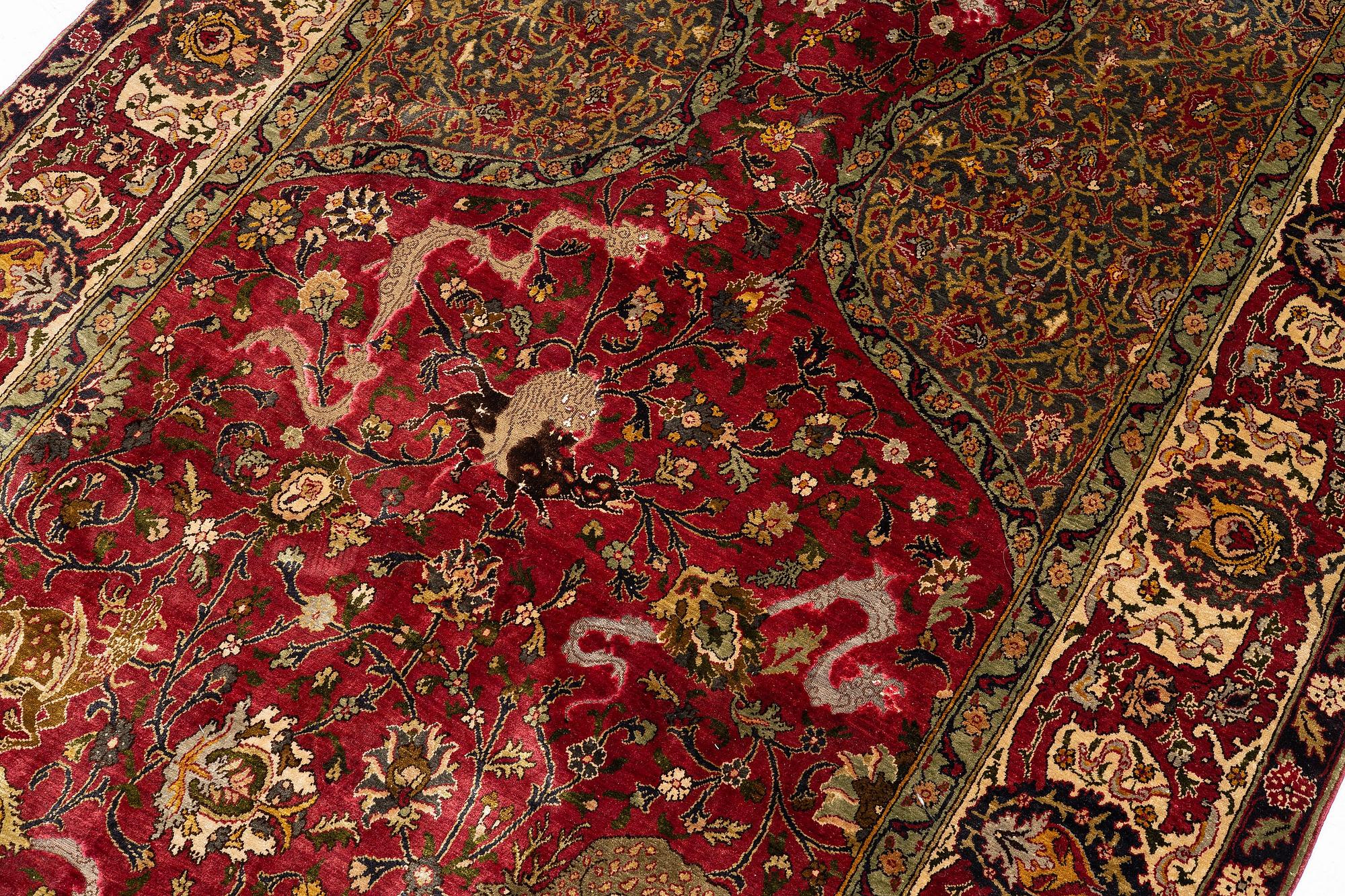
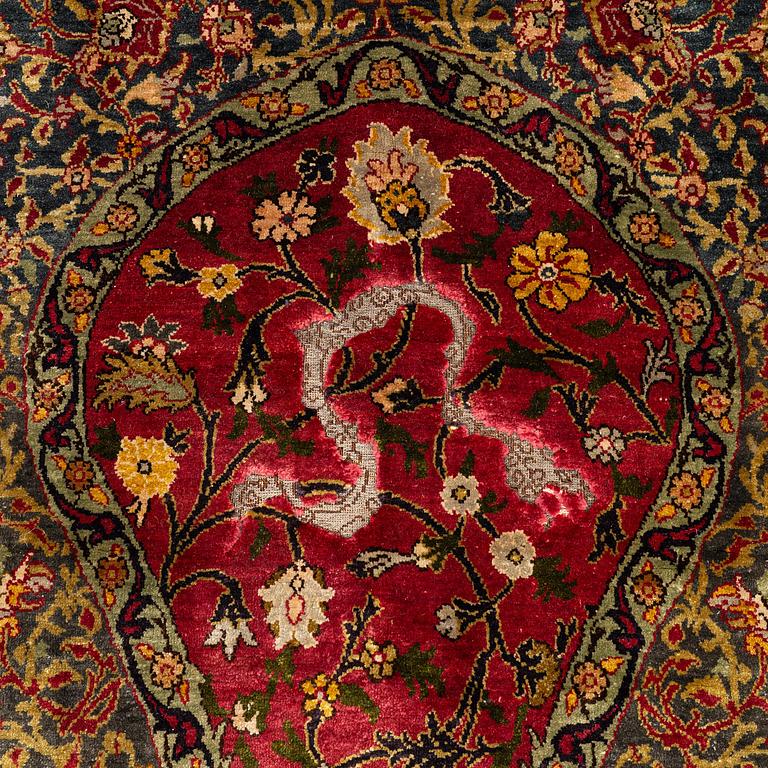
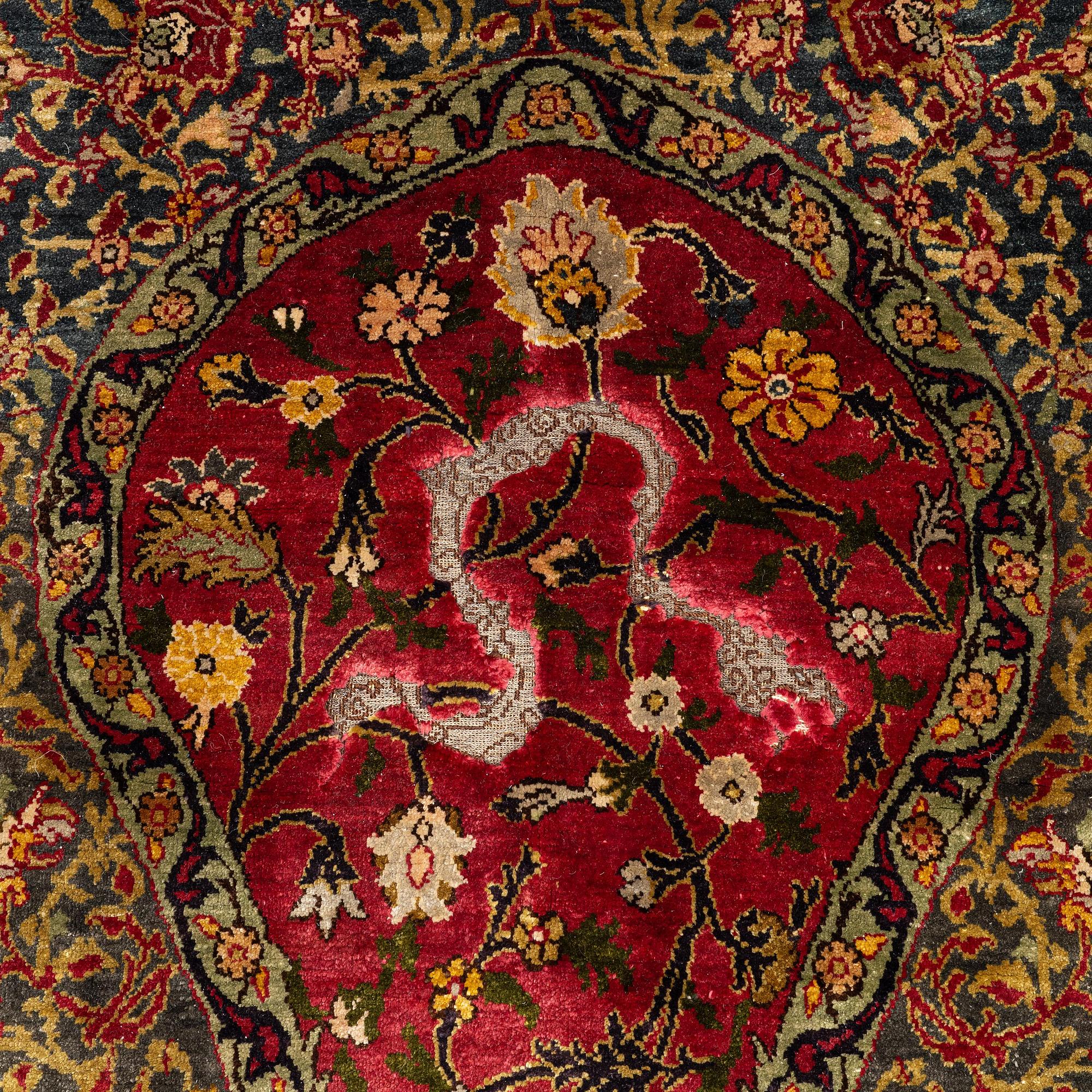
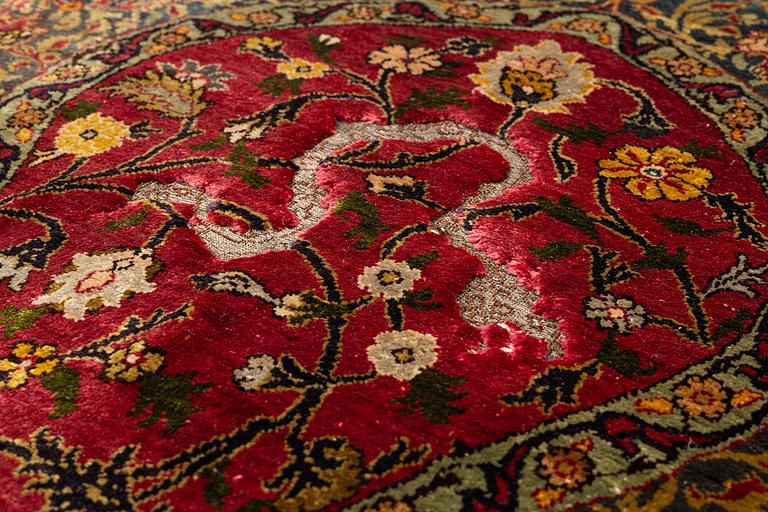
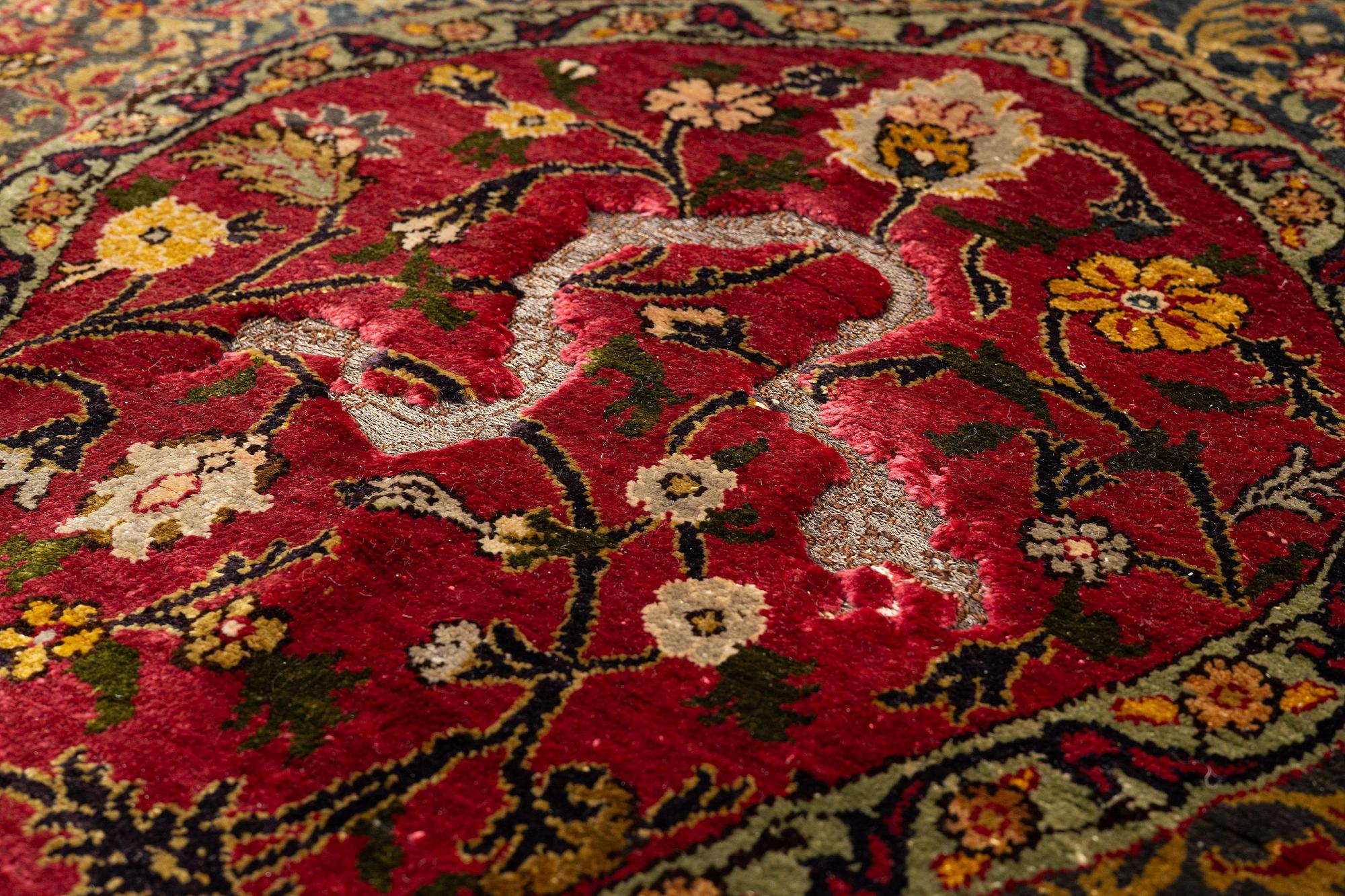
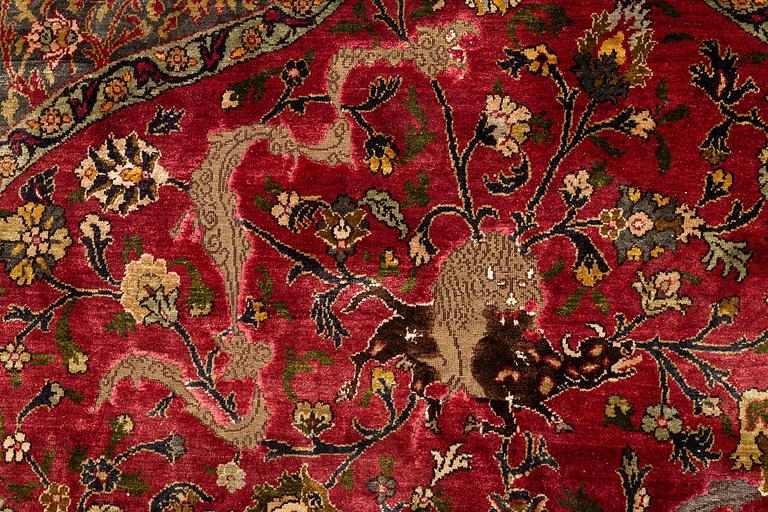
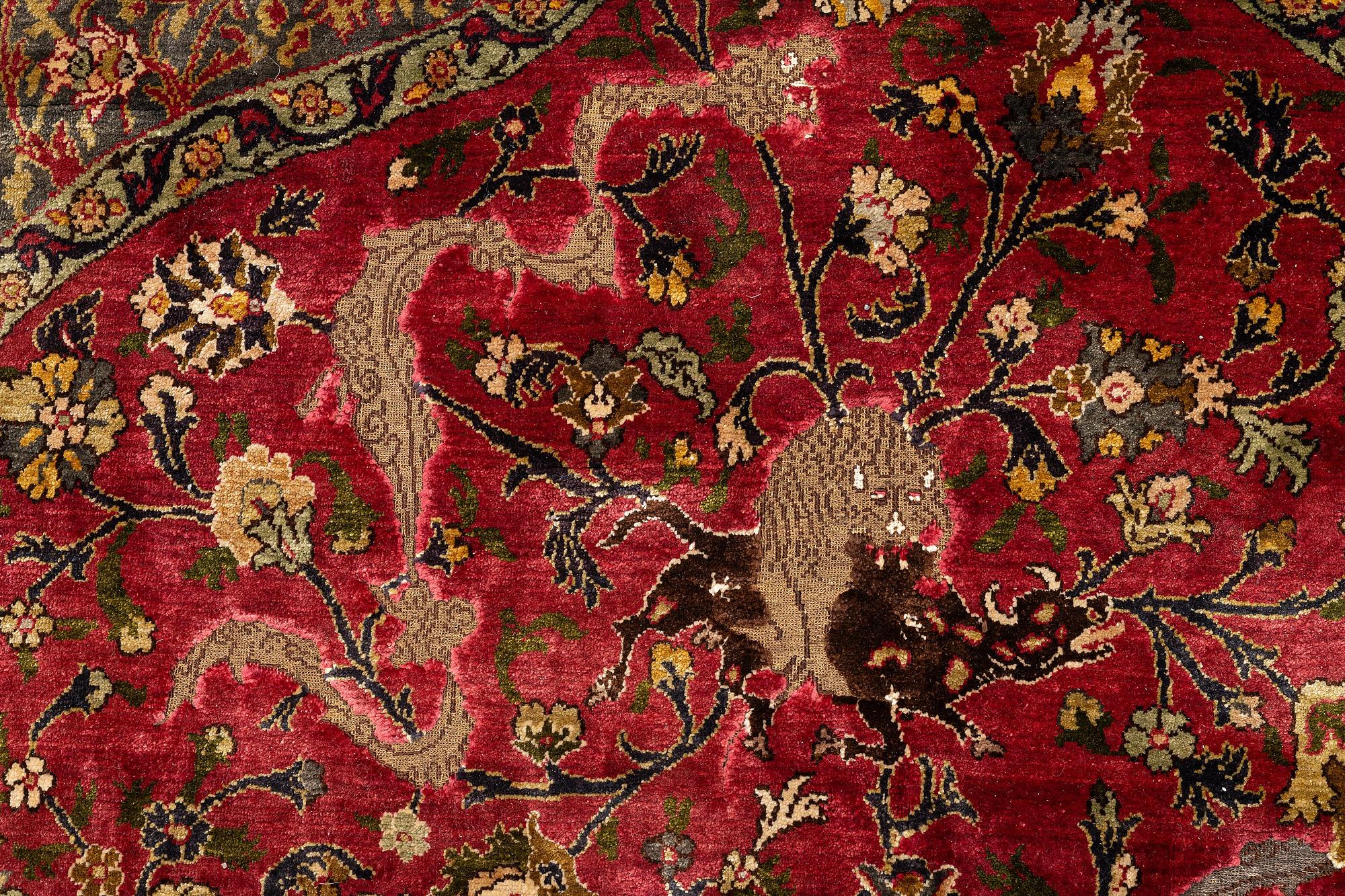
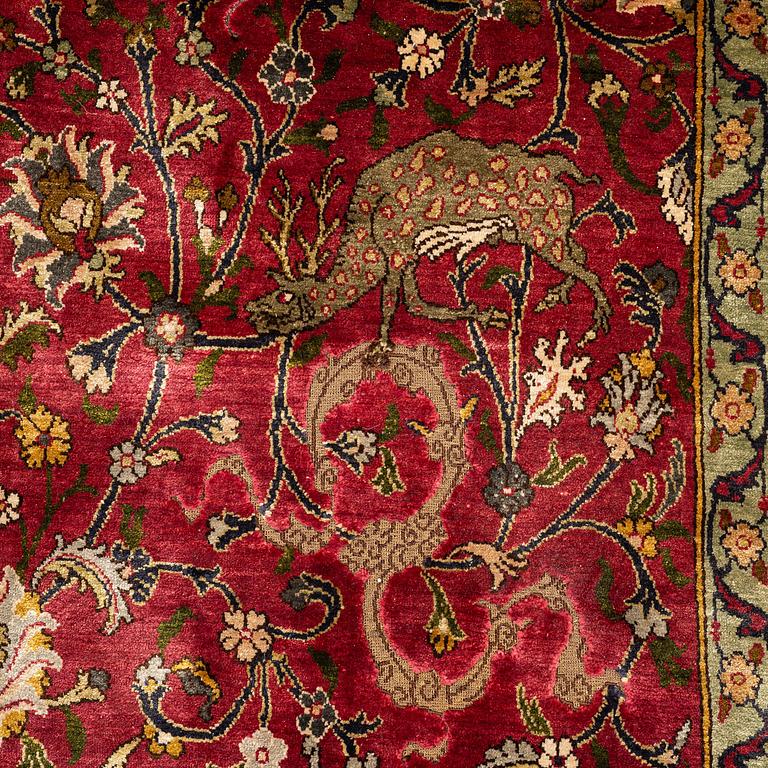
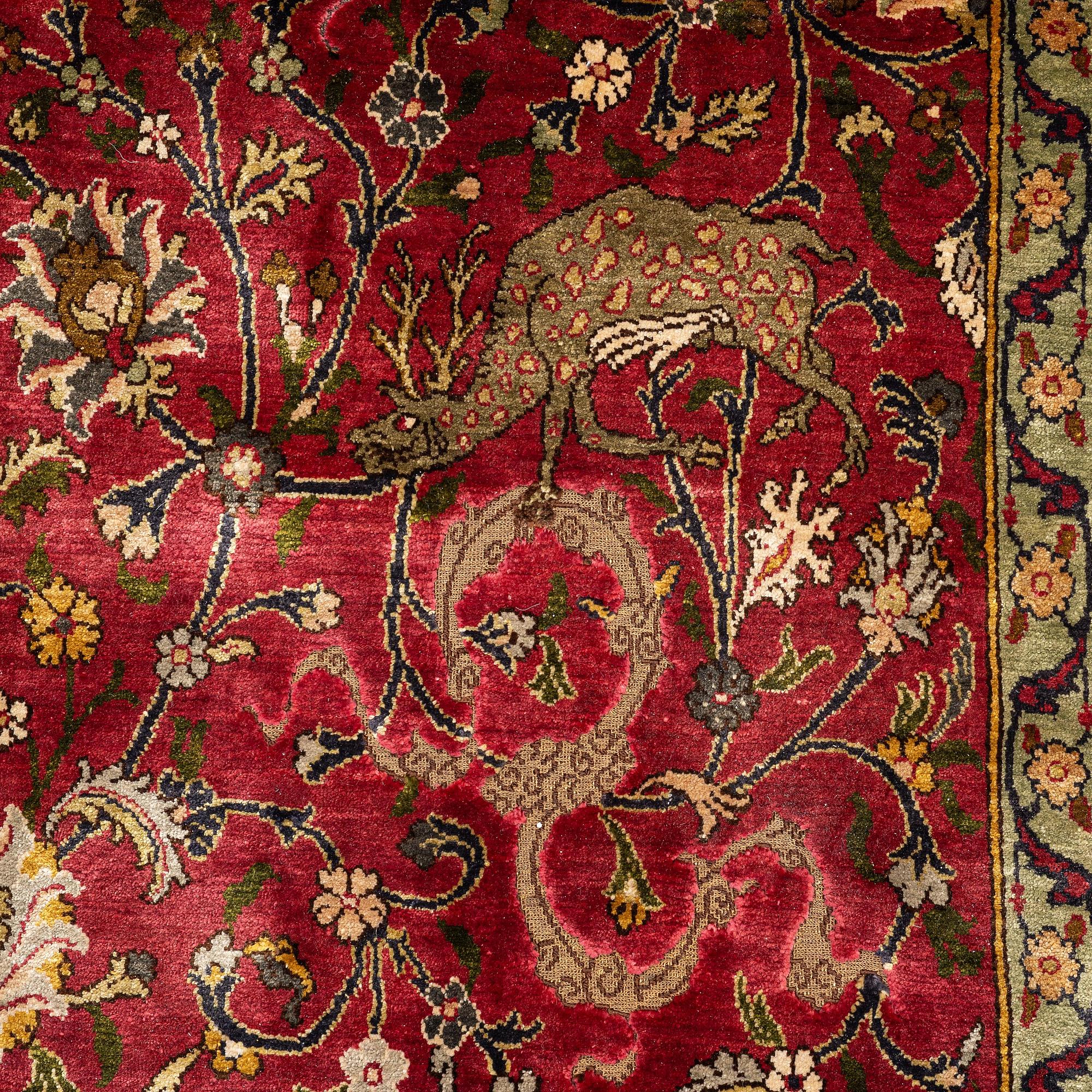
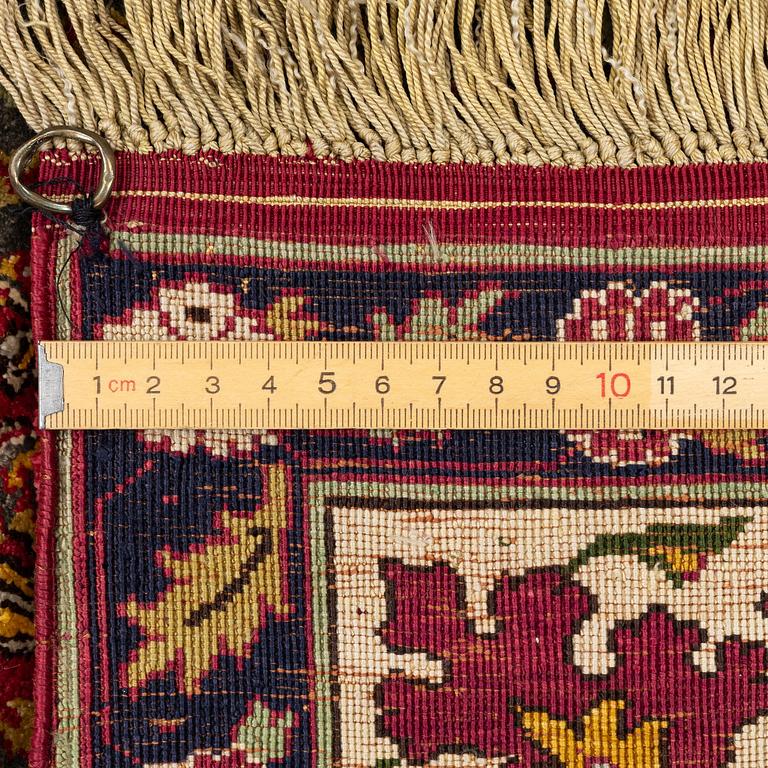
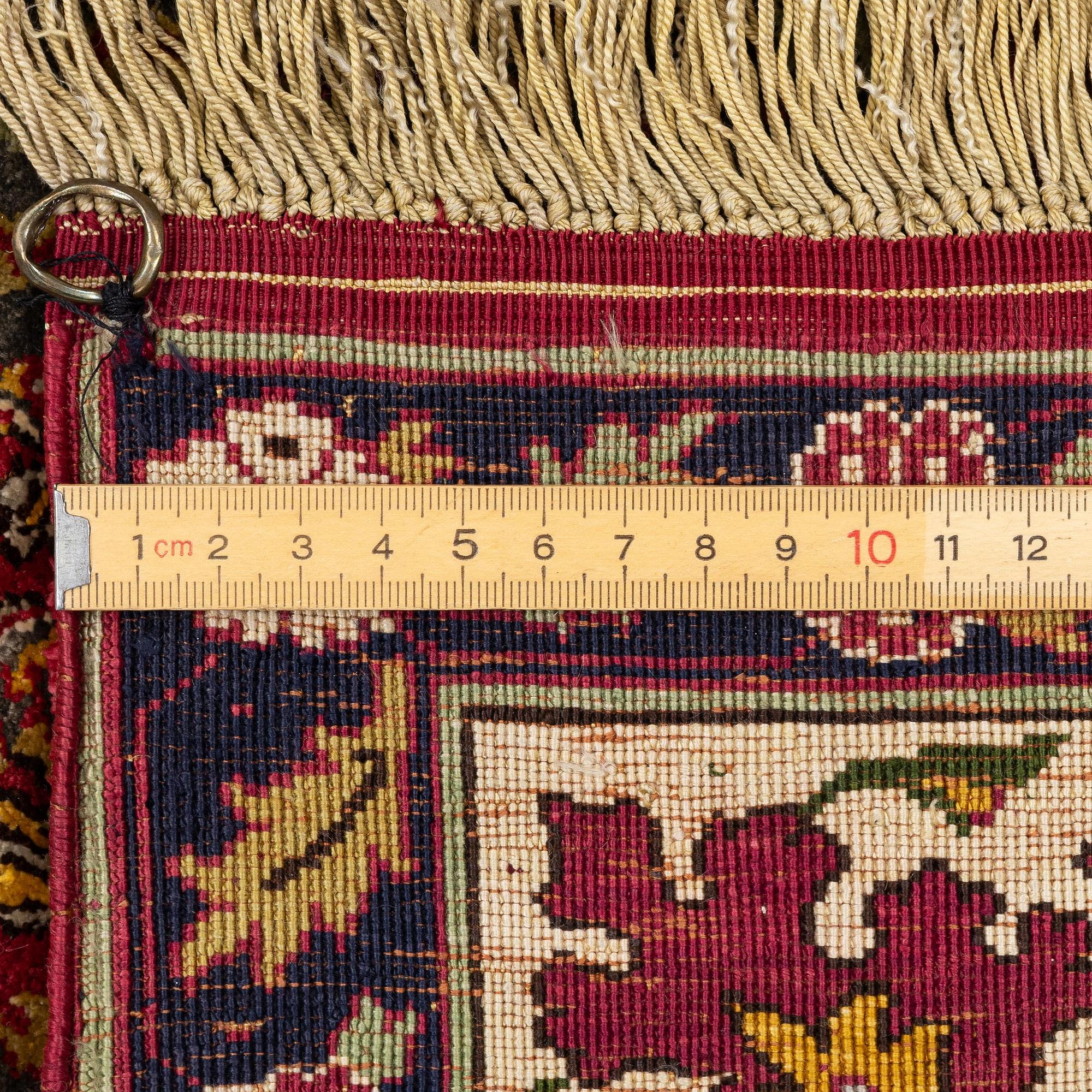
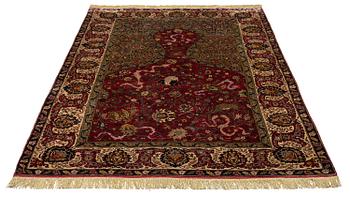
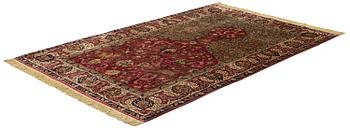
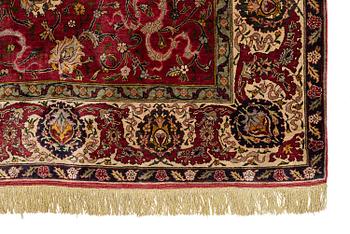
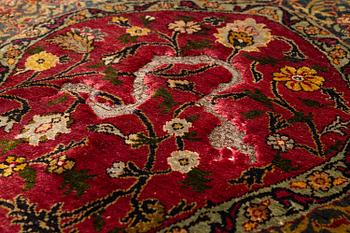
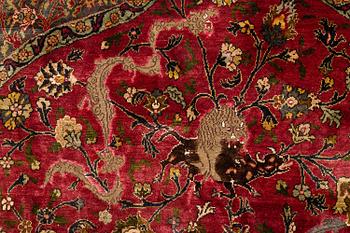
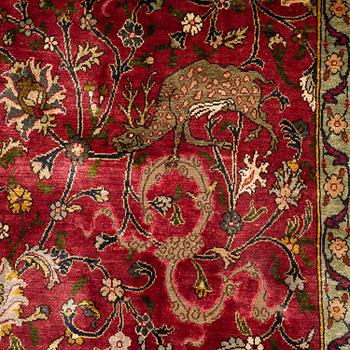
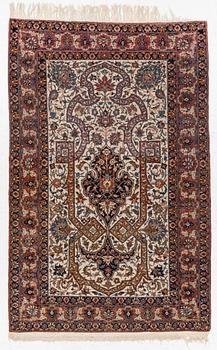
A Koum Kapi silk and metal-thread prayer rug, atributed to Hagop Kapoudjian 'Toussounian' group, c. 211 x 133 cm.
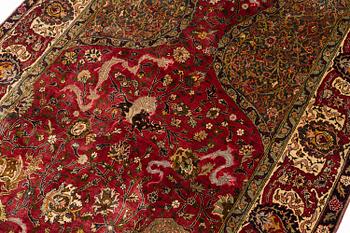
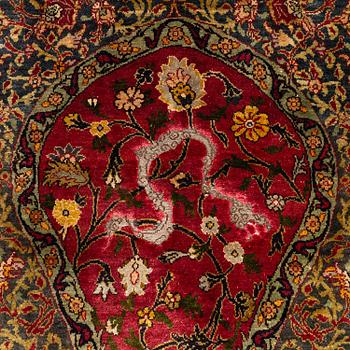
Corfu, circa 1920. Of 'Sultan's Head' design. Brocading is in two colours of metal silver and 'gilt' silver.
Provenance
Acquired in Denmark in the 1950s.
Literature
Compare Kumkapi rugs from the Arkas Collection, Izmir, 2017, plate 11.
More information
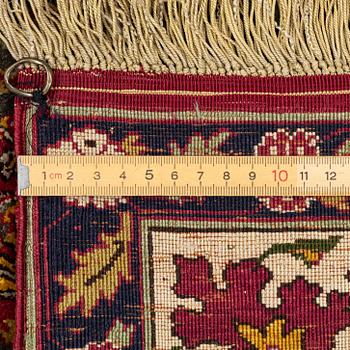
This finely woven silk rug belongs to a distinctive group of Koum Kapi carpets traditionally linked to Abraham Toussounian. The group is characterised by its dense, lustrous pile, red wefts, and a madder-red kilim end finished with a narrow white stripe. For much of the twentieth century these carpets were believed to be products of the former imperial workshop tradition at Hereke and were often associated directly with Toussounian himself.
Modern scholarship has painted a more complex picture. While Pamela Bensoussan described Toussounian as one of the dominant figures behind the production and trade of Istanbul silk carpets, she also highlighted his role as a highly successful entrepreneur who controlled a significant share of the London market during the interwar period. Later research by M. Önder Çokay further traced his activities from workshops in Istanbul and Corfu to his commercial operations in London.
Subsequent investigations, however, challenged the notion that Toussounian was himself a master weaver. Research carried out in the early 1990s, drawing on information from the Keshishian family, suggested that his importance lay primarily in financing, marketing, and distributing these exceptional carpets. The actual weaving is believed to have been undertaken by Hagop Kapoudjian, one of the most accomplished silk carpet makers of the period. According to this interpretation, Toussounian supplied capital and materials, helping Kapoudjian establish looms in both Corfu and Paris while overseeing the commercial side of the enterprise.
The relationship between the two men appears to have been far from harmonious. A surviving letter dated 16 May 1927 reveals a bitter dispute, with Toussounian accusing Kapoudjian of withholding profits and denying receipt of payments. The correspondence also hints at financial obligations between them, perhaps connected to the establishment of Kapoudjian's workshops. The letter ends with a stark warning that legal or financial action would follow unless the matter was resolved, offering a rare glimpse into the commercial tensions behind some of the finest silk carpets produced in the late Ottoman and post-Ottoman tradition.
For condition report contact specialist
What will the transport cost?
Shipping can only be arranged by contacting specialdelivery@bukowskis.com.