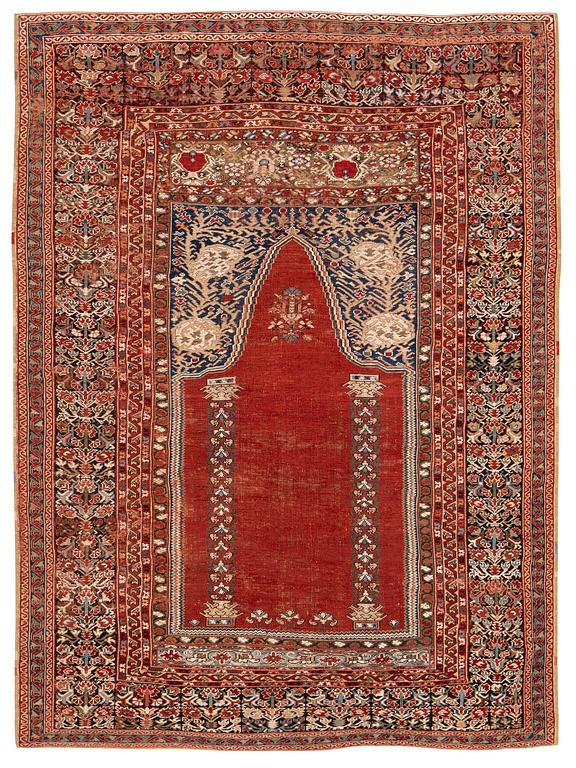
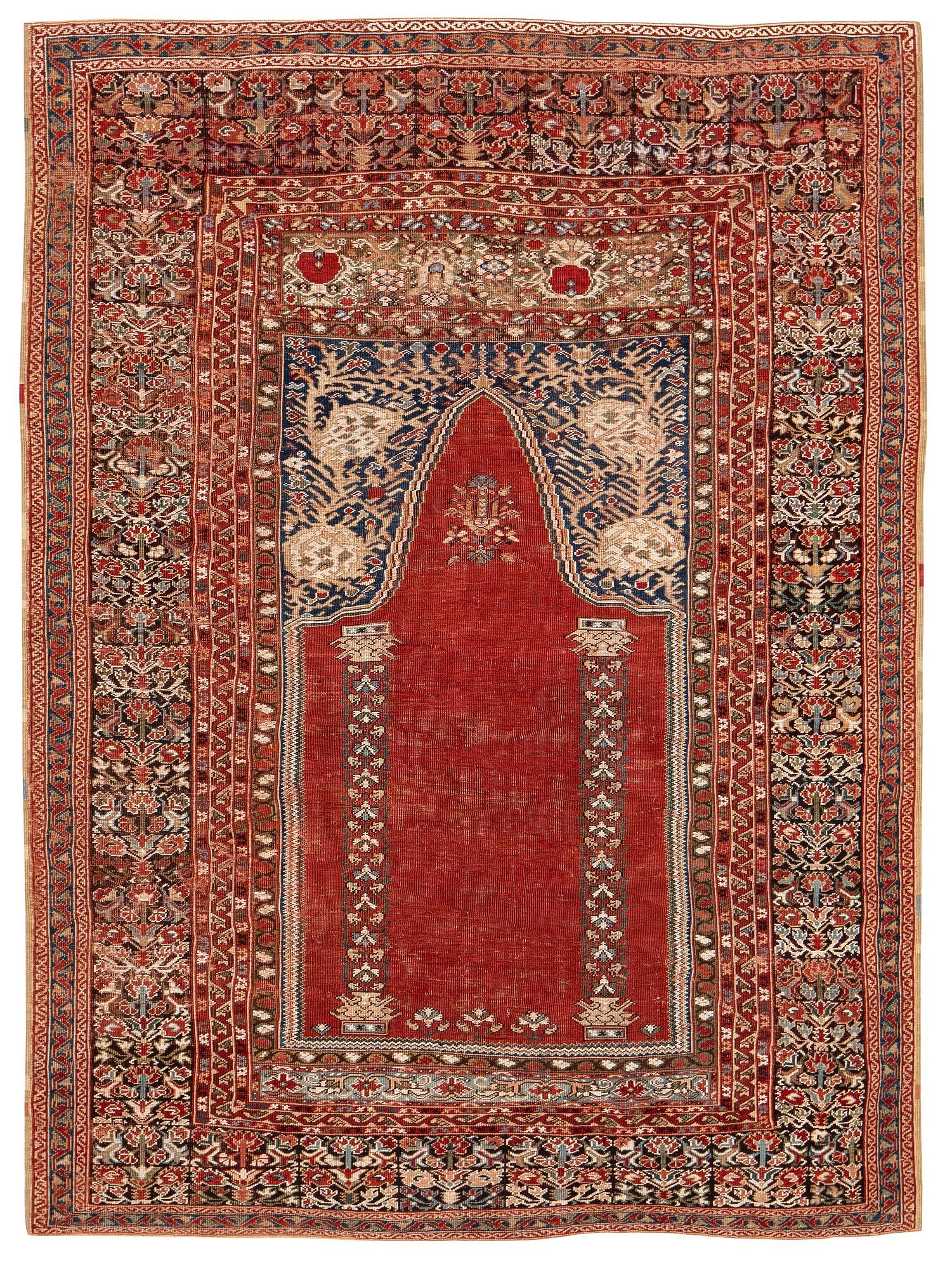
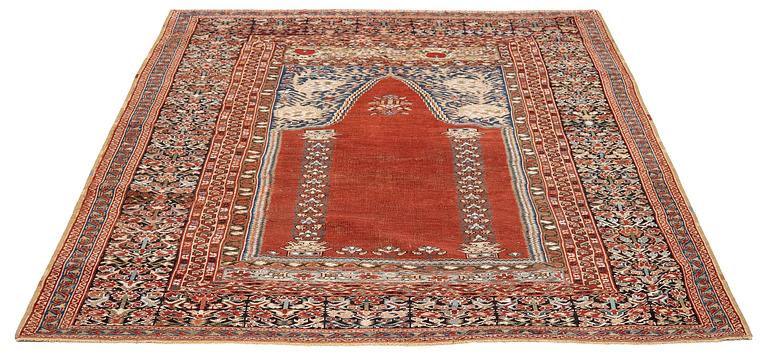
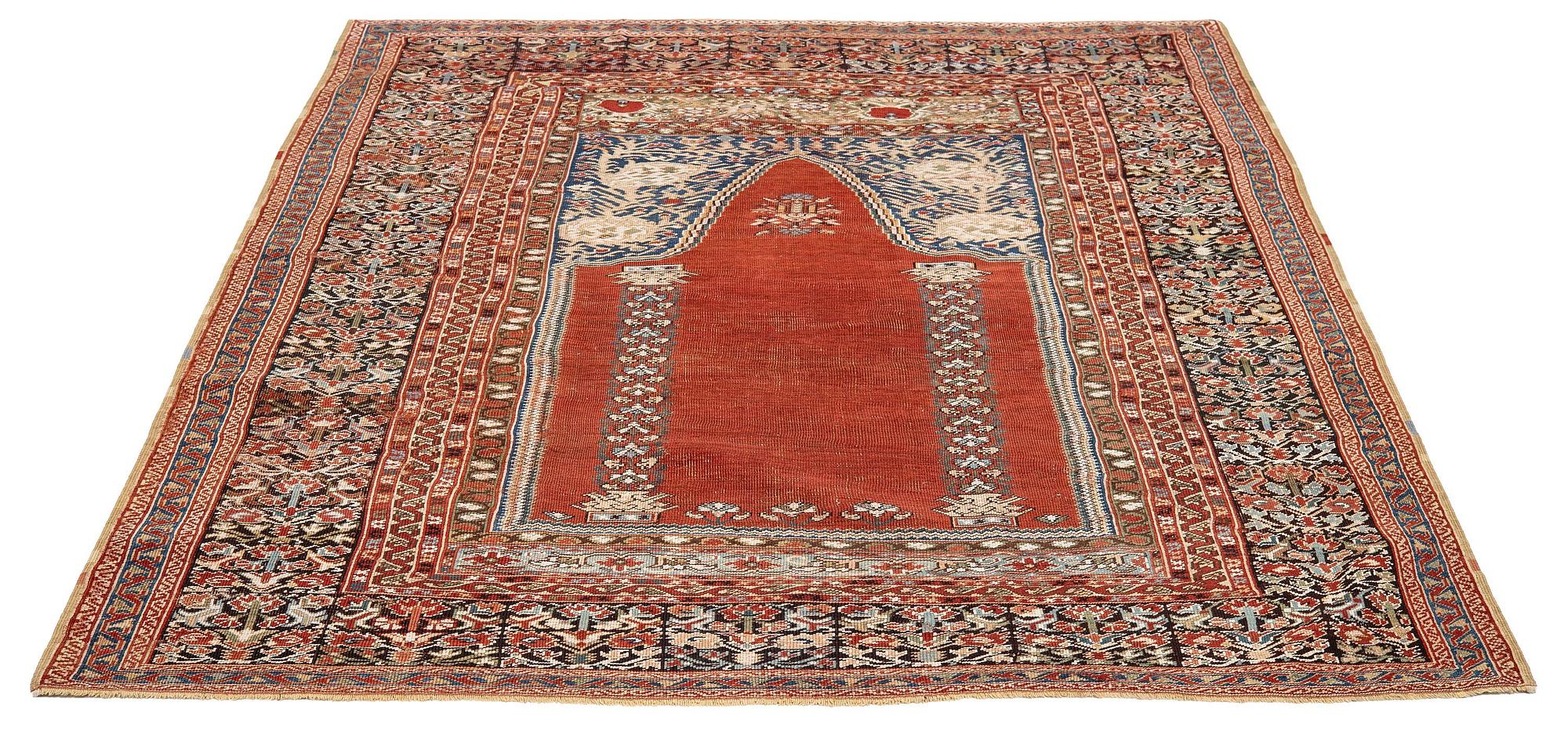
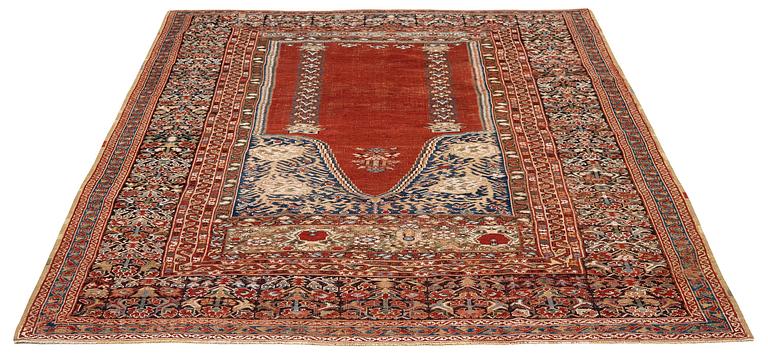
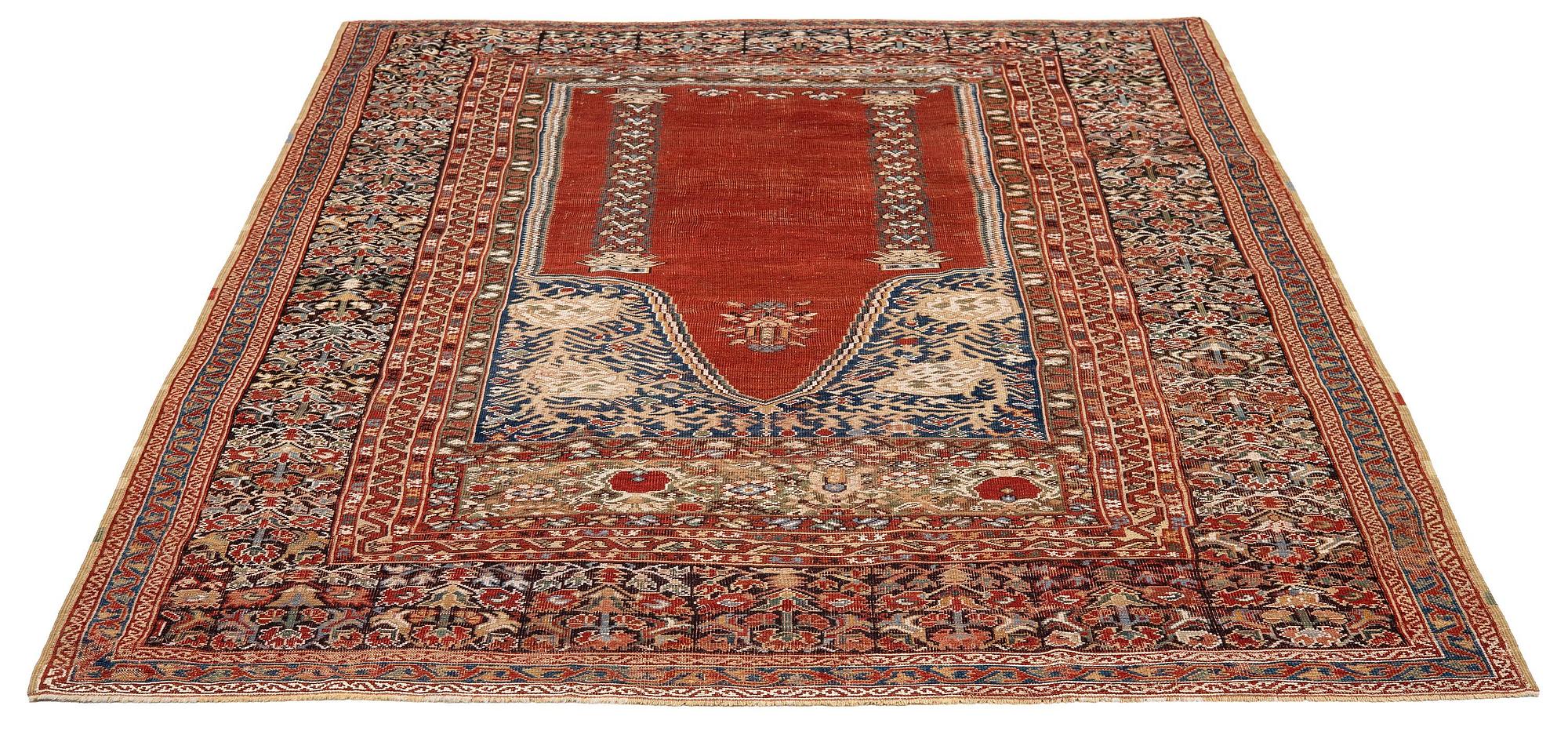
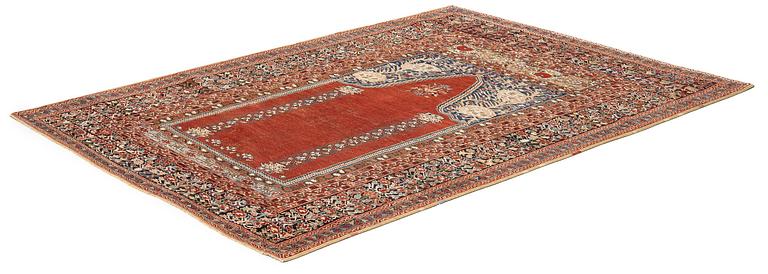
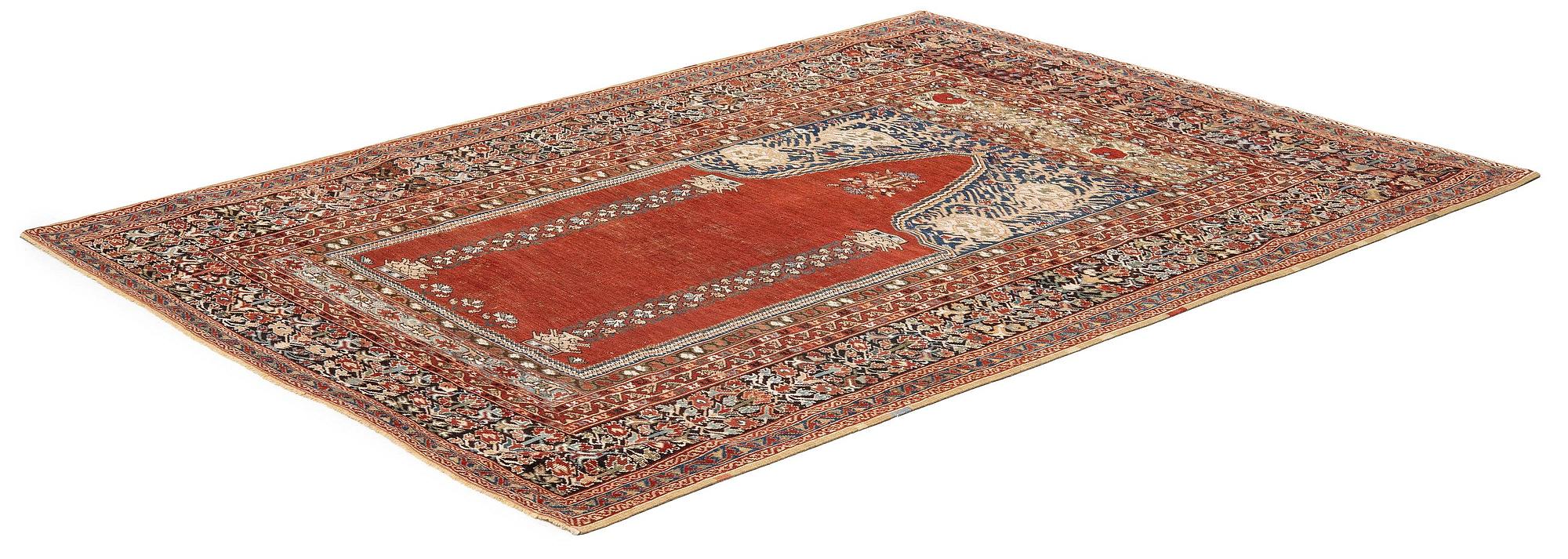
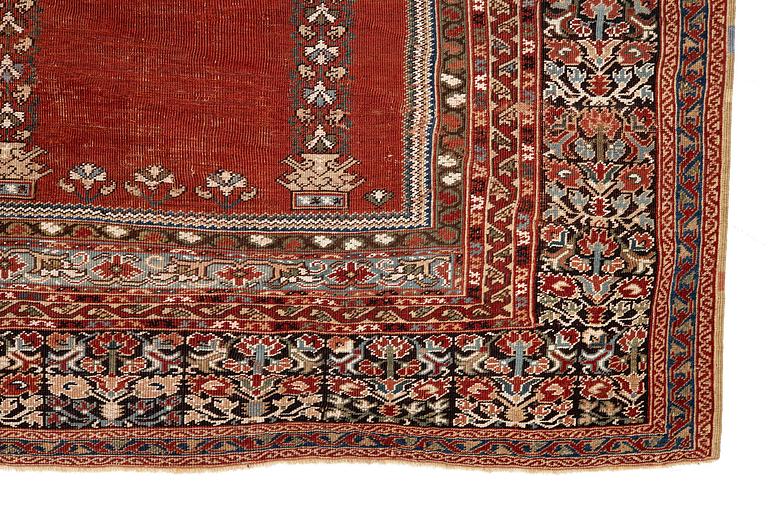
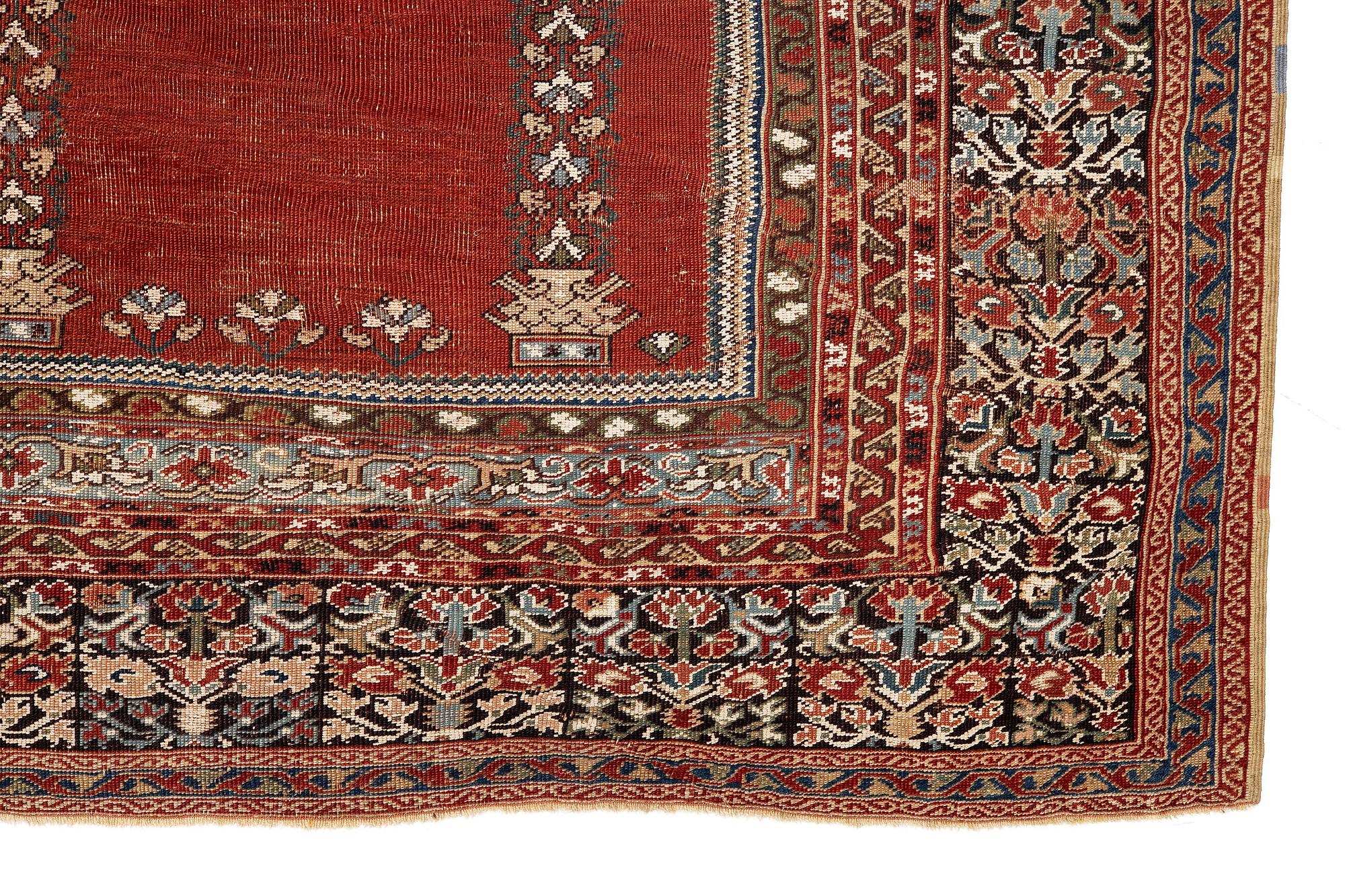
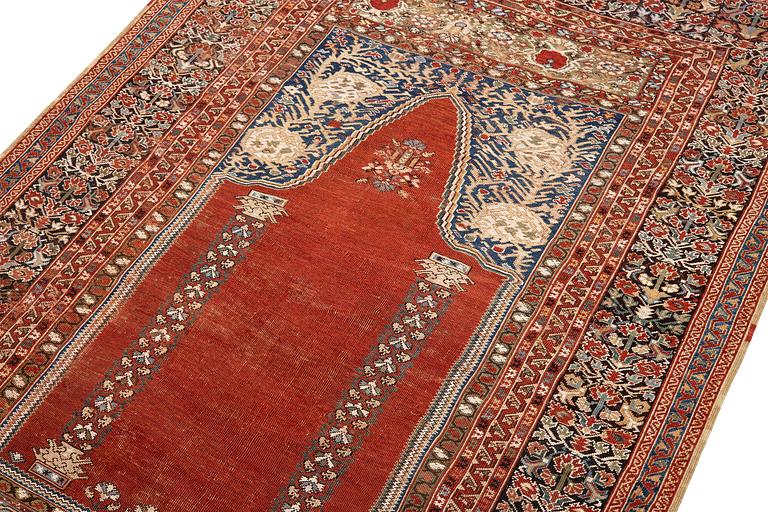
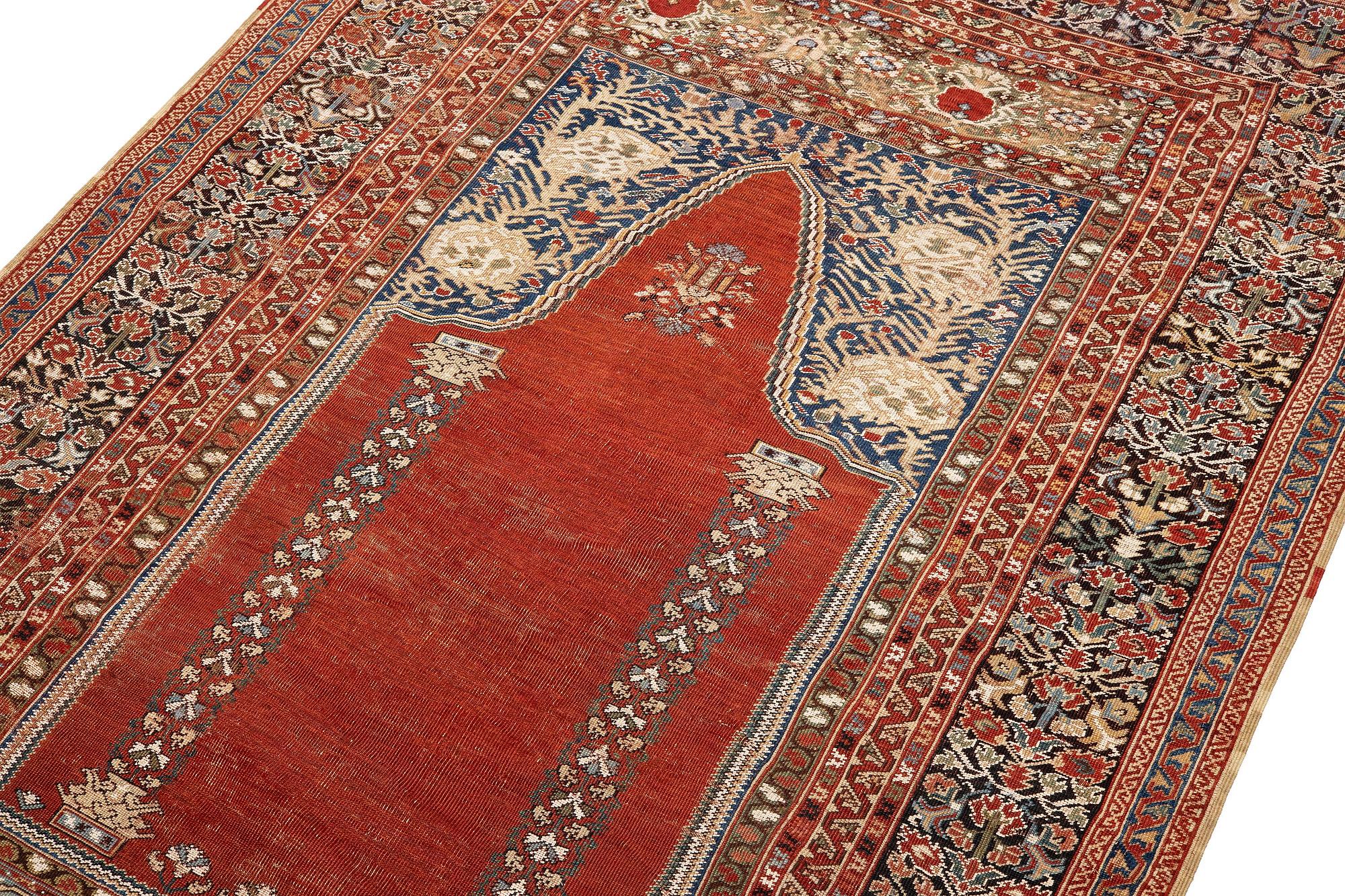
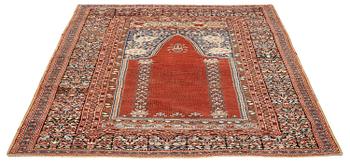
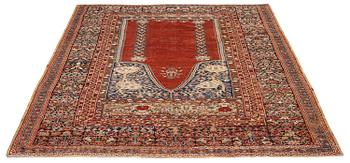
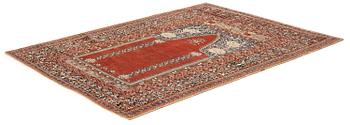
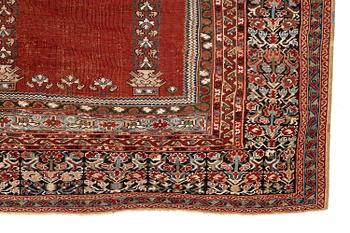
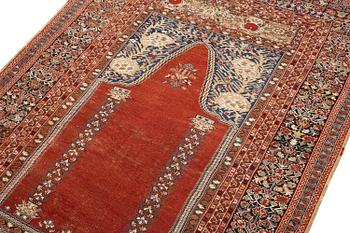
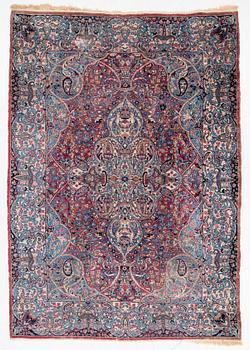
A antique Ghiordes prayer rug, c. 170 x 120 cm, West Anatolia, 18th century.
A red prayer field with columns and a blue niche. A dark brown main border with a foliate vine.
Literature
Compare Völker, Angela, Die orientalischen Knüpfteppiche im MAK. (Böhlau, 2001), no. 37, p. 128.
More information
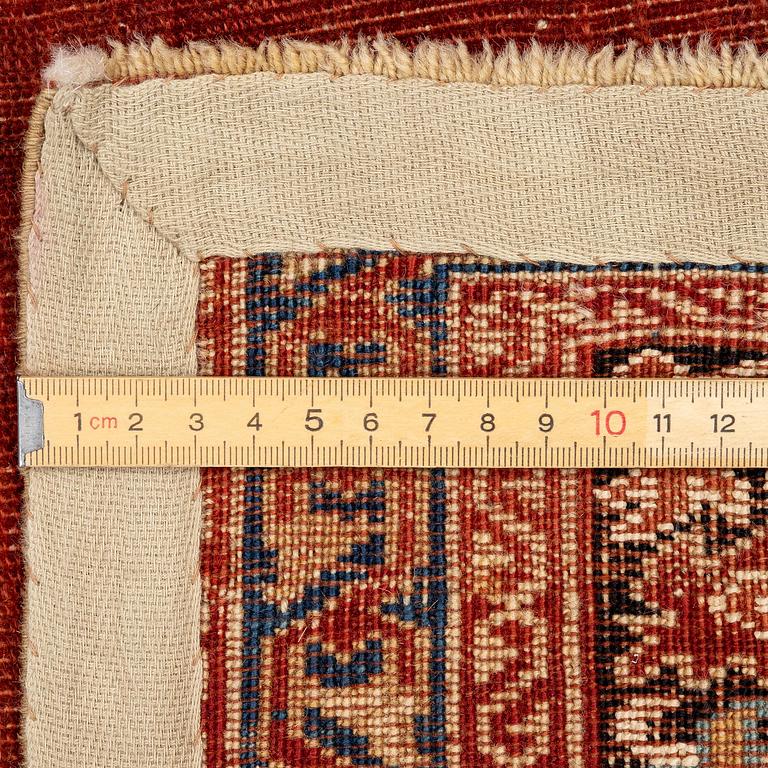
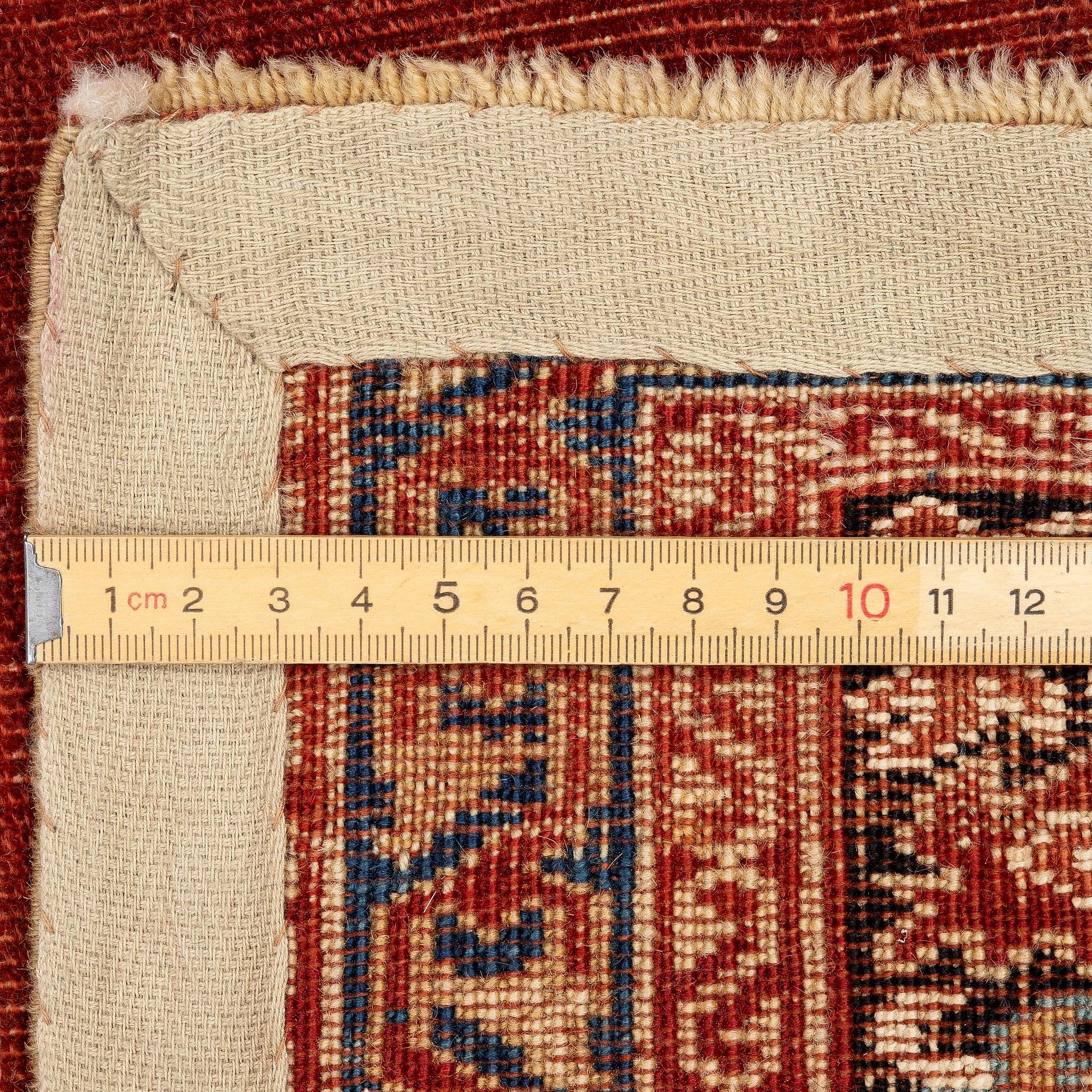
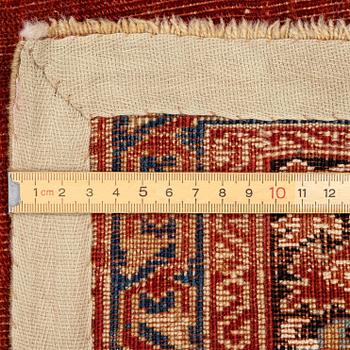
his rug belongs to a distinguished group of Ghiordes prayer rugs, closely associated with the tradition of the celebrated Transylvanian prayer rugs that were exported from Anatolia to Central Europe during the 17th and 18th centuries. A notable feature of the present example is its red wefts, a characteristic found in a select group of Ghiordes rugs of this design and often associated with denser and more refined interpretations of the pattern.
These rugs have become known among collectors and scholars as "Basra Ghiordes" prayer rugs, reflecting their strong historical association with the prosperous Arab port city of Basra, where examples of this type are believed to have found an important market. Through the extensive commercial networks linking Anatolia with the Middle East, these rugs travelled far beyond their region of origin.
Comparable examples are preserved in the Brukenthal Museum, Sibiu, further illustrating the group's historical importance and its close relationship to the renowned Transylvanian prayer rug tradition.
For condition report contact specialist

What will the transport cost?