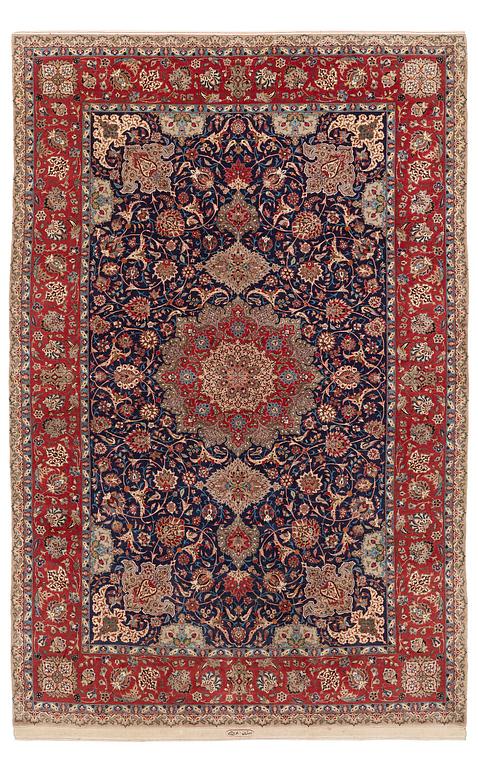
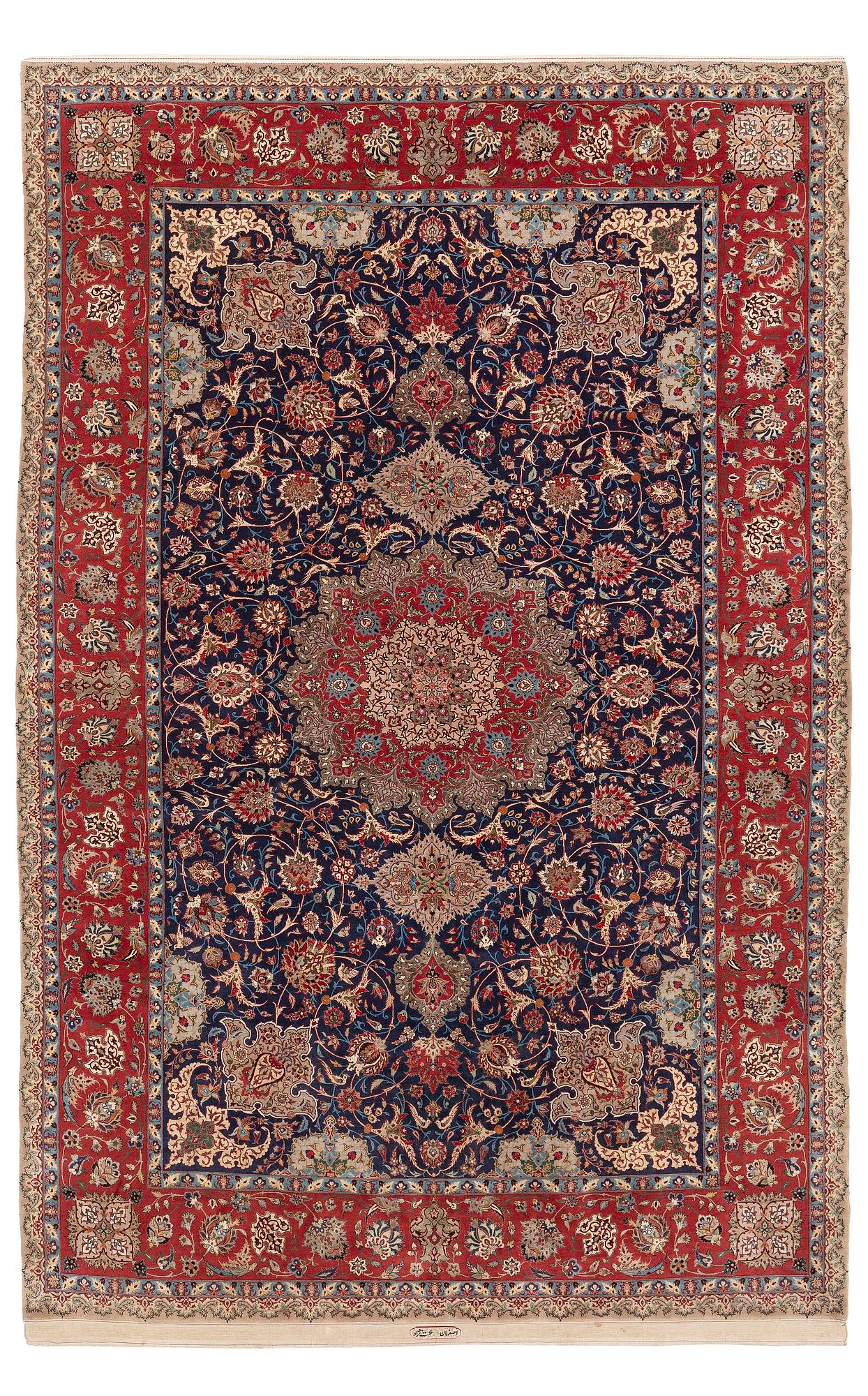
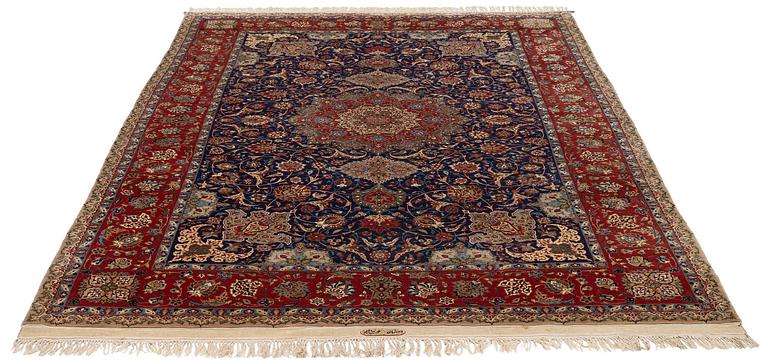
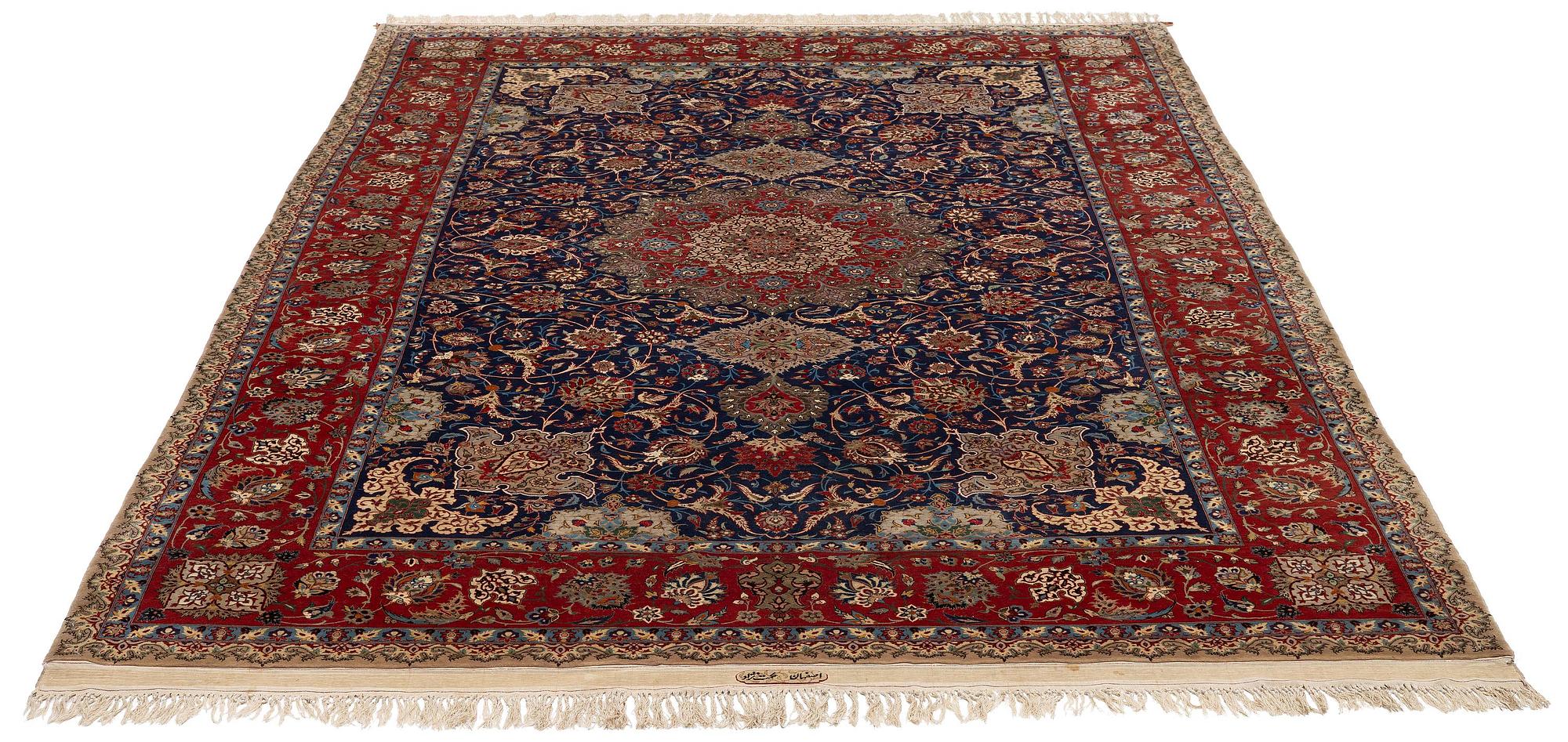
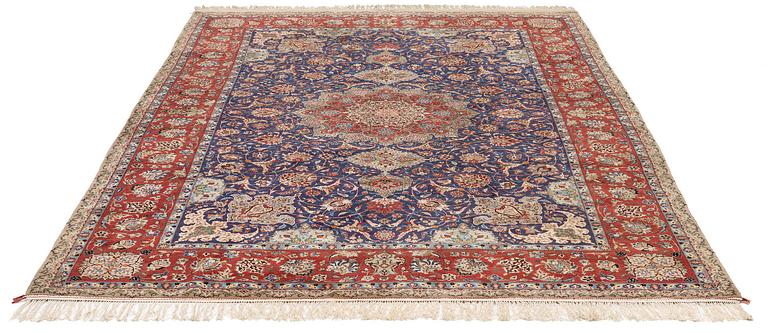
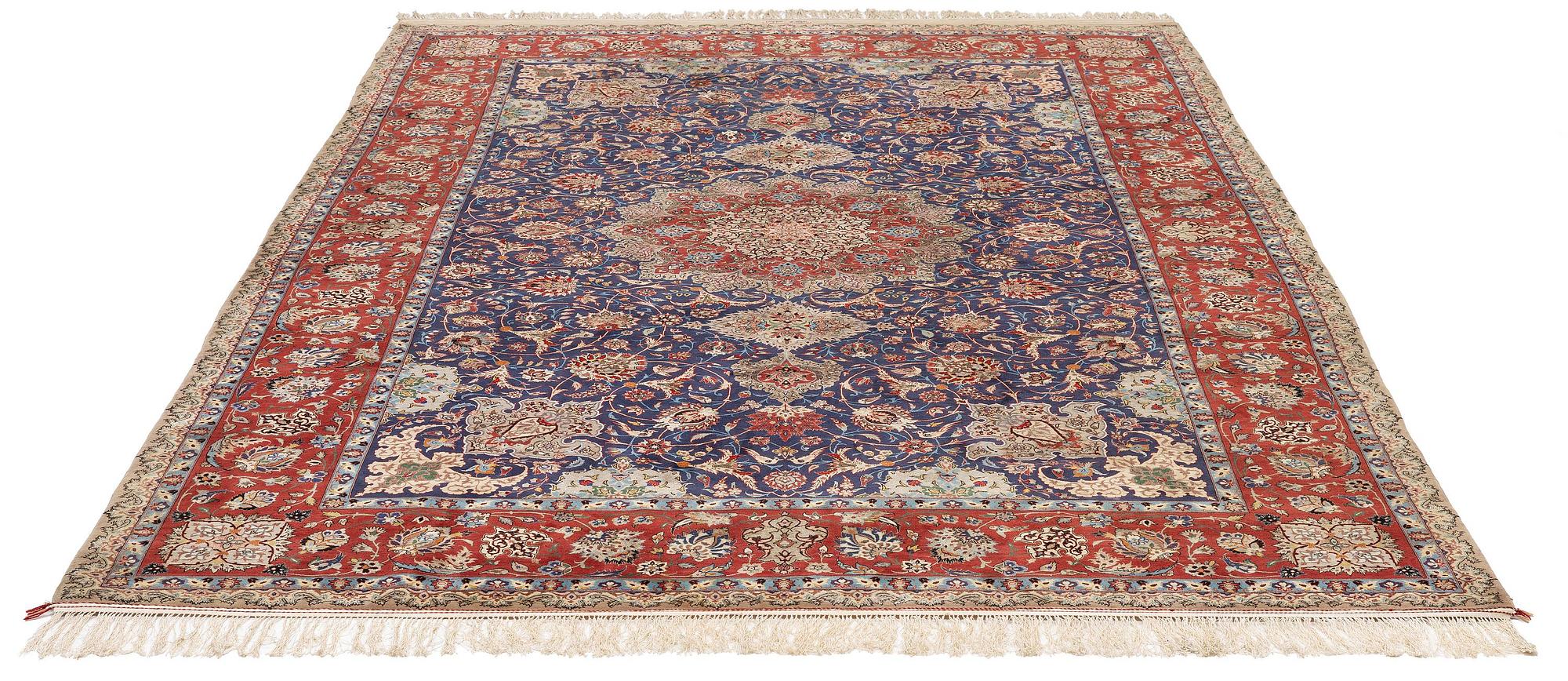
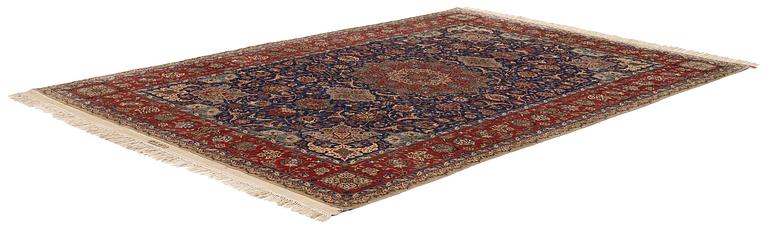
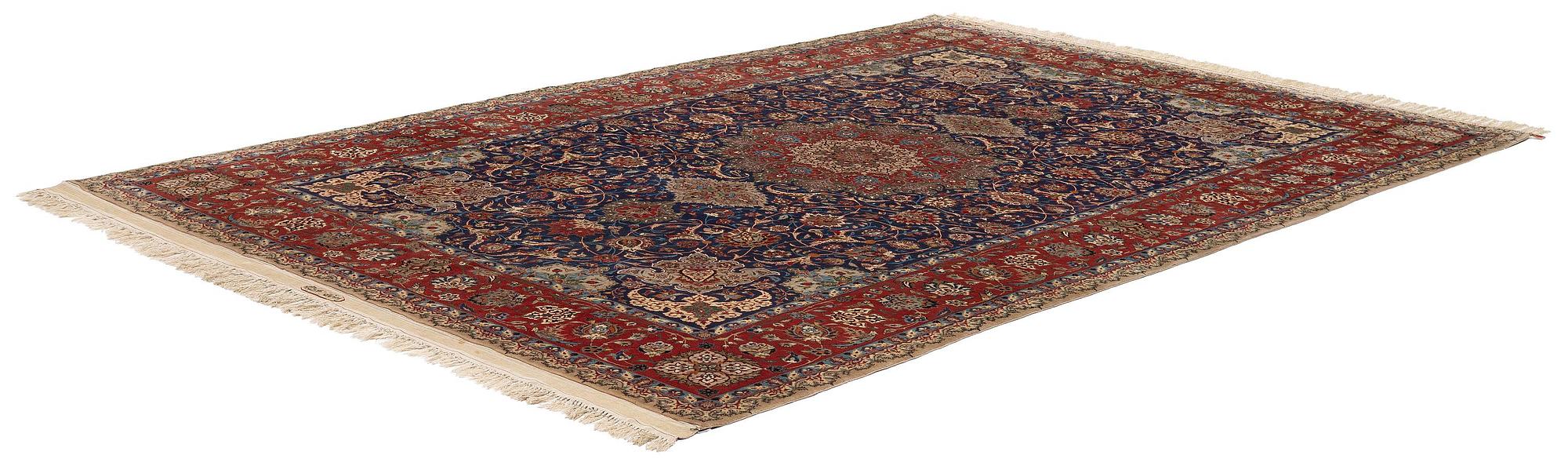
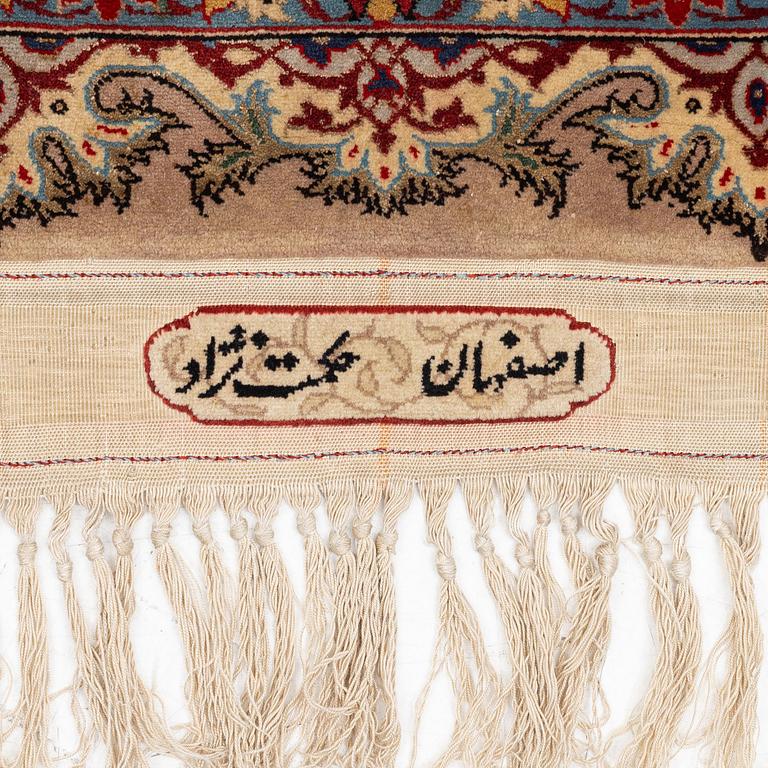
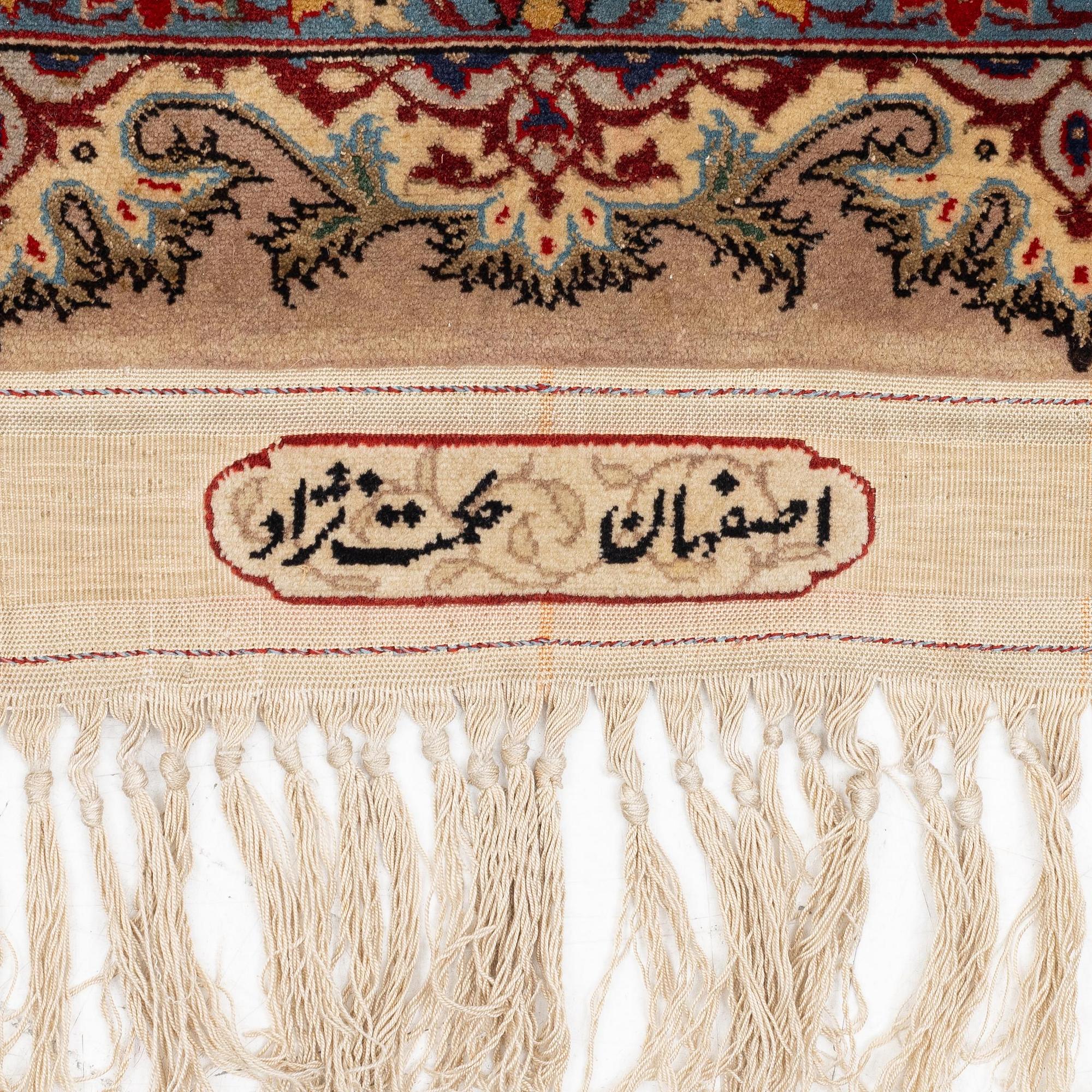
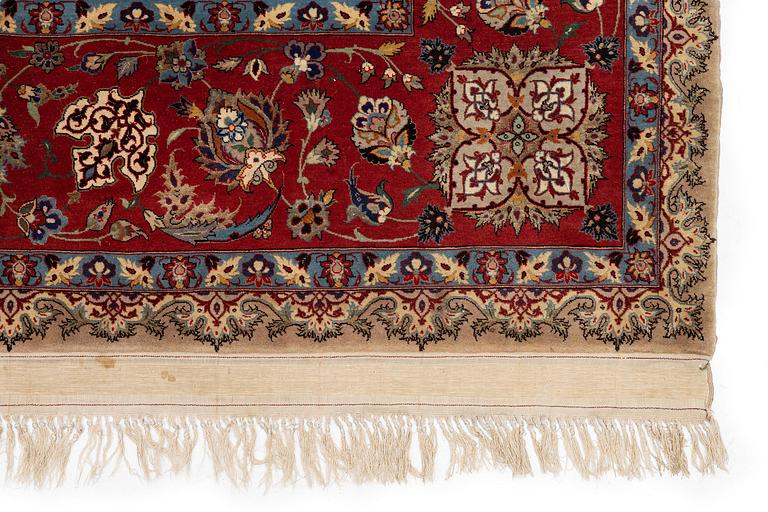
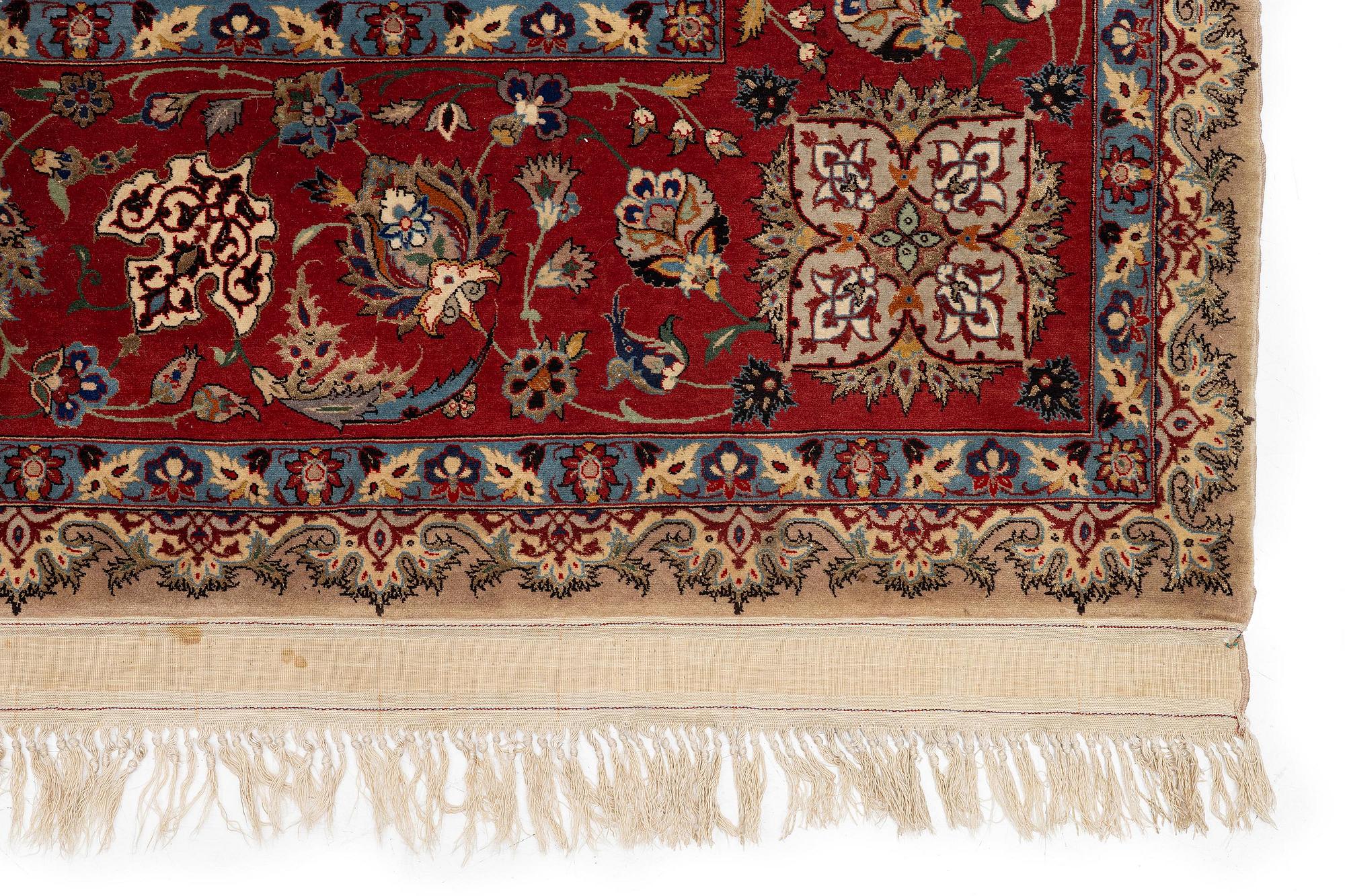
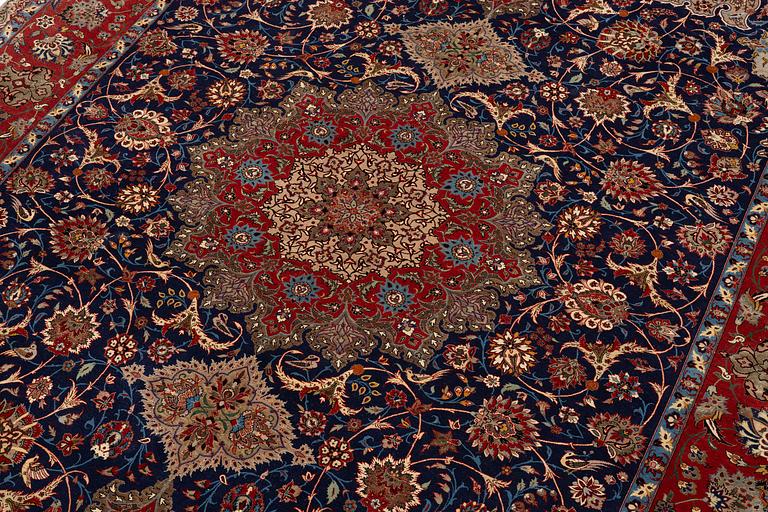
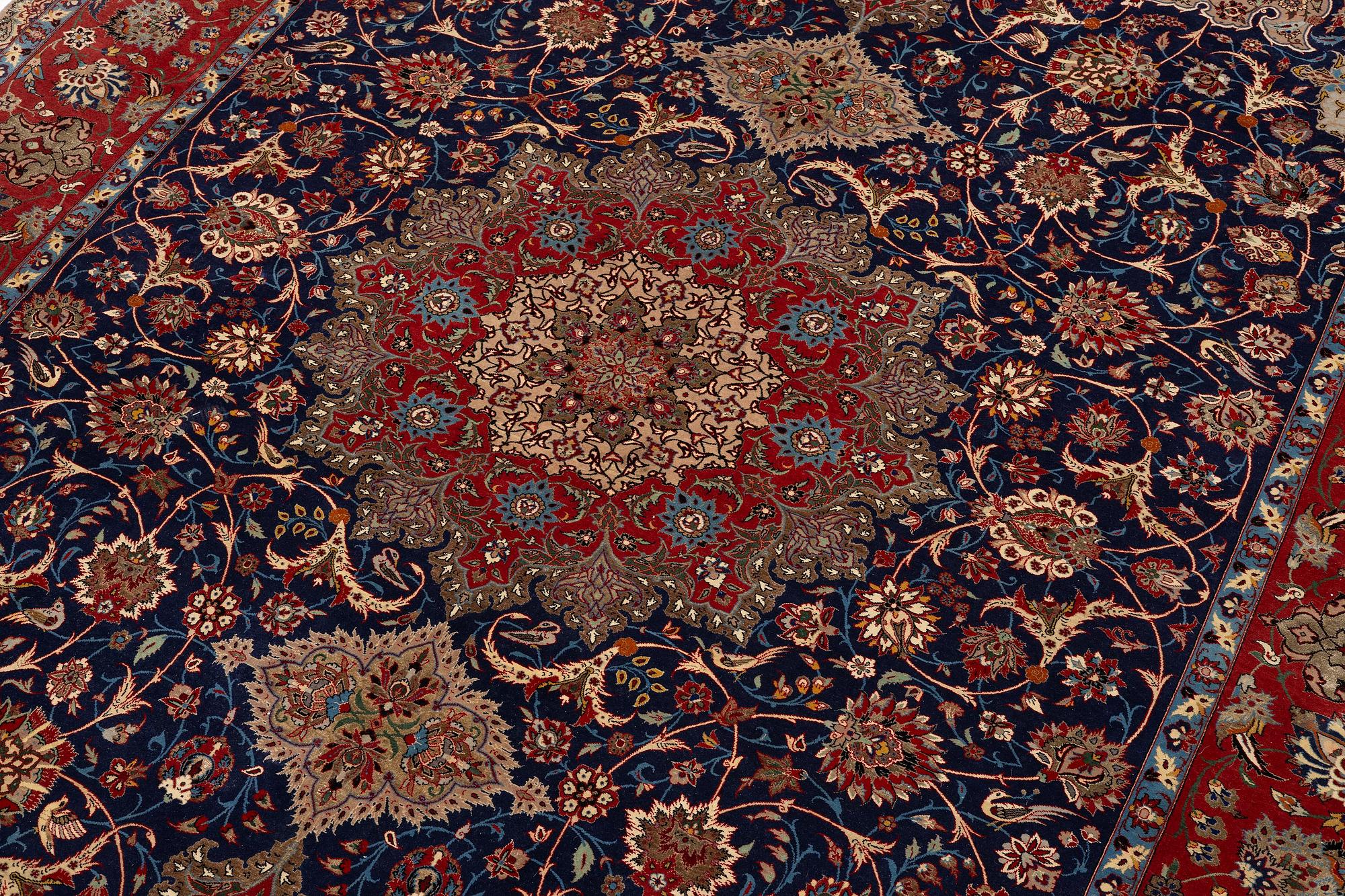
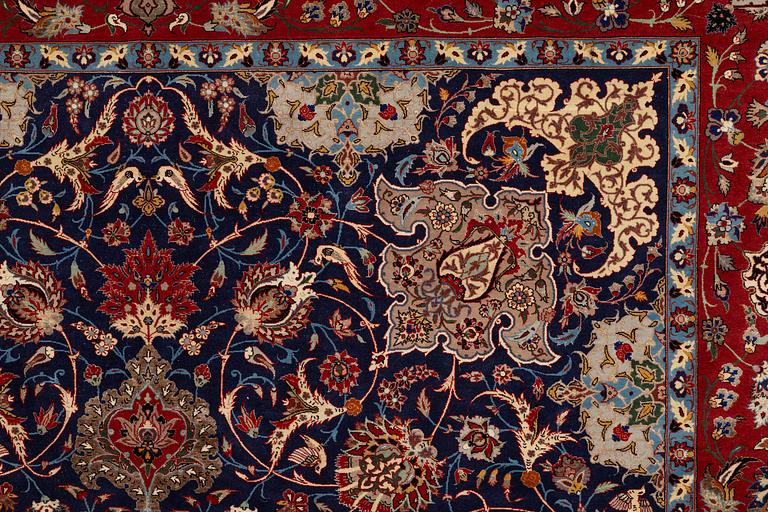
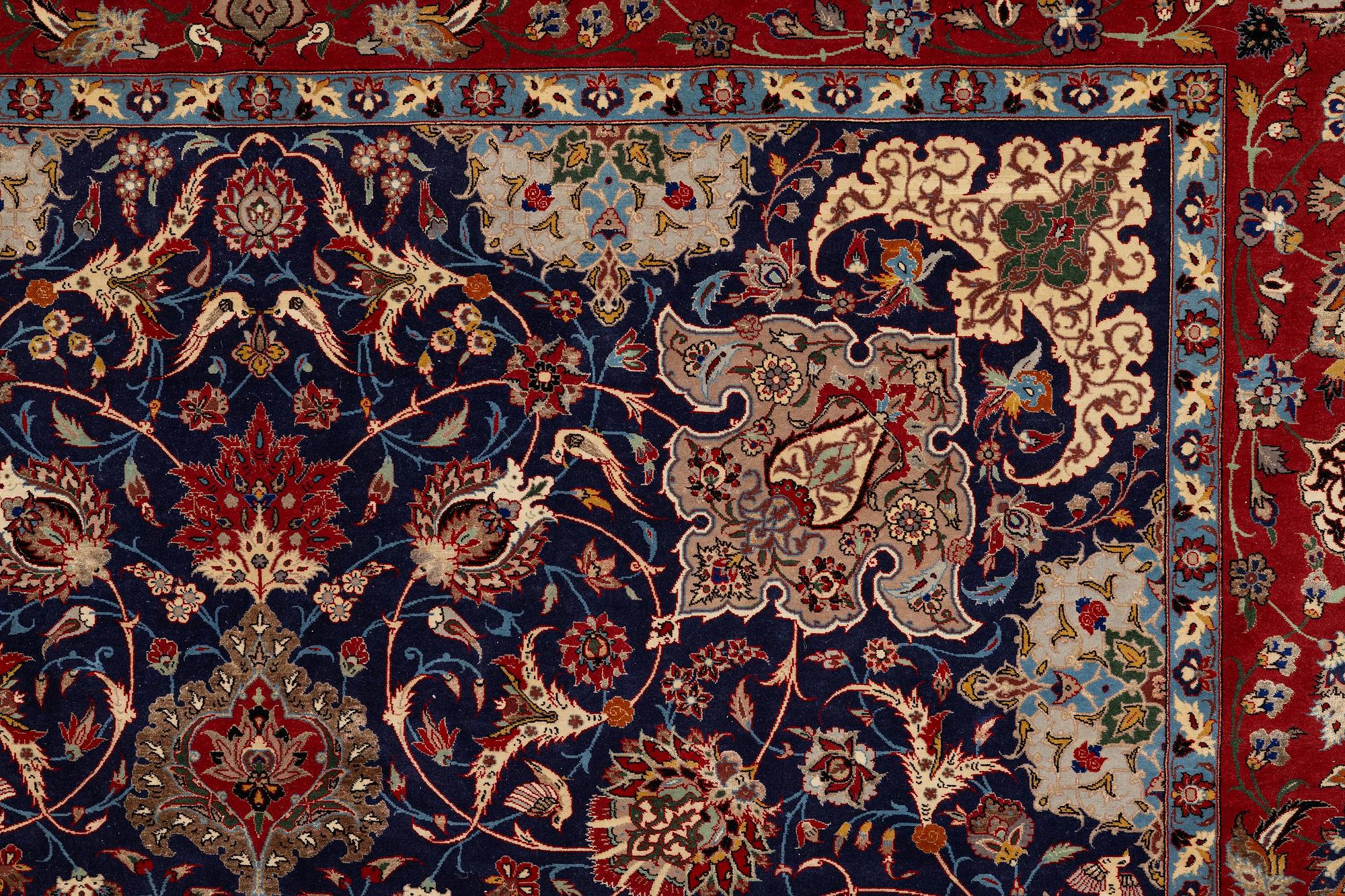
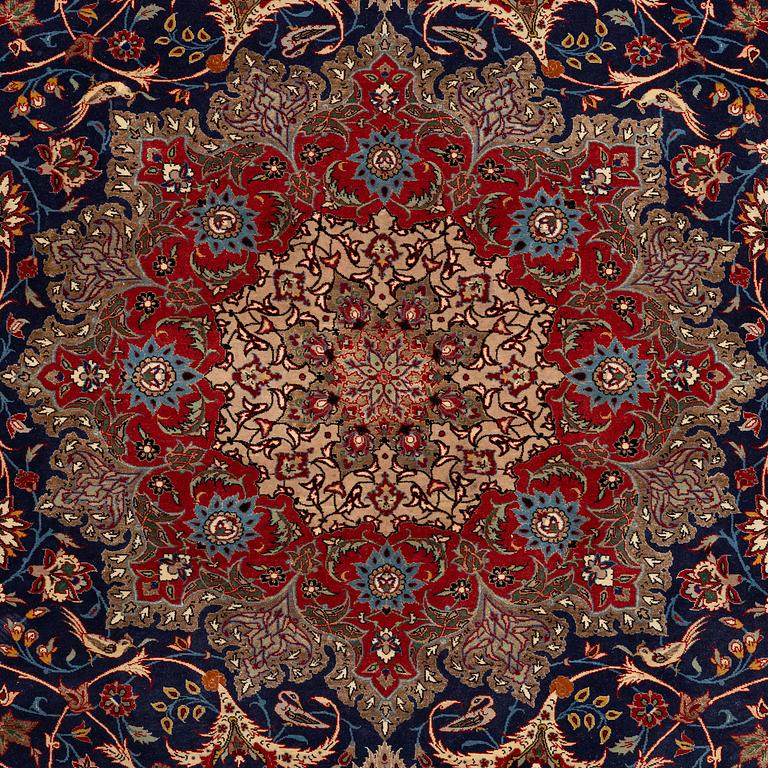
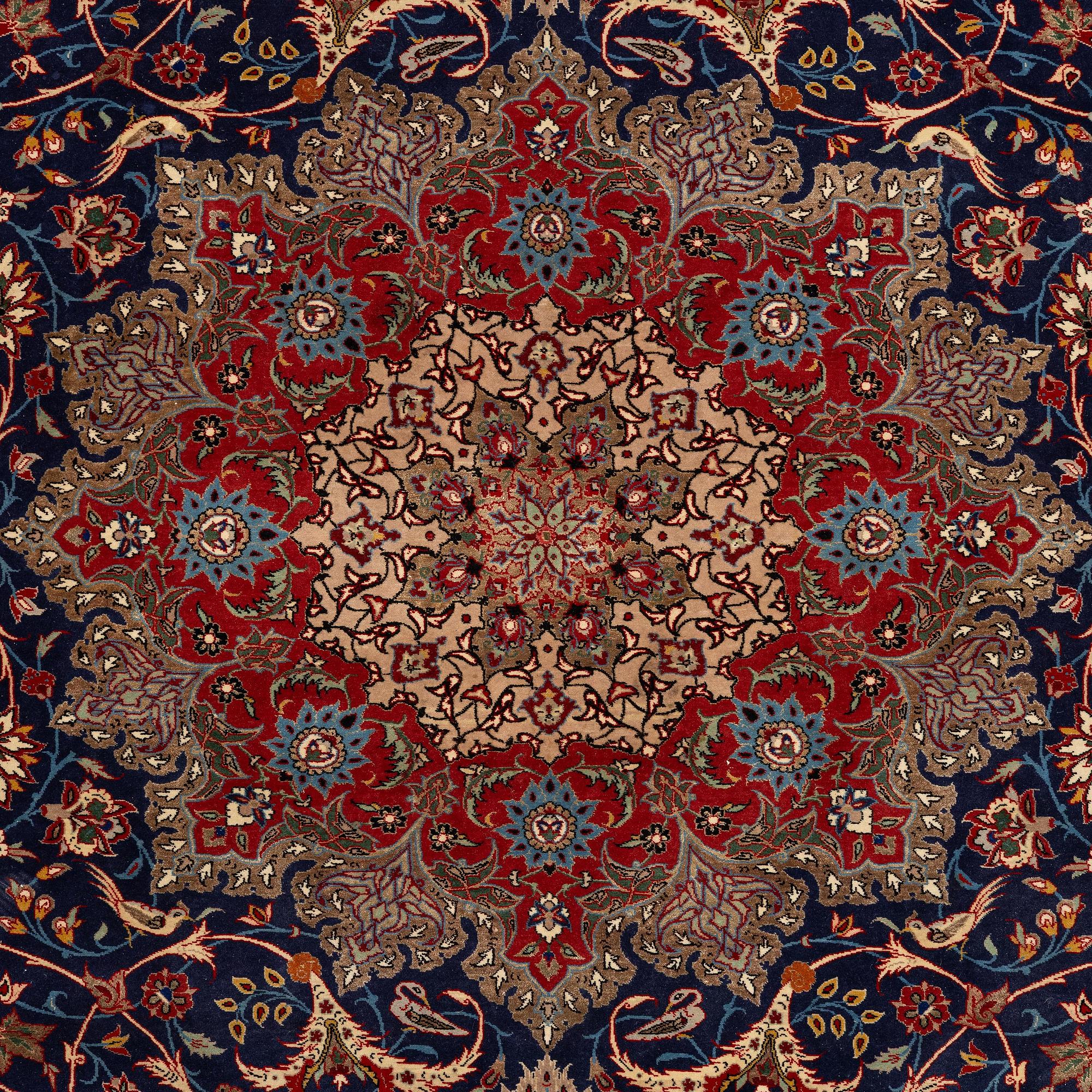
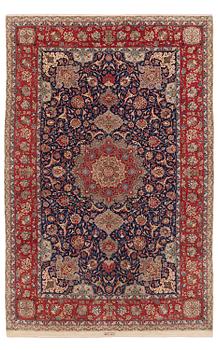
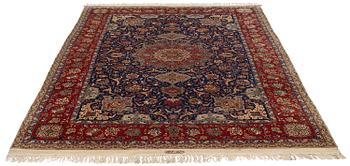
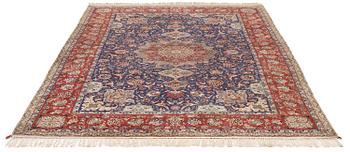
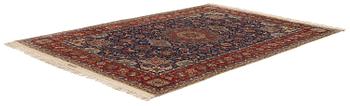
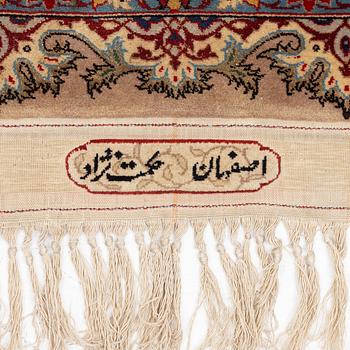
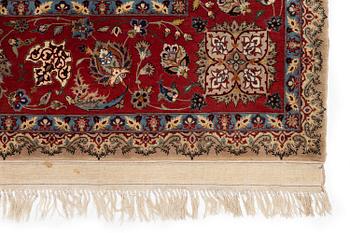
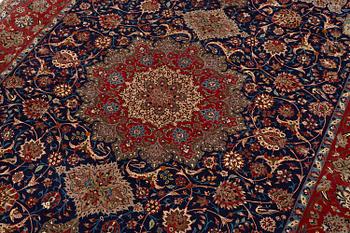
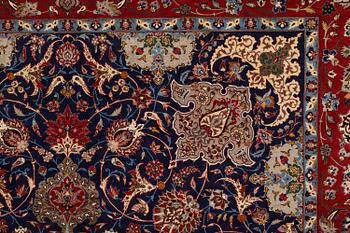
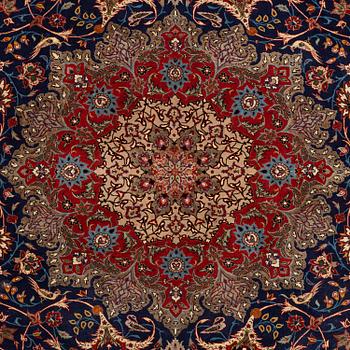
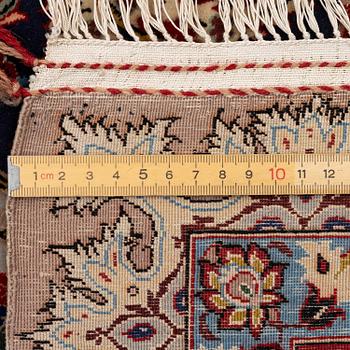
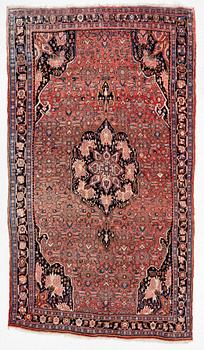
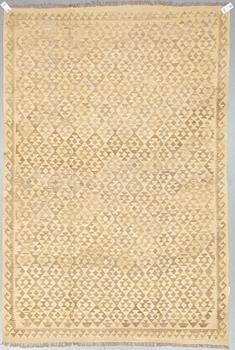
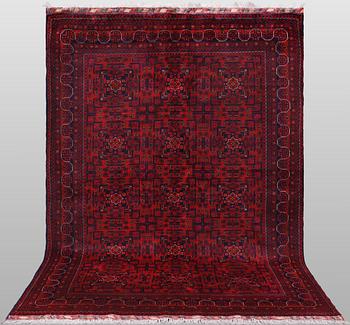
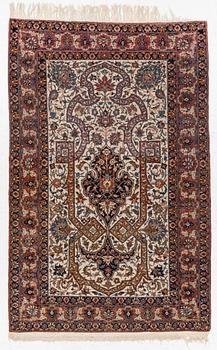
A semi-antique Isfahan carpet, Central Persia, signed Hekatnejad, c. 340 x 218 cm.
Circa 1950. A dark blue ground with a polychrome medallion, corner ornaments, and floral, palmette and arabesque motifs. A red main border with floral, palmette and arabesque motifs. Signed 'Isfahan Hekmatnejad'
Provenance
The Sivert Oldenvi Collection
More information
The Hekmatnejad workshop is widely regarded as one of the most distinguished carpet ateliers of twentieth-century Isfahan. Its origins can be traced to Ahmad Bey, a former court steward during the Qajar period who abandoned public service to devote himself to carpet weaving. His unconventional designs earned him the nickname Majnooni, a name that would become synonymous with the family's artistic legacy.
Over successive generations, the workshop developed into one of Iran's foremost producers of fine carpets. A commitment to traditional Persian design, natural dyes, and uncompromising craftsmanship became the foundation of the Majnooni tradition. Following the death of Mohammad Kazem Majnooni, the family's artistic heritage was preserved and strengthened by his widow, Hajiya Zahra, and their children.
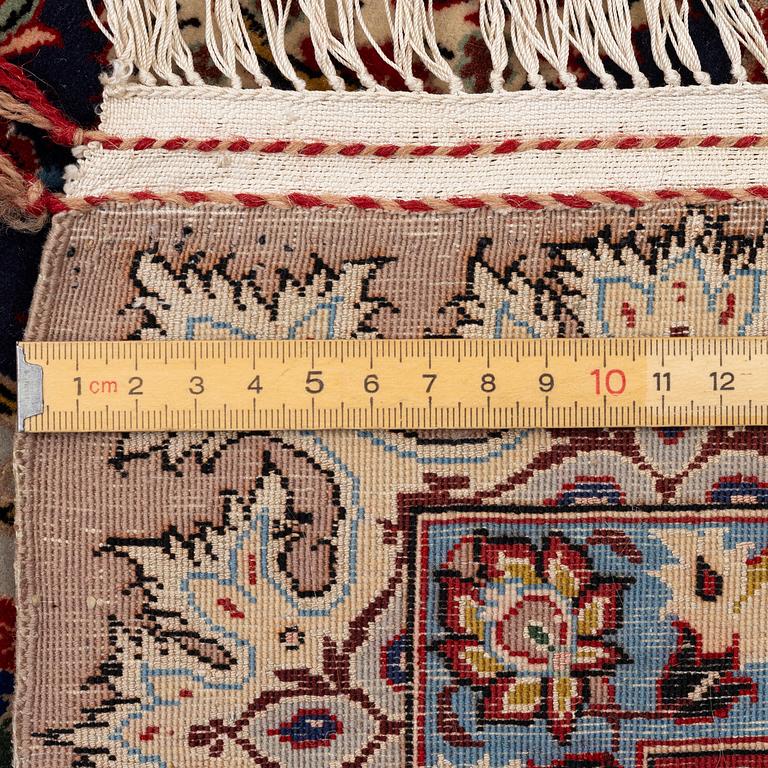
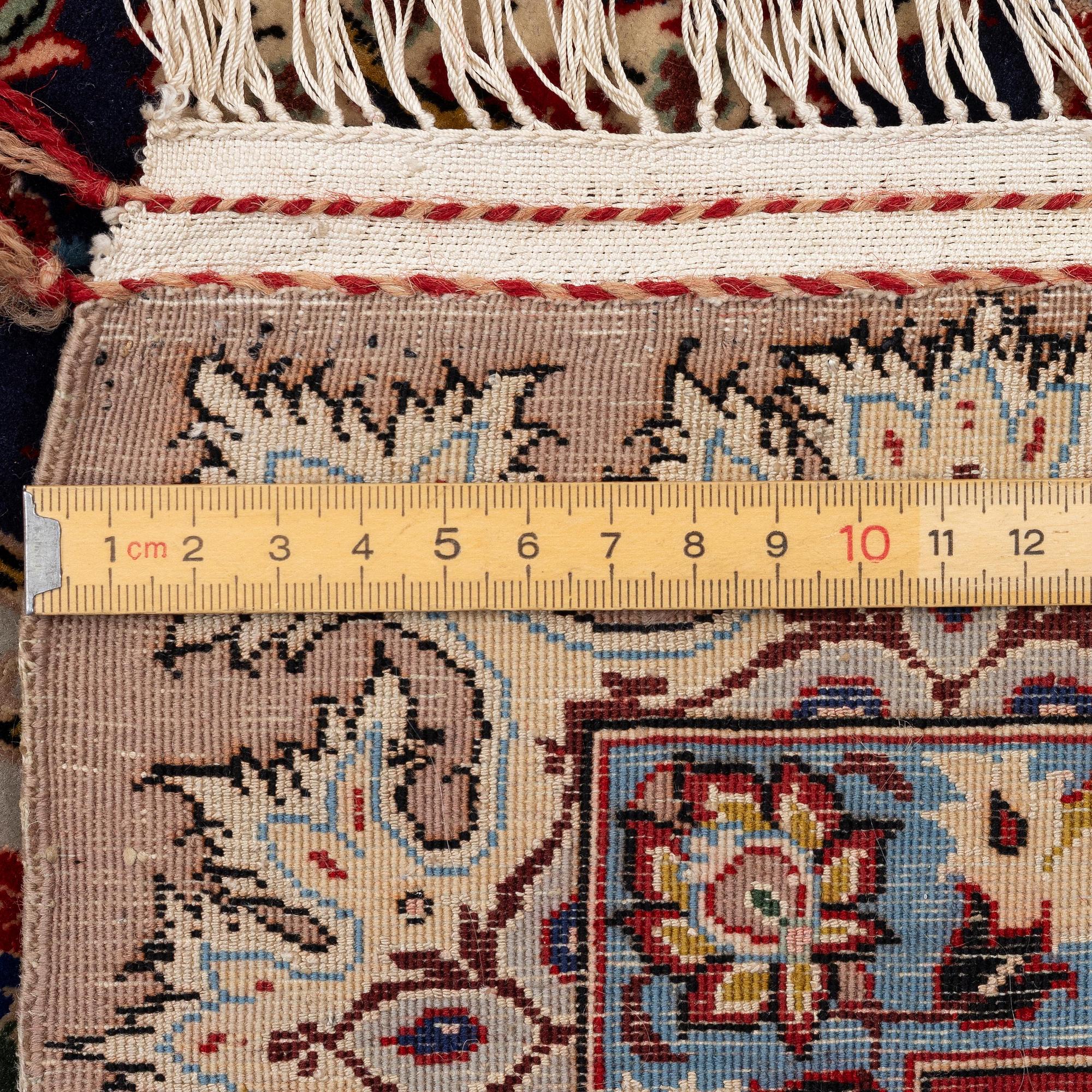
The workshop reached its greatest prominence under Dr. Hassan Hekmatnejad, who combined inherited craftsmanship with a modern vision of production. Through an extensive weaving network centred in the village of Podeh near Isfahan, he oversaw the creation of some of the most highly regarded Persian carpets of the post-war era. Hekmatnejad carpets became celebrated for their fine kork wool, silk highlights, natural dyes, and distinctive signature kilim construction.
The atelier achieved international recognition during the reign of Mohammad Reza Shah Pahlavi, who was among its most important patrons. Carpets from the workshop furnished royal residences and were frequently presented as diplomatic gifts to foreign monarchs and heads of state. Their exclusivity further enhanced their reputation, as only a limited number of carpets were released outside royal circles.
Although the Iranian Revolution of 1979 brought profound changes, the workshop continued operating on a smaller scale for several decades. Dr. Hekmatnejad successfully maintained the atelier's artistic focus while international demand among collectors remained strong. Production ultimately came to an end following his retirement in the 2010s.
Today, Hekmatnejad and Majnooni carpets are regarded as among the finest achievements of modern Persian weaving and remain highly prized by collectors and connoisseurs worldwide.
For condition report contact specialist
What will the transport cost?
Shipping can only be arranged by contacting specialdelivery@bukowskis.com.