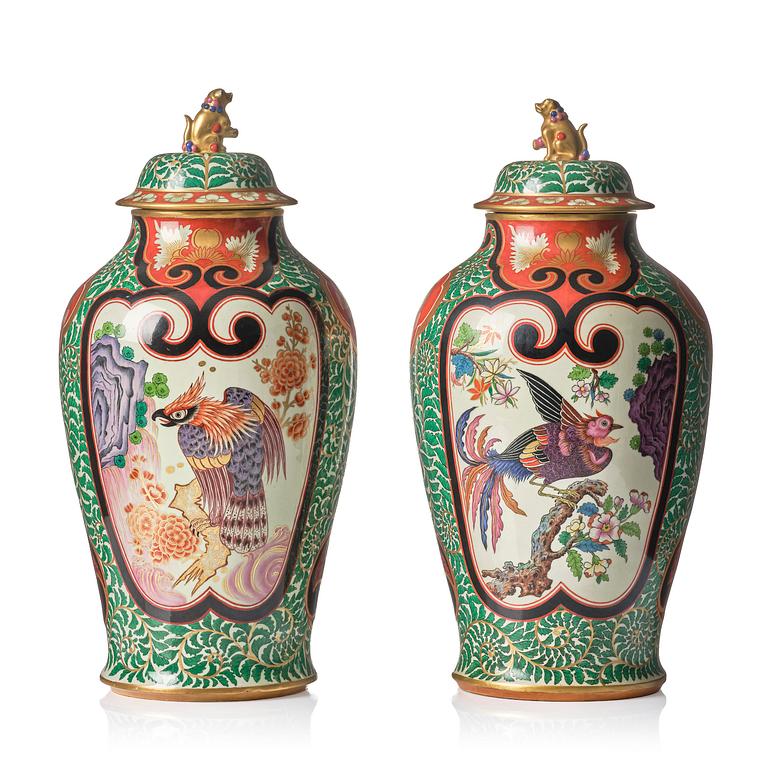
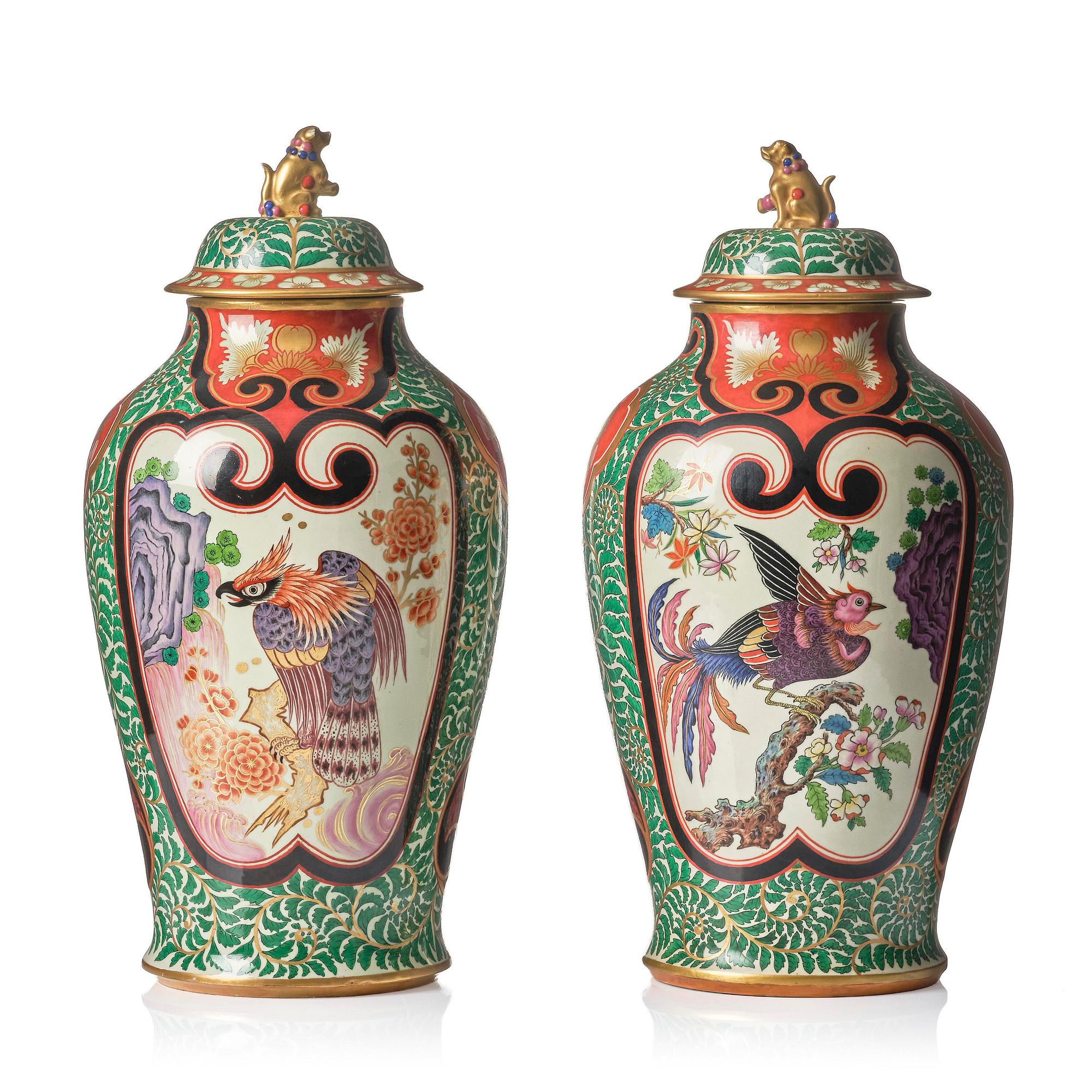
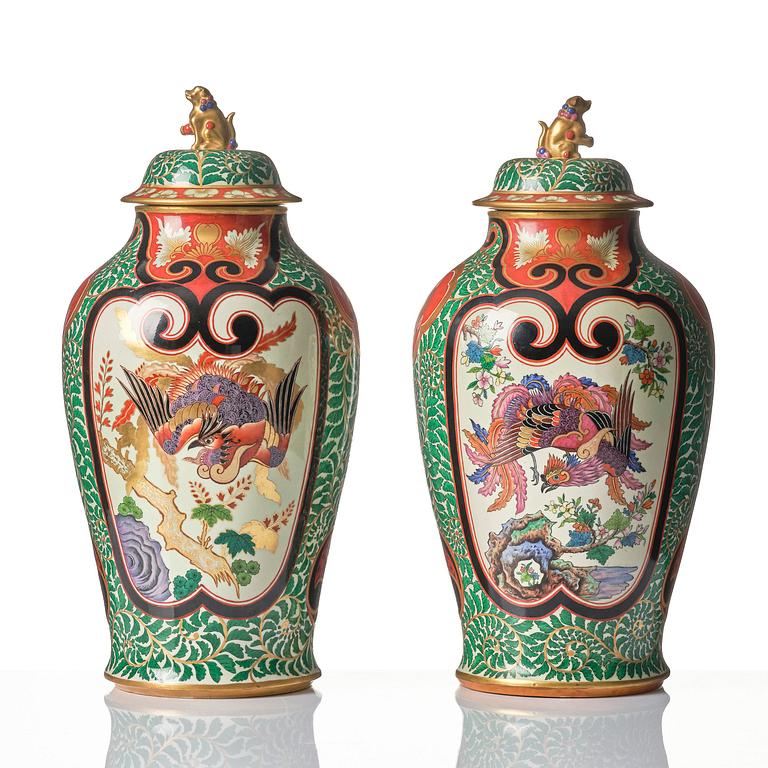
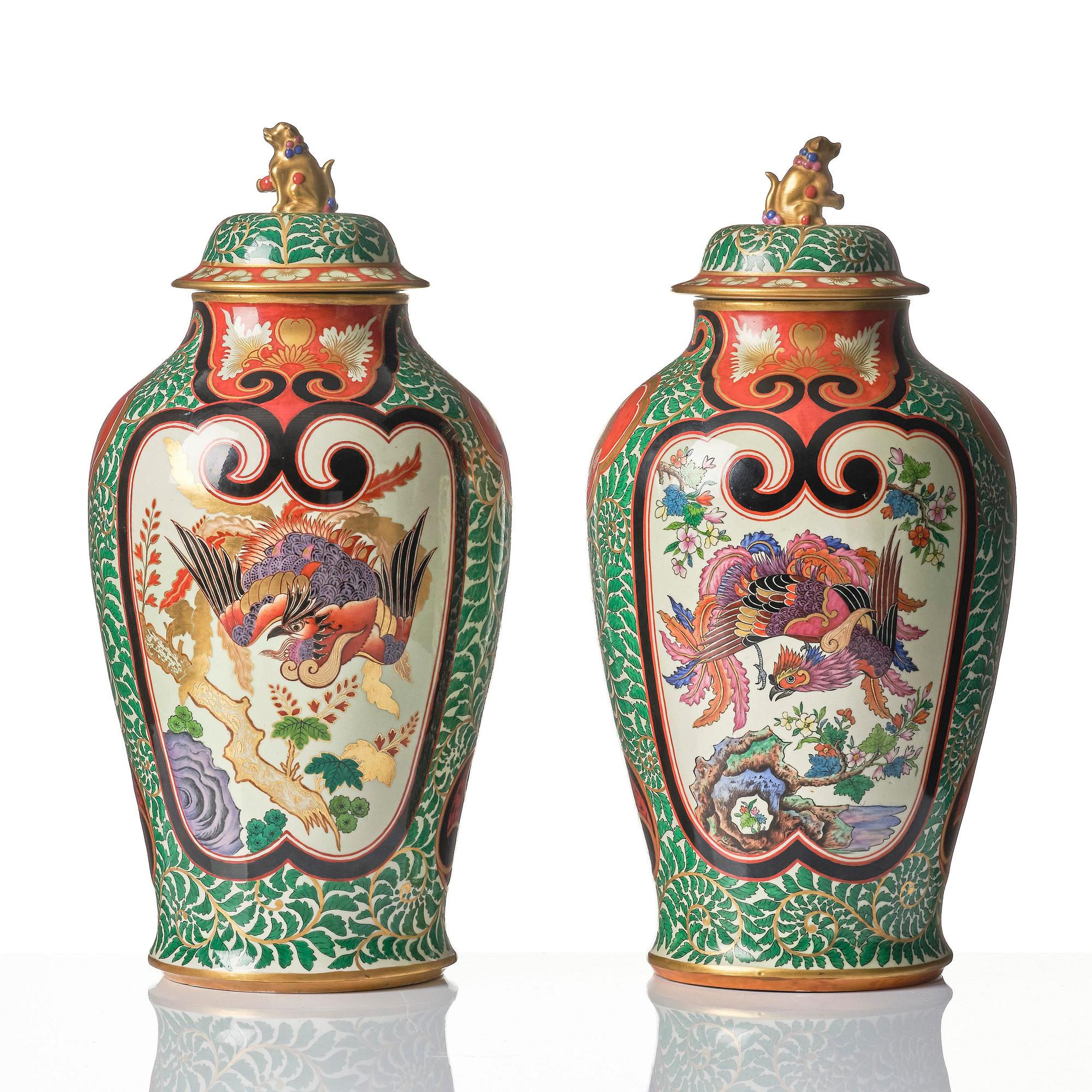
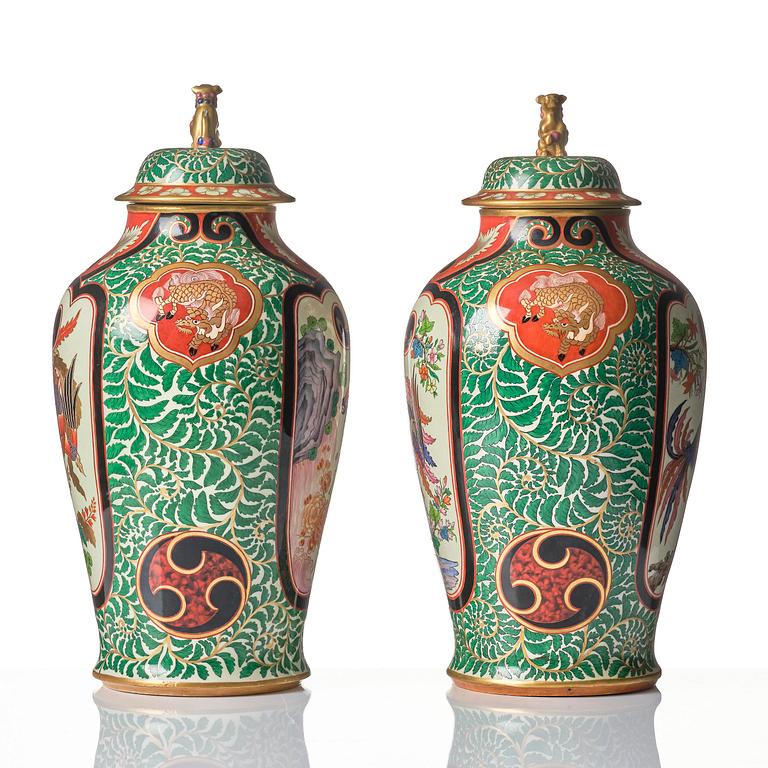
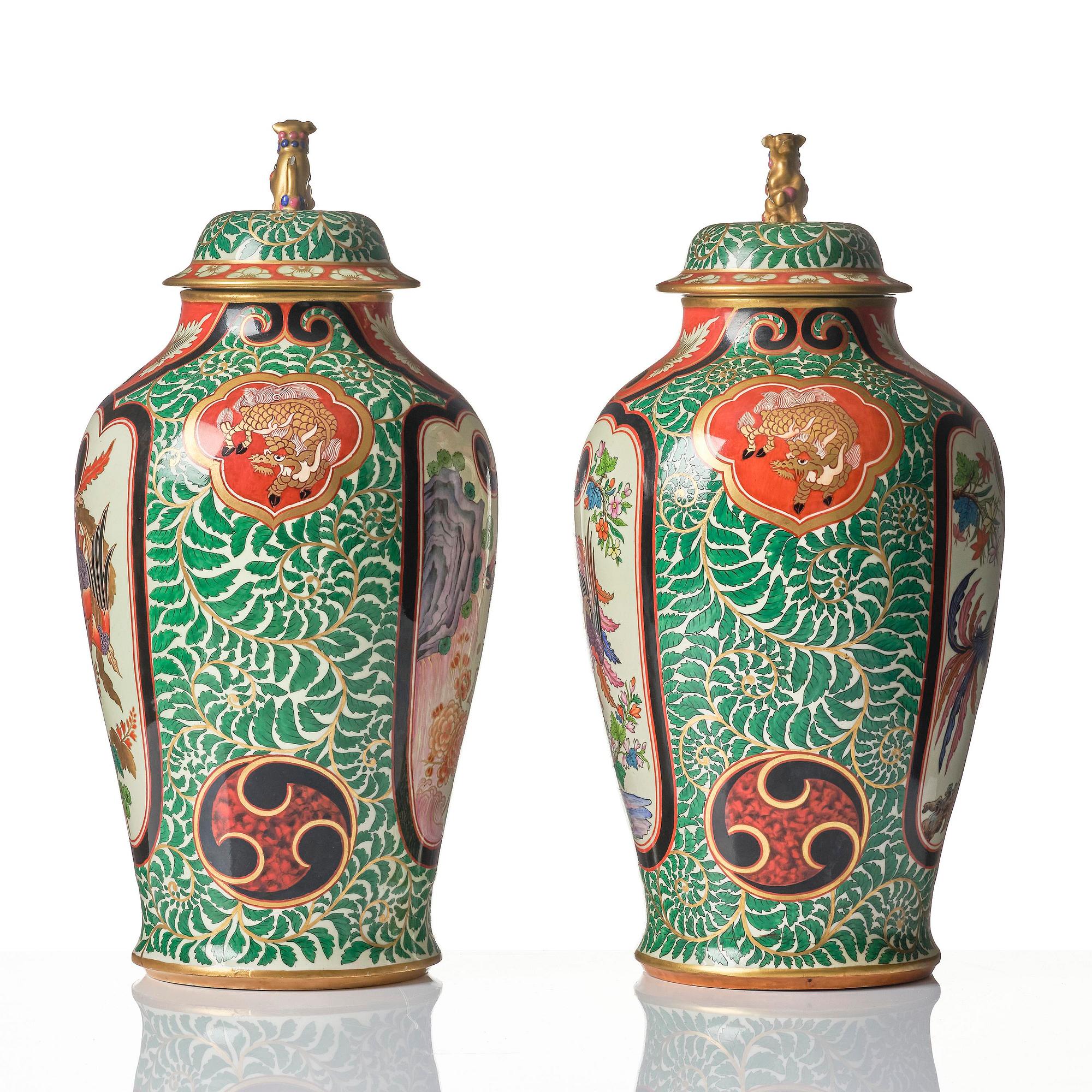
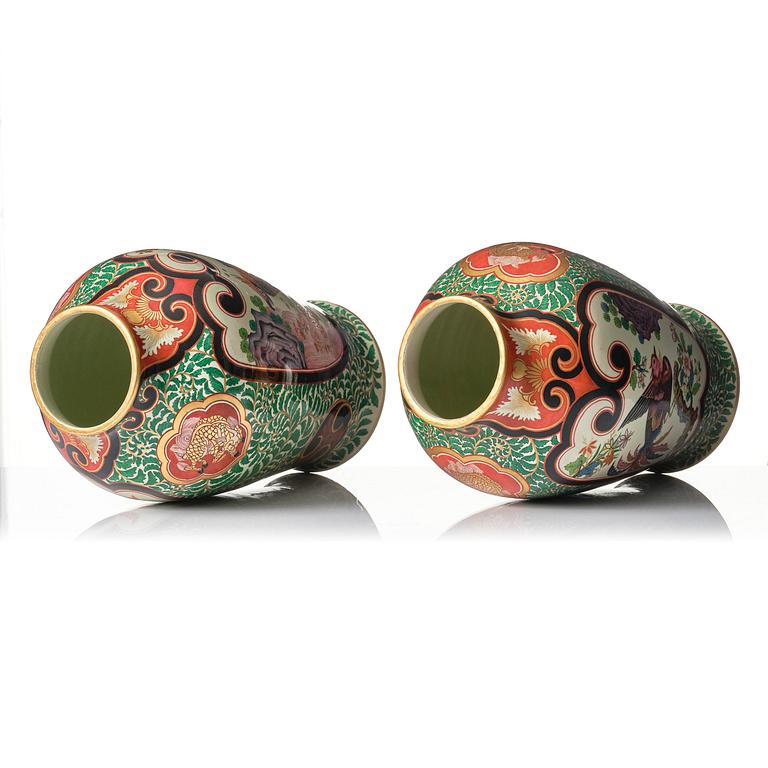
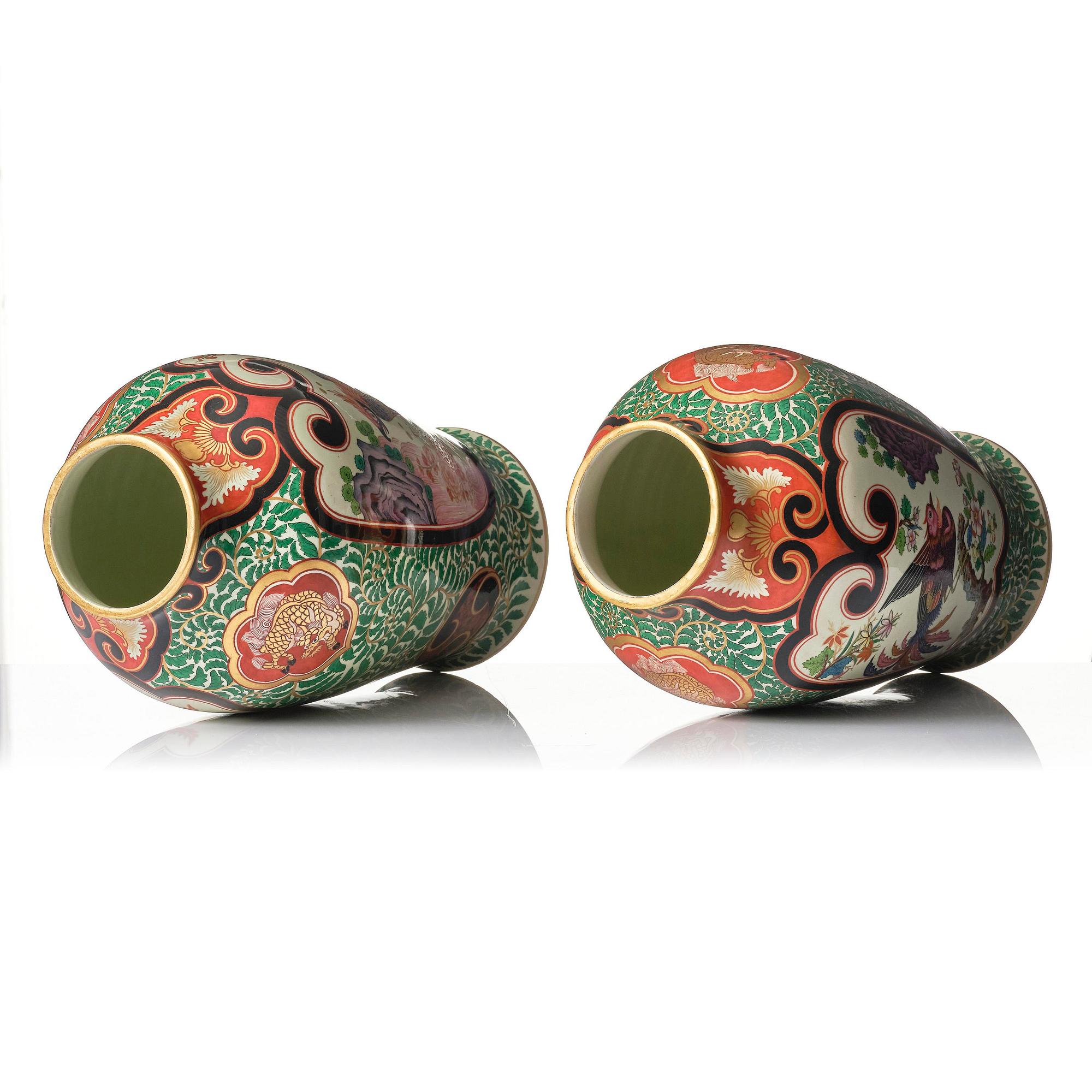
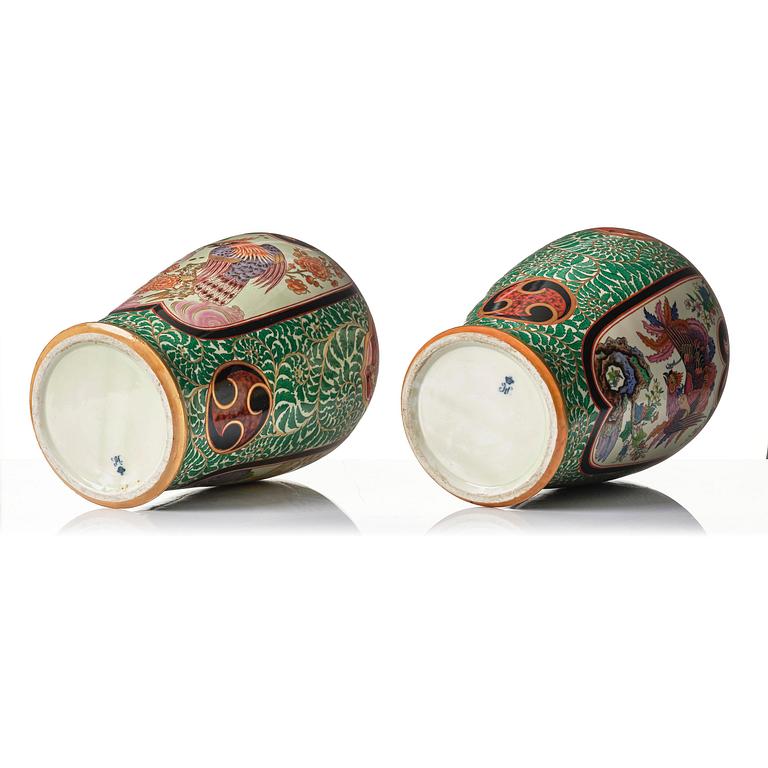
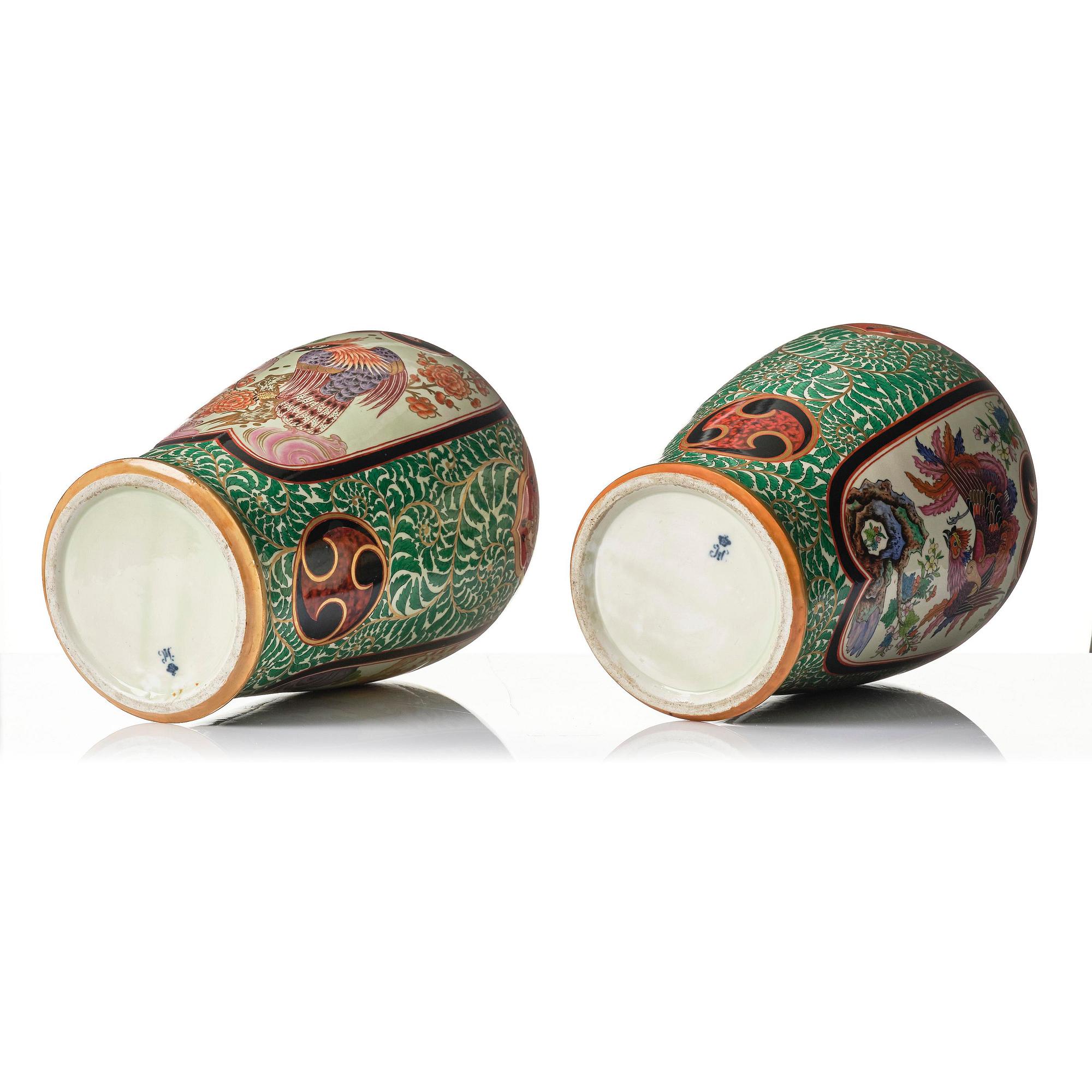
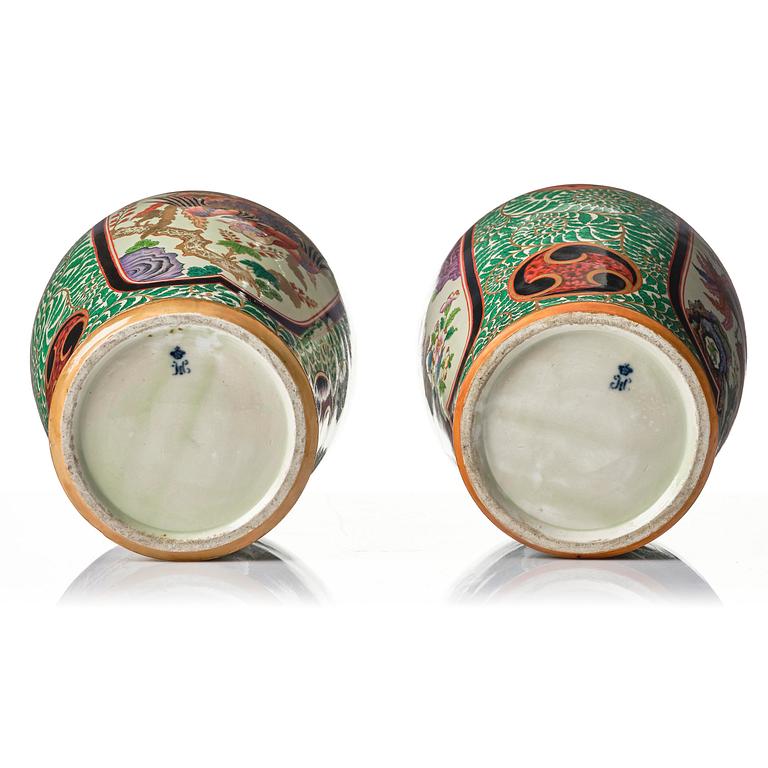
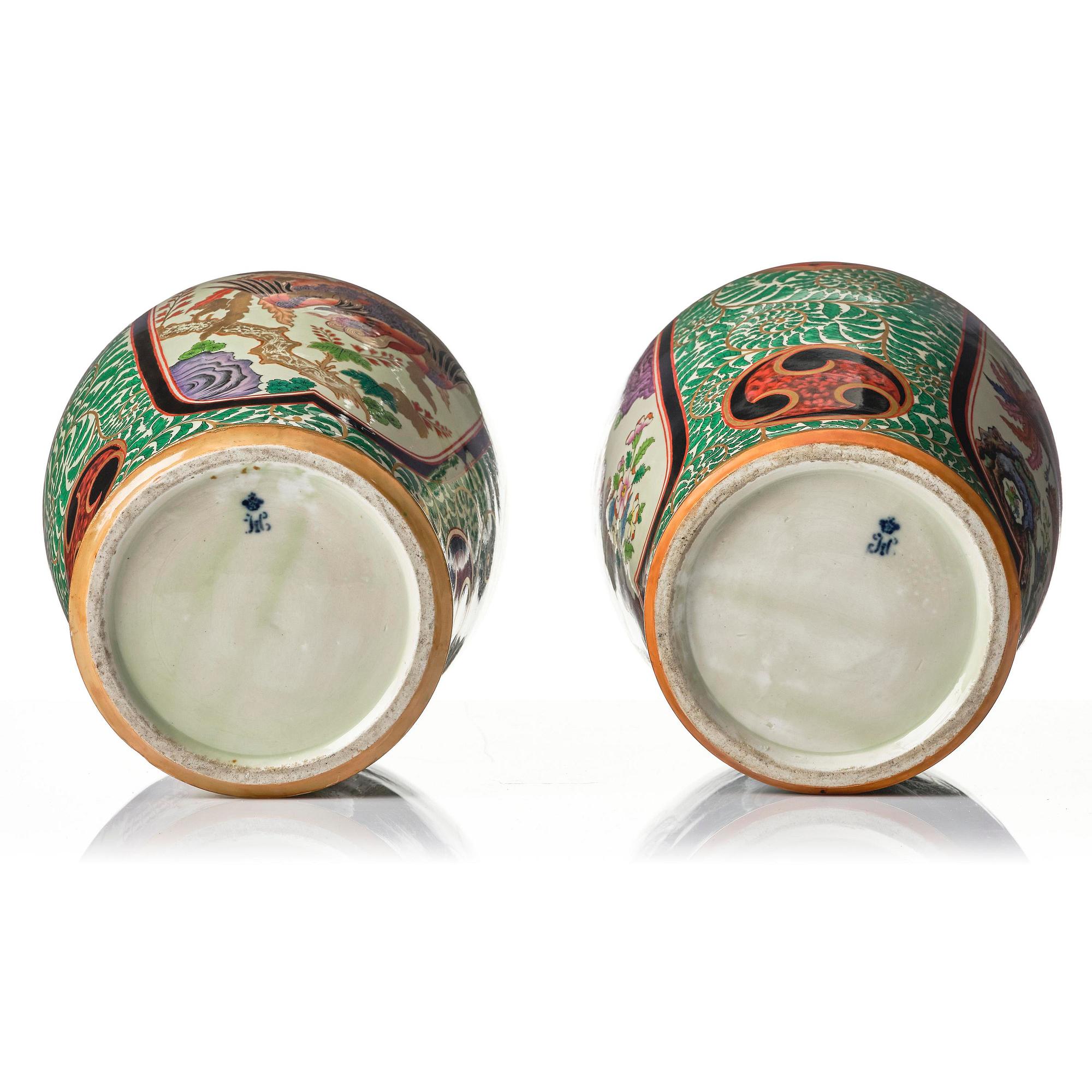
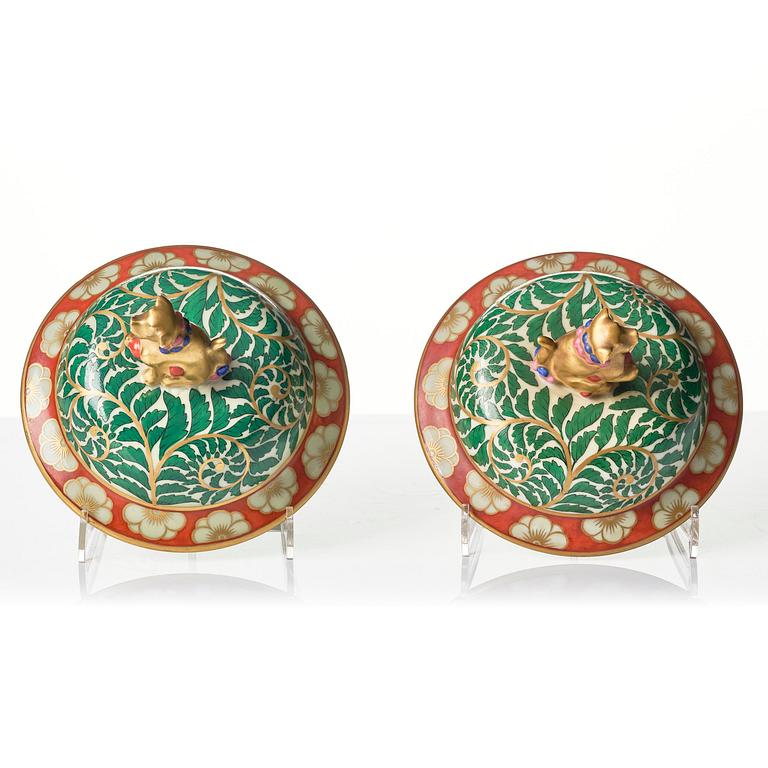
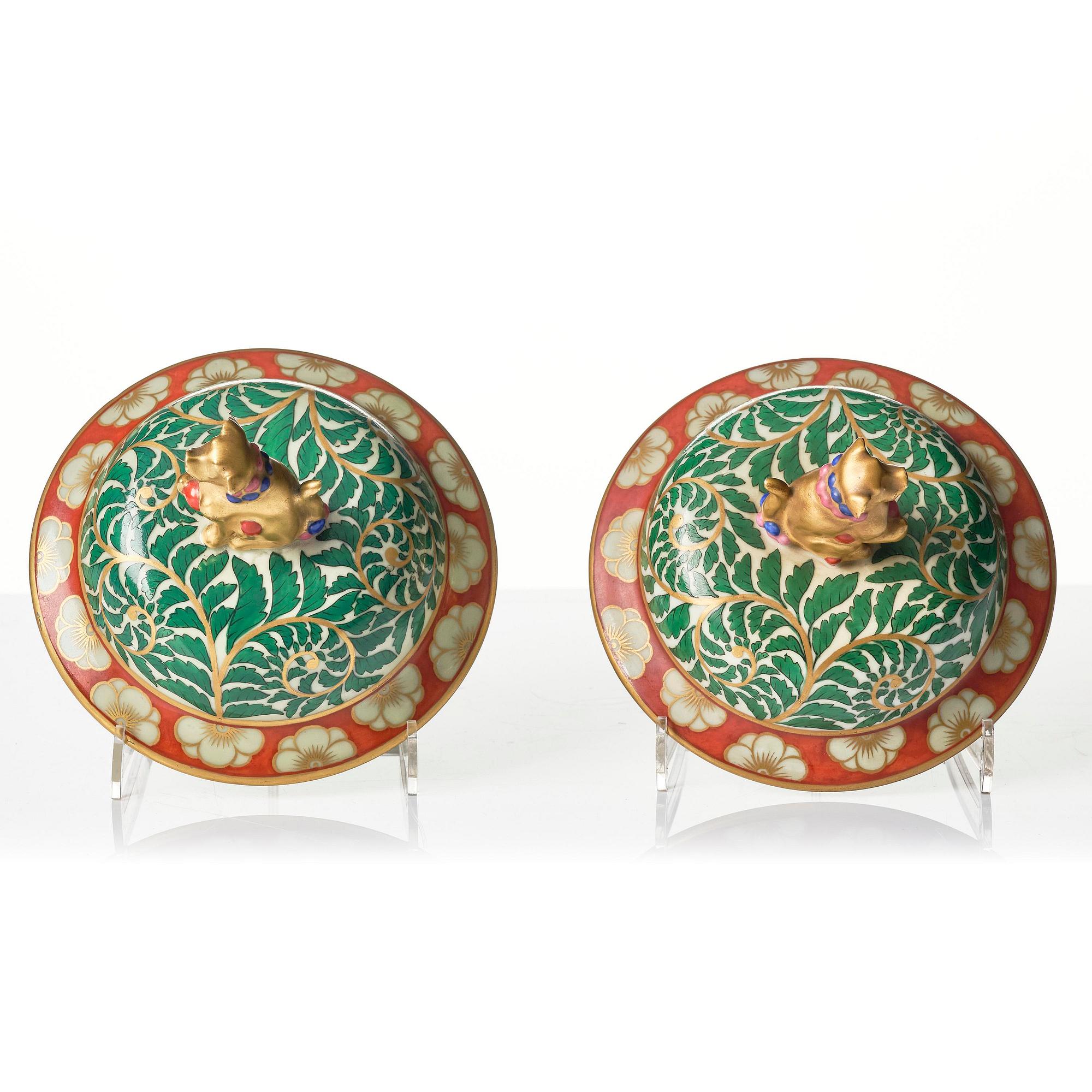
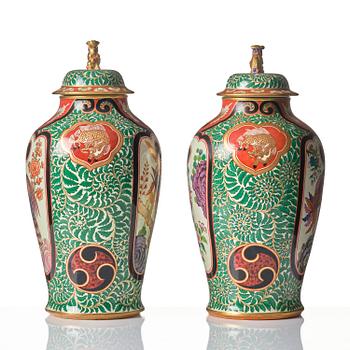
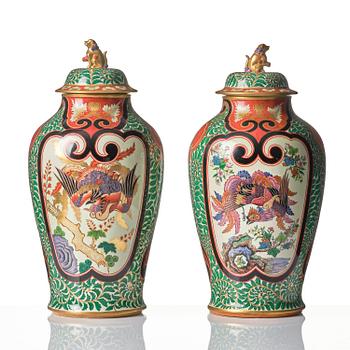
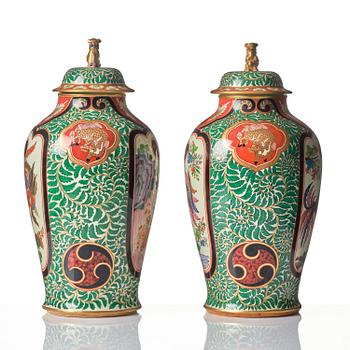
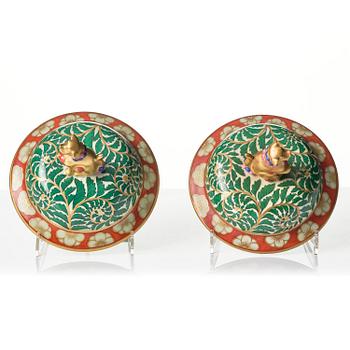
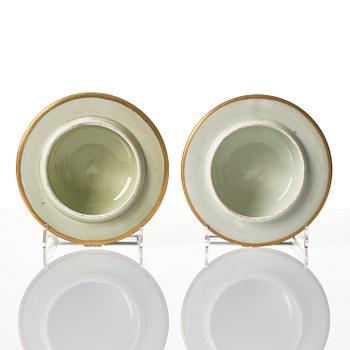
A pair of Russian vases with covers, Imperial Porcelain Factory, St Petersburg, period of Czar Nicholas I (1825-55).
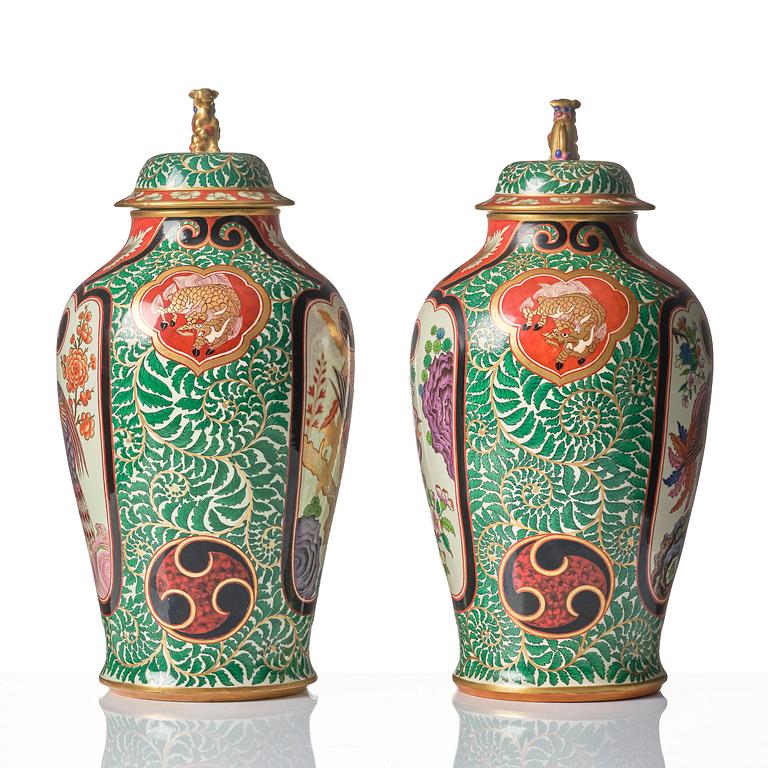
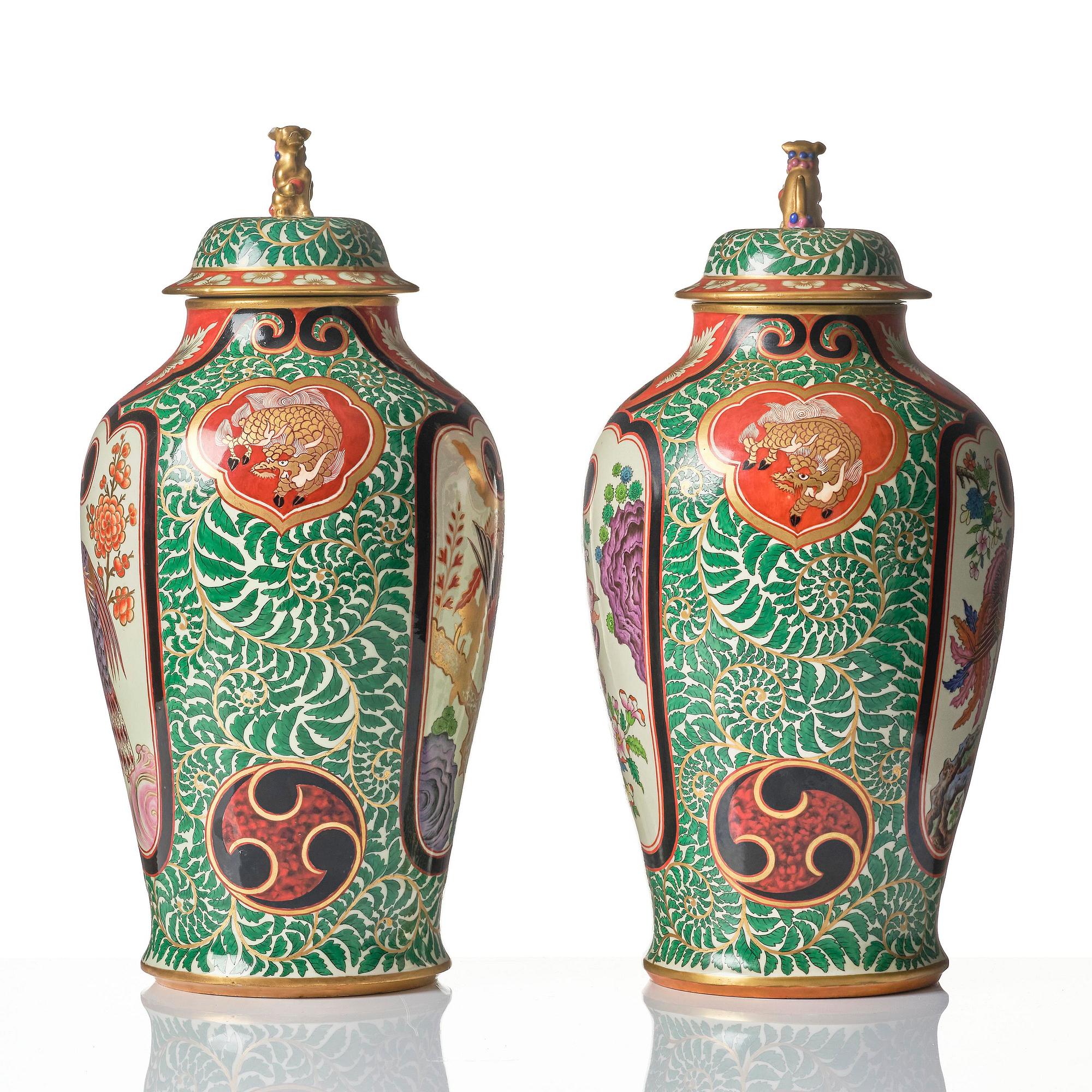
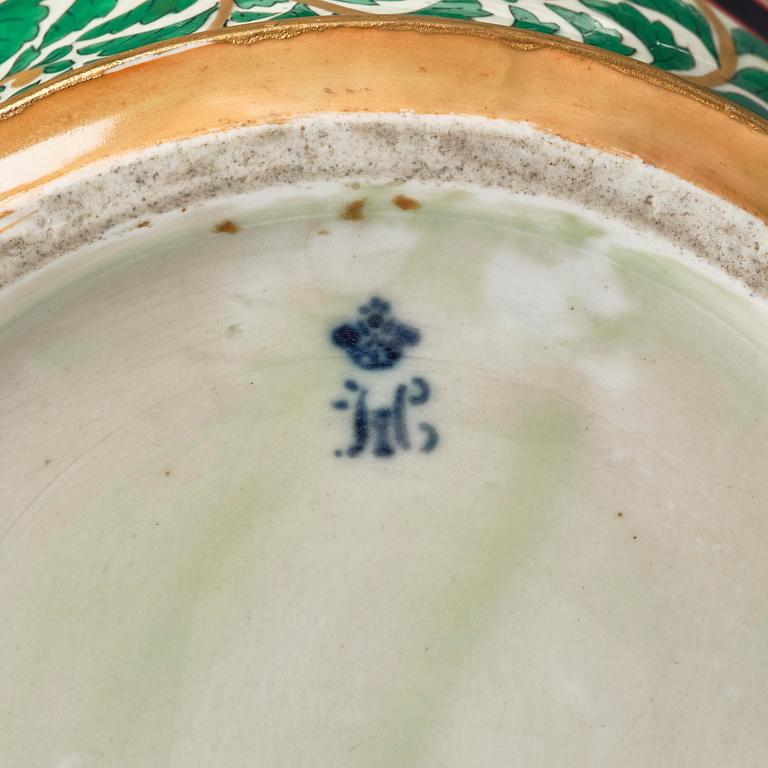
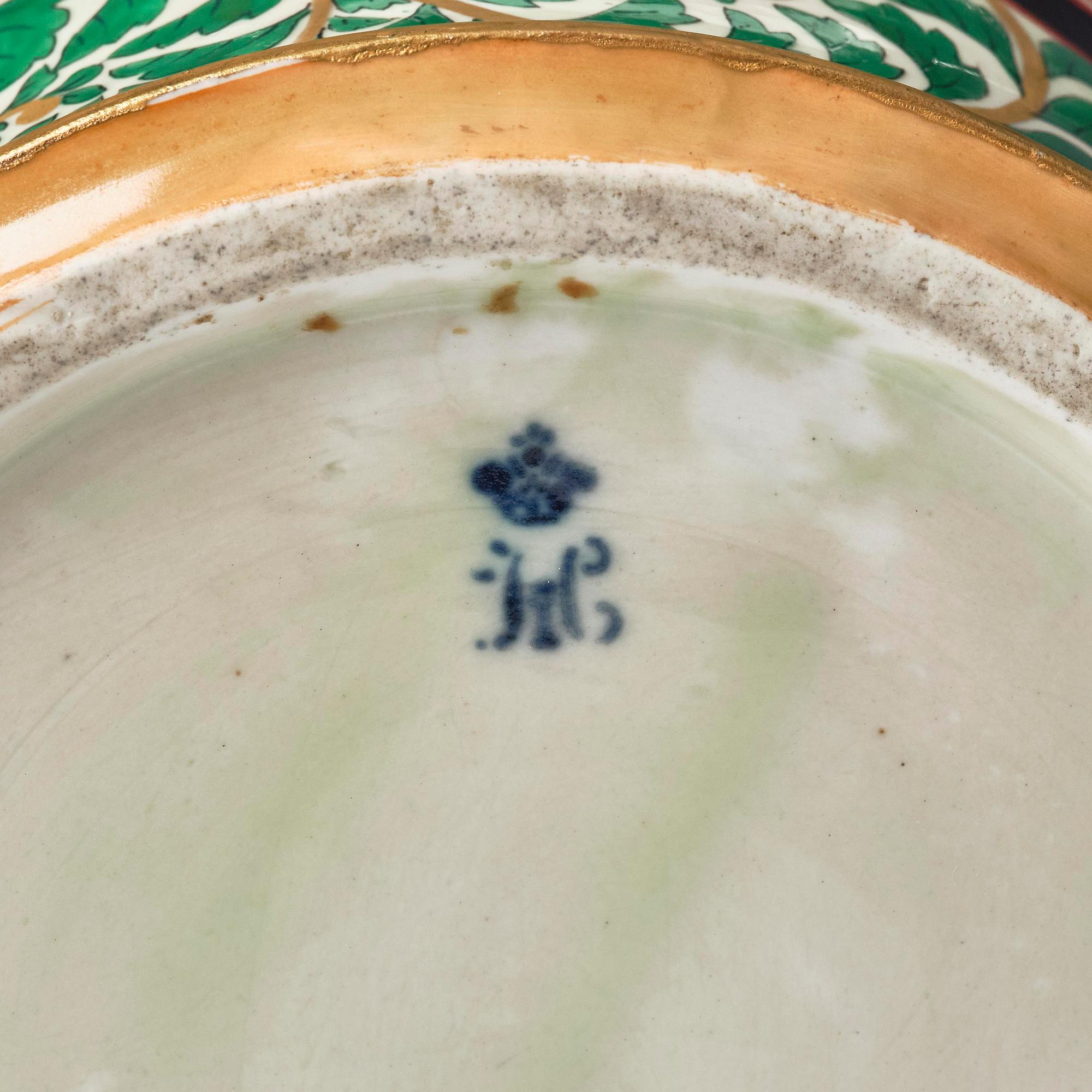
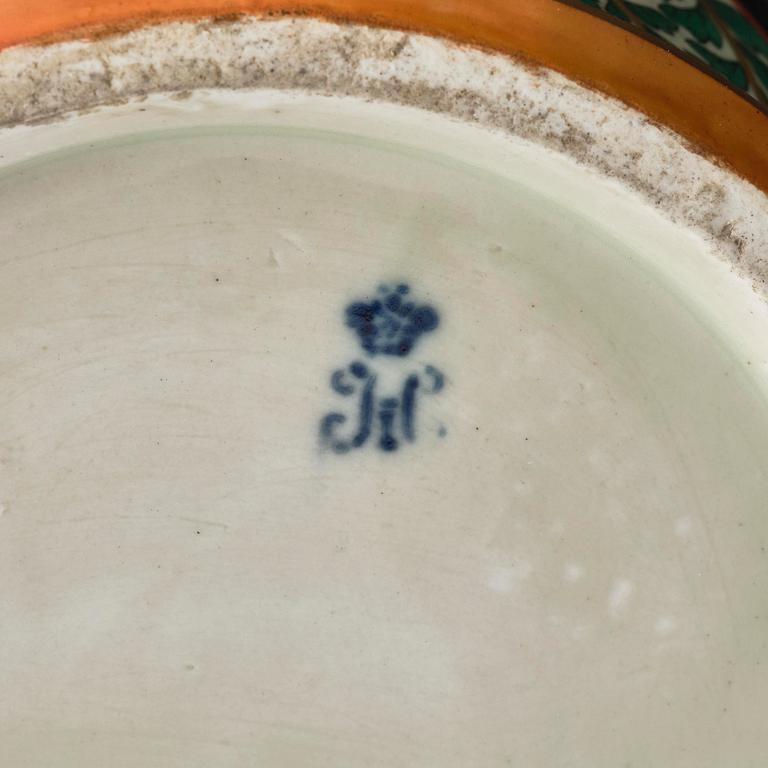
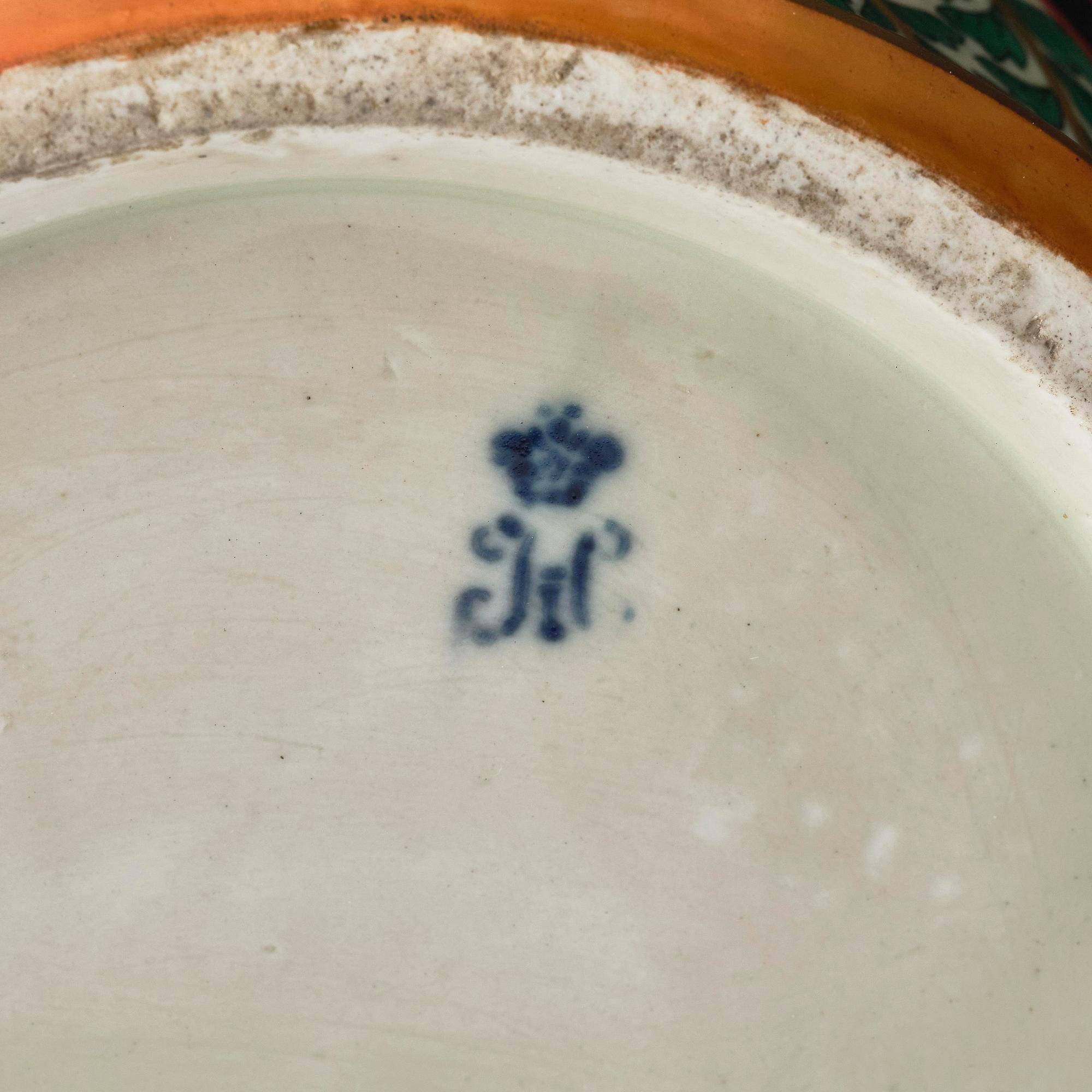
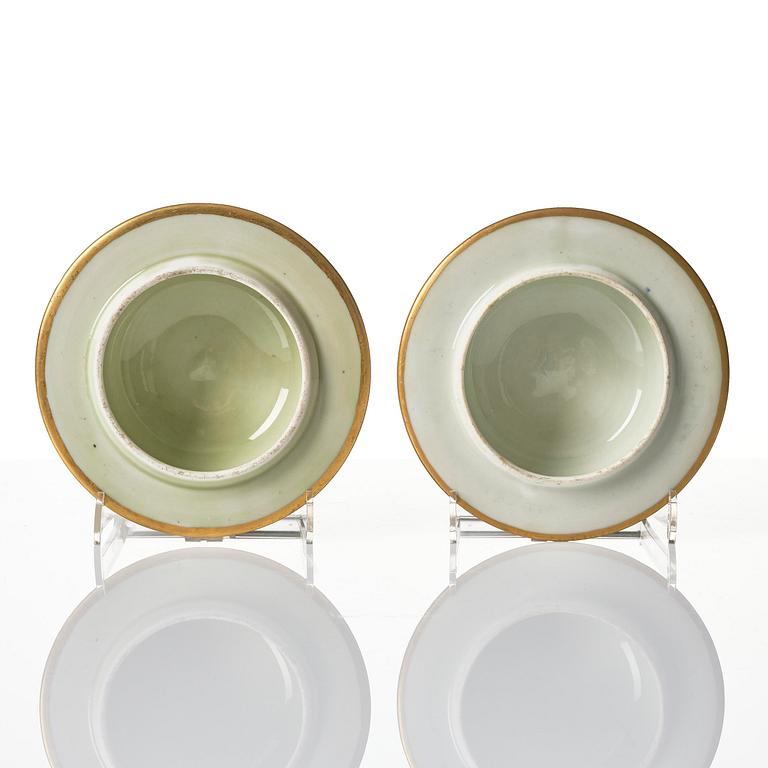
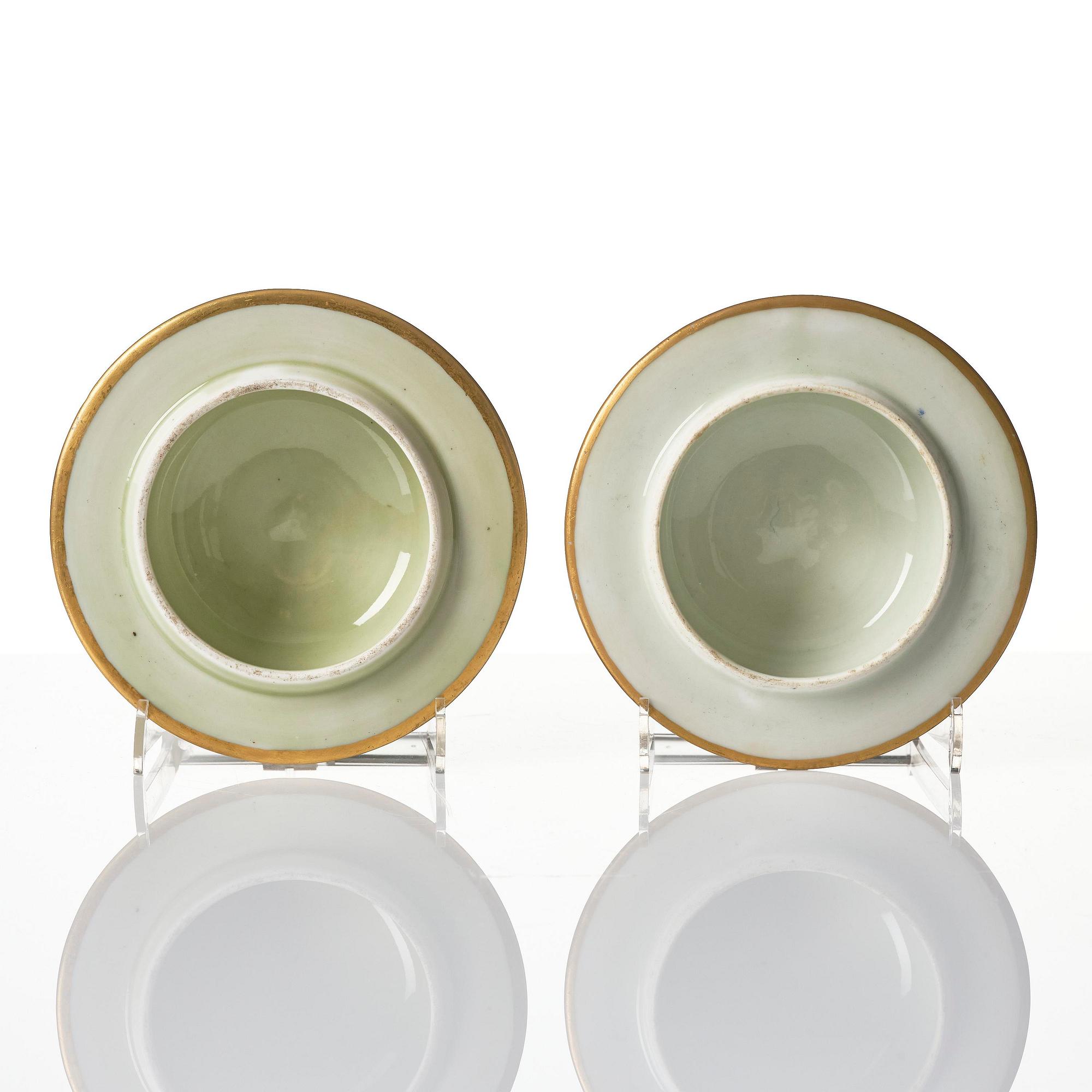
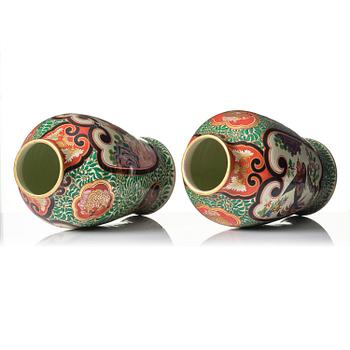
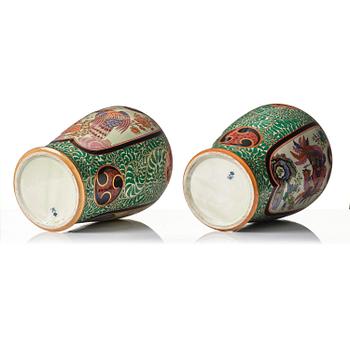
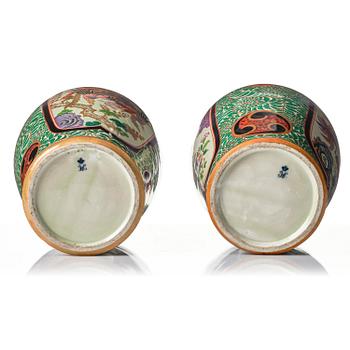
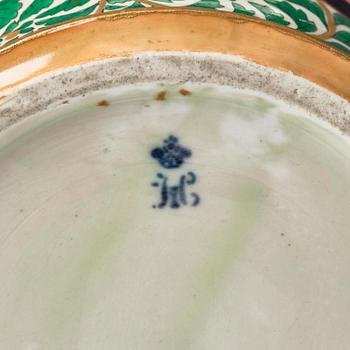
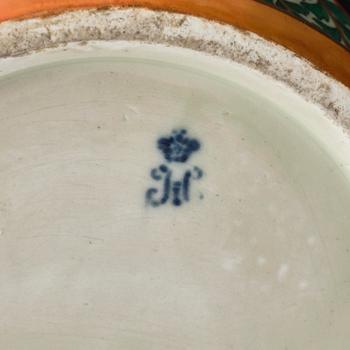
Marked under base with underglazed blue factory marks. Inspired by japanese jars, of baluster shape with finials in the shape of dogs, painted and gilded decoration i vibrant colours with phoenix birds, mythical creatures, flowers and symbols, all against a dense leafy scroll. Height 43 cm.
Wear.
Exhibitions
Compare with a pair of Japan inspired vases sold at Christies, 1-21 July 2020 Sale 18369, Russian Art, lot no 245.
Compare with a pair of Chinese imitating vases sold at Sothebys New York, Russian Art, 21 April 2010, lot 258.
Compare also a vase at Sothebys New York, "Collections: Silver, Vertu, And Russian Works Of Art", 14 October 2015, lot 122.
Literature
Vases and jars of with are Chinese or Japanese-inspired were quite rare in the period and only a few examples are extant in public collections such as the State Russian Museum. There is a lamp with Chinese-style figural decoration in the collection of the Kremlin Palace, see N.B. von Wolf (ed. T.N. Nosovich), Imperatorskii farforovyi zavod, 1744-1904, St. Petersburg, 2003, fig. 308, p. 199.
Compare with two larger vases in the State Hermitage Collection, transferred to the Museum of the Imperial Porcelain Factory. Museum number:Мз-И-1343 and Мз-И-1344.
More information
During the reign of Emperor Nicholas I (1825-1855) the Imperial Porcelain Manufactory underwent both a technical and artistic renaissance. The Emperor's interest in, and support of, scientific advances in the manufacture of porcelain and paints resulted in new shapes and colors that had heretofore been unable. While pairs of large vases based on Classical models were best known, factory sculptors, having studied the collections of the Winter Palace, also produced large vases based on Chinese and Japanese models, particularly in the 1840s. It is also during his reign we see the Hispano Moresque vases, the Egyptian style vases and the Etruscan service.
As this unusual and rare set of vases proves, factory painters were just as able to copy the figurative painting on Japanese vases as they were Old Master canvases in the Imperial collections.
It is interesting to note that in choosing finials in the shape of western dogs, rather than buddhist lions.
For condition report contact specialist