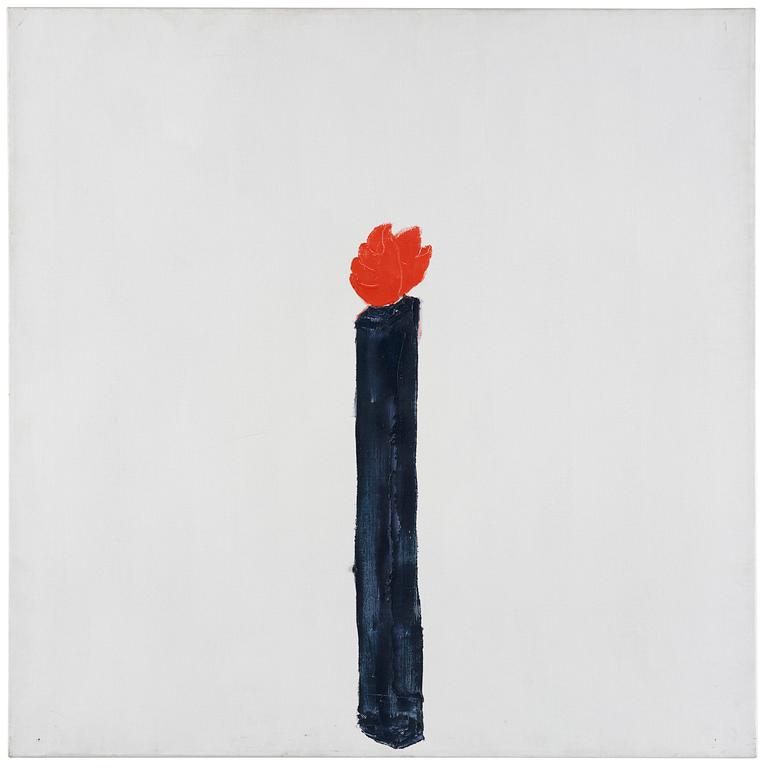
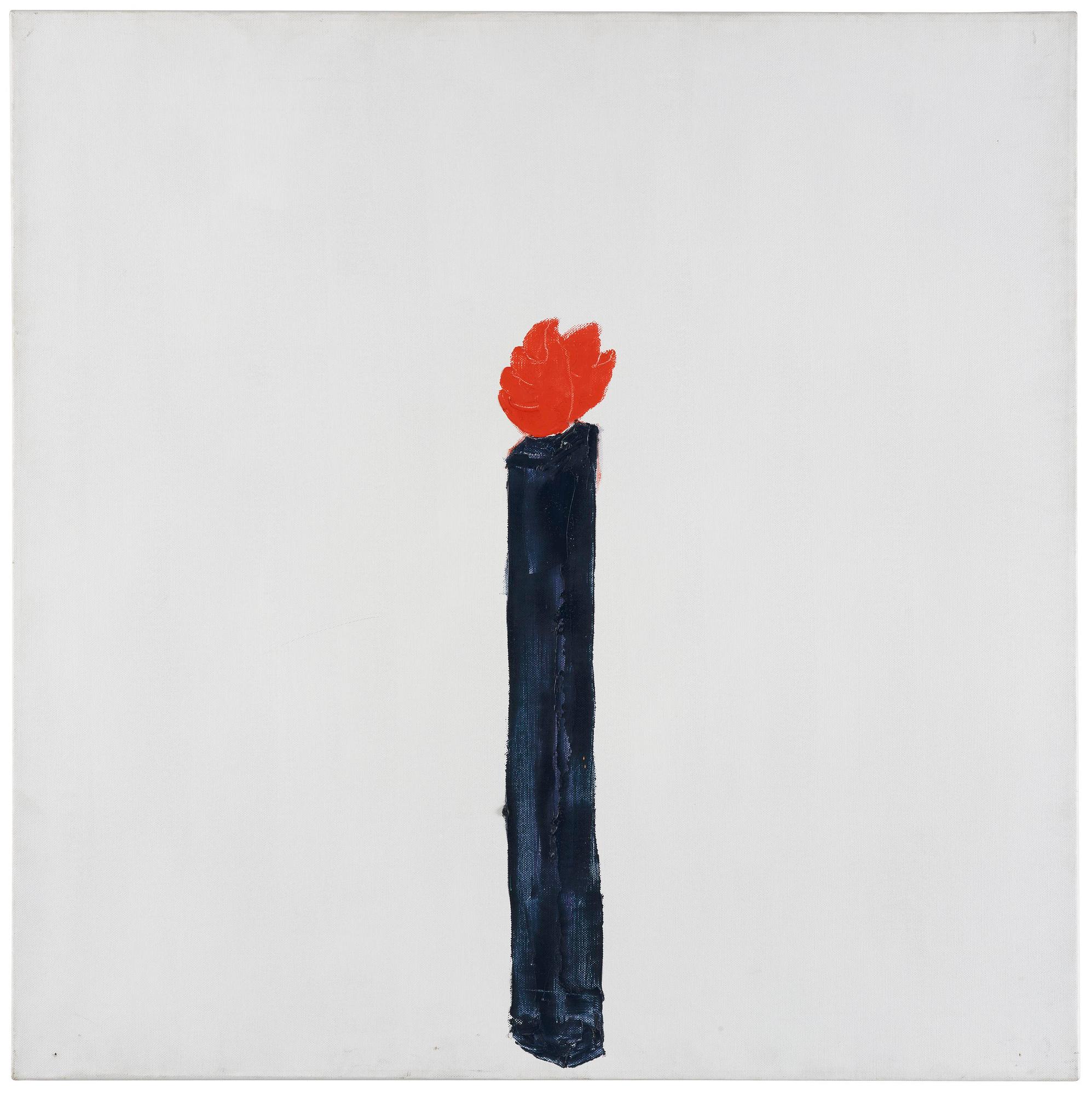
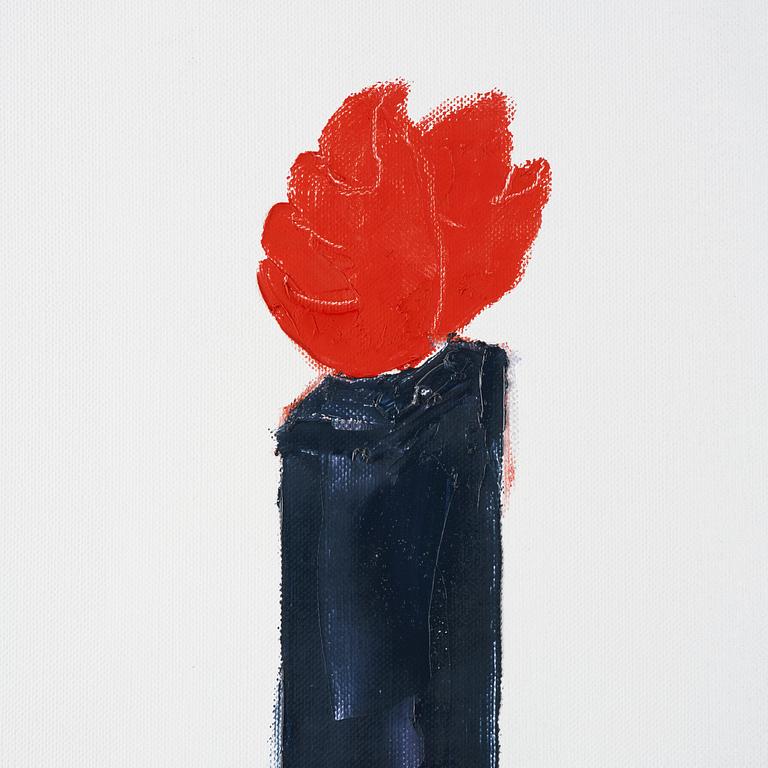
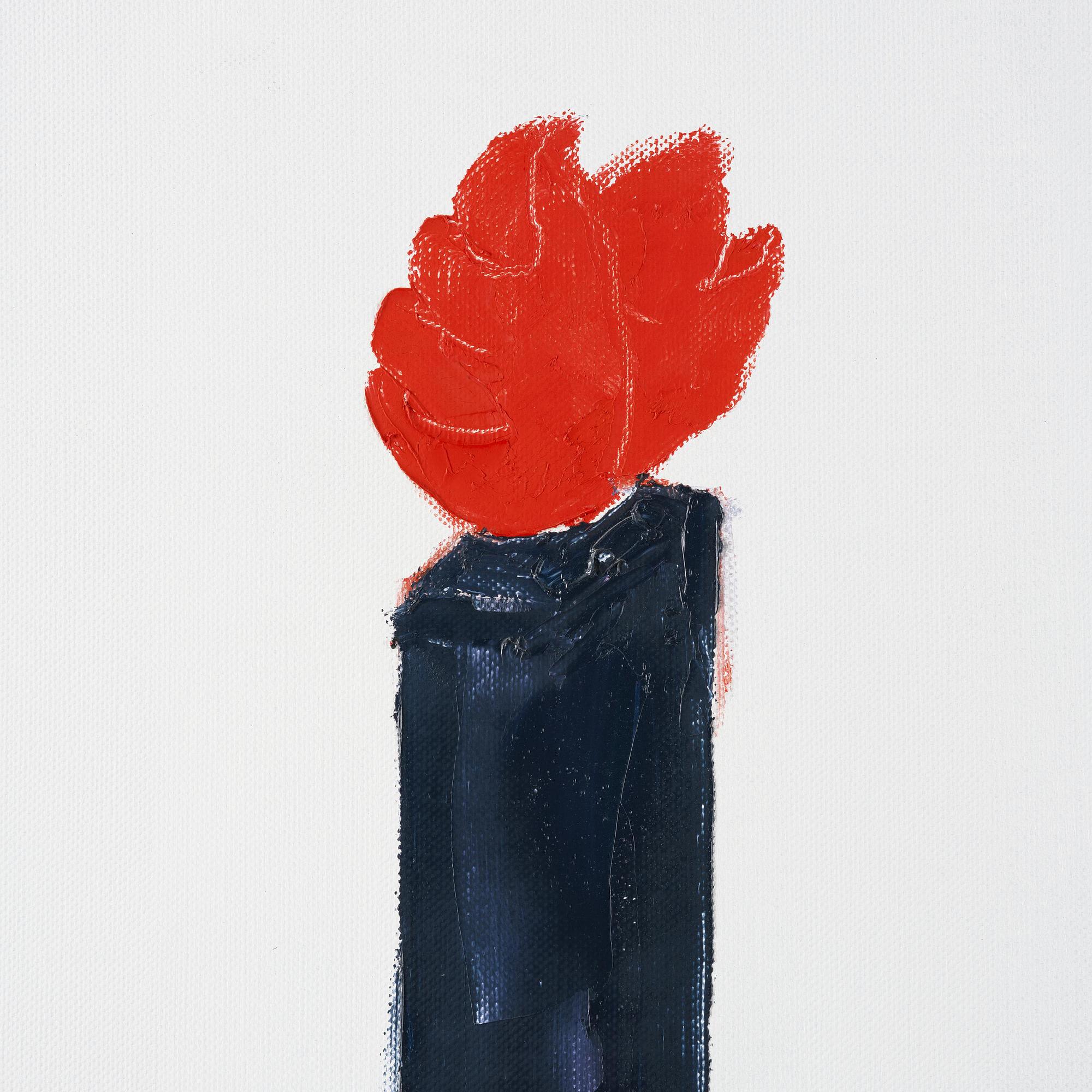
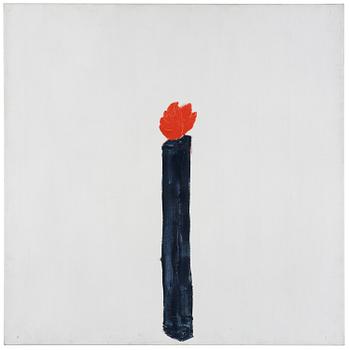
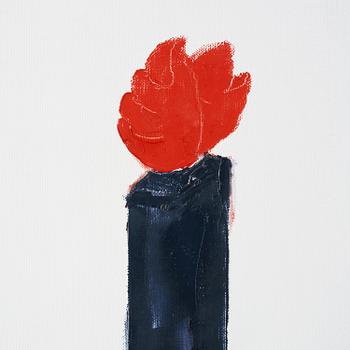
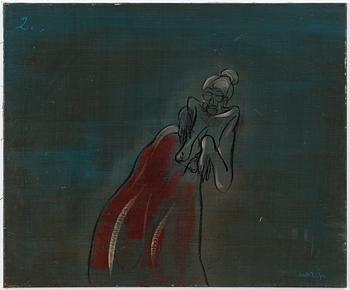
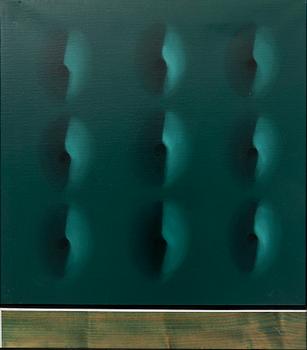
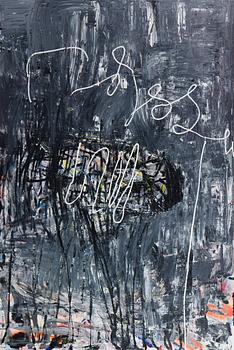
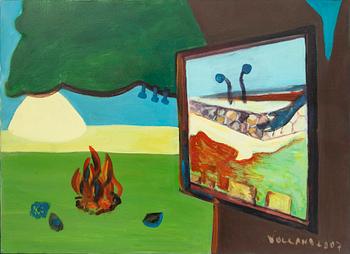
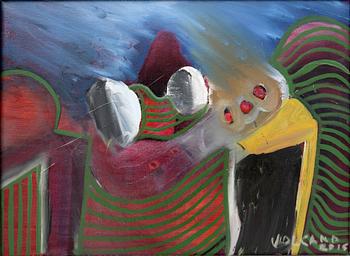
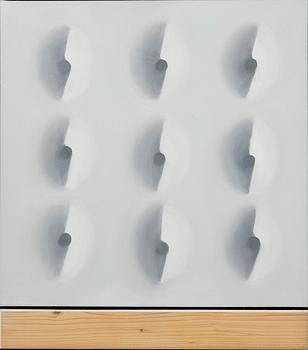
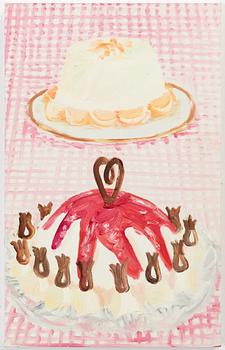
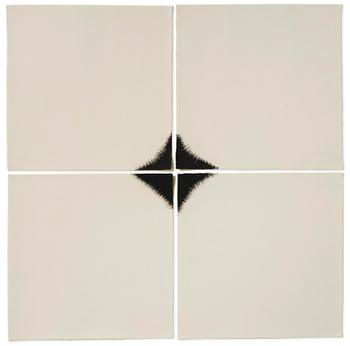
Torsten Andersson (Sweden, 1926-2009) "Staty (Monument med röd snäcka)"
"Staty (Monument med röd snäcka)"
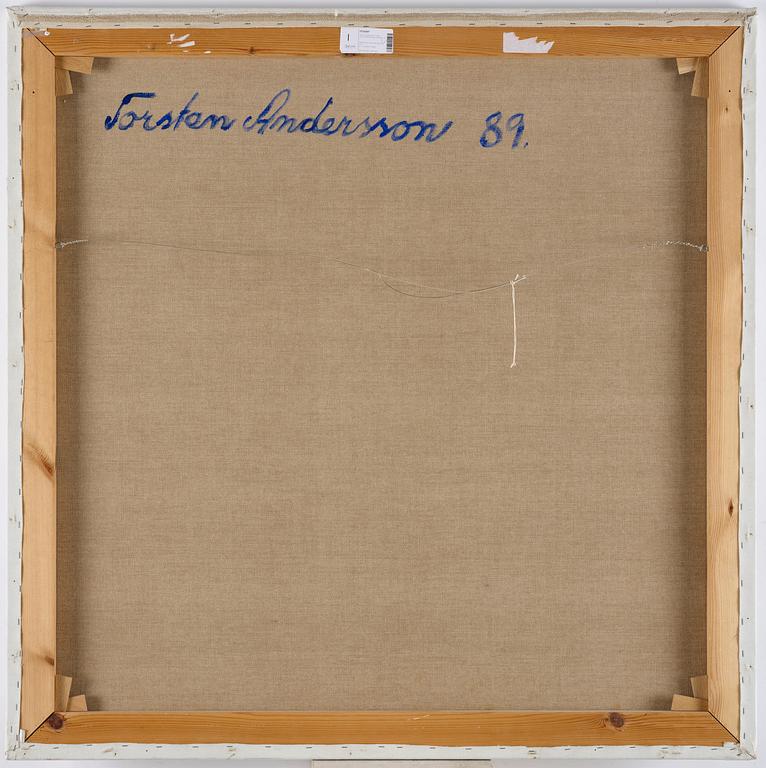
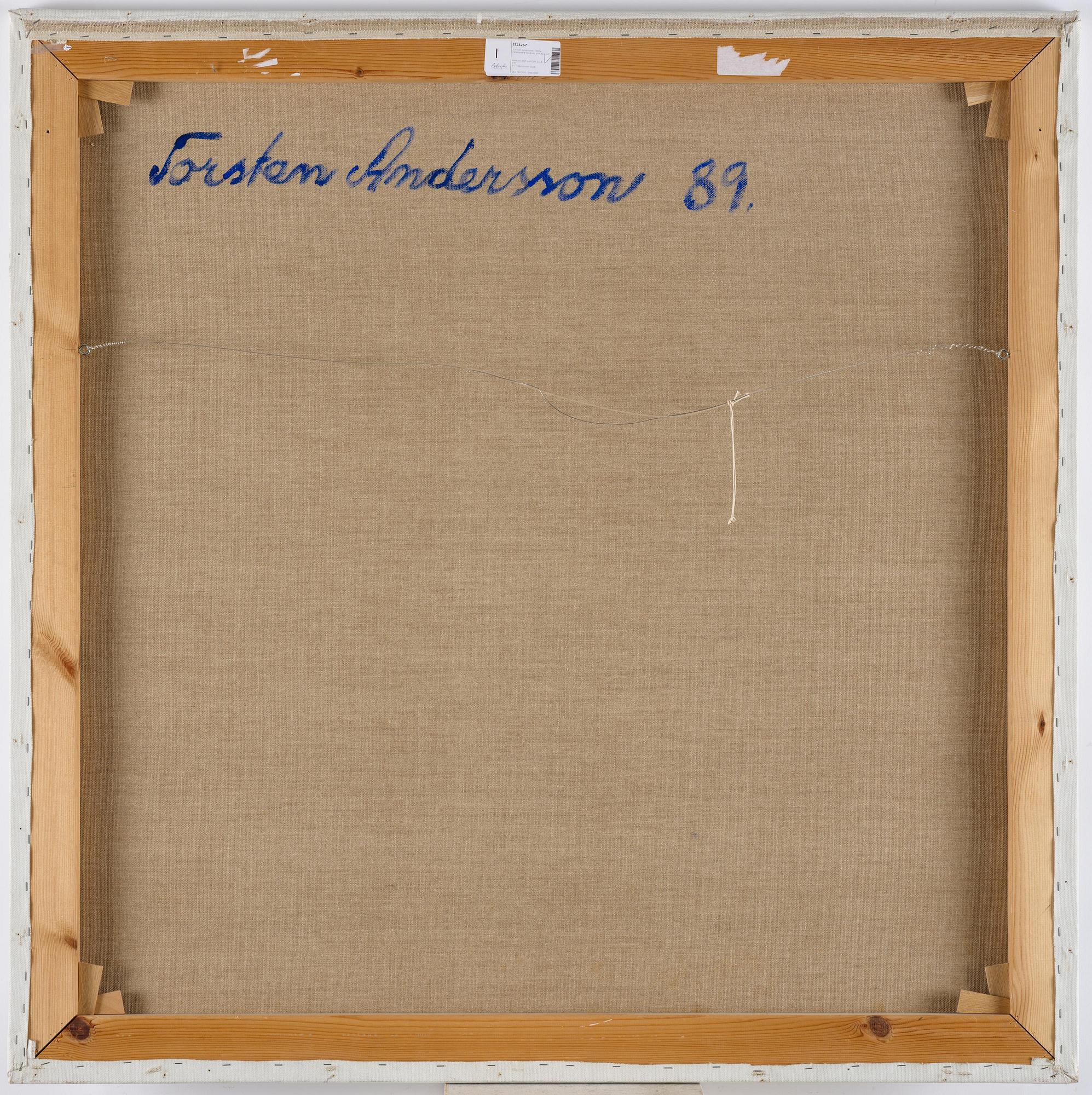
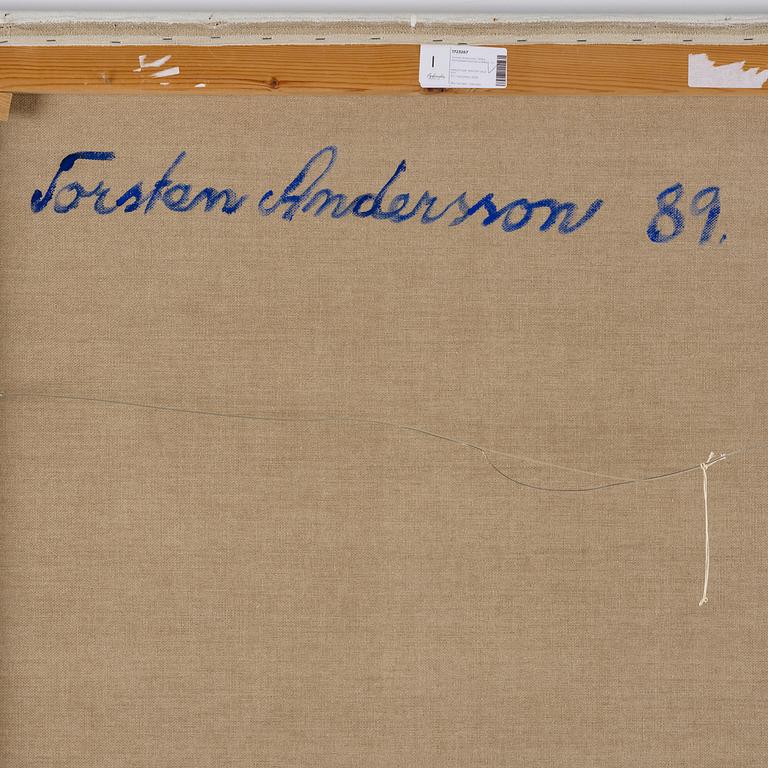
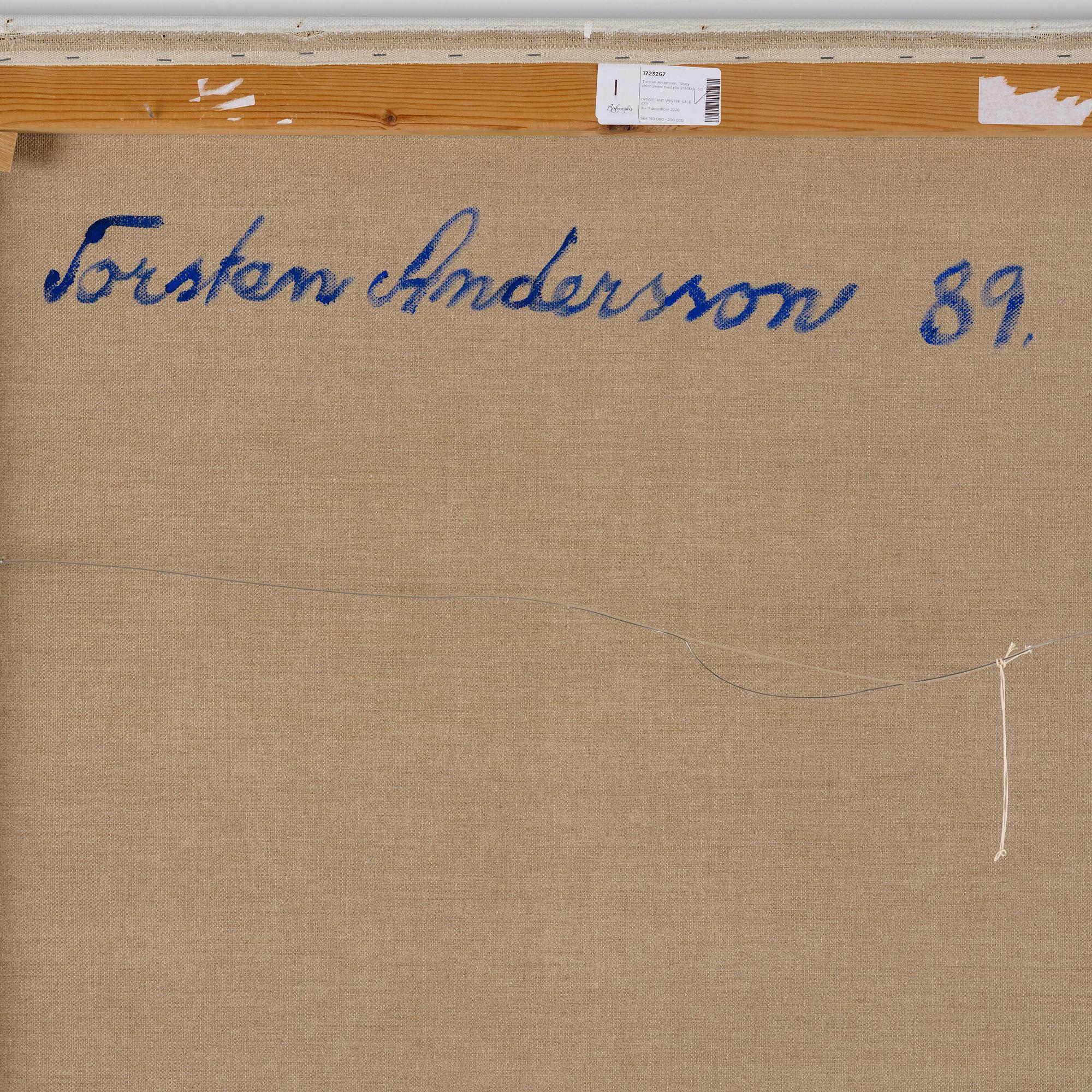
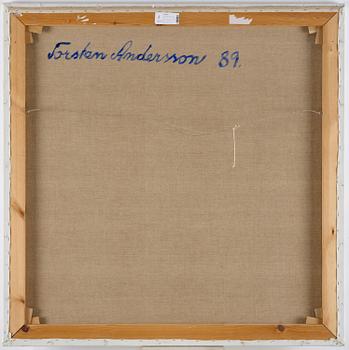
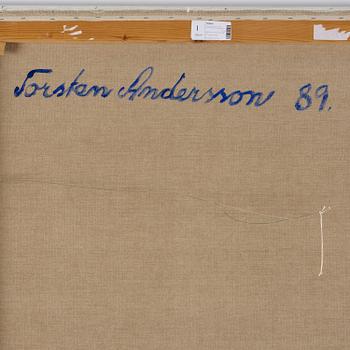
Signed Torsten Andersson and dated -89 verso. Oil on canvas 127 x 127 cm.
Provenance
Galleri Lars Bohman, Stockholm.
Private Collection.
Exhibitions
Galleri Lars Bohman, Stockholm, "Torsten Andersson Statues", 1998.
Art Forum Berlin, 1998.
Literature
Galleri Lars Bohman, "Torsten Andersson Statues", 1998, illustrated full page, p. 29.
More information
This year, Torsten Andersson would have turned 100. He was one of Sweden’s most legendary artists – acclaimed by critics and fellow artists, an inspiration to many, but also enigmatic and known for destroying much of what he created. To commemorate Torsten Andersson’s artistic career, several exhibitions have been presented this year. Torsten Andersson 100 Years opened at Ateljén/Solförrådet in Benarp on 6 June; in August, Kulturhuset Victoria’s art gallery was inaugurated with Torsten Andersson as its inaugural exhibition artist, and the exhibition The Weight of Language was shown at Marabouparken during the summer and autumn. At Konstakademien in Stockholm, Torsten Andersson 100 Years is currently on view, running from 28 November to 16 January 2027.
Bukowskis now presents a private collection of paintings by Torsten Andersson. Together, the works demonstrate Andersson’s masterful brushwork, precise use of colour, and exceptional ability to unite imagination with reality.
For each painting, Andersson would often make hundreds of sketches and preparatory studies, only to burn everything that did not meet his standards. His self-criticism was so uncompromising that he could even “discard” paintings that had been completed many years earlier and exhibited at several museums and art galleries.
Torsten Andersson studied at Otte Sköld’s School of Painting in 1945, at the Royal Danish Academy of Fine Arts in 1947, and at the Royal Institute of Art in Stockholm from 1946 to 1950. In his early paintings, he worked with portraits of abstract objects modelled on nature, as a way of rediscovering the possibilities of painting after Modernism. Slowly but surely, he developed his own visual language and freed himself from both his predecessors and prevailing traditions.
It is telling that his 1962 exhibition at Galerie Burén was titled Images from Frosta Hundred, referring to his childhood region in Skåne. There he presented some of the works that would later become among his best known. After many years of silence, he exhibited a series of paintings in the 1980s depicting abstract sculptures of poetic origin. He painted distinctive, object-like forms against monochrome backgrounds – sculptures that did not exist, but which were given titles and references to the real world. Over time, the motifs became more concrete, and in the early 2000s his canvases became populated by soft, textile-like forms and signs. His visual language continued to develop and take shape.
Although Andersson was regarded as a radical non-conformist, he was a professor at the Royal Institute of Art in Stockholm from 1960 to 1966. At the same time, he participated in several international exhibitions and represented Sweden at the São Paulo Biennial in 1959 and 1983, as well as at the Venice Biennale in 1964. He was awarded prestigious distinctions including the Prince Eugen Medal in 1995, the Rolf Schock Prize in 1997, and the Carnegie Art Award in 1998 and 2008.
His works are represented in several significant private collections, as well as at Moderna Museet, the Nationalmuseum in Stockholm, and Helsingborg Museum. The most extensive collection of his work is held by Malmö Art Museum, thanks to a donation made by the artist in the 1990s.
More about Torsten Andersson
Torsten Andersson is a Swedish visual artist who was a student at the Royal Institute of Art in Stockholm from 1946-50 and then professor from 1960-66. He has twice received the Carnegia Art Award, winning first prize in 2008, and winning the Chock prise in 1997. Andersson has dedicated himself to an explorative form of painting, seeking what he terms his own language and a new path for painting. In the early 1960s, Andersson reached a breakthrough with his paintings “Måsen” and “Källan”. Later he focused on painting portraits of fictional sculptures. Known for his vigorous self-criticism, Andersson is known for destroying works that he believes don’t live up to his fullest potential.
During his lifetime Andersson exhibited internationally and participated in the 32nd Venice Biennale in 1964 and the São Paulo-Biennale in 1959 och 1983. Retrospective exhibitions of his work was held at Moderna Museet in 1986 and Malmö Konsthall in 1987. His work was featured but not limited to solo and group exhibitions at Gothenburg’s Art Museum (2008), Moderna Museet in Stockholm (2006), Zeno X Gallery in Antwerp (2003), Konstmuseum Bonn (1999), Louisiana Museum of Modern Art, Humlebæk (1997), Malmö Konstmuseum (1995), and Centre Georges Pompidou, Paris (1981).
For condition report contact specialist

What will the transport cost?
Shipping can only be arranged by contacting specialdelivery@bukowskis.com.
Covered by droit de suite
Image rights
The artworks in this database are protected by copyright and may not be reproduced without the permission of the rights holders. The artworks are reproduced in this database with a license from Bildupphovsrätt.