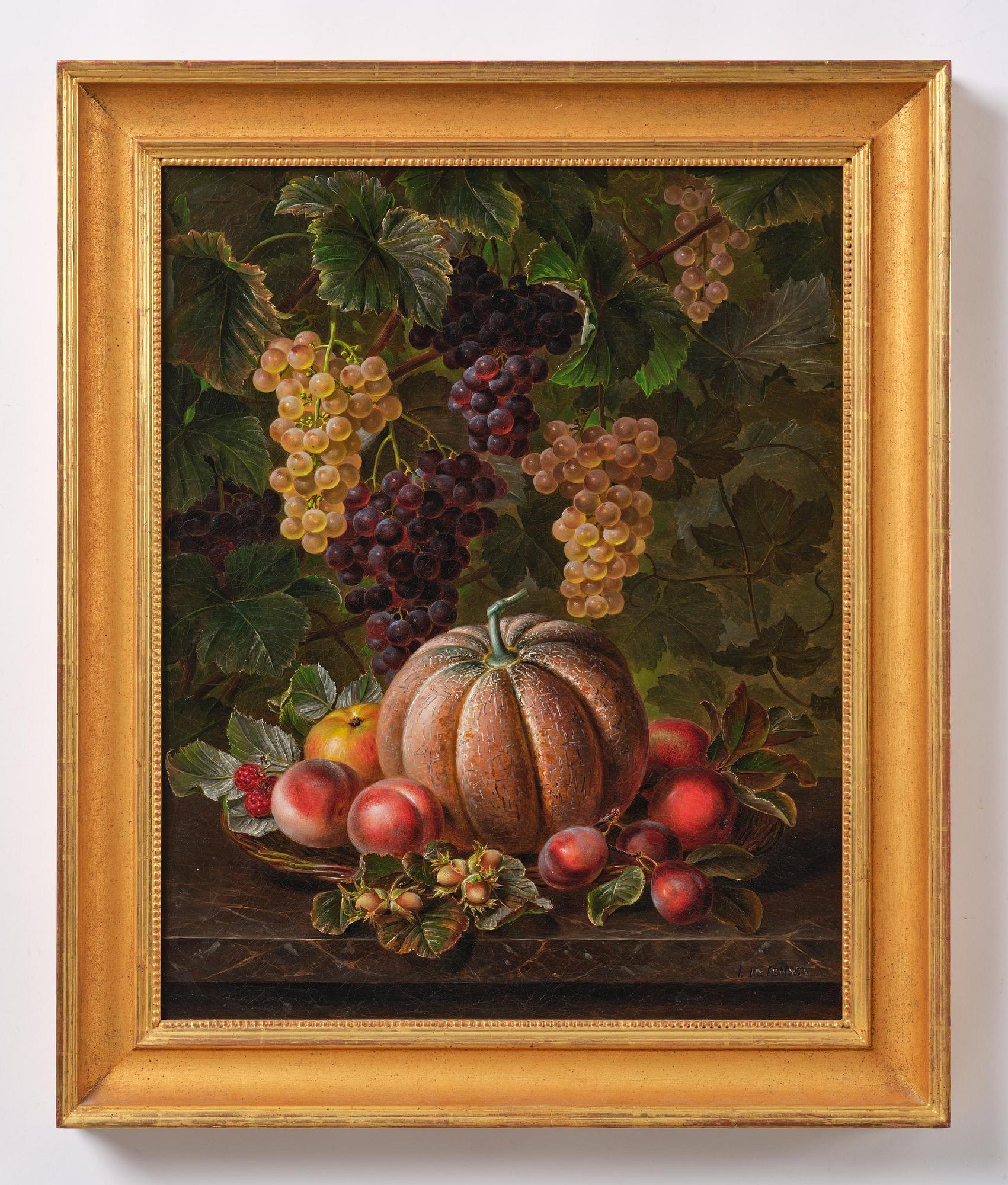
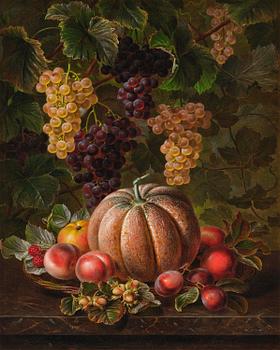
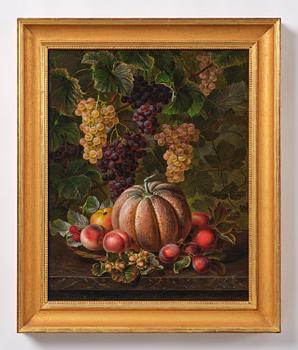
Johan Laurentz Jensen (Denmark, 1800-1856) Still life with grapes, stone fruits, pumpkin and hazelnuts
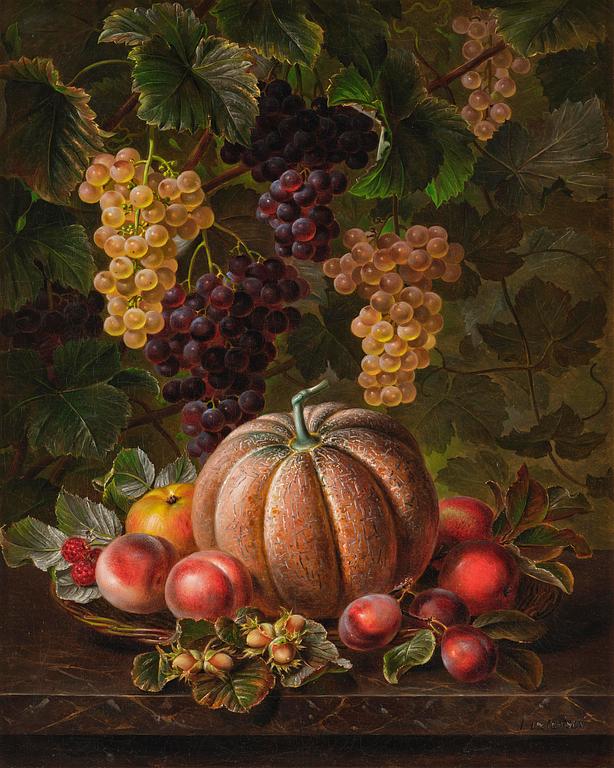
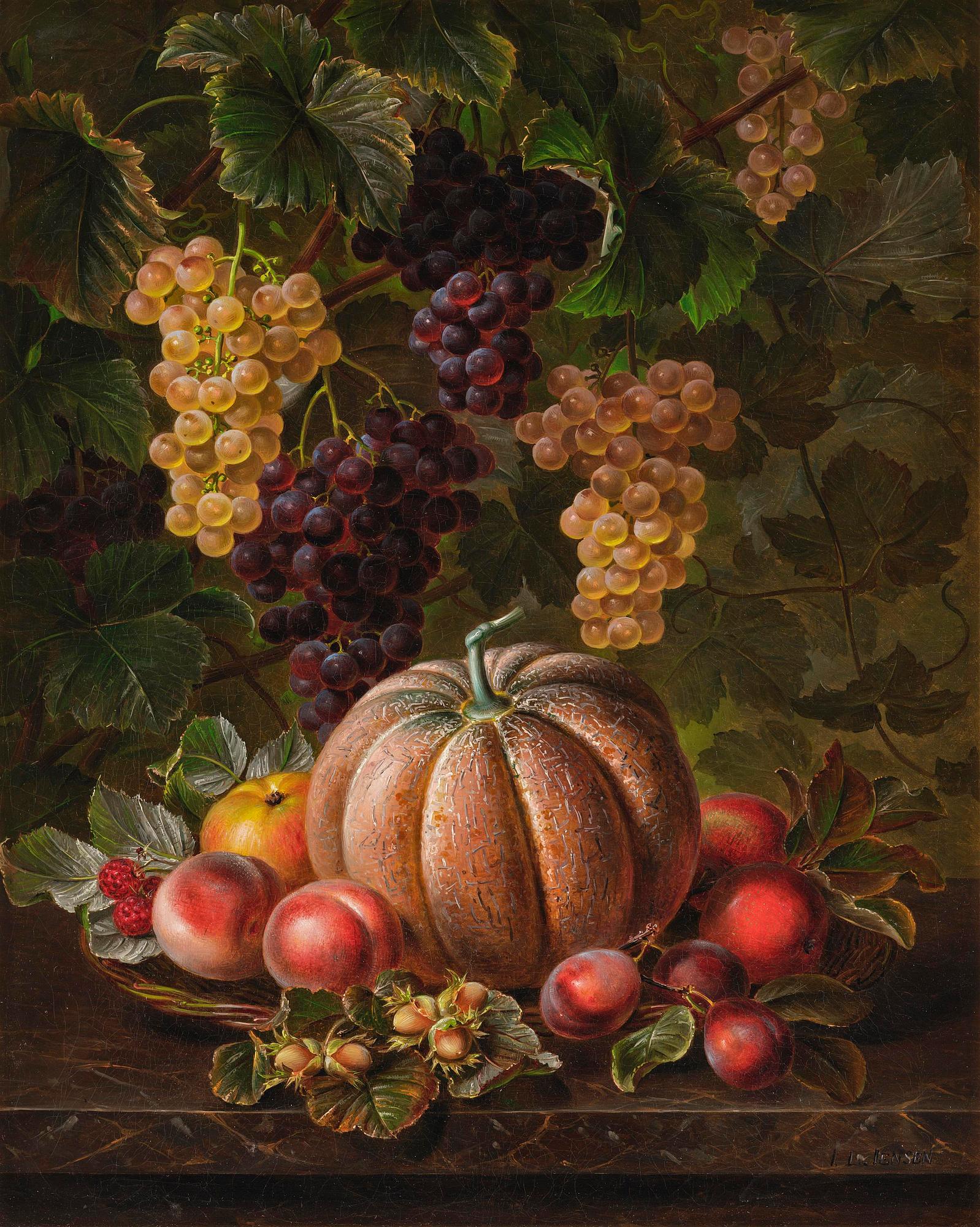
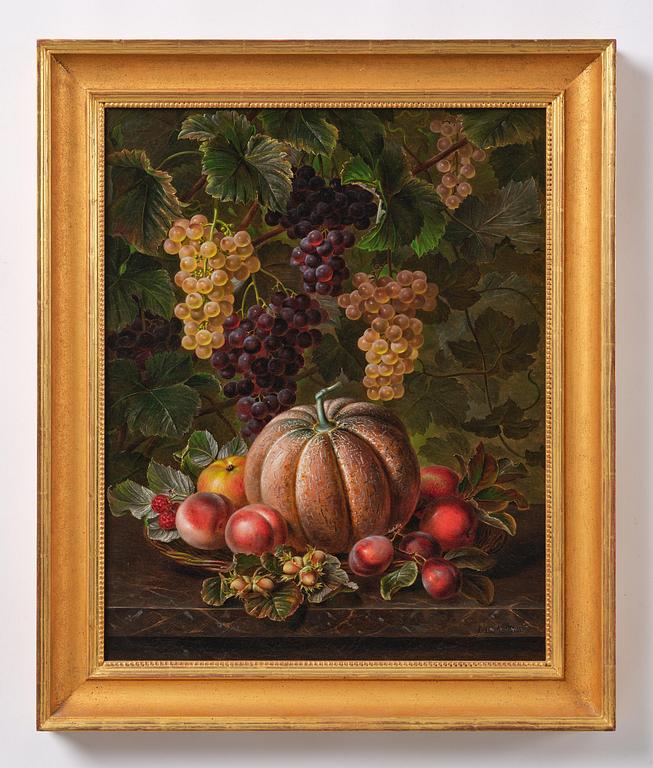
Still life with grapes, stone fruits, pumpkin and hazelnuts
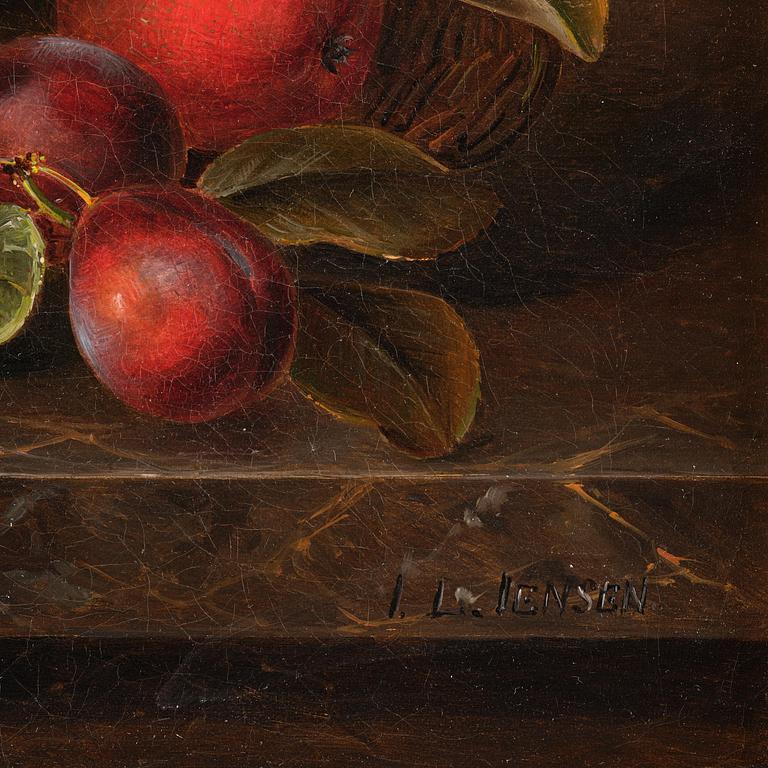
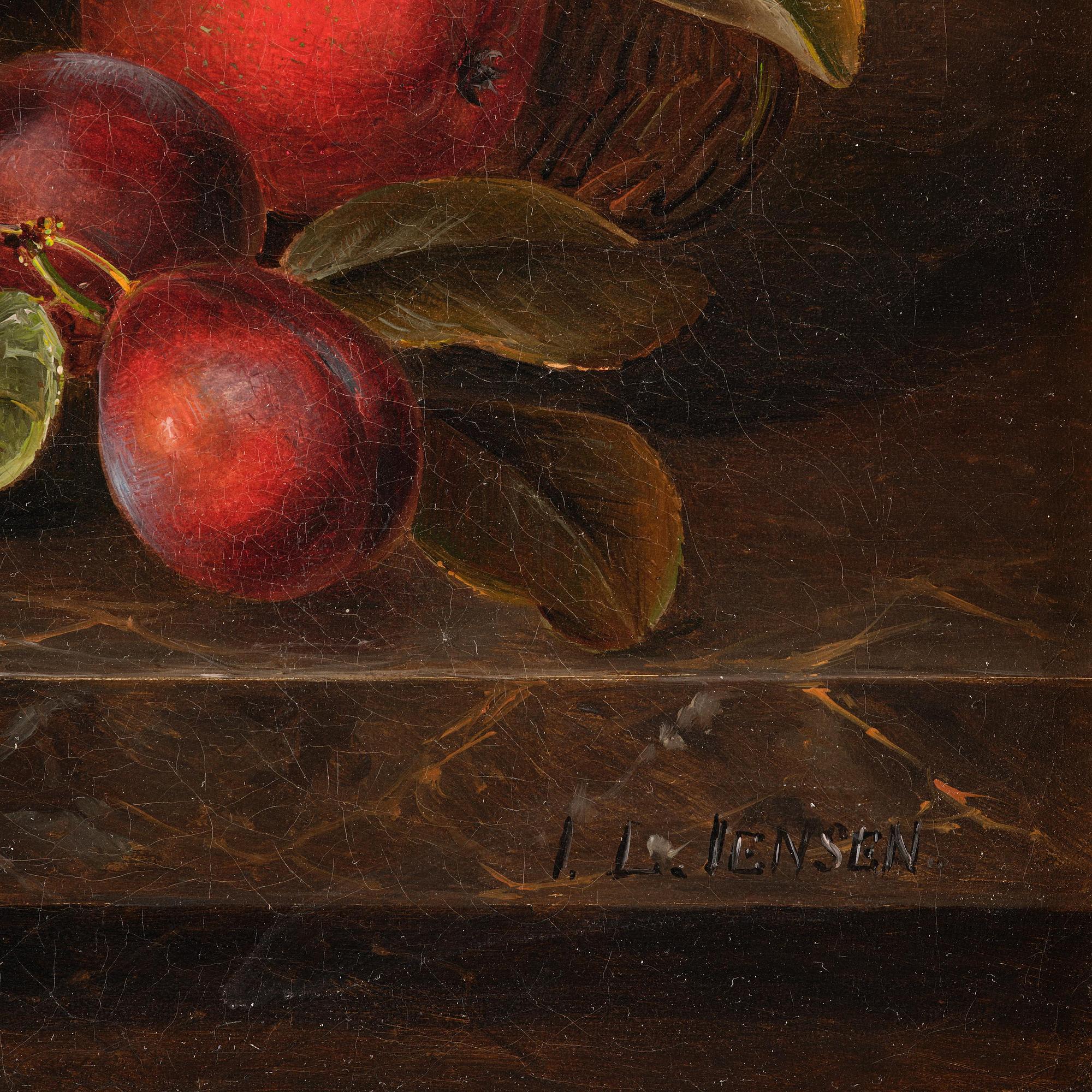
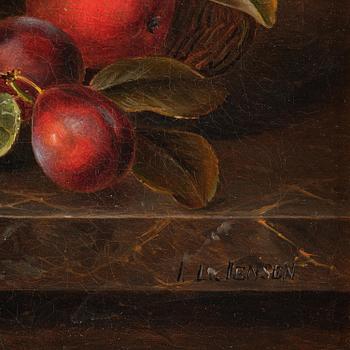
Signed I. L. Jensen. Oil on canvas, 68 x 54.5 cm.
Exhibitions
Svenskt Tenn, Stockholm, “Bord duka dig!”, 6 September–20 October 2024.
More information
Johan Laurentz Jensen’s lifetime coincided with the period in Danish art history known as the Golden Age. During this period, flower painting was also highly esteemed, and Jensen soon became closely associated with the genre. At the age of just fourteen, he was admitted to the Kunstakademiet in Copenhagen, where he was taught by, among others, Christoffer Wilhelm Eckersberg and the flower painter Claudius Ditlev Fritzsch. He found inspiration above all in the older Dutch still-life painters, particularly Jan van Huysum. After completing his studies at the academy, Jensen travelled to Paris, where he continued his training under the Flemish brothers and flower painters Gérard and Cornelis van Spaendonck. From there, he continued to Sèvres to study miniature and porcelain painting. Following his return to Denmark, Jensen was employed by Den Kgl Porcelainefabrik, but he continued to paint and also opened his own studio, with several pupils and assistants. One of his female pupils, Louise of Hesse-Kassel, later became Queen of Denmark through her marriage to Christian IX.
Jensen’s painting is characterised by richly varied arrangements of flowers and fruit in clear, luminous colours, painted with such a fine brush that not the slightest brushstroke is visible. The plants and fruit, including exotic species that the artist had the opportunity to study in the botanical gardens at Rosenborg, are rendered with meticulous attention to detail and often with astonishing naturalism. Insects such as butterflies and bumblebees are sometimes concealed among the flowers.
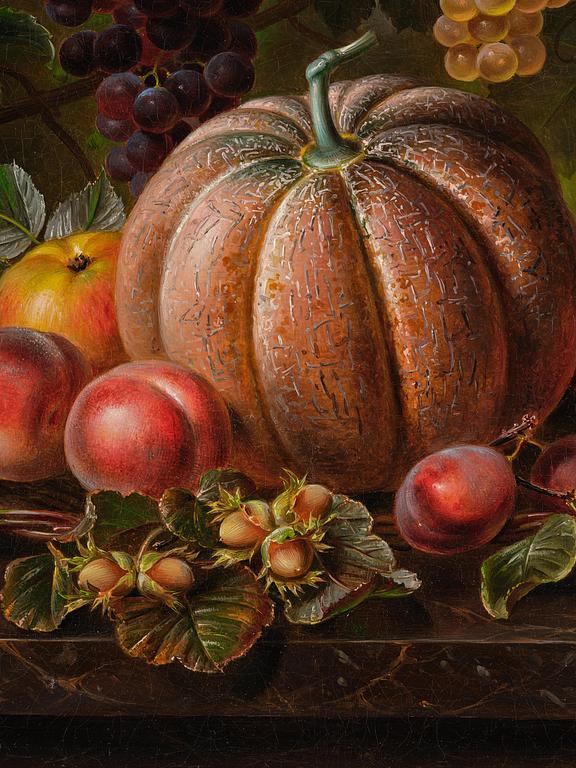
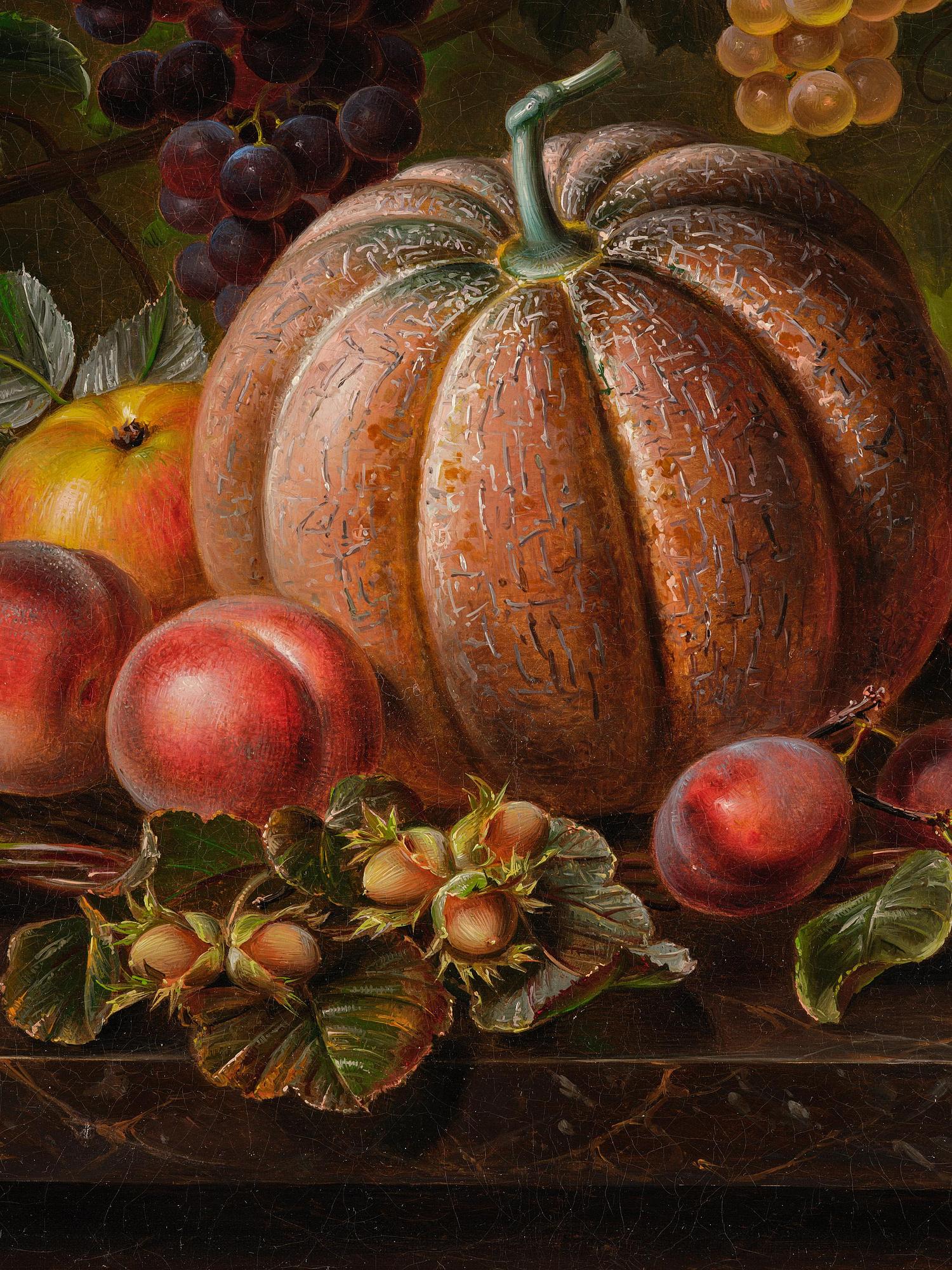
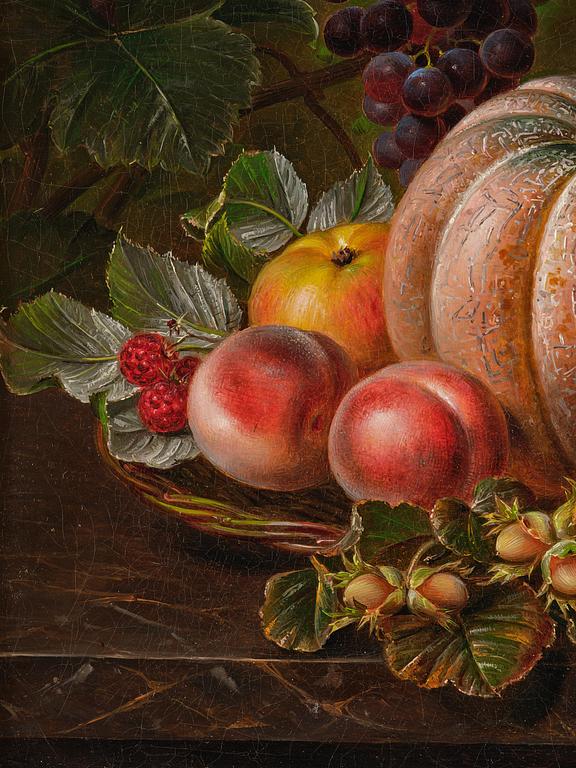
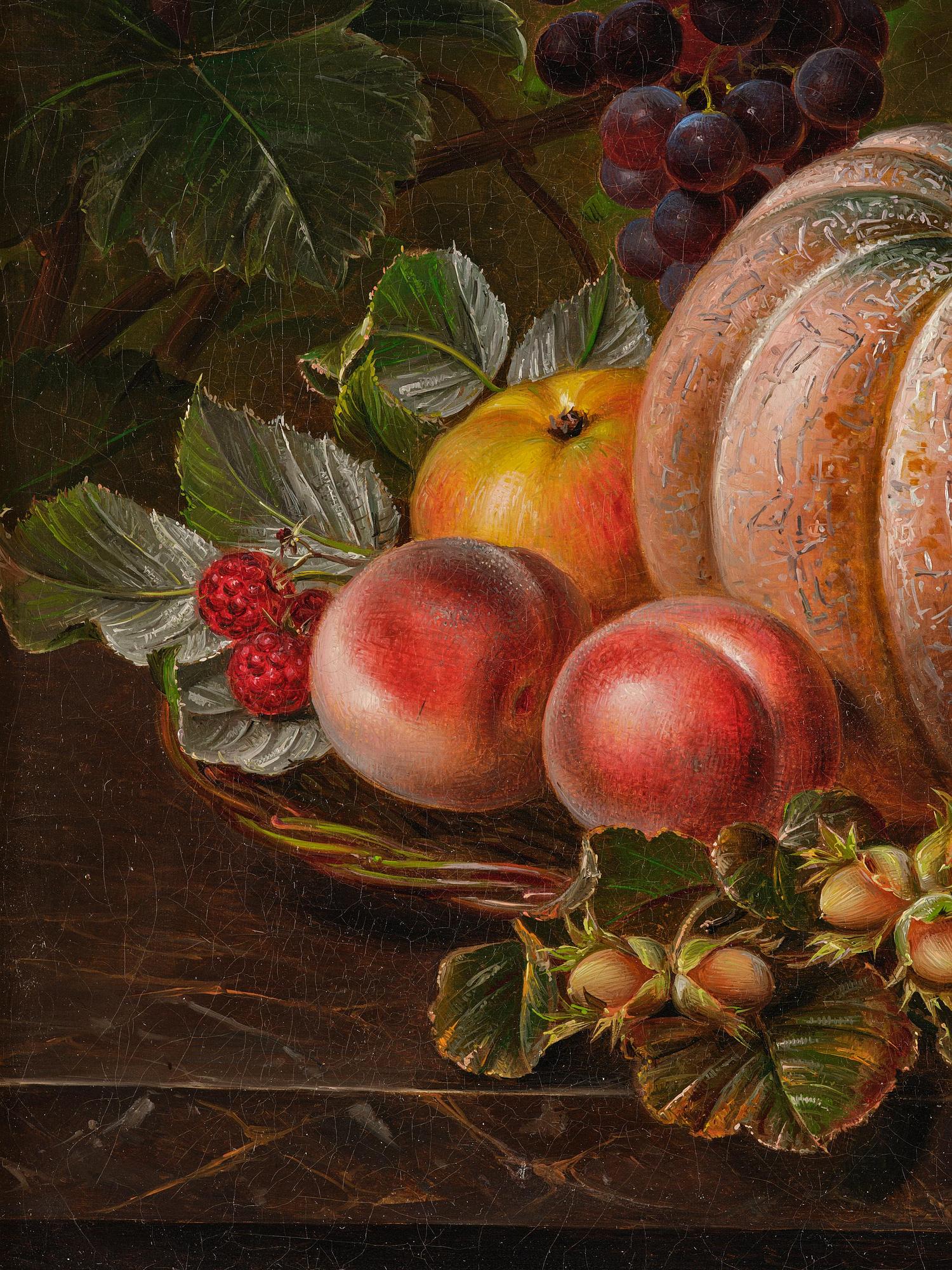
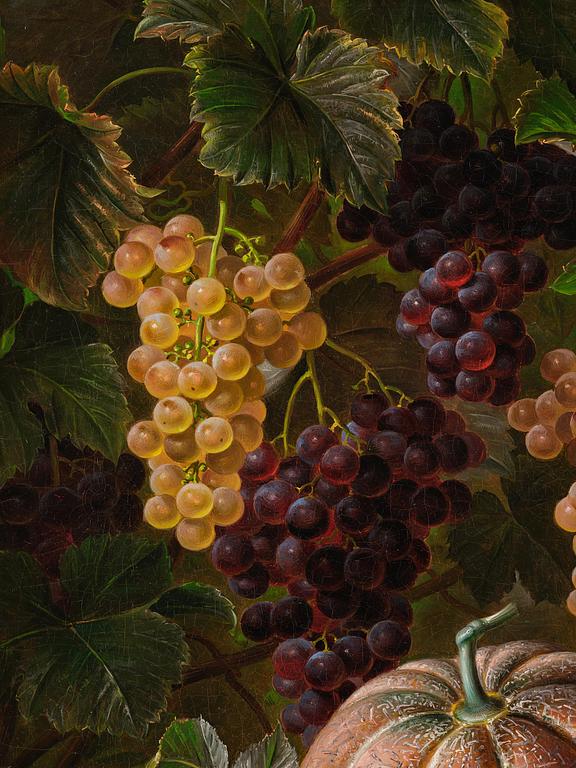
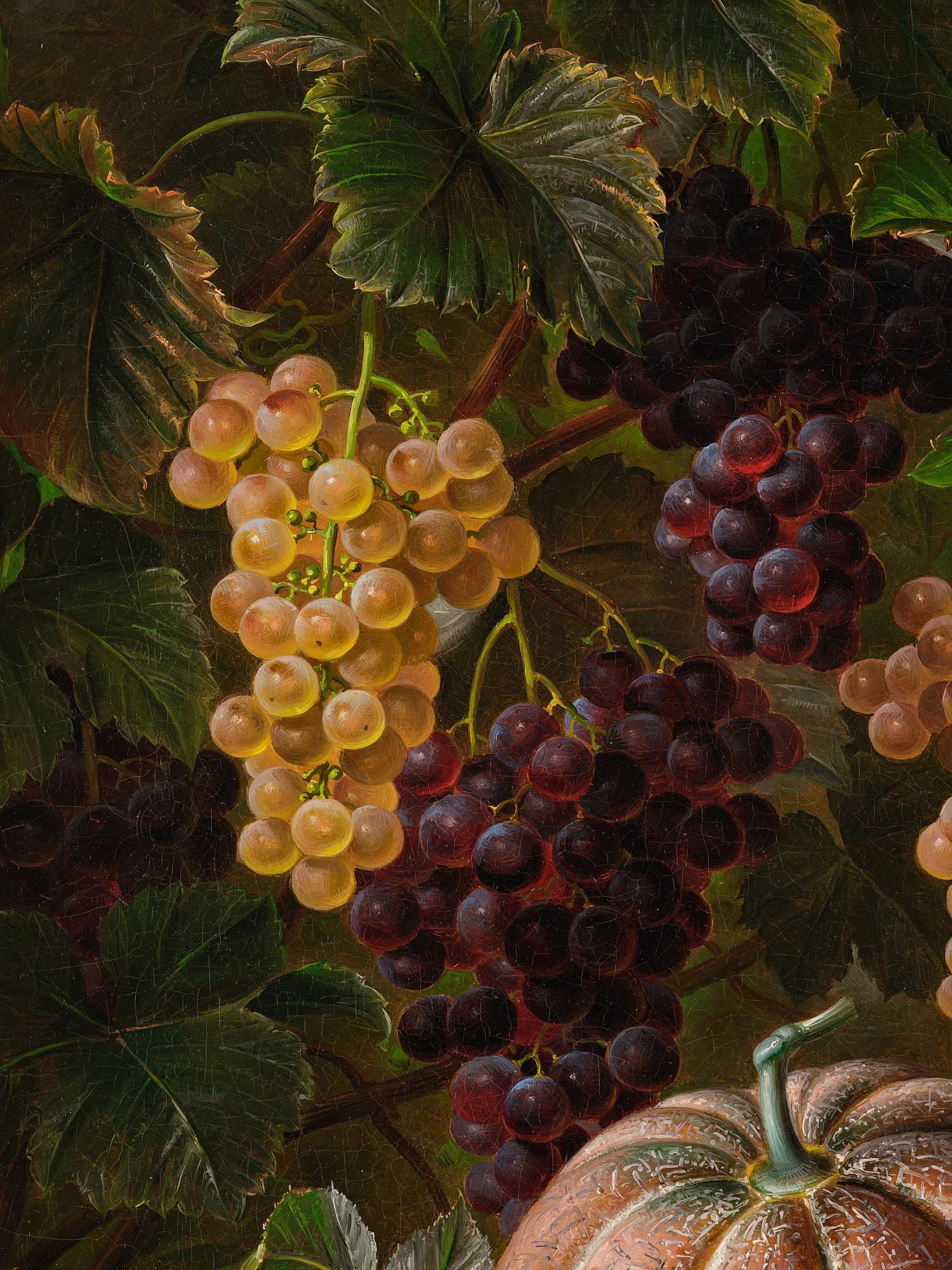
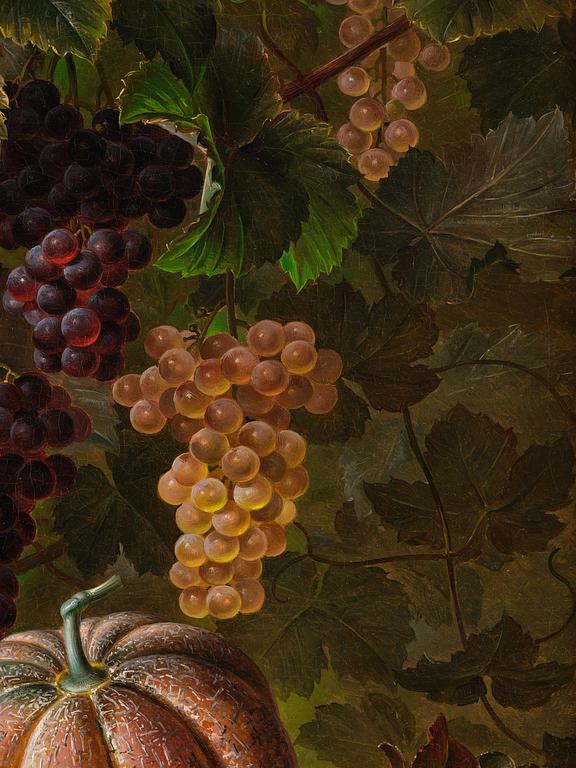
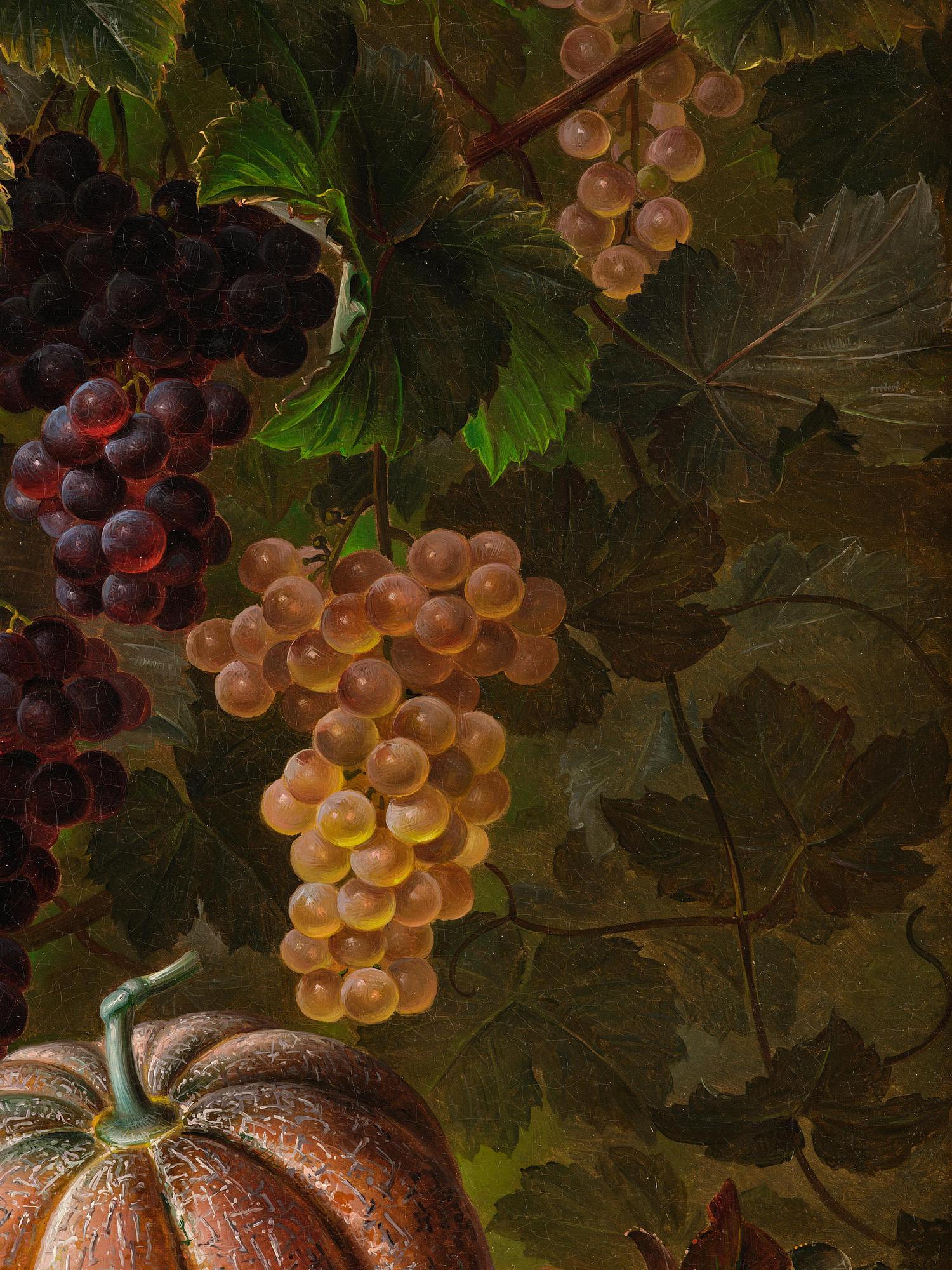
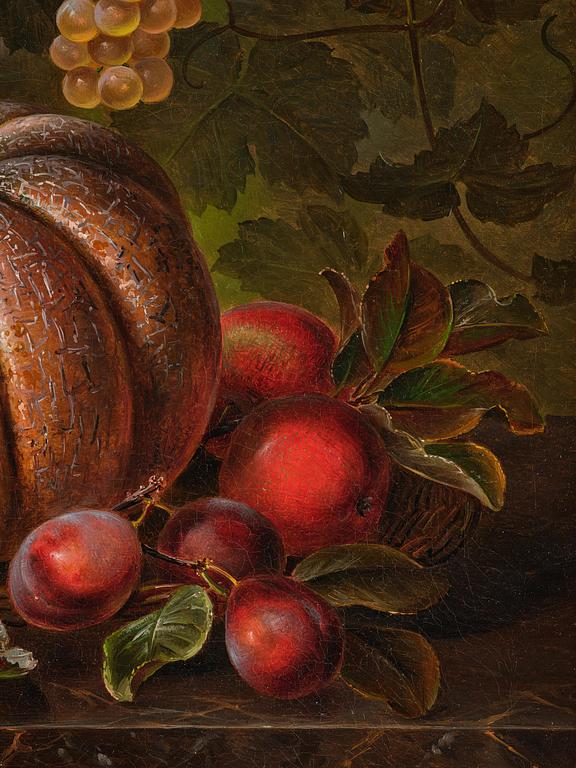
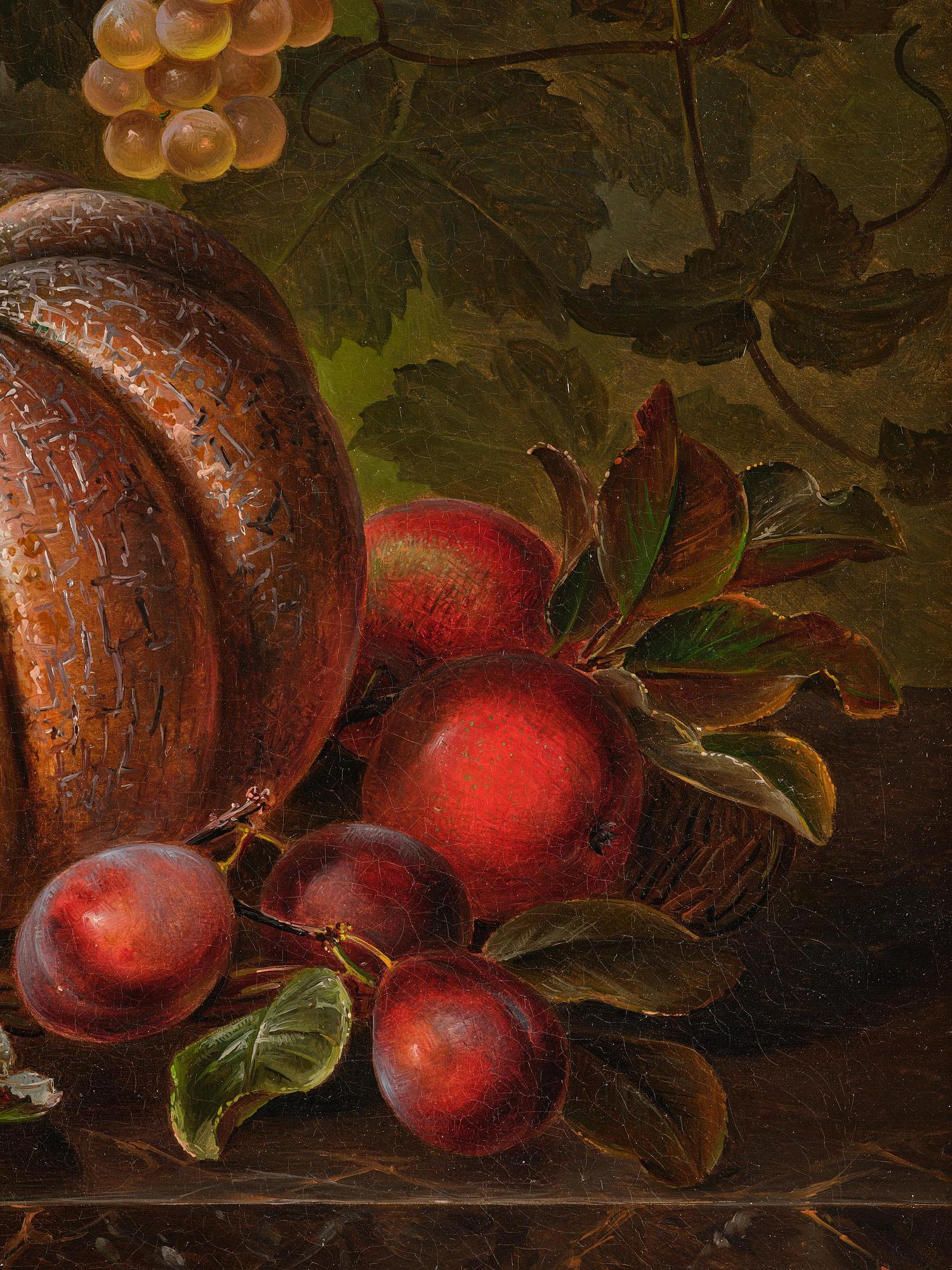
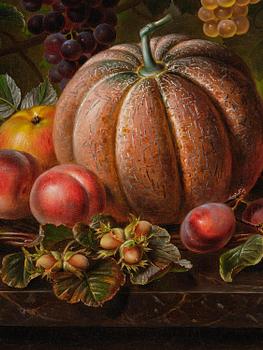
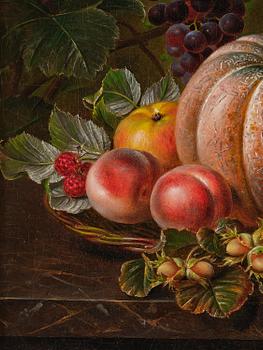
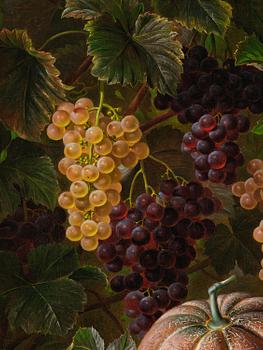
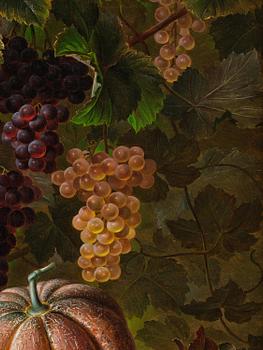
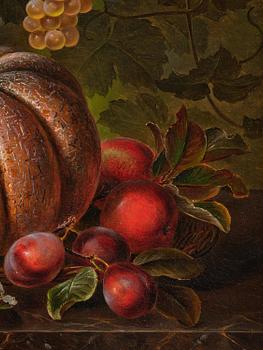
In this composition, Jensen has combined various kinds of stone fruit—peaches, plums and raspberries—with apples, a pumpkin and several hazelnuts, placing them on a smooth marble slab. Above the arrangement, laden clusters of blue and green grapes appear to float freely in the air. Individually, the fruit is rendered with astonishing realism, but the way in which it is arranged makes it abundantly clear that the artist valued artistic composition more highly than credibility in the overall impression. He also placed great emphasis on the lighting of the arrangement. By focusing the light on certain individual fruits, he emphasises their distinctive textures—the peaches’ downy surfaces, the lustre of the grapes and the roughness of the pumpkin’s coarse skin. Behind the fruit, the foliage forms an elegant pattern against the smooth, shadowy background.
For a long time, the works left by Johan Laurentz Jensen remained a hidden treasure, known only to a handful of Danes, but in recent decades he has also begun to attract international attention. The first retrospective exhibition of his work was held in New York in 1988, after which his popularity continued to grow. Today, his works are represented in many prominent private collections. Museums that have acquired works by Jensen include Statens Museum for Kunst and Thorvaldsens Museum in Copenhagen, as well as Jenisch Haus Museum in Hamburg.
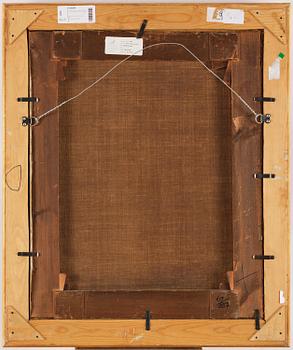
For condition report contact specialist
What will the transport cost?
Others have also viewed