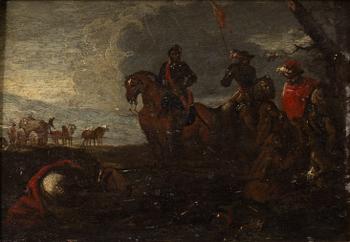
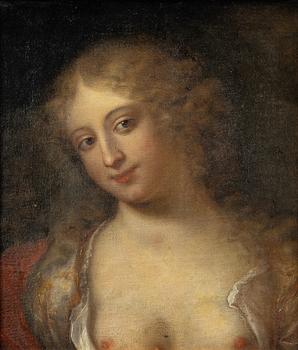
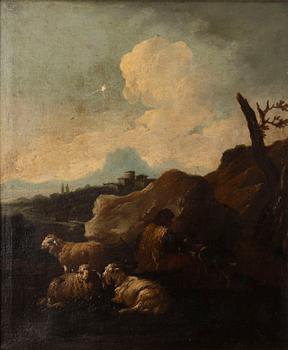
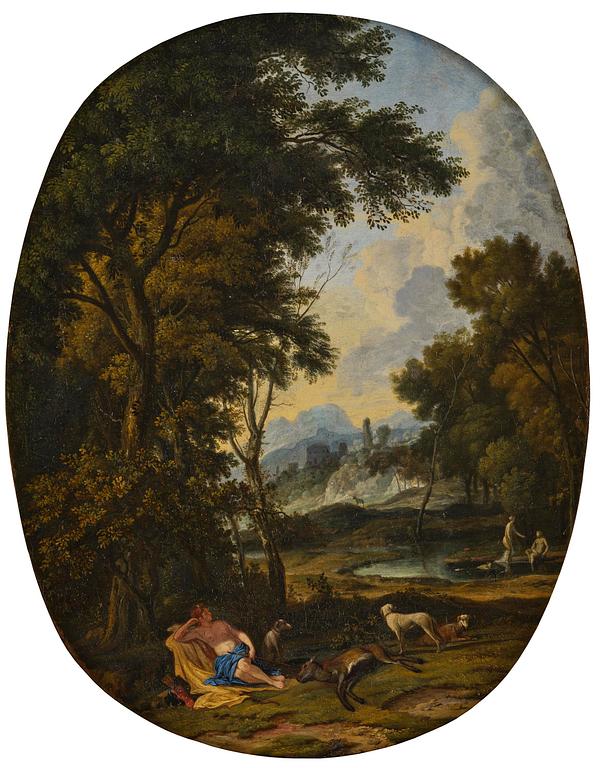
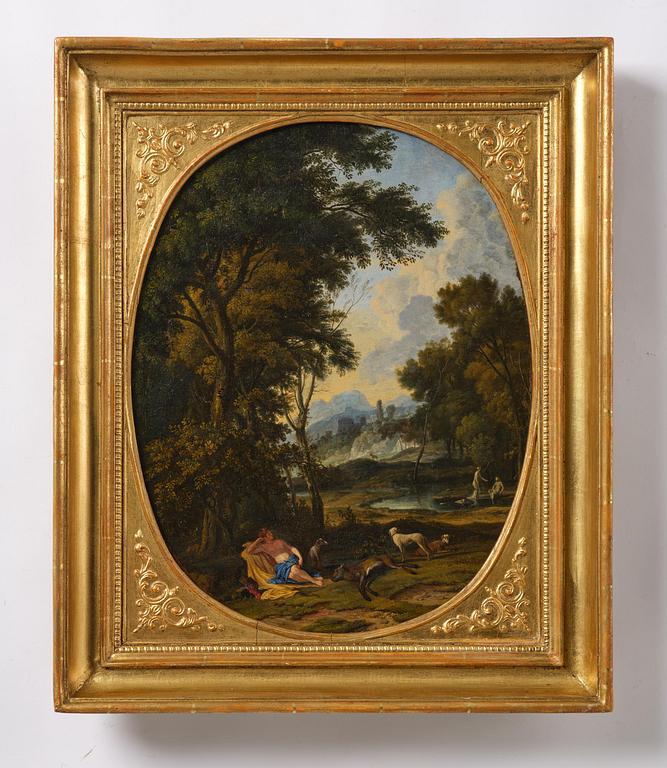
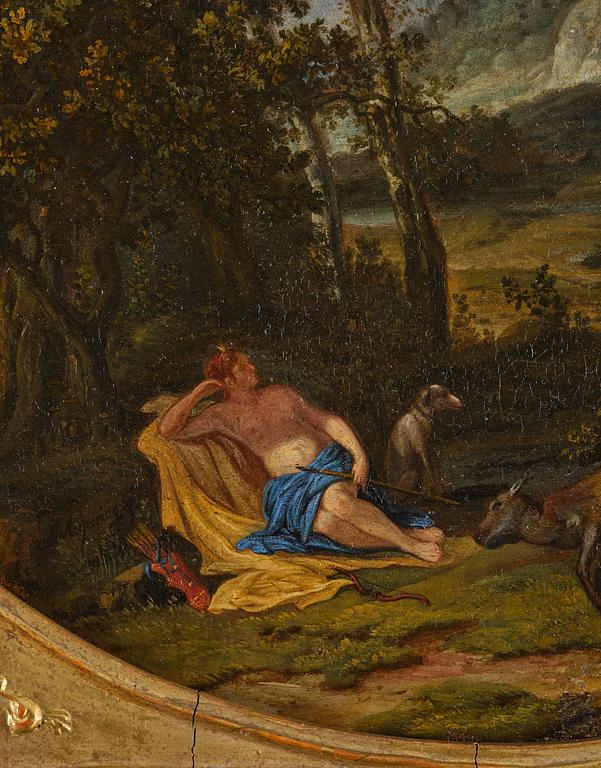
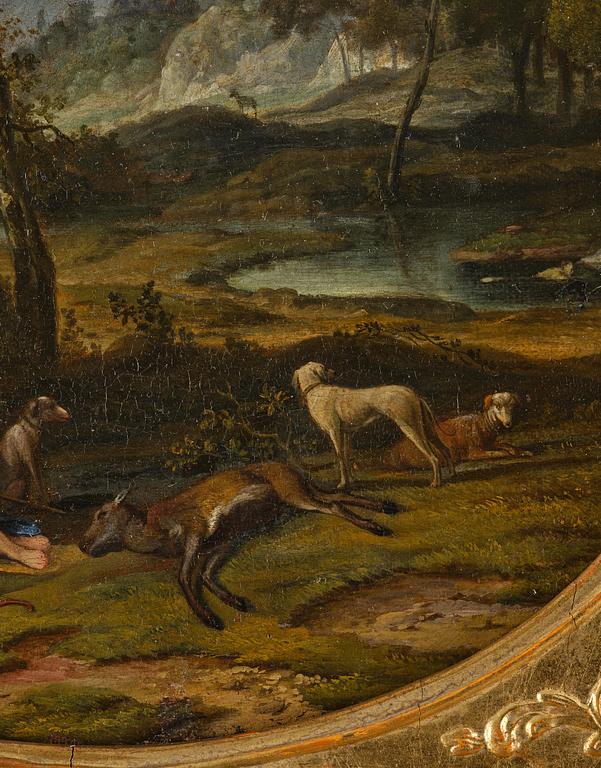
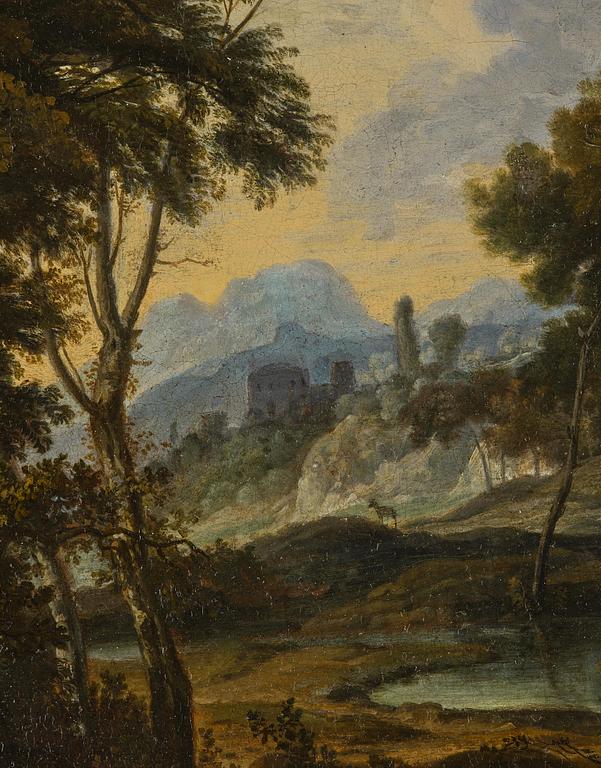
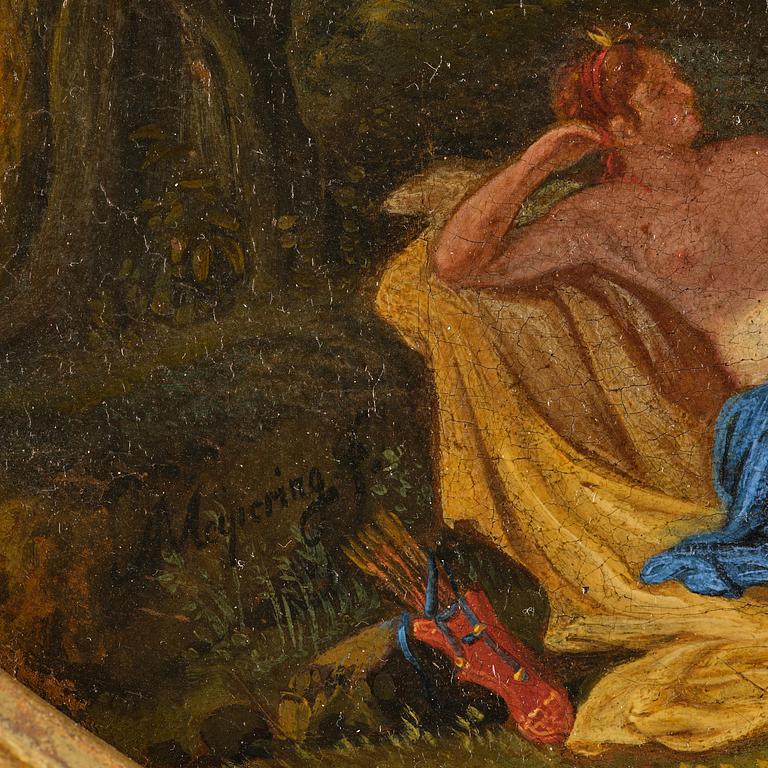
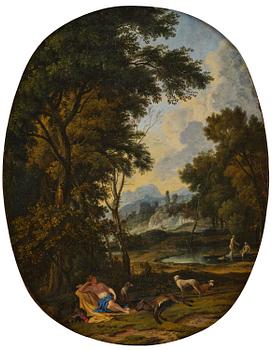
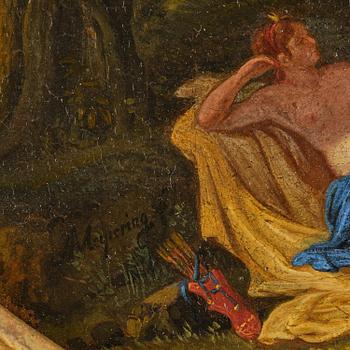
Albert Meyering (Holland, 1645-1714) An Italianate landscape with Trees with Diana and her nymphs bathing
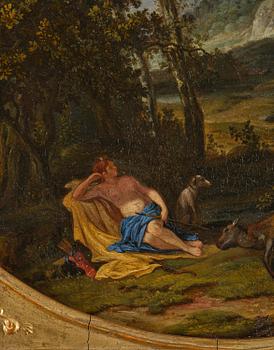
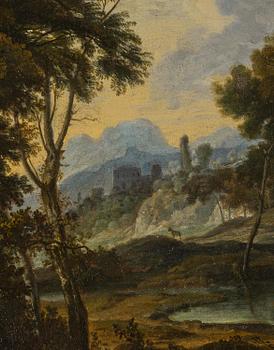
An Italianate landscape with Trees with Diana and her nymphs bathing
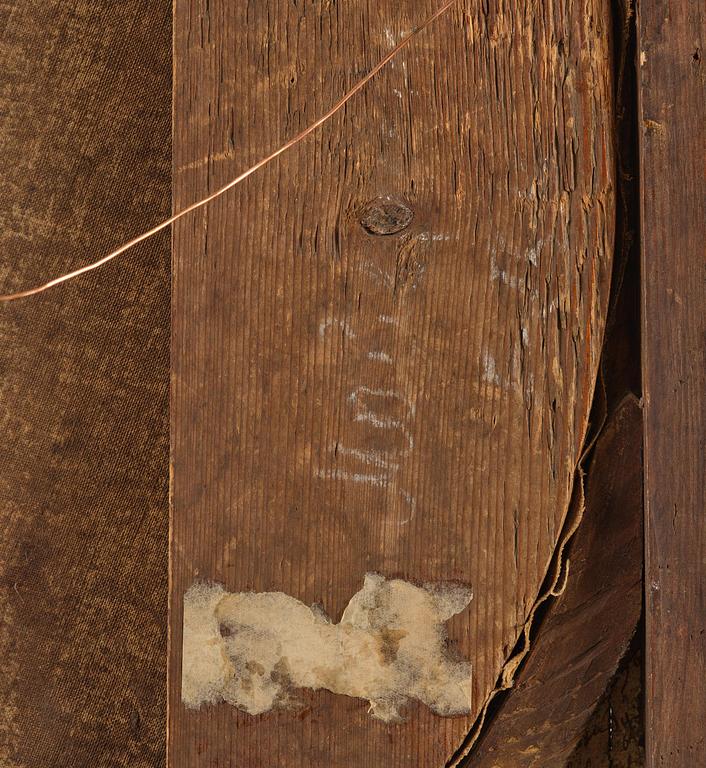
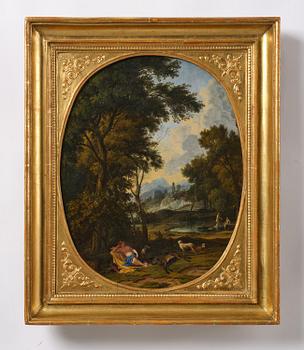
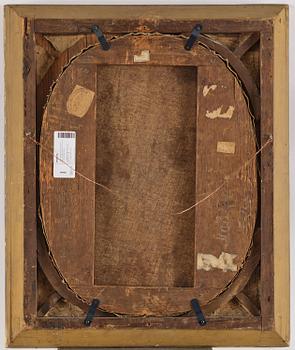
Signed A Meyering f. Oil on canvas (unlined), oval 54 x 42 cm. In a Russian gilt and ornate Empire frame.
Provenance
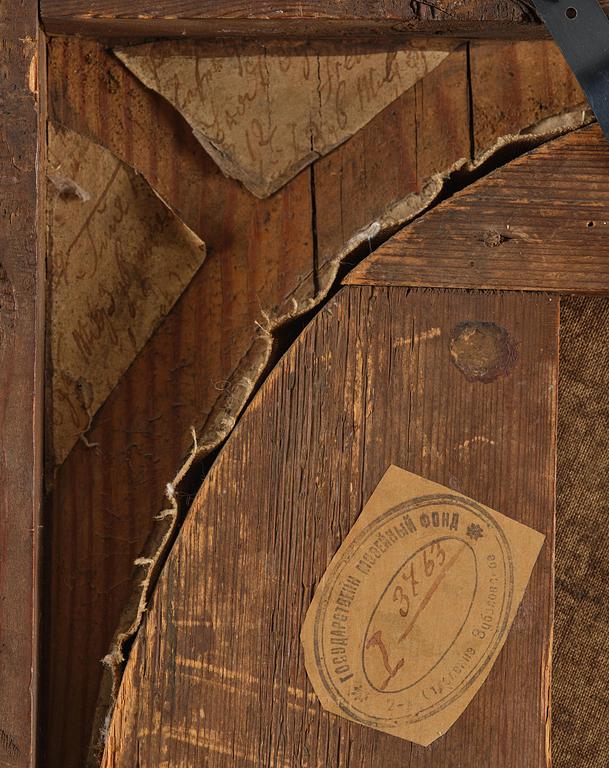
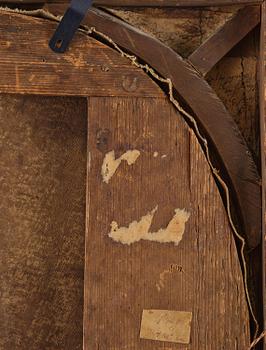
Confiscated from an aristocratic family or a state museum by the Bolsjeviks following the Russian Revolution in 1917 (label from the Sovjet Union Museum Foundation (Государственный музейный фонд) numbered 3763 attached on the reverse).
Karl Gustaf Westman (1876-1944), Swedish Minister for Ecclesiastical and Foreign Affairs and Minister of Justice;
thence by descent until 2026.
More information
Albert Meijeringh, born in Amsterdam, was active in Italy between 1672 to 1683 where he travelled widely together with his friend, the Dutch painter Johannes Glauber (1646 - c. 1726), whom he had met in Amsterdam. Glauber arrived in Italy in 1673. Stylistically their works produced in Italy are almost indistinguishable. After two years in Rome they set off for Padua where they stayed a year. They then settled in Venice, where they remained for two years. In 1679 Glauber left Italy and went to Hamburg where he lived until 1684. He was joined there by Meijeringh in 1683. Before returning to the Netherlands they both went to Copenhagen to work for Ulrik Fredrik Gyldenløve, Count of Larvig on decorations for Charlottenburg Palace. On their return to Amsterdam they were part of the team of painters that decorated the dining room of Soestdijk Palace for Mary II of England.
According to a label attached on the back of the frame the painting formed part of the huge seizure of art that took place in the Soviet union following the October Revolution in 1917, both from aristocratic families as well as state museums. The Soviet government systematically nationalized, redistributed, and sold off vast quantities of art, religious icons and imperial treasures to consolidate state control and raise hard foreign currency. Artworks were sold through European auction houses, amongst them Bukowskis, and directly to high-profile collectors like Andrew Mellon and Calouste Gulbenkian. The most frequently used auction house was Rudolph Lepke in Berlin.
For condition report contact specialist
What will the transport cost?















Others have also viewed