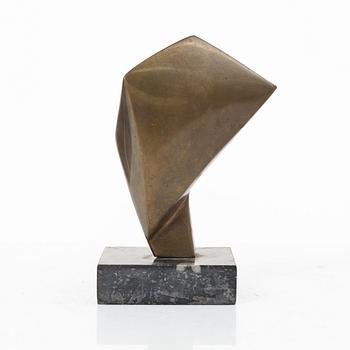
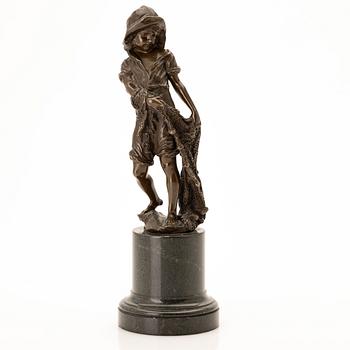
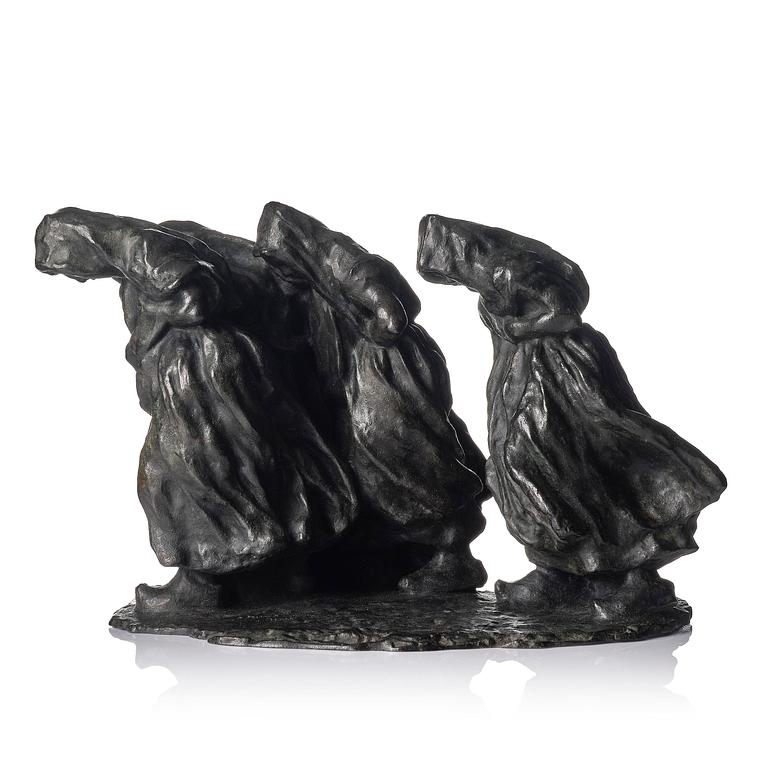
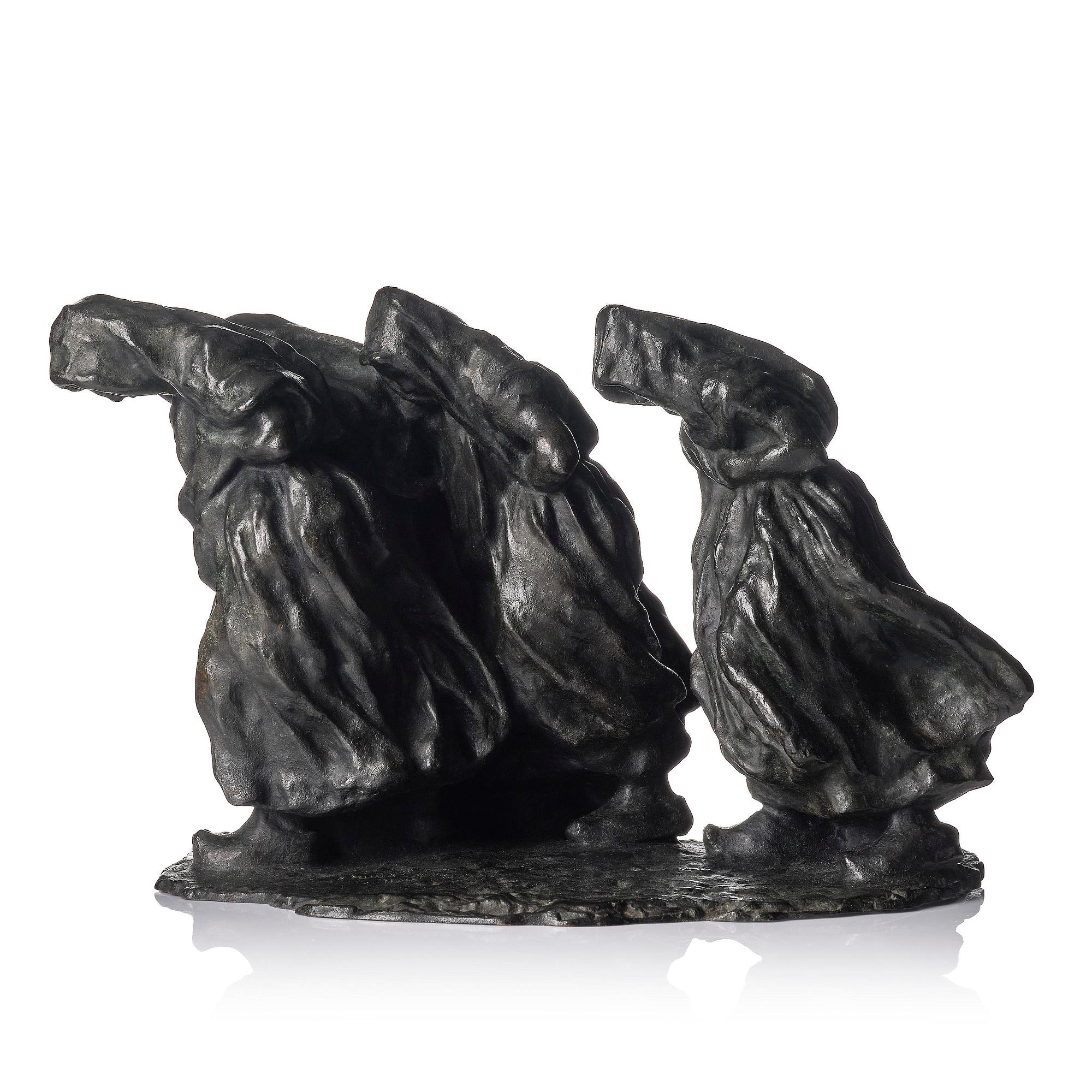
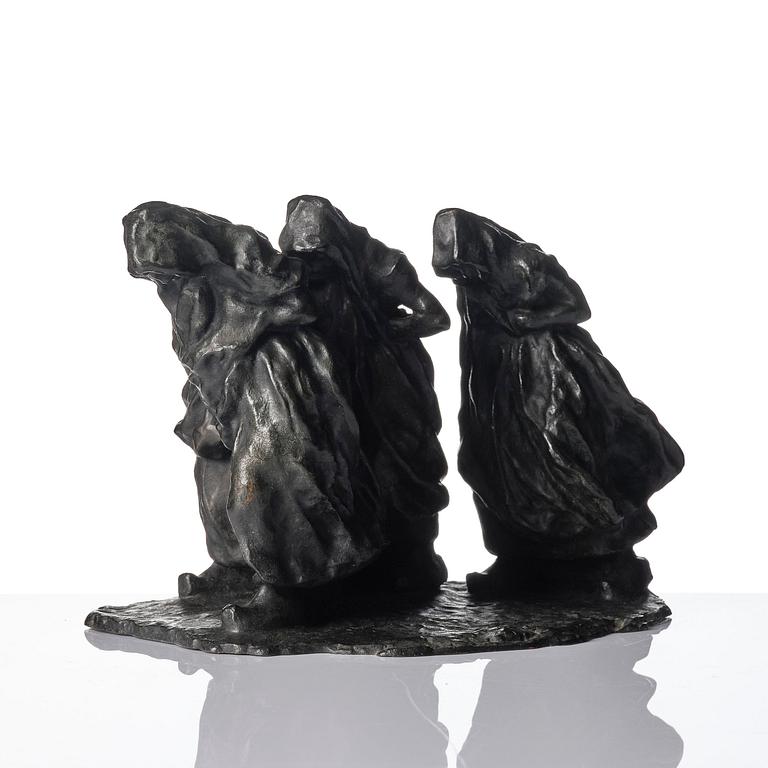
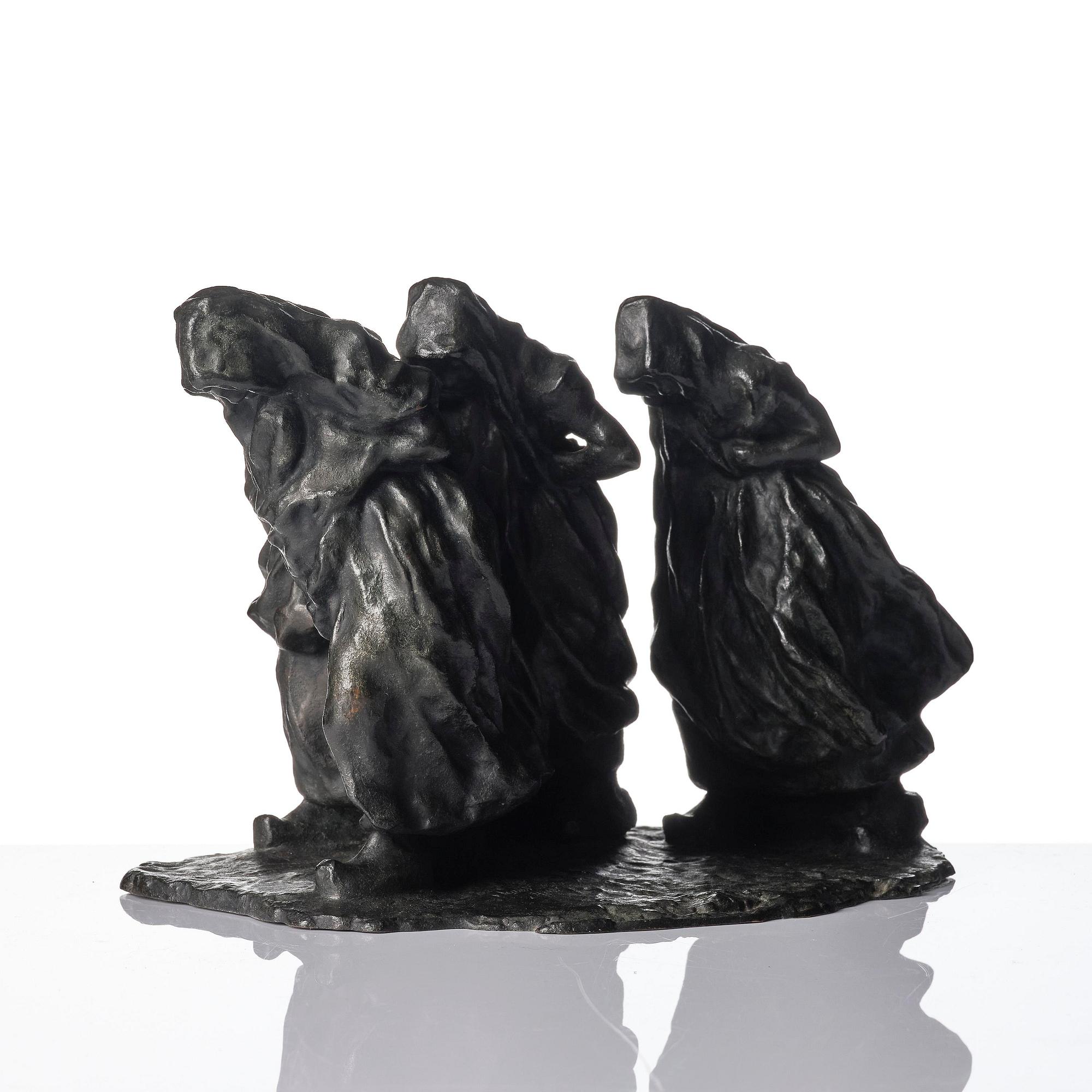
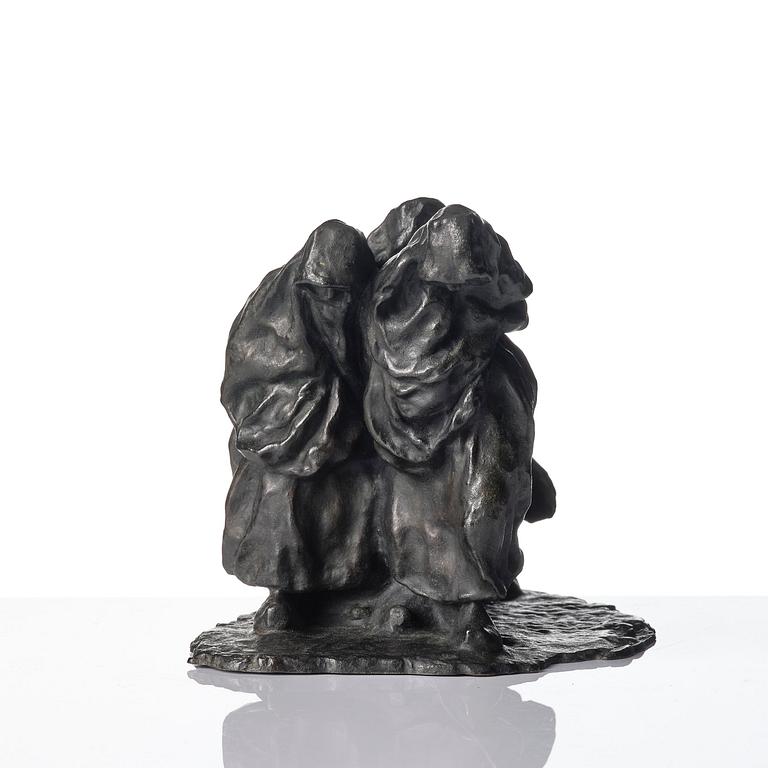
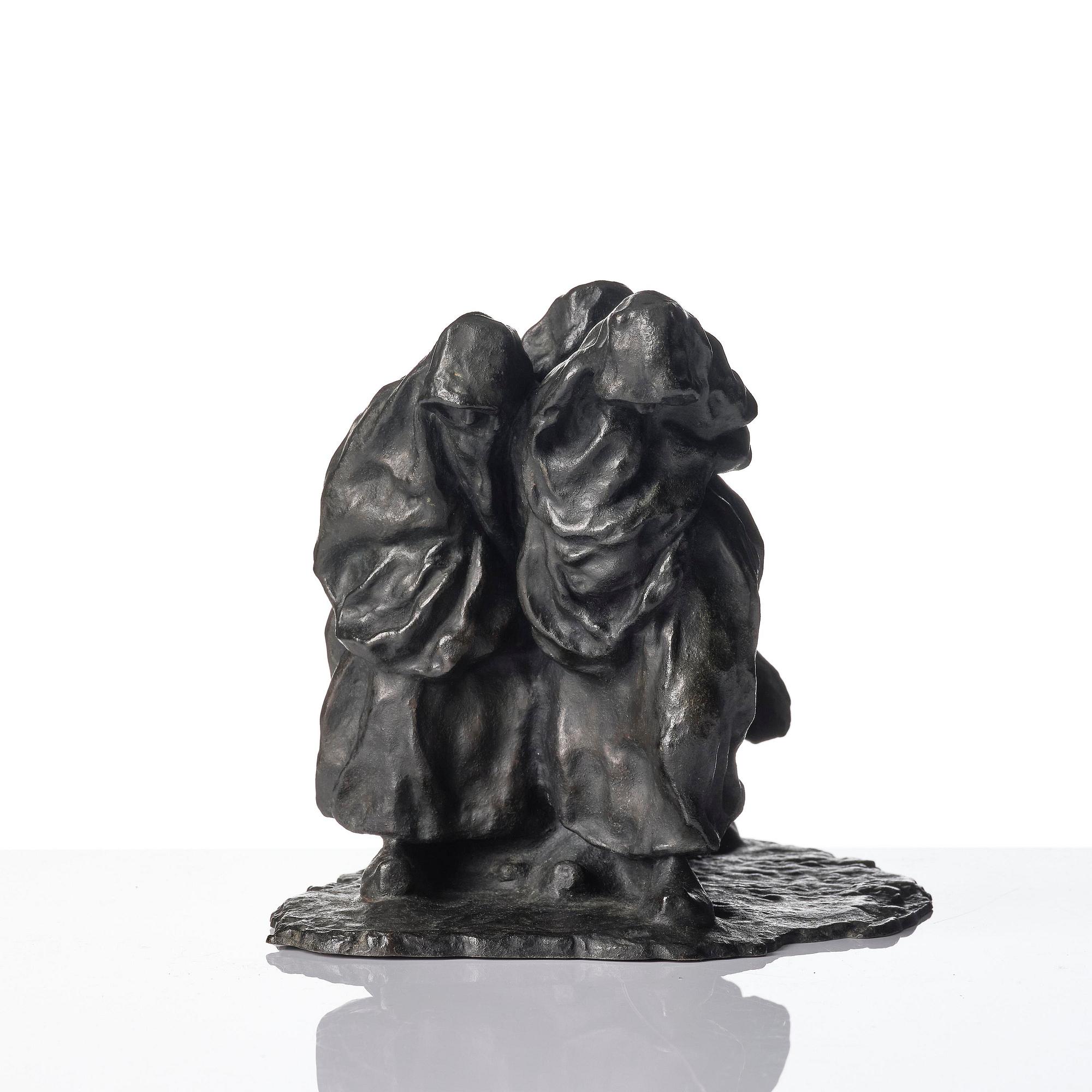
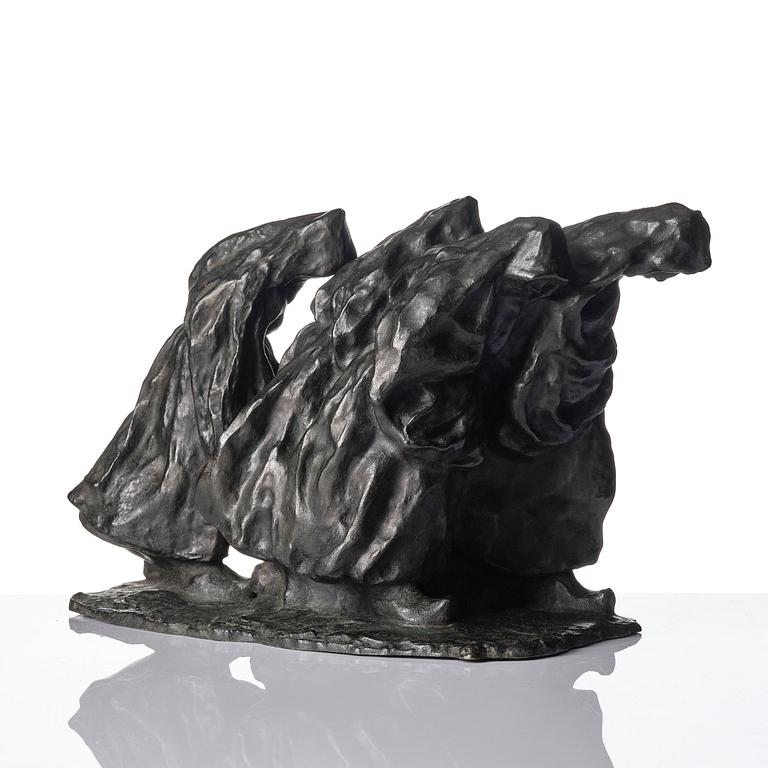
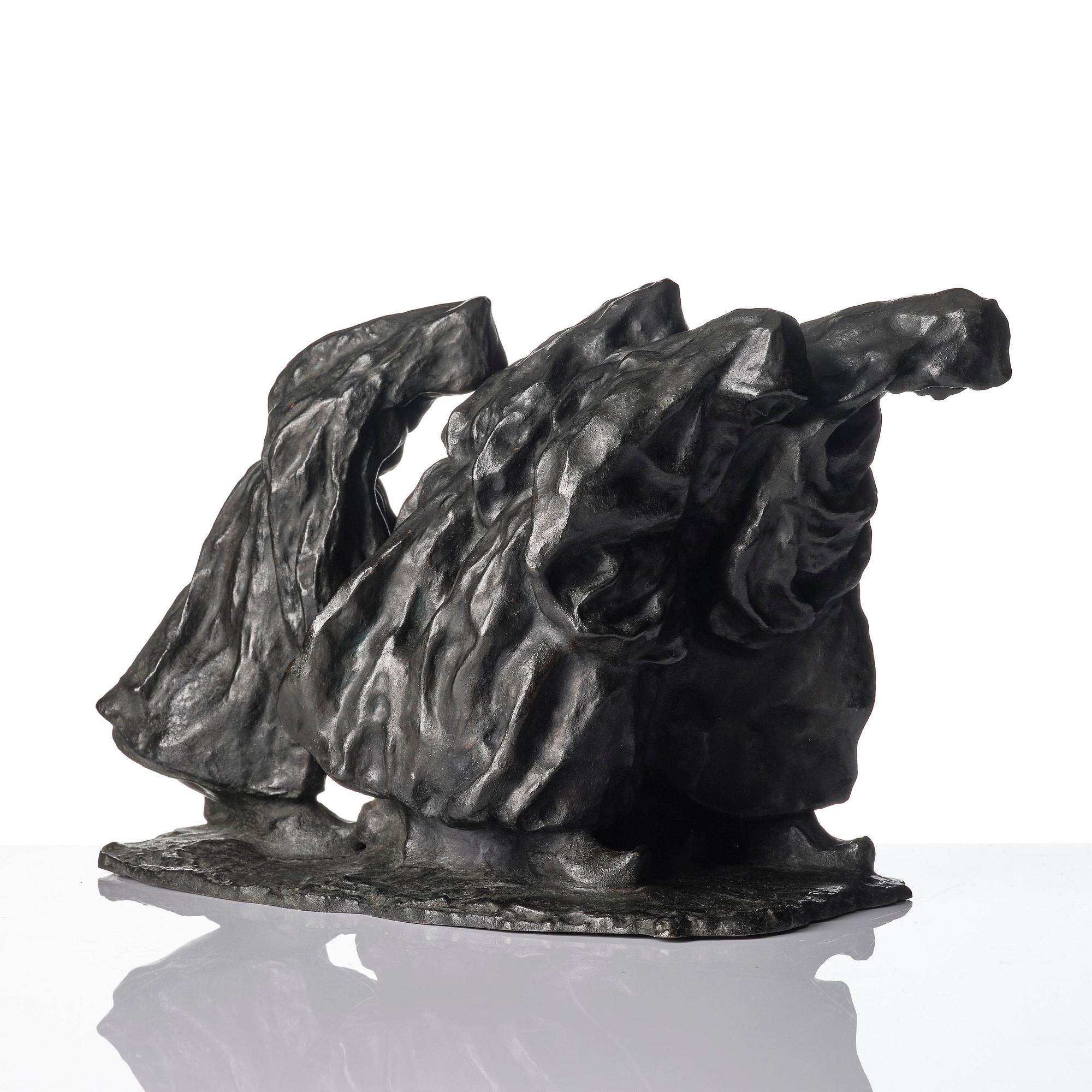
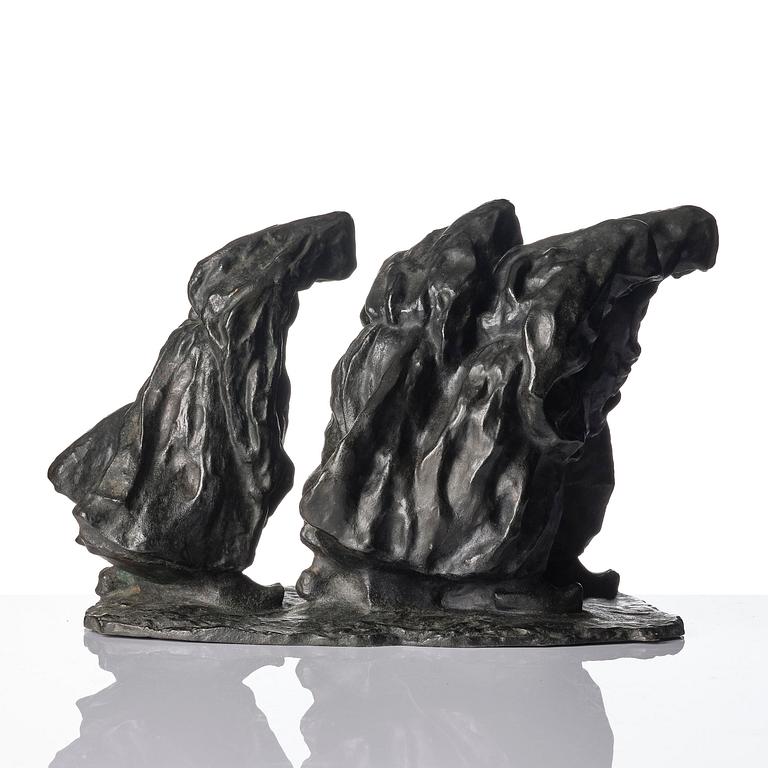
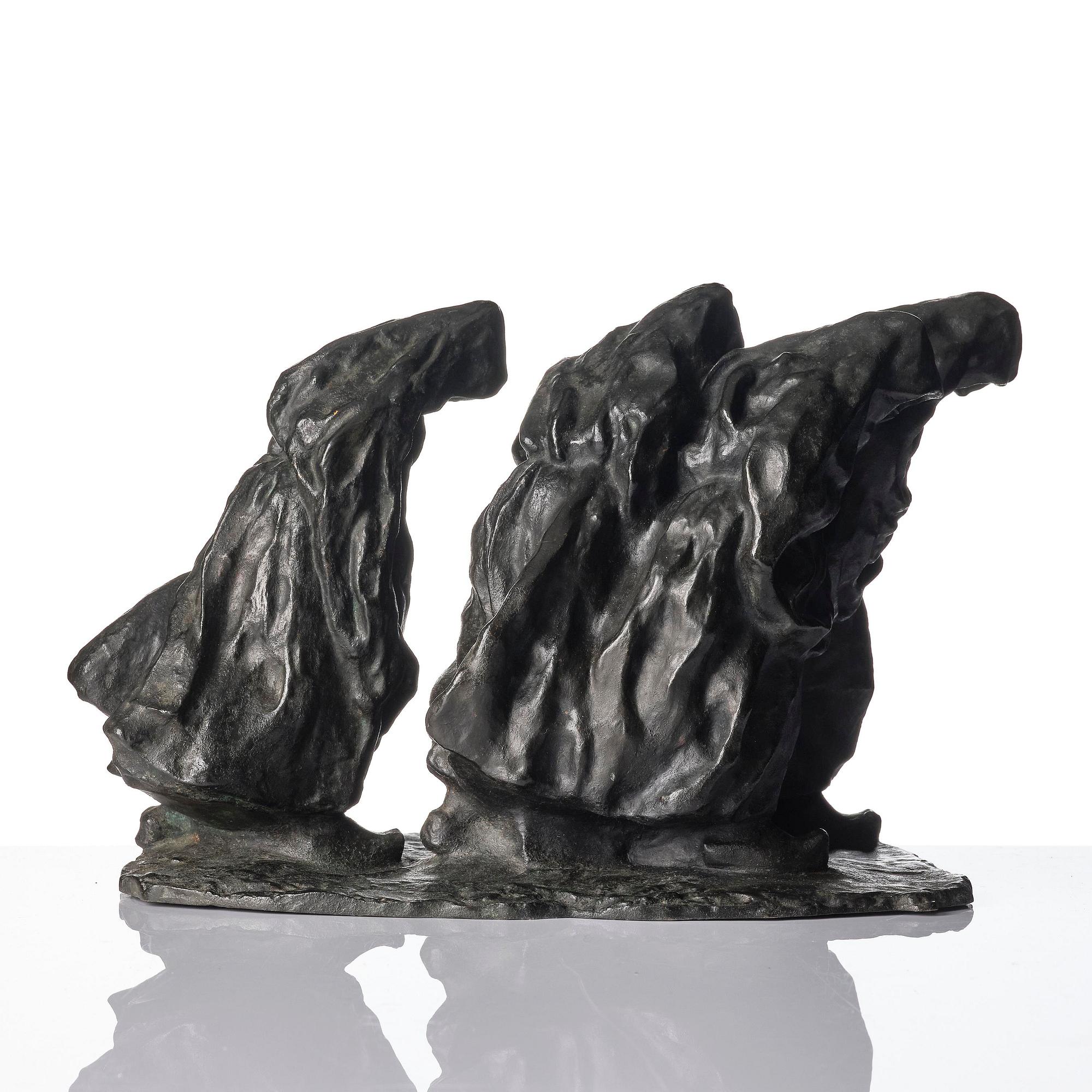
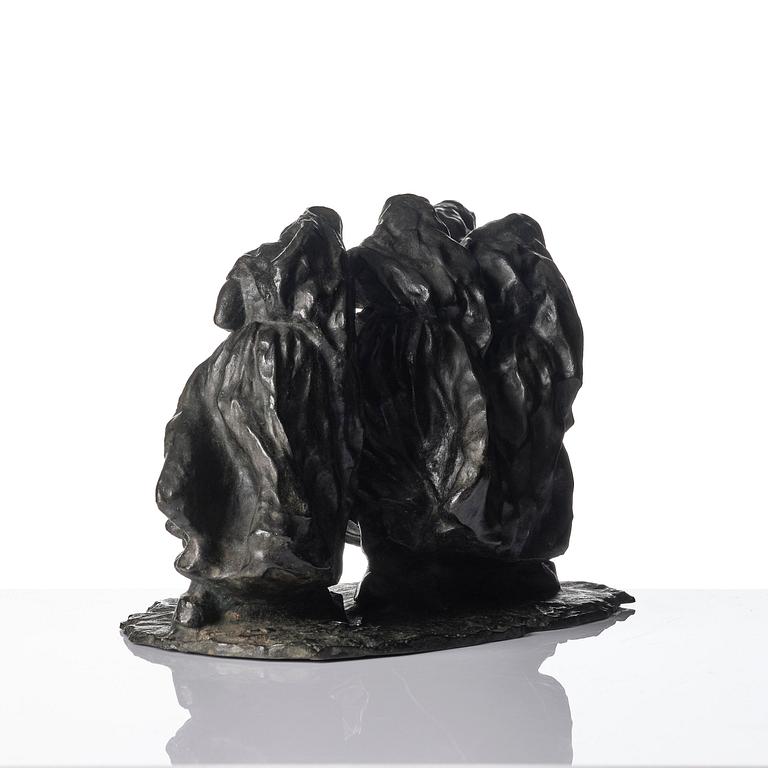
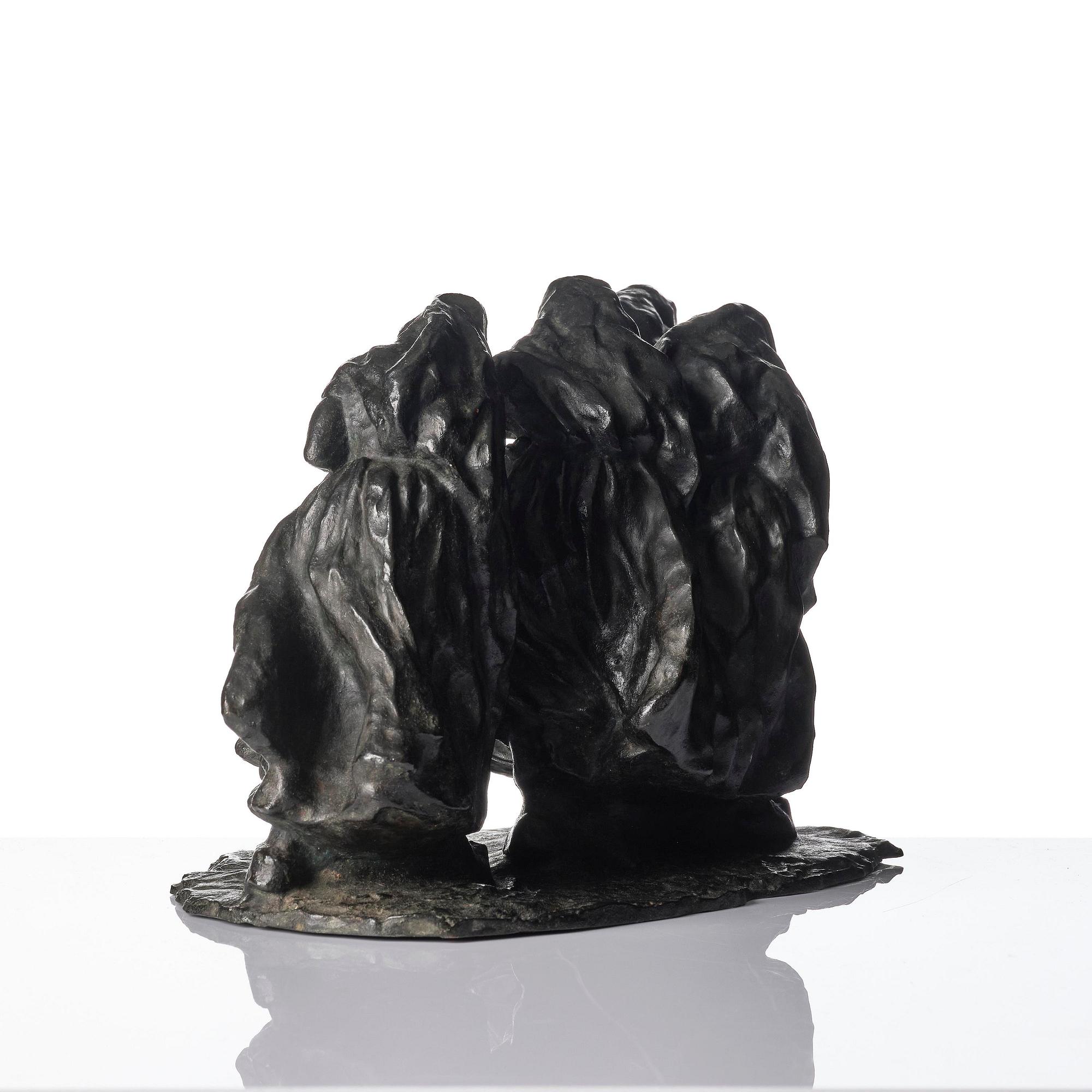
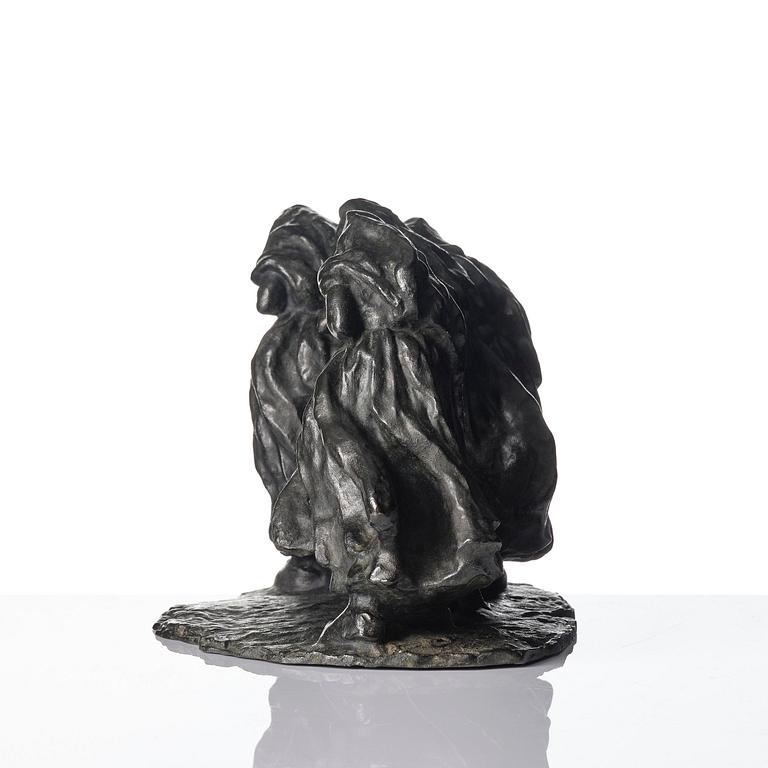
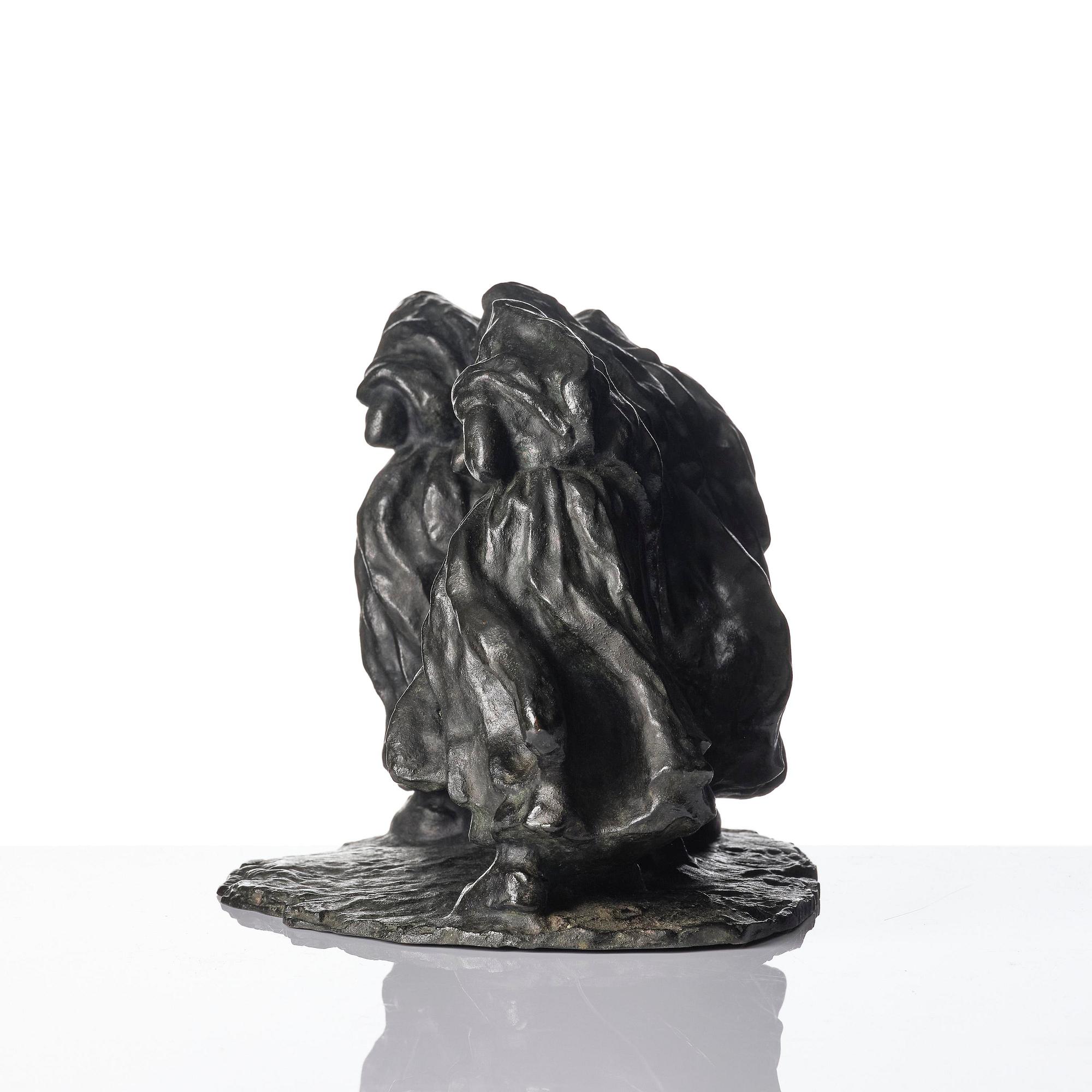
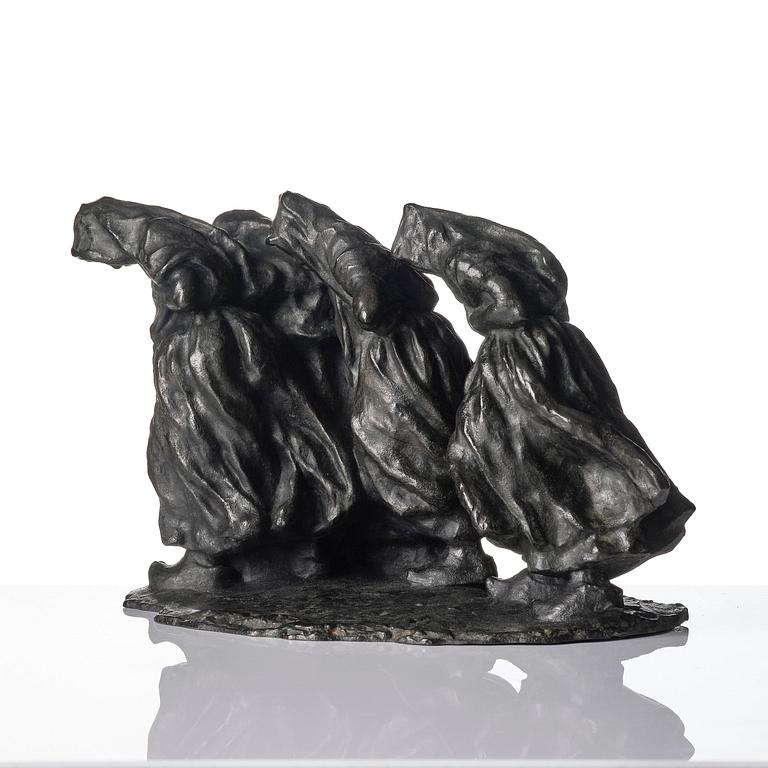
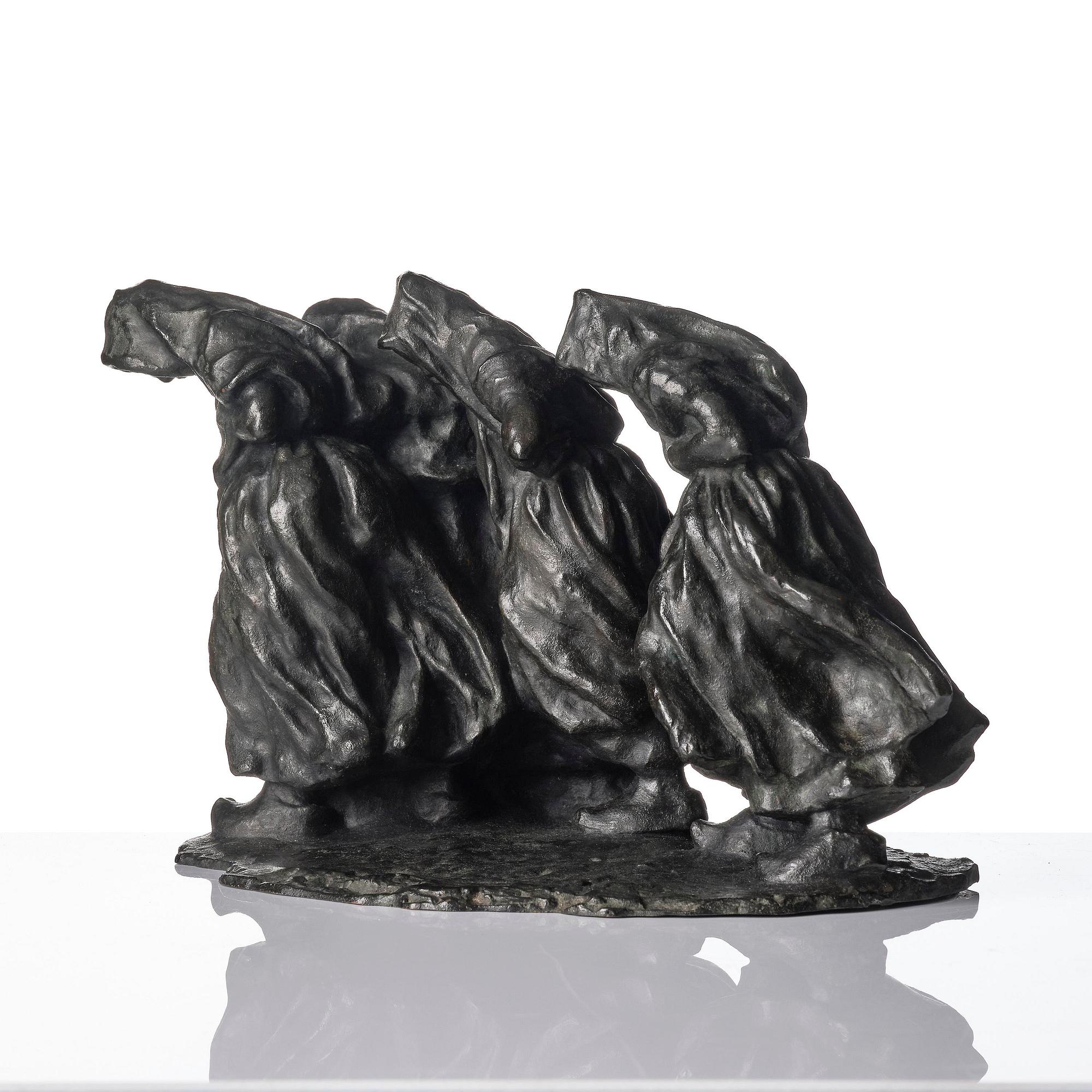
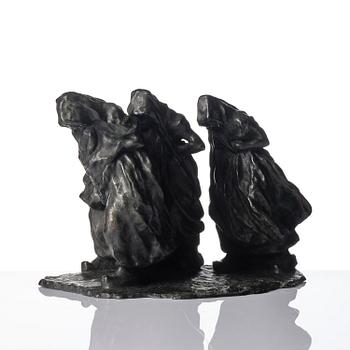
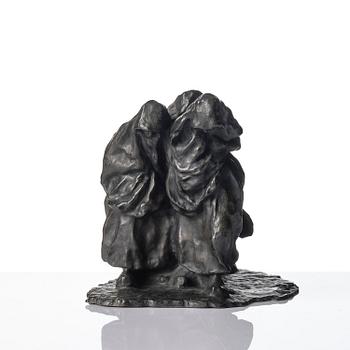
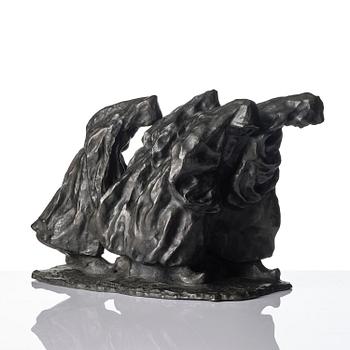
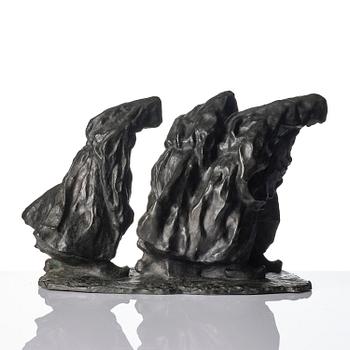
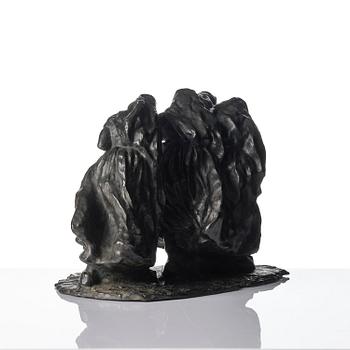
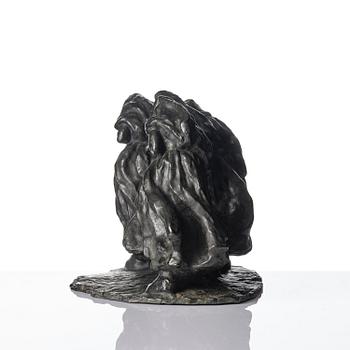
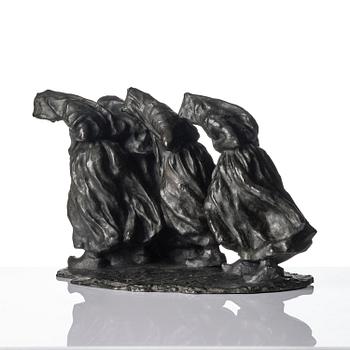
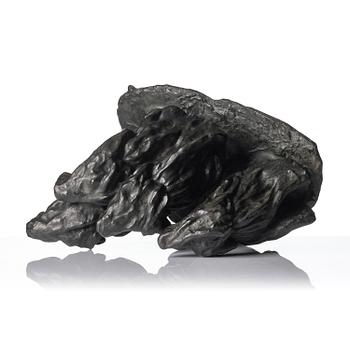
Carl Milles (Sweden, 1875-1955) “Ruskväder" (Foul Weather)
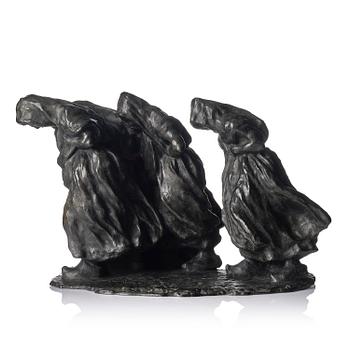
“Ruskväder" (Foul Weather)
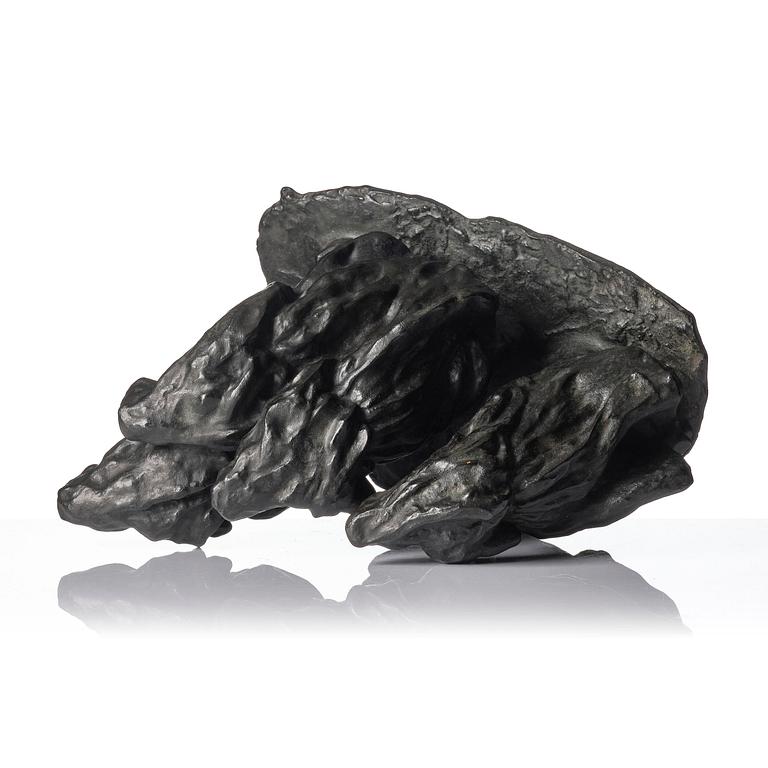
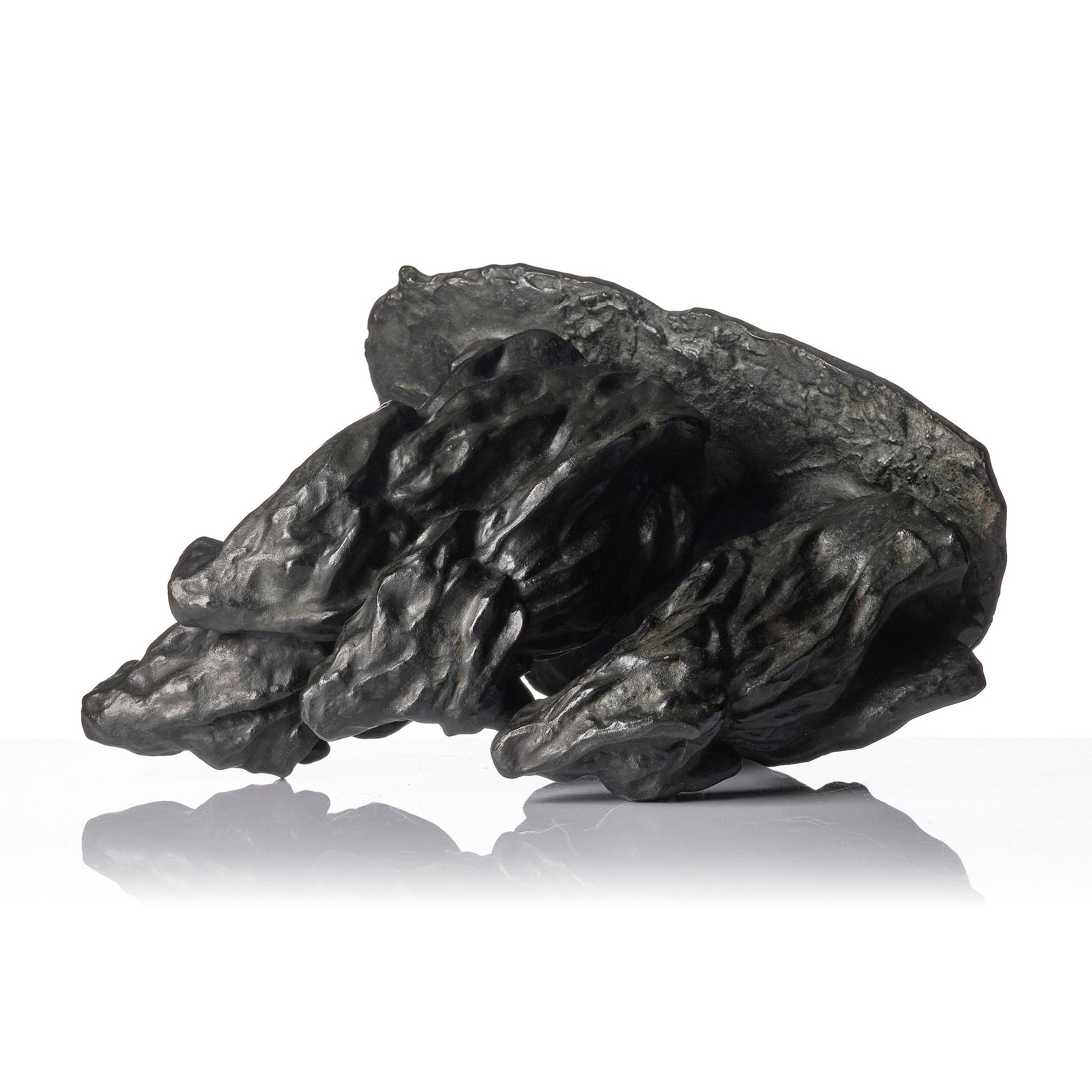
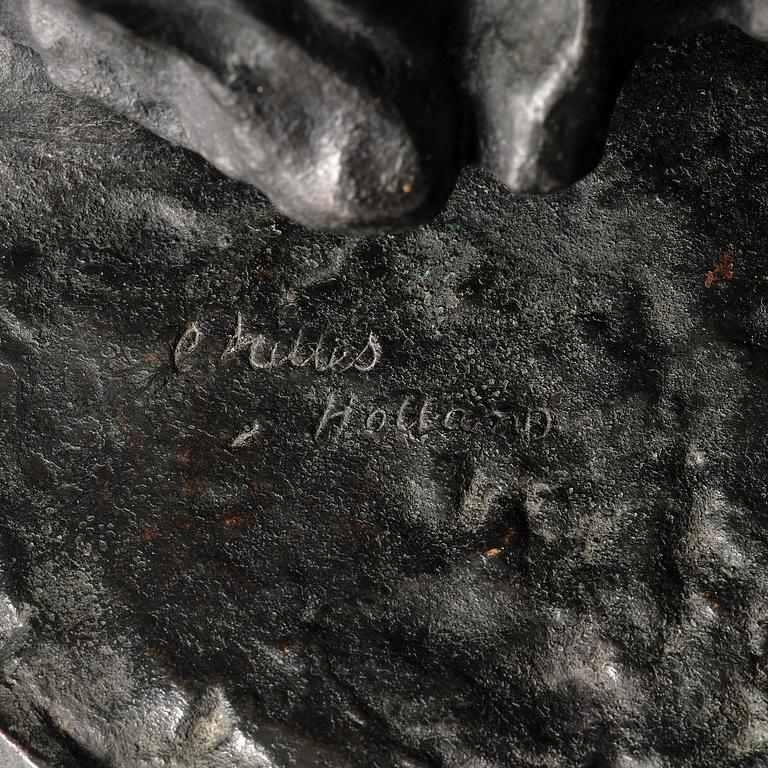
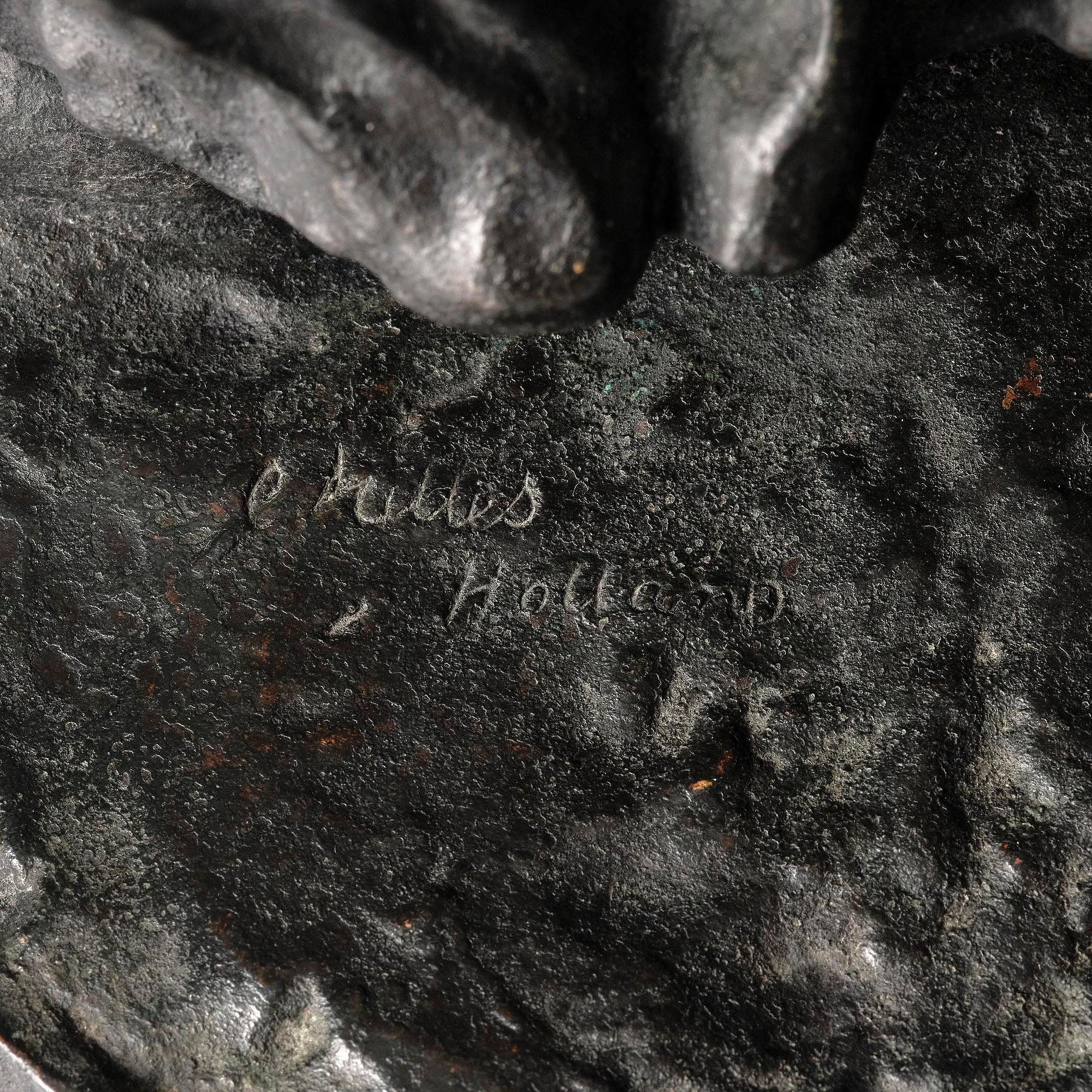
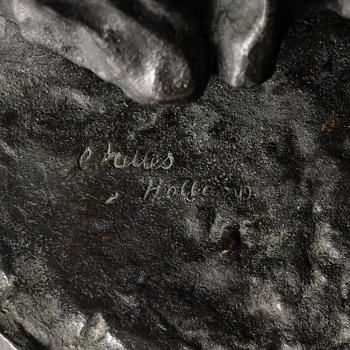
Signed C Milles Hollande. Patinated bronze, height 23.5 cm.
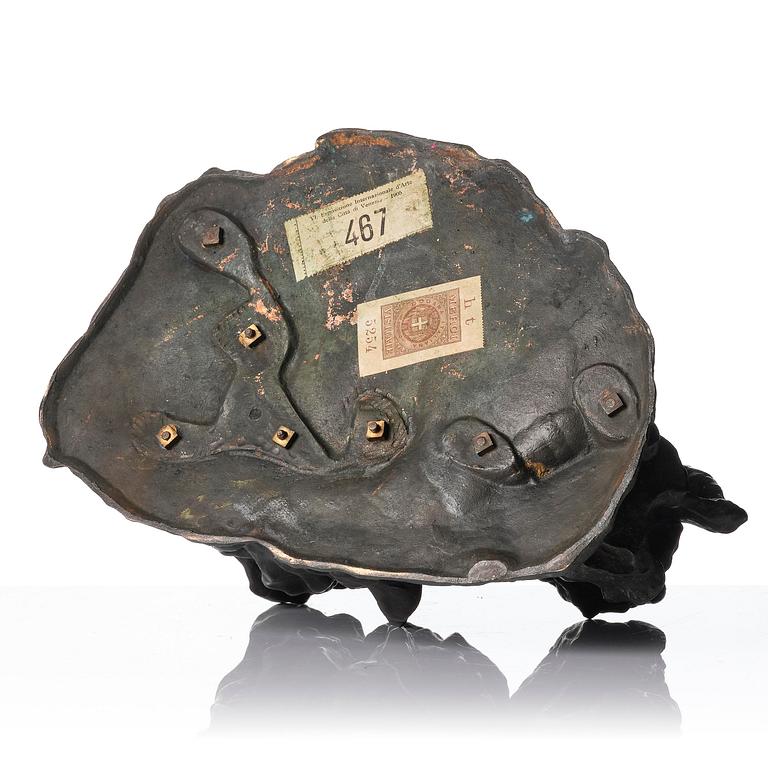
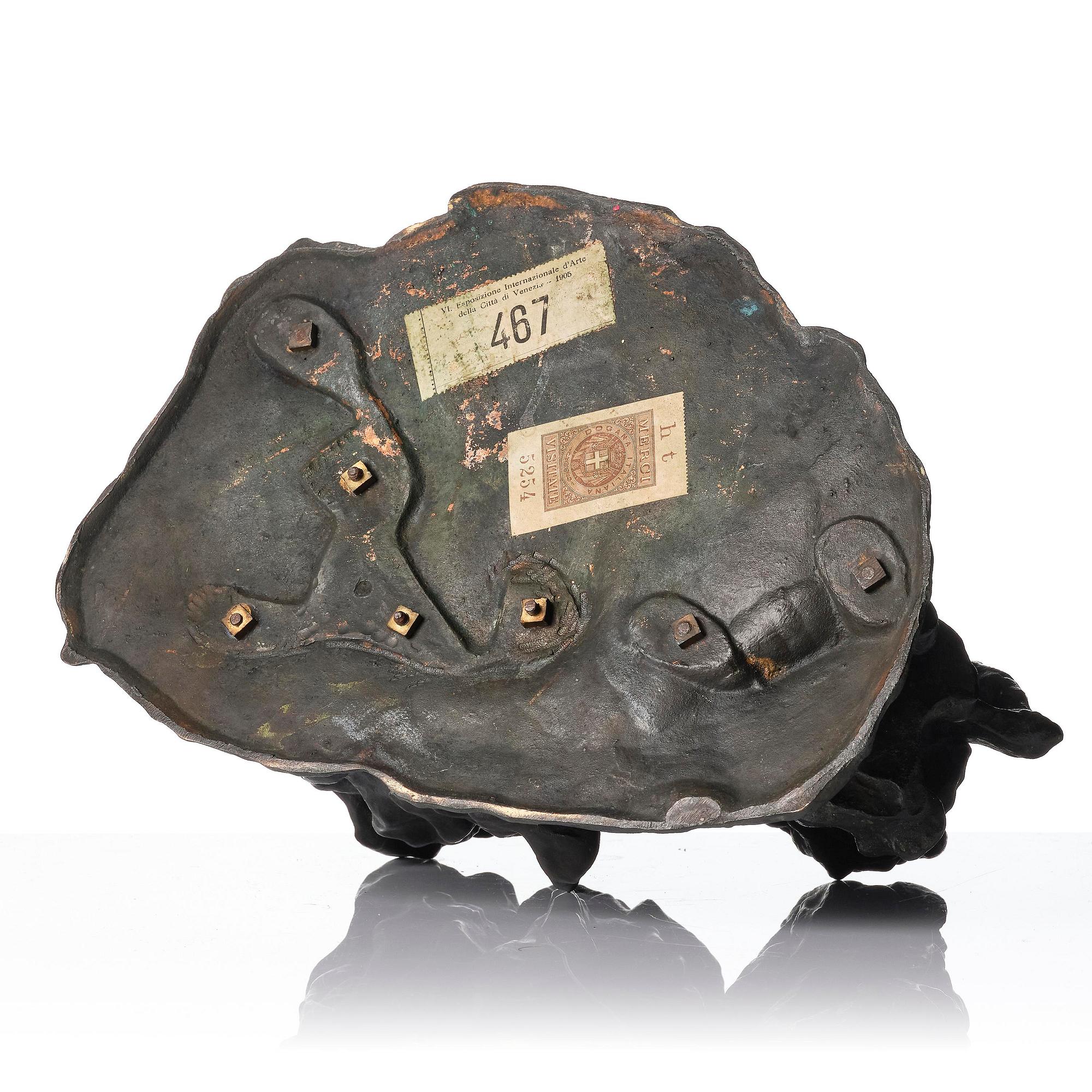
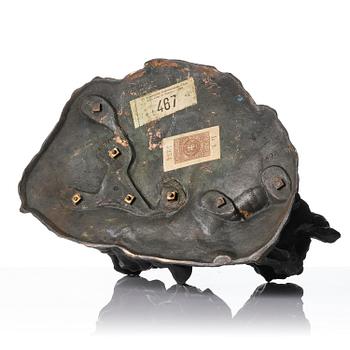
Conceived in 1903. With label from the VI. Esposizione Internazionale d'Arte della Città di Venezia 1905, no. 467. An import label for Italy underneath indicates that the sculpture was sent from abroad, probably France, to be exhibited at the Venice Biennale. It is also likely to be the original cast.
Provenance
Accursio Accorsi, Bologna.
Private collection, Italy.
Exhibitions
"VI. Esposizione Internazionale d'Arte della Città di Venezia", 1905, cat. no. 34 (La Bufera).
Literature
"Catalogo Illustrato di VI. Esposizione Internazionale d'Arte della Città di Venezia", 1905, cat. no. 34, p. 64.
"Små konstböcker No. 18. Carl Milles. 62 reproduktioner i tontryck efter fotografier af originalen", illustated p. 14.
M.P. -Verneuil, "Carl Milles. Sculpteur suédois", 1929, the motif illustrated p. 20 and illustrated p. 18.
Henrik Cornell, "Carl Milles. Hans verk", SAK, 1963, the motif in the catalogue under 1903 p. 248.
Erik Näslund, "Carl Milles - en biografi", 1991, the motif illustrated p. 49.
More about Carl Milles
Carl Milles was a Swedish sculptor born in Lägga. He studied at the Technical School in Stockholm, at the Ecole des Beaux-Arts in Paris under Auguste Rodin and on study trips to Germany, the Netherlands and Belgium. In Paris he came to stay for many years and made a living as an ornament carver. He studied the animals in the Jardin des Plantes (the Zoological Garden) and was strongly influenced by Auguste Rodin. Milles made a breakthrough with a monument to Sten Sture in Uppsala. He exhibited at the World's Fair in 1900 and was later given a solo exhibition at the Tate Gallery in London. Milles was professor of modeling at the Royal Academy of Arts in Stockholm. Well-known sculptures in public places signed by Carl Milles are the "Gustav Vasa" statue at the Nordic Museum, "Orfeusgruppen" outside the concert hall in Stockholm and the "Poseidonfontänen" in Gothenburg.
Read moreFor condition report contact specialist
What will the transport cost?
Others have also viewed