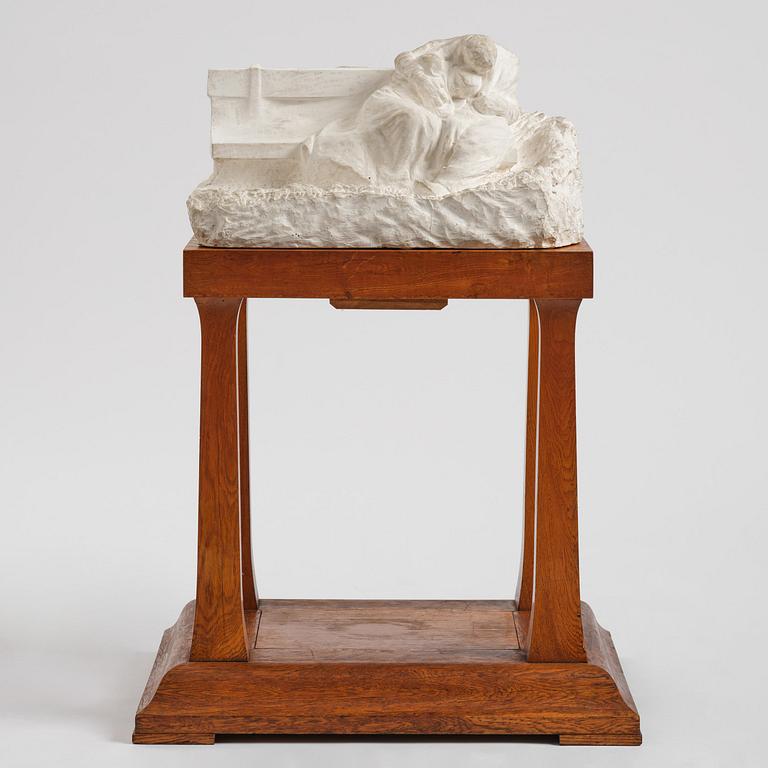
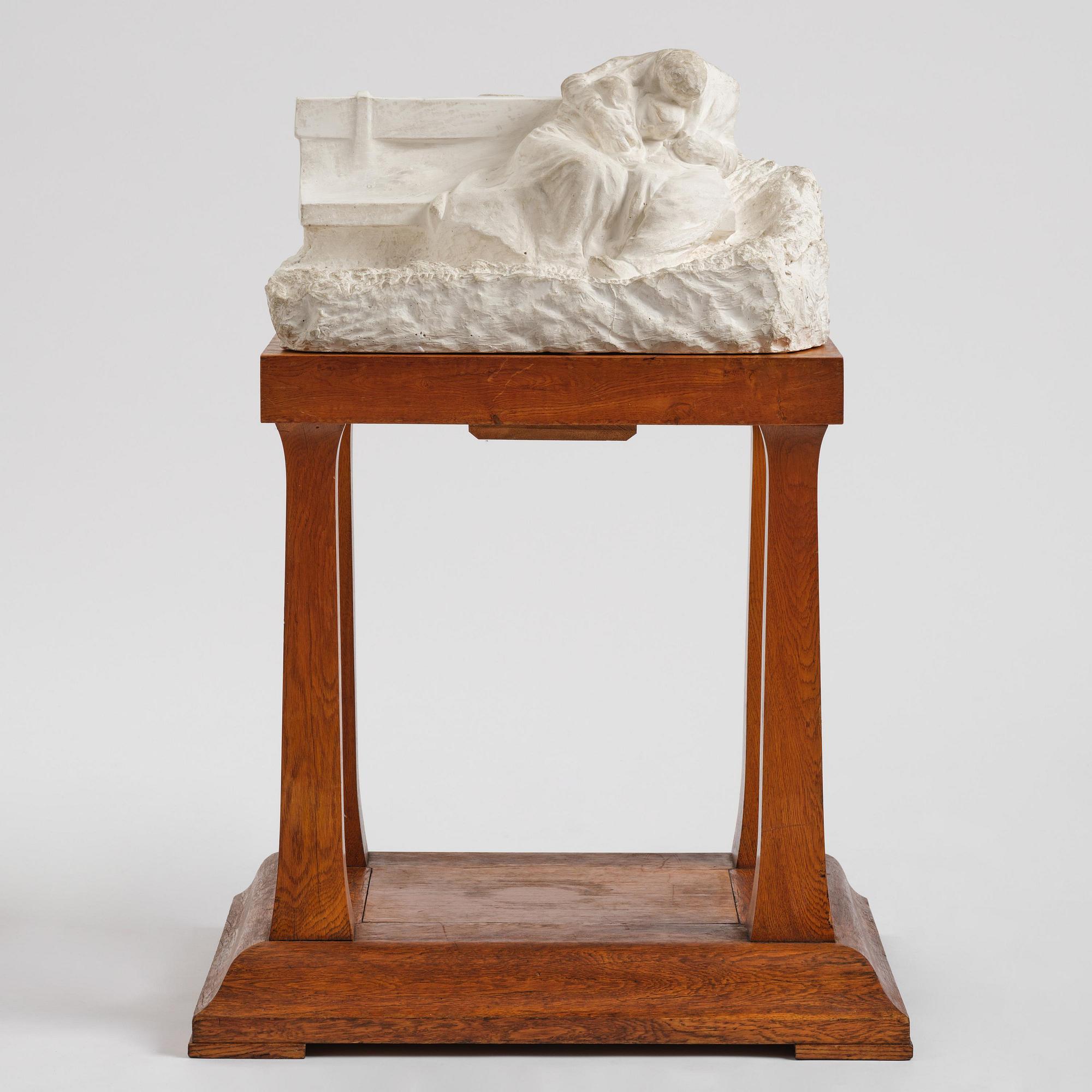
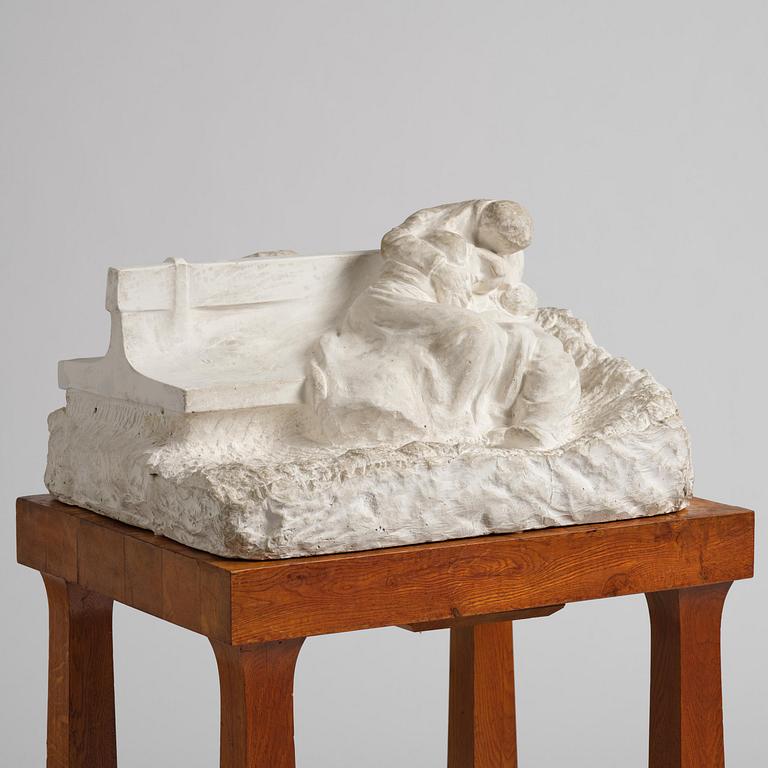
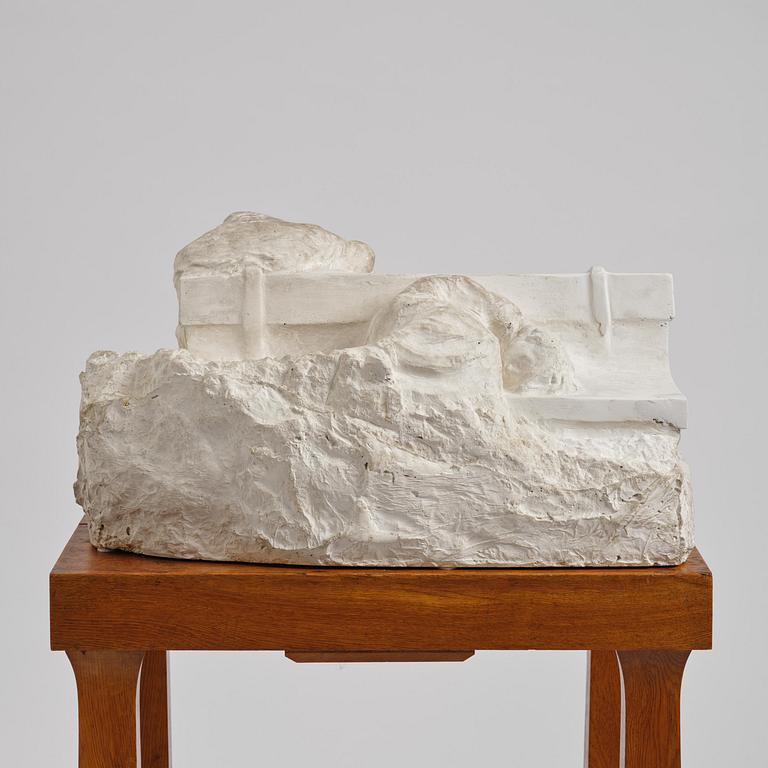
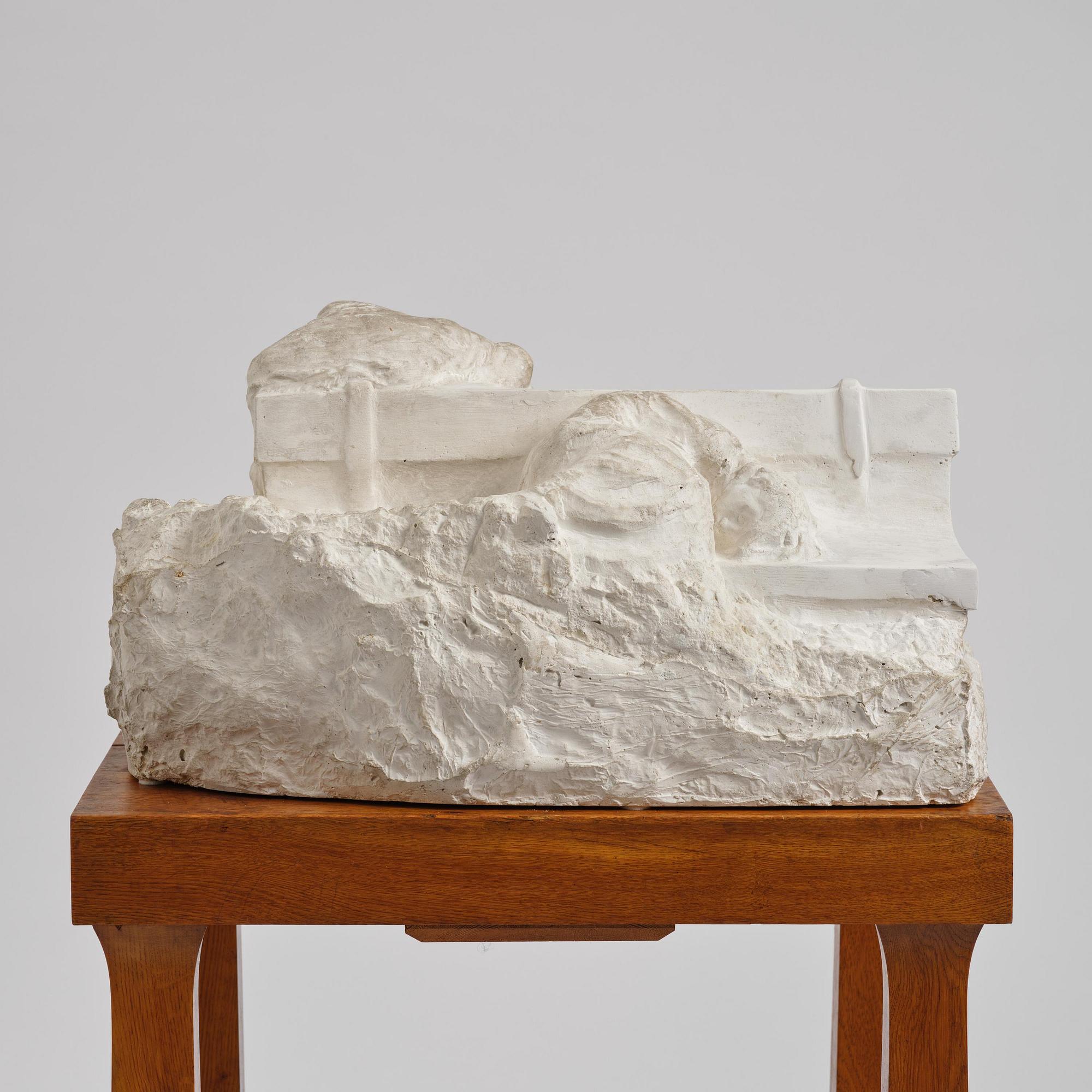
Carl Milles (Sweden, 1875-1955) ”A la belle Etoile” (Under the Stars)
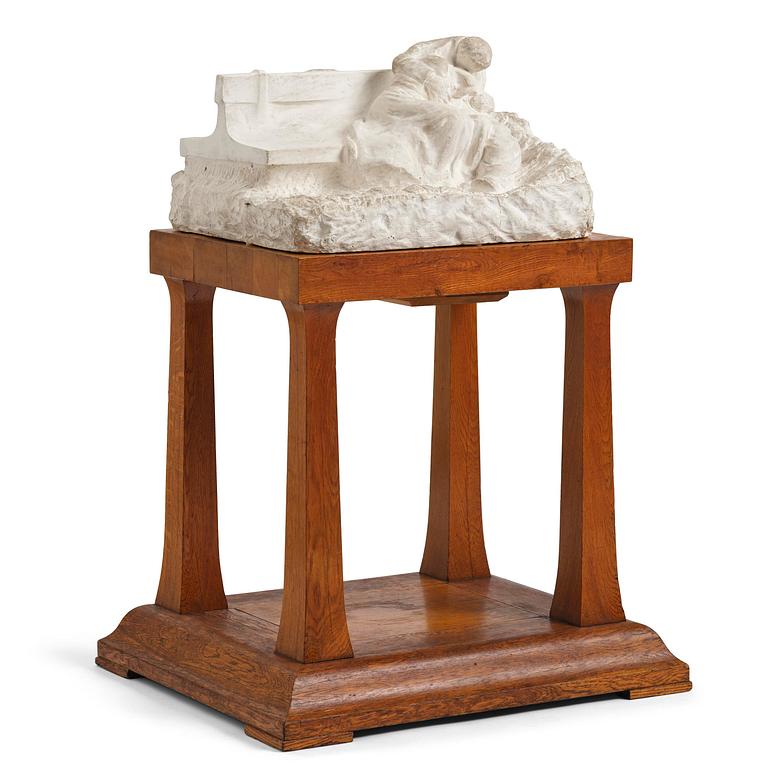
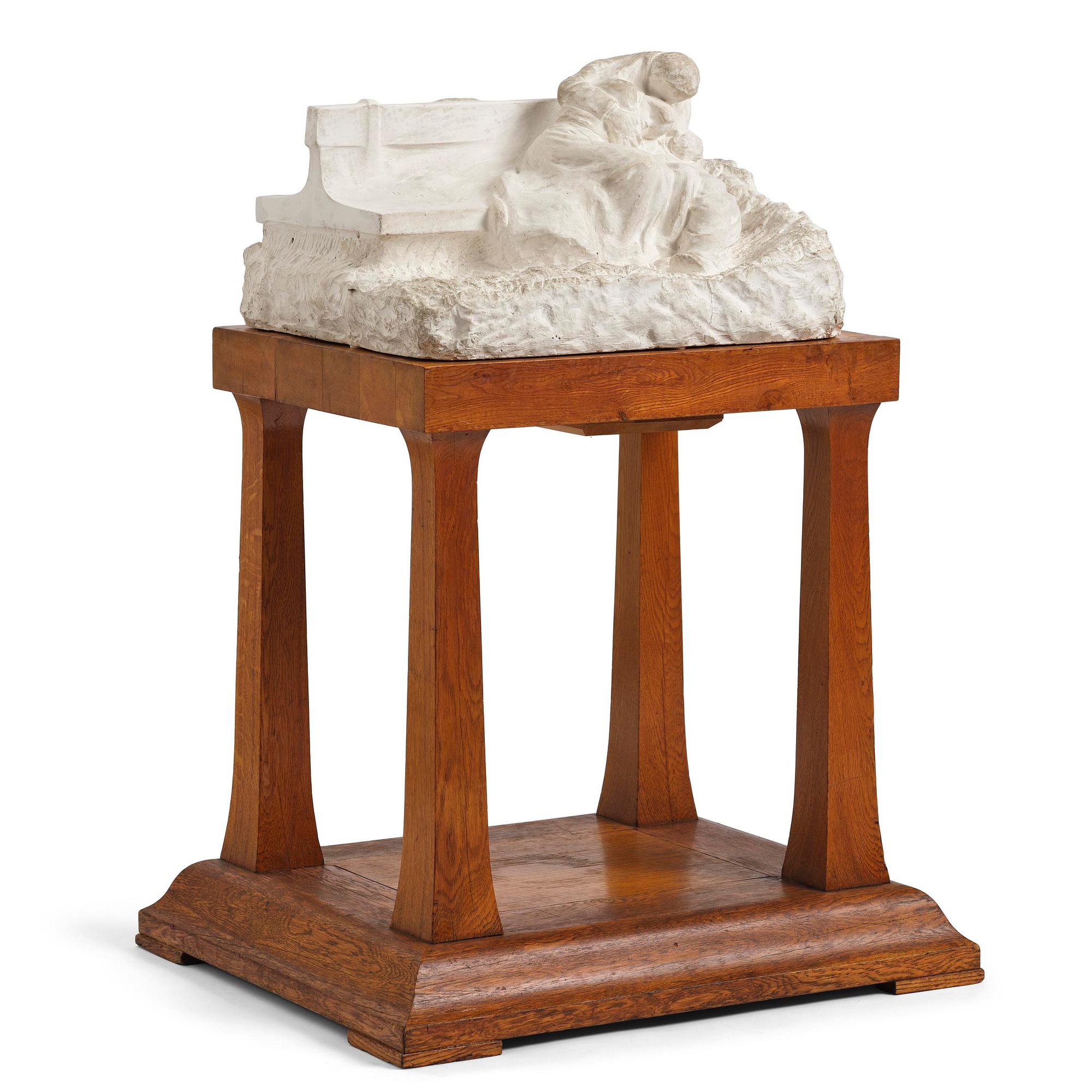
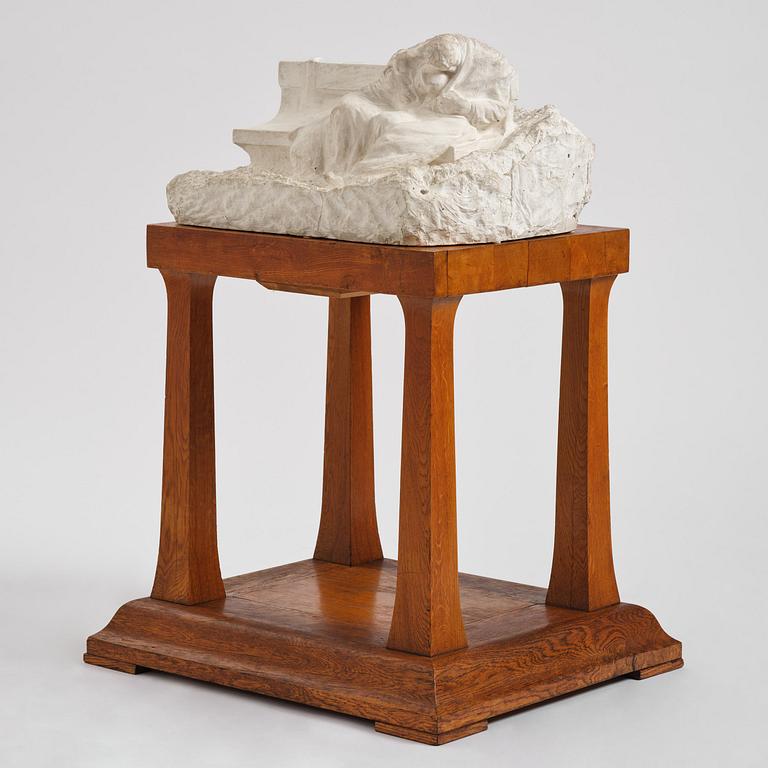
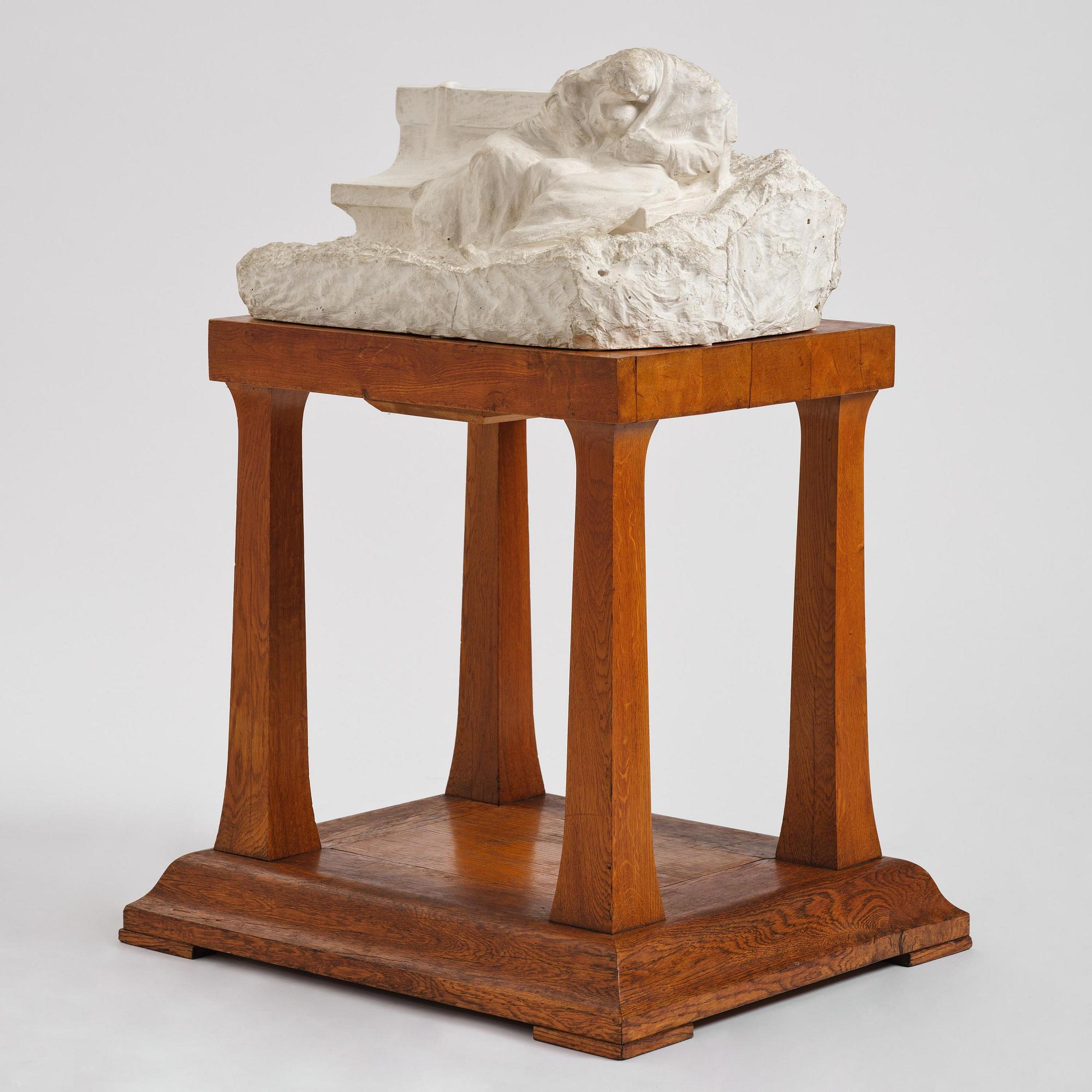
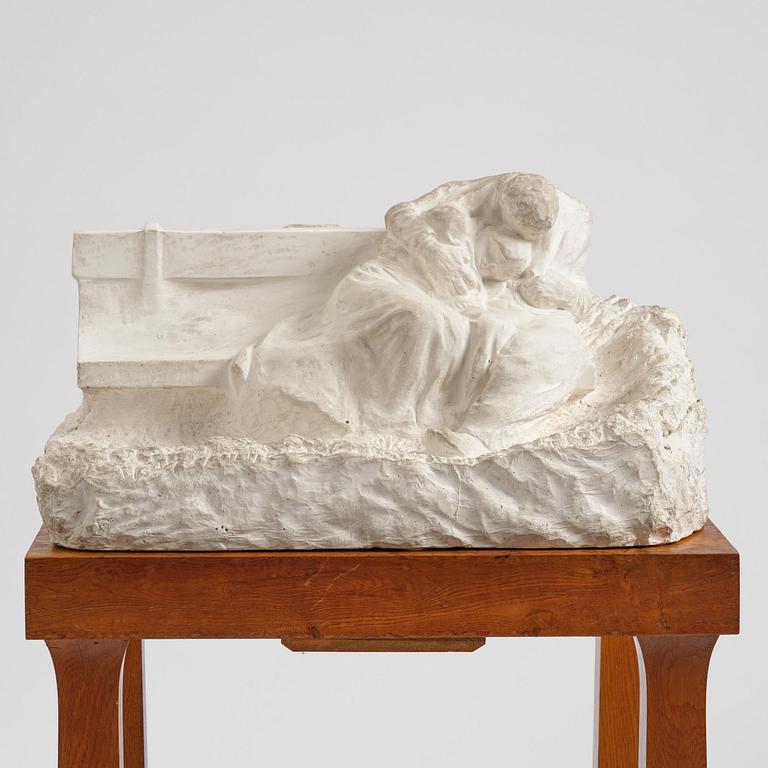
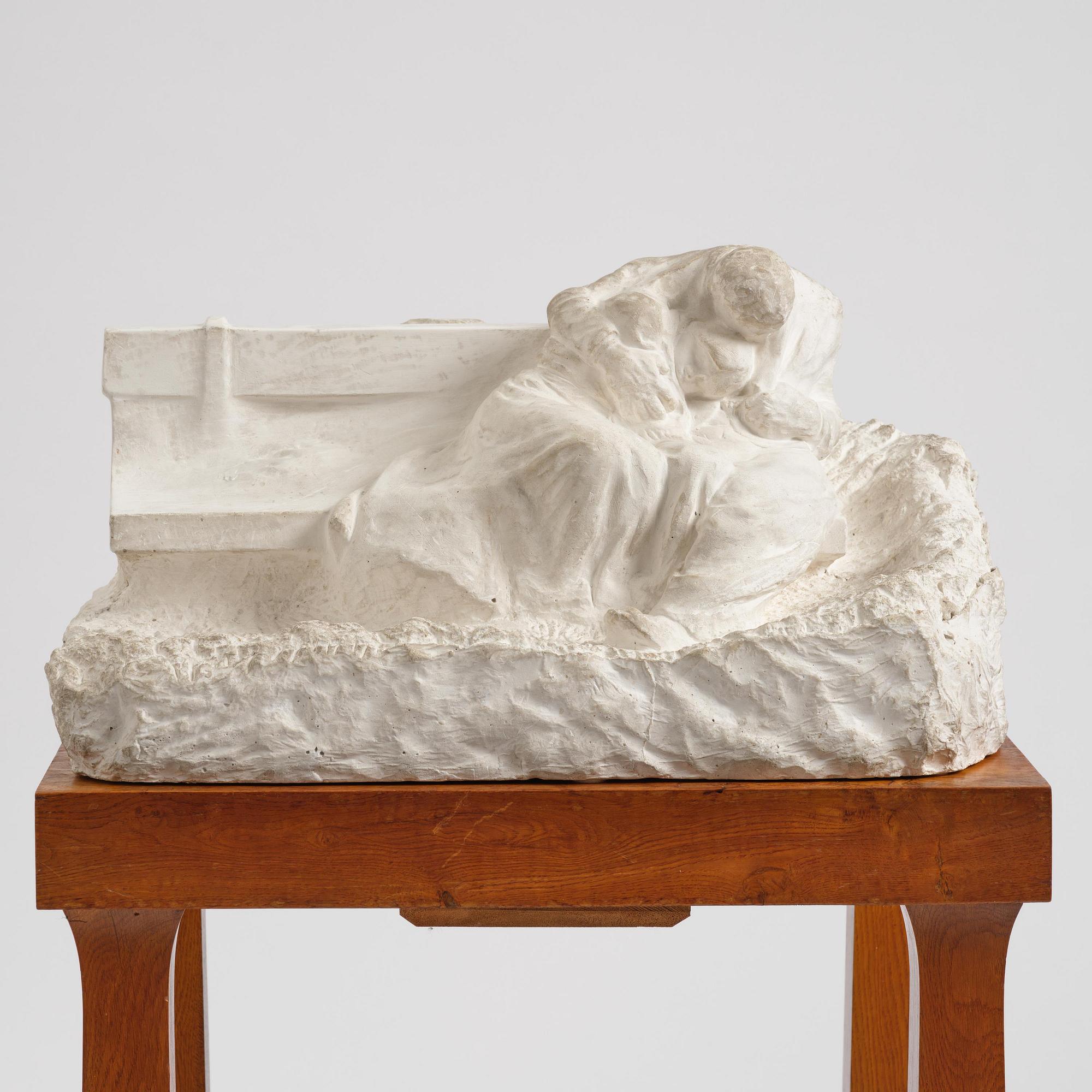
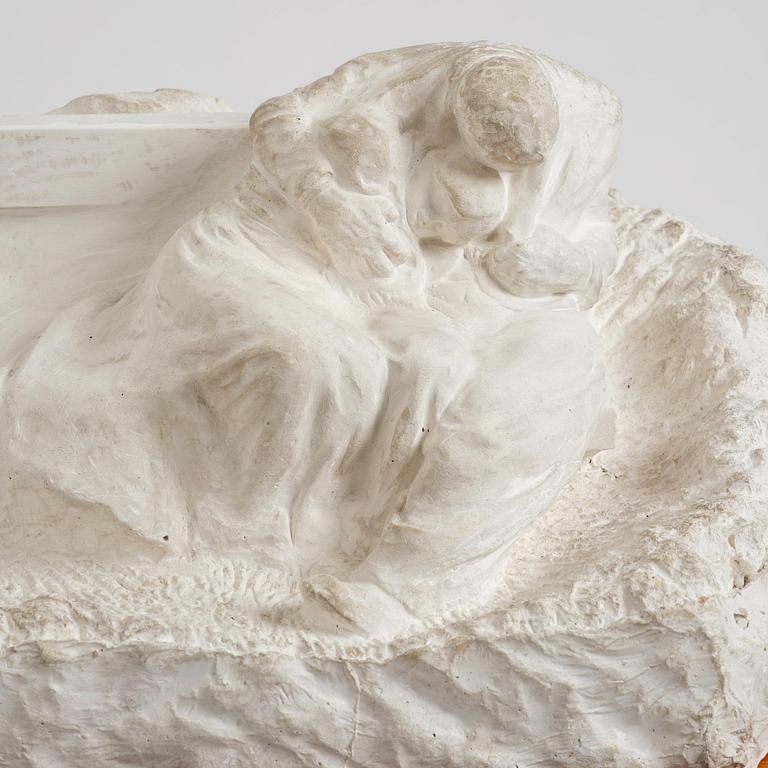
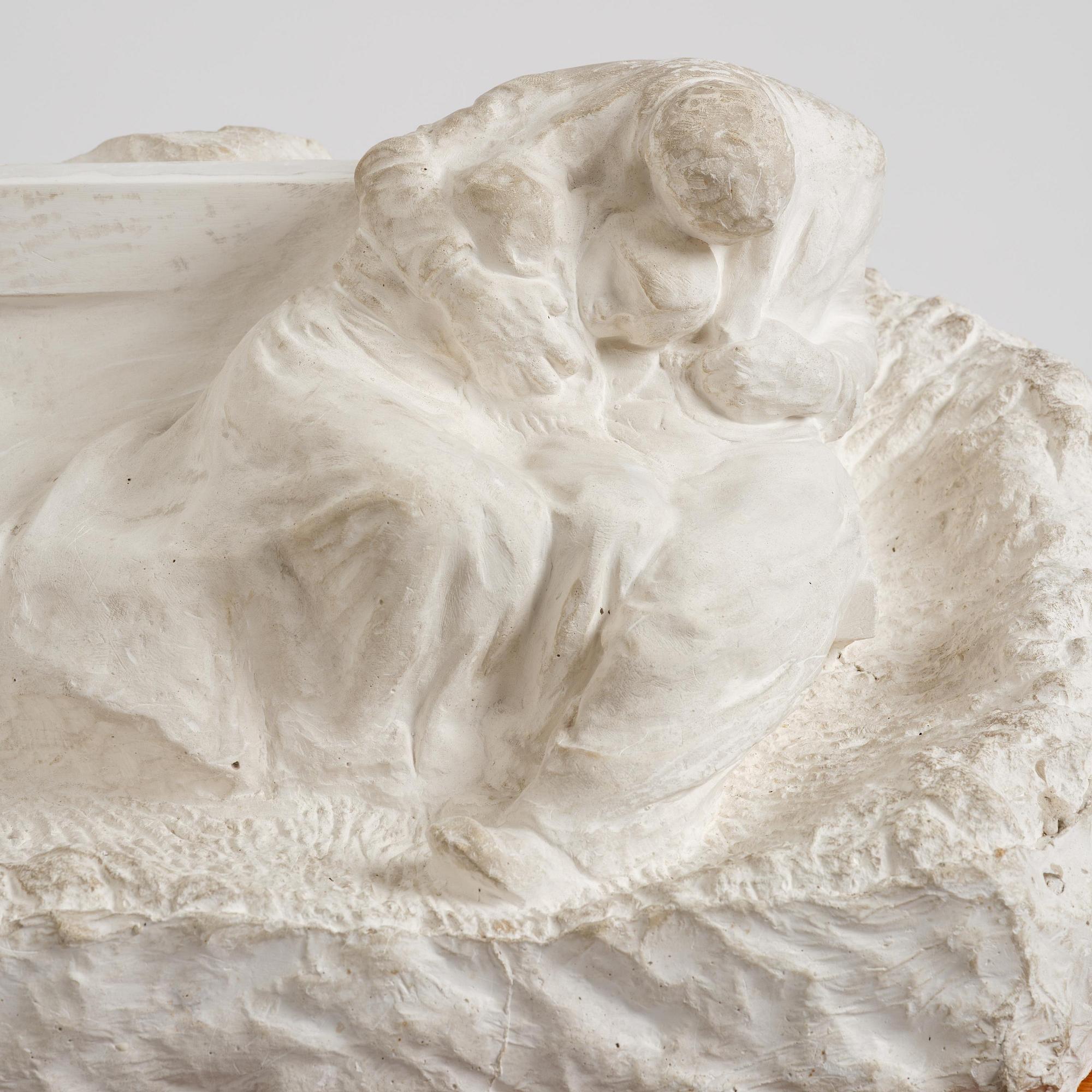
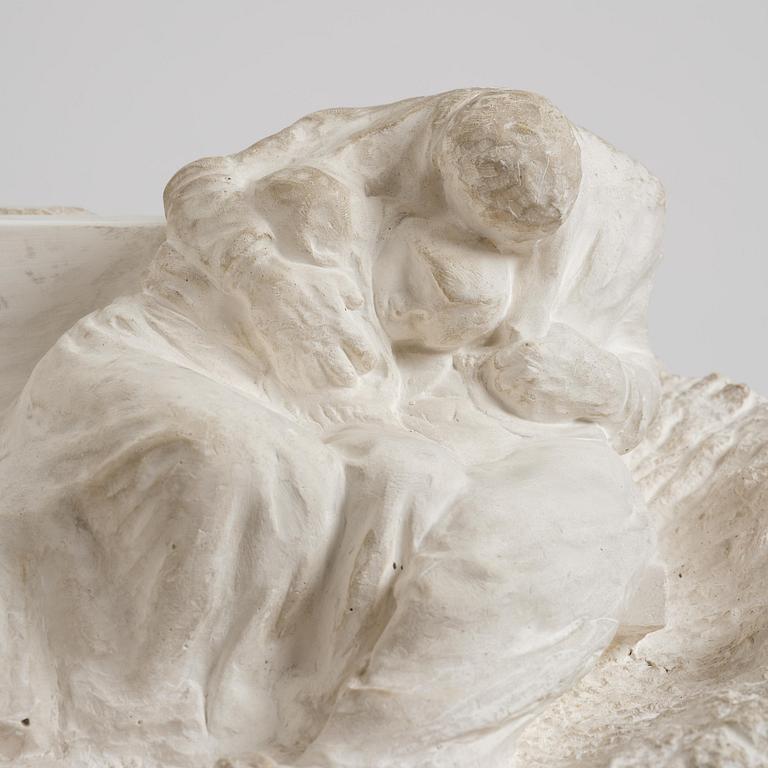
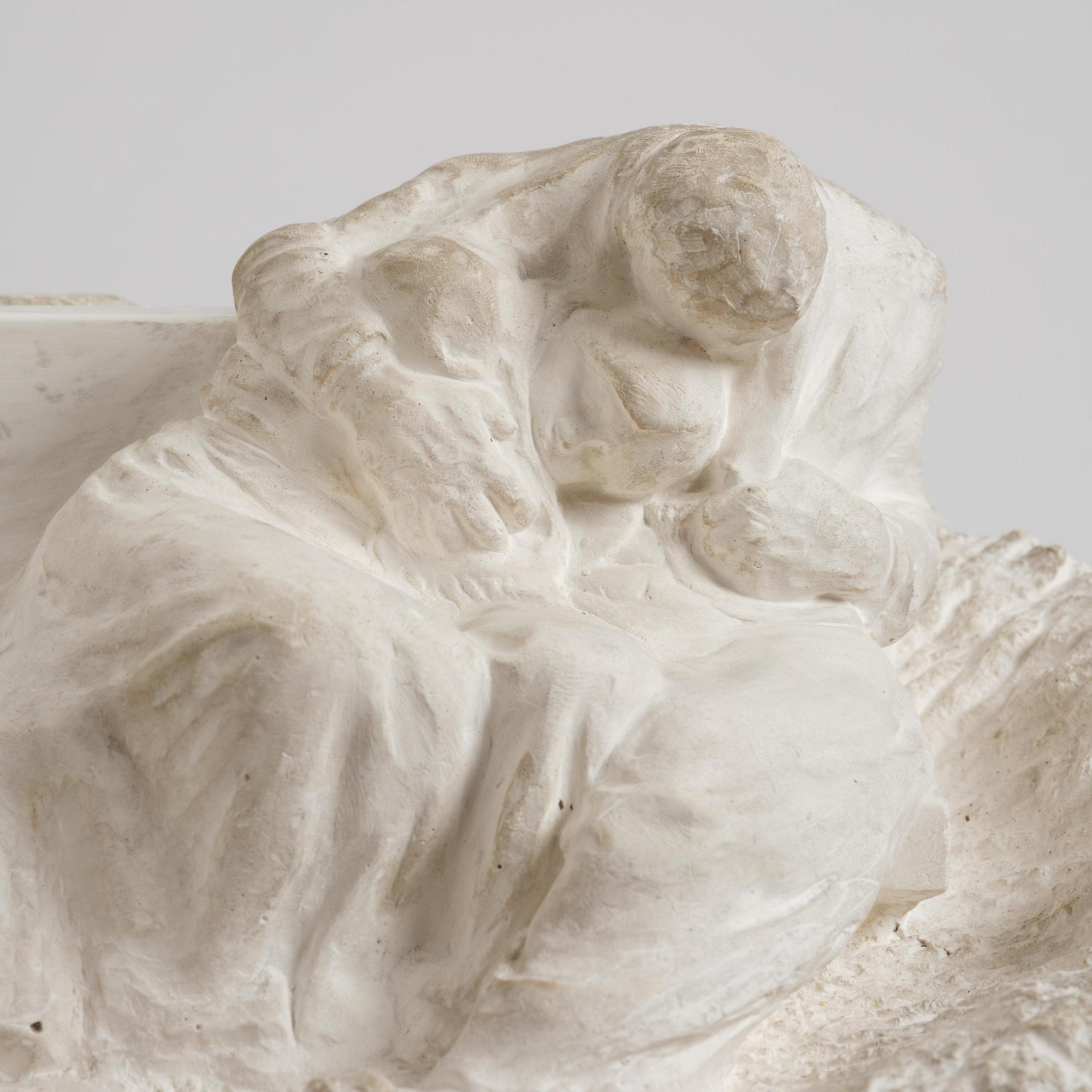
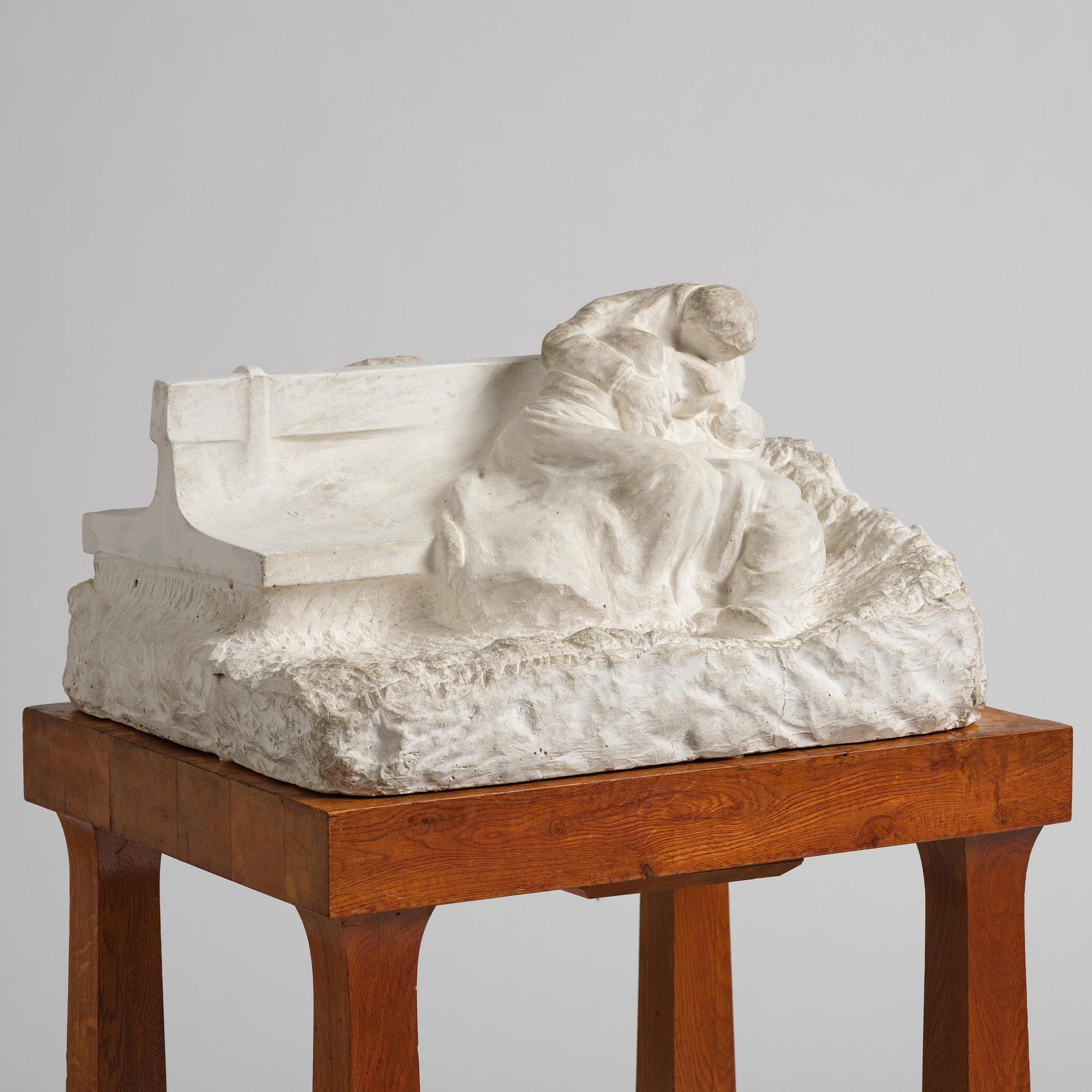
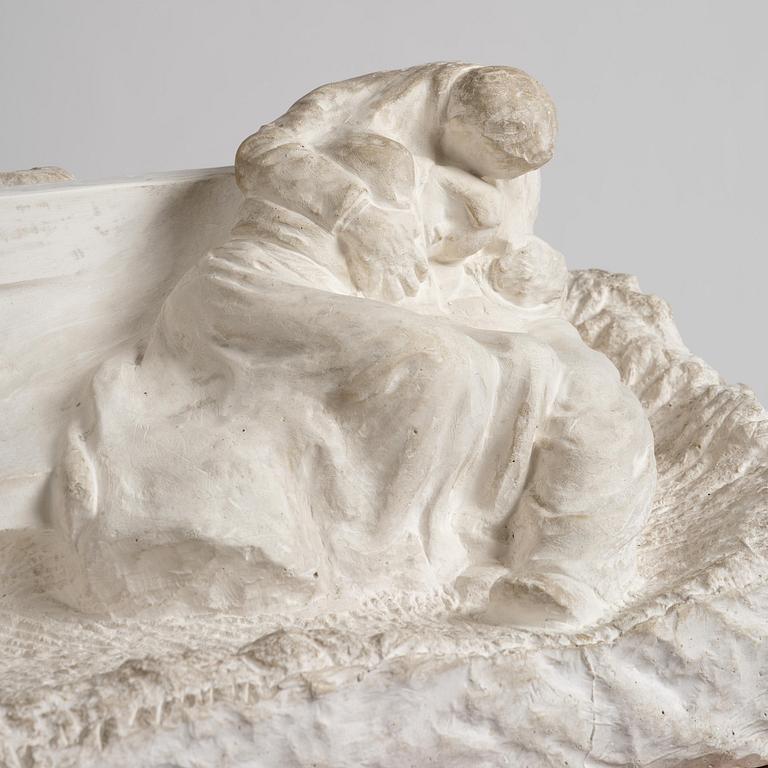
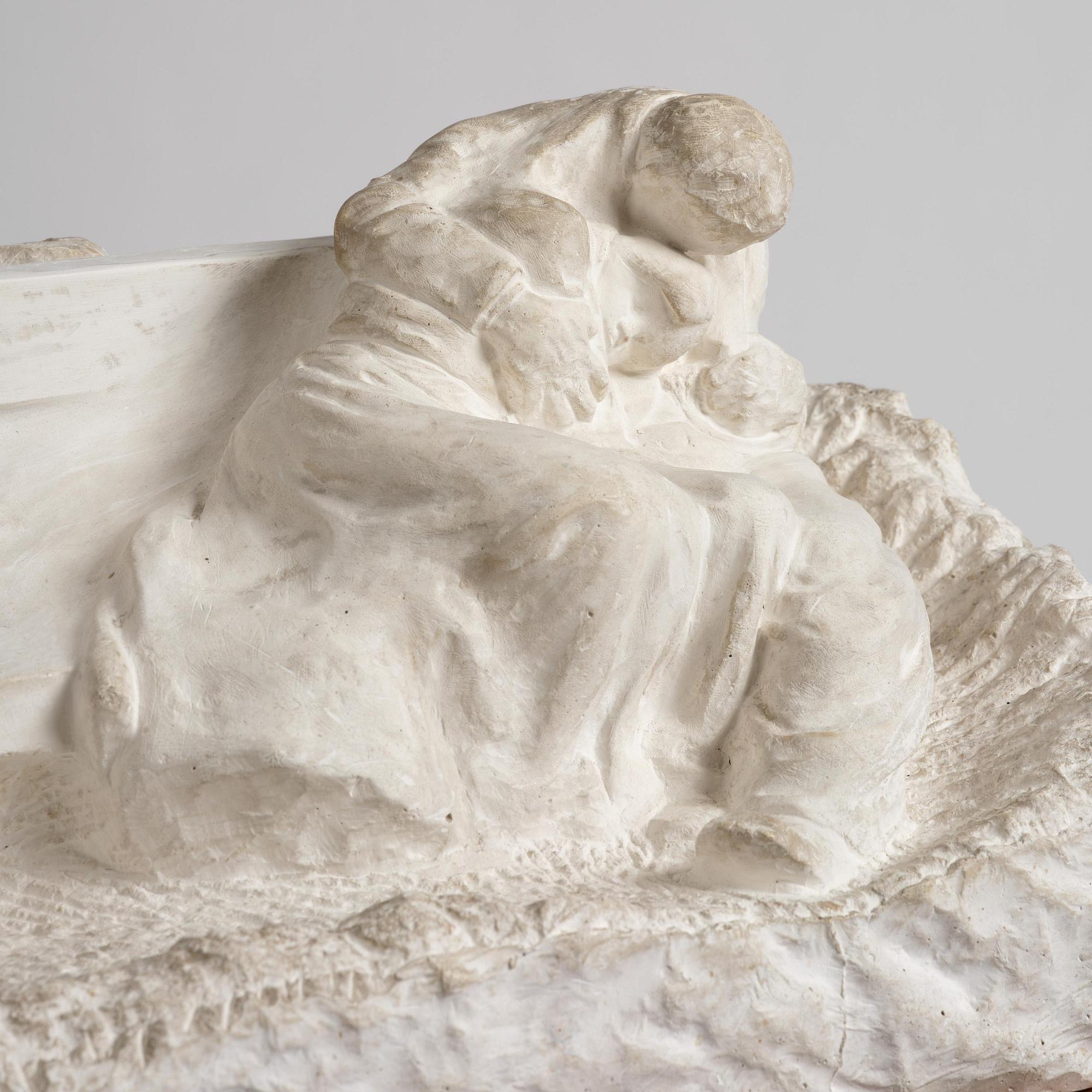
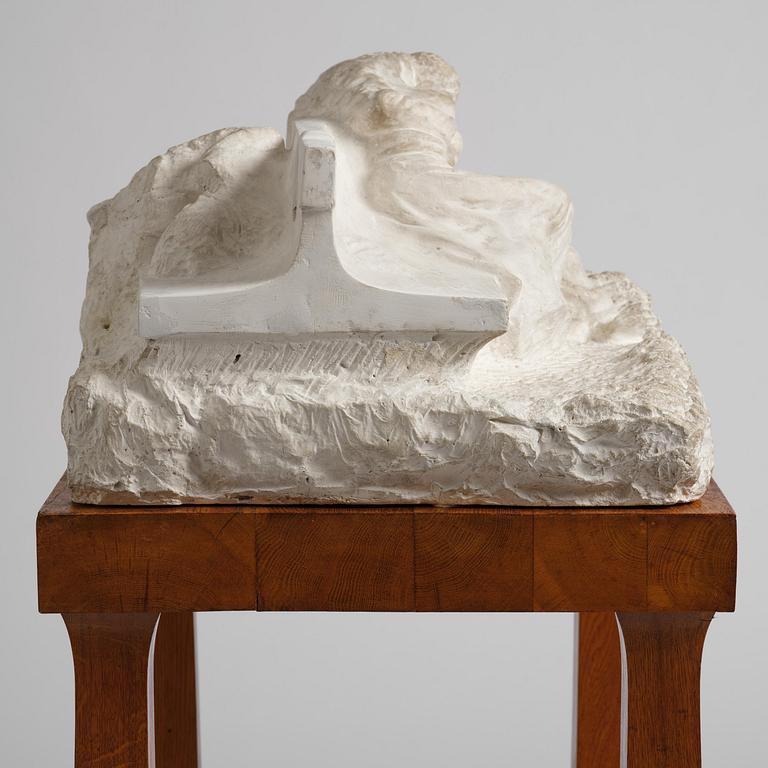
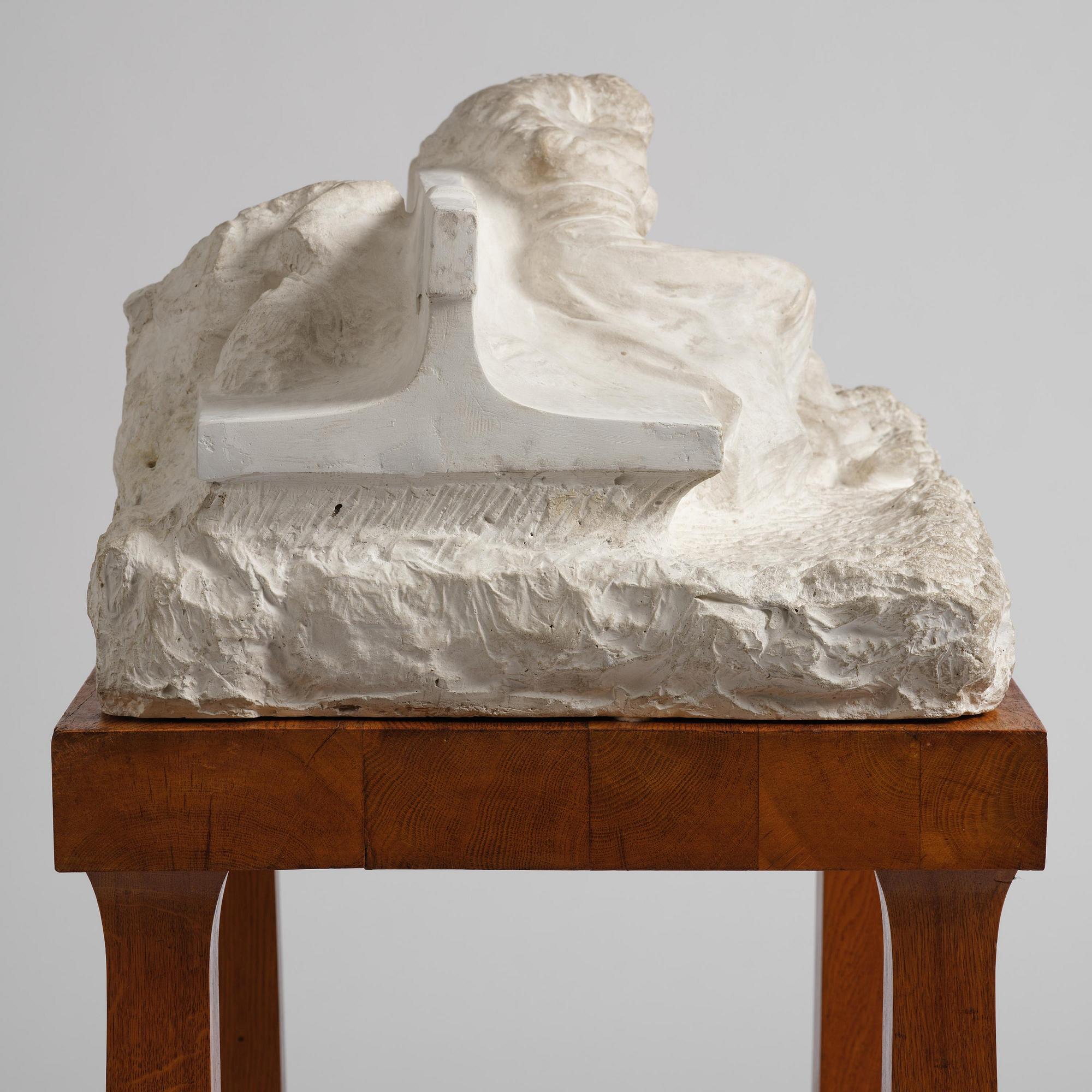
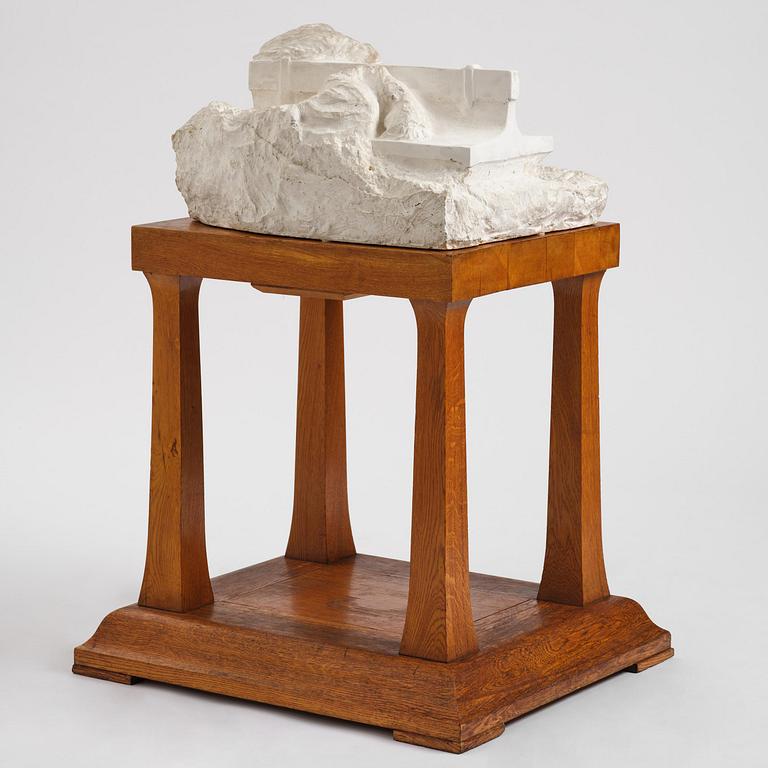
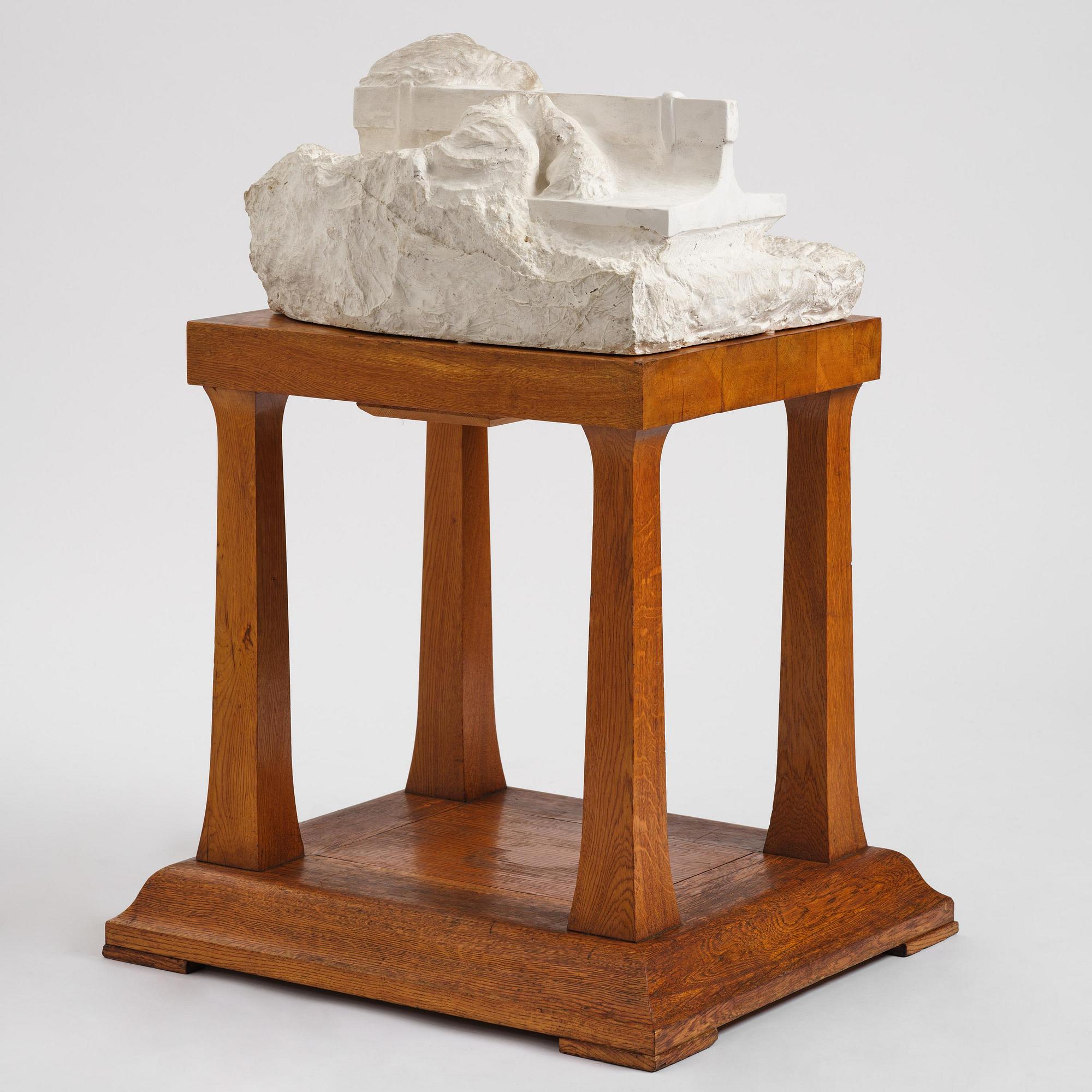
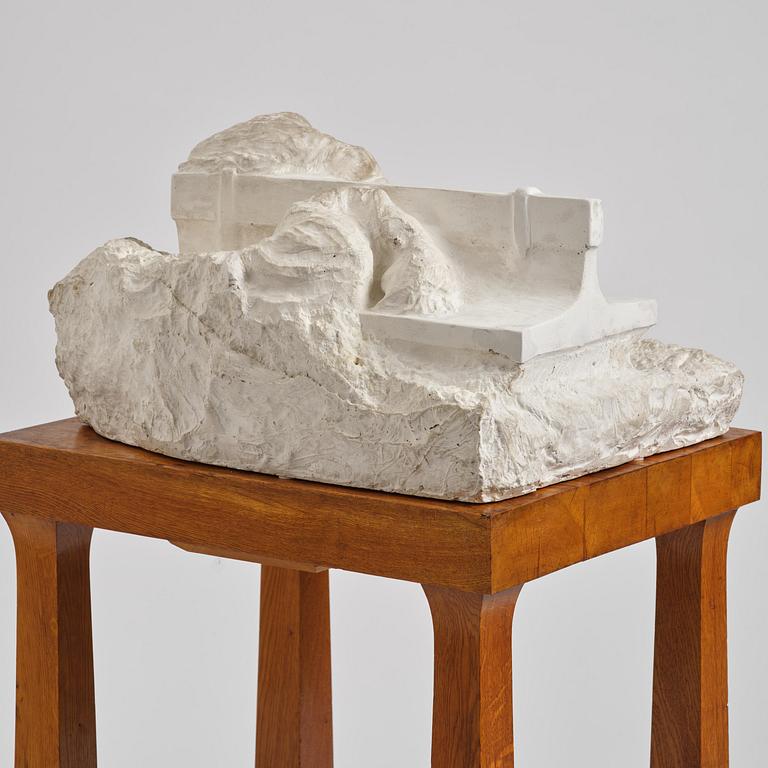
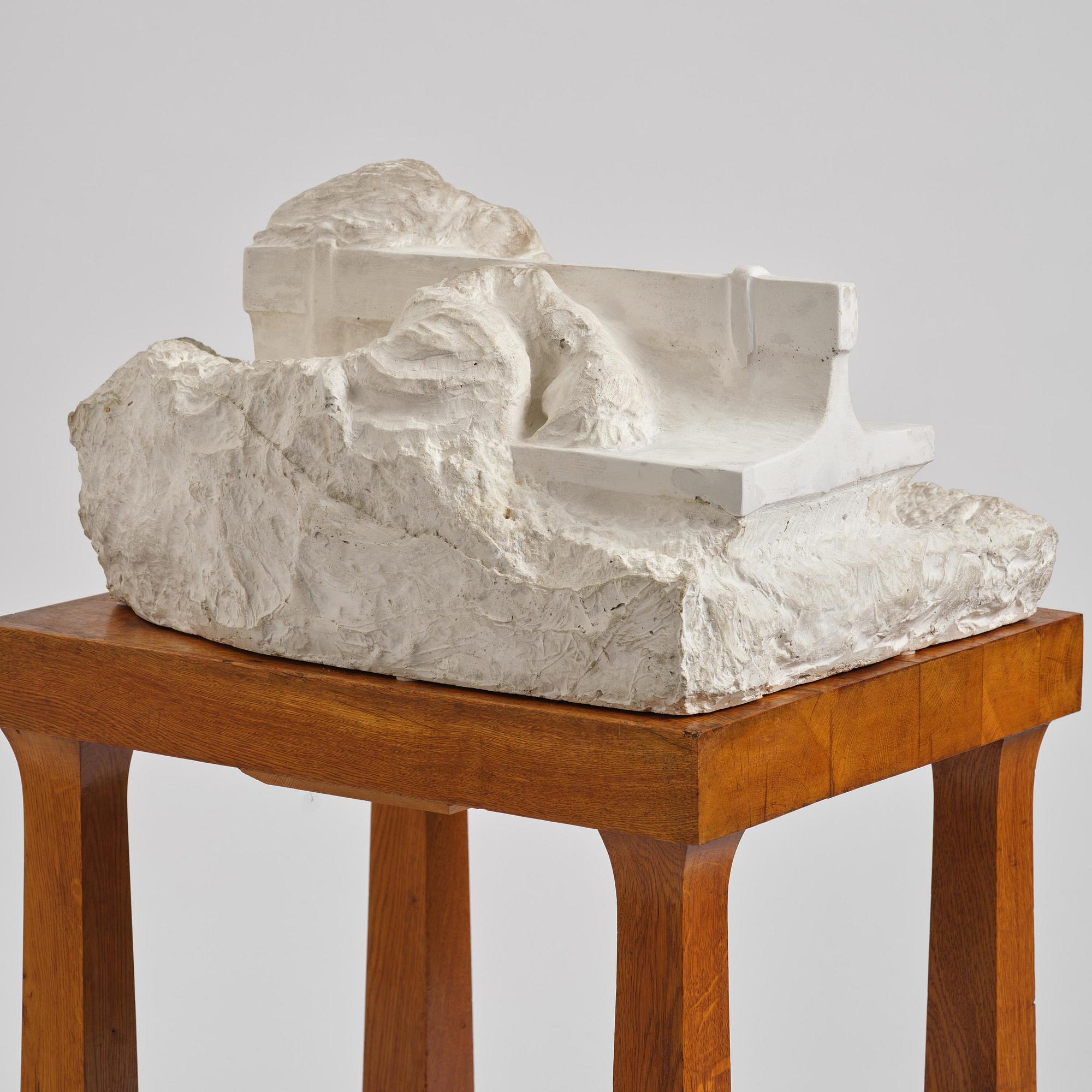
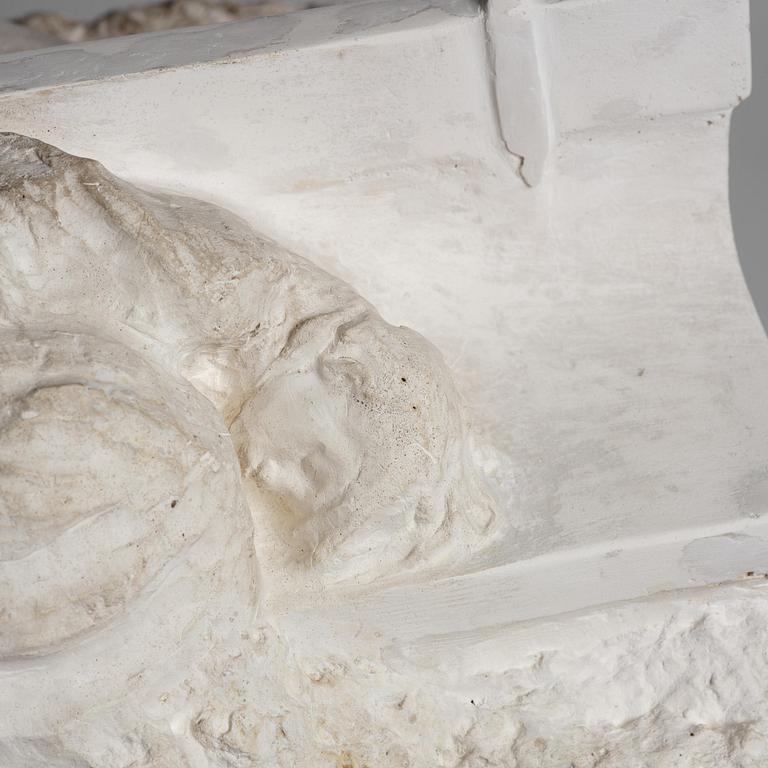
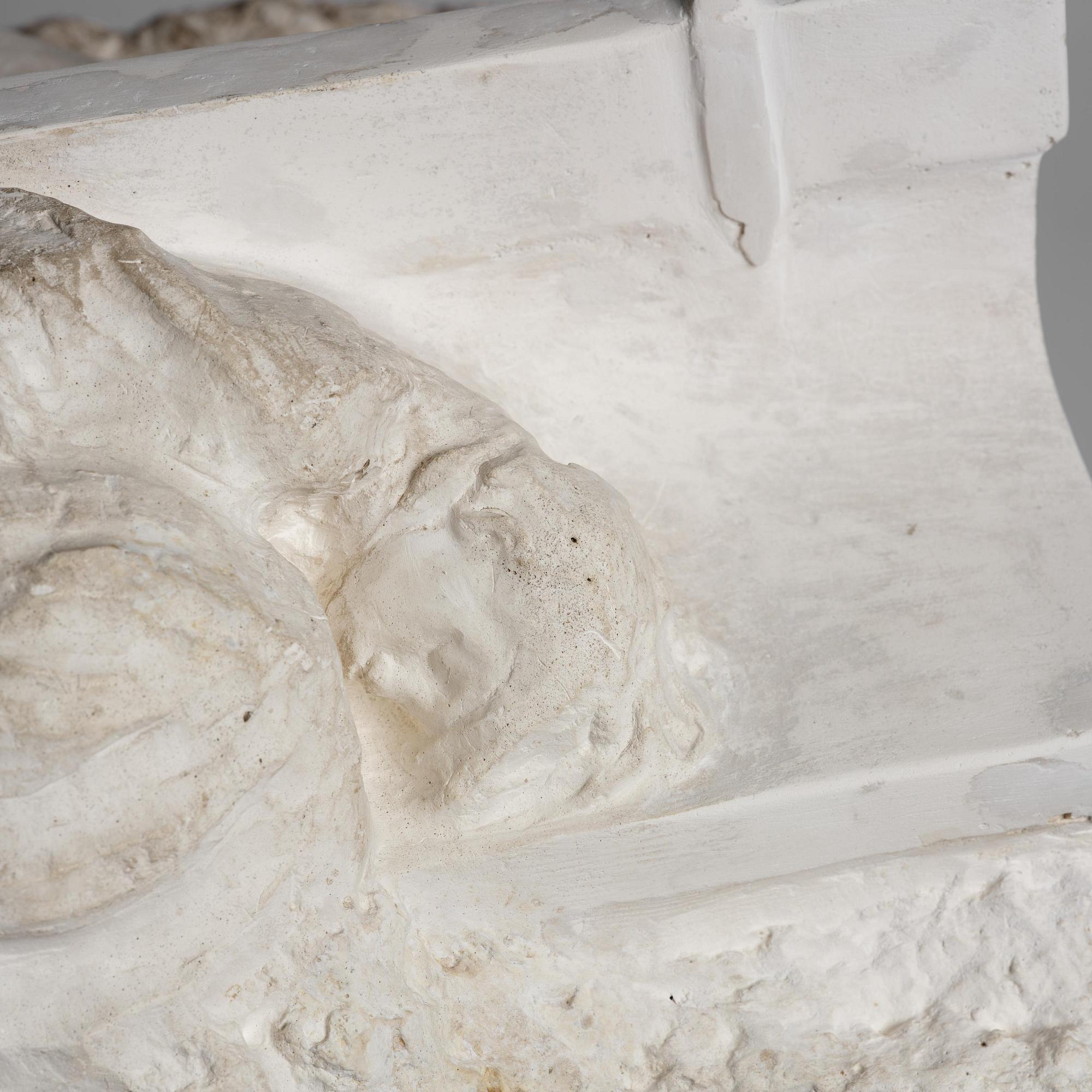
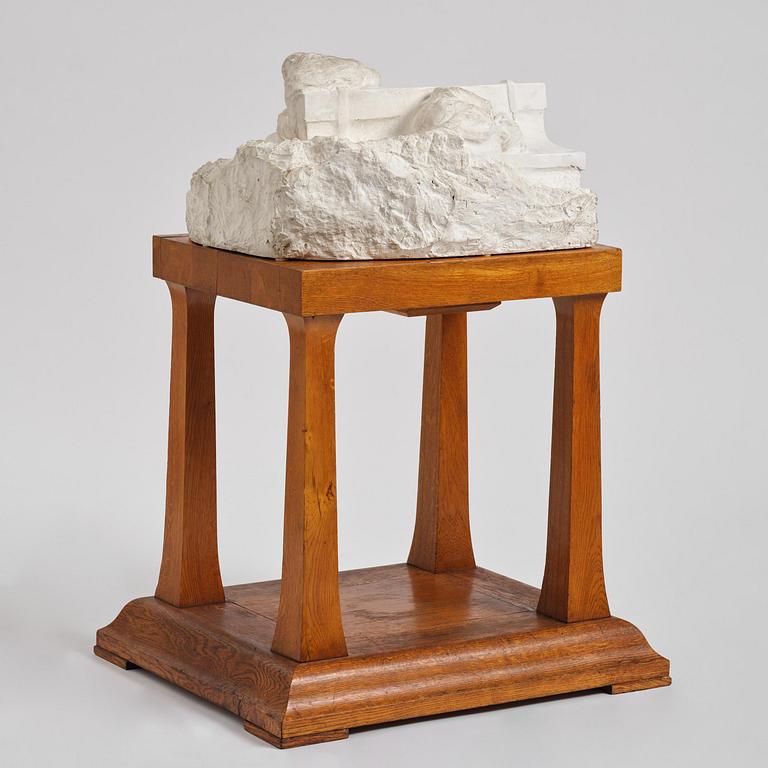
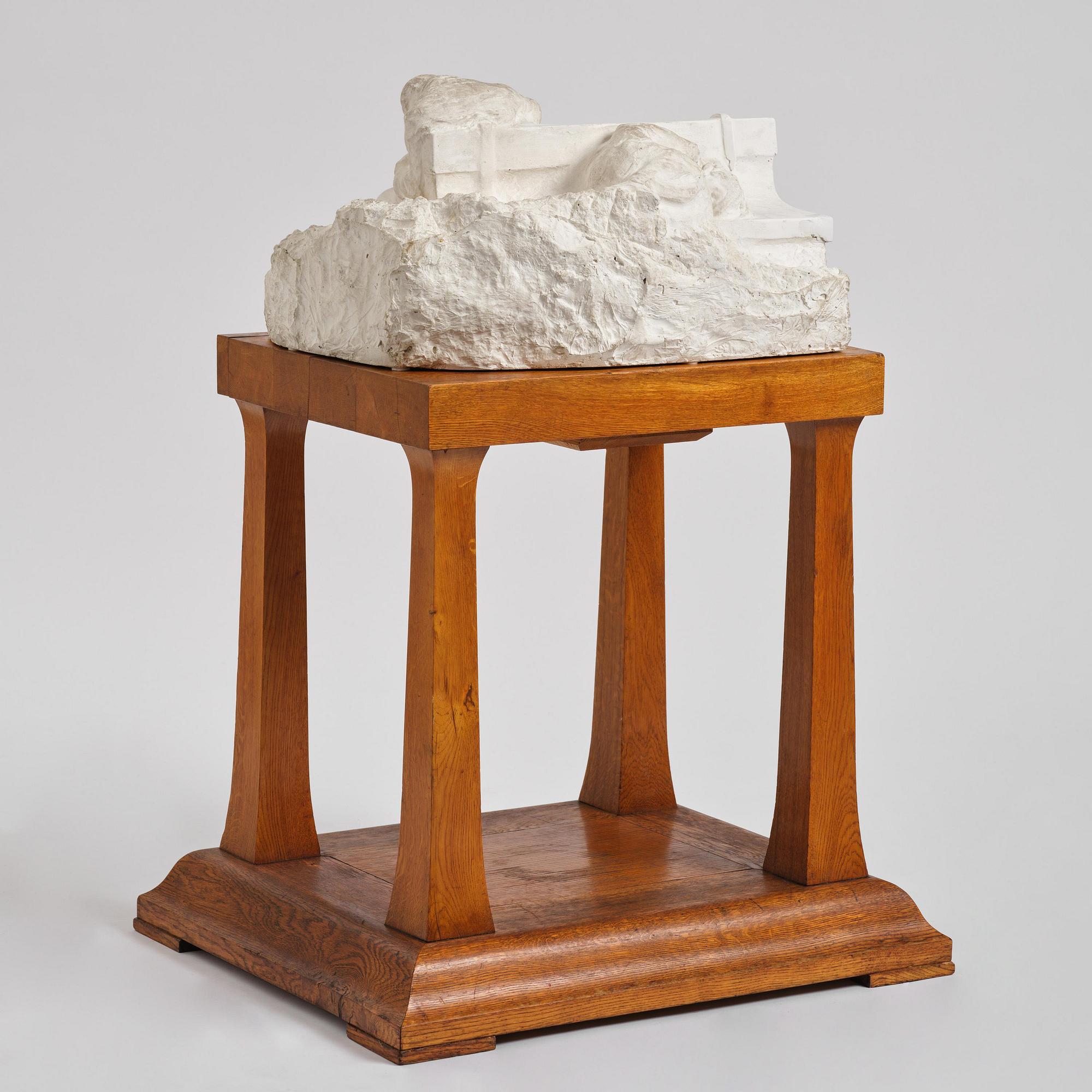
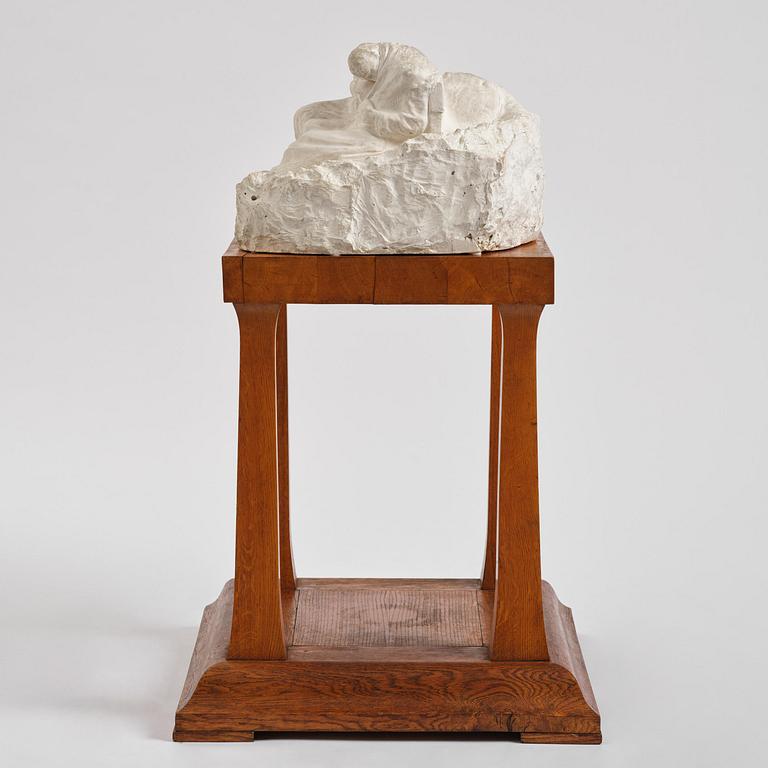
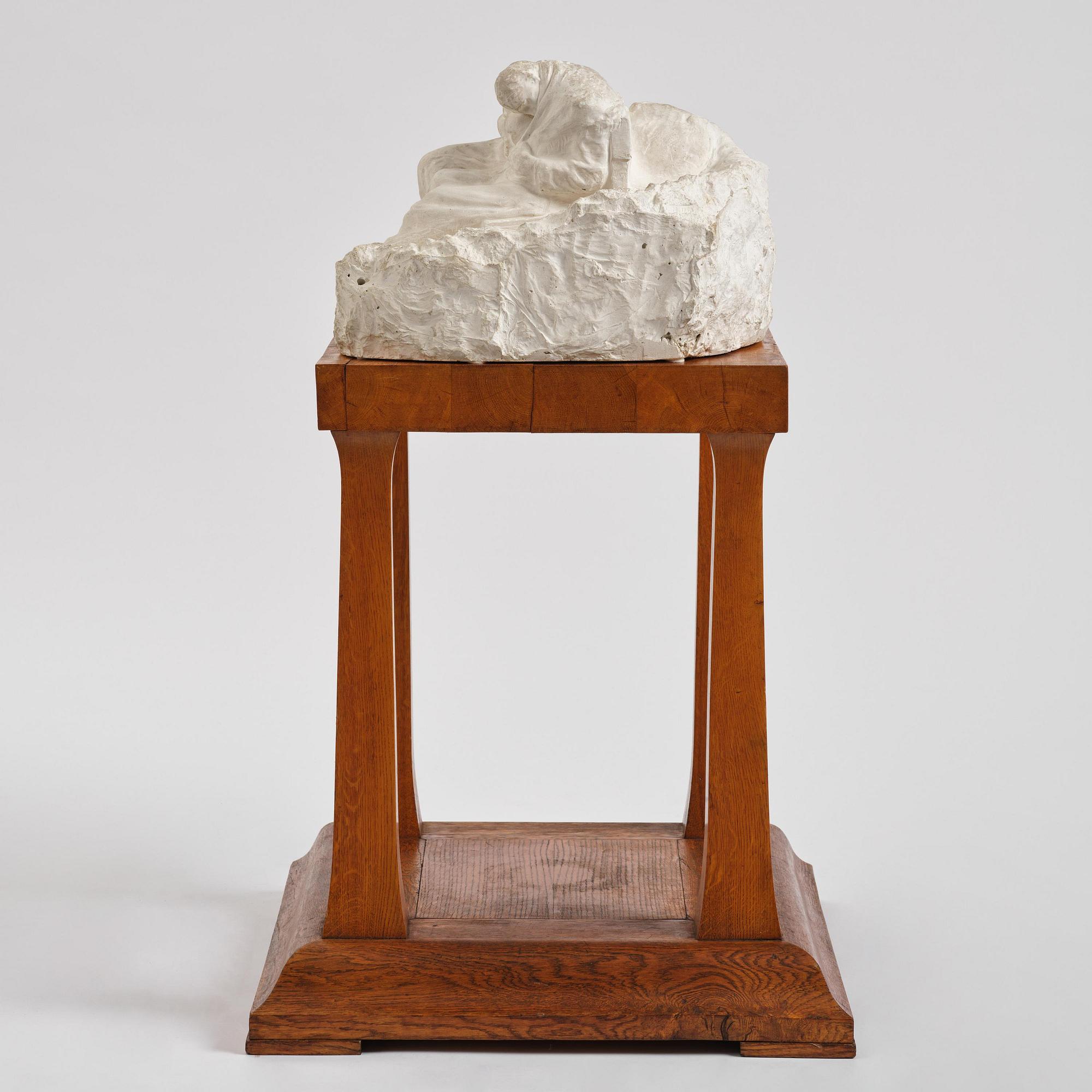
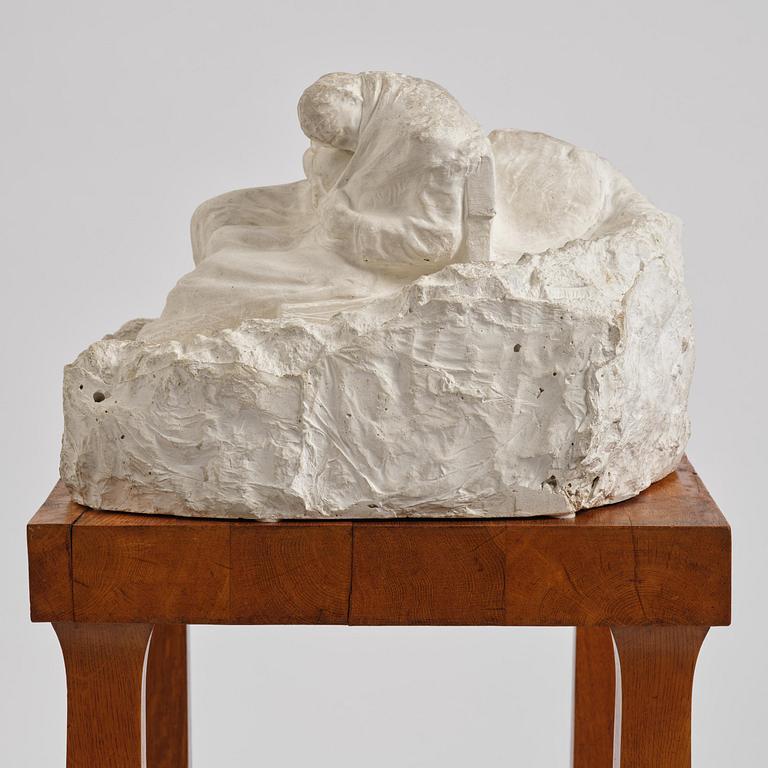
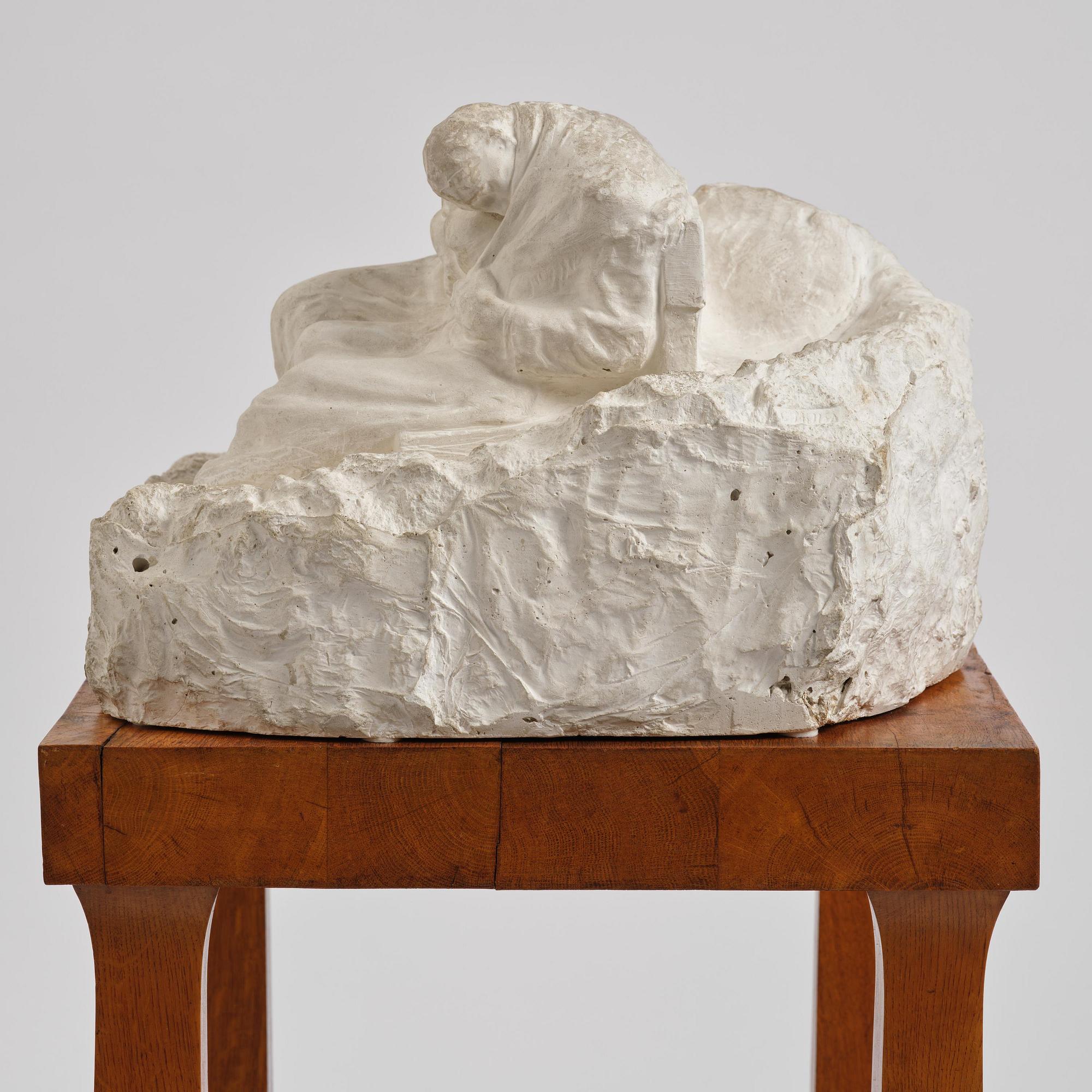
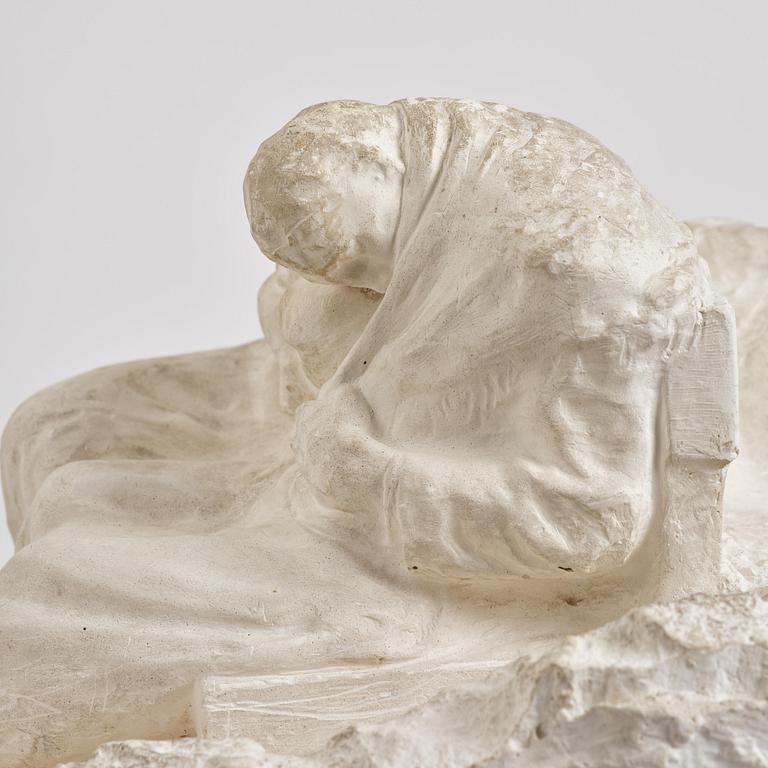
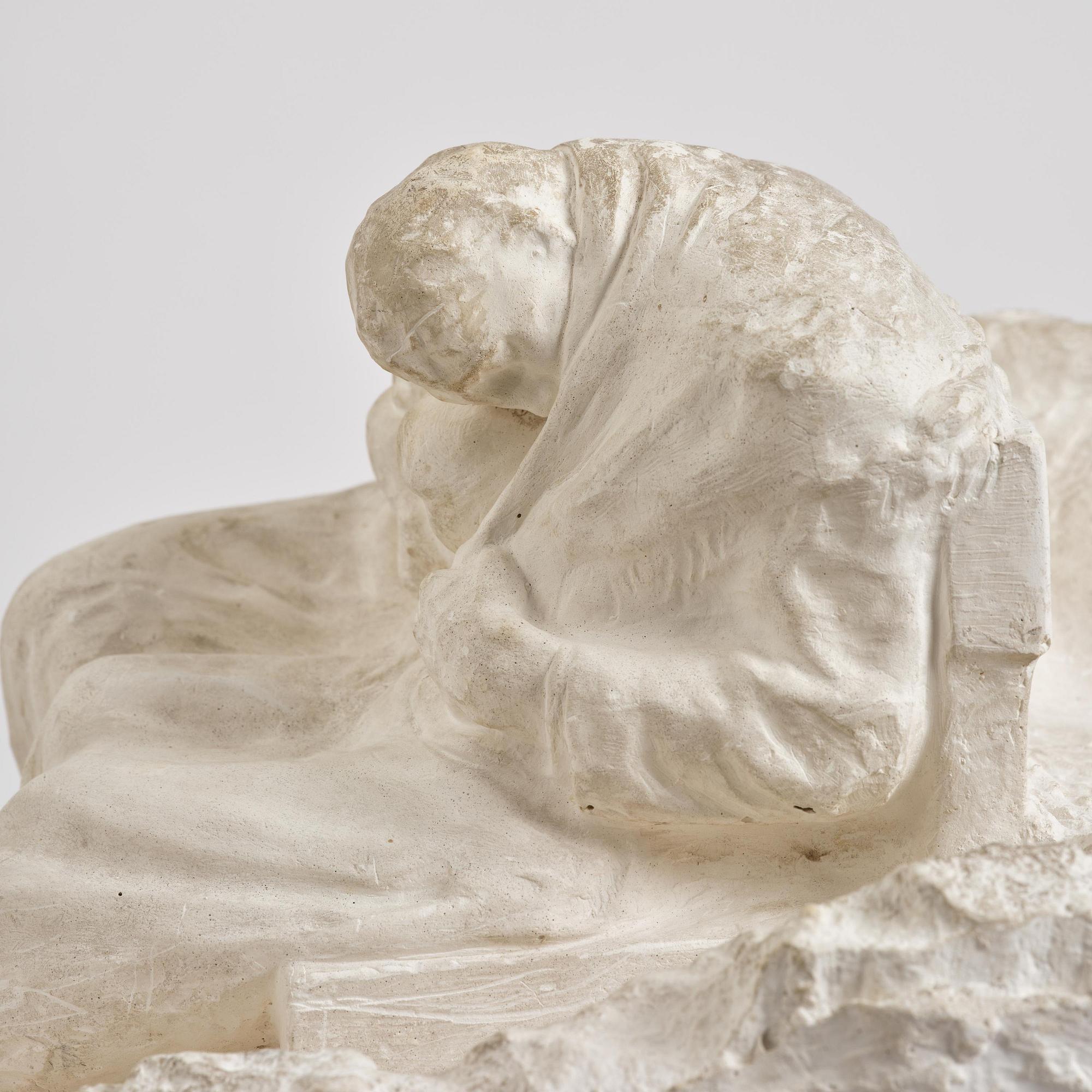
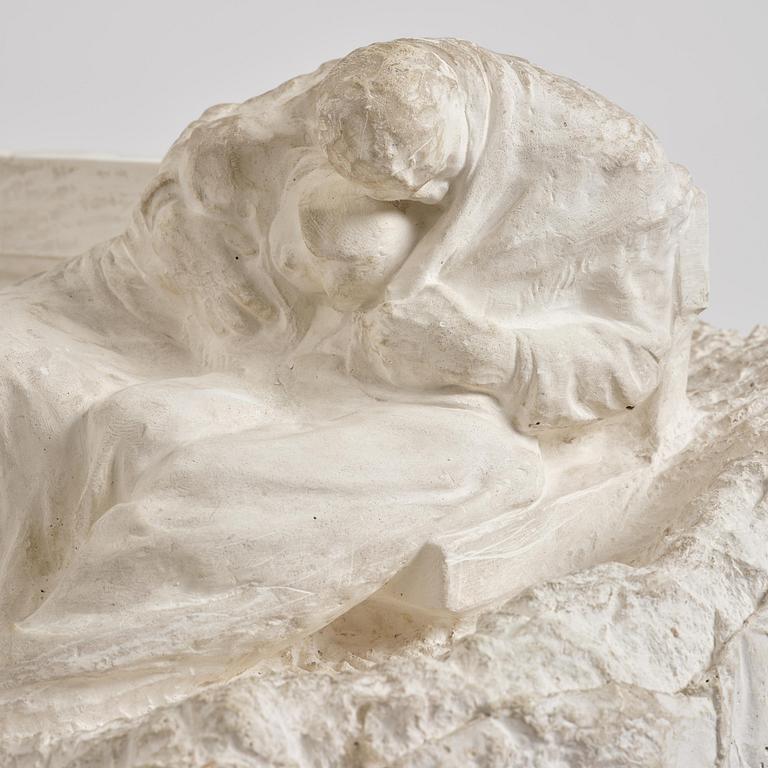
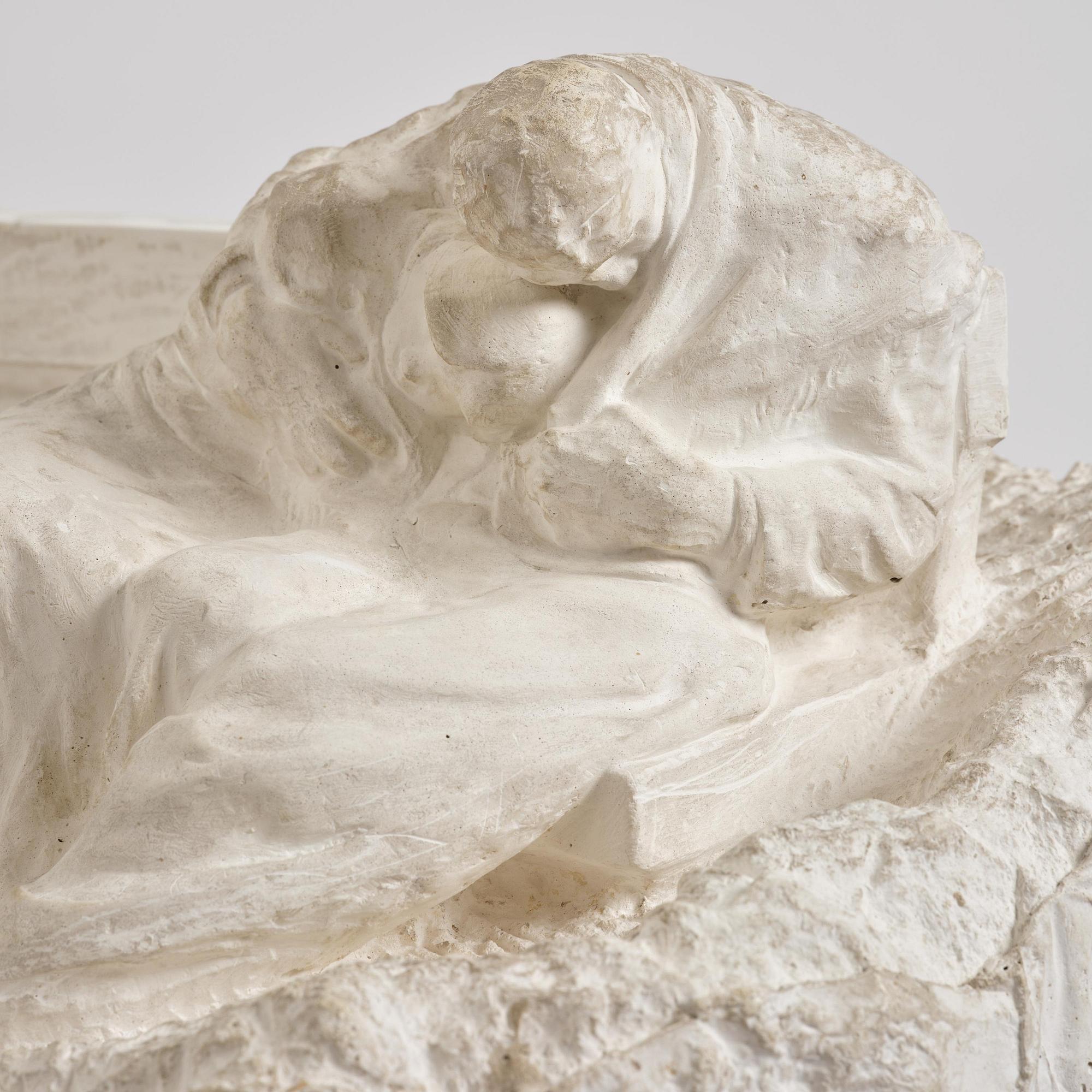
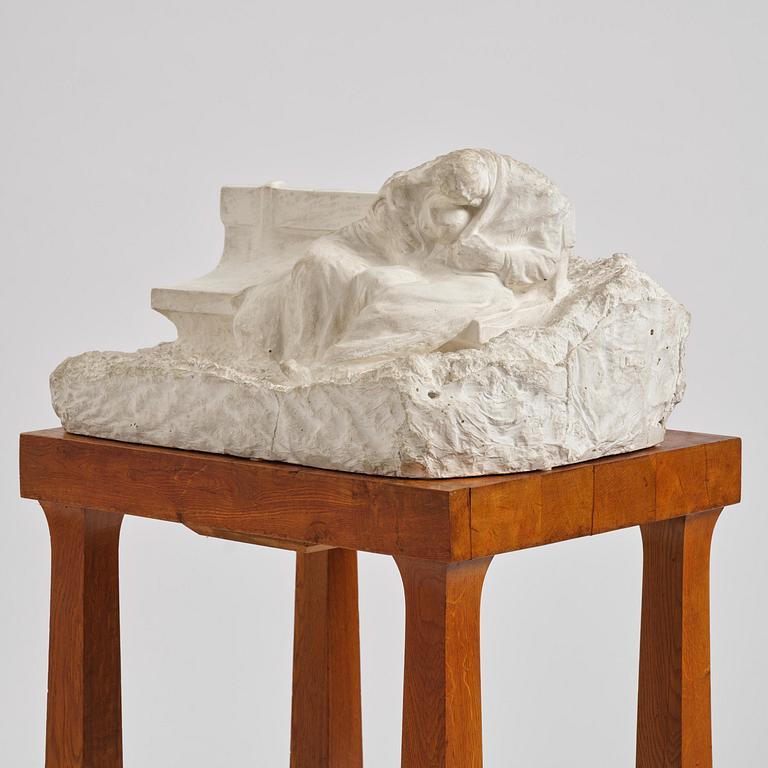
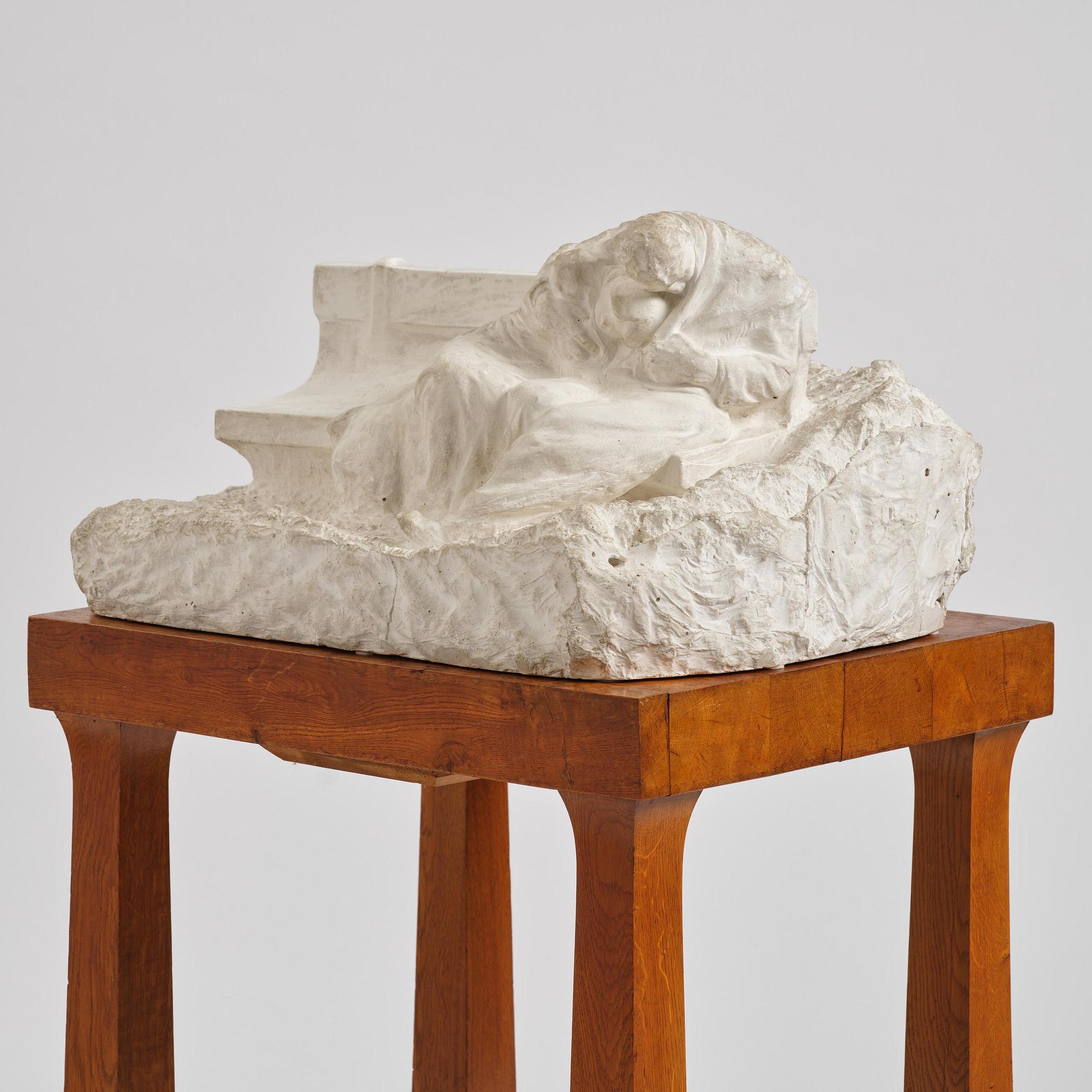
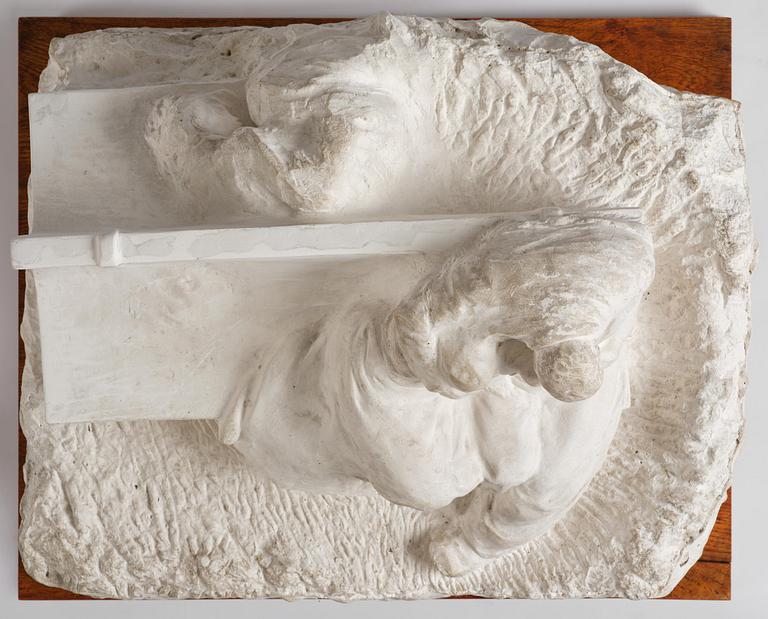
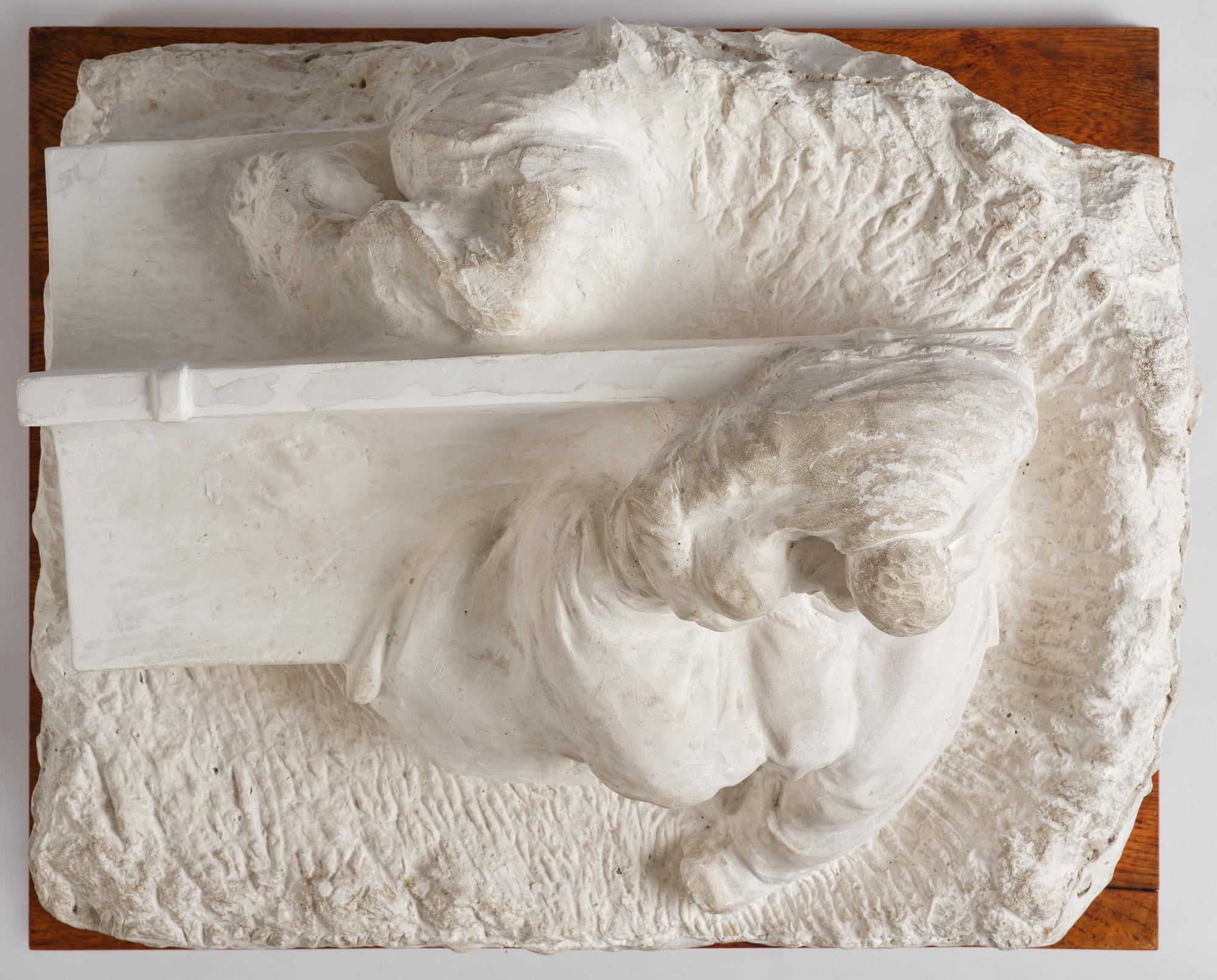
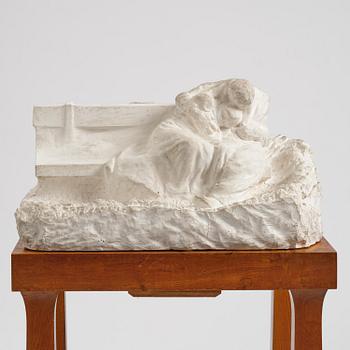
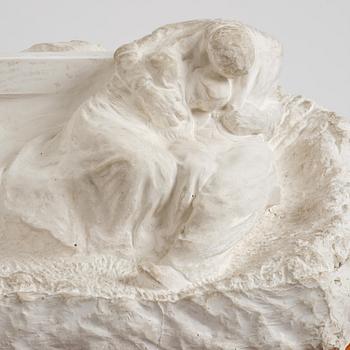
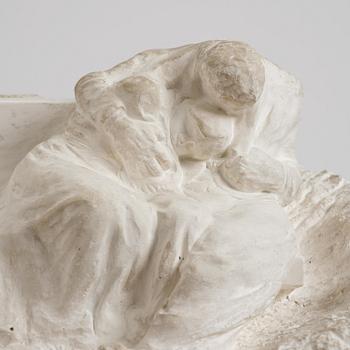
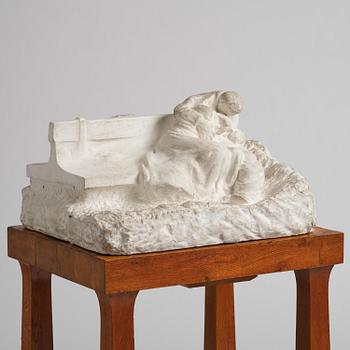
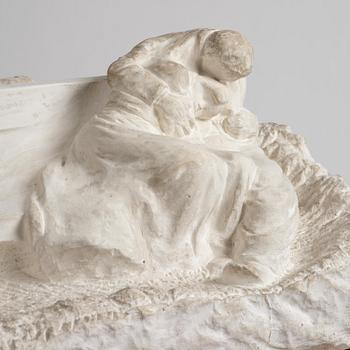
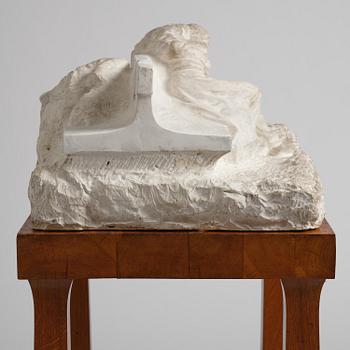
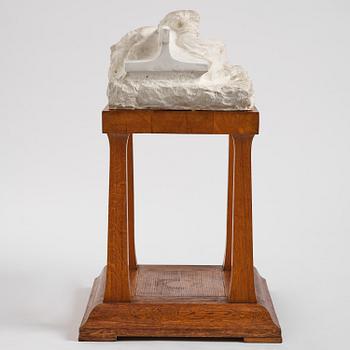
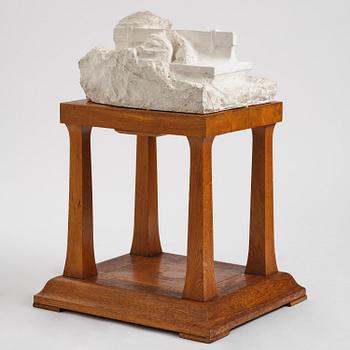
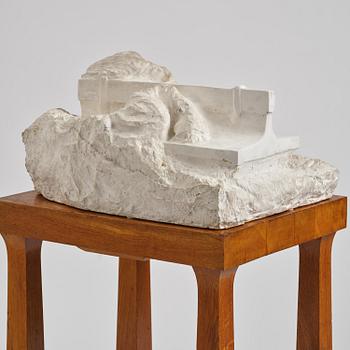
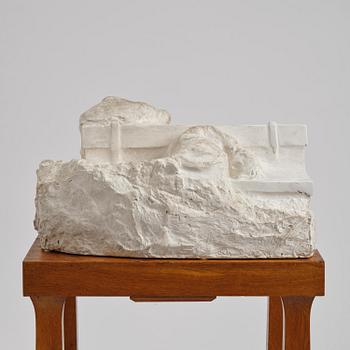
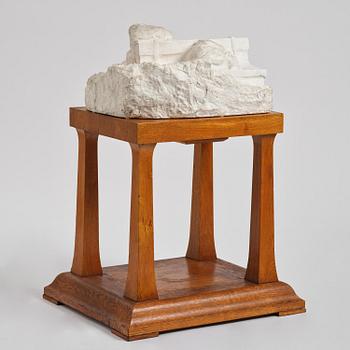
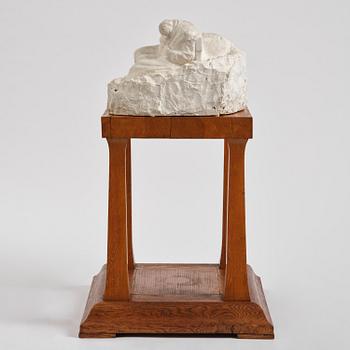
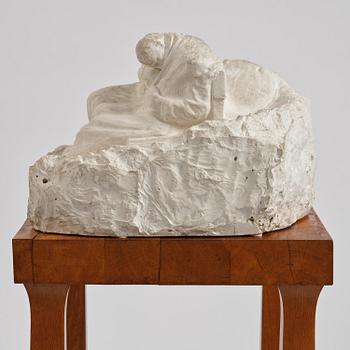
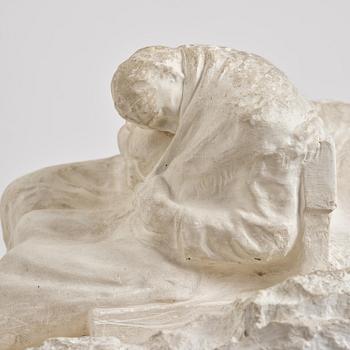
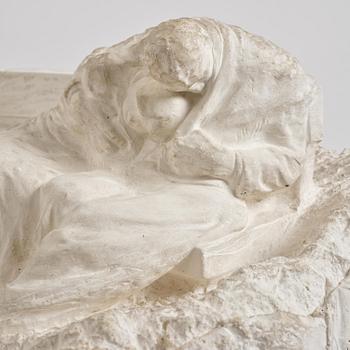
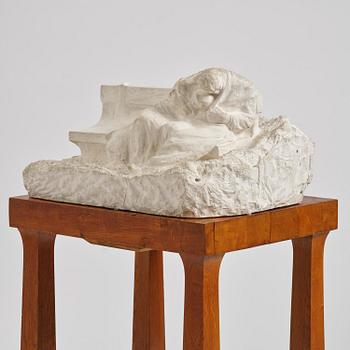
”A la belle Etoile” (Under the Stars)
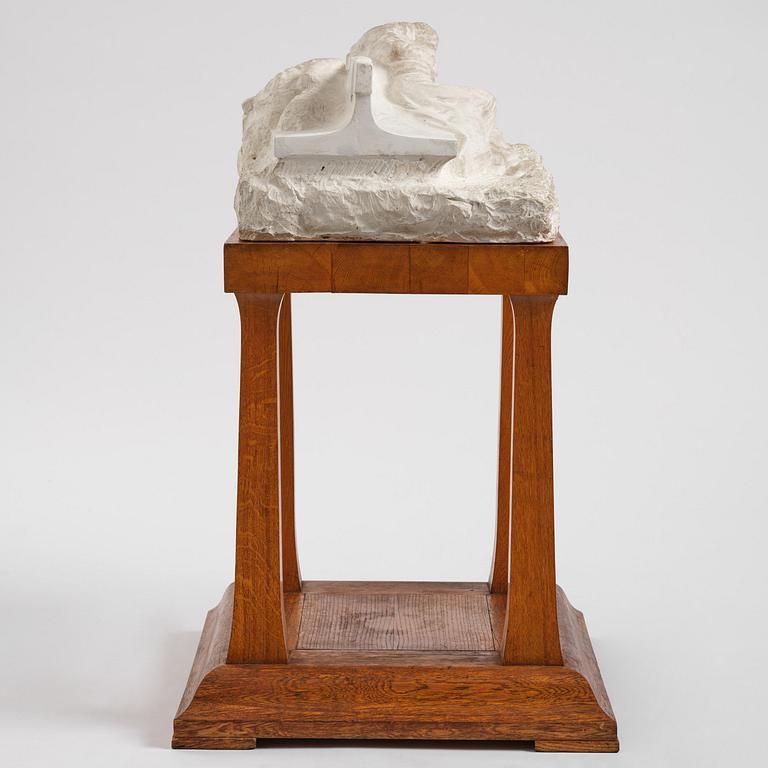
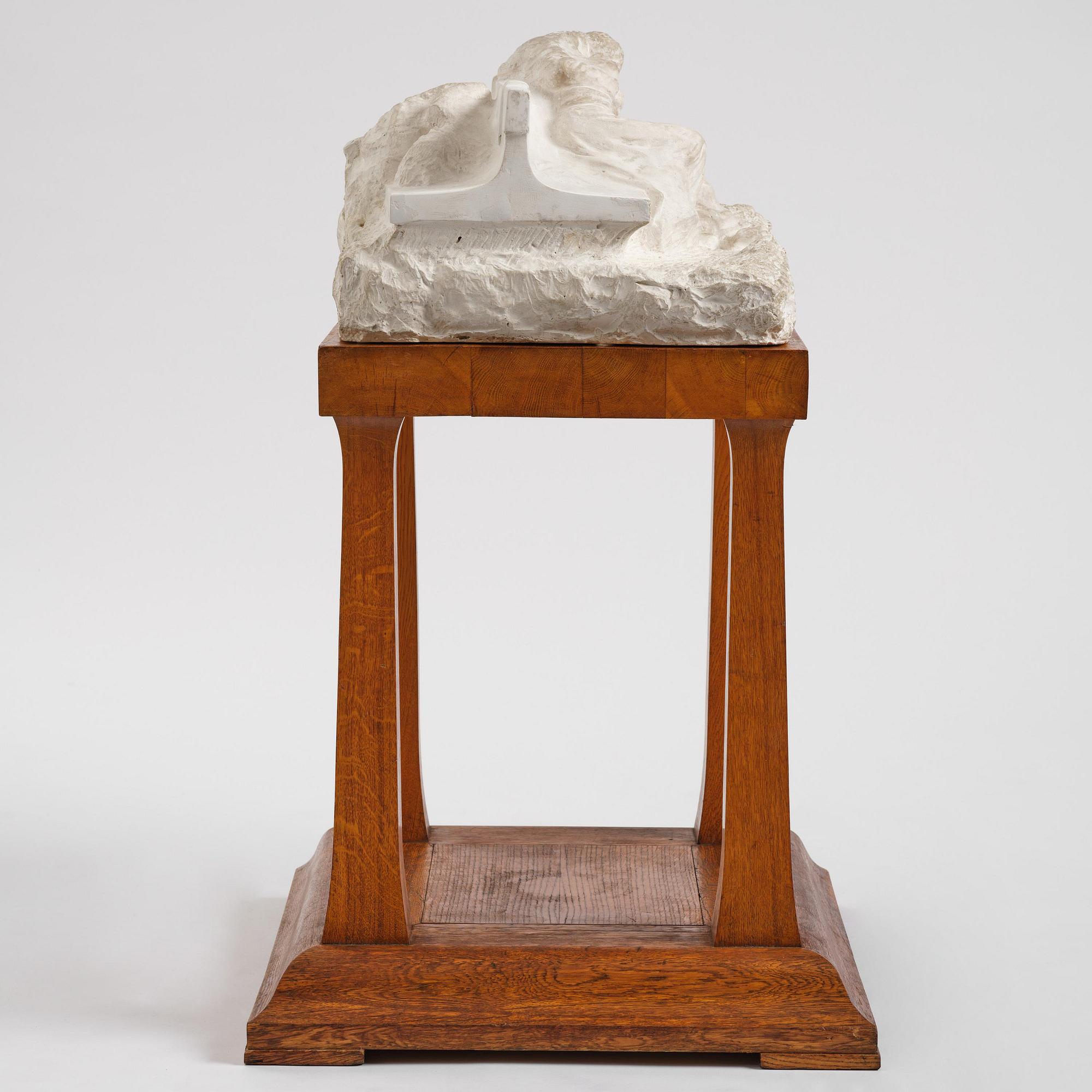
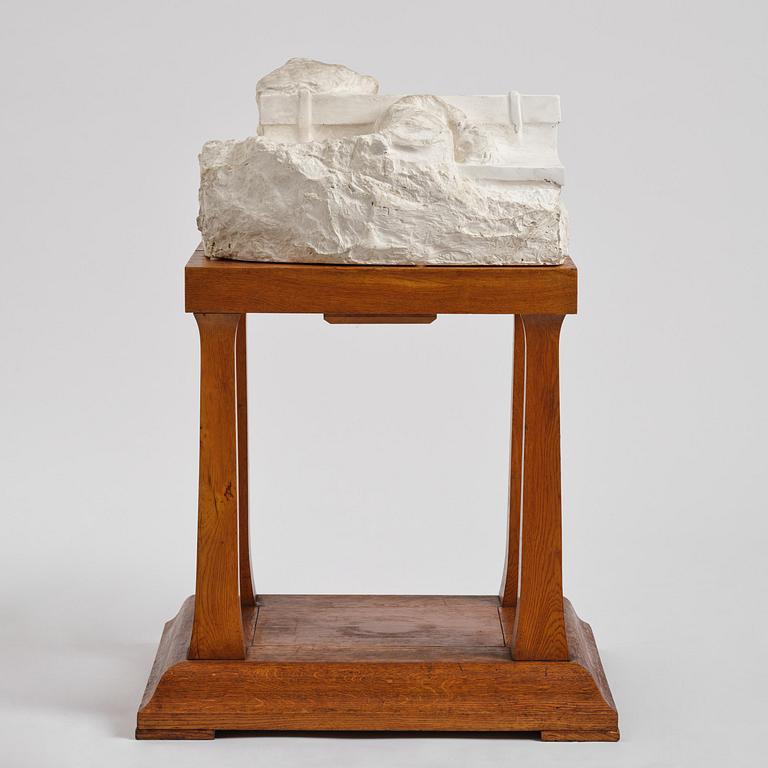
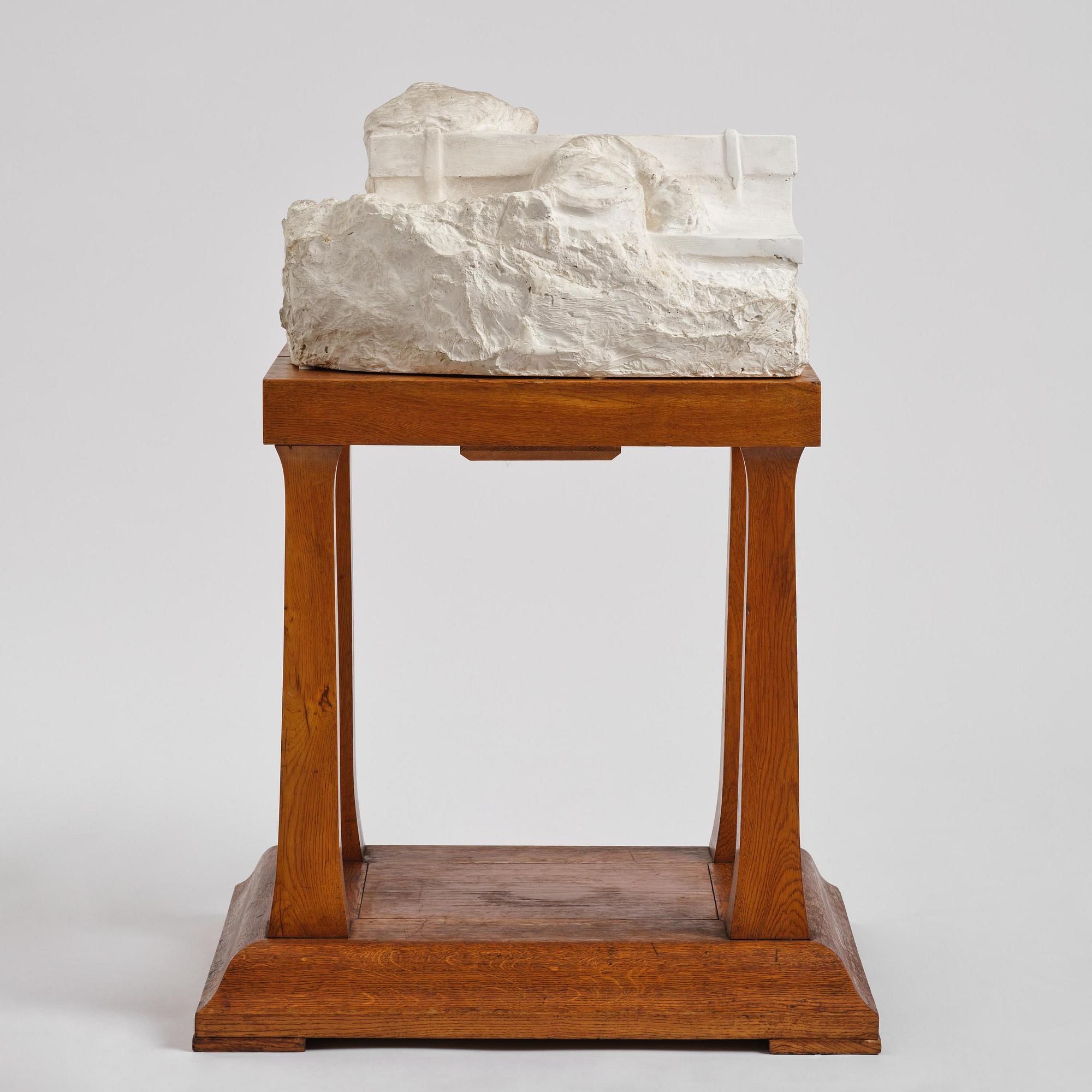
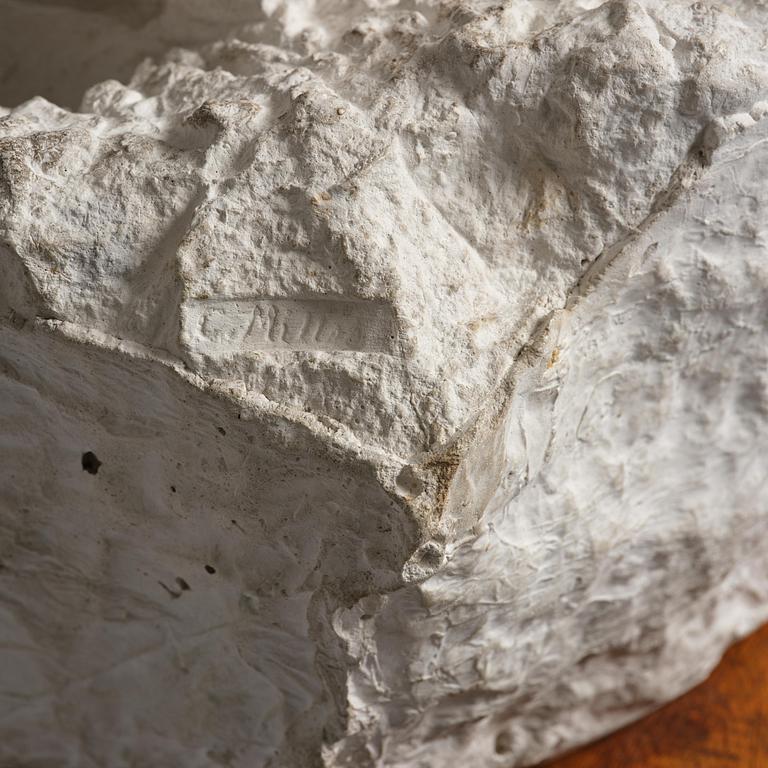
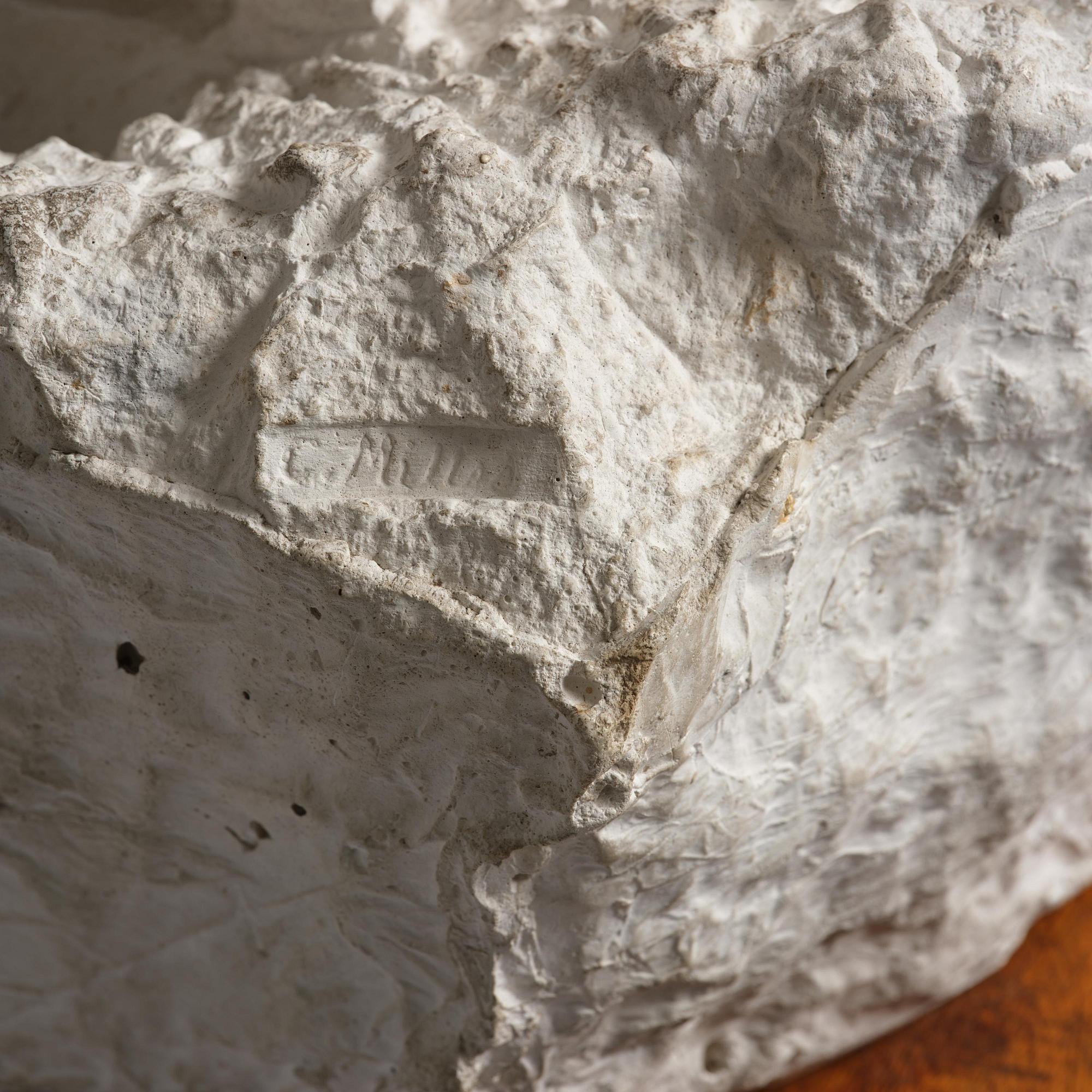
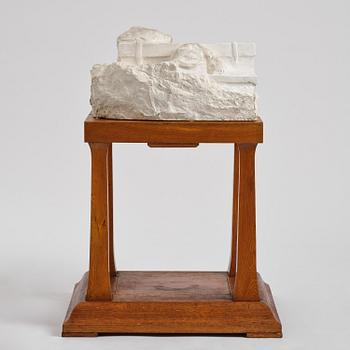
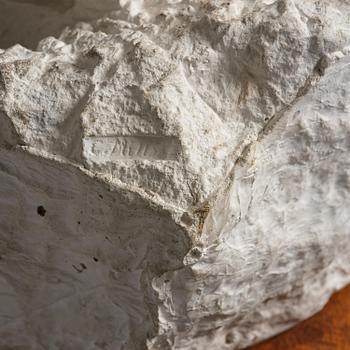
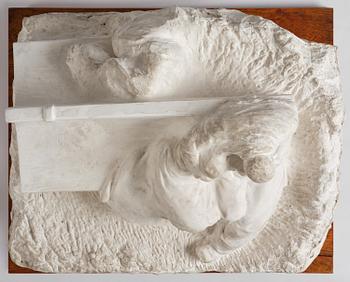
Signed Carl Milles. Plaster, length 59.5, width 48.5, height 30.5 cm.
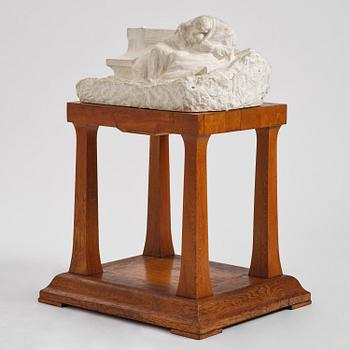
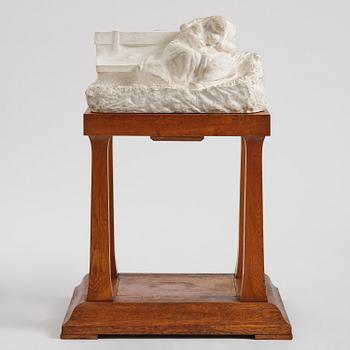
Contemporary French-made oak base, length 73, width 63, height 72 cm.
Provenance
Gift from the artist to the psychotherapist and author Poul Bjerre (1876–1964), Vårstavi, Botkyrka.
Literature
Conrad Köper, "Carl Milles", 1913, pp. 67–69, listed in the catalogue raisonné, p. 178.
More information
Executed in Paris in 1902. Two years later, in 1904, Milles carved a work of the same size in blue-green Norwegian soapstone, using the plaster as a model (Millesgården M181; Köper, op. cit., under 1904, “A la belle Etoile”. Exemplar in limestone. In the artist’s possession”, illustrated p. 67).
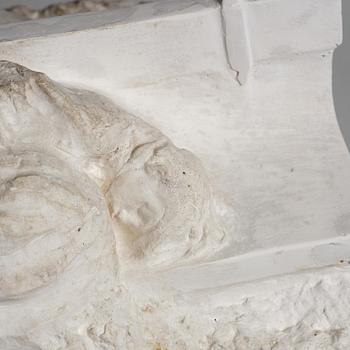
“A la belle Etoile” depicts three people—two women and a man—who have found shelter for the night outdoors on a bench. The sculpture is likely Milles’s first depiction of society’s downtrodden, which became a recurring theme in his sculpture from 1903 onwards. Carl Milles was fascinated by street life in Paris, and particularly by the people he encountered in the poorer districts. The artist described one such encounter in Paris one evening:
“I heard a faint, trembling voice, and finally I saw a small, dark mass approaching, leaning on a stick, her back bent. A thin hand on a long, thin arm, and her head wrapped in a few dirty rags. She was singing a beautiful melody, terribly melancholic, in groaning tones, only two or three words at a time, drawing breath at every pause. I gave her all the coins I had, and when I found myself behind her, I remained standing in the darkness.”
Poul Bjerre, who received the present plaster model as a gift from Carl Milles, was a leading figure in the early psychoanalytic movement. He first attracted attention in the field of psychology with his 1903 publication "Det geniala vansinnet", a contribution to the psychology of Friedrich Nietzsche. During his studies in Lund, Bjerre spent a period in Paris, from 1902 to 1903. There, he devoted himself to sculpture and poetry and associated with, among others, Carl Milles. In 1903, Milles executed a portrait bust of him in Paris (formerly at Vårstavi). At the end of 1915 and for several months in 1916, Wassily Kandinsky and Gabriele Münter visited Sweden at the invitation of Poul Bjerre. Kandinsky then created a work that he donated to Bjerre, in which Bjerre is portrayed. In his book "Drömmens helande kraft" from 1952, Bjerre examined the relationship between Carl Milles’s worldview and his monumental sculptures. In the book "Gestalter och gärningar, Elva personliga porträtt", published in 1953, he devoted a chapter to Carl Milles.
Carl Milles was active in Paris from 1897 to 1903. From 1898, his sister Ruth, also a sculptor, was active there as well. The siblings went on to collaborate both artistically and financially through the joint company they had founded in France. Inspired by their father’s nickname, “Mille”, they changed their surname from Andersson to Milles, which was better suited to the French language. The company primarily sold small bronze sculptures depicting children and women from the lower social classes. Ruth Milles spent her summers in the fishing village of Bruac in Brittany, where she depicted the lives of fishing communities in sculpture. In 1903, Carl Milles travelled to Belgium and Holland and, like his sister, went on to portray members of fishing communities there, which were cast as small bronze statuettes. Carl Milles made his debut at the Salon des artistes français in 1900 with the wall sculptures “Octopus” and “Hylas”, the latter receiving an honourable mention. That same year, he exhibited the sculpture of a woman “Lyss” at the Exposition Universelle, where it was awarded a silver medal.
More about Carl Milles
Carl Milles was a Swedish sculptor born in Lägga. He studied at the Technical School in Stockholm, at the Ecole des Beaux-Arts in Paris under Auguste Rodin and on study trips to Germany, the Netherlands and Belgium. In Paris he came to stay for many years and made a living as an ornament carver. He studied the animals in the Jardin des Plantes (the Zoological Garden) and was strongly influenced by Auguste Rodin. Milles made a breakthrough with a monument to Sten Sture in Uppsala. He exhibited at the World's Fair in 1900 and was later given a solo exhibition at the Tate Gallery in London. Milles was professor of modeling at the Royal Academy of Arts in Stockholm. Well-known sculptures in public places signed by Carl Milles are the "Gustav Vasa" statue at the Nordic Museum, "Orfeusgruppen" outside the concert hall in Stockholm and the "Poseidonfontänen" in Gothenburg.
Read moreFor condition report contact specialist

What will the transport cost?

Others have also viewed