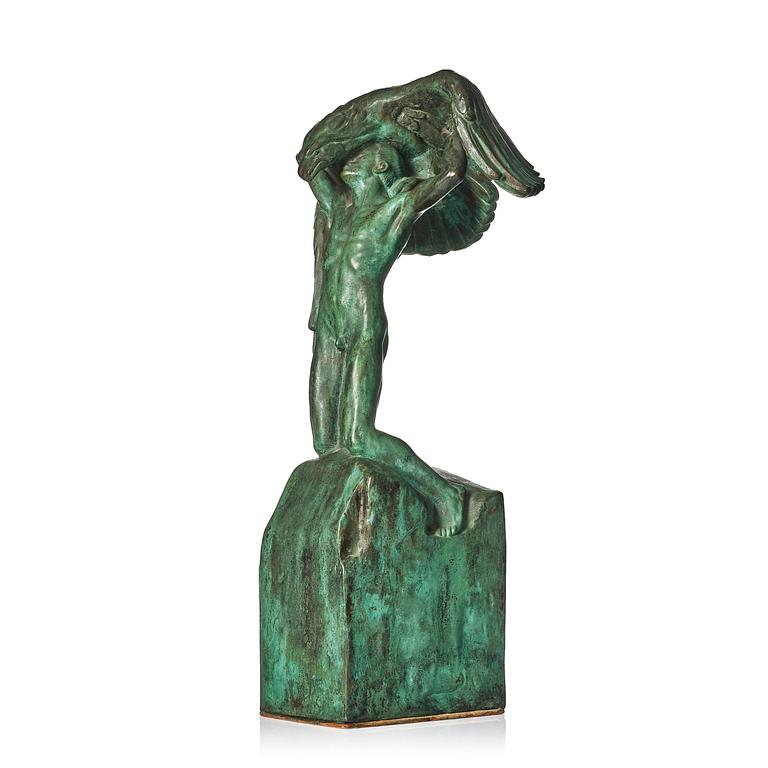
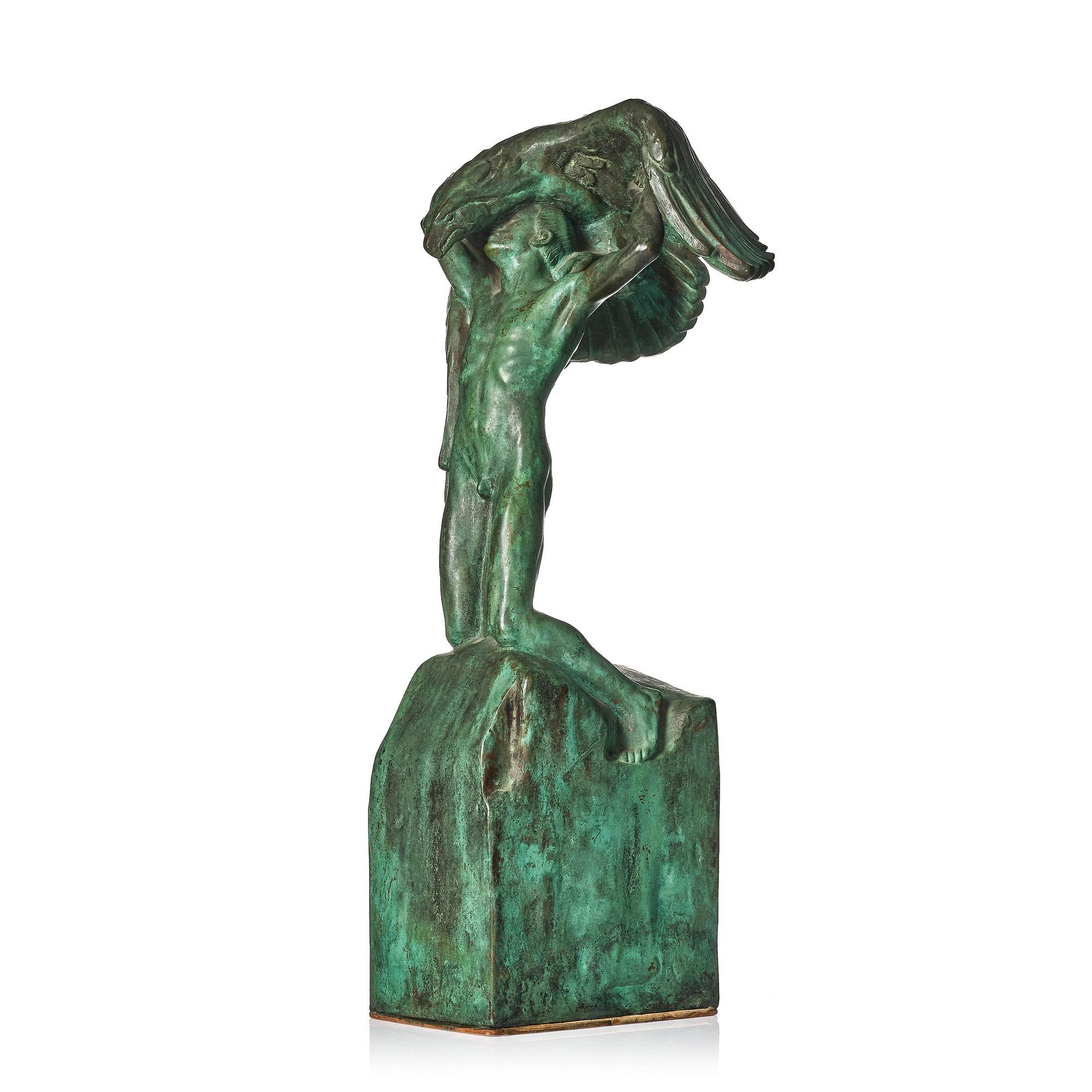
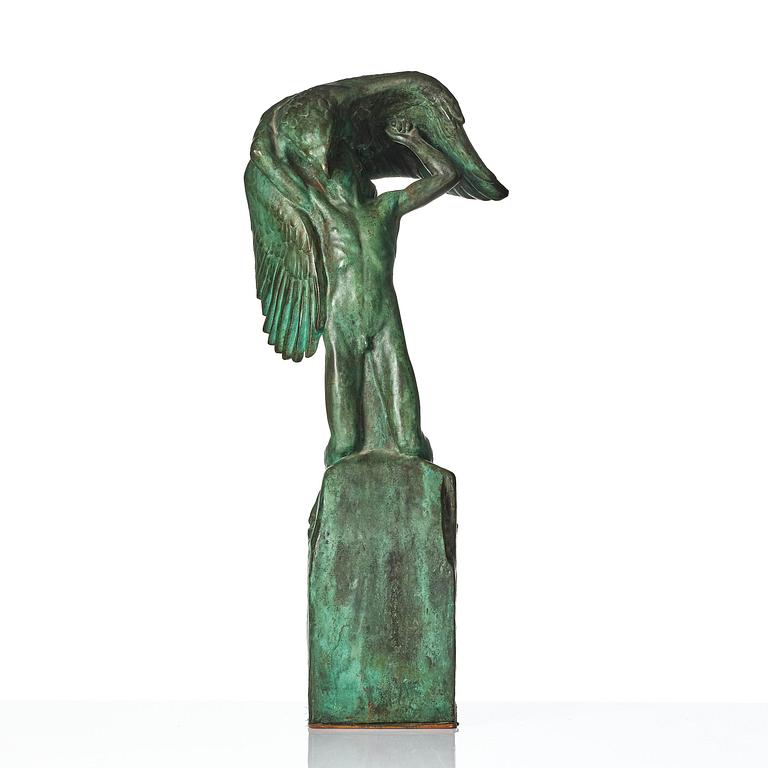
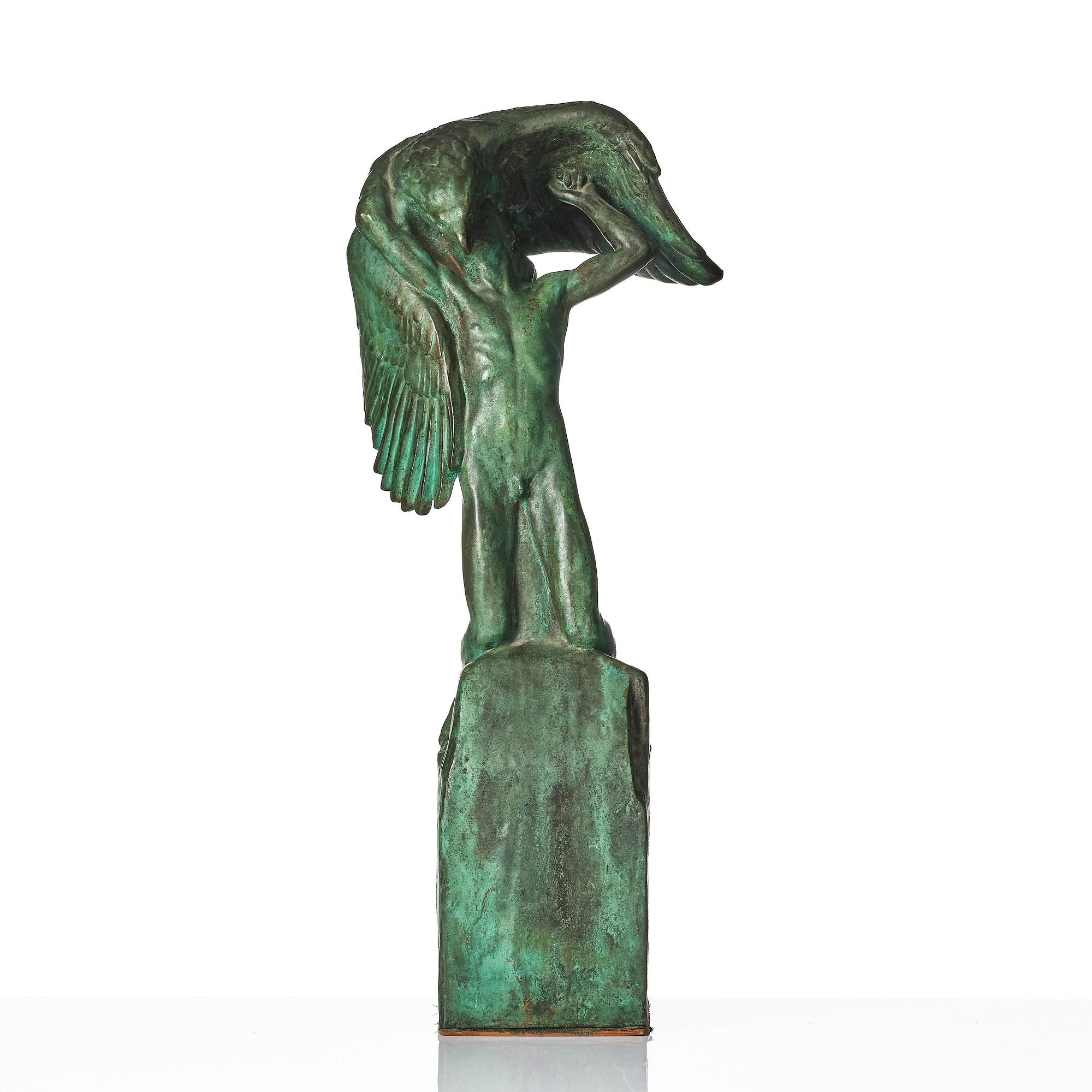
Carl Milles (Sweden, 1875-1955) "Vingarna" (The Wings)
"Vingarna" (The Wings)
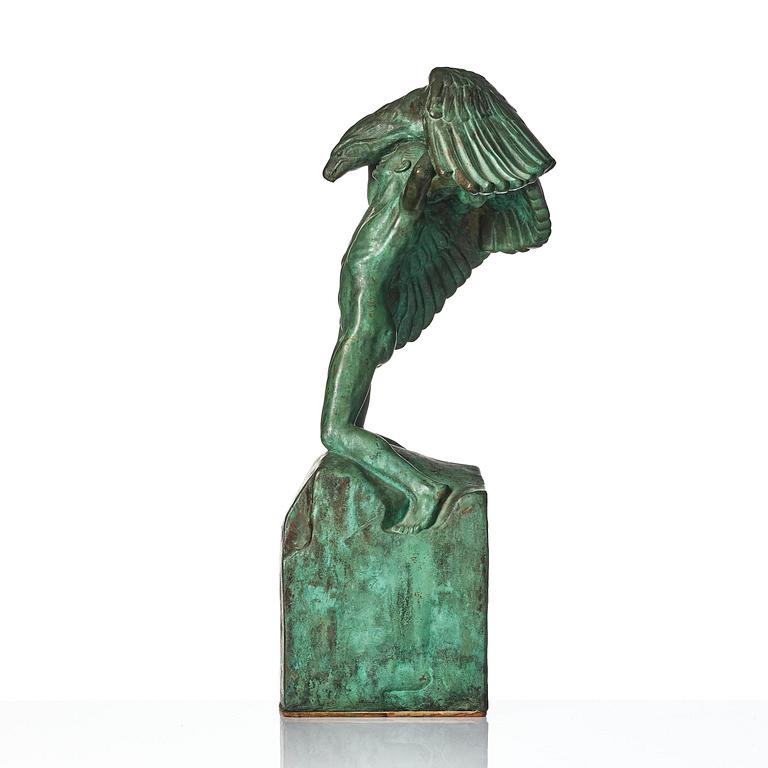
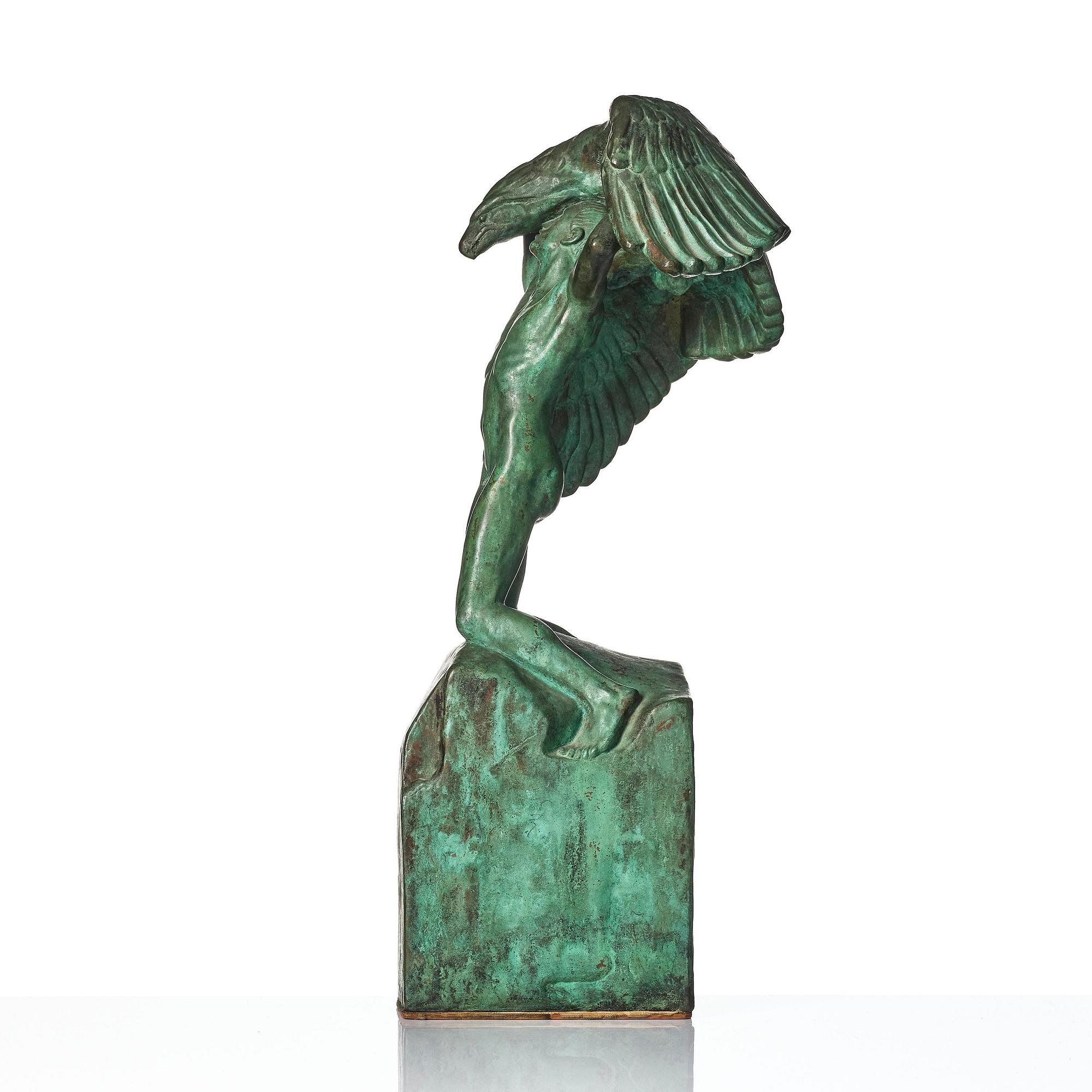
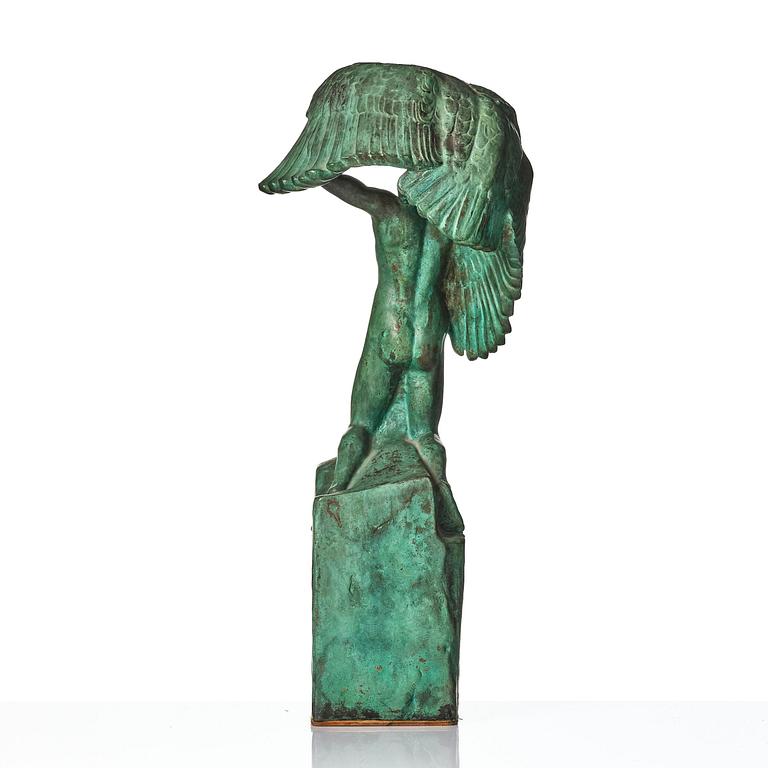
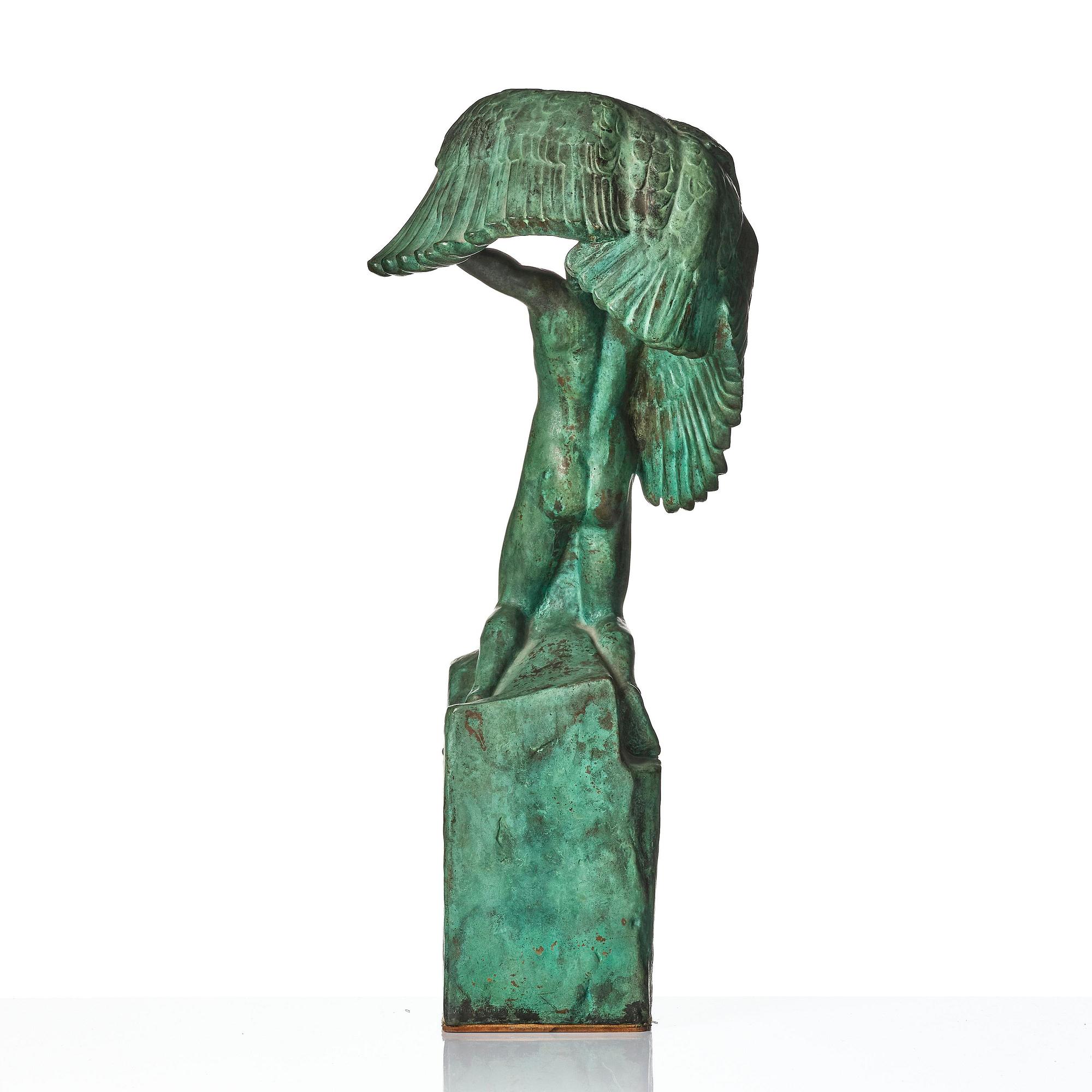
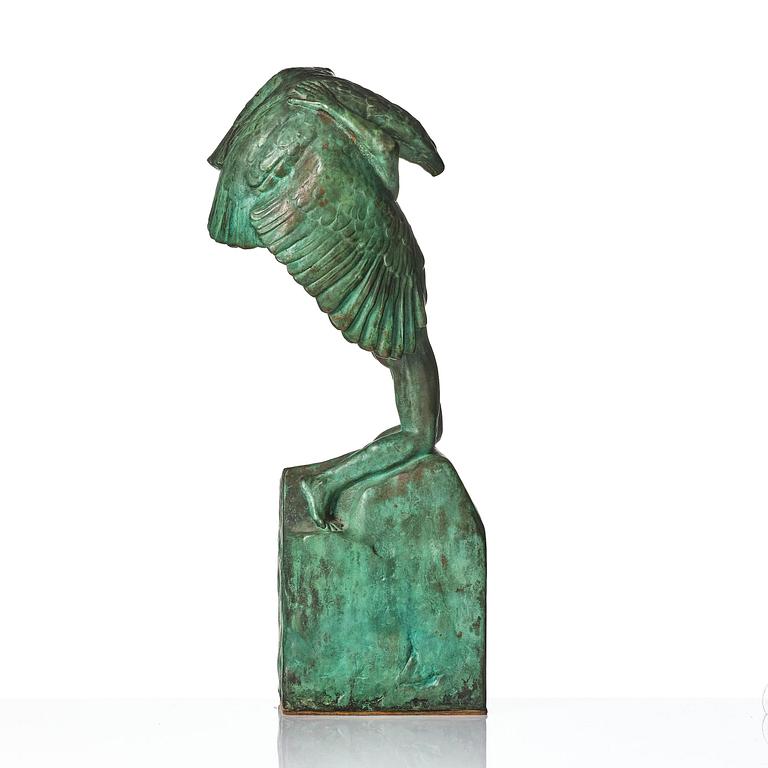
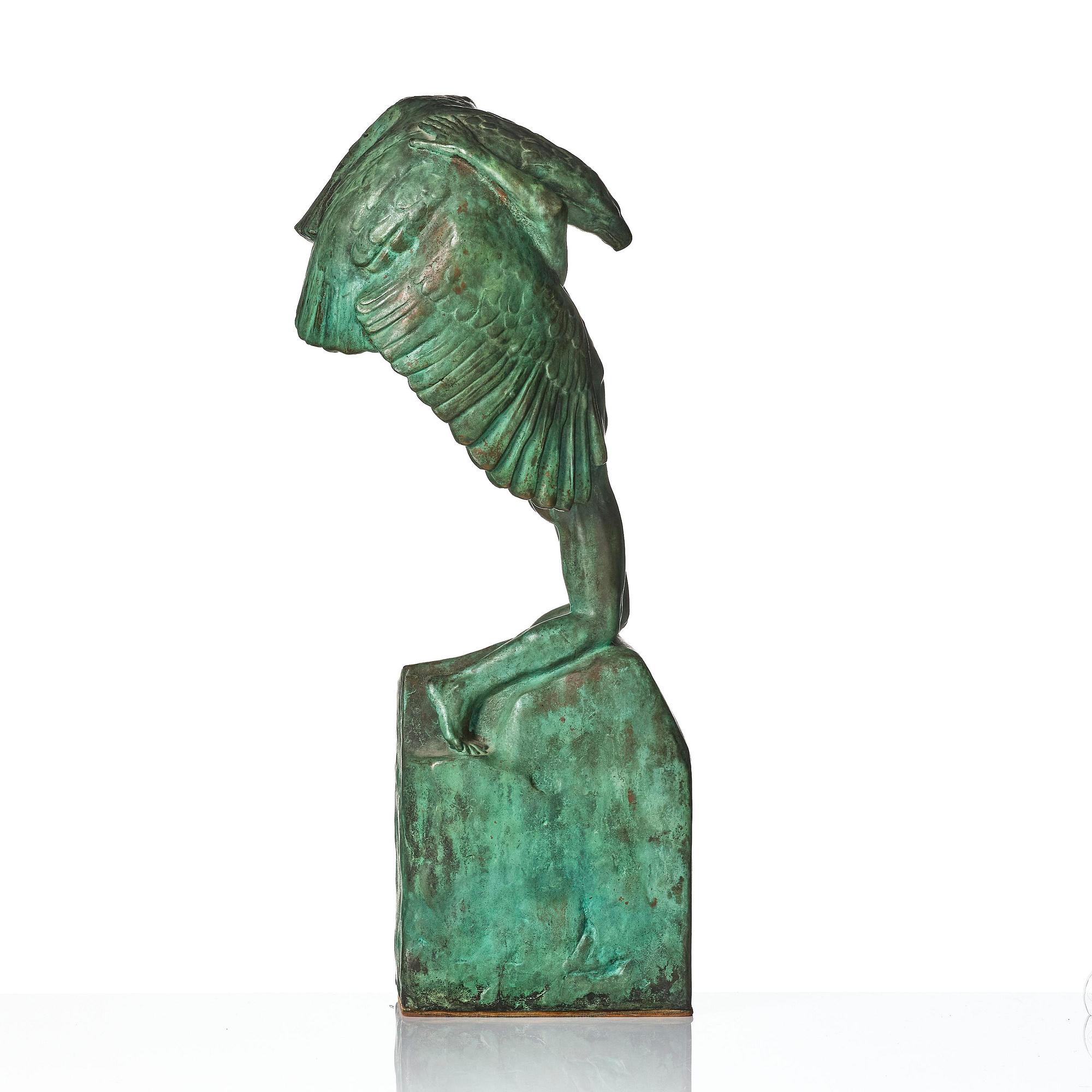
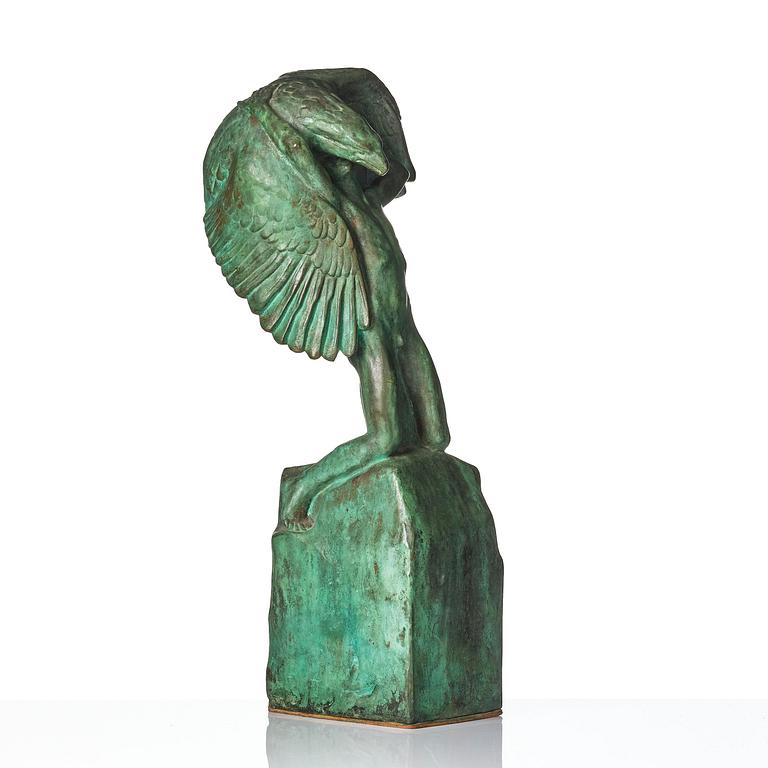
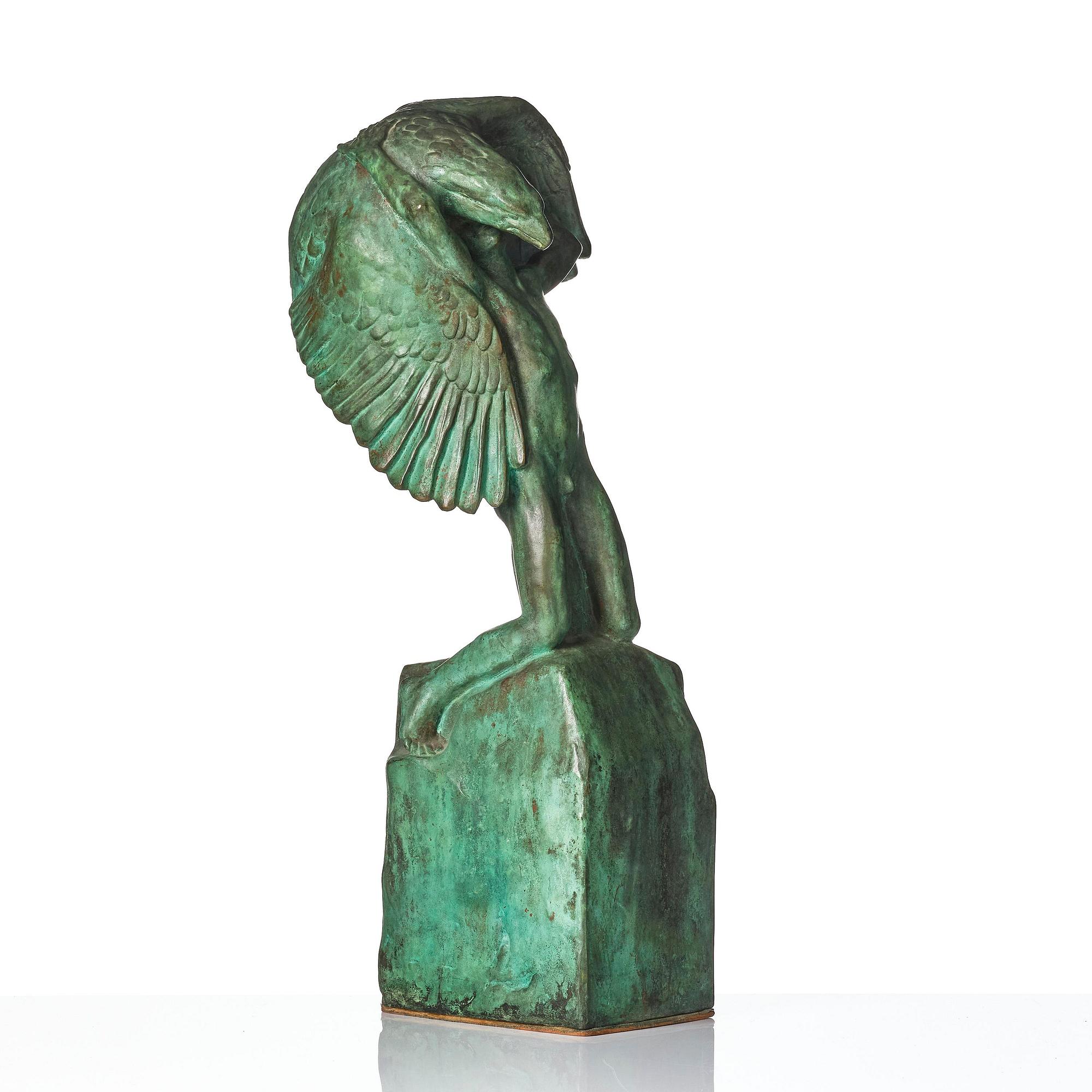
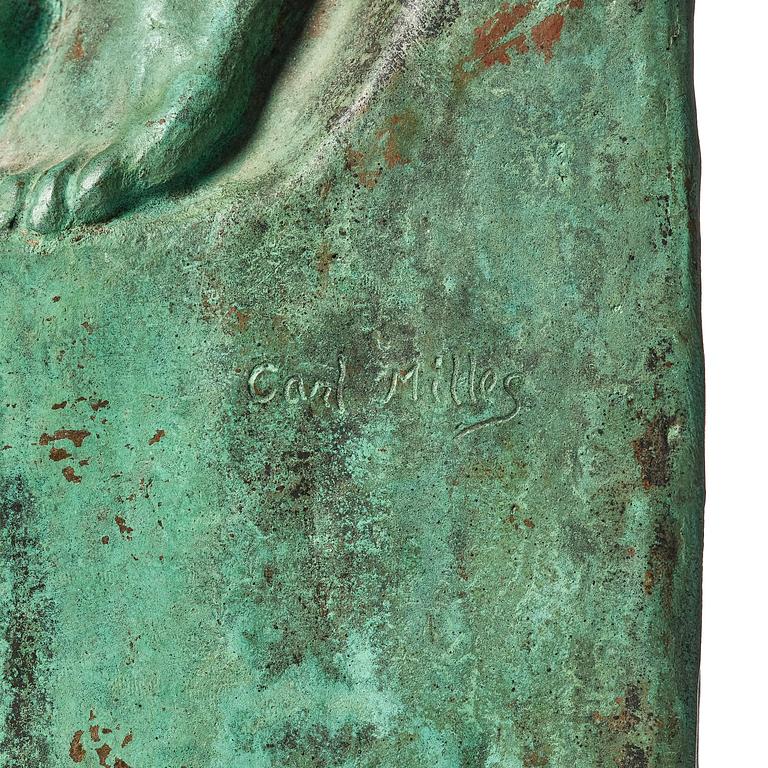
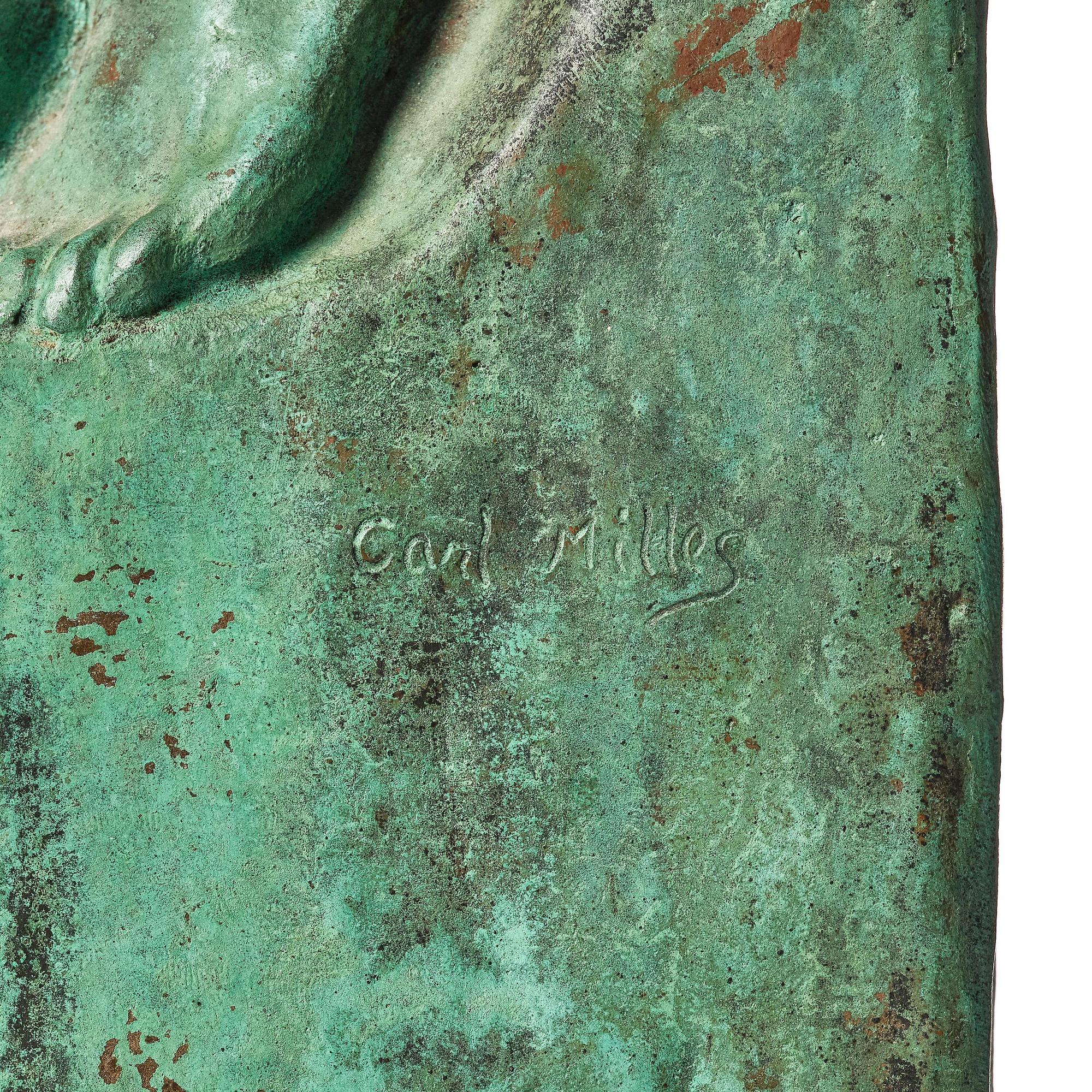
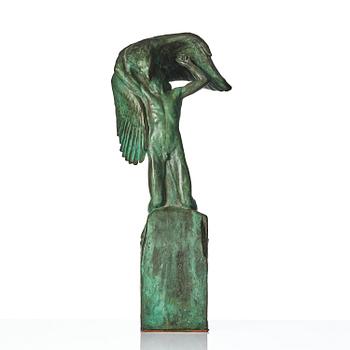
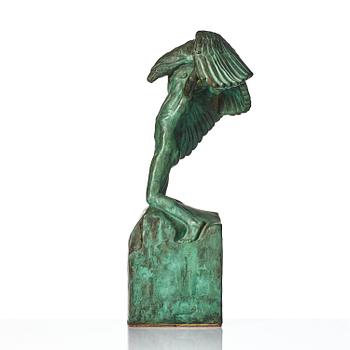
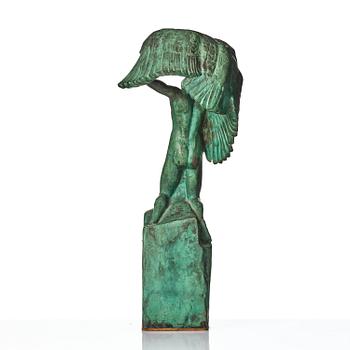
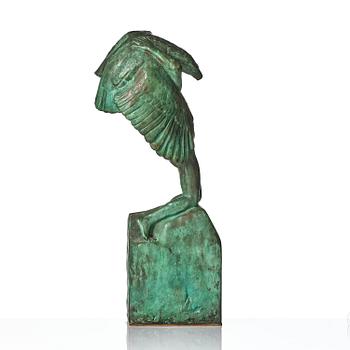
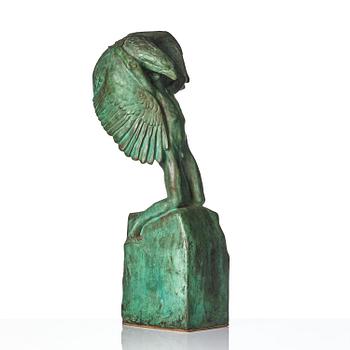
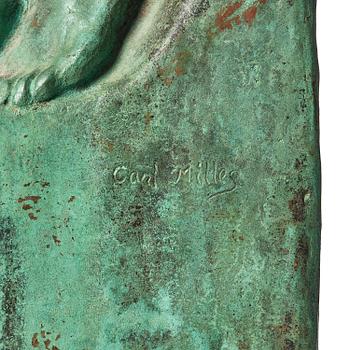
Signed Carl Milles. Foundry mark Herman Bergman Fud. Green-patinated bronze, height 59.5 cm.
Literature
Conrad Köper, "Carl Milles", 1913, the subject listed p. 183, illustrated p. 160.
Katalog öfver bronser från Herman Bergmans Konstgjuteri A.B. Stockholm, 1915, the model listed and illustrated as no. 19.
M.P. Verneuil, "Carl Milles. Sculpteur Suédois", vol. I, 1929, the subject mentioned pp. 28–29 and illustrated on a full page p. 27.
Alfred Westholm, "Milles", 1950, pp. 21, 33, 48 and 86, the subject illustrated as no. 7.
Henrik Cornell, "Carl Milles - hans verk", SAK, 1963, the subject mentioned pp. 45–46 and listed in the catalogue of Carl Milles’ sculptures p. 249.
Erik Näslund, "Carl Milles - en biografi", 1991, the subject mentioned pp. 86–87 and illustrated on a full page p. 85.
More information
Carl Milles’s sculpture “Vingarna" (The Wings), also known as “Gosse med örn" (Boy with an Eagle), is an expressive work of art in which the interplay between human and animal takes centre stage. Through a dynamic composition, Milles depicts a powerful encounter between a young man and an eagle, with the two figures seeming almost to merge into a single body.
The sculpture is familiar to many who have passed through the area outside Nationalmuseum, at the foot of Skeppsholm Bridge. There, it is positioned with its gaze directed out towards the water, creating a visual connection between earth and sky. The monumental version measures 270 centimetres in height and stands on a stone plinth, enhancing the work’s vertical, upward-striving character. The composition raises questions about the relationship between the two figures. It is not immediately apparent whether the youth is attempting to restrain the eagle with his arms, or whether the bird is instead about to carry him upwards. The movement conveys a sense of struggle and tension, while leaving it unclear which figure has the upper hand. The work’s dramatic formal language may be seen to bear similarities to Auguste Rodin’s “L’enfant prodigue”, although Milles has given the subject an artistic interpretation of his own. The sculpture was created during a period when Milles was living in Germany due to illness, but it also reveals influences from his earlier artistic activities in France.
Greek mythology was an important source of inspiration for Carl Milles, something that is clearly evident in “The Wings”, created in 1908. The motif draws on the story of Ganymede. According to the myth, Ganymede was the most beautiful of mortal men, which aroused the interest of the god Zeus. Zeus assumed the form of an eagle and carried the youth off to Olympus, where he was tasked with serving the gods as cup-bearer. The story has also been interpreted from a homoerotic perspective, as the relationship between Zeus and Ganymede may be understood as a love affair. The motif has featured in art for centuries and was particularly common as early as antiquity. It was later depicted by several prominent artists, including Michelangelo, Peter Paul Rubens and Rembrandt. The sculptor Bertel Thorvaldsen also explored the same mythological story in his artistic practice.
“The Wings” is represented in several locations in Sweden. In addition to its well-known placement outside Nationalmuseum, the sculpture can also be found outside Gothenburg Museum of Art at Götaplatsen and at Millesgården on Lidingö. The work was produced in several different sizes. The largest version is 270 centimetres high, while other versions measure approximately 123 centimetres. The smaller version offered here is approximately 59–60 centimetres high.
More about Carl Milles
Carl Milles was a Swedish sculptor born in Lägga. He studied at the Technical School in Stockholm, at the Ecole des Beaux-Arts in Paris under Auguste Rodin and on study trips to Germany, the Netherlands and Belgium. In Paris he came to stay for many years and made a living as an ornament carver. He studied the animals in the Jardin des Plantes (the Zoological Garden) and was strongly influenced by Auguste Rodin. Milles made a breakthrough with a monument to Sten Sture in Uppsala. He exhibited at the World's Fair in 1900 and was later given a solo exhibition at the Tate Gallery in London. Milles was professor of modeling at the Royal Academy of Arts in Stockholm. Well-known sculptures in public places signed by Carl Milles are the "Gustav Vasa" statue at the Nordic Museum, "Orfeusgruppen" outside the concert hall in Stockholm and the "Poseidonfontänen" in Gothenburg.
Read moreFor condition report contact specialist

What will the transport cost?

Others have also viewed