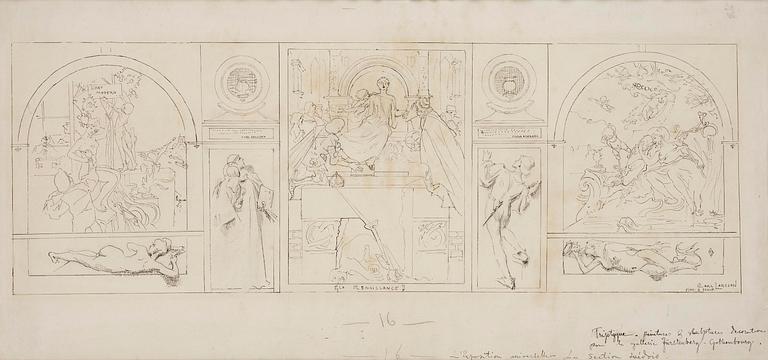
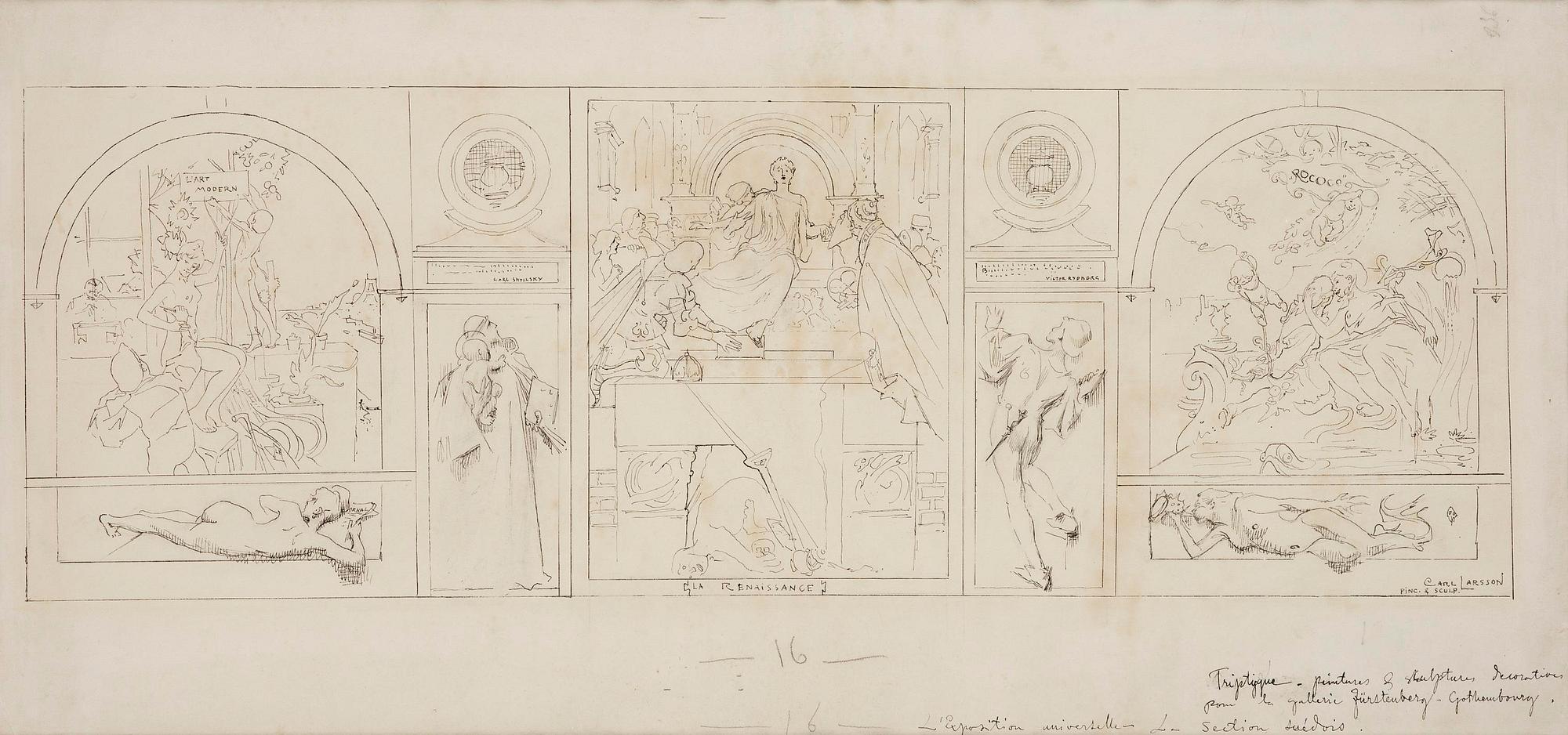
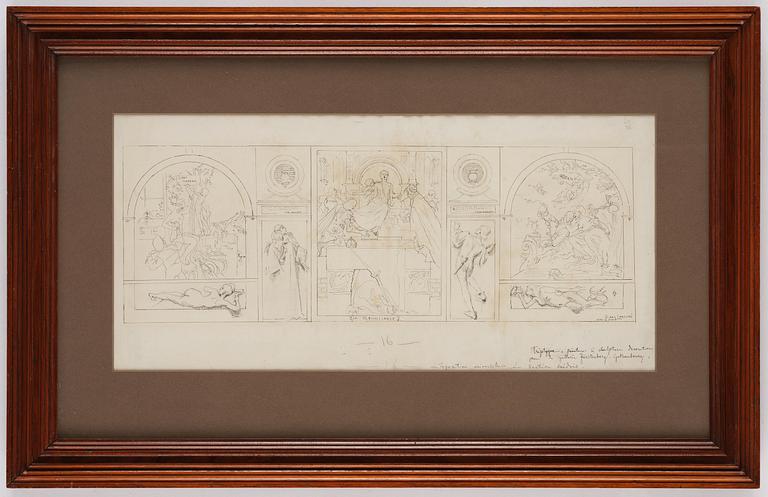
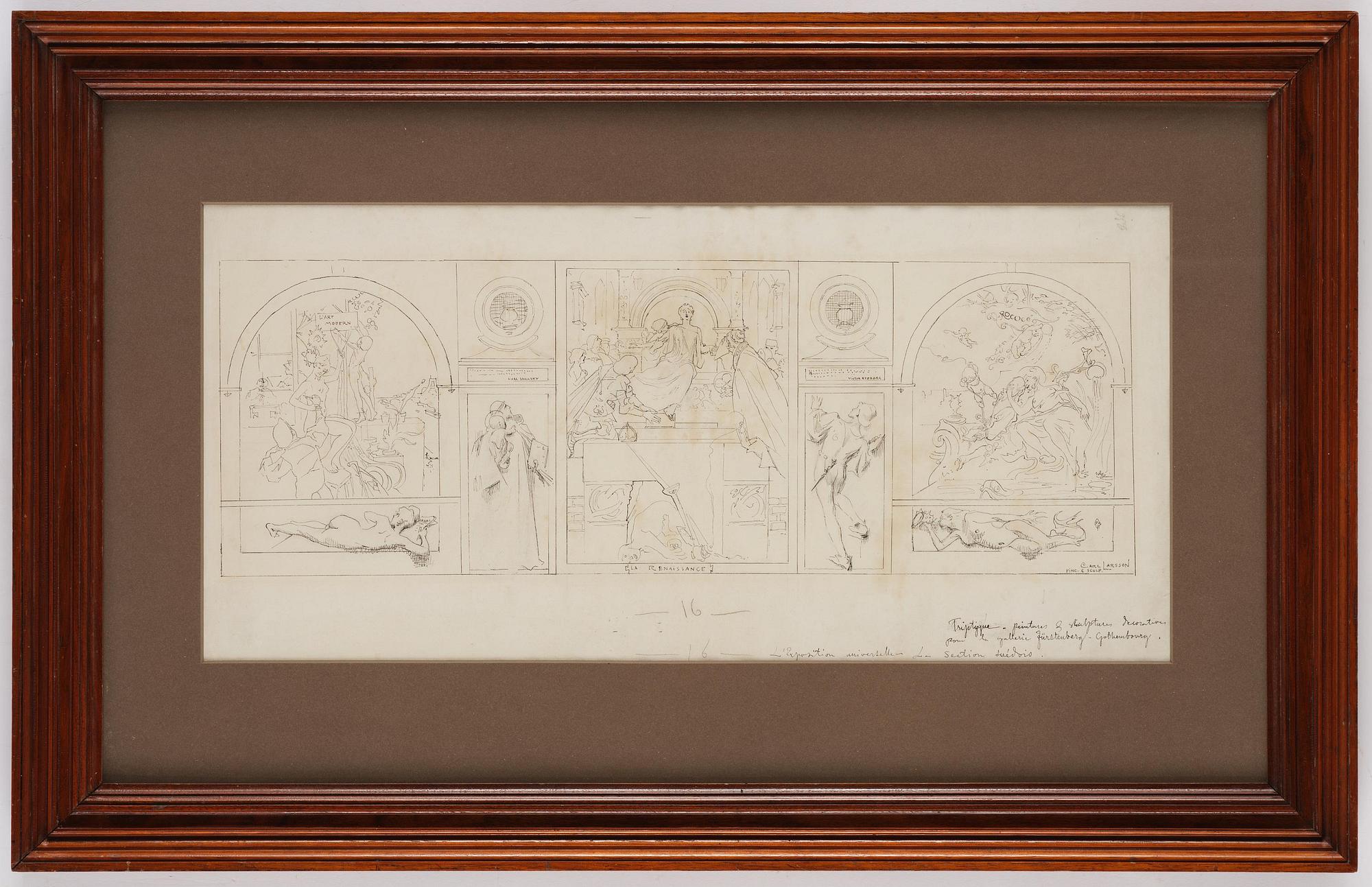
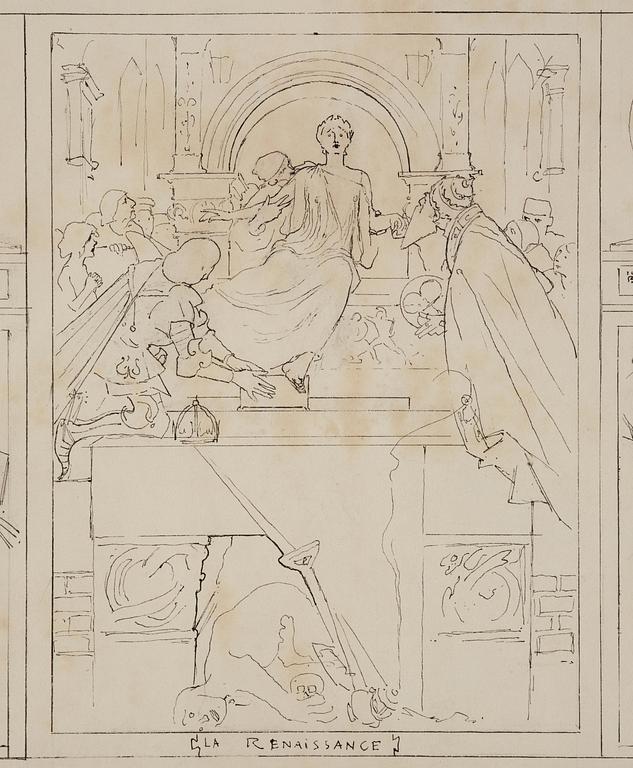
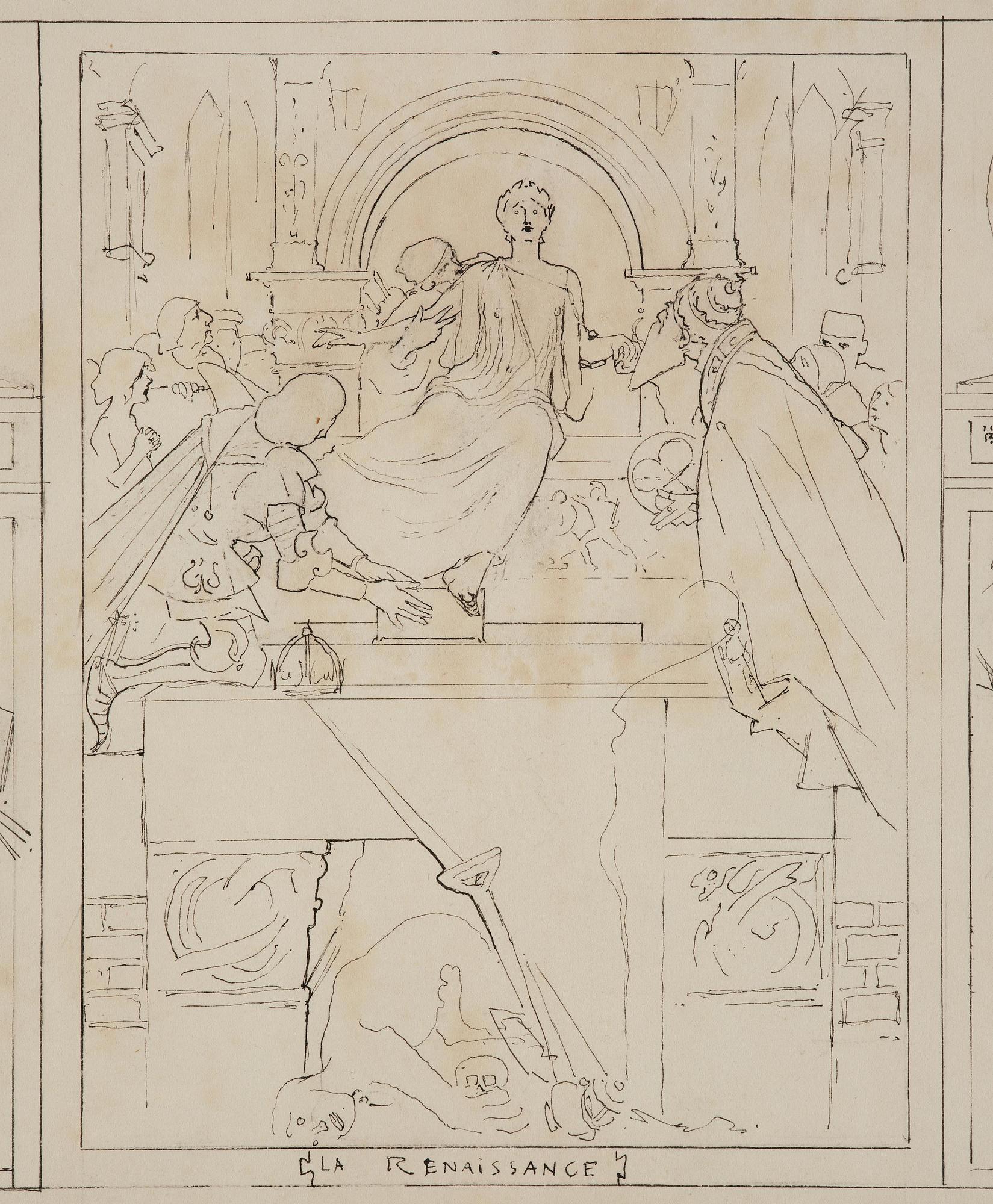
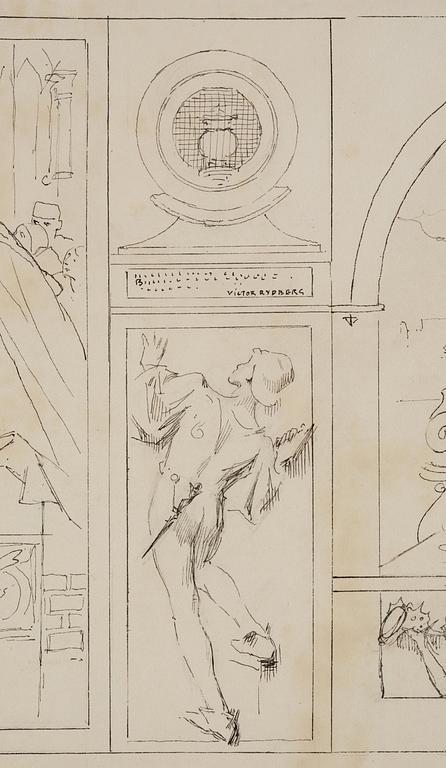
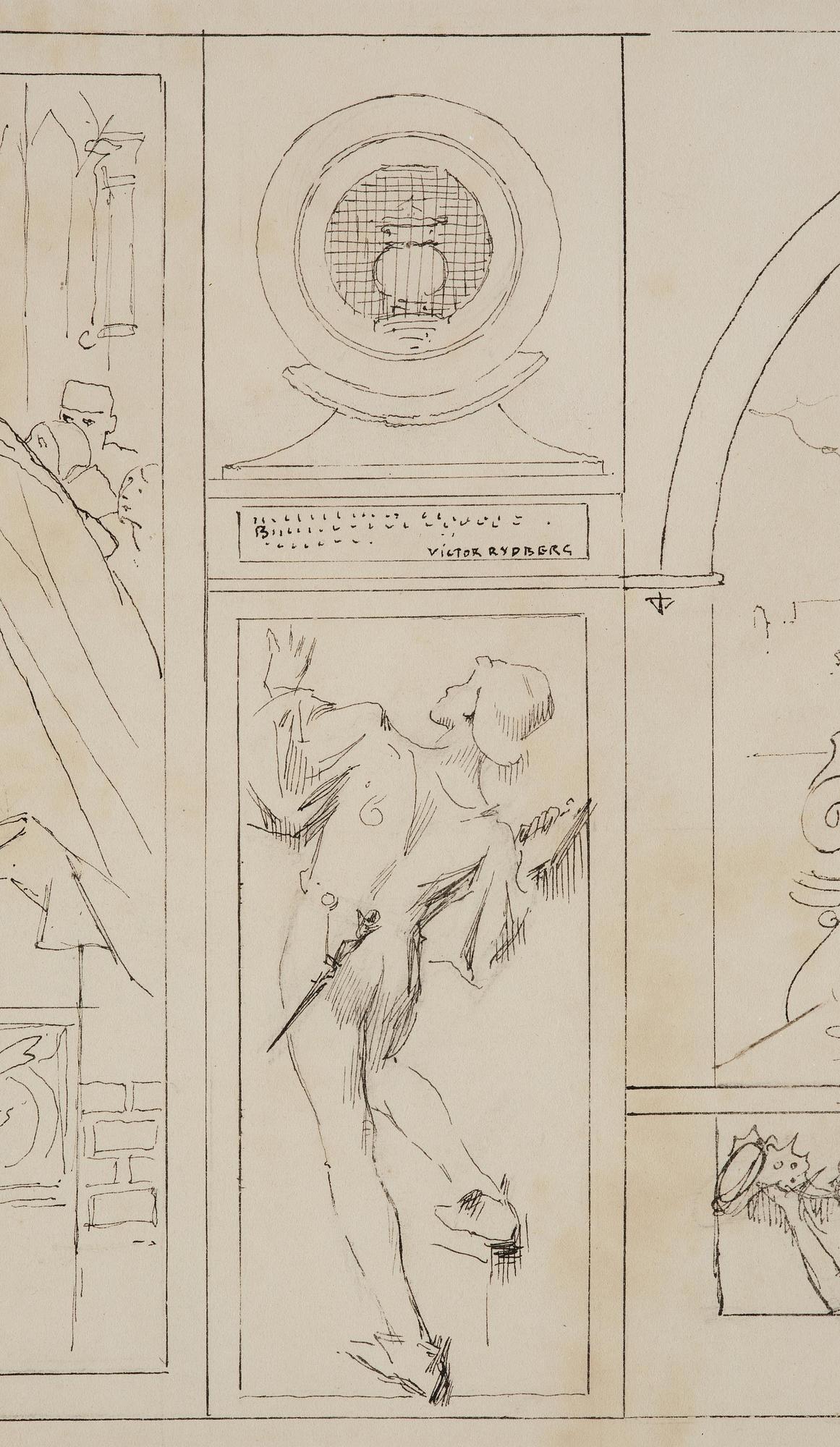
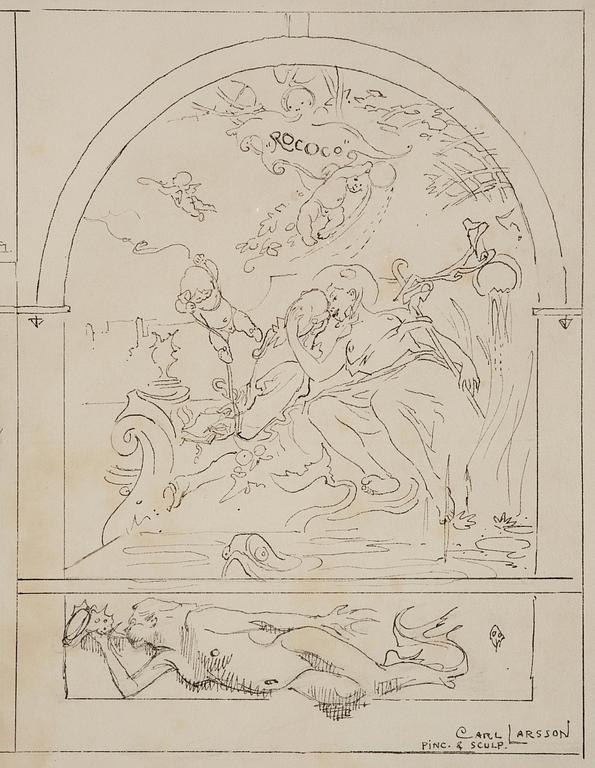
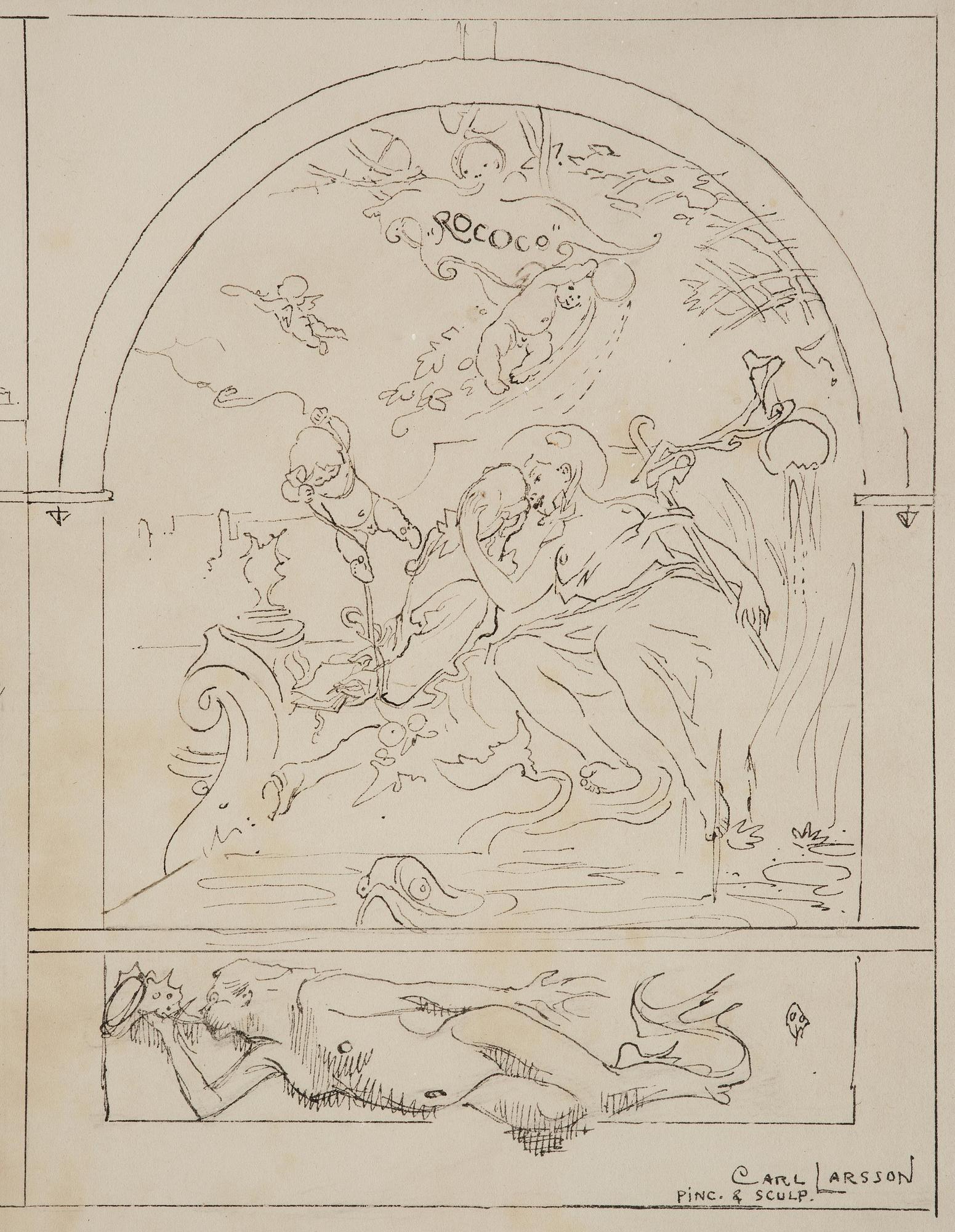
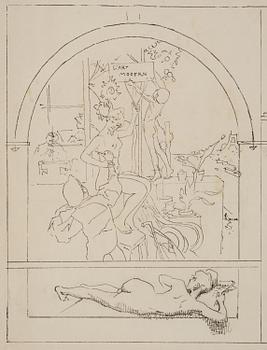
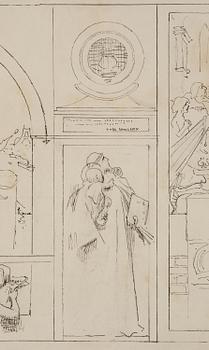
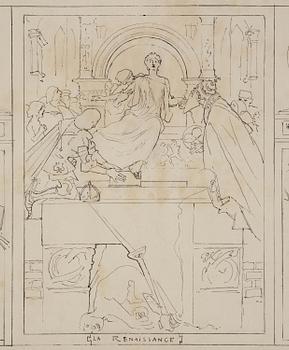
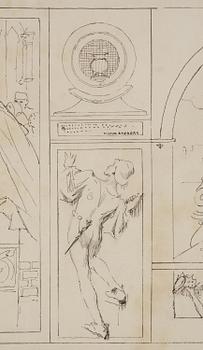
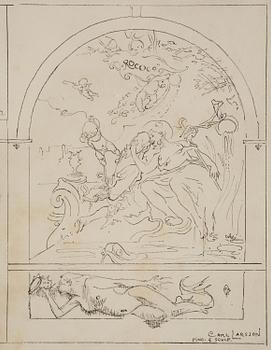
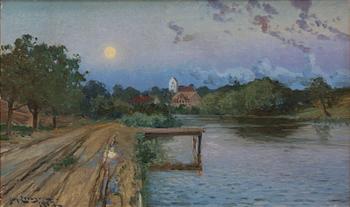
Carl Larsson (Sweden, 1853-1919) L’Art Moderne / La Renaissance / Rococo
L’Art Moderne / La Renaissance / Rococo
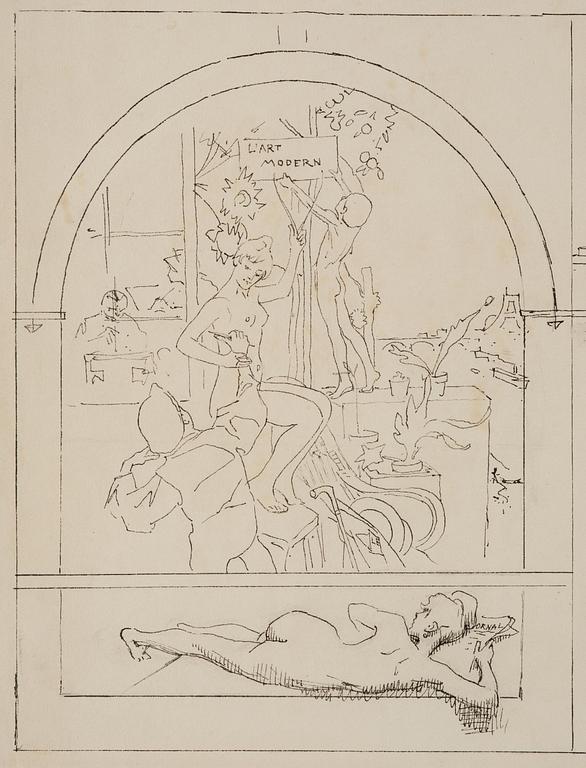
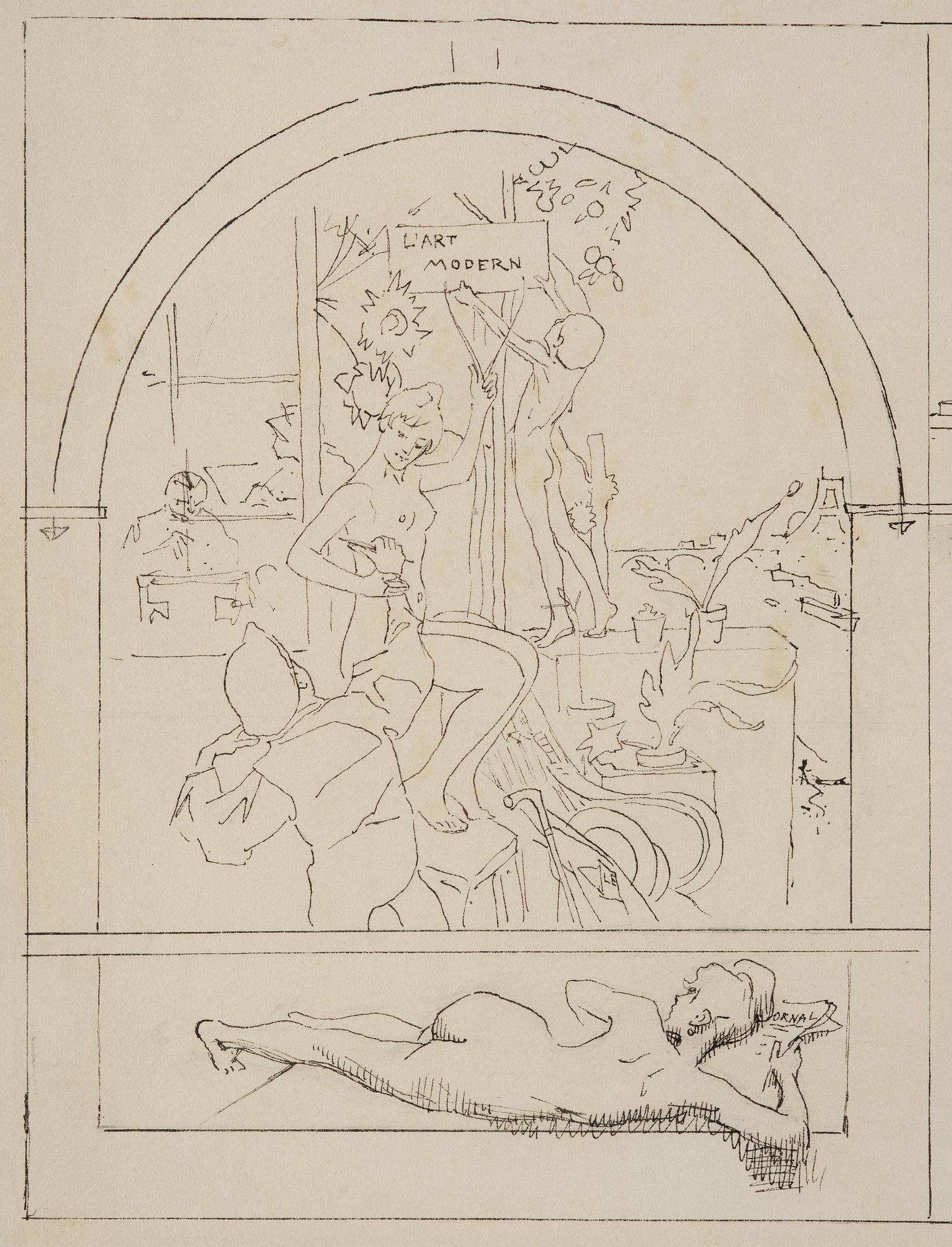
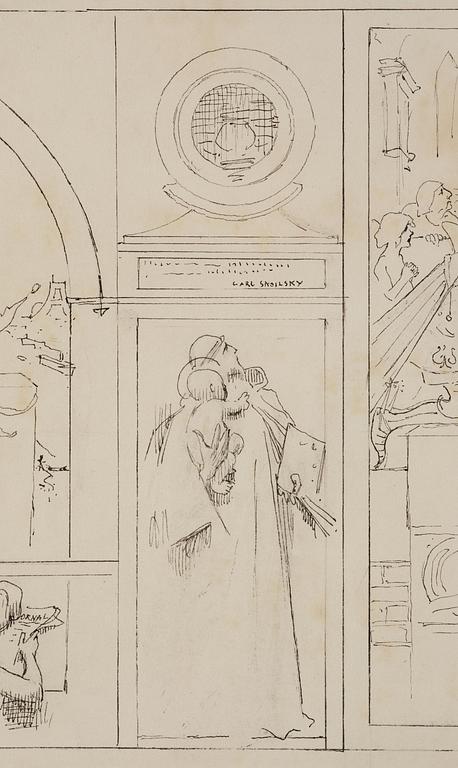
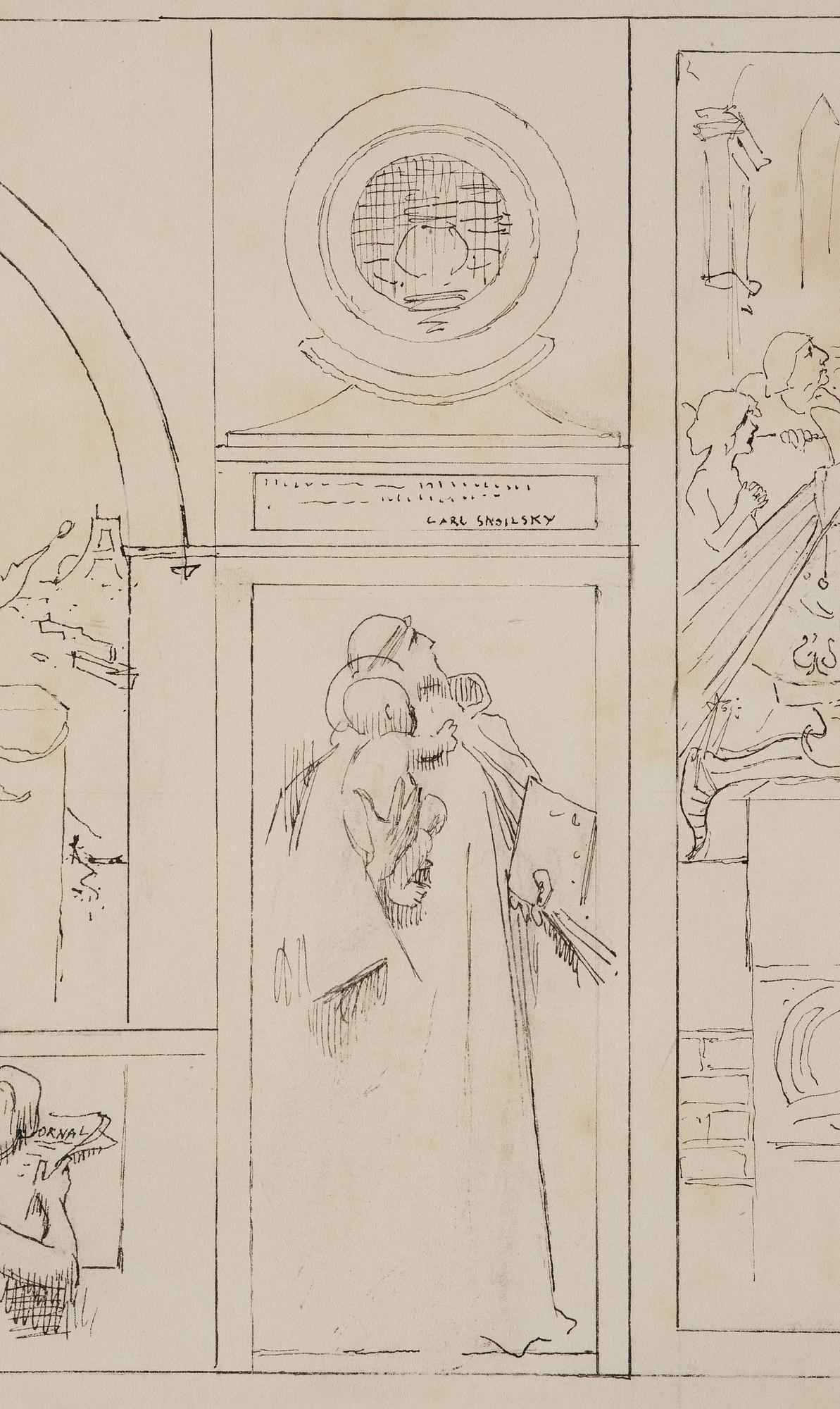
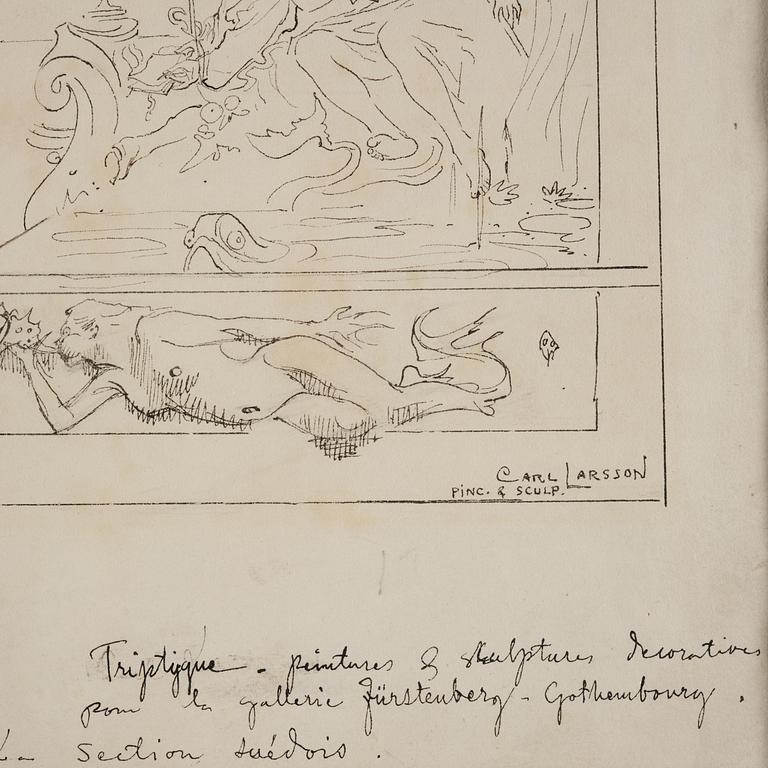
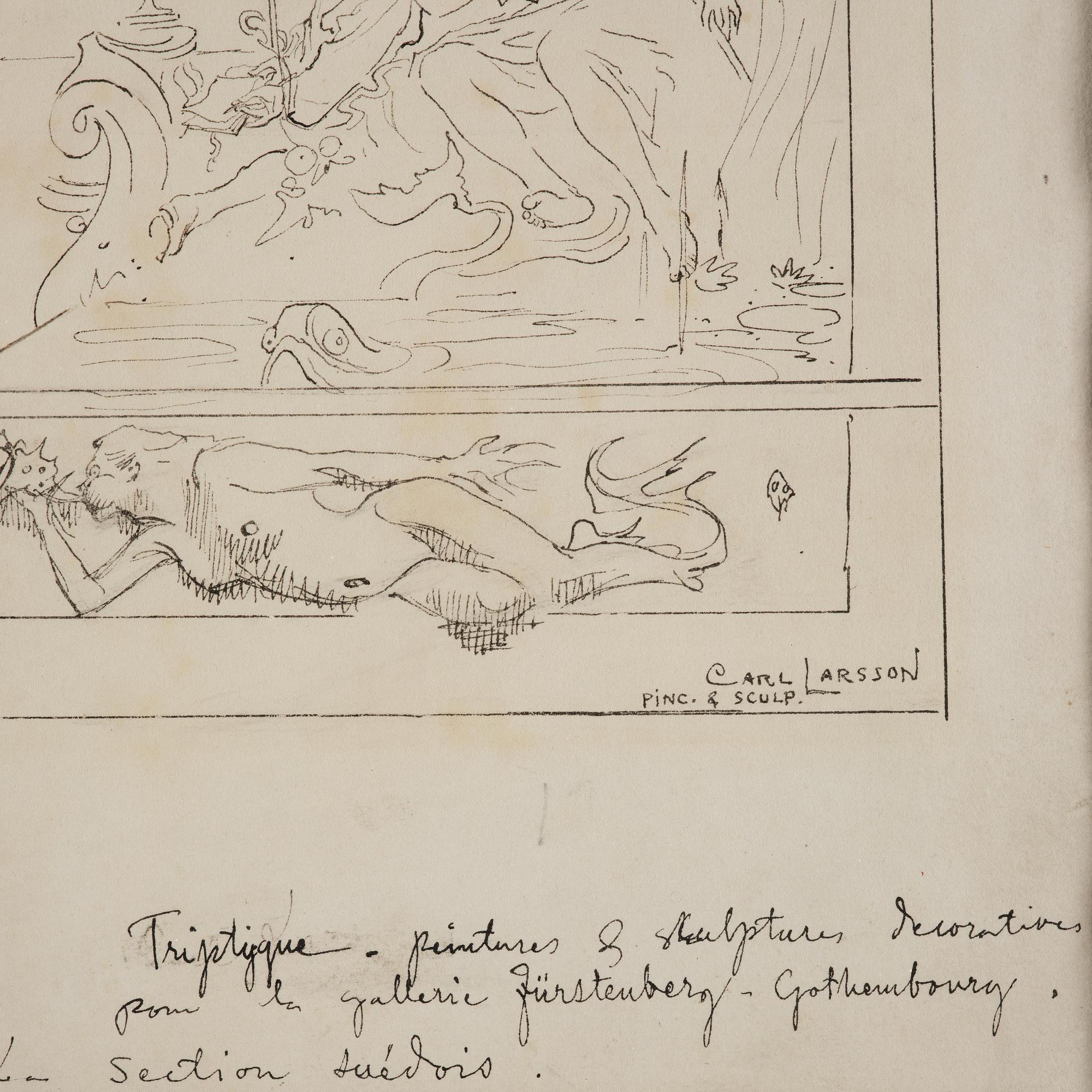
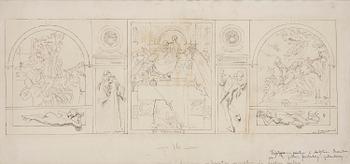
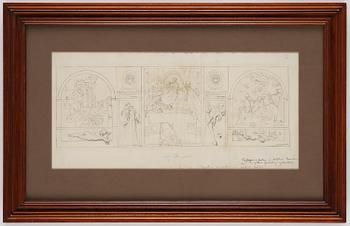
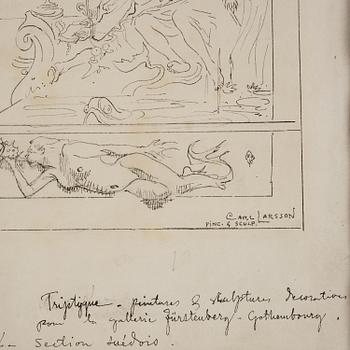
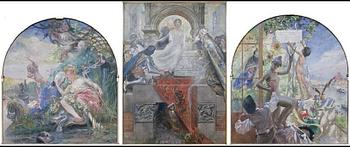
Signed Carl Larsson Pinc. & Sculpt. Ink on paper 29 x 59 cm. With inscription: "Triptyque - peintures & sculptures décoratives pour la Gallerie Fürstenberg - Gothenbourg. / L’Exposition universelle / La Section Suédois" and "Tillhör ma douce Edvard Berg - Paris" by Berg's wife on the reverse.
Provenance
The Physiotherapist Johan Edvard Berg, 120 rue Champs Elysées, Paris.
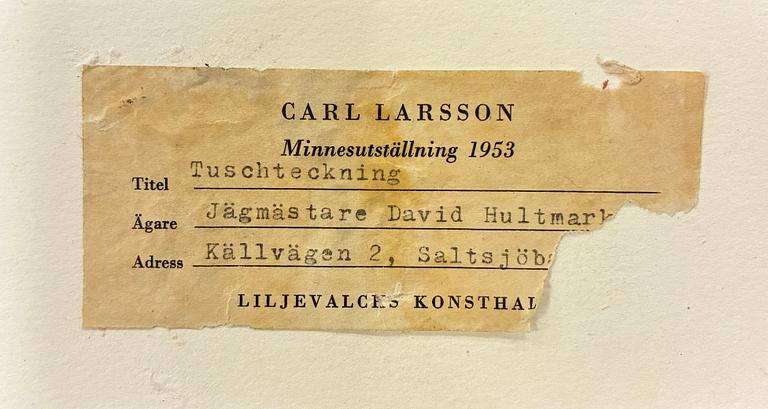
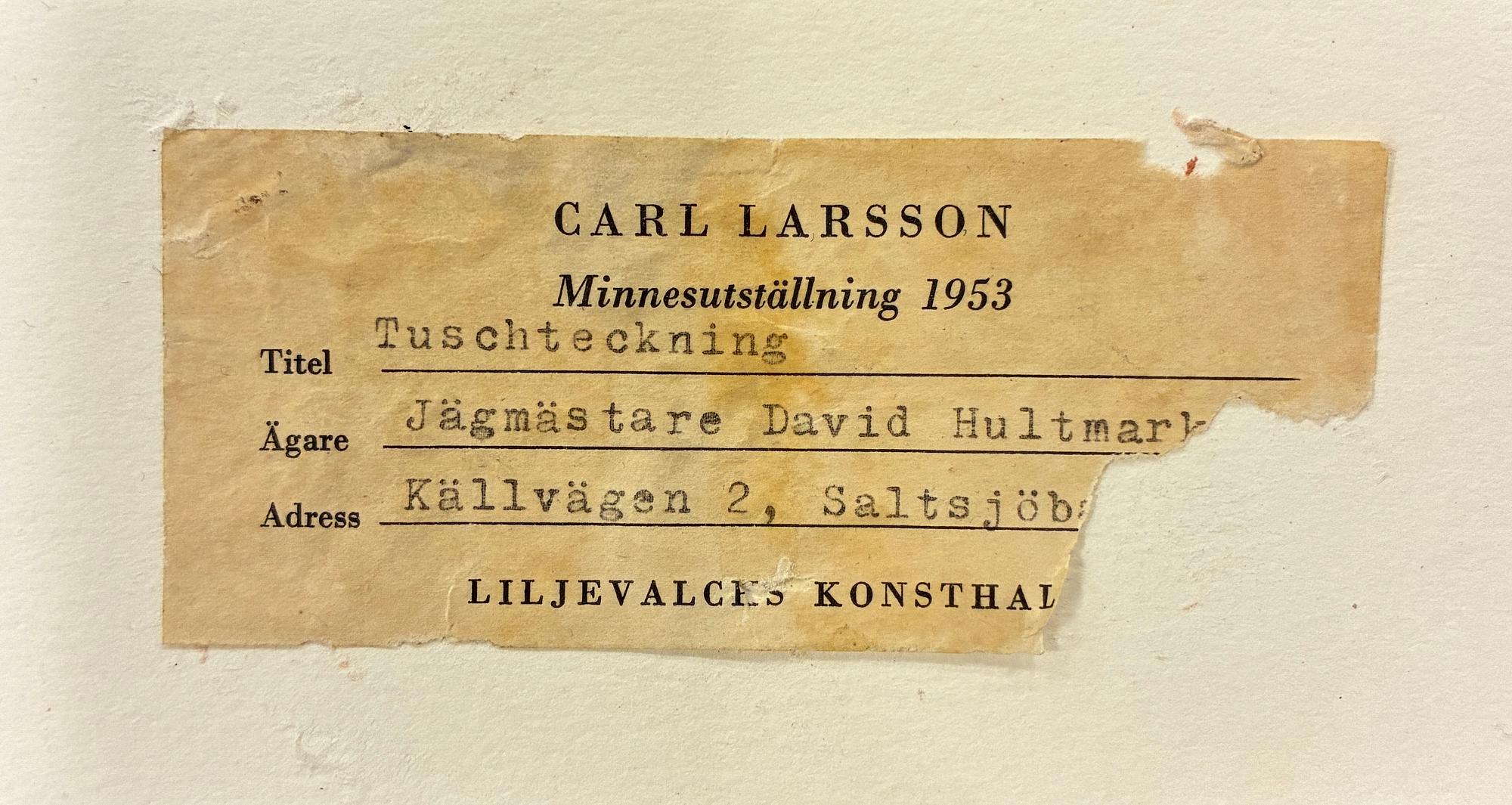
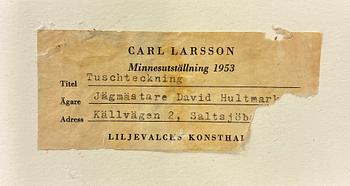
Civilian Forester David Hultmark (1878-1957), Saltsjöbaden.
Hans Erik Börjeson (1927-2020), Green Hotel, Tällberg, Dalecarlia.
Private Swedish Collection.
Exhibitions
Liljevalchs konsthall, Stockholm, "Carl Larsson. Minnesutställning", 1953, no. 726.
Literature
Ulwa Neergaard, "Carl Larsson. Signerat med pensel och penna", 1999, under year 1888, p. 36, no. 334.
More information
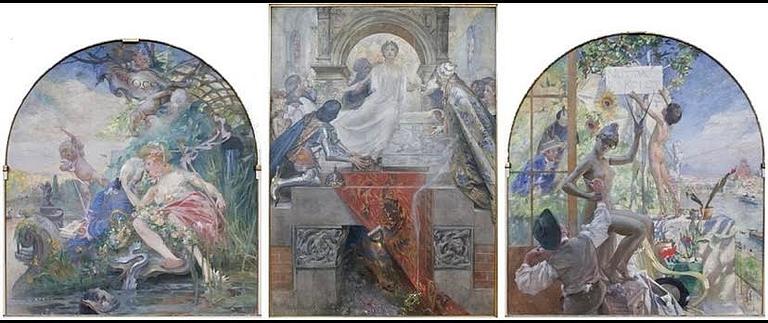
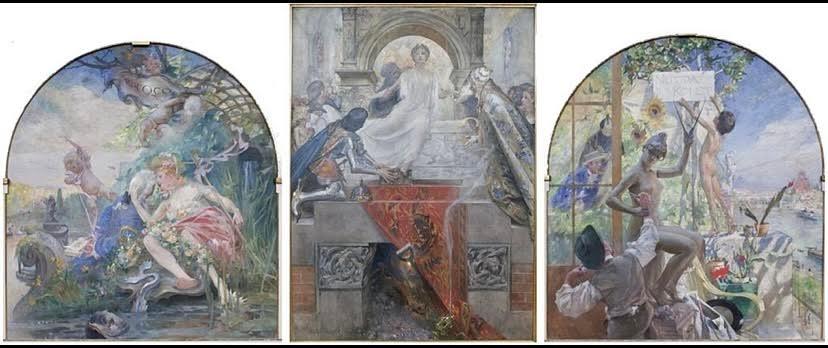
Preparatory for the illustration in the exhibition catalogue of the World Fair exhibition in Paris in 1887 where Carl Larsson’s famous triptych L’Art Moderne / La Renaissance / Rococo painted in Paris the same year for the Gallery of Pontus Fürstenberg (1827-1902) in Gothenburg was shown.
More about Carl Larsson
Carl Larsson is considered one of the greatest Swedish artists of all time. He was born in Gamla Stan in Stockholm and studied at the Royal Academy of Arts in the years 1866-76. After his studies in Stockholm, he traveled to France and settled in Grèz-sur-Loing. There he mainly painted garden motifs. In France, he met his future wife Karin Bergöö, who was also an artist and came to mean a lot for his artistry. Already during his student years, he made a living as a photo retoucher and cartoonist in the press. It was also during his studies that Larsson got to know Anders Zorn and Bruno Liljefors, together the three are usually called the ABC artists. At the end of the 1880s, Carl and Karin were given "Lilla Hyttnäs" in Sundborn outside Falun by Karin's father, and this is where Larsson's most famous watercolors depicting his family were created. The motifs often depict sunny landscapes with children, crayfish fishing, meals in the green and interior scenes. Larsson is represented, among other, in the National Museum, where "Gustav Vasas intåg i Stockholm" and "Midvinterblot" fills the stairwell. Represented mainly at the National Museum in Stockholm and at the Gothenburg Art Museum.
Read moreFor condition report contact specialist

What will the transport cost?