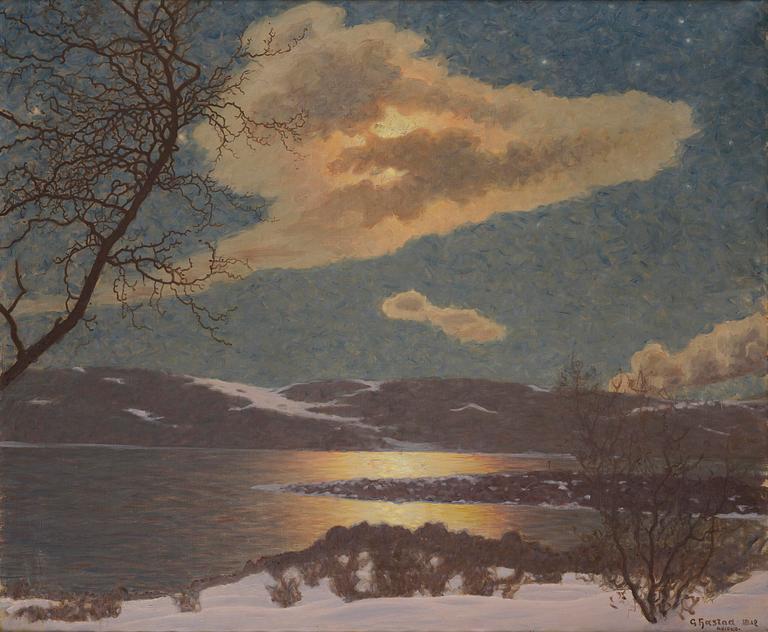
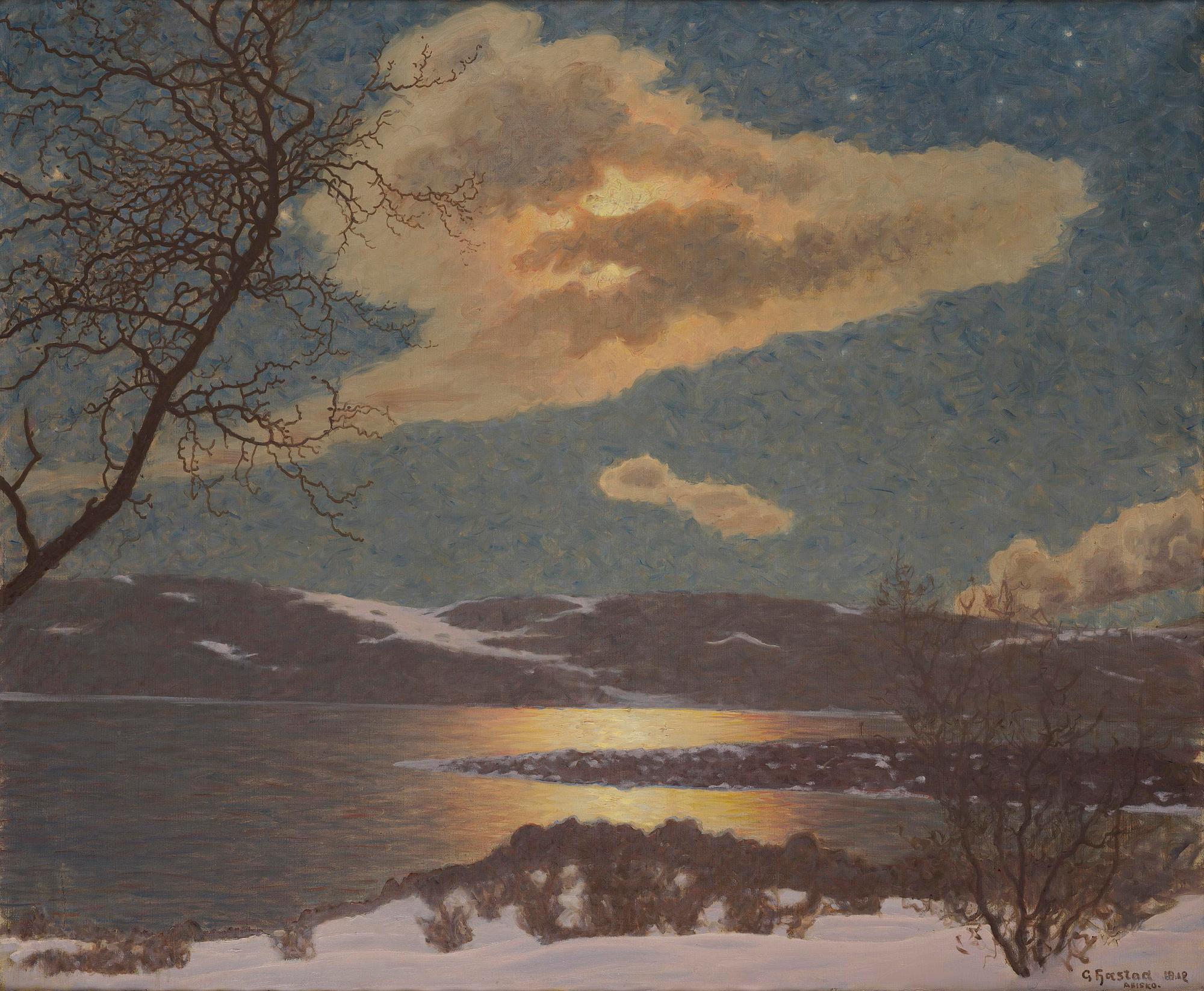
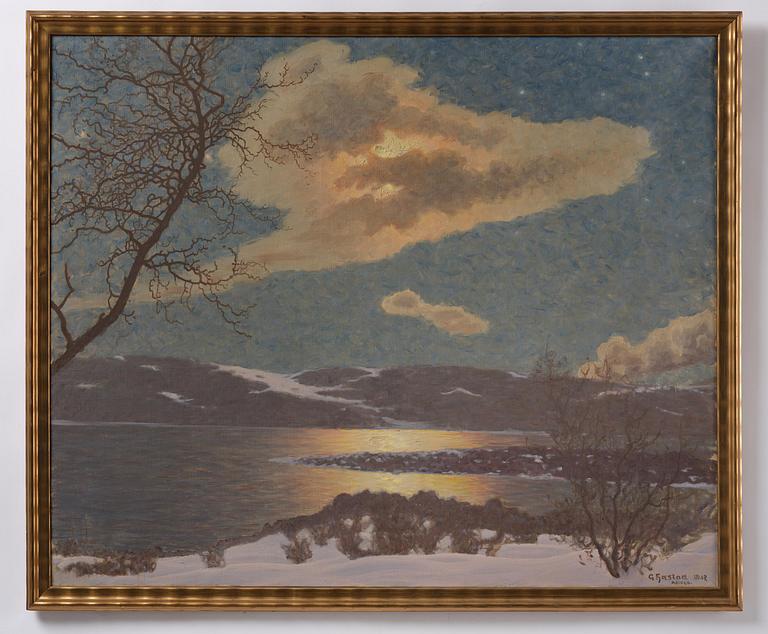
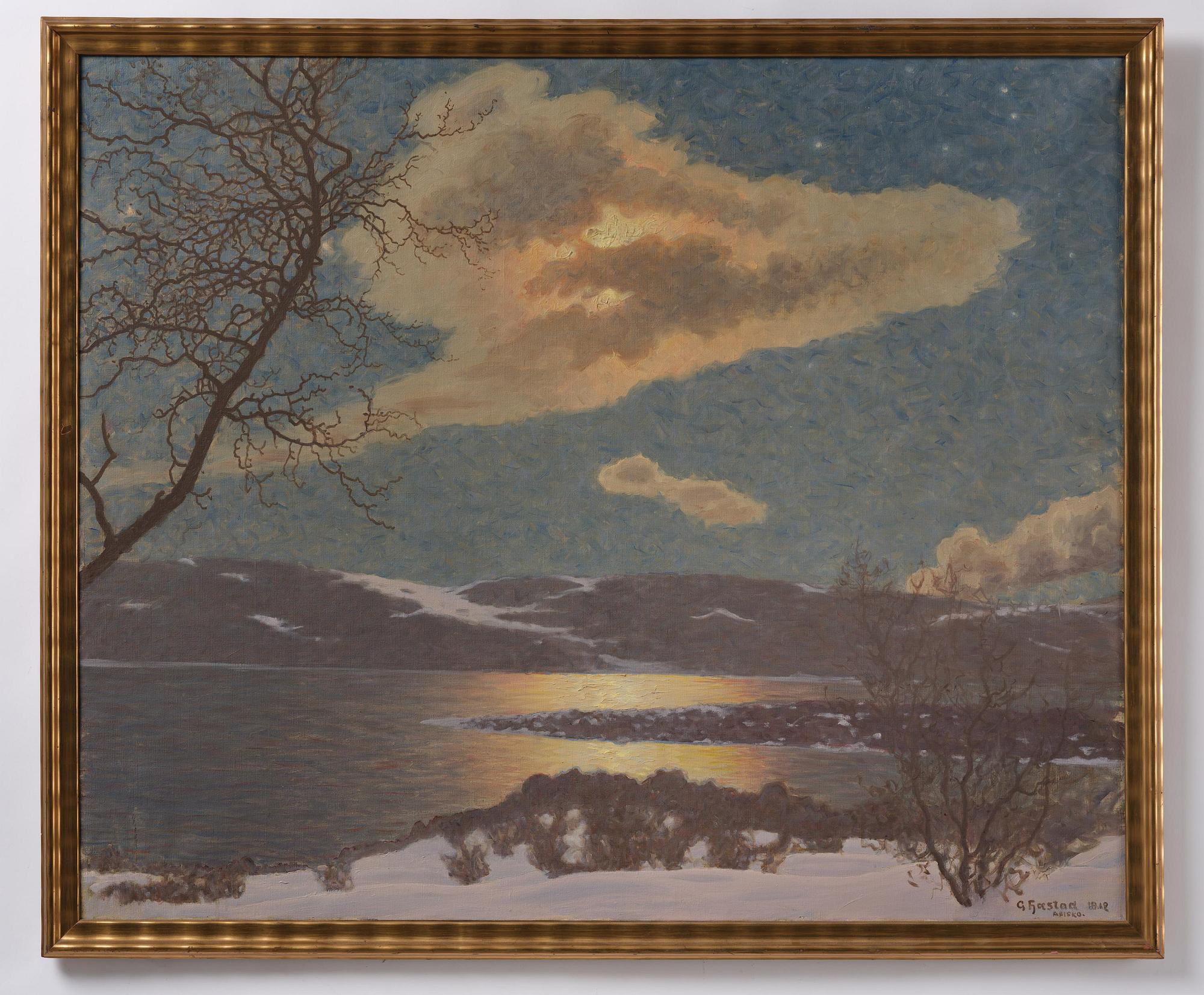
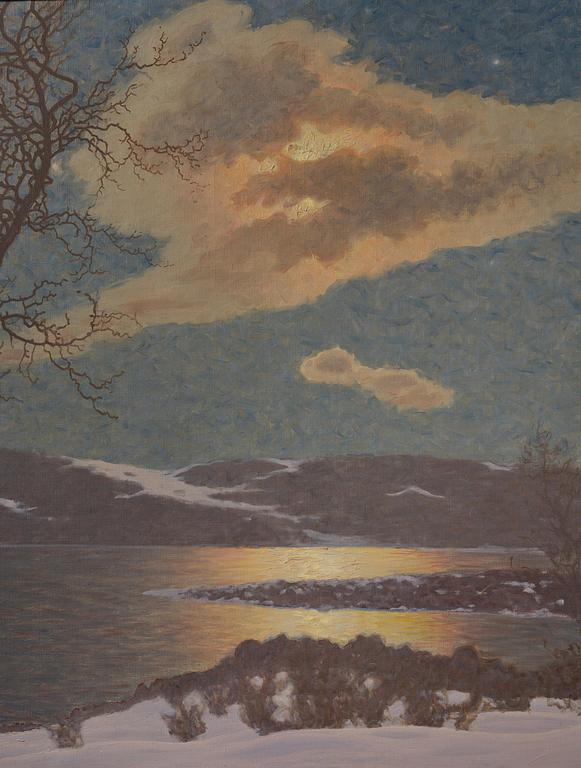
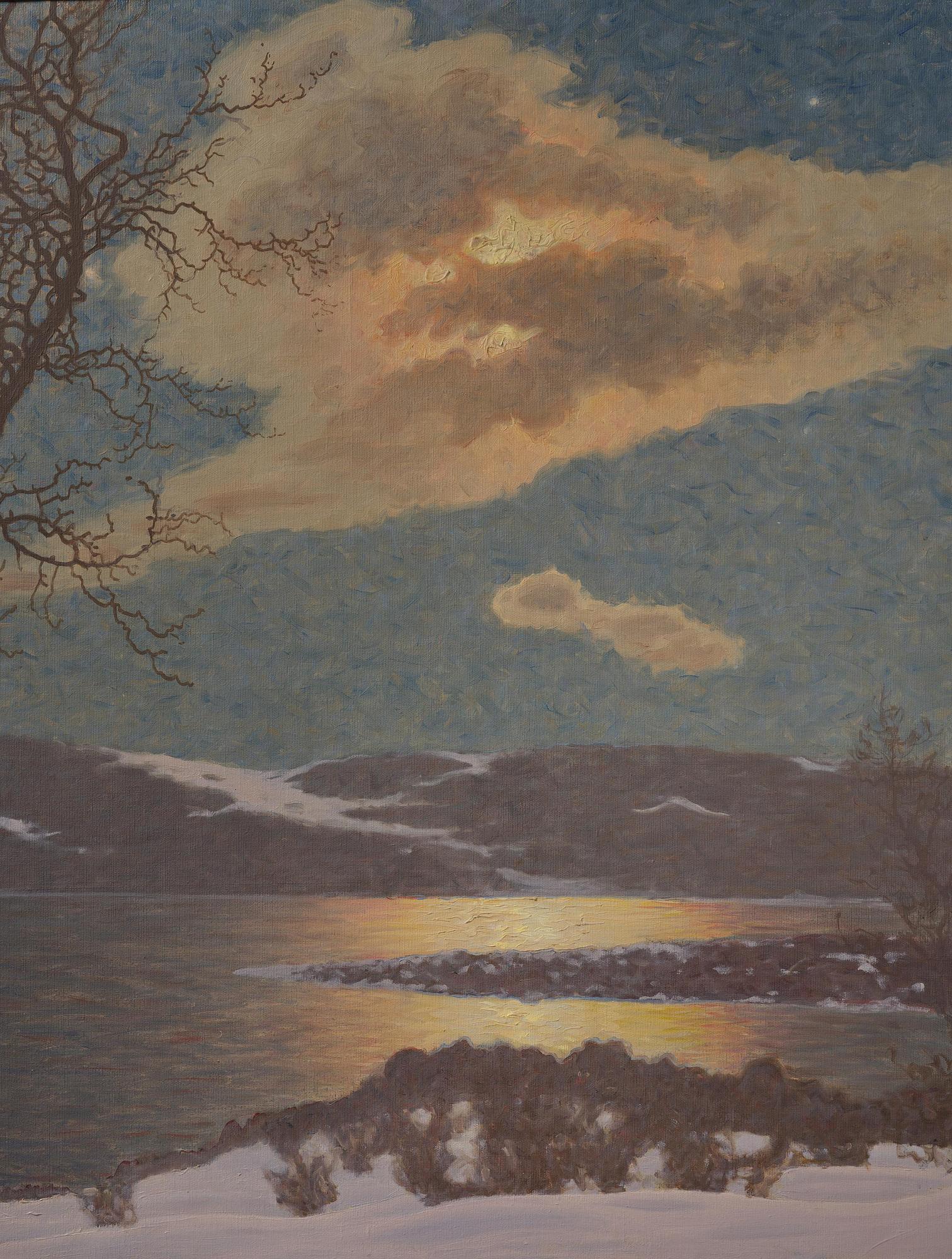
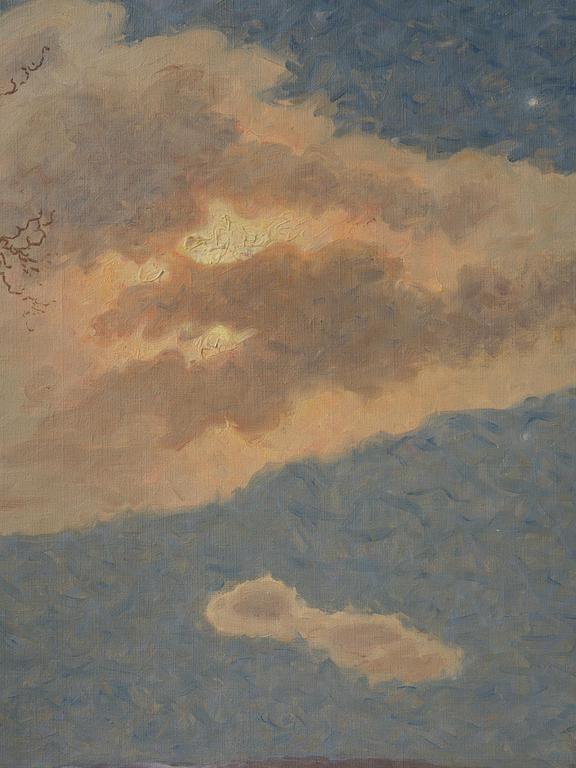
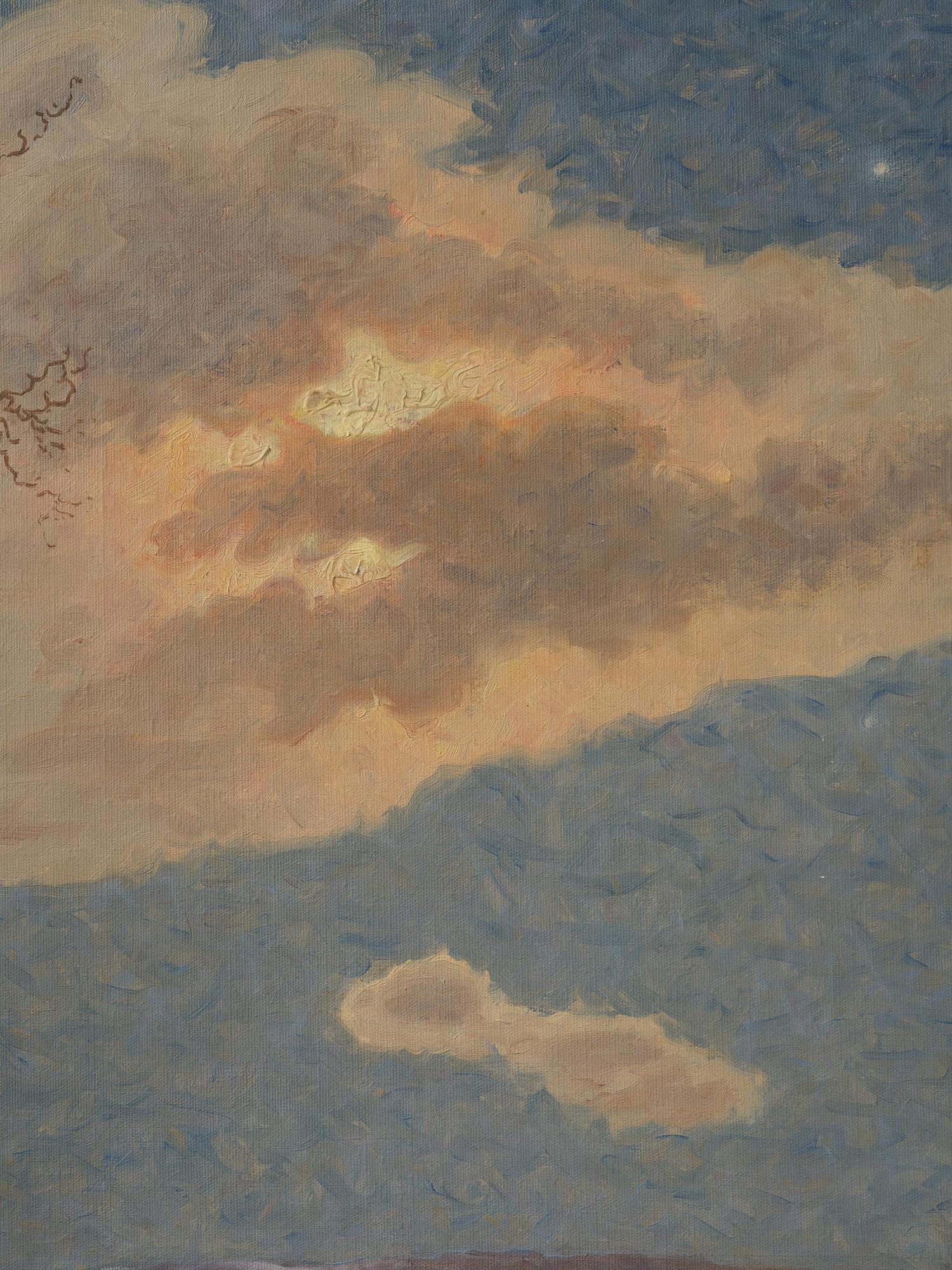
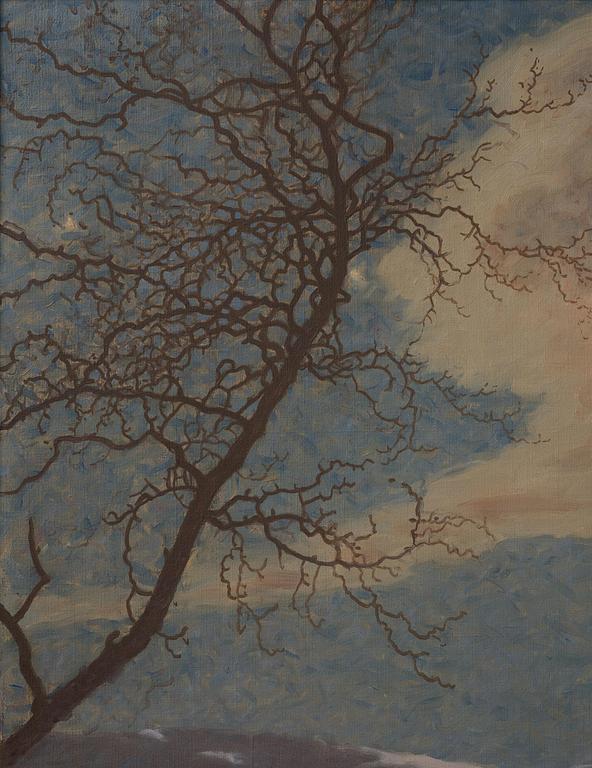
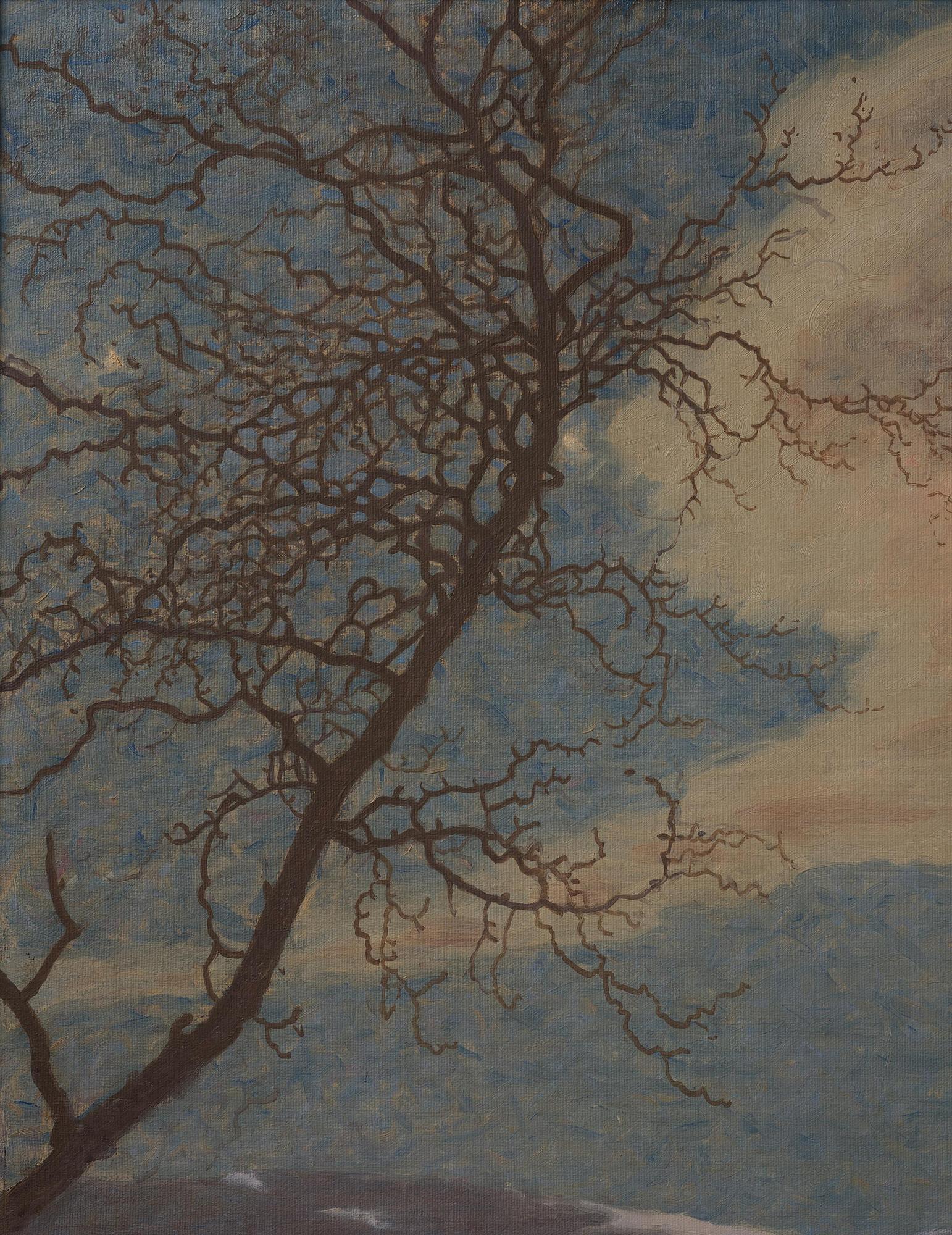
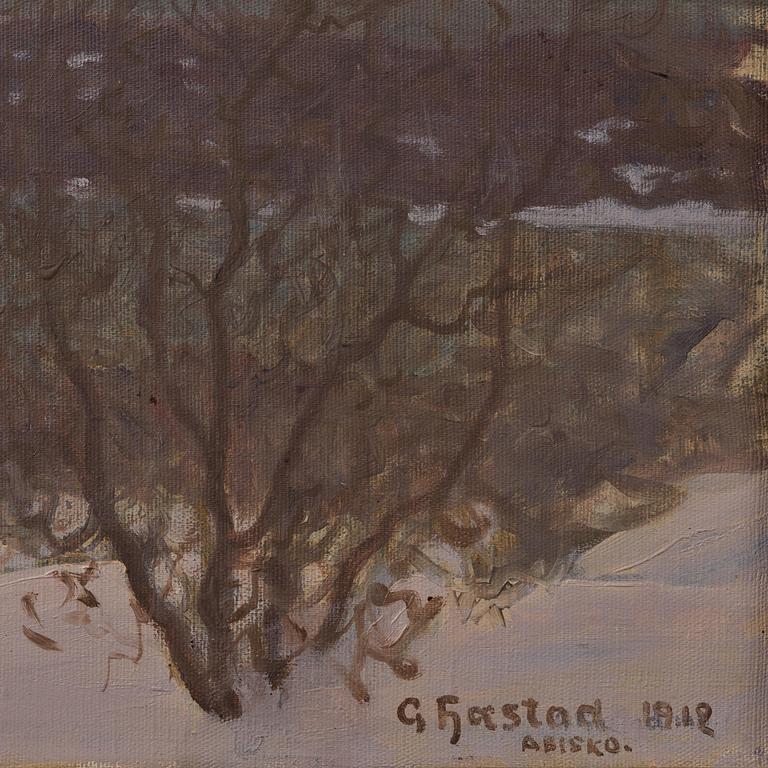
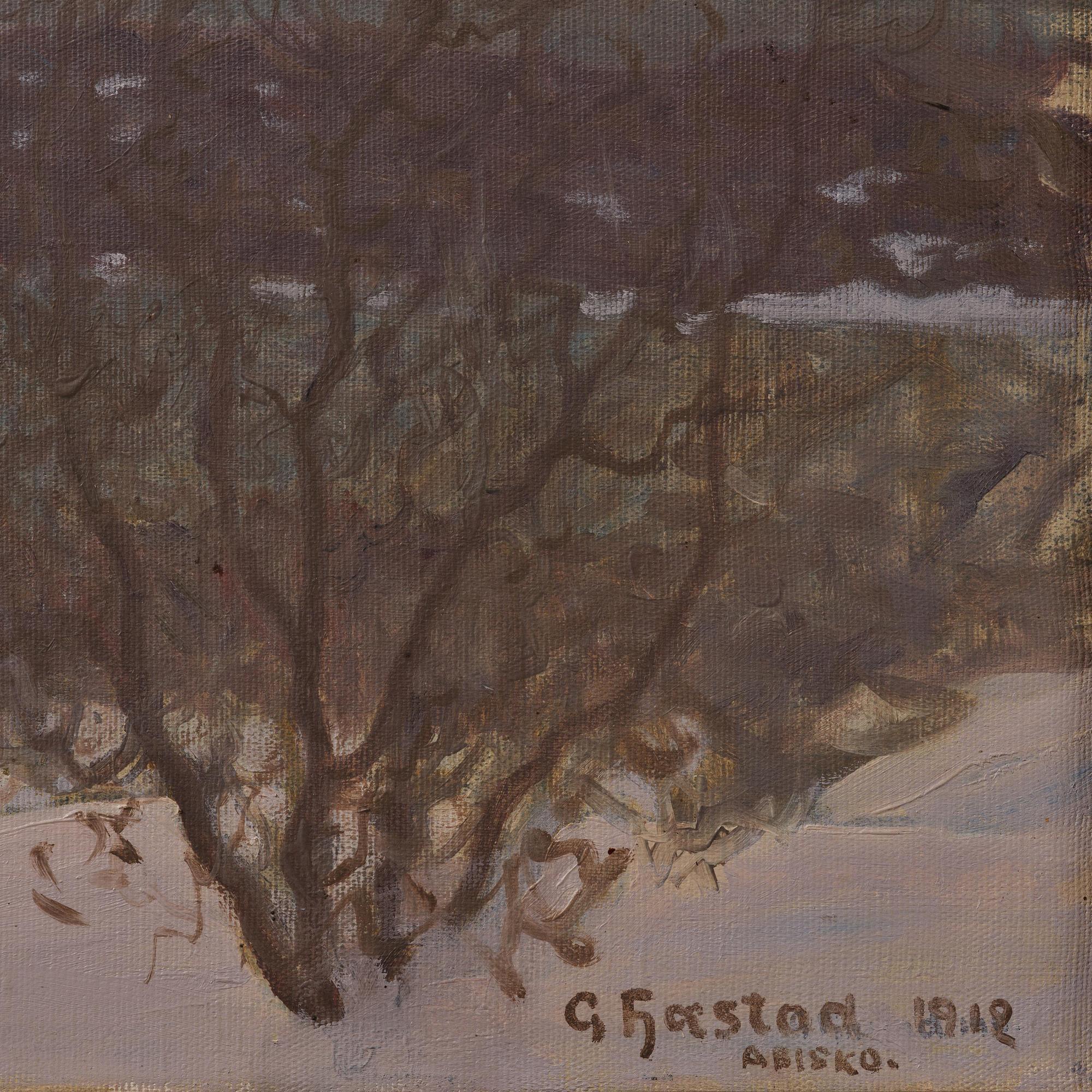
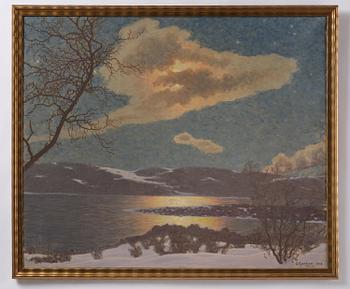
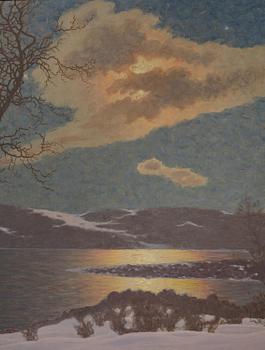
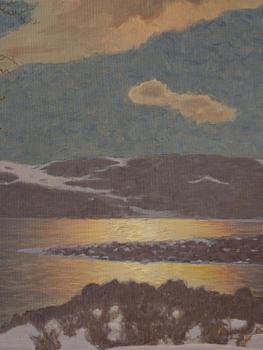
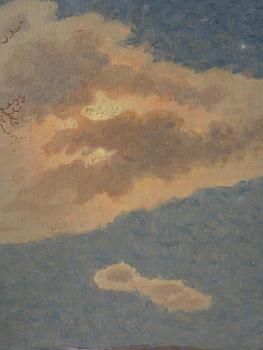
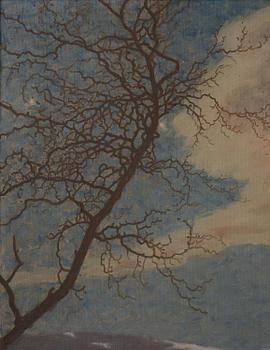
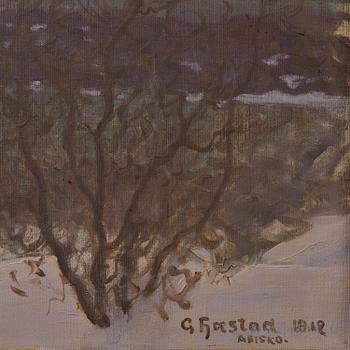
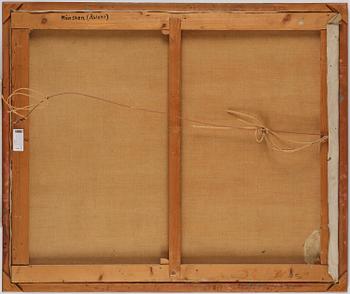
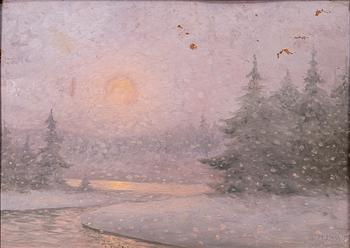
Gustaf Fjæstad (Sweden, 1868-1948) "Månsken (Abisko)" (Moonlight, Abisko)
"Månsken (Abisko)" (Moonlight, Abisko)
Signed G Fjaestad and dated Abisko 1912. Oil on canvas, 110 x 134 cm.
More information
Gustaf Fjæstad occupies a distinctive position in Swedish turn-of-the-century painting through his lyrical and evocative depictions of nature. As one of the leading figures of the Rackstad artists’ colony, he developed a highly personal style in which the forms, light and atmosphere of the natural world are rendered through a distinctive combination of naturalistic detail and decorative stylisation.
Fjæstad’s artistic practice evolved in close dialogue with the landscape of Värmland. An important factor in his establishment there was the sculptor Christian Eriksson, who in 1898 offered Gustaf and his wife Maja Fjæstad the opportunity to rent his studio residence, Oppstuhage, in Taserud outside Arvika. This marked the beginning of the artistic community around Lake Racken that would later become known as the Rackstad artists’ colony.
Christian Eriksson would also come to play a prominent role in the artistic and cultural history of Kiruna. Through his close association with Hjalmar Lundbohm, the mining director and patron of the arts, Eriksson became involved in several important artistic projects in the emerging mining town. Among the most notable was the decoration of Kiruna Church, built between 1909 and 1912 to designs by Gustaf Wickman and commissioned on Lundbohm’s initiative. Eriksson created, among other works, the church’s gilded roof sculptures and the carved gable relief above the entrance. The church was inaugurated in December 1912.
The fact that Fjæstad painted the auctions painting in Abisko in 1912 places the work within a particularly interesting cultural and historical context in northern Sweden. With the completion of the Iron Ore Line in 1902, Kiruna and Abisko were connected by rail and became part of an expanding northern network of transport and cultural exchange. Kiruna developed into an industrial and cultural centre under Hjalmar Lundbohm’s leadership, while Abisko emerged as an important destination for nature enthusiasts, researchers and artists. The Swedish Tourist Association’s tourist station, opened in 1903, helped make the mountain region more accessible.
More about Gustaf Fjæstad
Gustav Fjaestad was a pupil of Bruno Liljefors and Carl Larsson. He became renound for his depictions of Swedish winter landscapes, often with glistening icecrystals and bubbling water by ice's edge, sometimes lit up by the setting sun, sometimes in scales of grey, white and purple. He also designed templates for woven wallpapers, furniture, and wrought iron. He is represented in major Swedish museums as well as in Vienna and Chicago.
Read moreFor condition report contact specialist

What will the transport cost?
Shipping can only be arranged by contacting specialdelivery@bukowskis.com.