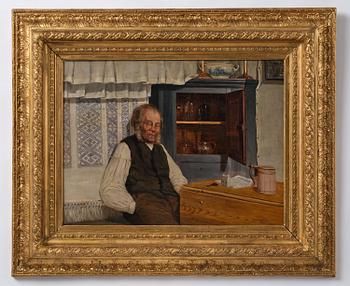
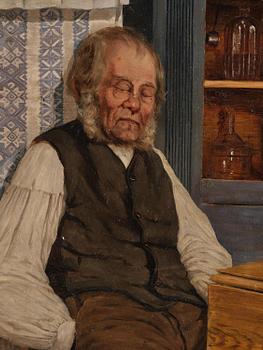
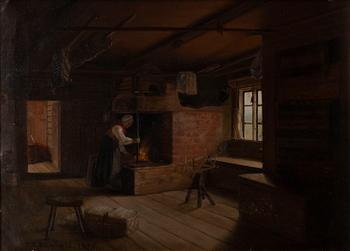
Wilhelm Dahlbom (Sweden, 1855-1928) Interior with Sleeping Man
Interior with Sleeping Man
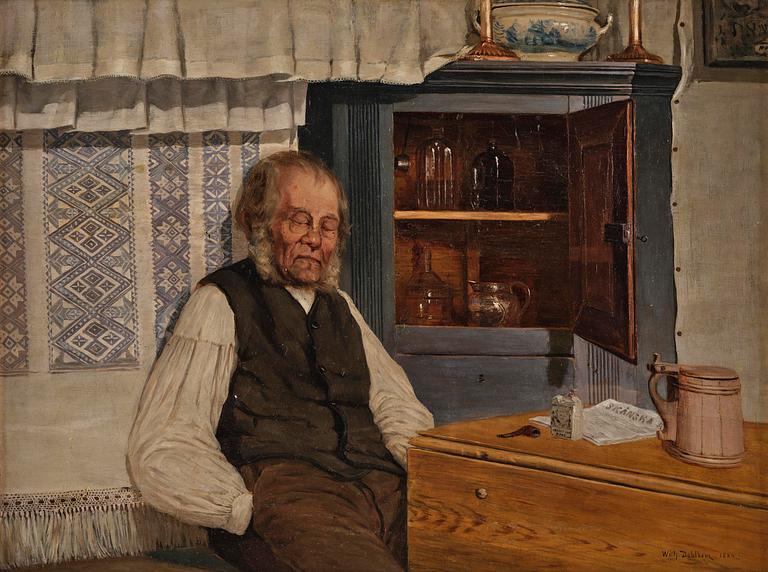
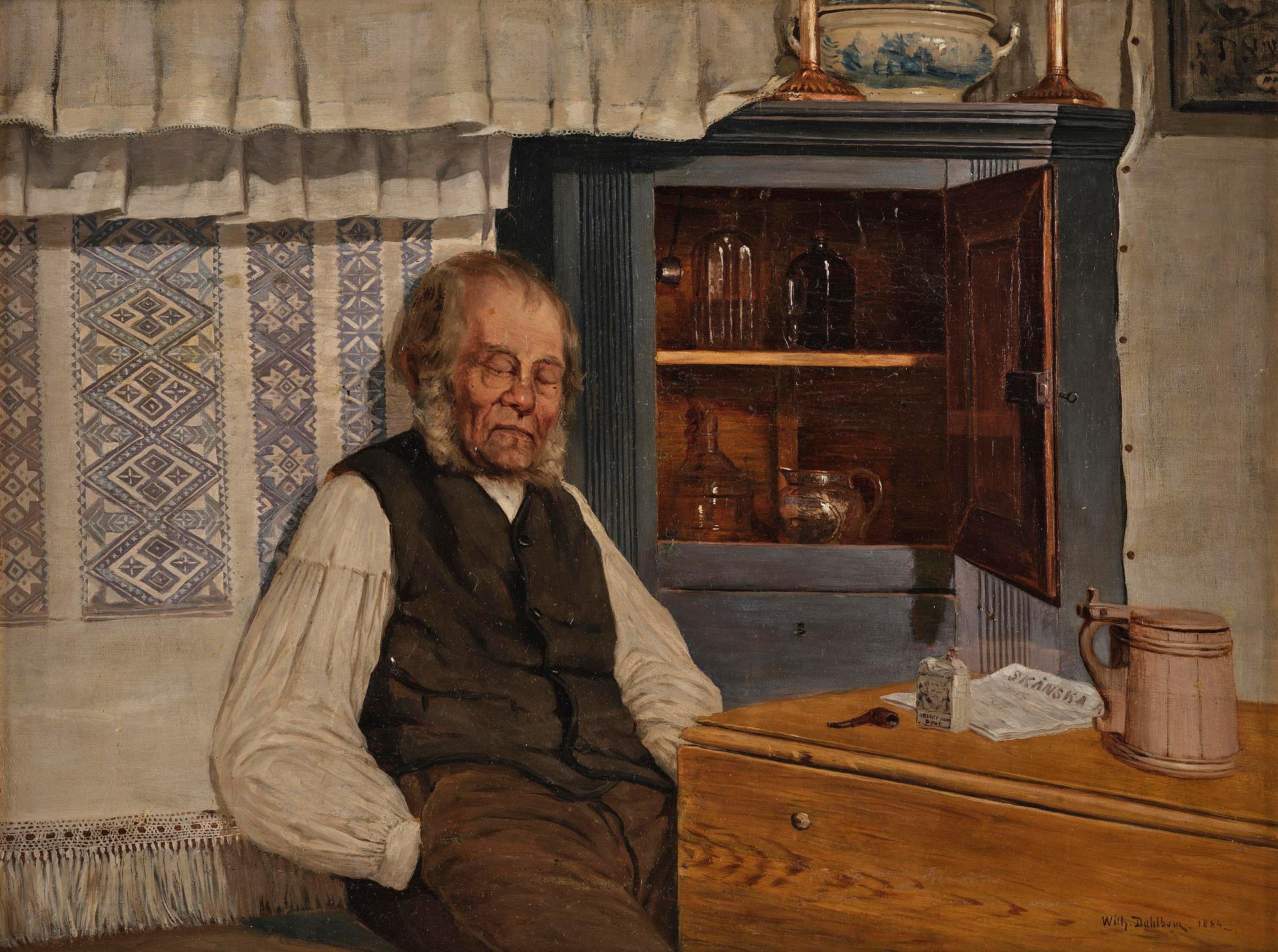
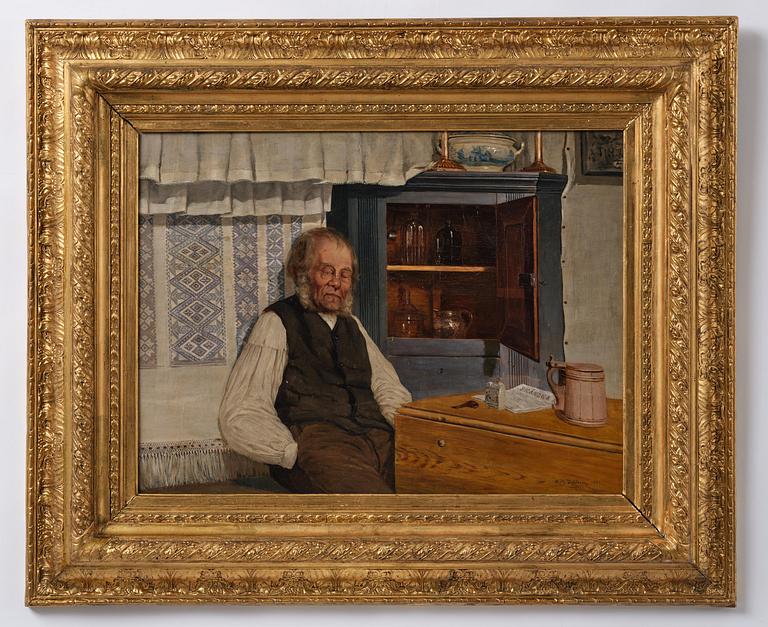
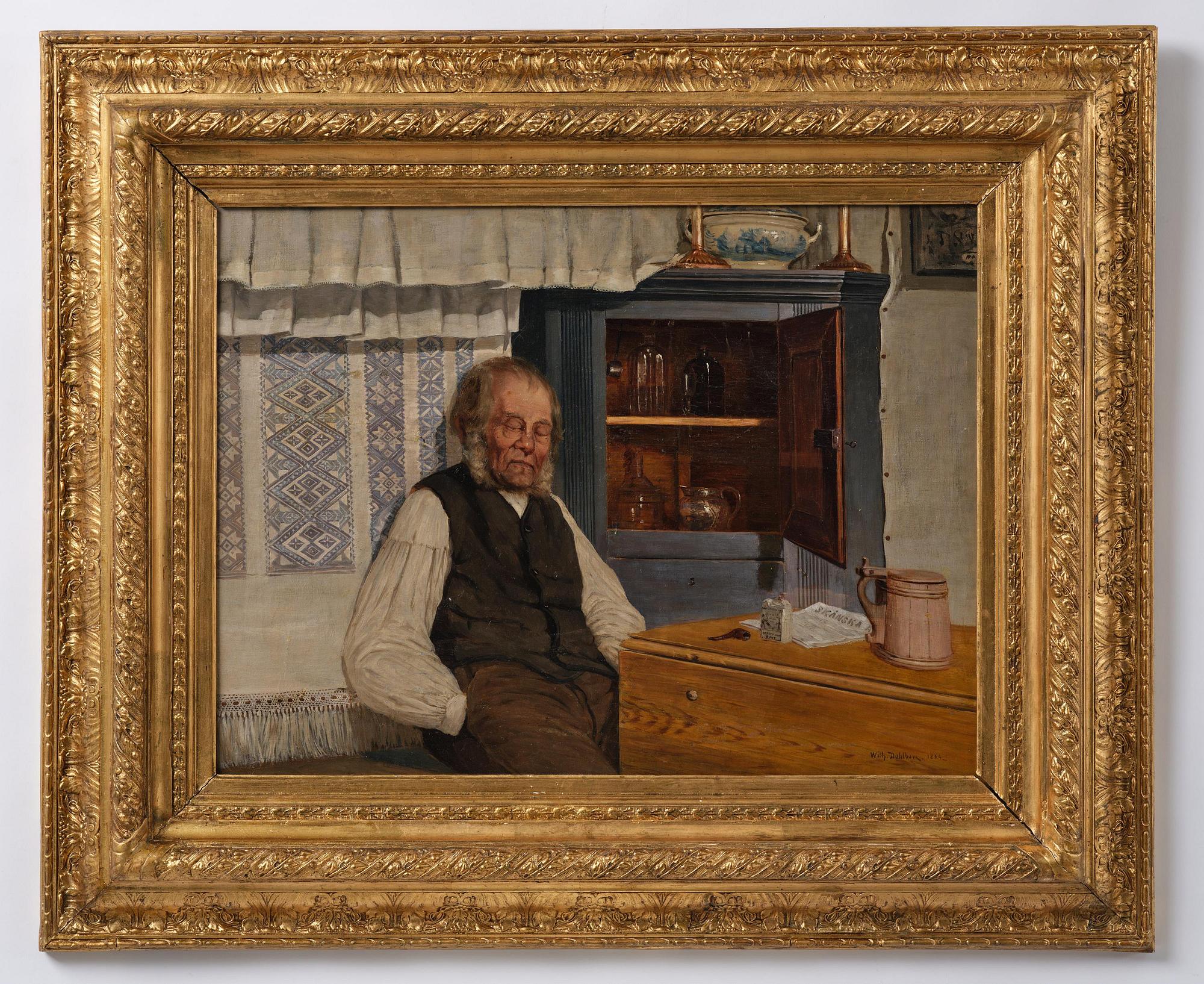
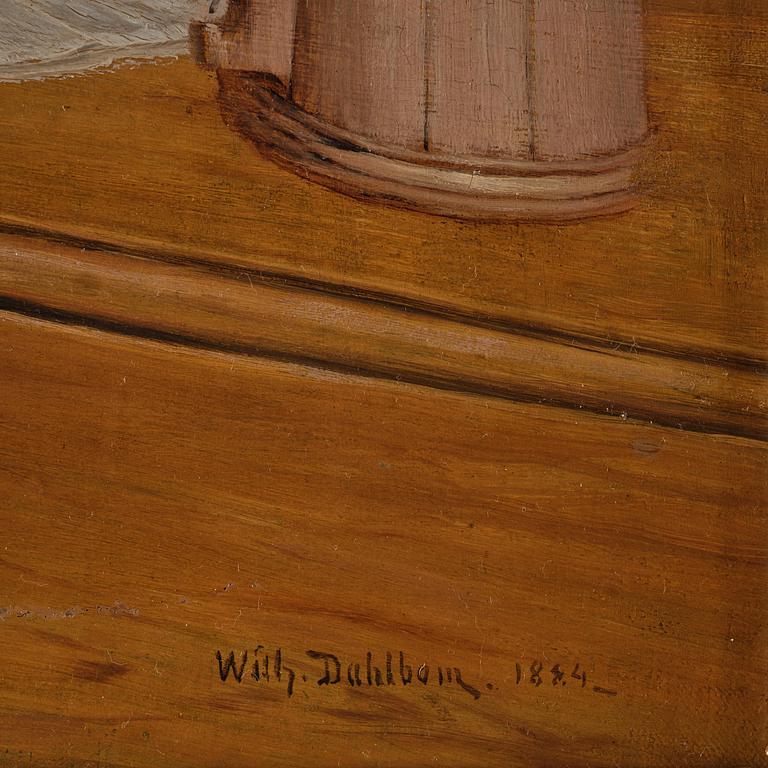
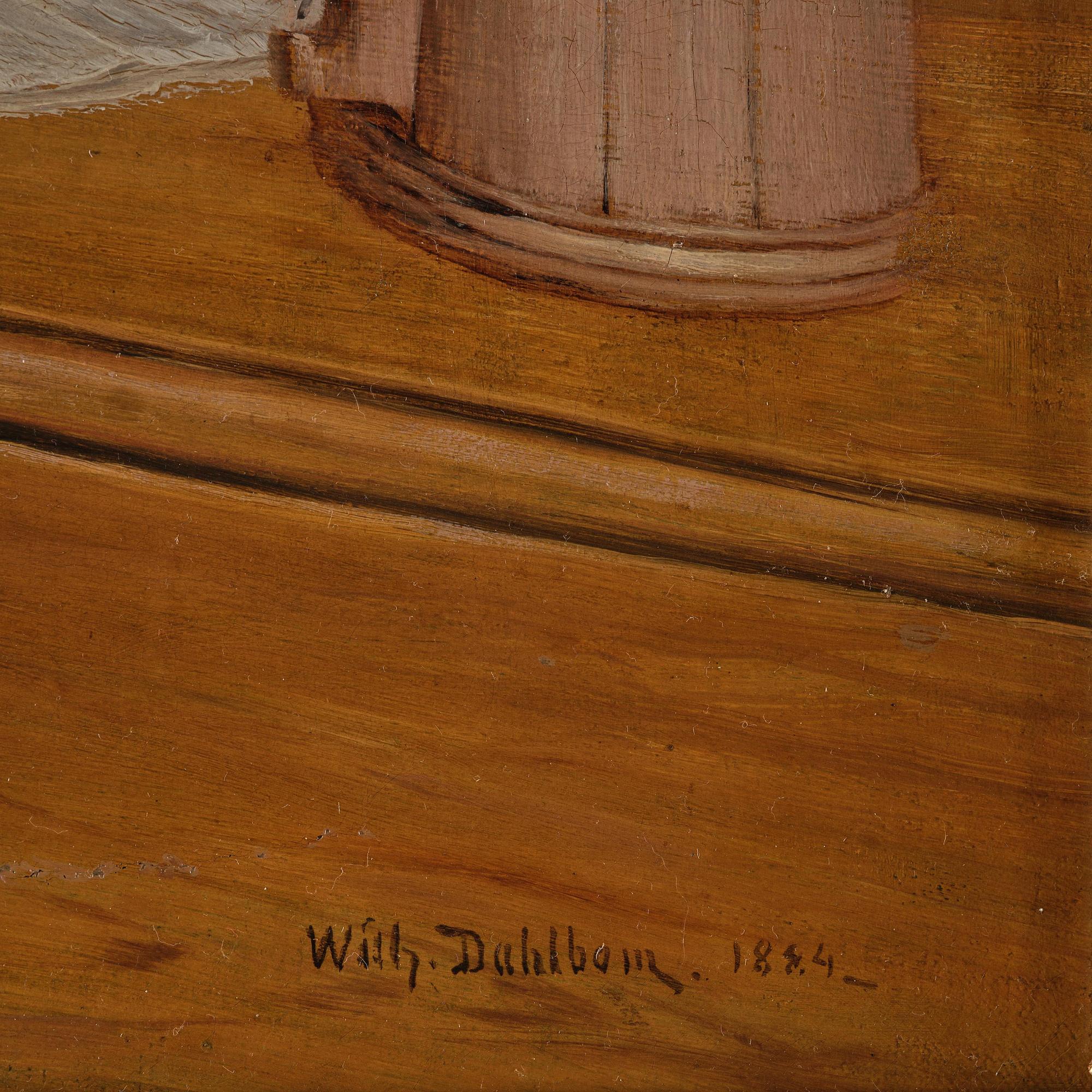
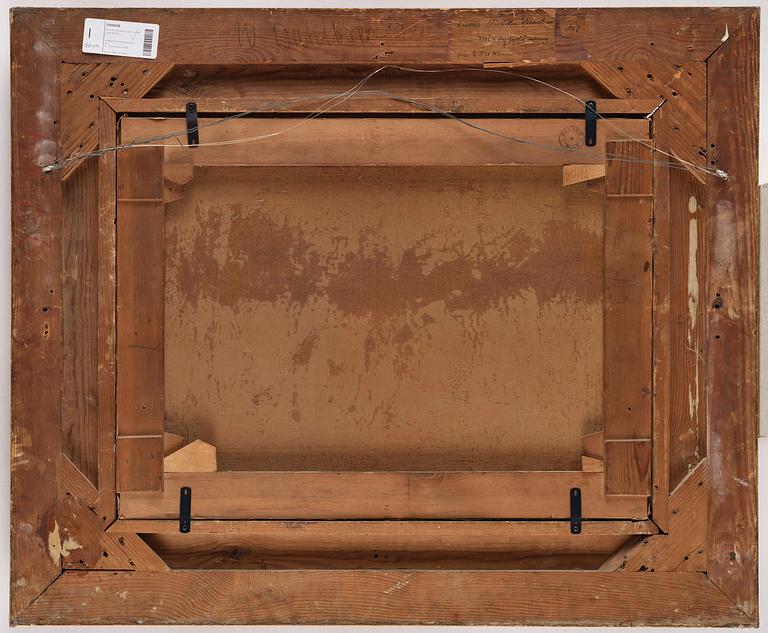
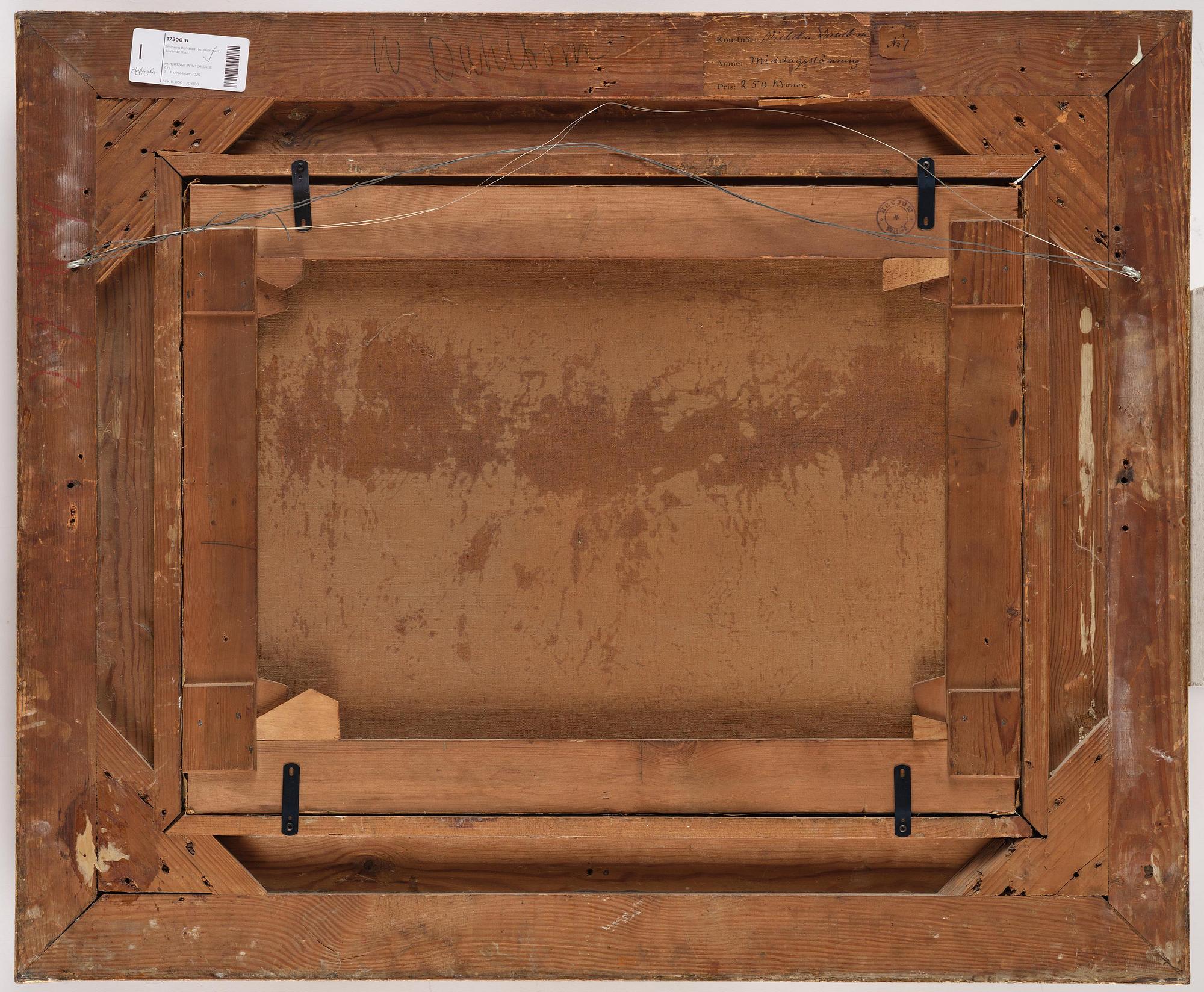
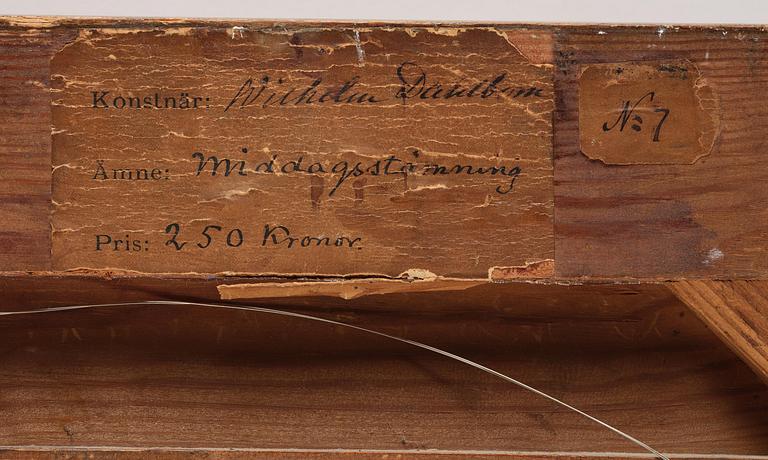
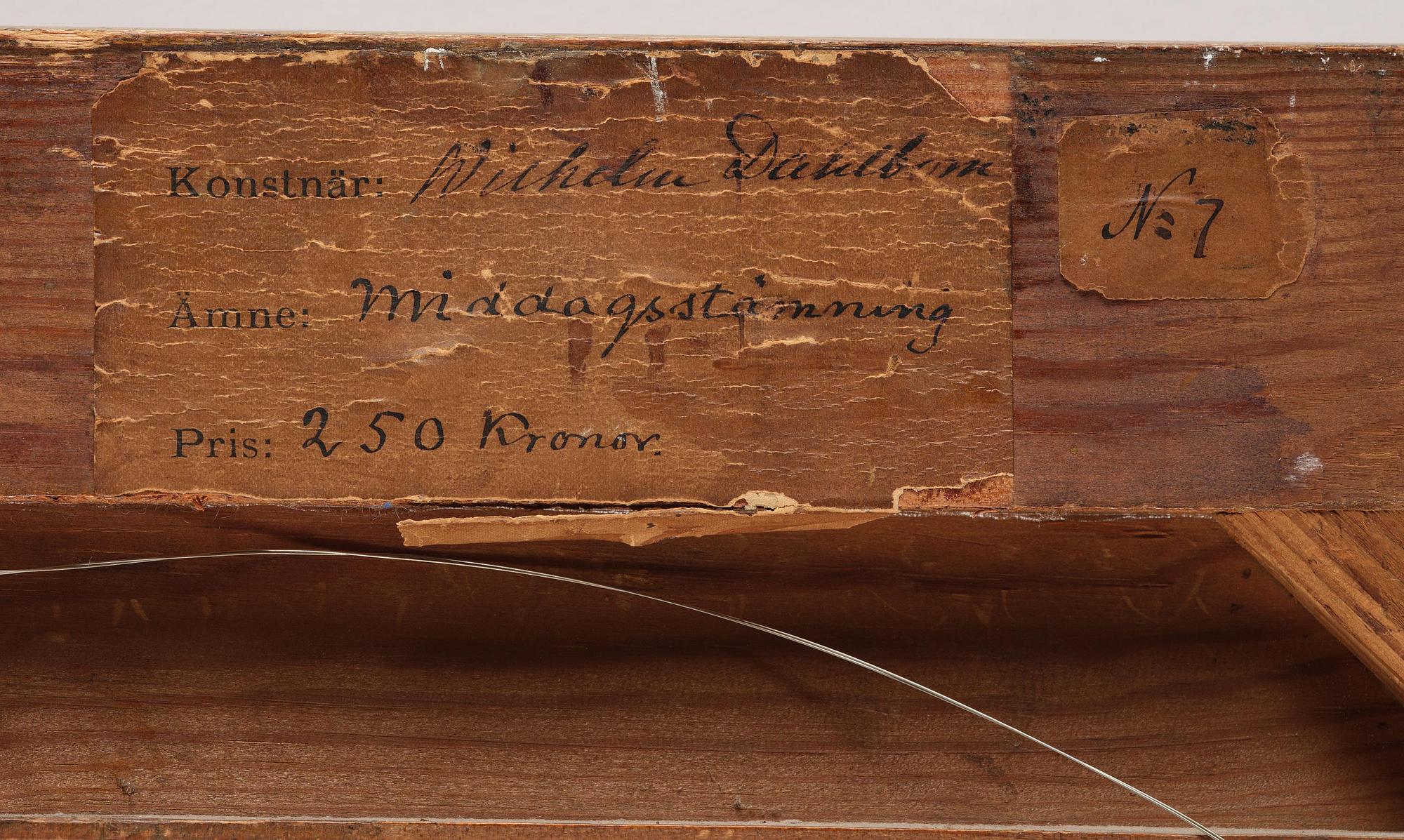
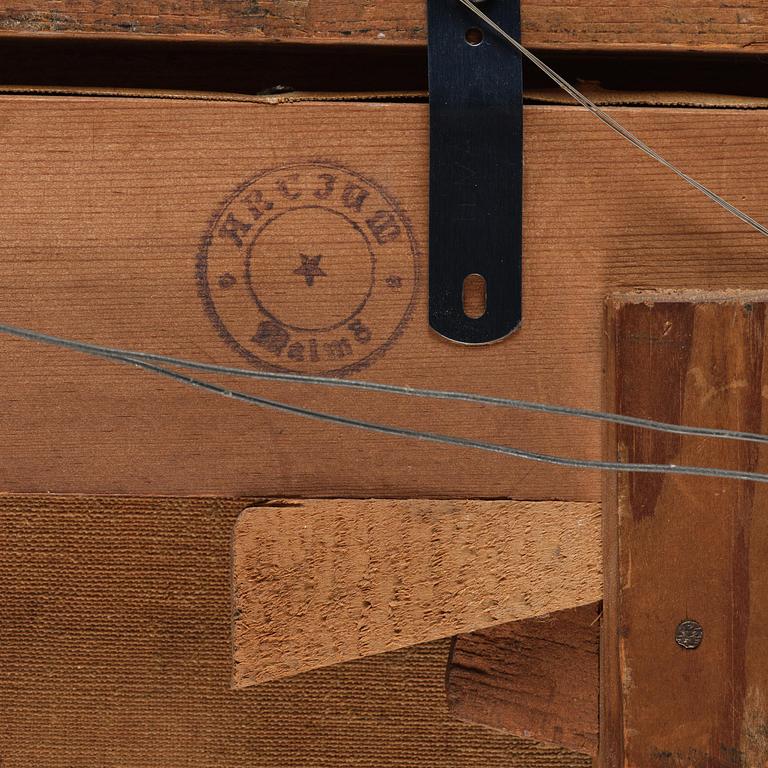
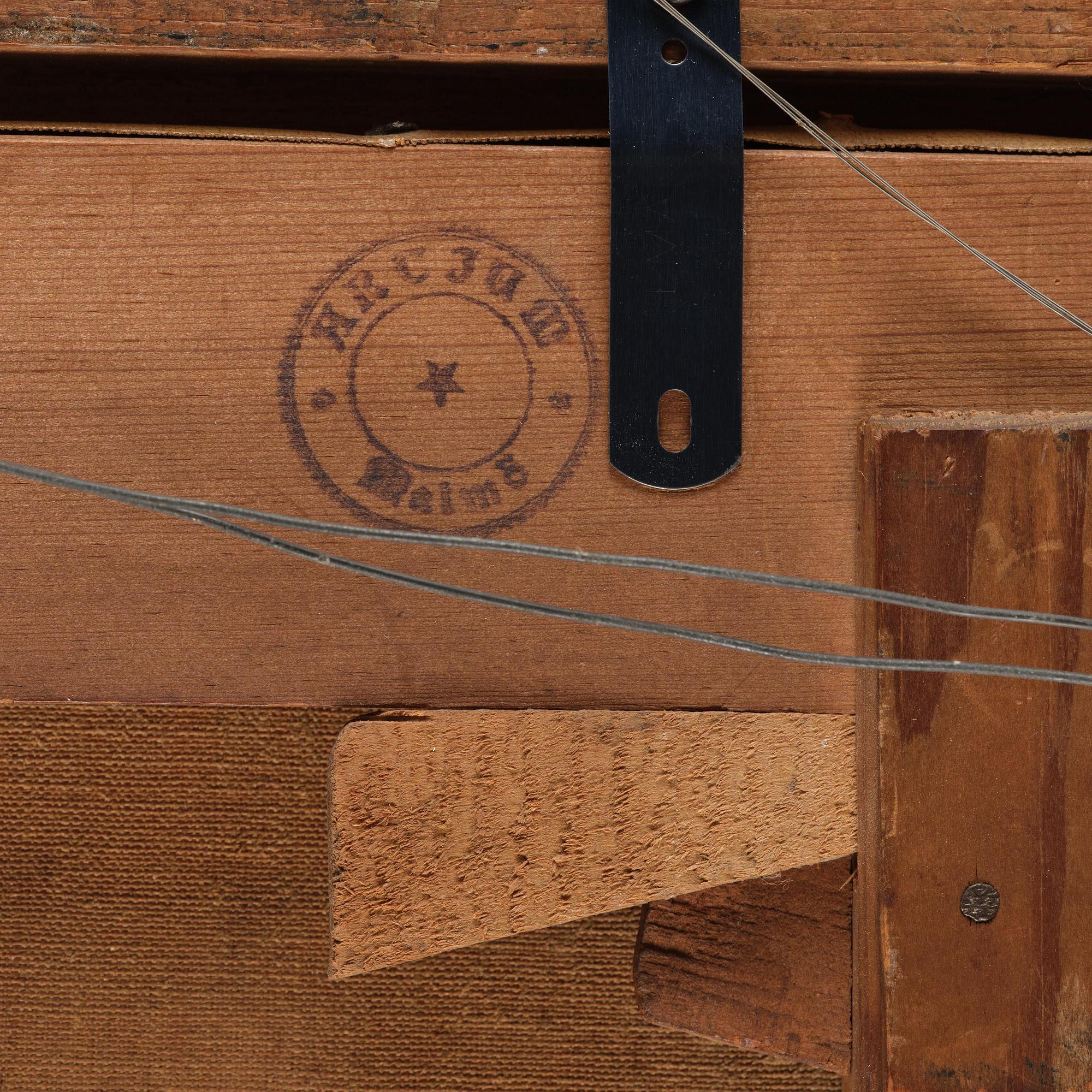
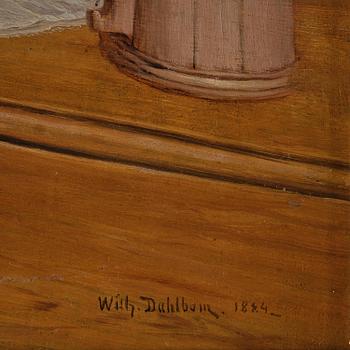
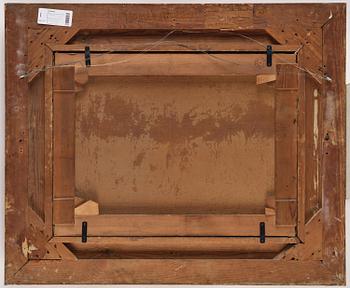
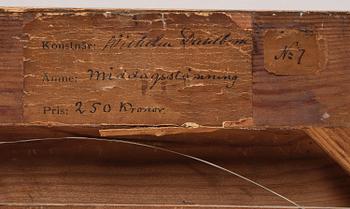
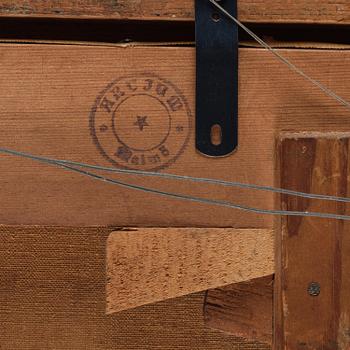
Signed Wilh. Dahlbom and dated 1884. Oil on canvas, 48 x 63 cm. Verso inscribed “Dahlbom” in pencil on the frame, with exhibition labels “Wilhelm Dahbom / Middagstämning / 250 kronor”, “No. 7” and a stamp reading “Arcjum Malmö” on the stretcher.
More information
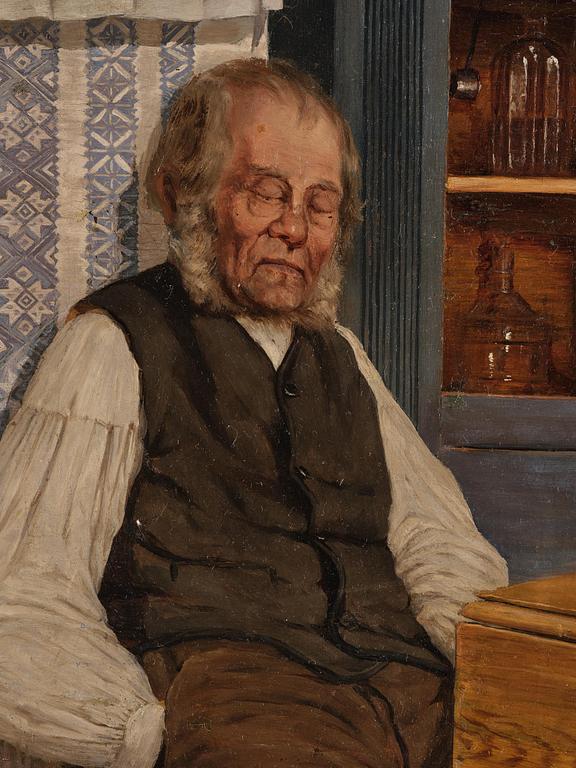
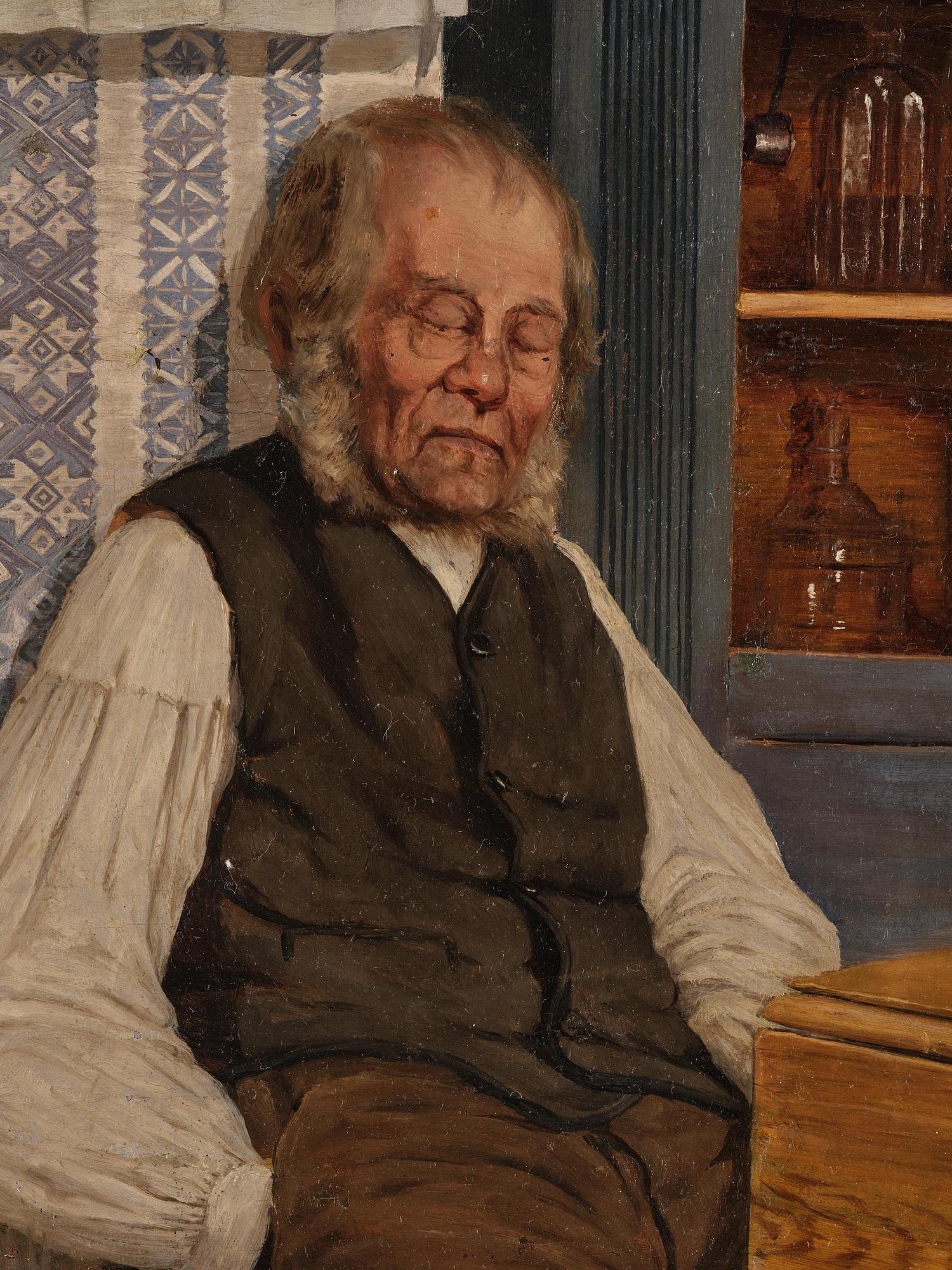
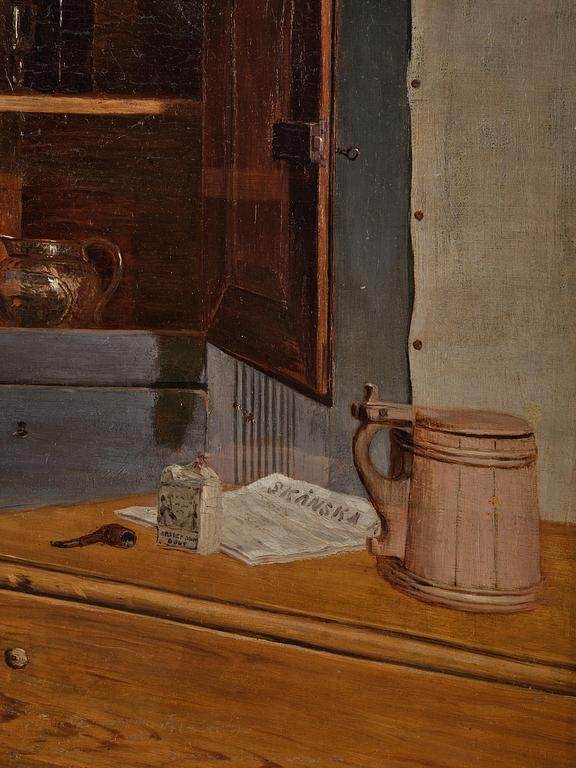
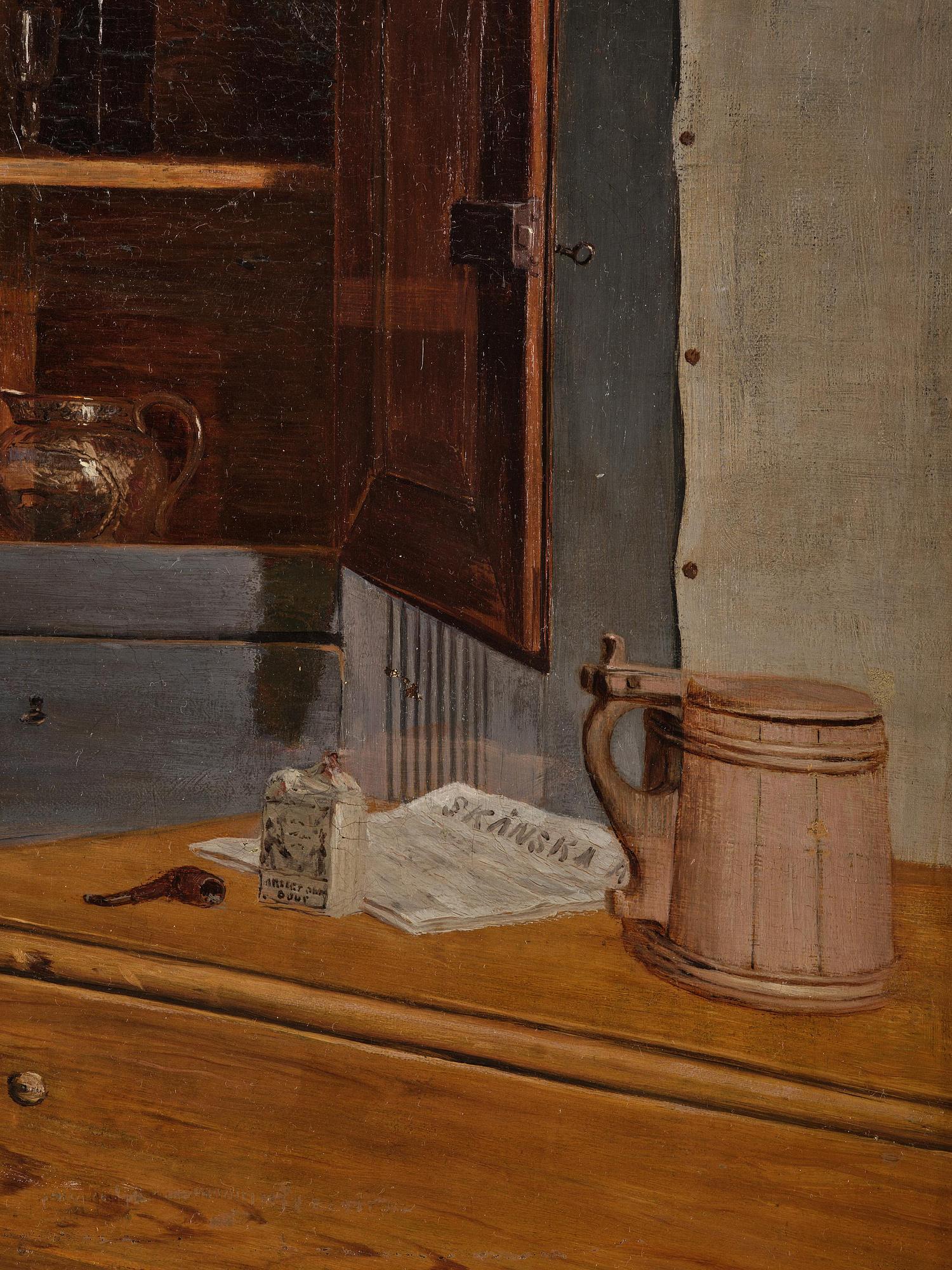
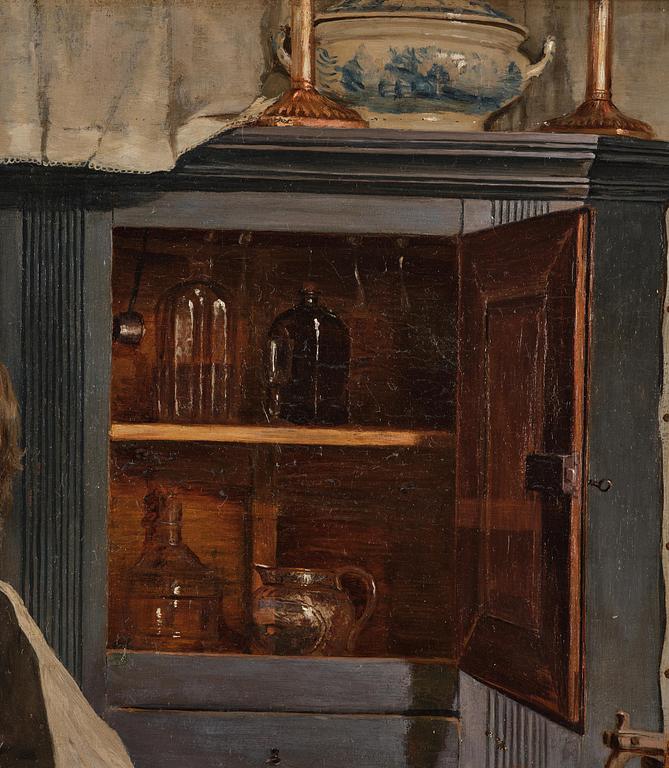
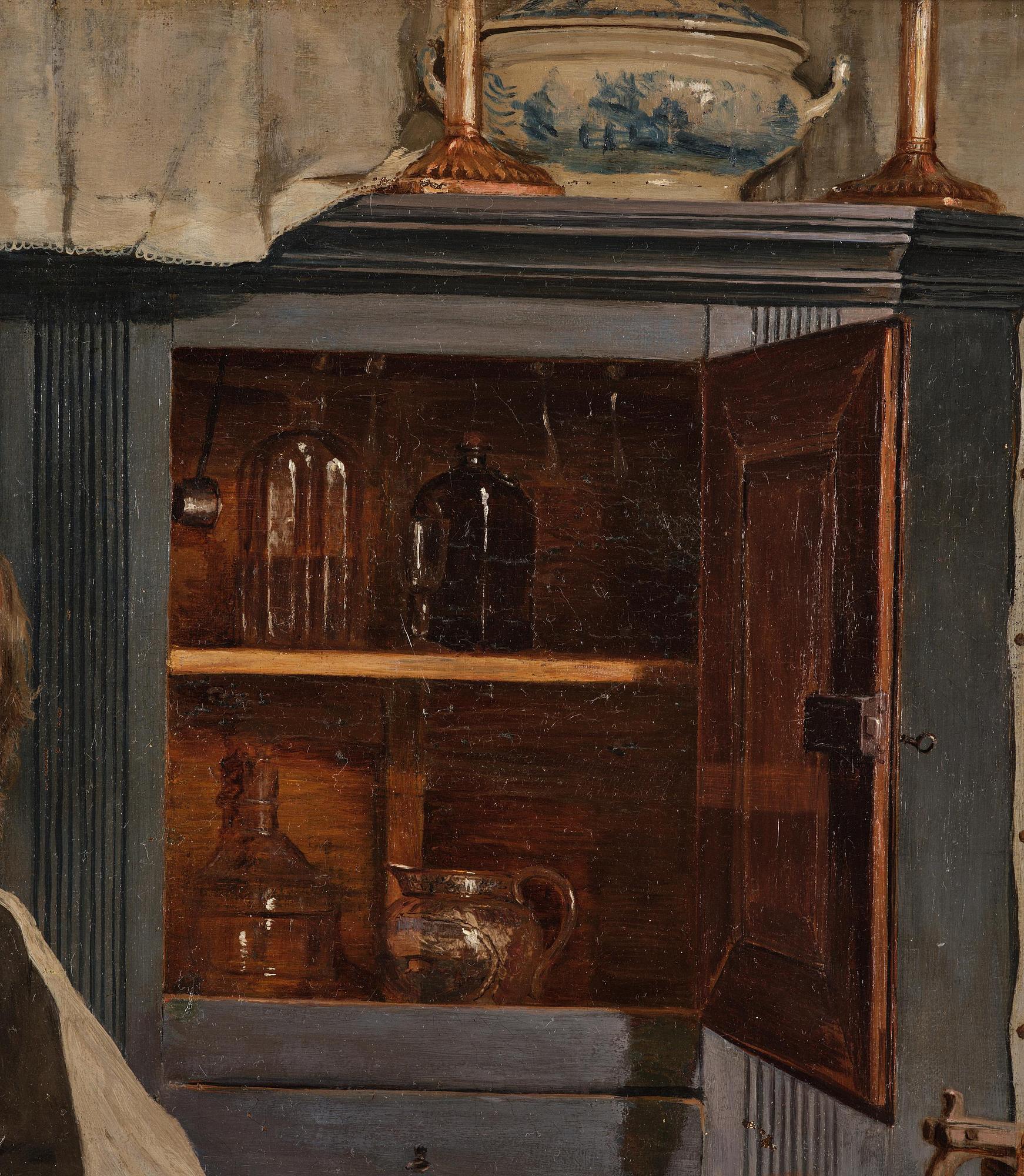
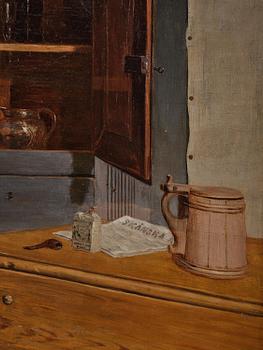
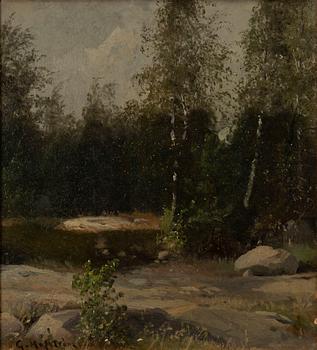
The meticulously rendered textiles, furniture and objects give the painting undeniable cultural and historical value. On the table, Dahlbom has depicted a copy of "Skånska Posten", a newspaper published in Kristianstad between 1830 and 1899, anchoring the interior in the region where he grew up and worked for much of his life. Although Dahlbom painted several other interiors, he is today best known as the painter of the Scania beech forests.
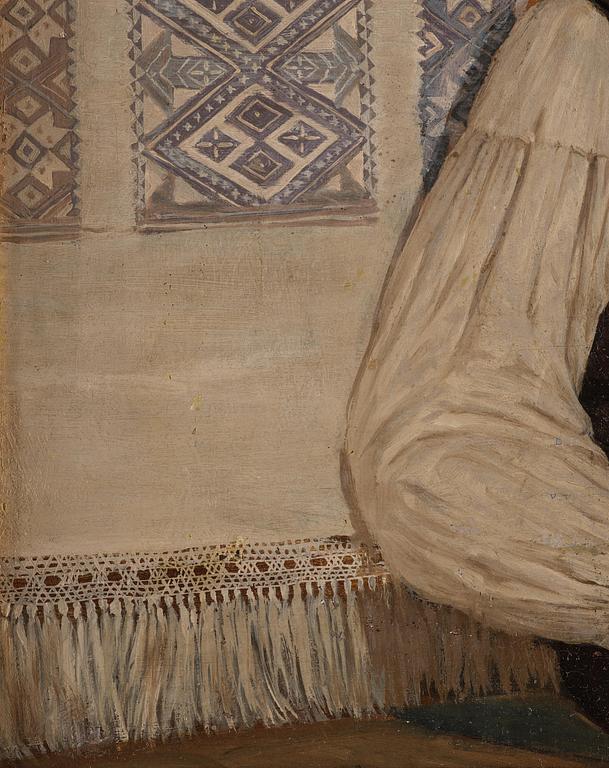
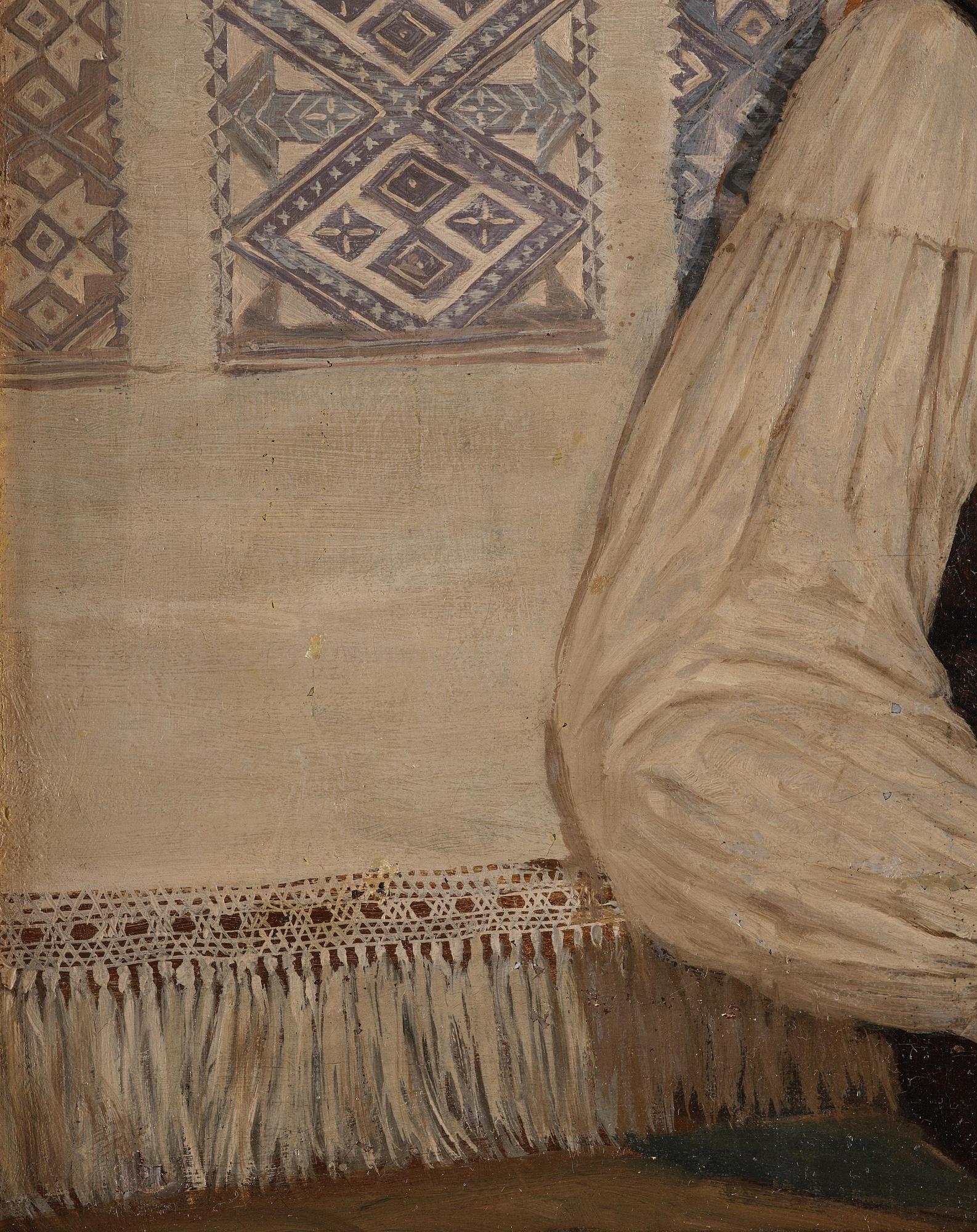
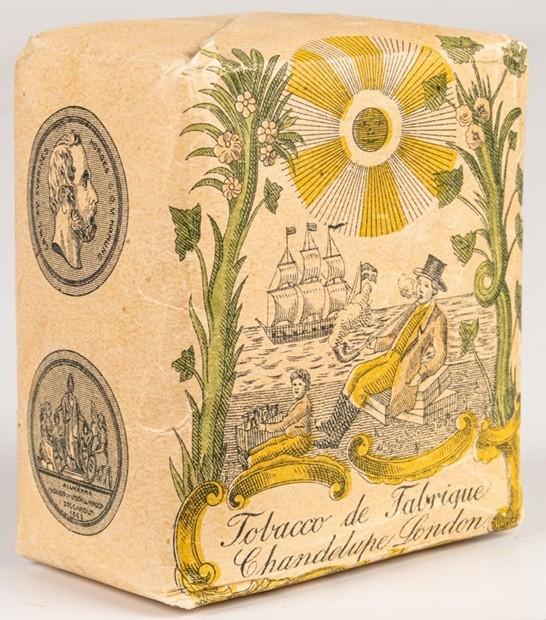
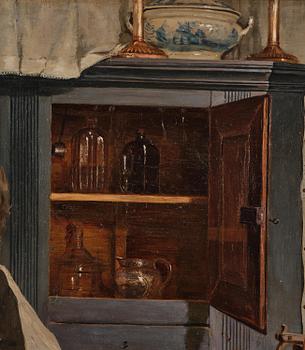
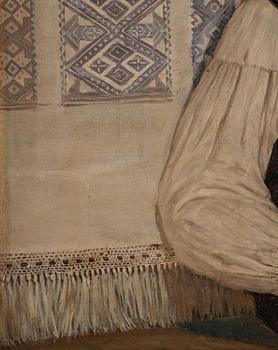
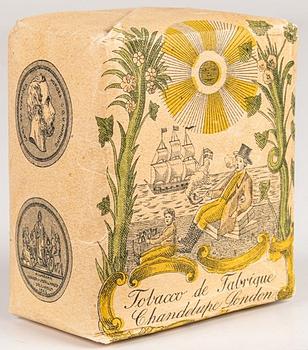
The painting depicts an “all-purpose room”, the only room in the Scanian farmhouses to be heated during the winter. Dahlbom has meticulously portrayed the various objects that fill part of the room. The finely rendered textile affixed to the wall is a drättaduk, a traditional woven wall hanging. On festive occasions, it was customary in northernmost Scania, with its rich textile tradition, to decorate the more prosperous peasant homes with decorative painted panels or woven textiles made using various techniques. The tobacco container placed beside the pipe on the table is probably of the Chandelupe brand (see fig.).
Born in Lund and orphaned at an early age, Dahlbom found a home with his sister Ida Ulrika, who, at the age of seventeen in 1866, married J. H. Hägglund, later vicar of V. Karup and a Doctor of Theology. The artistic impulse, already apparent in the fine and detailed drawings of Nordic insects made by his father, a professor of entomology, emerged early in his son Vilhelm and his elder brother Johan Teofil. During his school years at the Cathedral School in Lund, Dahlbom was taught drawing by the renowned landscape painter and academic drawing instructor Axel Hj. Lindquist, whose atmospheric beech forest interiors had a decisive influence on his later choice of subjects. He soon abandoned his studies for brush and palette and travelled with his brother Johan Teofil to Paris, where, between 1874 and 1877, he sought to realise his artistic ambitions under freer conditions than those offered by the Royal Academy. In Paris, he re-established contact with Carl Fredrik Hill, also the son of a professor from Lund.
Dahlbom realised that he needed a more thorough education, and in 1877 he returned home and became a pupil of Edvard Perséus, a former painter’s apprentice from Lund who had opened a highly popular painting school in Stockholm. Both there and at the Royal Academy, where Dahlbom continued his studies from 1878 to 1882, he became acquainted with several of the leading figures of the Swedish artistic breakthrough. August Strindberg was also part of his close circle for a time. Their friendship led to Dahlbom being engaged as an illustrator for Strindberg and Klas Lundin’s "Gamla Stockholm" (1880–82), for which he made a large number of skilfully and conscientiously executed drawings of old houses, architectural details and culturally and historically significant features in the city and its surroundings.
After completing his studies at the Royal Academy, Dahlbom once again embarked on a study tour lasting several years, during which he stayed in Paris, Düsseldorf and Copenhagen. Following his marriage in 1885, he spent some time in Menton and southern Italy. He then gradually made his way home, living for a year in Copenhagen and subsequently in Stockholm, before settling on a farm outside Vänersborg, which he purchased in 1891. The years during which his financially unsuccessful experiment as a farmer lasted placed a considerable constraint on his artistic work. From 1898 to 1901, he had a studio in Gothenburg. During these years he mainly painted coastal landscapes and marine scenes, as well as several church commissions, including the altarpiece and ceiling paintings in Sätila Church in Västergötland and the altarpiece in Sillerud Church in Värmland.
In 1904, the farm was sold and the family moved to Strängnäs, where they lived until 1918, when they finally returned to Scania. The artist then made his home in Snogeröd, by Lake Ringsjön, where he remained until his death in 1928.
For condition report contact specialist
What will the transport cost?