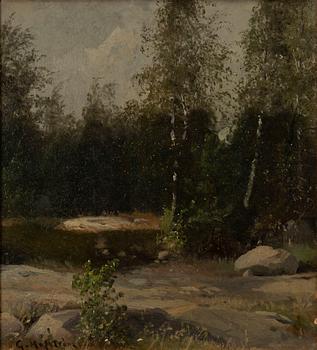
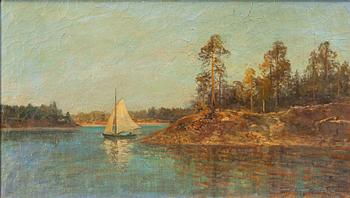
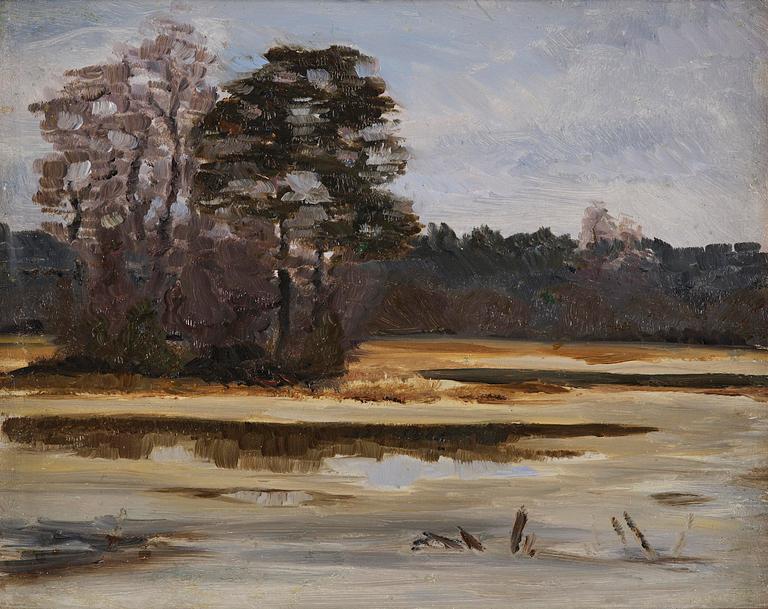
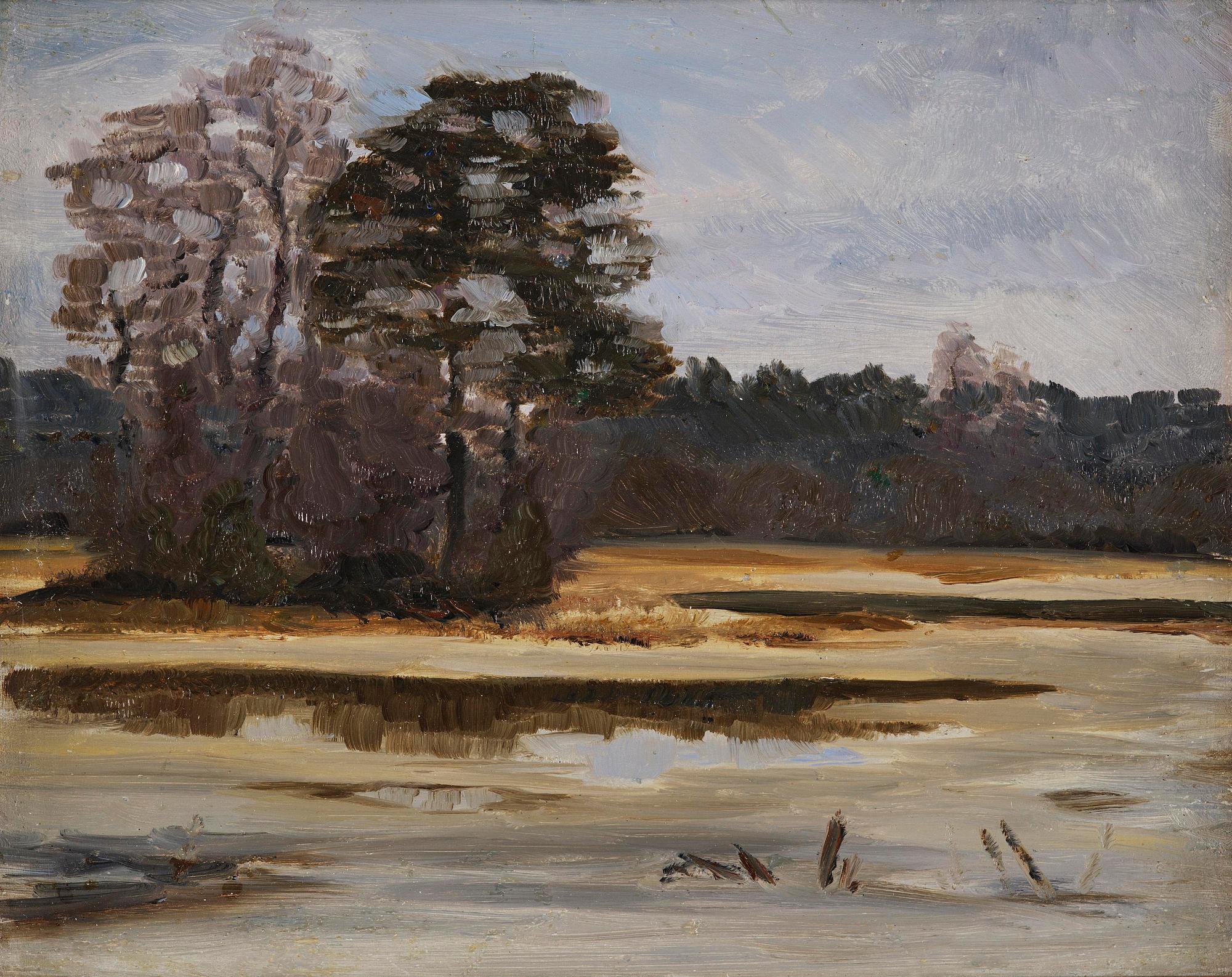
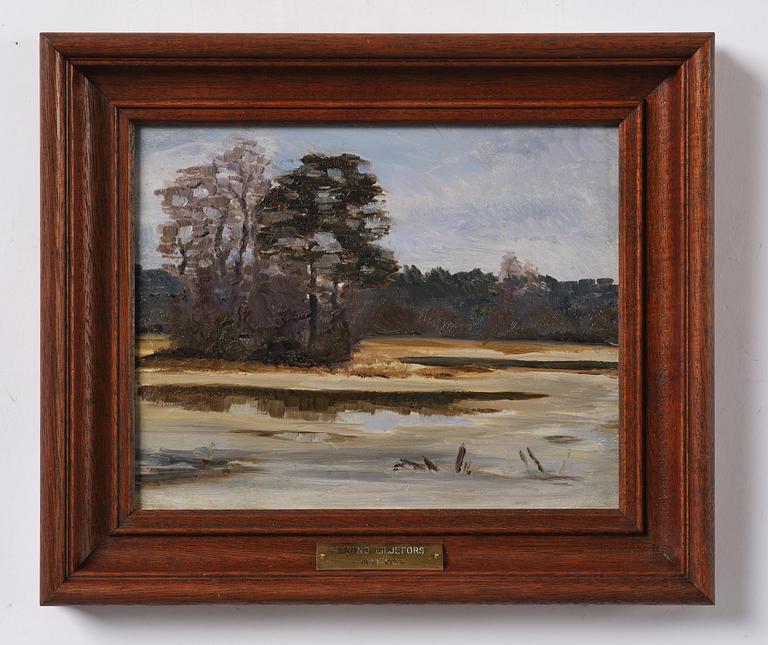
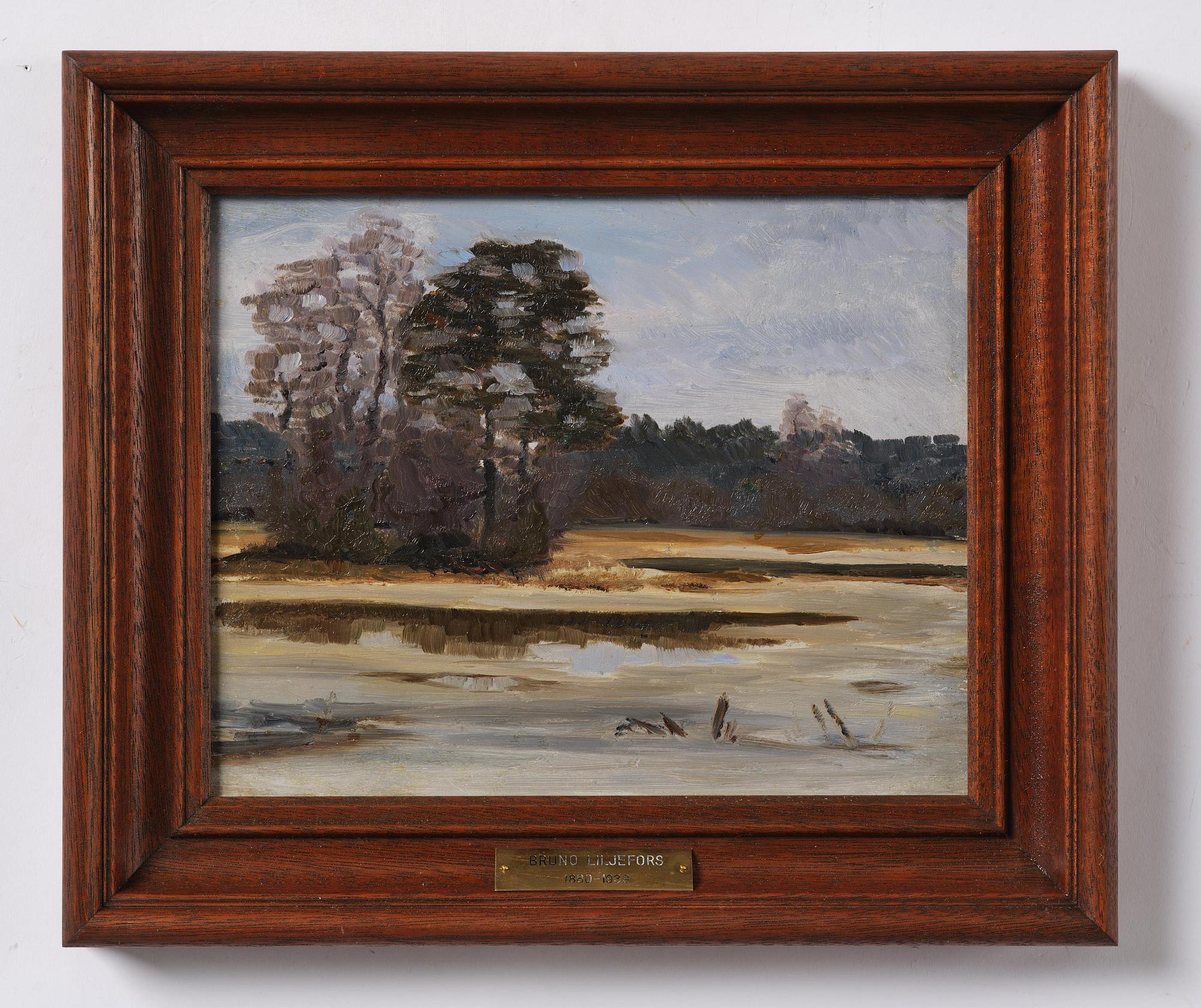
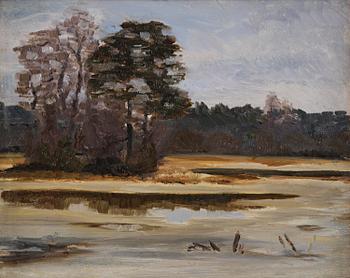
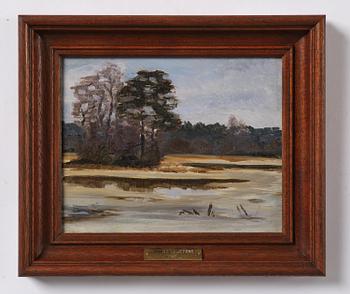
Bruno Liljefors (Sweden, 1860-1939) Seascape with Trees Reflected in Water
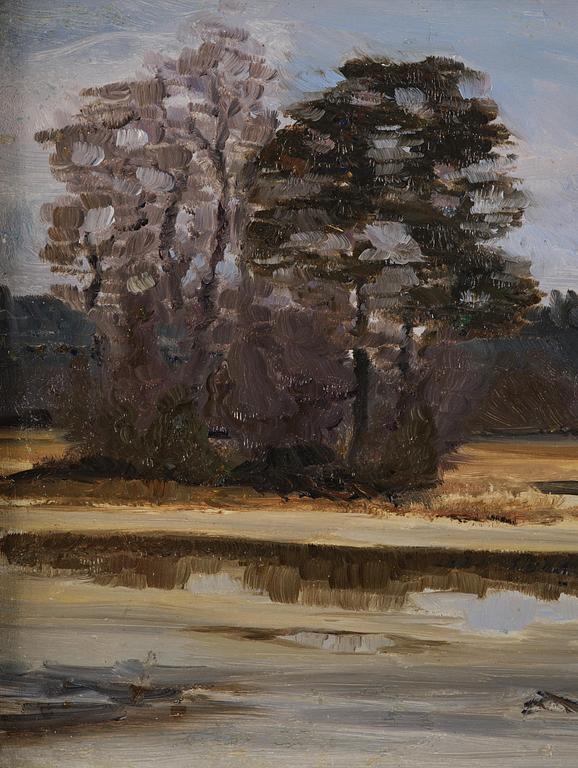
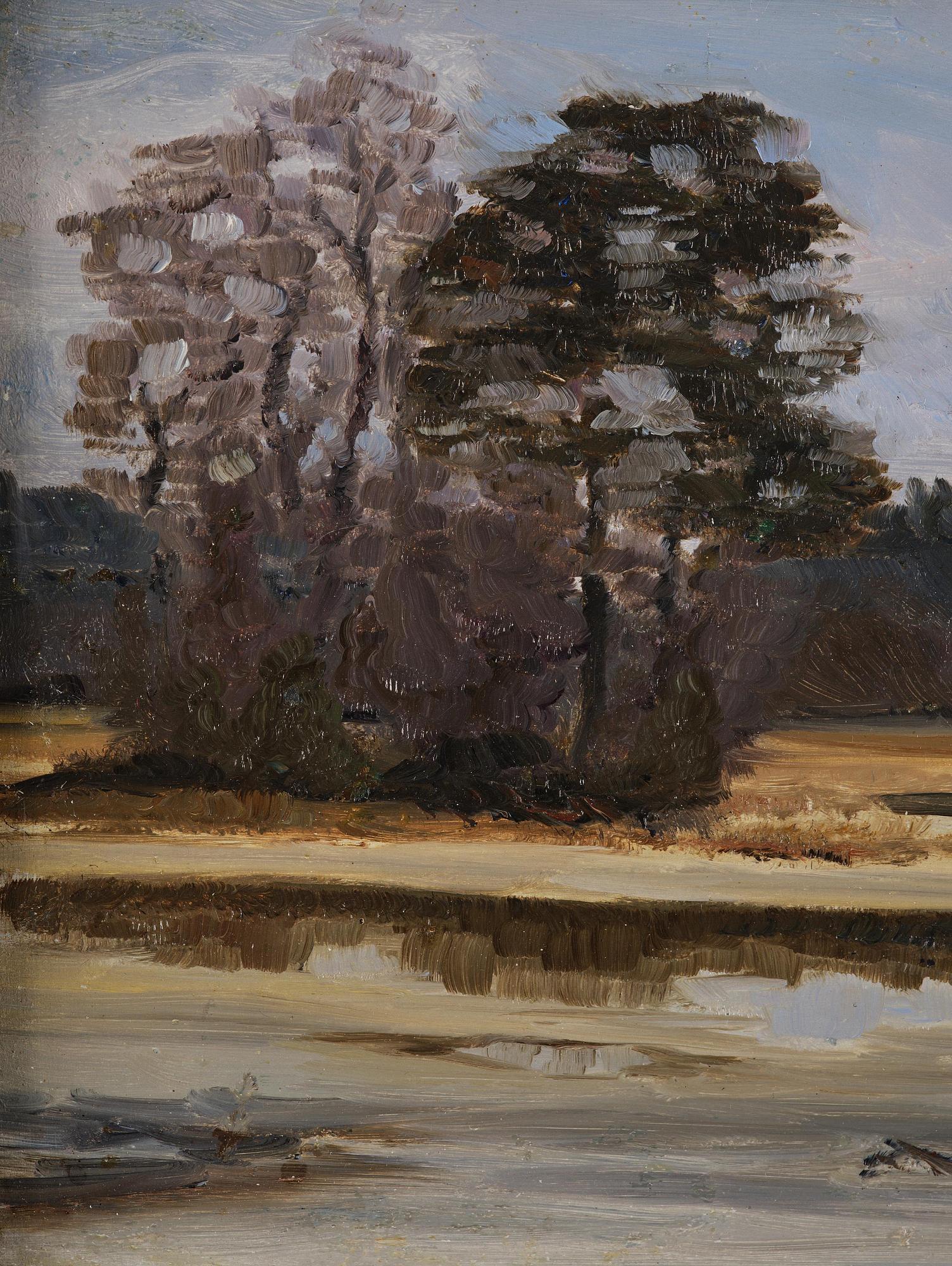
Seascape with Trees Reflected in Water
Oil on panel 28 x 22 cm.
Provenance
(Possibly) The artist’s estate.
Literature
(Possibly) Fredrik Sjöberg, “Bruno Liljefors”, 2025, under “Kvarlåtenskapen”, p. 374, no. 641 “Landskapsstudie 22 x 28 cm.”
More information
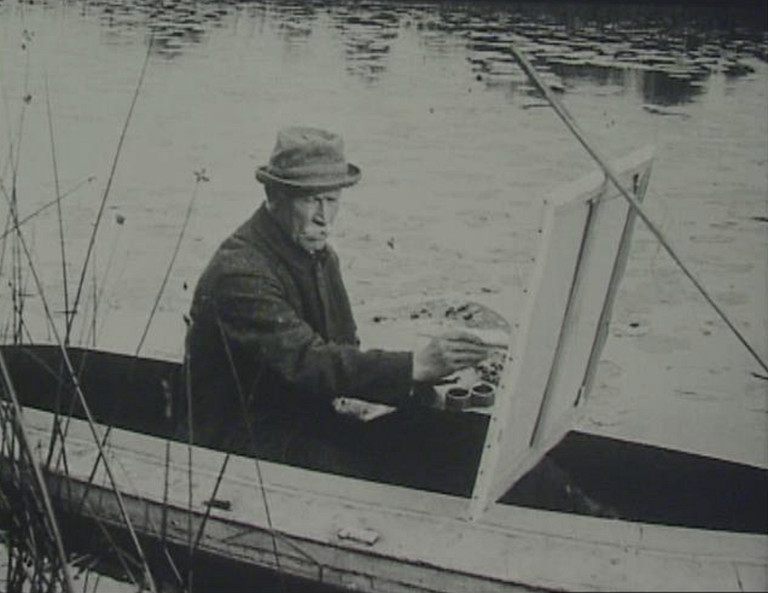
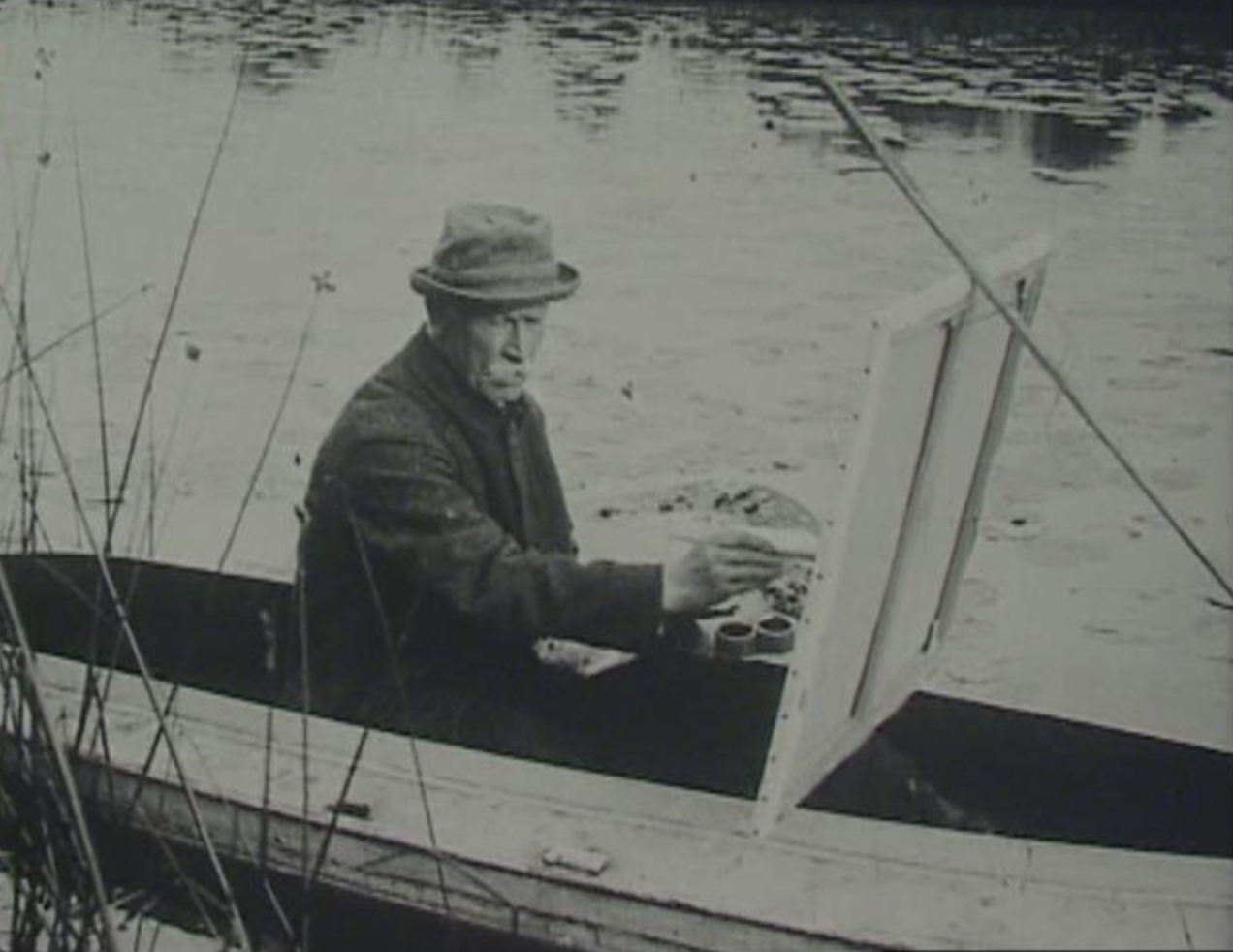
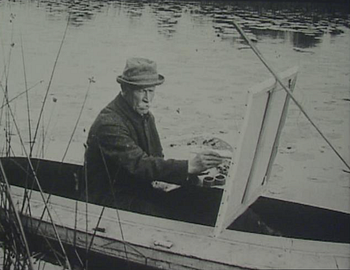
In 1917, Liljefors moved to Österby bruk in northern Uppland, where he rented a wing of the manor house. He established two studios – one by the manor pond and another at Täppudden on Lake Dannemora, approximately three kilometres west of Österby. He often painted the landscapes he created during this period while seated in his canoe. The subject of the present work is taken from Lake Dannemora. During the nineteenth century, the reflections of trees in water became a motif that attracted many artists. This was connected to the emergence of photography, which enabled artists to study the fleeting reflections on the surface of the water. As early as 1841–42, the British photographer William Henry Fox Talbot (1800–1877) took his famous photograph “Winter Trees Reflected in a Pond”.
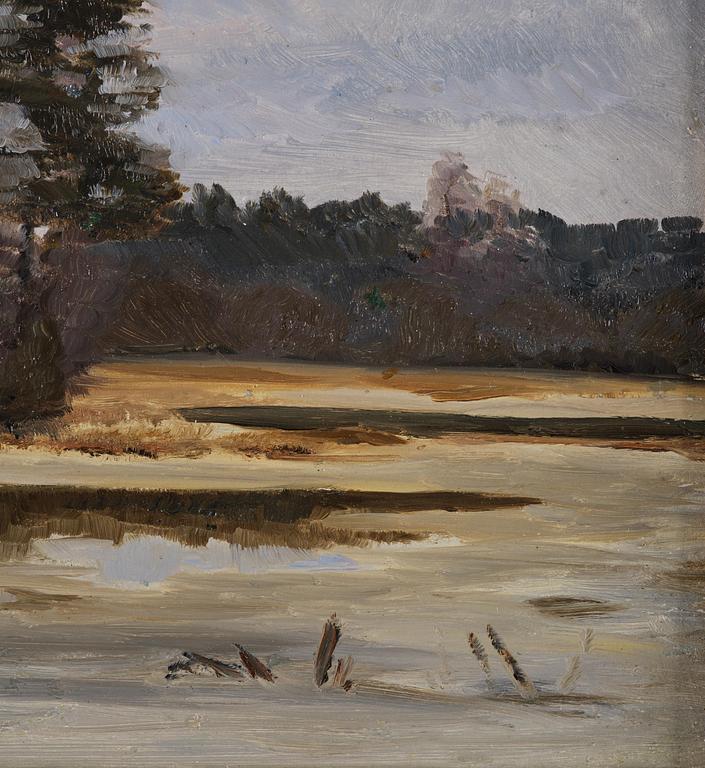
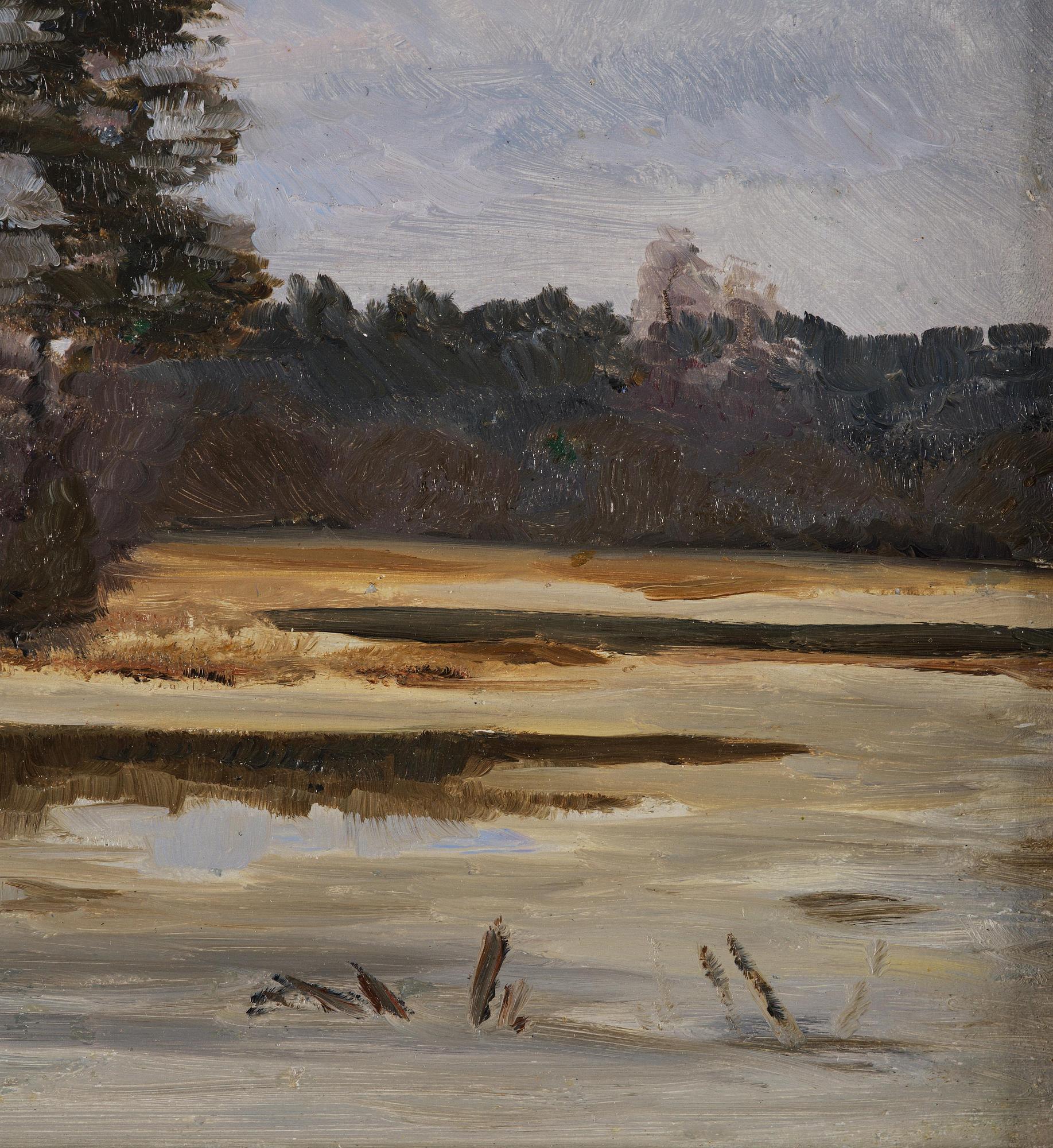
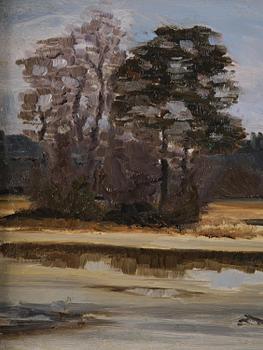
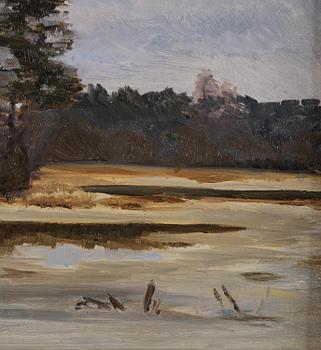
The water and surface vegetation in the present painting are rendered with broad, sweeping brushstrokes, highlighting the surrounding landscape as the principal subject of the work, which is executed in greater detail. The reflections of the trees on the surface of the water are almost abstract and largely unrelated to the trees’ actual forms. In order to enhance the sense of depth in the image, Liljefors has composed the watercourse as a zigzag line leading the viewer’s eye into the picture.
Liljefors rarely signed paintings that he kept for himself or gave as gifts to family members or close acquaintances.
More about Bruno Liljefors
Bruno Liljefors is the Swedish artist best known for his nature and animal motifs, especially in dramatic situations. Liljefors started with studies at the Academy of Arts in 1879, and continued 1882 in Düsseldorf where the studies revolved around animal painting. The journey then continued to Venice, Rome, Naples, Paris and Grez. Once back in Sweden, he began to draw and paint animals, especially cats and small birds, from the beginning in intimate interaction with nature. He then moved on to broader depictions of wild animals and nature, of seascapes with seabirds and of dramatic scenes of battles between birds. Liljefors is known as our country's foremost animal painter with a large production. Liljefors depicted, in contrast to the "idyllic" animal painting, the animals everyday life with a focus on movement, anatomy and their adaptation to the landscape. This is where the greatness of his painting lies, in the ability to show the animals in their proper environment. He has achieved this by hunting and observing. Well-known works of art are the paintings "Rävfamilj" (1886) and "Havsörnar" (1897), as well as the sculpture "Lek" (1930) at Stockholm Stadium. Liljefors is mainly represented at the National Museum, Waldemarsudde and the Thielska gallery in Stockholm.
Read moreFor condition report contact specialist

What will the transport cost?
Others have also viewed