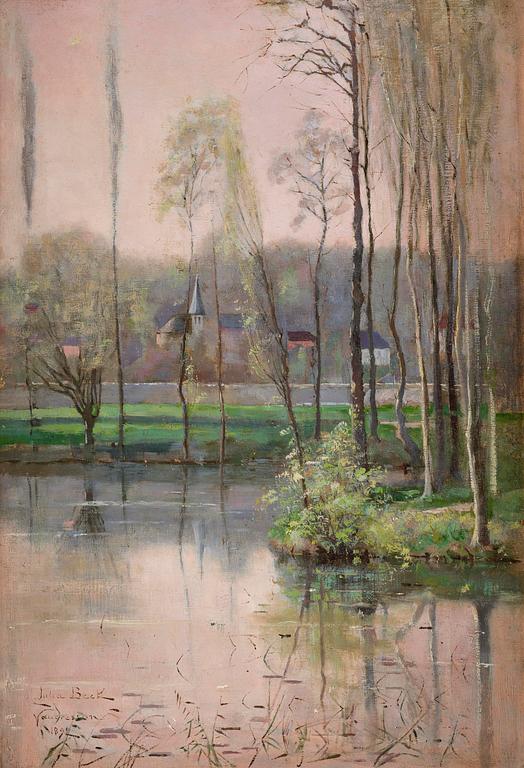
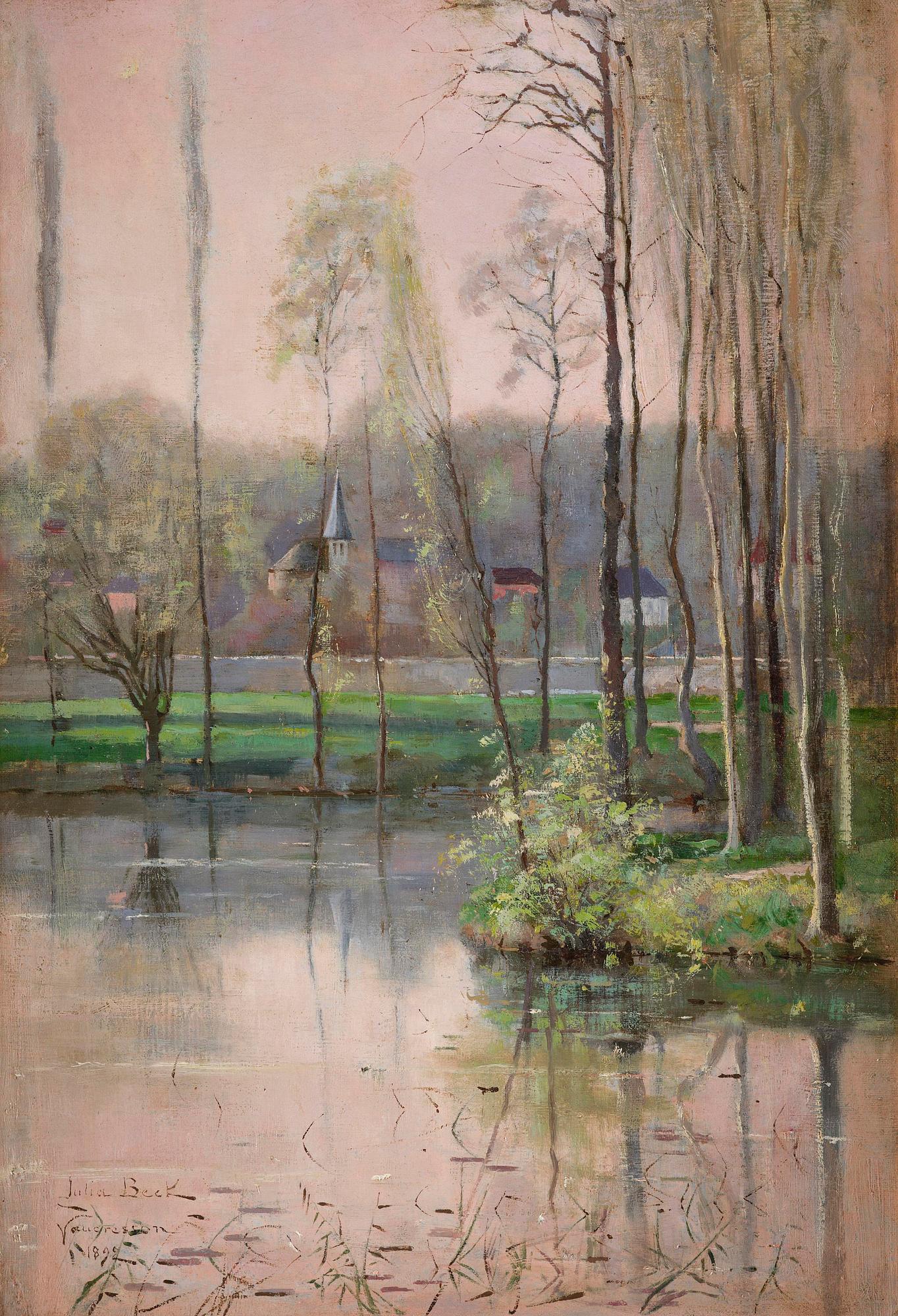
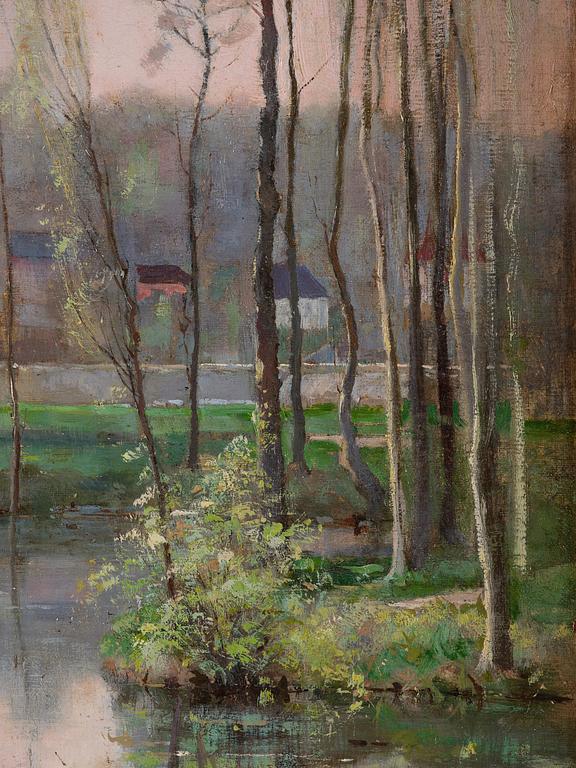
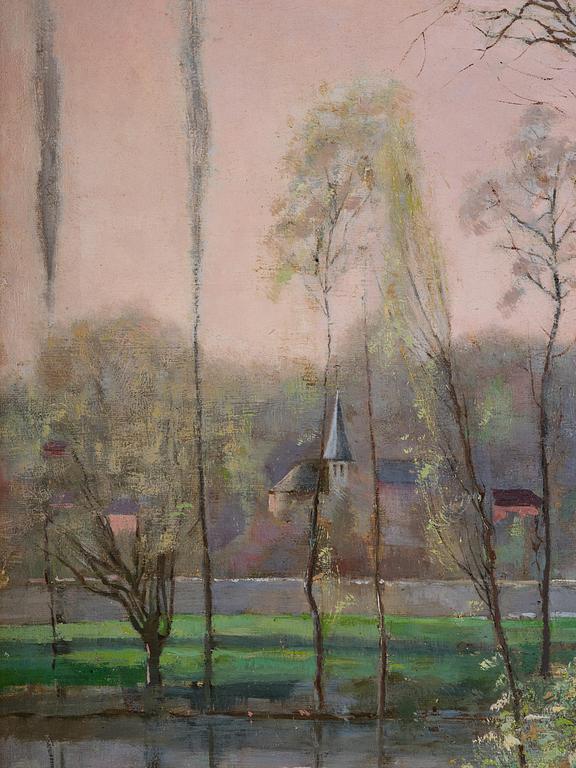
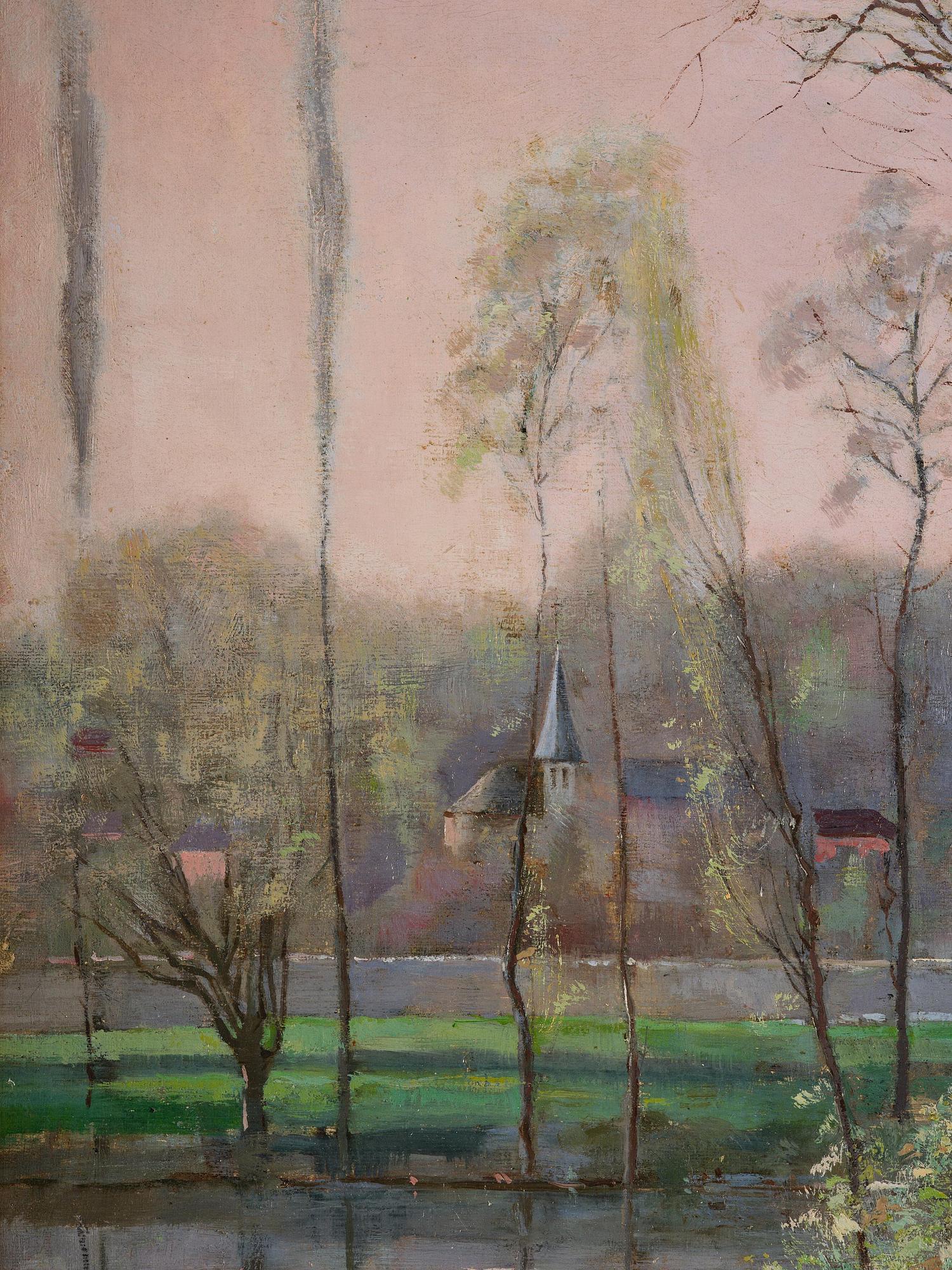
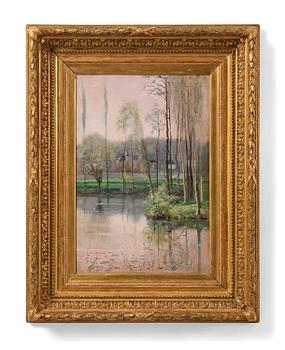
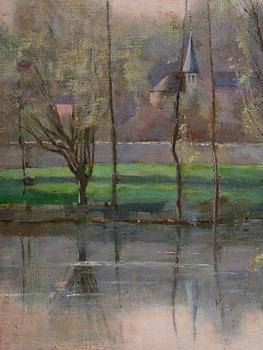
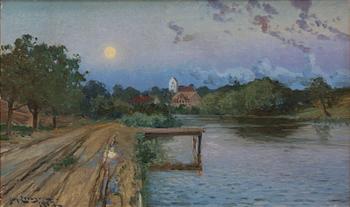
Julia Beck (Sweden, 1853-1935) Étang de La Marche, Vaucresson
Étang de La Marche, Vaucresson
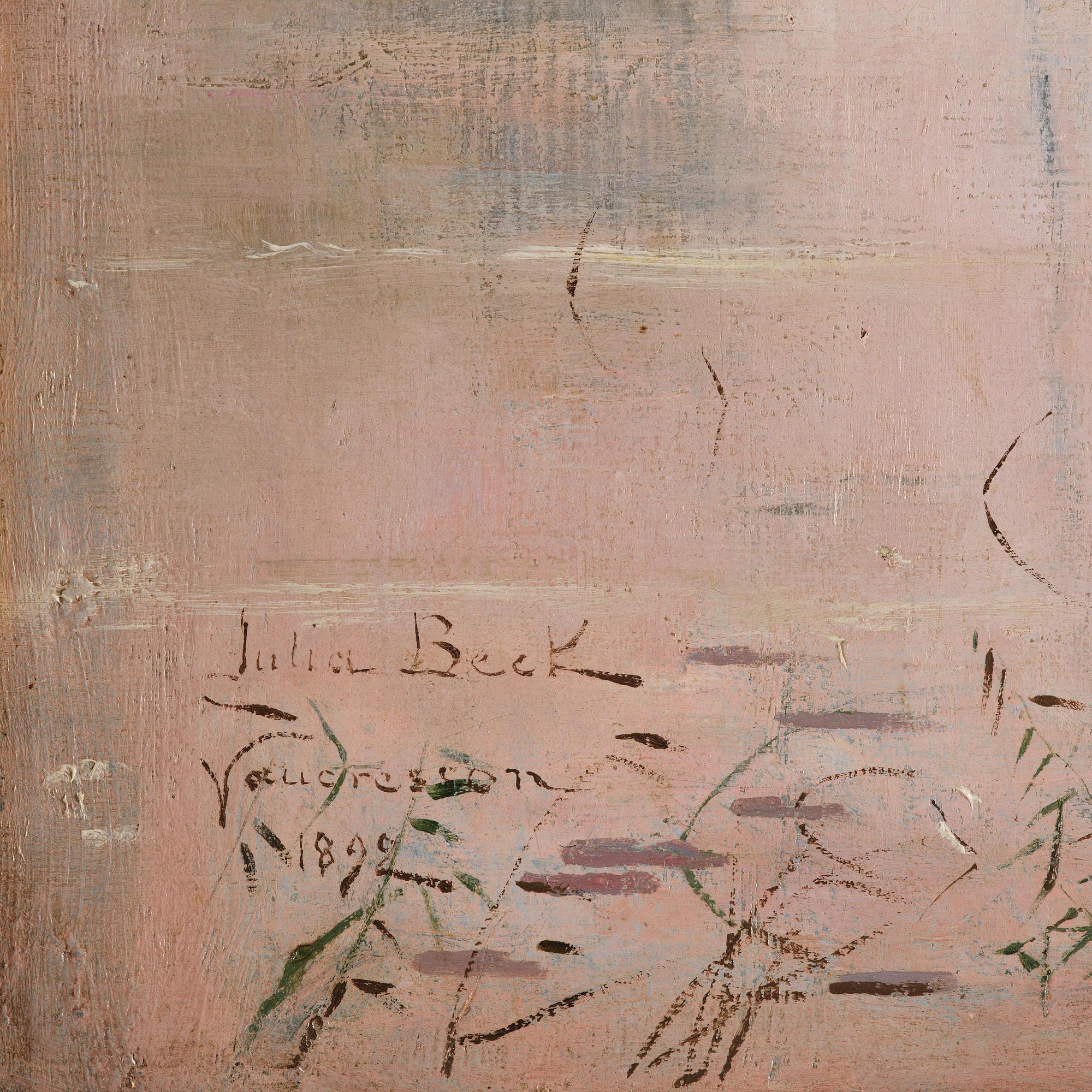
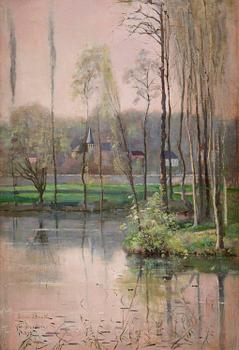
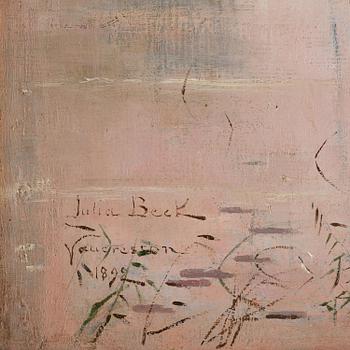
Signed Julia Beck and dated Vaucresson 1892. Oil on canvas, 55.3 x 37.3 cm.
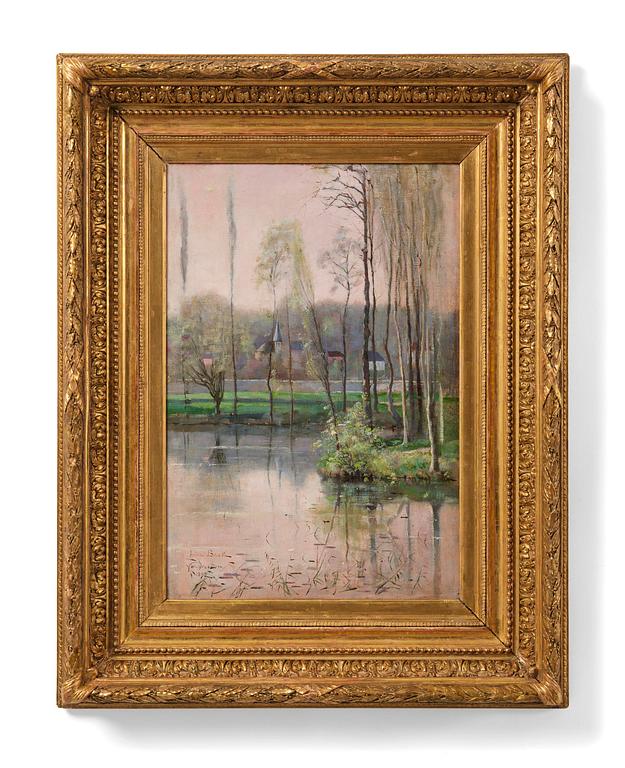
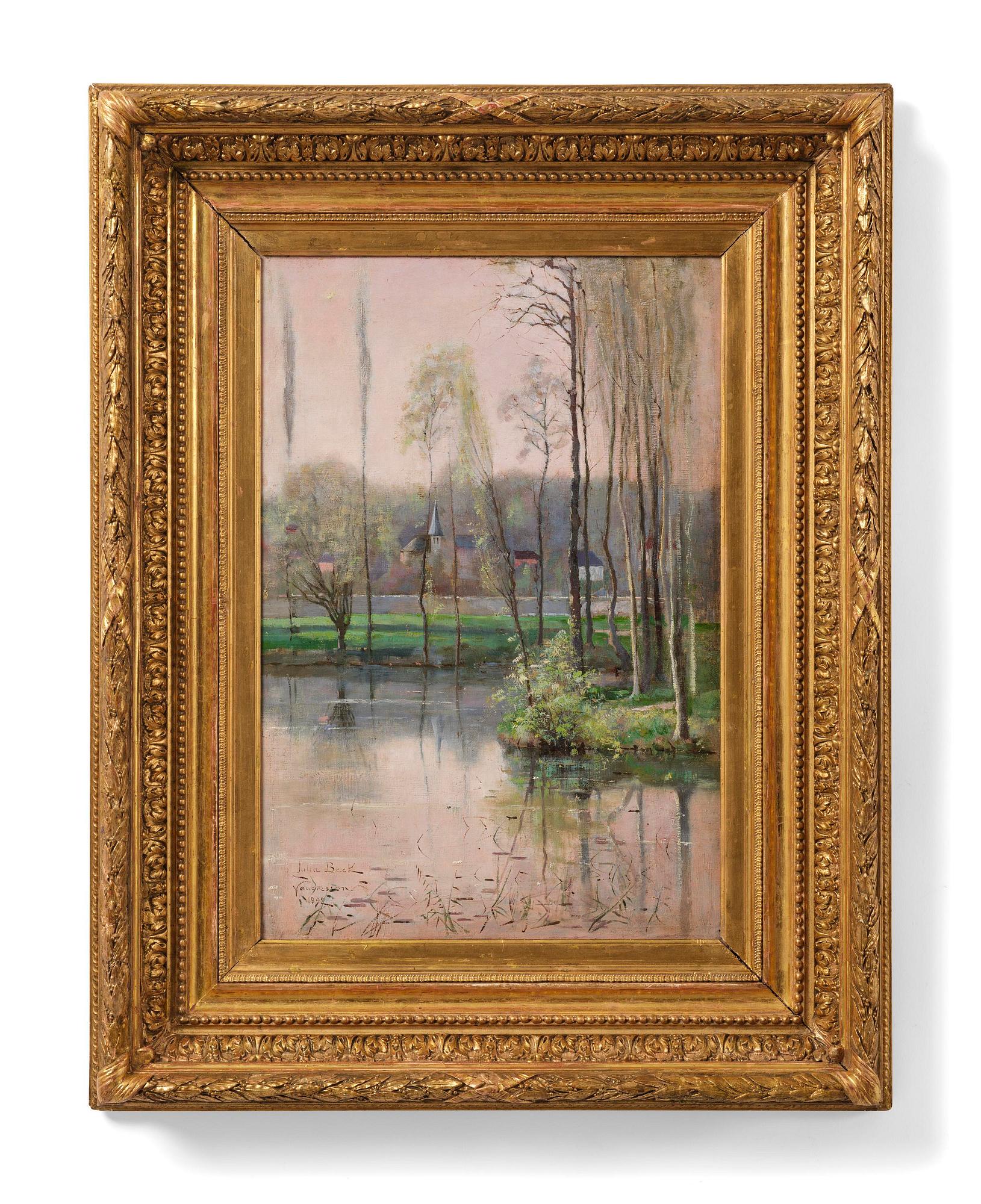
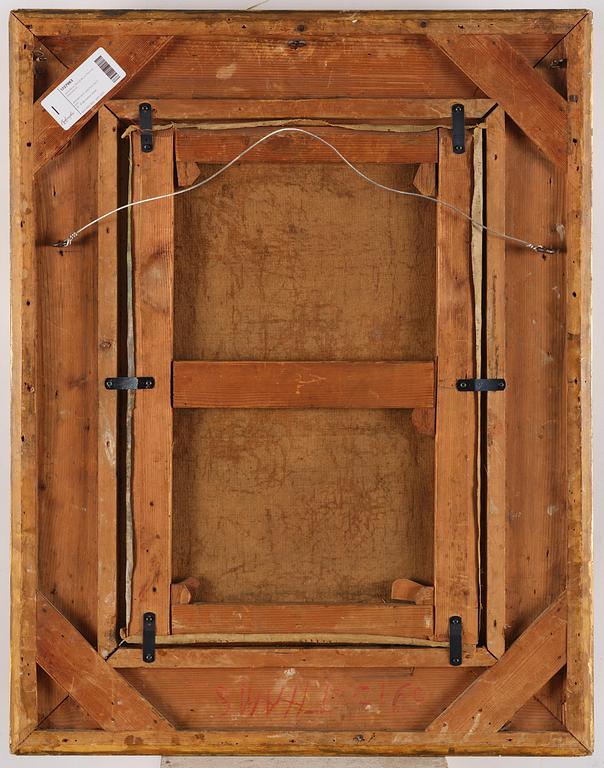
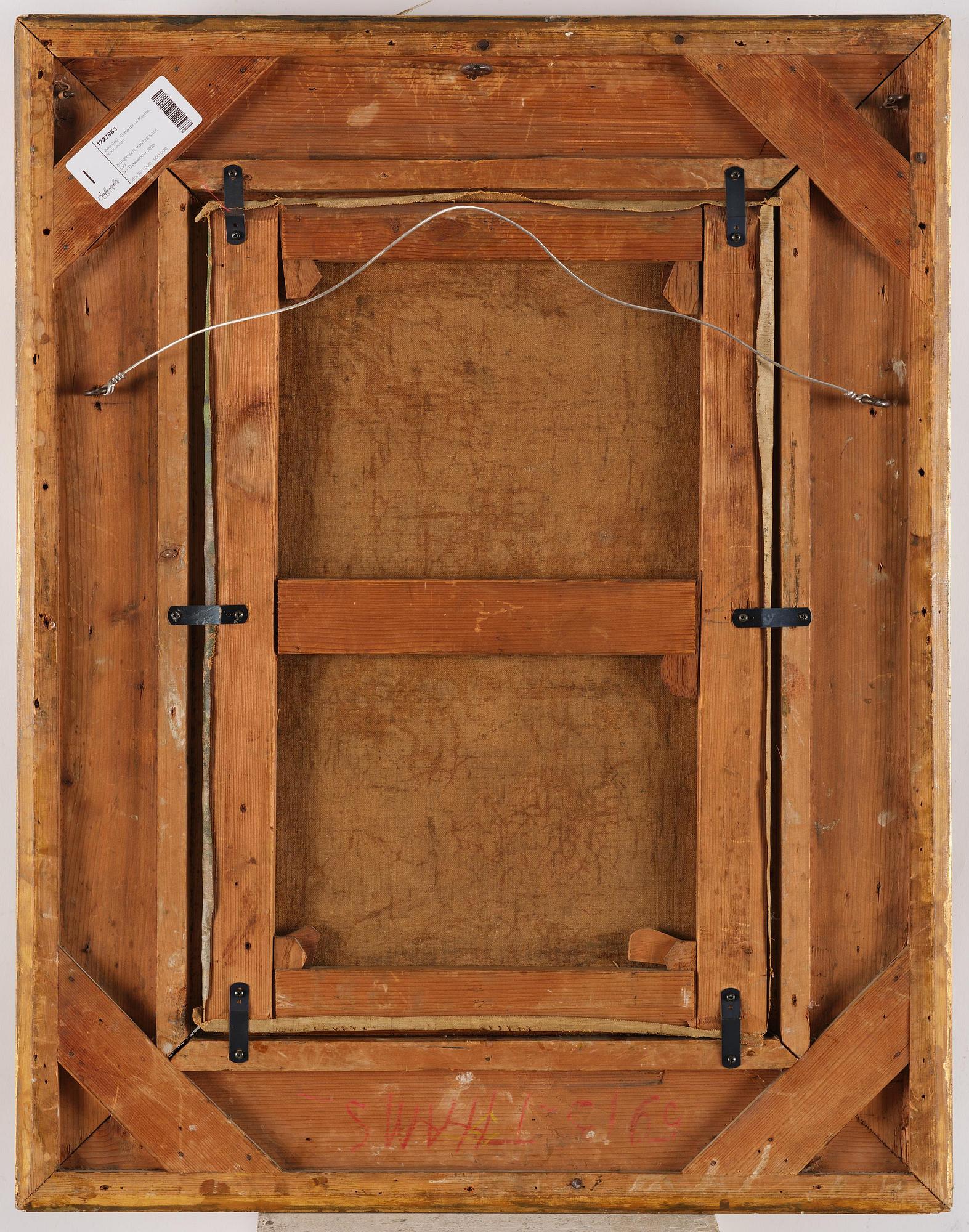
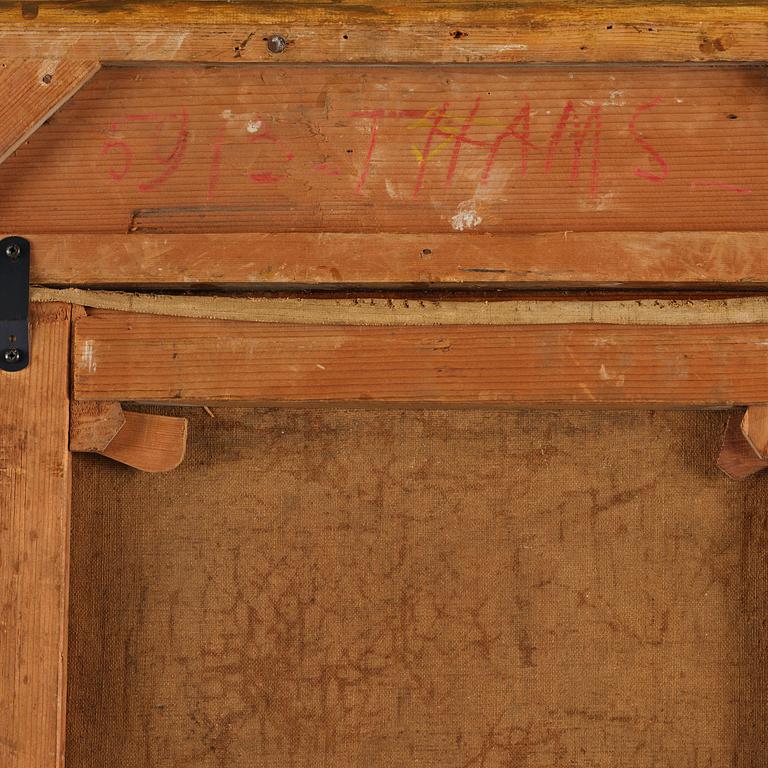
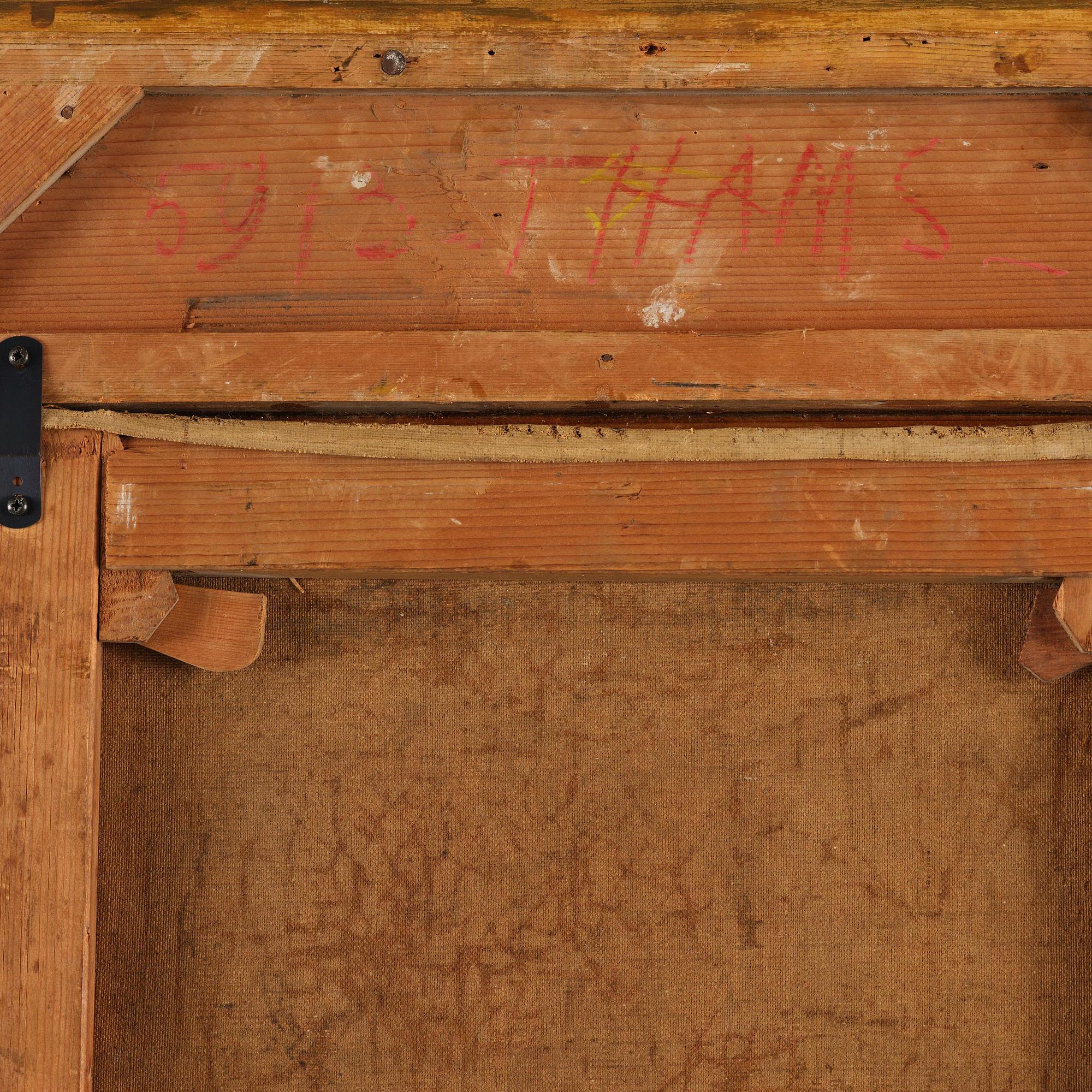
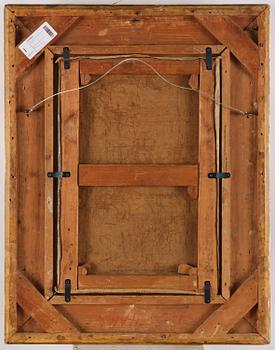
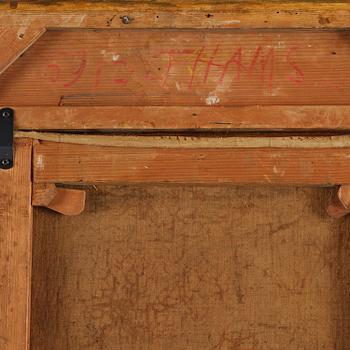
Gilt and ornamented original French frame, verso inscribed “5913 Thams” in red chalk.
Provenance
(Probably) The Norwegian architect and industrialist Christian Thams (1867-1948.
(Probably) His daughter Inger Christine (Vesla), married Christiansen (1925-2024), Paris.
More information
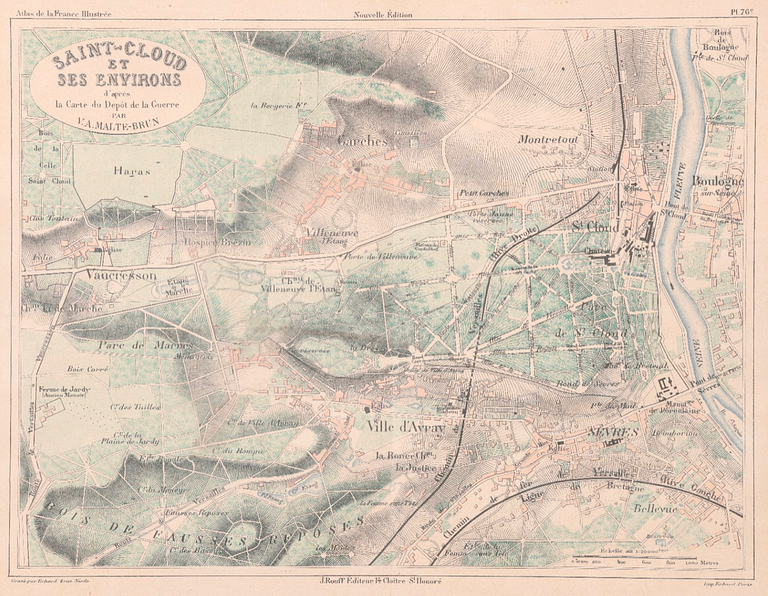
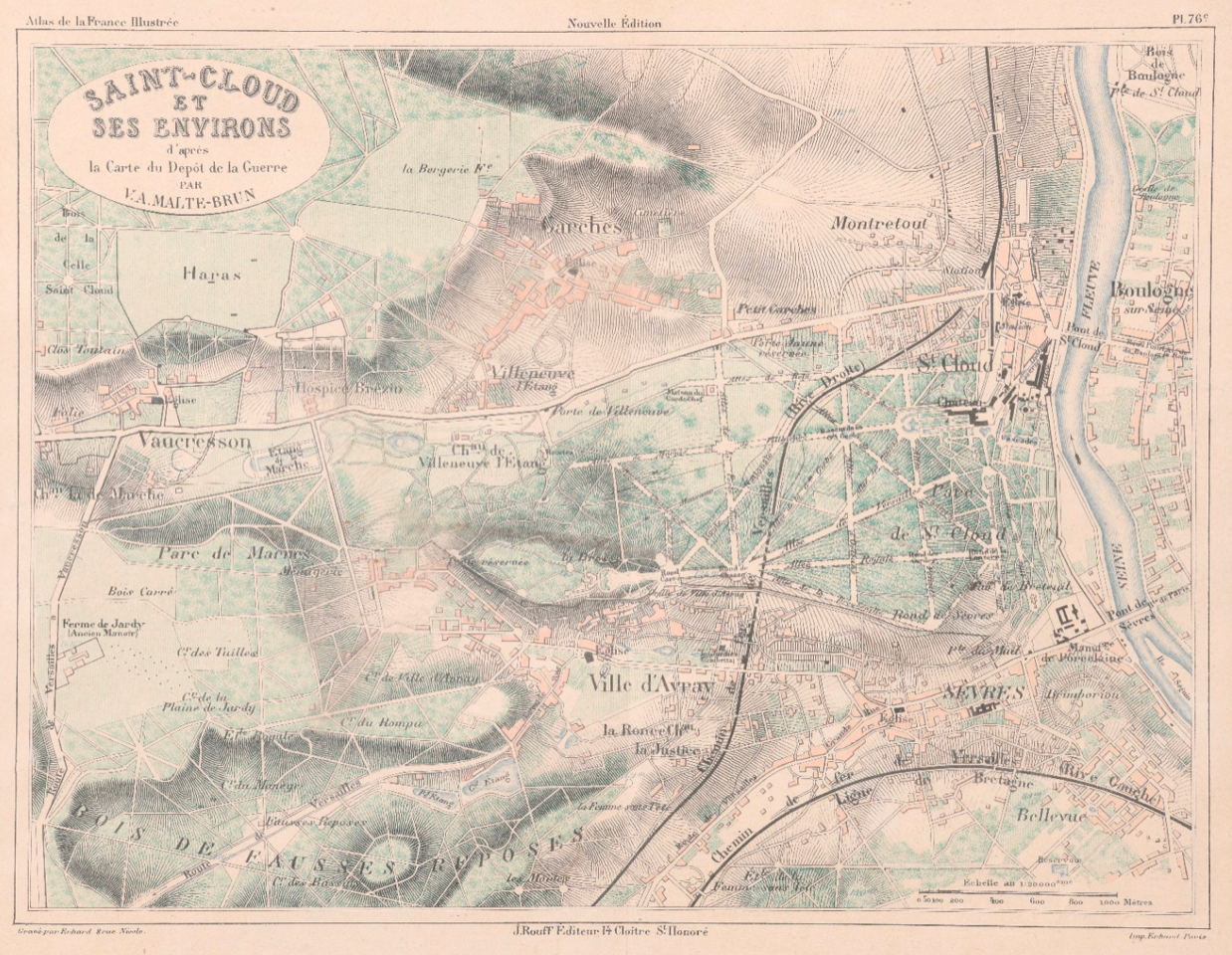
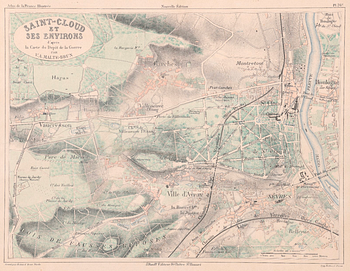
During her first period in France, from 1881 to 1885, Julia Beck worked in Paris and Grez-sur-Loing. After a two-year stay in Sweden, she returned to France in 1887 and settled at Val Saint Matin in Normandy, near Beaumont-le-Roger. In 1889, she moved to Vaucresson, a small town situated between Versailles and Paris, where she lived until her death in 1935. Vaucresson is surrounded by woodland and parkland, including a number of natural ponds. Throughout his life, Jean-Baptiste Camille Corot (1796–1875) regularly visited Vaucresson and painted motifs inspired by the many ponds in the area (see fig.). In 1817, his father had purchased a house beside Étang Neuf in Ville-d’Avray, where the family spent their weekends. Julia Beck greatly admired Corot and owned one of his paintings, which may have contributed to her decision to settle in the area. Its proximity to Paris was surely also an important factor in her choice.
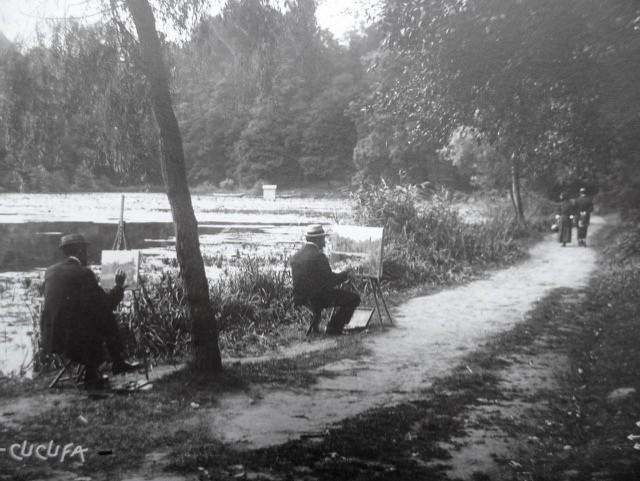
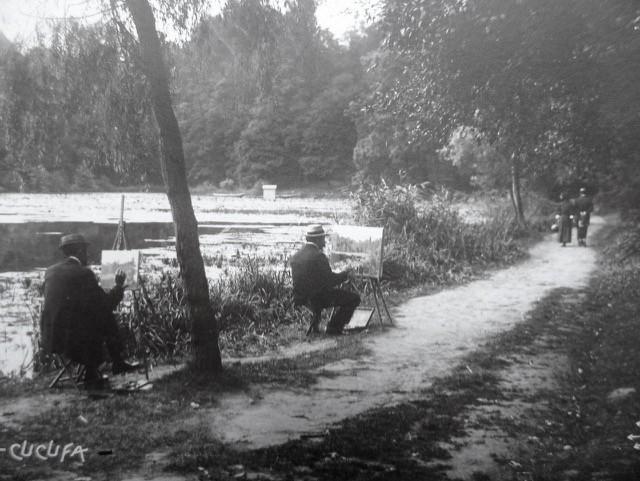
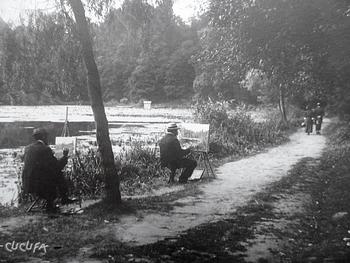
In the surroundings of Vaucresson, Julia Beck found the motifs for which she is perhaps best known today: ponds with shimmering surfaces, often featuring water lilies, in which the surrounding trees and shrubs are reflected. One of her last known paintings, executed in 1931, depicts precisely a section of a water-lily pond. The foregrounds of her paintings are often bordered by foliage and clumps of reeds reminiscent of the Japanese and Chinese calligraphy then in vogue; the elongated formats of her canvases likewise indicate an influence from the East. Étang de La Marche in Vaucresson, Étang de Saint Cucufa in the Forêt de Malmaison, Étang de Villeneuve in Parc de Villeneuve and Étang Neuf, today known as Les Étangs de Corot, in Ville d’Avray were among the ponds from which she drew her motifs. She usually worked in the early morning or late evening. She described “how she would rise early in the morning, properly dressed and wearing sturdy boots, with easel, paint box and umbrella, and set off into nature”.
In 1875, the French lawyer and horticulturist Joseph Bory Latour-Marliac (1830–1911) created a water-lily pond at his home in Le Temple-sur-Lot in Aquitaine: the world’s first artificial water-lily pond, now a museum and nursery. There, Latour-Marliac began experimenting with cross-breeding the European white water lily, Nymphaea alba, with exotic, brightly coloured species. Among other varieties, he imported red water lilies from Lake Fagertärn in Sweden. His hybrids were exhibited at the Exposition Universelle in Paris in 1889, where they caused a sensation. They attracted Claude Monet’s attention, and Latour-Marliac later assisted him in creating the famous water-lily ponds at his home in Giverny. Monet’s first painting featuring water lilies, "Japanese Bridge over a Pond with Water Lilies", was produced in Giverny in 1897. Julia Beck was represented in the Swedish section of the Exposition Universelle with a landscape from Normandy, "La mare aux Saules", which was purchased by the noted man of letters Edmond Haraucourt (1856–1941). The earliest known depiction of water lilies in a body of water is a photograph taken in Barbizon around 1860–65 by the renowned French photographer Eugène Cuvelier (1837–1900). Cuvelier was a close friend of artists working in Barbizon, including Corot, Jean-François Daubigny, Théodore Rousseau and Jean-François Millet, and their respective work went on to influence one another.
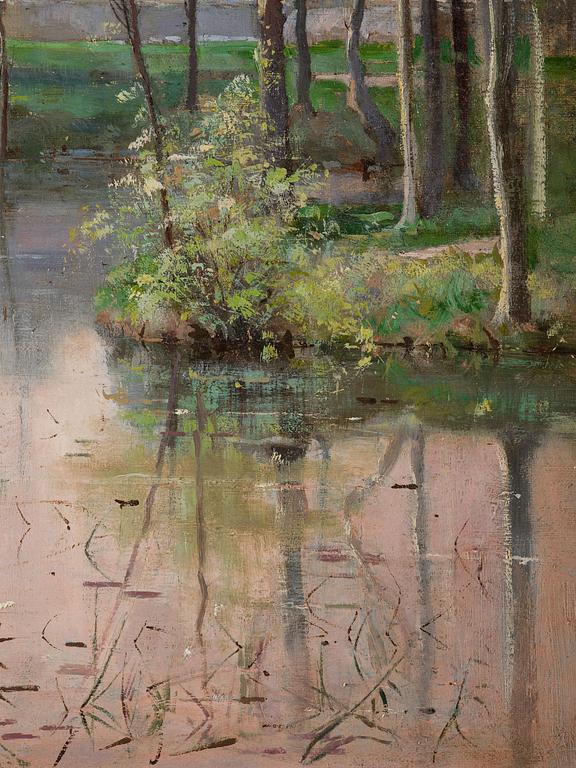
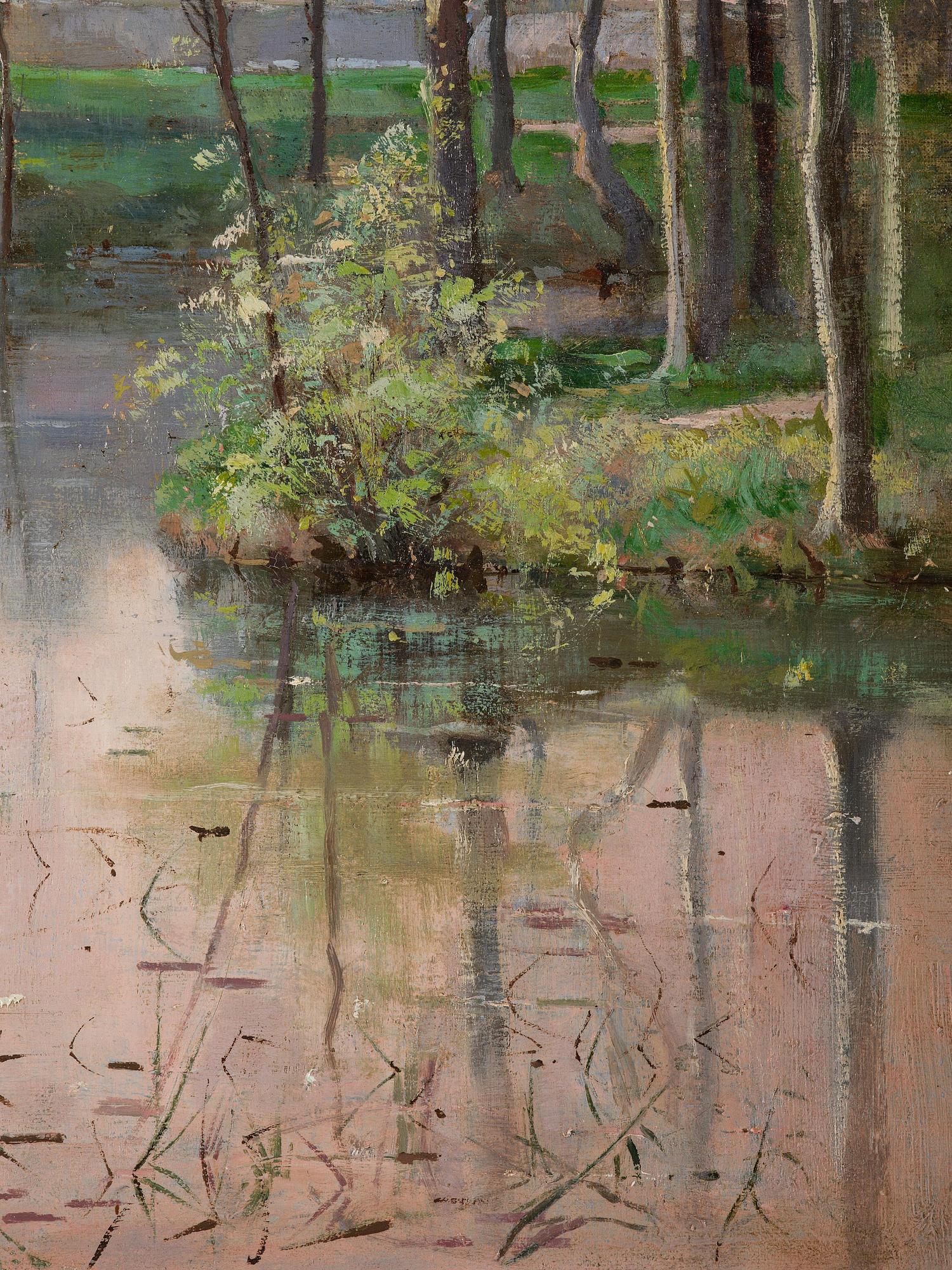
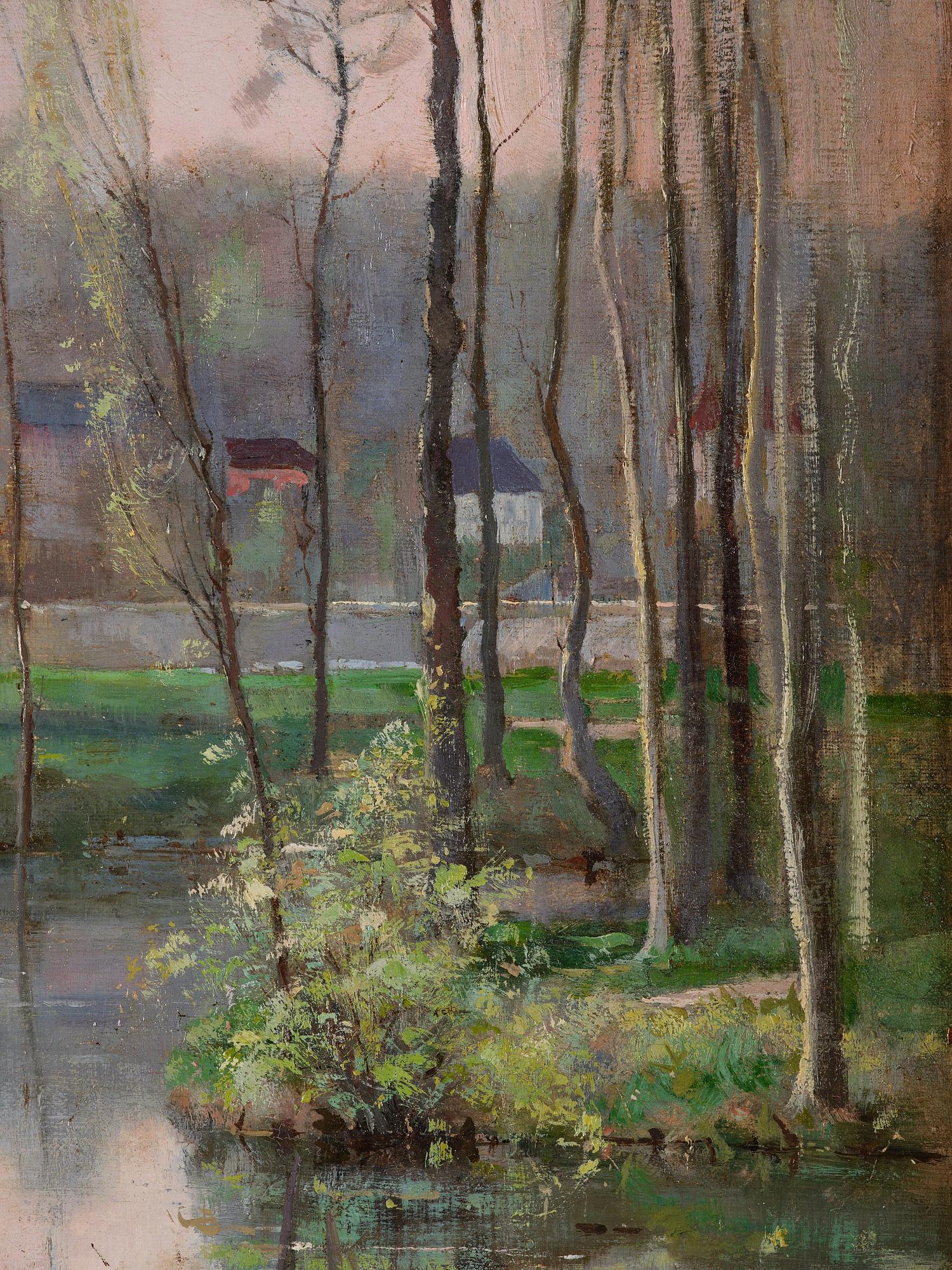
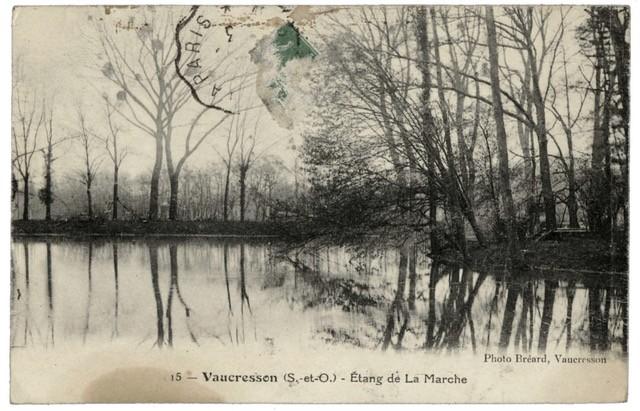
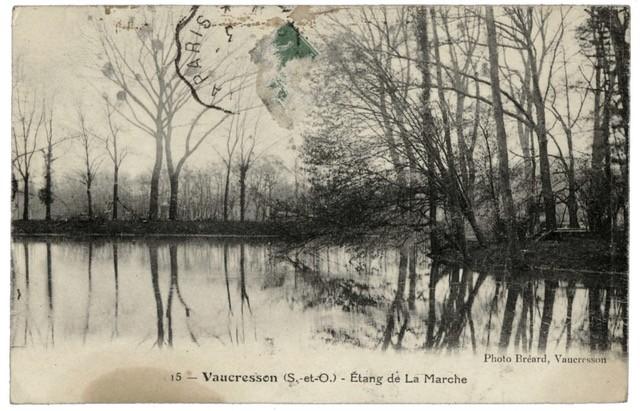
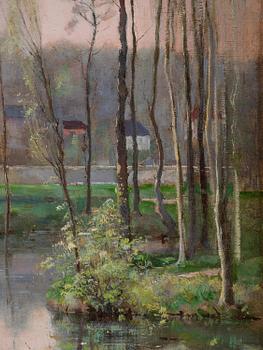
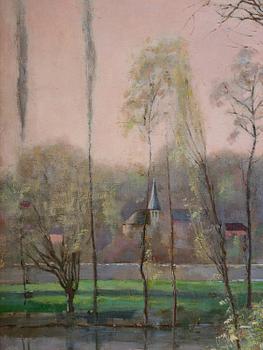
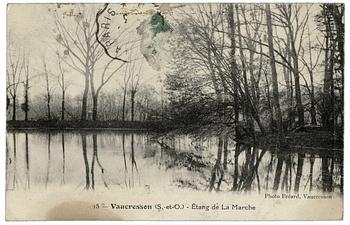
The present painting is the earliest known work by Julia Beck to depict a pond with water lilies. It is a key work in establishing a chronology of her paintings, since all her known depictions of water-lily ponds are undated. The motif is taken from Étang de La Marche, situated on the outskirts of Vaucresson. The view is looking north-west. The delicate greenery on the leaves of the trees and shrubs indicates that the painting was executed in spring.
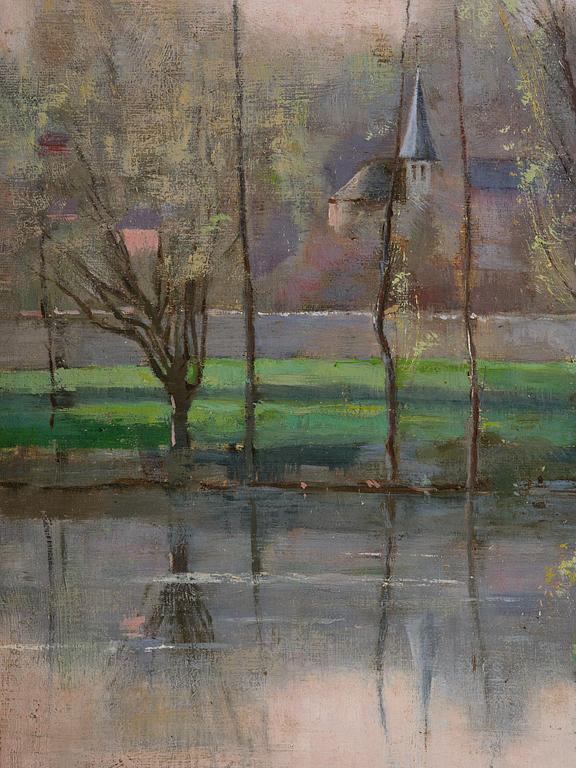
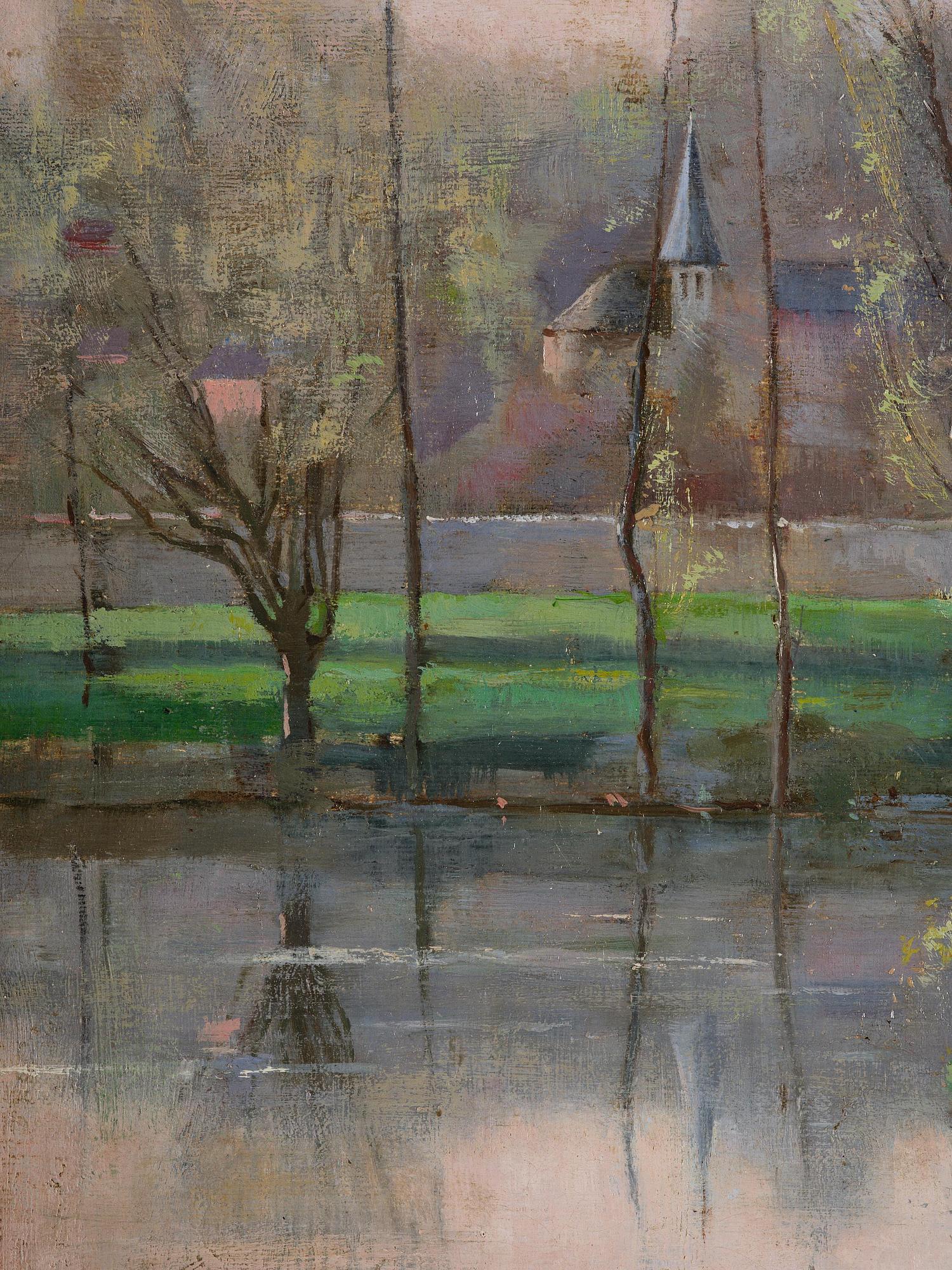
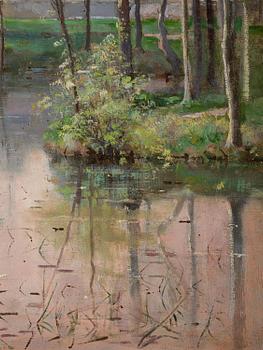
The painting was executed early in the morning or shortly before sunset. Beck has captured the tranquillity prevailing in the early morning or evening, when the light emerges just before the atmosphere has warmed up or cooled down. The sky reflected in the surface of the pond has a faintly pink hue. When a pink glow suffuses the sky at sunrise or sunset, this is an atmospheric phenomenon known as the morning or evening glow. It is caused by what is known as Rayleigh scattering. When the sun sinks below or rises above the horizon, its light travels through a considerably thicker layer of the atmosphere. Light with shorter wavelengths—blue and violet—is scattered and lost along the way. The longer, more resilient red and pink wavelengths, by contrast, pass through the atmosphere.
Julia Beck has focused on capturing the dissolving effect of light and atmosphere on the delicate foliage and tree trunks. She has carefully rendered the play of light in subtle, multifaceted shifts of colour. After signing the painting, she added reeds that partially cover some of the letters and the date. Her intention was probably to make the signature an integrated part of the surrounding calligraphy.
The painting was probably purchased directly from the artist by the Norwegian architect and industrialist Christian Thams (1867–1948). Thams opened architectural offices in Nice and Paris in 1887 and lived in Paris from 1912 until his death in 1948. Among other projects, he designed Norway’s pavilion for the Exposition Universelle in Paris in 1889 and Trondheim’s pavilion for the Stockholm Exhibition in 1897.
For condition report contact specialist

What will the transport cost?
Shipping can only be arranged by contacting specialdelivery@bukowskis.com.