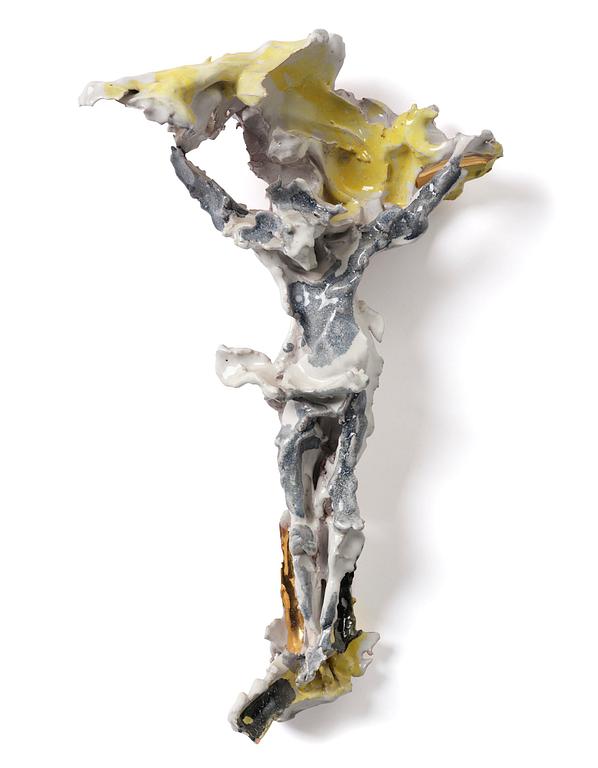
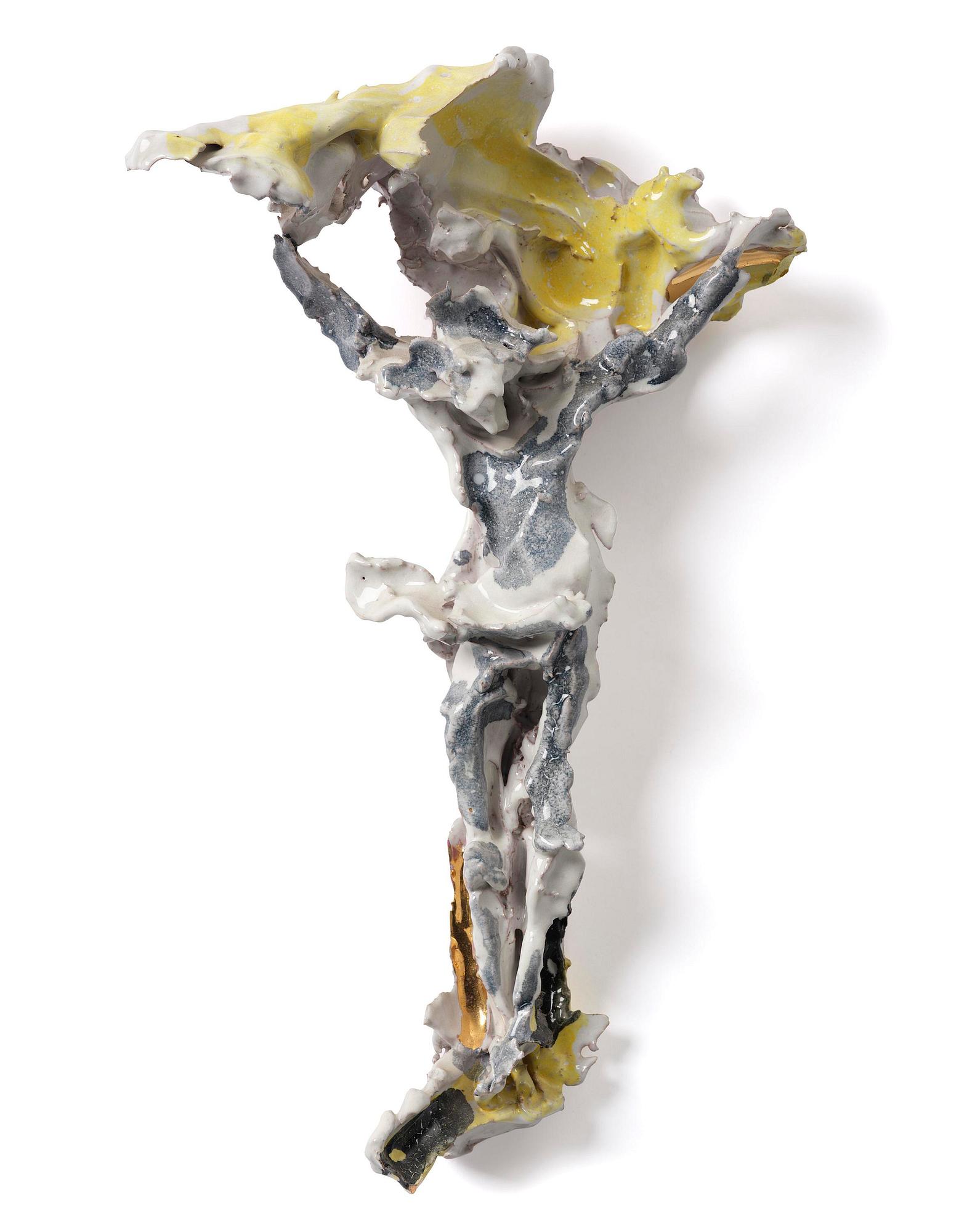
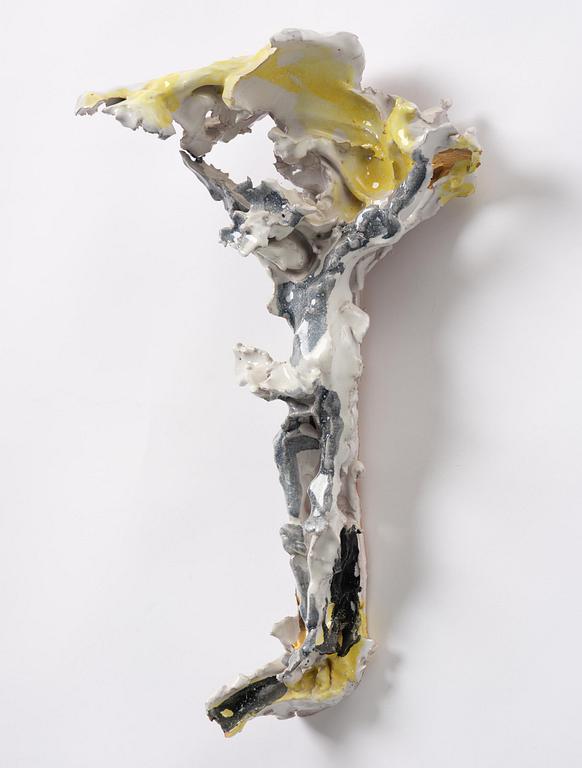
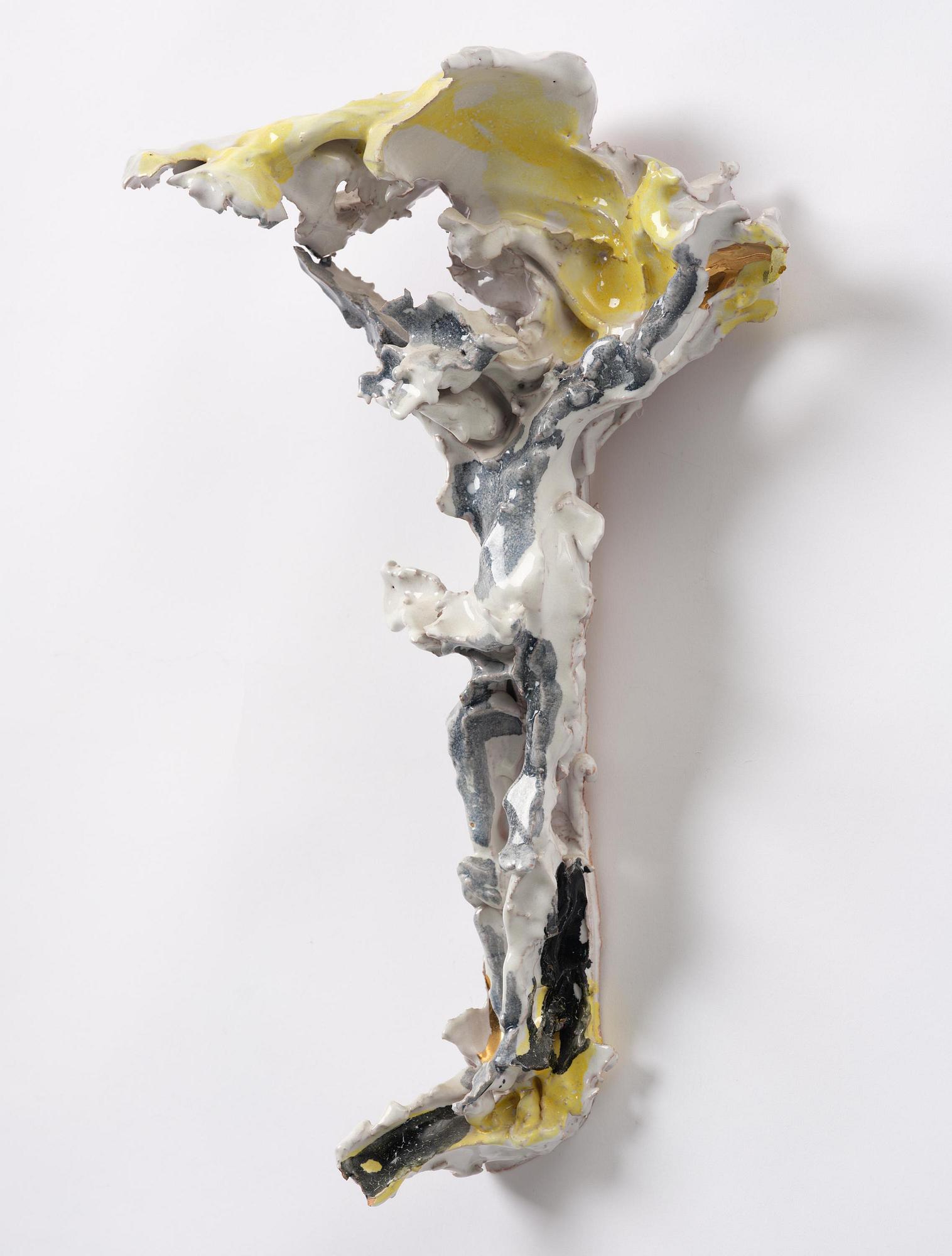
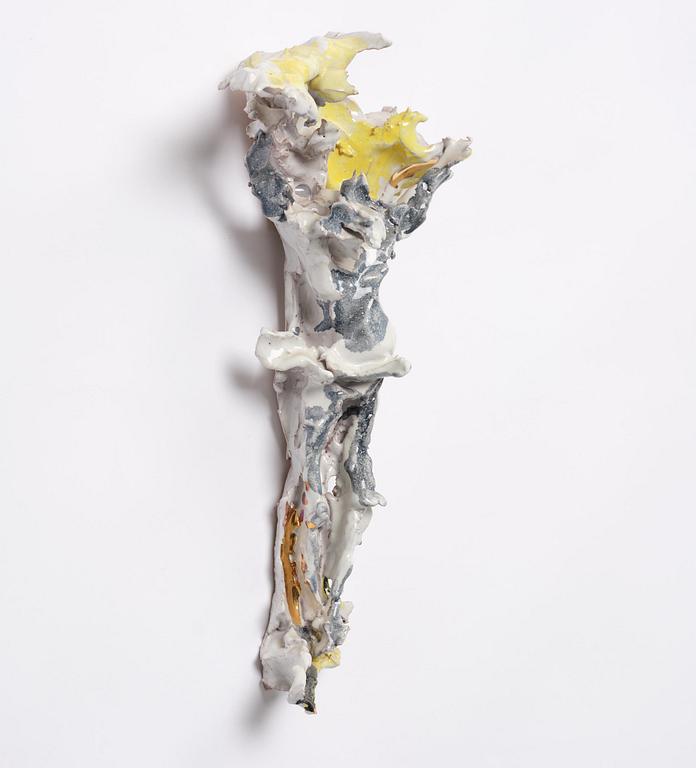
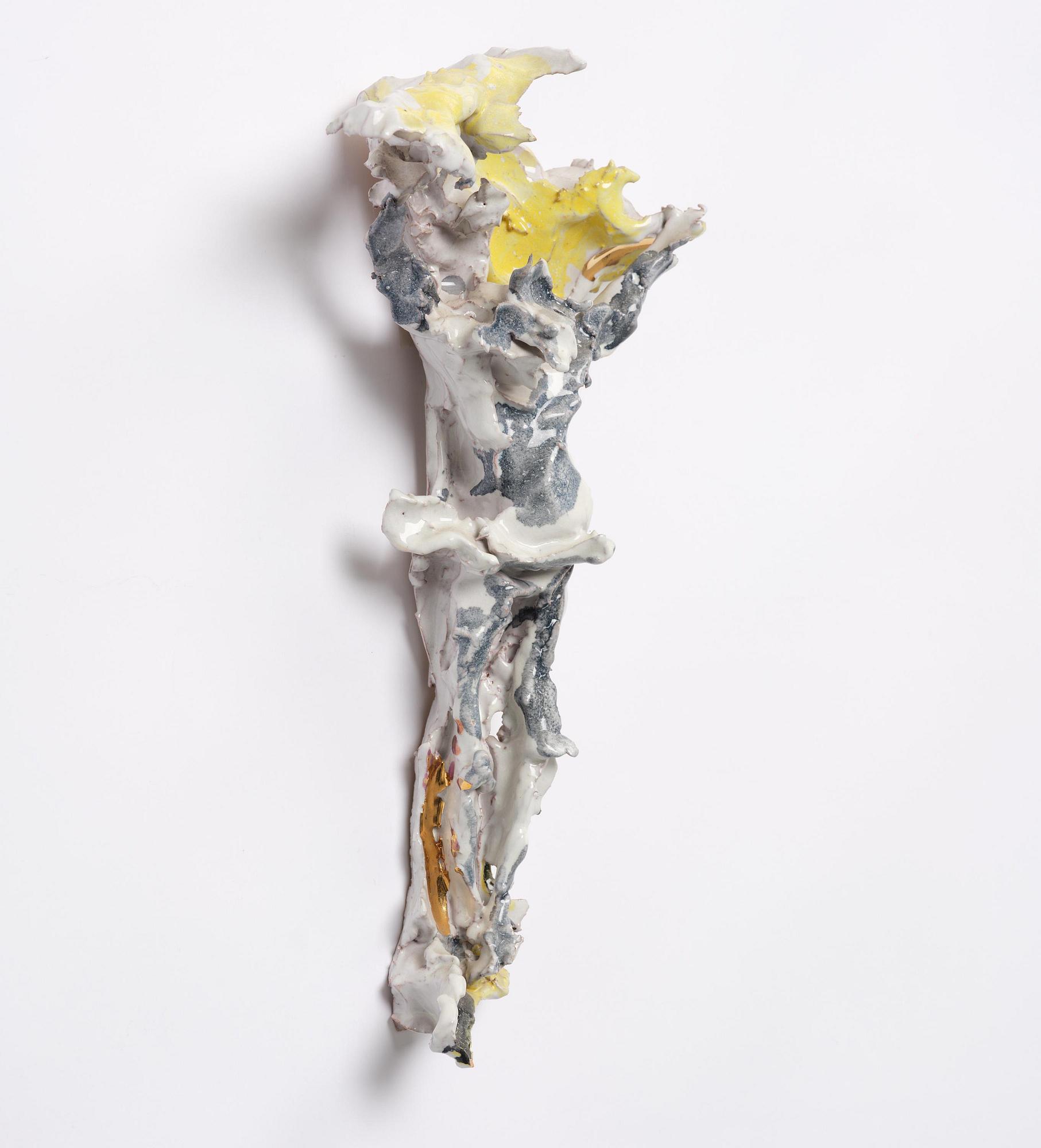
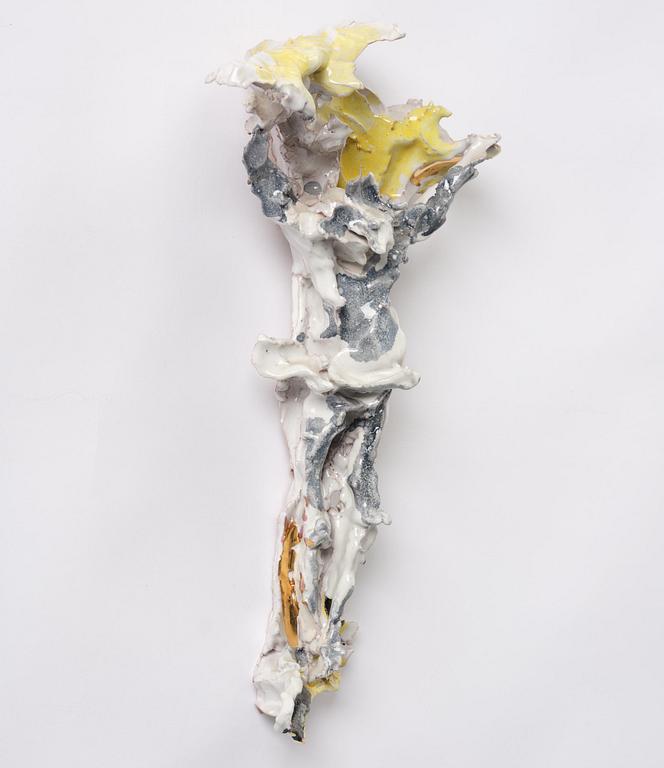
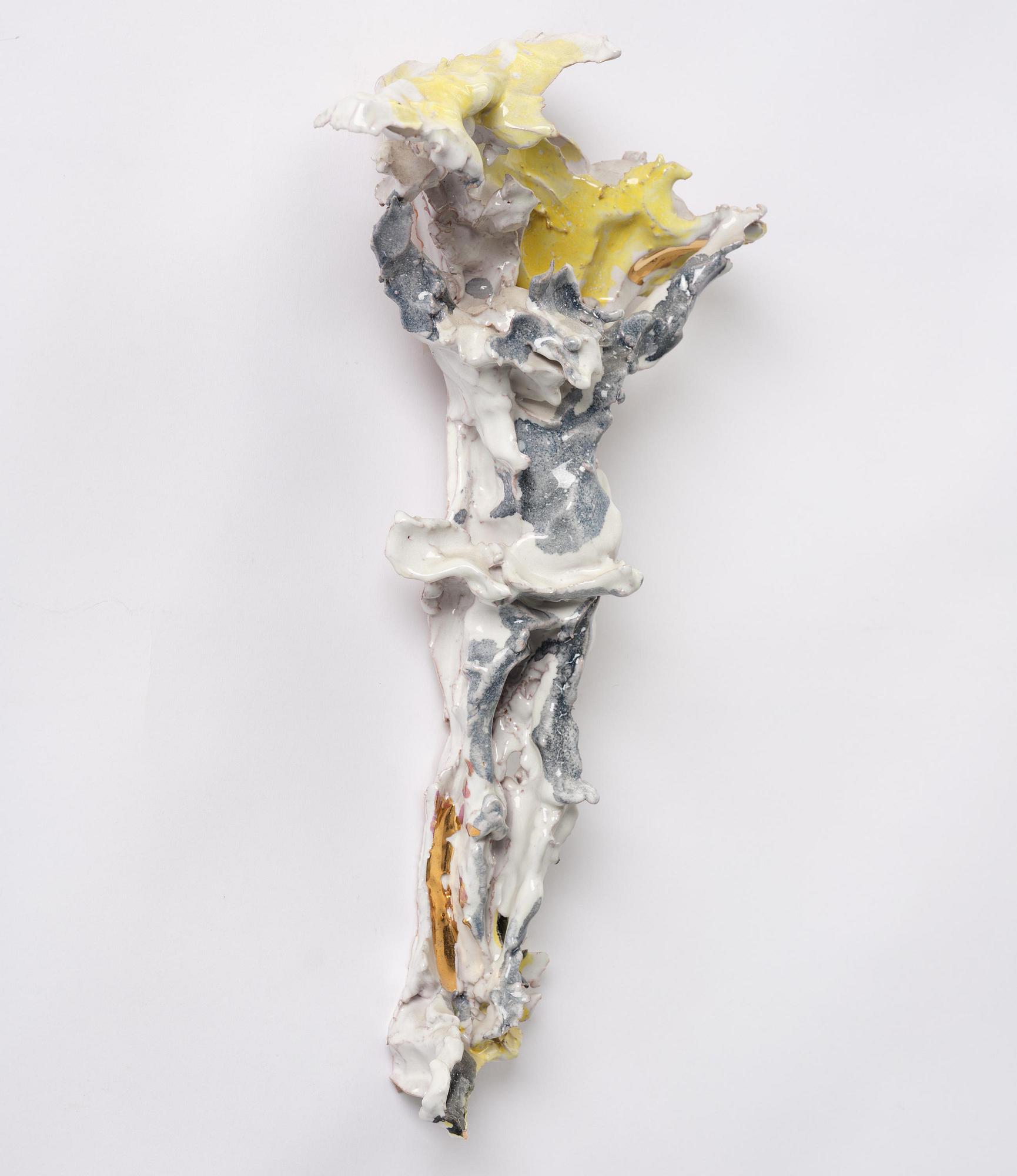
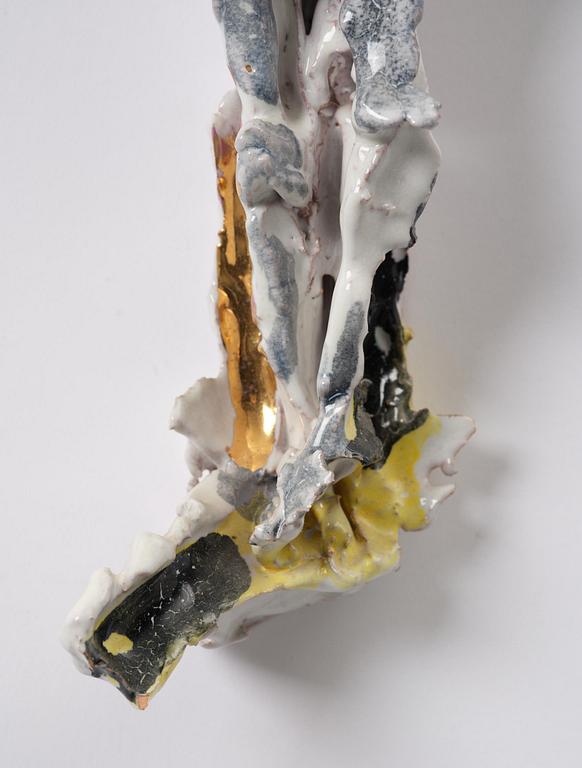
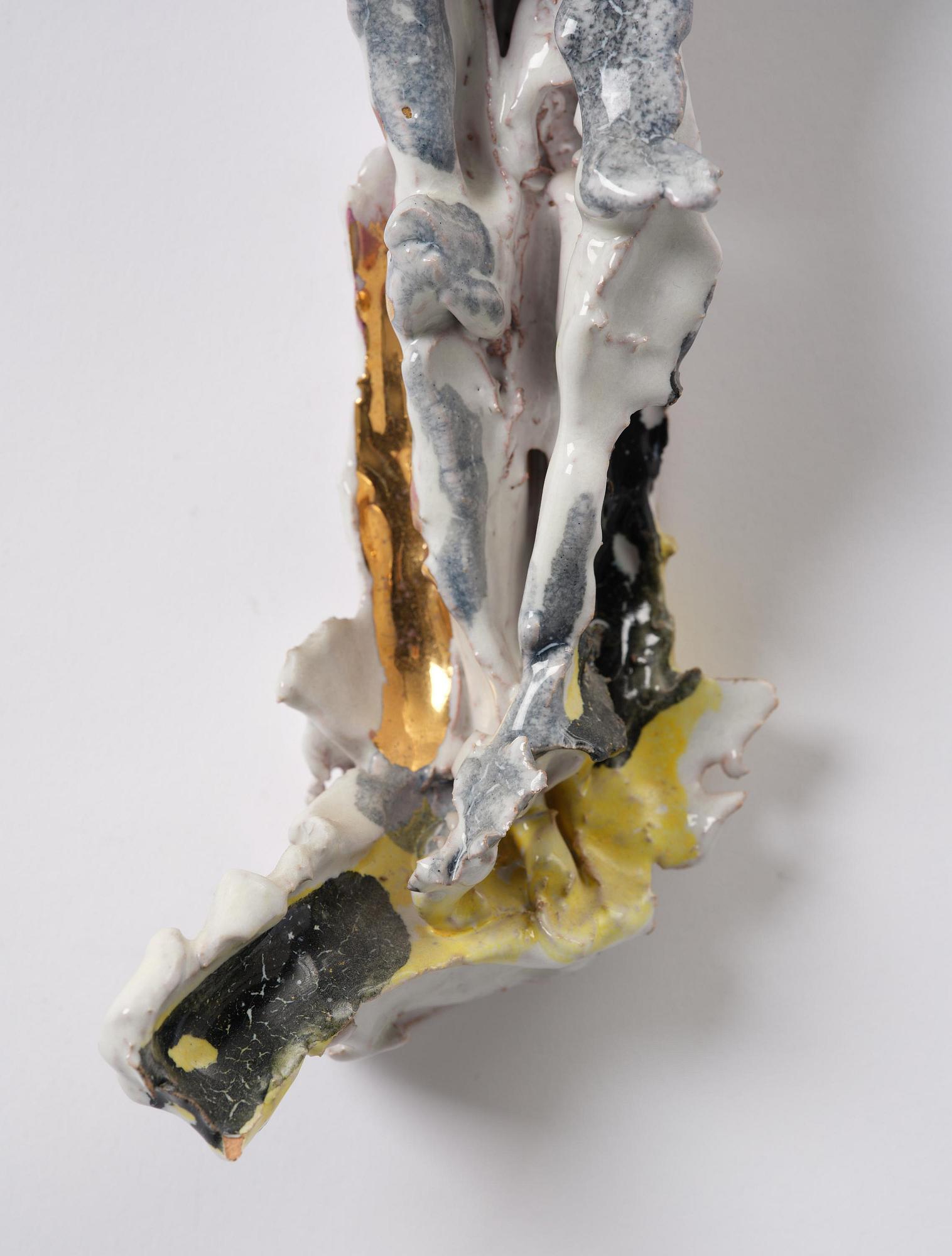
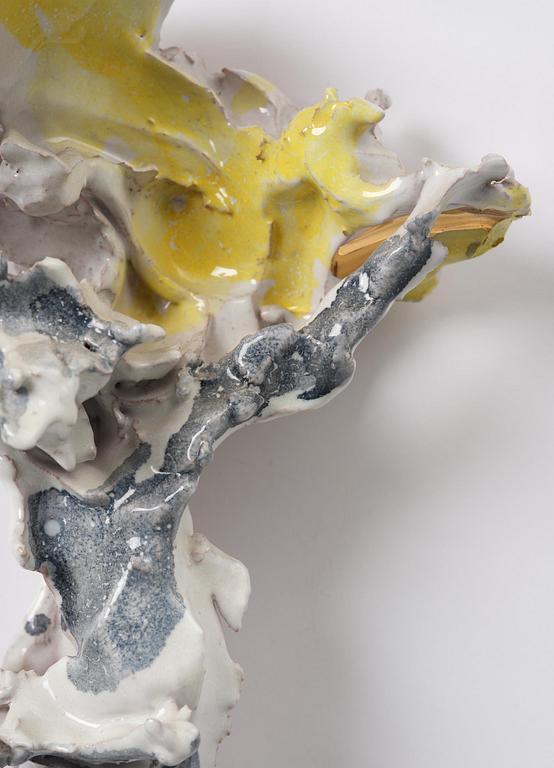
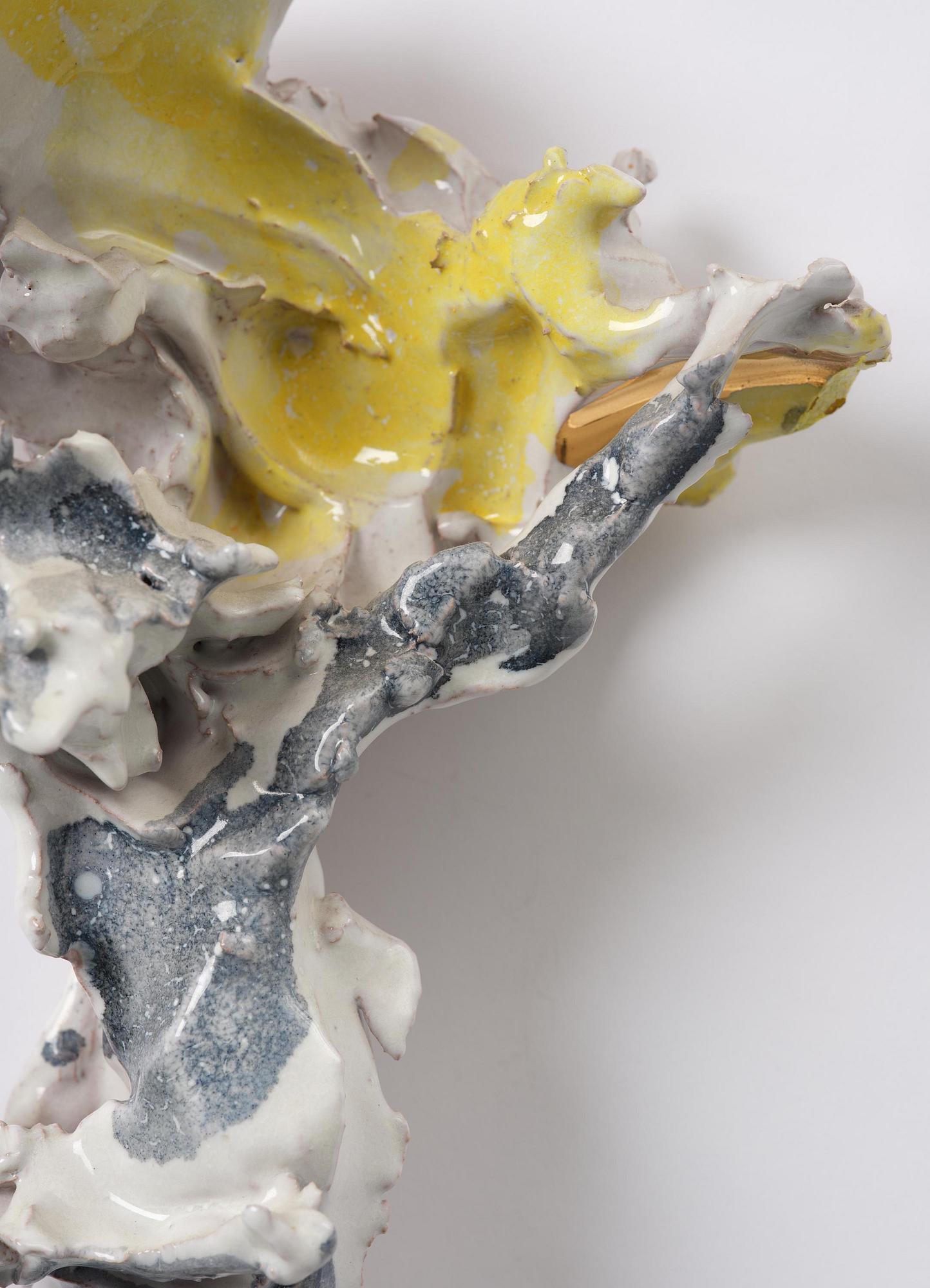
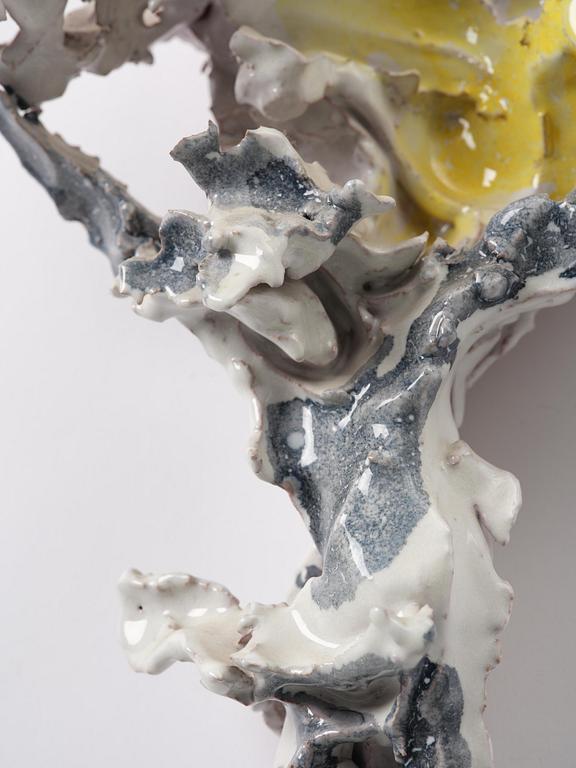
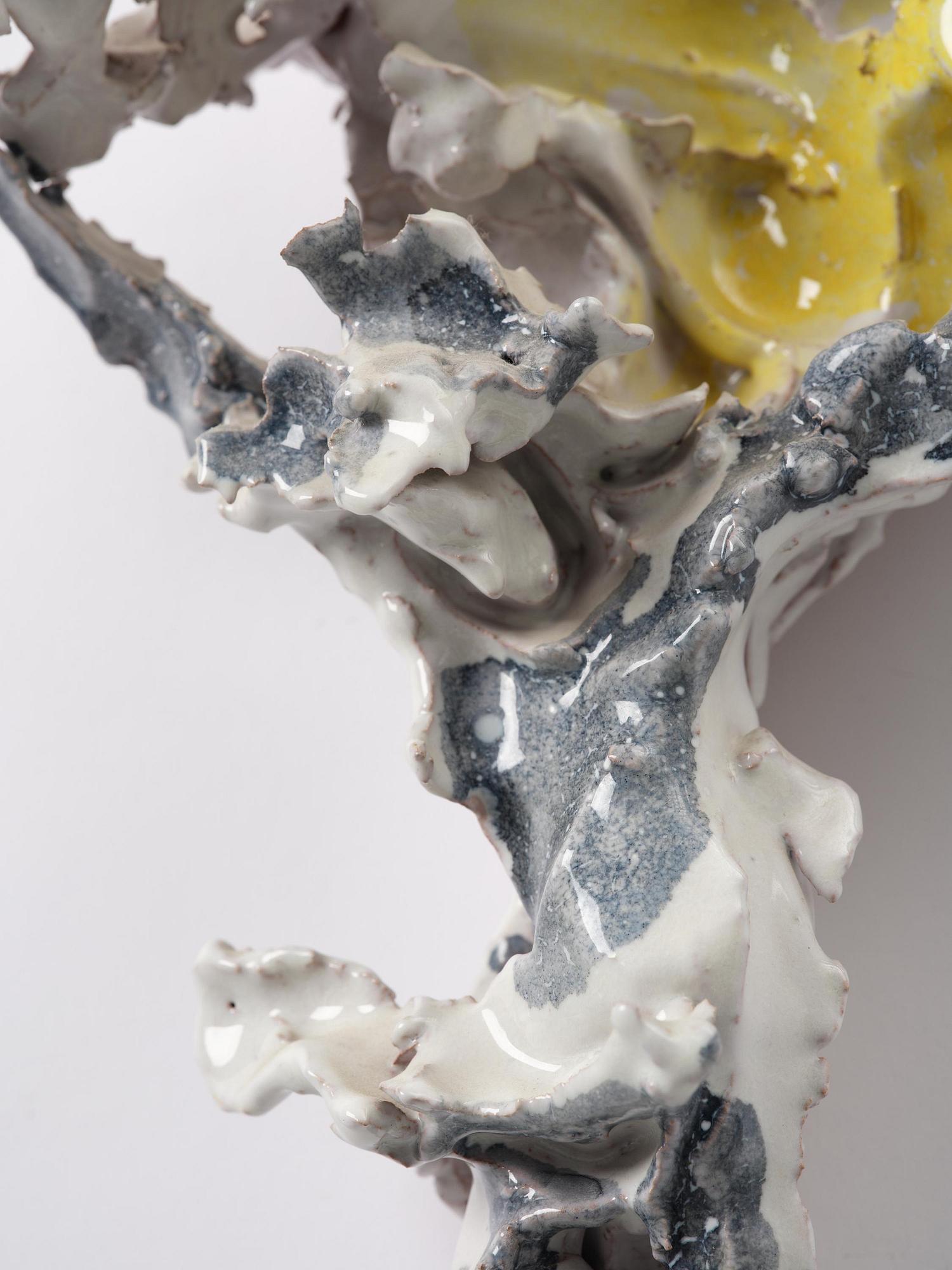
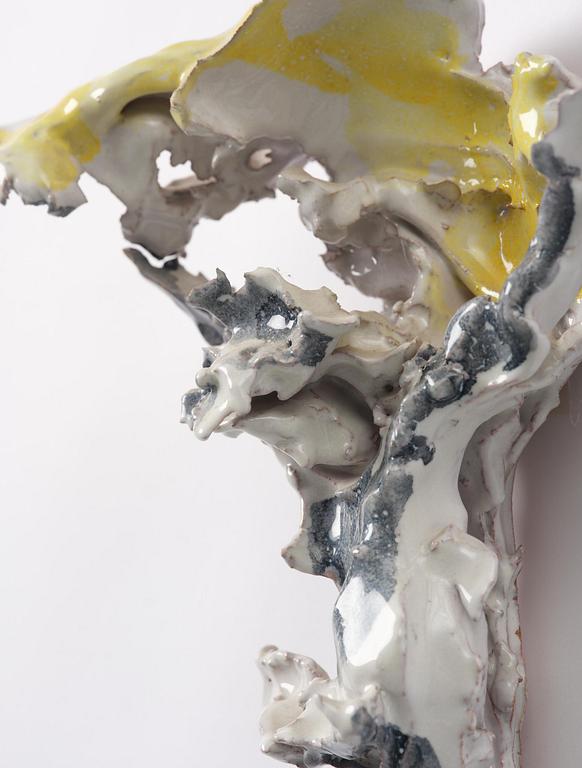
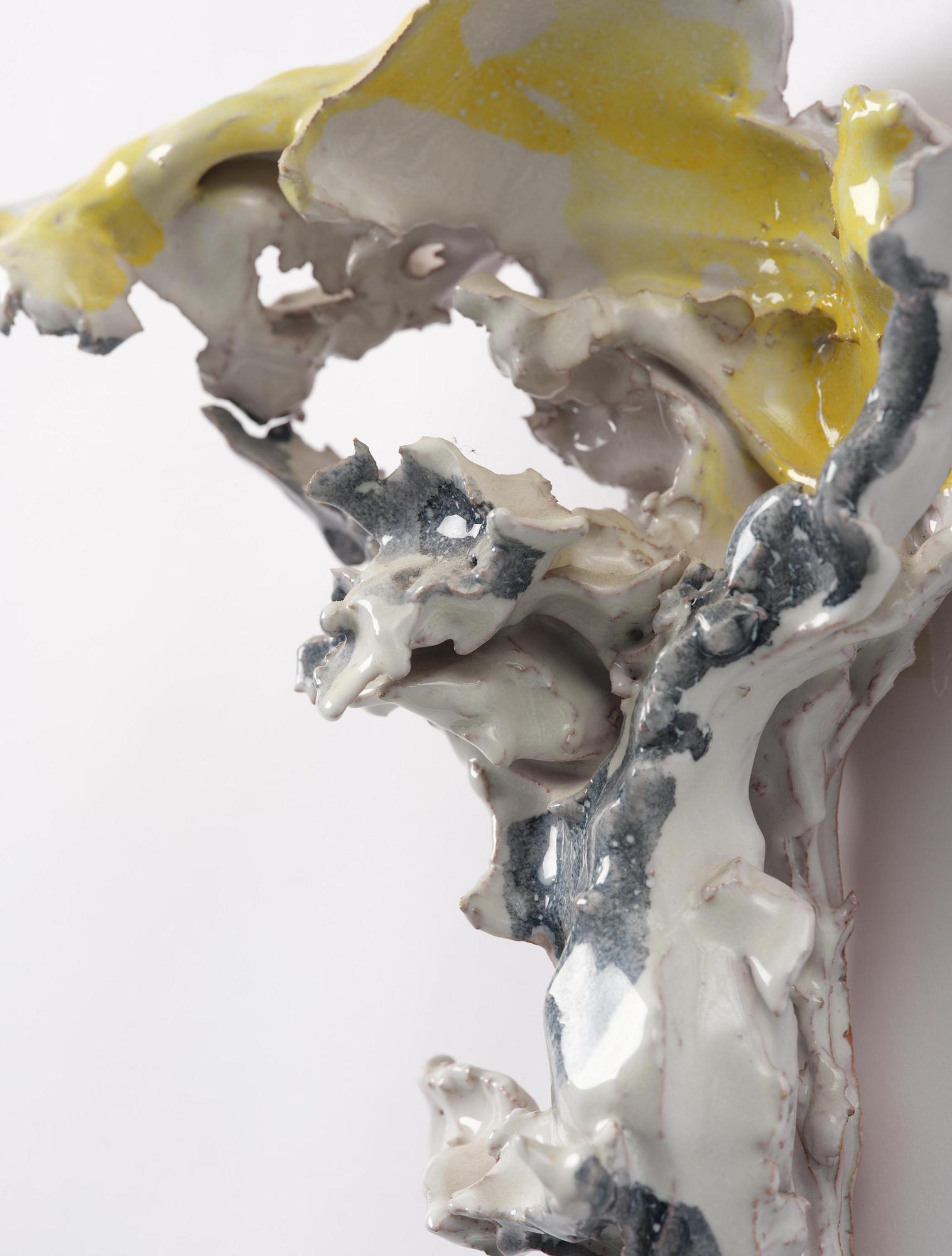
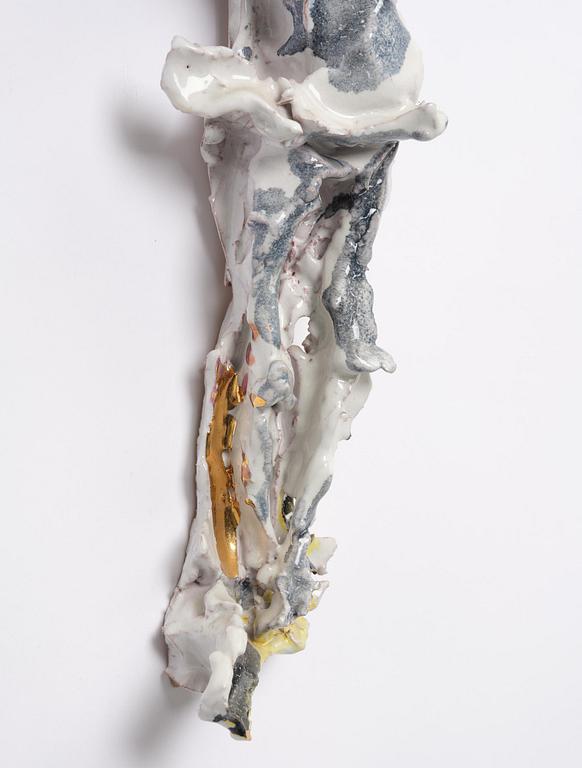
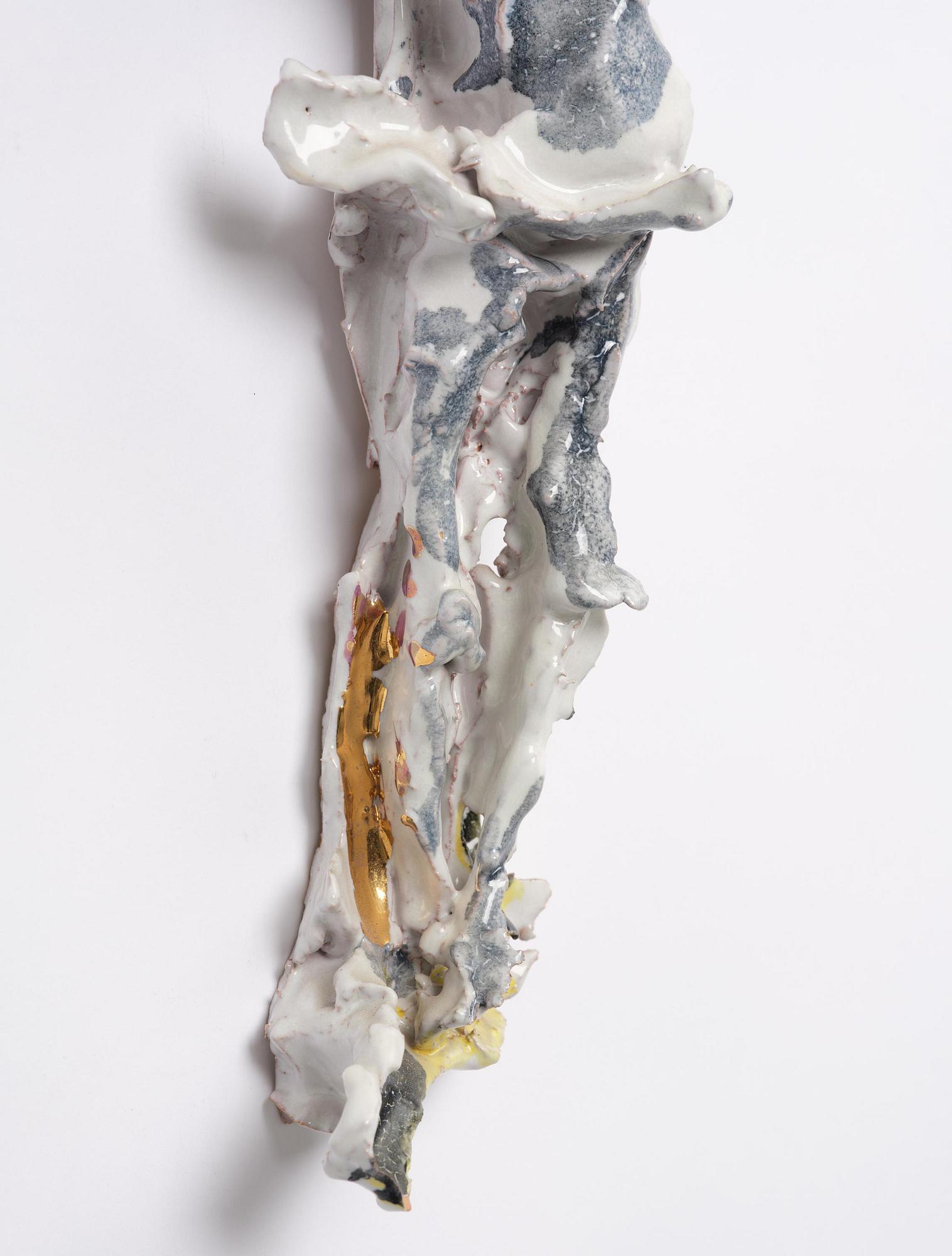
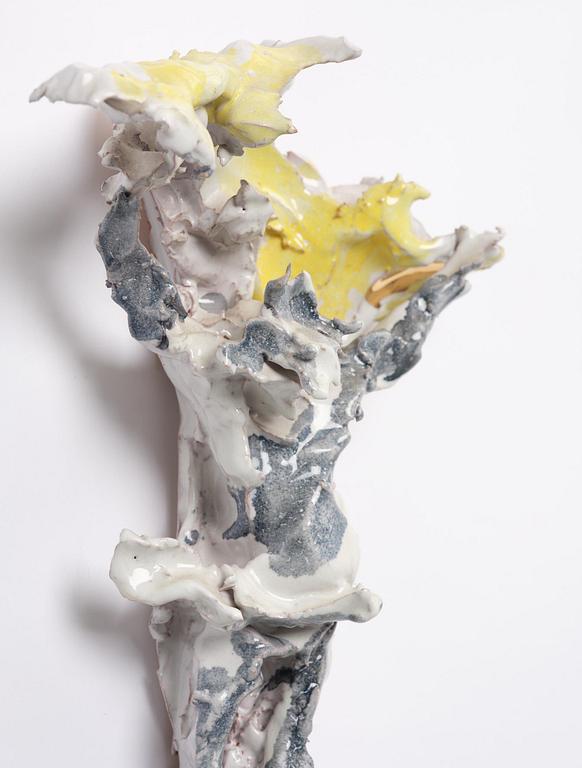
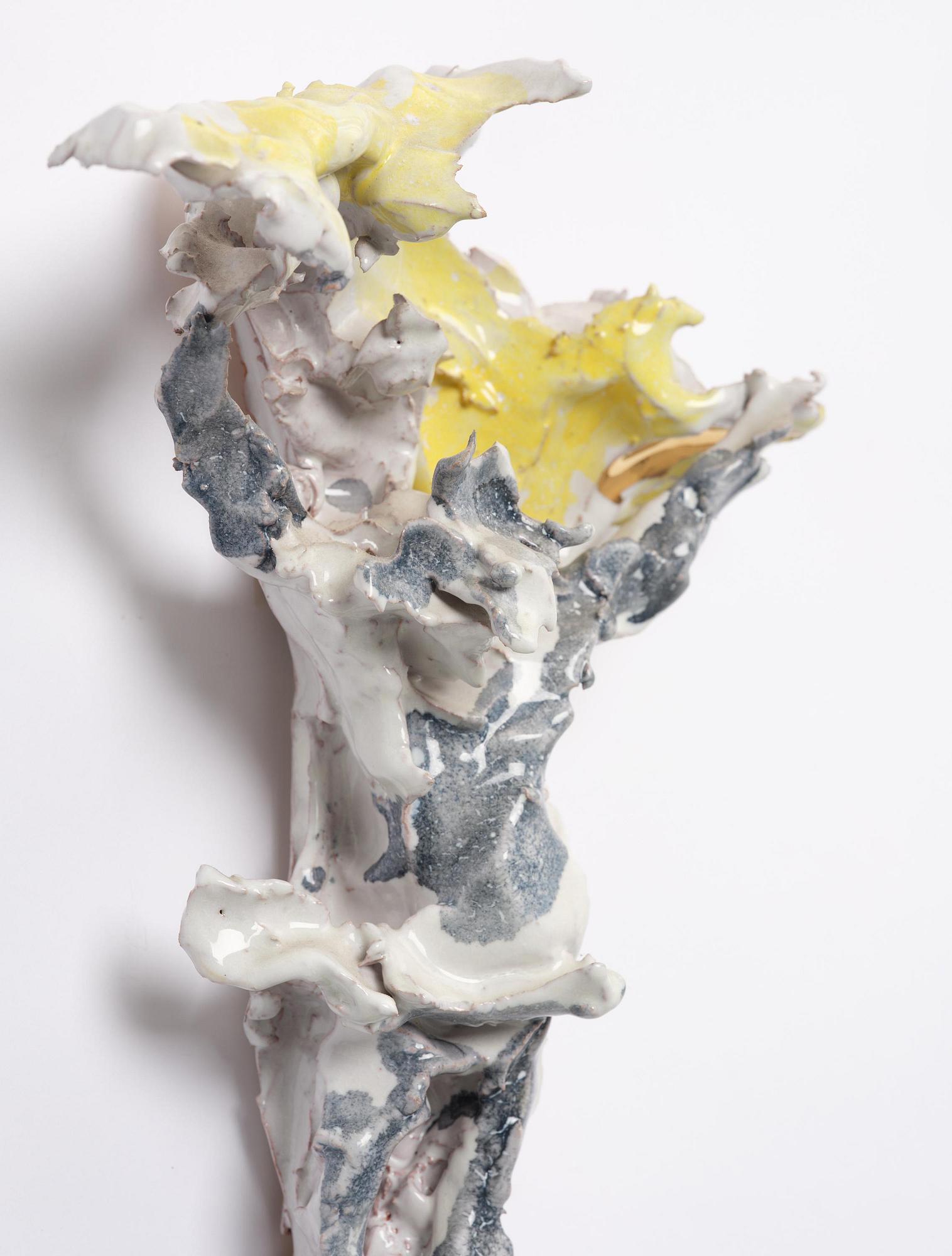
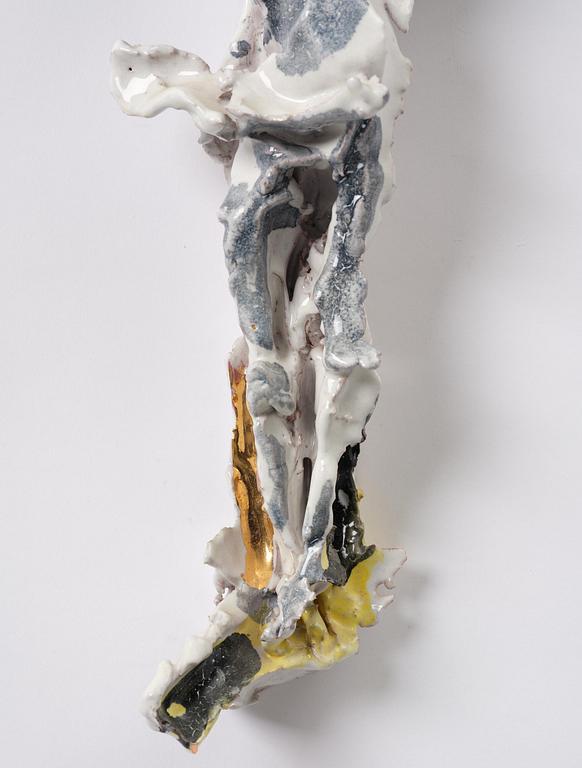
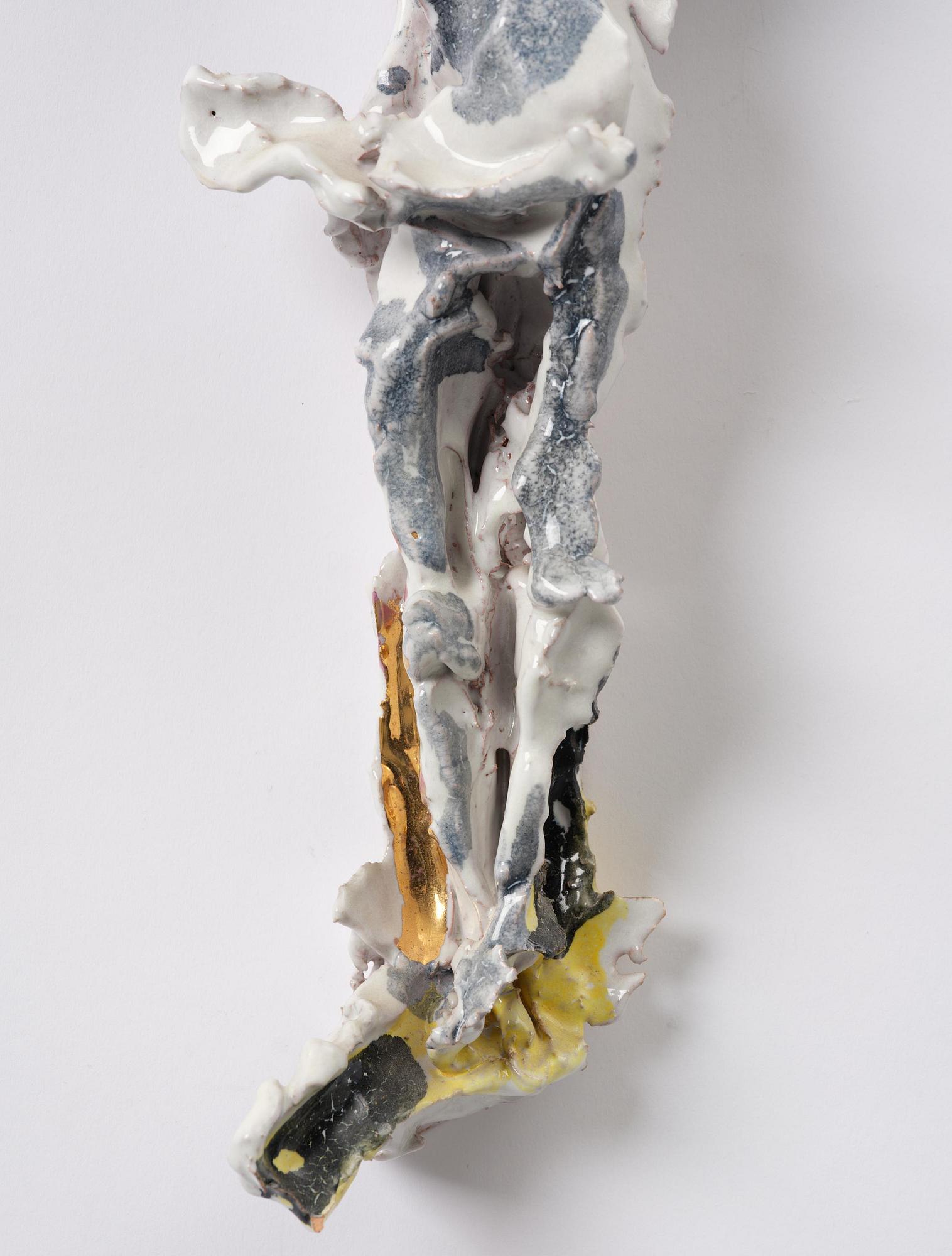
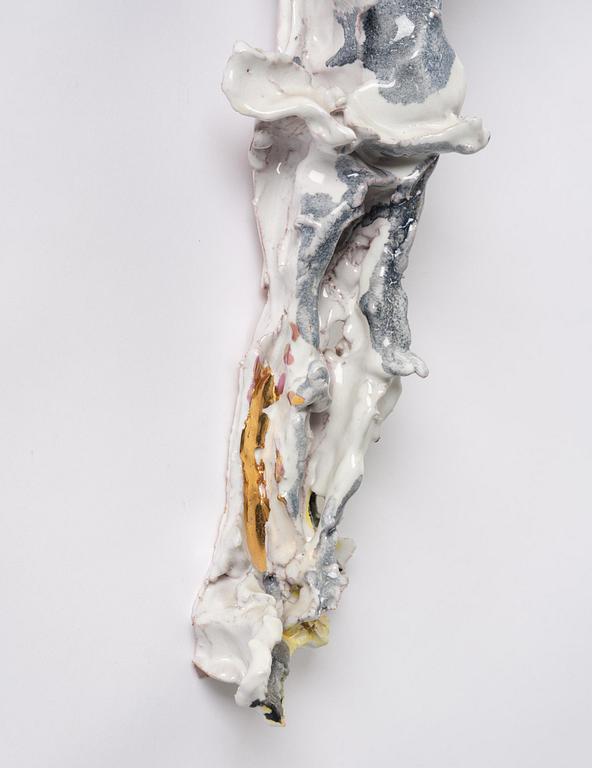
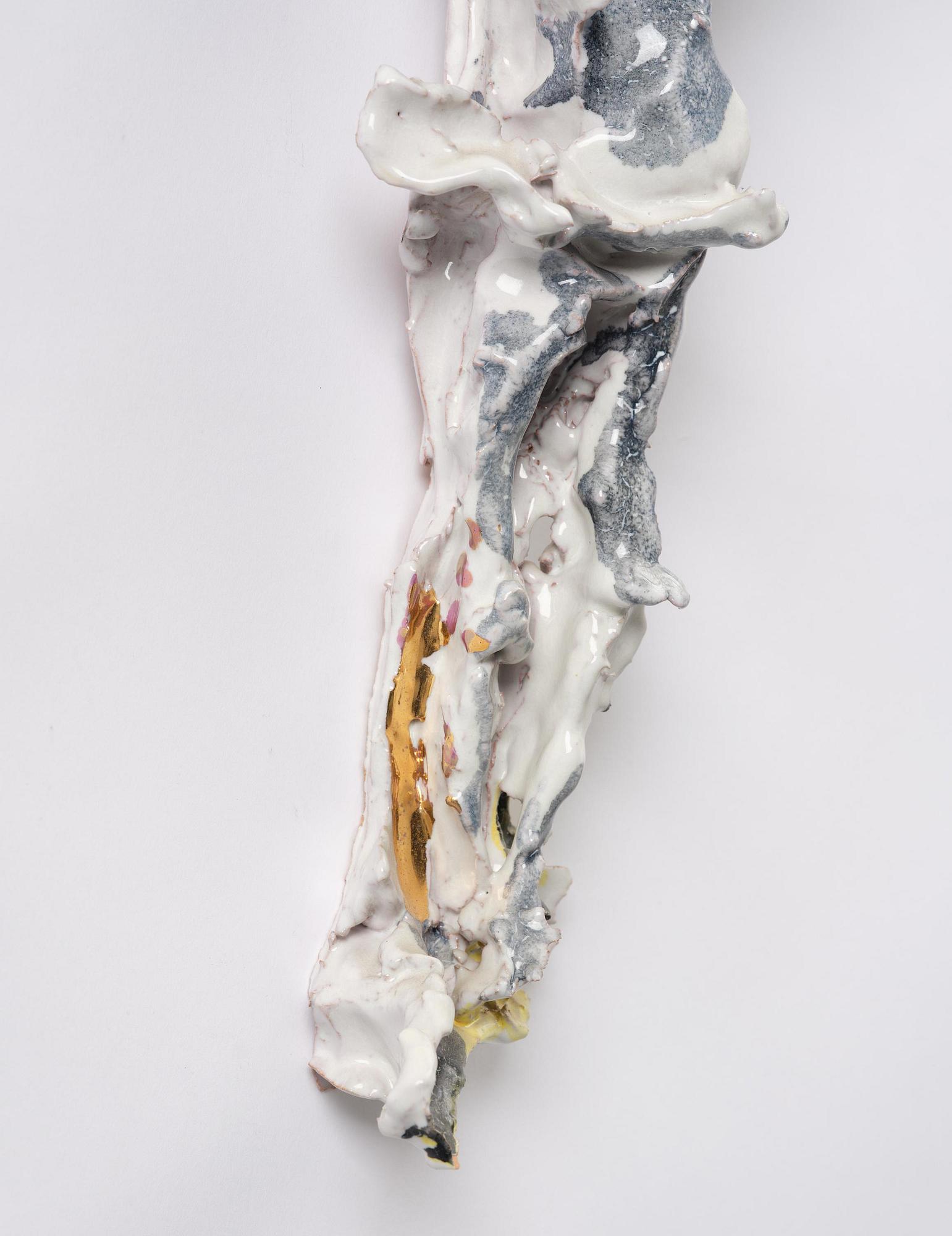
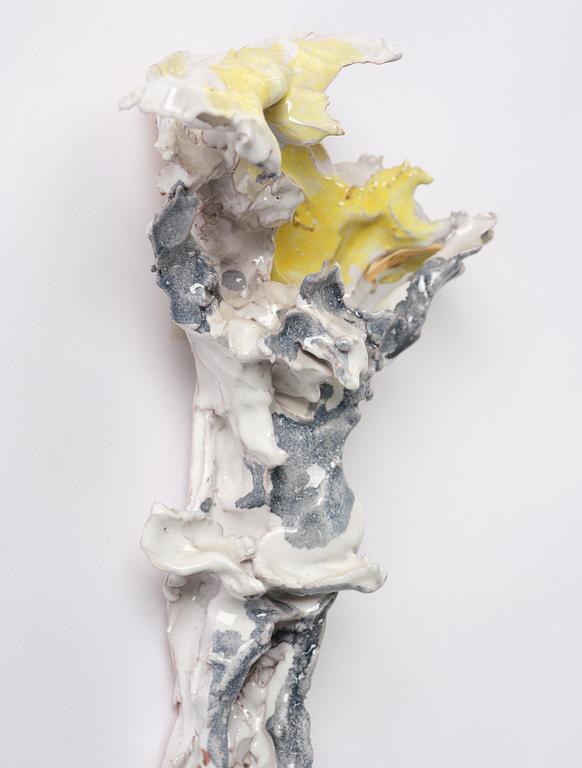
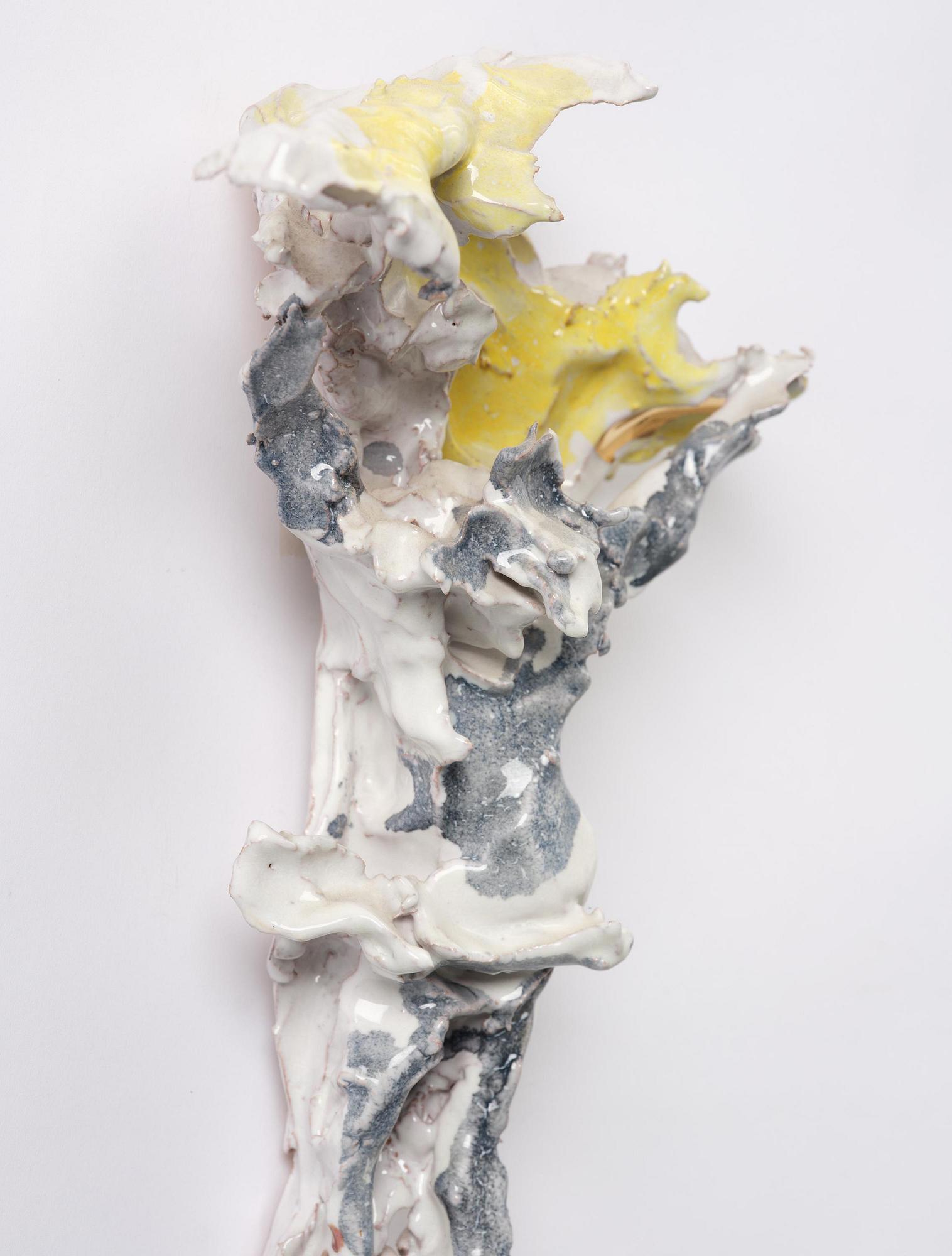
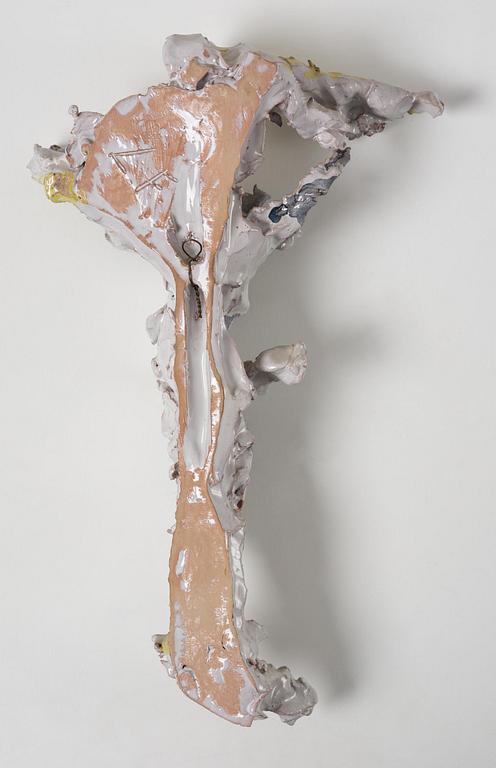
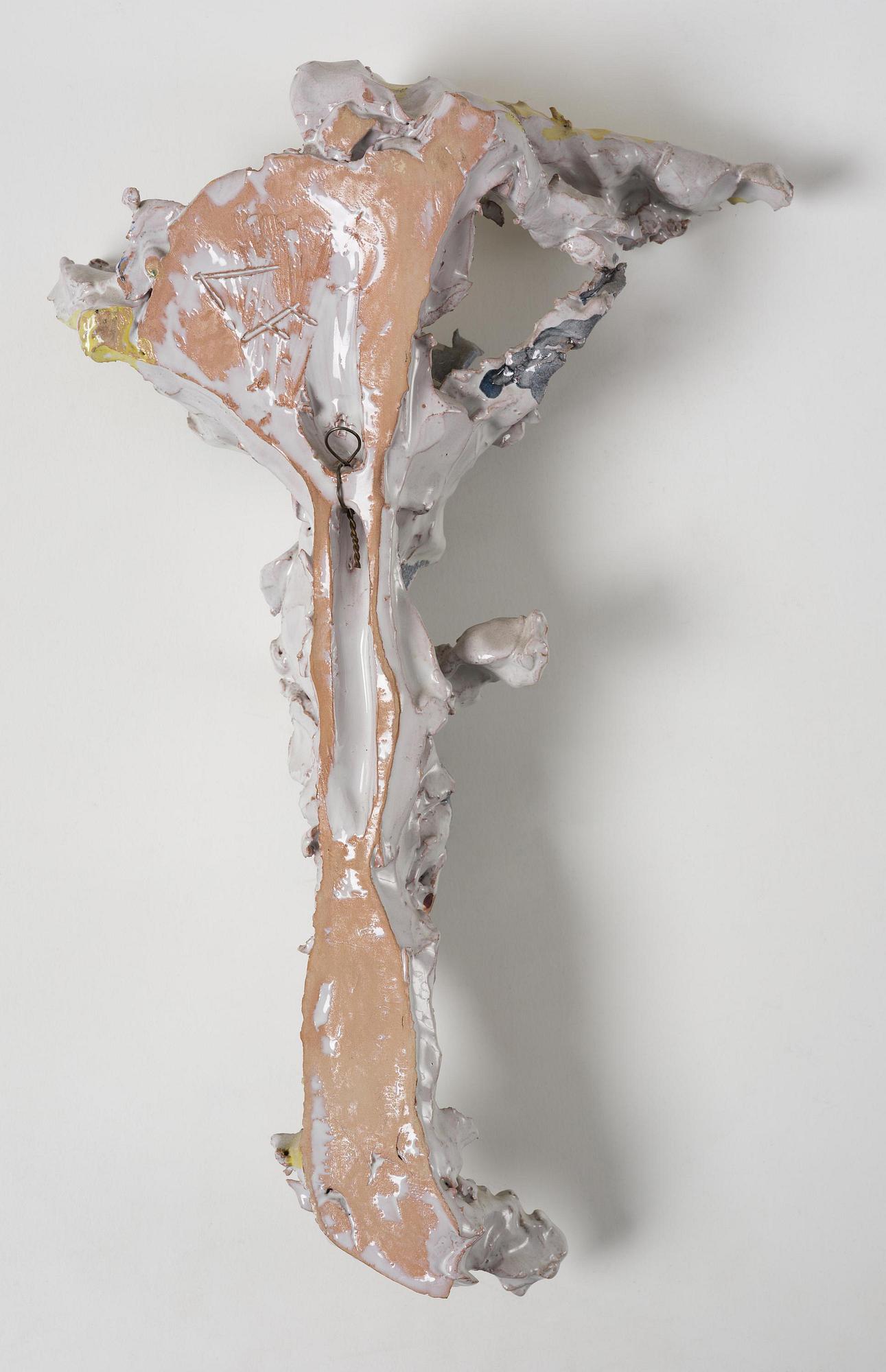
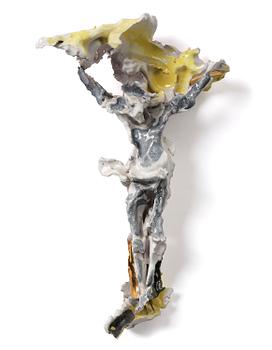
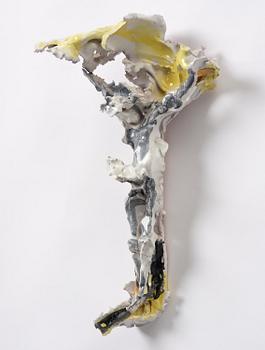
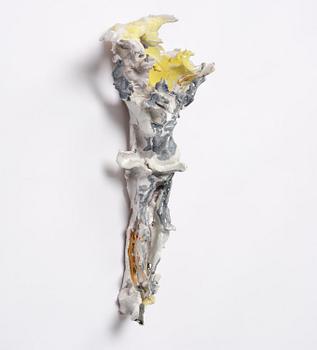
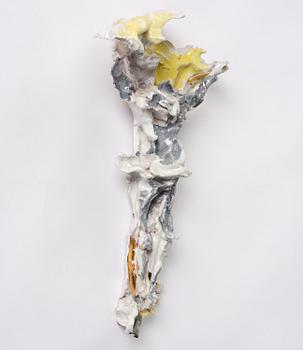
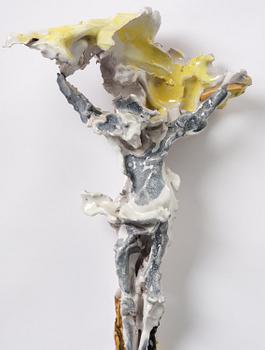
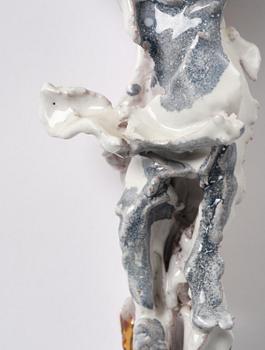
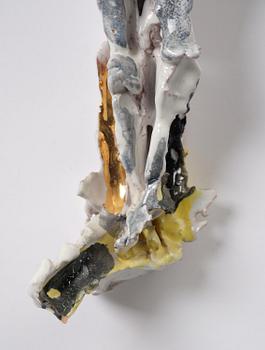
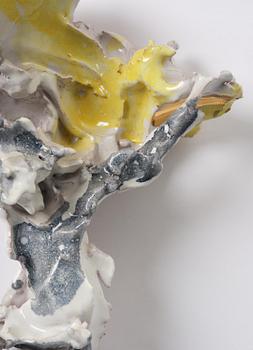
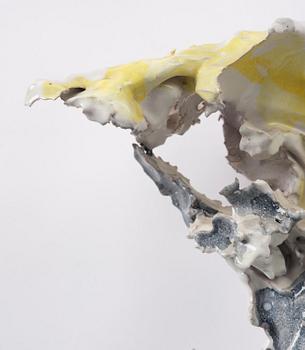
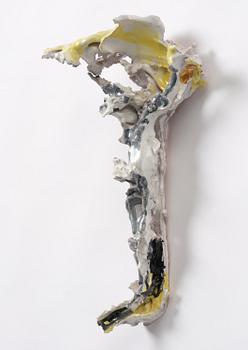
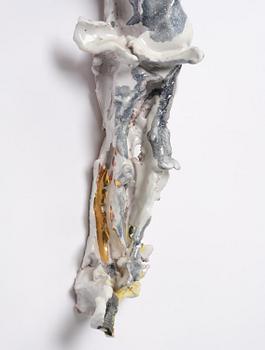
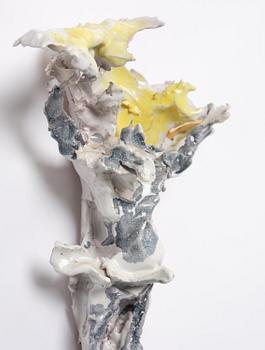
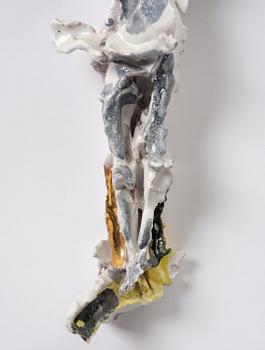
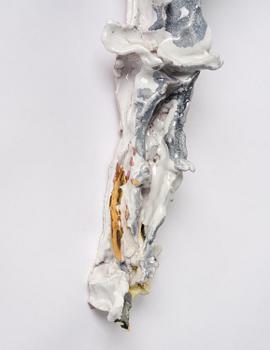
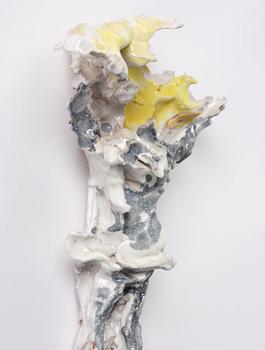
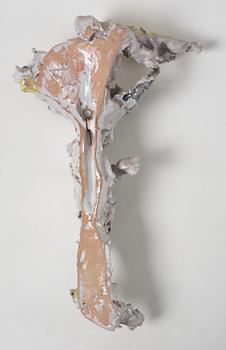
Lucio Fontana (Italy, 1899-1968) "Crocifisso"
"Crocifisso"
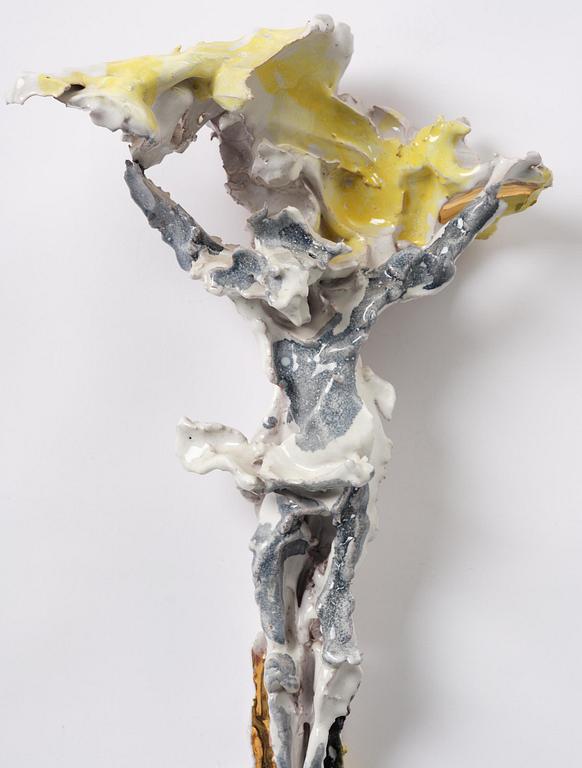
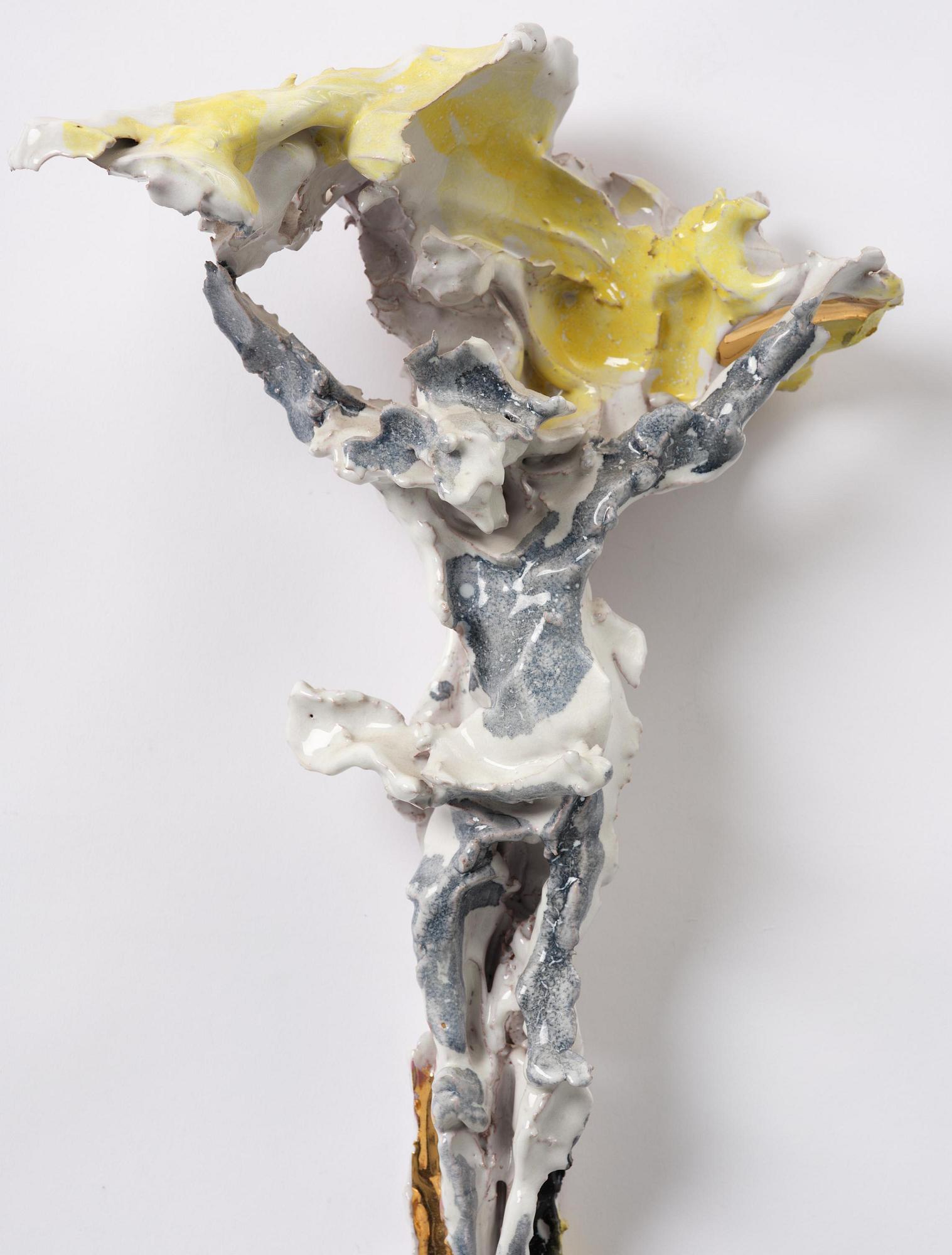
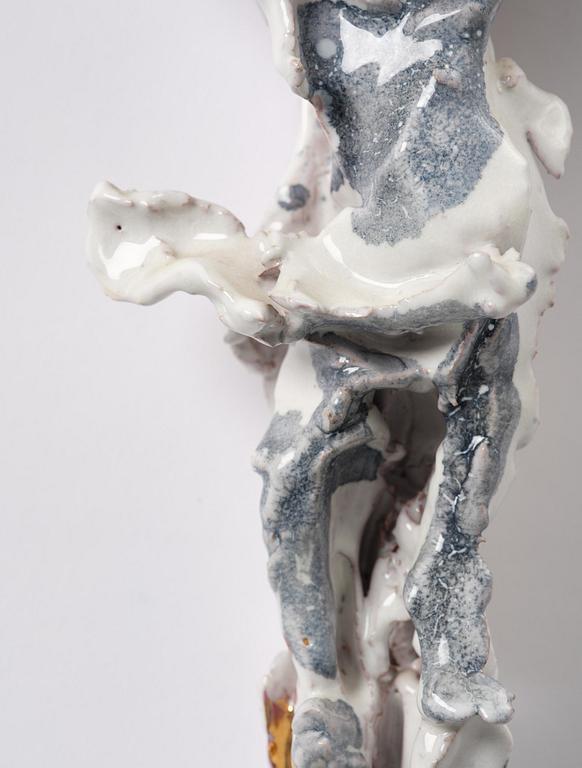
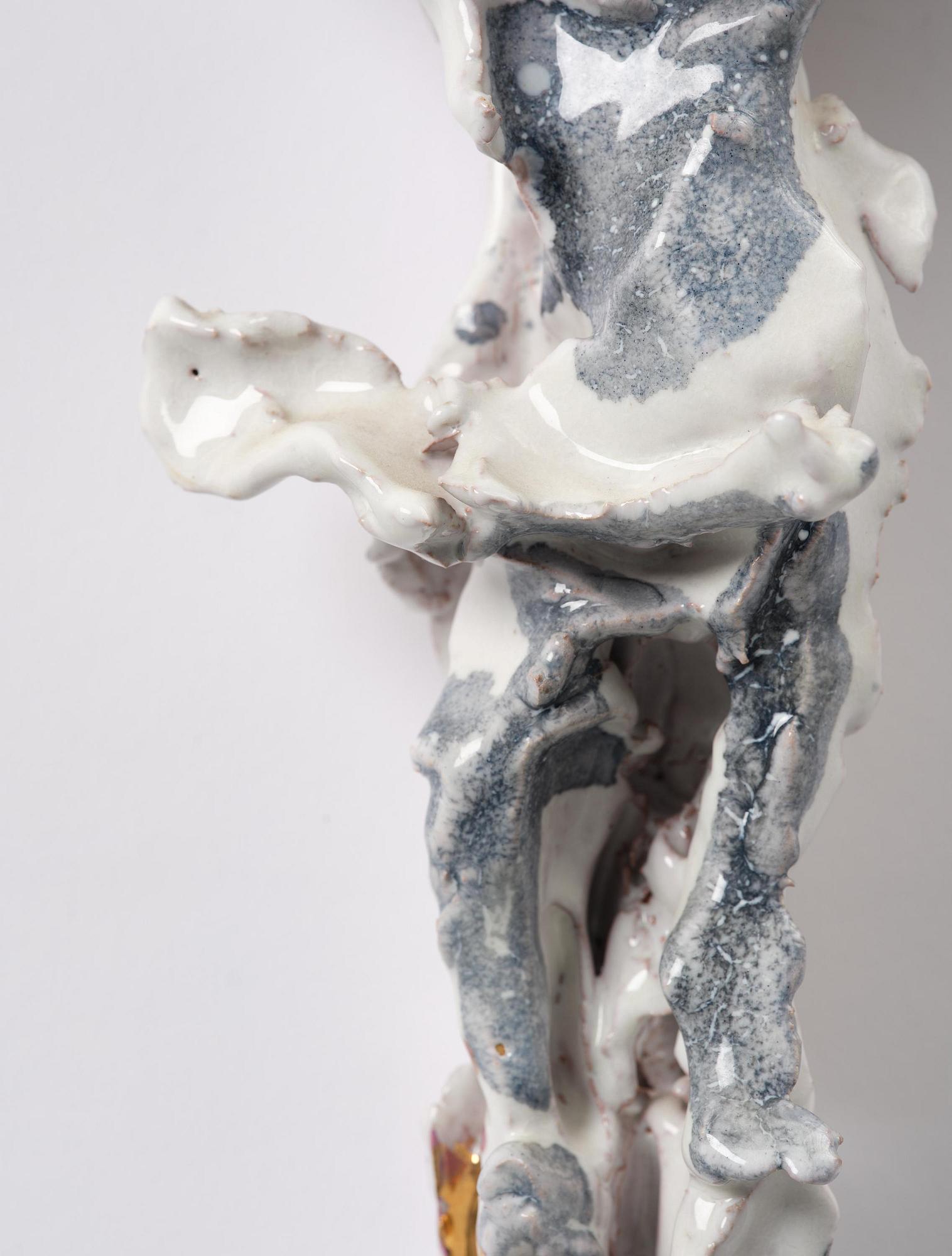
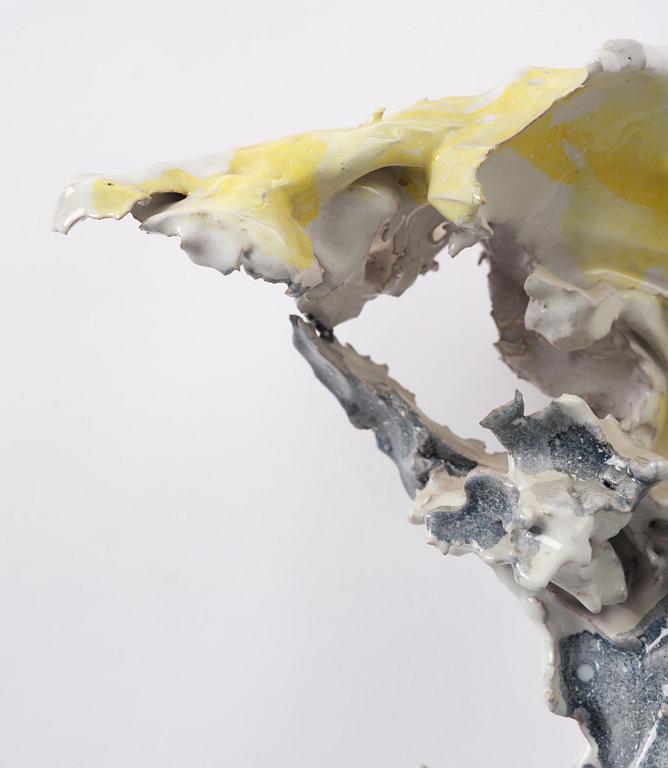
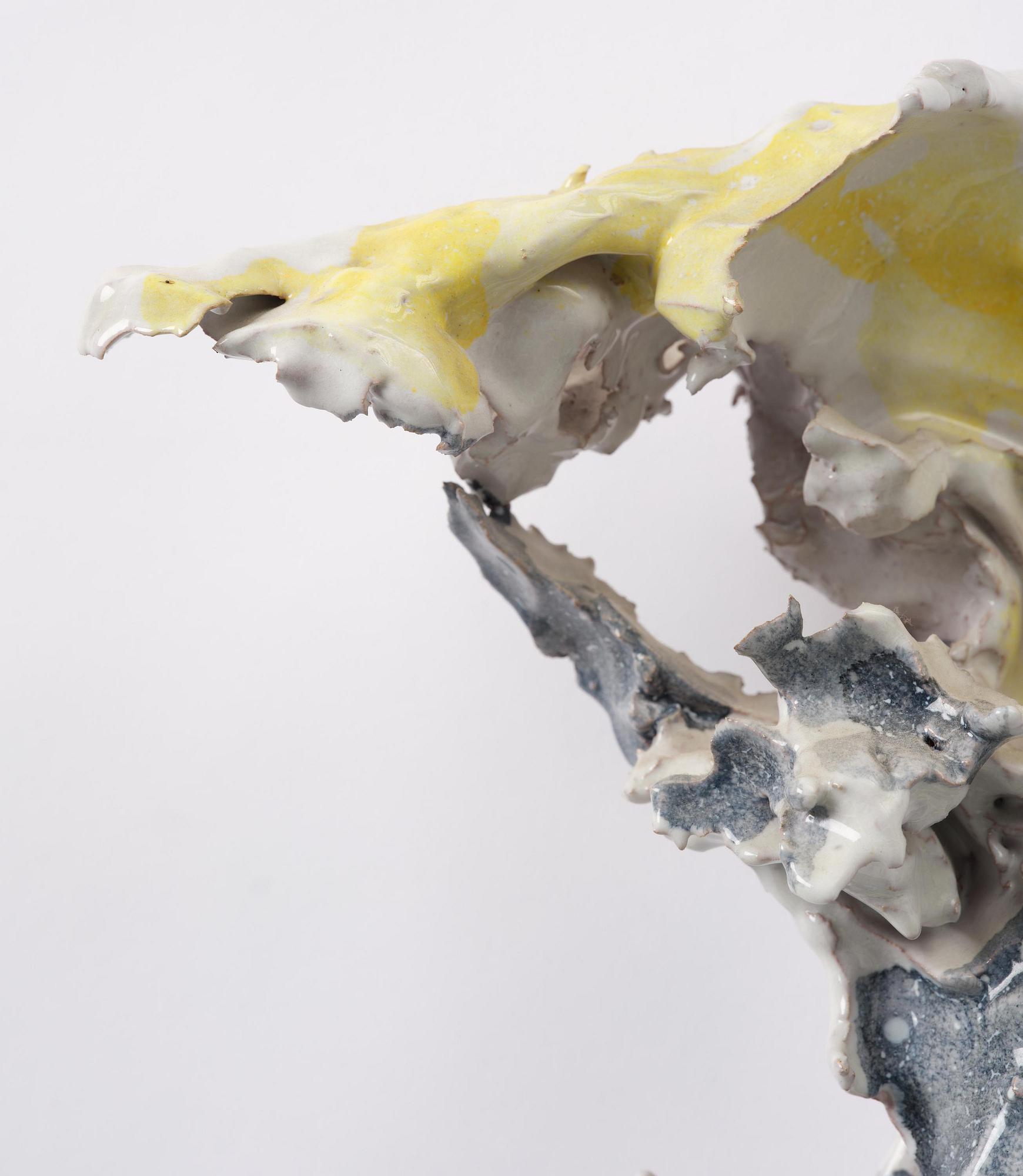
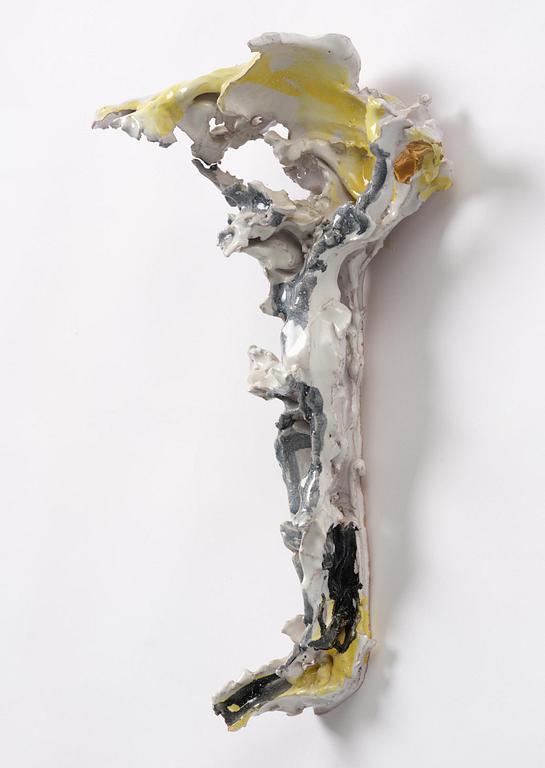
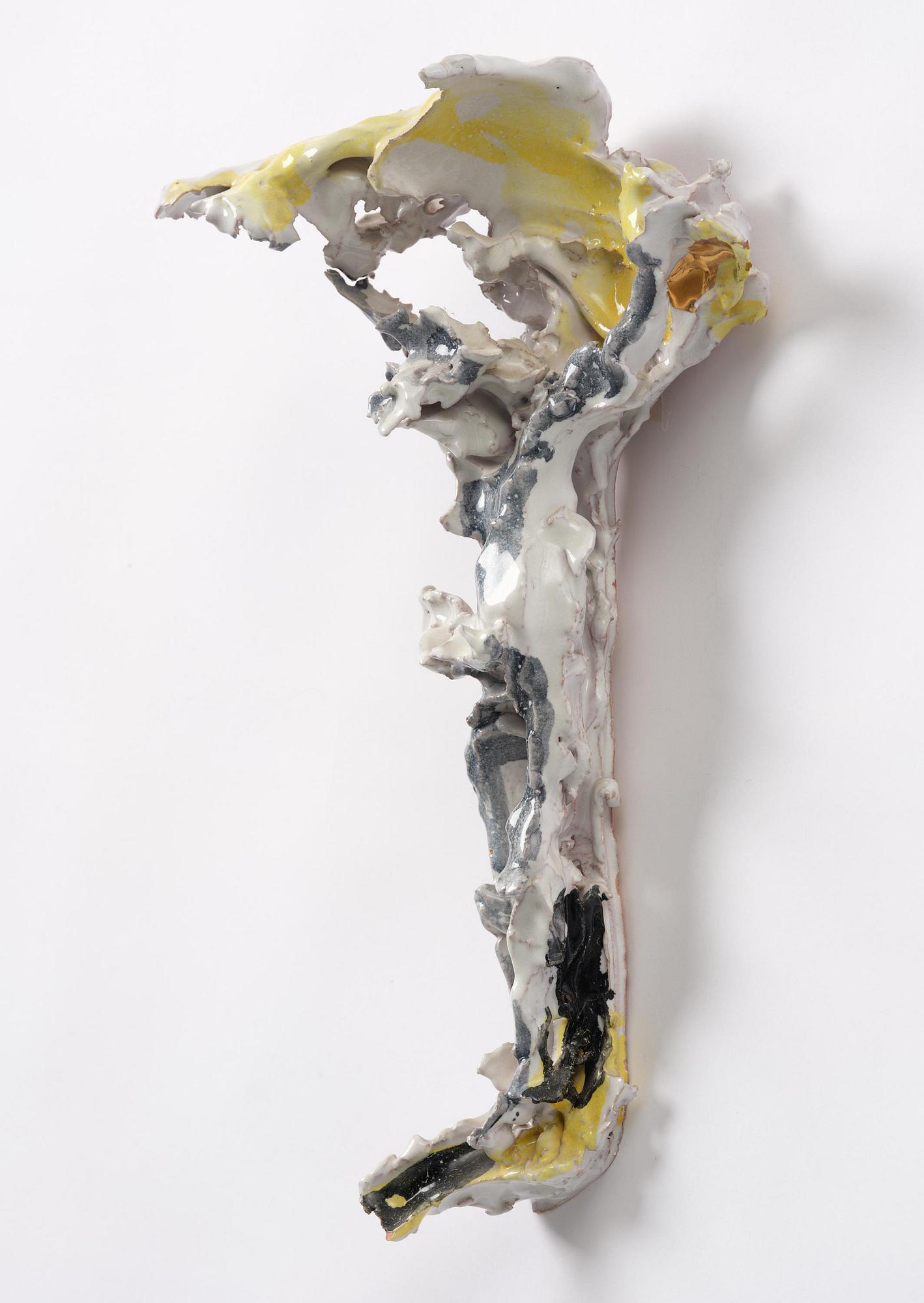
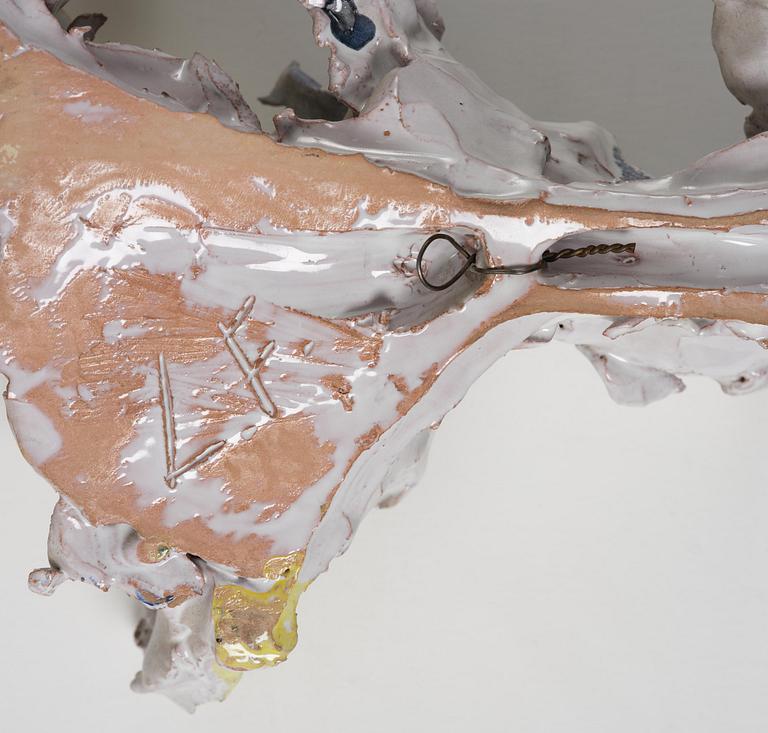
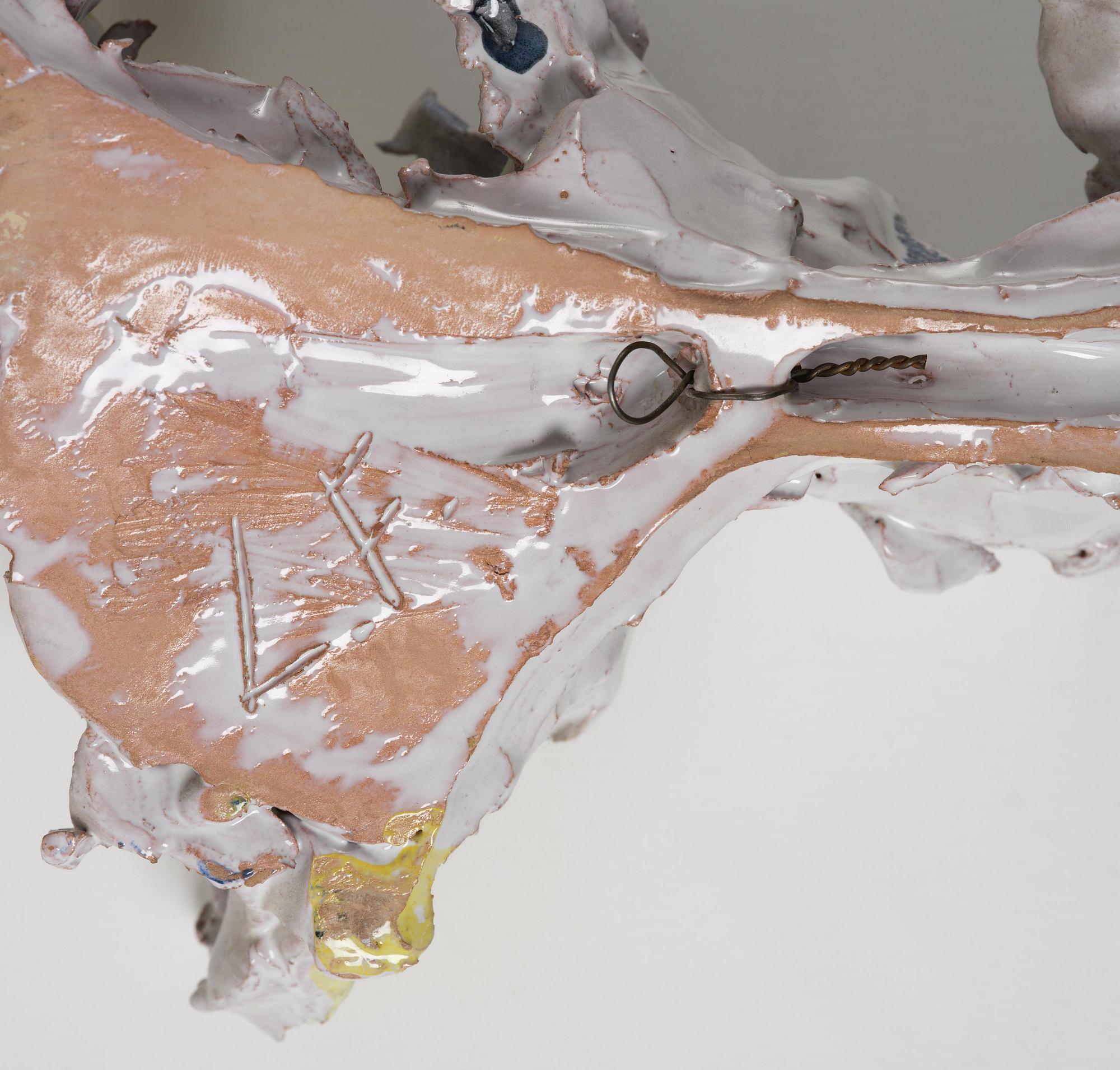
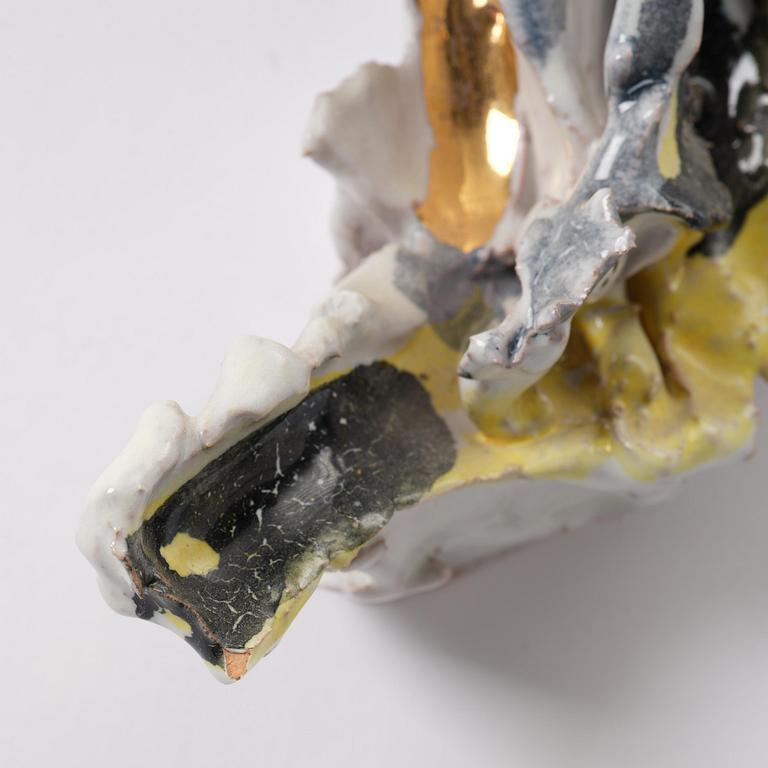
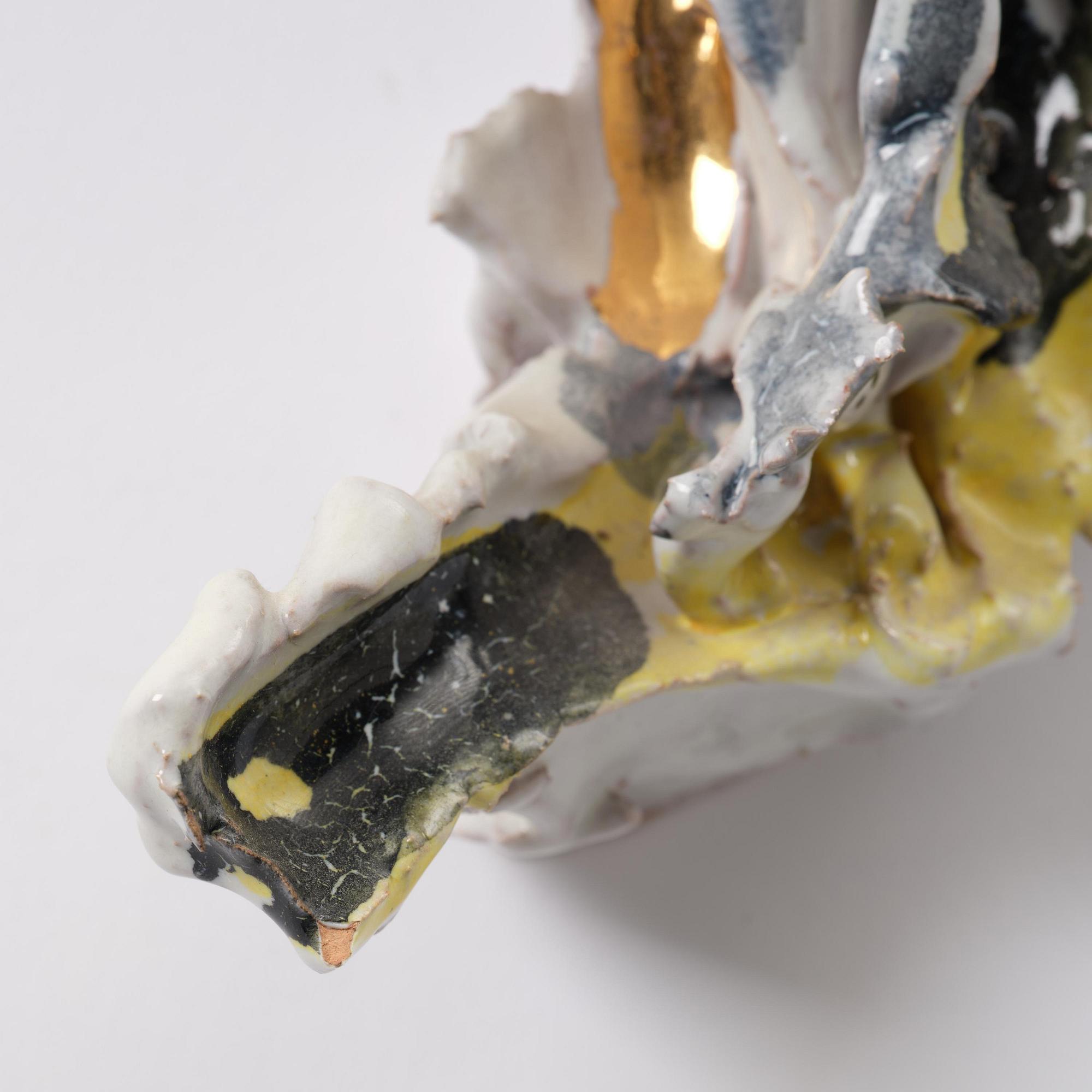
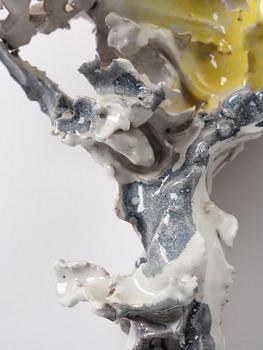
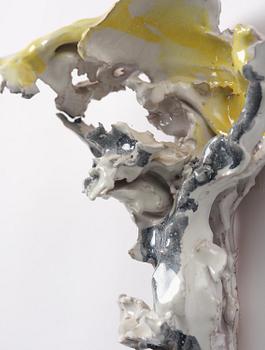
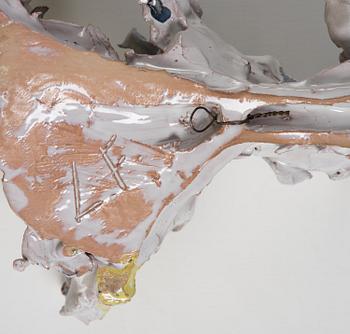
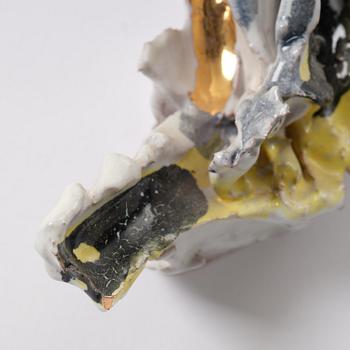
Incised signature L.F verso. Wall sculpture. Glazed terracotta, height 41 cm, width 26 cm. The authenticity of the work has been confirmed by Fondazione Lucio Fontana in Milan.
Provenance
George Costakis (1913–1990), Greek-Russian art collector.
Professor Gustav Giertz (1906–2002), presented as a gift from the above circa 1980.
Thence by descent to the present owner.
More information
Lucio Fontana is today best known for his minimalist paintings featuring bold cuts and perforations, but his early sculptural work would prove highly significant to the development of his later painting. As early as the 1930s and 1940s, Fontana began to develop a more experimental and scientific approach to art, exploring space, light and other dimensions. In his sculptures, he investigated these ideas through cuts, perforations and openings in the material – a visual language that would later become central to his paintings.
Lucio Fontana was born in Rosario, Argentina, in 1899, the son of Italian immigrants. He moved back to Milan with his family at the age of six. As a young man, he studied at an engineering school, but his attraction to art proved too strong. In 1922, he returned to Argentina, where he worked in his father's sculpture studio before opening his own in 1924. Towards the end of the 1920s, he returned to Italy to study at the Accademia di Brera, where he spent two years as a student of the sculptor Adolfo Wildt.
In 1934 and 1936, Lucio Fontana worked intermittently at the renowned ceramic workshops in Albisola. There, he created remarkable amorphous sculptures inspired by wildlife and marine life, including seashells, octopuses and crocodiles. From 1936 onwards, when Fontana returned to a more figurative sculptural language, glazed ceramic works came to dominate his production. During a period of work at the porcelain factory in Sèvres, outside Paris, in 1937, he created heads, figures, animals and still lifes characterised by expressive dynamism, richly worked surfaces and opalescent colours. Among the polychrome ceramic sculptures Lucio Fontana produced during this period are terracotta works whose dancing forms seem almost to dissolve into movement.
From 1939 to 1947, he lived in Argentina once again. During this period, he worked on the Manifiesto Blanco (White Manifesto), in which he advocated a synthesis of the arts and the abandonment of conventional materials, while emphasising the dimensions of time and movement in space. Upon his return to Milan, he founded the artists' group Movimento Spaziale and published two manifestos for Spazialismo (Spatialism). Over time, he became one of the leading avant-garde artists of the first post-war generation and a pioneer whose work has inspired many of today's most prominent artists.
Following his return to Italy in 1947, Fontana created his first works based on his conception of space, which he had initially formulated in his theoretical manifesto. It was also at this time that he began to give his works the title Concetto spaziale (Spatial Concept). His exploration of spatiality through expressive and dynamic forms is particularly evident in the upward-reaching movement of the figures in the groups of works Crocifissi (Crucifixes) and Crocifissioni (Crucifixions). As can be seen in the draped loincloth and flowing folds of the figure of Christ, Lucio Fontana modelled the clay with the aim of achieving a spatial expansion characterised by the formal language of the Baroque. These ceramic works are particularly fascinating because they allow the viewer to experience Fontana's spatial concept in an intensely tactile and sensual way.
More about Lucio Fontana
Up until the 1940s, Lucio Fontana lived and worked in Italy and France, but at the wake of the Second World War he fled to Argentina. In Buenos Aires at the Academia of Altamira, his idea of Spazialismo was born, a artist movement grounded by Fontana which came to define the majority of his career. In his manifesto from 1946, Manifesto Blanco, the artist challenged his peers to steer away from the tranditional and academic elements of art, urging them to include new techniques and darw to create art into the fourth dimension.
A great reasoning behind Fontana's popularity was his ability to combine sculpture and painting. His choice of forms was inconsistent during the entirity of his career, from geometirc perfections to more undefinable forms. It didn't matter so much about the end result, but rather the process it took to get there. Fontana's art was a product of its time, no matter the medium or technique.
Already in 1947, Fontana began working with the concept Concetto Spaziale. A few years later his Pietre series was added where he seemlessly combines sculpture and painting by applying thick layers of paint on a canvas and thereafter adding a collage of colourful glass chips. Not long after that Fontana entered a period with Buchi, where he made holes in the canvas to break up the two dimensionality of the composition in search for the space behind the painting. At the end of the 1950s he began his work with Tagli, whereby he sliced his canvas which continuously applying his Buchi technique, a style which he continued with up until his death in 1968. Through Concetto Spaziale, Fontana managed to blurr the lines between painting and sculpture.
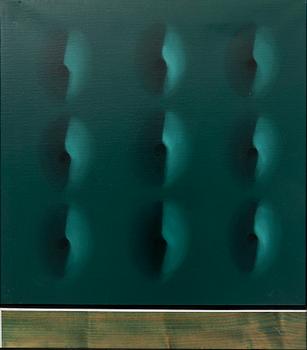
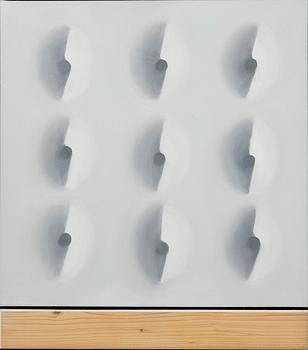
His first Tagli was created at the end of the summer and early autumn of 1958 when Fontana was almost 60 years old. His canvases were filled with small diagonal incisions which he grouped together. Fontana experimented with size and form, and with time the slices became less and more powerful. To reach the right effect, Fontana was incredibally precise with the surface of the canvas, coating it first with a matt, often water based, monochrome colour. His pieces with only one slice are marked as "Attesa" and the canvases with multiple slices are marked with the plural form, "Arrese". The meaning "expectation or hope" gives an additional dimension to the work. Fontana covered the back piece with "telleta," strips of deep black fabric to create the illusion of an empty space behind the canvas. In Tagli, destruction and creation merge. Every slice is formulated through a definitive and irreversable gesture. Every action which results in a wound upon the canvas simultaneously allows for a new sculptural perspective out into the black neverending space behind the canvas. Fontana's artistic journey with Tagli and Buchi happened correspondingly with the 1960s space race.
"As an artist, when I work with one of my perforated canvases, I have no desire to create a painting; I want to create an opening for space, to give art a new dimension, to bind it to the cosmos, as it endlessly continues beyond the boundaries of the painting. With my innovation of holes drilled through the canvas in repeated formations, I do not wish to decorate a surface, but rather to break up its dimensional limitations. Behind the perforations lies a newfound freedom for interpretation, but also, just as inevitably, an end to art." (Lucio Fontana, 1966)
Fontana came and had several exhibitions in Sweden during the 1960s. One of his greatest admirers was the gallerist Pierre Lundholm at Galerie Pierre in Stockholm who not only arraned exhibitions in 1964, 1967, and after Fontana's death in 1971, but also stored and sold Fontana's work. Fontana even managed to exhibit at the Swedish French Art Gallery in 1965 as well as have a large exhibition at Moderna Museet in 1967 in Stockholm through the initiative of Pontus Hultén. His paintings were admired by the most asteemed collectors, and with the wider public, his works were preceived as bizzar and incomprehensible. Today Lucio Fontana is praised for his art that stood as a testament beyond his time.
Read moreFor condition report contact specialist

What will the transport cost?
Shipping can only be arranged by contacting specialdelivery@bukowskis.com.
Covered by droit de suite
Image rights
The artworks in this database are protected by copyright and may not be reproduced without the permission of the rights holders. The artworks are reproduced in this database with a license from Bildupphovsrätt.