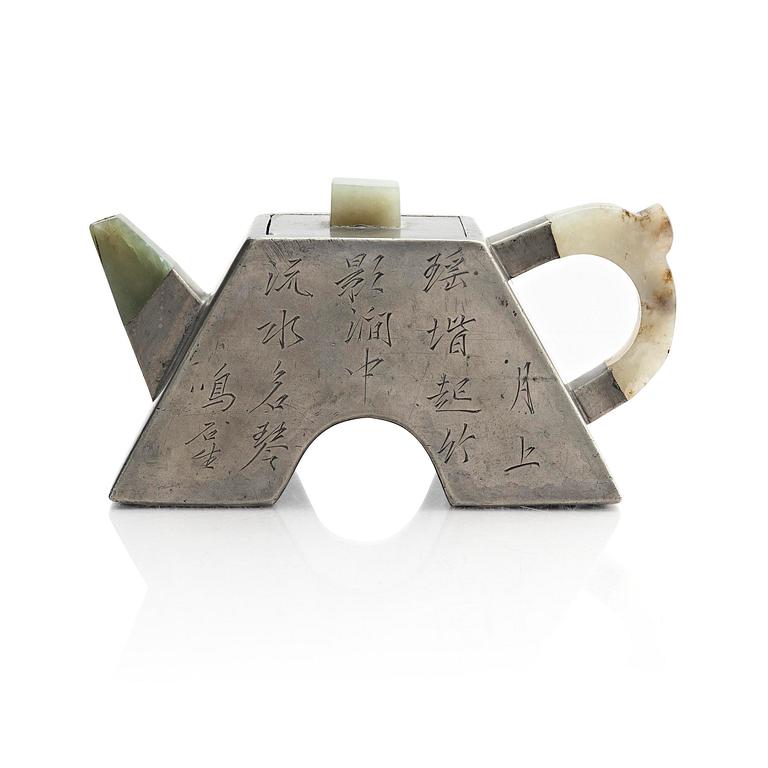
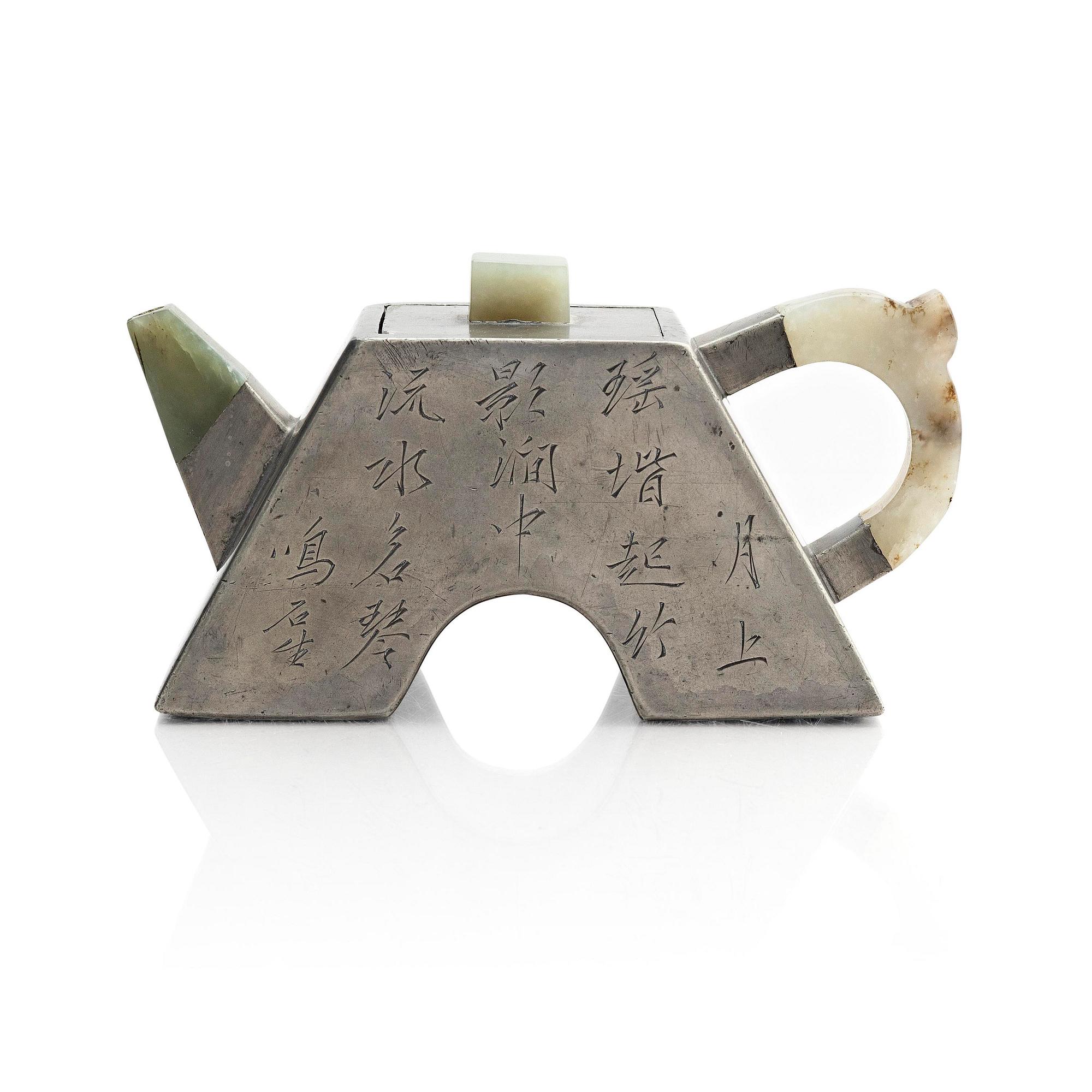
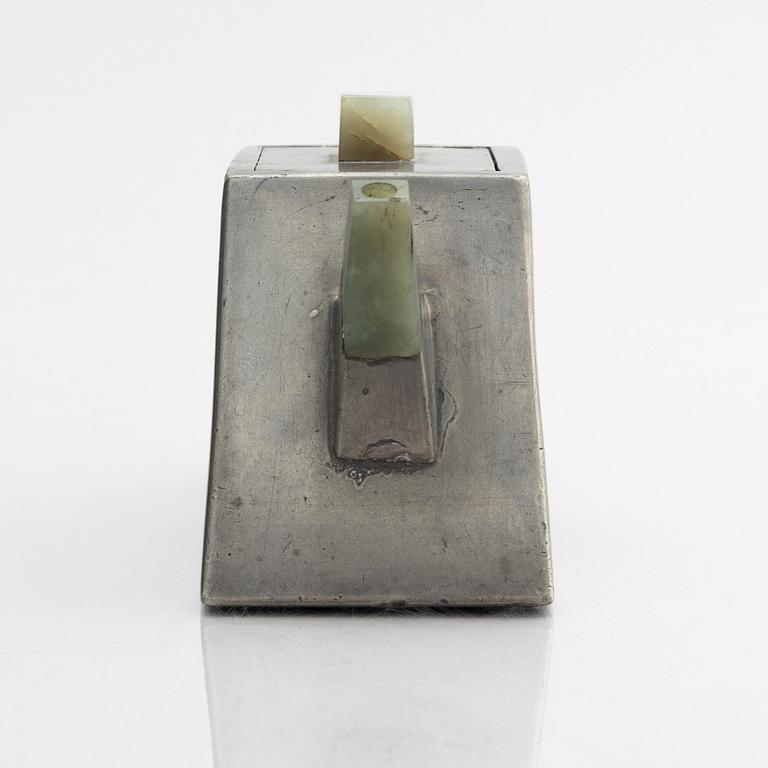
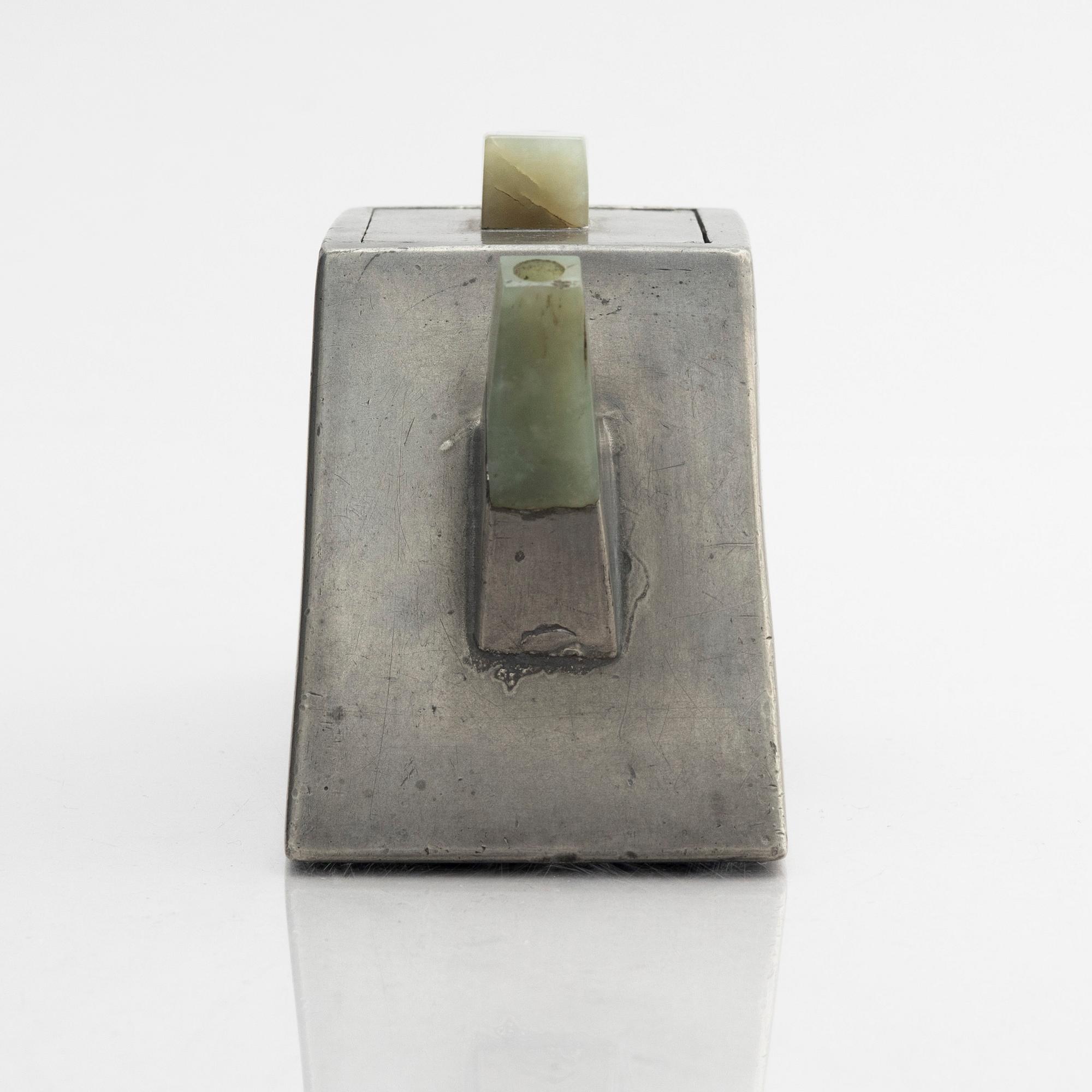
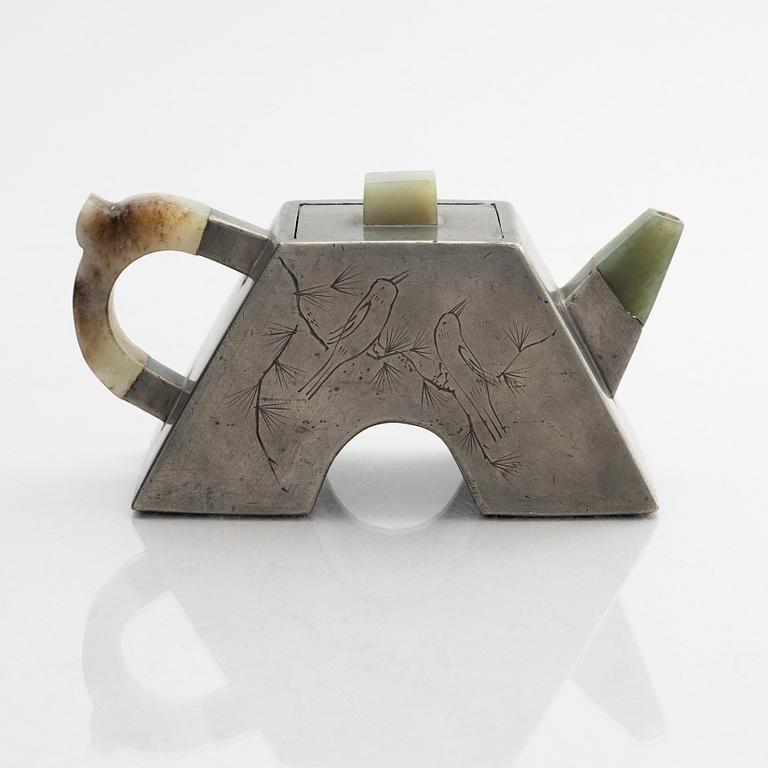
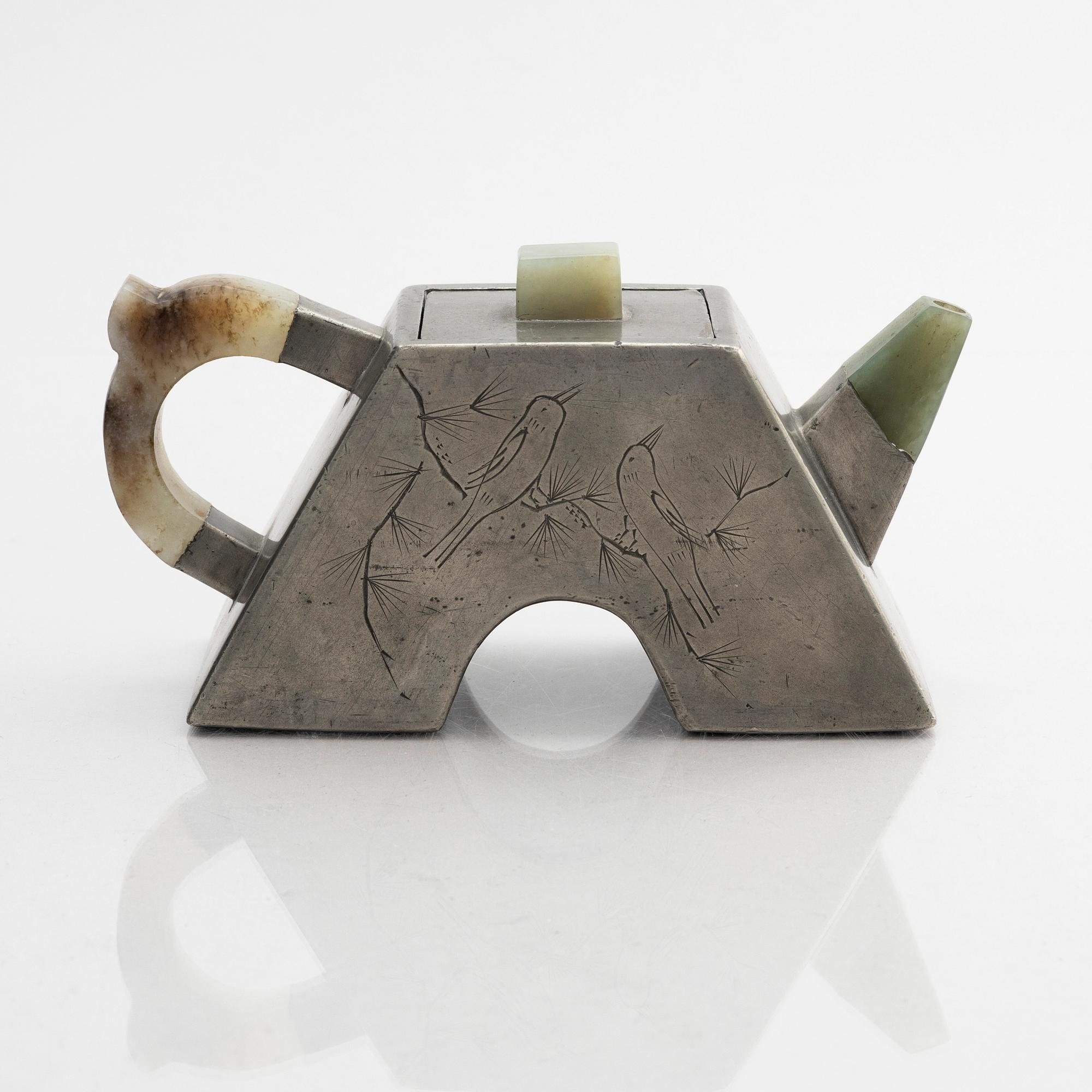
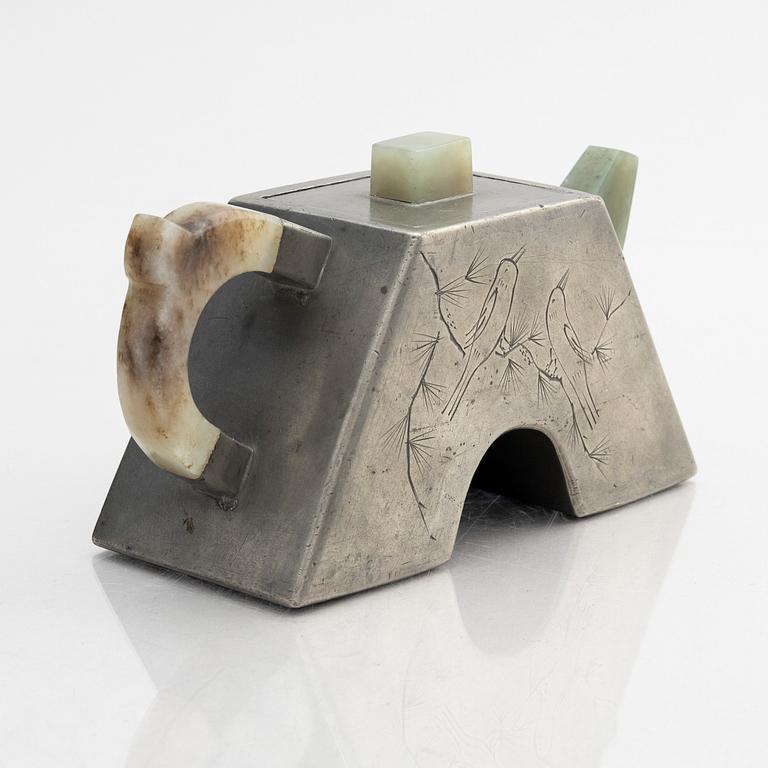
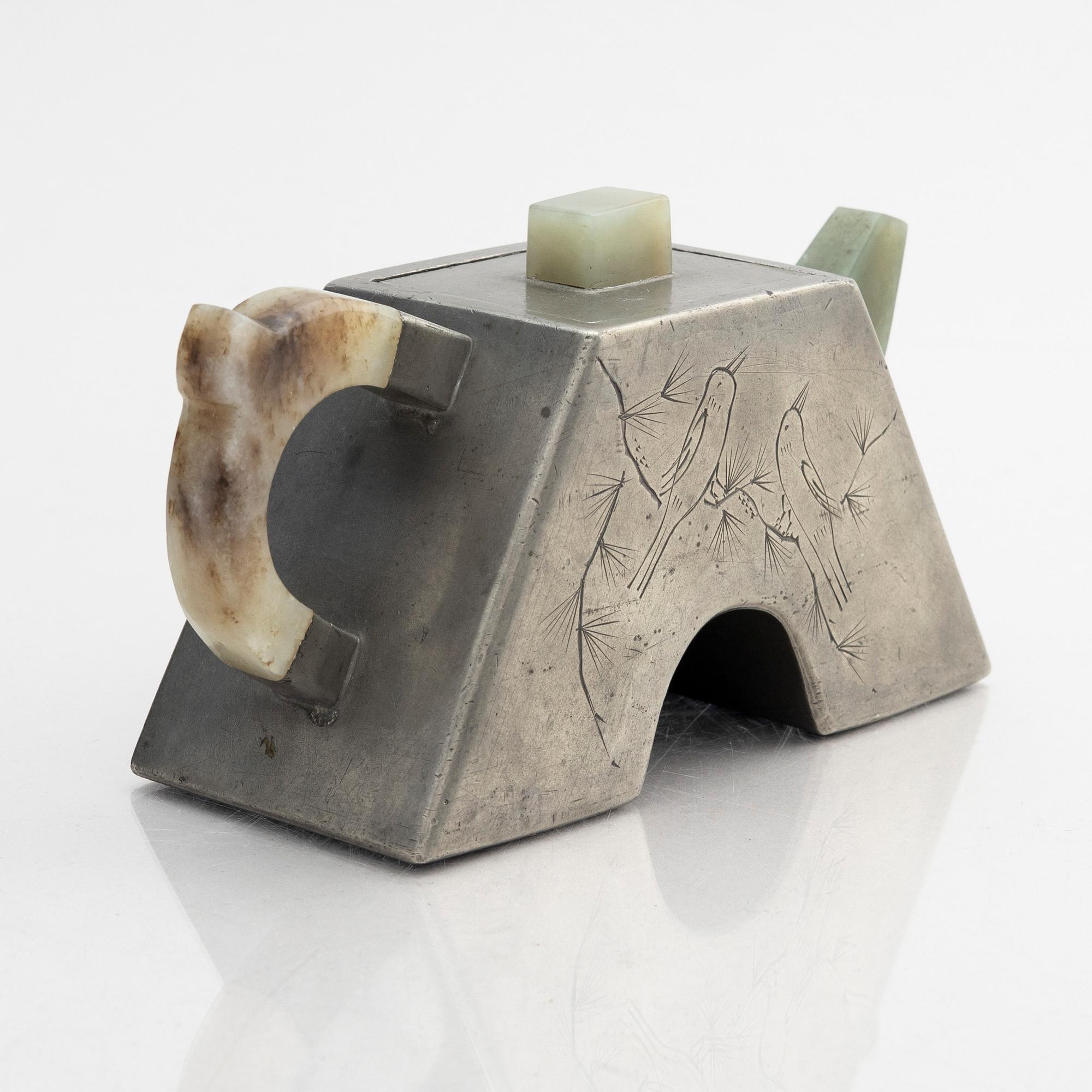
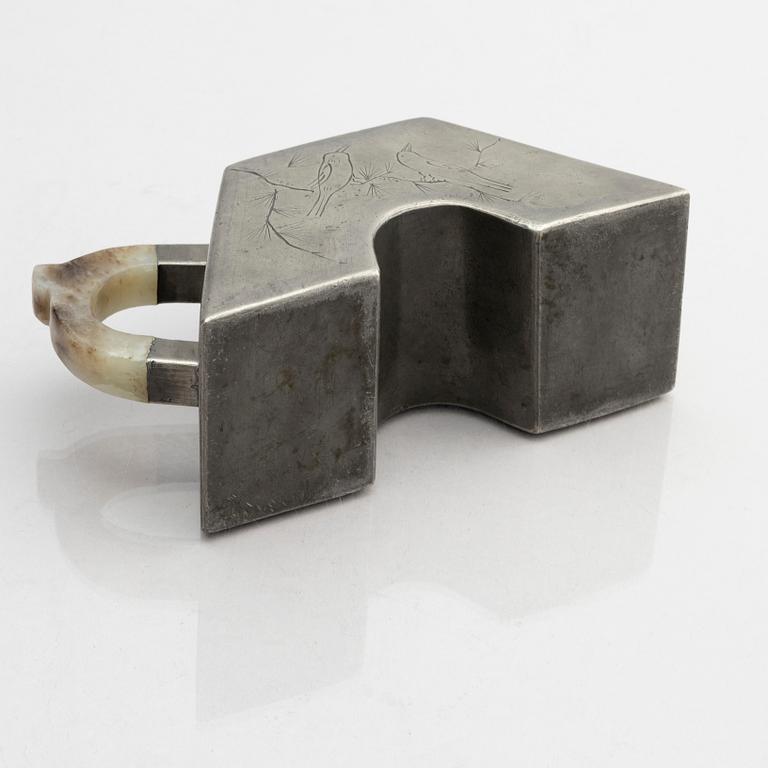
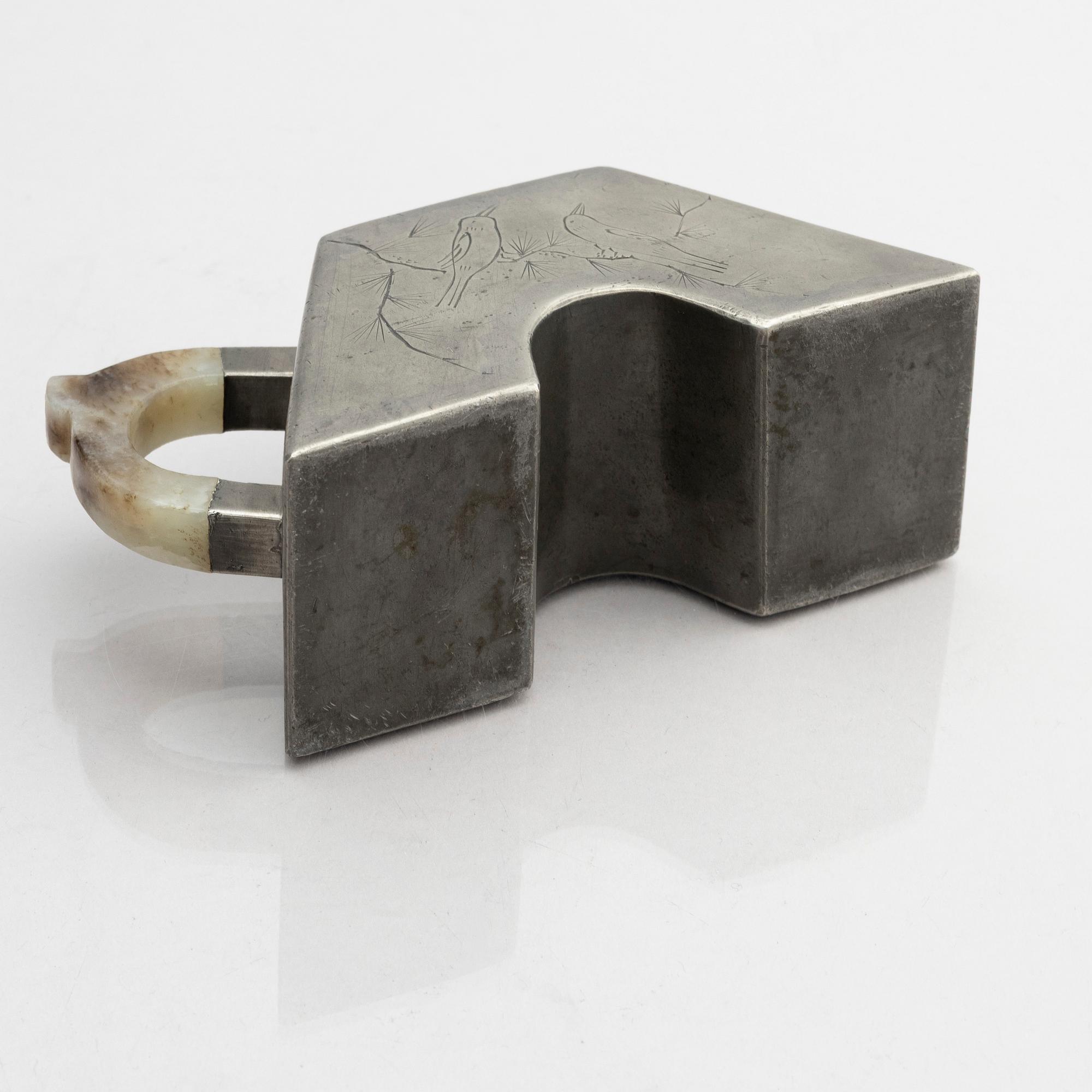
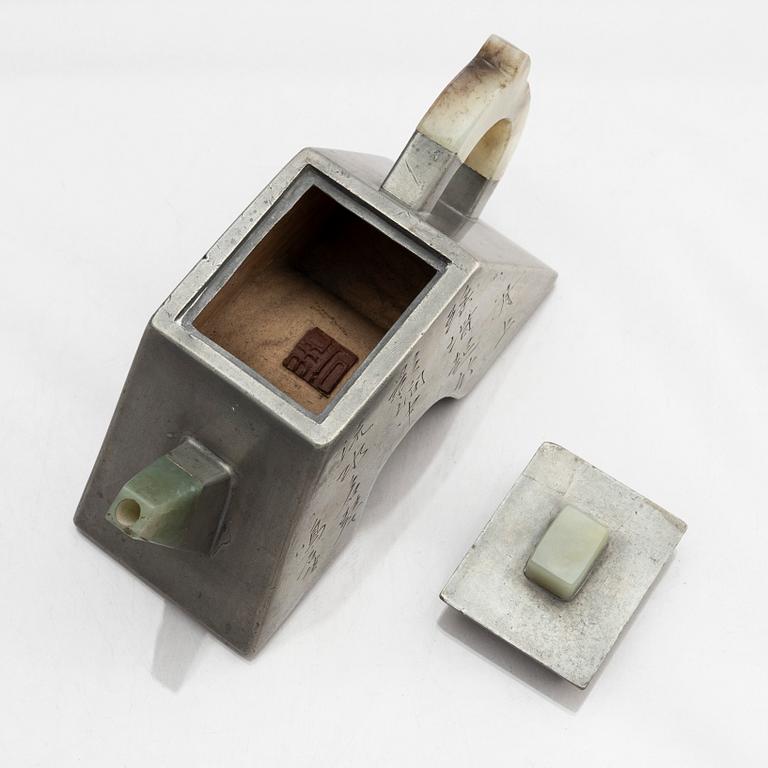
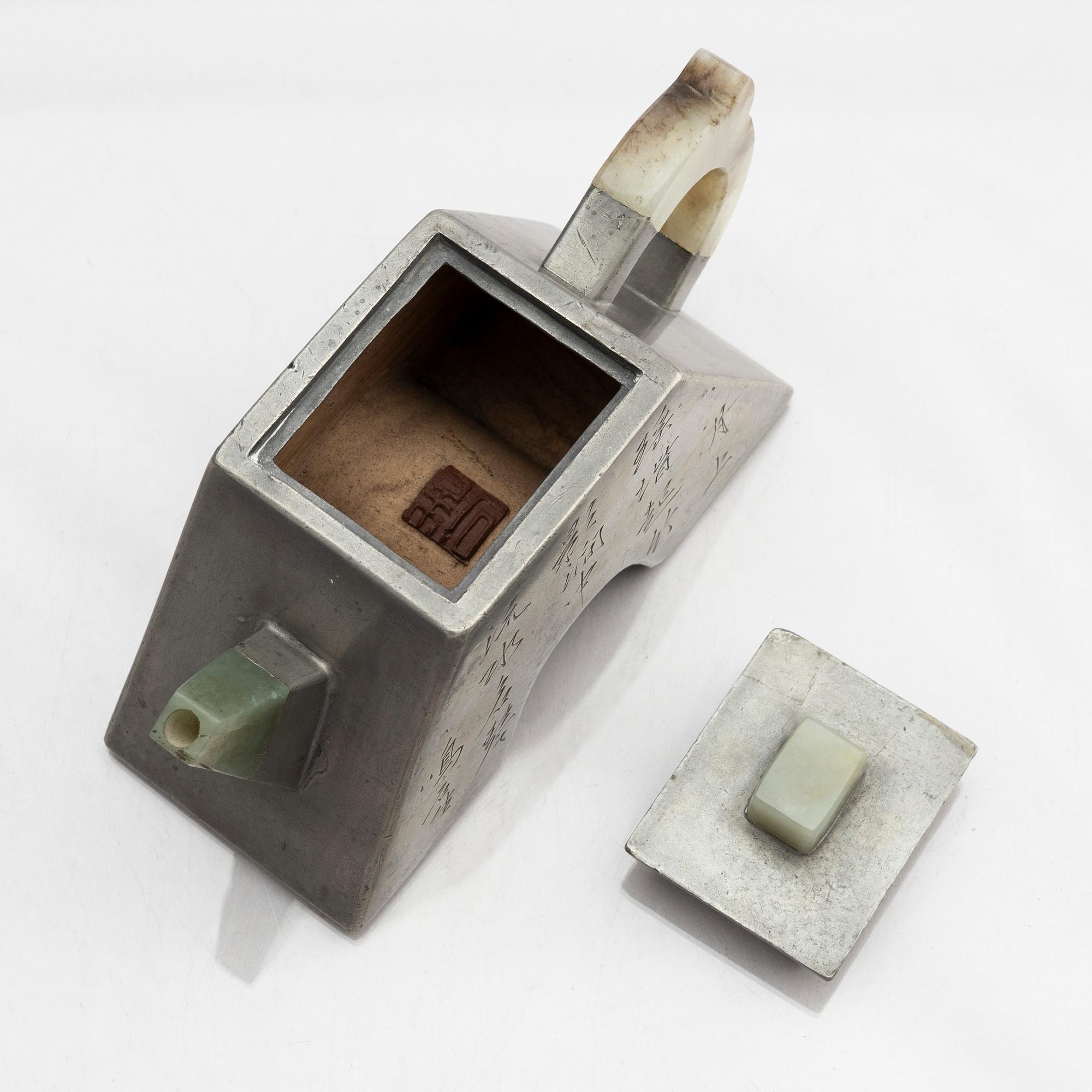
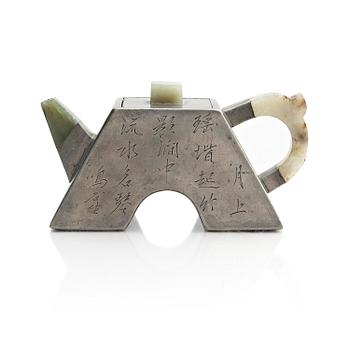
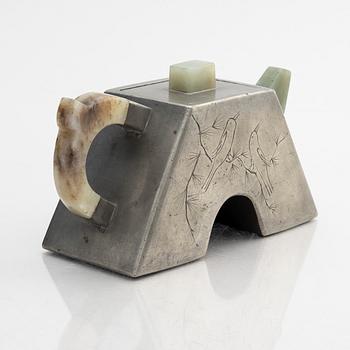
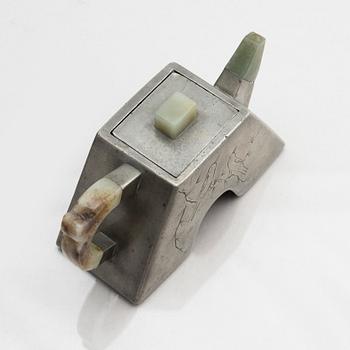
A pewter-encased Yixing teapot and cover, late Qing dynasty, 19th century. Signed Zhu Jian.
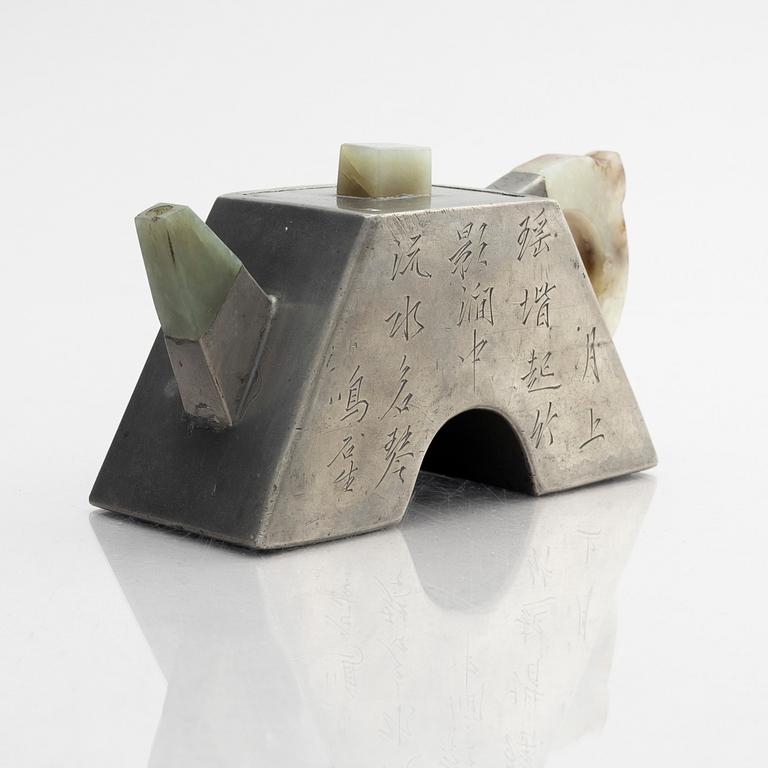
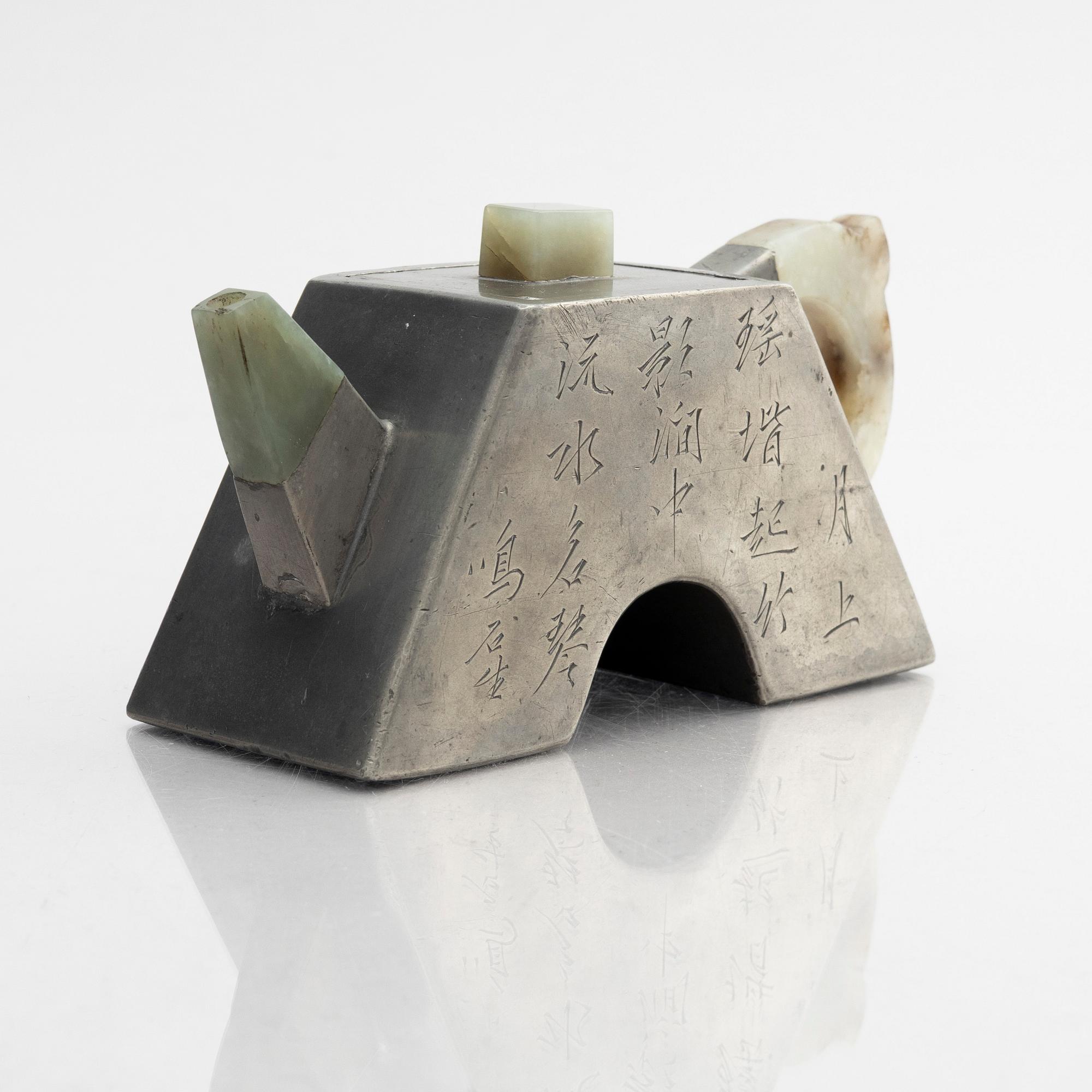
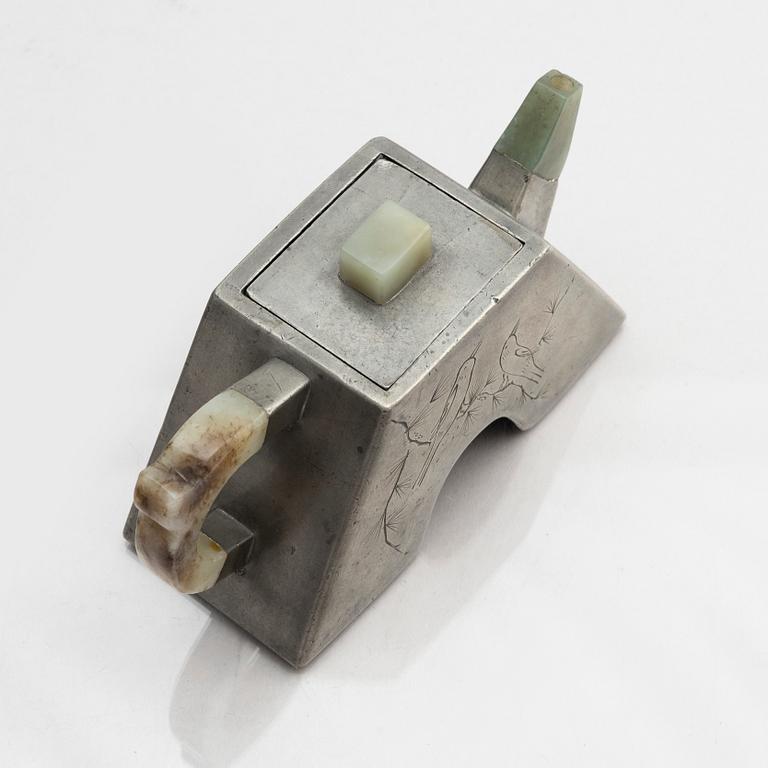
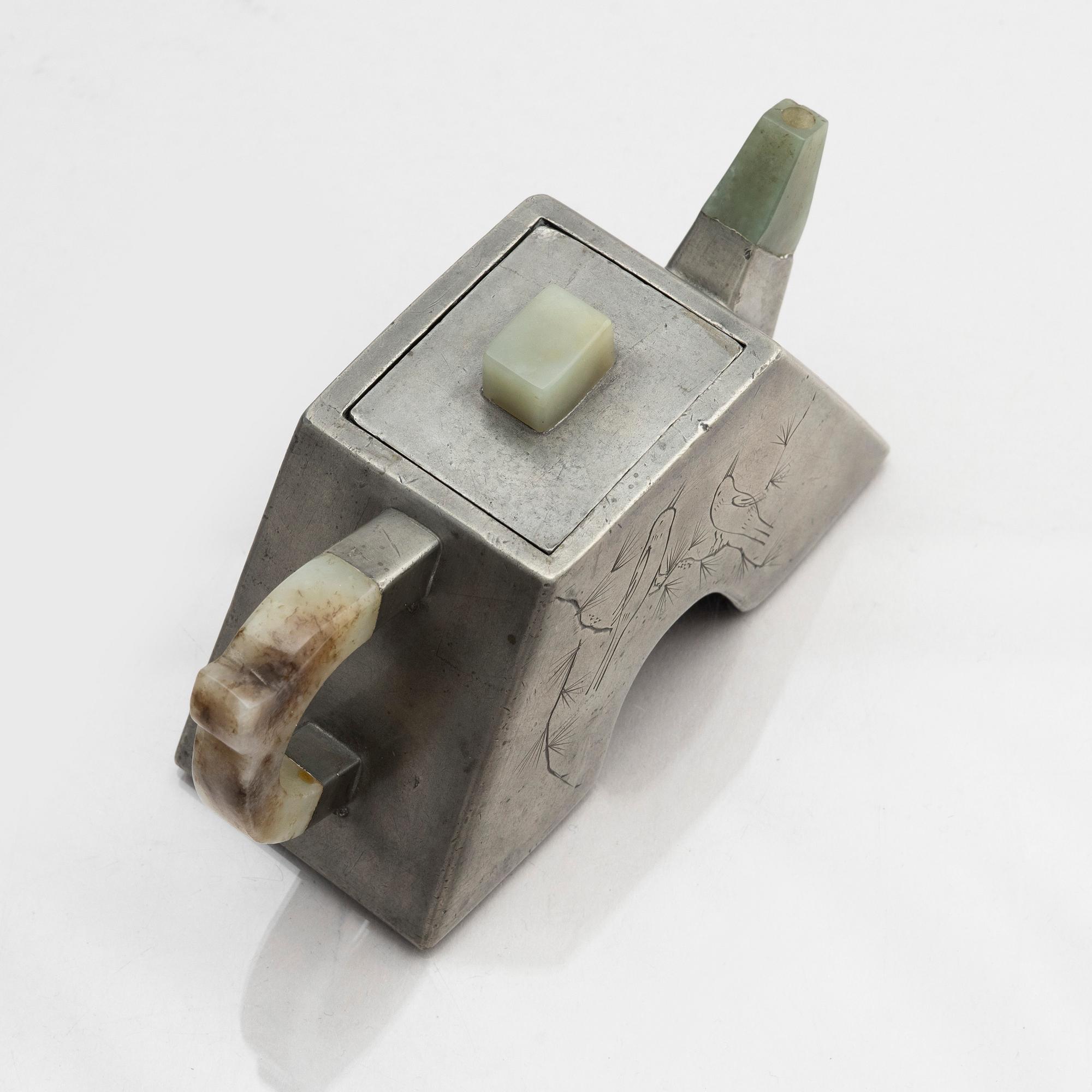
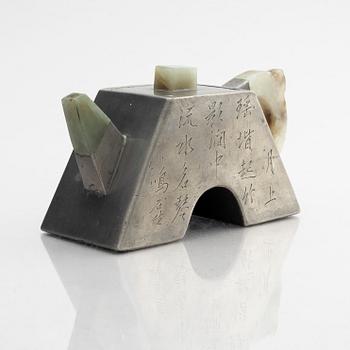
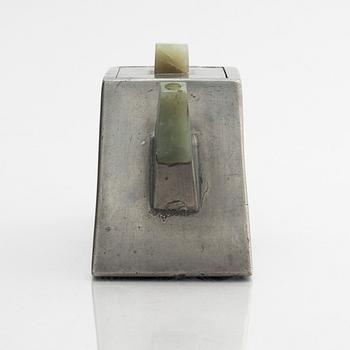
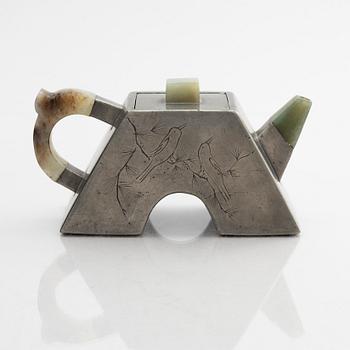
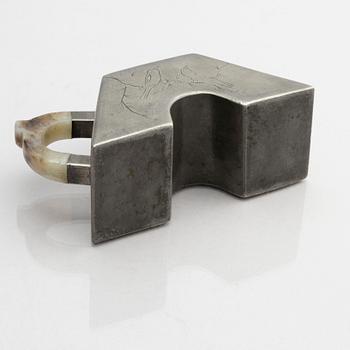
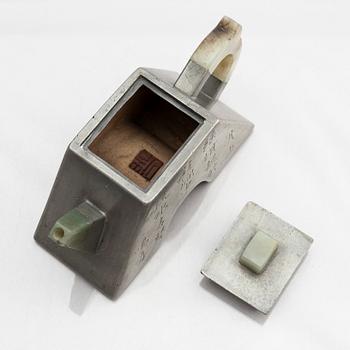
The brown clay teapot shaped as a 'waning moon', and signed to the yizing ware. Its exterior surfaces enclosed within a pewter covering incised with a birds on a branch design on one side and reverse inscribed with a Tang poem by Wan Wei (699-759). The spout and finial to the fitted lid inset with pieces of olive green hardstone. Length 15 cm. Height 7.8 cm.
Wear.
Literature
Another pewter-mounted teapot by Yang Pengnian, similar engraved with flowering prunus and inscribed by Zhu Jian, is illustrated by K.S. Lo, The Stonewares of Yixing: from the Ming period to the present day, Hong Kong, 1986, pl. 40, and discussed, pp. 213-5.
More information
The Yixing teapot with pewter overlaid originated during the Jiaqing reign of the Qing dynasty and reached peak popularity in the Daoguang period. These teapots are renowned for their intricate craftsmanship and refined materials. The production process begins with forming the teapot body from clay, which is then fired and subsequently encased in pewter. Jade is inlaid separately into the spout, knob, and handle, earning the name Sanxiang hu (triple-inset teapot).
For condition report contact specialist

What will the transport cost?
Others have also viewed