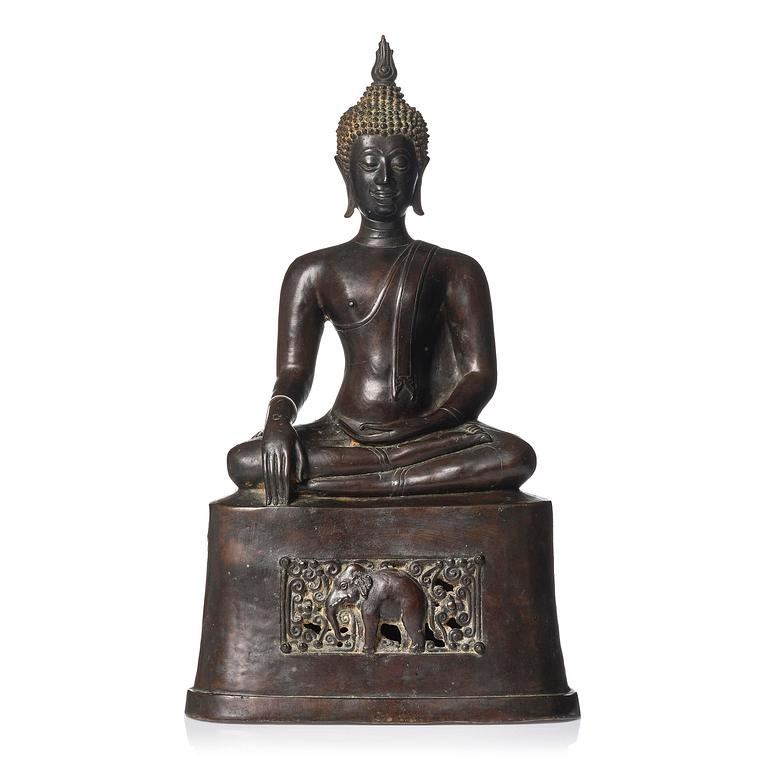
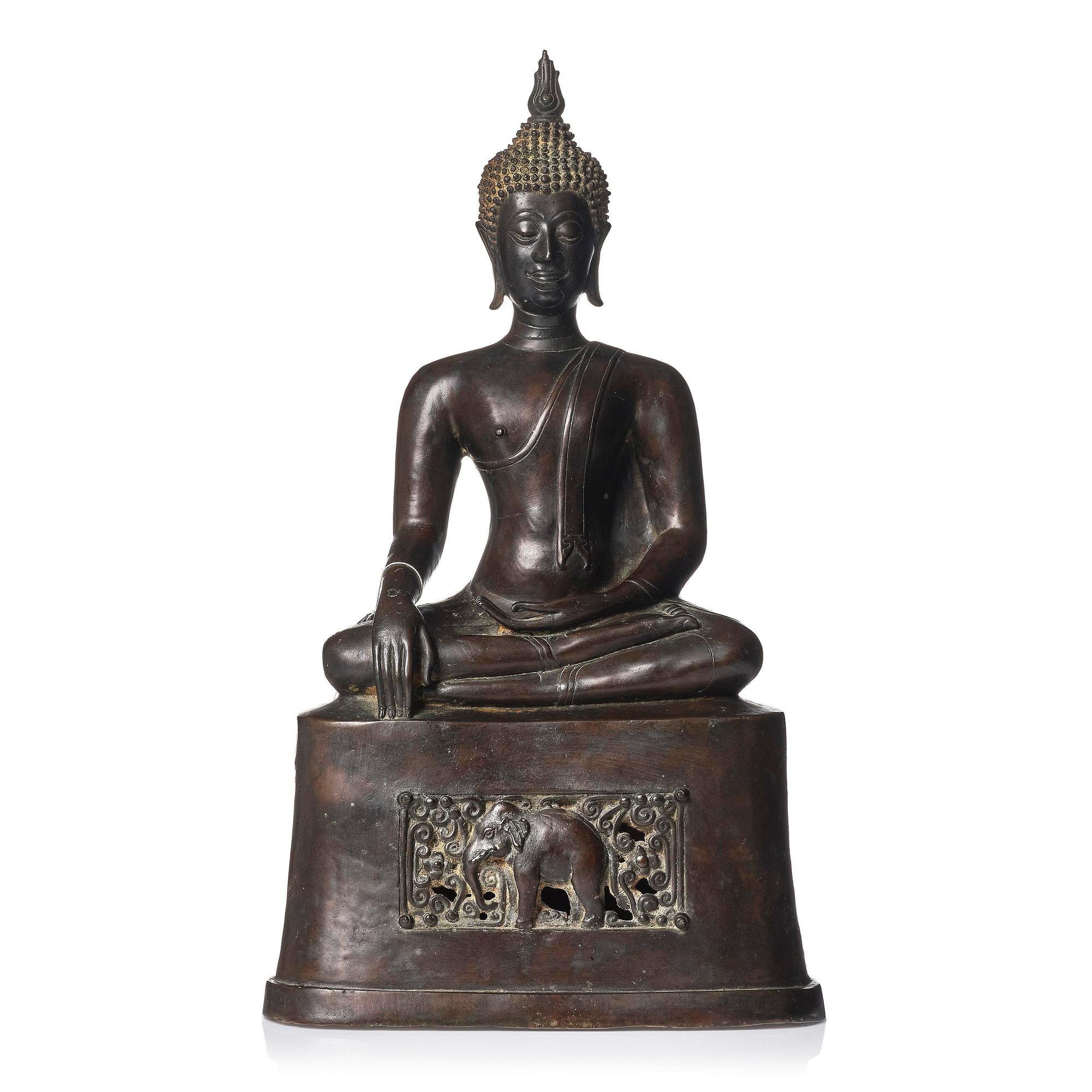
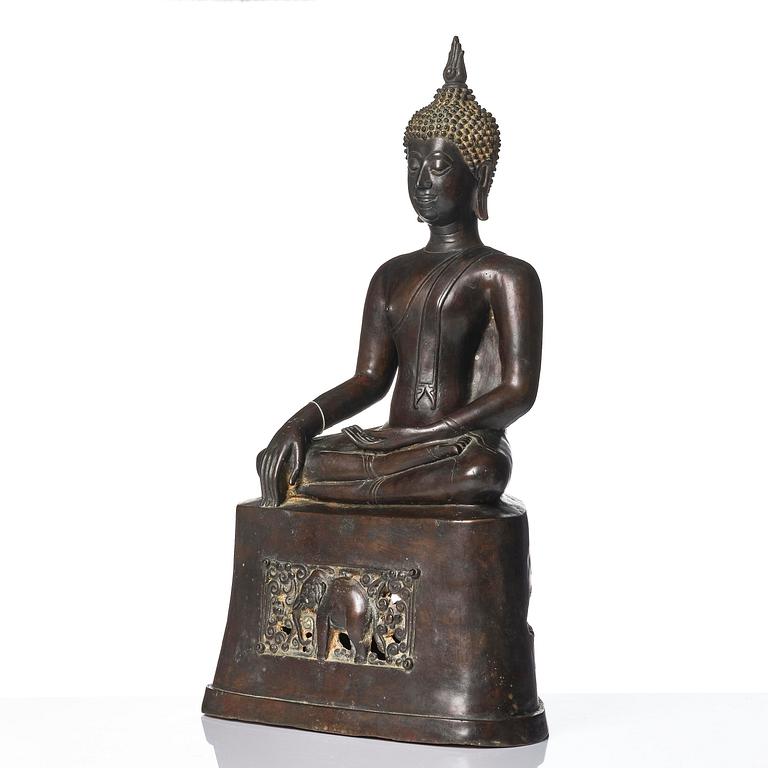
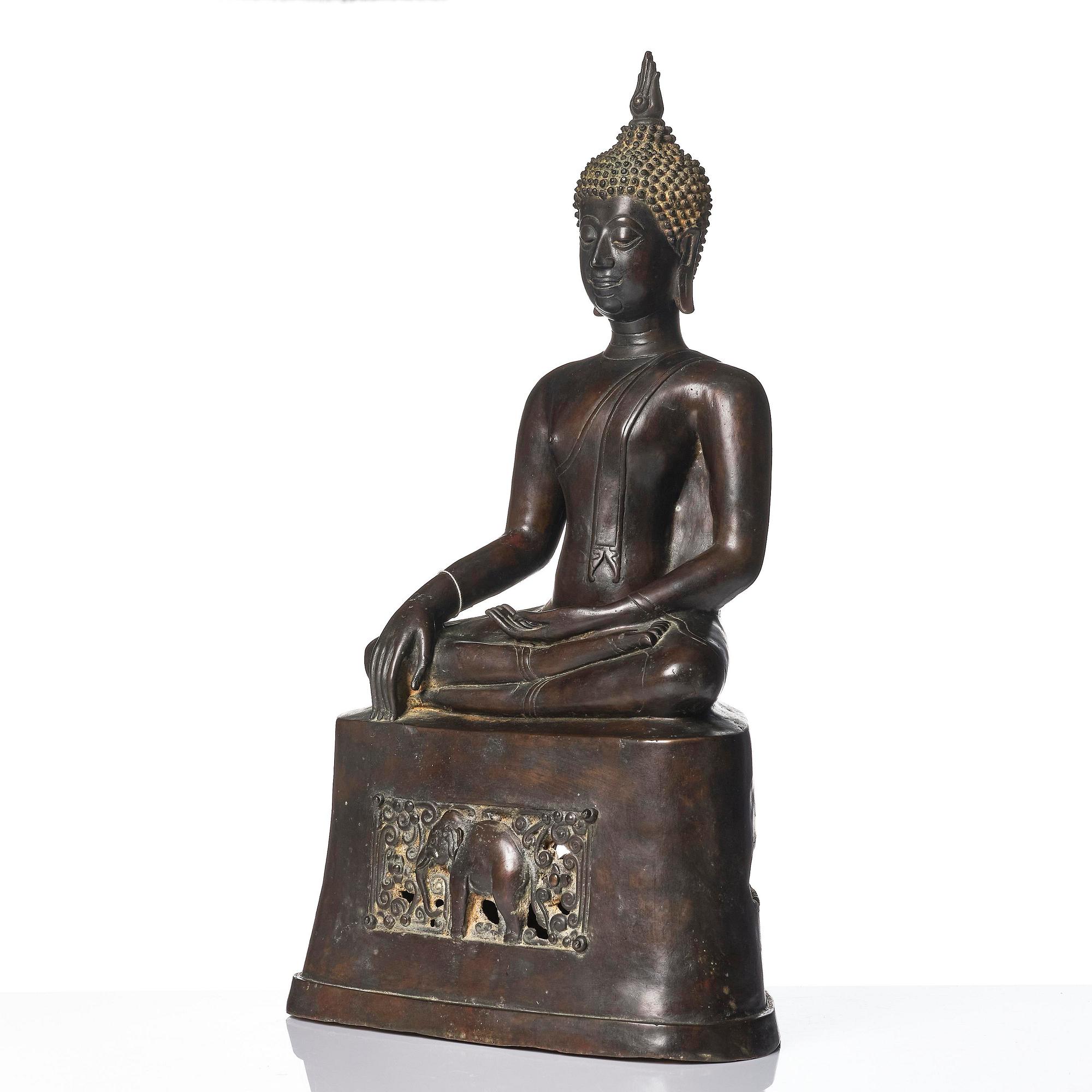
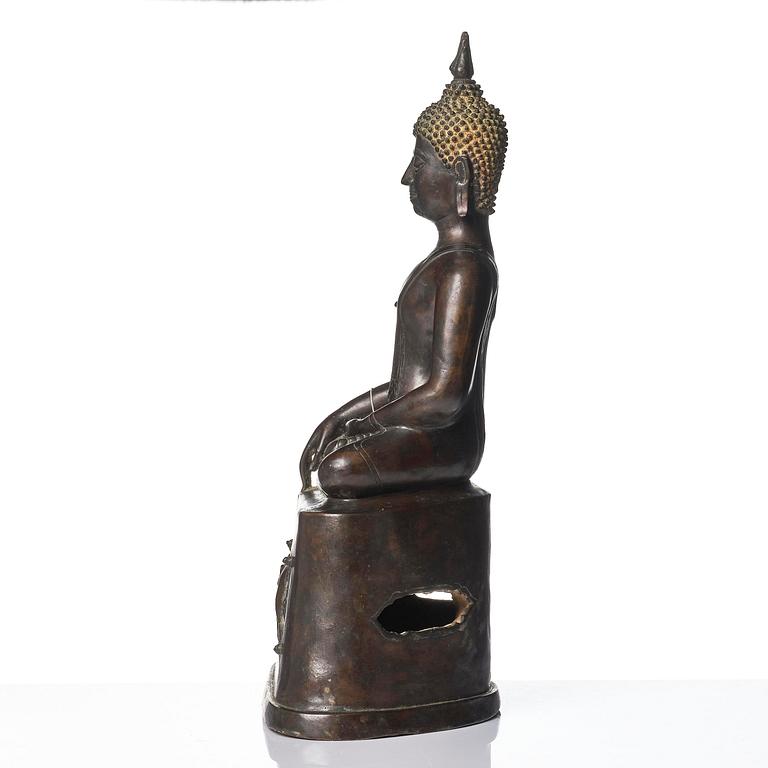
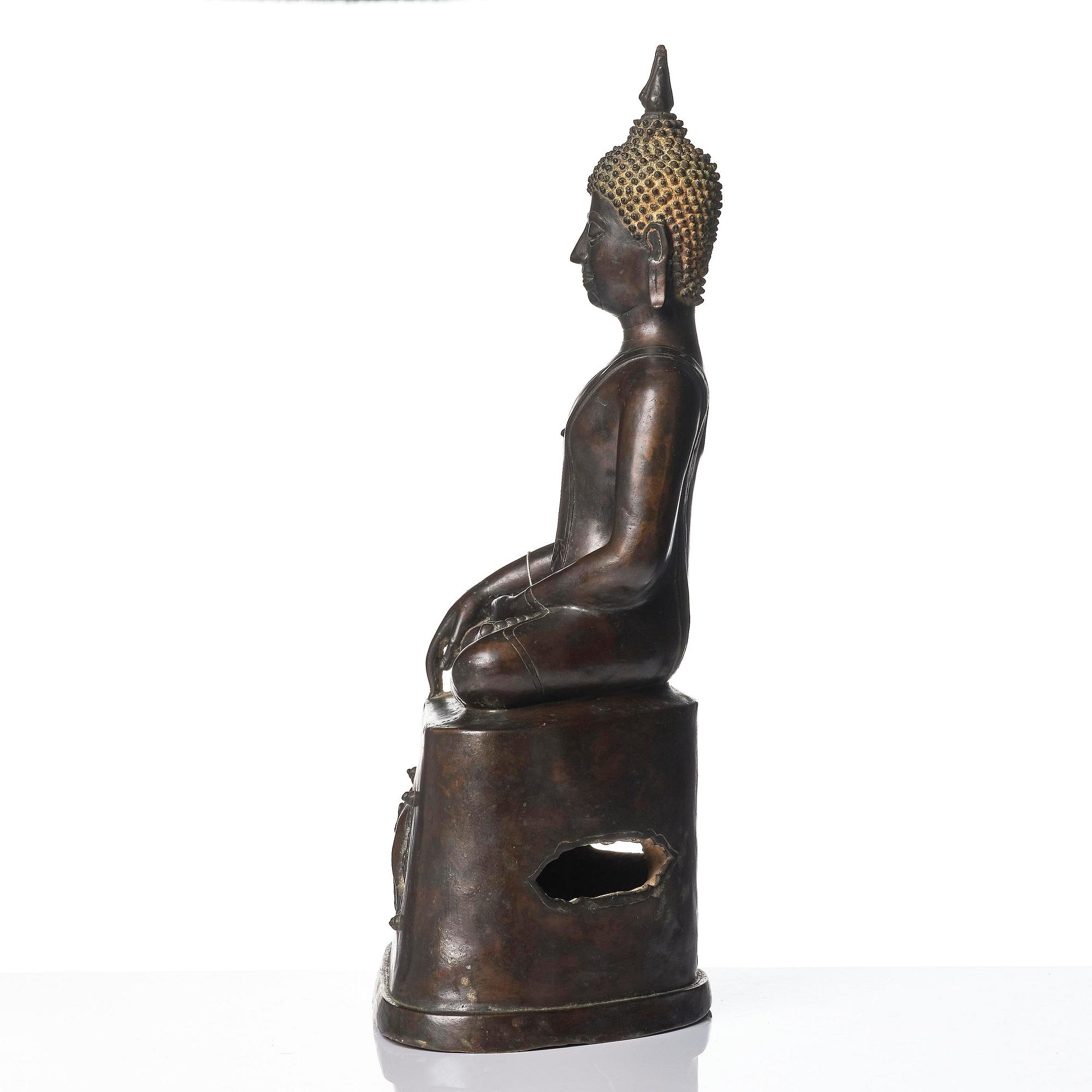
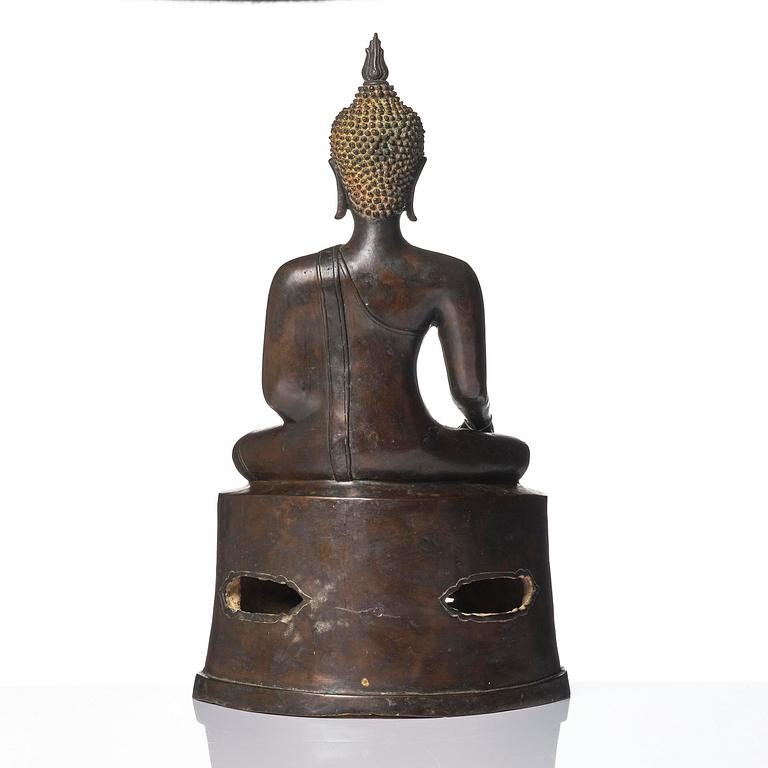
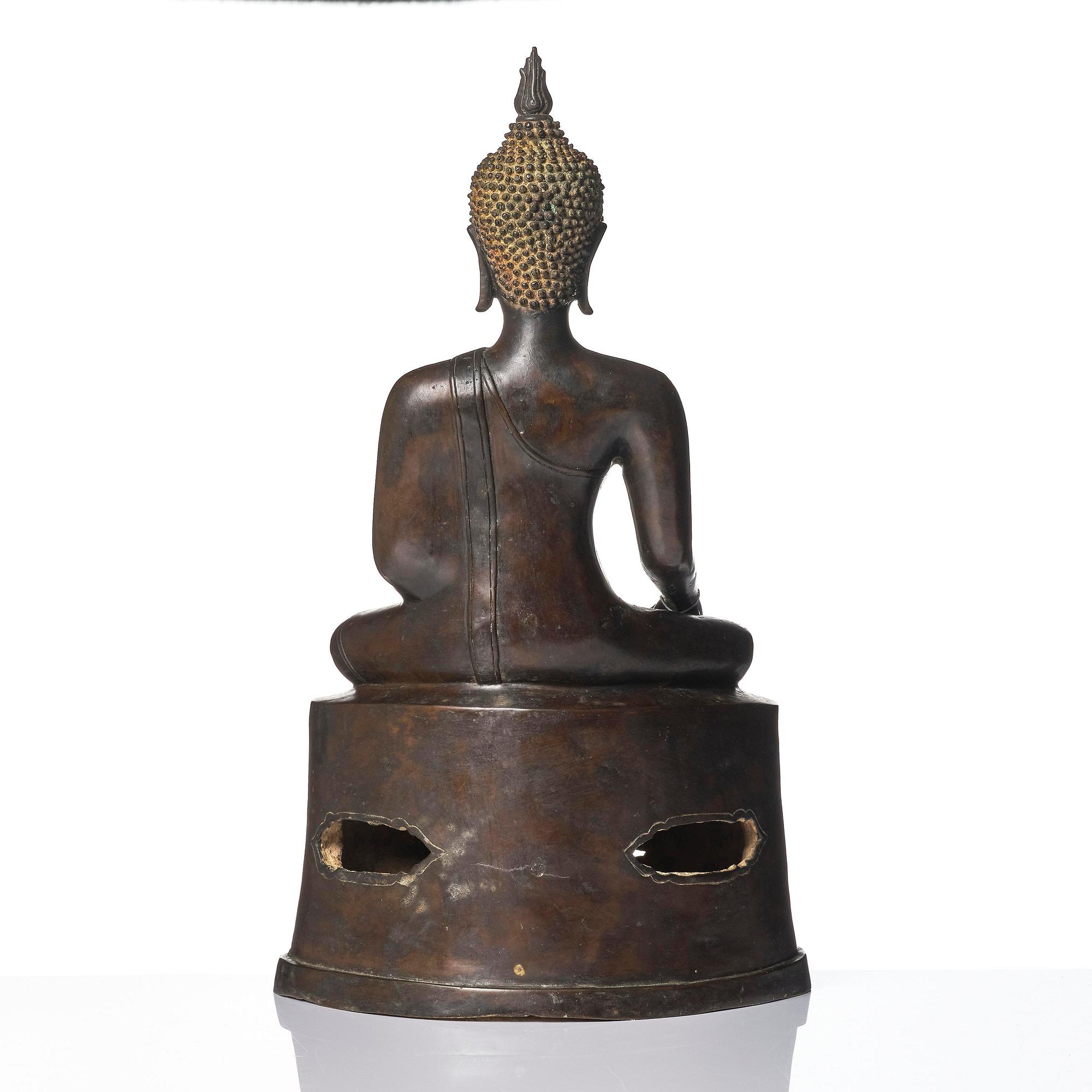
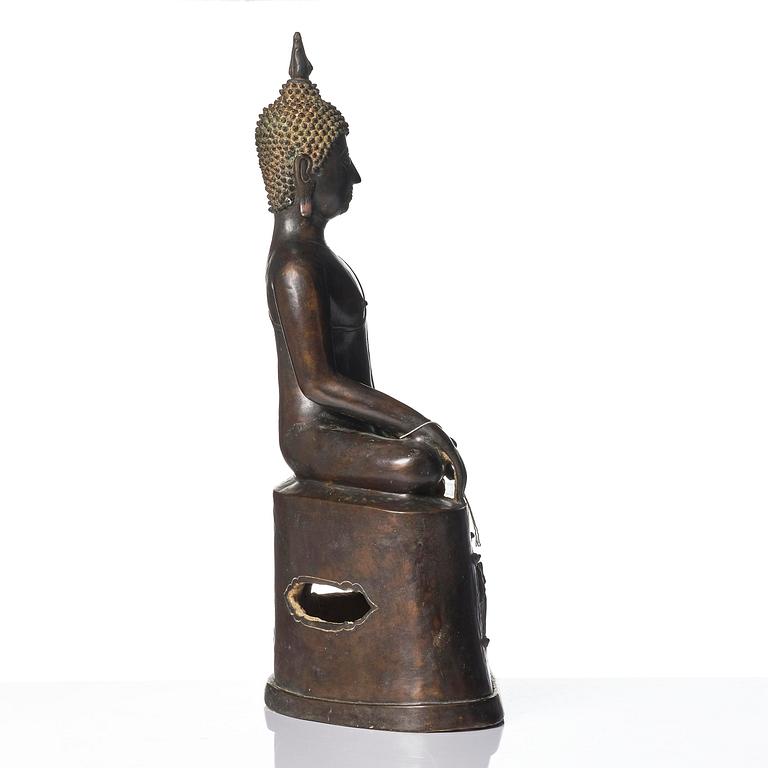
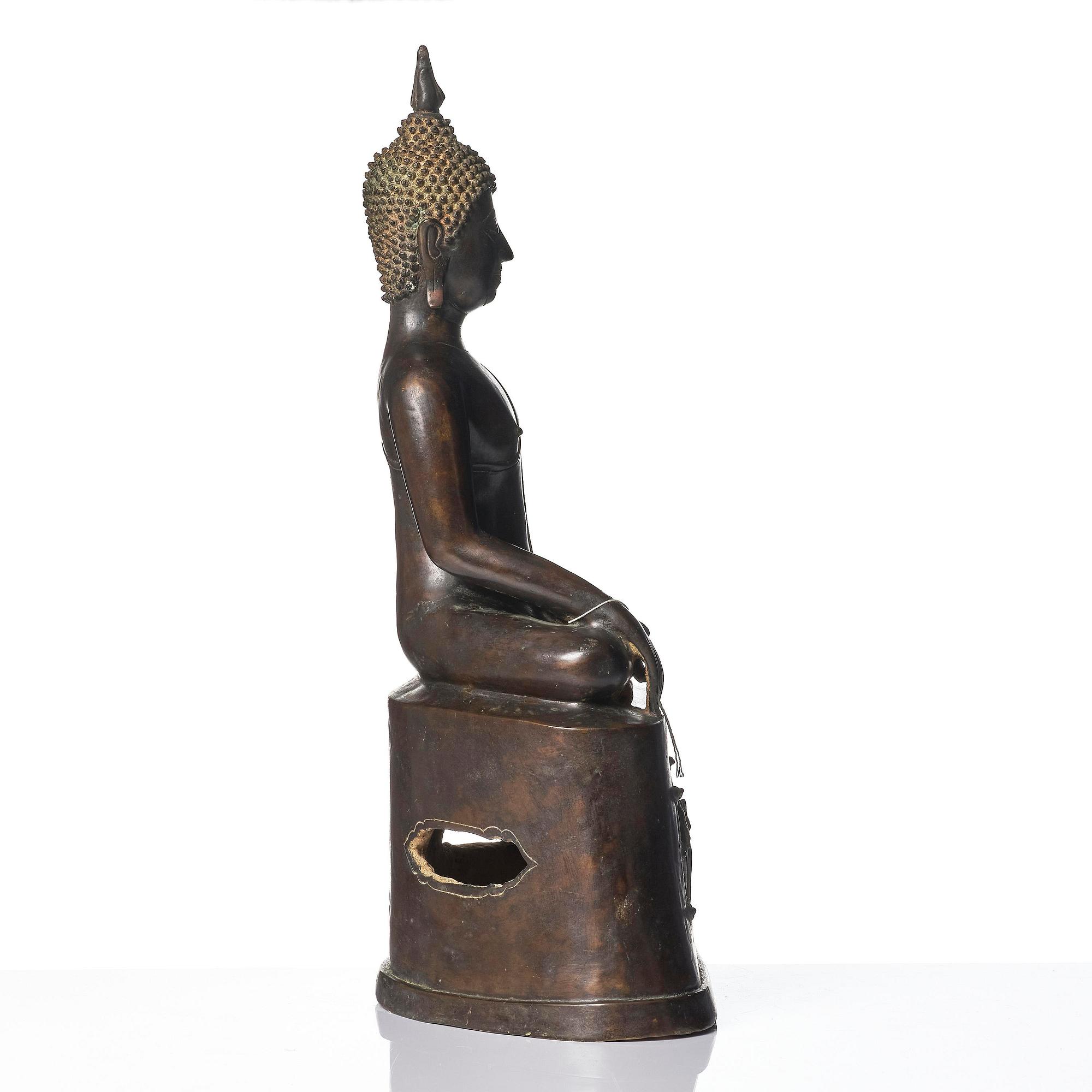
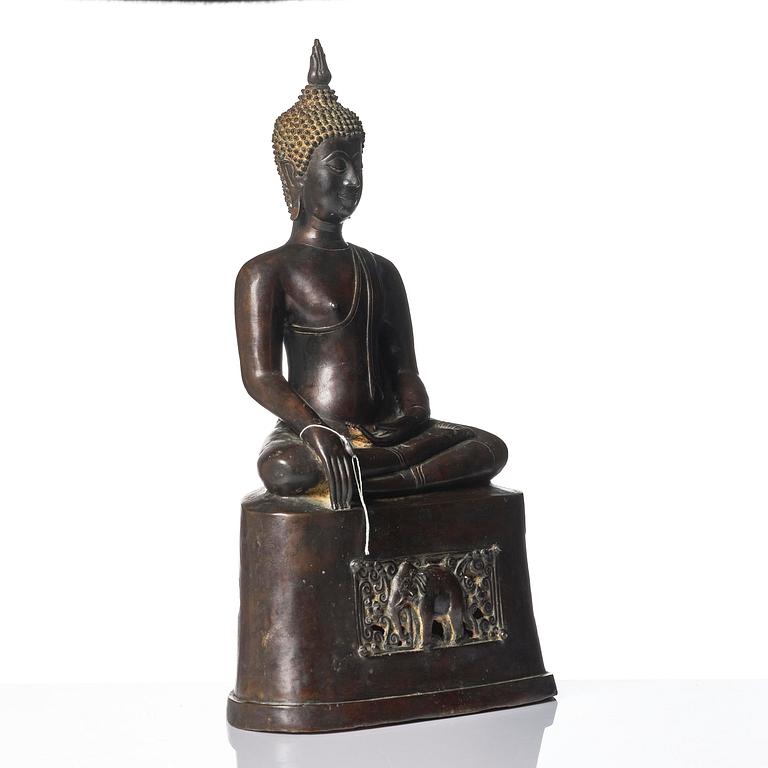
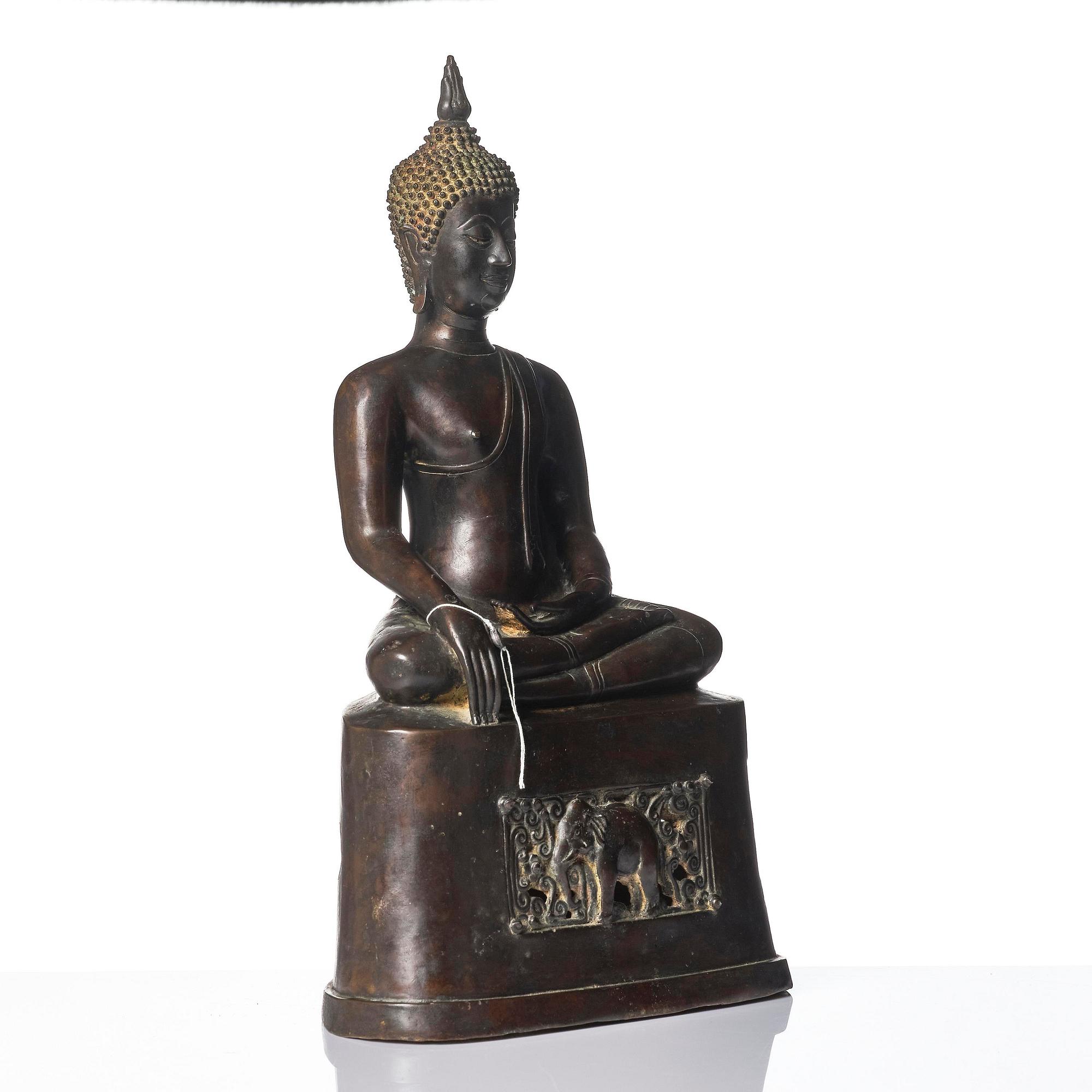
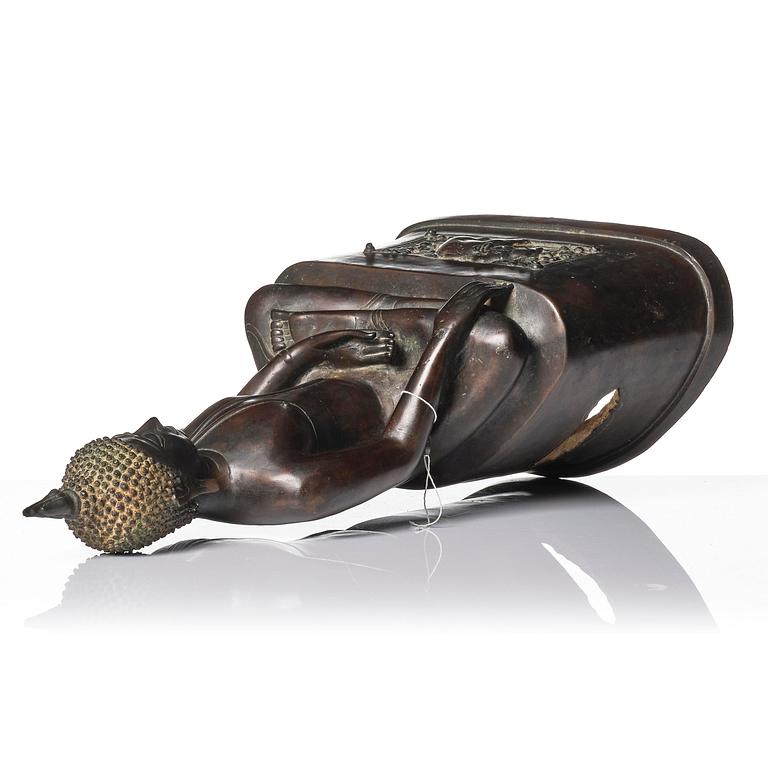
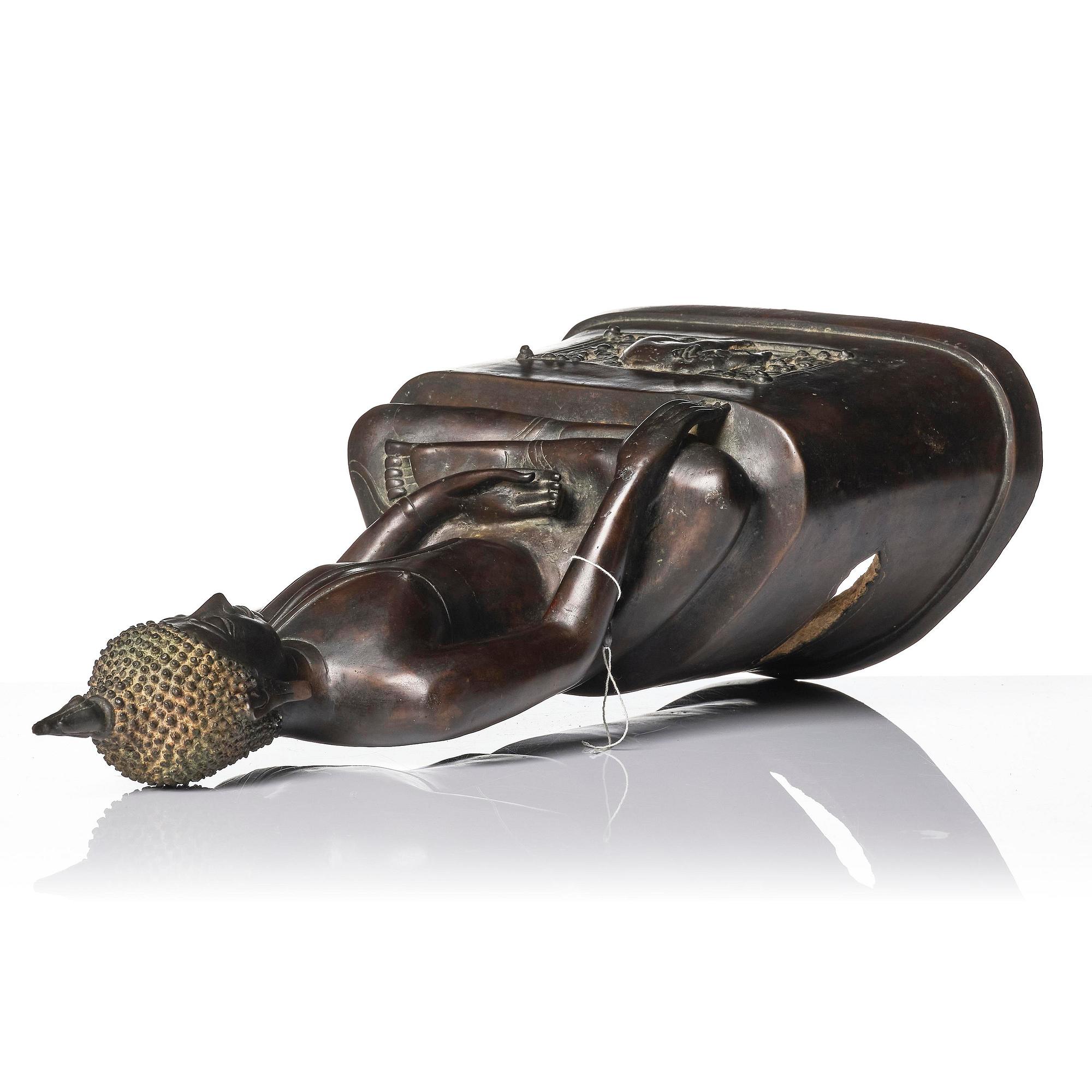
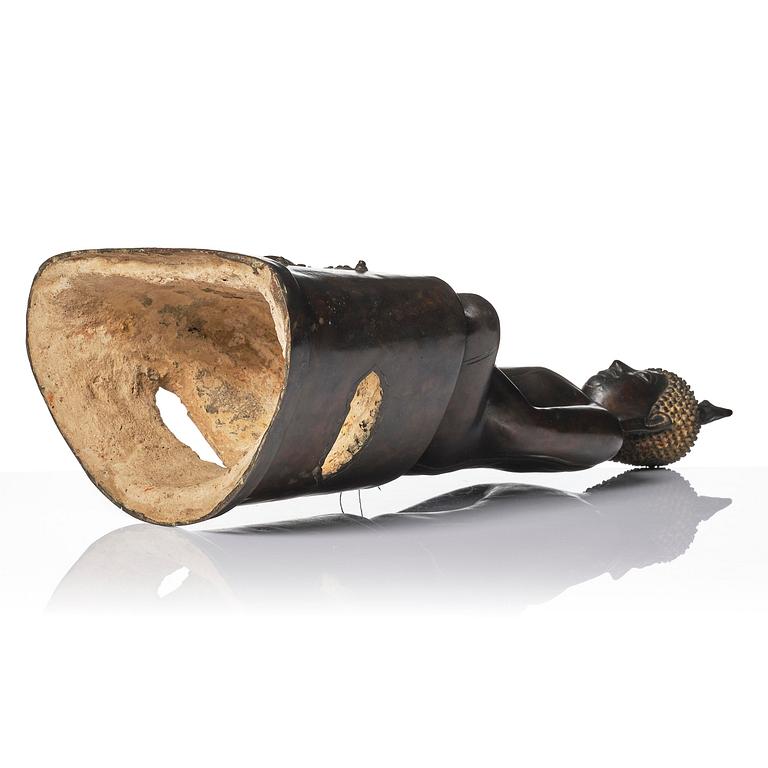
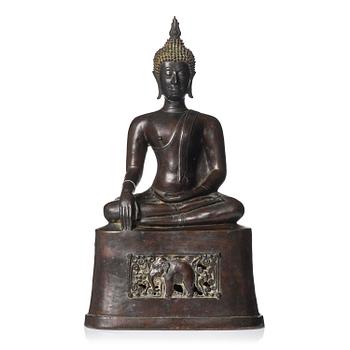
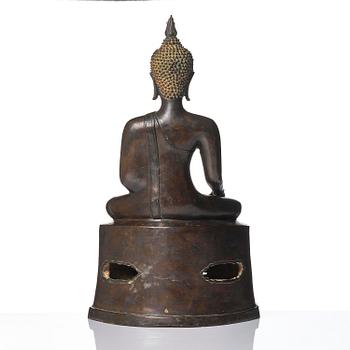
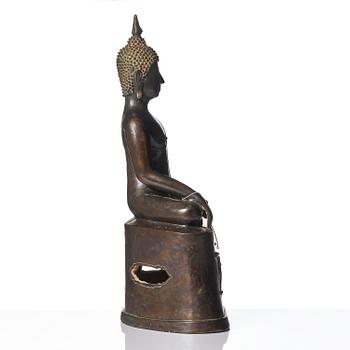
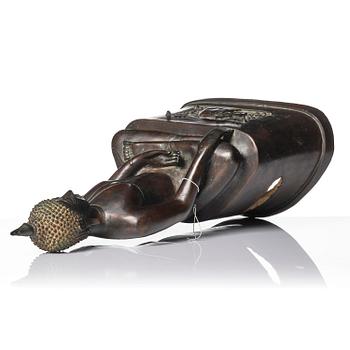
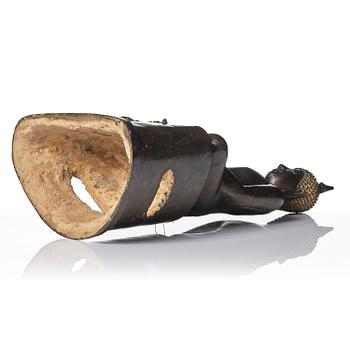
A large bronze sculpture of buddha, Thailand, circa 1900/early 20th century.
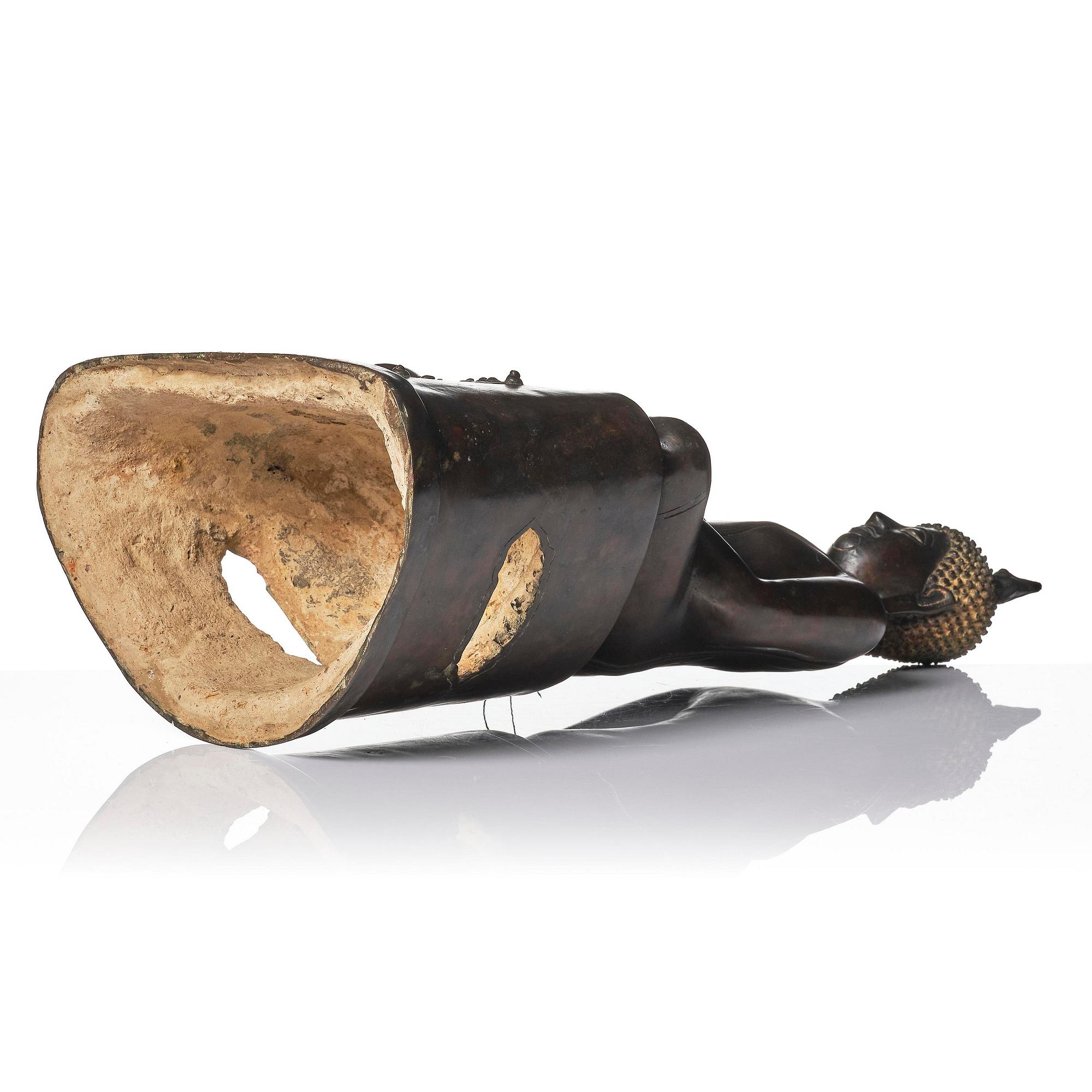
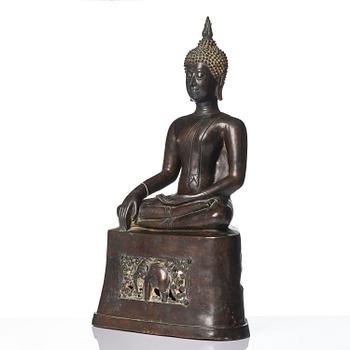
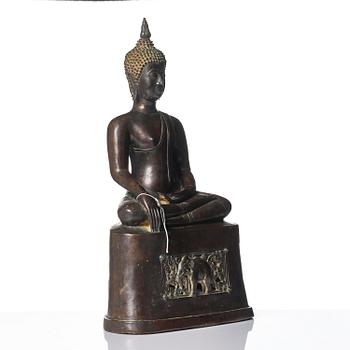
The Buddha is seated on a tall base, decorated with an elephant in virasana, the heroic posture. His left-hand rests gently on his lap whilst the elongated fingers of his right hand are outstretched in bhumisparsamudra. This gesture echoes his call of the Earth to witness and attest to his achievement of maravijaya: Enlightenment, thus taking this throne and vanquishing Mara's demonic retinue.
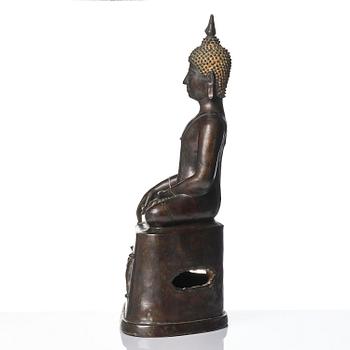
Dressed in monk's garb, with his feet, right shoulder and full arm exposed, the Buddha wears a long scarf that falls diagonally from the left shoulder above the navel, culminating in cascading folds. The upper edge of the lower garment is prominent by virtue of an undulating ridge. The full lips are delineated in a serene half smile, his heavy-lidded eyes are inlaid with shell and glass, and the elongated earlobes frame his face. In recognisable symbolism, the hair is outlined with a narrow band and tied in tight, spiky curls that encompass his head and ushnisha. Height 51.5 cm.
Provenance
The private Collection of Nils Nessim (1916-1974), thence by descent.
Nils Nessim (1917-1974), was a Swedish businessman and carpet dealer, son of the Director and Carpet specialist Jean B Nessim (1887-1946). In 1942 he founded AB Nils Nessim in 1942, he expanded and in the 1960’s he founded Nils Nessim International and Nils Nessims Antiques. Nils were early schooled in the carpet business by his father, and went on many business trips to aquire carpets and goods for the stores. He travelled the world and built up an impressive collection of Antiques and Asian Works of Art alongside the carpet business. He is today well known for his collection of buddhist art and Russian Easter Eggs.
In 1959 he became the first westener to be allowed to export antiques from China. He is well known for his collection of Russian Easter Eggs, and at one point he is said to have had over 1000 of them.
For condition report contact specialist
What will the transport cost?
Others have also viewed