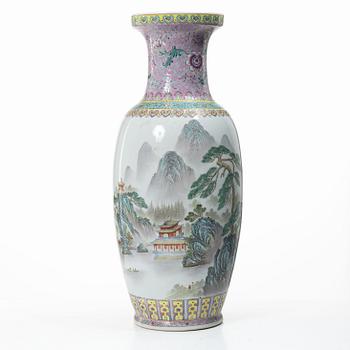
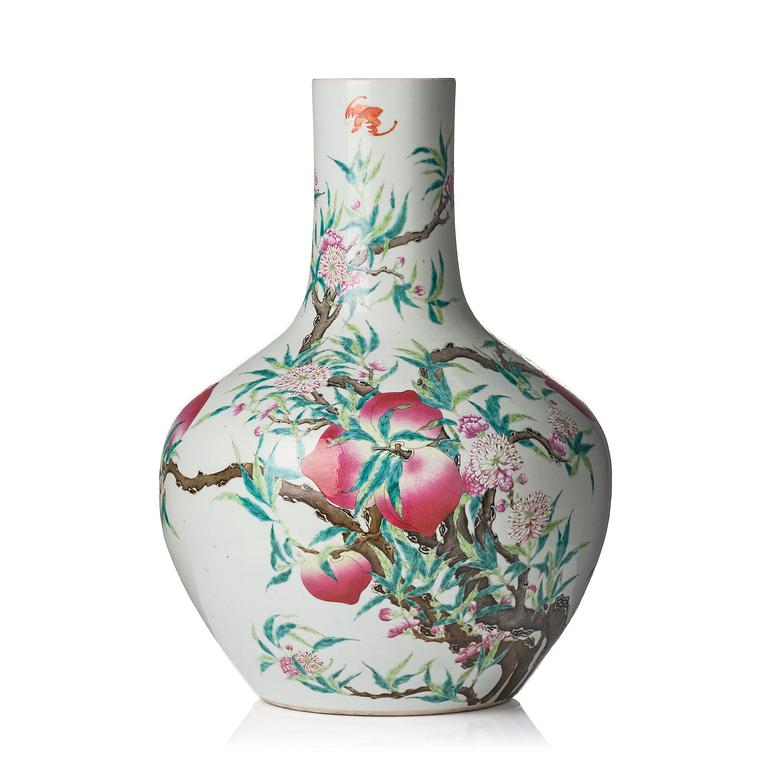
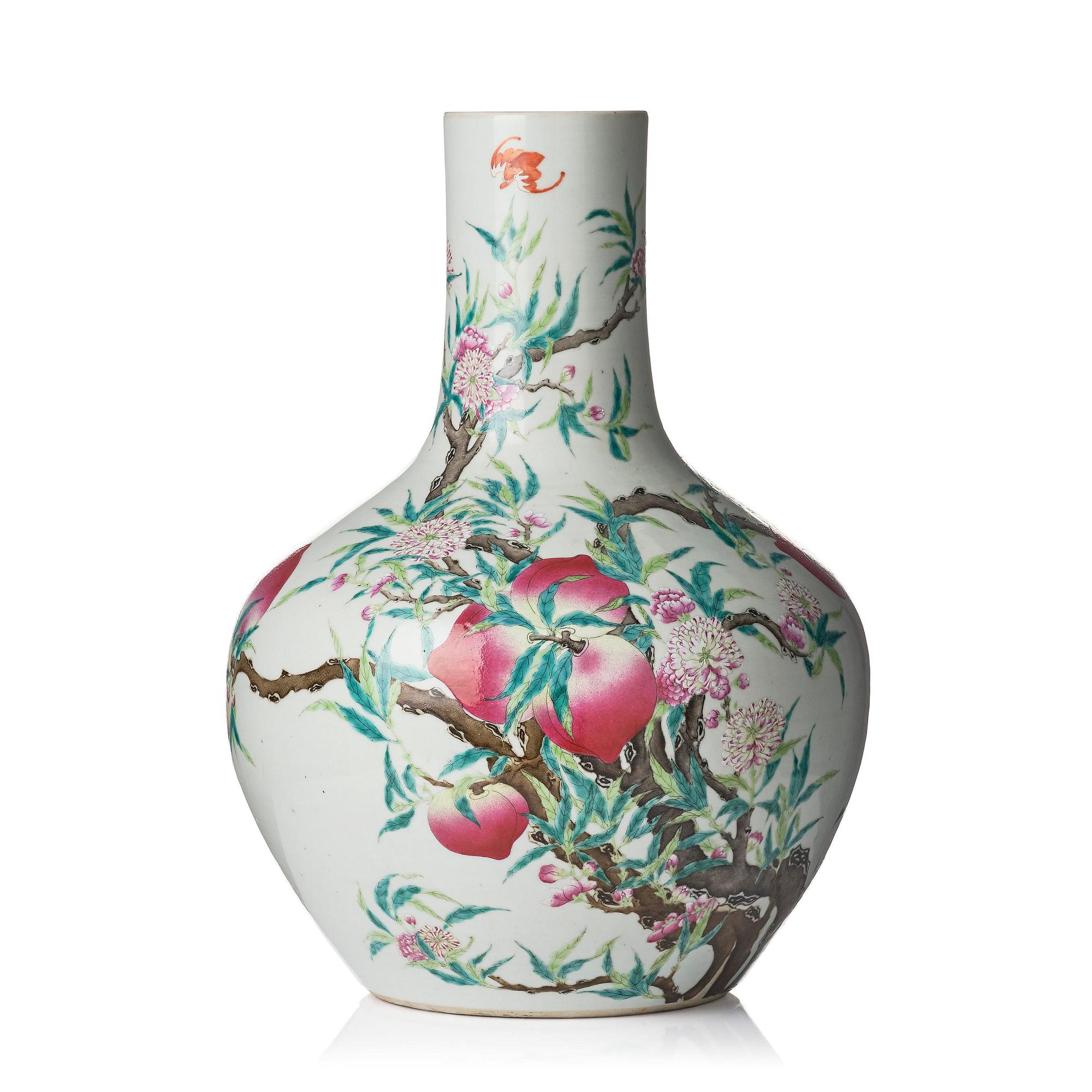
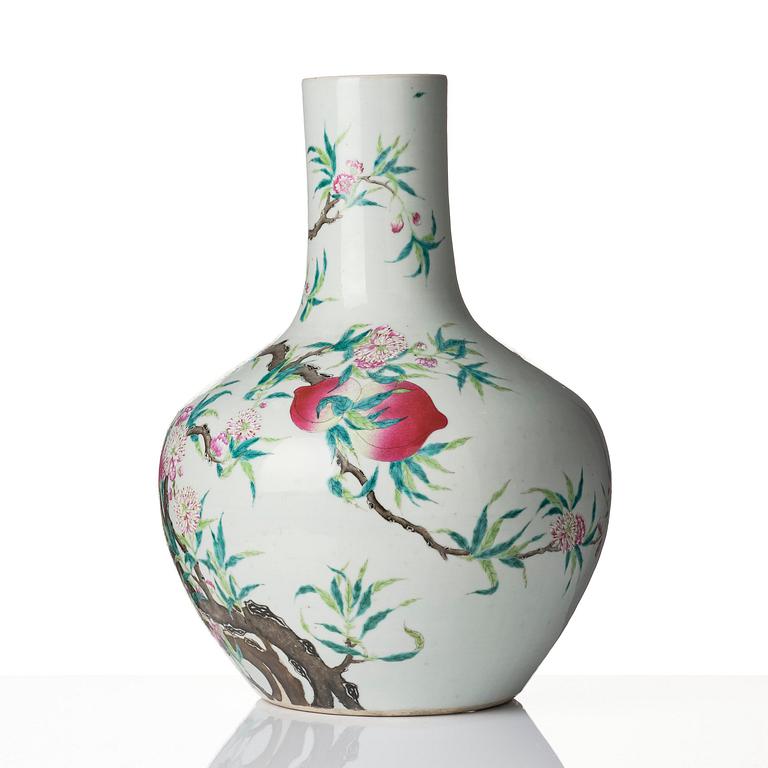
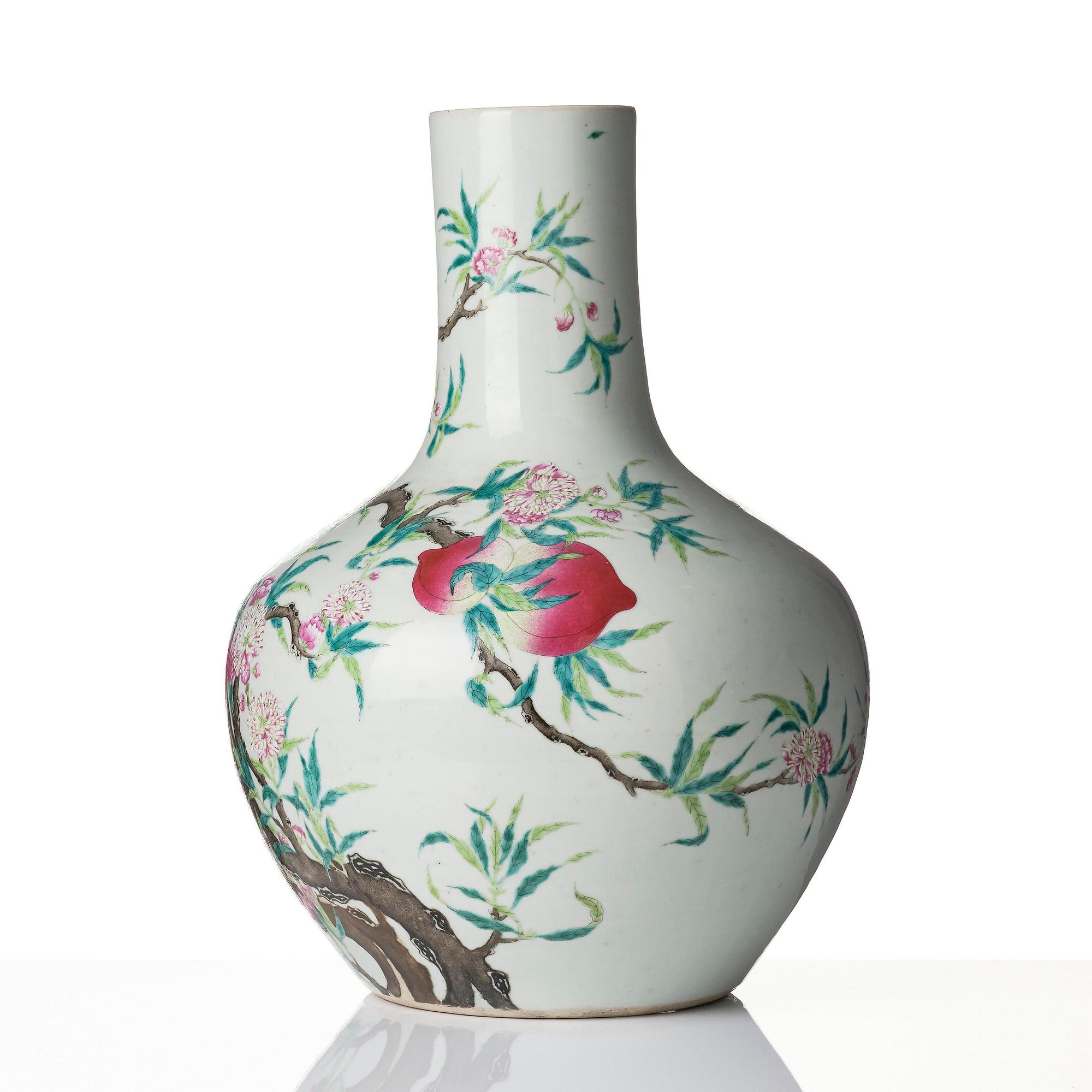
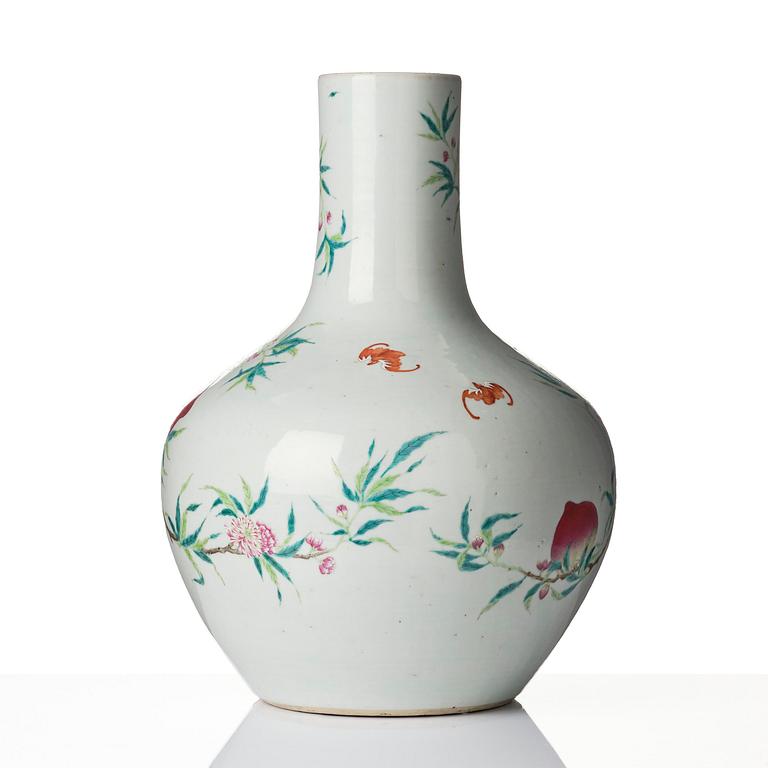
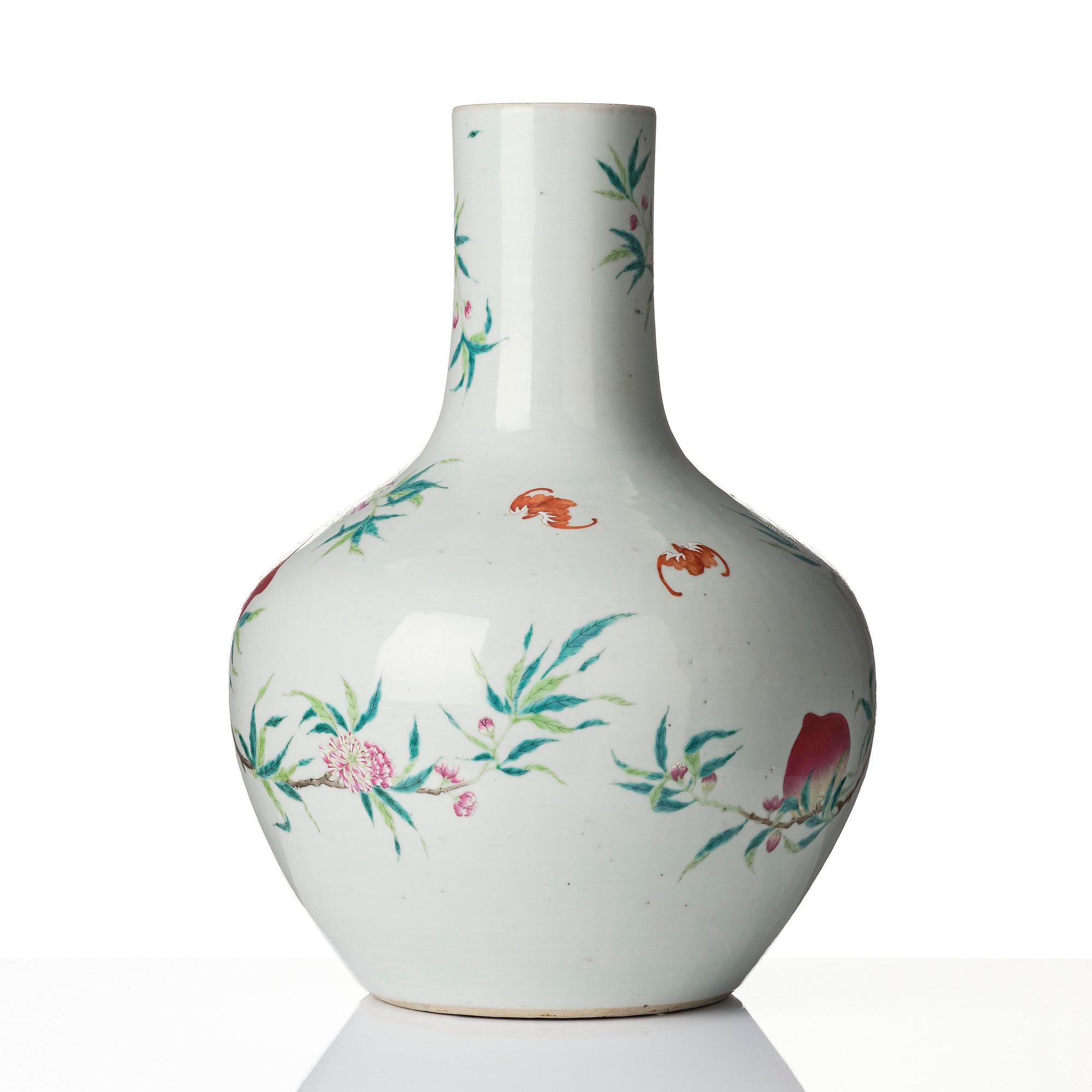
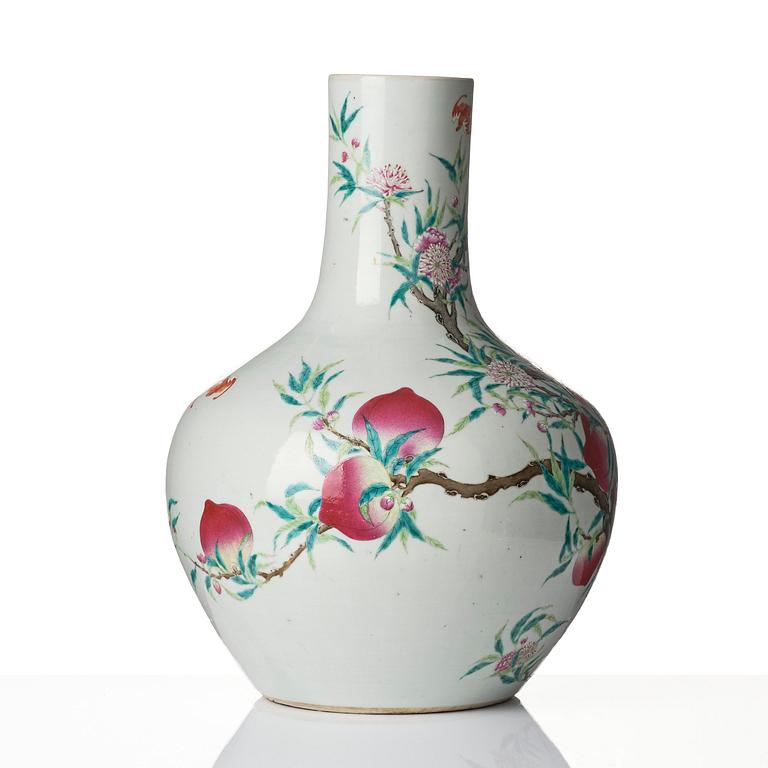
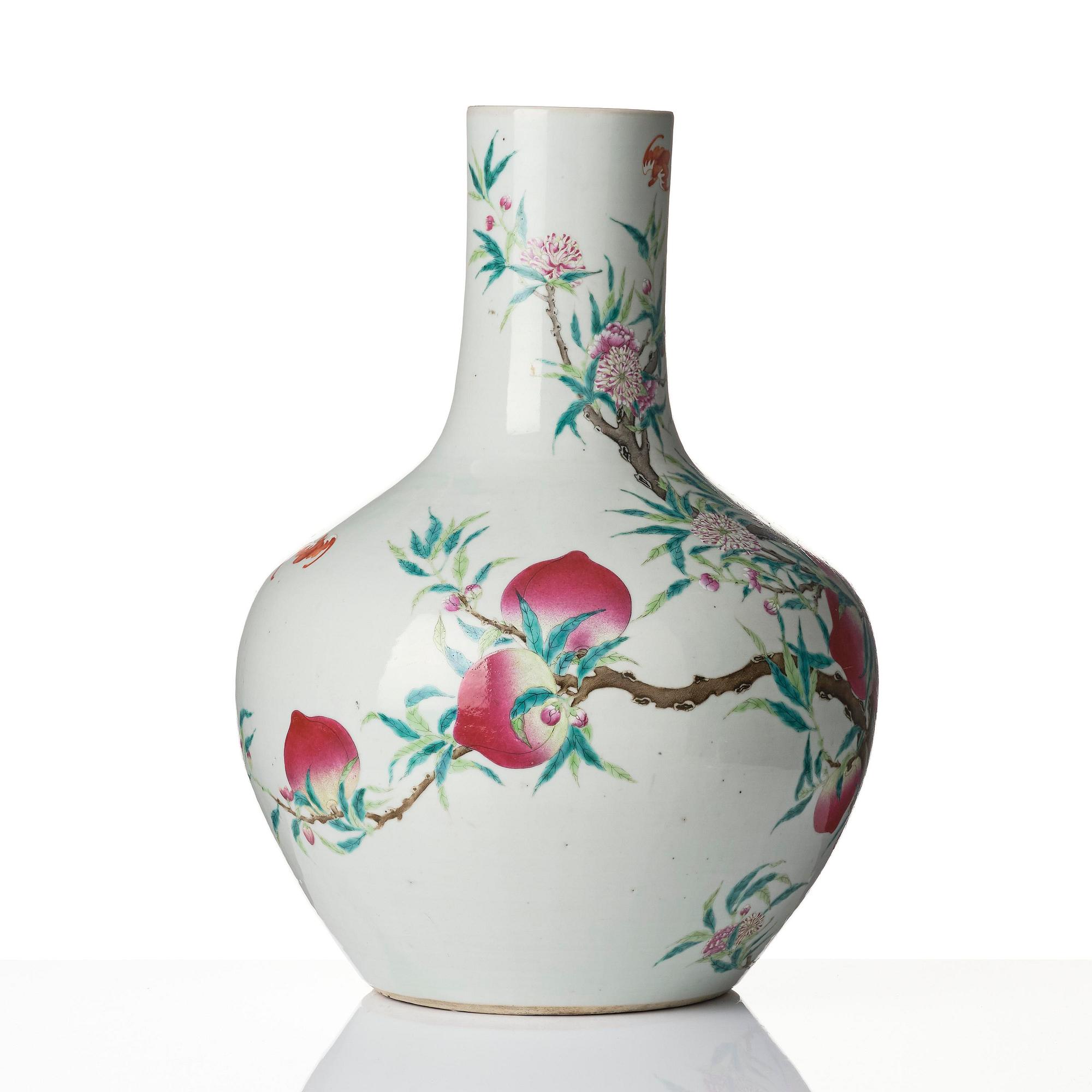
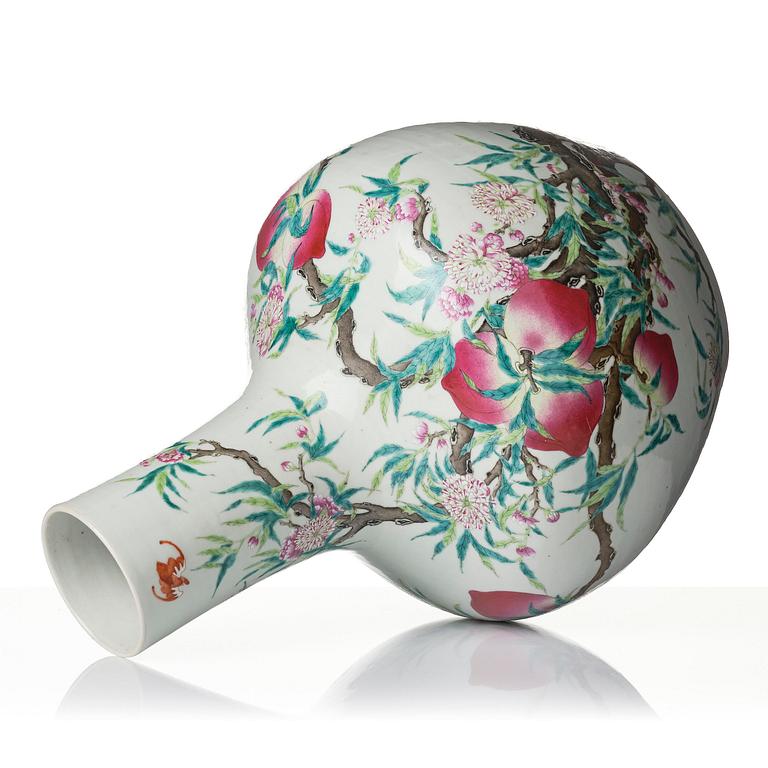
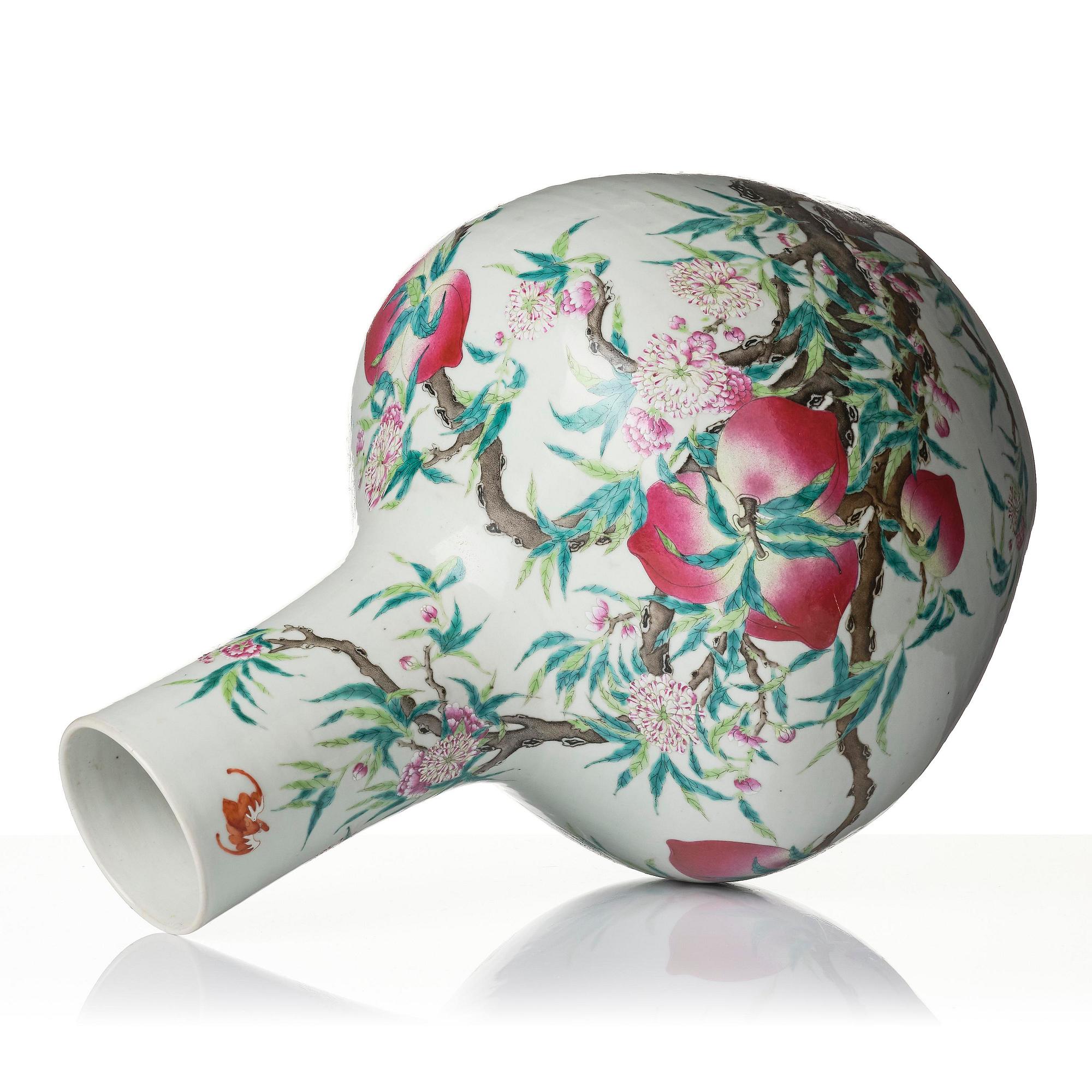
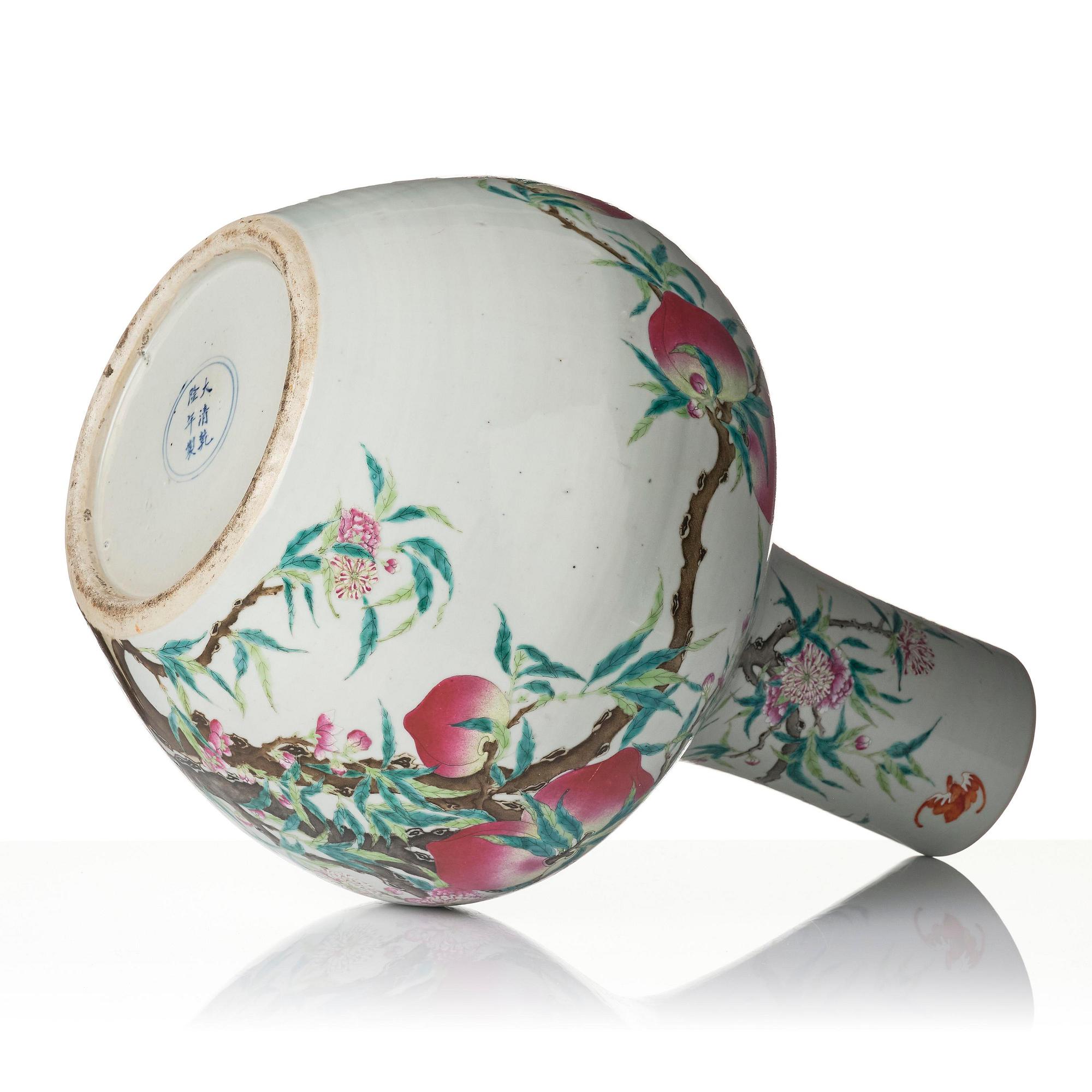
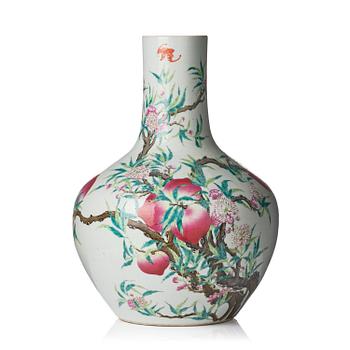
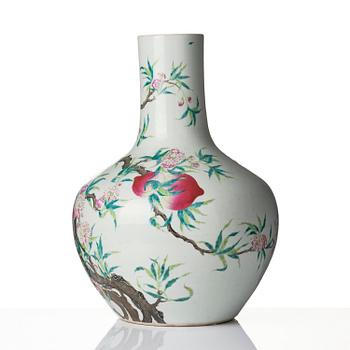
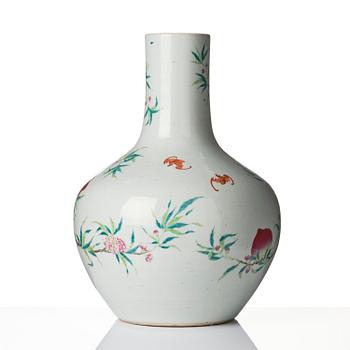
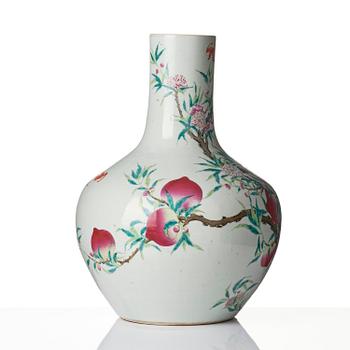
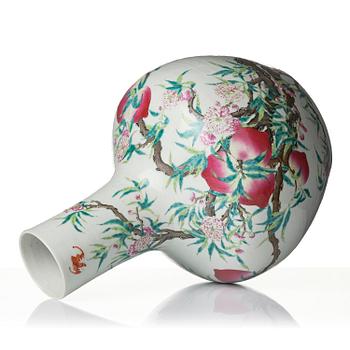
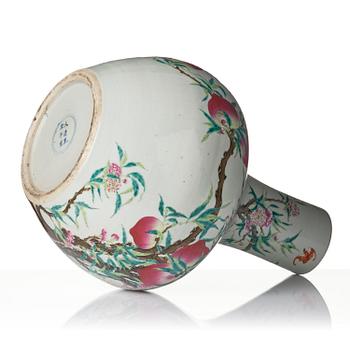
A large famille rose 'nine-peaches' tianqiuping/vase, late Qing dynasty with Qianlong mark.
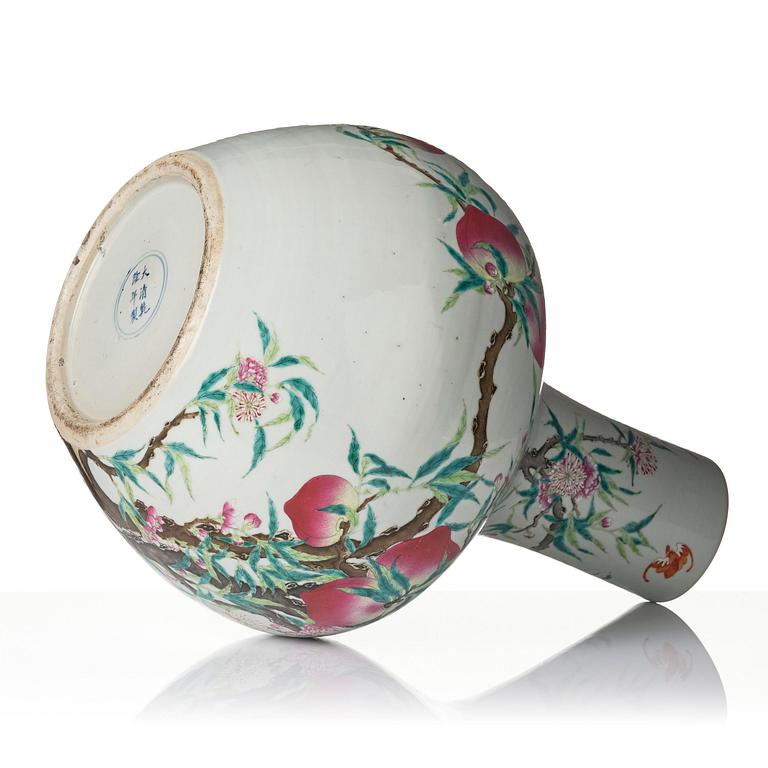
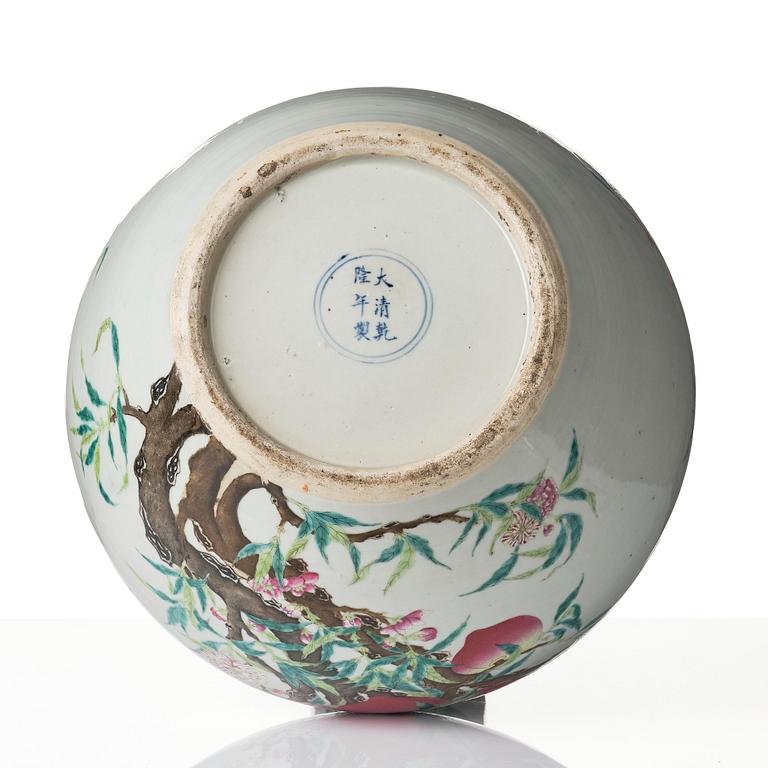
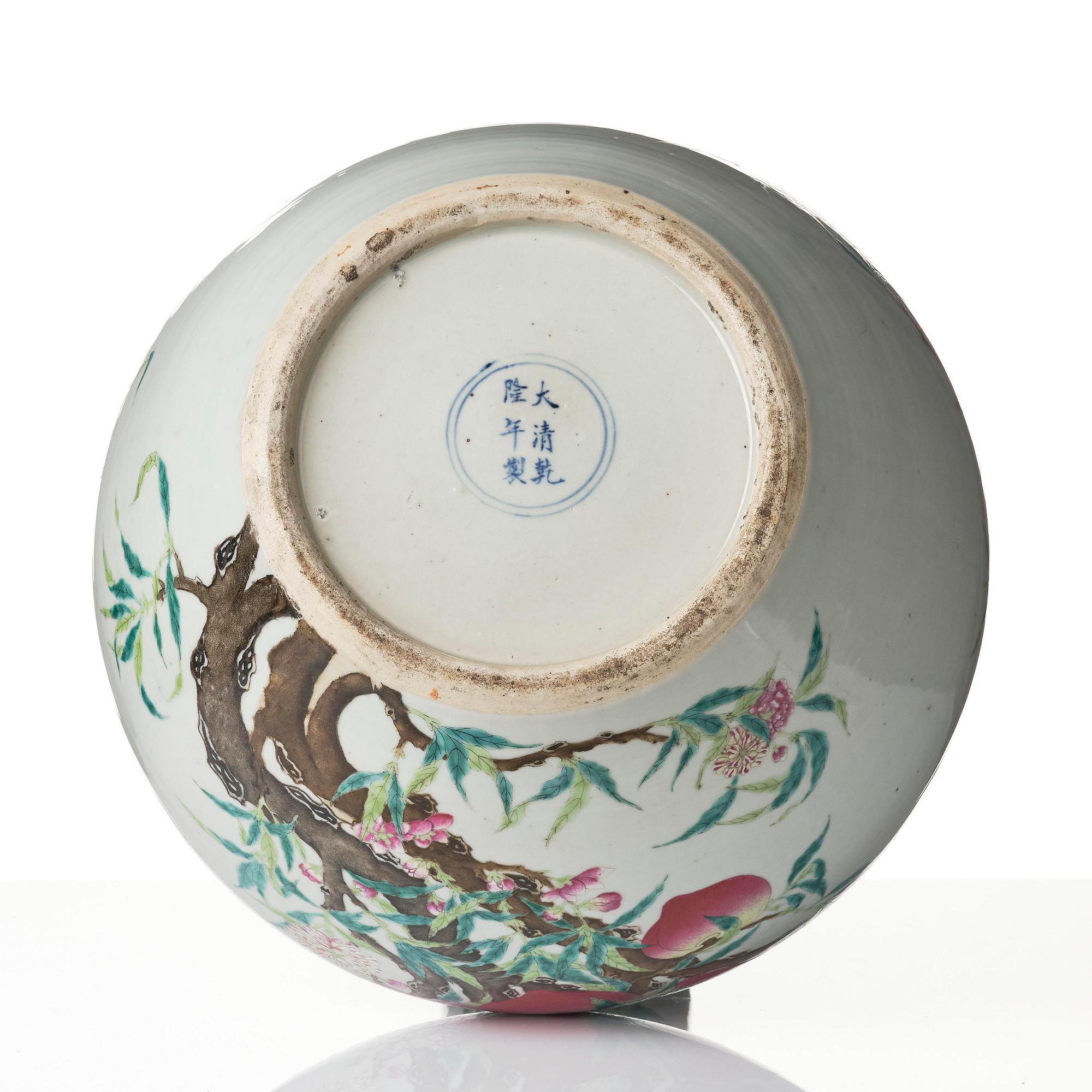
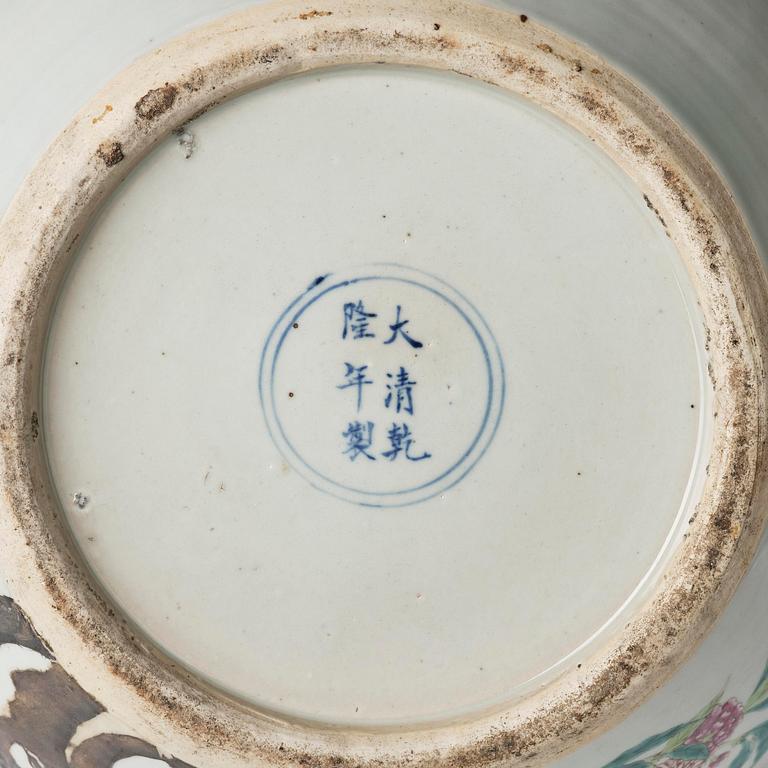
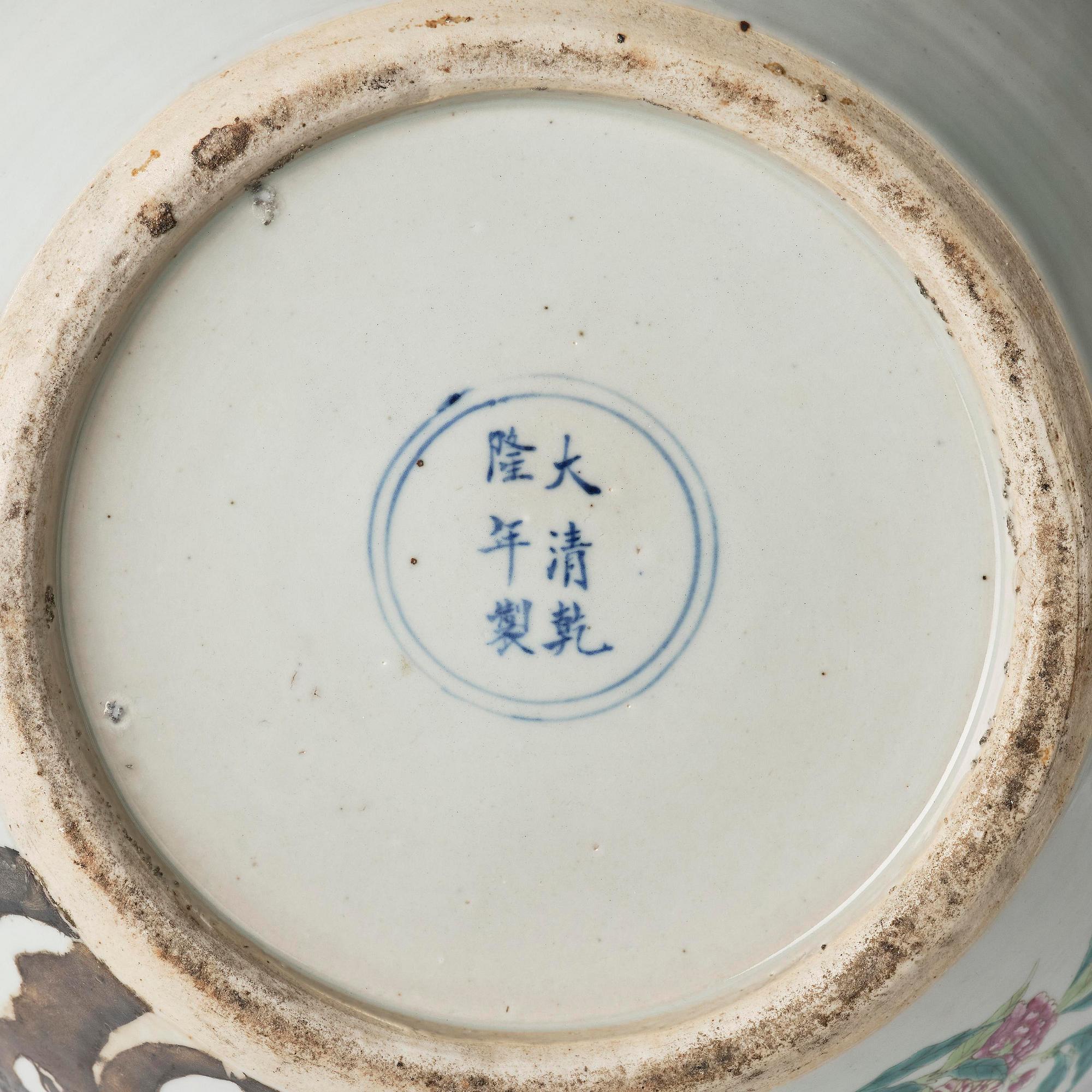
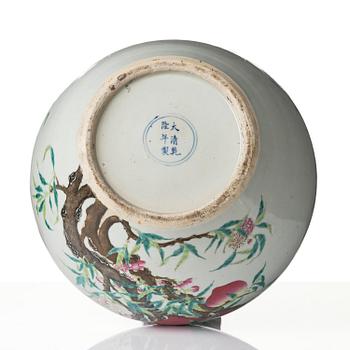
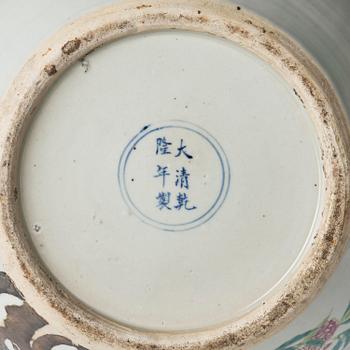
Globular body and with a tall neck. Finely enamelled with five iron-red bats in flight amidst leafy blossoming branches partially covered in lichen, one extending up to the neck and around the sides of the body, the other growing in the opposite direction, each bearing clusters of ripe textured fruit. The base is inscribed with an apocryphal Qianlong six-character seal mark in underglaze blue. Height 53 cm.
Provenance
Property of a private Swedish collector.
Exhibitions
Compare with a vase of this type sold at Bonhams New York, Chinese Works of Art and Paintings, lot 342, 19 September 2022.
For another late example of a nine-peach vase, see Christie's London, lot 835, 11 November 2015.
Literature
The name tianqiuping (literally 'heavenly orb vase') comes from the shape which appeared like a celestial planet. This shape began in the Yongle and Xuande periods, perhaps inspired by Islamic copper or glass prototypes of the Middle East, but was revived during the Yongzheng and Qianlong reigns. Most later copies were based on vases from this period, and the most convincing were made in the Guangxu reign.
More information
The peach, one of the three fruits of the sanduo 'Three Abundances' together with the pomegrenate and finger citron, has long been associated with Shoulao, the God of Longevity. It is also a fruit commonly found as one of the fruits of the Four Seasons, together with cherry, pomegranate and persimmon symbolising blessing for long life which continues for many springs. The peach design, for all its symbolism, has been one of the most favoured designs in Chinese art and has been used for decorating vases, dishes and bowls.
For condition report contact specialist

What will the transport cost?
Others have also viewed