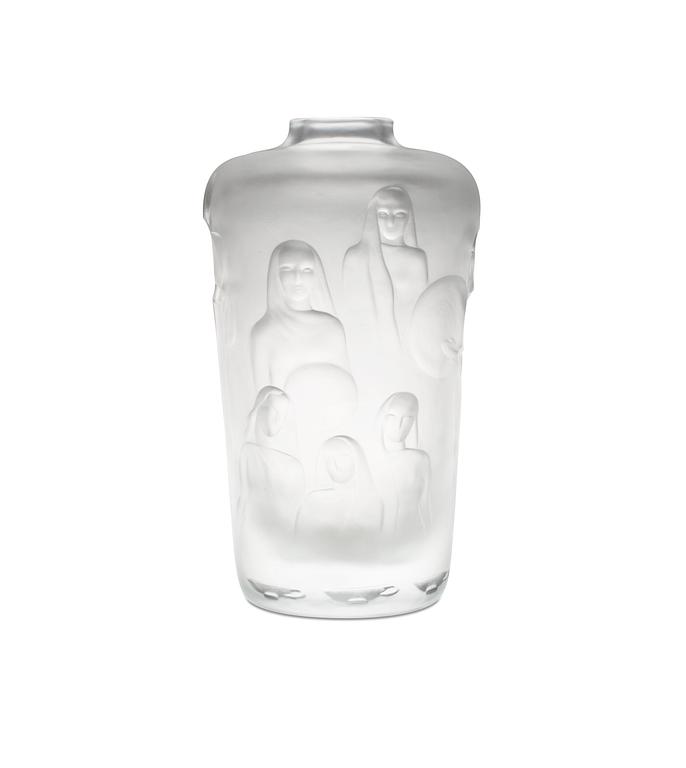
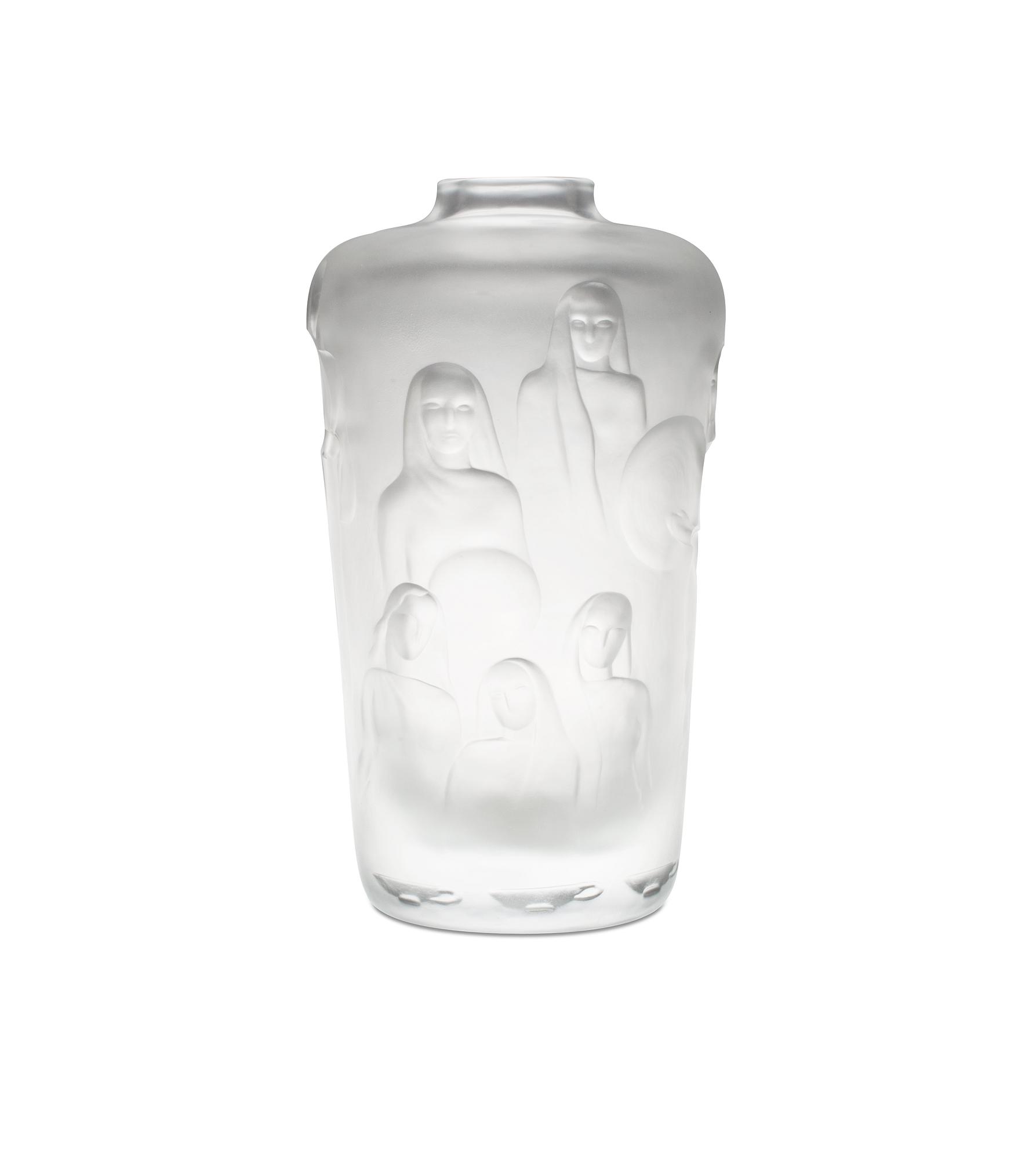
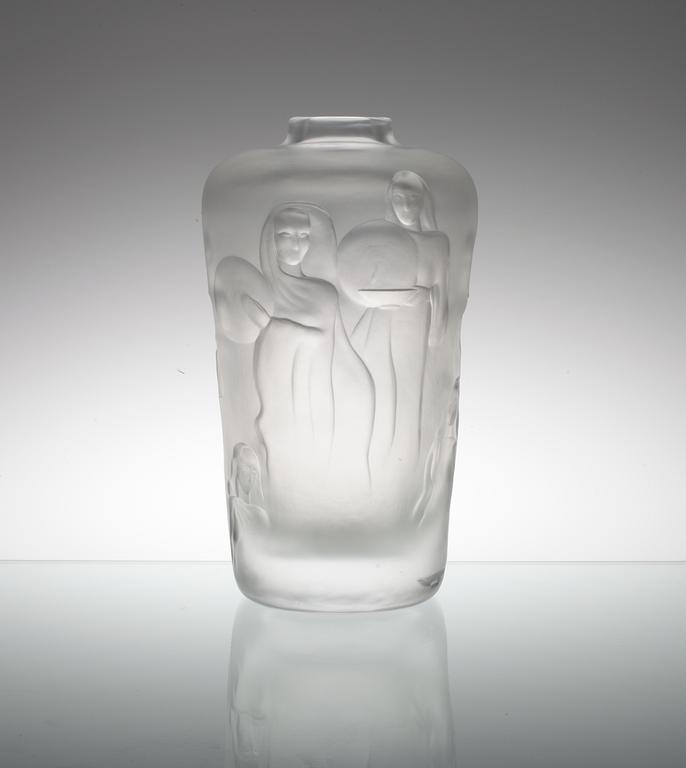
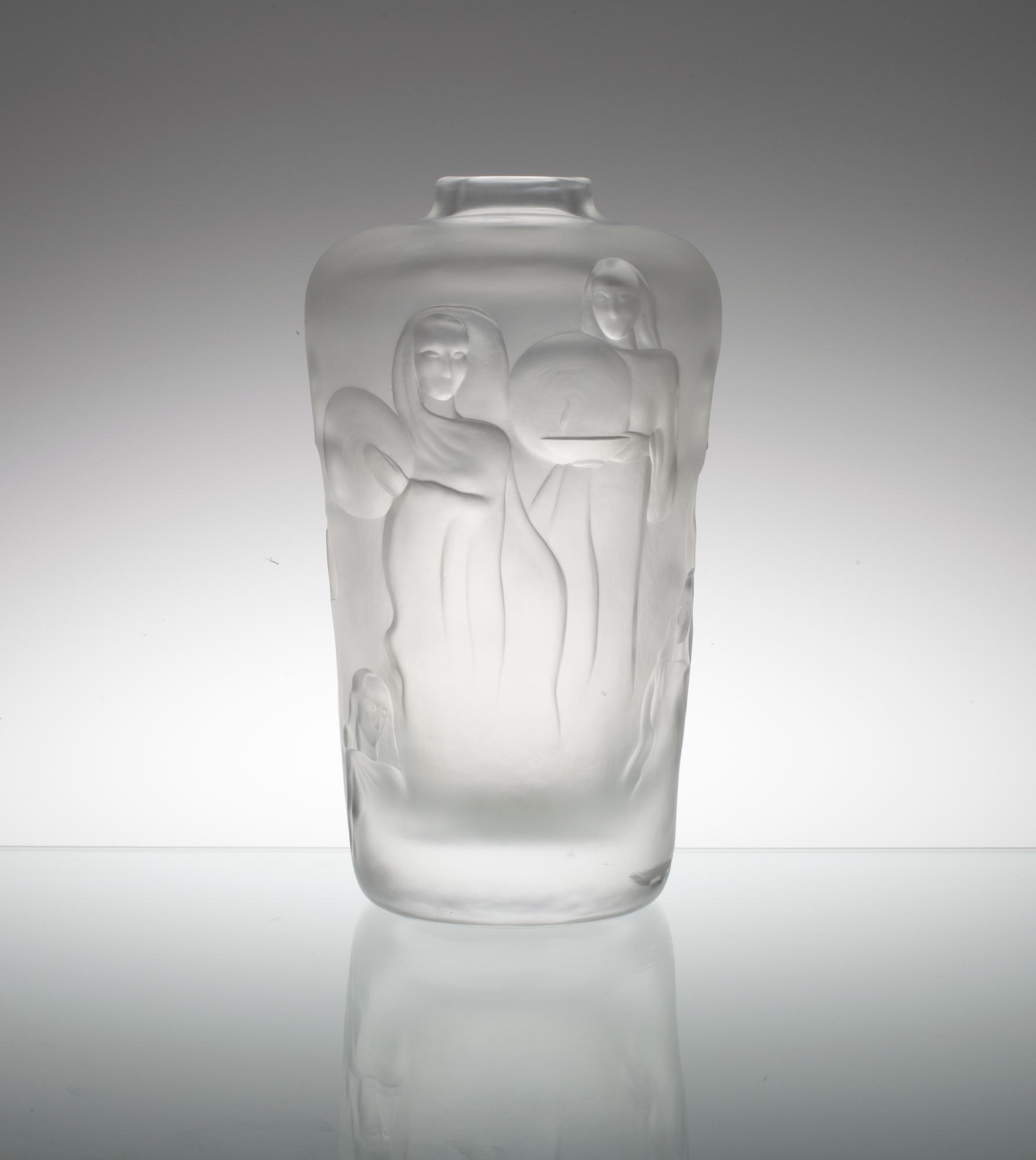
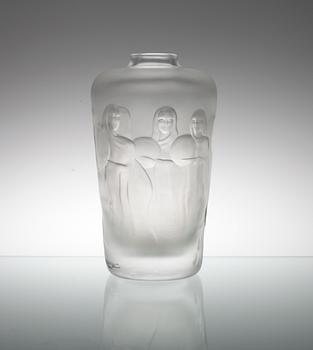
A VASE.
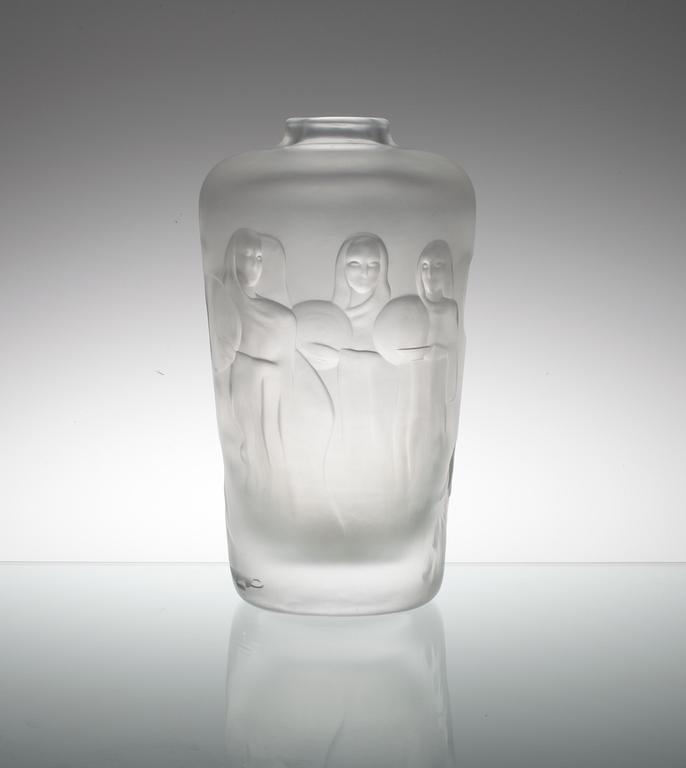
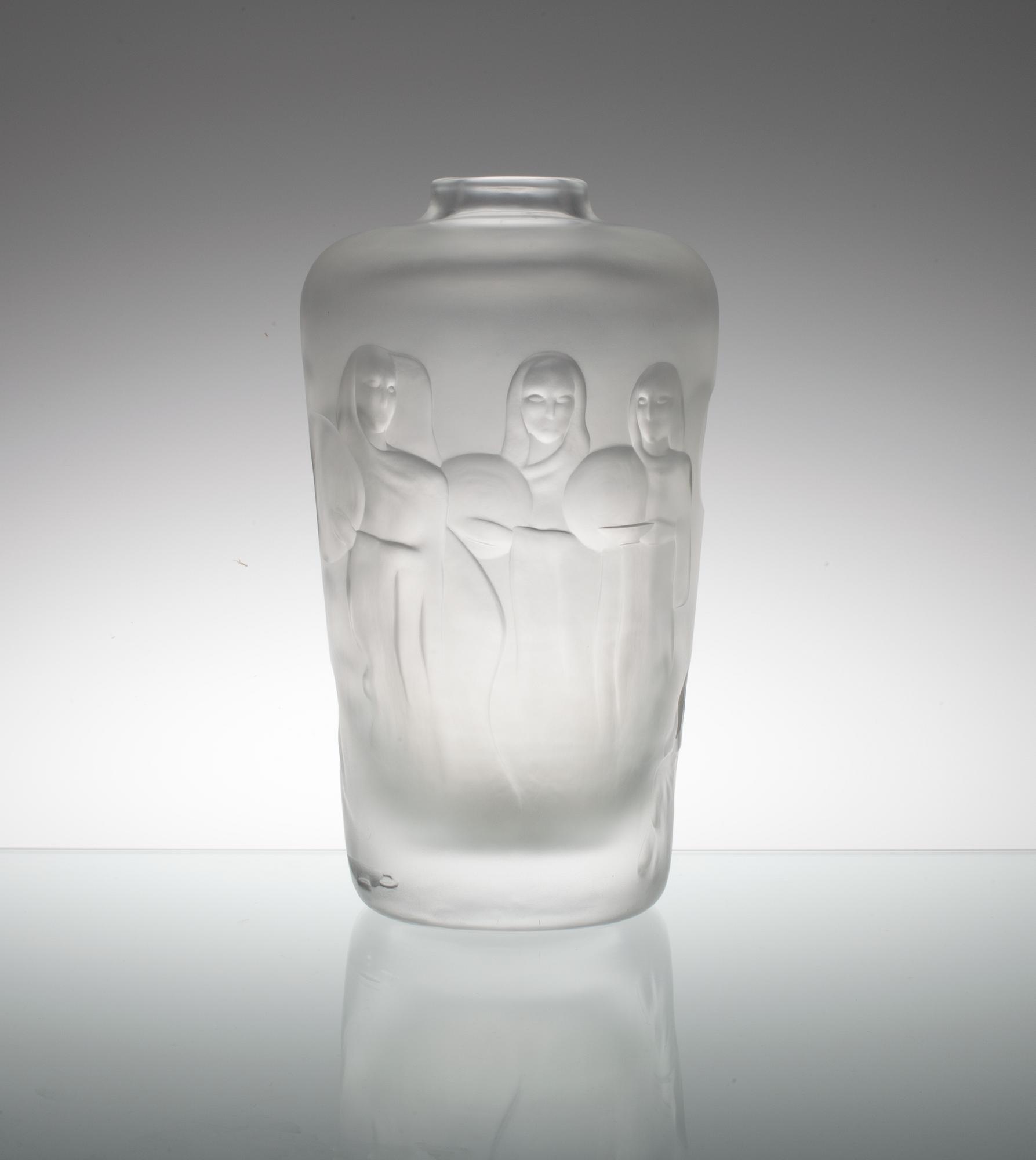
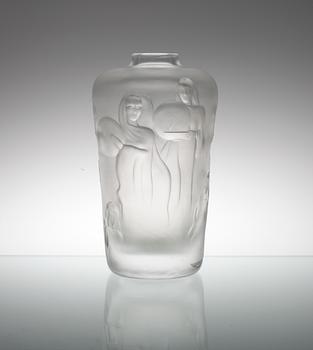
Wise virgins. Signed G. Gustavson, Th. (Theodor) Käppi Oy Riihimäki -47. Turned mould clear glass, engraved and sandblasted. Height 29,5 cm.
Exhibitions
Gunnel Nyman was awarded a gold medal for her glass design at the Paris World Fair in 1937.
Literature
Beauty captured in glass - Gunnel Nyman - 100 years. The Finnish Glass Museum, Riihimäki. Page 130.
More information
Gunnel Nyman (1909 – 1948)
Gunnel Nyman, née Gustafsson, was one of the most significant Finnish designers of the 1930s and early 1940s until her untimely death in 1948. Nyman's relationship with her favourite material, glass, is according to herself best described by the following quote by J. L. Runeberg: “O it is so difficult to capture beauty, without giving it the appearance of having lost life and freedom” (free translation). Throughout her career she was given ample proof of her success in the face of this challenge.
In 1928-1932 Nyman, at the time still Gustafsson, studied furniture design at the Helsinki University of Art and Design, during which time she was taught by legendary designer Arttu Brummer. Her teacher quickly discovered the enormous potential of his talented young student and endeavored to support her career – amongst other things by establishing contact between her and Riihimäki Glassworks. The glassworks stood to become her main employer for the following fifteen years.
In addition to a similar approach to their art (both being glass and furniture designers, sharing the view of glass as a sensual, living material), Brummer and Nyman both represented Finland at World Fairs – Nyman in Paris in 1937 and Brummer in New York in 1939.
The then-28-year-old Nyman's vase “Wise virgins” in twisted, engraved and sandblasted glass was one of the main attractions of the Paris World Fair of 1937, and earned its creator a gold medal. At the same Fair Nyman's furniture design was awarded a silver medal, making the Fair a big success for her.
More about Gunnel Nyman
Gunnel Gustafsson-Nyman (1909–1948) was a Finnish glass artist and designer who became a significant pioneer in early modern Finnish glass design. Her work included both functional objects and art glass, and her pieces are represented in international museum collections.
She studied furniture design at the School of Industrial Arts from 1928 to 1932 under the guidance of Arttu Brummer. At the beginning of her career, she worked in a functionalist style, designing furniture for the Stockmann and Boman factories as well as lighting fixtures for Idman’s lighting factory.
Although Nyman was not formally trained as a glass artist, she began designing glass during the 1930s and 1940s and collaborated with several leading Finnish glassworks, including Riihimäki, Karhula, Iittala, and, during the final years of her career, Nuutajärvi.
Nyman received significant international recognition, including a gold medal at the 1937 Paris World Exhibition and medals at the Milan Triennials. Her works are held in the collections of several prestigious museums, including the British Museum and The Metropolitan Museum of Art. Although Nyman passed away at a young age, her influence on glass art extends far into postwar Finnish design.