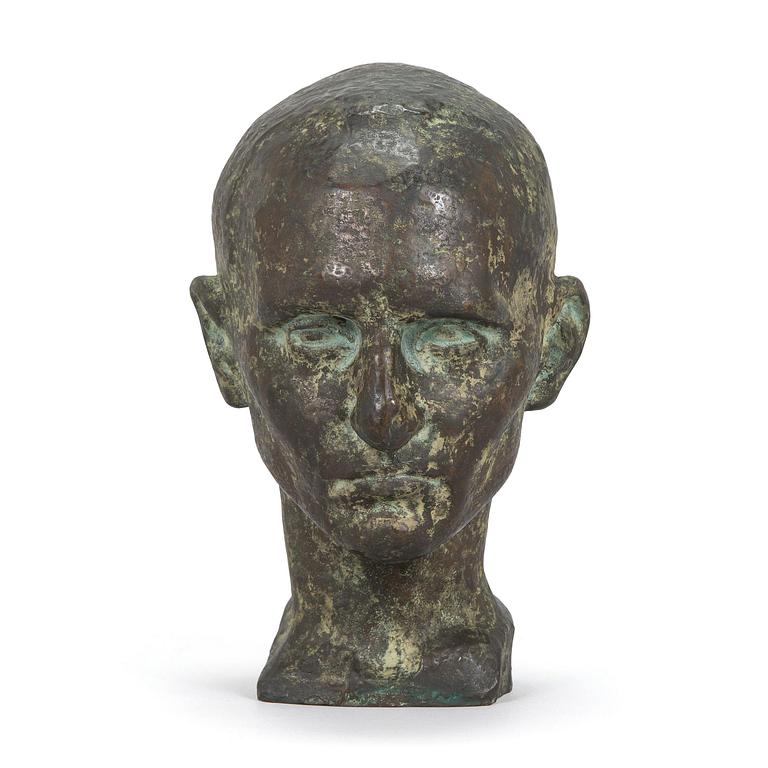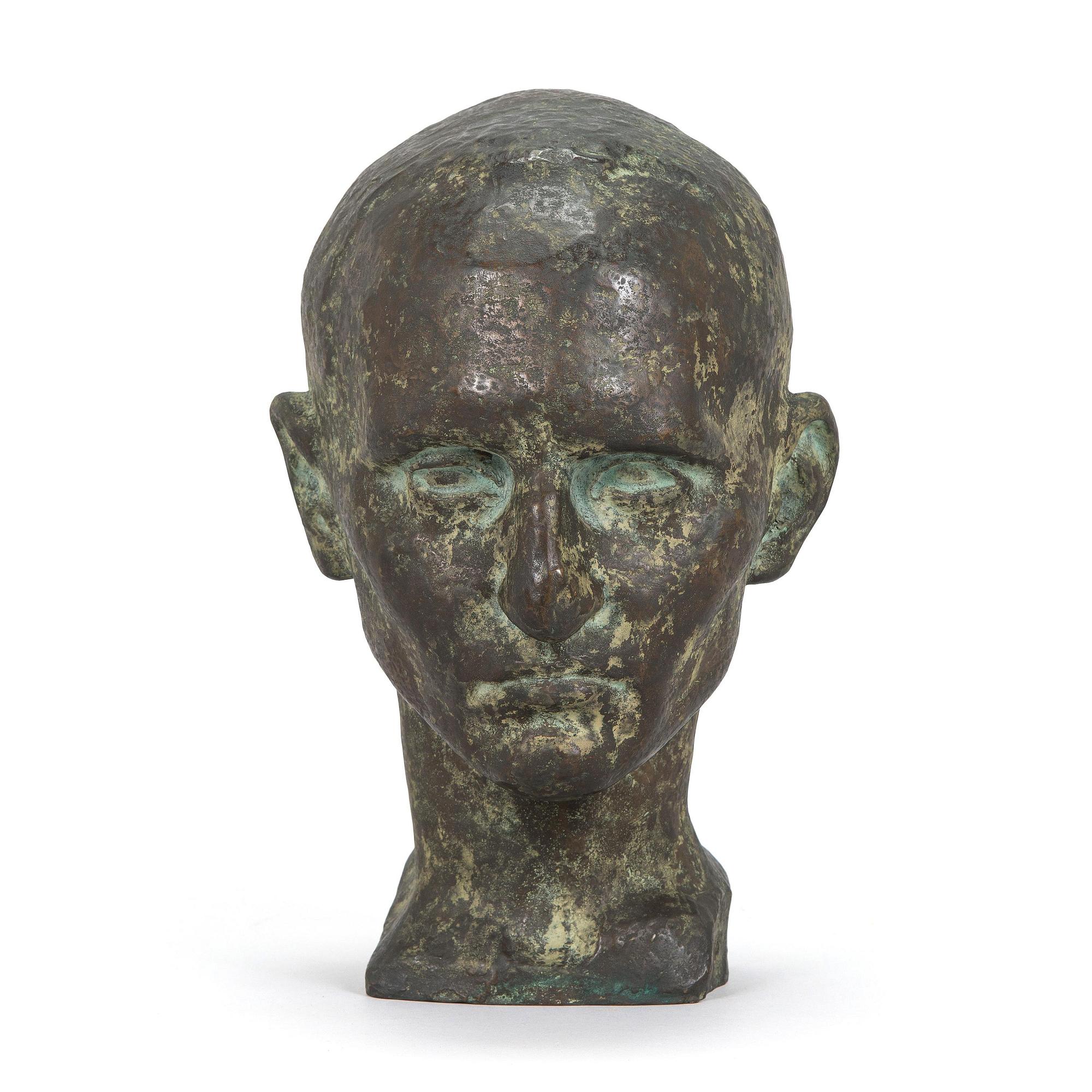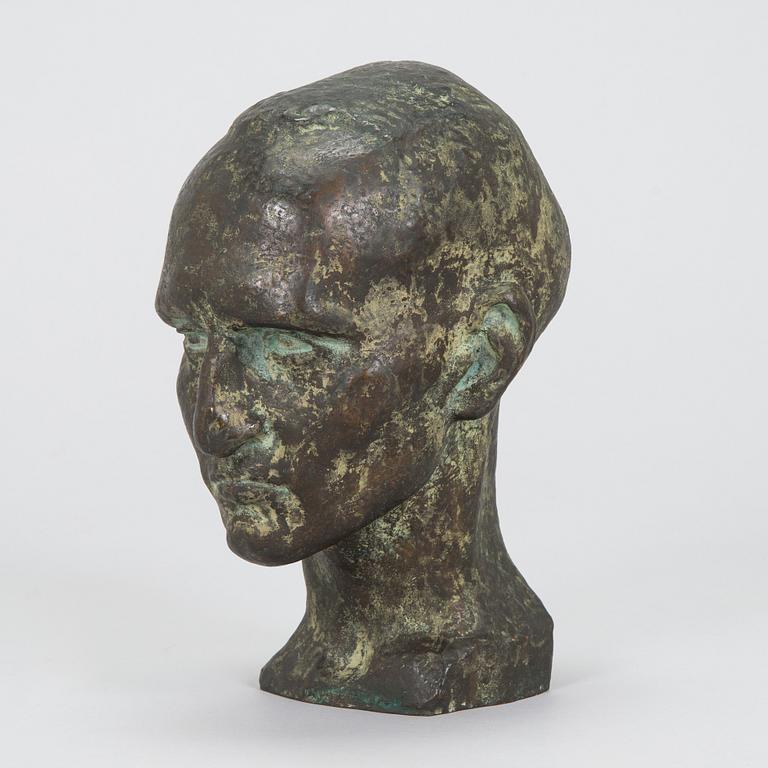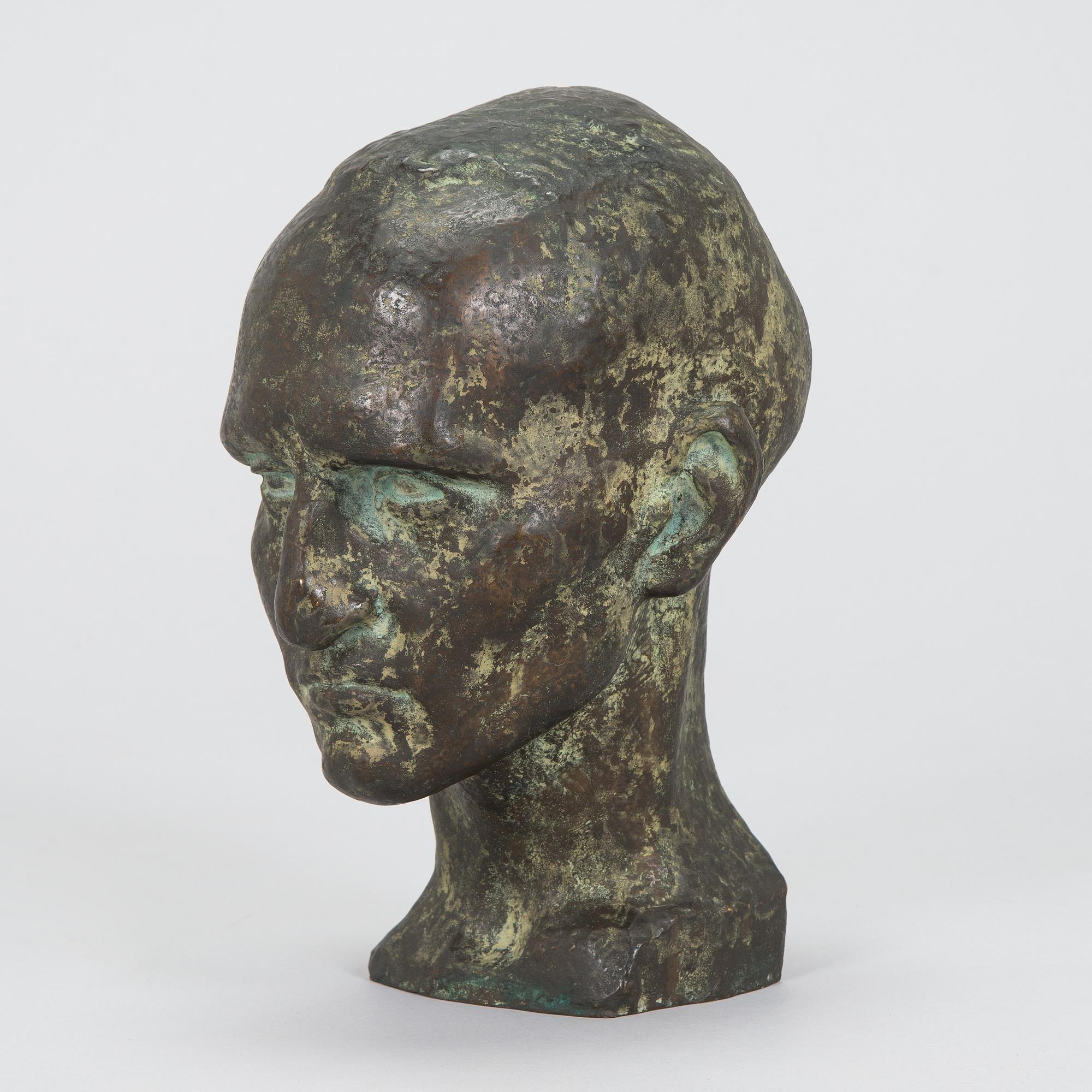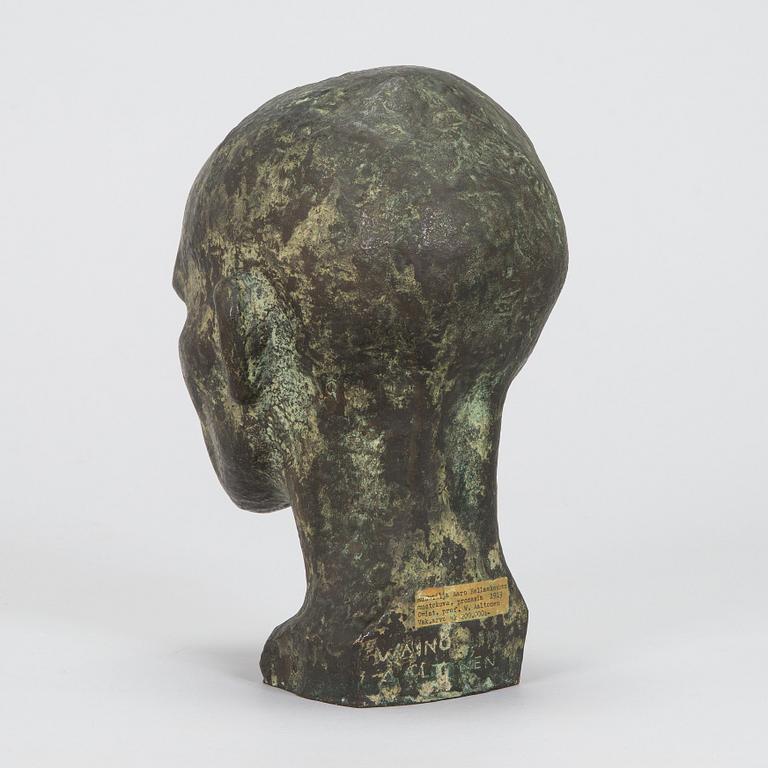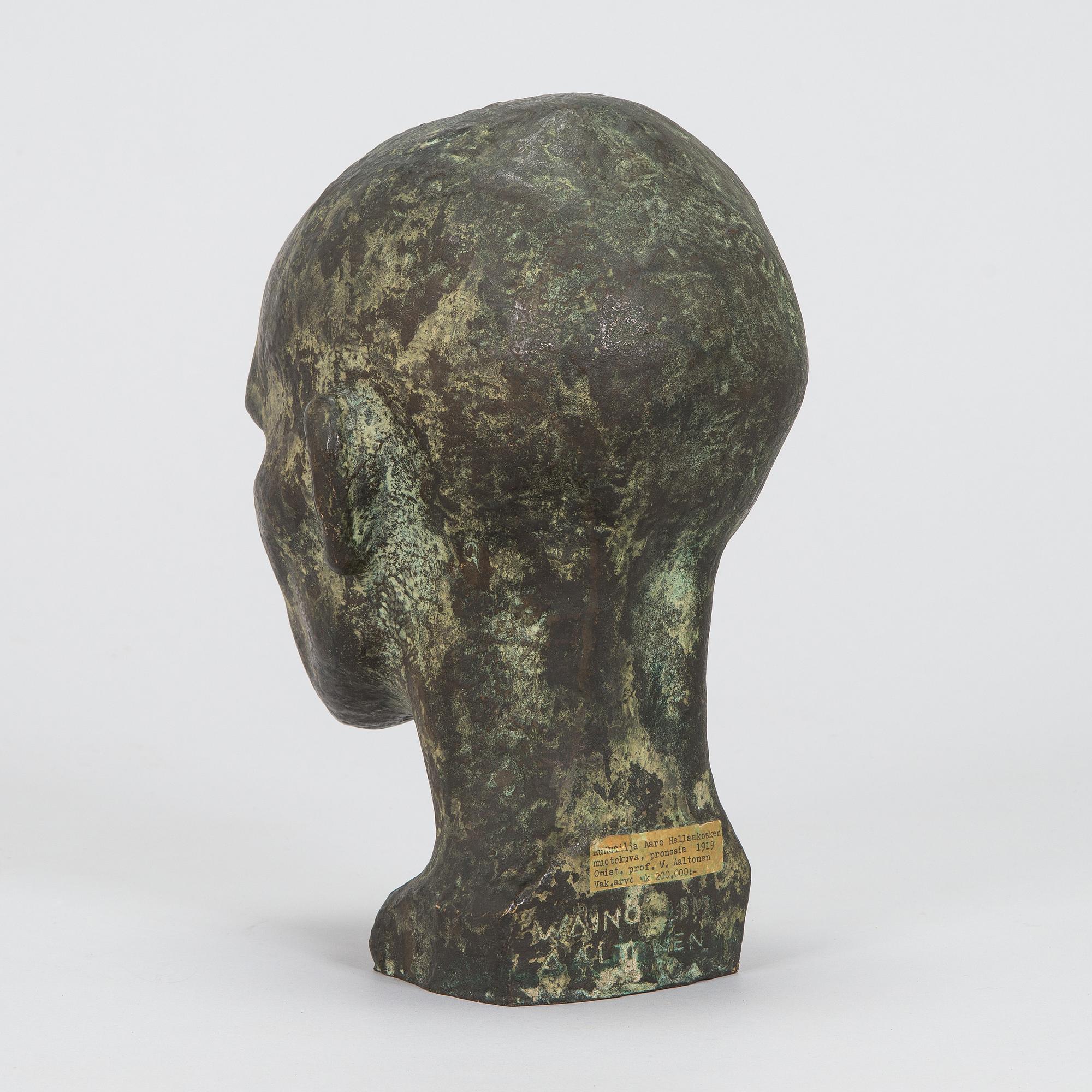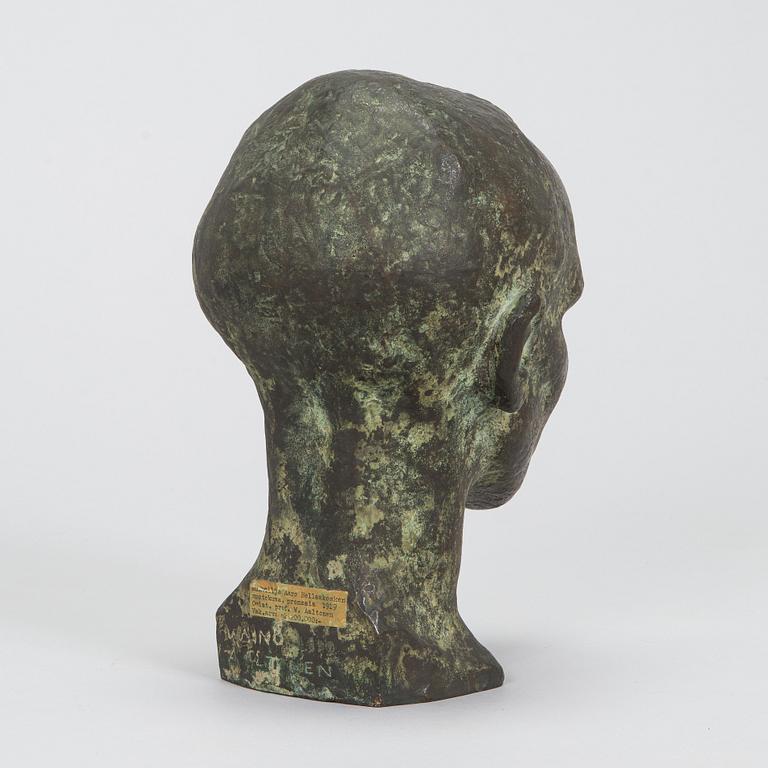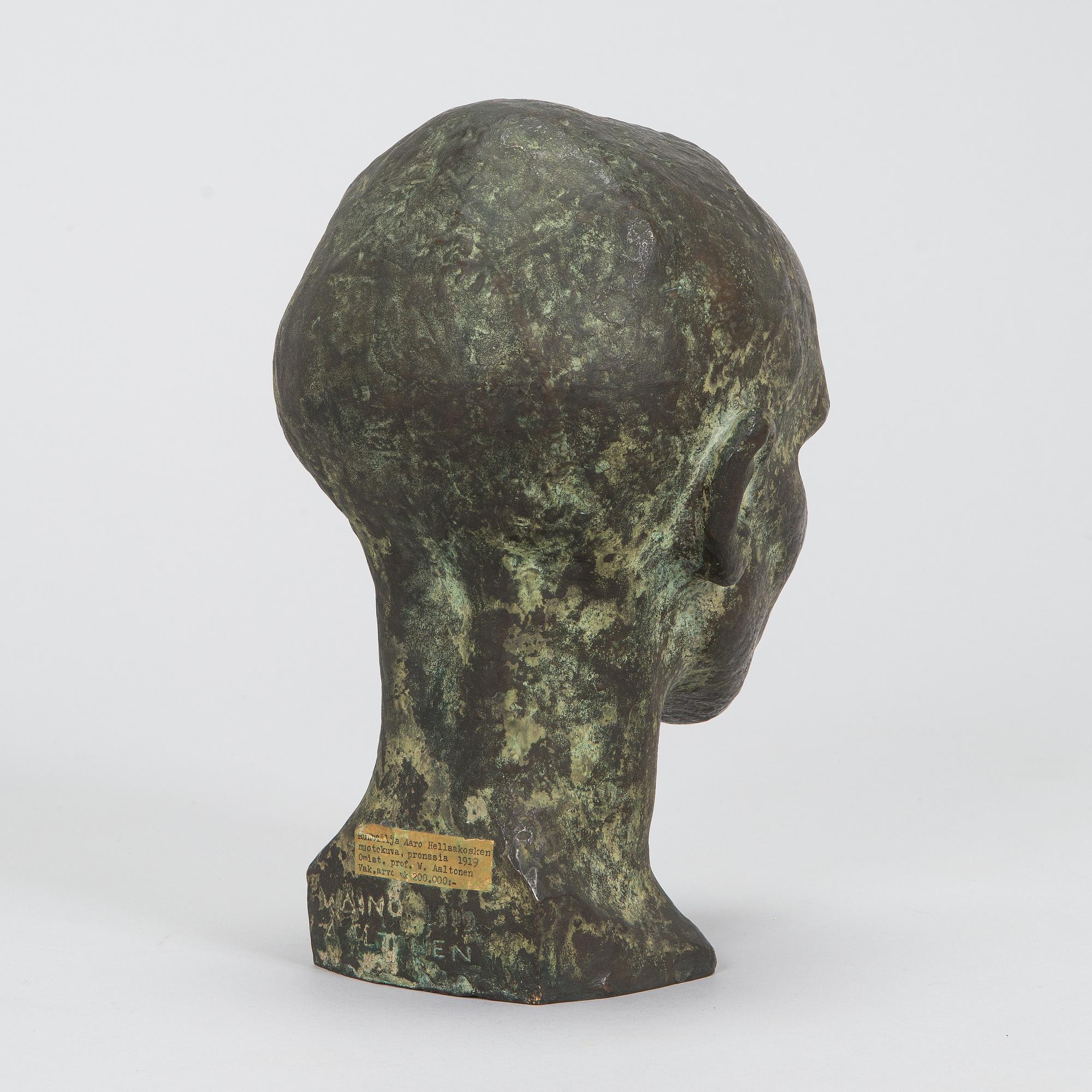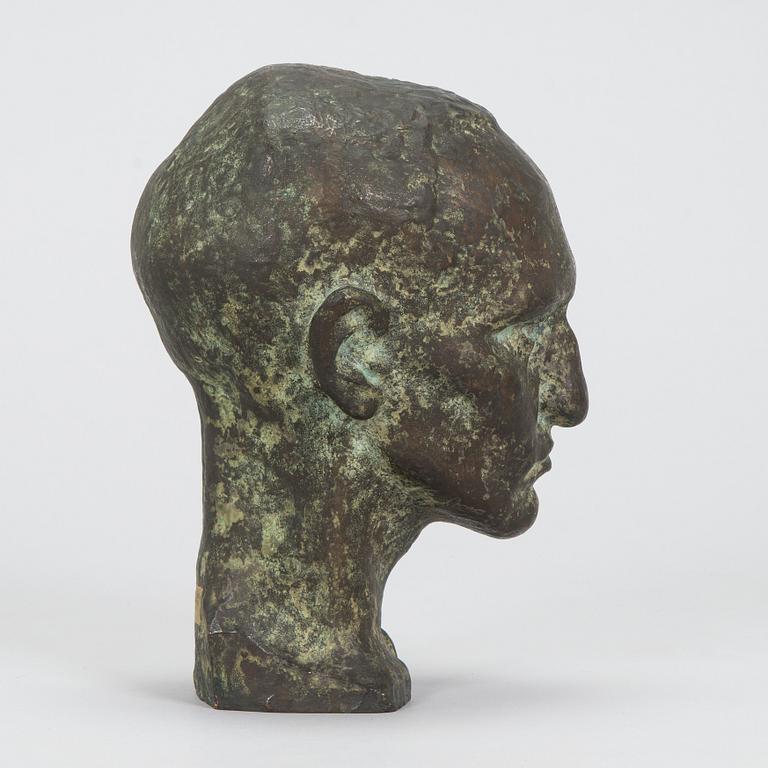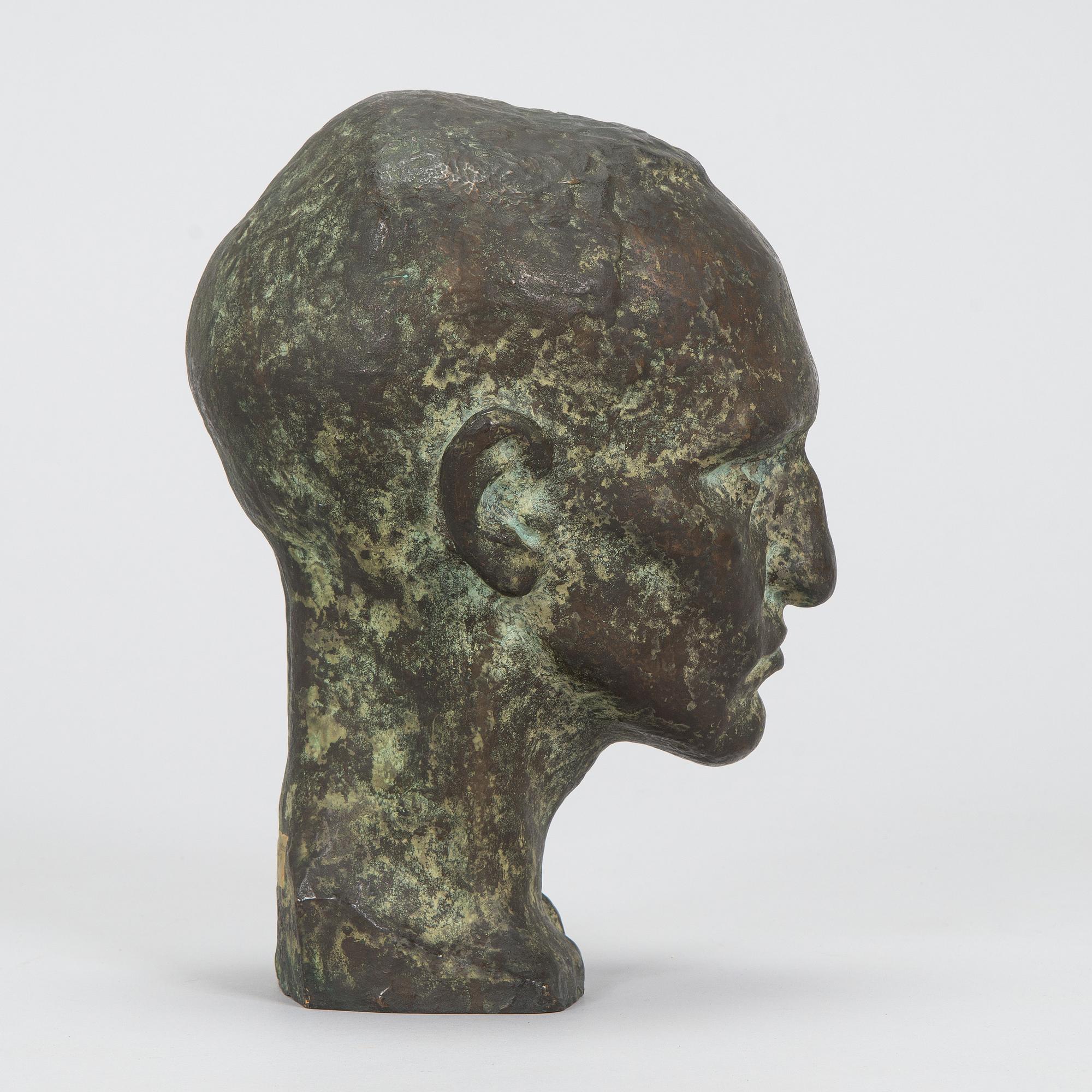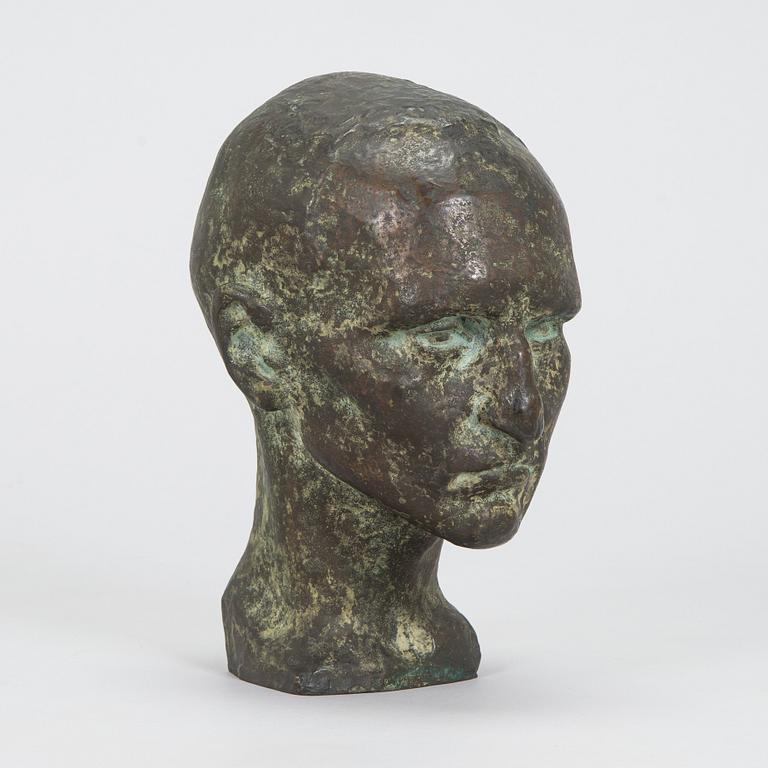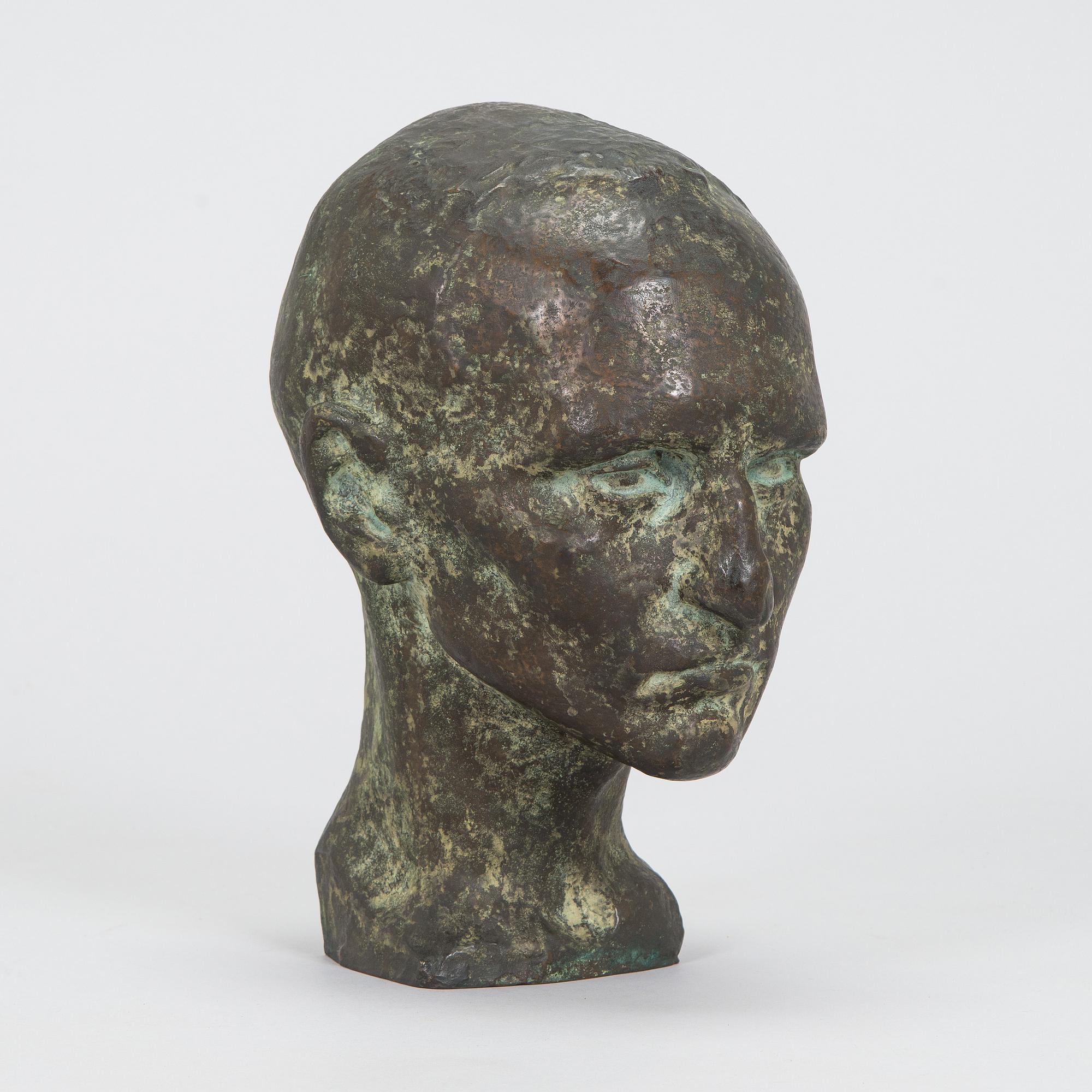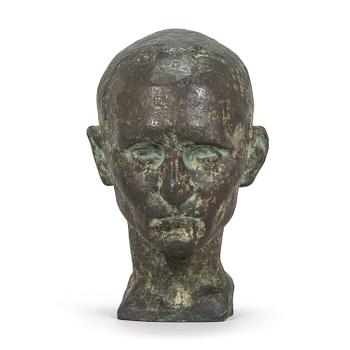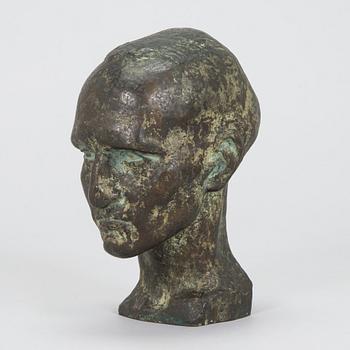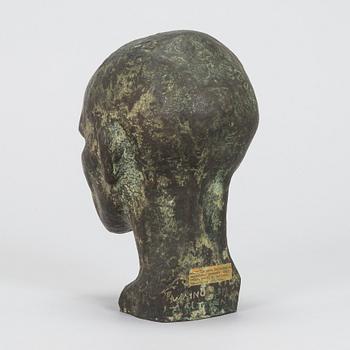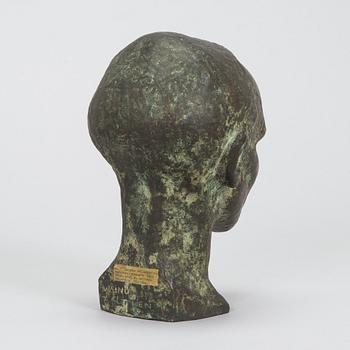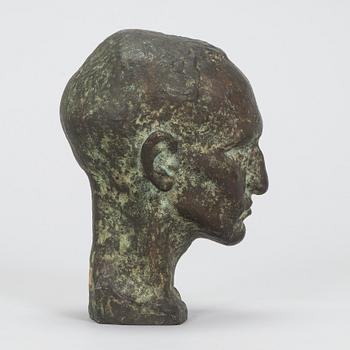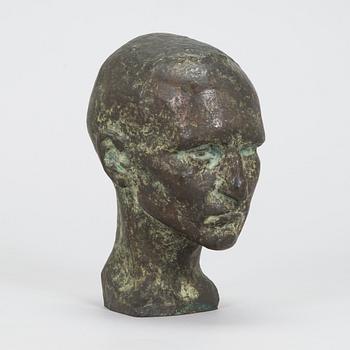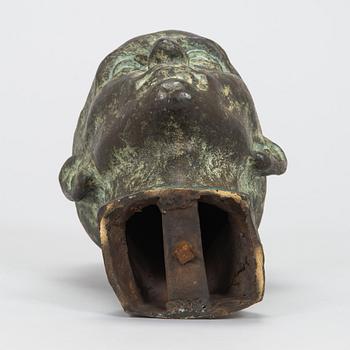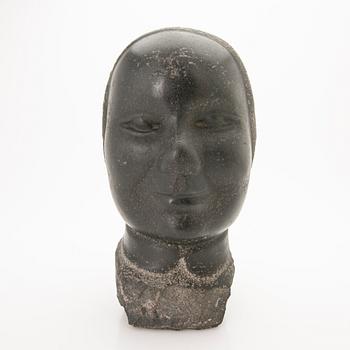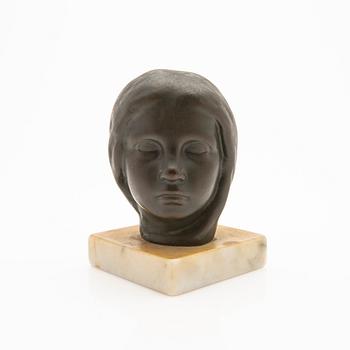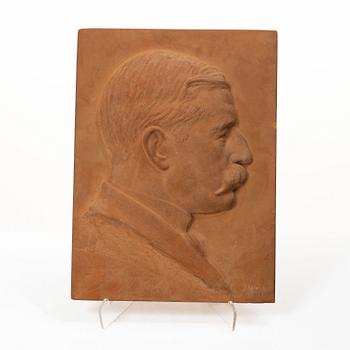
Bronze head of Aaro Hellaakoski
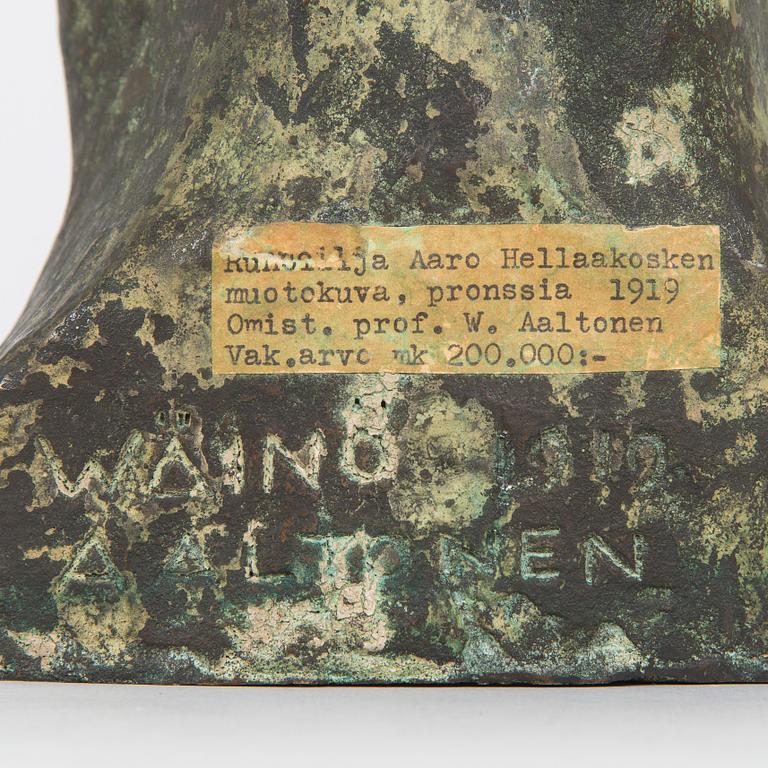
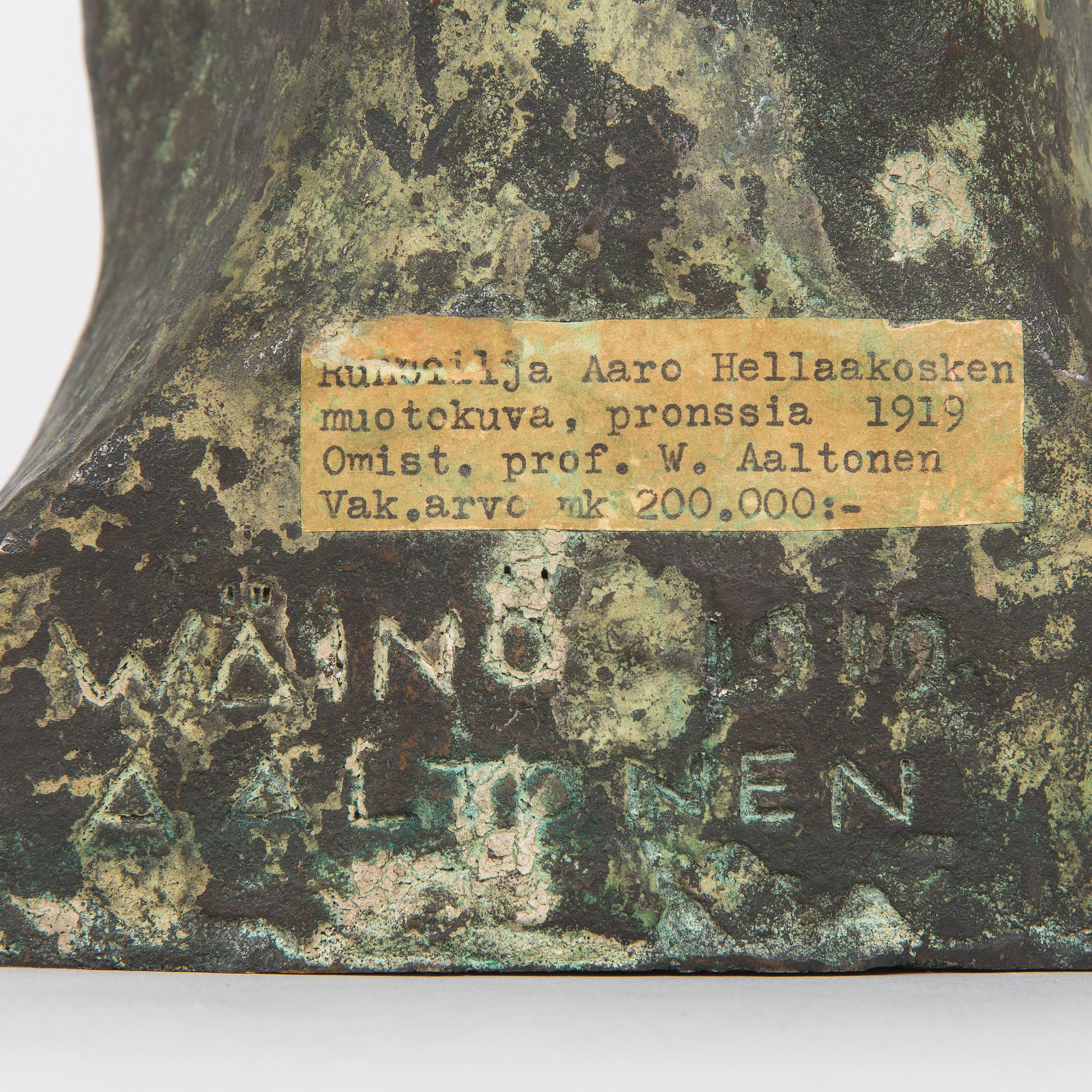
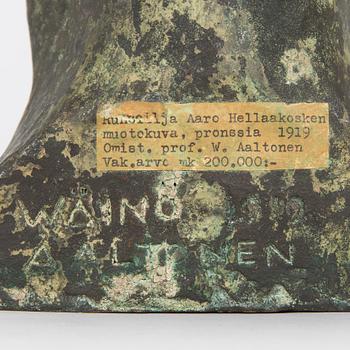
Signed Wäinö Aaltonen and dated 1919. Sculpture, bronze, height 35 cm.
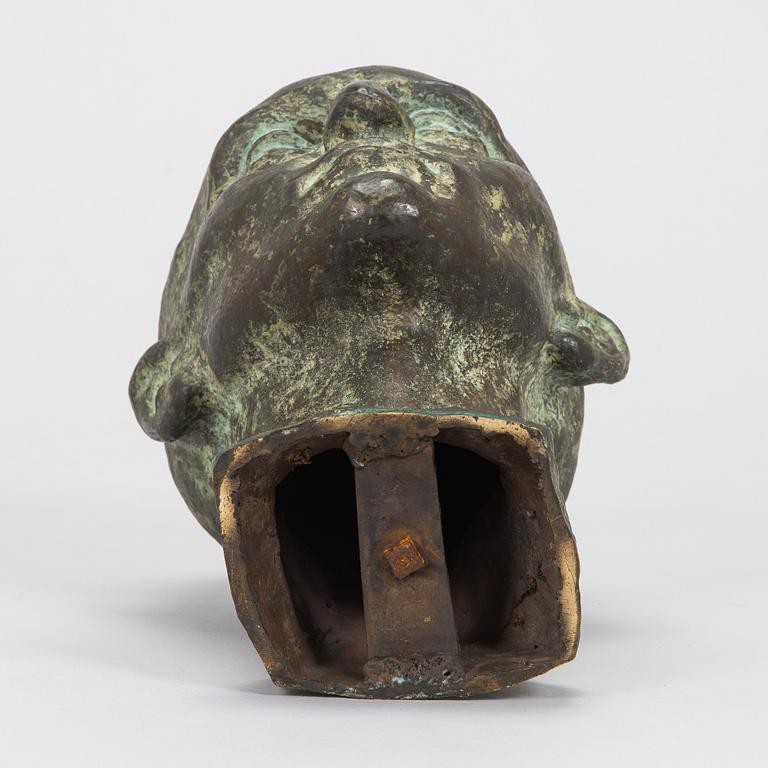
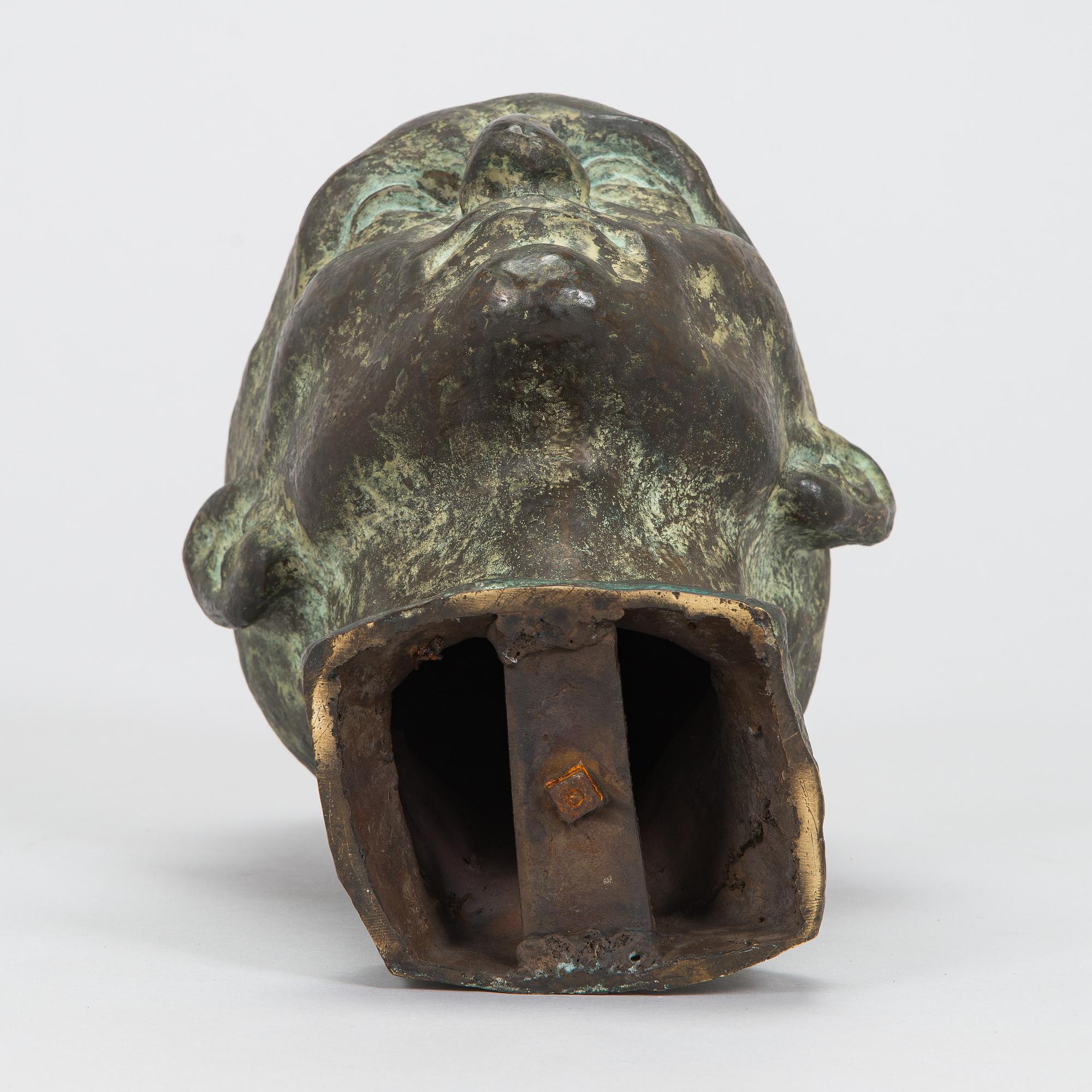
Wear due to age and use.
Provenance
Acquired directly from the artist; thereafter by inheritance within the family.
Literature
"Wäinö Aaltonen 1894-1966", published by the Wäinö Aaltonen museum 10/1994, no 30. pictured on p.21
Onni Okkonen, "Wäinö Aaltonen", WSOY 1945, pictured on p. 14
Börje Sandberg, "Wäinö Aaltonen", Otava 1948, pictured on p.52
More information
Aaro Hellaakoski (1893–1952) was a Finnish poet, writer, and natural scientist, and one of the leading figures of modernism in Finland. As a literary and art critic, the young Hellaakoski was known as merciless and as someone who often targeted many of Finland’s foremost authors and artists, from Akseli Gallen-Kallela to Eino Leino.
Hellaakoski was actively involved in the art and cultural life of the newly independent Finland. Among his artist friends, the closest bond developed between Hellaakoski and Wäinö Aaltonen, a friendship that later also became a family connection when Hellaakoski married Aaltonen’s sister Lempi in 1924.
The discussions between the two about new directions and possibilities in art inspired the work of both men. Aaltonen depicted the poet’s expressive facial features in his sculptures (for example, the 1921 Savonlinna-Sääminki monument) and also illustrated some of Hellaakoski’s poetry. In turn, Hellaakoski essays and articles analyzing Aaltonen´s works were published for both Finnish and international publications. Their friendship endured until Hellaakoski’s death.
Now presented at the Helsinki Spring Sale auction, Bronze head of Aaro Hellaakoski (1919) ranks among the finest portrait sculptures of Aaltonen’s early career. In literature the sculpture has been described, among other accolades, as “worthy of Donatello” (Onni Okkonen). Hellaakoski’s powerfully stern facial features are strikingly emphasized in the sculpture — “with his crooked mouth, bulbous nose, prominent brow, protruding ears, and almost bald-looking head shape” — fulfilling “the demands of modern psychological portraiture in an almost frightening manner,” as Esko Hakkila, who wrote extensively on Aaltonen’s life and work, observed.
The sculpture still radiates spirituality and presence today: the vibrant yet solid surface of the bronze, combined with Aaltonen’s mastery of detail and his ability to capture psychological depth, makes the work a timeless portrayal of humanity for contemporary viewers and future generations alike.
More about Wäinö Aaltonen
Wäinö Aaltonen was a prominent Finnish sculptor, born in 1894 in Karinais. Largely self-taught, he became the creator of several major national monuments following Finland's independence, initially in a classical style but eventually incorporating post-cubist elements.
Aaltonen studied drawing and painting at the Finnish Art Society's drawing school in Turku, but later developed an interest in stone carving and sculpture. He learned the techniques of marble carving from his relative, the sculptor Aarre Aaltonen, and apprenticed with stone carvers in Hirvensalo. His significant breakthrough came with the Turku Art Society's 25th-anniversary exhibition in 1916, where critics were impressed by Aaltonen's grand lines, sense of style, and monumental creations. His first solo exhibition was held in Vaasa in 1922. After a trip to Italy in 1923, he was deeply inspired by cubism, which influenced many of his works.
Wäinö Aaltonen's art displays great respect for materials, whether it be marble, bronze, or granite, reminiscent of Egypt. He is renowned for his skilled attention to detail and ability to capture movement in solid materials. Aaltonen has had a significant influence on younger generations of artists, with a prolific body of work primarily showcased at the Wäinö Aaltonen Museum in Turku.
Covered by droit de suite
Image rights
The artworks in this database are protected by copyright and may not be reproduced without the permission of the rights holders. The artworks are reproduced in this database with a license from Bildupphovsrätt.