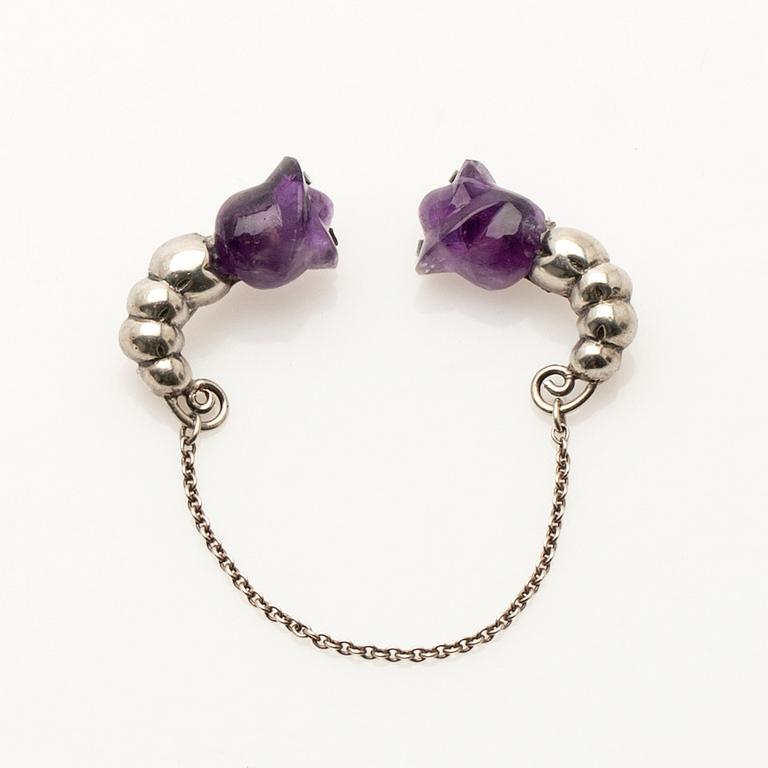
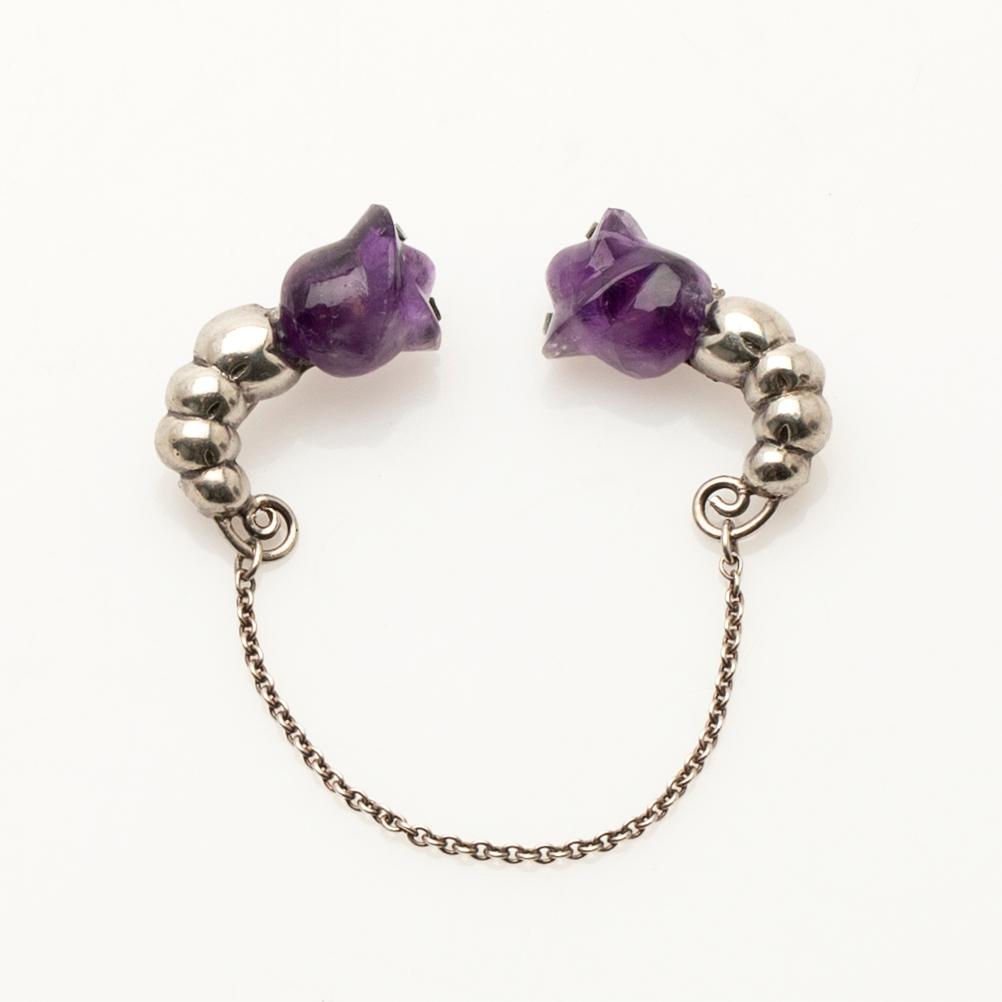
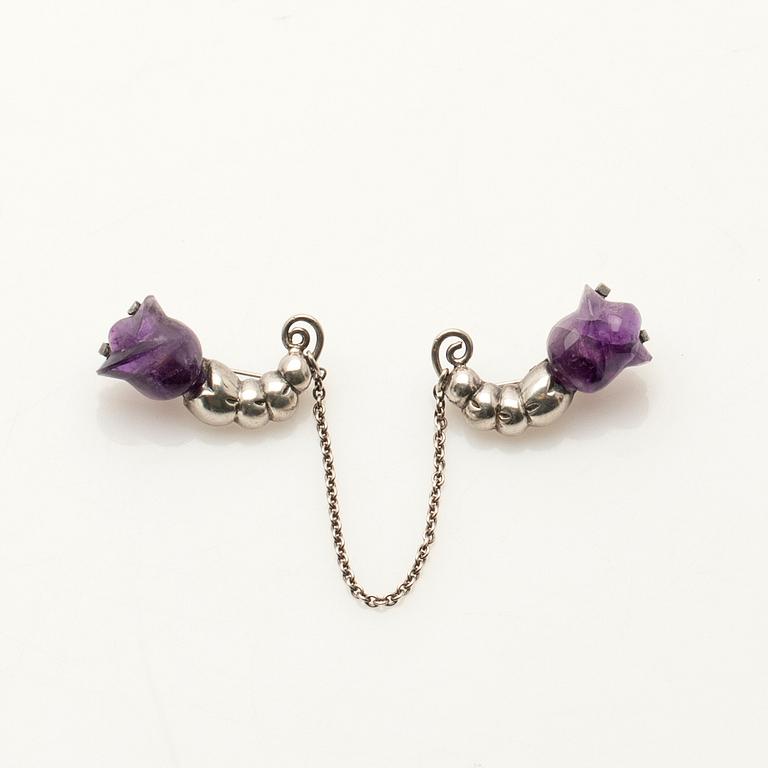
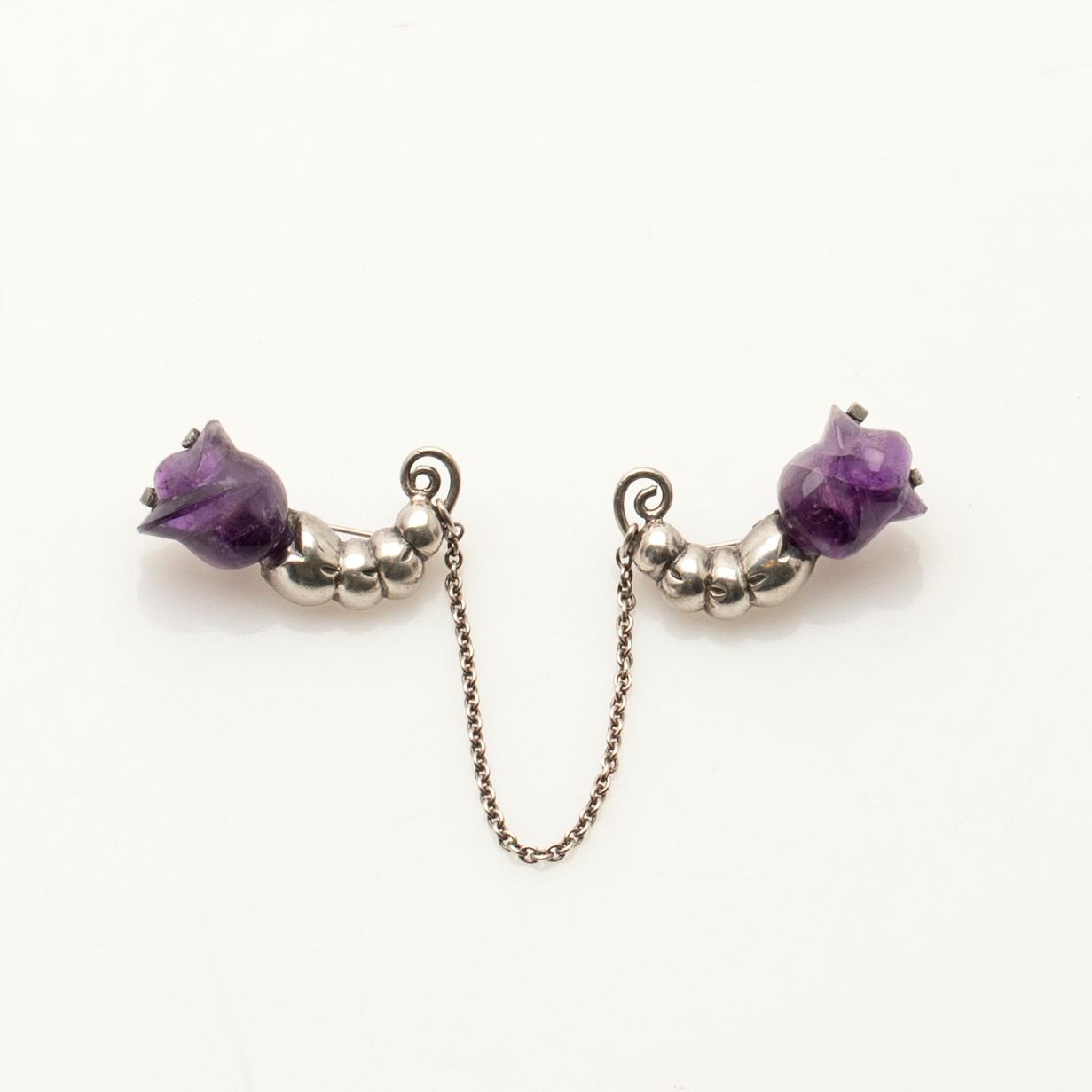
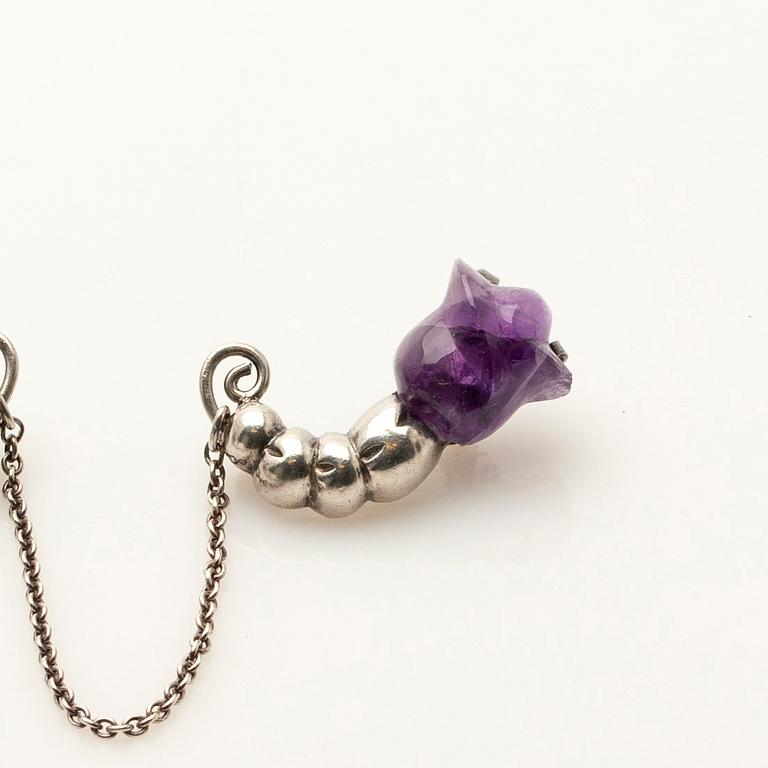
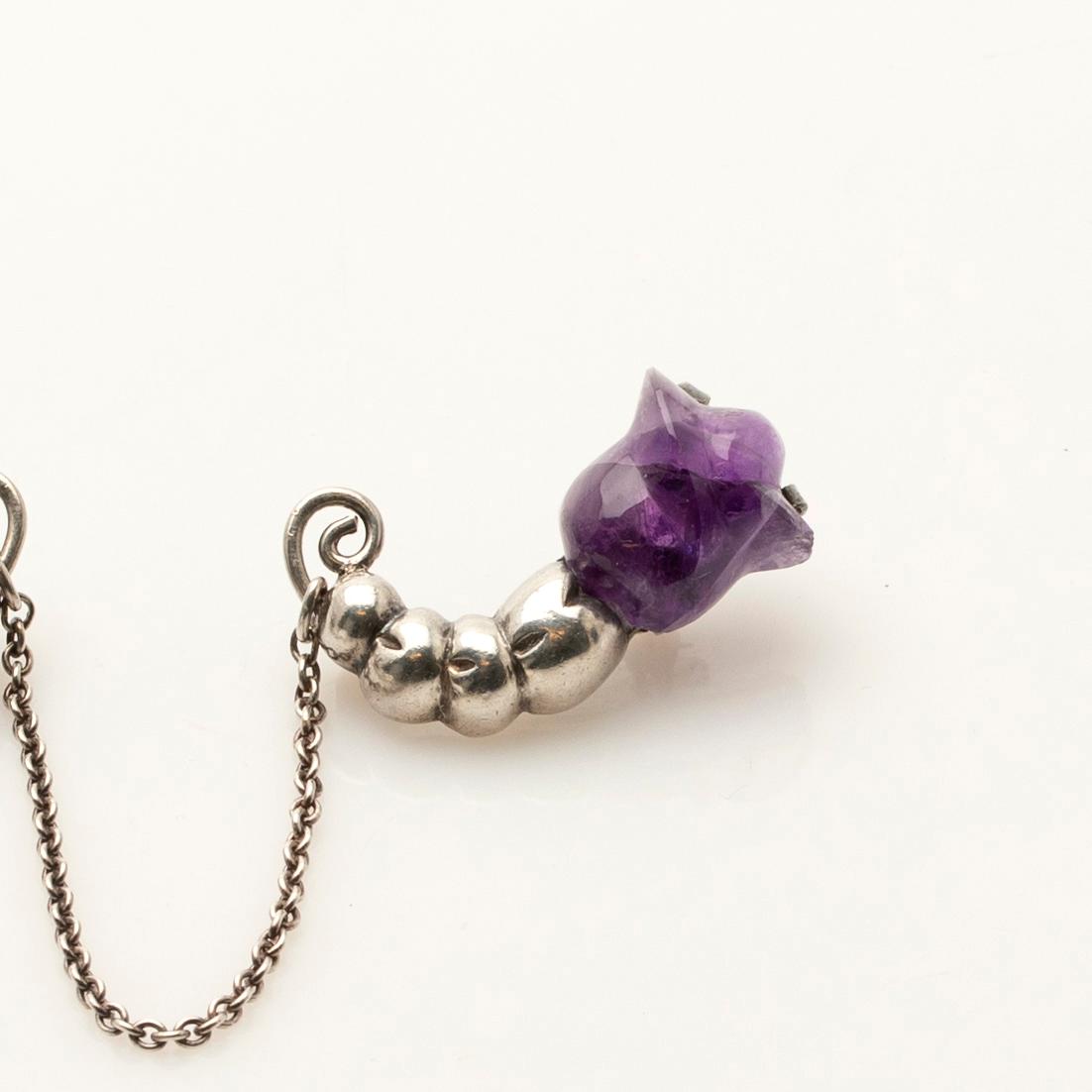
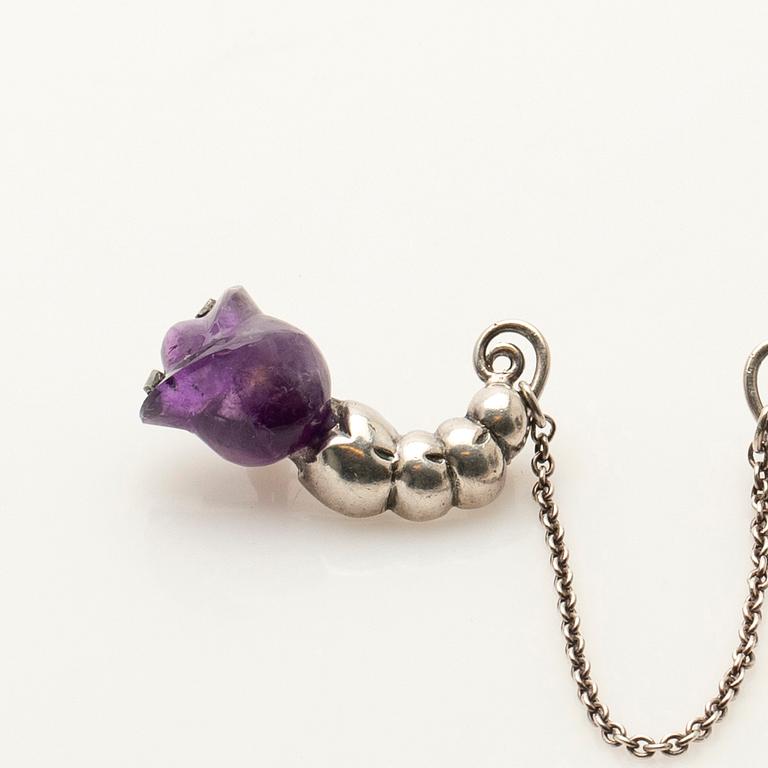
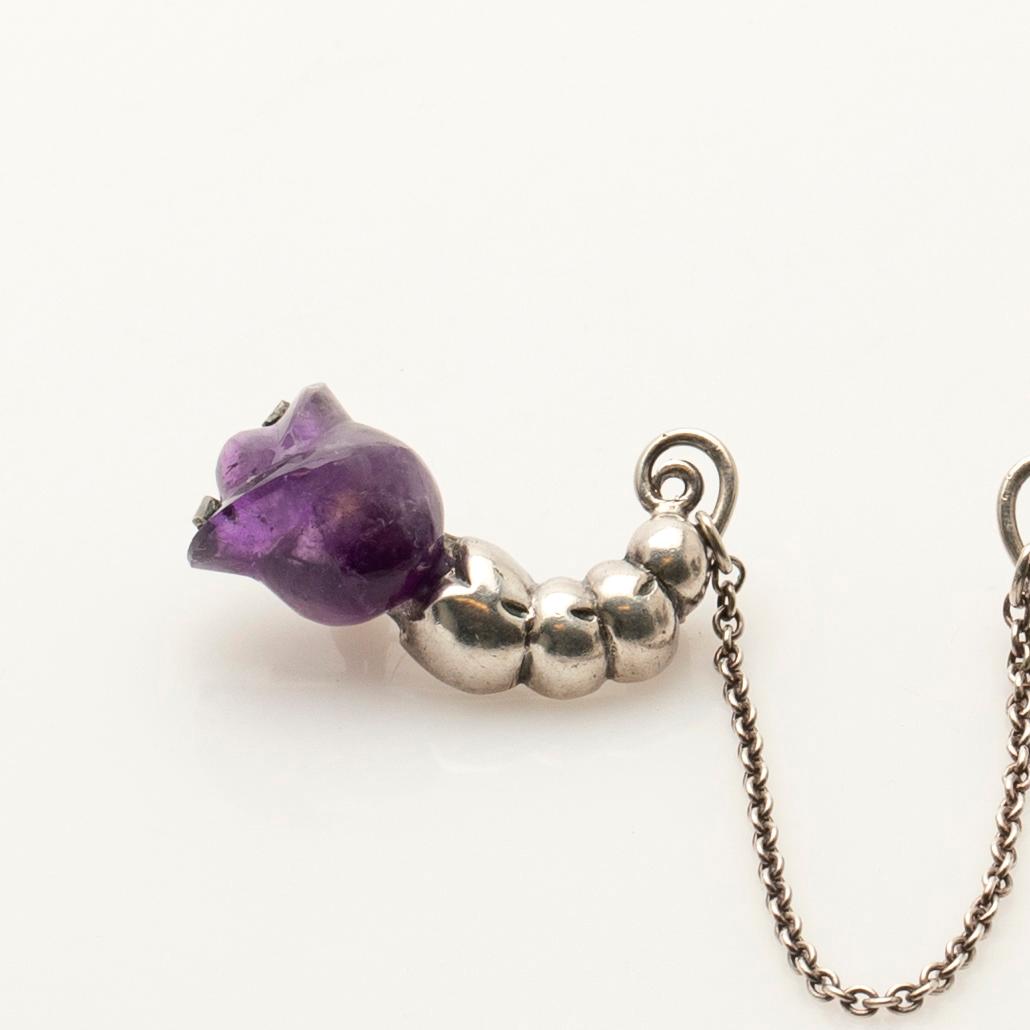
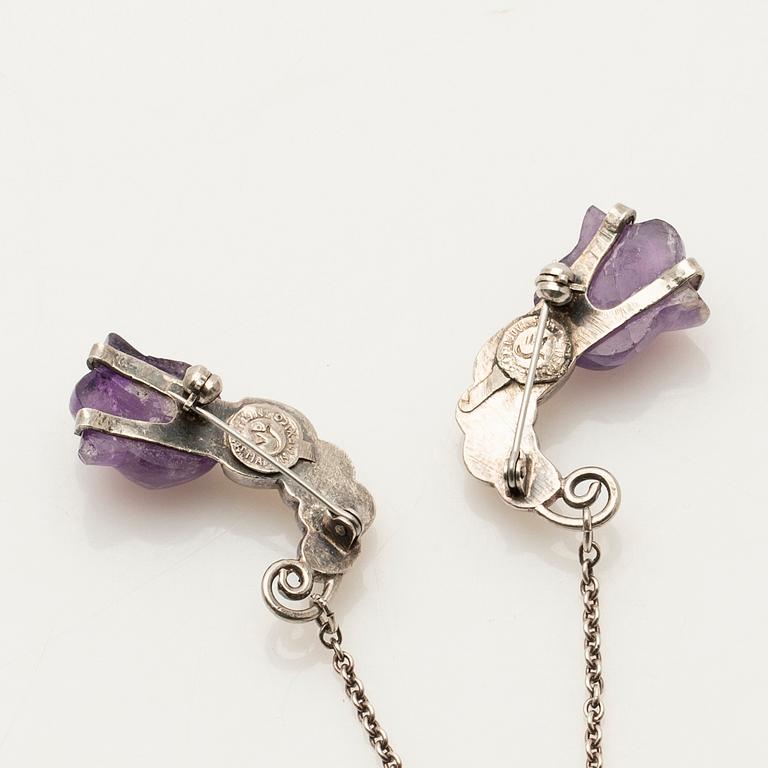
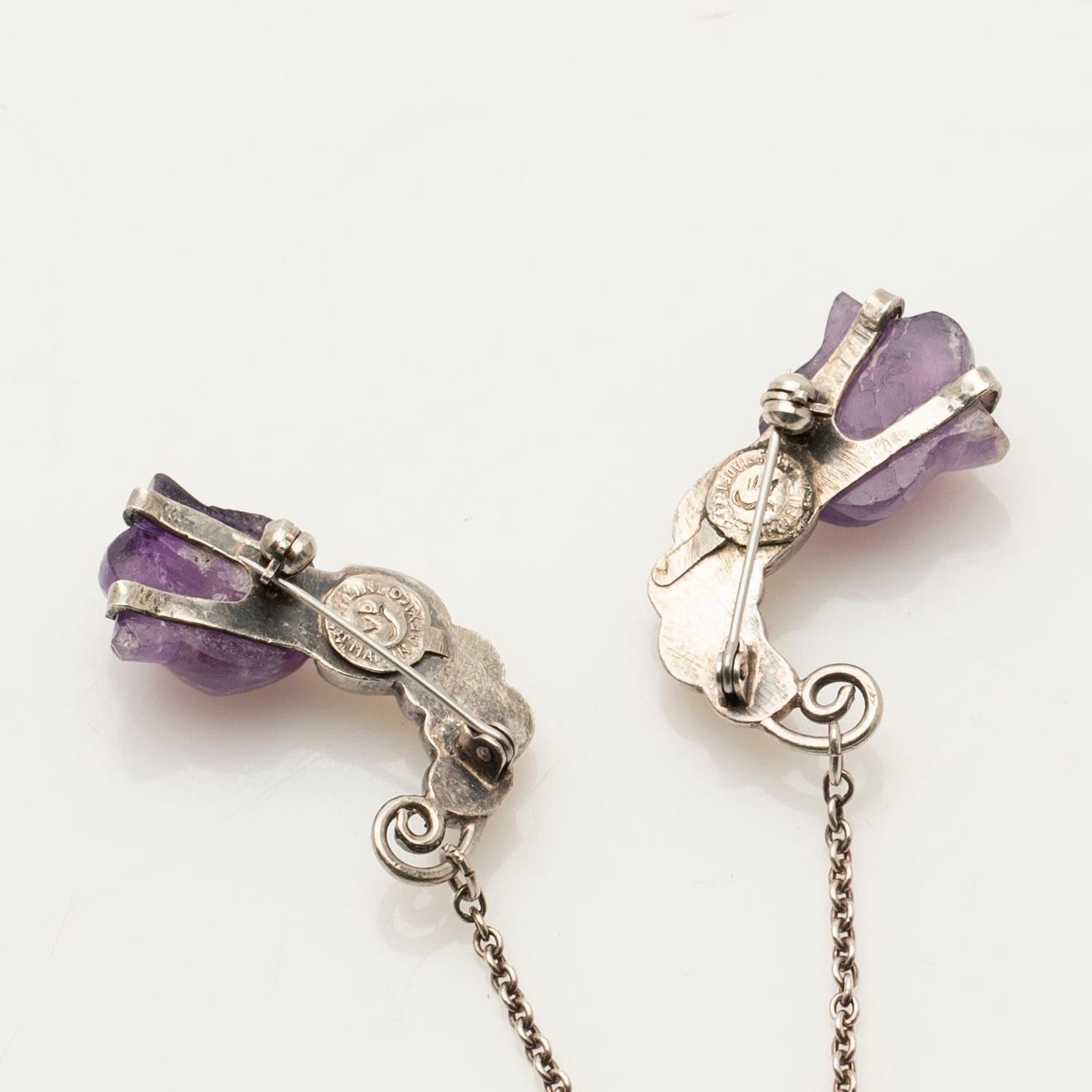
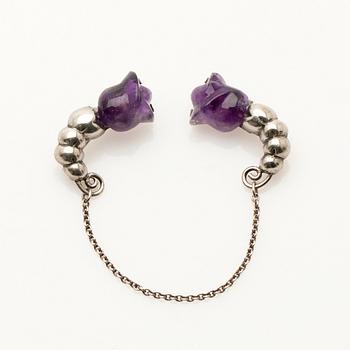
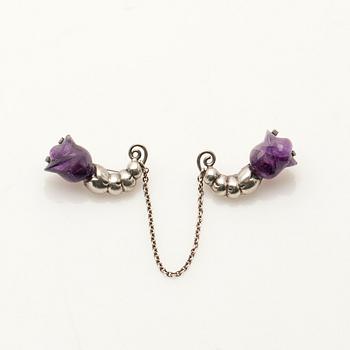
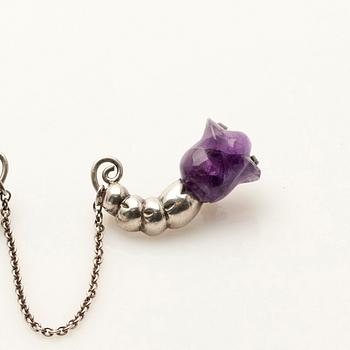
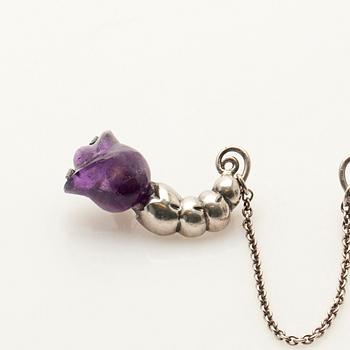
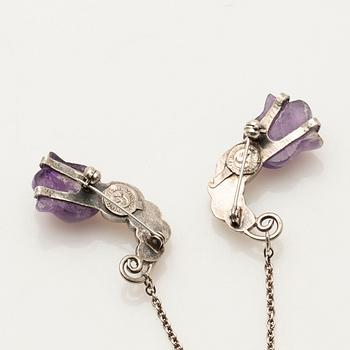
Silver and Carved Amethyst Brooch, Mexico, 20th Century
Amethysts cut in the shape of roses, the sections measuring approximately 4 x 2 cm, total length approximately 16.5 cm, weight approximately 18.1 grams
The amethysts, each with a nicked edge.
More about William Spratling
William Spratling (1900-1967) was an American-born silver designer and artist, best known for his influence on 20th-century Mexican silver design.
Upon graduation, at Auburn Highschool, Alabama, Spratling took a position as an instructor in the architecture department at Auburn University, and in 1921 he was offered a similar position at Tulane University's School of Architecture in New Orleans, Louisiana. At the same time, he was an active participant at the New Orleans Arts and Crafts Club and taught in the New Orleans Art School. During the summers of 1926-1928, Spratling lectured on colonial architecture at the National University of Mexico's Summer School.
In 1931 Spratling decided to reestablish a silver industry in Taxco. Taxco was a traditional site of silver mines, but had no native silverworking industry. Spratling began designing works in silver based primarily on pre-Columbian and traditional motifs, and hired local goldsmiths to produce those designs in Taxco. Spratling was the primary designer for his workshop, Taller de las Delicias, and was insistent on the high quality of the materials and techniques used in production. Talented maestros shared in the creative dialogue with Spratling, transforming his design drawings into prototypes in silver.
Primarily, Spratling's silver designs drew upon pre-conquest Mesoamerican motifs, with influence from other native and Western cultures. To many, his work served as an expression of Mexican nationalism, and gave Mexican artisans the freedom to create designs in non-European forms. Because of his influence on the silver design industry in Mexico, Spratling has been called the "Father of Mexican Silver".
In 1952, Spratling reestablished a small workshop at his ranch in Taxco el Viejo and began production of silver jewelry and decorative objects. In a 1955 article, "25 Years of Mexican Silverware," Spratling expressed his belief that the object in silver should be considered the culmination of a mystical and visionary process. For Spratling, the necessity of direct human involvement in every phase of a handwrought industry meant there were contributions to be made by every maestro and silversmith. The designer continuously interacted with and was aware of the capabilities of members of the workshop. The final statement, the object itself, was a result of an ongoing experiment in creativity.
Read moreContact

Customer service
Please contact Customer Support for inquiries regarding transport, payment and other questions.
Sweden
Telephone hours: Monday – Friday 9 am – 12 pm
+46 8-614 08 00
Finland
Telephone hours: Monday – Friday 10 am – 1 pm
+358-9-668 91 10
What will the transport cost?
Image rights
The artworks in this database are protected by copyright and may not be reproduced without the permission of the rights holders. The artworks are reproduced in this database with a license from Bildupphovsrätt.
Others have also viewed