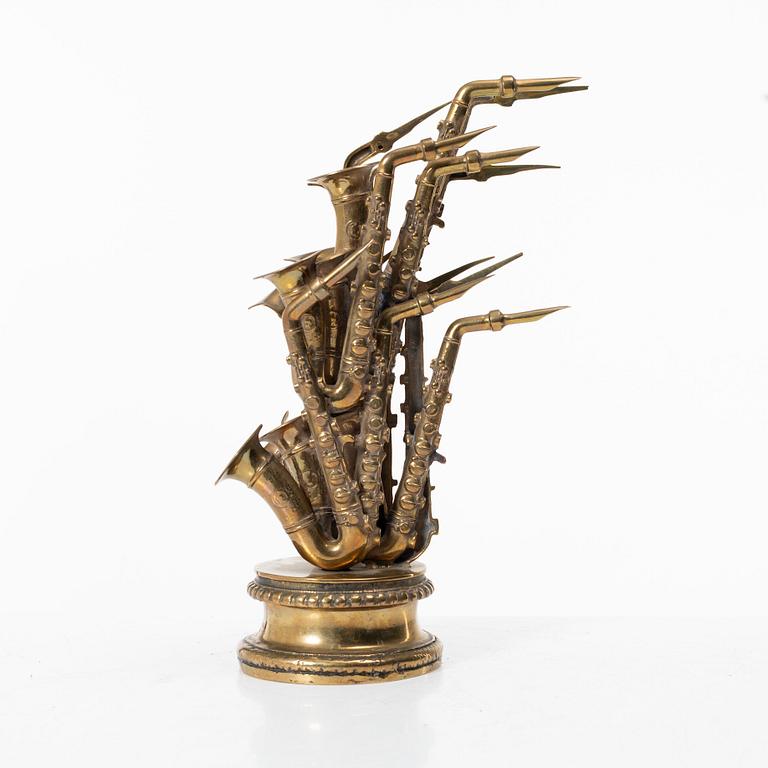
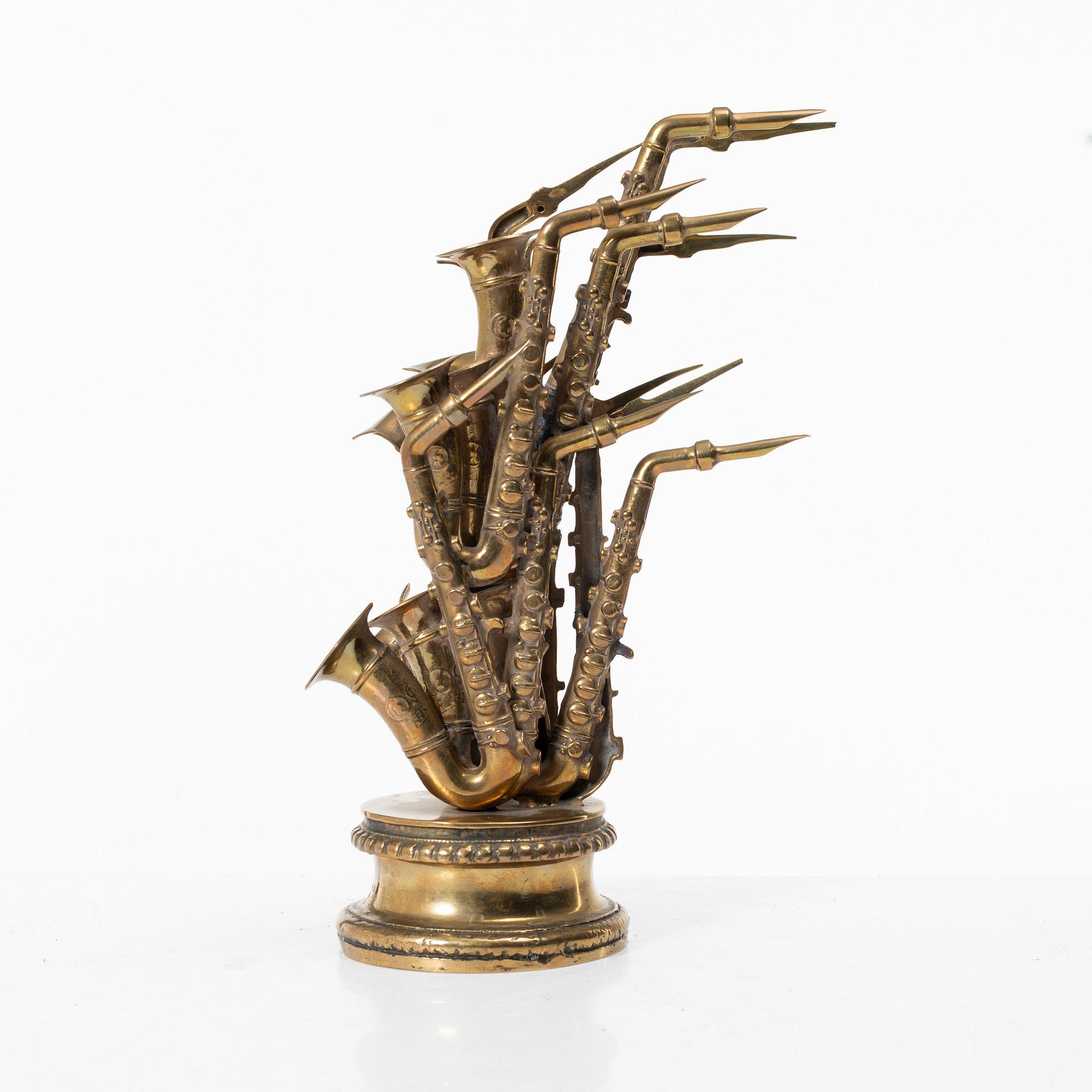
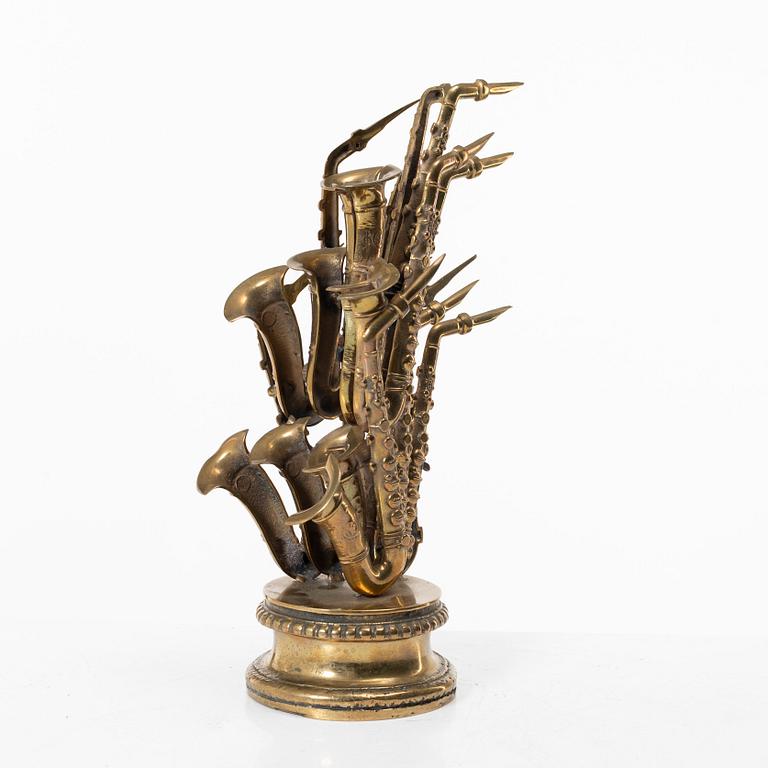
"Double Chassis"
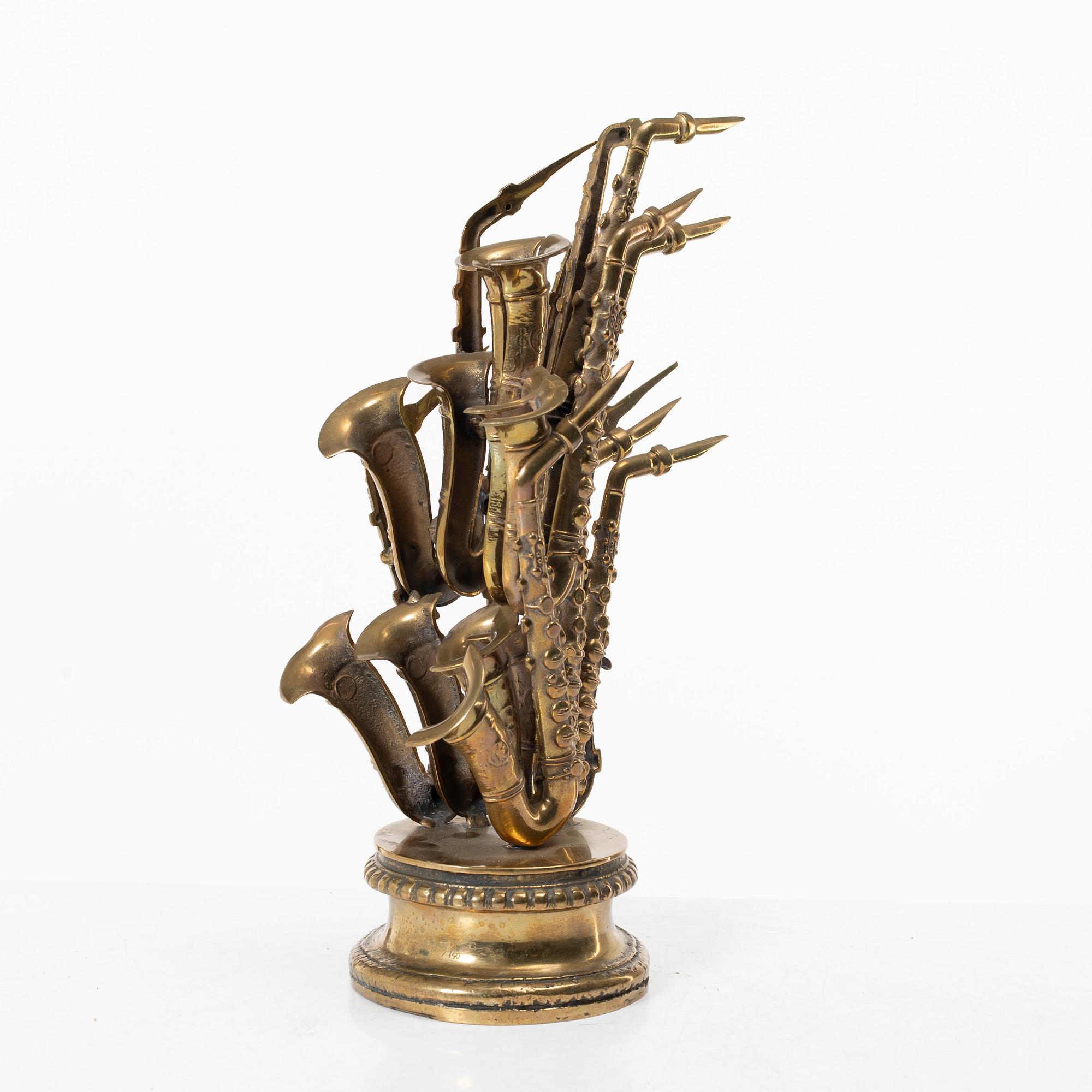
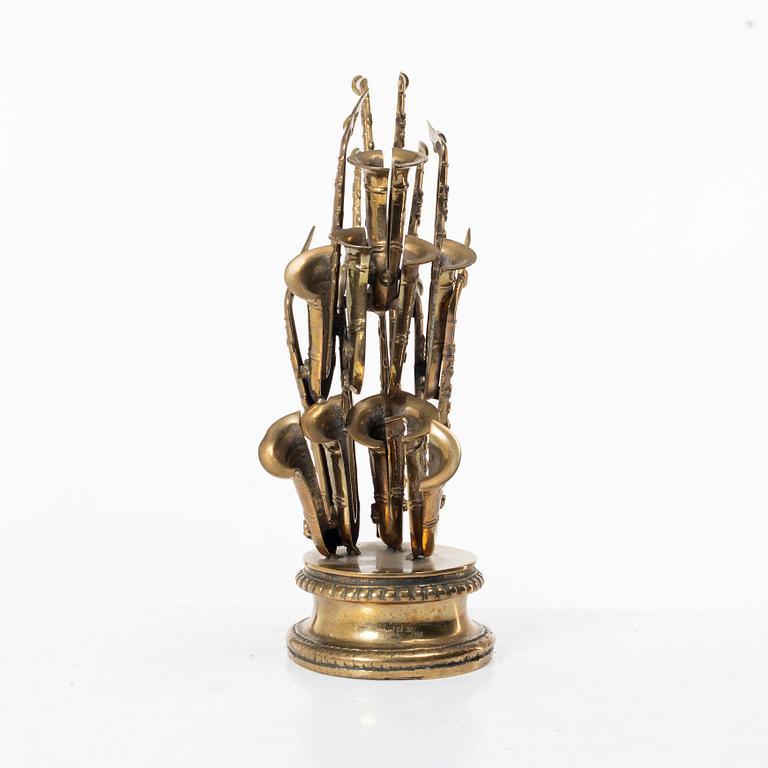
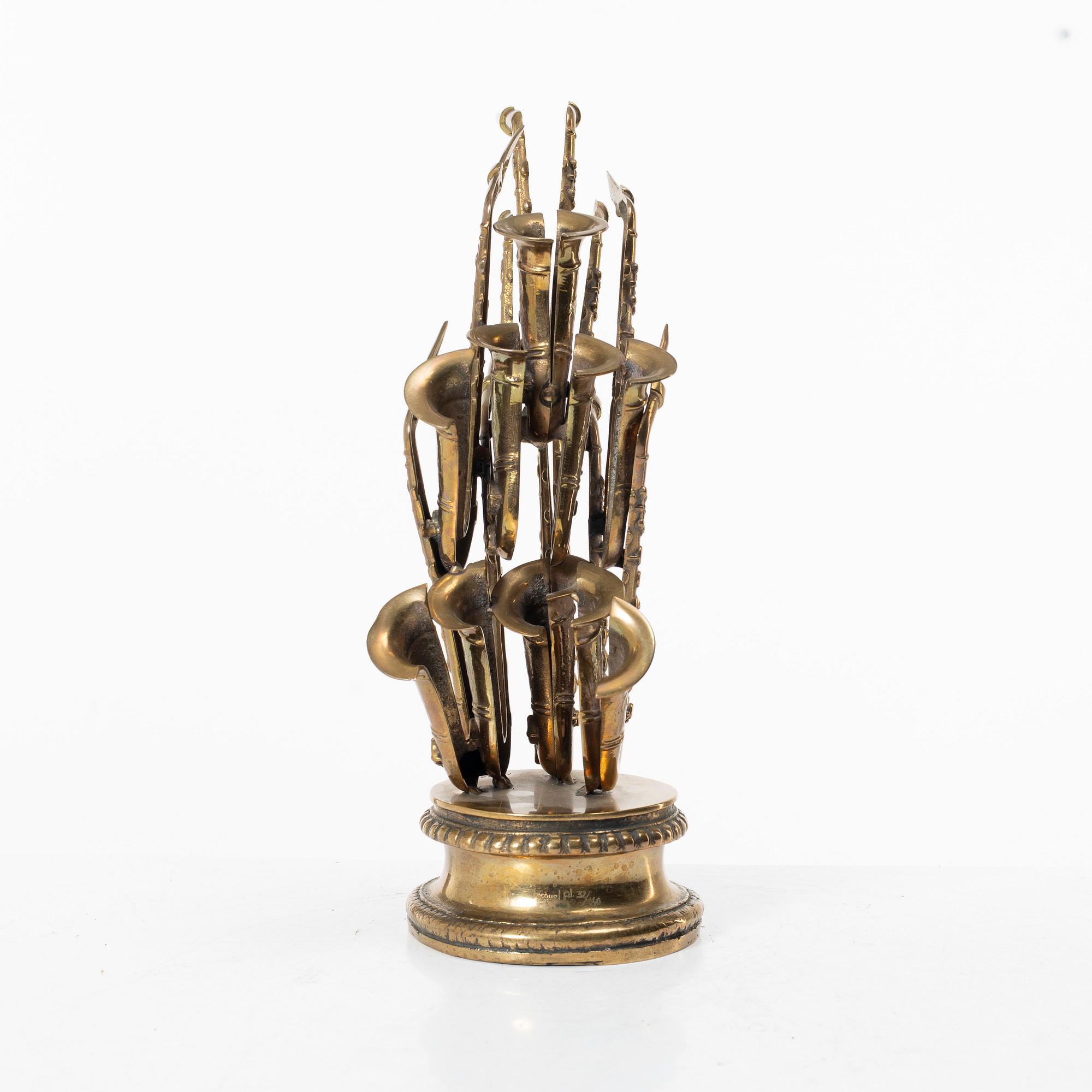
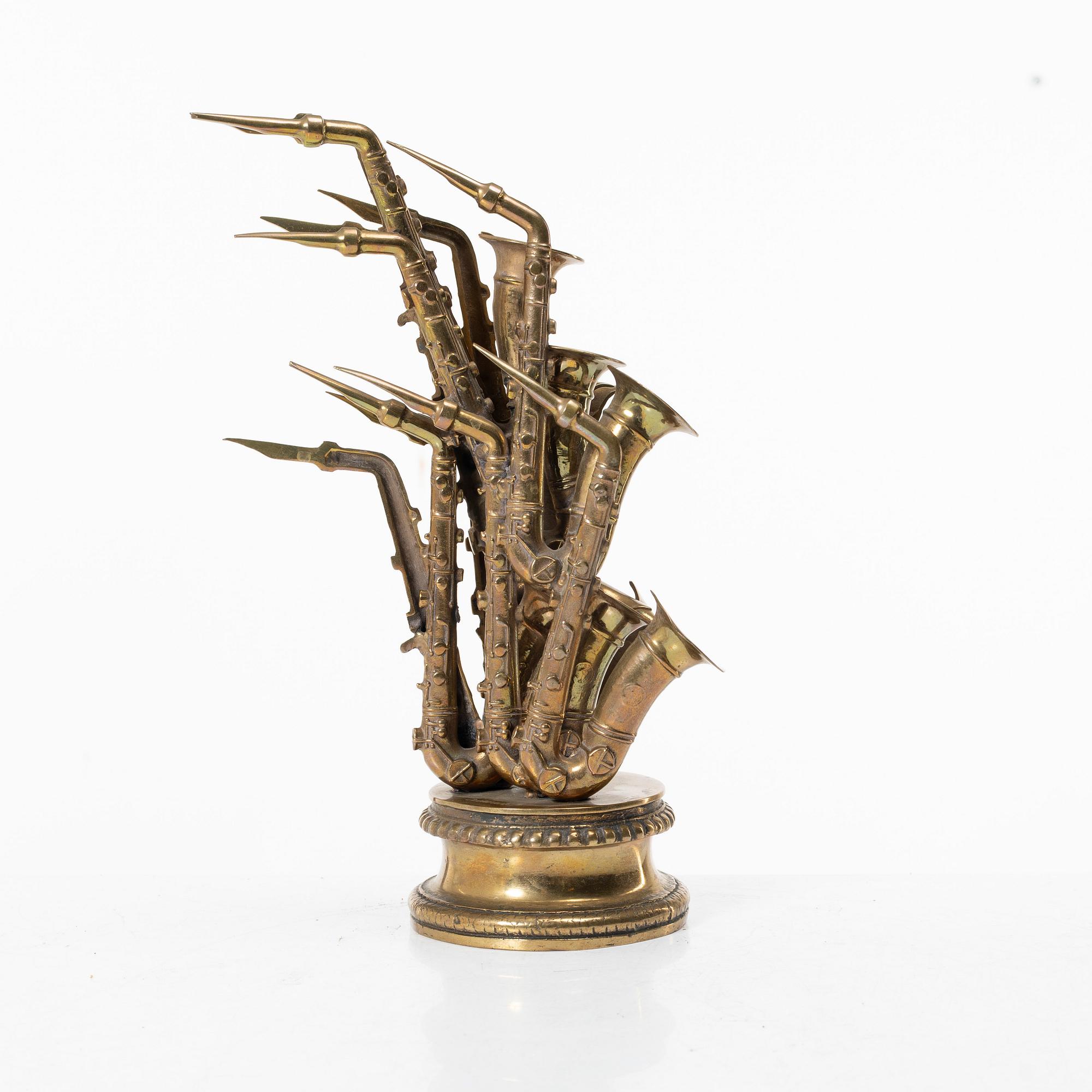
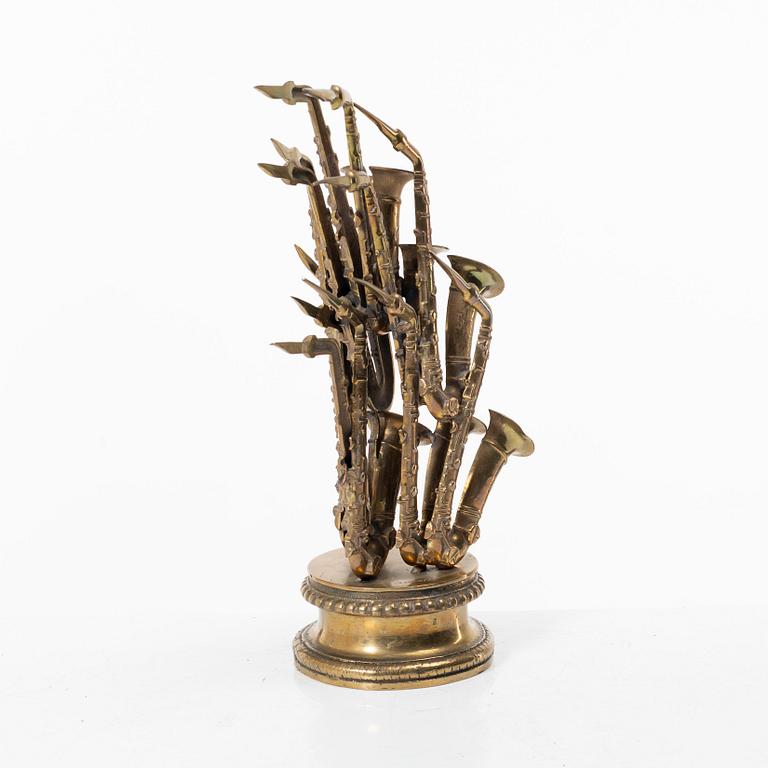
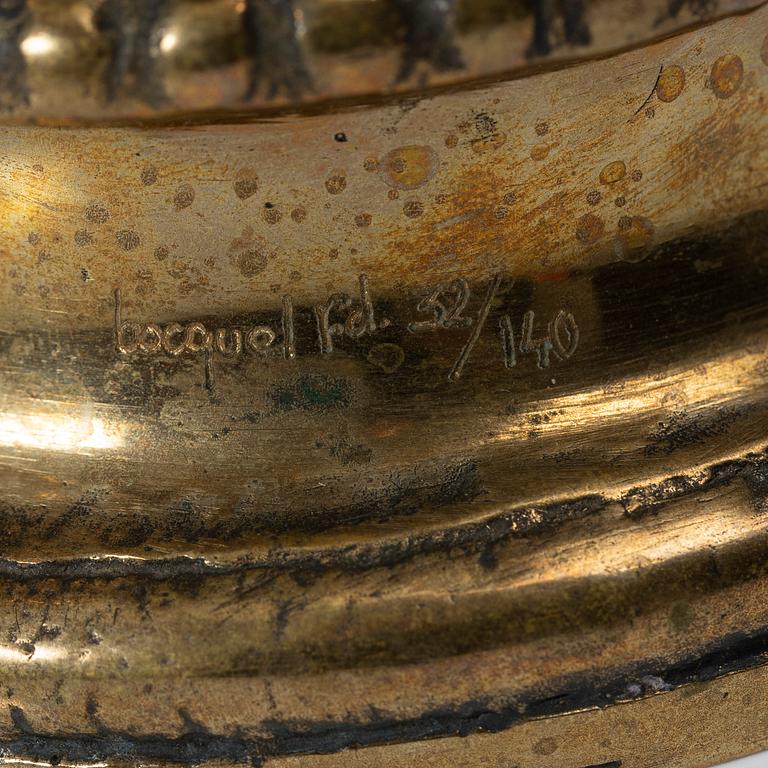
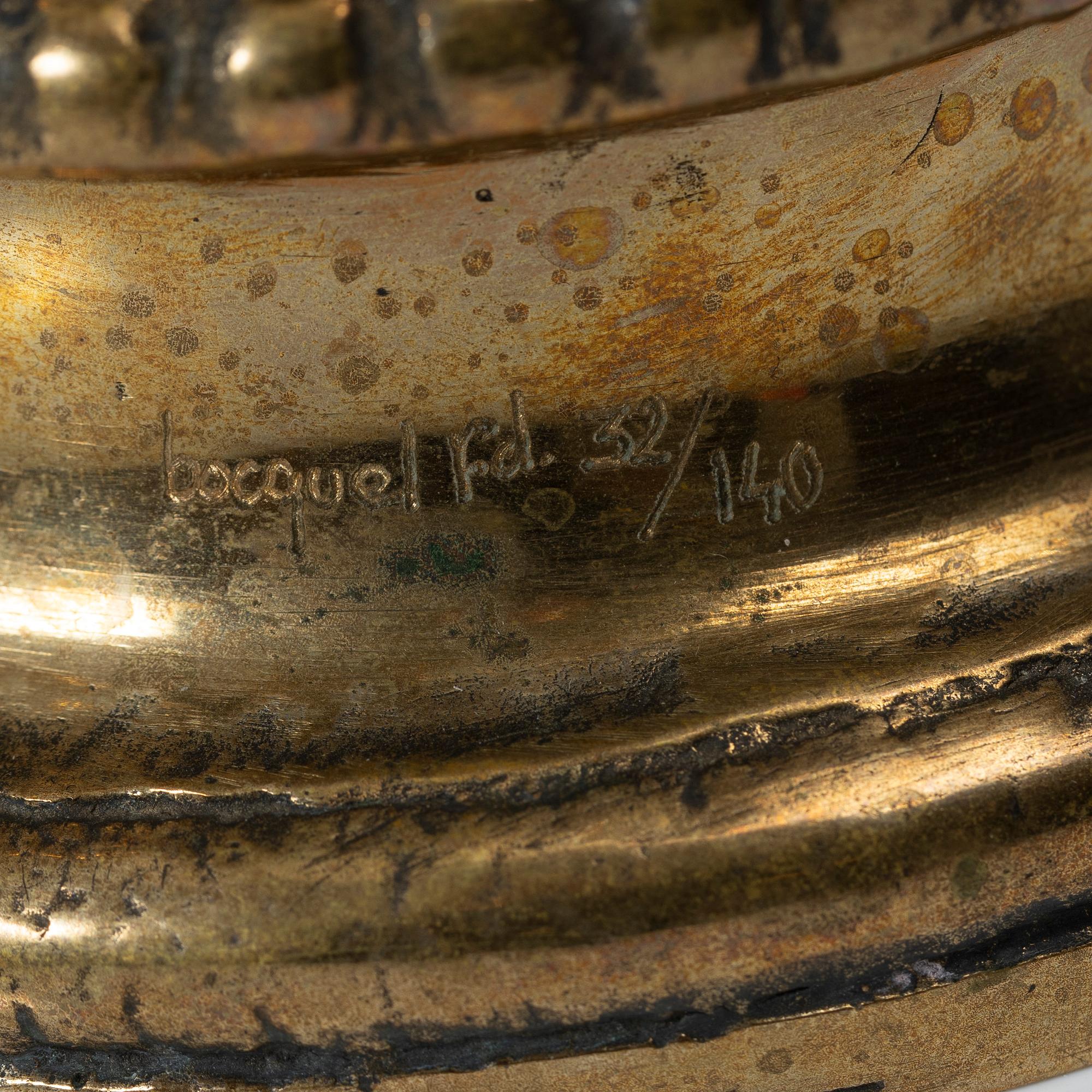
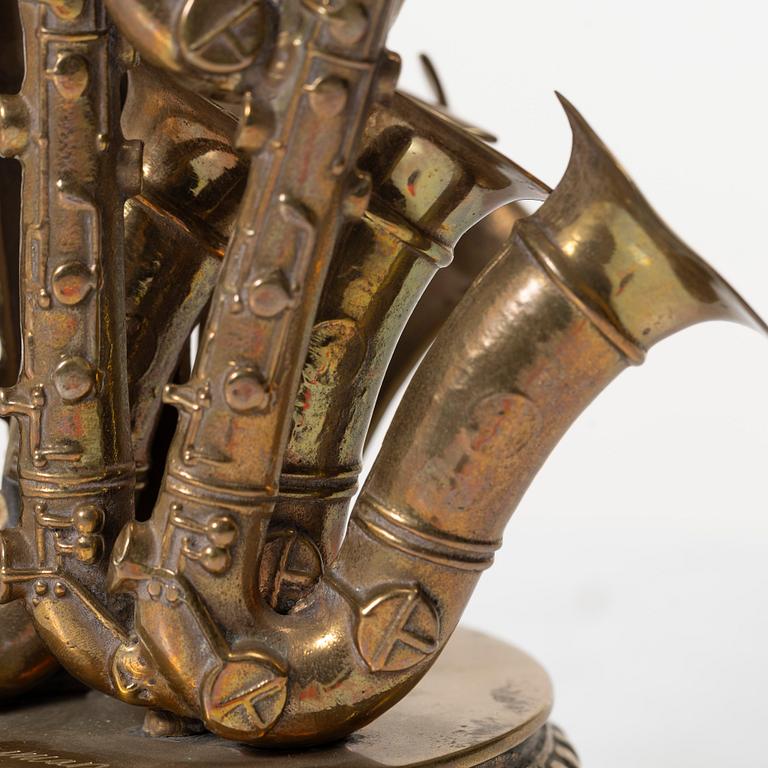
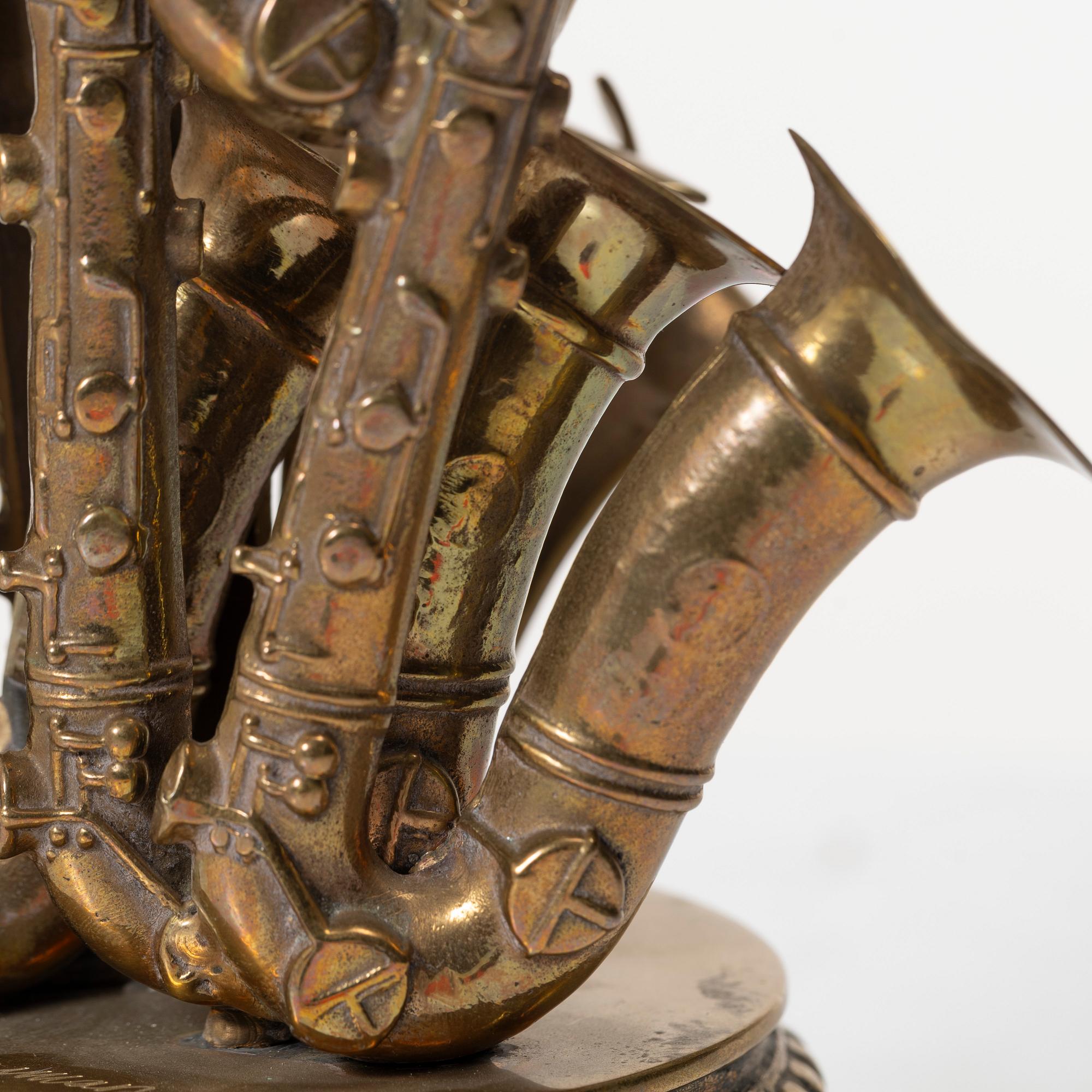
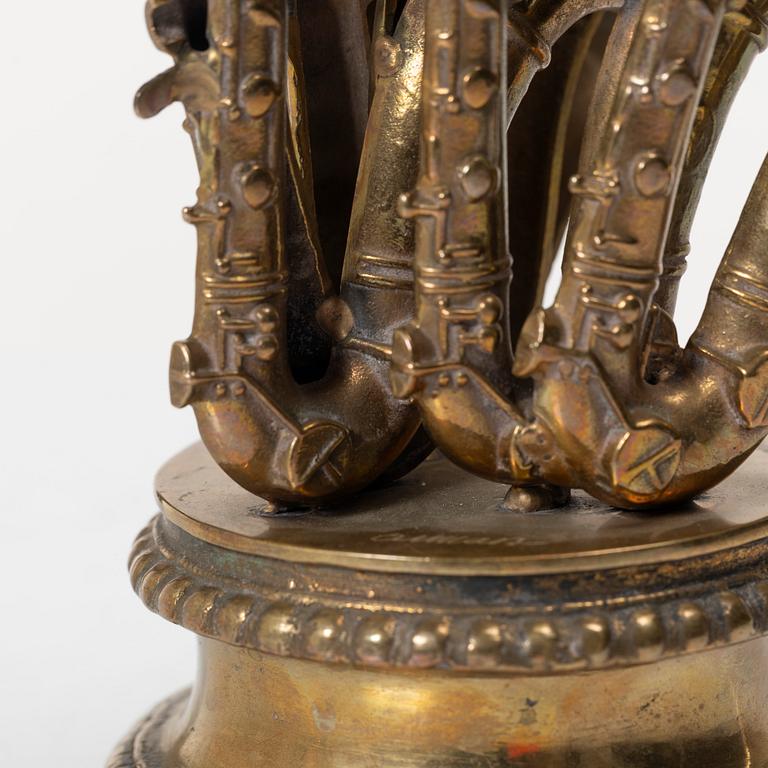
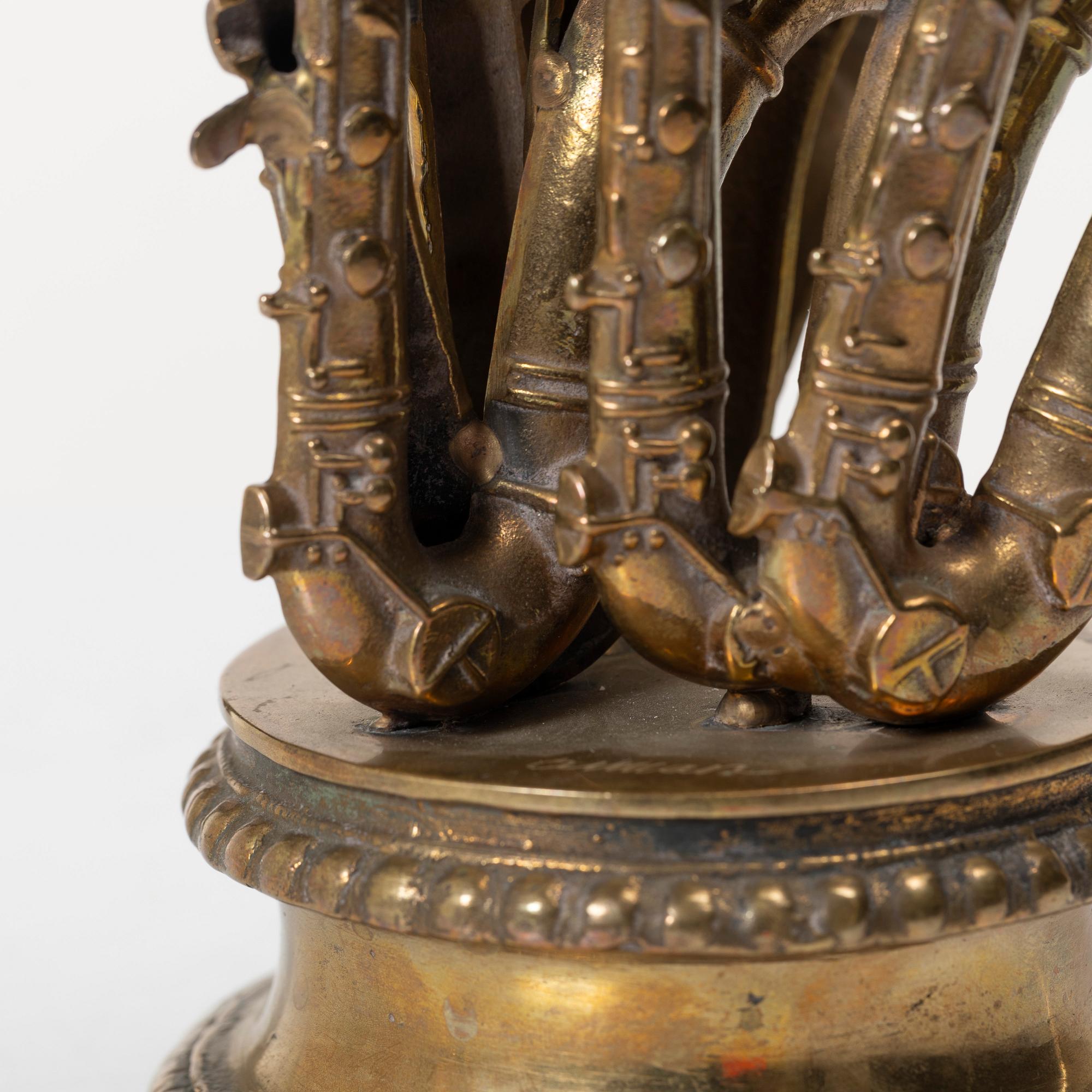
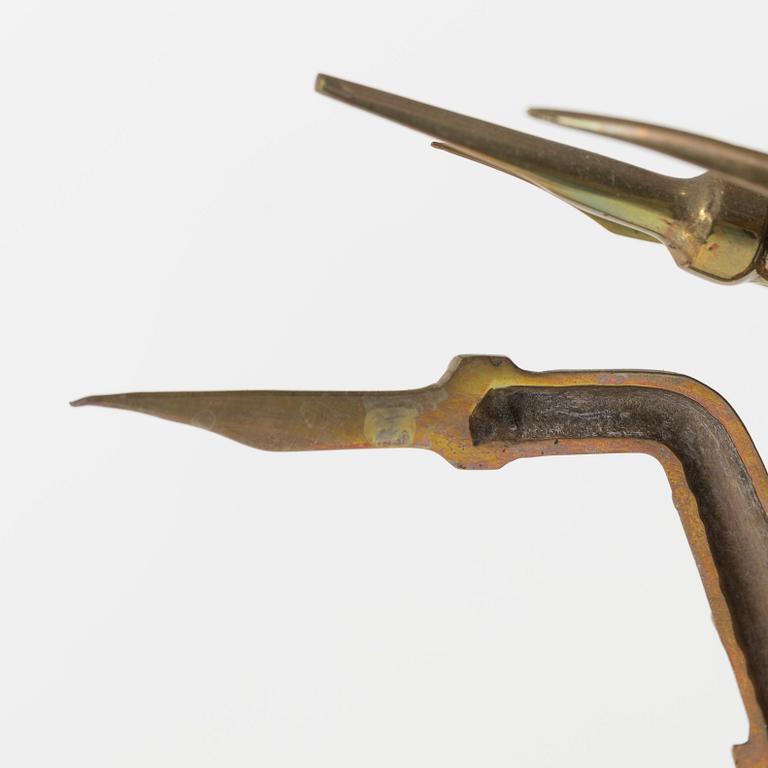
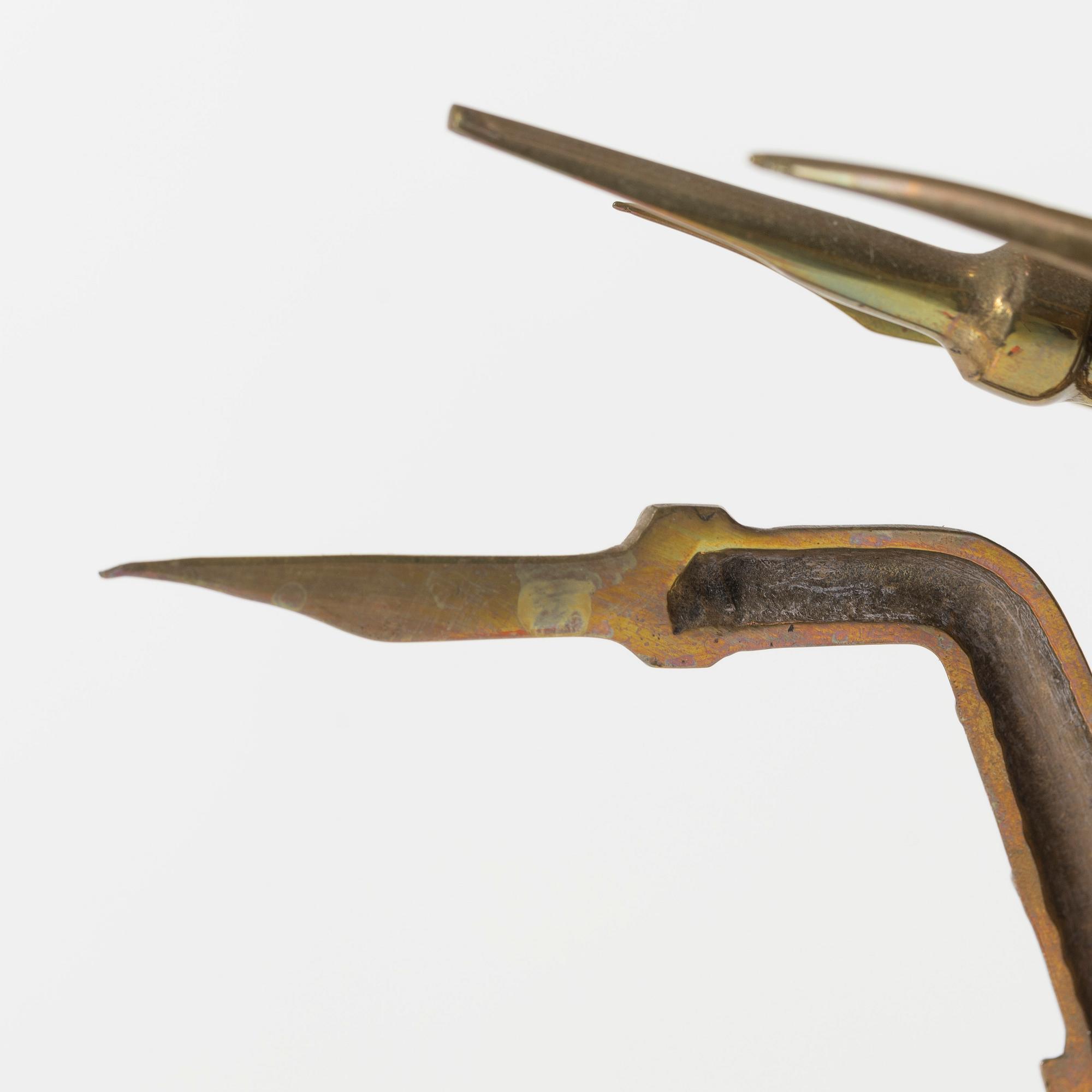
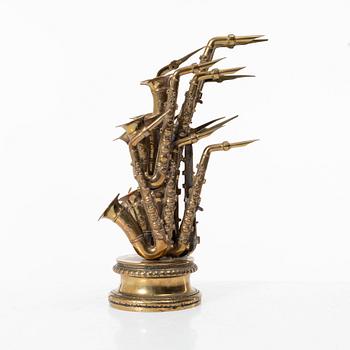
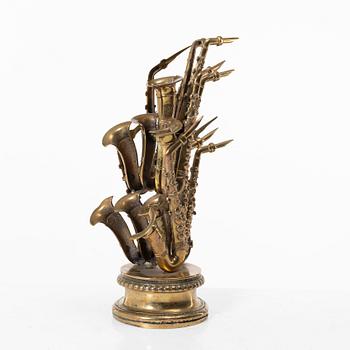
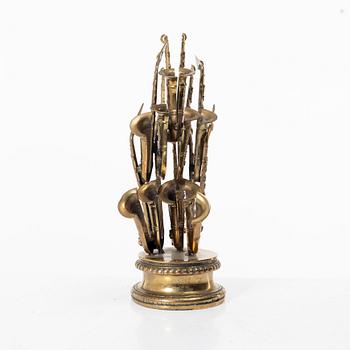
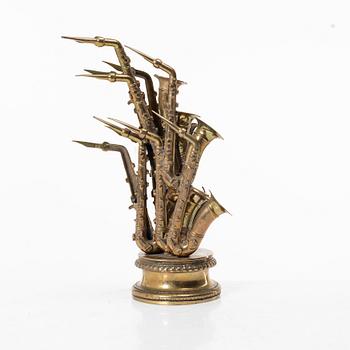
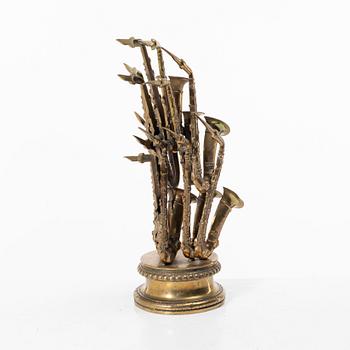
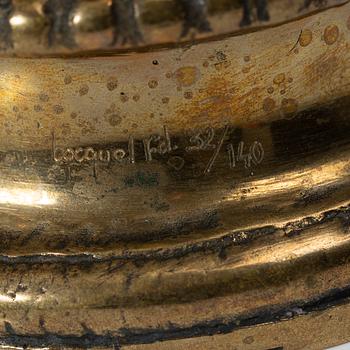
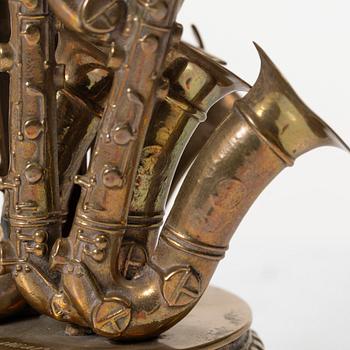
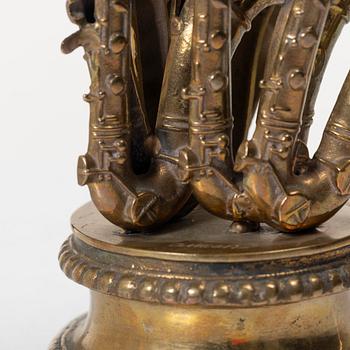
Signed Arman, foundry mark bocquel Fd, numbered 32/140. Executed in 1994. Accumulation of vertically sliced miniature bronze saxophones on a circular base, bronze, height 29 cm. Published by Edition GKM Siwert Bergström, Malmö, Sweden.
This work is recorded in the Arman Studio Archives New York under number: APA# 8400.94.021.
Tarnished.
More information
Armand Pierre Fernandez, better known as Arman, was born in Nice in 1928. His father owned an antique shop, where Arman early on discovered his passion and fascination for everyday and curious objects. Arman began a traditional art education at the art school in Nice but dropped out after just three years, finding the education too conservative. Instead, he sought inspiration from contemporary artists such as Marcel Duchamp, Jackson Pollock, and Kurt Schwitters, and began painting abstract motifs. Around 1960, Arman was involved in forming the artist group "Nouveaux Réalistes" alongside César, Niki de Saint Phalle, Jean Tinguely, and Yves Klein, and found his own niche and the expression we have come to associate him with today. He began experimenting with early versions of "accumulations," in which Arman explores his reality and gives new dimensions to already complete objects.
More about Arman (Armand Pierre Fernandez)
Arman (Pierre Fernandez, born in Nice in 1928) moved to Paris after graduation to study archaeology and oriental art. After returning to Nice in 1953, he devoted himself instead to abstract art and began collaborating with Yves Klein, which was to have a significant impact on his artistic development. After a typographical error in an exhibition catalogue at the legendary Galerie Iris Clert in Paris, in which the letter "d" had dropped from his name, Arman decided that henceforth he would sign his works only "Arman".
In the late 1950s, he began working with sculptures, first the series Accumulations with everyday objects and then Poubelles consisting of rubbish.
In 1960, Arman co-founded the Nouveau Réalisme group with Jean Tinguely and Daniel Spoerri, among others. Later César, Niki de Saint Phalle and Christo joined. The group opposed informal art and became the French equivalent of English and American pop art.
During the 1960s, Arman travelled to New York for the first time, where he exhibited at the Cordier-Warren Gallery and MoMA. He continued to work with sculptures through different series such as 'Coupes' (sawed and sliced objects), 'Colères' (disintegrated and broken objects), 'Combustions' (burnt objects) and 'Inclusioni' (assemblage of objects enclosed in polyester resin).
Arman's work was shown both at the Stedelijk Museum, Amsterdam (1964) and at the Venice Biennale (1968) in the following years. In the 1970s, he created assemblages with cement and car parts in collaboration with Renault. In 1973 he became an American citizen when he moved to New York.
During the last twenty years of his life, Arman continued to work with different materials and techniques. He has executed several monumental works such as the bronze work "A la République" (1984) in the Palais de l'Élysée, Paris and the work "Espoir de Paix" (1995) in Beirut, an assemblage of cement and tanks. It is still the world's largest sculpture.
Arman died in 2005 in New York. During his lifetime, he participated in almost 500 solo exhibitions. His works are today included in collections at MoMA, NY, The National Gallery of Art, Washington, Tate Modern, London and Musée d'Art Moderne et d'Art Contemporain, Nice.
Read moreCovered by droit de suite
Image rights
The artworks in this database are protected by copyright and may not be reproduced without the permission of the rights holders. The artworks are reproduced in this database with a license from Bildupphovsrätt.



Others have also viewed