Jun 1, 2023
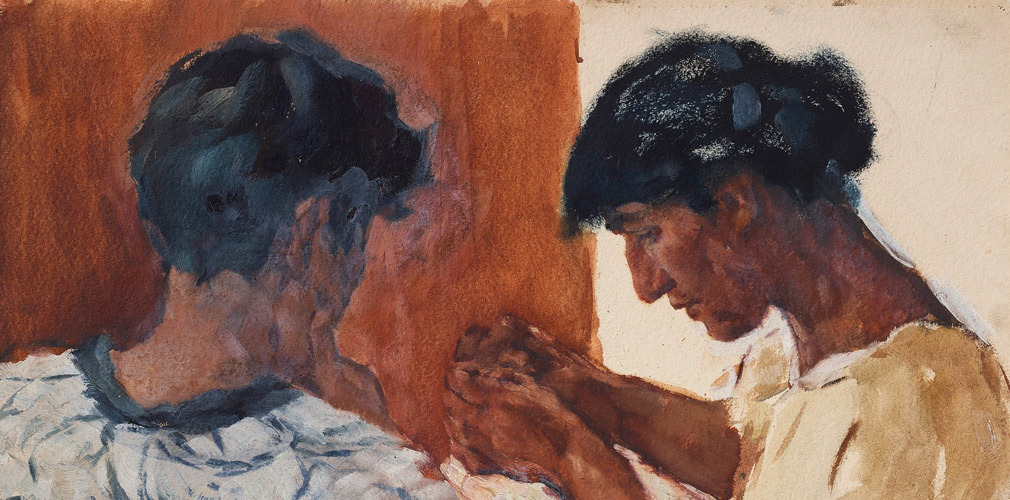
Bukowskis Presents a Collection of Artworks by Lotte Laserstein at Important Spring Sale
Lotte Laserstein
Lotte Laserstein (1898–1993) was born in East Prussia, her father died when she was only four years old, and her mother and grandmother raised her in what is now Gdansk and Berlin. In 1927 she graduated from the Academy of Fine Arts in Berlin as one of the first female students and was immediately successful. She quickly became known on the city’s art scene for her skillful portraiture, especially of young modern women in the 1920s Weimar Republic. When the Nazis came to power in 1933, her promising career was cut short as she was categorized as a 3⁄4 Jew (her grandparents were Jewish, but her parents were not), following the ideology of the time. As a result, she was increasingly excluded from the art scene.
However, an invitation to exhibit at Galerie Moderne in Stockholm in 1937 allowed her to leave her home country. She travelled from Berlin in 1937 and shipped most of her works to Stockholm. The exhibition took place, and she was able to remain in Sweden on a three– month visa. She made new friends in Stockholm, some of whom helped her enter a sham marriage, thus obtaining Swedish citizenship.
Laserstein tried to build a new life in Stockholm, making a living mainly by commissioning portraits. She struggled to enter new art circles emphasizing modernism and abstract painting. She applied to join the Swedish Artists’ Association, KRO but was denied several times, which was a personal defeat. She was not considered sufficiently modern, and her consistent adherence to realism during the dominance of artistic abstraction in the post– war decades probably contributed to her lack of a significant breakthrough in Sweden.
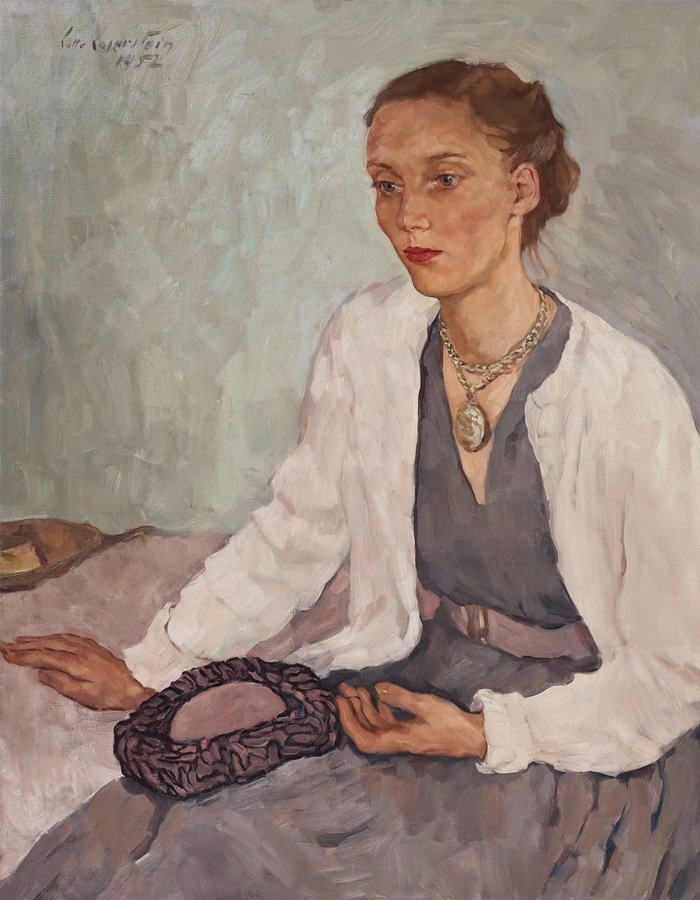
Laserstein received a classical academic education, and her work often contains references to art history. But in her artistically expansive phase during the 1920s and 1930s, she also drew on contemporary popular culture in her motifs. The liberating fashions for women influenced her at the time: wearing loose–fitting dresses, cutting her hair short, dressing in an avant–garde style and highlighting androgynous features. Laserstein liked to depict modern emancipated women playing sports or sitting alone in a café. Her art is considered part of the ’new objectivity’ and is at once traditionally figurative and discreetly rebellious. People were Laserstein’s primary subject, and she painted thousands of portraits during her life. She could make a living from art throughout her life, and her clients included wellknown personalities from the aristocracy as well as the politics, business and culture.
In 1952, Lotte Laserstein was commissioned to portray the then County Governor of Kalmar, Ruben and Helga Wagnsson. As a result, she began commuting between Kalmar and Stockholm. She took a liking to Öland, where she bought a summer cottage in the early 1950s. In 1954 also acquired an apartment in Kalmar. Laserstein continued to paint portraits but also devoted herself to flower still lives and landscapes. At exhibitions in Kalmar, she exhibited new oils, drawings, watercolours and pastels. Her studio and home were located on Norra Långgatan in Kalmar, where her major works from the Berlin period were hung.
In 1987, Laserstein’s paintings came to the attention of two prestigious galleries in London, marking the beginning of an international rediscovery. In 2003 she was also recognized in Germany with an exhibition at the Museum Ephraim–Palais in Berlin. Anna–Carola Krausse, who also wrote her doctoral thesis on Lotte Laserstein and a presentation of her life and work, was responsible for the German exhibition and its catalogue. ”Meine einzige Wirklichkeit” was the theme of the Berlin exhibition, a quote from Lotte Laserstein, who saw art as the reality she lived in and for. In Sweden, her work was first highlighted in a memorial exhibition at Kalmar Museum in 2004, then at the Jewish Museum and later at Bror Hjorth’s House in Uppsala.
At the moment, works by Lotte Laserstein is on display in the grand solo exhibition ’Ett delat liv’ ( A Divided Life), May 6 – October 1, 2023, at Moderna Museet in Malmö and later in Stockholm. The exhibition, curated by Anna–Carola Krausse, is the largest exhibition of Laserstein’s art in the Nordic region to date.
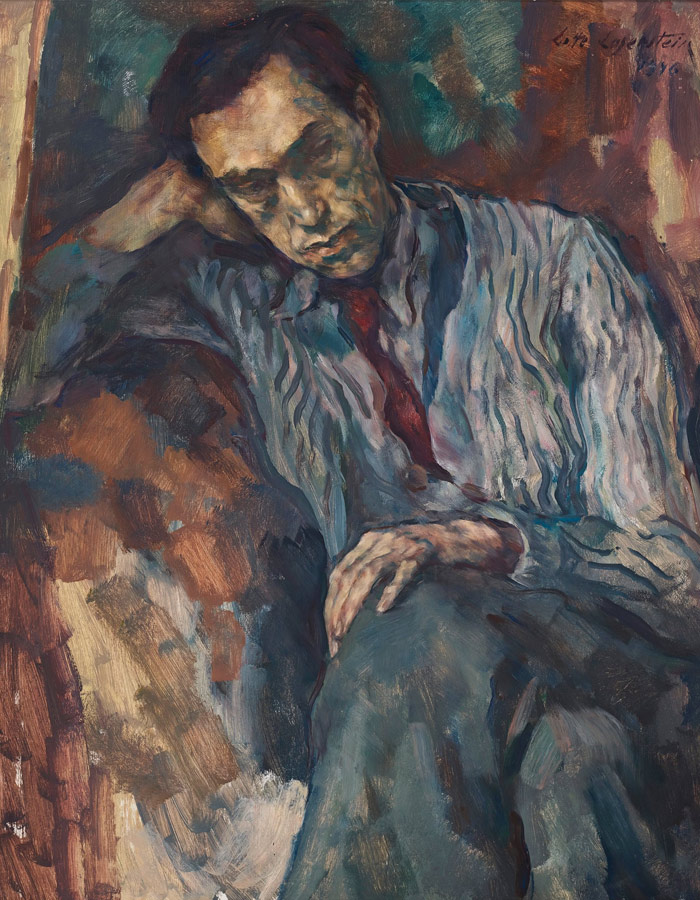
Works by Lotte Laserstein at Important Spring Sale
Requests & condition reports Contact specialist

Stockholm
Karin Aringer
Head Specialist Contemporary Art and Photographs
+46 (0)702 63 70 57