
No connection to server
Contact
EUR
CurrencyEURAUDBGNBRLCADCHFCNYCZKDKKGBPHKDHUFIDRILSINRISKJPYKRWMXNMYRNOKNZDPHPPLNRONSEKSGDTHBTRYUSDZAR
Create accountCreate account
Nov 3, 2026

Modern Art & Design presents Uno Åhrén | November 18–19

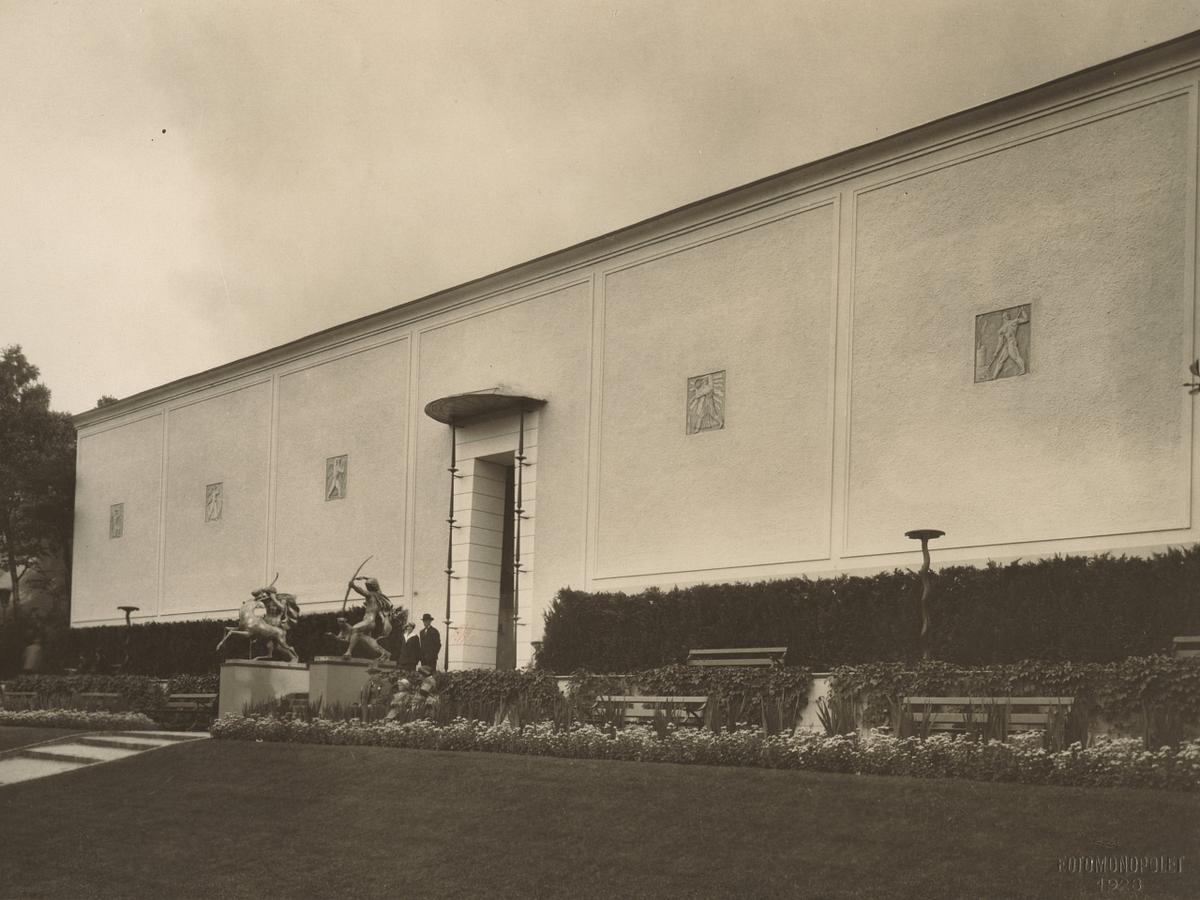
The 1923 Gothenburg Exhibition was one of the major events in Sweden during the early 20th century. The exhibition marked the 300th anniversary of the city of Gothenburg and showcased the progress of modern society in the fields of industry, technology, art, architecture, and culture.

The hall of decorative arts (Konstindustrihallen) was a prominent feature of the exhibition, which took place during a period when Swedish design and craftsmanship were evolving rapidly. Furniture, textiles, glassware, ceramics, and other functional objects demonstrated how everyday items could be designed with careful attention to materials, form, and detail. The hall of decorative arts highlighted the connection between artistic creativity, skilled craftsmanship, and modern production.

To Be Sold at Modern Art & Design
Viewing
November 12–17, Berzelii Park 1, Stockholm
Weekdays 11 AM – 6 PM
Weekends 11 AM – 4 PM
Live Auction
November 18–19, Arsenalsgatan 2, Stockholm
The Hall of Decorative Arts, Gothenburg Exhibition 1923

In the journal of the Swedish Society of Crafts, architect Sigfrid Ericson writes at length about the exhibition:
“Under the triumphant leadership of Erik Wettergren, the Swedish decorative arts sector has celebrated a major and well-deserved success this summer. While this section of the Jubilee Exhibition was not particularly large in terms of scope, a judicious limitation on the number of exhibited objects allowed the decorative arts—as a whole—to make a strong and impactful impression. Among more recent trends, the connection to furniture styles from the latter part of the 19th century is particularly striking; it is worth noting that these specific pieces rank among the best in the exhibition. More significant than this - which represents the latest fashion—is a tendency, clearly evident in many of the interiors, toward a more architectural approach to furniture construction than has previously been the case. Those working in interior design now employ a decidedly broader vocabulary of forms than they did just a few years ago; overall, there is a more confident sense of proportion, resulting in more refined design. A preference for slender, lightweight forms is frequently apparent.”
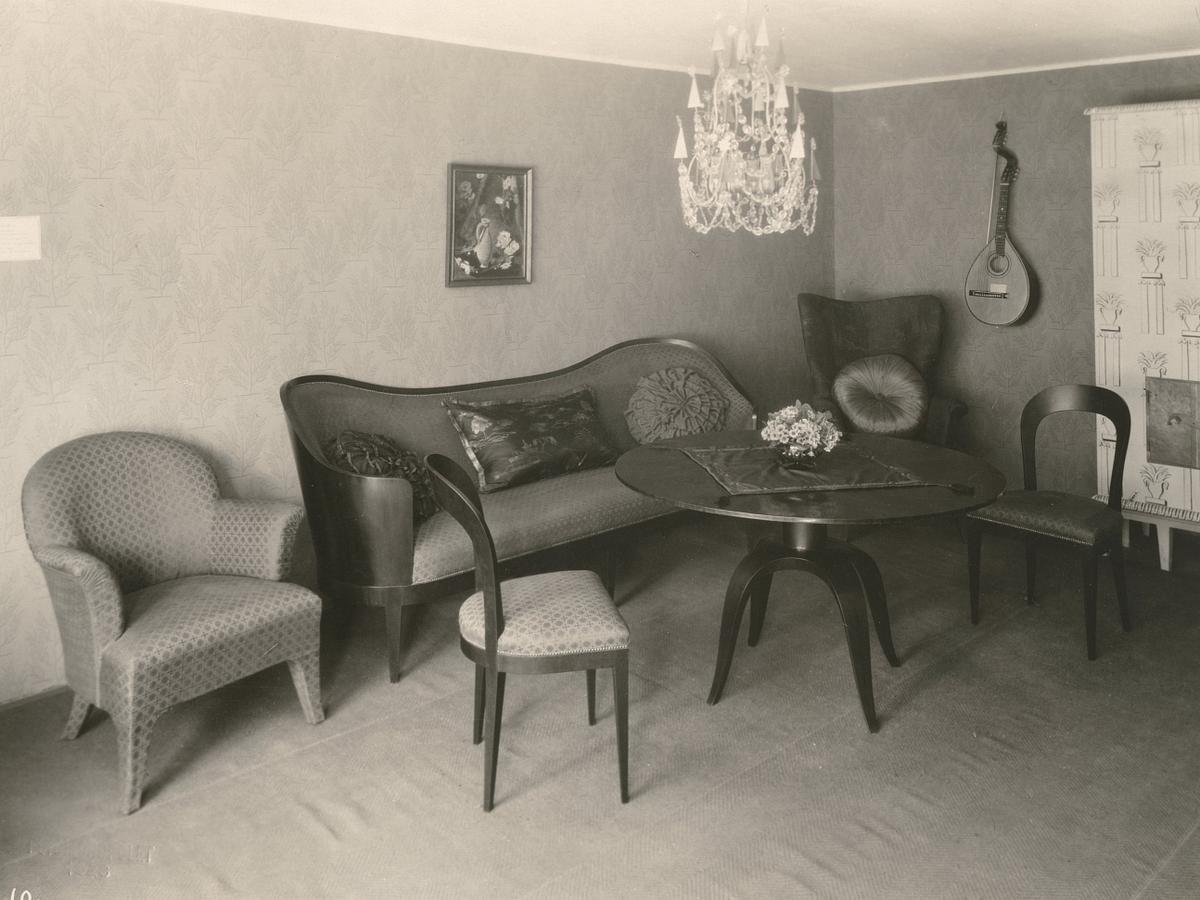
Uno Åhrén's living room, Gothenburg Exhibition 1923

In Gothenburg, the association Verkstaden presented a series of interiors in one of the wings of the building dedicated to the decorative arts. Verkstaden was a collective founded in 1918, consisting primarily of young architects and designers; its members included Gunnar Asplund, Sigurd Lewerentz, Carl Hörvik, and Uno Åhrén. The furniture suite present in this sale originates from a living room interior exhibited by the then 25-year-old architect Uno Åhrén. Regarding the two interiors exhibited by Åhrén, Ericson writes in the journal of the Swedish Society of Crafts:
“Uno Åhrén has composed two of the most notable rooms: a living room—produced by furniture manufacturer Emil Jansson of Helsingborg—and a dining room—produced by David Blomberg’s workshop and Gemla Fabrikers AB. The approach to both rooms is bold and purposeful; upon entering, one is struck by an immediate, intuitive sense of well-being, as the architect has succeeded in capturing something that is otherwise consistently absent from such interiors: a living atmosphere. This atmosphere is particularly strong in the living room—perhaps partly because the design draws upon an era from which many of us derive our earliest childhood impressions. It would be tempting to highlight some of the finest details in this room—which so uniquely blends the ambiance of a bygone era with a modern, personal sensibility for form—but space does not permit it.”

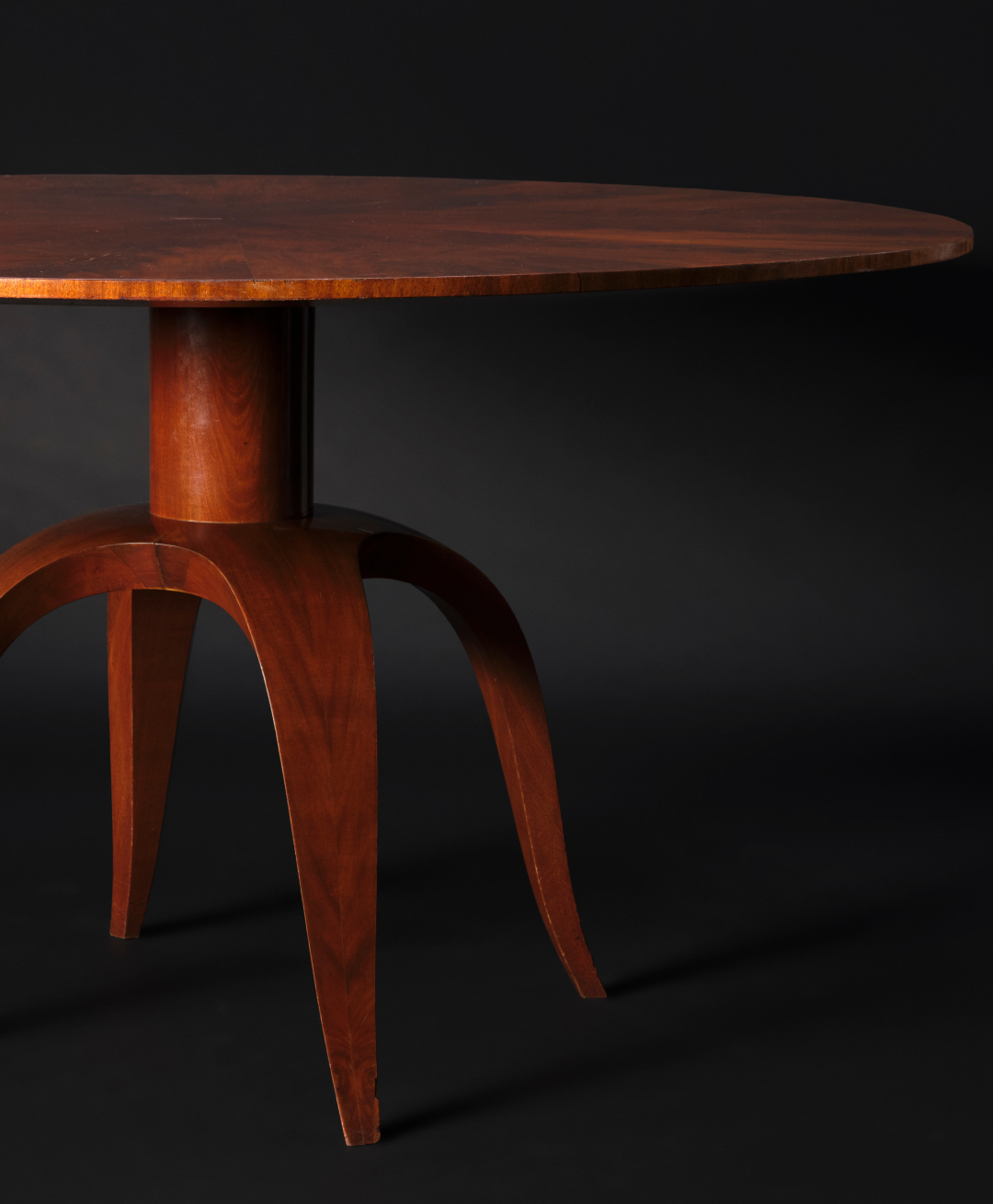
In his reviews of the 1923 exhibition, Sigfrid Ericson captured the essence of the style we now refer to as Swedish Grace. The Gothenburg Exhibition is widely regarded as the genesis of this design movement, which was distinctly characterized by classical, elegant forms and a high level of craftsmanship. The living room furniture suite presented by Uno Åhrén in 1923 ought to be regarded as a masterfully executed example—highly significant in the history of design—of how Swedish Neoclassicism first gained public recognition before both national and international audiences. The forms seen in the chairs and the sofa’s generously rounded backrests reappears later in Åhrén’s lady’s armchair exhibited at the 1925 Paris Exposition. The present 1923 suite eventually came into the possession of the Thiel family—likely acquired by the cultural figures Arthur Thiel and Alice Thiel (née Sachs)—before passing down to their daughter, Olga Enhörning (née Thiel), and subsequently by descent to the present owners. Bukowskis proudly present this furniture suite at auction for the first time.

Uno Åhrén at Modern Art & Design

Enquiries and Condition Reports

Camilla Behrer
Stockholm
Camilla Behrer
Head of Design/ Specialist Modern & Contemporary Decorative Art & Design
+46 (0)708 92 19 77
Karl Green
Stockholm
Karl Green
Specialist Modern and Contemporary Decorative Art & Design
+46 (0)700 07 94 25
Eva Seeman
Stockholm
Eva Seeman
Chief Specialist Modern and Contemporary Decorative art and design
+46 (0)708 92 19 69