
Important Spring Sale presents Gottlieb Iwersson (Master in Stockholm 1778-1813) | June 10–12
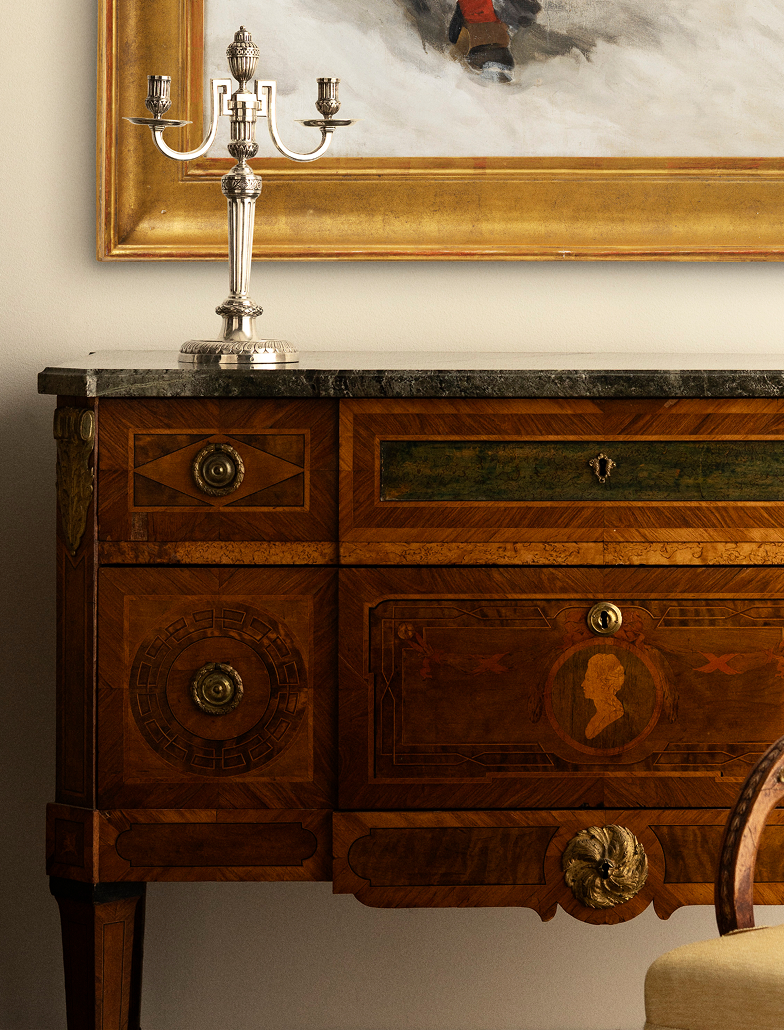
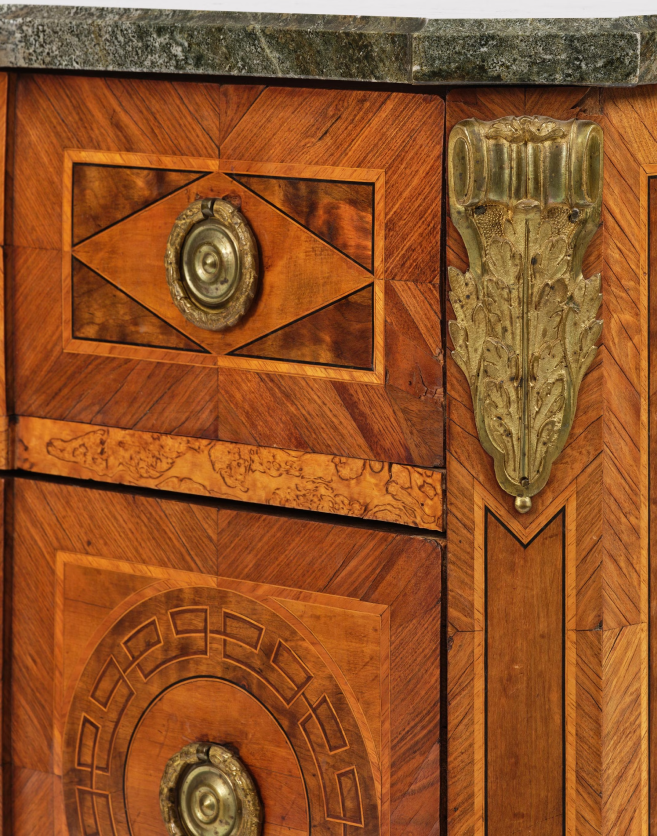
Although the chest of drawers in the auction is unsigned, it can nevertheless be attributed with certainty to the work of Gottlieb Iwersson. Iwersson was perhaps the most accomplished Gustavian cabinetmaker after Georg Haupt, and he became the leading master during the subsequent Late Gustavian period.
Gottlieb Iwersson was born in Malmö in 1750. He was the second son of Olof Iwersson, head of the Malmö Cabinetmakers’ Guild. Gottlieb became a journeyman in 1769 after apprenticing under his father and attempted to gain master status in 1774. As the waiting period proved too long, Iwersson moved to Stockholm and around 1775 became a journeyman under Nils Dahlin, who was likewise originally from Skåne.
Impatient to achieve the rank of master, Gottlieb Iwersson appealed directly in 1778 to Gustav III with a drawing for a secrétaire desk. The King approved it, and the guild felt unable to oppose the royal will. That same year, Iwersson was therefore admitted as a master and appointed Cabinetmaker to the Royal Court. His masterwork, a secrétaire (now at Stockholm Palace), was the first writing piece to be approved since Haupt’s writing desk. The secrétaire displays Iwersson’s characteristic sumptuous marquetry and powerful, masculine form — qualities that may also be observed in his chests of drawers.
Estimate: 500 000 - 700 000 SEK
Weekdays 11 AM – 6 PM
Weekends 11 AM – 4 PM
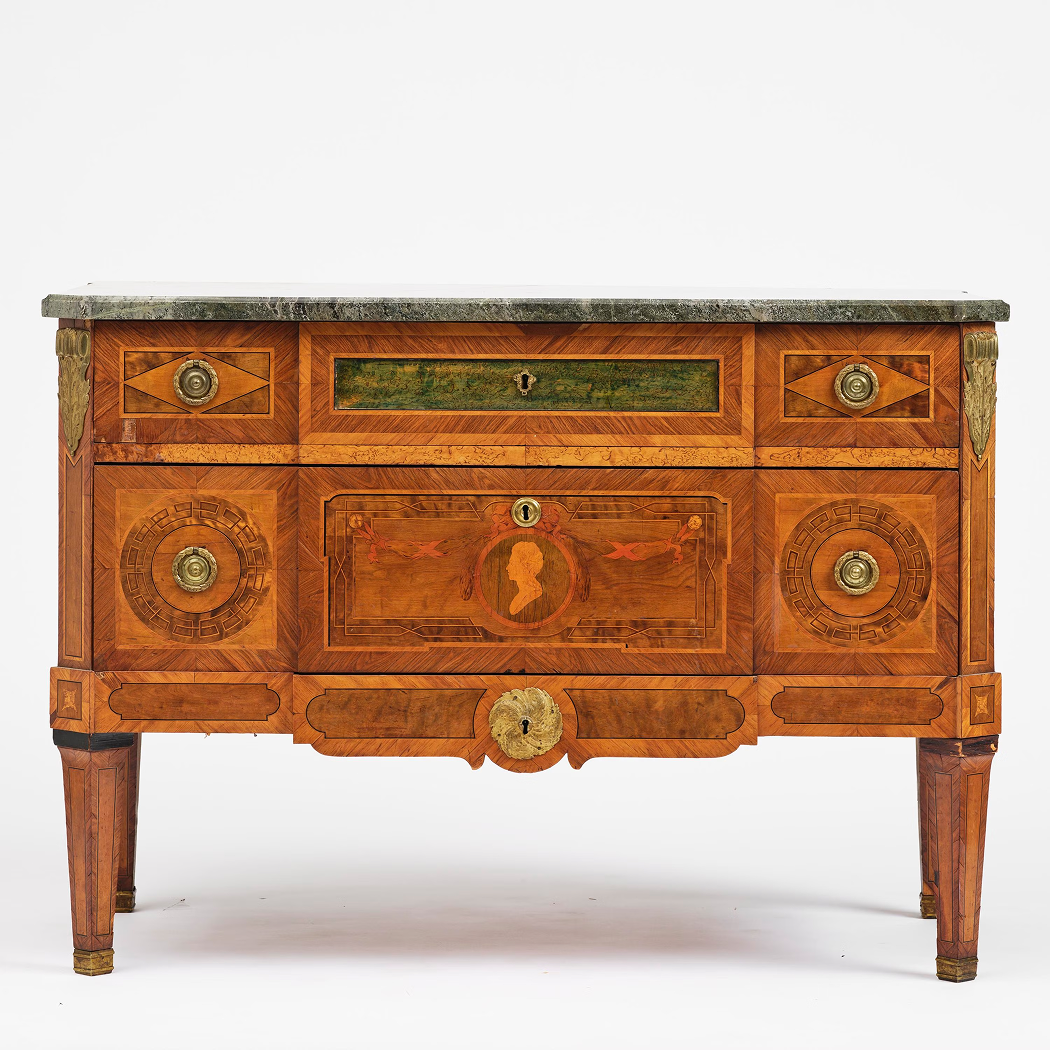
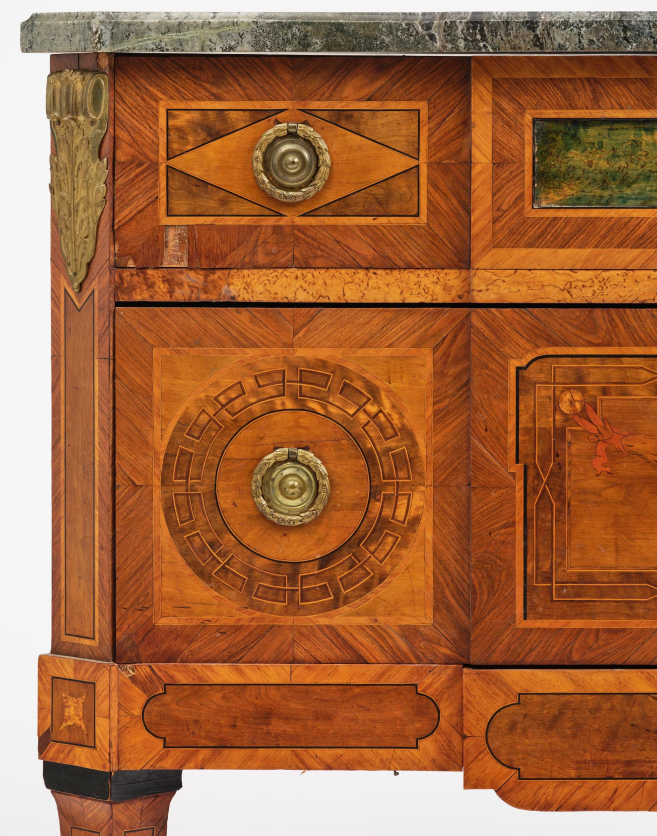
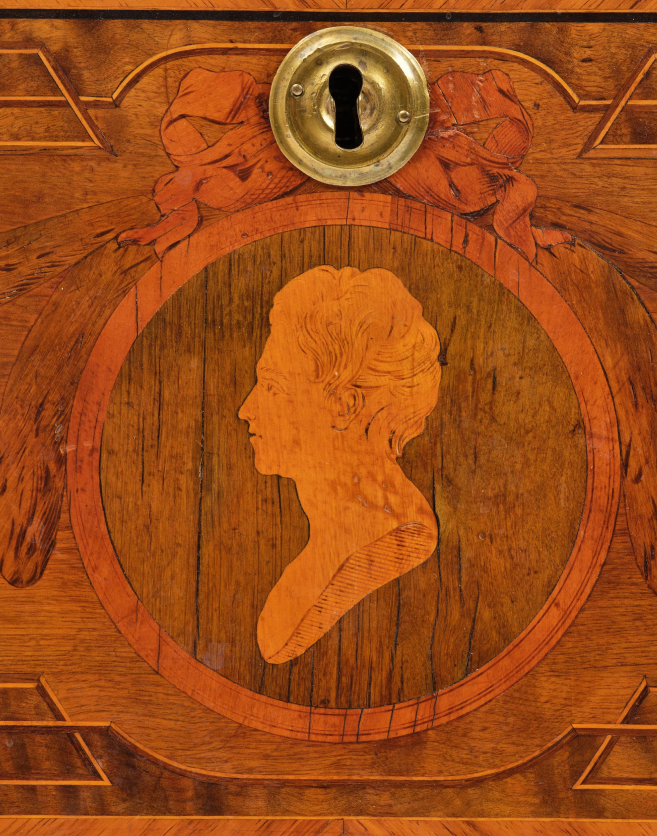
Iwersson appears to have favoured chests of drawers with a two-drawer construction, often incorporating a smaller concealed drawer within the plinth. From the early 1780s survives a number of chests of this type: a smaller version with a flat façade and a larger example with a bombe front, as seen in the present auction piece. All share as their central motif a laurel-hung portrait medallion, while the remaining decoration consists of a variety of recurring ornamental elements. The marquetry frequently includes shaded details fully comparable to Haupt’s finest work. It is to this group that the present chest of drawers belongs.
There exists a chest of drawers signed and dated 1782, in private ownership, which is virtually identical. Another example stands at the Swedish Embassy in Helsinki. At the base of the upper drawer is a lighter rectangular area, which may indicate that a signed label was once affixed there — an observation also noted by Torsten Sylvén during an inspection in 1982.
Alongside Georg Haupt, Gottlieb Iwersson created some of the finest pieces of the High Gustavian period, among which the present auction chest of drawers may confidently be counted.
Gottlieb Iwersson at Important Spring Sale
Enquiries and Condition Reports