Important Spring Sale presents Ivon Hitchens | June 10–12
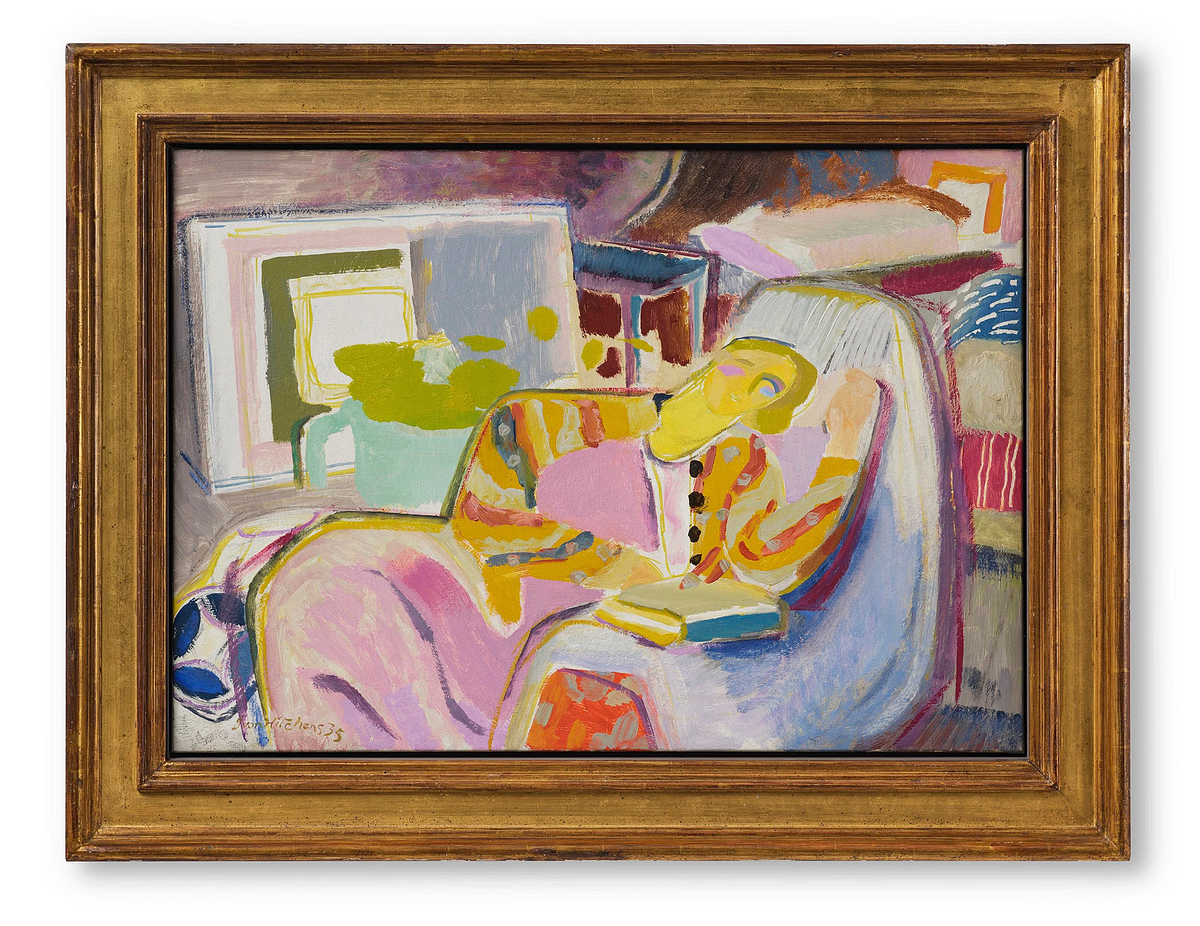
"Figure reading, Adelaide Road"
Ivon Hitchens (1893–1979) was one of Britain’s most distinctive modernist painters, celebrated for his poetic landscapes and highly intuitive use of colour and light. After beginning to exhibit in the 1920s, he became an important figure in London’s progressive art scene during the 1930s through his involvement with The London Group.
The 1930s marked a decisive and deeply creative period in Hitchens’ artistic development. During these years, he found a studio on Adelaide Road in Hampstead, London, complete with a garden that became both a sanctuary and a constant source of inspiration. It was here that he refined the lyrical visual language that would come to define his work — a delicate balance between interior, still life, and nature. The vibrant, microscopic studio environment was described by Peter Kharoche: “The whitewashed walls reflected every sharp scrap of light on to the jugs and jars and patterned cloths that appear and reappear in the pictures of the next few years, and there would always be growing things: plants and flowers and two small chestnut trees in pots.”
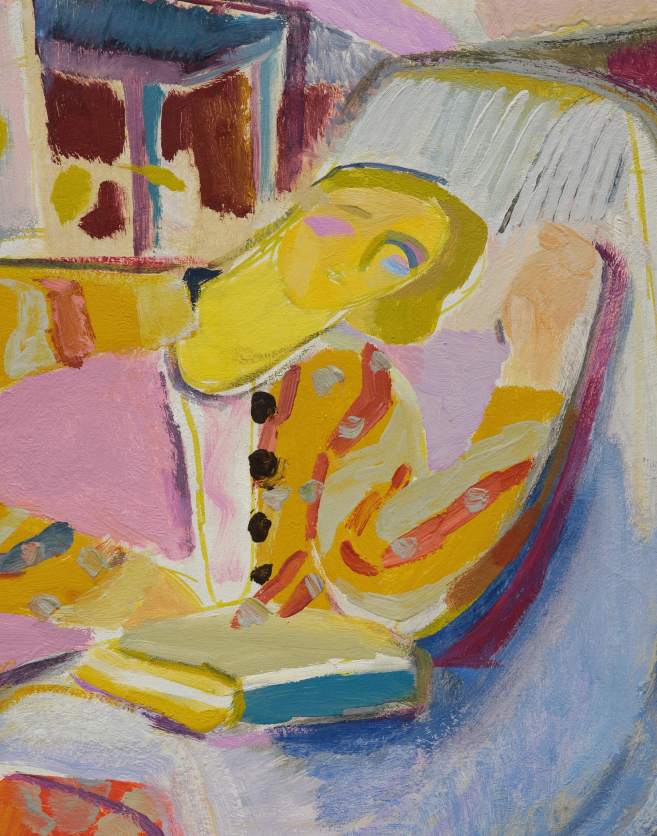
The atmosphere of Adelaide Road profoundly shaped Hitchens’ paintings throughout the decade. Light moved across the whitewashed walls, illuminating familiar objects, fabrics, flowers, and foliage, all of which reappeared rhythmically within his compositions. These years also saw the emergence of the elongated, panoramic structures for which he later became internationally recognized. His paintings from the 1930s possess an extraordinary sense of intimacy and harmony, capturing both the quiet poetry of domestic life and the living energy of nature. The auction work Figure Reading, Adelaide Road was executed in 1935 and is an excellent example of Hitchens’ painting from this period. A woman is depicted reclining comfortably in an armchair. A book rests on the armrest and, despite the title, appears to be closed. The woman’s eyes are shut, and she seems to be dozing after a moment of quiet reading.
Estimate: 1 500 000 - 2 000 000 SEK
Weekdays 11 AM – 6 PM
Weekends 11 AM – 4 PM
A dramatic turning point came with the outbreak of the Second World War. After his London home was destroyed during the Blitz in 1940, Hitchens and his family left the city for the Sussex countryside near Petworth. There, on a woodland site at Lavington Common, he initially lived in a caravan that gradually evolved into a home and studio surrounded by trees and open landscape. This immersion in nature deepened his lifelong fascination with woodland subjects, which remained central to his work until his death in 1979.
Hitchens is particularly admired for his sweeping landscapes built from flowing bands and blocks of colour, works that convey both serenity and movement with remarkable sensitivity. Among his most celebrated public works is the large mural at Cecil Sharp House. His international reputation was further affirmed when his paintings were exhibited in the British Pavilion at the Venice Biennale in 1956.
Ivon Hitchens at Important Spring Sale
Enquiries and Condition Reports