
Important Spring Sale presents Johan Tobias Sergel | June 10–12
Our great Swedish eighteenth-century master Johan Tobias Sergel praised friendship as one of the most rewarding and inspiring forces in his artistic life. Certain figures within his circle deserve particular mention, and they are brought together here in the wash drawings presented in this auction.
At the time these drawings were executed, Sergel had recently lost his wife, Anna Rella. Baron Jean Jacques De Geer and Sergel shared a love of art, and Sergel also felt deep gratitude towards the Baron, who, besides being a generous patron and amateur connoisseur, had supported him through the grief of his wife’s death. Having regained some strength in the company of his friend De Geer at Finspång Castle, the two travelled together in the late autumn of 1796 to visit General Admiral Count Carl August Ehrensvärd at Dömestorp on the Hallandsåsen ridge. In anticipation of Sergel’s imminent arrival, a lively correspondence had already begun — what Ulf Cederlöf has described as their “ping-pong drawing, in which the two friends, like table-tennis players, angled and returned one another’s works” (Carl August Ehrensvärd. Tecknaren och arkitekten, Nationalmuseum, 1997, p. 155). Sergel reported to Elias Martin:
Estimate: 100 000 - 125 000 SEK
Weekdays 11 AM – 6 PM
Weekends 11 AM – 4 PM
“We competed in drawing. I confess that I lagged far behind, though I puffed and drew away. We have exchanged drawings, and the Count improves daily in execution — genius he has possessed, and will possess for as long as he breathes.”
The Danish artist Nicolai Abraham Abildgaard and Sergel had become acquainted during their student years in Rome. They developed a close friendship and maintained lively contact throughout the years. In December 1796, Sergel and De Geer travelled onward from Dömestorp across the Sound to Copenhagen, where they spent time with Abildgaard. Sergel drew incessantly, and the journey can be traced through his images. De Geer had been deceived by his wife, and Sergel portrayed him in comic and somewhat foolish guises. Abildgaard, meanwhile, seems to have suffered from melancholy, and Sergel depicted his melancholic friend in several sombre scenes. Sergel himself appears to have entered a period of great creativity, drawing from the earliest hours of the morning — something which Magnus Olausson, in his recently published monograph, describes as an “artistic morning exercise”. Ehrensvärd and Sergel exchanged drawings by post across the Sound and spurred one another’s painterly enthusiasm. Sergel’s admiration for Ehrensvärd seems to have been warmly reciprocated. Hardly had Sergel departed from Dömestorp before the abandoned Ehrensvärd took up his quill pen and watercolour box and portrayed Sergel as a celestial body upon the horizon. He falls to his knees before this new cult image and worships his “best Friend on the other side of the sea”.
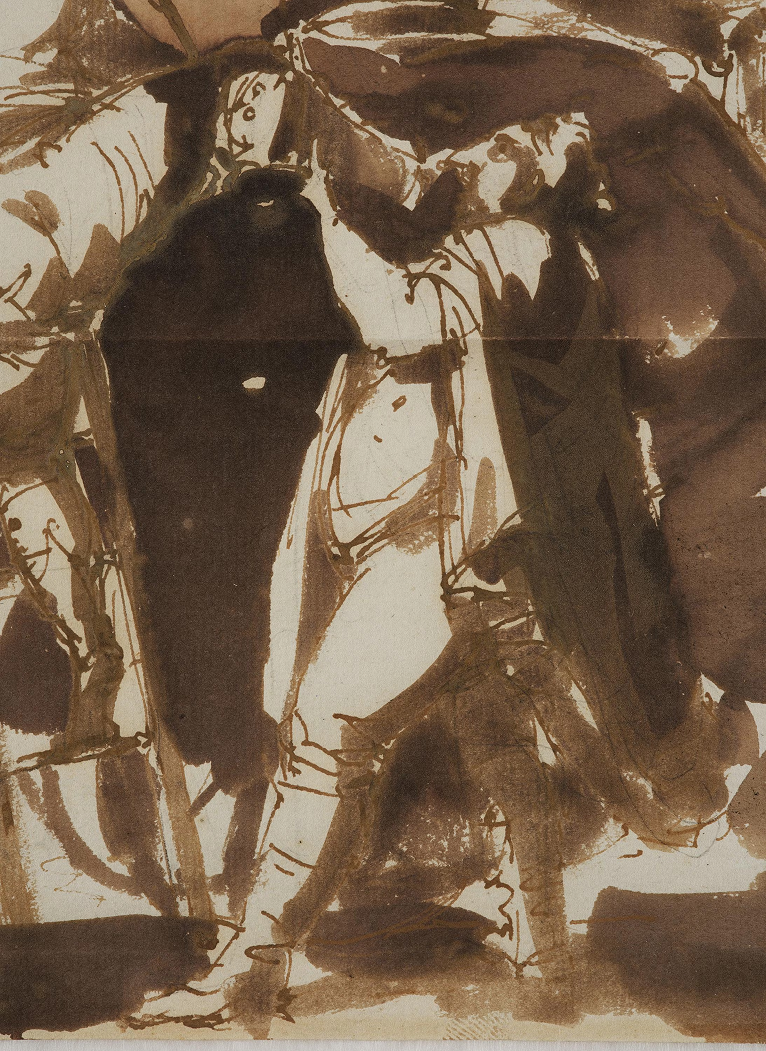
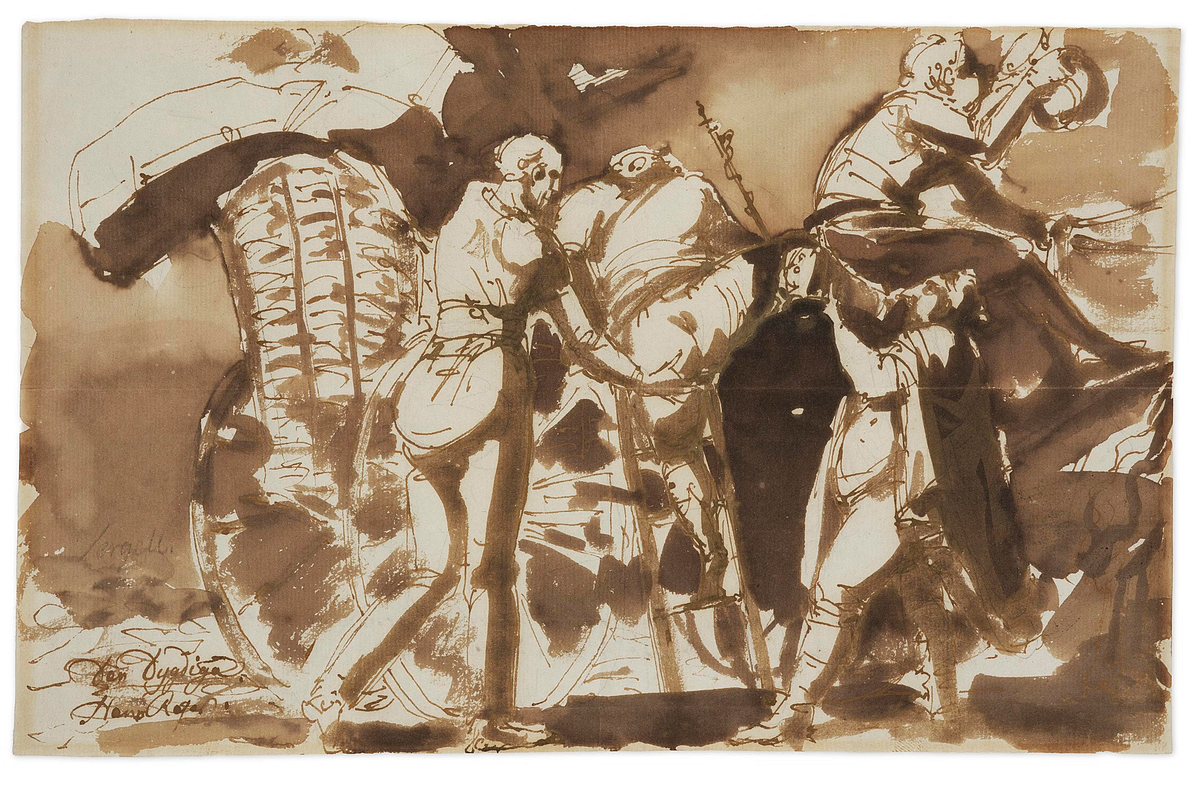
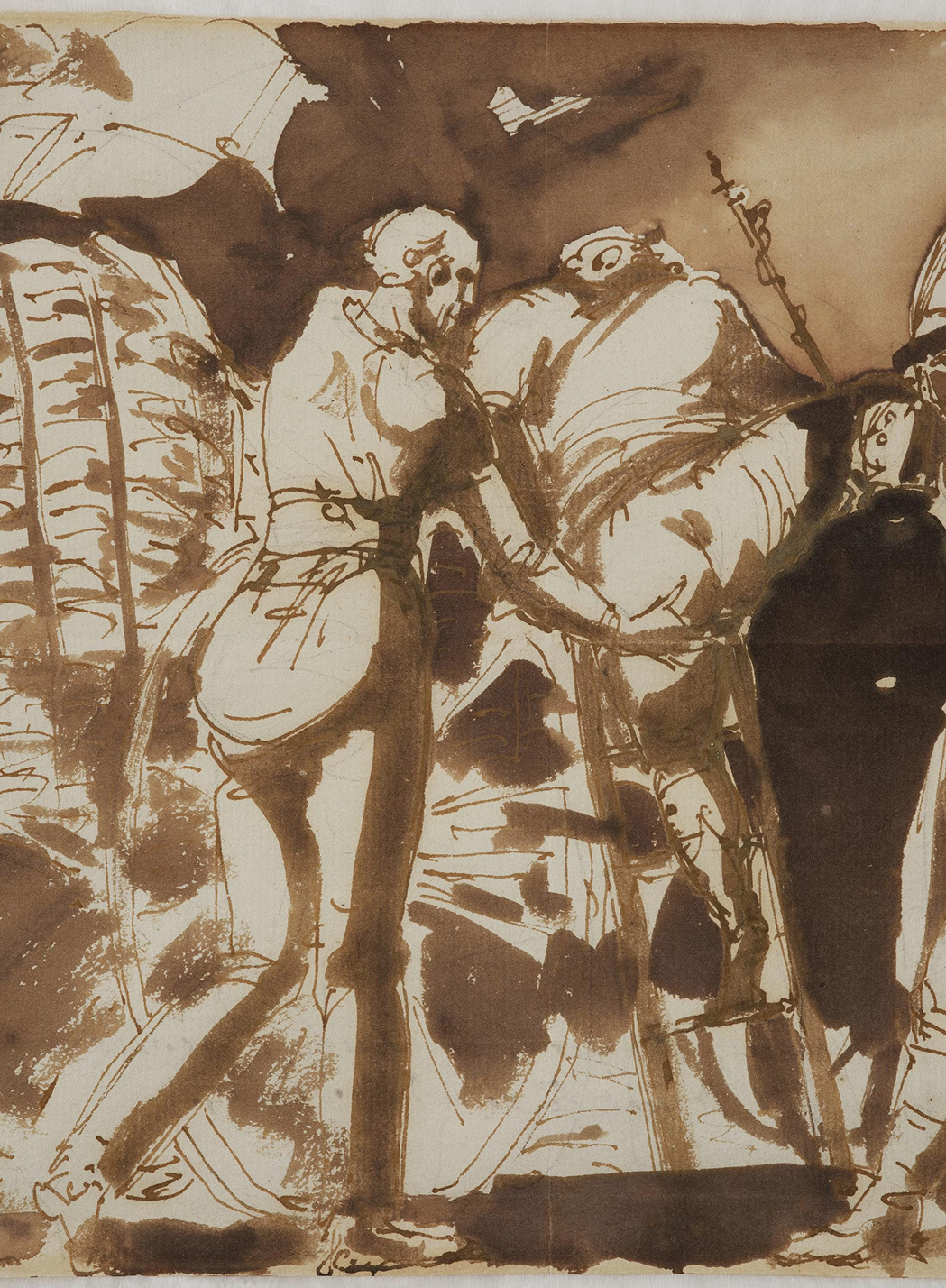
One of the drawings in the auction depicts Baron De Geer being helped into a carriage by Abildgaard and Sergel, probably as they were departing the Danish capital in the spring of 1797. Sergel entitled it The Virtuous Journey Home, and his inscription on the reverse reads: “Nous étions convenues, Monsieur le Comte Ehrensvärd et moi de donner au Baron J.J de Geer le nom du vertueux” (“Count Ehrensvärd and I had agreed to call Baron J.J. de Geer ‘the virtuous one’”). This designation, used by the friends, referred to the Baron’s lack of passions, his calm disposition, and his phlegmatic temperament.
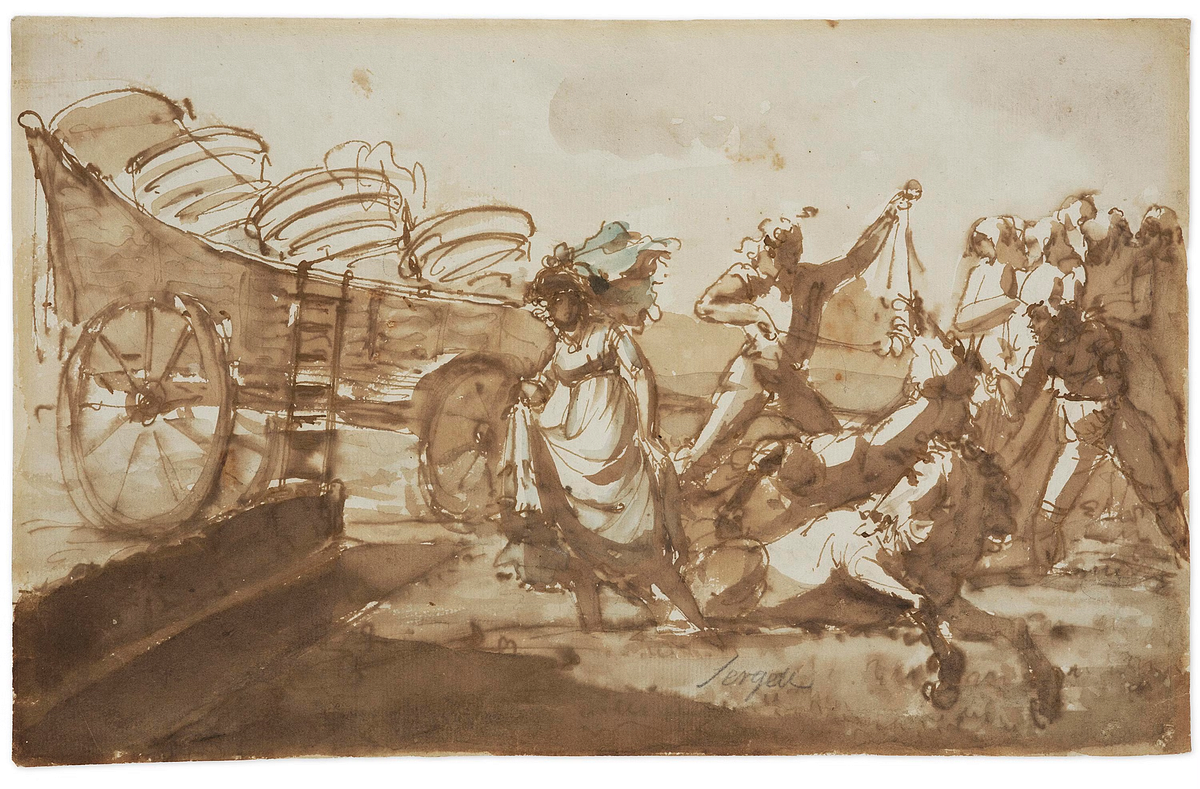
The auction’s second drawing is a caricature in which Ehrensvärd’s wife, Sofia, has become stuck in the muddy ground at Dömestorp (“Dymelstorp”): Caricature of Countess Ehrensvärd Sinking into a Marshy Meadow at Dymelstorp. This drawing, too, is likely to date from 1797, and both works are fine examples of Sergel’s fluid and expressive manner of drawing and applying wash during this period.
A major exhibition at Nationalmuseum in Stockholm during the spring of 2026 highlights Johan Tobias Sergel’s achievements. It makes clear that Sergel was not only a sculptor of the very highest international calibre, but also a draughtsman of extraordinary ability. The auction’s superb wash drawings, previously unpublished, join the ranks of the artist’s expressive oeuvre and further complement the previously known images from the spring of 1797, when Sergel rediscovered his inspiration through the companionship and encouragement of his friends.
Johan Tobias Sergel at Important Spring Sale
Enquiries and Condition Reports