Akseli Gallen-Kallela "Kullervo’s Curse" I May 22-31
New Season, New Masterpieces – Helsinki Spring Sale
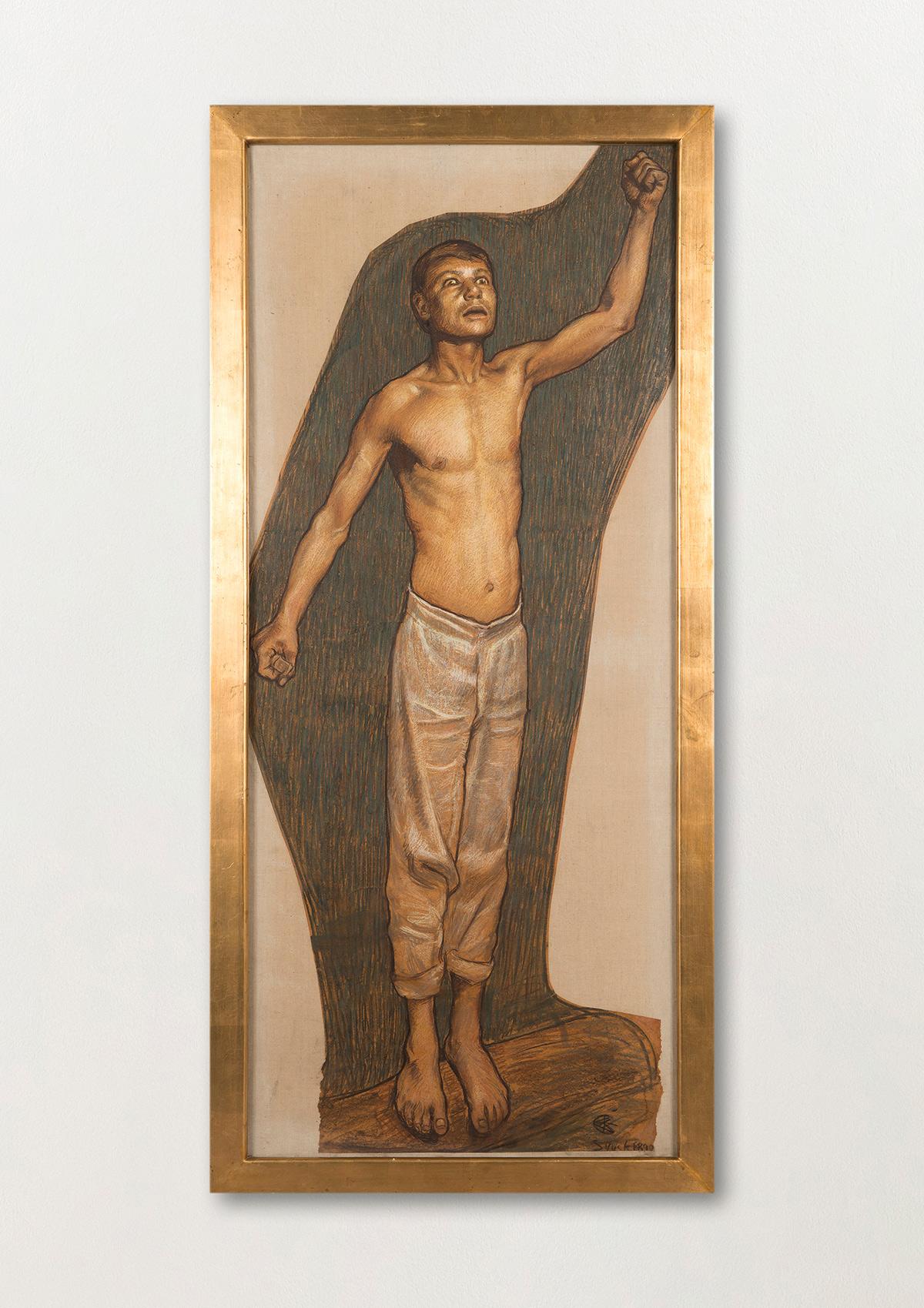
Bukowskis is pleased to present Akseli Gallen-Kallela’s work Kullervo’s Curse from 1897 in this spring’s Helsinki Spring Sale, held 22–31 May.
The work now offered for sale on Bukowskis Helsinki Spring Sale-auction is a preparatory study for one of Akseli Gallen-Kallela’s best-known oil paintings, ‘Kullervo Cursing’. The subject is drawn from the 33rd canto of the Finnish national epic, the Kalevala, in which Kullervo curses the wife of the smith Ilmarinen in revenge for her cruel deed. Gallen-Kallela returned to this scene repeatedly in his art. The earliest known treatment of the subject is the 1883 drawing ‘Kullervo in the Meadow’.
The composition that came to define ‘Kullervo Cursing’ gradually took shape in the early 1890s. In an ink drawing from 1891, Kullervo is shown in the pose that would become characteristic of the later versions: standing upright on a fallen pine, his left hand raised and clenched into a fist, while his right arm is extended downward, gripping a broken knife. In the earliest works Kullervo is depicted nude. From the1896 etching onwards, however, he is shown wearing pale trousers.
The present work, ‘Kullervo Cursing’, is a pastel and tempera painting from 1897. Earlier that same year, Gallen-Kallela developed the subject in a charcoal drawing for which he used a local boy from Pöytäniemi, near his Kalela studio in Ruovesi, as a model. The charcoal drawing corresponds closely to the appearance of the tempera painting, although the model’s grimace in the drawing has been softened in the tempera work into a more enigmatic expression.
The tempera version of ‘Kullervo Cursing’ was an important work for Gallen-Kallela, and his letters reveal the creative struggle it caused him. In a letter to Louis Sparre, he again lamented the difficulty of the work: “I am fighting with Kullervo as though against an evil spirit, and I am unhappy. The painting is life-size and in brilliant tempera.”
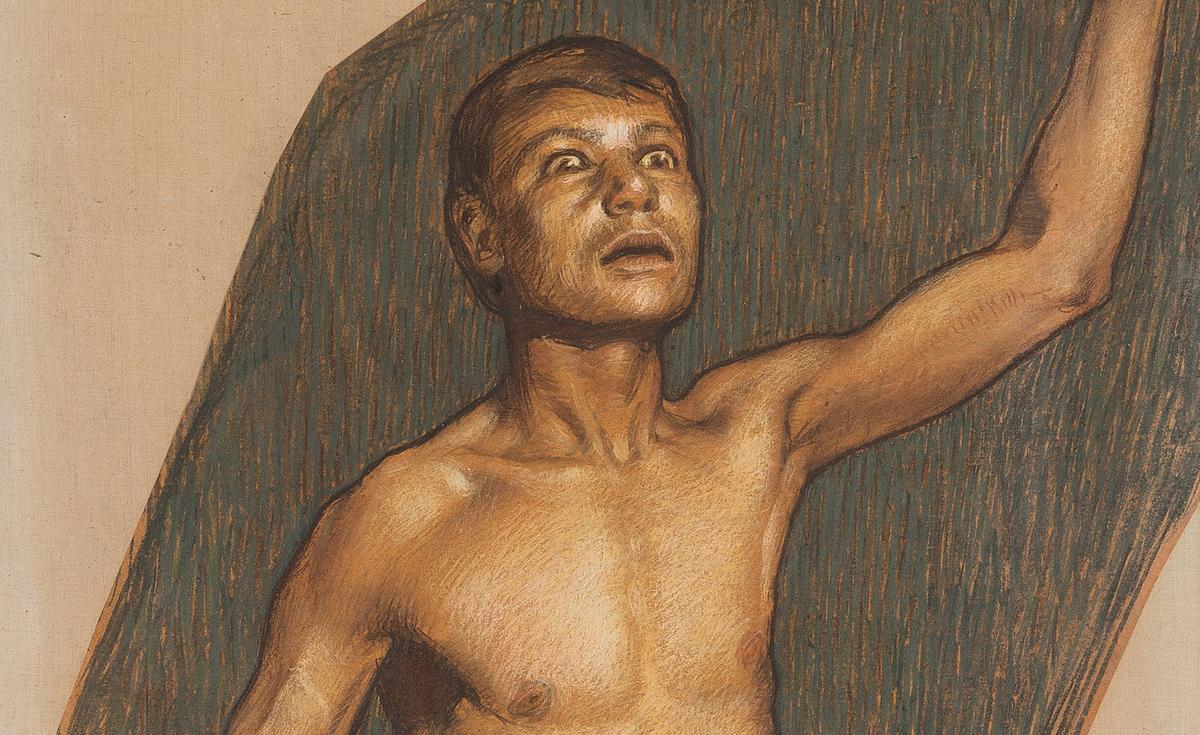
In the tempera painting, the boy from Pöytäniemi remains clearly recognisable. In other versions of the same subject, Kullervo is typically characterised by flowing blond hair and a fierce grimace. In the tempera painting, by contrast, his expression is calmer, and he has short brown hair. The palette is earthy and brown-toned, which makes a big contrast to the oil painting completed in 1899, in which Gallen-Kallela employed brighter and more vivid colours. The oil painting belongs today to the collection of the Finnish National Gallery, Ateneum.
The tempera version of ‘Kullervo Cursing’ was an important work for Gallen-Kallela, and his letters reveal the creative struggle it caused him. In a letter to his mother-in-law, Aina Slöör, dated 3 October 1897, he wrote: “Come now, dearest Mother Aina, and give my Kullervo some momentum; he has stopped growing.” In a letter to Louis Sparre, he again lamented the difficulty of the work: “I am fighting with Kullervo as though against an evil spirit, and I am unhappy. The painting is life-size and in brilliant tempera.”
The Kullervo motif may also be interpreted as an image of Finnish defiance and rising nationalism. The enraged figure of Kullervo can be seen as symbolising the bitterness and disbelief felt by Finns in response to the Russification measures that were beginning to emerge at the time. The subject later resonated strongly and reappeared in the work of many other Finnish artists.
The work will be offered in Bukowskis’ quality auction, Helsinki Spring Sale, taking place 22–31 May. For further information and condition reports, please contact Johan Wulff, our Head Specialist in Finnish Art.

Contact Specialist